
Introduction
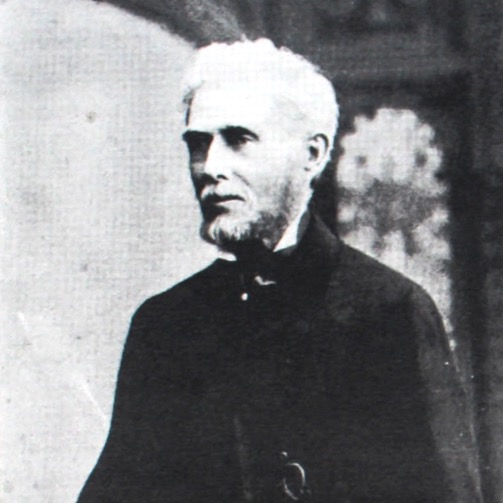
John Richard Houlding was born on 22 April 1822 in Essex, England. He first worked in the office of London lawyer, where he would often sight Charles Dickens the famous English journalist and writer.
In January 1839, Houlding arrived in Sydney on the Hashemy and worked as a solicitor’s clerk, and then at an auctioneering office. In February 1840 he went to New Zealand and returned to Sydney a year later. He moved to Raymond Terace in 1842 and married Elizabeth Hannaford in Sydney in 1843.
At Raymond Terrace he became postmaster, storekeeper and shipowner. He sold his store in 1852 and retired in poor health. After visiting England in 1854, he returned in 1855. Following a nervous collapse, he began writing while confined to bed.
While residing at Raymond Terrace his first novel, Australian Capers was published in 1867. It was later later reprinted in 1913 as Christopher Cockle’s Australian Experiences. It was the tale of a ‘new chum’ making his way in the colonies.
Other books included: In the Depths of the Sea; Australian Tales; The Pioneer of a Family; Rural and City Life; Launching Away; and Investing Uncle Ben’s Legacy. His last book, A Flood that Led on to Fortune,” was published in 1886.
Houlding regularly contributed to the Sydney Mail under the pseudonym ‘’Old Boomerang.”
He also wrote short stories for religious and secular journals under seventeen pennames, including ‘’J. R. H. Hawthorn.’’ He was so successful as an author that others sometimes passed themselves off as him and published works under his name.
Houlding was also a Methodist lay preacher and founder of the New South Wales Temperance Alliance.
Failing eyesight forced him to stop writing in the 1890s. He died on 25 April 1918 at Strathfield, Sydney, and was buried in the Old Methodist section of Rookwood Cemetery.
As John Richard Houlding was such a well-known Raymond Terrace identity, the town’s largest park, Boomerang Park, was named in his honour.
This paper is the story of John Richard Houlding which begins in 1849 while he was a resident of Raymond Terrace.

‘Hashemy’ – the barque which brought J. R. Houlding to Sydney in 1839
Maria Houlding dies at Raymond Terrace – 1849
The Sydney Morning Herald of 19 July 1849, page 4, published the following death notice for his daughter:
‘At Raymond Terrace, on the 16th instant, of scarlet fever, Maria, daughter of Mr. J. R. Houlding, aged thirteen months.’
Houlding financially supports Children at Clarence Town – 1852
The Maitland Mercury and Hunter River General Advertiser of 2 November 1852, page 2, reported:
‘On the 21st instant our village of Clarence Town presented for once quite a holiday scene, in consequence of the examination of our school. Parents, children, local patrons, and others from a distance, crowded our substantial, commodious, and neatly furnished schoolroom to excess. …..
One gentleman, Mr. Houlding, of Raymond Terrace, was so well pleased with the improvement, happy, and neat appearance of the children, that after treating them to all the sweetmeats in town, he left two pounds to purchase books as premiums for the most deserving.’
Houlding describes a changing Raymond Terrace and the River Boats of old – 1869
The Sydney Mail of 5 June 1869, page 10, published the following contribution by Houlding of his observations concerning the changing Raymond Terrace town and the steamboats that served it. His gifted writing style can be appreciated in the following description:
‘The view from my present retreat is peculiarly encouraging to reminiscences of other days; they come indeed faster than I would call them, for some of them are intimately connected with the silent inmates of the enclosure over the hill yonder. I can observe many changes around me, but they are not pleasant to reflect upon; for while busy memory presents contrasts from the past, I feel as if I were being coiled around by a rusty cable. …..
A large iron steamer has just paddled past my temporary home, and enticed my mind away from local evidences of retrogression, to the contemplation of the decided march of improvement which that fine vessel indicates. Her captain, (who looks as calm and confident as a rajah on a tame elephant) from his post on the bridge, directs her rapid movements by an occasional motion of his hand to the steersman abaft, or to an open-eyed boy who stands with his mouth on a level with a sootless chimney cowl, ready, at the given signal, to shout directions to the attentive engineer below. But that boy’s “billet” is almost a sinecure, and he has abundance of spare time to practise his whistling, or to twiddle dumb bones with his fingers, for on some trips he does not even to call out “ease her,” all the way from Newcastle, till the noble vessel approaches the wharf at Raymond Terrace.
That is a change “from the old to the new,” which does not threaten to make any one dismal, so I will let fancy dwell upon it for a little while, or fly back if it will to the beginning of my experience on the Hunter River, which was “a stick on the flats” for two days, in a bluff old steamer named “James Watt,” with a merry-faced captain whom I shall never forget. In those primitive days dredging machines were unknown in these waters, and the oozy beds of the river were only investigated by a now extinct race of shell men.

Paddle steamer – ‘James Watt’ [State Library, Queensland]
Oysters and cockles had easy times of it on the numerous flats or sandbanks, save when the keel and bilges of a clumsy wooden steamer came crushing on to their shelly homes, and stuck there with all her fidgety passengers on board till they floated off again. But the captains of those wooden steamers had not such easy times as their smart-looking brother skippers have in this age of iron and french polish; and the former “call boys” had less wind to spare for whistling popular airs, for they were sometimes hoarse with bawling “easeer,” or “turnastarn.” The ancient sailors too had many substantial grievances to grumble at, the heaviest of which were the chain boxes, which they were constrained to wheel about the decks to keep the ships poised on an even keel. How spitefully they used to curse that galling exercise, which was regarded as a sort of marine treadmill; nor did they fancy sending down the yards, and housing topmasts, which was a regular job for all hands in head winds.
But the Jack-tars of today can rejoice in their exemption from such objectionable duties, for chain boxes have been hove into the lumber yard, along with the topsail yards and other appliances of the past slow age. They never strike a stick now, to the stiffest breeze that blows in their teeth. To get either to or from Newcastle in days of yore, without “a stick on the flats,” was a piece of luck which seldom happened on two consecutive trips; and to reach Sydney without being blown back to Newcastle by a Southerly burster was another piece of luck, which perhaps no one appreciated more than seasick passengers did.
It was a triumphant day for the Hunter River folks when the steamer Victoria was launched from the dockyard opposite to this town; but it was a still greater triumph when she had proved herself equal to a speed of ten knots an hour in slack water. How she was lauded by her exultant owners, and how she was abused by the jealous owners of the slow boats, to which she was as much superior as a racehorse is to a donkey. How some of her admiring passengers eulogised her seaworthiness and her mighty power, when for the first time she steamed direct to Sydney in defiance of a southwester, which would have blown old “Tamar” to Moreton Bay; and how her taciturn skipper chuckled to himself as he rounded North Head on that proud night, and at the same time anticipated the glorification he would get in next morning’s newspapers.
Still, the Victoria used to stick on the flats very often, though she only drew seven feet of water. But she did not stick for want of effort to avoid doing so, for she used to rush at her hidden enemy as ferociously as a floating ram, to the heavy wear and tear of her copper. “Full speed,” old Captain Toggle would growl as his vessel approached the critical spot; at the same time his crew would be sent out to dance jigs on the foot rope of the jibboom, by way of further stimulating the vessel to wriggle over the unyielding material beneath her bilges; while a group of pelicans on an adjacent mud-bank stood looking on, as if in doleful anticipation of being shot at by cockney passengers who would seldom find more innocent pastime for the tedious hours of their detention on the flats.
Oh, happy skippers of the present iron clippers, you are not plagued with “Flats” of that kind, any more than dolphins are plagued with fleas! You know comparatively nothing of the hidden obstacles that a foretime marred the pleasant navigation of the Hunter, from “Eale’s Flat,” to the “Blind Channel.” The dredging machines are your stanch friends, though you do sometimes wish them to Jericho, because they get in your track, and make you “Go easy,” and blow your steam to waste. But for their revolving shovels and slimy punts you would not look so placid, while your vessels are gliding along full speed, and saucily bumping the poor settlers’ boats on the river banks, with the wash of your wheels. But for the dredger’s dirty work you would have to go hopping over the bridge from one paddle-box to the other, looking out for signs of shoal water (as the old-fashioned skippers had to do), you would certainly lose some of your dignity by the exercise, and perhaps you would lose your good temper too.
But the men of Maitland ought to be happier still, for they are wholly independent of the river, since they have broken the iron horse into harness, and made sound footing for him across the verdant swamps of Hexham. They are not now exposed to the vexation of waiting at the Terrace wharf, while the steamer’s crew land the cargo with care, and the passenger’s step on shore comfortably.
In former days, the busy Maitlanders always dreaded the detention at that wharf—they were in such a hurry to get either up or down the river that they used to encourage the captain of the steamer to bundle the Terraceites and their luggage into a shore boat and then paddle off and leave them to sink or swim, as their good or bad luck would have it. It was certainly a tedious trip between Morpeth and Newcastle in the old wooden boats, and it is no wonder that commercial men did not enjoy it, with a chance of its being prolonged for a day or two, as it sometimes happened.
But what a comfort the railway must be to you now, men of Maitland! How nice it must be for you to rattle down to Newcastle after breakfast to get an appetising sniff of sea air, and home again to dinner, perhaps proudly carrying a fresh schnapper or a live lobster in your hand. And what a sight of dust your eyes must be spared since those heavy lumbering wool drays, which used to come into your town by hundreds, stop up the country. As a community you are less poetical than practical, so you never did fancy the river over much. Coonanbarra’s [a steam boat] meandering stream and wooded banks had no charms for you, even when the flats began to get deeper.
The Newcastle wags, who were deeper still, told you that there would be bigger flats to be seen by-and-bye, and thus they secured your valuable cooperation in a nice river-side railway, right down to the end of their flourishing city, almost within hail of sober old “Nobby.” I dare say some of the citizens are grateful to you; for the help (they are not all wags), but the Raymond Terraceites in general grumble at you for it, which is a fresh proof of the difficulty of pleasing everybody. They don’t like it, though they have always been too modest to speak out in time. A few of them would doubtless prefer to see the grand Northern Terminus on the site of the punt yard, exactly opposite the Terrace, with a connecting bridge or tunnel; others gravely say poo, poo! to that expensive notion, but they maintain that the grand junction ought to be at Morpeth. …..
My reference to the bygone practice of landing passengers and cargo at the Terrace reminds me of an incident which happened soon after Captain Toggle took command of his wonderful vessel. Some of my old readers knew that quaint son of Neptune in the days of his glory, and I may venture to say that, if any of them recollect asking him a civil question while his ship lay on the flats, they will also recollect that he gave them a surly answer, for he never was amiable at such times. For all that, he was a good sailor and took a pride in his vessel,—moreover, he seldom looked grim when the wind was fair, and he was fairly at sea with nothing to bother him.
Steamers were not often taken alongside the Terrace wharf in those days, out of delicate regard for the patience of the Maitlanders; and passengers and light cargo were put into a boat as I have before mentioned. Casks of liquids, such as beer or the like, were often thrown overboard, to be picked up by the ship’s agent at his leisure. Perhaps it was playfully considered that occasionally towing a few casks ashore against tide would be a salutary exercise for the agent, who was a fat man.
But on one occasion the second mate mistook a hogshead of iron saucepans for a hogshead of Tooth’s ale, and after he threw it overboard he never saw it more, for it sank to the bottom like a bower anchor. Mr. Carbon, the agent, in his respectfully mild way, declined to dive for the cask, because he could not swim, so the mate had to pay the damage. It operated, however, as a useful lesson on the mode of unshipping casks from that day; and hogsheads of all kinds are now landed on the wharf, in a becoming manner.
The regularly recognised boatman of the Terrace (Jemmy Smart), was an original in his way, and none of his intimate friends doubted that he was wide awake when out of bed. He made a snug living by exacting a poll tax of sixpence from each passenger he shipped or landed, and though some radicals loudly objected to the impost, as being a revival of an arbitrary law of feudal times, Jemmy invariably got his dues, for he collected them while his victims were in his boat, and he had the security of their persons. If any swell of the Dundreary genus happened to offer him a shilling, or even a half-crown, Jemmy would shake up a huge packet full of coppers (enough to frighten a horse), and begin to count the change, which was usually refused with disgust, and then the modest expression of Jemmy’s face as he pocketed the balance was a study for a modern Hogarth.
But with all this simplicity of character—which I have but barely hinted at—he was a sensible boatman, for he never was known to run his boat under a steamer’s wheels; and he would rather cut his painter and drop astern than allow any waggish mate to sink him with ease; very few of the other boatmen would venture alongside the Victoria, for old Toggle seldom stopped his engines till he was almost abreast of the boat, to the frequent alarm of passengers, and risk of their lives also.
One day Jemmy Smart was laid up with a mosquito in his weather eye (or some other disablement), so it was necessary to send a substitute off to the Victoria with the mails; fortunately, there were no passengers to go off on that occasion. The man pulled to the steamer very nervously, notwithstanding Captain Toggle waved his starboard fist like a fighting man, and bauled out encouragingly, “Come on, you wooden-headed horse-marine.” When a rope was thrown from the steamer, the man clutched it with both hands but had not presence of mind enough to take a turn round the thwart, as Jemmy Smart would have done, and in a moment, he was dragged out of the boat.
Old Toggle looked down at the poor fellow as he was towed alongside, holding fast by the rope, then growled out in his peculiarly dry way to the engineer, “Turn ahead easy.” Before the wheels had revolved thrice, he called out again, “Stop her. Haul that lubber on board, some of you, and shake the dust off his jacket.”‘ When the poor shivering boatman was hoisted to the deck, old Toggle looked down at him and said in a mock tone of solemn warning, “There, you see, you can’t stop us, pull as hard as you like, so you had better not try it again.” Then he turned away and chuckled to himself, as he always did when he was joyful, making a merry noise like the whirling cog wheels of a rusty crab-winch. The man took the hint—though he did not look grateful for it. He never more tried to stop a steamer by holding a tow rope, nor could he ever again be coaxed to take a boat alongside Captain Toggle’s ship.’

John Richard Houlding – 1870 [Hunters Hill Trust]
Houlding writes to the Editor of The Methodist newspaper about the recent floods at Raymond Terrace – 1893
The Methodist of 18 March 1893, page 7 published the following letter dated 12 March 1893 to the editor of the paper:
‘Dear Sir, — For a month or more lately I have employed all my leisure time in writing letters of condolence to sufferers from floods in Queensland, as well as in some of the northern parts of this colony; and a sombre duty it was for me. But my experience during the last week has been a far more dismal one, for I have been face to face with many flooded-out families and have been an eye-witness of desolation that would baffle my descriptive powers, even if I had an unlimited space afforded me in your columns.
During my fifty-one years’ residence in this pretty town, I have seen several floods, though none to equal in destructiveness the one that has just overwhelmed hundreds of homes, here and hereabout. But amid scenes of wreck and ruin, it has been somewhat consoling to me to observe the patient demeanour of the homeless refugees that have been brought here by hundreds in relief boats and steamers. I have scarcely heard a murmuring word, but I have heard many expressions of grateful thanks for small necessary aid afforded.
I have also pleasingly witnessed a general disposition in our townsfolk to help their homeless neighbours in a cheerful, ungrudging way. We have more noble, self-denying men and women in Raymond Terrace than I was aware of. Another noticeable effect of this great calamity is the thawing of a frigidity of bearing that had long divided some of our good townsfolk. I could give several nice tender examples of that desired relaxing of temper, if it were prudent to do it.
These significant facts already show that this sad visitation is not an unmitigated evil; and I have hope that other latent social qualities or virtues will evolve out of it. “If my home had been wrecked through any carelessness of mine, I should feel very uneasy today,” quietly remarked an aged sufferer to me, on Friday last. “But the Lord has permitted the flood waters to overwhelm my property, and I try to submit to the loss with patient resignation.” “That’s the way to talk, my good brother!” I said, and I shook his hand warmly, then hastened off to tell another heavy loser, over the way, of that cheery little bit of real Christian philosophy.
I feel loth to obtrude politics into this simple and solemn letter, but it has just struck me that, as some of our prominent rulers are now travelling in flooded districts, they may see enough misery to make them consider their ways, and then to manfully resolve to sink all party aims, and disputings, and go to work unitedly for the general good of the country. I have seen surly passengers on board-ship almost “biting and devouring” each other every day, because they had nothing else to do, and had been too highly fed. But when the crew mutinied on the eve of a gale of wind, and the ship was in danger of losing her mast, the said passengers forgot their old grudges and began to shorten sail and pull together, like jolly sailors singing “Hey O, cheerily man!”
Our big State ship has had a lot of hard wear and tear, of late, like an over-laden collier in a cyclone. She is almost water-logged at present, but the leaks were merely caused by overstraining under a press of sail, and she is a strong and sea-worthy ship yet. Though her topsides are leaky her bottom is tight. All hands to the pump then! (Take kangaroo jumps then!) To work with a will, boys! and all will be right! I am, etc., John Richd. Houlding. Raymond Terrace, 12th March.’
Material falsely published under Houlding’s name – 1893
The Sydney Mail and New South Wales Advertiser of 1 July 1893, page 21, published the following letter to its editor from Houlding:
‘Sir,—I have just seen a brief notice of a novelette by “Old Boomerang.” I did not write that novelette. I have not seen it, nor have I heard of it until today. My literary nom de plume, “Old Boomerang,” was first adopted by me when I was an occasional writer for the Sydney Mail, more than 30 years ago. It has of late been appropriated by writers of whom I have no personal knowledge. The last book that I published was in 1886. If you would kindly insert this brief explanation, I shall feel much obliged.—I am, &c., John Richard Houlding, Raymond Terrace, June 24.’
Houlding returns to Sydney after an overseas trip and gives a newspaper Iinterview – 1895
The Daily Telegraph of 5 April 1895, page 7, reported:
“Old Boomerang,” in the person of Mr. J. R. Houlding, was among the passengers from San Francisco who arrived by the Mariposa on Wednesday. He is a charming old gentleman, well into the seventies, but of much too modest and retiring a nature to satisfy the desires of an interviewer’s heart, and when seen at the residence of his daughter, Mrs. John Hardy, of Strathfield, shortly after landing, it was only after much persuasion that Mr. Houlding could be induced to say anything about himself or his books to a “Daily Telegraph” representative.

Mariposa
To this spirit of reticence and shrinking from public notice is mainly due the fact that while “Old Boomerang” is one of the most popular and widely appreciated of Australian authors, personally he is, perhaps, the least known; and the connection between Mr. J. R. Houlding and “Old Boomerang” is almost a secret beyond the circle of his immediate friends.
For years he has been living quietly in his “hermitage” at Raymond Terrace, on the Hunter River, delighting himself in working out his whimsical heroes, or letting his imagination fly away with him to provide those characteristic Australian tales which have made his nom de plume well known.
For many years also he wrote for the “Sydney Mail” and other journals but latterly has confined himself wholly to story-weaving. Eleven months ago Mr. Houlding left Sydney, intending to make an extended tour of the United States, but chiefly on account of the labour agitations which were at their height when he landed, he relinquished that idea and spent his holiday amongst friends in California. There, he says, “I found much to admire and much I would like to alter. It is a beautiful country; I met with nothing but kindness and hospitality and was pleased to notice a growing disposition among the Americans to know more of Australia and the Australians, which, I think, promised well for the future development of trade between the two countries.”
As an author Mr. Houlding’s experiences are unique, if not unprecedented. His first book, entitled “Australian Capers, or Christopher Cockle’s Colonial Experiences,” [as named on later reprintings] was published in 1867; and his last book, “A Flood that Led on to Fortune,” was published in 1886.
Between those dates were issued “In the Depths of the Sea,” “Australian Tales,” “The Pioneer of a Family,” “Rural and City Life,” “Launching Away,” and “Investing Uncle Ben’s Legacy.”

A later reprint of ‘Launching Away’ – originally published in 1885
Some of these books ran through several editions and though published at rather high prices (5s and 6s), reached a combined sale of over 20,000 copies. They have all, moreover, been out of print, some for 10 or 11 years, though there was a demand for several thousand in excess of the supply. “Australian Capers,” one of the most popular of the series, was written by the author when compelled to lie on his back.
In publishing “The Pioneer of a Family,” and “Launching Away.” Mr. Houlding discarded his old nom de plume in favour of “J. R. H. Hawthorn,” which represented his initials and the name of his home in Victoria; but finding that the substituted title was not so recognisable to Australian readers, he resumed the quainter one.
Asked as to his future intentions, Mr. Houlding said he should in all probability return to his hermitage on the Hunter River, where he hopes to complete five other stories which have reached varying stages towards completion. He further intends to revise his published works, with a view to their republication; but, he added, “It is not likely that any of these will be published until after I’m gone.”
The chief characteristic of Mr. Houlding’s stories is their healthy, realistic, artistic flavour. His first endeavour has been to cultivate the merry heart that doeth good like a medicine; and though most of the stories have been made to carry all the moral that was possible, polemics have been studiously avoided.’
A Reflection on the Life of John Richard Houlding aged 85 Years – 1906
The Methodist of 3 August 1906, page 2, published the following ‘Character Sketch’ of Houlding:
‘On Anniversary Day, 1839 [now called Australia Day, 26 January], at the age of 16, John Richard Houlding arrived in Sydney from England, where he first saw the light [born] on April 22, 1822.
After a brief, engagement with Messrs. Unwin and Want, solicitors, he entered the office of Mr. W. T. Smart, a leading auctioneer, taking the situation vacated by John (now Father) Watsford to enable him to study for the ministry.
In 1840 he visited New Zealand, landing at the Bay of Islands a few days before the first Governor (Hobson) arrived. Not finding life there congenial, he returned to New South Wales, and settled at Raymond Terrace, where he established a prosperous business as storekeeper and shipowner.

John Richard Houlding [The Methodist – 3 August 1906]
In 1852 many of his employees and sailors fled to the new goldfields, and suffering from over work he retired from business. Invigorated by a voyage to England, he returned to Sydney, where, in June 1856, he was converted under the ministry of the Rev. John Watsford. Joining the Bourke-street Church, he gave himself heart and soul to doing good, sparing neither time nor money in helping the church and Christian charities.
He founded the first Wesleyan Band of Hope in New South Wales at Bourke street, [Darlinghurst, Sydney] and one of its members started the first in Victoria at Wesley Church. As one of the founders of the Ragged School [provided free education and clothing to destitute children], and the Sunday morning breakfast for the poor, and as an early helper of the Soup Kitchen, the Female Refuge, and other kindred societies, his sympathetic and practical wisdom and benevolence were very helpful.
He was deeply interested in the erection of the Temperance Hall [in Pitt Street, Sydney], and presided over the meeting held on the day that Governor Denison laid the foundation-stone [on 14 July 1858].

Temperance Hall in Pitt Street Sydney – November 1870
His open-handedness in assisting those who were in difficulties was taken advantage of by some who shamefully succeeded in depriving him of his hardly earned fortune, so that in his honest efforts to extricate himself from their financial nets, he was severely prostrated, and for nearly two years was incapable of physical exertion. At that period his first book, “The Experiences of Christopher Cockle,” brimfull of humour, and some of his bright tales and sketches in the Sydney Mail, published under the nom de plume of “Old Boomerang,” were written while he lay upon his back.
His books, “Launching Away,” “The Pioneer of a Family,” etc., eight in number, have had a circulation of 20,000. They are wholesome and interesting stories of colonial life, lit up by humorous incidents, and as letters to the author prove, have been productive of much good. “They have,” said a British newspaper, “an air of reality.” He has the faculty of drawing his characters in such graphic fashion that we seem to have known them and are forced to sympathise with their joys and sorrows.”
During 60 years he has contributed to many publications under 150 assumed names. Mr. Houlding, now in his 85th year, is in possession of all his faculties. He has a most retentive memory, which enables him to recall the multitudinous incidents of a long career, and to picture the many scenes he has visited in various parts of the world. It also enshrines his numerous acquaintances.
Only last Christmas he despatched 600 souvenirs to his relatives and friends. He spends much time in visiting and devotes himself untiringly to the sick and needy. He is still a source of light and love to all who know him, and none know better than he the truth of our Saviour’s words: “It is more blessed to give than to receive.” He loveth much and is greatly beloved.
Mr. Houlding has two daughters, the widow of the late Dr. Kelynack, and Mrs. John Hardy, of Strathfield. Of his numerous grandsons, the Rev. L. H. Kelynack, B.A., an esteemed minister of our Church, and Arthur J. Kelynack, B.A., LL.B., a prominent Sydney barrister, are both widely known.’
Boomerang Park at Raymond Terrace named in Houlding’s Honour – 1911
The first reference to Boomerang Park at Raymond Terrace which was named in Houlding’s honour was made in the following newspaper article in the Daily Telegraph of 21 June 1911, page 10:
‘Coronation Day is to be celebrated here by a huge picnic on Boomerang Park, [at Raymond Terrace] to which all the school children of the surrounding districts are invited. Commemoration trees will planted; addresses will be delivered by Mr. W. Brown, M.L.A., and prominent citizens, and a display of fireworks will take place at night.’

Boomerang Park in William Street at Raymond Terrace – [Author Photo July 2026]
“Old Boomerang’s” 93rd Birthday – 1915
The Dungog Chronicle of 27 April 1915, page 4, reported:
‘Mr. John Richard Houlding (”Old Boomerang”), who for many years resided at Raymond Terrace, on Thursday last, attained his 93rd year. He was born in England in 1822 and landed in Sydney in 1839. Hence he has been a colonist for 76 years and has seen the wonderful progress made in Australia during the last three-quarters of a century. His mind is still clear and his memory vivid, and he can tell many a stirring story of the old times, and of the men who helped to make history 50 or 60 years ago.
For several years Mr. Houlding was engaged in commercial pursuits, but in 1860 or thereabouts he turned his attention to literature, and for several years contributed to the weekly and monthly serials of the time. No less than eight volumes of his were published at various times, principally by English publishing houses. Mr Houlding for many years past, has lived in retirement at his picturesque little home, “Dulce Domum,” Woolwich, Lane Cove River’

J. R. Houlding sitting on the veranda at ‘Dulce Domum,’ near Lane Cove River, Woolwich – 1913 [Hunters Hill Trust]
A Reflection on J.R. Houlding – 1915
The Windsor and Richmond Gazette of 5 November 1915, page 1, reported:
‘Raymond Terrace was for many years the place of residence of Mr. J. R. Houlding (“Old Boomerang”) the veteran Australian Author who wrote “Christopher Cockle’s Capers.” “A Flood which led to Fortune” (a Hawkesbury story) and many other real good books.
During the many years that he lived in the town Mr. Houlding was a power for good, especially among the lads. He ran a good business and was also for some time the postmaster. His first cottage and business place on the riverbank is now partly used as an office. His last residence, a roomy, old-fashioned stone cottage, is next door to the School of Arts.

Holding’s place of business in King Street, Raymond adjacent to the Hunter River. At the time of his occupation the stone building only consisted of a ground floor [Author Photo – June 2026]
Further information about Houlding’s residence (pictured above with a later second storey addition) in King Street, Raymond Terrace, was revealed when the Raymond Terrace Examiner and Lower Hunter and Port Stephens Advertiser of 27 September 1934, page 2, reported on the jubilee of the establishment of Raymond Terrace:
‘In those days or about 80 years ago, Mr. J. R. Houlding — “Old Boomerang” lived in Raymond Terrace, as a storekeeper, in what is now known as the Masonic buildings. Here in 1856, he planted the beautiful Norfolk Island pine tree which a few years ago was cut down to appease civilised ideas. It is also history that he received £4500 golden sovereigns for his business when he disposed of it to probably Mr. Black, (though we are not quite sure of this fact). There was some business done in Raymond Terrace in those early days. It is said that Raymond Terrace in 1834 — 100 years ago — had as much traffic in it as George Street, Sydney.’
Houlding’s 1891 reminiscences of early Raymond Terrace History – 1918
The Newcastle Morning Herald and Miners’ Advocate of 22 January 1918, page 4, reported:
Mr. John Richard Houlding has indisputable claim to being the oldest resident whose early life was associated with the Lower Hunter. He celebrated his jubilee year on the river more than twenty-six years ago and is now living in Sydney. He is in his 96th year.
In August last some manuscript history of the early days on the Hunter River, written by Mr. Houlding on December 25, 1891, was discovered amongst his papers, and at his request was forwarded by Mr. A. C. Kelynack to Mr. Adam, the town clerk at Raymond Terrace.
It is unique in many respects and was written during Mr. Houlding’s residence at Raymond Terrace. The history is rightly regarded by the aldermen as of great value, even apart from the pen pictures it gives of the past.
A few extracts are here printed. “Fifty years have rolled away since my first Christmas in Raymond Terrace. On a jubilee occasion a septuagenarian might fairly be pardoned if he should be rather more garrulous about himself than usual. There is only one resident of this village today who, as an adult, was living here in the year 1841, and there is a grey-bearded gentleman residing within cannon-shot range of our southern boundary line who was then a lively schoolboy.
These social reflections make one feel almost as lonely as a solitary mariner on a raft. Fifty years ago, I could, for fun, have jumped over any fence in the neighbourhood except the six-railed rasper at the pound without touching it with either hand or foot; this morning I would hardly venture to skip over my door scraper if it would win me a silver medal. I humbly keep in mind the fact that old bones are brittle.
Time takes the pluck and springiness out of the best of us. But though my bodily jumping power is maimed, my memory is as elastic as ever and can vault over the backs of those fifty rugged years with the rapidity of a wink. “Fancy is active, just now as I write, in conjuring up retrospective pictures of this green young hamlet, before municipal authority had disturbed, with pick and shovel, any of the primitive sward from its quiet streets; and when happy villagers no more dreaded the calls of distraining rate-collectors than they did the rush of overwhelming flood waters, with which of late they have been so dreadfully familiar.
There were no damaging floods here in the good old days of yore. The extensive clearing of the land from timber, right up to the top of the valley of the Hunter, may account for that physical change.” Nelson’s Plains, Miller’s Forest, and the country adjoining was, when Mr. Houlding knew it first, all wild scrub, teeming with snakes, adders, wallabies, kangaroos, wild ducks, and pigeons. “The mighty nocturnal chorus of frogs in the ti-tree swamps behind us,” he says, “was grand in its way, and was always noticed by wakeful visitors from the city, as were also the trumpeting mosquitoes, which were generally acknowledged, by all fair judges of vermin, to be the fiercest and perhaps the finest of any mosquitoes to be seen and felt anywhere, save in the neighbouring village of Hexham, and in the taro swamps of Fiji.”
A jovial company of sportsmen occasionally came up from Sydney with horses and dogs and camped for a week or so on the adjacent moors; and rare high times they had together, no doubt…… I sometimes ask myself, ‘Where are all those spirited huntsmen of lang syne?’ Nobody answers me. The Honourable George Thornton was leader of that lively band of Sydney sportsmen, and a plucky huntsman he was, as well as a jovial companion.” (Mr. Thornton died in Sydney some years ago.)
Some interesting references are made to the disabilities of pulling the old-fashioned lumbering punt across the river by main strength and a coir rope, at ten o’clock at night, after a fifty-mile ride. The punt man usually demanded sixpence for the rider and sixpence for the horse. “Think of that, ye privileged equestrians of today,” remarks the writer, “and never again grumble at paying sixpence for being punted across civilly—six knots an hour, by day or night, and no need to skin your throats crying ‘Cooey’ at any time, for the punt men are wide awake, and their steam is always up, in all weathers, save in roaring flood times”
The manuscript on “Recollections of Auld Lang Syne” has some very interesting chapters in it; and some that are not a little remarkable. The concluding part of it might well have been written in these present days: “It would seem almost like cruel mockery to some lacerated hearts to wish them a Merry Christmas, so I will leave out that old conventional compliment.
Death has entered many homes in this neighbourhood and elsewhere of late, and has caused a mournful blank, which some poor bereaved ones will keenly feel at this sacred time for family reunions. Sickness, too, has been and still is prevalent throughout the colony, and trouble in various other distressing forms has been widely felt during the eventful year which is drawing to a close.
Certainly, there never was a time within any recollection when there was such a terrible unrest everywhere on earth— socially, morally, physically, and politically. Disaster and commotion seem to be abroad on the wings of the wind; and the wisest and stoutest hearted of mortals seem powerless to avert it, or to turn its raging course.”
Dealing with the agriculture of that day, Mr Houlding says: “A few years ago large quantities of wheat and barley were grown on those numerous farms before us; but of late the farmers found it more profitable to grow lucerne and maize. The facilities for getting bulky farm produce to Sydney are now much greater than they were in former years and the demand for lucerne hay from this district is continuous. Fine steamers ply daily to Sydney.”
Mr. Houlding, in his younger days was a frequent contributor to the N.S.W. press, under the penname of “Old Boomerang,” from which the recreation reserve at Raymond Terrace is called. Several of his sketches have been published in more permanent form.’
The Newcastle Morning Herald and Miners’ Advocate of 26 January 1918, page 6, further reported:
‘Mr. W. Farmer Whyte, of Strathfield, furnished the following interesting particulars of Mr. Houlding, a Hunter River pioneer, to whom some references appeared a few days ago in the “Newcastle Morning Herald”:—”Mr. Houlding is now in his 96th year, and lives near me at Strathfield—a fine old gentleman of a fast-vanishing type. His full name is John Richard Houlding, and to our fathers he is best known by his penname of “Old Boomerang.” He has been a prolific writer, and many of his stories and sketches, (unpublished, and in my possession), are of great historic interest. Some time ago I sent a couple of interesting sketches of the early history of Raymond Terrace, where he once lived, to the town clerk Mr. Adam. Mr. Houlding is the author of ‘Australian Capers, or the Adventures of Christopher Cockle,’ recently republished; and of eight or nine other books which were written and published a good many years ago. His memory of other days is remarkably keen, even now.”
Death of John Richard Houlding – 1918
The Sydney Morning Herald of 27 April 1918, page 9, reported:
‘Mr. John Richard Houlding, who, as “Old Boomerang,” was a popular author with readers of the last generation, died on Thursday at his home in Homebush-road, Strathfield, where he went to reside about 16 months ago in order to be near one of his daughters, and the funeral took place at Rookwood Cemetery yesterday.

Gravestone of John Richard Houlding at the Old Wesleyan section, Rookwood Cemetery where he was buried with his wife and a daughter [Australian Cemetery Index]
Mr. Houlding became 96 years of age as recently as last Monday. His end befitted well a life rendered beautiful by many good works, and the production of much charming and interesting literature, which enabled him quite recently to say with truth, “I have never written anything that I would be ashamed of on my deathbed.” Until about a week ago he was able to walk about the house, and after taking to his bed through weakness, he slowly sank until he passed peacefully away.
The son of an English master builder, Joseph Houlding, Mr. Houlding came to Sydney 78 years ago in a 600-ton barque, then the largest ship in Port Jackson. “As a youth,” he told a “Herald” interviewer not very long ago, “I sat on a lawyer’s stool in London [a junior clerk in a law office], and when going to the office I often passed Charles Dickens. I knew him well by sight, his long brown hair falling well on to his shoulders. Dickens did a lot of good with his books, and I have tried. In my own humble way, to follow his example.”

Famous English journalist and writer – Charles Dickens
For a short time after arriving in Australia Mr. Houlding was in the office of Unwin and Want, solicitors, but he left to accept an opening at Smart’s auction mart, succeeding John Watsford, who afterwards became eminent as a missionary in the South Seas. Later, Mr. Houlding spent some time In New Zealand, and then returned to New South Wales, and took up his residence at Raymond Terrace. There he lived many years.
The late Mr. Houlding was one of the founders of the New South Wales Alliance. The deceased gentleman is survived by his two daughters, Mrs. Kelynack, widow of the late Rev. Dr. Kelynack, at one time president of the Methodist Conference, and principal of Newington College, and Mrs. J. Hardy, both of whom reside in Sydney. There are also a great many grandchildren and great grandchildren, a number of whom are at the front, and some have fallen there.
In accordance with the wish of his daughters, the funeral was entirely a family one. A short service at the house was conducted by the Revs. H. J. Rose and C. E. James, and the service at the graveside was conducted by the Rev. L. H. Kelynack (grandson). Others present included Messrs. Frank, Aubrey, and Eric Kelynack, and Mr. Percy Hardy (grandsons), Mr. G. Kelynack (representing his father, Mr. A. J. Kelynack, grandson), the Rev. C. E. James, and Mr. R. Cowlishaw.’
Concluding Comments
The story of John Richard Houlding is a testament to his lifelong commitment to the local community and his talents as a prolific writer and author.
The story of Daphne Rooke, another well-known author who resided at Fingal Bay, Port Stephens, is also featured on this website and is found at this link.
Other papers on the history of theRaymond Terrace area are published on this website and can be found at the following links:
Early History of St. Brigid’s Catholic Church – The First 100 Years
War Loan Tank Drive Visits Raymond Terrace, Port Stephens – 1918
Raymond Terrace Municipal Council Jubilee Celebrations – 1934
Journey to the Vineyards of the Lower Hunter and Port Stephens Districts – 1865
First World War Memorial at Raymond Terrace – Port Stephens
Researched and compiled by Kevin McGuinness
July 2026


