
Introduction
On 26 May 1974, the 53,000-ton freighter MV Sygna ran aground on Stockton Beach, north of Newcastle, and 23 kilometers south of Birubi Beach, Port Stephens. All crew were safely taken from the ship to shore by a RAAF helicopter after the foundering.
During salvage attempts in September 1974, the ship was initially refloated. However in an attempt move it into deeper waters, it split in two and the stern section was grounded again on Stockton Beach.
The bow of the wreck section remained afloat and was towed to Port Stephens before being taken to Taiwan to be broken up.
In November 1974, a further attempt was made to refloat the stern section of the Sygna but was unsuccessful. It remained just off Stockton Beach where it slowly disintegrated over the next fifty years. It became a popular tourist attraction.
Background Story of MV Sygna
The MV Sygna was a bulk carrier built by Austin & Pickersgill Limited, at their Southwick yard, England. It was launched on 25 July 1967 and finally fitted out by 30 November 1967.
With a gross tonnage of 39,503, the ship was constructed in two halves that were joined in dry dock. The section where the two halves of the ship’s hull were joined, were to fail on Stockton Beach when the ship ran aground and later split into two sections.
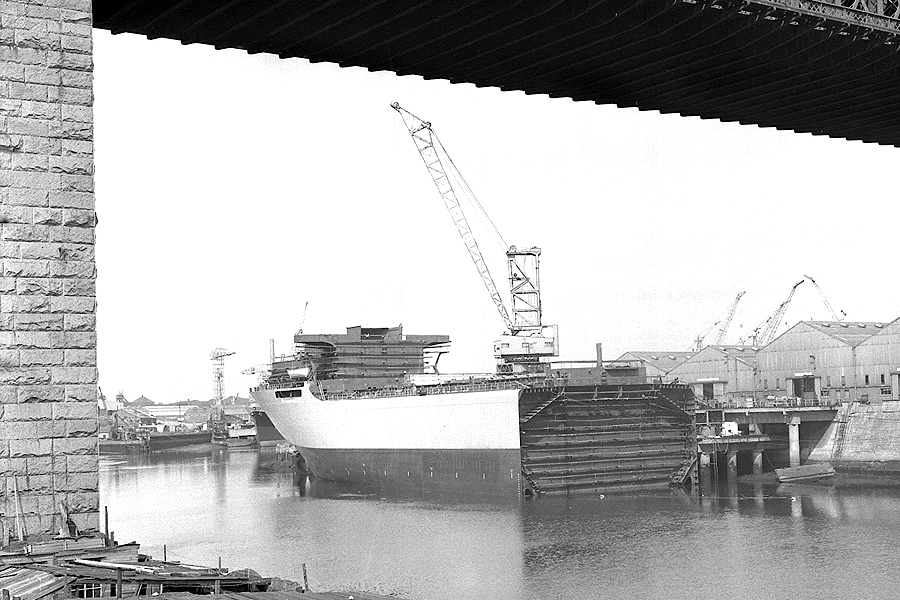
The stern of ‘Sygna ‘under construction at the yards of Austin & Pickersgill, England, 1967 [Sarah Stoner]. The ship broke into two at the midway point, as shown in the photo, on Stockton Beach.
Storm of May 1974
In May 1974, severe storms, with gusts reaching 165 km/hour, generated heavy swells off Newcastle and surrounding regions. During the storm, the Sygna was anchored 4 kilometres off Newcastle, waiting to load coal, when the Bureau of Meteorology issued a severe storm warning and ordered ships to head out to sea. The majority of ships anchored off Newcastle complied, but the Sygna did not and remained anchored till the next day.
As the storms persisted the Sygna commenced to sail further out to sea the next day. The storms were so severe that the ship lacked sufficient power to maintain the course and was driven ashore on Stockton Beach north of Newcastle, near Port Stephens
Rescue of the crew and the salvage attempt.
The crew of 30 were evacuated from the stricken vessel by an Iroquois helicopter from the RAAF Base at Williamtown which landed several times on the deck.
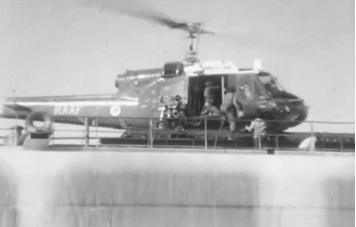
RAAF helicopter on the ‘Sygna’ evacuating crew members
In September 1974, a salvage team refloated the two sections of the Sygna after patching holes in the hull and pumping out much water. The stern was lifted first, followed by the bow.
However, during attempts to move to the ship into deeper waters, it split in two. The bow stayed afloat, however the stern was grounded again in the sand off Stockton Beach.
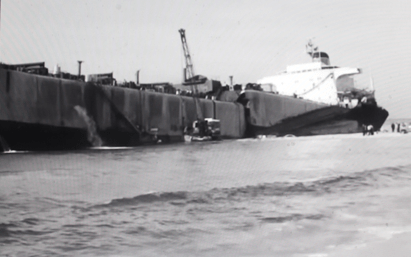
‘Sygna’ broken in half on Stockton Beach with salvage operations under way
A second salvage operation in November 1974 to refloat the stern section of the Sygna failed and resulted in a very heavy oil spillage on Stockton Beach.
No further salvage operations were undertaken and the stern of the Sygna, still firmly remaining in place, was left to slowly rust and disintegrate.
Severe storms on the weekend of 4-5 June 2016, caused much of the visible remaining structure to collapse into the ocean.
Bow of MV Sygna moored at Port Stephens
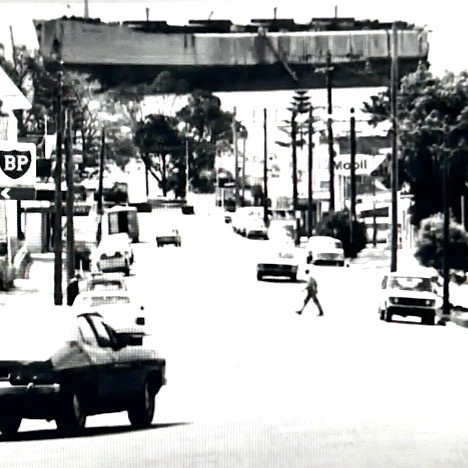
The bow, which remained afloat after the first salvage operation was towed into Port Stephens for temporary anchorage until January 1976, before being towed to Taiwan to be scrapped.
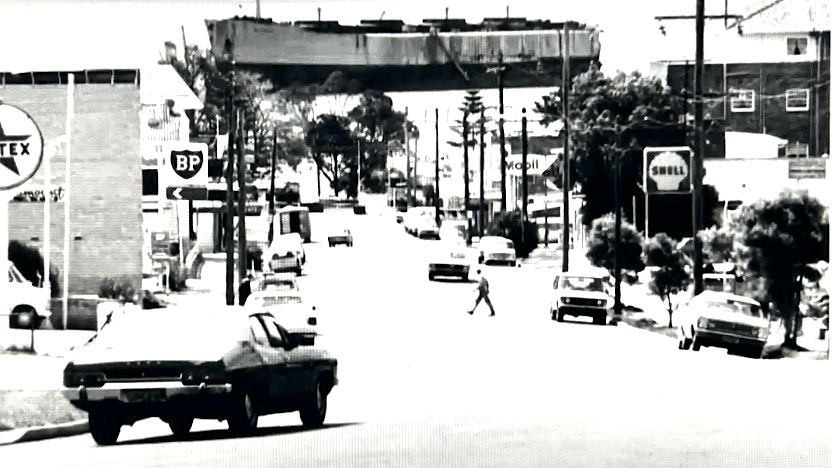
View down Stockton Street, Nelson Bay showing the bow of the ‘Sygna’ moored in Port Stephens, awaiting transfer overseas for scrapping – 1976
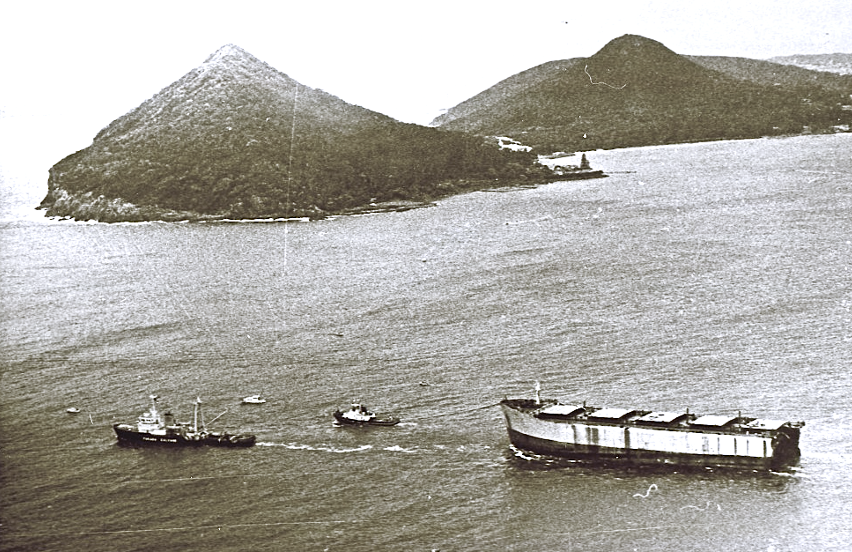
Bow of the ‘Sygna’ under tow from Port Stephens commencing the journey to Taiwan for scrapping [Bert Lovett collection]
The bow section arrived at Kaohsiung, Taiwan, on 26 February 1976 for breaking up by Nichimen Trading Company (of Japan).
Concluding Comments
On 26 May 2024, the 50th anniversary of the foundering of the Sygna attracted much media attention. Numerous stories about the event were published. Previous anniversaries had also attracted media attention.
The story of the MV Signa is part of the maritime heritage of the Newcastle and Port Stephens area.
For many years the Sygna wreck served as a tourist attraction and was featured in numerous tourism promotions for the Port Stephens region.
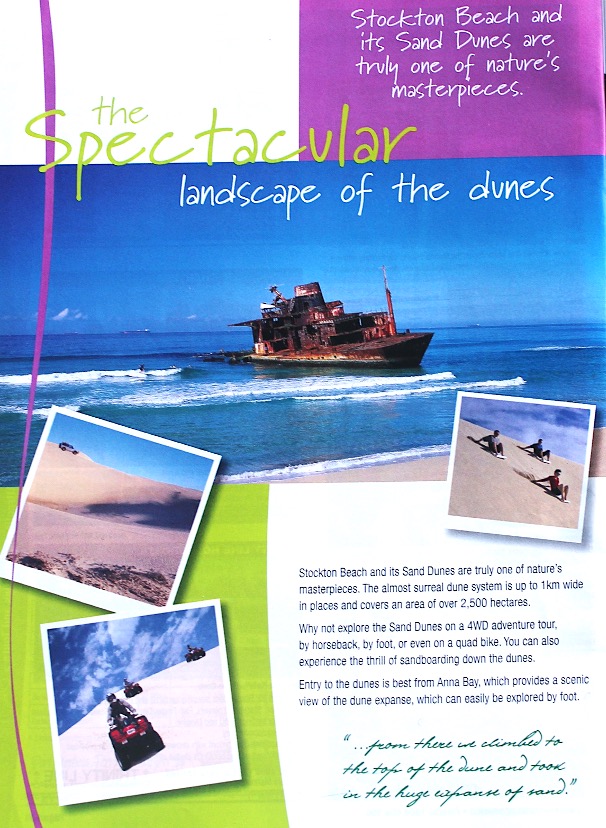
The wreck of the ‘Sygna’ as promoted in the 2005 Port Stephens tourism booklet.
Further details on over 100 shipwrecks in the Port Stephens are published on this website and can be viewed at the following links:
A History of 110 Shipwrecks at Port Stephens – 1800 to 1950
Shipwrecks inside Port Stephens – 1869 to 1950
Captain Thomas Kehoe – Three shipwrecks at Port Stephens
Wreck of the Cora Lynn off Port Stephens
Wreck of the Psyche in Port Stephens – 1924
Morna Point – A Graveyard of Shipwrecks
Wreck of SS Uralla near Birubi Beach, Port Stephens – 1928
Wreck of SS Pappinbarra at Port Stephens
Foundering of SS Oakland off Cabbage Tree Island – 1903
Wreck of Florence Irving at Port Stephens – 1877
Wreck of SS Macleay near Port Stephens – October 1911
Wreck of the Maud Watson That Was Built at Port Stephens – 1904 – 1904
Hulk of the Drogher ‘Terara’ at Port Stephens
Hulk of the Drogher ‘Iluka’ at Port Stephens
Hulk of the Drogher ‘Salamander’ at Port Stephens
Researched and compiled by Kevin McGuinness
June 2026


