
Introduction
Raymond Terrace became a local government centre in the Port Stephens area in July 1884, when the area was declared a municipality.
In February 1885, several NSW parliamentarians, newspaper reporters and government officials made a day trip to Raymond Terrace for a banquet hosted by local residents, in honour of their member for Gloucester in the NSW Parliament, Robert Hoddle Driberg White.
The visit attracted extensive newspaper coverage.
Concurrently, the Acting Colonial Secretary, William Bede Dalley, in the days before Federation, had committed troops from NSW to Britain to provide support for their war in the Sudan.
Mr Dalley could not attend because he remained in Sydney overseeing preparations for the controversial deployment of NSW troops.
This paper examines three related topics:
- The banquet and the Sudan War commitment;
- The journey of the attendees aboard the steamboat SS Express from Newcastle to Raymond Terrace; and
- The formation of a local Patriotic Committee to raise funds for NSW troops serving in the war.
Banquet at Raymond Terrace and the local commitment of troops to the Sudan War
The Sydney Morning Herald of 25 February 1885, page 7, reported:
‘The Ministerial party, consisting of Messrs. Norton, Abbott, and Trickett, accompanied by Messrs. R. H. D. White and W. H. Edmunds, together with the representatives of the press, left Sydney by the steamer ‘Newcastle’ last night, reaching Newcastle about half-past 4 this morning.
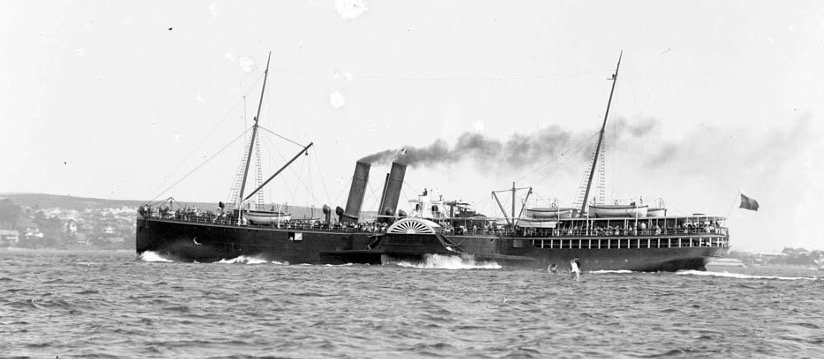
Paddle steamer ‘Newcastle’ on Sydney Harbour [Australian National Maritime Museum, ANMS1092[069]
The steamer ‘Express’ met the party, having on board Mr. J. S. Hart, Mayor of Raymond Terrace; Mr. E. C. Singleton, bank manager; Mr. John Richardson, returning officer for Gloucester; Dr. Harris, and other leading residents. The steamer left Newcastle about 9.30 a.m., reaching Raymond Terrace at 12.30 p.m.
The town was decorated with bunting, and the band stationed on the jetty played “See the conquering hero comes” as the steamer drew up to the wharf, where a number of residents were mustered. The party proceeded to the Junction Inn [opposite the wharf], where the Mayor read an address to the Hon. J. P. Abbott, Minister for Mines; the Hon. W. J. Trickett, Minister of Public Instruction and the Hon. James Norton, Postmaster-General.
After offering a hearty welcome on behalf of the Mayor and aldermen of Raymond Terrace on the occasion of their visit, the address proceeded as follows:—”The absence of the hon. Acting Colonial Secretary from our midst today, owing to the calls of duty, makes it more than over imperative upon us to express to you, as numbers of our fellow-countrymen have already done, our unqualified approval of the course taken by him and the Executive Council in offering such assistance to the Home Government as this country can supply for service in Egypt [Sudan War], and we respectfully request you to have the goodness on your return to Sydney to hand to the Hon. the Acting Colonial Secretary an address which the Mayor was to have presented to him today on behalf of the residents of this town, assuring him on our behalf that while we regret his inability to visit us as he intended, we heartily appreciate the reasons which at this critical juncture have prevented him at the last moment from doing so.
Our sympathies are with this important movement, and as soon as this day’s proceedings are over we propose entering upon the work of forming a branch Patriotic Fund for this district, in the meantime, permit us to assure you that with the pleasure of your visit, and of the honour thereby conferred upon our town, we are by no means unmindful of the fact that you are members of a Ministry whose chief is still suffering from the effects of the unparalleled cares and labours of office.
Moreover, it is well known that you, in conjunction with the Premier, whose restoration to health and office we hope to hear of shortly, introduced measures of the greatest practical importance to this country, and which by unwearied perseverance you carried through Parliament against the most strenuous and is equally unwearied opposition. In conclusion, permit us to say that we thrilled all in our power to make your visit to our town as pleasurable to you as we are sure it will be profitable to us.”
Mr. Abbott, for himself and colleagues, expressed his deep satisfaction at the very cordial reception upon the occasion of his first official visit to Raymond Terrace. As a Hunter River man it was a source of gratification to him to find the town formed into a municipality [in July 1884]. He regretted that their Acting Chief could not be here today, as the visit would have afforded him particular pleasure but he was engaged in active preparation for the despatch of the troops to Egypt.
It would be most gratifying to him to find that his action and the action of the Government had met with the approval of the people of Raymond Terrace. It was the duty of the child to assist the parent, and this action of New South Wales would have a great moral effect. It would show that if trouble came upon the parent country the colonies were prepared to stand by her.
The banquet to Mr. White was held in the School of Arts, which was profusely and elegantly decorated with flags, evergreens, and flowers. Mr. Hart, Mayor of Raymond Terrace, presided. On the chairman’s right were Messrs. White, Trickett, and the Rev. S. Simm [Raymond Terrace Church of England minister], and on the chairman’s left hand where seated Messrs. Abbott and Norton. About 100 gentlemen sat down, comprising many of the leading residents of the district.

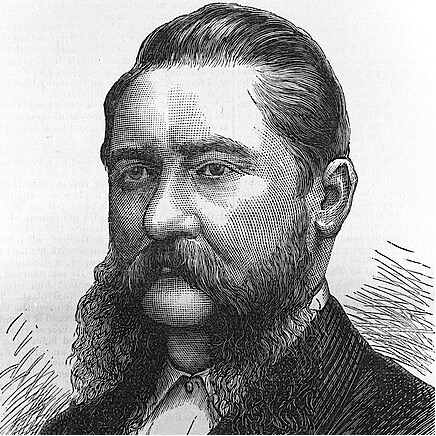
Mr. R. H. D. White – NSW Member for Gloucester
After the loyal toasts had been duly honoured, Mr. Henry Cortney proposed the toast of “The Ministry.” In the course of his speech, he remarked that the work of the present Ministry spoke for itself. The lines of the Stuart Government had been cast in critical political times, and during their existence a weak or negligent Minister at the helm of the State might have brought about the most serious national consequences. The colony had been forced for the first time in its history to adopt an international policy, and the diplomatic as well as legislative functions had to be undertaken by our constitutional rulers. In this war vote it was true they had not escaped censure; but their grand indifference to the swagger of a portion of the press and the taunts of intercolonial starvation in reference to the annexation question, in his opinion, had been one of the most refreshing features in the formation of this new free policy.
In matters of more local concern Raymond Terrace would always remember the Stuart regime with satisfaction. Its reputation of being the champion Sleepy Hollow of the colony had passed away, and the district had been in a great measure aroused to a sense of its importance and resources. It was the present Colonial Secretary who gazetted this beautiful little township a municipality, and through the indefatigable exertions of Mr. White more money had been spent in improving the district than was laid out here by any other way eminent that had held office in New South Wales. He called upon them to drink the toast of the Ministry.
Mr. Abbott, who was received with cheers, thanked them for the cordial manner in which the toast had been received. It was a matter of intense satisfaction to the members of the Administration, although he felt they were not entitled to be spoken of in such laudatory terms as the proposer had used. If he had said the Administration had done what they thought right, and according to their rights, he would have better summed up their actions.
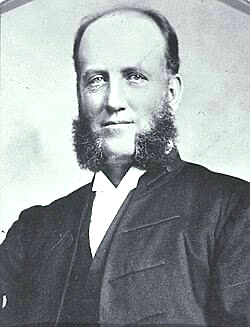
Joseph Palmer Abbott – NSW Member for Gunnedah and Minister for Mines attended the Raymond Terrace banquet [Wikipedia]
As a native of the Hunter River district, its prosperity was always gratifying to him. He was born in the Upper Hunter district, and those who lived in the Lower Hunter would know that the prosperity of the whole was a matter of satisfaction to all. He looked upon the Hunter River district as the garden of Australia, for he had travelled through the colonies, and in no place could there be seen anything to equal the rich agricultural and pastoral lands of the Hunter River. No doubt they were all disappointed at Mr. Dalley not being there that day, for Australians looked with pride upon him.
It was also a matter of disappointment to Mr. Dalley himself not to be present. They were all aware that the Government had taken a course which some had condemned; but the whole country had applauded them for their action. He was alluding to the expedition to the Soudan [Sudan]. Many adverse critics said it was unnecessary, that England did not require assistance at the hands of her colony; but while admitting that England did not require it, he maintained that England, just as much as in Nelson’s time, expected every man to do his duty — and if these troops might not be required, in the Soudan, he was sure when they got there they would go a good account of themselves, and colonials would proudly tell many a tale of their exploits.
This colony had no military history to be proud of, but they might proudly write the history of their loyalty to the mother country. It was a little over 100 years since George the Third lost one of the proudest gems of Britain— the American colonies. If a little consideration had been shown to those colonists England would now have upwards of 50 million supporting the throne, who had been alienated through want of consideration.
They had heard a great deal about the want of consideration of England for the colonies in the matter of annexation; but he thought there was plenty to be done in this country without sending men up to a place where men fainted at 6 o’clock in the morning. He felt sure the bulk of the people must approve of the expedition to the Soudan. This colony had many lessons to learn from it, and it would probably teach the lesson that the people of the colony were still loyal; that although they might feel sore because England had not complied with their request, they had not allowed that scenes to interfere with their sense of duty.
What could be a better thing than to see a parent supported by his children? This colony, like a faithful child, had shown to England that its people were prepared to stand by her. That her prosperity was ours, and that her glory was ours, and that so far as these colonies were concerned all of them were prepared to stand by her. They would share her troubles and duties with her. They were sending a body of men into Egypt who would render material and substantial service. They were men of magnificent physique, and if good Scotchmen from the cold North could endure the climate of Egypt surely Australians could do so.
Some opponents of the Government said that their chief was ambitious and prepared to sacrifice the country; and one gentleman had condemned the action of the Government in no measured terms. He might tell that gentleman if the Government had any influence after the Soudan was settled, they would Endeavour to get him appointed Governor of the Soudan. ……
He thought the warlike spirit which had been evoked would show any foreign power that though they might make levies upon us and harass our trade, still we were a warlike people, prepared to defend ourselves against invasion or wrong. But, as Mr. Dalley was about to visit Orange, he would not say any more about the Soudan lest he might be anticipating him. He did not agree with what had been said about Raymond Terrace being a sleepy hollow, for if they pulled and worked together, as there was evidence of their doing, they would no longer be open to that charge. ….. He concluded by paying a compliment to the member for the district, who was a reasonable man, and as such carried more weight with the Government.
Mr. [William Joseph] Trickett, who was loudly applauded, also returned thanks. After a few introductory remarks, he said he found that through the zealous endeavours of their member the requirements of Raymond Terrace were nil; or, if he had failed to find them out, they were in good hands with their representative. This district was well known as one of the oldest in the colony, possessing some of the best vineyards, and producing some of the best whites, which were world renowned.
They all regretted Mr. Dalley’s absence through his being engaged in a grand scheme which originated with him. He (Mr. Trickett) was glad for the honour of Australia and the Empire that the grand offer of the colony had been accepted, and was appreciated not only by the Empire, but by Lord Wolseley in the Soudan —who was ready and willing to accept the services of the Australians, who, he was sure, would be a worthy accession to his force. Why should they not be? Did not Australians win in the field of sport? and only that day the Australians had won the match with the English cricketers. When they engaged in literature and education they generally came off well, and why should they not do the same in battle?
He hoped that the few men being sent to fight would bring back honour to the colony. He felt proud of being one of the Ministry which decided to stick to the mother-country in the present critical time. With regard to Parliament, there was a most promising feature for the future of Australia—that was, the young Australians were coming to the front to help in managing the affairs of the country. The affairs of this country were of considerable magnitude, and some of as great questions were before the people as ever there were in those days of which it was said there were political giants. They had come to do honour to their representative, whom he found that to know was only to esteem and to honour.
Mr. [James] Norton, in responding, said that when he first visited the district, about 40 years ago, there was not one house in the place. Now he found a prosperous district and people, represented by a member of Parliament worthy of the district. He had known Mr. White for upwards of 40 years and had never heard anything to make him regret his friendship. He was proud to belong to this Ministry, whose actions he had had no difficulty in approving. They had been very unanimous and had passed some very bold measures. The Land Bill was one of the boldest ever brought forward. The other boldest measure was sending troops to the Soudan. He did not mean to say the English Government could not do without these troops; but the sending of them would have a great effect on the future of this colony.
The moral effect would be tremendous. They would remember that when England and France declared war against Russia little Italy offered her services, and her action then precipitated her into a nation, and since that she had taken a leading part in politics. He did mean to say that the offer of New South Wales would have a somewhat similar effect, nor that he wished to cover the connection with the old country. That was the last thing he would favour.
It was gratifying to the whole country to know that Lord Wolseley had greatly approved of the despatch of our troops, and he was confident they would do their duty under all circumstances. He mentioned the fact that Lord Wolseley was the owner of station properties in New South Wales, and he hoped he was deriving large revenues from them. That fact would give them greater interest in him.
Mr. John Richardson proposed the toast of “The Parliament.” Mr. Norton, for the Council, and Mr. White, for the Assembly, responded.
The Rev. Samuel Simms, in a humorous speech, proposed the toast of their member. After alluding to the eulogistic manner in which Mr. White had been spoken of, he referred to the importance of the district which Mr. White so ably represented. He was quite sure Ministers were aware of the extent of the electorate, but he wished the visitors to know something of its importance. They had an enormous extent of splendid agricultural and pastoral land, not including the territories of the Australian Agricultural Company, than which no company had conferred greater benefits on the lands—a fact he was prepared to prove to the satisfaction of any reasonable man at any time.
Beyond that territory there were immense areas of land which would yet have to be taken up. They had vast mineral resources. He believed it was proved beyond all question that this district, at present undeveloped, was very rich in minerals. There was to be found in the district the best ironstone not only in Australia but in the world, yielding 90 per cent. of ore; and within the last few months, through the agency of the diamond drill, a seam of coal 8 feet thick had been passed through, and beyond Stroud coal was seen jutting out of the gullies. At the present time there were no fewer than 15 sawmills in the district, which turned out 200,000 feet of timber weekly for New Zealand and other parts, employing 200 hands, and paying £400 weekly in wages.
Then they had a coastline consisting of little and big coves, rights, and bays, with one harbour second only to that of Sydney. So, it was an electorate any man might be proud of representing in Parliament, and he knew no man better able to represent it than their guest. He did not suppose that if they hunted the colony over, they would find a better representative than their guest, the toast of whose health he proposed.
Mr. White, who had a most cordial reception, said he could hardly give oppression to the pride he felt on that occasion. He was delighted to see the Terrace so much altered and improved as it was. The banquet had to be held in the afternoon because the Ministers had to get away early, but if it had been held in the evening the building would not have been able to hold them. It was a gratification to him to see Ministers of the Crown taking an interest in the welfare of the district, and when the Parliamentary picnic should be held it would be given at Port Stephens, so that the members and Ministers would have an opportunity of seeing that harbour, and thus they would be afforded, such an insight into the electorate that he believed no money votes would be refused again.
He took great interest in the fact of our fellow-colonists going to the war. He felt they were composed of the right stuff and would reflect honour on the colony. The natives of this colony had a great work before them. Dangerous times were coming on, and our men would have to be up and doing. When the volunteer vote was before Parliament some persons ridiculed it, but he spoke at some length in its support, and pointed out that complications were likely to arise, and that therefore the military forces of the colony should be placed on a better footing.
He had made extracts of his speeches, but by some unlucky oversight omitted bringing them with him, but he had no hesitation in saying he would vote for a Militia Bill, to provide that a certain portion of the population should, undergo training to prepare them to defend their country, but he would pay them well whilst they were undergoing training, so that none of them should suffer whilst doing a public duty.
He was proud to hear the Mayor state that steps were to be taken to constitute a local branch of the Patriotic Fund, because many families would be left without a head, and it was our duty to help them to the best of our power. He would be only too delighted to join them in the movement and would hand a cheque for £100 towards the fund. What he had seen that day had pleased him more than he could describe. All he wanted them to do was honestly to tell him whether they wished him to represent them or not. He wished them to let him know and would entirely abide by what they said.
So far as work was concerned, Parliamentary life was very hard work, and several occasions on going from the House to the cold morning air, he had caught cold on his chest and had been confined to his bed. He would do his best for the progress of the district. He thanked them heartily for the honour they had done him.
Other toasts followed, and the proceedings terminated about 7 o’clock. In proposing the toast of “The Press,” Mr. W. E. Shaw stated that upwards of 92,000 papers and 3800 sealed bags passed through Raymond Terrace Post Office yearly.
The following address was presented to Mr. White, on behalf of his constituents: — To Mr H. D. White, M.L A. Dear Sir, — Before the expiration of your present season of well-earned rest from active service within the walls of the Legislative Assembly, your constituents desire to thank you for the unremitting attention given to their interests during the late unprecedentedly long and trying session, as well as throughout the whole of your career as their representative in Parliament.
Never since the institution of responsible government in New South Wales have members of Parliament been called upon to remain for such a protracted period at their posts, or to deal with questions of graver national importance, and your unwearying devotion to duty all through this trying political ordeal has been the theme for congratulation in your electorate. In all the broader questions of the day and it has fallen to the lot of the present Parliament to have to deal with some of the most momentous issues that have ever engaged the attention of the country the division lists testify both to your faithful attendance at the House, and sound judgment in voting.
Although fully aware of the large sacrifices of time and labour that must have been exacted by the Land Bill alone, on the careful consideration it has received at your hands, your constituents have never hesitated to demand your attention for any matter of local concern in the certainty of at all times being responded to with cheers fulness and courtesy. The want of a system of local self-government renders these calls, of necessity, more frequent than is desirable; nevertheless, you have never been appealed to in vain upon any matter, whether great or small, by which the interests of your electorate were affected.
In its approaching session Parliament will be called upon to exercise a particularly wise and deliberate judgment in dealing with the serious international entanglements in which the colonies have lately become involved, through events which have taken place in New Guinea and other islands of the South Pacific Ocean. To guide the destinies of this great continent safely through the subtle meshes of European diplomacy, which are gradually twining round our shores, is the supreme task now imposed upon our rulers; and we take this occasion of expressing the full and implicit reliance which we place in you, to worthily represent this electorate in dismissing and determining the best form of State policy with which the situation should be confronted.
In conclusion, we trust that after the recess you will resume your duties with renewed energies, and that you will be spared to represent the electorate of Gloucester in future Parliaments with the same ripened abilities that you have displayed during your past political career.”
Mr. White in reply, thanked them most heartily for the honour which had been done him, and also for inviting the Ministers of the Crown and other friends to meet him, as well as for presenting to him the gratifying address he had just received from them.
When he was first returned to Parliament, he did not fully comprehend the magnitude of the task he had to perform, in looking after such an important and extensive electorate. He found their roads neglected, their annual vote too small to keep them in repair, and their public buildings were out of order; but, thanks to the present Government, these things had been attended to, and for the future they might expect a better state of affairs.
Since he had been member for the district, he had always tried to induce the members of Parliament to visit the electorate, and to take an interest in its resources, as well as to admire its beauty. And for this purpose, he had issued invitations for a picnic to Port Stephens during the Easter holidays; and when the hon. members had seen the Myall Lakes, the Karuah River, &c, future money votes for the district would be safe. [The promised picnic never eventuated].
He then referred to the North Coast Railway and the Local Government Bill as measures he was anxious to see carried. He congratulated them upon the progress that had lately been made in the town and also thanked them for their continued confidence in him. If a large majority of the electors were satisfied with his conduct and were to send him a requisition pledging their support, he was prepared to continue to be their representative.’
Overview of the Sudan (Soudan) War
In the early 1880s, a revolt led by Muhammad Ahmad, the ‘Mahdi’, challenged the British-supported Egyptian government in Sudan [a country in Northeast Africa]. In 1883, an Egyptian force sent south with British approval was crushed, forcing the authorities to evacuate the survivors.
When the evacuation faltered, Britain sent General Charles Gordon to organise the withdrawal. Instead, he defied his orders, attempted to defeat the Mahdi and became trapped under siege in Khartoum. Public pressure led to a relief expedition from Cairo in September 1884, but Gordon was killed in late January 1885 before it arrived. News reached NSW in February, fuelling criticism that William Gladstone’s Liberal government had acted too slowly.

General Charles George Gordon [Wikipedia]
Following Gordon’s death and Canada’s troop offer, the NSW government volunteered a fully funded contingent to Britain. London accepted on the condition that it serve under British command, while declining similar offers from other Australian colonies. The 758-member contingent departed on 3 March 1885 after a public holiday and grand farewell, but public support was divided.
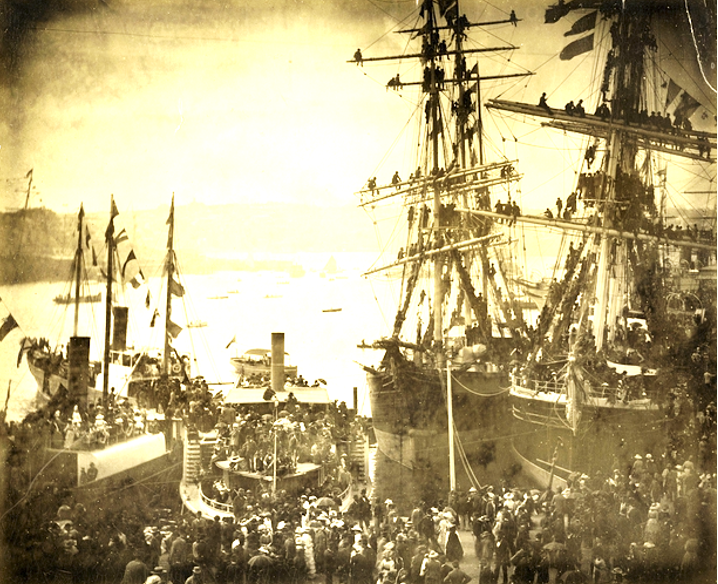
Departure of the NSW Contingent for the Sudan, 3 March 1885 [Australian War Memorial, A05215]
Arriving at Suakin [city in northeastern Sudan] on 29 March 1885, the contingent joined a brigade of Scots, Grenadier and Coldstream Guards. It soon marched to Tamai, 30 kilometres inland. Along the way, the Australians faced skirmishes, suffering three non-fatal casualties.
After Tamai, most of the contingent guarded work on a desert railway towards Berber. On 15 May, the corps made a final sortie to bury men killed in March.
Australian losses were minimal and caused by disease, not combat. When Britain ended the campaign and retained only a garrison at Suakin, the contingent sailed for home on 17 May 1885. The contingent returned to Sydney on 19 June 1885.
Residents of Nelsons Plains meet with the Hon J. P. Abbott
The Newcastle Morning Herald and Miners’ Advocate of 28 February 1885, page 3, reported:
‘The presence of the Hon. J. P. Abbott in Raymond Terrace, on Tuesday, was taken advantage by some of the residents of Nelsons Plains, who were introduced by Mr. R. H. D. White and the Rev. S. Simm pointed out to the Minister that, whereas at Hexham ferry with a small traffic, a steam punt had been supplied, the ferry across the Williams at Nelsons Plains, with a very extensive traffic, was still supplied with the old fashioned hand-worked punt. Mr. Abbott said he presumed a record of the traffic was available and promised on his return to Sydney to see Mr. Bennett, and have an officer despatched to report upon the matter.’
Description of the trip to Raymond Terrace on the Steamer SS Express
The Newcastle Morning Herald and Miners’ Advocate published two articles in its issues of 3 March 1885, page 7, and 5 March 1885, page 7, written by its correspondent using the name of ‘New Chum’ who made the journey aboard the steamship SS Express from Newcastle to Raymond Terrace.
The following two articles provide as timely description of the Raymond Terrace locality in 1885:
‘To any person who has never been up the river, Raymond Terrace will present many features of interest and will be an agreeable change from the smoke and dust of Newcastle. Such a trip we had the pleasure of making on Tuesday last on the steamer Express, on the occasion of that vessel conveying to that place certain members of the Ministry, as well as Mr. White, M.P., the latter gentleman having accepted the invitation of his constituents to partake of a banquet at “The Terrace.”
The Ministers on board were Mr. Abbott, Minister of Mines; Mr. Trickett, Minister of Education; and Mr. Norton, Postmaster-General. There were also several other gentlemen from Sydney, as well as three reporters from the Sydney Press, and one from the Newcastle Herald. In addition, were the Mayor of Raymond Terrace and the banqueting committee, who came down to Newcastle that morning in order to meet Mr. White and the Ministerial party and escort them up the river to the scene of the festivities.
Mr. Hopkins, the clever caricature artist of the Sydney Bulletin was likewise on board, so that the party, though small was decidedly select. The little steamer was gaily decorated with flags, and as we cast off from alongside the S.S. Newcastle, we presented a decidedly gala appearance, and several unenlightened people on the wharf wondered what it was all about, and they little knew the importance of the living freight on board, who, though few in number, had decidedly a pretty good opinion of themselves.
The ‘Terrace’ committee consisted of Mr. J. S. Hart, Mayor of that place, and Messrs. Henry Courtney, proprietor and editor of the Raymond Terrace Gazette, John Richardson, the Returning Officer (whose duties in that direction must be extremely laborious), E. C. Singleton, manager of the Joint Stock Bank, and Dr. Harris. These gentlemen had left the Terrace at 7 o’clock and reached Newcastle in the ‘Express’ shortly after nine. Then there was Messrs. W. Hall, of the Sydney Morning Herald, J. Scantlebury, of the Sydney Daily Telegraph, and Mr. B. J. F. Atterbury, of the Evening News, together with ourselves in the Press line. Nor should we forget Mr. W. Edmunds, the well-known and rising Sydney barrister.
The morning was indeed a beautiful one, and the harbour, with its crowd of shipping some moving, but most of it at anchor—at once testified to the importance of Newcastle as a port. It had, too, a most enlivening effect upon the spirits; and though, of course, not to be compared to ‘Our beautiful harbour’ (Port Jackson), it nevertheless, presented many features of attraction.
We soon entered on to what we may call the river proper, clear of the shipping, the muddy water running swiftly down between the low but well-defined banks. Notwithstanding that we had the tide against us, we made good progress, and it was reckoned that we should reach the Terrace in a little over two hours. The appearance of the land, on either side of us, somehow or other put us in mind of duck-shooting, and we proceeded to make enquiries on the subject, believing that all we had to do was to borrow a double-barrelled gun, go out about five in the morning, and bring them down half a dozen at a time.
Then we learned that, in the first place, this is the close season; and, in the second, that ducks are by no means so plentiful in this part of the world as they used to be. It is not so many years ago when they could be procured—say at “the Terrace”—for a shilling a pair; but that time has long gone by, and if you want a brace, you have now or had before the close season to pay between three and four shillings for them.
Before we have finished our conversation on the question of ducks, we are abreast of a tall chimney some distance away on the left, which we find belongs to the Waratah Smelting Works, the copper ore for which comes down, or round, from South Australia. As we speed onward, we notice a decided change in the atmosphere, the air is milder and altogether more clearer than the sea air we breathe in Newcastle. The air today is almost as clear as it is possible for it to be, and the wide stretch of water up which we are rapidly proceeding, as a consequence looks much narrower than it is.
The channel is marked out for the safety of steamers with red beacons on the right and white beacons on the left bank, the white ones being powered so that in the event of a vessel coming down in the dark, and not being quite sure of its bearings, it is easily ascertain its position by reference to any of the posts in question. ….. At Mosquito Island there are evidences of some kind of life in the shape of several cottages, and a crowd of women and children are standing at the doors and wave some kind of clothes or handkerchiefs as the steamer passes. We wonder do they know the importance of our human freight— three Ministers! to say nothing of an ordinary member of Parliament, several members of the Press, and a live Mayor. Perhaps not, poor things, but they wave their banners all the same.
There are some boats drawn up or at anchor near the beach, and we learn that this is a fishing community. Well, we don’t envy them living on that island when we learn that it derives its name from the size, ferocity and voracity of its mosquitoes. There are quite enough of these pests in Newcastle to satisfy us. But we are easily contented.
By this time, we are close up with the Magic, a steamer of our own class, belonging to Messrs. J. and A. Brown, and naturally we are glad when we give her the go by. We are still off the Island, which appears to be about a thousand acres in extent, and which is so flat and so bare of vegetation, except grass, that we imagine it would make a racecourse. Only it would be difficult of approach, and its course would be somewhat soft and treacherous.
Renewing our conversation with one of the Raymond Terrace settlers, we learn that that place is rich in exports of a certain kind. For instance, it produces splendid millet, samples of which took the first prize at the late Wealth and Industrial Exhibition in Sydney. Then it does a large trade in the way of “prawns,” with which it supplies both the Sydney and Melbourne markets to a very large extent. There are no less than about twenty-eight boats engaged in prawn fishing during the season, each boat employing a couple of men. The fishing is done by net, mostly at nighttime, but when the water is unusually thick, the little dainties can be caught by day light, as they can’t then see the approach of their enemies. This muddy water, however, only obtains when a fresh comes down.
We have now passed Mosquito Island, and the river is somewhat narrow, but the banks and the land inward on each side present a more pleasing appearance. The bush is thicker and greener, and away ahead seems much higher. Ash Island offers a marked contrast to that inhabited by the mosquitoes and the fisherman and shows many pretty sites on which could be erected “desirable villa residences” with excellent water frontage. And the water this morning is almost without a ripple, and glistens cheerfully under the morning sun.
As we turn a bend we catch a view of the residence of Judge Windeyer at Tomago, on the right. It is a beautiful place situated in a beautiful spot, and its beauty enhanced by beautiful surroundings. In fact, it is beautiful altogether, and we envy the “learned judge,” who, no doubt, blesses the vacations so that he may retire to his peaceful retreat on the Hunter. We learn that not only does his Honor own this residence and immediate surroundings, but a very large estate, which stretches away to the right and left, and rear of the house as far as the eye can reach. And again, we say thrice, happy judge. Not that he earned this large estate by the sweat of his brow, or the genius of his brain, for it was a grant to his father in years gone by. Not that that should interfere with his Honor’s full appreciation and enjoyment of it.
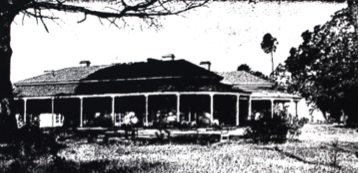
Tomago House -former residence of Judge Windeyer [Sun, 16 August 1953]
We soon pass and leave behind us a little village to the right, while on the banks of the river to the left there rises a somewhat thick clump of timber, among it being several handsome pine trees. Immediately beyond these is a “back channel,” navigable for vessels of a light draught. But what is this bustling place we come to now, with its wharf, and its cranes, and its steamers and its schooners lying alongside, and its scattered houses—the whole presenting quite a busy scene. There is a railway, too, running down to the bank, and a schooner is being laden with coals from a shoot. This is the village or small township of Hexham, the outlet of the Minmi coal mines. It is ten miles from Newcastle, and about the same distance from Raymond Terrace by water —though, if we cross the river here, in the punt, and go by the coach road, the distance is only six miles.
And we hear something about this punt which conveys the coach across the river. We hear that it is much larger than is necessary; while that at Raymond Terrace is much too small for the requirements of that thriving township. In fact, it is suggested that a change of punts would be mutually advantageous to both places. But later on, we learn that some of the settlers of Williams River have made a similar statement to the Minister about their township. It remains, therefore, to be seen whether the Hexham punt will go to Raymond Terrace or Williams River, and the probability is that it will stay where it is.
While we are speaking on these matters there is a thirsty look in our informant’s eye which induces us to ask whether there is a “public” [hotel] at Hexham. We learn with pleasure there is not. From the drinking habits at Hexham to the drinking habits of the ‘Terrace’ is an easy transition. “How did the local option vote go in that place?” we ask. ” Well, you see,” replies our obliging friend,” it wasn’t much of a vote after all.
The fact is, there was no opposition at the municipal elections, and consequently not much excitement. Still, the local option question was not altogether forgotten. In fact, there were thirteen votes on the subject—seven in favour of new licenses and removals, and five against them. So, you see the seven had it, and we can have more hotels if we liked. “That’s bad,” we observe, musingly, but are sorry directly afterwards, as we infer from the look of our informant’s eye that he was one of the seven.” But what about the thirteenth?” we ask. “Oh, he was informal.”
And then, as we don’t want to get into a local option discussion with the seventh part of the anti-local option population of Raymond Terrace, we change the subject, and remark that we are glad at least that there was no opposition in the aldermanic elections, as it showed a spirit of contentment that was rare in these days of change and excitement.
An old wooden building with a tall chimney on the left bank, to which we are pretty close, is the next feature of interest. The Evening News says it’s “an old sugar mill,” but on enquiry we learn that it is, or has been, a “boiling down establishment” — not of sheep or cattle, but of horses. Phew! Why even now we smell the equine aroma and accordingly retire to the cabin for a drink.
The committee have been very thoughtful; they have provided a nice light luncheon of biscuits and cheese, and fruit, which, washed down by beer or wine, descends with remarkable pleasantness—the more so as we have long since left the “magic” far behind, and are now approaching one of the Sydney and Newcastle steamers (the Lady Bowen, I think)’. Her we also pass before reaching our destination. But then, in her case, is is not a race, as she is not allowed to go more than six knots by law, while we are doing eight easily against a strong tide.
In our ignorance we think this restriction on the part of the large steamers was to prevent them from running down the smaller fry, but we soon learn that the real reason is to prevent. their washing away the farms of the settlers, some of whom have very considerably suffered from this cause. It isn’t a nice thing to purchase a hundred acres at about £80 an acre and find them disappearing at the rate of half-a-dozen a year. It’s not so very long ago that a resident of the Terrace bought a couple of allotments on the banks of the river, in the immediate vicinity of the town, but now they have completely disappeared. At this stage of the voyage we are told to “look out,” and, as we turn a bend of the river, Raymond Terrace bursts upon us in all its native glory.
It’s a beautiful spot, the township, as its name implies, being situated on a rise or terrace in the midst of a country of charmingly green vegetation, and with a broad sheet of water in front of it, for the river widens very considerably just before approaching the town. Indeed, the people call it “the harbour,” and though not up to that of Sydney, or even Newcastle, it is a most respectable sheet of water nevertheless—large enough to anchor quite a fleet of vessels if necessary.
The approaches to the Terrace, both left and right, are pretty and picturesque, and Spectacle Island, just before you come to it, on the right, is a most striking object, being covered with high and refreshingly green clumps of umbrageous timber. Ah, here we are, right in front of the town, and in a few minutes are alongside the wharf. Flags are floating from many of the buildings, and there is a small crowd of people on the wharf, to say nothing of a band all dressed in white. There seems to have been some oversight in not proclaiming the day a public holiday to welcome “our member” and the Ministers; but it can’t be helped now. There will, however, be plenty of people about by-and-bye, as there is to be a half-holiday later on.
It is now half-past twelve. In the meantime, the band strikes up “See the Conquering Hero comes,” which, although perhaps not altogether appropriate, is at all events decidedly complimentary, especially as it is followed by “Auld Lang Syne.” We are soon ashore and proceed in a body to the Junction Inn hard by, which hangs out a flag and blazons the word ‘Welcome’ over its portals in colours of red and white.
A general ascent is made to the balcony, and here the Mayor reads a loyal address to the Ministers, in which the Raymond Terraceites assure the Government they will stand by them in their Soudan expedition to the last man. Mr. Abbott replies in suitable terms, and then there is a general dispersion till the banqueting hour arrives, when all the nobility and gentry of these parts are to meet and dine with their member and the Ministerial party.
In the interval we take a walk round the town. All the places of business are closed, and we have not therefore an opportunity of witnessing it in its everyday aspect. Its two most prominent and public buildings are the Post and Telegraph Offices and the School of Arts. The latter is only just completed and is one of the prettiest little structures of the kind in the country. The town is built on a slope, and the various houses are a good deal scattered, even in the main thoroughfare, or fares. They have a pleasant, homely look that is quite refreshing after the crowded up residences in Newcastle.
The Terrace possesses some excellent hotels, among which is Mr. Otto’s Junction Inn, in the fittings-up of the bar of which the proprietor appears to take special pride. The streets are wide, and at present innocent of either asphalt on the footpath or metal on the road; but they have a carpet of grass of refreshing green, which is (at least, at this time of the year) so much more pleasant for the feet. There are, of course, the usual country schools and churches, smithies’, butchers’, bakers’, grocery, drapery, and other country stores indigenous to every country town; but, from the fact of there all being closed, we cannot testify as to the character of their contents.
There is no doubt a police station somewhere about, though we didn’t see it. However, we saw three of the “constabulary,” who doubtless do duty for the entire district. There are plenty of large open spaces and paddocks about the town, and these, we believe, are rapidly improving in value, as they are taken up with a view of being sold for ‘building allotments.’
We pensively stroll to the very top of the main street, until stopped by a quarry. Then we turn round and find ourselves right on the summit of the Terrace. As we sit upon a log and light our pipe, we don’t envy the fellows who stayed behind, for our seat commands a magnificent panoramic view in every direction. Flat and upland—divided into fields by natural and artificial fences, timbered and open—with the broad river winding away to the right on its sinuous course for miles and sparkling like burnished silver. For quiet beauty the scene could not be surpassed. It reminded us of some of the most pretty and picturesque spots in the old country. But we haven’t much time to spare.
So, finishing our pipe, we stroll back to the Junction Inn for the purpose of a wash before the feast. Here in one room, we find two of the Ministers, the whole three reporters, and the Bulletin artist, who ought to get some pretty good material out of the trip for a funny sketch or two. They are engaged in a general ‘fixing up.’
Soon afterwards we are all seated at the banqueting table. And now we have a jolly time of it, for everything is of the best, though we remark that a sad oversight is made in leaving out the vegetables. Bread is, of course, very good in its way, but one usually expects something in addition to it to eat with poultry and other delicious meat viands. However, we have a splendid feed; the best of good feeling prevails, the speeches are neither long nor dry, and when the proceedings are brought to a close about seven o’clock by three cheers being given for the Queen, we feel at peace with all men-even the overseer at the Herald and Advocate, who we know will ‘rush’ us for ‘copy’ directly we show our nose in Bolton-street [Newcastle].
So we go without delay (not wishing to keep that printing autocrat waiting when we arrive) on board the boat and proceed by the light of the “lantern dimly burning” to write out our notes on a gin case, while the rest of the party are taking a final farewell at the gorgeous fittings of Host Otto’s bar. However, they cause no unnecessary delay, being all on board by a quarter to eight, and five minutes later the little ‘Express is steaming for Newcastle at true express speed, amid the cheers of the crowd on shore, and the music of the band, who blown with a strength and vitality that speaks well for the invigorating lung power of its members and for the salubrity of the Terrace.
The last strains that fall upon our ear are those of ‘Home, sweet home.’ Then we glide silently but swiftly on our course under a full head of steam and a brilliant moon, the former bringing us safely alongside the wharf at half past nine, after a splendid passage of an hour and forty minutes; so ending our very pleasant trip to the far-famed Raymond Terrace.’
Formation of the Raymond Terrace Sudan War Patriotic Committee
In March 1885, a Patriotic Committee was formed at Raymond Terrace, despite only a meagre local interest, and donations commenced to be collected. Many NSW regional areas chose not to form a Patriotic Committee to support the Sudan War troops.
The Newcastle Morning Herald and Miners’ Advocate of 9 March 1885, page 3, reported:
‘A meeting of those who agree with the action of the Government in making an offer of troops to the Imperial Government for service in the Soudan was held in the School of Arts on Thursday night. There was a very meagre attendance, and very little public interest was manifested in the proceedings. A resolution was carried endorsing the action of the Government, and a branch of the patriotic fund was established. Mr. R. H. D. White headed the list with £100, and £26 was subscribed at the meeting.’
The Sydney Morning Herald of 14 March 1885, page 13, reported:
‘Yesterday the Hon. W. B. Dalley received a letter from the Rev. Samuel Simns, incumbent of St. John’s, Raymond Terrace, enclosing a cheque for £3 0s. 3d. as contribution from the children of his Sunday school towards the Patriotic Fund. This donation is the amount of the offertory on Sunday morning, intended in the first instance for rewards for the Sunday school children, but which the children unanimously requested should be paid in aid of the Patriotic Fund.’
The Sydney Morning Herald of 18 March 1885, page 9, provided clarification to the above newspaper report:
‘A slight error was made in notifying a small sum from Raymond Terrace some few days ago. The sum was the proceeds of an offertory in Tomago Church. It was in the first instance intended for the purchase of awards to the Sunday-school children attending the church, but Mrs. Windeyer (the wife of his Honor Mr. Justice Windeyer), at the request of the children, forwarded the money in aid of the Patriotic Fund. The significance of the action on the part of the children was due to the fact that a young man who had been for many years a resident at Tomago had gone with the Contingent. The sum was received through the Rev. Samuel Simms, incumbent of St. John’s Church, Raymond Terrace and Tomago.’
The Evening News of 18 April 1885, page 6, reported on one of the last contributions to the Patriotic Fund received from Raymond Terrace:
‘On Friday Mr, Dalley received £1 10s from Mrs. Harris, Raymond Terrace, the proceeds of an amateur concert on Easter Monday night.’
By September 1886, the NSW Patriotic Fund Committee overseeing the various local Patriotic Committees had closed the fund as there was little requirement to use the funds collected and decided to return the money collected (minus expenses) to the donors.
Concluding Comments
The stories outlined in this paper indicate that the residents had great admiration for their local member of the NSW Parliament, Mr R. H. D. White, who owned Tahlee House at Carrington, Port Stephens, in the 1880’s.
There was however a lesser appetite in becoming involved in a far away war, in Africa, in 1885.
Just over ten years later, in 1899, community sentiment for an overseas war, the Boer War, received much support resulting in local men enlisting to travel overseas to fight.
The story of the involvement of Raymond Terrace in the Boer War is published on this website and can be found at the following link.
Residents from the Raymond Terrace District of Port Stephens who enlisted in the Boer War 1899-1902
Researched and compiled by Kevin McGuinness
August 2026


