
Introduction
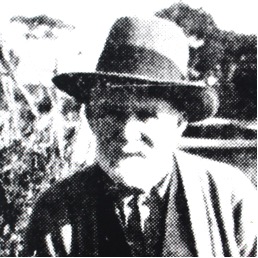
This is the story of George Henry Pepper and his wife, Mary Ann, longtime pioneers of the Port Stephens region.
George Peppers’s earliest memories of the area date to his childhood in Newcastle, where he witnessed convicts hauling coal from nearby mines.
Through hard work and several property transactions, the Peppers accumulated considerable wealth. As local benefactors, George and Mary generously supported community needs. Their descendants continue to live in the Port Stephens region.
This paper is divided into two parts:
Part One – Reminiscences of George Henry Pepper, and
Part Two: – Life and Times of George Henry Pepper and Mary Ann Pepper.
PART ONE – Reminiscences of George Henry Pepper
The Newcastle Morning Herald and Miners’ Advocate of 7 March 1931, page 12, published the following reminiscences of George Henry Pepper, which went back to his childhood when he recalled viewing convicts working at Newcastle:
‘It must be a fascinating experience to grow up with a city. That has been the good fortune of Mr. George Henry Pepper, now of Nelson’s Bay, whose life has been associated with the Newcastle district for nearly 90 years. His memories are rich with historical associations on which he delights to dwell.
Mr. Pepper was born at Meldreth, in Cambridgeshire (England), on November 1, 1842. Before he was 12 months old, he set sail with his parents from London Docks for Australia, on the ship Neptune (Captain Knight), the voyage occupying 138 days. His parents were able to secure employment at Kennington—once a popular picnic resort near Hexham—under Captain Daker. For their combined services his parents received 6/ a week, with keep.
The first £1 that he earned in the country, Mr. Pepper, senior, took to Raymond Terrace, and with portion of it purchased some groceries. On his return home he was intercepted by two footpads [criminals] on the Hexham road. He had spent 4/ of the £, and on refusing to hand over the balance of the money, was knocked into insensibility by the robbers, who left him lying by the roadside after having taken the change by force.
The family moved to Ash Island [situated in the Hunter River], where they worked for Mr. Scott; and about 1843 they obtained employment at Tomago, the property being owned by Mr. Richard Windeyer, father of the late Mr. Justice Windeyer. One of the first tasks given to Mr. Pepper’s father there was to draw stone from the wharf for the building of “Tomago House.” There are still many stone houses of similar construction to be seen in and around the lower [Hunter] district, which they will probably adorn for hundreds of years. The stone was quarried at Muree, on the boundary of Raymod Terrace, and was taken down the river in barges. Although of recent years there has not been demand for the stone from that locality. It has undoubted value, as is shown by the fact that a sample sent to the great Exhibition at Chicago, in 1893, won for it a medal for “strength, durability, and good colour.” Muree is at present owned by Mr. E. C. Armstrong, who has in his possession the certificate given by the judges at the exhibition.
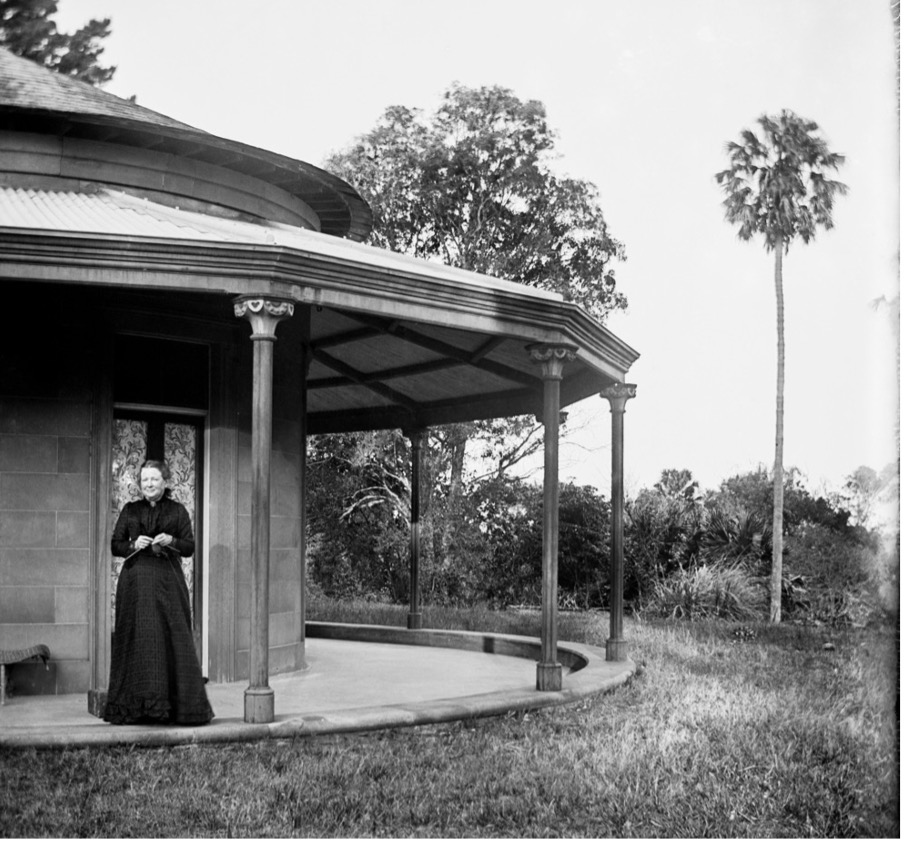
Lady Mary Windeyer, nee Bolton, wife of Sir William Charles Windeyer, at Tomago House – prior to 1912 [National Portrait Gallery]
At the age of nine years Mr. Pepper made his first trip to Newcastle. The circumstances impressed him. He saw work in progress in Hunter-street—convicts chained to handcarts, dragging stone from the wharf to the roadway! The impression left on his young mind has never been obliterated.
In 1867 he married Miss Moxey, the daughter of one of the pioneer Hunter River families. Three years ago, the couple celebrated their diamond wedding. Of a family of nine, there are six still living. The grandchildren number 36, and the great-grandchildren 53. After spending many years at Tomago Mr. G. H. Pepper leased a property at Long Bight [near Fullerton Cove]. In those days horses were scarce, and the wheat then grown was brought by bullock wagon to Raymond Terrace, where it was ground at Portus’ mill [located adjacent to the Hunter River].
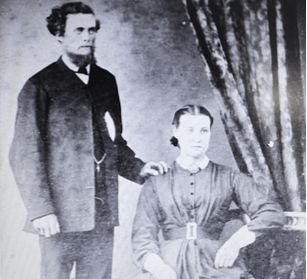
George Henry Pepper and Mary Ann Pepper, nee Moxey
He afterwards took up dairying. In this pursuit he prospered. In 1890 he brought the far-famed Motto property, on the Hexham – road, from the trustees of the estate of Mr. Thomas Walker, father of Dame Eadith Walker, of Concord, Sydney.
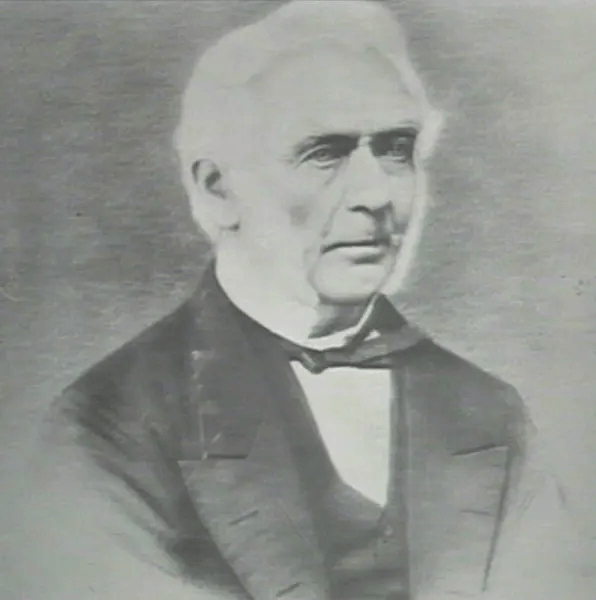
Thomas Walker – a great philanthropist
Some of this he sold to Mr. W. Giggins, and one of his sons worked the balance as a dairy, while he lived in retirement in a house that he built at the northern end. In 1917 he sold this house to Mr. H. Elkin, and went to live at Nelson’s Bay, near the entrance to Port Stephens. There he has lived since.
Recently he underwent an operation at Raymond Terrace, and from this has recovered, returning to his Bayside retreat in health that is perfect for one of his advanced years.
As with his brother, Ald. A. Pepper, (Tighe’s Hill), Mr. G. H. Pepper gave much of his time to public duties. He filled the offices of shire councillor and alderman. He was Mayor of Raymond Terrace in 1908, and in that year was instrumental with the present Town Clerk (Mr. Andrew Adam) and the solicitor of the council (the late Mr. R. A. Mackenzie), in obtaining a reduction in the interest on the council’s loan from 7 to 5 per cent., with the right to pay off the principal in half-yearly instalments of £50.
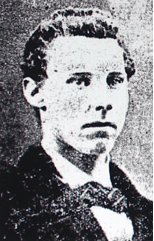
Andrew L. Adam – appointed as the Raymond Terrace Town Clerk in 1884 [Raymond Terrace Examiner and Lower Hunter and Port Stephens Advertiser – 27 September 1934]
On his retirement from the council, Mr. Pepper showed still fine public spirit by himself taking over the loan and charged only the same low rate of interest until the whole debt was cleared.
As a young man, Mr. Pepper was a good pigeon shot. On one occasion he carried off two trophies—a silver butter dish and a double—barrelled gun—on the same day. He speaks regretfully of the days when one could go out and shoot 40 pairs of ducks at a single outing. There has been much change. Even the climate, Mr. Pepper thinks, has altered. In the very early days, it was much drier than it is today. At times it was a problem to obtain water for drinking purposes. Williamtown and district had to rely on the water from wells at the foot of the sandhills near the coast, and the people from Hinton had to go in boats as far as Tomago to obtain their supplies.
Mr. Pepper is somewhat caustic about the present conditions of labour. He speaks of the time when, as a young man, he worked 16 hours a day for 5/ a week and his keep. From that wage, and other small earnings, he saved £50. He invested the money in land at Bullock Island—the Carrington of today—but this so exhausted his resources that he had to borrow £2/2/ to have the transfer effected. His friends spoke of the deal as utter folly; but within a few months he sold the land for about £700; so the from this so-called foolish deal he was given his start in life. Afterwards he made many such deals in land, and there is no record of his having ever made one mistake……..
It is noteworthy that one of Mr. Pepper’s duties as a lad at Tomago was to meet Miss Bolton [Mary Elizabeth Bolton], daughter of the Rev. R. T. Bolton, M.A., [19th century clergyman in the Hunter region] of Tarro, at the old ferry and carry her bag through the bush to Tomago whenever she visited Mrs. Richard Windeyer. This Miss Bolton afterwards became Lady Windeyer—the wife of one of the most distinguished men of his time in the realms of law and literature.
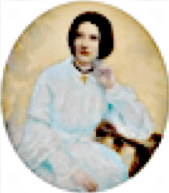
Mary Elizabeth Windeyer, nee Bolton
The life of Mr. Pepper is a testimony to what can be achieved in adverse circumstances by one who has energy, honestly of purpose, and strength of will. Without any material advantages at the beginning, as this record shows. Mr. Pepper worked hard and succeeded. In his little hometown, no man has more highly the regard and goodwill of the people no name is more honoured. One of his sons (Mr. R. J. Pepper) is a director of the Raymond Terrace Cooperative Dairy and Produce Co., Ltd.’
PART TWO – Life and Times of George Henry Pepper and Mary Ann Pepper
The newspaper articles set out below provide an insight into the life of the two Port Stephens pioneers.
Member of the Raymond Terrace Horse Race Committee – 1892
The Maitland Mercury and Hunter River General Advertiser of 16 January 1892, page 2, reported that G. H. Pepper was a member of the Raymond Terrace Horse Race committee:
‘Raymond Terrace Races – Officials: – President, Mr. M. S. Monteagresti; Judge, Mr. G. H. Pepper; Starter, Mr. A. A. Farthing; Clerk of the Course, Mr. J. J. Moy; Handicapped Mr. W. C. Quinton; Clerk of the Scales, Mr. S. R. Mayo. Stewards, Messrs. M. S. Monteagresti, R. Mayo, G. H. Pepper, J. J. O’Brien, and Dr. Meredith; Secretary, Mr. G. S. Hill.’
George Pepper sells farmland at Salt Ash – 1908
The Newcastle Morning Herald and Miners’ Advocate of 20 July 1908, page 5, reported:
The subdivision of Crummer’s Estate, Telegherry, near Salt Ash, was offered by auction by Mr. G. S. Hill at Raymond Terrace, the vendor being Mr. G. H. Pepper. There was a record attendance from the surrounding districts, bidding was keen, and the sale was considered exceptionally good. The land was purchased in January last by Mr. Pepper for £3724, and was subdivided into seven farms, and the sale yesterday realised £5200.’
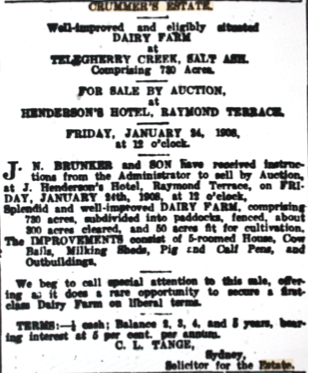
Advertisement for the Crummer’s Estate Dairy Farm purchased by G. H. Pepper [Sydney Morning Herald, 11 January 1908]
Mrs. Pepper lays Foundation Stone at the New Raymond Terrace Methodist Church – 1921
The Newcastle Morning Herald and Miners’ Advocate of 1 March 1921, page 3, reported:
‘The ceremony of laying the foundation stone of the new Methodist Church at Raymond Terrace was performed by Mrs. G. H. Pepper in the presence of a large and representative gathering of citizens from all parts of the district. The Rev. S. J. Thomas, superintendent of the circuit, presided. ….. The foundation stone, of granite, bore a suitable inscription.’
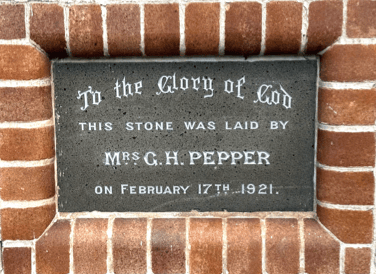
Foundation stone of the Raymond Terrace Methodist Churchl laid by Mrs. Pepper in 1921 [Author photo – July 2026]
Mr. and Mrs. Pepper donate a new Vestry and fittings for Nelson Bay Methodist Church – 1923
The Raymond Terrace Examiner and Lower Hunter and Port Stephens Advertiser of 9 March 1923, page 3, reported:
‘The trustees, and Methodist congregation of Nelson’s Bay, have much pleasure in expressing to Mr. G. H. Pepper our heartiest thanks for his valuable gift of a new and up-to-date Vestry to the Church, the arrangements and cost of which were at his own expense. I have also to thank Mrs. pepper for her generous gift of furnishing and fittings for the same. C. J. Macaulay, Supt. of Circuit.’
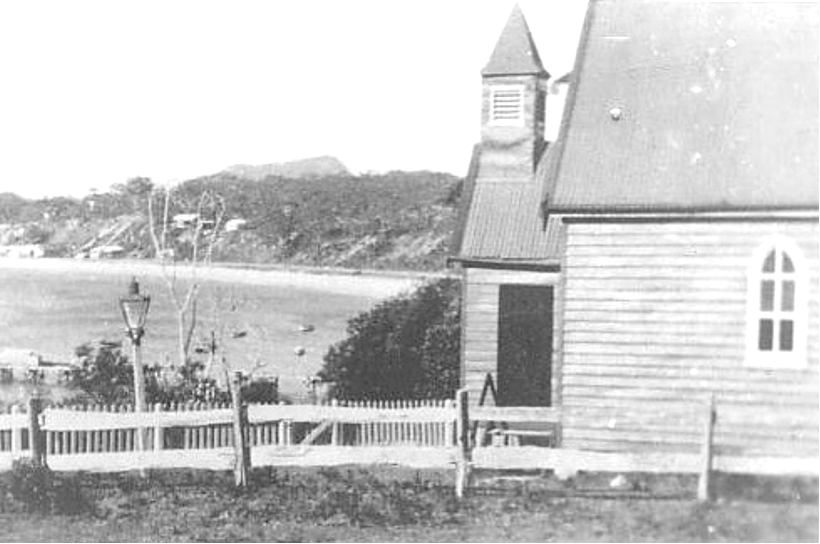
Methodist Church with Nelson Bay in the background – 1933
The Methodist of 24 March 1923, page 5, also reported:
‘Our church work at Nelson’s Bay has been greatly helped by the generous gift of Mr. G. H. Pepper, of “Westward Ho,” who, at his own expense, has added a new and up-to-date vestry to our church building there. Mrs. Pepper has generously and tastefully furnished the vestry, and the whole, besides enhancing very much the general appearance of the building, is greatly, appreciated by the minister and people for its added comfort and utility.’
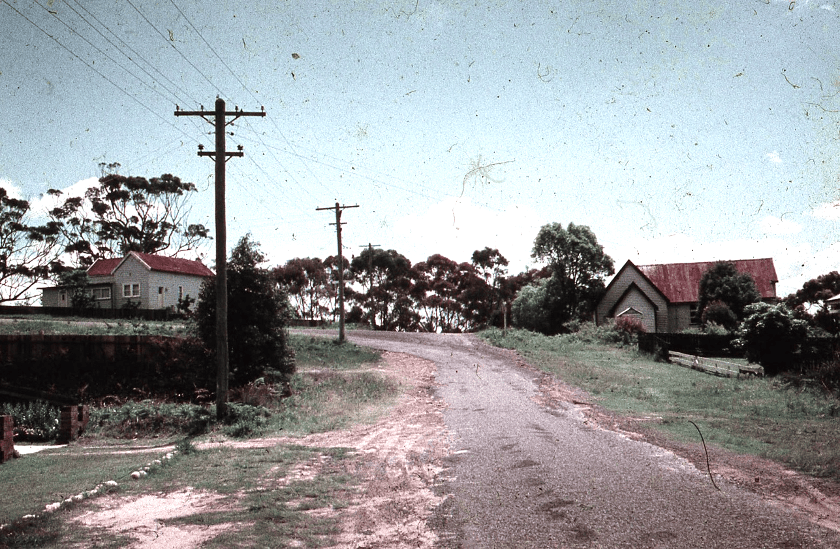
Church Street, Nelson Bay, with the residence ‘Westward Ho’ at left and the former Methodist Church on the right, 1960
Raymond Terrace building owned by George Pepper destroyed by fire – 1923
The Daily Telegraph of 30 May 1923, page 6, reported:
‘A two-storied wooden building in Port Street, Raymond Terrace, was totally destroyed by fire. Mrs. G. Morris, the occupant, a widow, is a heavy loser. The dwelling was owned by Mr. G. H. Pepper, of Nelson’s Bay, and was insured for £400. The office of Mr. R. A. Mackenzie, solicitor, adjoining, which was damaged, was insured for £350 and the contents for £300.’
George Pepper catches a record sized fish – 1924
The Raymond Terrace Examiner and Lower Hunter and Port Stephens Advertiser of August 1924, page 3, reported:
‘Our esteemed townsman, Mr. George Pepper, the indefatigable sporting fisherman, who holds the record, we believe for landing the biggest jewy ever hooked in the Hunter River, informs us that bream and flathead are very shy at present.’
Mr. and Mrs. Pepper donate Six Park Seats for Nelson Bay – 1924
The Newcastle Morning Herald and Miners’ Advocate of 19 December 1924, page 10, reported:
‘Mr. G. H. Pepper has presented on behalf of his wife, six seats to the park trustees. These have been placed in position under the Norfolk pine trees and overlooking the water.’
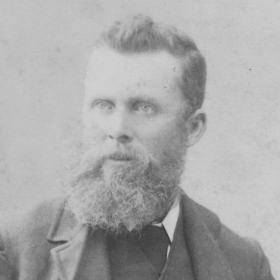
George Henry Pepper [Ancestry]
Mr. Pepper Elected as a Patron of the Nelson Bay Progress Association – 1925
The Raymond Terrace Examiner and Lower Hunter and Port Stephens Advertiser of 23 January 1925, page 3, reported:
‘Mr. W. Thompson, (President) occupied the chair at the monthly meeting of the Nelson’s Bay Progress Association. The election of officers for the ensuing year resulted as follows:— Patrons, S. L. Gardiner, M.H.R., T. H. Hill, M.L.A., R. S. Vincent, M.L.A., J. J. Fitzgerald, M.L.A., M. Cromarty, M.L.A., and G. H. Pepper.’
Mr. and Mrs. Pepper donate fence to surround the New Raymond Terrace Soldiers Memorial – 1925
The Newcastle Sun of 23 October 1925, page 6, reported:
‘Mr. and Mrs. G. H. Pepper, of Nelson’s Bay, have donated the material for a fence around the Soldiers’ Memorial at Raymond Terrace. At a meeting of the memorial committee on Monday night a letter was forwarded to Mr. and Mrs. Pepper, thanking them for the gift.’
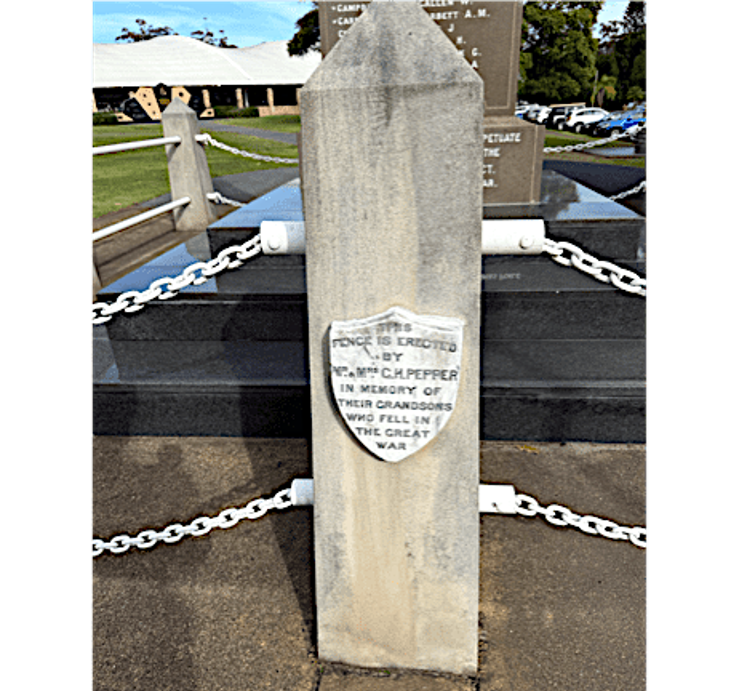
Plaque at the Soldiers Memorial commemorating the donation of fence by Mr. and Mrs. G. H. Pepper [Author photo – July 2026]
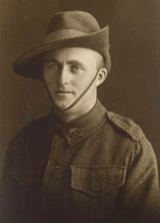
Private Frank Pepper, son of George and Mary Pepper, who enlisted in the First World War and whose name, is inscribed on the Raymond Terrace Soldiers Memorial
Mr. Pepper meets with the NSW Governor at Nelson Bay – 1925
The Raymond Terrace Examiner and Lower Hunter and Port Stephens Advertiser of 23 October 1925, page 2, reported:
‘His Excellency the Governor, Sir Dudley de Chair, accompanied by Lady De Chair, Miss Elaine De Chair, and Flight-Lieut. M. H. Coote, A.D.C. to the Governor, paid an unofficial visit, and spent four days at Nelson Bay, on a quiet holiday. ….. His Excellency made himself very popular, and during the day visited the wharf and conversed freely with the fishermen. He specially sent for Mr. G. H. Pepper, with whom he had a long conversation.’
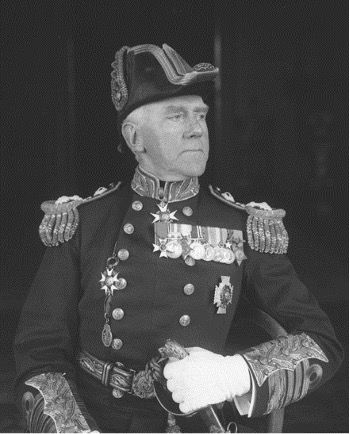
Admiral Sir Dudley de Chair – NSW Governor 1924-1930
Mrs. Pepper makes Ladies’ Church Aid Presentation – 1927
The Newcastle Morning Herald and Miners’ Advocate of 30 March 1927, page 7, reported:
‘The members of the Nelson’s Bay Ladies’ Church Aid (Methodist Church) tendered a social on Monday evening to Mr. H. G. Reeks (home missionary) and Miss Ivy Laman on the eve of their marriage and departure from Nelson’s Bay to take up duties at Picton ….. Just prior to supper Mrs. G. Pepper asked Mr. Reeks to accept a silver and cut-glass cruet as a token of the love and esteem in which he was held by his congregation. She had enjoyed his ministry, and wished him every happiness in his married life and succees in his new field. Mr. Reeks, on behalf of Miss I. Laman and himself, thanked Mrs. Pepper and the Ladies’ Church Aid for their kindly thought and present.’
Mr. Pepper makes financial donations to local Hospitals – 1927
The Newcastle Sun of 21 May 1927, page 7, reported:
“Please find enclosed cheque to the value of £100, which I donate to your hospital. I have now entered my 85th year and have never been inside a hospital.” This was the text of a letter received by the secretary of Maitland Hospital (Mr. H. I. Mannall) and read to the meeting of the Board of Management last night, from Mr. G. H. Pepper, a well-known old resident of Nelson’s Bay, Port Stephens. “Good luck to him!” exclaimed the vice-president (Mr. Forman). Mr. Pepper was thereupon made a life member of the institution. Mr. Pepper also has donated £100 each to Newcastle and Wallsend Hospitals.’
Mr. Pepper elected as a Vice-President of the Nelson Bay Cricket Club – 1927
The Newcastle Morning Herald and Miners’ Advocate of 24 August 1927, page 5, reported:
‘The annual meeting of Nelson’s Bay Cricket Club was held on Saturday, the president, Mr. M. J. Roche occupied the chair. Officers elected for ensuing season were: President Mr. M. J. Roche; vice-presidents, Messrs. G. H. Pepper, W. Thompson, E. Diemar, A. Laman, H. Thompson, C, Diemar, C. C. McPherson, A. E. Vesper, and S. Thompson.’
Mr. and Mrs. Pepper celebrate Diamond Wedding Anniversary – 1927
The Dungog Chronicle of 6 September 1927, page 3, reported:
‘On Saturday morning the family of Mr. and Mrs. G. H. Pepper, with their descendants assembled at the home of Mr. Francis Pepper, “Kilcoy,” Hexham, to celebrate the anniversary of the diamond wedding of their father and grandfather great grandfather and grandmother and great grandmother.
The celebration took the form of a dinner and in a large marquee the tables were daintily dressed and laid with refreshments. Mr. R. J. Pepper, eldest son, occupied the chair, and in proposing the toast congratulated them on the attainment of their diamond jubilee, and the satisfaction it was to all to meet that day in such numbers to offer their best hopes and wishes for their further happiness and prosperity. He said there were as descendants, 9 children (3 dead); 36 grandchildren and 39 great grandchildren.
His parents were married on the 19 March 1867, only about 1½ miles from where they were that day. They were all proud of them and had tried to follow the good example set them by their parents. Mr. Alf. Pepper, (brother of Mr. G. H. Pepper), Messrs. Alf and Francis Pepper (sons); Messrs. Geo. Priestley, W. Arthur and J. Slater, (sons-in-law); Mr. Frank Pepper (grandson); Mrs. Thompson (nee Myra Jackson) grand-daughter; and Messrs. R. MacKenzie, A. L. Adam, and W. Brown, and W. Scott, (old friends) also heartily congratulated Mr. and Mrs. Pepper on the attainment of the 60th anniversary of their wedding, a period which had been marked by happiness and prosperity, and by the larger attainment of a circle of descendants of whom they could well be proud.
The toast was drunk with musical honours and with much enthusiasm. Mr. Pepper, Senior, on rising to reply was greeted with much cheering, and in a reminiscent speech spoke of his early days, when he landed a boy with his parents from England, on Kennington, and only a mile away from where they were at that moment. That was on the 19 February 1844. His father worked at Kennington for a wage of 6/- per week and later went to Ash Island where he got a rise in wages of 6d. the wage being 6/6 per week. After leaving Ash Island his father learned to drive bullocks and drew the stone for Tomago house from “Muree.” After that he took a farm at Tomago, and the family remained on it for 35 years. They (Mr. and Mrs. G. H. Pepper) occupied it for some time and later went to Long Bight. From there they went to Motto, resided there till about 5 years ago when they went to Nelsons Bay, where they still are.
He thanked them all for their kindness and good wishes shown the both of them and were pleased and proud of the gathering. Mrs. Pepper also gave an outline of their young days before they started out on married life and caused great merriment by a recital of a few of the principal anecdotes they experienced. She was pleased to see them all and thanked them.
Mrs. Priestley them on behalf of the family presented her mother with a pair of slippers; and Mr. Frank Pepper presented his father on behalf of the sons with a pair of slippers. After the cutting of the cake, which bore the inscriptions “G. H. P. and M. A. M.: 60: 1867,” a shower of confetti was released on the “young couple” to their consternation and delight of the gathering.
Mr. Pepper Senior, later presented each of his grand and great grandchildren with a sovereign, as a memento of the ceremony. The company was photographed before departing later in the afternoon. The ceremony was particularly happy in its sentiment, and successful in its form and purpose.’
Mr. Pepper resigns as a Justice of the Peace – 1930
The Newcastle Morning Herald and Miners’ Advocate of 9 August 1930, page 8, reported:
‘A notification appeared in yesterday’s “Government Gazette” that the Governor-in-Council has accepted the resignations of Edward Bainbridge, of Hall-street, Cessnock, and George Henry Pepper, of Nelson’s Bay, Port Stephens, as justices of the peace.’
Mr. Pepper suffers an Illness – 1930
The Maitland Daily Mercury of 27 September 1930, page 6, reported:
‘Mr. G. H. Pepper, one of the oldest residents of the district, underwent an operation in a private hospital at Raymond Terrace. He is reported to be doing as well as could be expected. He is 88 years of age and has lived in the Lower Hunter and Port Stephens portions of the North since he was in infant.’
The Maitland Weekly Mercury of 7 February 1931, page 11, also reported:
‘Mr. G. H. Pepper, who was operated on for appendicitis some time ago, and has been spending the convalescent period, with his son, Mr. R. J. Pepper, of Sturgeon street [Raymond Terracee], has so much improved in health that, he hopes to return to his home at Nelson’s Bay this week. Despite his four score years and nine, Mr. Pepper is very mentally alert and has a clear recollection of incidents that happened many years ago and has a fund of interesting stories of the early history of the district.’
Mr. and Mrs. Pepper donate Library to Nelson Bay Public School – 1932
The Maitland Daily Mercury of 31 May 1932, page 7, reported:
‘The public school has, through the munificence of Mr. G. H. and Mrs. Pepper, become the possessor of a beautiful bookcase and a library of 500 volumes of suitable books for the children. The selection of books range from those that would delight the boys of 16 down to those that would amuse the tiny tots of six years or so. The collection has appropriately been named the “Pepper Library,” and as a token of appreciation the school children have attached to the bookcase a commemorative silver plate suitably inscribed.
The library and case were formally presented to the school recently, when Mr. and Mrs. Pepper and Misa Una Pepper visited the school and briefly addressed the children. Mr. Pepper said that he worked as a boy on the Tomago Estate, and it was due to the kindness of Mrs. Windeyer (mother of Mr. R. Windeyer, K. C.) that he received the rudiments of reading, writing and arithmetic. Mrs. Windeyer did this to help the boys and young men on the estate to better themselves. That was all that he received in education in those days.
He exhorted the boys to be industrious and upright, so that they might become efficient citizens. Mrs. Pepper drew for the pupils a vivid picture of the early days, when life was much simpler than in the present day. She said that she was pleased that their gift had been appreciated and concluded by wishing the girls every success in life and expressed the hope that they would grow to be useful and honourable citizens.
A short musical programme was rendered by the pupils, after which the headmaster (Mr. R. Dixon) responded on behalf of the school children, and wished Mr. and Mrs. Pepper many more years to enjoy life’s evening. Mr. G. H. Pepper is aged 90 years, and Mrs. Pepper 85. Mr Pepper is one of the oldest residents of the Lower Hunter and may be termed the “grand old man” of the Lower Hunter. Philanthropic acts such as this are nothing new to Mr. Pepper.’
Mr. and Mrs. Pepper celebrate Sixty-fifth Wedding Anniversary – 1932
The Maitland Daily Mercury of 24 August 1932, page 6, reported:
‘On Saturday, the Bay never looked finer, when not a ripple could be seen on its surface for miles. It was the occasion of the visit of Mr. and Mrs. G. H. Pepper and their family to celebrate the 65th anniversary of their wedding. Mr. Pepper is aged 89 and Mrs. Pepper, 84.
With the aid of greenery, the garage was decorated in fine style. The table was attractively arranged and with the sucking pig, plum pudding, salads, and the double-decker wedding cake with its 65 candles which was made by Mrs. A. Pepper, it resembled a real wedding feast.
Mr. R. J. Pepper, who presided, called on Mrs. Pepper to light the candles after which Mr. G. H. Pepper blow them out. The chairman proposed the toast of “The Bride and Bridegroom,” and said that they must thank God for having spared their parents for so many years and for the way in which they had reared their family. The toast was supported by the sons and sons-in-law.
Mr. Pepper then presented the children each with a fine present. Mrs. Pepper gave a brief account of their young days, and after drinking the toasts with musical honours, the celebration concluded.
A presentation of a wristlet watch was made to Mrs. C. Diemar, of Nelson’s Bay by Mr. G. H. Pepper. Mr. Pepper, in making the presentation, asked her to accept the gift in recognition of the great kindness she had shown him during his recent illness. In accepting the gift, Mrs. Diemar stated that she was always only too pleased to help anywhere that she might be of service. Members of Mr. Pepper’s family also extended their thanks to her, for her kindness to their father. Miss Una Pepper also presented her with a bouquet of flowers on behalf of the younger ones.’
Sea Scouts visit Mr. Pepper – 1933
The Dungog Chronicle of 3 November 1933, page 4, reported:
‘On Sunday, 29th October, the Port Stephens Sea’ Scouts, whose headquarters are at Tea Gardens, visited Nelson’s Bay, their objective being an inspection of the Nelson’s Head Lighthouse.
Before leaving Nelson’s Bay some of the lads representing each troop and pack of the group visited Mr. George Pepper, a well-known and highly respected resident of Nelson’s Bay, it being the lads desire to wish that gentleman many happy returns of his birthday; Mr. Pepper attained the age of ninety-one years on Wednesday the 1 November. Few families’ resident in Nelson’s Bay have not at one time or other received an expression of kindness or help from Mr. Pepper.’
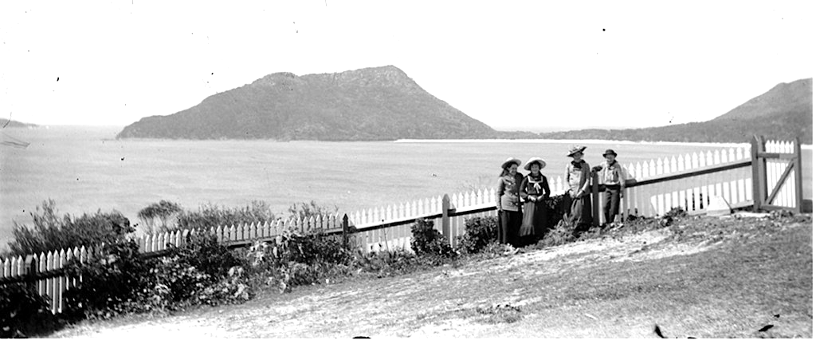
Visitors in the grounds of the Inner Lighthouse, with the Tomaree Head in the background – 1916. [University of Newcastle Library – Living Histories Collection]
Mr. Pepper celebrates his Ninety-second Birthday – 1934
The Newcastle Morning Herald and Miners’ Advocate of 6 November 1934, page 10, reported:
‘Last Thursday was a red-letter day for the Pepper family, of Nelson’s Bay, when Mr. G. H. Peppler celebrated the 92nd anniversary of his birth, surrounded by his family. The veteran was the recipient of many congratulatory telegrams, including one from the Tea Gardens’ Rover Sea Scouts. The younger members of the family and friend’s resident at Nelson’s Bay had a surprise in store for Mr. and Mrs. Pepper, senior, for they converted a large garage into a banqueting hall and provided an elaborate dinner, including a birthday cake of heroic proportions. Both Mr. Pepper, senior, and his wife, who is 87 years of age, thoroughly enjoyed the celebrations. It was a happy family reunion.’
Mrs. Pepper Celebrates her Eighty-eighth Birthday – 1935
The Newcastle Morning Herald and Miners’ Advocate of 27 September 1935, page 3, reported:
‘Mrs. G. H, Pepper, of Nelson’s Bay, is celebrating today her 88th birthday, having been born at Plymouth, in Devonshire, England, in 1847. Mr. Pepper will be 93 years old in November, and the couple celebrated their 68th wedding anniversary on August 21. There were nine children of the marriage, and six are still living—Mr. R. J. Pepper, Raymond Terrace: Mrs. G. Priestley, Martin’s Creek; Mr. A. E. Pepper, Mayfield; Mr. F. G. Pepper, Hexham, Mrs. W. H. Arthur, Tighe’s Hill; and Mrs. J. Sclater, Auburn, Mr. and Mrs. Pepper have 36 grandchildren, 75 great-grandchildren, and one great-great-grandchild, constituting five generations.
Mrs. Pepper was brought to Australia by her parents, Mr. and Mrs. Richard Moxey, when only 12 months old. She had one brother, William. Their first Australian home was at Seaham, at a vineyard, and later they removed to the Manning River, and Mrs. Pepper remembers many interesting incidents of her childhood years in a district where the aborigines comprised the bulk of the population.
Later, Mr. Moxey worked in a coal mine at Cook’s Hill, Newcastle, and subsequently the family settled at Williamtown. His daughter was in the service of Mrs. Richard Windeyer, at Tomago, and then with the family of Rev. J. K. Turner, a Methodist minister, at Mudgee.
Later, she returned to her home at Williamtown and again worked with Mrs. Windeyer. While at Tomago, she met Mr. Pepper, to whom she was married on August 20, 1867, by Rev. S. Wilkinson, Methodist minister at Morpeth. Mr. and Mrs. Pepper lived at Tomago for some years, and later at Fullerton Cove (14 years), Raymond Terrace (27 years), and Nelson’s Bay (18 years).
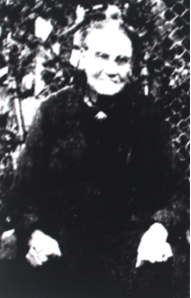
Mrs. G. H. Pepper [Newcastle Morning Herald and Miners’ Advocate, 27 September 1935]
Death of George Pepper – 1936
The Maitland Daily Mercury of 14 July 1936, page 7, reported:
‘The death occurred this morning at Nelson’s Bay in his 94th year of Mr. George Henry Pepper, of Nelson’s Bay and formerly of Motto, Raymond Terrace. He passed peacefully away, and up to within a few hours of his death possessed all his mental faculties. He had been in a low state a week ago, but rallied, and it was thought that he might get up again, but the renewal of a little strength was not maintained and a few days later saw him gradually weakening.
The late Mr. Pepper had lived at Nelson’s Bay since 1917, to where he went from Motto, Raymond Terrace. He was born in 1842 in Cambridgeshire, England, and came to this country when 16 months old. He had resided in the Lower Hunter for the balance of his life.
He was well known and highly respected all over the lower Hunter and adjacent districts. Mrs. Pepper survives him, as also do his sons, Richard Henry, Alfred and Frank, Mrs. Arthur (Mayfield) and Mrs. J. Slater (Auburn) are his daughters. One son (Harry) predeceased him. The funeral will take place to the Methodist Cemetery, Raymond Terrace, on Wednesday at 1.30.’
The following funeral notice was published in the Maitland Daily Mercury of 14 July 1936, page 12:
‘The Relatives and Friends of Mrs. G. H. Pepper, of Nelson’s Bay, and Family are respectfully invited to attend the funeral of her late beloved husband and their father, George Henry Pepper, to move from his son’s residence, Mr. R. J. Pepper, Sturgeon street, Raymond Terrace, tomorrow (Wednesday) afternoon at 1.30 o’clock for the Methodist Cemetery, Raymond Terrace. C. H. Boots, Funeral Director, 3367 Raymond Terrace.’
Obituary for George Henry Pepper – 1936
The Newcastle Morning Herald and Miners’ Advocate of 16 July 1936, page 2, reported:
‘The funeral of Mr. G. H. Pepper, one of the pioneers of the Newcastle and Port Stephens districts, took place yesterday from the home of his son in Sturgeon-street, Raymond Terrace. The interment was made in the Methodist portion of the local cemetery, and the funeral was attended by citizens from all parts of the Lower Hunter.
The chief mourners were Mr. and Mrs. R. J. Pepper, Mr. and Mrs. A. E. Pepper, Mr. and Mrs. F. G. Pepper, Mr. and Mrs. G. Priestley, Mr. and Mrs. W. Arthur, Mr. and Mrs. J. Slater, and Mr. Alfred Pepper. The pall-bearers were Messrs. George Pepper, junr. (Raymond Terrace), Albert Pepper (Hollowtree), W. Priestley (Martin’s Creek), and L. Pepper (Kilcoy), grandsons.
Among others present were the Mayor of Raymond Terrace (Ald. E. L. Markey), aldermen and the Town Clerk (Mr. C. L. Adam), Mr. W. Brown, ex-M.L.A., the President, Port Stephens Shire (Cr. H. F. Clode), the Shire Clerk (Mr. C. L. Monkley), and councillors; Dr. J. B. Meredith, the Chairman of the Board of Directors, Raymond Terrace Cooperative Society Ltd. (Mr. A. J. Windeyer), and Mr. J. Scarr, representing the Manager (Mr. P. A. Scarr), Mr. E. Petherbridge (Sandgate), Mr. J. Smith (Miller’s Forest), the President, Lower Hunter Primary Producers’ Union (Mr. G. J. Russell), Mr. J. D. Reid, Dr. C. Cramp, Messrs. B. Evans (Sydney), J. D. Richardson, W. Scott, S. Smith (Wallsend), A. E. Ford (East Maitland), H . E. Hindmarsh (Miller’s Forest), J. Anderson (Kilcoy), E. C. Pryce (Manager, Commercial Bank), J. Priestley (Singleton), N. McLennan. R. Ingham, W. Hill, G. Ralston (Country Milk Suppliers’ Asociation), L. F. Monkley, L. B. Fisher (Seaham), W. L. Priddle (Nelson’s Plains), C. H. Boots, A. M. Cunningham, T. Elkin (T. S. Elkin and Co.), R. A. Elkin (Elkinite Sands and Soils), E. Windeyer, A. O. Brown (Central Rivers Citrus Growers’ Association), and the President, Hexham Progress Association (Mr. A. Searles).
Rev. W. T. Cross officiated at the service at the house and at the grave, where a large number of mourners and sympathisers assembled. The descendants and six children, 31 grandchildren, 78 great-grandchildren, and one great-great-grand child.
The Mayor of Raymond Terrace (Ald. E. L. Markey) said that Mr. Pepper had spent a wonderful life among the people of the district, in which he had many activities. “We were colleagues in the Raymond Terrace Council for a time,” added the Mayor, “and I learned to appreciate his many good qualities as a public man. He was Mayor of the municipality in its earlier years, and he also assisted the shire, to which he was one of the first elected. He was a generous-hearted man and during his active years had shown that he possessed a fine sense of citizenship. He will not be so well known to the younger generation, but to those of mature years he will be remembered for his work to advance the town and district with which he had been identified for upwards of 90 years. He faced unflinchingly the difficulties that beset the path of the pioneer, of which he was one of the most worthy.’
The Dungog Chronicle of 21 July 1936, page 1, also reported:
‘In his 94th year, Mr. Geo. H. Pepper of Nelsons Bay passed away at his home on Tuesday last, and despite his great age he possessed all his mentality until within a few hours of his death. He had lived at Nelsons Bay for 19 years and went there from Motto, Raymond Terrace. He had been associated with the Lower Hunter since he was sixteen months old, when he came from Cambridgeshire, England (where he was born on the 1 November 1842), with his parents to the colony.
The family settled at Kennington, Hunter River, on the 19 February 1844. The voyage to Australia occupied 16 weeks, on the ship Neptune, under the captaincy of Captain Knight. The same ship was wrecked on the New Zealand coast on the return trip to England.
Later at Fullerton Cove Mr. and Mrs. Pepper followed the occupation of dairying. This farm comprised an area of 640 acres and realised when sold at Raymond Terrace Court House 9/- per acre, the upset price [reserve price] being 5/- per acre.
Mr. Pepper was a successful land speculator and possessed a keen outlook for the future. His first land speculation was at what was then known as Bullock Island, now Carrington. It was then all dense scrub and mangrove swamps. The price he paid for this block was £45. He held this land for seven years without seeing it, and then eventually sold it for £1300. This deal enabled him to extend his operations, and he made several successful transactions and while residing at Nelsons Bay acquired several house properties.
He often recounted interesting reminiscences of his early farming days, particularly when his parents resided at Tomago. All the produce of the farm then had to be taken to Newcastle in boats, and the tide and weather often gave a hard struggle to the settler to get his goods to market. Mr. and Mrs. Pepper were married in 1867, and Mrs. Pepper still survives.
When they had completed 60 years of married life, the diamond wedding was celebrated. At this gathering the late Mr. Pepper related that when his father came to Kennington his wages were 6/- a week; later he went to Ash Island and got a rise — 6d. per week — making his wages 6/6 a week. He is survived by three sons and three daughters, Mrs. G. H. Priestley of Gostwyck, Martins Creek being one of the daughters. He leaves 36 grandchildren, 78 great-grandchildren and one great-great-grandchild.’
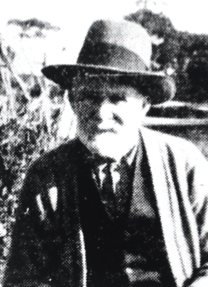
Mr. G. H. Pepper [Newcastle Morning Herald, 15 July 1936]
Geroge Henry Pepper’s Estate – 1936
The Raymond Terrace Examiner and Lower Hunter and Port Stephens Advertiser of 3 December 1936, page 3, reported:
‘Probate of the Will and Codicil of George Henry Pepper, late of Nelsons Bay, who died on the 14 July, 1936, has been granted to the executors, Messrs Richard James Pepper and Alfred Ernest Pepper, sons of the deceased. The Estate was sworn at £45,926 [The RBA Pre-decimal calculator estimates that Mr. Peppers’ estate would have been valued at 5.4. million Australian dollars in 2025]. After certain Bequests and legacies to the widow, Mrs. Mary Ann Pepper and two daughters Mrs. Violet Arthur and Mrs. Daisy Slater the Testator gave a life interest in his estate to his widow and on her death, he directed the whole of his estate to be divided among all his children, the children of any deceased child to take their parent’s share.’
Funeral of Mrs. G. Pepper – 1938
The Maitland Daily Mercury of 1 December 1938, page 7, reported:
‘The funeral of Mrs. G. Pepper, which left the residence of her son, Mr. Richard Pepper, of Raymond Terrace, for interment in the Methodist Cemetery, Raymond Terrace, this afternoon, was largely attended. ….. She is survived by three sons, Alfred (Mayfield), Richard and Frank (Raymond Terrace), and three daughters, Mesdames Slater, G. Priestly, and Arthur.’
Obituary for Mary Ann Pepper – 1936
The Raymond Terrace Examiner and Lower Hunter and Port Stephens Advertiser of 8 December 1938, page 4, reported:
‘For a few months she had been in failing health, and her great age precluded any hope of a lengthy recovery, She retained all her faculties in a wonderful manner, right up to a day or two before she died and was hopeful that she would again be able to visit some of her relatives. However, the tax old age inflicts on the system told against her and her long life closed in peace.
The deceased was born in Plymouth, Devonshire, England in 1847, and at the age of 12 months with her parents, the late Mr. and Mrs. Richard Moxey, after four months on the water the family arrived in the colony. She learned to walk on the ship. She then had one brother, the late Mr. William Moxey, of Williamtown.
On reaching the colony her father was hired to work on a vineyard at Seaham a few years later they went to the Manning River and from then on Mrs. Pepper could remember incidents in her young life. When they reached the Manning and during their residence there, they never came in contact with white people, the inhabitants were all aborigines. She had many stories to tell of the habits of the blacks which made lasting impression on her mind. The blacks frequently persuaded Mr. and Mrs. Moxey to allow her and her brother to go for walks with them, and she remembered one day, the blacks killed a snake and roasted it, and they all shared in the meal, herself and her brother included. She recalled a gin bringing to her father and mother her piccanninny when only a day or so old, for the white people to view.
When Mrs. Pepper was about six years’ old the Moxey family left the Manning and went to Newcastle. In those early days all around Newcastle was bush, and Hunter Street had not properly taken shape, and had but few shops in it. A year in Newcastle and the family came to the Cabbage Tree and here the settlement for life began with the family, but at the age of 14 she went in to the household of Mr. Richard Windeyer at Tomago, from there she later went to Mudgee with the family of the late Rev. Turner, Methodist Minister. It took 3 days then to get to Mudgee, the train then only ran from Sydney to Penrith. The rest of the journey was made by horse and buggy. The return from Mudgee was made all the way by horse and buggy, though Singleton and Maitland.
Later she again entered the home of Mr Richard Windeyer, and whilst here, she married her late husband on 24 August 1867, at Williamtown, the Rev. S. Wilkinson, of Morpeth, being the clergyman. Her bridal dress was cream muslin delaine, a gift from Mrs. Windeyer, who also added a white camelia to the bridegroom’s coat. Mr. and Mrs. Pepper resided at Tomago first and then went to Fullerton Cove. After 14 years’ residence there, they came to Motto Raymond Terrace and for 27 years remained there.
Their next shift was to Nelson’s Bay, where a period of 18 years elapsed, Her late husband dying she then came to reside among the members of her family, making, frequent visitations to each.
In 1935 the 68th anniversary of their wedding day was celebrated in the presence of a great gathering of their friends and relatives. The late Mrs. Pepper was of a particularly kindly, considerate and affectionate nature, and won a large circle of friends by her high regard for other peoples’ comfort and happiness. She was all her life, a devoted adherent of the Methodist persuasion, and liberally assisted the church. Her long life was one of usefulness, and she will be revered and remembered for numerous acts of kindness.
Her surviving family is: Messrs. R. J. Pepper, (Raymond Terrace), Alfred, (Mayfield), Frank G., (Kilcoy); Mrs. G Priestley, (Bolwarra); Mrs W. Arthur, (Tighes’ Hill); and Mrs. J. Sclater, (Auburn). Her grandchildren numbered 36, and there are 82 great grandchildren, and three great-great grandchildren, thus completing five generations.
The funeral on Thursday was very largely attended, considering the short notice, the remains being buried in the Raymond Terrace Methodist cemetery the Rev. F. Paton officiating. Many floral tributes were laid upon the grave.’
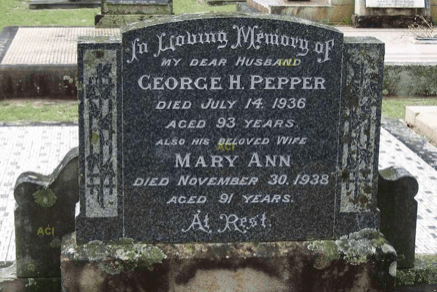
Grave of George Henry Pepper and Mary Ann Pepper at Raymond Terrace Cemetery [Australian Cemetery Index]
Concluding Comments
The Port Stephens region is fortunate to count the Pepper family among its pioneers. Geroge and Mary Ann Pepper have a long legacy. They built a considerable wealth for their time through lifelong hard work which they generously shared with the community.
Another pioneer and benefactor of the 1920’s was William Longworth of Karuah. His story is also featured on this website and can be found at this link.
Researched and compiled by Kevin McGuinness
August 2026


