
Introduction
Government regulation of medicines in Australia was introduced in stages, beginning at a state level before Federation.
By 1900, NSW had an established a rudimentary regulatory framework stipulating who could sell medicines and which poisonous medicines could be sold.
The first significant federal legislation was passed in 1937.
Before the introduction of Federal Government legislation, there was little control in the advertisements for medication for all ailments that could be imagined.
In the early years in the Port Stephens region, with the supply of doctors scarce through the region, people often had to rely on their own reading of advertisements in local newspapers to determine the right medicine for their ailment.
Early cold and flu medicines in Australia, particularly from the late 19th to early 20th century, often included potent ingredients that are now considered dangerous, such as opium, chloroform, and arsenic. These were found in ‘patent medicines’, tonics, and cough mixtures promising instant cures for influenza and congestion, of the type featured in this paper.
Some of these dangerous ingredients were probably also administered by dentists of the day to enable them to advertise and guarantee painless tooth extractions.
This paper features a wide range of advertisements for medicinal treatments in the Raymond Terrace Examiner and Lower Hunter and Port Stephens Advertiser from 1912 to 1921. This newspaper was circulated over the whole Port Stephens region.
The following medical ailments could supposedly be treated by purchasing the products featured in the advertisements:
Aching back.
Bad breath; Biliousness; Blood poisoning; Break-up of nervous system; Bronchitis; Burns.
Catarah; Chest complaints; Constipation; Corns; Coughs; Course skin; Croup; Cuts.
Dental issues; Diarrhoea; Dysentery; Dyspepsia.
Grey hair remedy.
Headache.
Inactive kidney; Indigestion; Influenza; Insomnia.
Lock jaw; Loss of sleep; Low spirits; Lung affections.
Nervous breakdown; Neuralgia.
Optical services.
Pneumonia; Poor blood; Poor appetite.
Rheumatism.
Sciatica; Skin eruptions; Sluggish liver; Stomach pains.
Ulcers.
Varicose veins.
Weak nerves.
The medical remedies were available in various formats, such as:
Drinks; Essence; Extracts; Nerve nuts; Ointment; Pills; Syrup; Tonics.
The Advertisements
All of the following advertisements were published in the Raymond Terrace Examiner and Lower Hunter and Port Stephens Advertiser, with the date of publication listed below each one.
The quality of certain advertisements in this newspaper is limited by the clarity of the original source documents as reproduced. Not all advertisements that were researched have been included. Some were of a repetitive nature with minor variations.
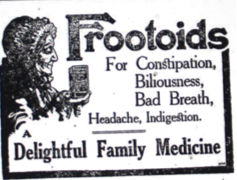
Frootoids medicine for constipation, biliousness and bad breath – 14 June 1912
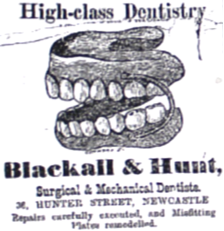
Blackall and Hunt, surgical and mechanical Dentists at Newcastle – 14 June 1912
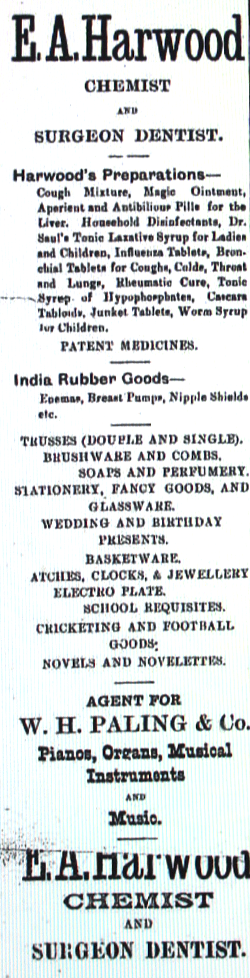
E. A. Harwood, Chemist and Surgeon Dentist at Newcastle – 14 June 1912
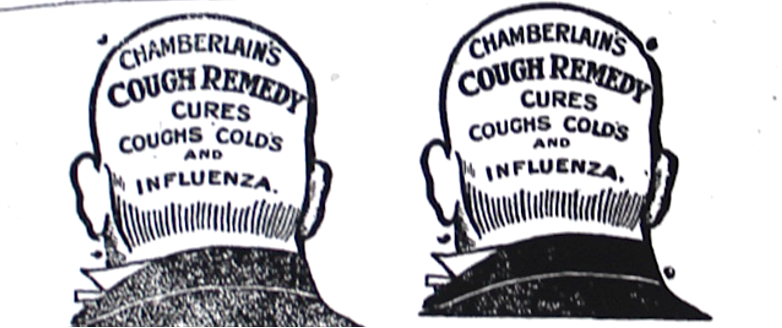
Chamberlain’s cough remedy cure – 14 June 1912
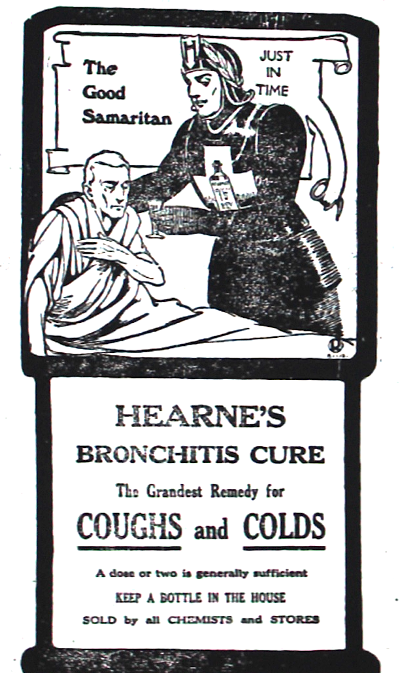
Hearnes Bronchitis Cure – 14 June 1912. Variations of this advertisement were published in every edition of the newspaper
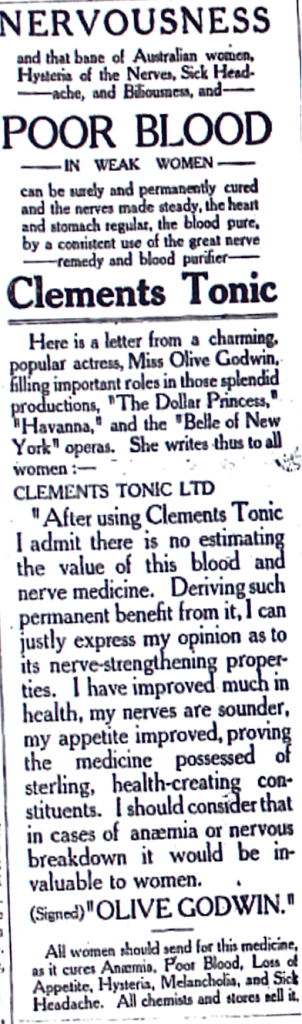
Clements Tonic for poor blood in women causing hysteria of the nerves, headaches and biliousness – 14 June 1912. Variations of this advertisement were published in many editions of the newspaper
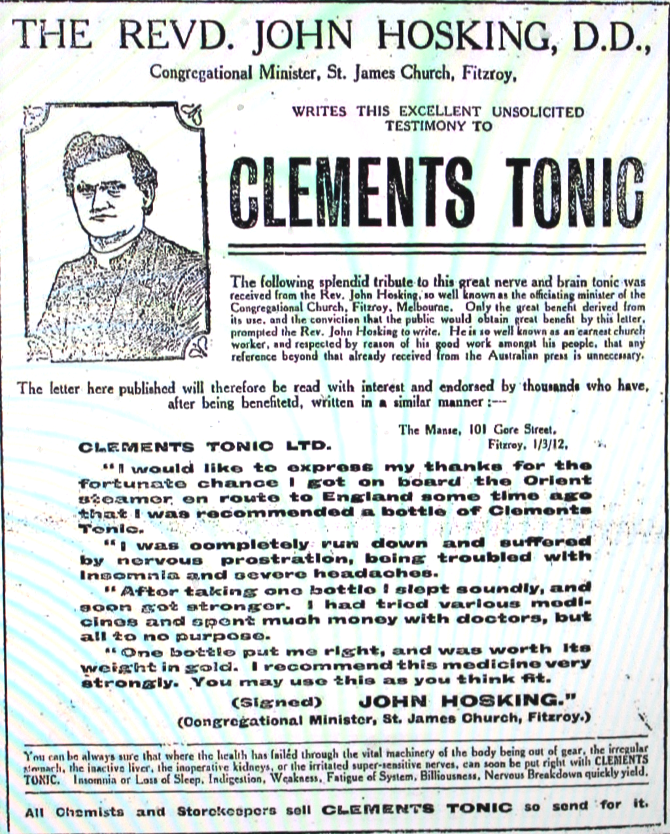
Clements Tonic – 30 August 1912. Some variations of advertisements for this product featured testimonials, such as from the Congregational Minister of St. James’ Mission Church, Fitzroy.
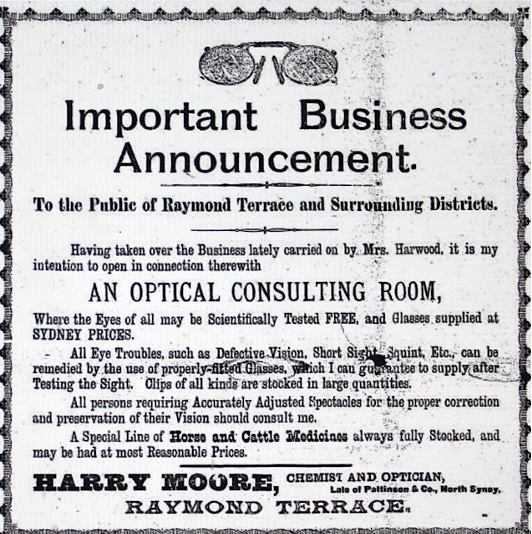
New Optical Consulting Room at Raymond Terrace – 28 February 1913. Horse and cattle medicines were also stocked
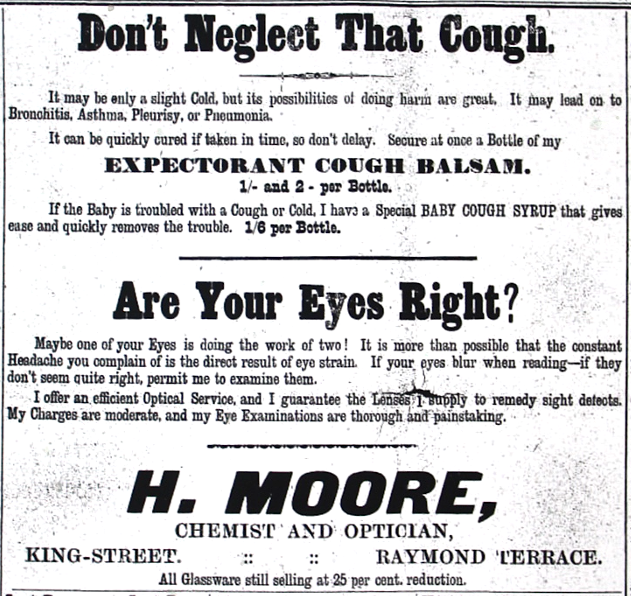
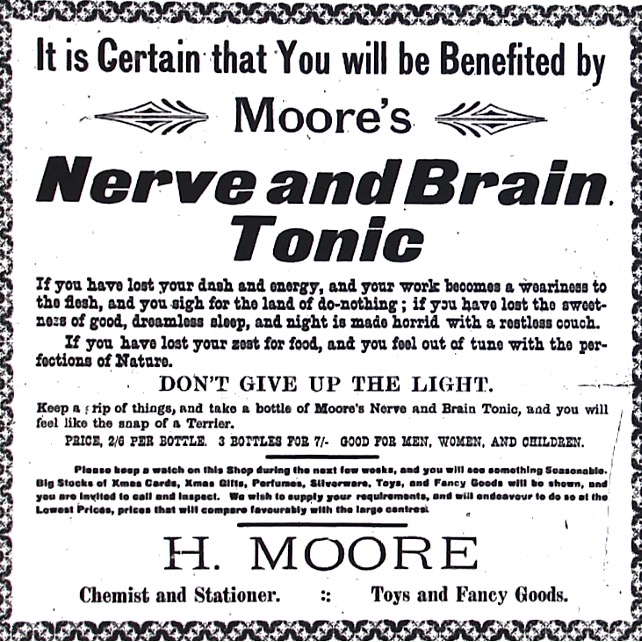
H. Moore, Chemist and Optician at Raymond Terrace – 25 April 1913. Also sold his own manufactured cough balsam. Numerous products advertised by this chemist are featured in this paper
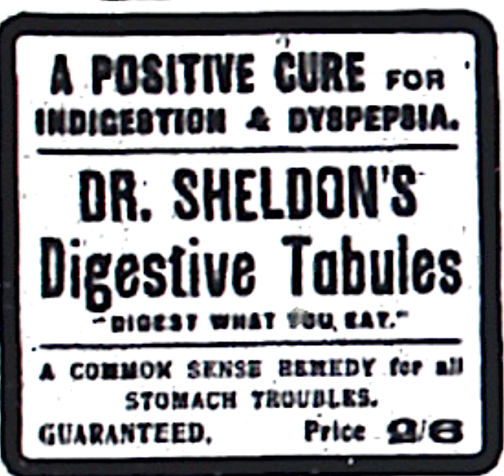
Dr. Sheldon’s Digestive Tabules for indigestion and dyspepsia – 11 July 1913
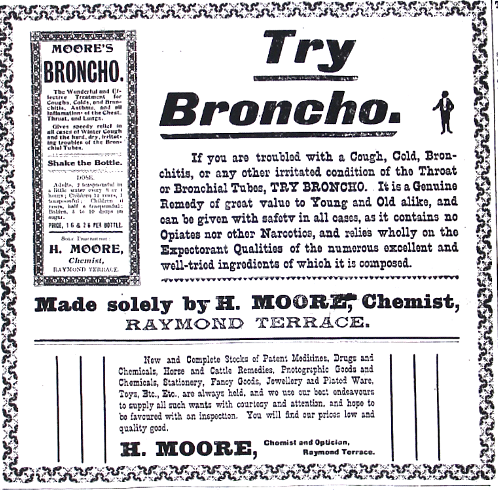
Moore’s Broncho, available at H. Moore, Chemist, Raymond Terrace – 15 August 1913
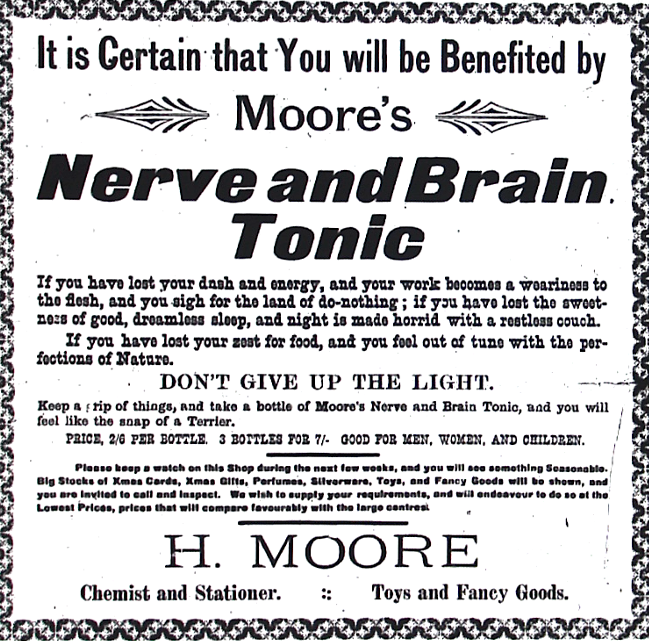
Moore’s Nerve and Brain Tonic helps keep a grip of things – 28 November 1913
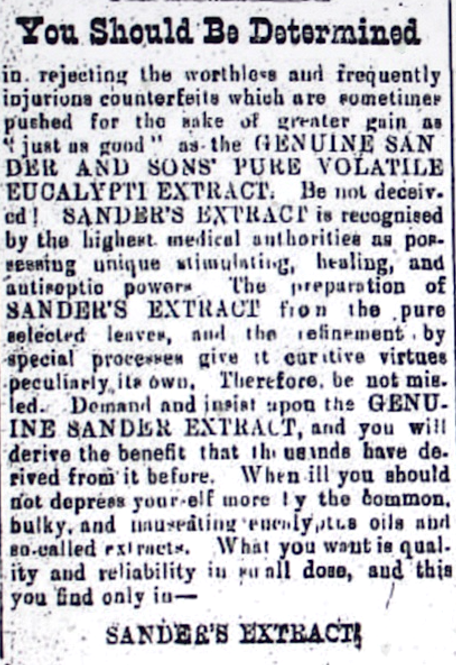
Sander and Son’s Volatile Eucalypti Extract to stimulate healing and antiseptic powers – 5 December 1913
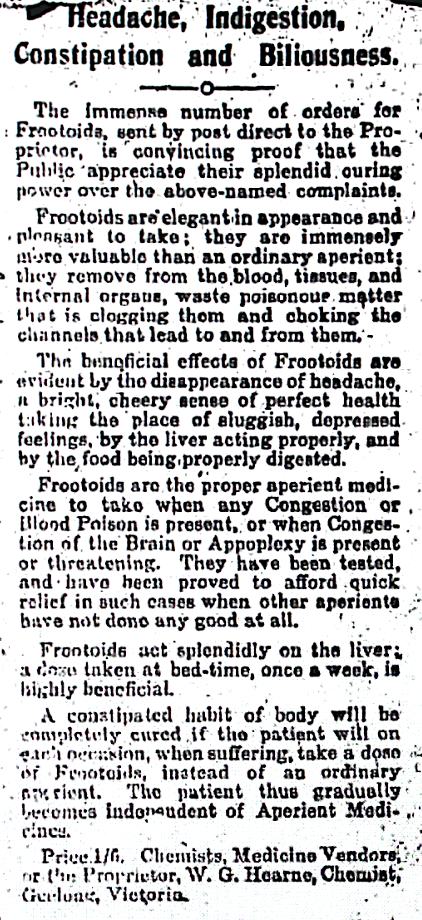
Frootoids cured headaches, indigestion, constipation and biliousness – 29 May 1914. Also acted splendidly on the live
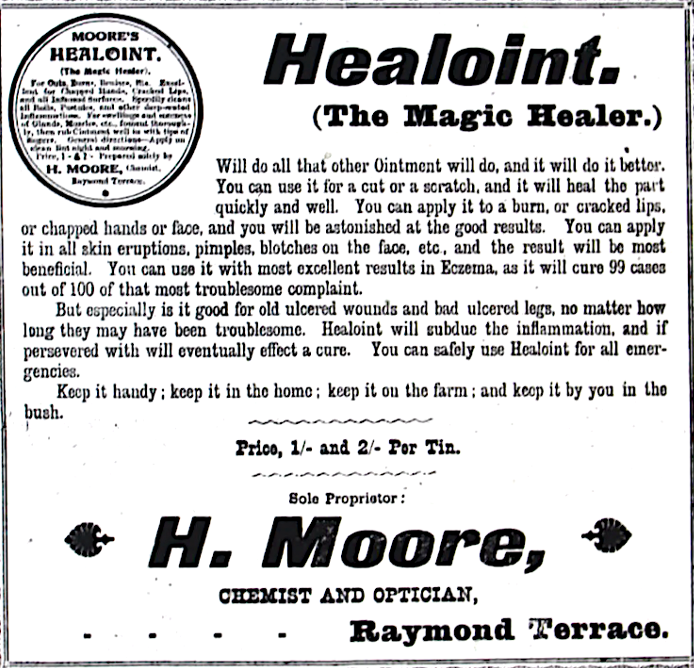
Healoint, the Magic Healer for burns, ulcers and cuts – 7 August 1914
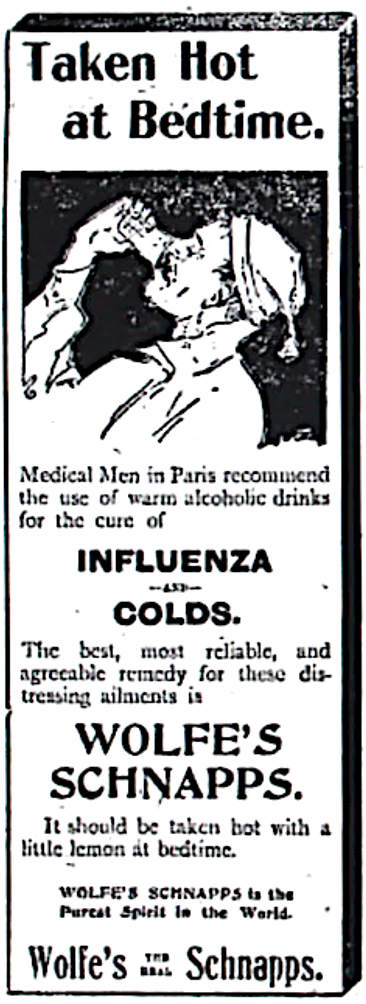
Wolfe’s Schnapps, taken at bedtime cures influenza and colds, as recommended by medical men in Paris – 7 August 1914. This advertisement was published in many editions of the newspaper
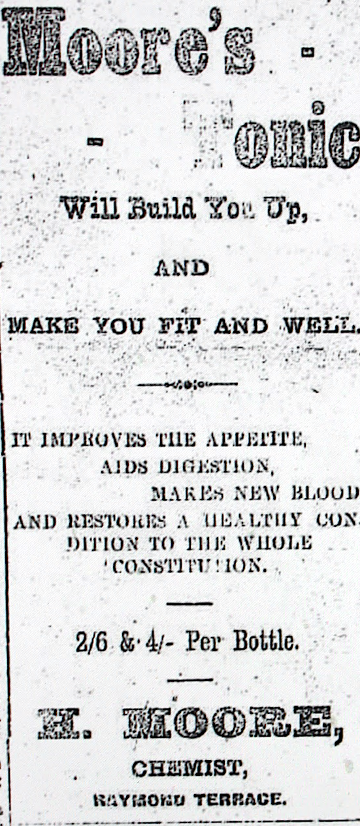
Moore’s Tonic makes new blood to improve the appetite and digestion, as developed by the Raymond Terrace chemist – 9 October 1914
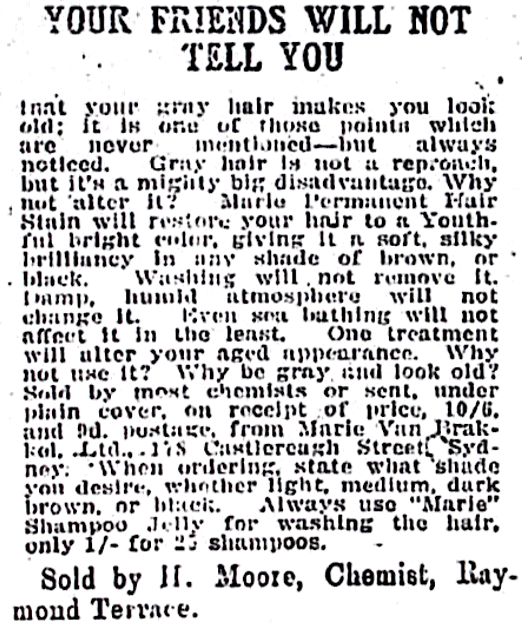
Marie hair stain will alter an aged appearance – 30 October 1914
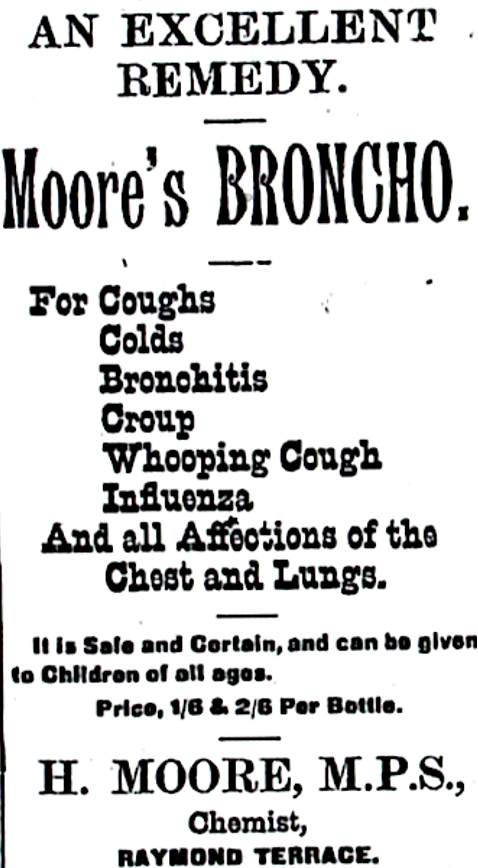
Moore’s Broncho, the remedy for coughs, colds, bronchitis, croup, whooping cough, influenza, all affections of the chest and lungs – 26 March 1915
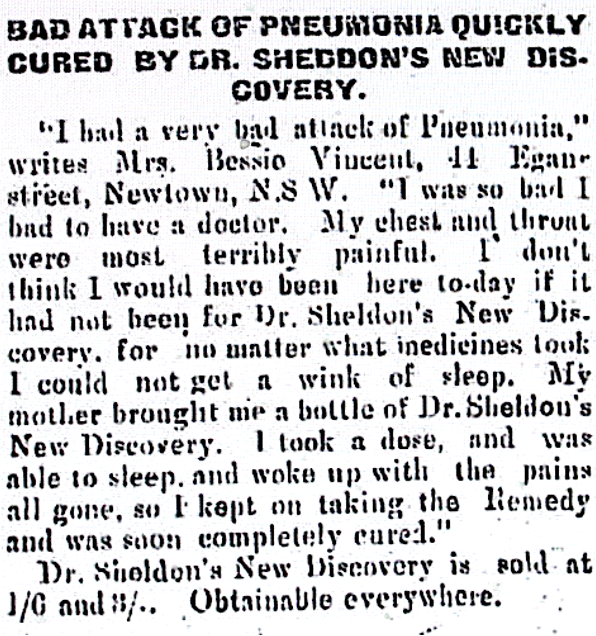
Dr. Sheldon’s new discovery cure for pneumonia – 11 June 1915
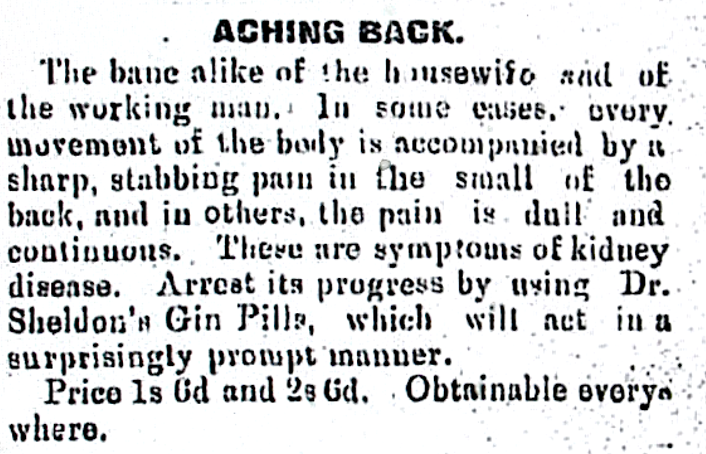
Dr. Sheldon’s gin pills for aching back, a symptom of kidney disease -16 July 1915
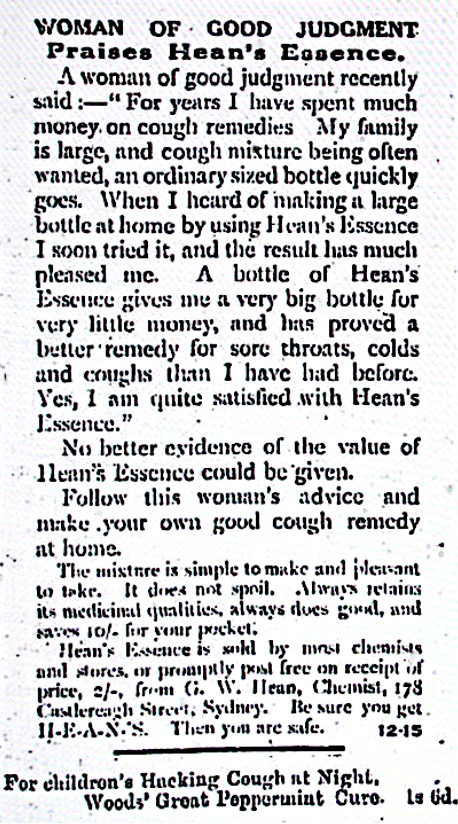
Hean’s cough remedy essence -16 July 1915. Wood’s peppermint cure also cured a hacking cough in children
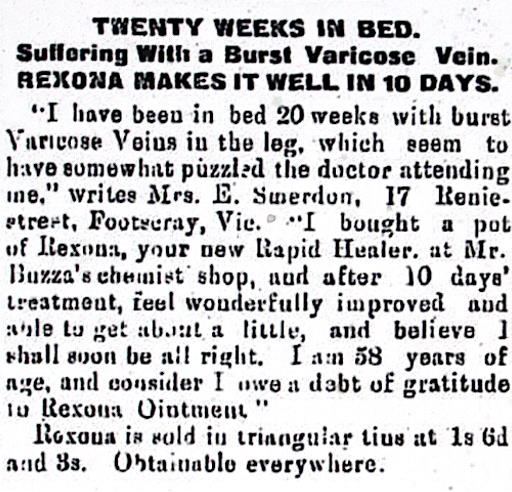
Rexona heals varicose veins – 20 August 1915
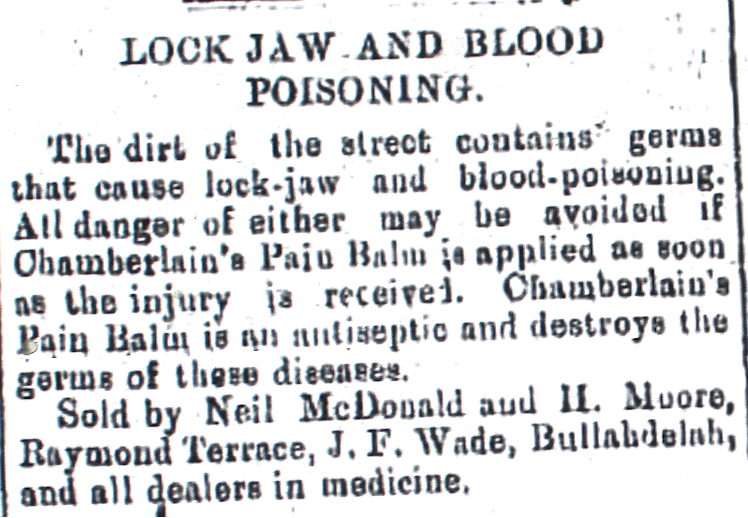
Chamberlain’s pain balm helps avoid lock-jaw and blood poisoning – 21 July 1916
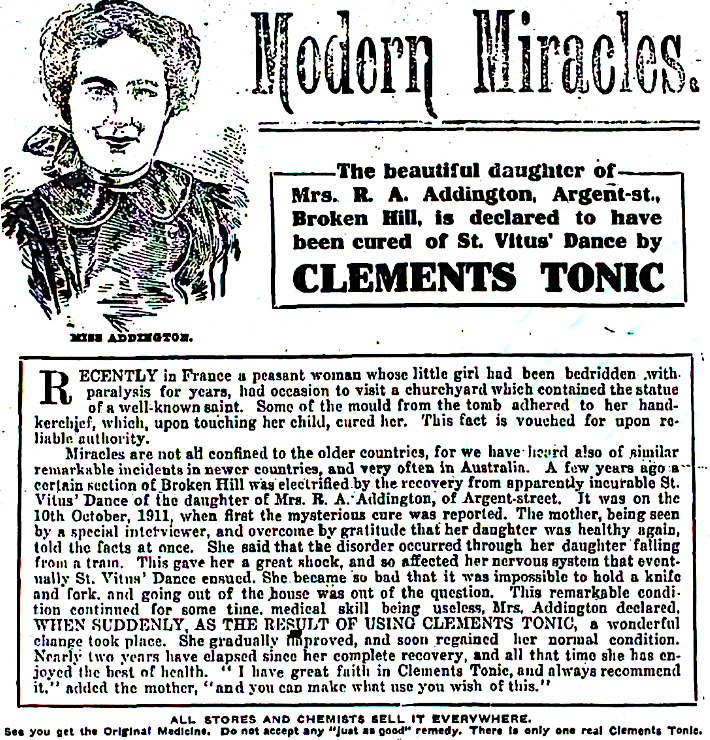
Clements Tonic can cure St. Vitus Dance [a disorder featuring rapid, uncontrollable jerking movements of the face, hands, and feet, commonly affecting children] – 25 August 1916
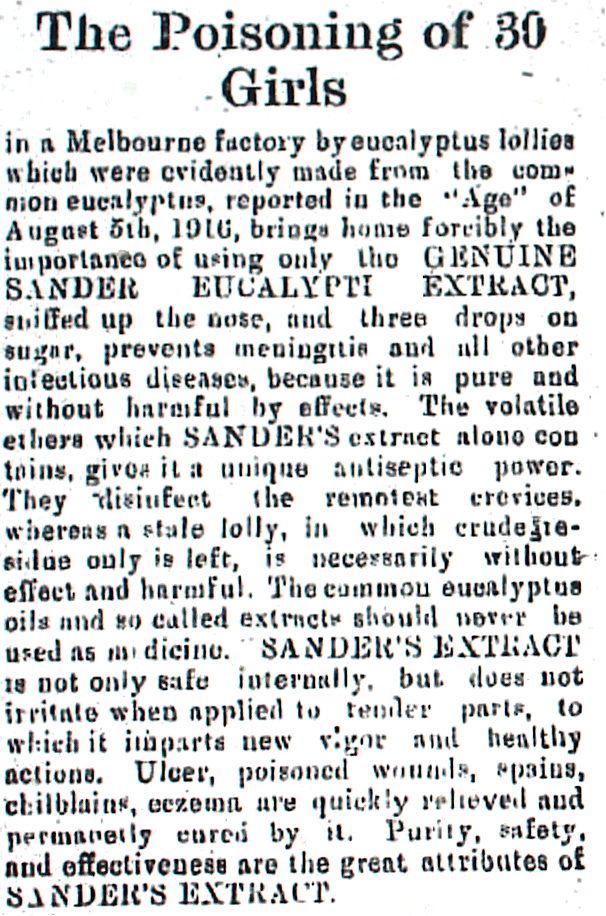
Sanders eucalypt extract prevents meningitis and other infectious diseases – 29 September 1916
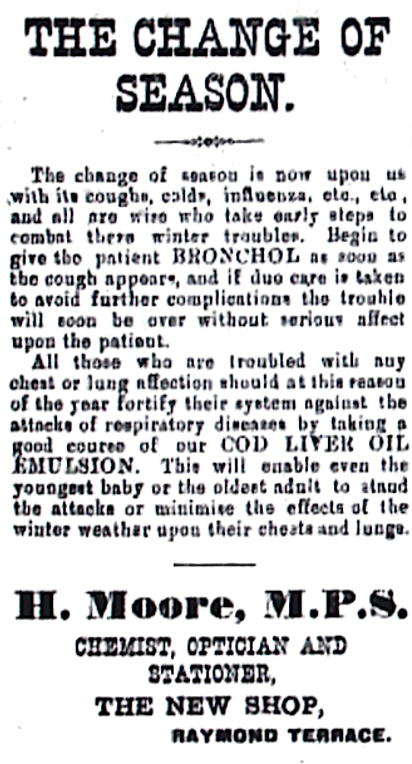
Moore’s cod liver oil emulsion fortifies the system against respiratory disease – 15 June 1917.
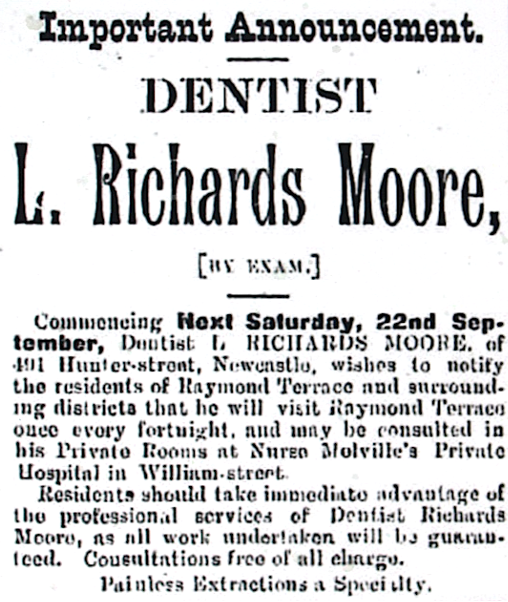
Dentist, L. Richards Moore to visit Raymond Terrace every fortnight and painless tooth extractions were his speciality – 21 September 1917
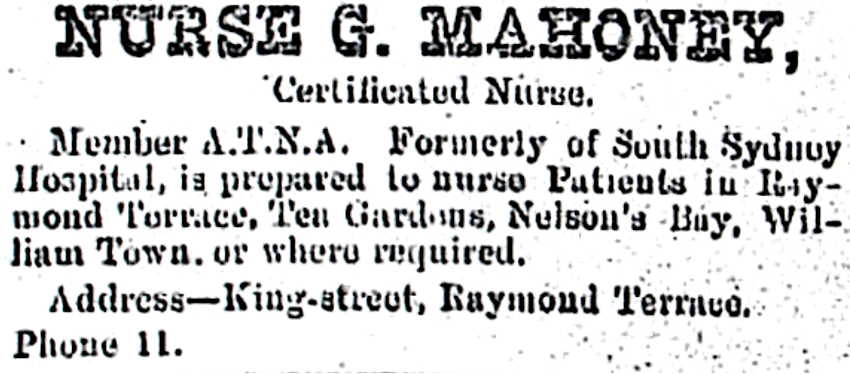
Nurse G. Mahoney prepared to nurse patients in the Port Stephens region – 5 October 1917
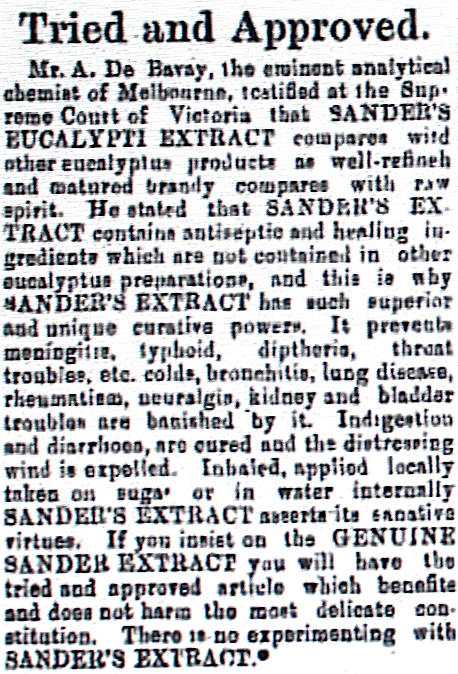
Sander’s eucalypt extract contains antiseptic, and healing ingredients not contained in other eucalyptus preparations – 22 March 1918
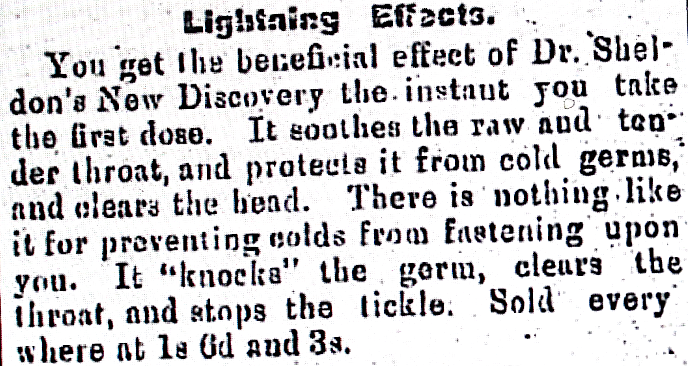
Dr. Sheldon’s new discovery provides instant relief for sore and tender throats – 10 May 1918
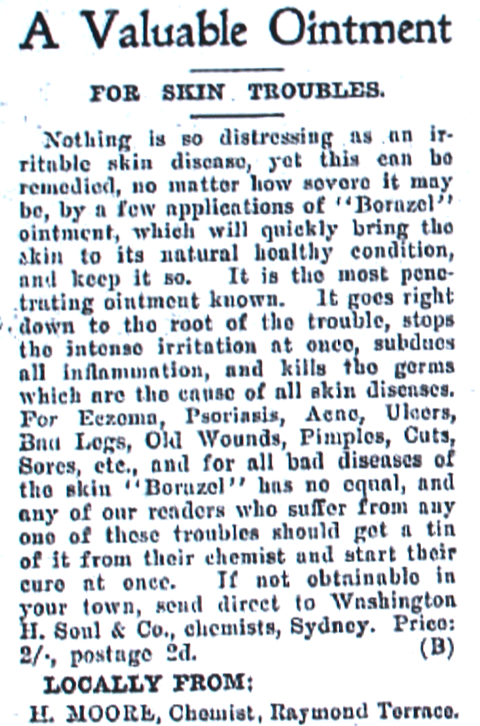
Borazel ointment remedies skin disease – 14 June 1918
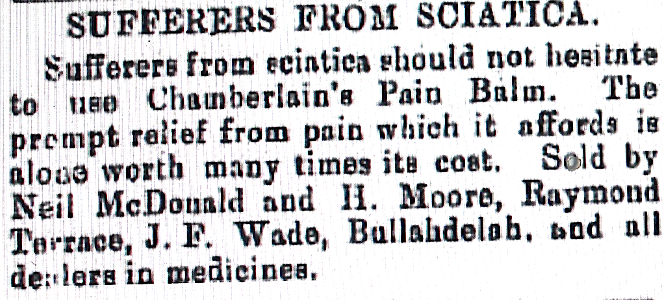
Chamberlain Pain Balm provides prompt relief from sciatica – 19 July 1918
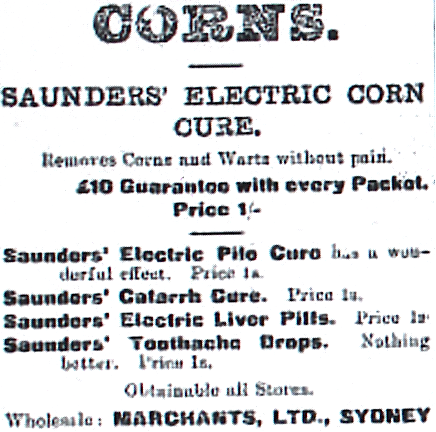
Saunders electric corn cure guaranteed – 2 August 1918. A pile cure; catarrh cure; liver pills and toothache drops also offered
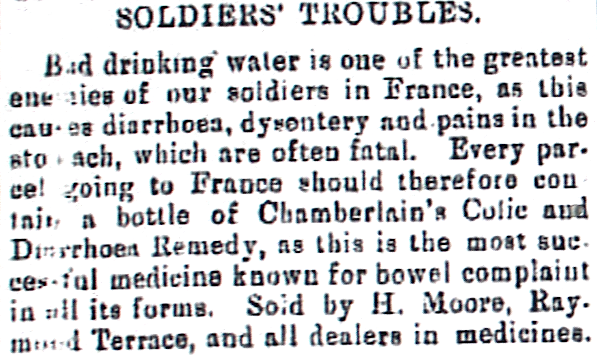
Chamberlain’s Colic and Diarrhoea remedy should be included in every parcel sent to Australian troops in France – 4 October 1918
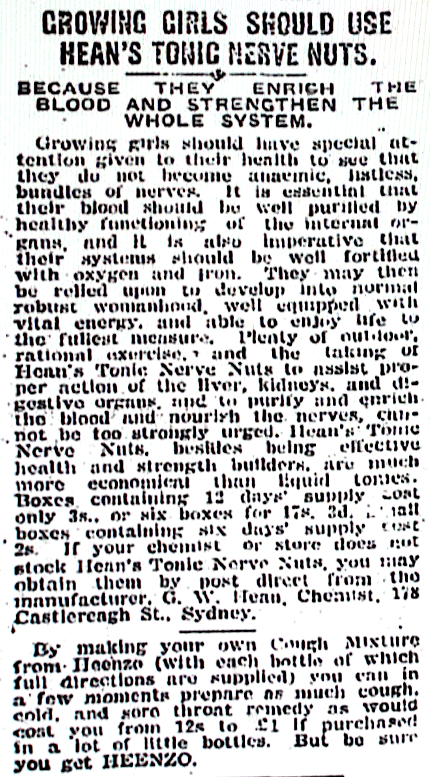
Hean’s Tonic Nerve Nuts will stop growing girls becoming anaemic, listless and bundles of nerves – 11 October 1918
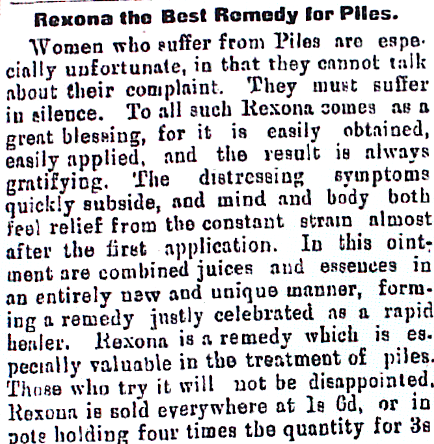
Rexona cream will cure piles in women – 9 May 1919
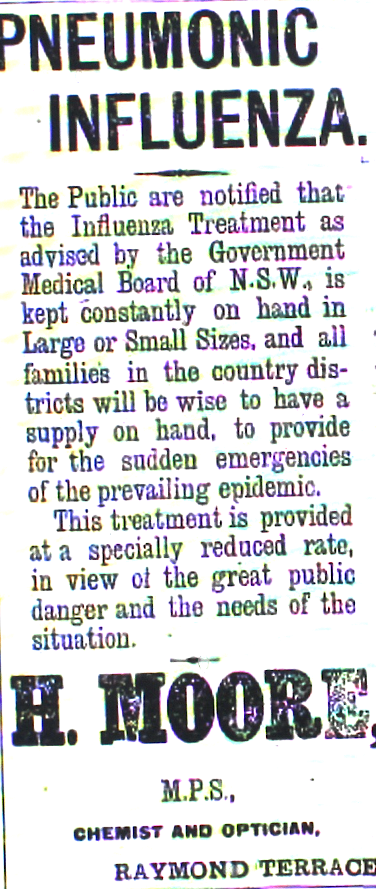
H. Moore, Chemist and Optician at Raymond Terrace, keeps influenza treatment on hand in response to Government advice – 4 July 1919
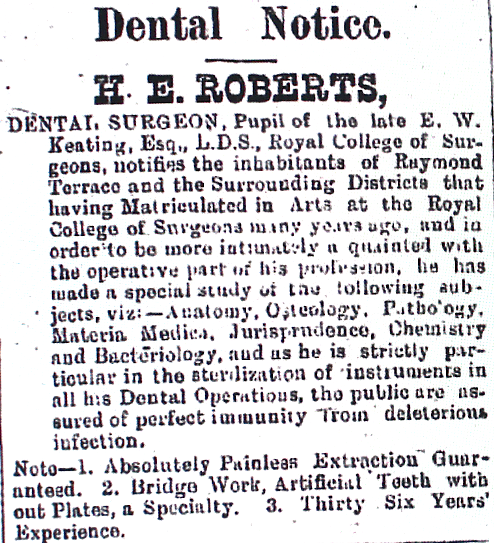
H. E. Roberts, Dentist, offered painless extraction and artificial teeth without plates. He was strict in the sterilisation of instruments – 17 October 1919
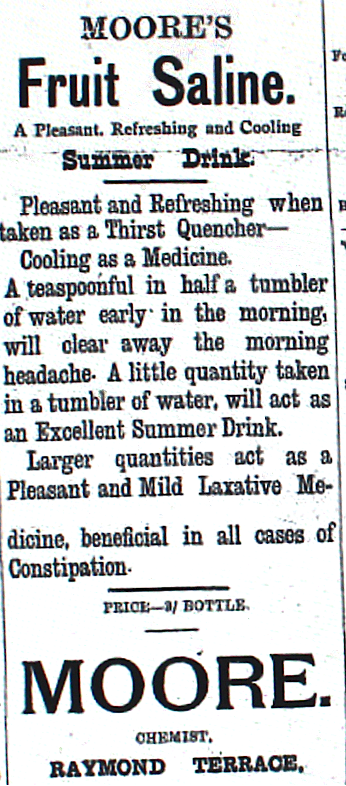
Moore’s fruit saline is cooling as a medicine to clear away the morning headache – 12 December 1919
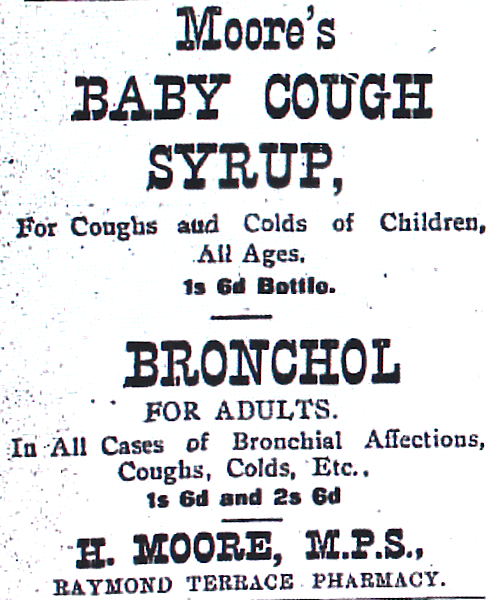
Moore’s baby cough syrup for children and Bronchol for adults for coughs and colds – 21 May 1920
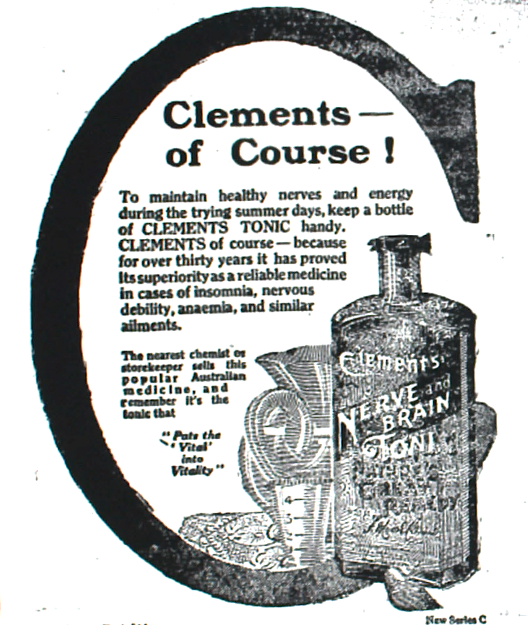
Clements Nerve and Brain Tonic rectifies insomnia, nervous debility, anaemia and similar ailments – 10 December 1920
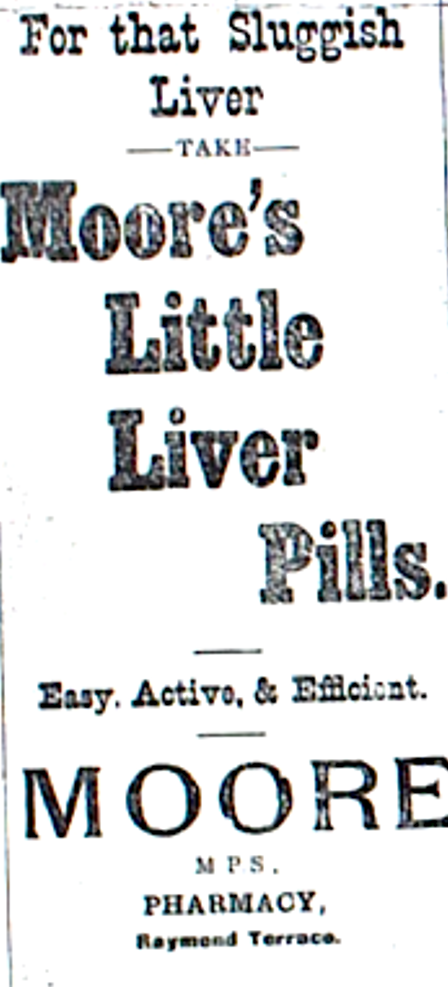
Moore’s little liver pills rectify a sluggish liver – 4 November 1921
Concluding Comments
An historical insight into the medicines and dental practices available in the period immediately prior to and post World War One times in the Port Stephens region.
While great claims are made in each advertisement, the ingredients of each medicine are rarely specified.
Some medical products are advertised with differing healing claims over a period of time.
Some of the products advertised were available through the post, without the need to consult a medical professional, before consuming the product.
Researched and compiled by Kevin McGuinness
May 2026


