
Introduction
Over the years, many people who enjoy fishing, have retired to the Port Stephens area.
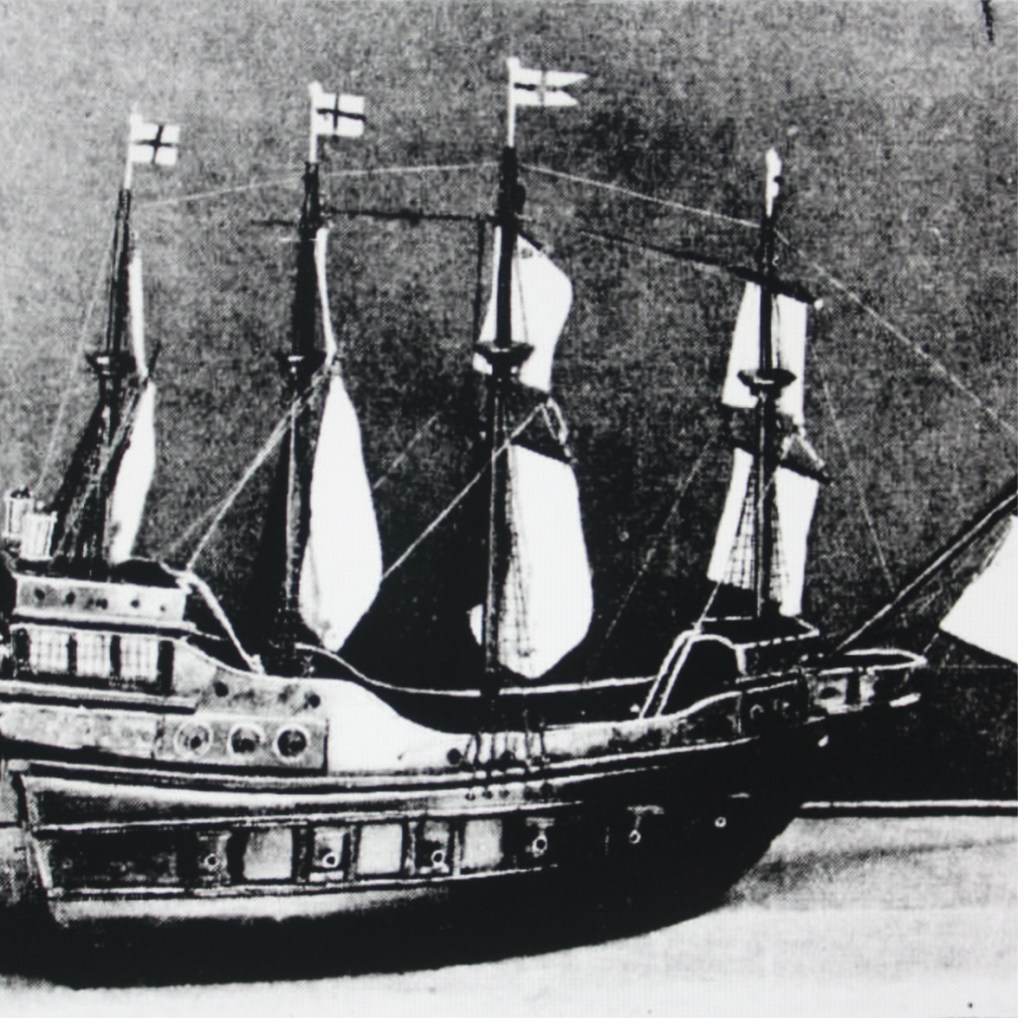
Arthur Edward Cutler was one such person, who had a particular skill in building model ships.
He had a long career in the NSW Public Service in the Department of Works. He held engineering and managerial positions at both the Cockatoo Island Dockyard in Sydney Harbour (taken over by the Commonwealth Government in 1913) and at its replacement, the NSW Government Walsh Island Dockyard and Engineering Works at Walsh Island in Newcastle.
Arthur Cutler retired from the NSW Public Service in 1924 and moved to Sunnyside, on the shores of Myall Lakes.
At Sunnyside, apart from fishing, he spent thousands of hours crafting detailed models of historic ships.
This paper is the story of Arthur Edward Cutler, model ships builder.
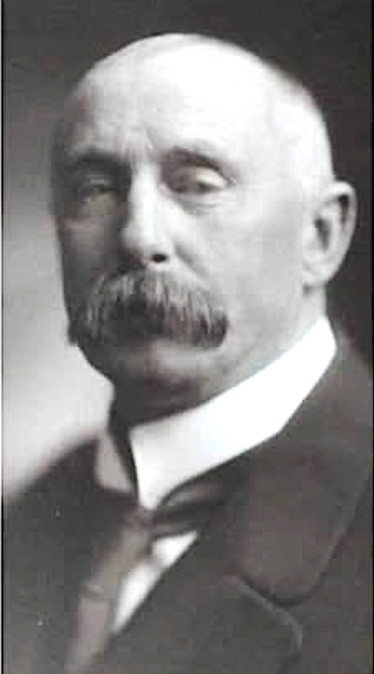
Arthur Edward Cutler
Fairwell Presentation to Edward Cutler from Cockatoo Island Sydney – 1914
The Daily Telegraph of 14 March 1914, page 15, reported:
‘About 150 members of the professional and clerical staffs of the Commonwealth Naval Dockyard, Cockatoo Island, attended a farewell smoke concert given last night at Aarons’ Exchange Hotel [located in Gresham Street, Sydney, prior to demolition in 1965] to Mr. A. E. Cutler, ex-superintendent and acting-general manager of the dock, on his resumption of duty under the New South Wales Government.
Mr. G. W. Barr, shipyard manager, presided; on his right, Mr. Cutler, and next to him, his successor, Mr. J. King Salter. Two presentations were made to the guest of the evening. The first was a set of cutlery, contained in a handsome chest of turned oak, suitably inscribed in silver. The second consisted of a framed series of naval and group photographs, illustrating the history of the dock, and centred by H.M.A.S. Sydney.
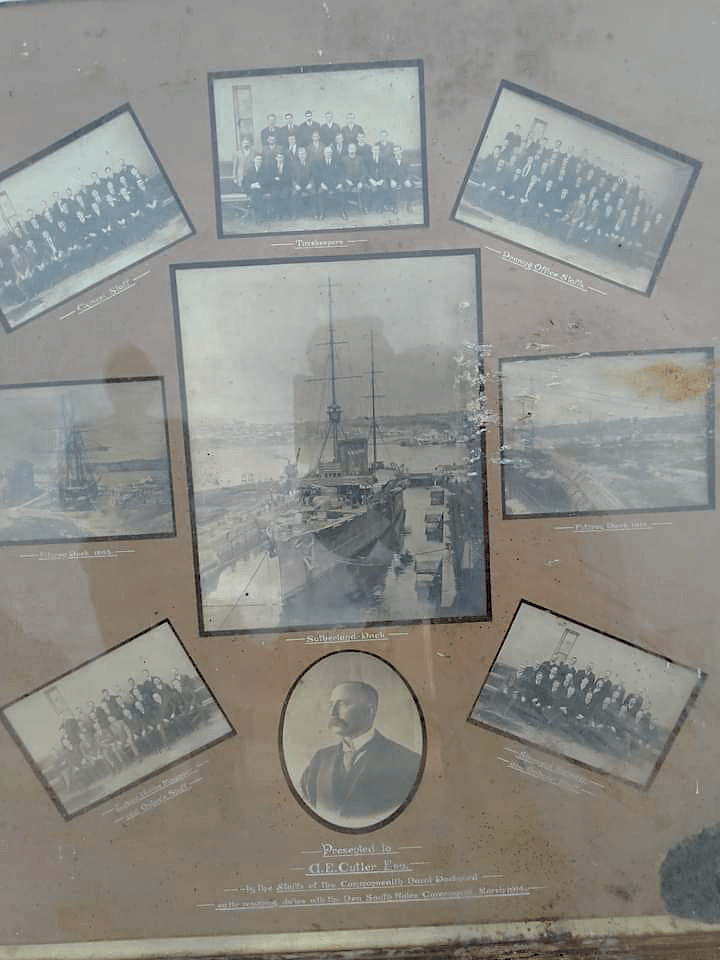
Framed series of naval and group photographs presented to Arthur Edward Cutler on leaving Cockatoo Island, 1914 [Facebook]
The chairman read a letter from the Minister for Works, expressing appreciation of Mr. Cutler’s distinguished services. Mr. John Pratt, dockmaster and senior officer of the island, said Mr. Cutler had a record of which any man might be proud. He had left the dock the most efficient in the Southern Hemisphere. He and his wife and daughter carried their good wishes with them. The toast was supported by Messrs. Payne, McNaught, Scott, Martin, and Lawes. Mr. Cutler spoke of the difficulties that had been overcome in the building of the dock. Until four or five years ago it might be said that they had no money and did not know where to get any. They just spent what they had to, and somebody had to pay for it. In fact, if he had been strictly honest, he doubted whether the dock would now be as far ahead as it was. It was not an ideal dock; It’s configuration created difficulties. But even from the beginning he had the idea of building warships there, and in the past few years a great deal of progress had been made. He had received loyal support from the men and wished Mr. Salter the best of success. A musical programme was rendered during the evening.’
Arthur Cutler’s Career in NSW Public Service
The Newcastle Morning Herald and Miners’ Advocate of 29 May 1924, page 4, reported:
‘There was a large gathering of officers of the Public Works Department in the Minister’s room this afternoon, when Mr. A. E. Cutler, ex-manager of Walsh Island, performed his last day of service, after a long association with the department. As a mark of appreciation, the officers of the department, through Mr. R. T. Ball, the Minister for Works and Railway, presented him with an outboard motor for a launch. Mr. Cutler is a keen fisherman, and the gift was highly appreciated by him.
Mr. Cutler joined the service of the department on March 7, 1885, as draughtsman in the Harbours and Rivers Branch. He resigned on August 31 the same year, and rejoined the service on September 27, 1889, as draughtsman of the Glebe Island Abattoir. He was appointed to the sewerage branch of the Department on June 25, 1891, and became a draughtsman in charge of the reorganisation on December 12, 1895. He was appointed chief draughtsman on July 1, 1896, and first-class assistant engineer on May 19, 1899, and was appointed assistant engineer of the Water Supply and Sewerage on April 11, 1901.
On June 1, 1903, he was made acting superintendent at the government Dockyard at Biloela (Cockatoo Dockyard), and superintendent on July 1, 1904. A little over five years later, on April 16, 1909, he was appointed engineer superintendent to have charge of all repairs to dredges. On March 15, 1914, he became chief mechanical engineer of the Newcastle district, and in July of the same year he was appointed chief engineer and chairman of the Board of Advice and Reference and Director of Engineering at Walsh Island. He also became president of the Hunter District Water and Sewerage Board.
On June 1, 1917, he became engineer-in-chief and general manager of the Government Dockyard, Walsh Island, and one month later he was appointed chief engineer of the Public Works Department. Almost three years later, on June 30, 1920, he resigned his position as president of the Hunter District Water Supply and Sewerage Board. He became general manager of Walsh Island on June 1, 1920, which position he retained until proceeding on his leave of absence prior to retirement.’
Retirement at Myall Lakes – crafting model ships
After retiring to Myall Lakes at Sunnyside, near Mungo Brush, Port Stephens, Arhtur Cutler utilised his marine engineering skills to build models of historic boats. His reputation as a skilful model maker became widely well known.
In 1927, a display of six his ship models was held at Challis House in Sydney which was the headquarters of the NSW Tourist Bureau. The exhibition was well publicised by several newspapers and attracted much public interest.
The Sydney Mail of 9 March 1927, page 15, reported:
‘Mr. Cutler was formerly of the N.S.W. Public Works Department, and now, in retirement, has a pleasant occupation in building models of old ships. They have been on exhibition at Challis House, Sydney.
Mr. Cutler, formerly of Cockatoo Island and Walsh Island Dockyards, has been living for about two years at Myall Lakes, N.S.W., and has adopted this most engaging hobby, using any material at hand in fashioning the fittings. The hulls are built up of pine, redwood, and cedar, and are made to scale from authentic books and prints on the subject.
The Phoenician galley is illustrative of the development of the large ships of the time and the art of navigation by the people to whom the chief credit belongs for its early progress. The Romans developed their naval power during the First Punic War, and built large ships, until the battle of Actium, when the lighter Liburnian craft gave the naval architects something to think over by eluding the missiles showered on them by the larger vessels, sweeping away the banks of oars, and leaving them crippled, to be burned one after another.
It is still hard to conceive the experiences of the sailors on the other vessels among the models, the square sterns and enormous superstructures built up above the waterline, making them appear to the modern eyes clumsy, unwieldy, picturesque craft, difficult to steer, and almost impossible to face bad weather in.
The model of the Sovereign of the Seas has a long prow with bulwarks under the bowsprit. The man-o’-war which Mr. Cutler dates about 1780 has the prow modified, but still has a wonderful building-up of half-decks, quarter-decks, and so on, mounting to a great height, but in that model it is interesting to note the development of the topmast and top-gallant mast, and the modern triangular headsail.
The model of Drake’s ship is something to look at and marvel when one thinks of his voyage in the 100-ton craft around South America, and across the Pacific to Java and the Cape of Good Hope home. The model of the 1780 man-o-war shows all the internal fittings in the cabins of a ship of the times.’
The newspaper published the following photographs of the six ship models:
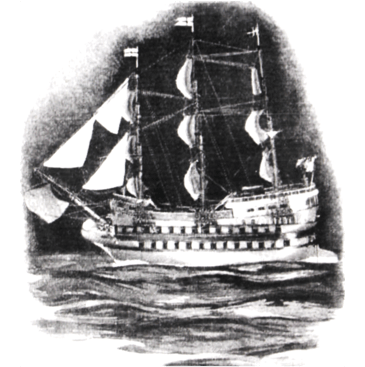
A Man-O-War, built about 1870, showing the development of the modern topmast and top gallant mast and triangular headsail.
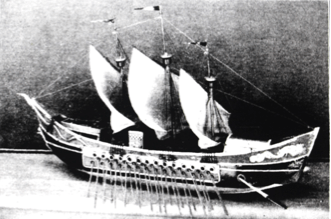
A Roman galley of about 74 B.C., when large ships of war were in use, some of them being 200ft long.
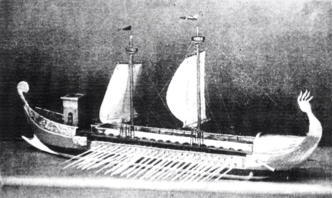
A Phoenician galley that was in use about 700 or 800 years B.C., showing the forecastle for the use of the fighting men armed with darts.
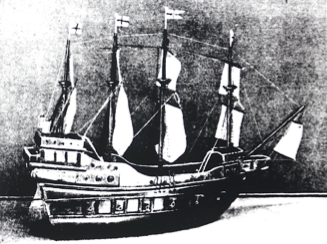
The ‘Golden Hind’ in which Francis Drake sailed around the world (1577-80). Her length overall is given as 92ft (keel 60ft), with a beam of 20ft.
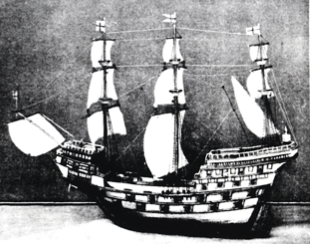
The ‘Henri Grace A Dieu’ circa the reign of Henry VIII. Her length over all was 212 feel, length on keel, 112 feet, beam 30 feet.
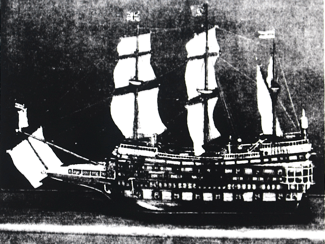
The ‘Sovereign of the Seas” – a warship circa 1673, modelled from a painting. Her dimensions were: Length overall, 237ft, on keel 138ft, beam 48ft.
The Evening News of 14 March 1927, page 7, also reported:
‘An exhibition of six model ships, the work of Mr. A. E. Cutler, formerly chief engineer of the Public Works Department, is arousing interest at Challis House. Some famous old-time ships have been copied, including the Golden Hinde, in which Sir Francis Drake went around the world; and The Sovereign of the Seas, built in 1637. A Phoenician galley and a Roman galley are also depicted.
Mr. Cutler estimates that he spent 3000 hours in making them. He intends to add modern types to his collection and has decided to model the German raider Emden.’
Fishing Party visits Sunnyside to view the model ships – 1931
The Dungog Chronicle of 27 February 1931, page 4, reported in the following fashion that on 9 January 1931 the fishing party visited Mr. Cutler:
‘On the way to Mungo [Brush] we called in to see Mr. Cutler. …. Mr. Cutler showed us a beautiful collection of model fighting ships which he had built during three thousand hours of his spare time. In addition to these, he showed us several clockwork toys which he was making for the Sick Children’s Committee. The boys drank his health in Colonial Whisky.
Sea Scout Troop visits Sunnyside to view model ships – 1933
The Dungog Chronicle of 20 October 1933, page 4, reported:
‘On Sunday the 15th, October, the Port Stephens Sea Scout troop were the guests of Mr. and Mrs. A. E. Cutler, of Sunnyside, Myall Lakes; the troop was granted a free passage on Messrs. G. A. Engel’s motor vessel ‘Yalinbah.‘
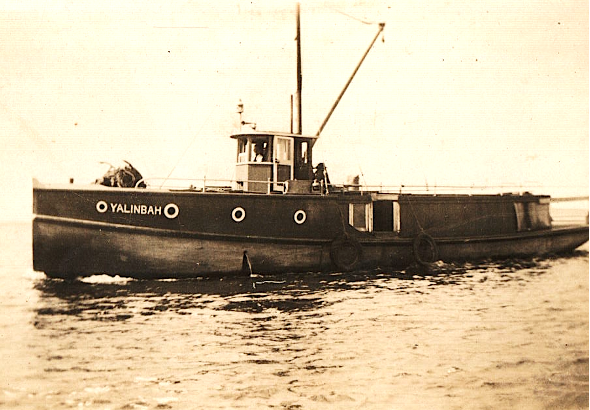
Yalinbah
The Sea Scouts upon their arrival at Sunnyside were entertained by their host and hostess and examined the beautiful models of ships constructed by Mr. Cutler. The models representing in detail the advancement in ship construction and naval architecture over a period dating back for many hundreds of years, to the present-day modern battleship.
A picnic lunch was taken, supplemented by hot currant scones and tea provided by Captain Clark’s daughter. The boys after lunch and having refreshed themselves with a swim, hiked through the bush, which is just now in its full spring glory, to Mr. Legge’s guest house, Bombah Point, distant 7 miles, the journey being broken en route at Torquay, the home of Mr. V. Nosworthy, where afternoon tea was taken. ….’
Death of Arthur Edward Cutler – 1935
The Newcastle Morning Herald and Miners’ Advocate of 24 May 1935, page 11, reported:
‘Mr. A. E. Cutler, formerly Manager of the Walsh Island Dockyard and Engineering Works, at Newcastle, died at his home at Myall Lakes on Wednesday night. The funeral took place yesterday afternoon at Myall Lakes, in the presence of intimate personal friends and residents of the Port Stephens district. The chief mourners were the widow and a daughter, who is the wife of Captain Clarke.
Three weeks ago, Mr. Cutler visited Newcastle. He was under medical treatment for a time and returned much improved in health. He suffered a heart attack while seated on the veranda of his home on Wednesday afternoon and died soon afterwards. Mr. Cutler was a native of England. He came to Australia as a young man, and settled in Queensland, where he was actively identified with several undertakings.
Eventually he came to New South Wales, where he held some high positions in the Public Service, from which he retired on reaching the age of 65 years. After several years in Sydney, where he carried out a number of important engineering works. Mr. Cutler was transferred to Newcastle, as Chief Engineer and Manager of the Walsh Island Dockyard, being succeeded in the latter position by Mr. A. C. Waters. At the same time, Mr. Cutler occupied the office of President of the Hunter District Water Supply and Sewerage Board.
While Chief Engineer for the Newcastle district, Mr. Cutler was responsible for the construction of the Chichester gravitation scheme, from which Newcastle and the Hunter River Valley derive their water supply. Mr. Cutler was a member of the Institution of Civil Engineers (London) and was identified with kindred bodies in Australia.
Concluding Comments
The images of the ship models show the intricate work that would have been involved in creating each ship. One can wonder if the models still survive.
Other information on the Myall Lakes area of Port Stephens is published on this website and can be viewed at the following links:
The Lakes Travel Route to Mid-North Coast
Store Boats of the Myall River and Lakes
Scientific Surveys of the Myall Lakes – 1934/5
A Journey from Port Stephens up the Myall Lakes to Forster – 1908
Early Years of the Mungo Brush Regatta – Myall Lakes
Recreational Shooting at Myall Lakes – An Historical Perspective
A Vacation Cruise from Sydney to the Myall Lakes – 1884
Researched and compiled by Kevin McGuinness
February 2026


 Port Stephens - a history exploration