
Introduction
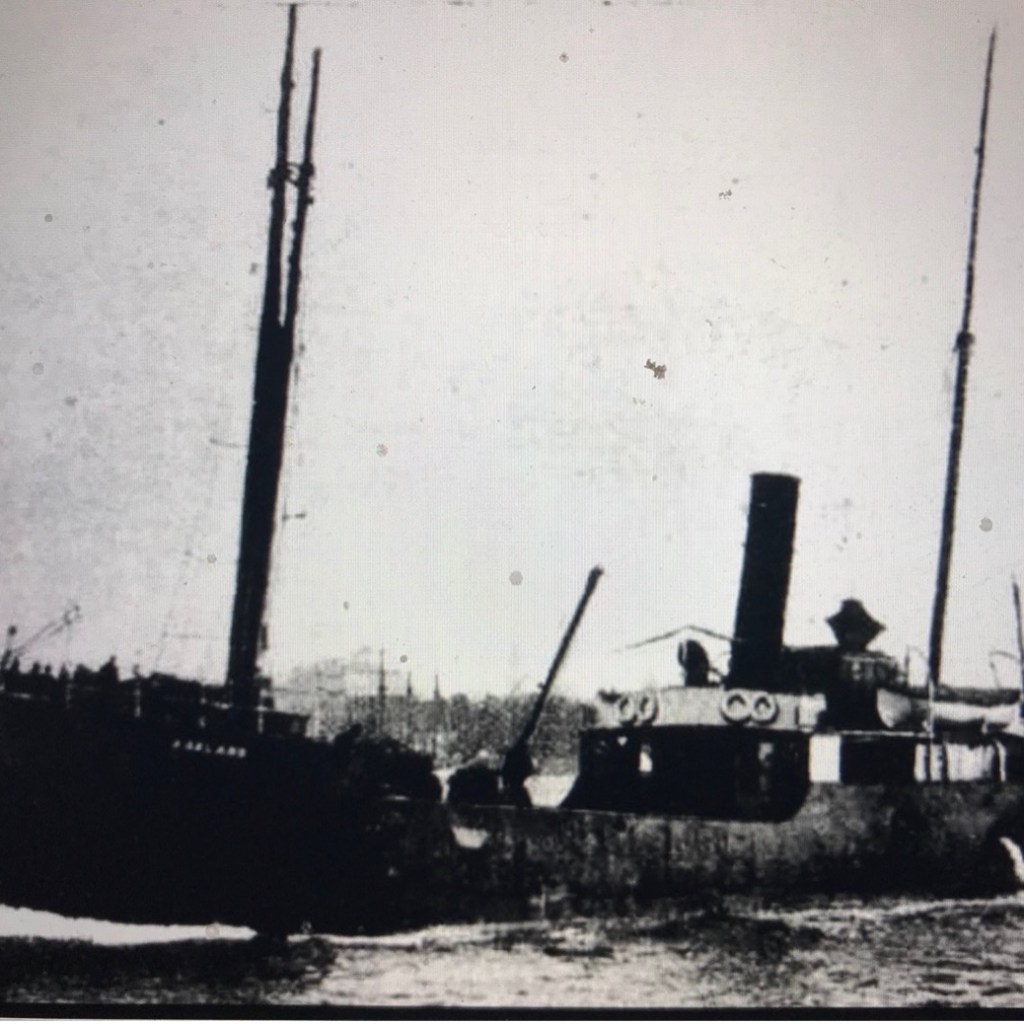
During the early 1900’s, the coastal steamboat SS Oakland was often featured in newspaper articles relating to one mishap or another. Its ultimate sinking near Cabbage Tree Island on 26 May 1903 led to extensive newspaper coverage.
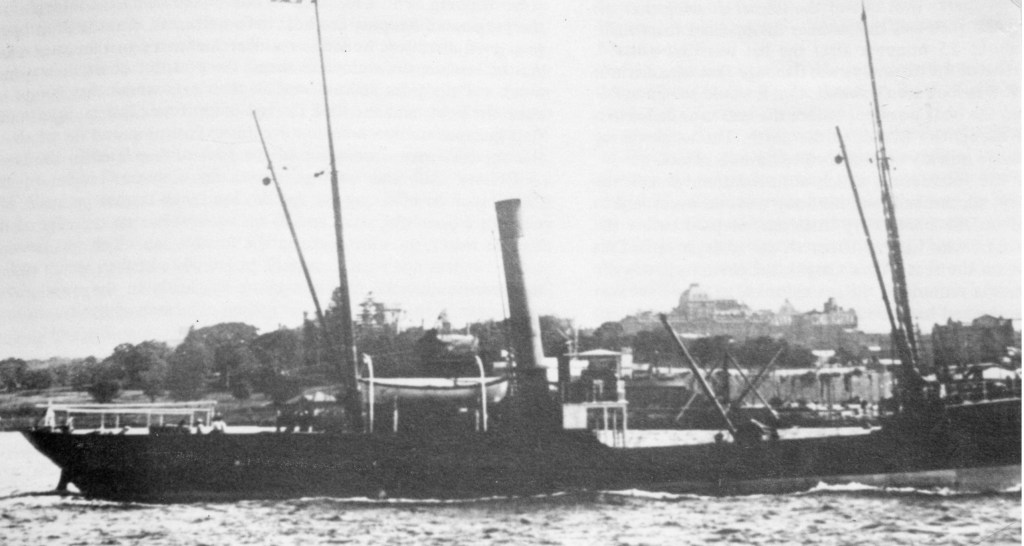
SS Oakland
The circumstances of the loss of the vessel and the chilling descriptions of how eleven of the crew, including the Captain, lost their lives, caught the public’s attention. While there had been hundreds of boats sunk along the north coast, particularly near Port Stephens, there had been relatively few fatalities reported.
Newspaper articles about the foundering of the Oakland continued to be featured in later years to commemorate the various anniversaries of the tragedy.
From its launch on 20 February 1890, the Oakland was a troubled ship. It was involved in numerous groundings and suffered two collisions, resulting in varying damage, as well experiencing other misfortunes during its thirteen-year life.
The wreckage of the boat still lies just north of Cabbage Tree Island on a sandy sea floor and is a popular dive site protected by the New South Wales Government.
Part One tells of its foundering near Cabbage Tree Island which was extensively reported.
Part Two uncovers the interesting history of the vessel including the various misfortunes it suffered before its eventual foundering.
PART ONE: The Foundering off Port Stephens
Arrival of the Oakland in Sydney – 1890
The first of many newspaper reports concerning the Oakland appeared in the Newcastle Morning Herald and Miners’ Advocate of 22 April 1890, page 4, which announced the launch of the boat:
‘The English papers to hand report the launch at Dumbarton of a steel schooner rigged steamer of 400 tons, built to the order of Mr. W. T. Flager, of Sydney. The vessel was named the Oakland.’
The Northern Star of 13 August 1890, page 4, provided a thorough report on the specifications of the ship and details of its commissioning:
‘Some time ago Mr. William T. Yeager, timber merchant of Oakland, sent to Scotland for the purpose of ordering a steel screw steamer of the best class for the Sydney and Richmond River trade. The order was placed with Messrs. Murray Brothers, of, Dumbarton, and the Oakland, which arrived in Sydney waters Thursday, is the outcome of Mr. Yeager’s enterprise. The Oakland is essentially a cargo carrier. She was designed to carry well on a light draught, and these qualities, it will be seen, she possesses in an eminent degree.
Her dimensions are— length 154ft. between perpendiculars, 24ft. beam, and 10ft. 6in. depth of hold. Her total deadweight carrying capacity is 450 tons, but she carries 250 tons on a draught of 8ft. Constructed under special survey, she has the highest class at Lloyd’s for hull and machinery. She is built with a long quarter-deck 4ft. above the main deck and has a topgallant forecastle 7ft. high under which the crew are comfortably provided for. The hull is in four watertight compartments and is built with a double bottom from the stern to the engine-room bulk-head. She carries water ballast in ballast tanks of 150 tons capacity.
The steamer is rigged as a fore-and-aft schooner, the two lofty steel pole masts adding greatly to her appearance. She has a flying bridge, in which is the steering gear, a duplicate screw gear being provided aft in case of need. The captain and officers’ quarters are below, in a cosy saloon aft. The captain’s room is unusually large for a steamer of this size, and is substantially furnished, as are also the officers’ cabins. The Oakland was engined by the celebrated engineering firm of Messrs. Kincaid and Co., of Greenock. The engines are on the triple principle, with cylinders of 12in., 19in., and 32in. respectively, and boiler sufficient for a full command of steam. On her trial the steamer exceeded her guaranteed speed, ….
There are three magnificent hatchways, the fore and main being specially large. These are forward of the engine-room, the after hatch being between the engine bulkhead and the after saloon. For the ready working of cargo these commodious hatches will be appreciated. There are two powerful steam winches, and a revolving steam crane, the latter being fitted so as to work the main and fore hatches with equal ease. All the improvements made in late years in the construction of cargo steamers are to be found on board the Oakland. From the day of her trial the engines have never refused, nor has a hitch. of the smallest kind occurred. Smoothly and uninterruptedly working from the time the steamer sailed from Greenock to her arrival in Sydney. She loaded 450 tons of coal before leaving, and though she took none in at either St. Vincent or the Cape, she came into port with close on 60 tons onboard.
The name of the steamer is after that of her owner’s residence at Richmond River, where the Oakland saw-mills are also situated. The house flag is the letter Y in a triangle, the figure being exhibited as a brand on the funnel. The Oakland, besides the large quantity of coal loaded at Greenock, took on board the machinery for another new boat, which was launched lately at Brisbane Water, from Mr. Rock Davis’s yard, to the order of Mr. Yeager—also for the Richmond trade. The Oakland is in command of Captain Rice, who reports leaving Greenock on May 10. She touched at Teneriffe for a couple of days, and a day at St. Vincent. A stop was made at the Cape of Good Hope for provisions, and after a six days’ visit the long stretch of steaming across the Southern Ocean was started upon.’
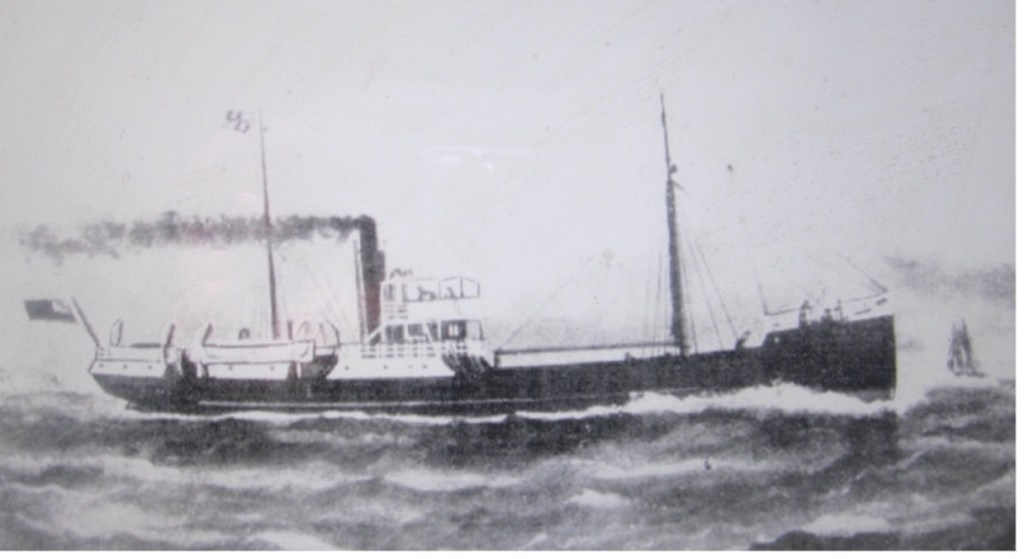
SS Oakland with one of the lifeboats visible.
SS Oakland founders near Cabbage Tree Island with the loss of eleven lives – 1903
Overnight on 26 May 1903, the Oakland met her end when she foundered near Cabbage Tree Island, off Port Stephens. The event was to attract much newspaper interest for many years.
The Clarence and Richmond Examiner of 30 May 1903, page 5, carried the following report on the foundering:
‘The Oakland foundered off Cabbage Tree Island at 4 a.m. on Wednesday, whilst trying to enter Port Stephens. A water-logged lifeboat, containing the second mate, five seamen and passengers, was picked up by the steamer Bellinger. Captain Slater, the mate chief engineer Fisher, the second engineer, cook, stewards, a boy, three firemen, and two able seamen were drowned. …..
Captain Tengelin, master of the Bellinger, on being interviewed, stated he left Camden Haven, bound for Sydney, and arrived off Port Stephens, the sea being too heavy to enter, he decided to make for Long Island for shelter. He then sighted a boat at 10.15 with seven men in her. He had passed several pieces of wreckage and kept a good look out. He made towards the boat as near as he could go, as she was, dangerously near the north end of Broughton Island, with a strong S.W. gale blowing and heavy sea. At 11 a.m. he was up to the boat which had capsized. He rescued the men, who were all in an exhausted condition. They had sighted his steamer several times, and had lowered the lifeboat, got into it, but it was immediately swamped and capsized. The other part of the crew were either drowned or died from exposure.
After, the gale abated he made for Port Stephens, where he reported the matter. The Oakland left Newcastle on Tuesday for the Richmond River, coal laden. A terrific sea was running at the time of the disaster. The crew took to the boats. The captain and engineer died from exposure.
The only passenger, Mr. Gaites, who is a monumental mason, residing at Newcastle, states that four of the crew were drowned when launching the lifeboat. The remainder then safely got aboard the other lifeboat. Captain Slater died holding Mr. Gaites hand. When picked up, the survivors were in such an utterly exhausted condition that they could not have held out much longer.
The wreck was located to-day by the light-keeper at Port Stephens to the East of Cabbage Tree Island. The masts are standing above water. The Bellinger is expected at Newcastle this evening.
The Premier wired from Walgett immediately on receipt of the sad news, and requested his sincerest sympathy to be conveyed to the relatives of those who had lost their lives by the disaster.
The Oakland belonged to the North Coast S.N. Co., having been purchased by the Company, with Yeager’s fleet some years ago. She was then in the Richmond trade, but was largely used of late as a coal and timber carrier, between the Clarence, Richmond, Sydney, and Newcastle. She appears to have left the latter port late on Tuesday night, and encountered the gale which blew from the S.S.W. that night and Wednesday. She had a cargo of coal for the Company and their customers, portion of which was to be landed here and the rest taken on to the Richmond. She, some time ago was stranded at the Richmond Heads, and was knocked about on that occasion so badly that it was thought she would not be got off. She was, however, refloated, refitted at great cost, and again placed in commission in the North Coast trade.
Much regret is expressed at the death of Captain Slater, who was a capable and popular commander. He was connected with the trade of the North Coast for 22. years, having first served under Captain Fraser as a seaman of the Helen Nicoll, then under the flag of Messrs. John See and Co. He worked his way upwards, and eventually became a commander under the N.C.S.N. Co. Captain Slater was only temporarily in command of the Oakland, his own ship, the City of Grafton, being under repair. He leaves a widow resident in Sydney, but no family.
The Chief Engineer, Mr. A. Fischer, was a native of Grafton, his widowed mother being resident of Villiers-street. He, was a capable officer, and was much esteemed by all who knew him. Much sympathy is felt for his sorrowing mother, brother and sister. Mr. R. Steele, second engineer, was a son of Mr. Steele, at one time of the dredge Clarence, which was doing duty on this river. The sad news of the wreck caused much excitement in the city yesterday, and each telegram, as issued from our office as it came to hand, was eagerly read.
Cabbage Tree Island is slightly to the north of the entrance of Port Stephens, and Broughton or Long Island, near, where the survivors were rescued, is about seven miles north of the port. The boat drifted that distance with the heavy seas.’
Lists of the victims – eleven deceased and seven survivors
The following is a list of the eleven persons who lost their lives: Captain Slater, Messrs. Fischer (chief engineer), Steele (second engineer), Lindgren (first mate), Bradbury (cook), Cargill (steward’s boy), Wilcox, Hadder (firemen), Brooks (donkeyman), Johnson and Mattson (able seamen).
Photos of six of the crew who perished are shown below:
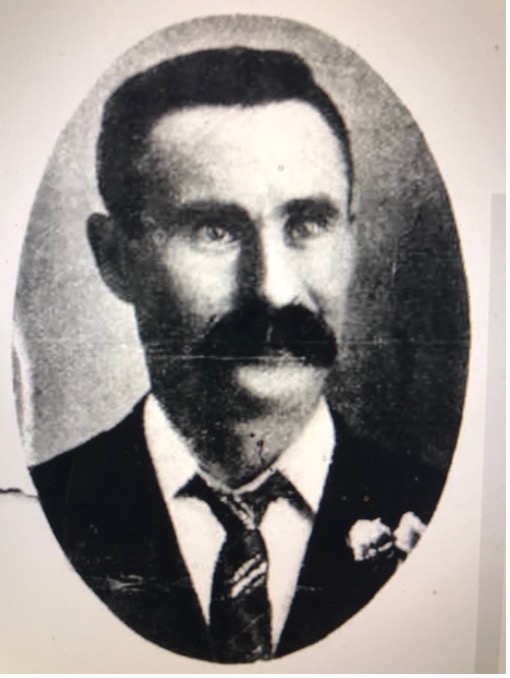
Captain W. Slater of the Oakland
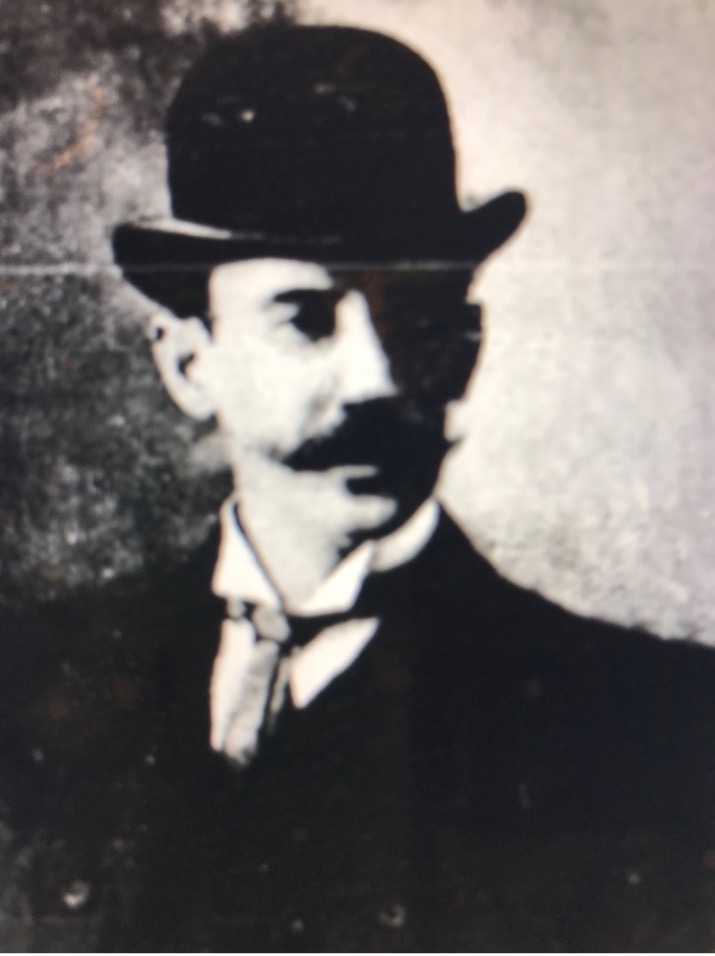
A. Fischer – Chief engineer of the Oakland
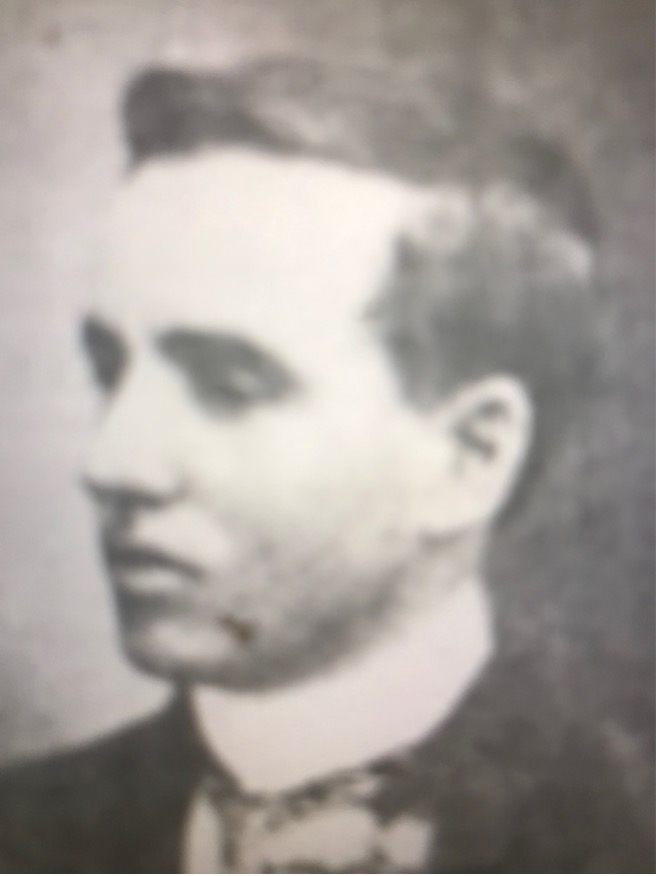
R. Stee – Second Engineer of the Oakland
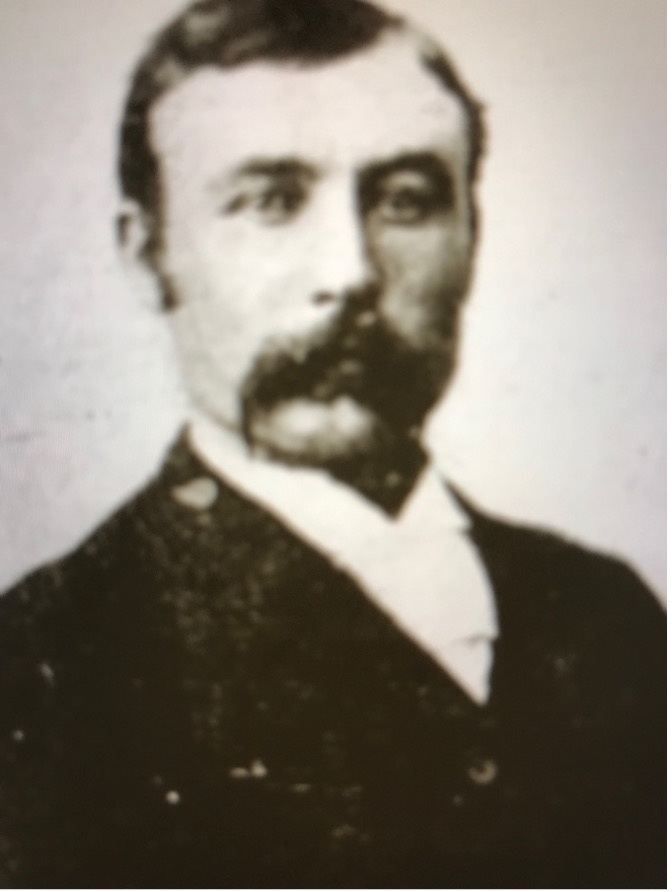
C. Lindgren – Mate of the Oakland
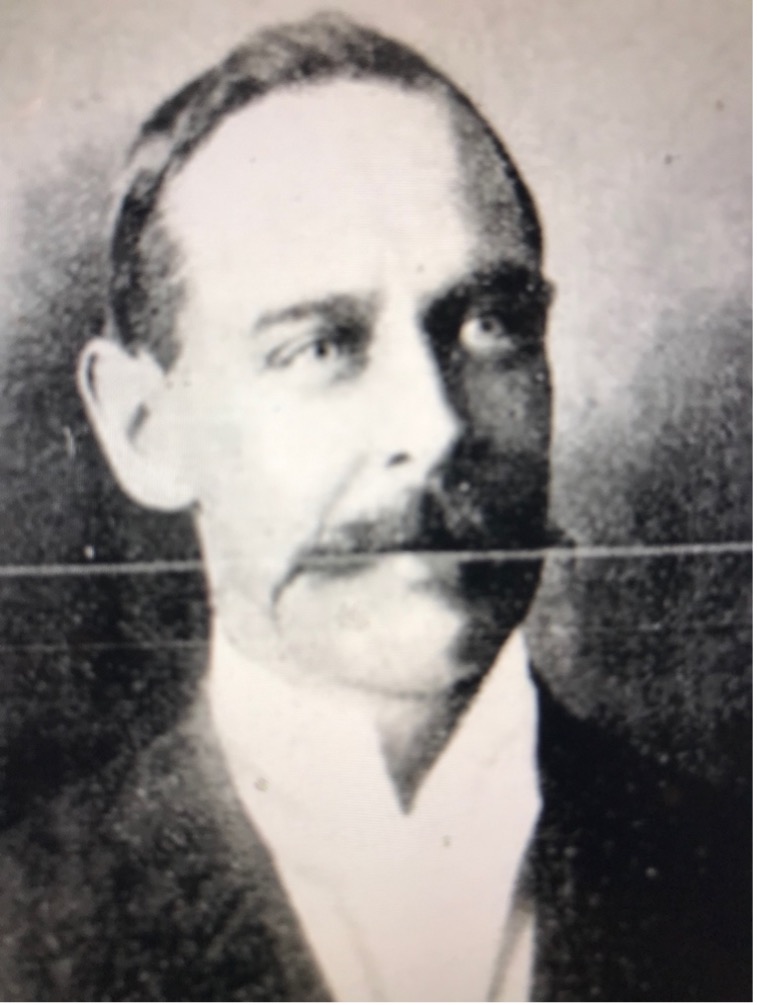
H. R. Bradbury – Cook on the Oakland
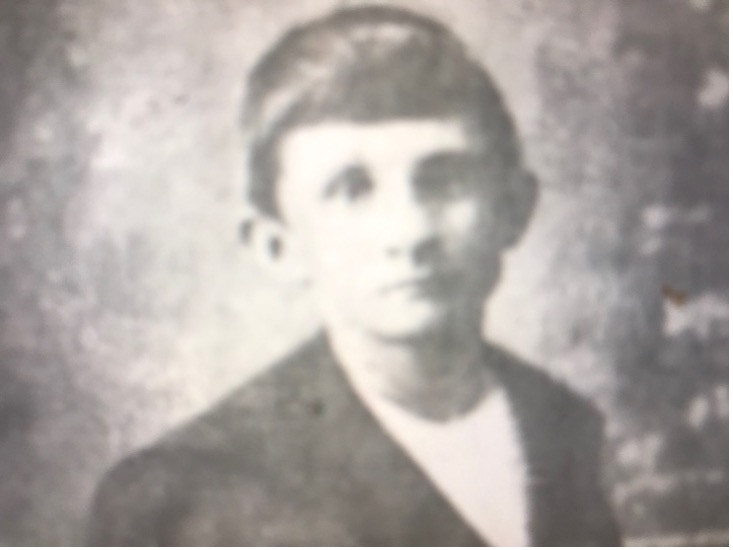
A. Cargill – Ship’s boy
The list of the seven survivors is as follows: J. Howes (second mate);
Able seaman: G. Isterson, W. Jacobson, G. Ohlsson, Isaac Holm, and J. Wylberg; and T. Gates, a passenger.
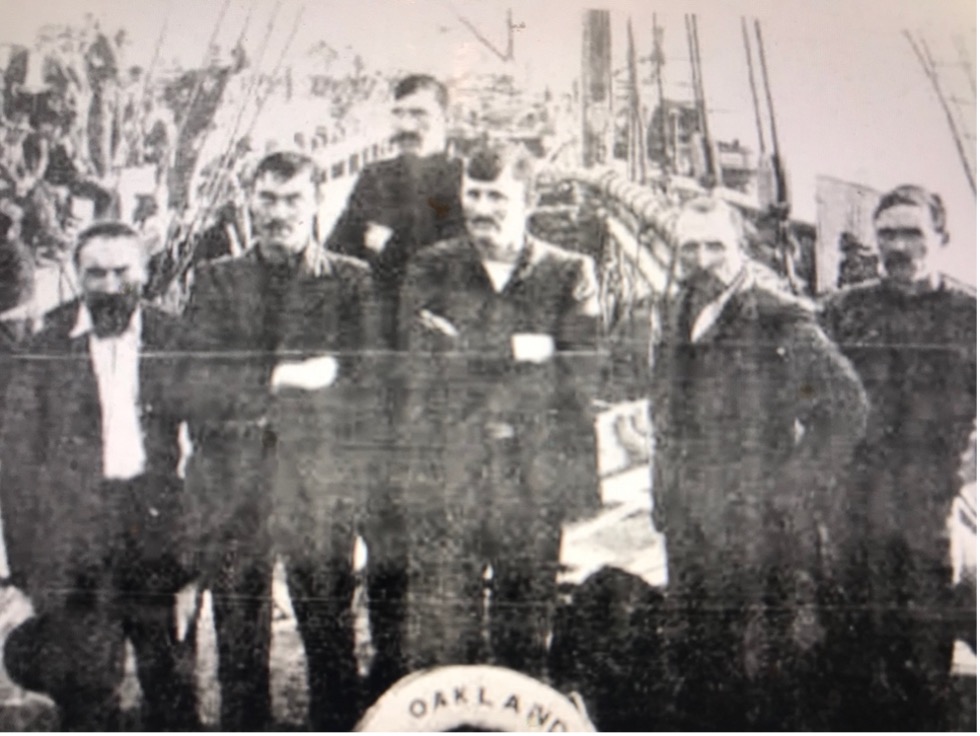
Six of the Survivors – Taken at Newcastle on board the steamer Bellinger.
[Front Row-Reading from Left to Right: Isaac Holm (A.B), J. Wylberg (A.B.) J. E. Ohislon (A.B.), J. Howes (second mate), G. Isterson (A.B.). Back Row, Standing: W. Jacobson (A.B.)]
Note: A.B. refers to an Able Bodied Seaman.
Events relevant to the Foundering – 1903
The Clarence River Advocate of 2 June 1903, page 2, reported what happened on the tragic morning of 26 May 1903:
‘Particulars of the loss of the Oakland go to show that the vessel was struck by a heavy sea early on Wednesday morning, which caused her to take a list to port, then she gradually heeled over, became unmanageable, and foundered. A couple of minutes after the last boat was launched the ship plunged and disappeared, head foremost, in a terrifying manner. As the water came in contact with the fires flames from the engine room belched forth from the funnel, while as the stern reared above water for the final plunge the screw shrieked as it raced madly round in mid-air. The life-boat when launched capsized and several of the crew disappeared, while others were washed of it by seas which continually swept over it.
Those surviving succeeded in righting the craft, but these continued to grow less, some going mad, others dying silently from exhaustion. The experiences of the survivors are described as simply awful. The life-boat, which had a hole stove in it, only kept afloat by its water tight compartments. Every sea tumbled right over her, while only about four men at a time could safely get into the boat, the rest having to cling on to the side as best they could. Steel went mad and deliberately dived into the sea, after remarking, “Well, good-bye boys.” The mate did all he could to cheer his companions. The cabin boy lost his reason, remarking, “Is not this lovely.” He then buried his face in the salt water and died. Some of the drowned had life-belts on. Captain Slater took the death of Alf. Fischer, the chief engineer, very badly, and succumbed shortly after the latter.
The captain’s mind, became unhinged towards the last, and his supplications for his wife were piteous, until death came to relieve the awful strain. John Olsen said he was last to leave the sinking steamer. When the vessel took the list he was below, and the first he knew of the danger was Jacobsen’s warning cry to him, “She is sinking.” The gale was raging very fiercely at the time and it was intensely cold. A heavy sea kept breaking over the veasel for three quarters of an hour, the doomed ship lying all the time with a very heavy list, with water washing across the lee hatch.
It was with great difficulty they succeeded in launching a boat, for when lowering one it fell on the steamer’s side and had a hole knocked in it by a belaying pin. They all got into the boat but it was immediately swamped, and while the men were struggling to get back to the boat the steamer turned right over and sank. When they righted the boat she was full of water and they were unable to bail her out. Some of the men were in a boat while others were hanging on to the side. It was intensely cold, and the frightful struggling they experienced in the water greatly exhausted them. One by one they died. They lost all the oars. They had about eight oars at first capsize but only succeeded in recovering two.
Captain Slater was 43 years of age, and leaves a widow in Sydney but no family. He entered the service of John See and Co. as a seaman, and worked his way up, He was for some time chief officer of the City of Grafton, and succeeded Captain Anthon in the command of that vessel. On the City being laid up he was placed in charge of the Oakland. This trip was to have been his last in her, as he was to resume command of the City in the Richmond trade.
Chief Engineer Fischer was a native of Grafton, where he entered the service. He was 35 years of age and single. His widowed mother resides in Grafton, and the bereavement has proved a great shock to her. Assistant Engineer Steel was a son of Captain Steel, whose dredge broke from her moorings in the ’87 flood at Yamba and foundered. He was 22 years of age.’
Additional information concerning the Foundering – 1903
The Macleay Argus of 6 June 1903, page 10, carried additional information about the foundering:
‘Mr. John Howes, second mate of the Oakland, who is married, and resides at Manly, said that they left the wharf at Newcastle at 1 a.m. on Wednesday, the wind being fresh from the S.W. and the sea moderate. Soon afterwards, however, the wind shifted into the south, and the sea gradually rose. He took the steamer out of the harbour. Port Stephens light was abeam at 8.15. when the captain told him he had better go below and have a sleep. Though the sea was heavy no anxiety was felt for the safely of the vessel at that time, and the captain said he would call him when he wanted him. Mr. Howes then turned into his bunk, and was awakened by a bag falling on his face. On opening his eyes he found that the vessel had taken a tremendous list. He rushed up the companion way half dressed, and heard the captain’s voice calling, “All hands on deck.”
Mr. Howes found the water flush with the deck, and after scrambling with a few clothes he ran on deck and assisted to get out the starboard life-boat. Owing to the angle of the steamer’s deck they could do nothing with the port boat. A. tremendous sea was running, and as they were launching the starboard lifeboat the belaying pin was stove through the bottom, and her ropes had to be cut in order to free her. The boat immediately filled, but the whole of the 18 souls on board the doomed steamer succeeded in clinging to the gunwale of the boat. Four, however, were quickly washed off, and just as the steamer sank he thought that there were more than 14 holding on to the lifeboat.
The Oakland had such a terrible list, that when they stepped off her the lower part of the funnel was submerged. A few moments afterwards the steamer took a plunge head foremost. The flames from the engine-room burst from the top of the funnel, and as the stern reared for a moment or two the screw raced madly as the hull swiftly disappeared. Asked as to how they fared in the boat, Mr. Howes said it was impossible to describe the awful experience the survivors had undergone. As the vessel went down the boat capsized, and four of those who had been hanging to her were washed away. After a time they succeeded in righting her, but owing to her being stove in she was only kept afloat by the water-tight compartments, and every sea tumbled right over her.
Every now and again someone would die from exhaustion. “I could not understand,” said Mr. Howse, “how strong men could be overcome so suddenly; it was appalling. They seemed to droop away silently like wax figures. The row locks were under water and as only the bow and the stern were not always submerged only about four could safely get into the boat, the rest had to cling to the side. Branbury, the cook, was the first to die. Then I noticed Mr. Fisher, the chief engineer, who was sitting on the stern. His head dropped on his breast, and he died. The captain took the death of Mr. Fisher very badly, and he was the next to succumb. He died very hard, lying across the thwart. Mr. Steele, the second engineer, went mad and deliberately dived into the sea. After the captain’s death I took command, and tried all I could to cheer the people up. I said to the cabin boy ‘Well, Alic, how are you getting on ‘ The poor boy, however, lost his reason. He replied, ‘is this not lovely,’ and buried his face in the salt water. Johnston was the last man to die in the boat, but it was as much as we could do just to keep her head to the sea though we were trying all the time to make Port Stephens.
It was raining hard and blowing cold all the time. Eventually at 11.30, after having been eight hours in the water, we sighted the Bellinger coming from the direction of Port Stephens. At the risk of overturning the boat we tied a handkerchief to an oar and succeeded in attracting her attention. The sea was running mountains high at the time, and just as the Bellinger came up we capsized again.” ‘
No official search undertaken for victims of the sinking – 1903
The Newcastle Morning Herald and Miners’ Advocate of 1 June 1903, page 4, expressed concern that no official search was undertaken for possible survivors of the sinking, or for bodies:
‘It is certainly singular and exceedingly unsatisfactory, not to use a stronger expression, that no search should have been made along the coast in the vicinity of Port Stephens, for possible survivors of the wreck of the Oakland, and that the search for the wreck itself should not have been prosecuted on a different system. When the first intelligence of the wreck reached Newcastle on Friday morning, the details given of the calamity were exceedingly brief, but a few hours later the survivors arrived in the port and told how the vessel had foundered, and of the men who were lost.
From the narrative of these storm worn seamen, it would appear that the chances of any other survivors being picked up was very slight. Of the eleven missing, several died in sight of their comrades, but others disappeared in the darkness when the boat was first capsized, and some were washed overboard while helping to launch the craft. Whither they drifted is not known, but there is a just bare possibility that some may have lived for hours clinging to a fragment of floating wreckage, and may even have been washed ashore. At a latter stage in the day it was reported from Port Stephens that the position of the sunken vessel had been located, not far distant from Cabbage Tree Island, and by this discovery a new feature was introduced.
If the Oakland foundered at the spot where the disaster is said to have occurred, she went down in 72 feet of water, and it is certainly doubtful if at that depth her masts would be visible. Either the Oakland foundered closer inshore than was at first thought, or the masts seen are those of some other vessel which foundered in the gale. This is the point upon which some light should be thrown, and it is hard to understand why one of the Government vessels was not dispatched to the scene of the wreck to investigate the matter. Had the wreck occurred at any great distance from the port some excuse might have been offered, but in this case no valid reason can be urged for not taking immediate steps to survey the wreck, and at the same time to search for signs of the missing men from the Oakland.
It is not advisable that the pilot steamer Ajax should be absent in such weather as was experienced during the past few days, but there are other Government vessels, and failing these, private owned craft which could have been chartered at a reasonable cost. Neither on the ground of economy or the difficulty of procuring a suitable vessel can the neglect to make a search be justified, and it is to be hoped that the omission even at this late period will be speedily rectified. There are evidences which suggest that some wrecks hitherto unreported have occurred, and immediate steps should be taken to identify the vessel now lying submerged near Port Stephens, and if possible the derelict said to have been seen floating between Newcastle and Sydney by the captain of the Irresistible.’
Report of Captain Tenglen of the Bellinger – 1903
The Clarence River Advocate of 5 June 1903, page 4, carried details of the main points in a report made by Captain Tenglen of the Bellingen:
‘Captain Tenglen, of the Bellingen, in his report states that when they approached the boat she was close to the breakers. She capsized when the steamer was within a short distance, and the survivors were saved by throwing lines from the steamer. The Bellingen’s life-boat was ready to be launched to go to their assistance if necessary. After picking up the crew we steamed to Long Island for shelter, and spent an anxious time there. On Wednesday night the gale was so strong that with both anchors down.
it was necessary to keep the two engines full speed ahead during the squalls, and even in the lulls some speed was maintained. Even with the engines going ahead the steamer dragged her anchors in the squalls, and on several occasions we had to pick them up, steam closer in shore, and re-moor the vessel.’
Survivors return to Sydney – John Olsen’s experience – 1903
The Australian Star of 1 June 1903, page 6, provides an interesting look at what happened when the survivors returned to Sydney on the steamer Sydney.
‘The arrival of the survivors of the Oakland wreck in Sydney early on Saturday naturally led to their early return to their several home to relieve the anxiety of friends and relatives. Inquiry soon elicited the fact that the men did not return by the steamer Bellinger as was expected, but had come on by the Sydney. The hour of arrival of both vessels made little difference, and the men were on their way home long before the city was astir.
One of the first men to greet the survivors was a man who had known Captain Slater many years, and had nothing to say but what was to his credit as a sterling skipper. Early inquiry at the North Coast Co.’s offices showed that the men had not gone there, though they turned up later to report to the manager. As the men all had homes to go to none of them had any need to take advantage of the benefits which the Sailors’ Home extends to shipwrecked sailors. Captain Webber, secretary of the National Shipwreck Relief Society, was expecting a visit from the second mate of the ill-fated steamer, but the officer had first to report himself at the office of the company.
Meanwhile a visit to the home of John Olsen [Ohislon], who resides in Princes-street, resulted in the discovery that he had reassured his friends with whom he is residing that he was safe and sound. He gave a graphic description of his experience to Mr. Fritz Ohlsen, with whom he resides, and the latter was entertaining a group of seafaring men with the details. John Olsen had one of the most exciting experiences. He was roused by another survivor, W. Jacobsen, from his bunk, when the doomed vessel was in dire straits. Alarming indeed was the position of the Oakland when he rushed on deck and found her neared over on the port side, with the water awash of the hatches, and all hands engaged with the work of launching the boats under tremendous difficulties.
In the face of impending disaster Olsen was called upon to take the wheel, and with stern fidelity in the face of death the sailor grasped the wheel, only to find that the vessel was as unresponsive as a water-logged boat could be. He stuck to his captain and his duty to the last, until the last command of Captain Slater rang out, and ordered him to let go the wheel and save himself the best way he could. The two last men to leave the vessel then jumped for the submerged boat, which went under the roaring waters with the crew hanging on the best way they could.
Meanwhile the Oakland gave that final plunge that bespoke her utter loss. But there were lives to be saved, and cries for help did not go up unanswered. In his own extremity Olsen managed to help three others, but some were washed away, leaving the lifeboat more buoyant, and thus more hope for the others. Olsen was eight hours outside the boat, clinging or swimming. Before the Bellinger hove alongside the cook, the chief engineer, and the captain had died. Olsen was lucky enough to possess stamina, and hold out, and even managed to aid others not so robust as himself. Such were the features of his story, and it may be imagined with what interest they were listened to t-day.
Between 10 and 11 o’clock the second mate, Mr. J. Howes, and five of the men reported themselves at the company’s office, and afterwards left to have their photographs taken by request’
Lifeboat of the Oakland sighted – 1903
The Daily Telegraph of 8 June 1903, page 7, reported:
‘One of the lifeboats of the wrecked steamer Oakland was sighted by the R.M.S. Sonoma on her passage from Auckland to Sydney. Captain Herriman slates that at 4 p.m. on the 6th instant he came across the boat. It was upright and full of water. The Sonoma cruised round the spot, and made an examination of the boat. The position of the boat when sighted was latitude 34.21 south, longitude 155.54 east — distant about 230 miles from Sydney Heads.’
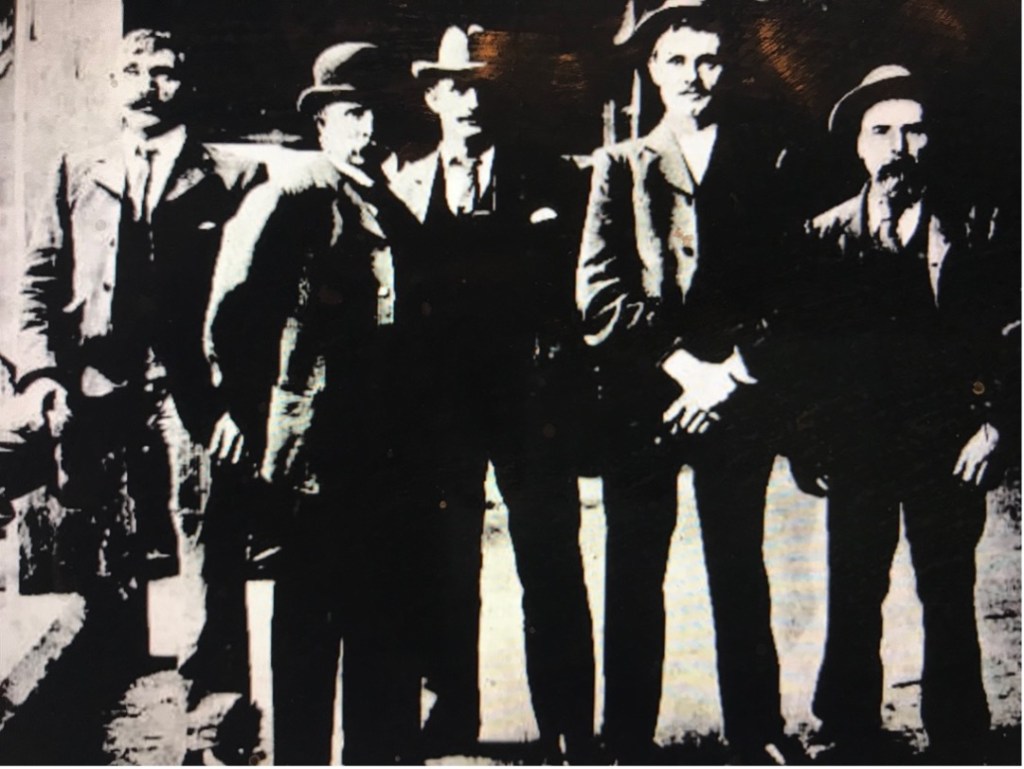
Some of the Survivors of the Oakland Wreck
[Left to right: Messrs W. Jacobsen, A.B., J. Howes (second mate), J. E. Ohislson, V. J. Wylberg, I. Holm]
Court of Marine Inquiry – 1903
A Court of Marine Inquiry was held on 11 June 1903. A report on its proceedings and findings was reported in the Northern Star of 17 June 1903, page 7:
‘An inquiry was held on Thursday by the Court of Marine Inquiry, consisting of Judge Backhouse, and assessors Captain Simpson and Captain Fawkes into the loss of the steamer Oakland, 397 tons gross and 220 tons register, which foundered off Port Stephens on the morning May 26 last. Mr. Cargill, of the Crown Law Department, appeared for the Superintendent of Navigation, and Mr. Thompson appeared for the owners, the North Coast Steam Navigation Company.
George Steel, engineer surveyor to the Department of Navigation, said he had on several occasions surveyed the Oakland. George Bolton, boilermaker at Mort’s Dock, said he remembered some tanks being fitted into the Oakland about 12 months ago. They were fitted to the vessel’s side and could not shift or collapse. There were four tanks, two in each side, in No. 2 hold. He remembered extensive repairs having been made to the Oakland in November, 1901, after she went ashore.
Mr. Thompson [stated] after the repairs she was as good as when she was launched. Angus Moir, shipwright-surveyor to the Deportment of Navigation, said he surveyed the Oakland in May last, an found life-boats and life-saving appliances in proper order as required by the Act. When he passed her she was thoroughly seaworthy.
John Howes, second mate of the Oakland, said the vessel left Sydney on May 25 without any cargo. She arrived at Newcastle next day and loaded coal to within about 3ft below the deck level all over. There were about 112 tons in No. 2 hatch. Some flour was in the after hatch, which was battened down and well lashed. They cleared Nobby’s about 1 a.m., in moderate weather, with wind from the south-west. He went below and returned to the deck about 3.40 a.m. and went on the bridge. He though the vessel was on her usual course. She had a heavy list to port, with water washing over the hatches. The captain and man at the wheel were on the bridge, and Port Stephens light was on the port quarter.
An attempt was made to reach Port Stephens. The sails had been taken in, and about 15 minutes later the vessel went down. She was drawing 11ft 3in when she left Newcastle, and 1ft less at the bow. The Oakland was a ‘tender’ ship, but stiff enough when loaded. She went down bows first. From the time he went on deck until the steamer foundered the list kept increasing. When it was found that she was going down, the starboard boat was put over the rail, and a belaying-pin went through her bottom. By that time the water had reached the galley, and the port davits were under water. The boat was launched, and all hands—17 of the crew and one passenger—got on board.
The boat struck the ship’s side after the tackle had been out, and capsized, all hands being thrown out. After the boat righted, four persons were missing. Some of the remainder got into the boat, the others hanging on to the boat. They made for Cabbage Tree Island.
lt was three-and-a-half hours after they got into the boat that the captain died. Two engineers and the cabin boy also died in the boat. The dead bodies were thrown over to lighten the boat, enabling some of the others to get into the boat. Altogether 11 lives were lost. The wind was cold, and there was a heavy sea. The boat was picked up by the steamer Bellinger.
Mr. Thompson: There was no panic, and everyone did his duty. If the boat had not been stove in, everyone would have been saved. He heard the engineer say to the captain, “She can’t last much longer, the water is over the lee fires.”
Constable Cameron, of the Water Police at Newcastle, said that in Captain Slater’s company he examined the Plimsoll mark, and the vessel was about 2in. clear on the port and about 5in. on the starboard side. Evidence was also given by Wilfred Jacobsen and John Olson, seamen on the Oakland.’
Finding of the Court of Marine Inquiry – 1903
The Northern Star of 17 June 1903, page 7, reported:
‘His Honour said the Court found that when the vessel left Newcastle, she was seaworthy, well found, and well provided with the necessary life-saving apparatus. The cargo of coal, of which about the usual quantity was carried, appeared to have been stowed in the customary manner, but it was possible for it to shift in holds Nos. I and 3. The vessel started with a slight list to port, which suddenly greatly increased when she was off Port Stephens. This list increased off Cabbage Tree Island. The Court, while it expressed no positive opinion that the shifting of the cargo was the cause of the mishap, could on the evidence see no other explanation for it.
Shortly before the vessel foundered all hands got into the starboard life-boat, and the falls were cut, but the boat in descending struck the side of the Oakland and capsized. All the occupants were thrown out, and some were drowned. The boat was subsequently righted, and some of the survivors got into her, although she was full of water, while others hung on to the gunnels. Unfortunately, 11 in all perished from the time of the leaving the vessel until the boat was picked up. Considering the terrible experiences all went through, it would not be a matter for wonder if all had perished. There was nothing before it to explain to the Court why some of those who were thrown into the water when the boat capsized perished while others survived. His Honour added that the Court expressed sympathy with the relatives of those who perished and congratulated the survivors upon their escape.’

Arrival of the Bellinger at Newcastle with the survivors on board.
Benefit concerts held – 1903
Two benefit concerts were held to raise funds for the families of the deceased crew members. The Daily Telegraph of 7 July 1903, page 3, reported on the first benefit concert held:
‘A benefit concert, arranged by the North Coast S.N. Company, in aid of the sufferers by the wreck of the steamer Oakland, is to be held in the Centenary-hall to-night. A first-class programme has been arranged, the artists including Messrs. Henry Weir, Fred. Sherwin, Oliver Reece, D. Cuneen, Masters Keith and Lance Kennedy, and Misses Carlotta Young, Jessie Wilson, Lydia Larner, and Eileen Murray. A lantern and phonographic entertainment, illustrating the Oakland in distress and the rescue of the survivors by the Bellinger, will also be given.’
A second benefit concert was reported in the Richmond River Herald and Northern Districts Advertiser of 4 September 1903, page 4:
‘The concert at Lismore, in aid of the widows and children of those who lost their lives in the Oakland disaster, passed off very successfully on Wednesday night. The Irvington ran up from Coraki, carrying passengers from here and intermediate places. At the concert the attendance was good, and all expressed themselves pleased with the programme arranged by Mr. W. E. Crome. The result of the entertainment should be a substantial addition to the funds of a worthy cause.’
Wreck bought for salvage – 1903
The Richmond River Express and Tweed Advertiser of 10 July 1903, page 5, reported on the purchase of the wreck of the Oakland for the salvage of items and possible re-float of the vessel:
‘Captain Weston, who bought the wreck of the steamer Oakland at auction for £40, is very hopeful of re-floating the vessel. The diver who went down reported that the Oakland was lying on a sandy bottom in 15 fathoms of water, with a slight list to port. The masts had gone out of her, and were on the deck, while the bridge was washed over on to No. 2 hatchway. The tops of the hatches were all missing, but the deck gear, winches, etc., were in splendid order.
Encouraged by the diver’s report, Captain Weston decided that there was something to be had out of the wreck forthwith, and orders were given accordingly. The men worked from daylight until dark on each day, and the results were more than satisfactory. There has been raised an eight-ton winch in the best of order, two anchors, two chains, blocks, wire falls, spars, windlasses, masts and derricks, a steel wire hawser of ninety fathoms, and other gear, which did not appear in any way damaged. One anchor had never been used; the winch was perfect, even the oil holes showed no sign of corrosion. The nuts worked freely on the bolts, and the cables were as good as new. The steering gear is among the salvage, and it looks little the worse for immersion.
Over 100 tons of coal have been cleared out of the forehatch, and though the Oakland when she foundered had on board over 300 tons of coal, a great deal has been washed out, so that Captain Weston will not have a big quantity to move from the after hatches before he commences to lift the vessel. The divers made a thorough examination of the vessel and found that the engines and boilers were intact, the hull appeared to be all right— in fact, everything pointed to the fact that Captain Weston will make a big save, and soon have the Oakland back in Sydney. “I reckon I will lift her next week,” said the captain, after he had shown a reporter, the property already recovered. “If I do not, well then I can lift a lot more out of her.” “I reckon that altogether we got 175 fathoms of new cable out of the Oakland,” said the captain, as an afterthought. The value of the property already recovered is estimated at £300.’
The Macleay Chronicle of 16 July 1903, page 3, continued the story of the salvage operations:
‘Captain J. Weston returned to Sydney last week with the steamer Maud Weston, from the wreck of the steamer Oakland, off Port Stephens. Captain Weston, it will be remembered, purchased the wreck for the sum of £40, and he left Sydney a couple of weeks ago to carry out salvage operations.
The wreck was easily located near Cabbage Tree Island, and found to be in 15 fathoms of water, on a sandy bottom with a slight list. The top of one mast was showing a few feet above water, and examination showed that this had carried away, and was held by the rigging to the wreck. The Maud Weston was moored to the wreck, and three divers were employed in connection with the salvage work. Heavy westerly gales somewhat hampered the work, but Captain Weston had his steamer securely moored, and rode out the bad weather safely. The Maud Weston was about a fortnight over the wreck. Besides Captain Weston, the salvage party consisted of three divers (Peter Henderson, James Coutts, and a Frenchman,) and the vessel’s crew of 10 men.
The divers worked in shifts of two and a half hours. Operations were first directed to removing some sub-merged spars which were knocking about dangerously close to the bottom of the Maud Weston. The wreckage being cleared away, about 100 tons of coal were removed from the wreck. The divers then turned their attention to recovering the deck gear. The forward winch, weighing fully 8 tons, was raised and stowed on the Maud Weston’s deck. Then the after winch and steering gear were picked up. Two anchors and over 175 fathoms of chain, as well as a number of blocks, wire falls, steam windlass, derricks, wire hawsers, &c., were also brought to the surface, all being in a splendid state of preservation.
The divers went through all the cabins and engine room, and found everything intact. The engine room telegraph was recovered, and an examination showed that the indicator was pointing to “full speed ahead.” The opinion is expressed, after the reports of the divers, that the Oakland had been struck by a heavy sea, which burst the hatches and caused her to founder. The hatches were missing from the wreck. The Oakland’s funnel was broken off about three feet from the deck, and both masts had also gone by the board.
When the Oakland foundered, she had on board 300 tons of coal and the divers found that a great deal of this had been washed out, but over 100 tons were cleared out of the forehead hatch. Captain Weston intends to make an attempt to float the vessel. It seems that the Oakland was fitted with molasses tanks, equal to a capacity of 180 tons. These were found to be uninjured, and Captain Weston is relying on the tanks to float the vessel. He intends pumping air into the tanks and forcing the water out of them, and thus provide a large lifting power. Should the operations be successful, the Oakland will be taken into shallow water at Port Stephens. “The Oakland’s hull is sound,” said Captain Weston, in conclusion, “and I hope to start operations next week to float the vessel.” ‘
The Oakland was not raised and today still rests on the sea bottom where it sunk.
Captain of the Bellinger receives award – 1903
The Macleay Chronicle of 20 August 1903, page 4, reported on an award presented, which partially consisted of a pair of field glasses:
‘Amongst those who received awards last week at the Shipwreck Relief Society’s meeting was Captain Tanglin, of the steamer Bellinger. In making the presentation, Governor Rawson said it required a sailor to know what the danger was in a gale of wind, when a ship was close to the rocks, and an attempt of rescue was made. It was not only his own life that the Captain risked, but he took upon himself the responsibility and the lives of his crew. When he did that and did it properly, as Captain Tanglin did, it showed that he was not only a thorough sailor, but that he was able to keep calm when taking upon himself one of the greatest responsibilities possible. The wreck of the Oakland will be fresh in everyone’s mind, and the services rendered on that occasion by Captain Tanglin have not long been allowed to pass, unrecognised, the North Coast Company’s presentation being speedily followed by the Shipwreck Relief Society’s public award.’
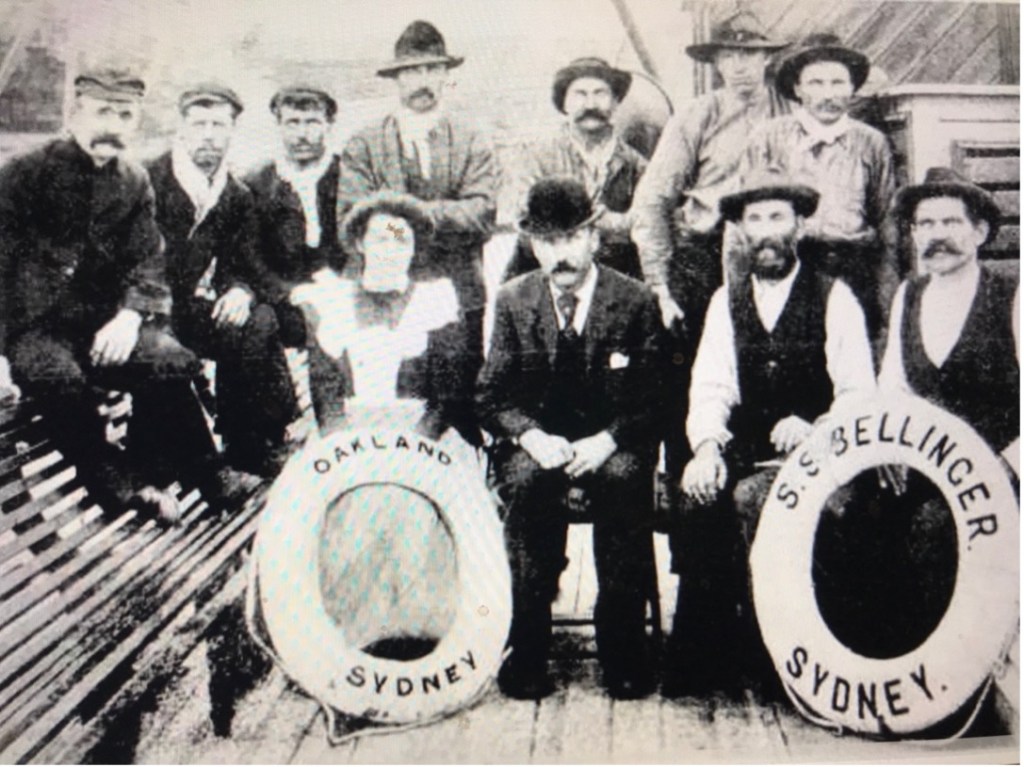
Captain H. Tanglin and Crew of the Bellinger After Arrival in Sydney. The Oakland’s life-buoy shown in picture was the only thing saved from the wreck. Back Row, Standing – Reading from Left to Right: P. McLachlan (fireman), Robertt Lake (fireman), Charles Nakes (winch-driver), Peter Johnson (A.B.), Charles Wilson ((A.B.), Albert Anderson (A.B.), Charles Sorestrom (A.B.). Front Row, Sitting: Miss Nellie Jeffs (stewardess), H. Tanhlin (captain), Edward Hooper (mate), H. Hamester (cook and steward).
Wreckage of the Oakland remains a dive site
The remains of the Oakland lie on the ocean bottom at a depth of about 27 metres to the north of Cabbage Tree Island and is a well-known dive site. It is protected under the Historic Shipwrecks Act 1976.
Thirtieth Anniversary of the Foundering of the Oakland – 1933
The Newcastle Morning Herald and Miner’s Advocate, of 26 May 1933, page 8, reported on the 30th anniversary of the sinking:
‘To-morrow is the anniversary of the wreck of the steamer Oakland, out of the fleet of the North Coast Steam Navigation Co. The vessel, in the command of Captain W. Slater, left Newcastle at 11 a.m, on May 27, 1903, bound for the Clarence River. The weather, which at the time was threatening, grew worse as the Oakland proceeded northward, and when abreast of Port Stephens light a mountainous sea was running. As the vessel approached the Broughton Group, she suddenly listed to a dangerous angle. The lookout man at once raised the alarm, at the same time calling all hands on deck. What caused the list was not known; but it was soon apparent that something serious had taken place.
The vessel failed to recover herself, and gradually fell over to the port side until the funnel was nearly level with the water. The crew seeing the position of affairs, started to launch the lifeboat. This was in the davits on the starboard side. In due course the boat was swung out; but the cant of the steamer caused it to jam on the whaling piece, and from the cause valuable time was lost. Eventually the boat was launched, and left the sinking vessel, all the crew but one being then in the boat. A few seconds later, and only 20 minutes from the time the alarm was given, the Oakland turned completely over on her starboard side, and went down stern first, her propeller still working as it disappeared from view.
Almost immediately after the lifeboat capsized, and as the craft was tossed hither and thither by the huge seas, several of the struggling men disappeared. In the long hours that intervened between that period and the rescue, some terrible scenes were experienced. Less than an hour after the boat capsized, the cook (R. R. Bradberry, a native of London) died, and was soon followed by the chief-engineer (S. Fischer, a native of Grafton), the cabin boy (A. Cargill, age 16, nephew of Captain Colvin, of the Dorrigo, and a son of Mr. Cargill, who was cook on board the steamer Maitland, in which vessel he was lost), the second engineer (R. Steel), and Captain Slater. The wreck involved the loss of 11 lives altogether. Seven men were saved by the steamer Bellinger, which, in charge of Captain H. Tenglen, had left Camden Haven on the previous evening, and was directing a course for Port Stephens when the men in the boat were seen. The Oakland was a steel screw steamer of 398 tons gross register, built in 1890 at Dumbarton. In 1901 she had been driven ashore at the entrance to the Richmond River, but had been refloated.’
Forty-first Anniversary of the Foundering of the Oakland – 1944
The Northern Star of 25 May 1944, page 5, reported on the forty-first anniversary of the sinking:
‘The news item in the “Northern Star” of May 16, stating that Sunday, May 14, was the 23rd anniversary of the loss of the N.C.S.N. Coy’s. 2000-ton passenger steamer Wollongbar, when it was driven ashore in an easterly gale at Byron Bay and became a total wreck, recalls to mind that it is 41 years next Saturday since the N.C.S.N. Coy’s, steamer Oakland foundered off Cabbage Tree Island, whilst trying to enter Port Stephens, with the loss of 11 lives. Mr. A. Fischer (chief engineer), who lost his life, was a native of Grafton, and would be re-membered by many old timers.’
POSTSCRIPT – 1912
The steamer Bellinger, belonging to Messrs. A. and E. Ellis, of Sydney, was totally wrecked on the south spit of the Nambucca River on 3 May 1912. The steamer was coming out from the Nambucca River with a cargo of timber, consigned to Messrs. Allen Taylor and Company, Sydney, when she was carried on to the spit. The crew escaped safely.
EPILOGUE
The foundering of the Oakland resulted in much publicity at the time due to the large numbers lost and the trauma of their deaths. The ship is part of the marine history of Port Stephens and is an active dive site today, off Cabbage Tree Island.
A touching tribute on the occasion of the Oakland marine tragedy was published in the Richmond River Herald and Northern Districts Advertiser of 5 June 1903, page 5:
‘How feeble this pen is to picture the story of those who went down at the first streak of dawn!
New names to inscribe on the sea-scroll of glory;
New orphans and widows, and sweethearts to mourn!
Alas for the Oakland! that trusty old trader (Long time the stout flagship of Commodore “Ben”).
Now A1 at Lloyd’s, no longer they grade her— Off Port Stephens, foundered with most of her men!
Alas for poor Fischer! fare-yo- well, Captain Slater!
And nine of your comrades, whose hard fate you share.
I know I’m all wrong, yet I think the Creator might surely have led you to safety somewhere!
Yet perhaps up above, on fair water you’re steaming.
Where storm-rack and tempest can baffle no more.
Our voyage soon will end here, then in the gleaming of sunrise you’ll make us out nearing the shore.
Grim tragedies lie ‘neath yon false smiling billows, bright seaweed and shells deck the sailor-man’s grave;
While the wife whose pure breast was the softest of pillows is left for her children too often to slave.
When tired out with play, the poor children are asking, “Dear mother, how long before father comes back?”
She presses them close, the hot tears bravely masking, then bends o’er her sewing— a garment of black.’
So ours be the task to allieve and console them;
To lift from frail shoulders the dead-weight of care;
To mourn for the lost, while the angels enrol them as brave souls accustomed to do and to dare.’
PART TWO: History of the Oakland
Oakland runs aground for the first time – 1891
The Daily Telegraph of 15 April 1891, page 7, reported on the successful re-floating of the Oakland after it grounded at the same time as another boat on the Richmond River.
‘The steamer Oakland, which went ashore at the Richmond River on Saturday, was successfully floated on Monday night. The Wyoming is still aground on the crossing. Yesterday morning Mr. Woodthorpe, the secretary of the Sydney Underwriters’ Association, telegraphed as follows to Pilot Fraser, at the Richmond:— “Kindly wire latest particulars re Wyoming and Oakland, also if damaged, if in danger, and prospects of floating, and if assistance from Sydney necessary.” The following reply was received:— “Oakland off, proceeded up river. Wyoming hope off by to-night’s tide. No danger whatever. No assistance required that I know of.”
Oakland runs aground again – 1891
On 23 December 1891, the Oakland ran aground on the southern breakwater at Ballina, sustaining damage. The Protector was seriously damaged in an attempt to render assistance.
The Richmond River Herald and Northern Districts Advertiser of 31 December 1891, page 2, reported:
‘Mr. W. T. Yeager’s steamer Oakland in crossing out on December 23rd, got aground on the south beach, Ballina, close to where the Tomki was stranded. Every effort was made to get her off, but without success, and the log timber and other cargo, which included some 400 bags sugar, has been discharged, but even this had not the desired effect. The vessel is in the break, much exposed, and the heavy weather on 26th knocked her about considerably, so much so that we hear she is making water freely. To cope with this, however, a large pump has been secured, with which the water can easily be kept down.
In rendering assistance, the Protector received a battering by coming in contact with the Oakland, smashing her bulwarks. The tides are daily making, and each succeeding one is looked forward to as the rescuer of the vessel from her present position. General sympathy is expressed for Mr. Yeager, who will be a very heavy loser even if the vessel floats off without further damage. Captain Alley and his officers and crew have had a very trying time, and their Christmas on the Richmond bar will long be remembered by them. It is to be hoped that, for the sake of the owner and the district, the Oakland will be speedily floated and placed in her usual running.’
The Oakland was to remain aground for over a month at the entrance to the Richmond River. The boat was finally re-floated during February 1892, as reported by the Richmond River Herald and Northern Districts Advertiser of 5 February 1892, page 2:
‘It is highly satisfactory to shippers, as indeed it must also be to the owner, to know that the efforts put forth by the underwriters under the able superintendence of their representative— Captain Hall— to float this vessel, have at last been crowned with success, as on Sunday last also left her nest in the sand, which she has occupied since before Xmas, for a more congenial berth at the Government wharf at Ballina. We are informed that the vessel does not leak so much as was expected, and little difficulty is experienced in keeping her free of water with her ordinary pumps. We heartily congratulate all concerned in the floating of this vessel, and hope soon to see her again trading to the river. The Oakland crossed out safely at half-past 12 o’clock on Wednesday last for Sydney.’
Oakland ashore again – 1892
The Sydney Morning Herald of 28 May 1892, page 9, carried the following report from Ballina:
‘The steamer Oakland, while being towed to sea yesterday by the Vesta, grounded on the outer bar and got on the South Spit, close to the wrecks lying there. She got afloat last night, but the steampipe was broken and the Oaklands was unable to steam. She lay in the channel at anchor till this morning, when the tug Protector went to her assistance. One boat was swept from the davits by a sea. She also lost two anchors. The Oakland does not appear to be seriously damaged.’
The Newcastle Morning Herald and Miners’ Advocate of 28 May 1892, page 4, also reported on the short grounding:
‘The steamer Oakland, which grounded at the Richmond River, was successfully floated yesterday morning off the south spit, and proceeded up the river. A wire to that effect was received by Mr. J. Reid, the local agent for the line last evening.’
Oakland collides with another vessel at sea – 1893
In the early hours of 24 June 1893, in clear weather, the Oakland collided with the Sydney off Bird Island, near Budgewoi. The Daily Telegraph of 26 June 1893, page 6, reported in detail on the collision:
‘The steamer Oakland arrived in this port [Newcastle] on Saturday morning, and after taking in coal and other cargo sailed for the Richmond River at 4.45 in the afternoon. Captain Alley stated on his arrival here that his vessel left Sydney at 8 on Friday evening with a full list of passengers. He remained in charge of the steamer until midnight, when the second officer, Olson, took up the command. There was a bright moon, the weather being very clear. He ordered the second mate to call him if the weather changed or anything unusual occurred, and then turned in. At 1.30 o’clock, and when the vessel was off Terrigal, he was aroused by hearing a commotion on deck, and on rushing up he found that the steamer Sydney had struck the Oakland on the port bow with her sponson. The vessels had separated immediately, and when the captain first saw the Sydney she was standing off from the port quarter of the Oakland.
There was great consternation amongst the passengers, especially in the steerage quarter, where many people had been thrown out of their bunks by the concussion. The boats were instantly got in readiness, but it was found that the steamer had not been seriously damaged. Captain Alley hailed the Sydney, and asked if they required assistance; but the latter vessel proceeded on her way to Sydney, and the Oakland also resumed her voyage.
The injuries sustained by the Oakland were not serious. Three of her steel plates were bent, and the amount of damage done will probably not exceed £100. The vessel was examined yesterday by Mr. T. Brooks (Lloyd’s surveyor), Mr. T. Ber-tram and Captain W. Bain (Government marine inspectors), and finding that the collision had not affected her seaworthiness, they allowed her to continue on her trip. Fortunately, the blow was struck above the water-line, or the consequence might have been disastrous.’
A Marine Board of Inquiry into the collision was held. The Australian Star of 11 July 1893, page 6, reported on the findings which resulted in both captains being reprimanded:
‘The Marine Board of New South Wales delivered its decision this afternoon regarding the collision between the steamers Sydney and Oakland, which took place off Bird Island, along the coast, on June 24 last. They found that the collision was caused by default in the management of each vessel, first, by the breach of discipline by an irresponsible person porting the helm of the Oakland when she could not have had the red light on the Sydney’s port bow, as stated, and also to the absence of a mast light in this vessel ; secondly, to the fact that the Sydney’s engines not having been stopped and reversed when the lights of the Oakland changed from green to red on the Sydney’s starboard bow.
Taking all the circumstances into consideration the board was of opinion that the master of the Oakland should be reprimanded for laxity of discipline and breach of the steering and sailing rules which took place on board his vessel ; and also that the master of the Sydney should be reprimanded for not stopping and reversing when the action of the Oakland rendered that step imperative. The two captains, Benjamin Allen and Richard James Skinner, were then reprimanded.’
Oakland runs aground at the Richmond River – 1894
The Daily Telegraph of 6 October 1894, page 5, reported:
‘The steamer Oakland, which went ashore on the South Spit at the Richmond River on Tuesday, was successfully floated at 11 a.m. yesterday. Some 120 tons of coal, belonging to Mr. W. T. Yeager, had to be jettisoned to facilitate salvage operations. The remainder of the cargo was saved.’
Supposed drowning – 1895
The Newcastle Morning Herald and Miners’ Advocate of 3 June 1895, page 4, reported:
‘On Saturday afternoon the steamer Oakland left for the Richmond River. When between three and four miles off Nobbys it was noticed from the Signal Hill that something was wrong, as the vessel came round, and a boat was lowered. Signals were made at the look-out station asking what was the matter, but no reply was given. After pulling about for a short time the boat picked up a lifebuoy, and soon after the steamer proceeded on her voyage. It is thought that some person must have fallen over-board and was drowned, as the boat only picked up a lifebuoy.’
Legal seizure of the Oakland ignored by owner – 1896
The Richmond River and Northern Districts Advertiser, of 29 My 1896, page 4, reported on the legal seizure of the Oakland, due to an alleged unpaid bill. The reasons why the owner ignored the legal seizure of his vessel was explained in the report:
‘The case in which Mr. W. T. Yeager, owner of the s.s. Oakland, was mulcted [fined] in costs for contempt of Court, in sending that vessel to sea after she had been placed under arrest, furnishes an example of hardship, not common in our midst, that excites the sympathy of all who know the facts of the case.
It appears that a Mr. Limeburner had a claim against Mr. Yeager for £25, and took out a warrant and writ which was placed in the hands of a Marshall of the Court for execution and service on the steamer Oakland, then lying at the Sydney wharf. This was duly done, but the vessel being on the point of sailing for this river, and having a large cargo — some of it perishable, including a number of sheep — besides 30 passengers, after offering a bond for the payment of the sum in dispute, which was refused, the owner decided to send the vessel on her voyage, and did so, carrying the Court officer — who was instructed not to leave the vessel on any account — on a free trip north.
For this, as already stated, he was ordered to pay the costs of the trial, being adjudged guilty of contempt. The extreme hardness lays in the fact that, apart from Mr. Yeager’s offer to give a bond for the amount claimed, the seizure was made after business hours, and when there was no opportunity of making other arrangements. This, of course, might be no fault of the court official charged with the execution of the warrant, but it is still very hard on an owner who has accepted perishable cargo for delivery, and is, perhaps, at the mercy of a vindictive creditor, who may delay the execution of a warrant till the last possible moment from malicious motives. In the case in question the Judge remarked that, as Mr. Yeager was well known in Sydney as a man of substance, there was no excuse for the action taken, which was unnecessarily harsh.
Taking a common-sense view of the situation, Mr. Yeager came to the conclusion that the spirit of the law would be in no way infringed by fulfilling his contract with passengers and shippers, but it appears that the letter of the law was against him, and he has to pay the penalty.’
Oakland runs aground twice at the Richmond River without damage – 1898 and 1899.
The Oakland continued its misfortune of running aground at the Richmond River during the years 1898 and 1899.
The Sydney Morning Herald of 22 December 1898, page 8, reported:
‘The North Coast S.N. Company’s steamer Oakland was lost attempting to cross the bar at the Richmond River at 11.55 a.m. yesterday grounded on the bar. The Oakland floated off at 1.10 p.m. and crossed in.’
The Northern Star of 26 July 1899, page 5, reported:
‘The Oakland’s position is much improved and the vessel is expected to float tonight. If so, she will proceed immediately to Lismore. To lighten the ship there has been jettisoned 50 tons of coal. The general cargo is not yet disturbed. The vessel is making no water, and all the cargo is perfectly safe.’
Oakland damaged when it runs aground at the Richmond River – 1901
The Daily Telegraph, of 24 May, 1901, page 8, reported on the results of a marine Court of Inquiry into the grounding:
‘The inquiry into the cause of the grounding of the North Coast steamer Oakland was resumed. The steamer struck a rock abreast of Evans’ Reef, a little to the south of the entrance to the Richmond River, on February 11 last. The captain stated, in his evidence, that at the spot where the vessel struck, no rock was marked on the chart. It was stated by Mr. Cargill, on behalf of the Superintendent of Navigation, that on survey the Government Hydrographer had found a rock approximately in the position indicated in the captain’s evidence. The rock, which had half a fathom of water at low tide, was 4½ cables from the shore, and five cables north 50 degrees west of north of Evans’ Reef. The rock occurred between two eight fathom soundings.
The captain of the Oakland accompanied the hydrographer. An accurate survey of the rock would be made in the near future. The Court found that the British steamship Oakland, on the 11th February last, struck an uncharted rock between North Evans’ Reef and the mainland, where is shown eight fathoms of water, and sustained severe damage; that the master managed his vessel with due caution, and was in no way responsible for the mishap; that the master, in the official information given him, viz., that there was 13ft. of water on the bar at high tide, was perfectly justified in attempting to enter.
The Court was extremely sorry that through misfortune the master should have been obliged to quit his position, even temporarily, and hoped that any monetary loss he might have sustained would be made good to him. The Court presumed that his expenses while he was with the hydrographer would be paid, as his presence was absolutely necessary. The Court cannot understand why some inquiries had not been made respecting the difference between the depth of water which, according to the master’s evidence, he found on the bar, and the depth which he was led to expect from the official information.’
Oakland collides with Sarah L. Hixson on Richmond River – 1901
The Northern Star of 24 August 1901, page 5, carried a detailed report on evidence concerning the collision presented to a Court of Marine Inquiry into the collision between the Oakland and the Sarah L. Hixson:
‘Before Judge Backhouse and Captains C. Taylor and D. Dakin, assessors in Sydney on Tuesday the Court of Marine Inquiry investigated the circumstances attending a collision between the steamers Oakland and Sarah Hixson in the Richmond River on July 27. Mr. Cargill appeared for the Superintendent of Navigation; Mr. Rolin, instructed by Messrs. Sly and Russell, appeared for the owner, master and engineer of the Sarah L. Hixson; and Mr. Thompson (of Richardson and Thompson) appeared for the owner, master, mate, and engineer of the Oakland.
Mr. Cargill said the collision took place about 3.30 p.m. on July 27 in the neighbourhood of Nicholson’s Bend, in the North Arm of the Richmond River. The story, from the Oakland point of view, was that the Oakland was coming down the river, while the Sarah L. Hixson was going up the river. As the Oakland approached Nicholson’s Bend the master increased the speed of his vessel in order to get sufficient steerage way to bring her round the bend, at the same time blowing a single blast of his whistle to indicate what he was doing with his helm.
When he got a certain distance round the bend he saw the Sarah L. Hixson coming up the river. She also blew a single blast of her whistle. There was then, so the master of the Oakland stated, half a mile between the two vessels. Having got sufficient steerage way on his vessel, the master of the Oakland slackened speed and watched the Sarah L. Hixson. Seeing she was not altering her course, and was apparently coming into him, the master of the Oak-land stopped his engines and then went astern. Shortly afterwards the collision took place.
The story of the Sarah L. Hixson was that she was on a port helm, and that the Oakland was 30ft. from the right-hand bank of the river at the time of the collision. The channel at that place was between 200ft. and 300ft. in width, so that there was ample room for the vessels to pass each other. Indeed, it was stated that some time before, the Oakland at that particular spot passed a tug to each side of which cane punts were lashed. The Oakland practically received no damage, but the Sarah L. Hixson was so much damaged that she had to be beached immediately after the collision.
At this stage it was announced that certain witnesses for the Sarah L. Hixson had missed the boat leaving the Richmond River, and had gone to Byron Bay to join the steamer, Excelsior, which would not arrive, however, until late in the day. Mr. Rolin asked the Court to take the evidence of William Thomas Jenner, who was a passenger on board the Sarah L. Hixson, as he had arranged to leave on the following day for South Africa by the steamer Britannia. The Court agreed to do so.
William Thomas Jenner stated that he was a farmer, and was on the bridge of the Sarah L. Hixson at the time of the collision. He never saw the Oakland until they were within about 100 yards of each other. This was owing to the left bank of the river being about 20ft. high, and covered with willow trees that rose another 20ft. above the bank. When he saw the Oakland she was too close to the bank to permit of the Sarah L. Hixson to pass between her and the bank. The master of the Sarah L. Hixson blew two whistles, and kept to the left-hand bank of the river. In fact, the Oakland had the whole of the river if she desired to go on. When the Oakland struck the Sarah L. Hixson the latter was forced on to the willows on the left-hand side of the river. The Oakland came across the stream to the Sarah L. Hixson. After the collision the Sarah L. Hixson went about 70 yards, when the master ran her into the bank, and she sank in about three minutes after the collision.
To Mr. Thompson: The collision took place a little over one hundred yards from the bend. He was not talking to the master of the Sarah L. Hixson on the bridge at the time of the collision. At this stage the case was adjourned to 10 a.m. on Wednesday, and the Court rose.
On Wednesday the adjourned investigation into the circumstances attending a collision between the steamers Oakland and Sarah L. Hixson on the afternoon of July 27, at Nicholson’s Bend, on the Richmond River, was resumed by the Court of Marine Inquiry. ………..
Charles Jacobsen, master of the Sarah L. Hixson, said that he held a harbors and rivers certificate. He had been a master on the Richmond River for 14 years and never had an accident before. On July 27 be stopped at a place about a quarter of a mile from Nicholson’s Bend. He whistled when approaching the stopping place. When he started again he steered more on the port bank. He went a quarter of a mile, when he saw the Oakland coming round the bend down the river towards him. When he opened the Oakland well out she was about 200 yards off, and right over on her port side. The Oakland blew one whistle and he blew two. He steered as near as he could to his bank, whilst the Oakland steered towards him, and struck the Sarah L. Hixson on the starboard. The Sarah L. Hixson was about 12 ft. or 13ft. from her bank when she was struck. He could not go any nearer to the bank with safety. When he first saw the Oakland there was not sufficient room between her and her bank to enable him to take the Sarah L. Hixson through.
To Mr. Rolin: He had several passengers aboard, amongst them being women and children, and if the collision had taken place in midstream the danger to the passengers would have been more serious than if it took place near the bank of the river.
John Raven, third-class engineer on board the Sarah L. Hixson, said that when she was struck she was about 14ft. from the bank. William Joshua Andrews, deck-hand on the Sarah L. Hixson, corroborated the evidence of the last witness.
Daniel Molloy, master of the Oakland, said he held a coast trade certificate of competency. He went round Nicholson’s Bend on his port helm, and was about mid-channel, but if anything a little to the port side on the swing. Just before commencing to round the bend he blew one whistle. On rounding the bend he saw nearly half a mile away the Sarah L. Hixson apparently in mid-channel, but more on her port side, which would be his starboard hand. He (witness) kept on his port helm, that was his right side, and thought the Sarah L. Hixson would clear him, as there was plenty of water for her.
When he saw the Sarah L. Hixson, he went half speed with the engines of the Oakland. As the Sarah L. Hixson did not alter her course, and came closer to him, he saw the master of the Sarah L. Hixson with his helm hard over to starboard. When he (witness) saw that he went full speed astern. After the collision the Oakland did not run into the bank.
To Mr. Rolin: The river was about 230ft. wide at the bend. Why did you not come round the bend on your proper side – the starboard? – Because it was not possible to go round the inner curve of the bend with a vessel of such length as the Oakland.
Addresses from counsel having been delivered the Court retired to consider its verdict, and after a brief absence brought in a finding to the effect that the collision was caused by the default of Charles Jacobsen, master of the Sarah L. Hixson, in not observing the provisions of articles 18, 25, and 29 of the regulations for preventing collisions at sea. The Court, therefore, called upon Charles Jacobsen to show cause on the 23rd instant, at 11 a.m., why his certificate of competency as a harbour and river steamer should not be suspended or cancelled.’
The final decision of the Court of Marine Inquiry was reported in the Northern Star of 28 August 1901, page 5:
‘In the Marine Court of inquiry in Sydney on Friday, before Judge Backhouse, and Captains D. Dakin and Charles Taylor, assessors. As the result of the investigation into the circum-stances of the collision between the steamers Oakland and Sarah L. Hixson, a Nicholson’s Bend, Richmond River, on July 27, Charles Jacobson appeared to show cause why his certificate of competency as a master of a harbor and river steamer should not be suspended or cancelled.
Captain Jacobson made a short statement, and evidence was given to show that there was a custom existing for river boats to give way to larger ocean-going steamers, and give them the best water. Judge Backhouse said that the Court, considering Captain Jacobson’s long service without mishap, did not think it necessary to suspend his certificate. Captain Jacobson was ordered to pay to the owners and master of the Oakland their expenses, namely, £3 3s., and what had been paid, and what was owing by them for witnesses’ expenses. His Honour added that he hoped the custom alluded to would not be followed again, because if the regulations were not strictly adhered to, it was impossible to avoid collisions.’
Oakland receives serious damage when it runs aground at the Richmond River – 1901
On 26 August 1901, just three days after the court’s hearing on the Hixson collision, the Oakland ran aground on the north side of the southern breakwater at the mouth of the Richmond River, causing extensive damage and was considered a total wreck.
The Grafton Argus and Clarence River General Advertiser of 30 August 1901, page 2, reported on the precarious condition of the Oaklands after its most serious grounding to that time:
‘On Monday morning the N.C.S.N. Co.’s steamer Oakland, while attempting to cross in the Richmond bar, took the ground along-side the channel. A fairly heavy sea was running at the time, and she was struck by a big sea aft which caused her to sheer and strike. The sea commenced to break heavily about her, and before long she lost her rudder, and then the propellor. It was some time before her predicament was known in Ballina, and when the tug went to her assistance she could do but little good. The Oaklands gradually heeled over during the day, and on Monday night was lying on her side with the seas breaking right over her. She was bumping very heavily on the break-water, and a number of holes were perforated in her bottom.
The sea was washing the cargo out of her. She will go to pieces very quickly. Her position is about 100 yards from the sea end of the breakwater. The crew left her on Monday evening. We received a telegram from Ballina last night stating that the Oakland’s position was unchanged, and that probably an effort will be made to float her next week. …… The Oakland was commanded by Captain Molloy, and was a well-known trader to the Clarence. On her last voyage she was proceeding from Newcastle with a cargo of 300 tons of coal for the C.S.R. Co., which, we believe, was insured in Sydney. At the time of the disaster the crossing carried 12ft. at its shallowest part.’
The Northern Star of 28 September 1901, page 5, reported on the subsequent Marine Board of Inquiry, that was held prior to the boat being successfully floated again:
‘At the enquiry regarding the stranding of the N. C. S. N. Coy’s, steamer Oakland at the Richmond River entrance Capt. Molloy and his officers were exonerated from any blame. The court considered the captain was justified in going in when he did.
At the s.s. Oakland’s enquiry, Pilot Fraser, Williams, Gibson, the signalman, George Stone and Daniel Molloy (the Master) gave evidence. After a very short deliberation Judge Backhouse said the evidence did not show that the Master was in any way to be blamed for the mishap. There was no doubt the signals were changed when he was endeavouring to enter but he was much occupied with the care of his vessel that he did not notice such alteration. Even had he done so he (his Honor) and the expert assessors were of opinion that the captain was perfectly justified in going on, because it was only a matter of a few minutes, and he had every ground to reasonably expect there would be sufficient water to carry him in.’
The Manning River Times and Advocate for the Northern Coast Districts of New South Wales of 5 October 1901, page 5, reported on the successful refloating of the Oakland:
‘The stranded steamer Oakland was successfully floated off on Tuesday last, from her dangerous position on the south breakwater at the Richmond River bar, and towed into the river. The steamer was about 300 feet from the outer end of the sea and of the breakwater, with her stern to sea. …….
The official reports sent to Sydney were to the effect that the Oakland was a total wreck. The Directors of the N. C. S. N. Co. decided to send experts to the Richmond River, to report upon the possibility of floating the Oakland ; and in accordance with instructions, Mr. R. A. Bell, manager of the company, Mr. McCubbin, superintendent engineer, Captain Ricketts, local manager for the company at Taree, and also a diver from Sydney with his diving plant, repaired to the scene of the wreck. These gentlemen, on arriving there and making an examination of the vessel and her surroundings, were of opinion that the Oakland could be refloated, and in consequence of their report the insurance company decided to take the steamer over to refloat — so they sent Captain Rentley and a staff to the Richmond, and they have floated the Oakland.’
After the successful refloating the Oakland was taken to the slip on the Richmond River. After undergoing temporary repairs she was to be taken to Sydney and be placed in one of the docks for a general overhaul.
The Sydney Morning Herald of 15 October 1901, page 6, reported on the full extent to the damage to the Oakland:
‘The steamer Oakland having been rescued from her perilous position on the rocks at the south break-water was safely floated into the Government Dry Dock at Riley’s Hill yesterday, where she will undergo temporary repairs to enable her to proceed to Sydney. She was found to be seriously injured on the port side from the bridge forward under No. 1 and 2 holds, one deep dent with a break was 8ft by 6ft, all the bilge being dinged and bulged very badly, and the frame badly dent. All the bilge keel is broken away, there is also damage on the port side aft under the after tank, and the rudder is strained and bent near the trunk. The propellor has been stripped by contact with the rocks. The star-board side is uninjured, and apart from the damage to the plates and frame on the port side the ship shows but little straining. Captain Bentley hopes to have the repairs effected to leave for Sydney about Monday next. The Government officials have hurried forward the dock to receive the Oakland, and have given valuable assistance.’
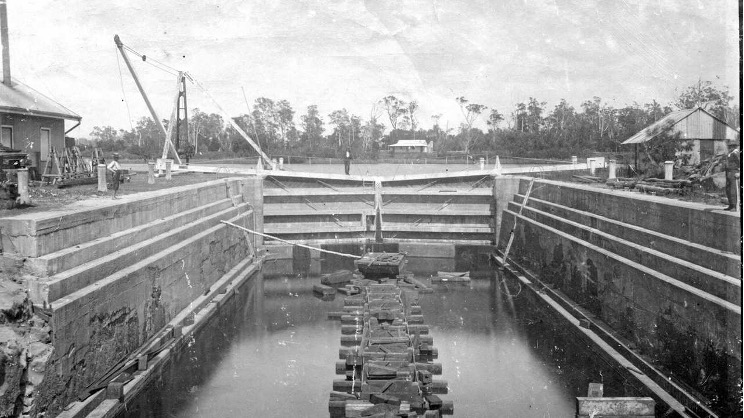
Rileys Hill Dry Dock on the bank of Richmond River, where the Oakland was taken for temporary repair.
The Sydney Morning Herald of 26 October 1901, page 11, reported on the arrival of the Oakland in Sydney, after permanent repairs were to be made:
‘Among the arrivals in Sydney yesterday was the steamer Oakland, which, it is will be remembered, went on the rocks of the breakwater at the entrance to the Richmond river some months ago. Captain Bentley, who supervised the work of floating the Oakland off, on being seen by a “Herald” representative, readily gave some details of the operations which had been carried out. “Yes,” said Captain Bentley, in reply to a query, “it has been a hard and rather trying time, and I am not sorry it is over.’
After an extensive overhaul in Sydney, the Oakland returned to service on 16 February 1902, on the coastal run to Richmond Heads.
Concluding Comments
Information on other shipwrecks in the Port Stephens region is published on this website and can be foundng links:
A History of 110 Shipwrecks at Port Stephens 1800 – 1950
Shipwrecks Inside Port Stephens 1869 – 1950
Morna Point – A Graveyard of Shipwrecks
Wreck of SS Florence Irving at Port Stephens – 1877
Wreck of SS Macleay near Port Stephens – October 1911
Wreck of SS Pappinbarra at Port Stephens – 1929
Wreck of SS Uralla Near Birubi Beach Port Stephens – 1928
Wreck of HMAS Psyche in Port Stephens – 1924
Wreck of the Cora Lynn off Port Stephens – 1914
Researched and compiled by Kevin McGuinness
May 2022

 Port Stephens - a history exploration