
This story takes us back to the early days of aviation and to the adventures of one of Australia’s best-known pioneer aviators, Bert Hinkler.
Hinkler was to earn himself an unexpected place in the history of the Anna Bay and Bobs Farm areas of Port Stephens, when he made an emergency landing of his Baby Avro plane on Stockton Beach at Anna Bay in April 1921.
This paper examines Hinkler’s aviation activities around this time. His many aviation achievements have been widely published but are outside the scope of this paper.
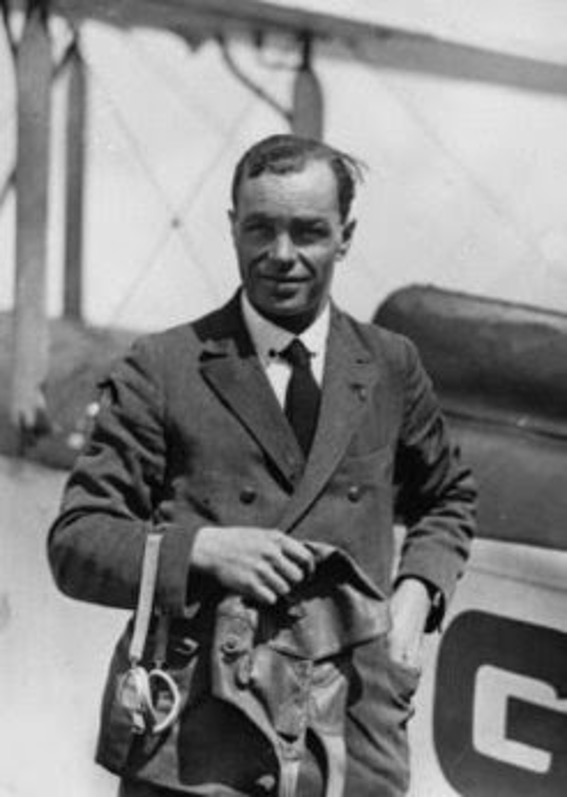
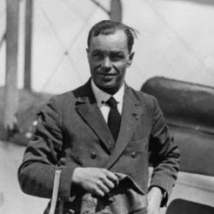
Bert Hinkler [State Library of Queensland
Bert Hinkler and his famous Baby Avro Plane at the Royal Easter Show in Sydney – 1921
The Daily Telegraph of 24 March 1921, page 6, reported:
‘Flying men seem habitually modest, to the point of self-effacement. Who would think, looking at the smaller of the two Avro aeroplanes just inside the main entrance to the [Sydney Easter] Show, that it was the famous “baby” in which Bert Hinkler made the wonderful non-stop flight from London to Turin — the first leg of his intended flight to Australia, and the most remarkable one-day flight of the whole contest. Or that the serious-looking young man enthusiastically showing a friend the good points of the machine was Hinkler himself. When one happens to know that the man and the machine reached Sydney together last Friday, and asks him is he the man who made the flight, he casually says that “he had that pleasure.” [Bert Hinkler and his Aeroplane arrived in Sydney aboard the ‘Ascanius’ passenger ship on March 24, 1921]
Sitting alone in that little 25 by 18 arrangement of wings, wire, and engine, he left London one morning, and 9½ hours later glided to earth in Italy. He is a Queensland boy, and was always keen on flying. In 1913 he went to England — worked his way, in fact — to get into the business, and joined the firm of A. V. Roe and Co. When war broke out he went with the R.N.A.S. [British Royal Naval Air Service]. When it finished he decided to fly home in the “Baby Avro.” He only got to Turin, but he made the world gasp. And it would have gasped again had it known one or two things that came out yesterday. The engine in the little machine is of the ordinary car type, water-cooled, with four cylinders. It is just on ten years old. Originally used then for aerial experiments, it was discarded on account, of its mere 35 horse-power, and was relegated to such menial jobs as driving a fan, or something of the kind, in a workshop. Hinkler liked it, and had it fitted in the first Baby Avro sold — the same ‘plane and the same engine which is on the ground today.
About the memorable flight Hinkler will say little — except that he could have gone a hundred miles or so farther, as he had plenty of benzine, and was 12,000 feet up when he sighted Turin. But about the machine he is enthusiastic. He thinks it is the ideal means of transport for the man outback. It covers 30 miles to the gallon of benzine. It has a cruising speed of 70 miles an hour. It can carry, the pilot and a passenger or equivalent weight. And wherever a man can fill up a car with petrol and oil the owner of this ‘plane can do the same, for it needs only the ordinary grades of both. It Is small, and, when fitted with folding wings, as the Baby Avros are now. it can be wheeled into an ordinary garage.
Hinkler has done 5000 miles in this “bus,” and he hopes to do a few more in Australia. He is out to study local conditions with a view to commercial aviation. The ‘plane is on the stand of the Australian Aircraft and Engineering Company, where also is another Avro— it looks a giant now— which has no little interest, as it is one of the first built in Australia, by the A.E. and E. Company at its works at Mascot.’
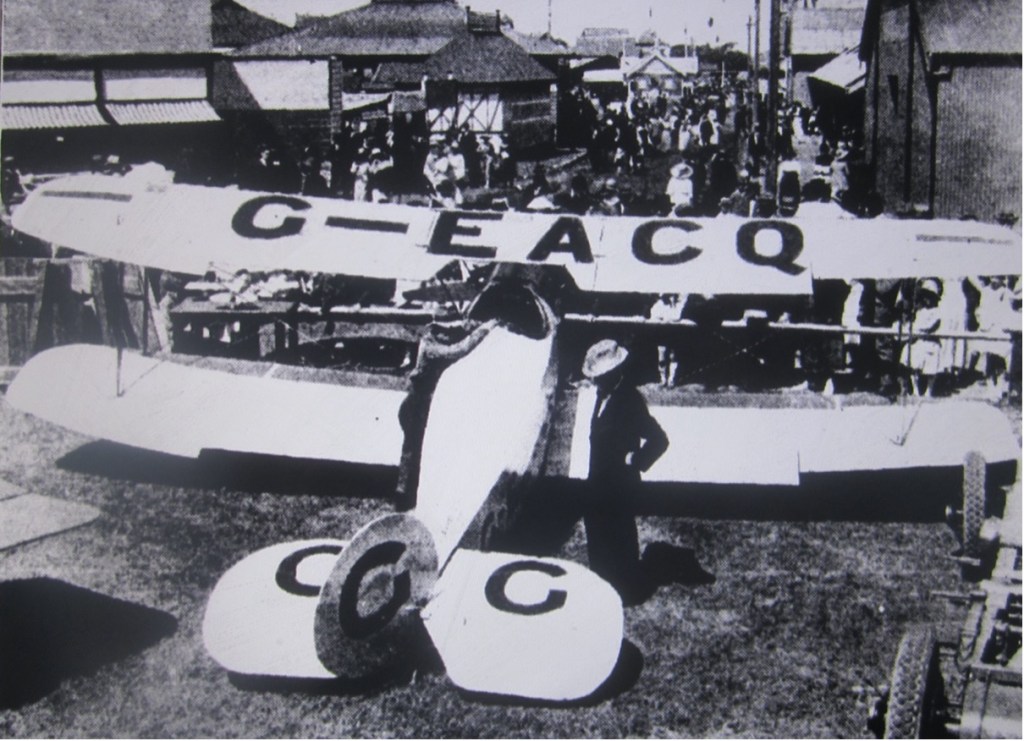
Bert Hinkler’s Baby Avro at the Sydney Royal Easter Show [ Sydney Mail 30 March 1921]
The Sydney Mail of 30 March 1921, page 20, further reported:
‘Thousands of visitors to the Sydney Show were greatly interested in this “baby” aeroplane. It is in itself a remarkable little machine, but the fact that it is the identical Avro on which Lieut. Hinkler set out alone from England on an attempt to fly to Australia adds both interest and romance to the craft. Apart from the execution of a few minor repairs and the application of a coat of white paint, the “baby” is just as it was when it crossed the Alps last year. Although less than a tenth of the long journey was then accomplished, the fact that the aviator reached Turin, Italy, in nine hours’ flying time, at a cost of only 20 gallons of petrol, demonstrates the practicability of the use of such one-seater machines in everyday life. Lieut. Hinkler visited the Showground several times last week and was the centre of much interest. Alongside the “Baby” a three-seater Avro was shown, whilst daily trips over the ground were made by machines from the Mascot aerodrome. On the principal days exhibitions of aerial stunting were given by Lieut. Nigel Love. The Avros in use were built wholly except the engines— in Sydney by the Australian Aircraft and Engineering Co., all the materials being locally produced.’
Hinkler flies from Sydney to Bundaberg, Queensland – April 1921
The Sun of 12 April 1921, page 1, reported:
‘The Australian Aircraft and Engineering Co. [formed in 1919 to manufacture aircraft in Australia] has received information from Mr. Bert Hinkler that he has arrived at Bundaberg, having made a non-stop flight from Sydney on a Baby Avro. He reports that the flight occupied 8 hours 40 minutes, and that 22 gallons of petrol was consumed. The aerial route to Bundaberg is about 700 miles from Sydney, and the train journey occupies over 40 hours.
A major of the Royal Air Force, who was returning from a visit to Australia, was discussing his investigations with an Australian airman. “What did you say the population of Australia was?” he asked, apparently apropos of nothing. “Oh, somewhere about five million,” was the reply. “Five million,” echoed the major reflectively. “Well, If the rest of the world had the same proportion of tip-top flyers as Australia, there would be a new aerial record established every day.” He was referring to the flight of Bert Hinkler, the Queensland airman, from London to Turin last May on a 35 horse-power aeroplane — a feat described by C. G. Grey, editor of the “Aeroplane,” as “the most meritorious performance in the history of aviation.” He had flown 650 miles in 9½ hours. It was his intention to carry on to Australia, but finding he wanted more spare parts by the time he had reached Rome he flew back to London, thus covering 2250 miles on his machine in 34½ hours flying time, for a petrol consumption of 75 gallons.
There is no wonder that airmen all the world over talk of him as “the amazing Bert Hinkler.” And now he has eclipsed his previous record, established a new one for Australia, and for that matter, for the world, by his 700 miles non-stop flight from Mascot aerodrome to Bundaberg on the same machine. The aeroplane is no less amazing than the man. Its engine is a 35 horse-power Green, a stationary engine [manufactured by Green Engine Company Limited, London]. The machine on which this new record was established is the same little ‘bus with the same engine that made the sensational flight to Turin. Previous to this flight the same machine was flown by Captain Hammersby — another Australian — in the British Aerial Derby, and in Holland.’

Green 4-cylinder water cooled inline upright piston engine as used in the Avro Aeroplane [Wikipedia]
New record established on the Sydney to Bundaberg Flight – April 1921
The Tweed Daily of 12 April 1921, page 3, reported:
‘The aviator, Mr. Bert Hinkler, left Sydney at 6 o’clock this morning in his baby Avro and arrived at Bundaberg, his native place, at 2.40 this afternoon landing within 200 yards of his home. He was met by his aged parents. The flight of 700 miles was accomplished without a mishap in 8 hours 40 minutes, which is claimed to be a world’s record non-stop flight for that type of machine and an Australian record for any type of machine. The Avro is fitted with a 35 horse power, engine 10 years old, and Hinkler used only 22 gallons of petrol, averaging 32 miles to the gallon.’
Hinkler Makes an Emergency Landing near Anna Bay, Port Stephens – April 1921
On the return journey, Bert Hinkler made an emergency landing of his Avro plane on Stockton Beach at Anna Bay, due to bad weather. This received considerable newspaper coverage.
The Newcastle Morning Herald and Miners’ Advocate of 30 April 1921, page 6, reported:
‘The remarkable flights carried out by Lieutenant Bert Hinkler in his Baby Avro aeroplane, both in Europe and in Australia, have gained for him much, prominence. Luck, however, was against him on the last journey that he essayed, and yesterday afternoon he placed his damaged machine on the steamer Hunter at Newcastle for shipment to Sydney.
On Wednesday morning shortly after six o’clock he took to the air in Brisbane with the intention of proceeding to Sydney, where he was to have been the guest of the Aero Club at dinner the same evening. Weather conditions were hostile, and although he successfully contended against these in several notable flights, he was compelled on this occasion to make a landing on the beach in the vicinity of Anna Bay, about fifteen miles north of Newcastle. This took place at 2 o’clock in the afternoon after the machine had been buffeted about in a rainstorm for almost seven hours. The airman ran into rain soon after taking off, and as he came south the severity of the south-easterly squalls increased until they blew with hurricane force.
“I was travelling at seventy miles an hour,” he said yesterday, “and so you can imagine the rain beat down on me like a shower of stones. The force of the rain affected the stays, and caused rents to appear in the wings, which whistled alarmingly.” By this time, too, the heavy rain had affected visibility to such an extent that he had to drop his altitude until the machine was just skimming the surf, which was his only guide. So he battled along the coast. Approaching Newcastle he foresaw the possibility of colliding with shipping in the port, and realising that the machine could not battle with the elements indefinitely under such circumstances, he decided to effect a landing on the beach. The tide was rather high, but he was fortunate enough to secure a firm stretch of sand, and came down gently in the teeth of the wind. It was then that his real troubles began.
To save the machine from being blown away he sat for half-an-hour on its tail. It was a desolate part of the coast, and as nobody came to his aid in that time, he set out in the driving rain in search of assistance. He had only gone a few yards when a gust of wind lifted the machine and turned it completely over, damaging the propeller and the rudder. Leaving the aeroplane in that position he set off into the bush, and it was not until dusk, in which interval he must have walked at least ten miles, that he came to the Bobs Farm telephone office, where he despatched a telegram to his friends in Sydney acquainting them of his position.
Every hospitality was bestowed upon him during his stay at the post-office overnight, and early next morning he engaged horses, with which to tow his machine along the beach to Newcastle. The journey took a great part of the day, and Stockton was not reached until dusk. Upon his arrival he was made the guest of Mr. and Mrs. J. Davidson, relatives of Mrs. A. Upton, the postmistress at Bobs Farm.
It was stated by Lieutenant Hinkler yesterday morning, when dissembling his machine for shipment, that the damage occasioned would not have prevented him from taking the air soon after landing had there been a suitable take off and the weather conditions been anything like favourable.
Lieutenant Hinkler and his Avro aeroplane first gained prominence last year when he left London early one morning, and after negotiating the Swiss Alps—a notable performance for a thirty-horse power engine ten years old—reached Turin, in Italy, during the afternoon. Again, he left Rome one day before lunch, and arrived in London in time for dinner. One of his most remarkable non-stop flights was accomplished last month when he flew from Sydney to Bundaberg on a visit to his parents. Since his return to Australia recently Lieutenant Hinkler has flown his Avro over 2000 miles. He is a man of small stature, in keeping with his tiny machine, but the combination is that that has made aerial history.’
The Raymond Terrace Examiner and Lower Hunter and Port Stephens Advertiser of 6 May 1921, page 3, provided further information about Hinkler’s unexpected visit to Bob’s Farm, Port Stephens:
‘He secured the machine as best he could by pushing her into a more sheltered position, and then still in heavy rain, tramped inland and for upwards of a couple of hours could not find a house. At length he struck Mr. Arthur Upton’s, who keeps the Post Office, and from here he sent a wire to Sydney telling of his forced landing. Mrs. Upton provided, him with a substantial meal, and he then made arrangements for getting the plane towed to Newcastle.
Mr. Neil Cromarty performed this service with five horses, on the following day and from Stockton the machine was shipped to Newcastle. Had Mr. Hinkler known the beach he could have landed on a patch as smooth as a billiard table, and it would be serviceable to airmen if emergency landing grounds along the coast were located. The route from and to Brisbane will usually be along the coast, and if landing places were known to them mishaps in landing would be minimised.’
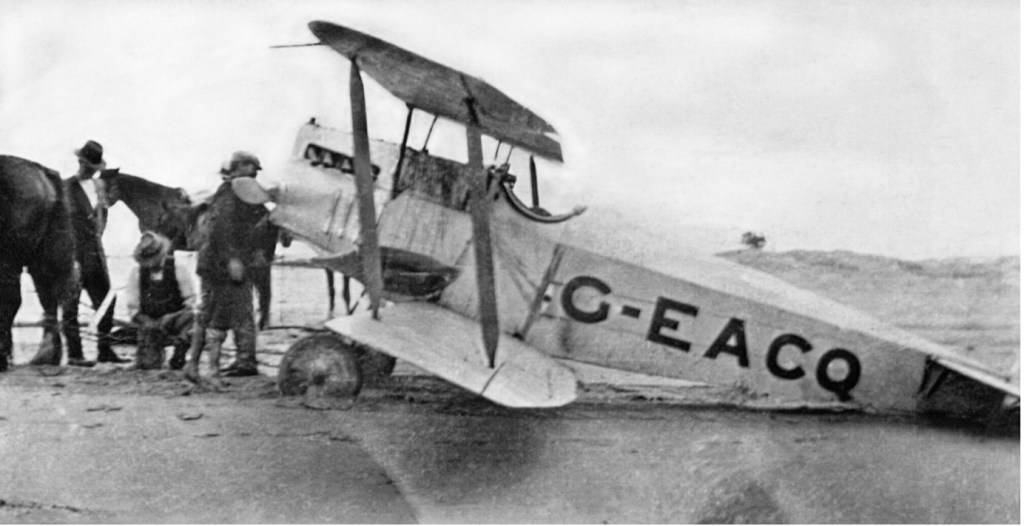
Hinkler’s Avro plane under tow by horses near Anna Bay
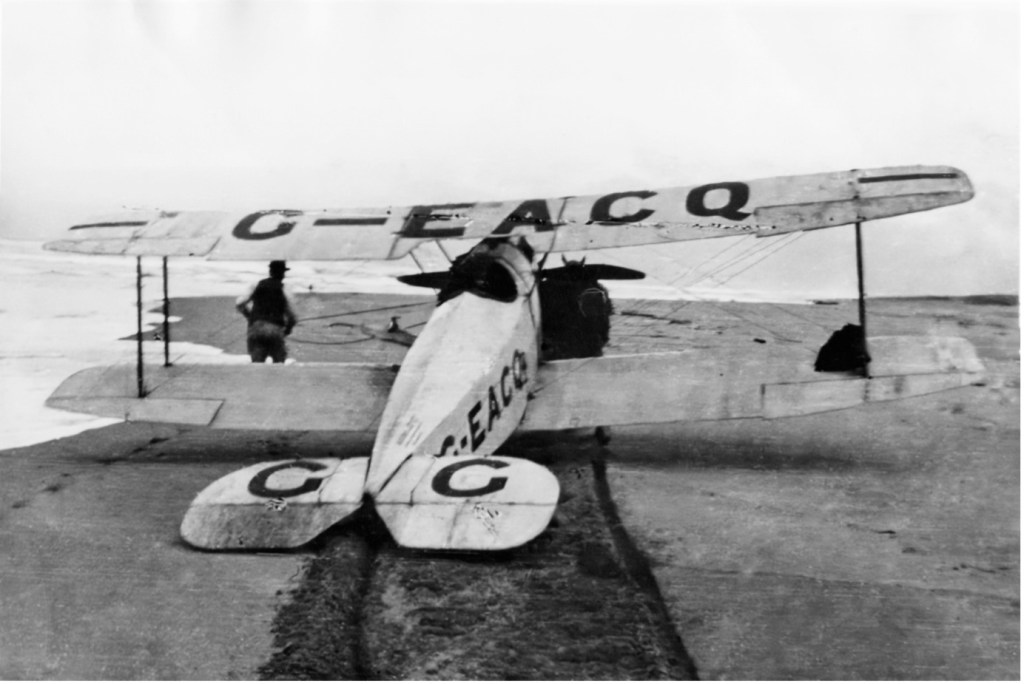
Hinkler’s Avro plane under tow by horses near Anna Bay
Hinkler Dies in Italy – 1933
Hinkler left England in a Puss Moth aeroplane on 7 January 1933 with the aim of flying to Australia and breaking the record set by C. W. A. Scott of 8 days 20 hours. Nothing further was heard from Hinkler, until his body was found in the Tuscan Mountains in Italy on 27 April 1933. It appears that he crashed into the mountain on the same day he had left England. He was buried with full military honours in a cemetery in Florence.
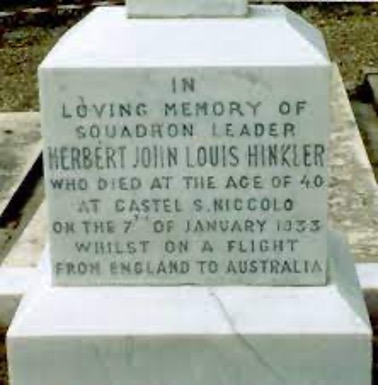
Hinkler’s Memorial in the Cimitero degli Allori, Florence [Wikipedia]
Prior to the confirmation of his death, the Dubbo Liberal and Macquarie Advocate of 18 March 1933, page 5, published the following tribute to the world-famous airman:
‘In view of the long time since his disappearance, it can be assumed that Bert Hinkler has gone to the happy hunting ground of flying men beyond the clouds, and a short review of his career might prove interesting. He was one of those people who have a natural gift of finding their way to where they want to go.
In his great flight from New York to London, via Jamaica, Venezulla (Brazil), West Africa and France, flying in the dark, over clouds and in bad visibility, he always landed where he intended to without any apparent effort, and even after the 2000 miles over the Atlantic he reached the African coast just where he intended to. He was just as good at landing at the desired point without seeing any of the intermediate landmarks. Some years ago he flew from Hamble to Martlesham, in England, and after flying over the clouds all the way he came down through them immediately over the aerodrome.
He was equally as good as a test pilot. He could find out the weak points in a machine, and point out the aerodynamic defects as well as the best test pilots of today. He had such perfect hands and judgment that he could fly his machine to the very edge of disaster without crashing it. Thanks to that faculty he could show off the good points in a design where a less able demonstrator would have had an accident. On one occasion, he demonstrated the special undercarriage on the Lynx Avros to an Air Ministry official, and showed how the worst possible landing’s could be made without damage to the machine. He flopped her from 15 feet up, flew straight into rising ground and all manner of things. The official said the performance nearly gave him heart failure but, as the result, the same undercarriage is now standard equipment at all Air Force training schools.
In the early days of the war, he was in the Royal Naval Air Service as an observer. He won the D.S.M., and then gained his commission and flew on the Italian front till the end of the war.
On his famous flight to Turin, he carried a camera of his own make, using ordinary cinema films. He made the whole thing himself, and it did all that the famous Leica camera does today and 10 years before this famous camera was heard of. The finish was not so good, but a fortune was lost to Bert because he did not commercialise it. His folding undercarriage was another wonderful invention. There were many other gadgets on planes used by him that were invaluable. His latest was a tandem engined Amphibian now lying in a shed at Hamble, and had he been able to complete it the world would have heard more of Hinkler. However, it now rests as a memorial to his ingenuity and to his courage in tackling a job which people with far greater resources have not attempted.
If he had been properly commercialised, Hinkler should have been worth many thousands a year to British aviation, but he was a difficult man to use, for, although he had no bad qualities, was loyal to his supporter and astonishingly good tempered, he was more impatient with people who were slow to see what he was driving at or to appreciate his arguments on a certain line of action or in change of design. Few important, people like to be told they are stupid or wrong, Bert was an Australian and given to speaking his mind candidly. Bert’s creed was apparently to get up in the morning with a clear conscience, look every man in the eye and ask can I gave you a hand at anything. If he had put, in as much work for himself as he did for others, he would have been a very rich man, but Bert was not commercially minded. He was cheerful and full of humour and, if he is dead, and I believe he is, then he died as he would have desired, attempting to do something which he considered would further aviation.’
Concluding Comments
Bert Hinkler was a remarkable aviator. He has been commemorated both in Australia and overseas.
His landing of the Baby Avro plane on the ocean sands near Anna Bay, Port Stephens, serves to demonstrate his ability to overcome one of many difficulties he encountered in his flying career.
The Port Stephens area is fortunate to have had a brief brush with Hinkler’s fame.
His Baby Avro plane is now on display at the Hinkler Hall of Aviation in Bundaberg, Queensland.
Postscript
Eight years after Bert Hinkler surprised the Upton family of Anna Bay, a similar aviation mishap meant that the family was again called on for help in June 1929.
The Newcastle Sun of 22 June 1929, page 3, reported:
‘On their Way from Lismore to Sydney yesterday to see the Southern Cross [plane flown by Kingsford Smith and Ulm] hop off for Derby, Messrs. Elliott and McCauland, in a Westland Widgeon, were forced down by lack of fuel at 5 p.m. on the farm of Mr. E. Upton, at Anna Bay. They resumed the flight at 10 a.m. to-day. Strong head winds on the trip down from Lismore caused a heavy consumption of benzine, and the fliers were practically out of fuel.
They were making for the Stockton beach in the hope of making a safe landing and then walking to Stockton to obtain a further supply of benzine. It was apparent to them that the fuel supply could not last much longer when E. Upton’s open paddocks came into view. A good landing was made. Farmers were surprised to see the machine glide up to a fence, to which the airmen tied it after covering the wings. Ample supplies of benzine were obtained from a nearby store. After spending the night with the farmers, the airmen took off at 10 a.m. to-day.’
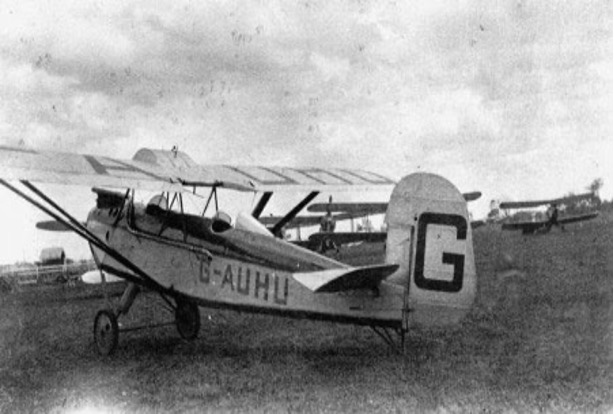
Researched and compiled by Kevin McGuinness
May 2023

 Port Stephens - a history exploration