

Introduction
The Second World War began on 1 September 1939 and ended on 2 September 1945.
During this five-year conflict, residents of the Port Stephens district experienced significant challenges and restrictions, many of which were similar to those imposed across Australia.
Additionally, local residents shared their community with thousands of Australian, American, and British military personnel stationed at HMAS Assault and Gan Gan in Nelson Bay, and at the Tomaree Coastal Artillery Battery in Shoal Bay.
This paper sources 112 newspaper advertisements published in two local newspapers, viz: Dungog Chronicle and the Raymond Terrace Examiner and Lower Hunter and Port Stephens Advertiser, to trace the various activities and restrictions that local residents had to deal with during the Second World War.
These included various registration requirements, rationing programs, trading restrictions, manpower shortages and fund-raising expectations.
The quality of certain advertisements within this paper is limited by the clarity of the original source documents as reproduced.
Not all advertisements that were researched have been included. Some, such as those pertaining to war loans and bonds, were repetitive despite minor variations.
Key military events relating to Australian operations during the Second World War are chronologically placed throughout the paper.
Part One: War Begins
Key event – September 1939:
– Germany invades Poland. Two days later, the United Kingdom and France declare war on Germany.
– Australian prime minister Robert Menzies announces that Australia is also at war.
– The Second Australian Imperial Force is formed.
The first advertisements began to appear:
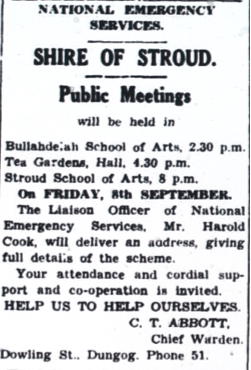
The National Emergency Services scheme commenced at Tea Gardens [Dungog Chronicle, 1 September 1939]
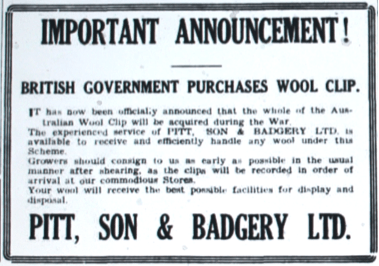
During the War the whole of the Australian wool clip was to be purchased by the British Government [Dungog Chronicle, 15 September 1939]
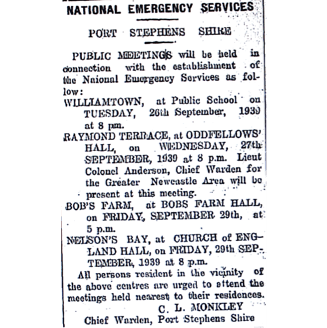
The National Emergency Services scheme commenced at Williamtown, Raymond Terrace, Bobs Farm and Nelson Bay [Raymond Terrace Examiner and Lower Hunter and Port Stephens Advertiser, 21 September 1939]
Key Event – October 1939:
– The first Royal Australian Air Force squadron in Great Britain (No 10 Squadron) starts flying operations
Key Events – December 1939:
– The first ships of the Royal Australian Navy arrive in the Mediterranean Sea.
– Australia joins the Empire Air Training Scheme to supply the United Kingdom and Australia with trained airmen.
Key Event – January 1940
– Some 20,000 Australian troops leave Australia for the Middle East

The price of motor vehicles predicted to rise as the War continues [Dungog Chronicle, 9 February 1940]
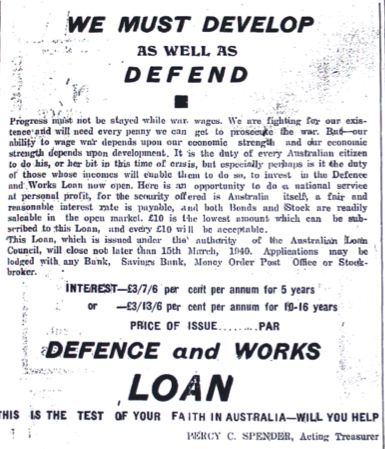
Defence and War Loan application invited [Raymond Terrace Examiner and Lower Hunter and Port Stephens Advertiser, 7 March 1940]
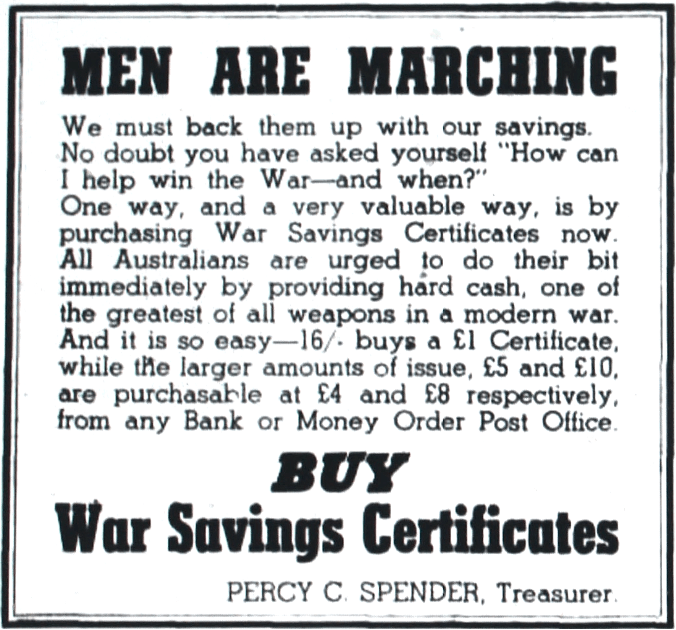
War Savings Certificated offered for sale [Dungog Chronicle, 29 May 1940]
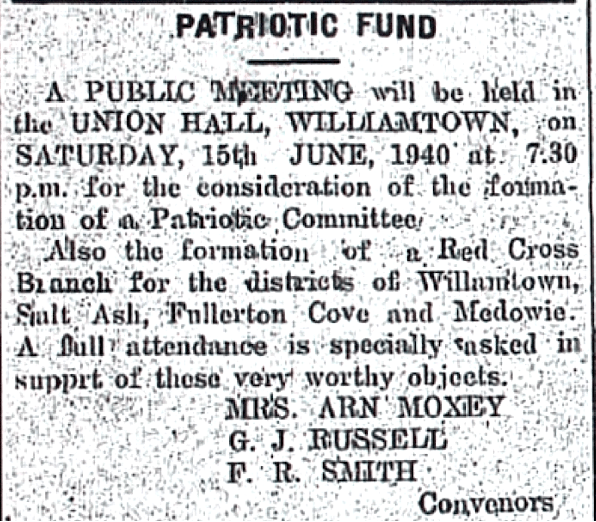
Patriotic Fund formed at Williamtown [Raymond Terrace Examiner and Lower Hunter and Port Stephens Advertiser, 13 June 1940]
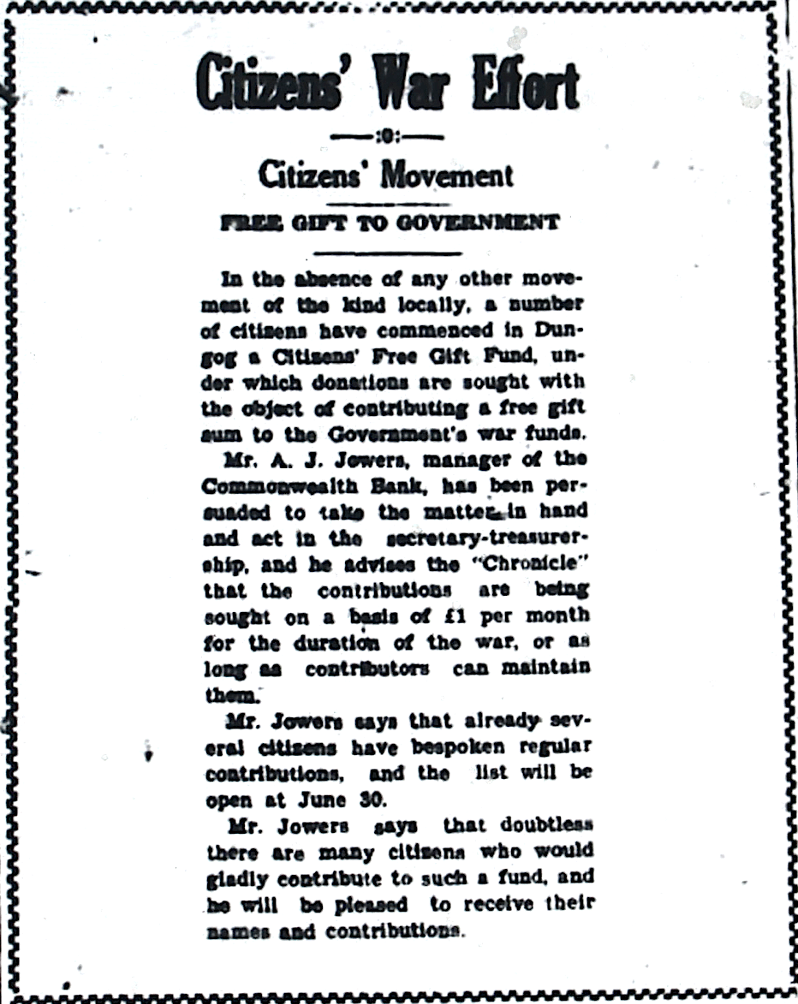
Citizens’ Free Gift Fund formed to provide war funds to Government [Dungog Chronicle, 14 June 1940]
Key Events – July 1940:
– The Royal Australian Navy is engaged in the Mediterranean.
– HMAS Sydney sinks the Italian cruiser Bartolomeo Colleoni
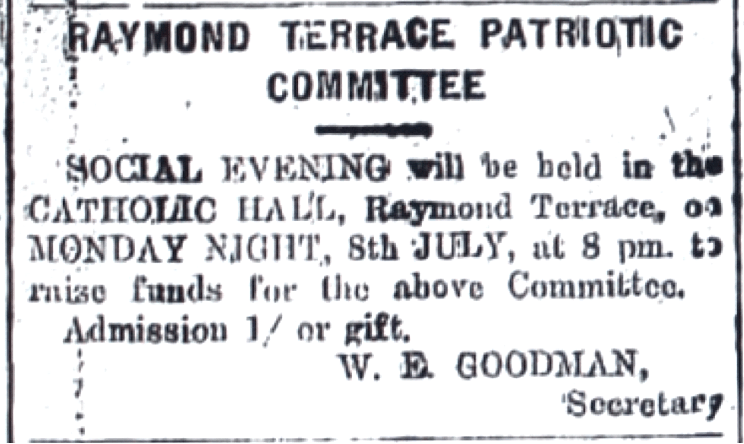
Fund raising social evening held by the Raymond Terrace Patriotic Committee [Raymond Terrace Examiner and Lower Hunter and Port Stephens Advertiser, 4 July 1940]
Key Events – October 1940:
– The Battle of Britain ends.
– Australian members of the British Royal Air Force help defend the United Kingdom in the air.
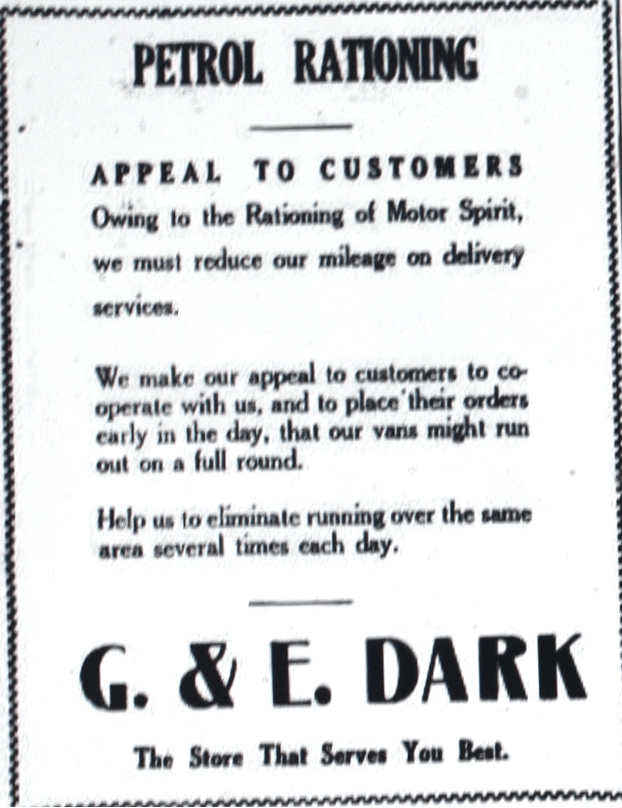
Petrol Rationing limits delivery services [Dungog Chronicle, 18 October 1940]
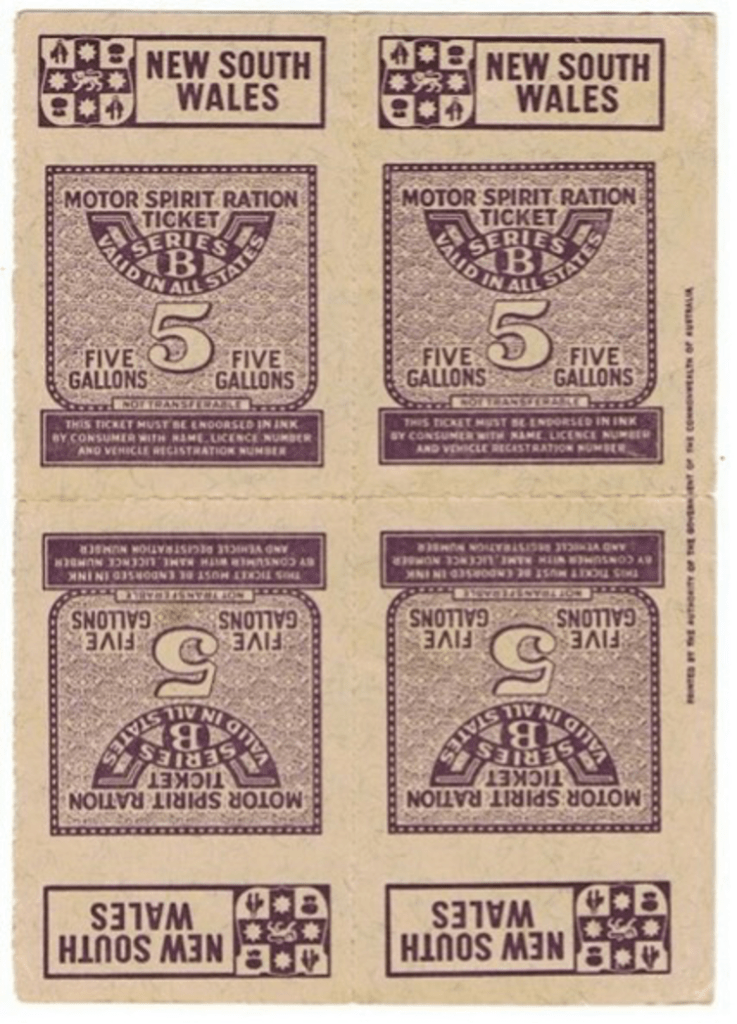
NSW Motor Spirit Ration Tickets
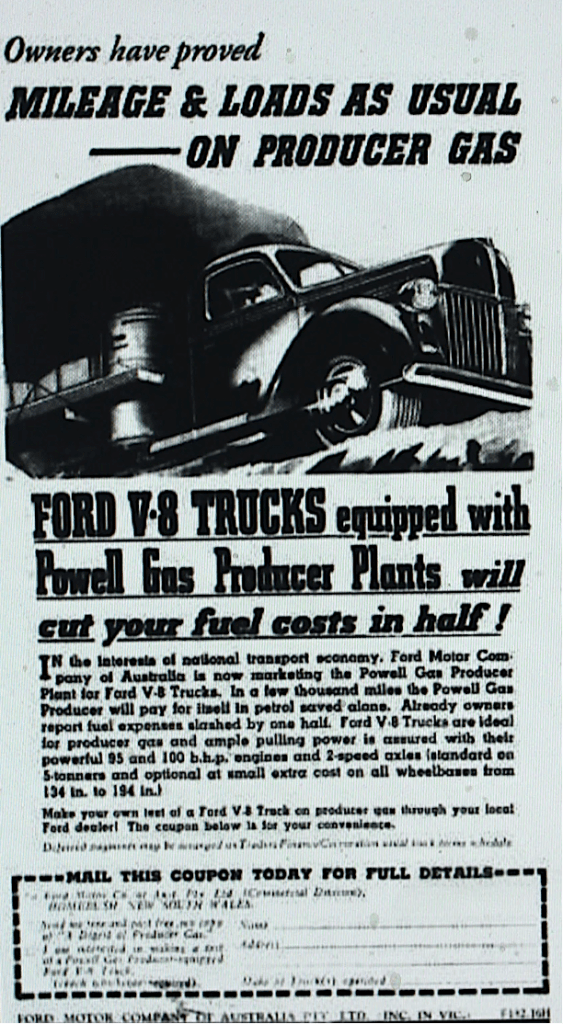
A gas producer using charcoal as the fuel, could be fitted to motor vehicles to reduce use of motor spirit [Dungog Chronicle, 18 October 1940] Also see advertisement in Dungog Chronicle, 25 July 1941 below]
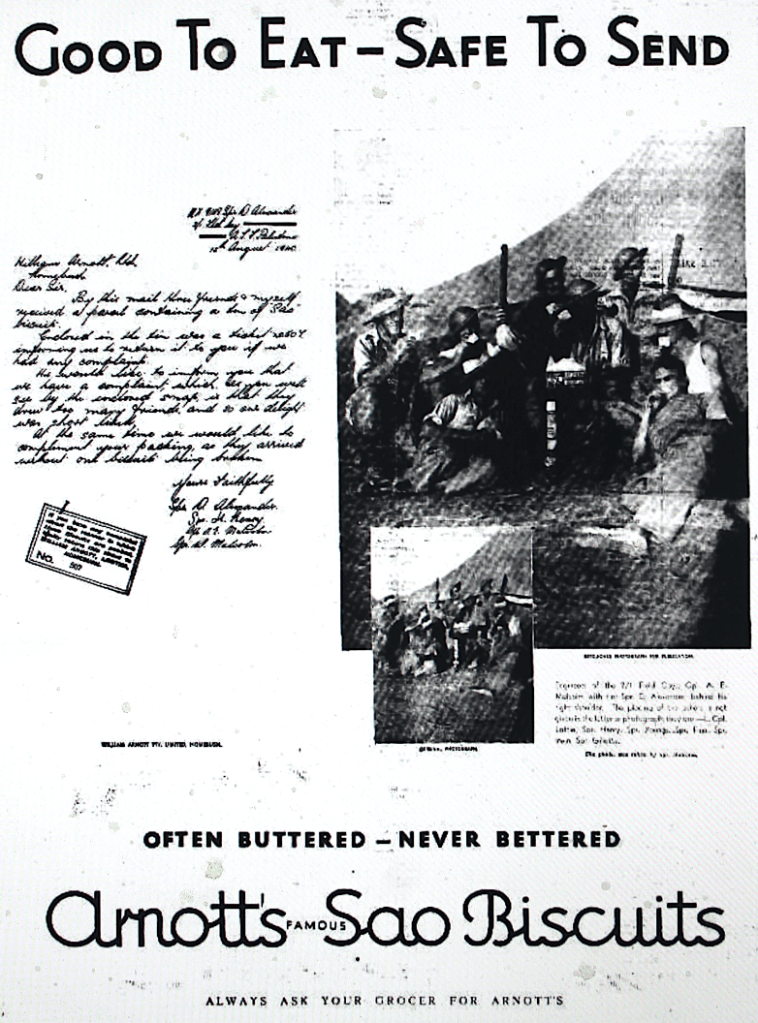
Promotional war related advertisement promoting Arnott’s biscuits [Dungog Chronicle, 15 November 1940]
“The letter written by Spr. D. Alexander of 2/1/ Field Company, at Palestine on 13 August 1940 and addressed to William Arnott Limited, Homebush, Sydney states: By this mail three friends and myself received a parcel containing a tin of Sao biscuits. Enclosed in the tin was a ticket no. 507 informing us to return it to you if we had any complaints. We would like to inform you that we had a complaint, which, as you will see by the enclosed snap, is that they drew too many friends, as so our delight was short lived. At the same time we would like to compliment your packing, as they arrived without one biscuit being broken. Yours faithfully – D. Alexander, H. Henry, A. Malcolm and W. Malcolm. The caption for the photo states: Engineers of the 2/1 Field Coy; Cpl. A. E. Malcolm with tin; Spr. D. Alexander, behind his right shoulder. The placing of the others is not given in the letter or photograph; they are: – L. Cpl Lattie, Spr. Henry, Spr. Young, Spr. Finn, Spr. Irwin, Spr. Gillette. The photo was taken by Spr. Malcolm.”
Key Event – December 1940:
– Australian troops prepare to begin operations in North Africa.
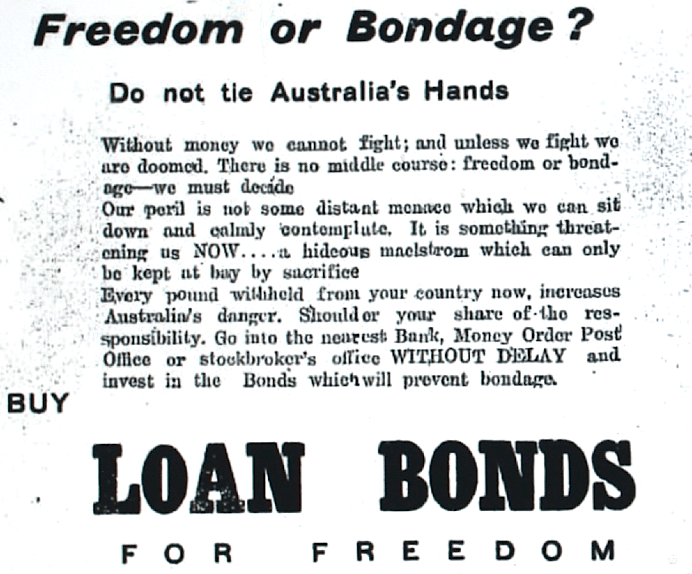
Investment in Loan Bonds invited [Raymond Terrace Examiner and Lower Hunter and Port Stephens Advertiser, 12 December 1940]
Key Event – March 1941:
– Australian troops capture Bardia in Libya from the Italian forces.
Key Event – April to October 1941:
– German forces trap Australian troops in Tobruk. This event is known as the Siege of Tobruk.
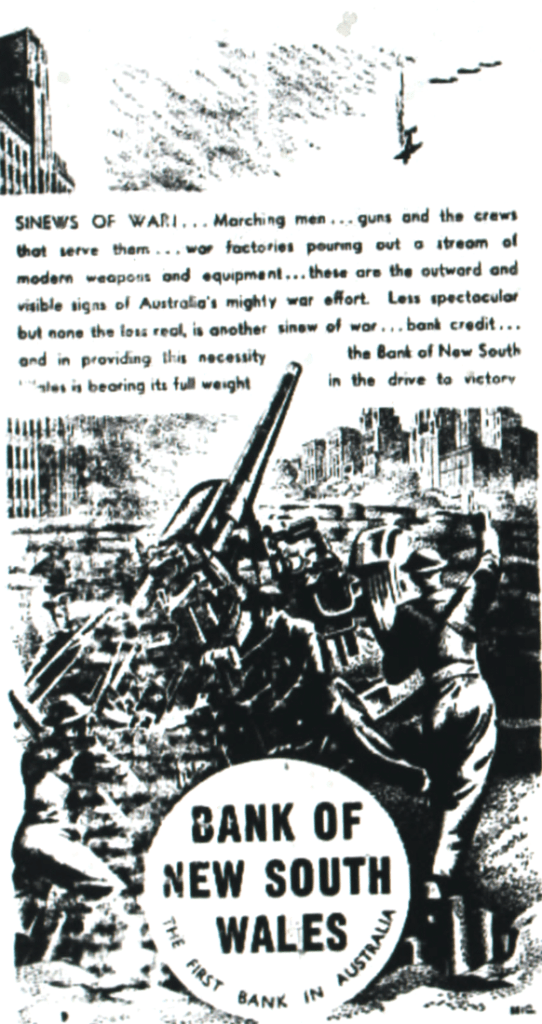
Bank of New South Wales [now Westpac] supports the war effort [Dungog Chronicle, 4 April 1941]
Key Event – May 1941:
– German forces defeat Australian and British troops in Greece and Crete.
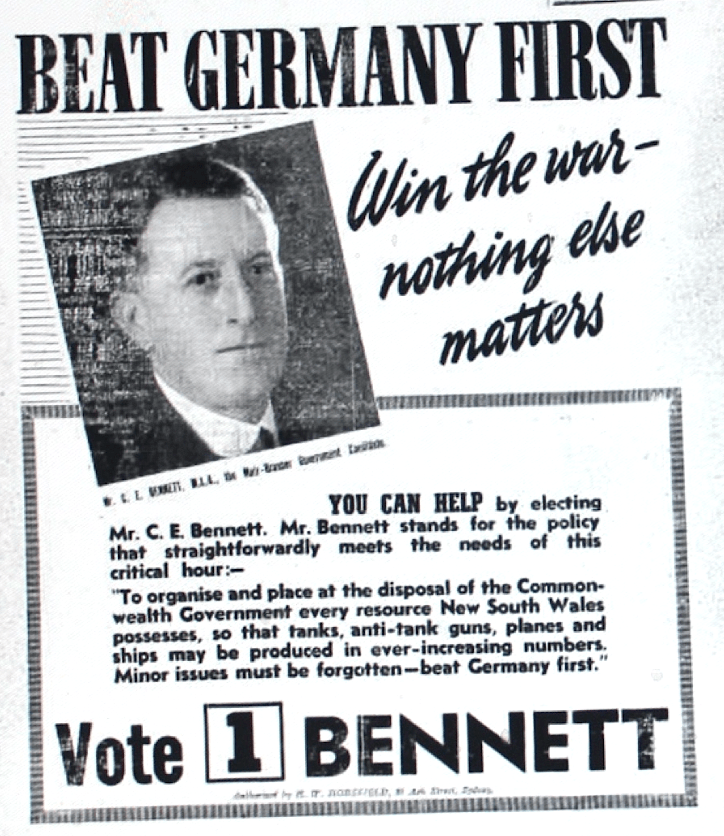
Support of the NSW war effort viewed as a political winner [Raymond Terrace Examiner and Lower Hunter and Port Stephens Advertiser, 1 May 1941]
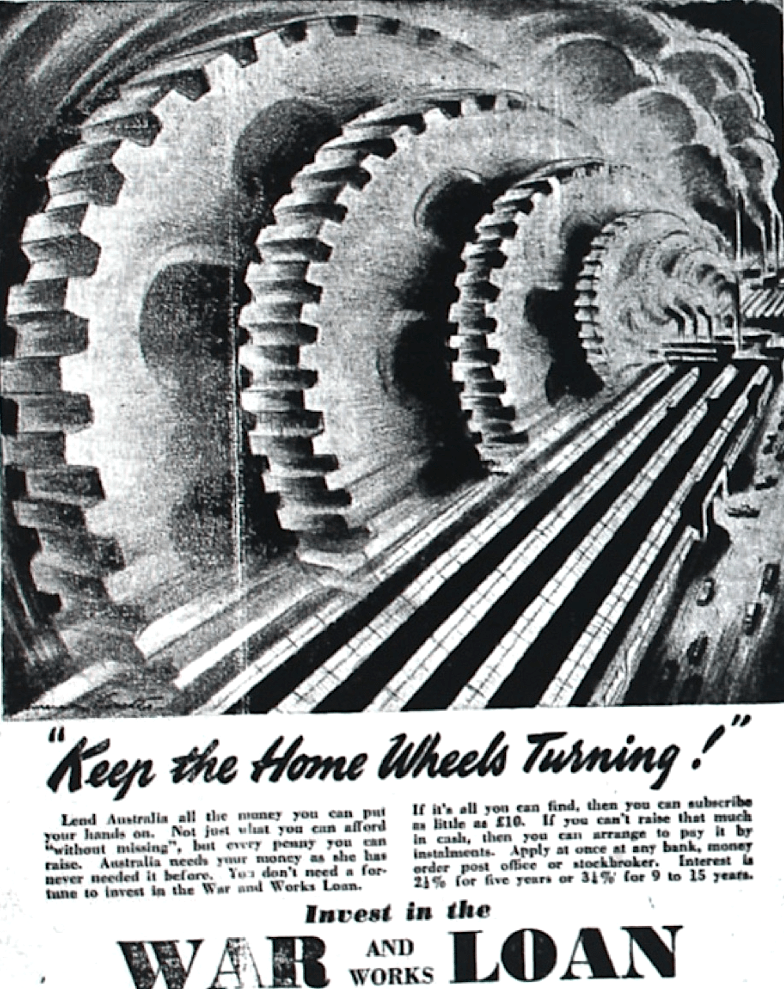
Investment in the War and Works Loan invited [Raymond Terrace Examiner and Lower Hunter and Port Stephens Advertiser, 1 May 1941]
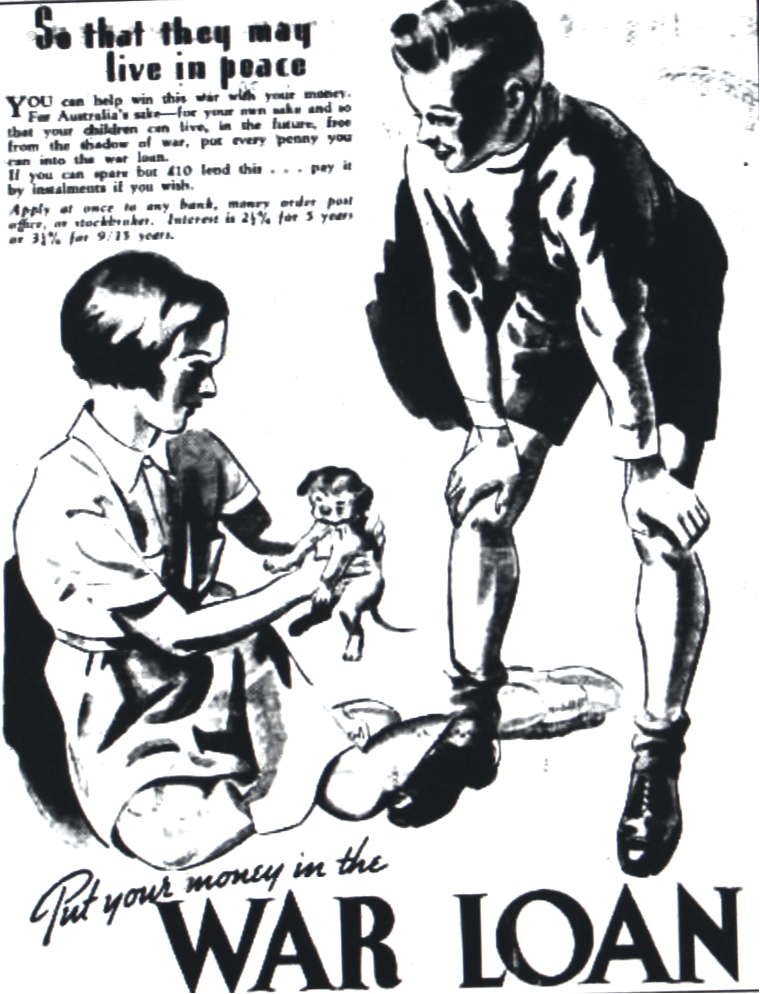
Investment in the War Loan invited [Dungog Chronicle, 16 May 1941]
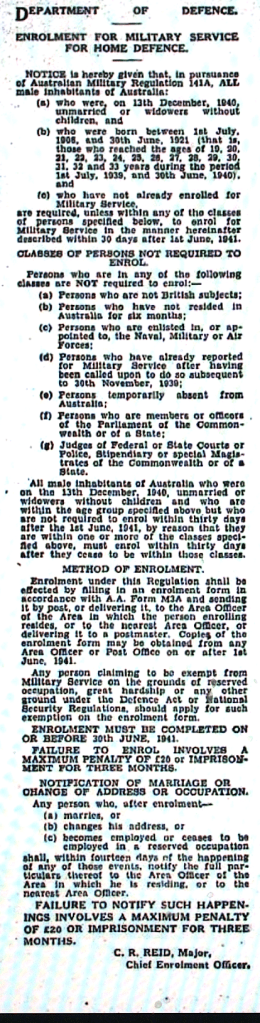
Compulsive registration for military service for home defence required [Raymond Terrace Examiner and Lower Hunter and Port Stephens Advertiser, 29 May 1941
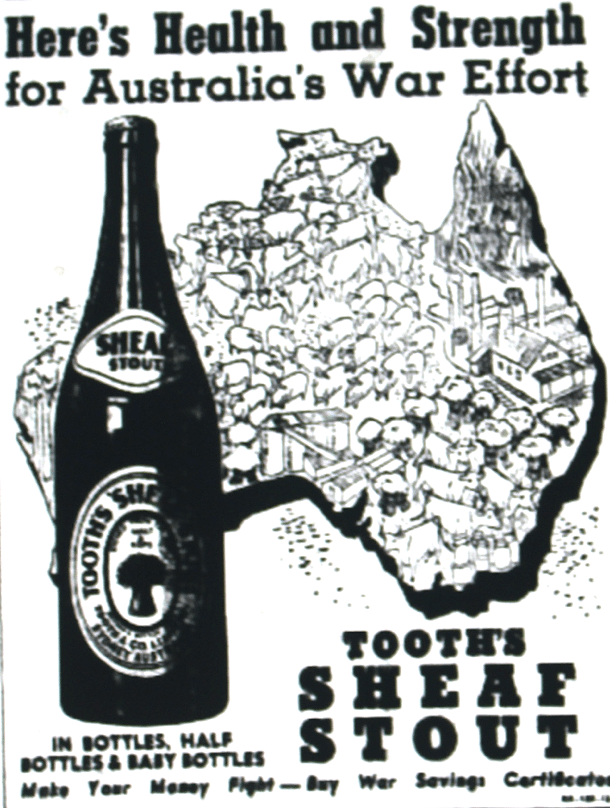
Drinking beer claimed to increased Australia’s war effort [Dungog Chronicle, 13 June 1941]
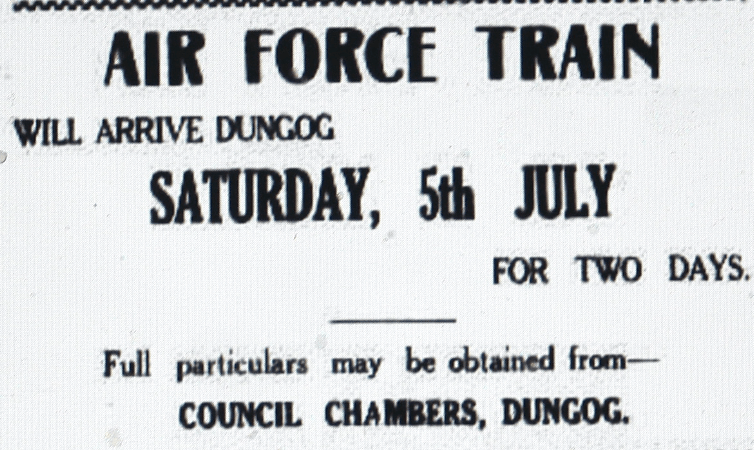
Air Force Train comprised three blue carriages. The first carriage was for the purpose of testing air crew candidates and applicants for various trade groups. The second carriage covered the requirements of medical tests and examinations [Dungog Chronicle, 27 June 1941]
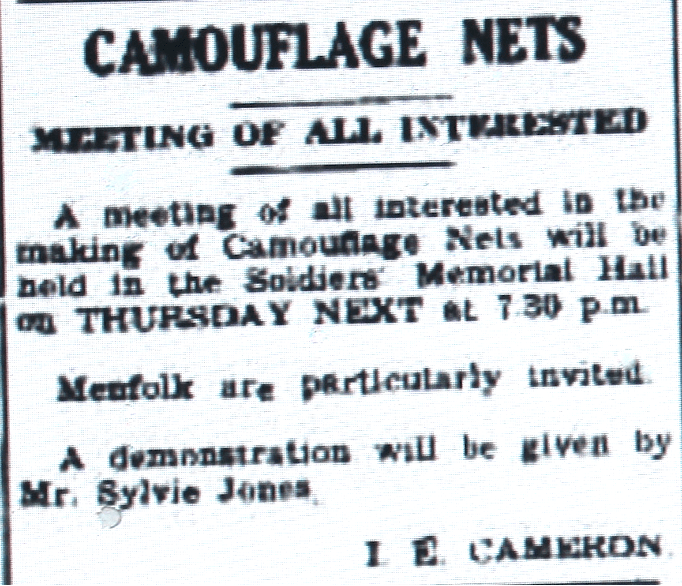
Camouflage nets were to be made in the Soldiers Point area [Dungog Chronicle, 27 June 1941]
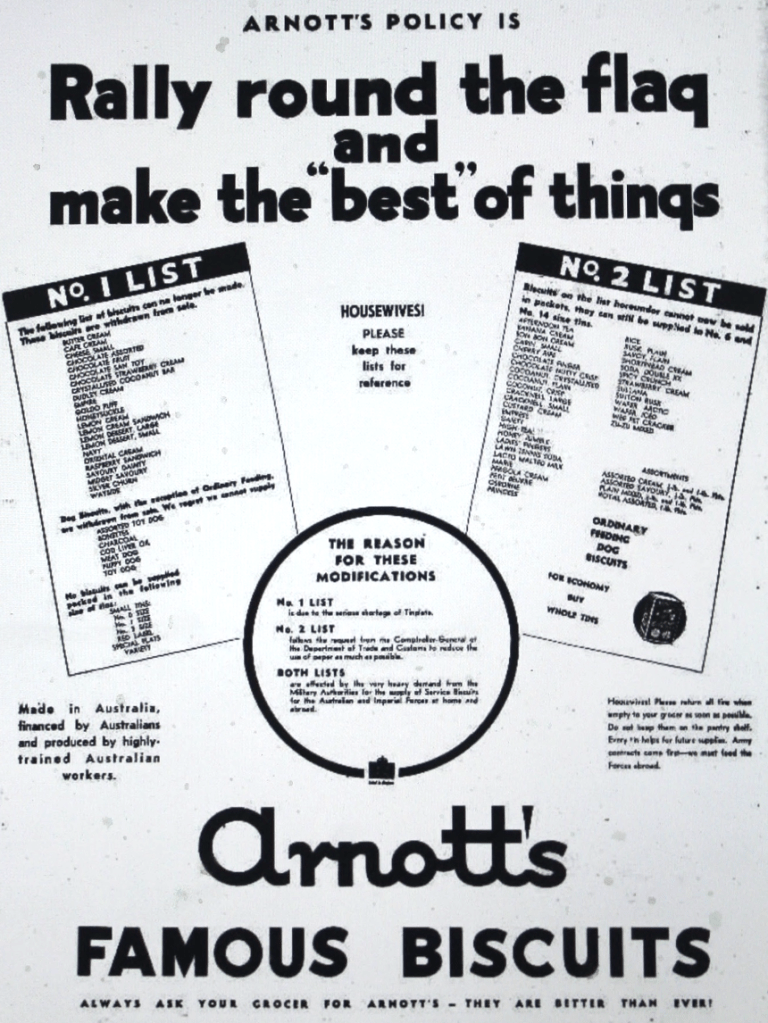
Many types of Arnott’s biscuits were withdrawn from manufacture due to the shortage of ingredients and packaging tin plate. Most biscuit varieties withdrawn from sale are no longer manufactured by Arnott’s [Dungog Chronicle, 4 July 1941]
No. 1 LIST reads:
‘The following list of biscuits can no longer be made. These biscuits are withdrawn from sale: Butter Cream; Cafe Cream; Cheese, Small; Chocolate Assorted; Chocolate Fruit; Chocolate San Toy; Chocolate Strwaberry Cream, Crystallised Coconut Bar; Dudley Cream; Empire; Goldo Puff; Honeysuckle; Lemon Cream; Lemon Cream Sandwich; Lemon Dessert, Large; Lemon Dessert, Small; Navy; Oriental Cream; Rasberry Sandwich; Savory Dainty; Midget Savory; Silver Churn; Wayside.
Dog Biscuits, with the exception of Ordinary Feeding, are withrawn from sale. We regret we cannot supply: Assorted Toy Dog; Bonettes; Charcoal; Cod Liver Oil; Meat Dog; Puppy Dog; Toy Dog. No biscuit can be supplied packed in the following size of tins: Small tins; No. 0 Size; No 1 Size; No 3 Size; Red Label; Special Flat Variety’.
No. 2 LIST reads:
‘Biscuits on the list hereunder cannot now be sold in packets, they can still be supplied in No. 6 and No. 14 size tins.
Afternoon Tea; Banana Cream; Bon Bon Cream; Cabin, Small; Cherry ripe; Chocolate Finger; Chocolate Nutty Crisp; Cocoanut Crystallised, Cocoanut, Plain; Cocoanut, Crisp; Cracknell, Large; Cracknell, Small; Custard Cream; Empress; Gaiety; High Tea; Honey Jumble; Ladies Fingers; Lawn Tennis Soda; Lacto Malted Milk; Marie; Pergola Cream; Petit Beurre; Osborne, Princess; Rice; Rusk, Plain; Savoy, Plain; Shortbread Cream; Soda, Double XX; Spicy Crunch; Strawberry Cream; Sultana. Sutton Rusk; Wafer, Artic, Wafer, Iced; Wee Pet Cracker; Zu-Zu Mixed. Assortments – Assorted Cream; Assorted Savory; Plain Mixed; Royal Assorted.’
Centre Circle reads:
‘The reason for these modifications: No. 1 List is due to the serious shortage of tinplate; No. 2 List follows the request from the Comptroller-General of the Department of Trade and Customs to reduce the use of paper as much as possible; Both Lists are affected by the very heavy demand from the Military Authorities for the supply of Service Biscuits for the Australian and Imperial Forces at home and abroad.’
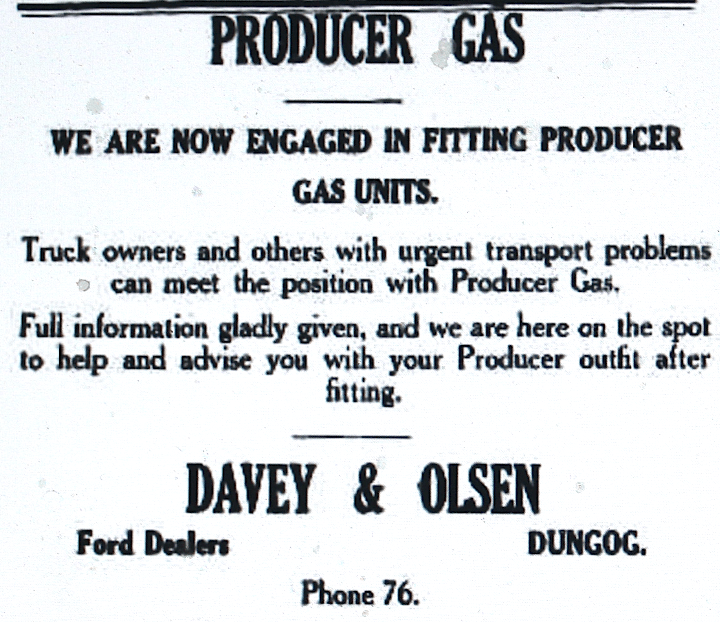
A gas producer using charcoal as the fuel, could be fitted to motor vehicles to reduce use of motor spirit [Dungog Chronicle, 25 July 1941]. Also see advertisement in Dungog Chronicle, 18 October 1940 above]
Key Event – August 1941:
– The Australian Women’s Army Service, the first of the women’s auxiliary services, is formed.
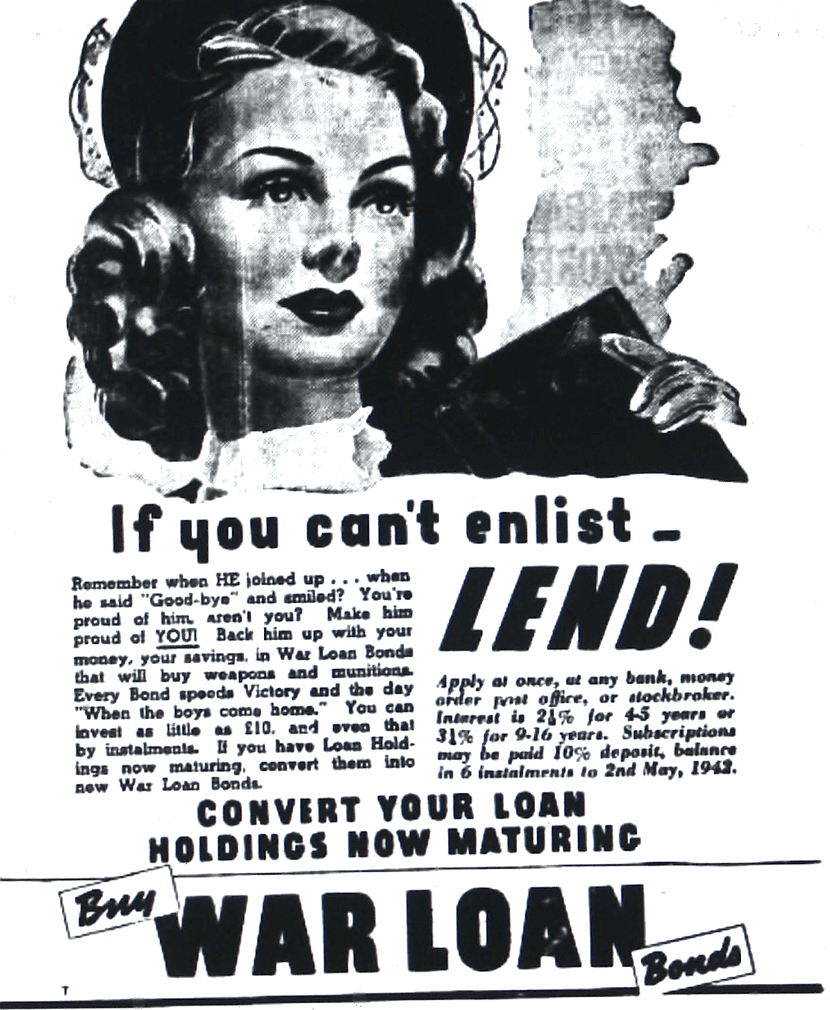
Invitation to invest in War Loan bonds [Dungog Chronicle, 10 October 1941]
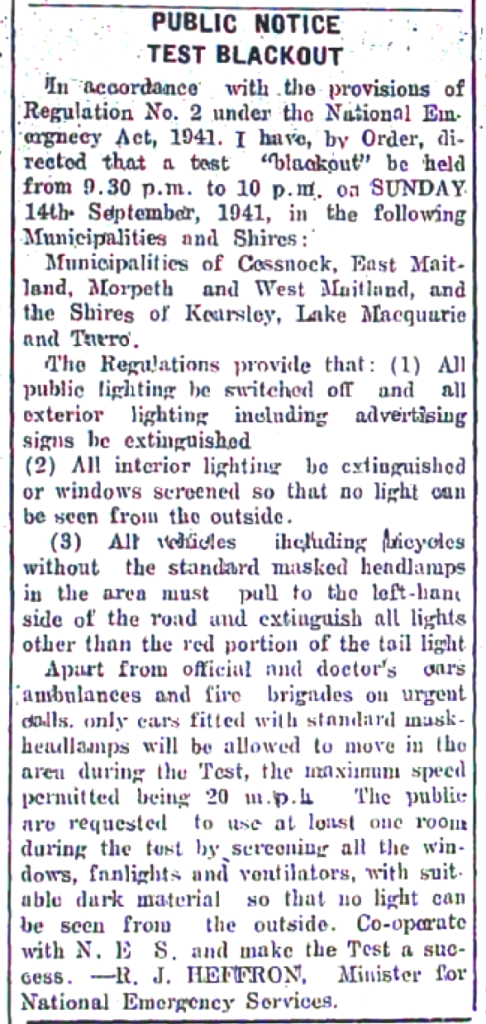
Procedures for a test blackout. Blackouts were required at night, so the enemy aircraft were not able to identify areas of population [Raymond Terrace Examiner and Lower Hunter and Port Stephens Advertiser, 11 September 1941]
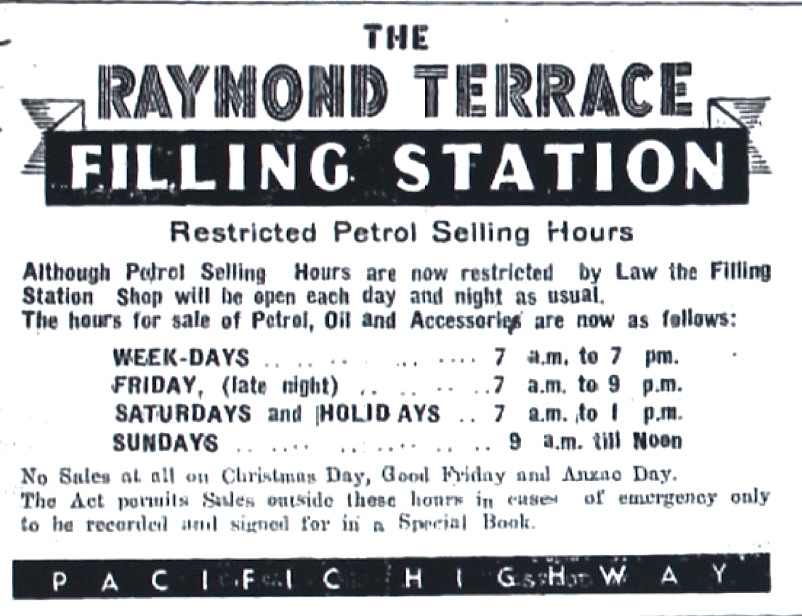
Restrictions to petrol selling hours introduced [Raymond Terrace Examiner and Lower Hunter and Port Stephens Advertiser, 18 September 1941]
Key Event – October 1941:
– John Curtin becomes the 14th prime minister of Australia
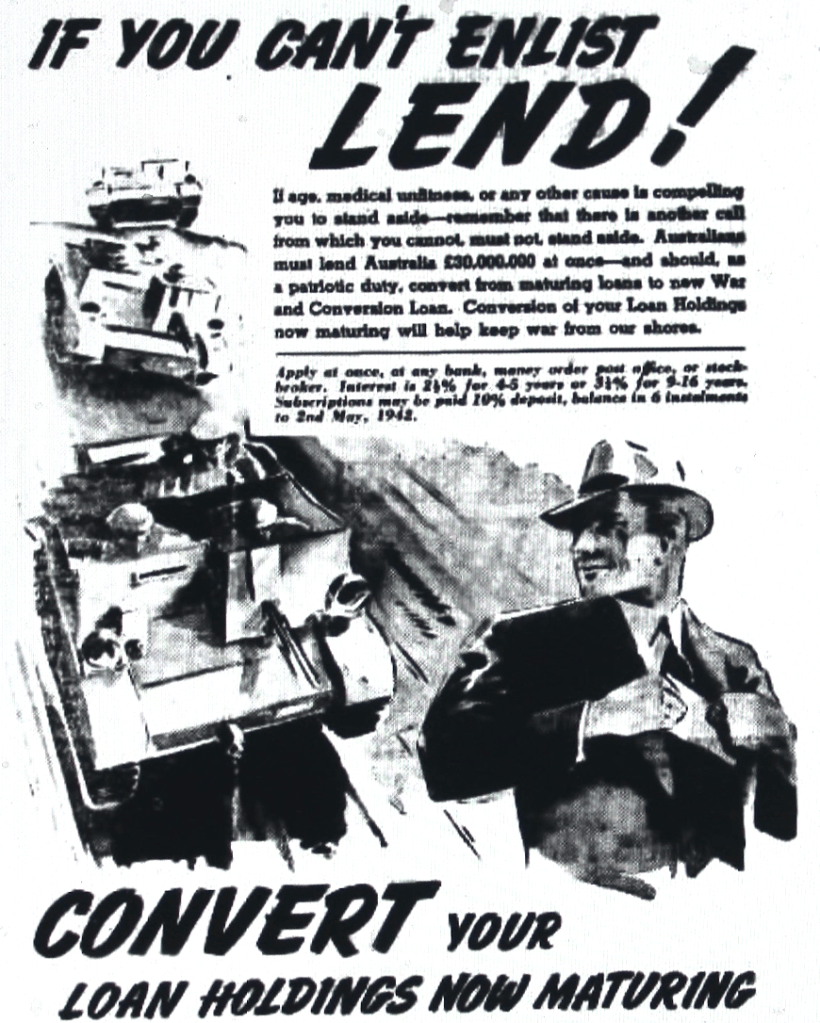
Invitation to convert maturing loans into new War and Conversion Loans [Dungog Chronicle, 24 October 1941]
Key Events – December 1941:
– Japanese forces attack the American fleet at Pearl Harbor and British forces across Asia.
– Australia declares war on Japan.
Key Events – February1942:
– Japanese forces capture Singapore island from the British. Many thousands of Australians become prisoners of war.
– Japanese forces bomb Darwin for the first time.
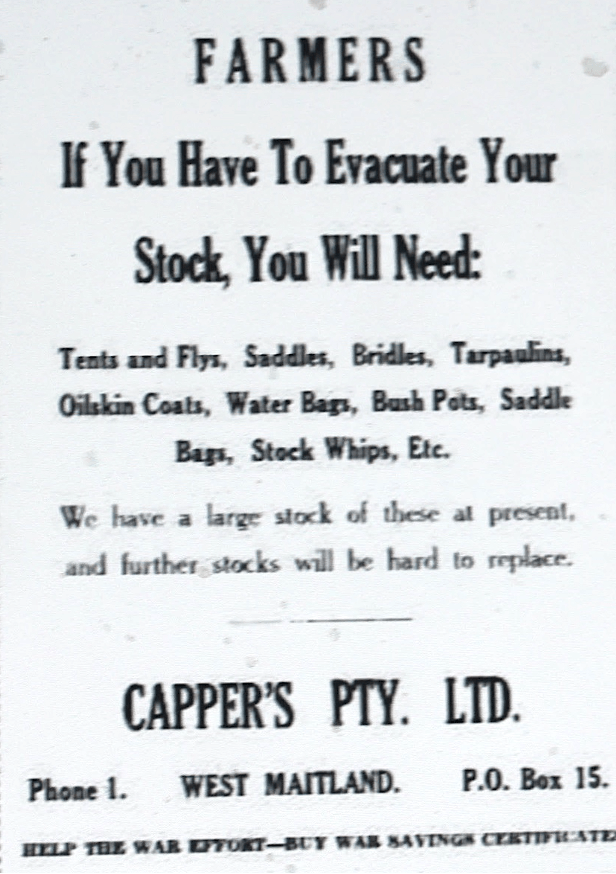
Farmers encouraged to prepare for wartime stock evacuations [Dungog Chronicle, 13 February 1942]
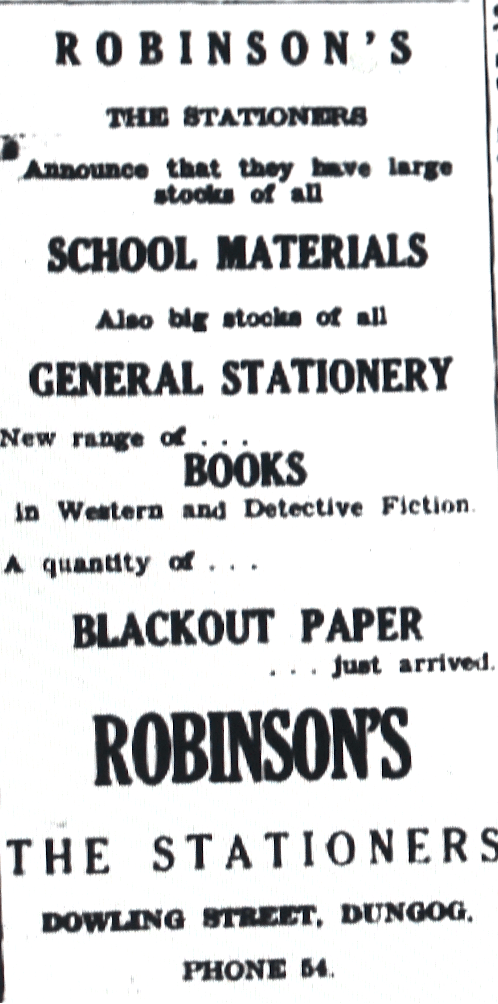
Blackout paper available for purchase [Dungog Chronicle, 13 February 1942]
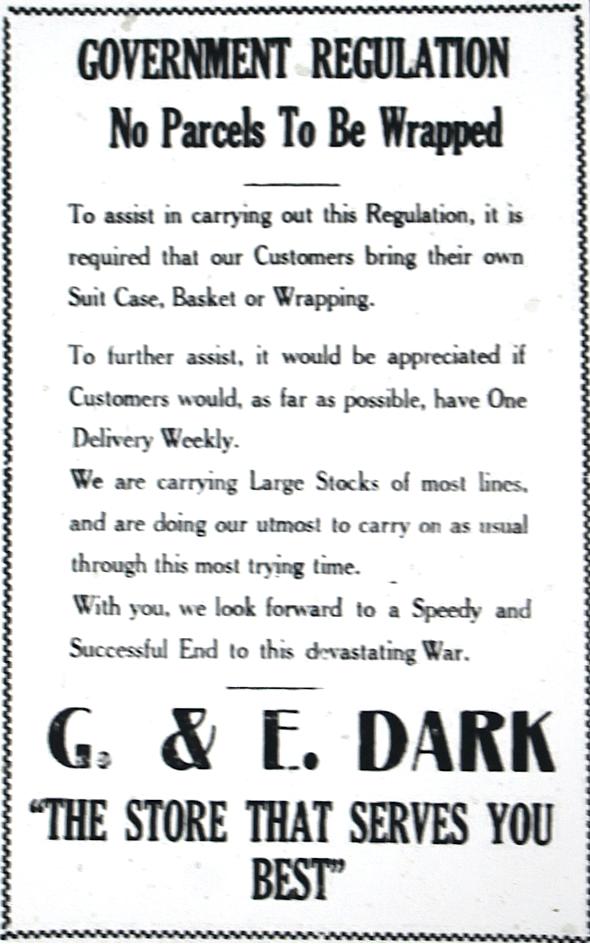
Paper rationing resulted in the wrapping of parcels to be banned [Dungog Chronicle, 13 February 1942]
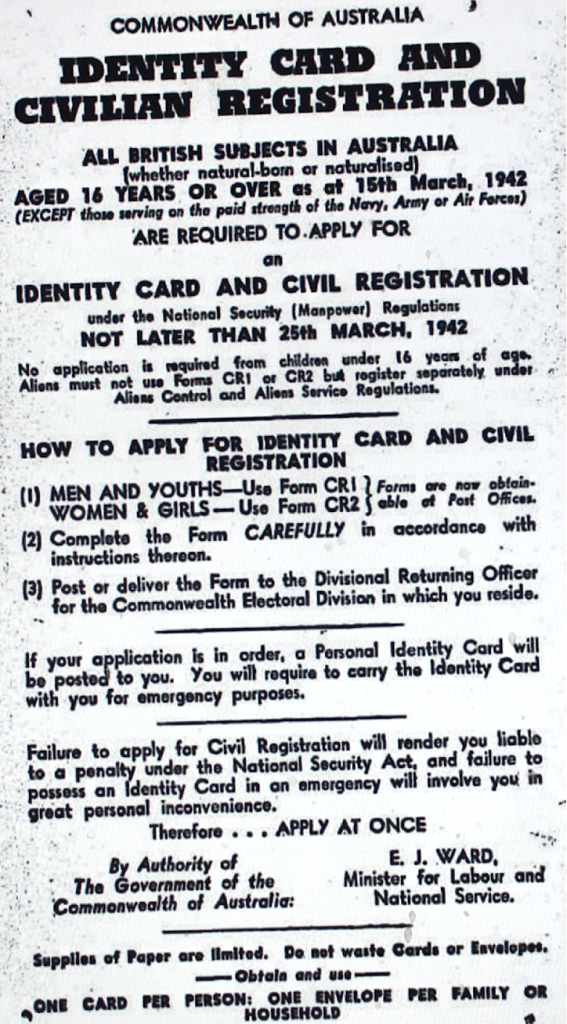
Identity Cards and civilian registration introduced [Raymond Terrace Examiner and Lower Hunter and Port Stephens Advertiser, 12 March 1942]
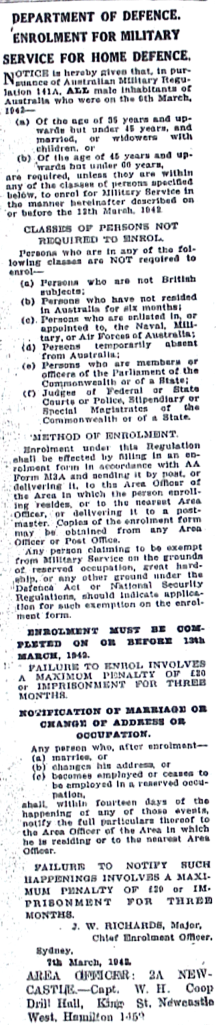
Conscription for Homeland Defence introduced [Raymond Terrace Examiner and Lower Hunter and Port Stephens Advertiser, 2 March 1942]
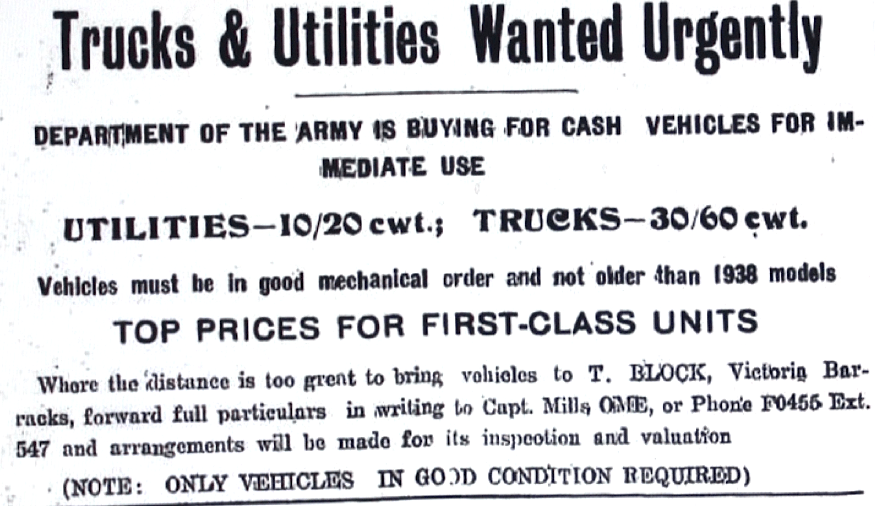
Government urgently sought to purchase trucks and utilities [Raymond Terrace Examiner and Lower Hunter and Port Stephens Advertiser, 19 March 1942]
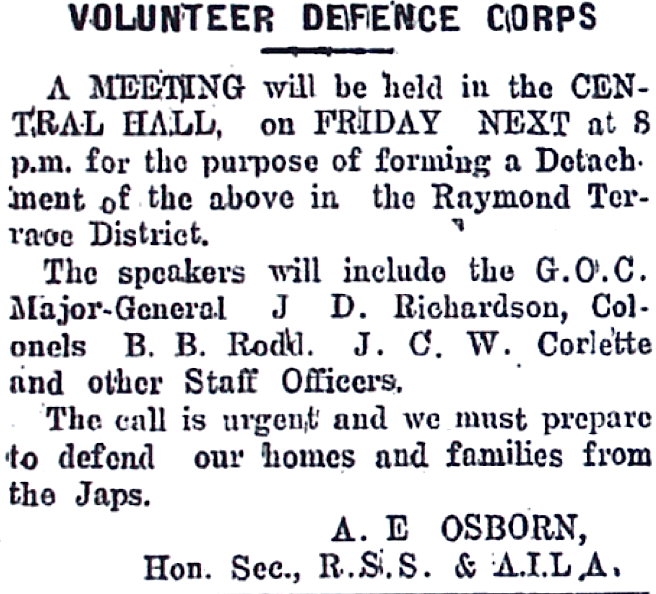
Detachment of the Volunteer Defence Corps to be formed at Raymond Terrace [Raymond Terrace Examiner and Lower Hunter and Port Stephens Advertiser, 19 March 1942]
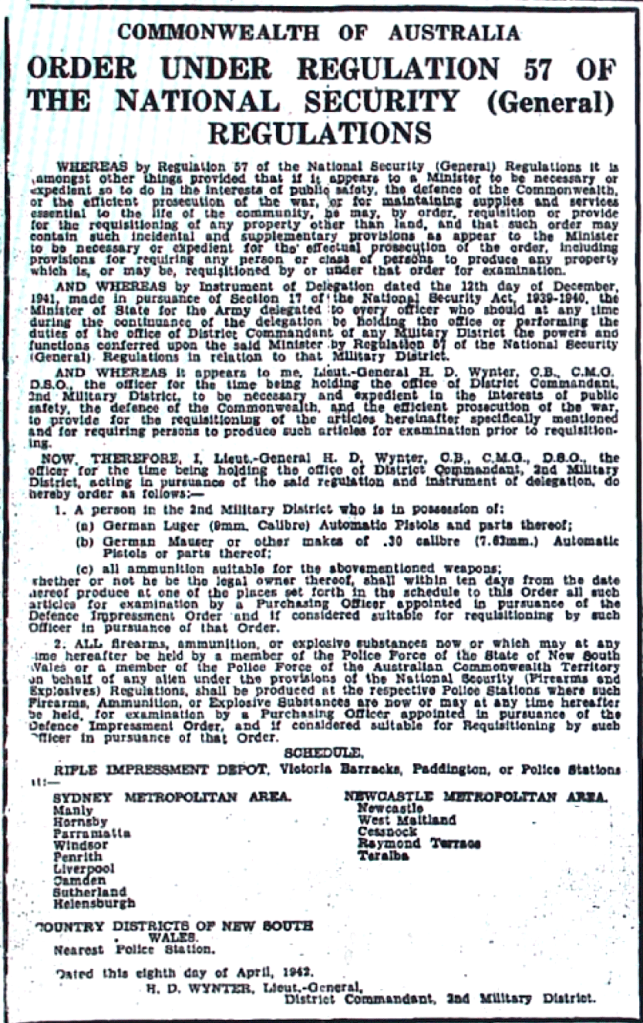
Certain types of German pistols requisitioned by Government [Raymond Terrace Examiner and Lower Hunter and Port Stephens Advertiser, 27 April 1942]
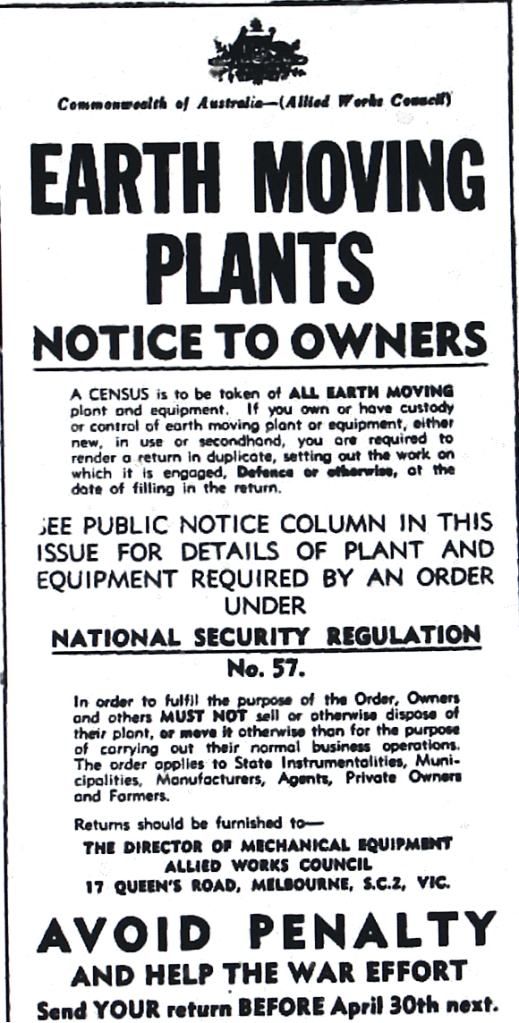
Census of earth moving plants introduced [Dungog Chronicle, 24 April 1942]
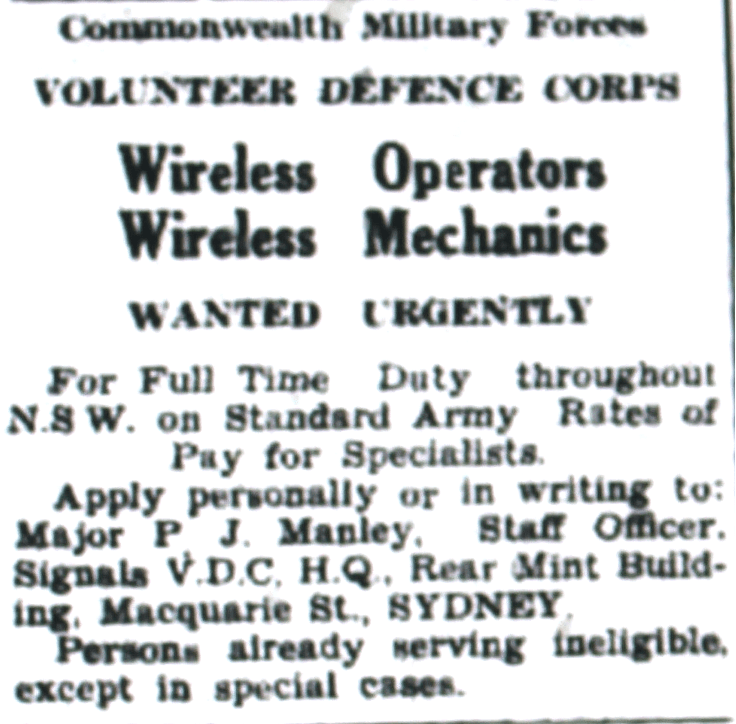
Volunteer Defence Corps urgently required wireless operators and mechanics [Dungog Chronicle, 24 April 1942]
Key Events – May: 1942:
– The Battle of the Coral Sea. Three Japanese midget submarines enter Sydney Harbour.

Farmers invited to purchase war damage policy [Dungog Chronicle, 15 May 1942]
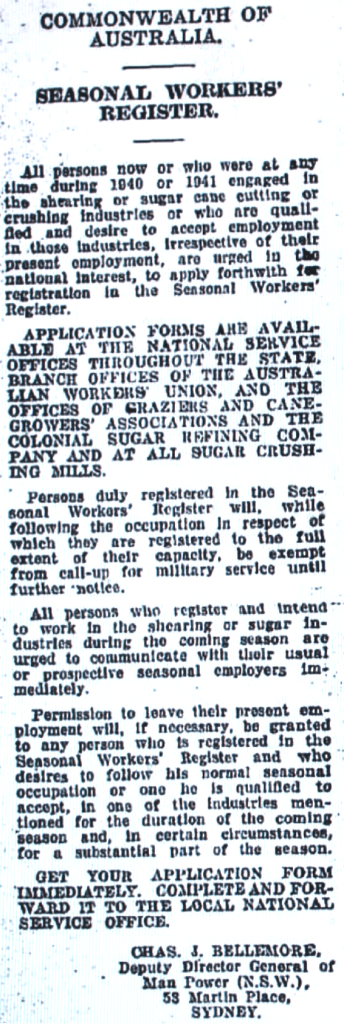
Seasonal workers register for shearers and sugar cane workers [Raymond Terrace Examiner and Lower Hunter and Port Stephens Advertiser, 28 May 1942]
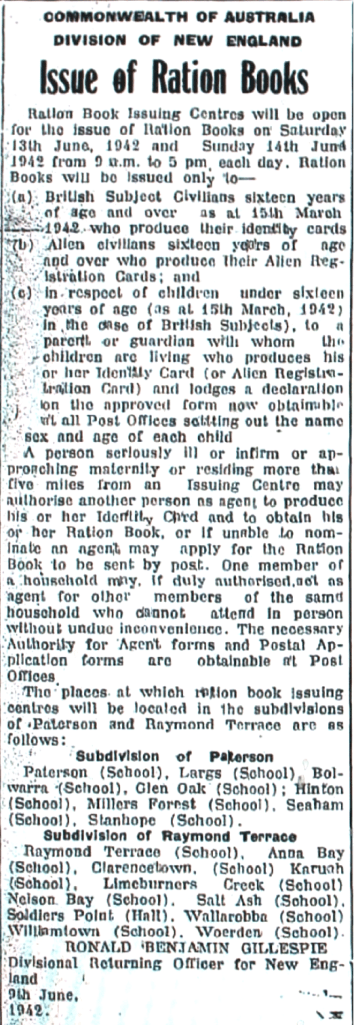
Ration Books introduced [Raymond Terrace Examiner and Lower Hunter and Port Stephens Advertiser, 11 June 1942]
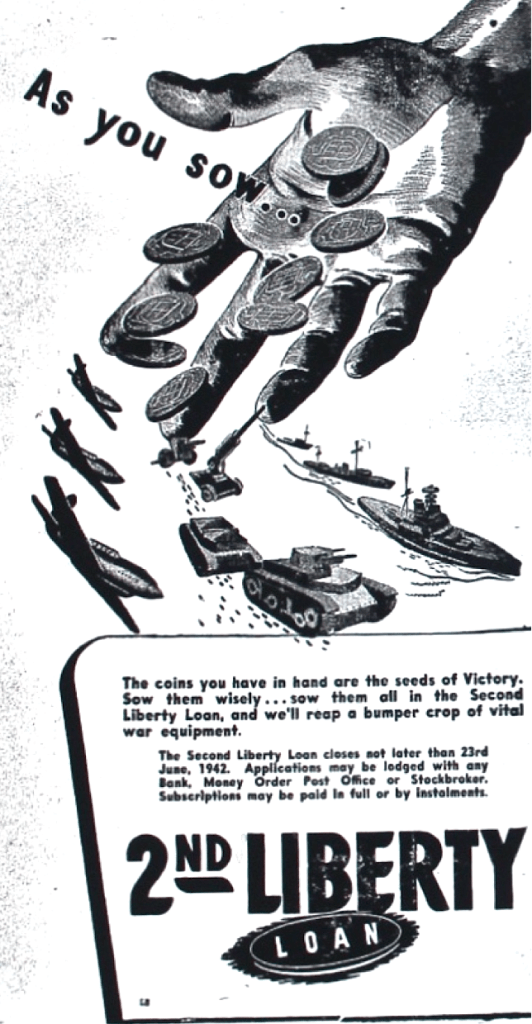
Invitation to participate in the Second Liberty Loan [Raymond Terrace Examiner and Lower Hunter and Port Stephens Advertiser, 11 June 1942]
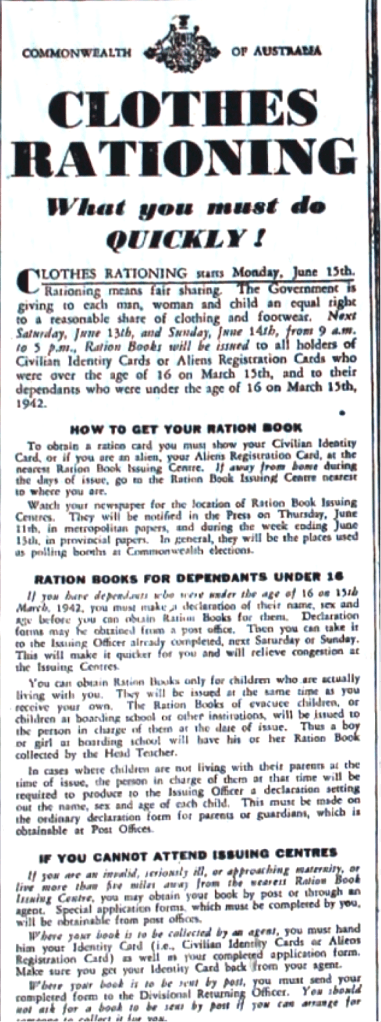
Clothing rationing introduced [Raymond Terrace Examiner and Lower Hunter and Port Stephens Advertiser, 11 June 1942]
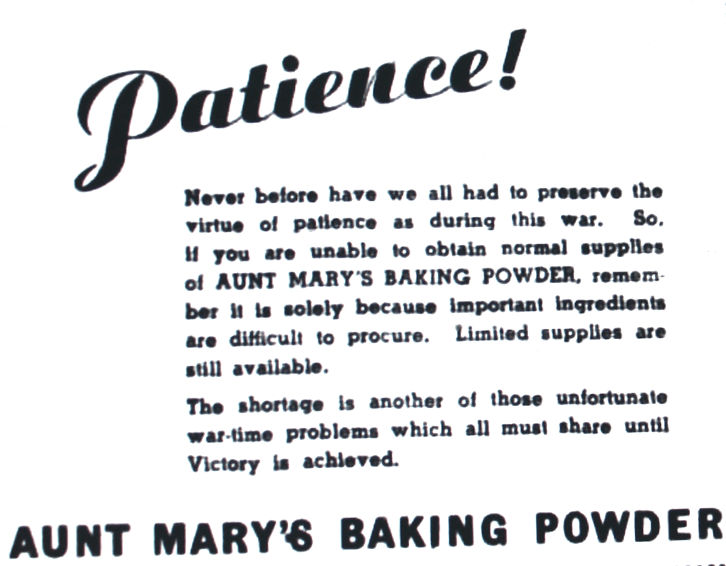
Patience required when wishing to purchase baking powder [Dungog Chronicle, 26 June 1942]
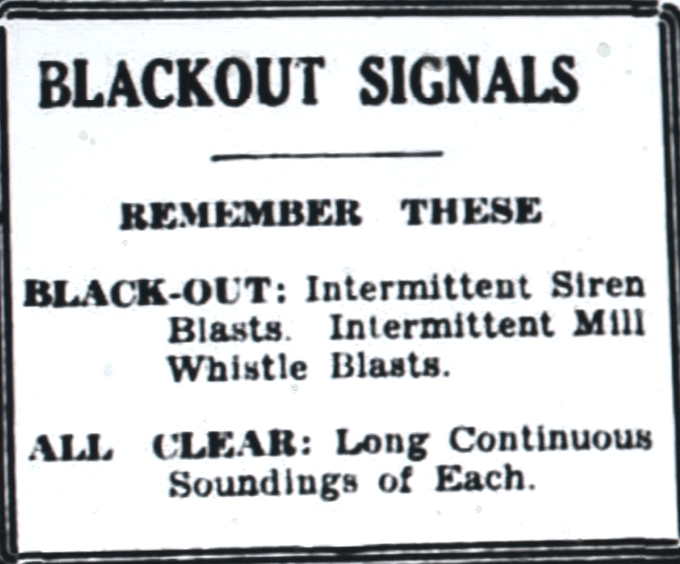
Notification of blackout signals for Dungog area [Dungog Chronicle, 26 June 1942]
Key Event – July 1942:
– Australian forces begin battles against the Japanese along the Kokoda Track in Papua New Guinea.
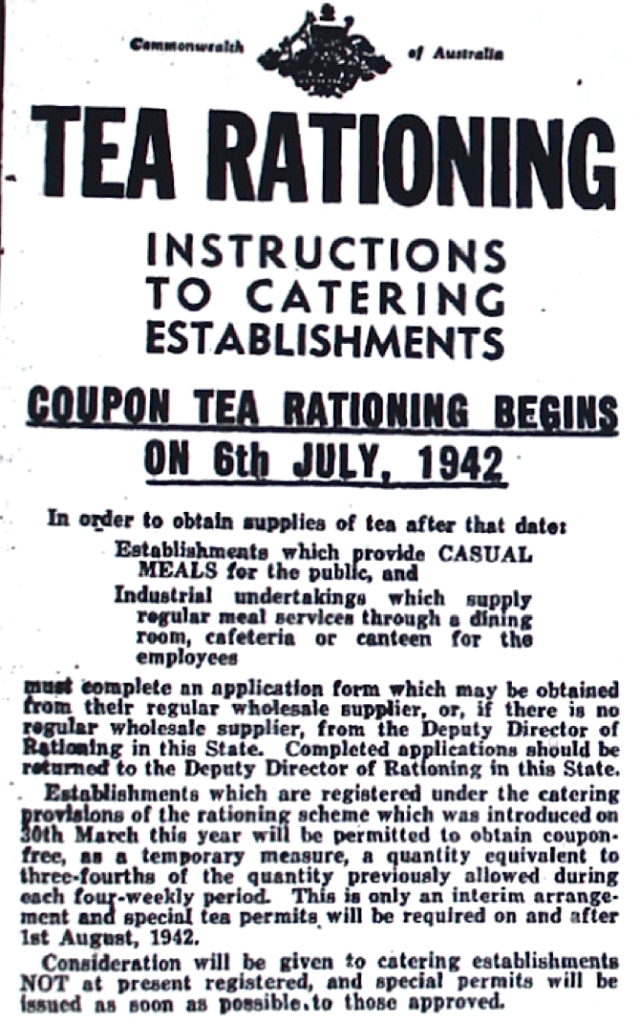
Tea rationing introduced [Raymond Terrace Examiner and Lower Hunter and Port Stephens Advertiser, 2 July 1942]
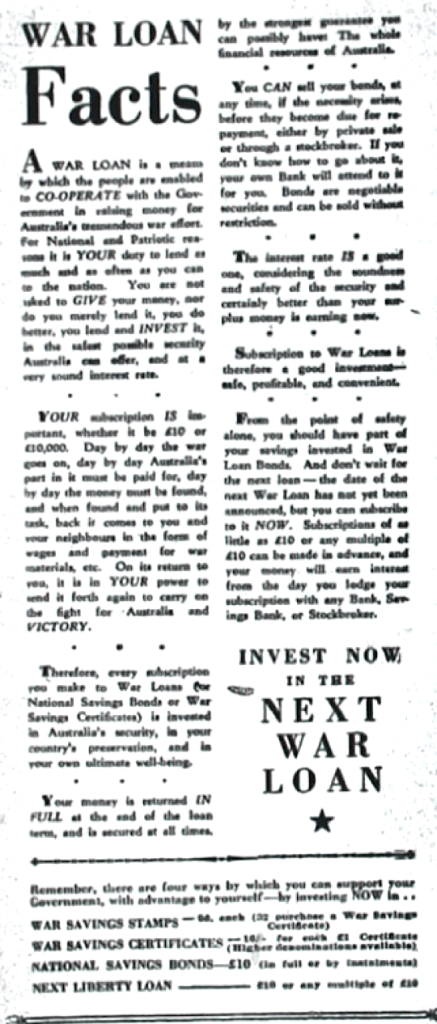
Invitation to purchase War Savings Stamps and other loan products [Raymond Terrace Examiner and Lower Hunter and Port Stephens Advertiser, 22 July 1942]
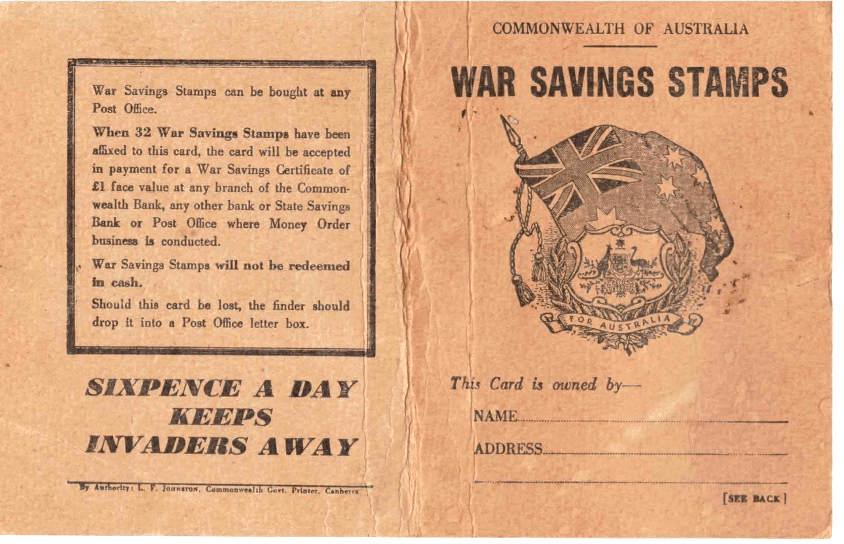
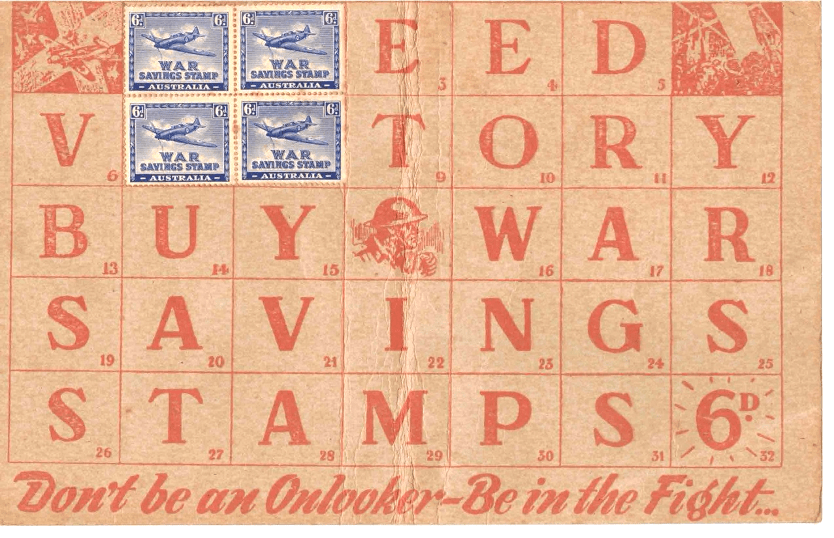
War Saving Stamp folder and 6 penny stamps [Author photos]
Key Event – August: 1943:
– Australian troops and airmen battle the Japanese at Milne Bay in Papua New Guinea.
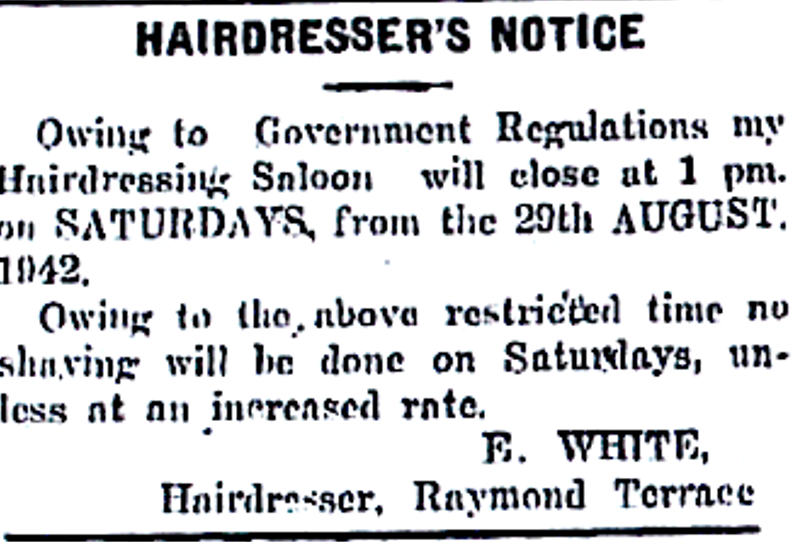
Restrictions introduced for hairdressers [Raymond Terrace Examiner and Lower Hunter and Port Stephens Advertiser, 20 August 1942]
Key Event – October 1942:
– Australian troops take part in the Second Battle of El Alamein in Egypt, defeating German and Italian forces.
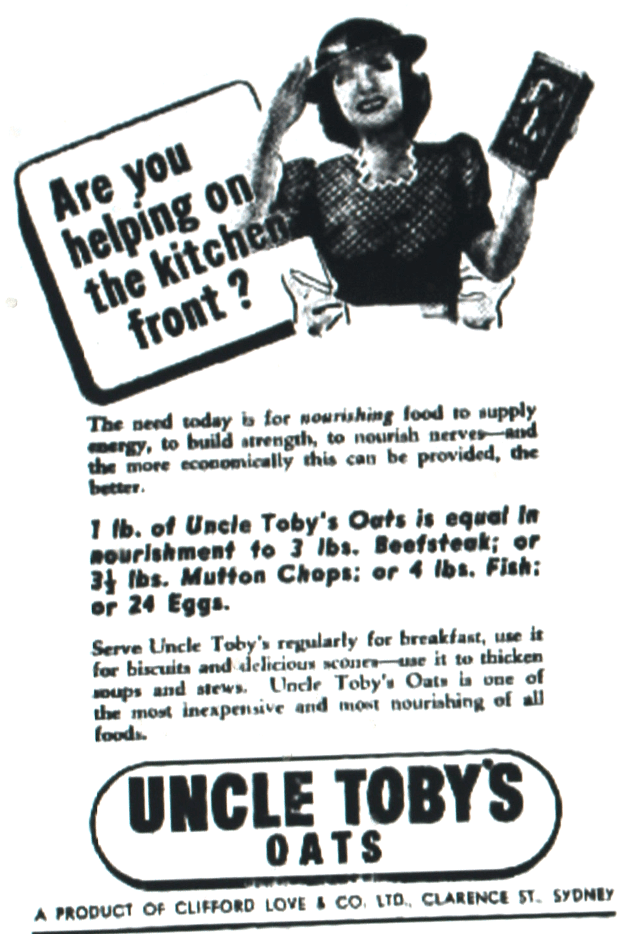
Preparing nourishing home meals helped the war effort [Dungog Chronicle, 2 October 1942]
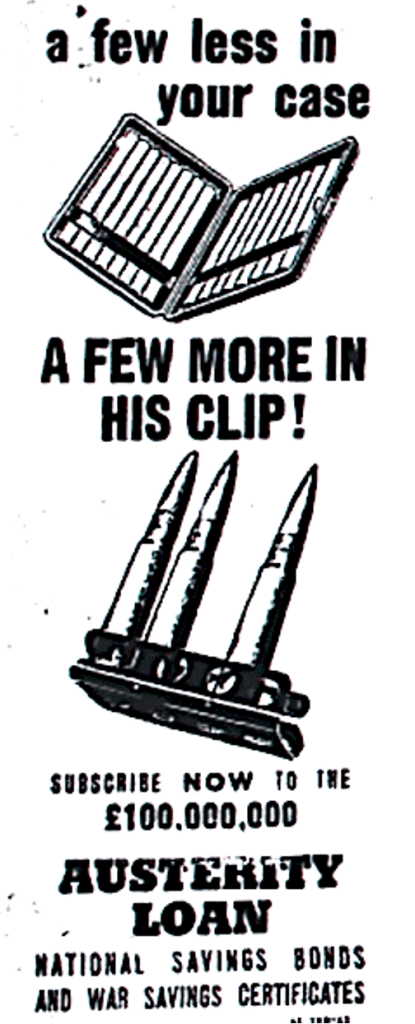
Invitation to invest in Austerity Loan [Raymond Terrace Examiner and Lower Hunter and Port Stephens Advertiser, 8 October 1942]
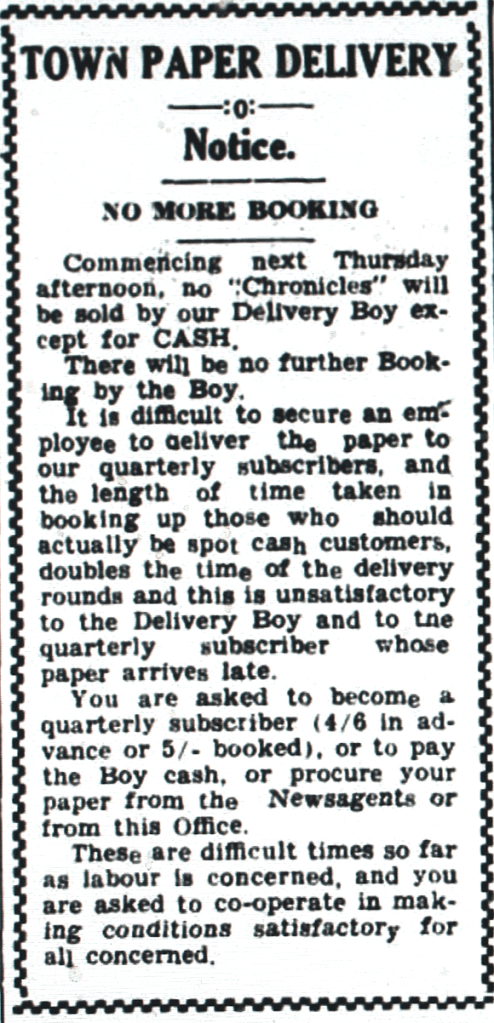
Labour shortage led to town paper delivery [Dungog Chronicle, 9 October 1942]
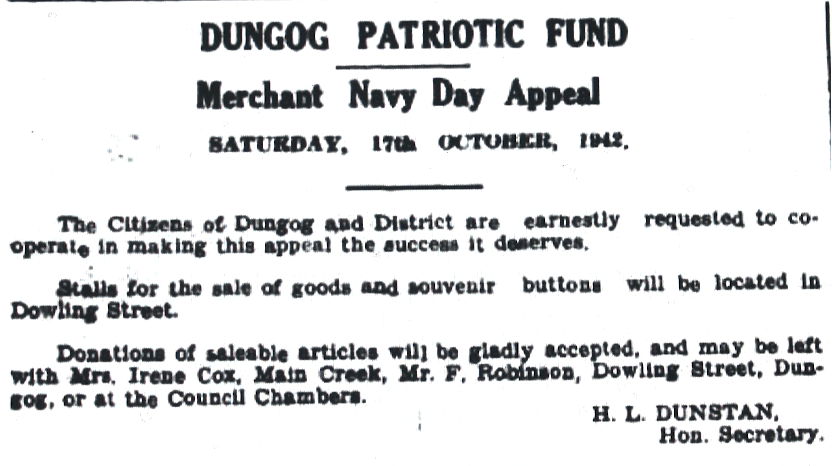
Dungog Patriotic Fund launched a Merchant Navy Day Appeal [Dungog Chronicle, 16 October 1942]
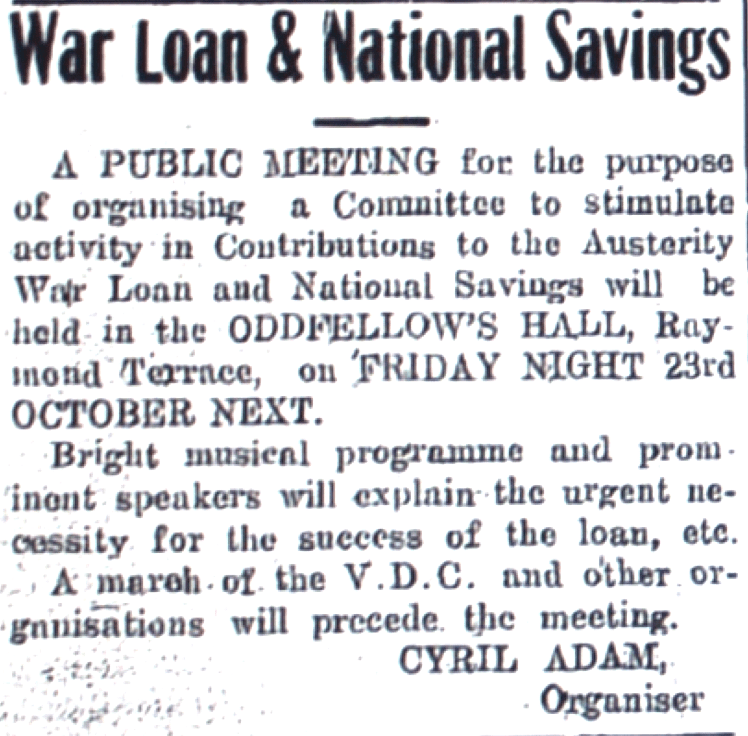
A War Loan and National Savings meeting organised at Raymond Terrace [Raymond Terrace Examiner and Lower Hunter and Port Stephens Advertiser, 22 October 1942]
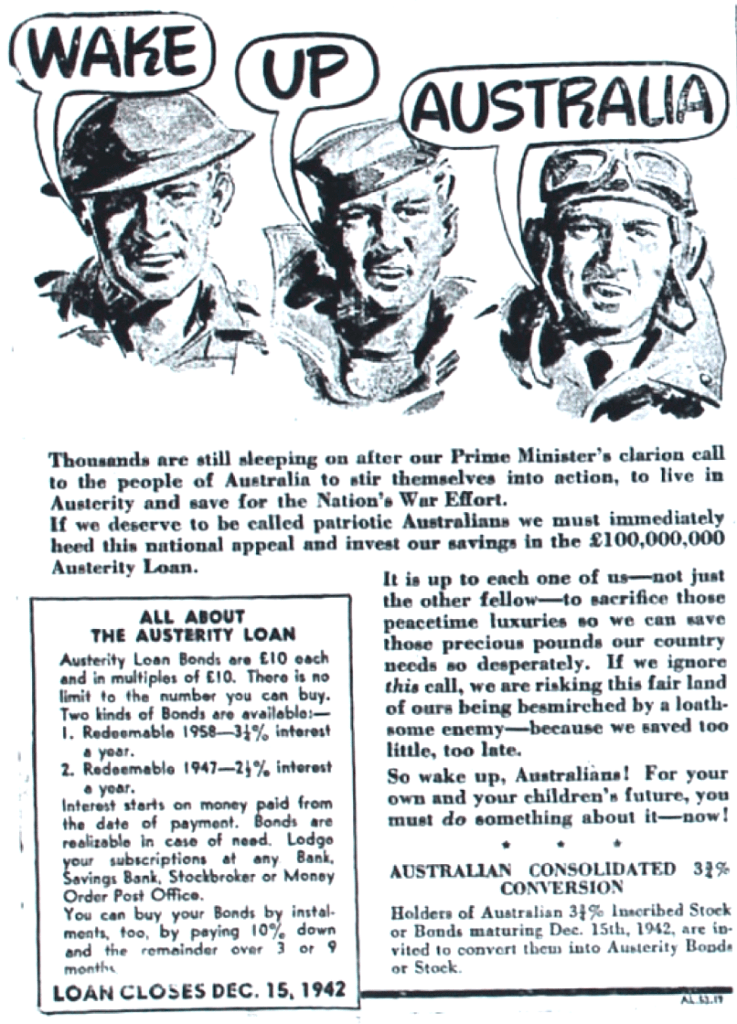
Invitation to invest in the Austerity Loan [Raymond Terrace Examiner and Lower Hunter and Port Stephens Advertiser, 5 November 1942]
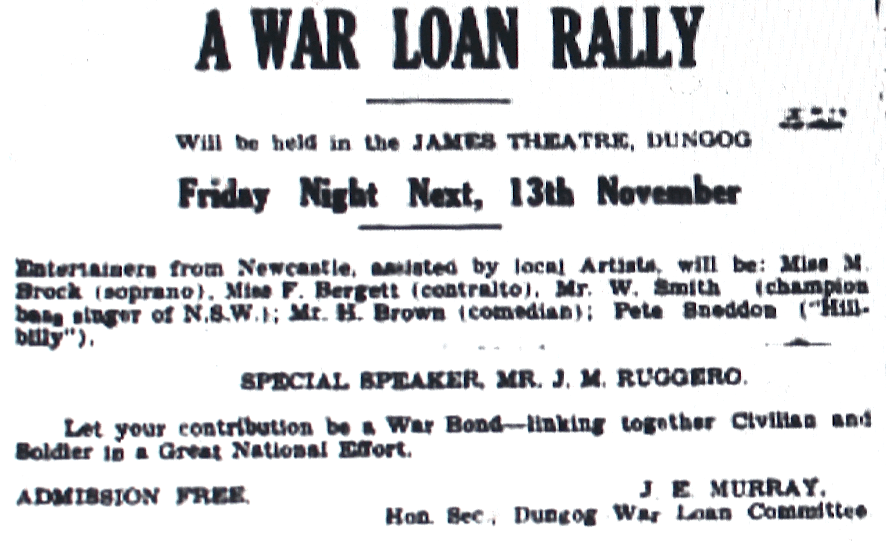
War Loan Rally held at Dungog [Dungog Chronicle, 13 November 1942]
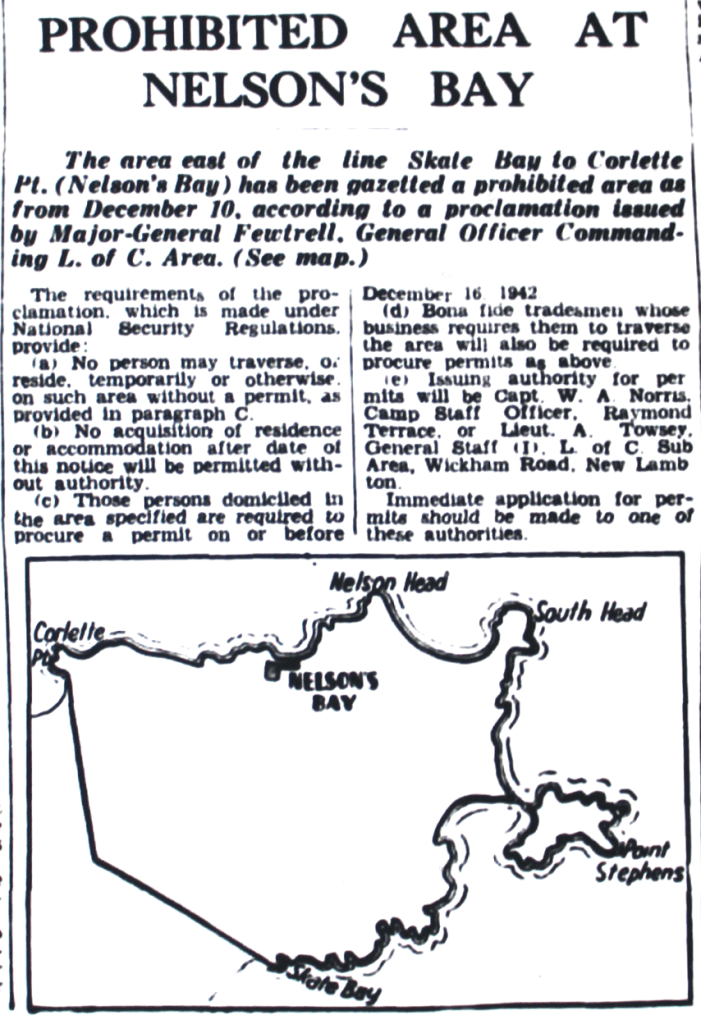
Prohibited area proclaimed in Nelson Bay area reserved entirely for military purposes. The restrictions remained in place for 11 months and were withdrawn in November 1943 [Newcastle Sun, 12 December 1942]
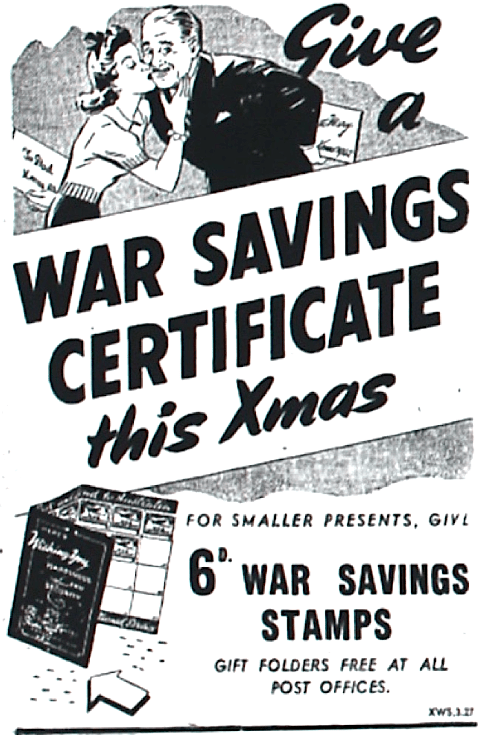
Invitation to purchase War Saving Stamps [Raymond Terrace Examiner and Lower Hunter and Port Stephens Advertiser, 17 December 1942]
Key Event – January 1943:
– Final Australian Army units arrive back in Australia from the Mediterranean.
Key Event – February 1943:
– Australian Government decides to conscripts to serve overseas.
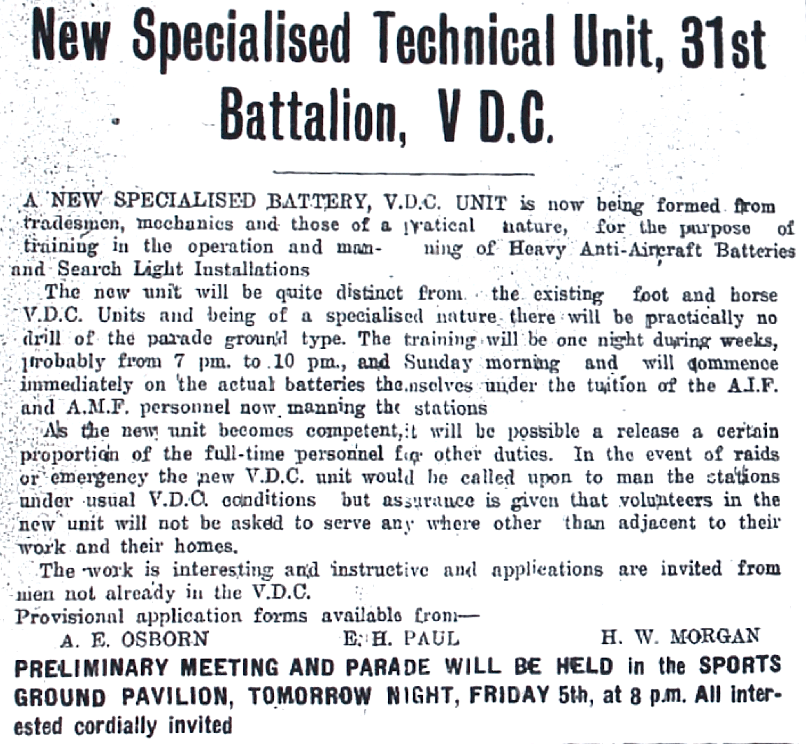
New Technical Unit of the V. D. C [Volunteer Defence Corps]formed at Raymond Terrace [Raymond Terrace Examiner and Lower Hunter and Port Stephens Advertiser, 4 March 1943]
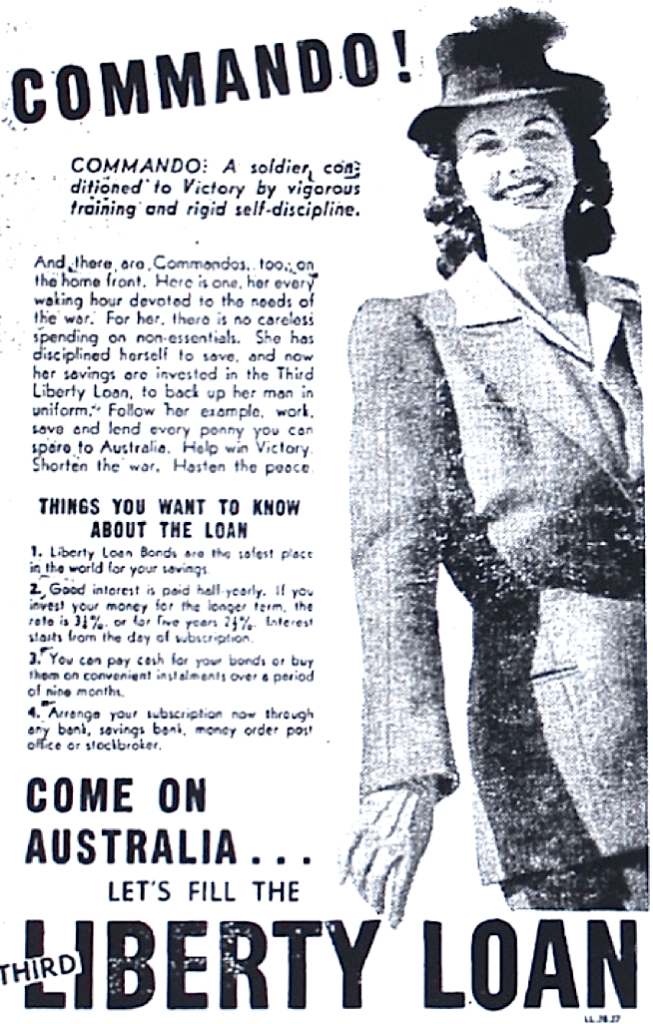
Invitation to invest in the Third Liberty Loan [Raymond Terrace Examiner and Lower Hunter and Port Stephens Advertiser, 25 March 1943]
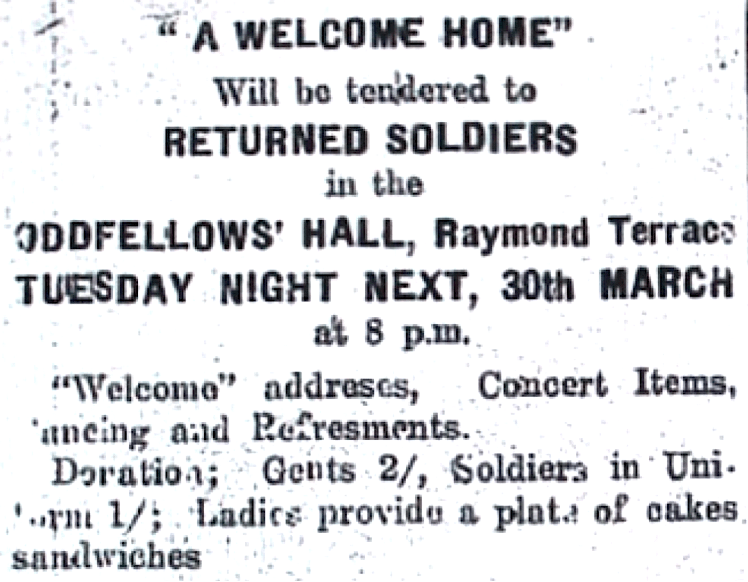
Welcome Home function for returning soldiers held at Raymond Terrace [Raymond Terrace Examiner and Lower Hunter and Port Stephens Advertiser, 25 March 1943]
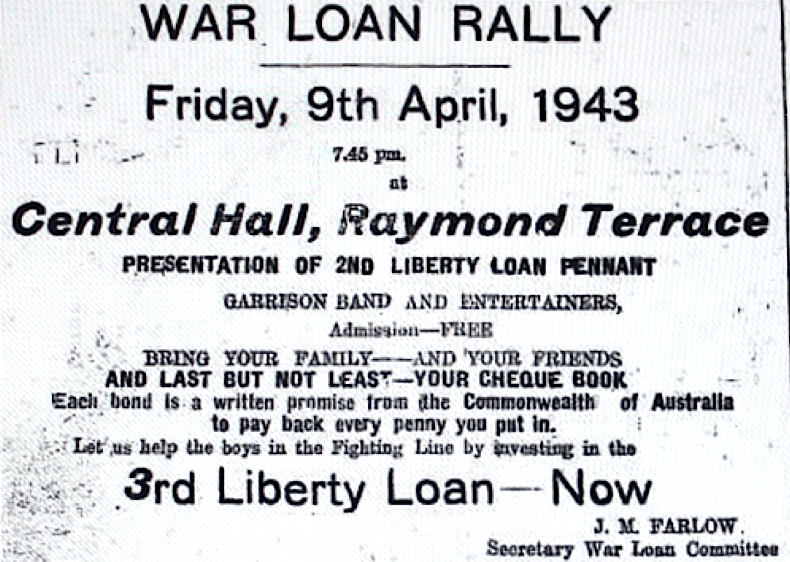
War Loan Rally for Third Liberty Loan held at Raymond Terrace [Raymond Terrace Examiner and Lower Hunter and Port Stephens Advertiser, 1 April 1943]
Key Event – May 1943:
– The Battle of the Atlantic reaches its turning point in favour of the Allies.
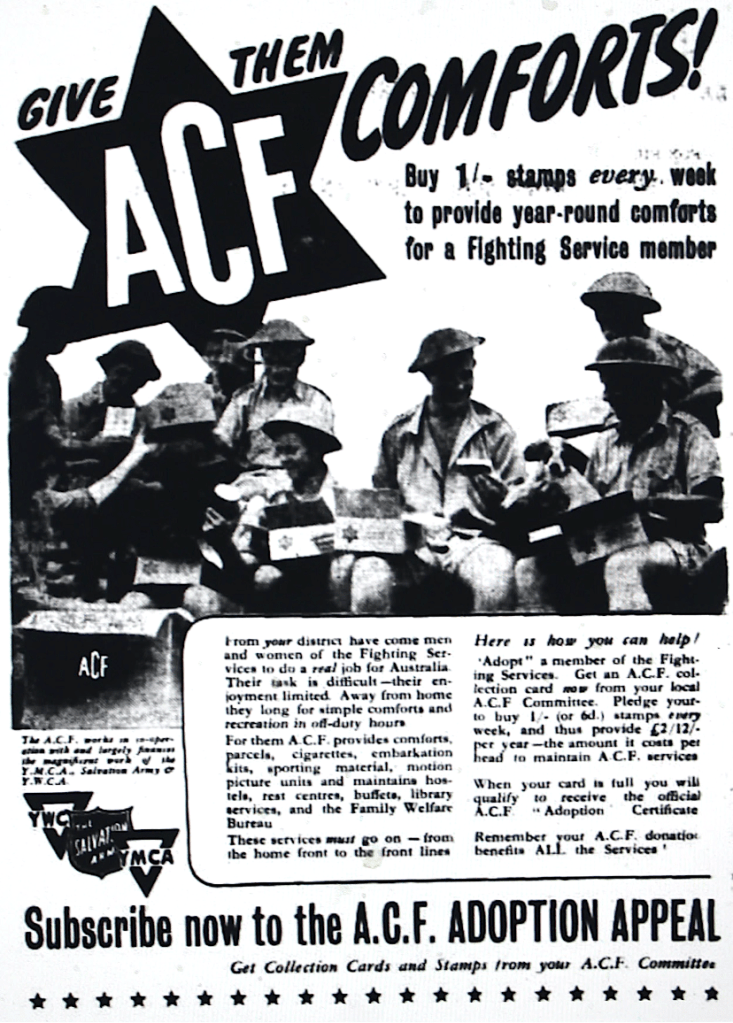
Subscriptions invited to the Australian Comforts Fund Adoption Appeal [Dungog Chronicle 21 May 1943]
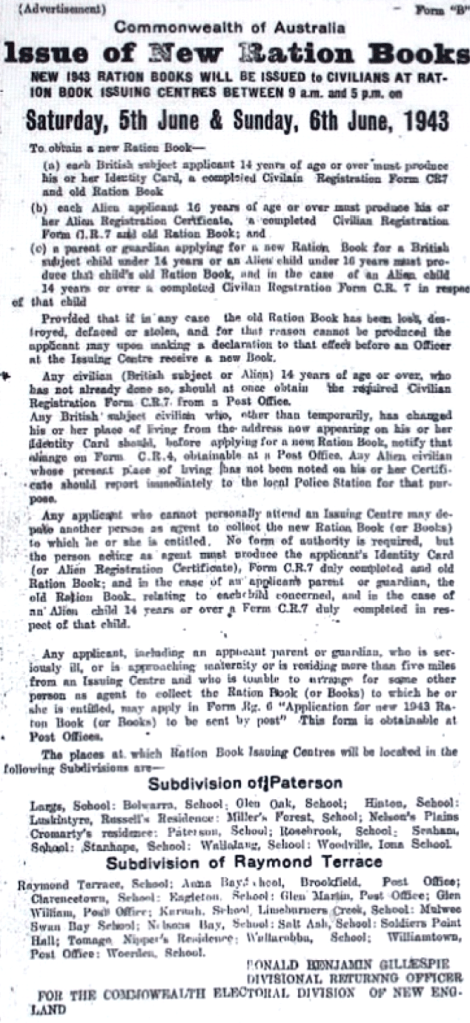
Issue of new Ration Books [Raymond Terrace Examiner and Lower Hunter and Port Stephens Advertiser, 3 June 1943]
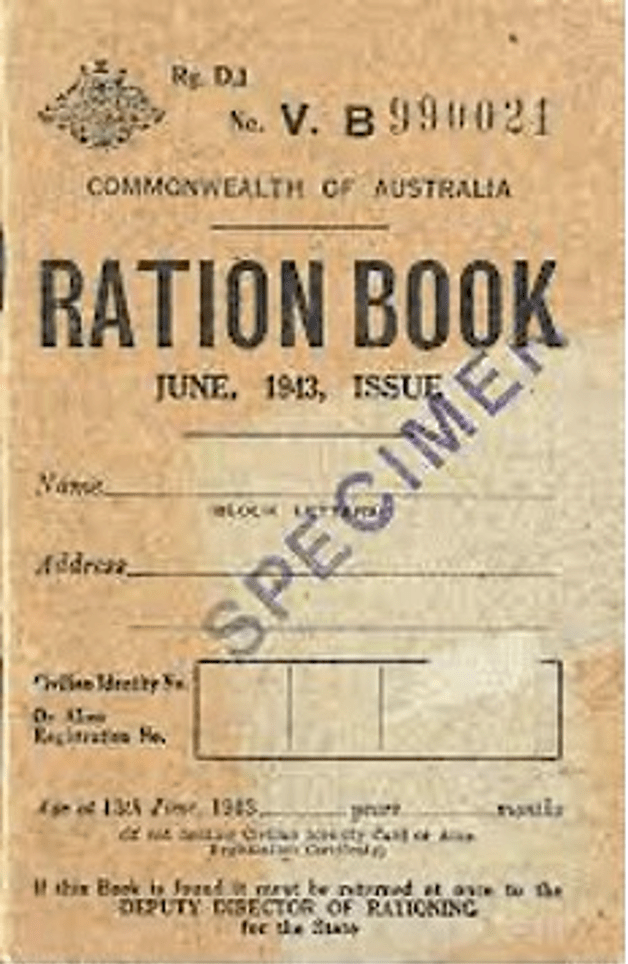
1943 Ration Book cover
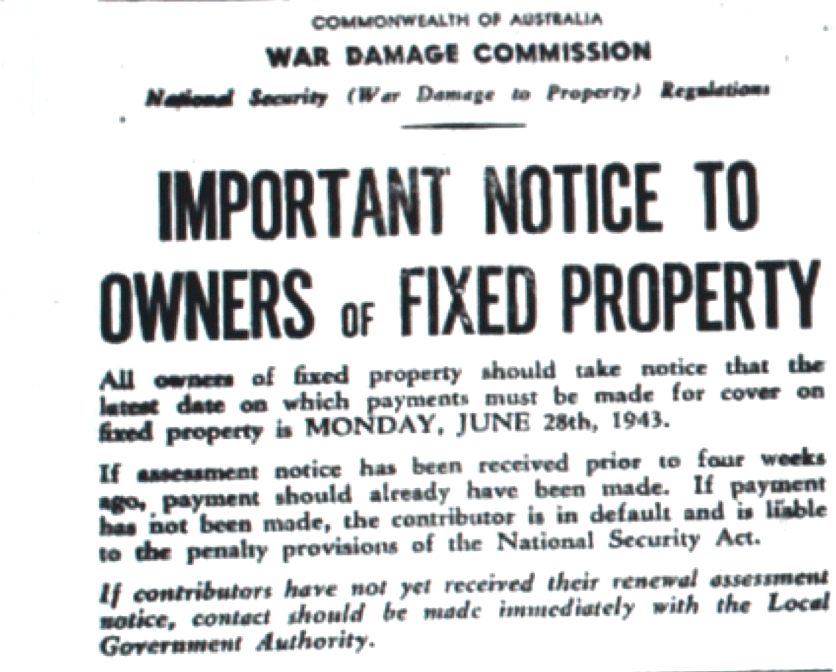
Payment required for war damage property insurance [Raymond Terrace Examiner and Lower Hunter and Port Stephens Advertiser, 24 June 1943]
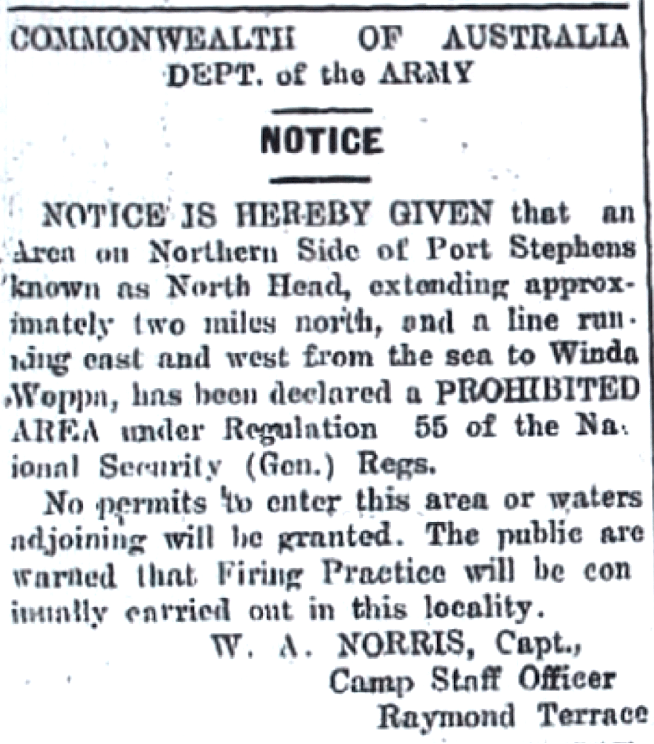
Northern side of Port Stephens declared an exclusion zone for military purposes [Raymond Terrace Examiner and Lower Hunter and Port Stephens Advertiser, 8 July 1943
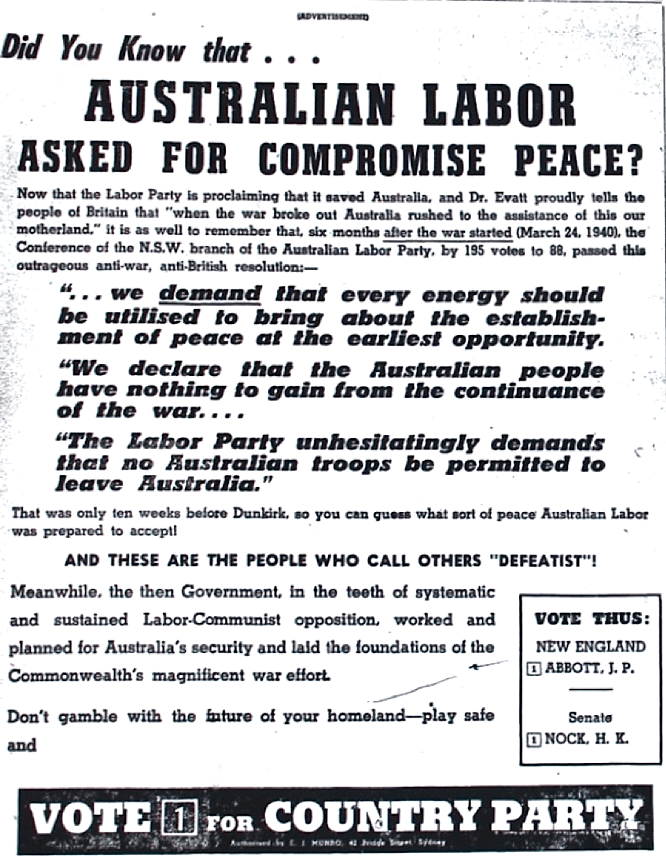
The politics of war [Raymond Terrace Examiner and Lower Hunter and Port Stephens Advertiser, 29 July 1943]
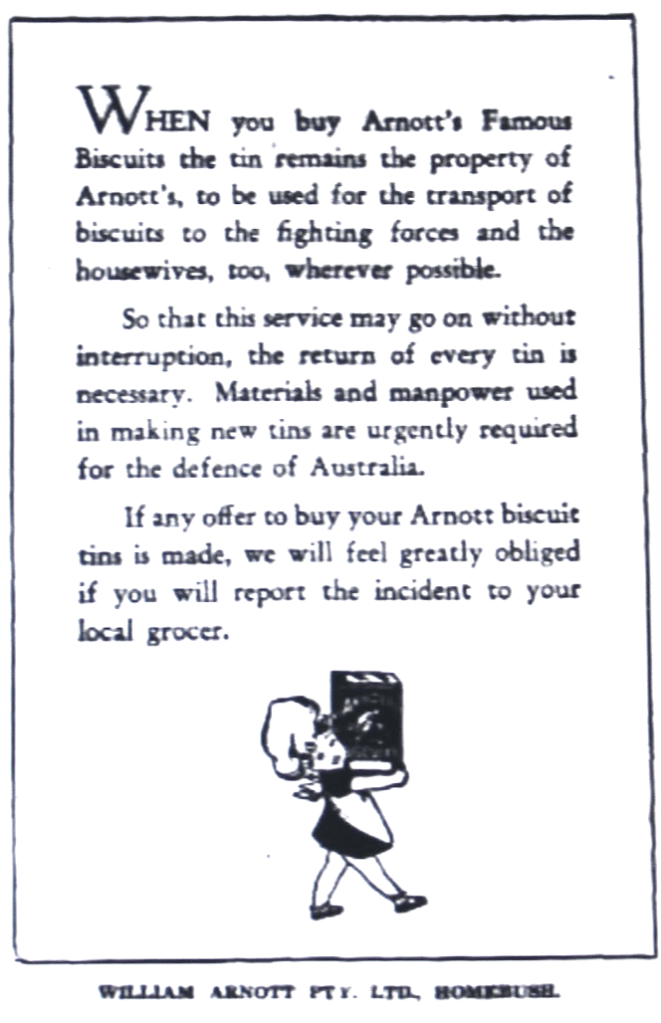
Arnott’s biscuits issued a war time warning regarding the return of their tins after use [Dungog Chronicle, 20 August 1943]
Key Events – September 1943:
– John Curtin continues as Australian prime minister after the Labor government wins the federal election.
– United States and Australian forces capture Lae in Papua New Guinea, continuing to push back the Japanese.
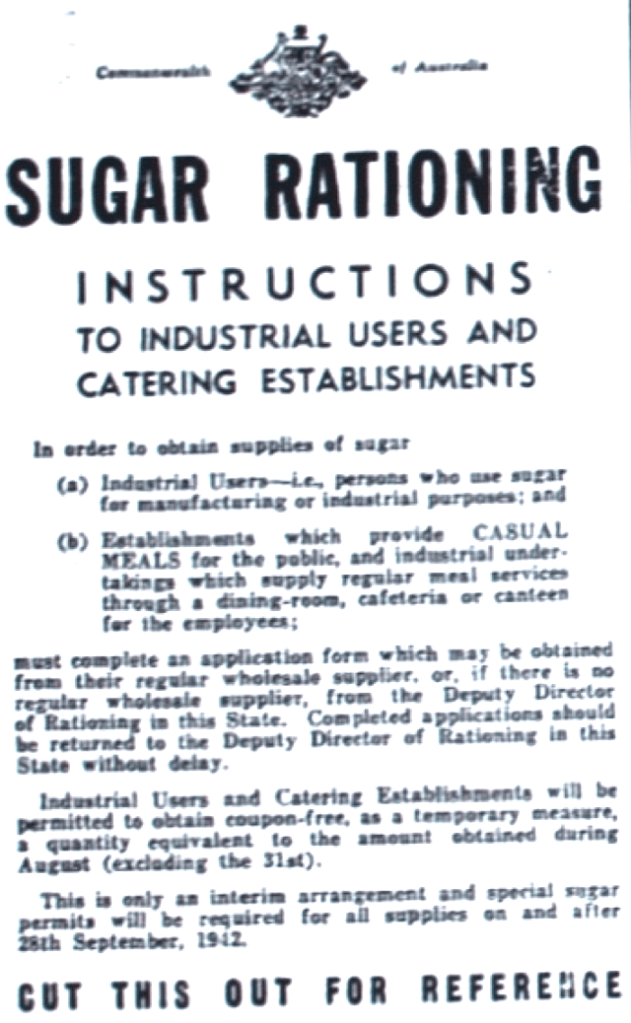
Sugar rationing introduced [Raymond Terrace Examiner and Lower Hunter and Port Stephens Advertiser, 3 September 1943]
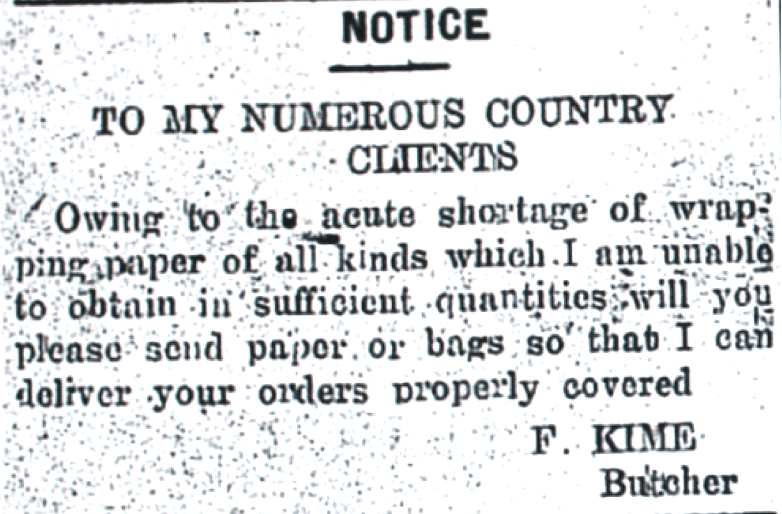
Raymond Terrace butcher experienced delivery paper shortage [Raymond Terrace Examiner and Lower Hunter and Port Stephens Advertiser, 10 September 1943]
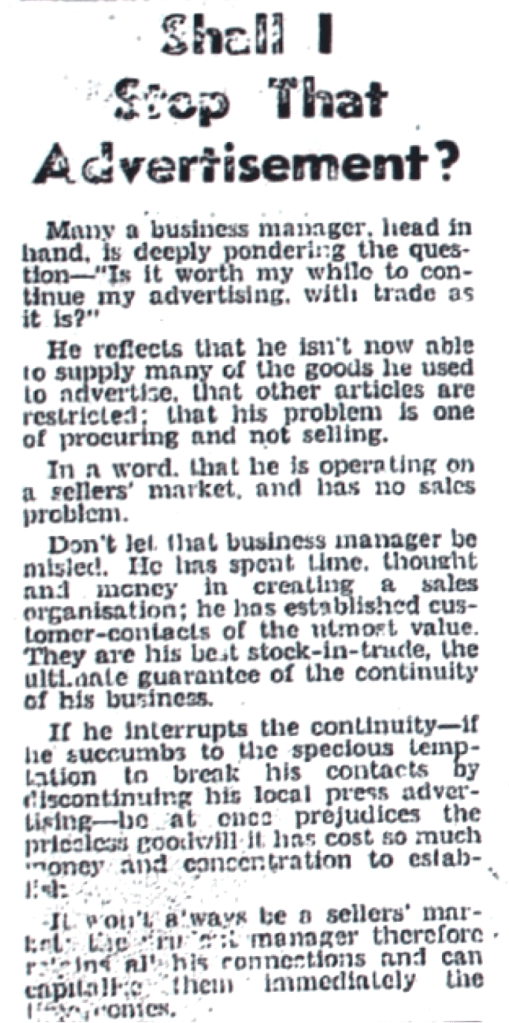
Newspaper proprietor requests business owners not to cancel advertising [Raymond Terrace Examiner and Lower Hunter and Port Stephens Advertiser, 17 September 1943]
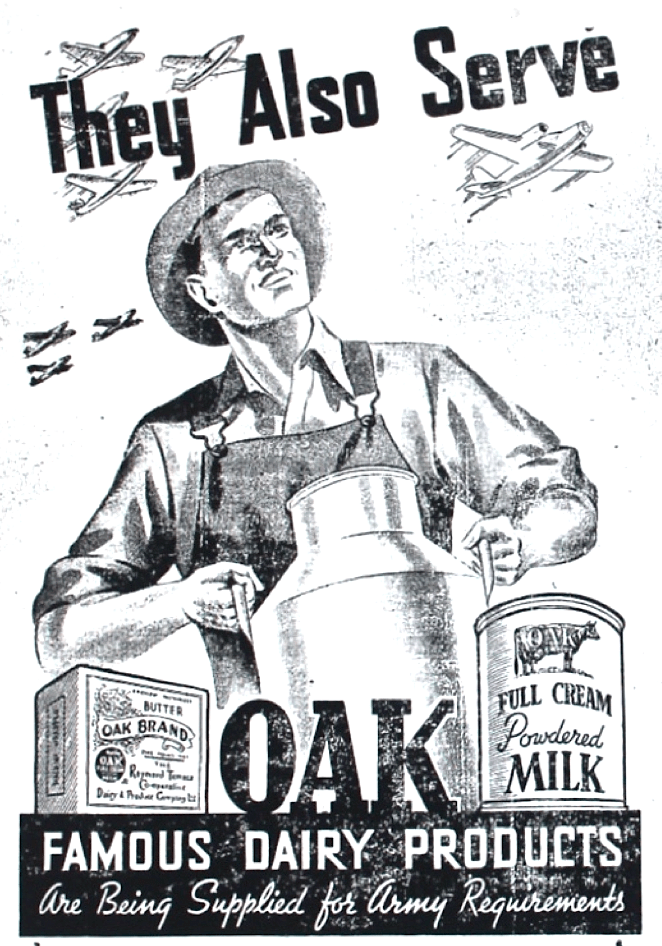
Oak milk factory at Hexham promoted the sale of their products to the Army [Raymond Terrace Examiner and Lower Hunter and Port Stephens Advertiser, 30 September 1943]
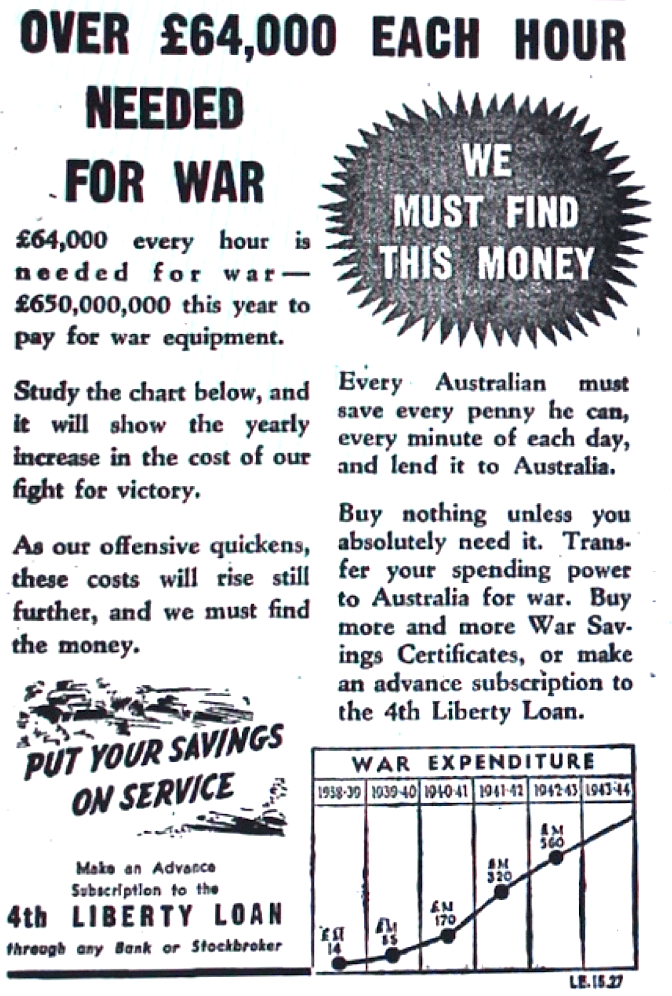
Invitation to invest in the fourth Liberty Loan [Raymond Terrace Examiner and Lower Hunter and Port Stephens Advertiser, 30 September 1943]
Key Event – October 1943:
– Australian forces defeat the Japanese as the Battle of Finschhafen in Papua New Guinea ends.
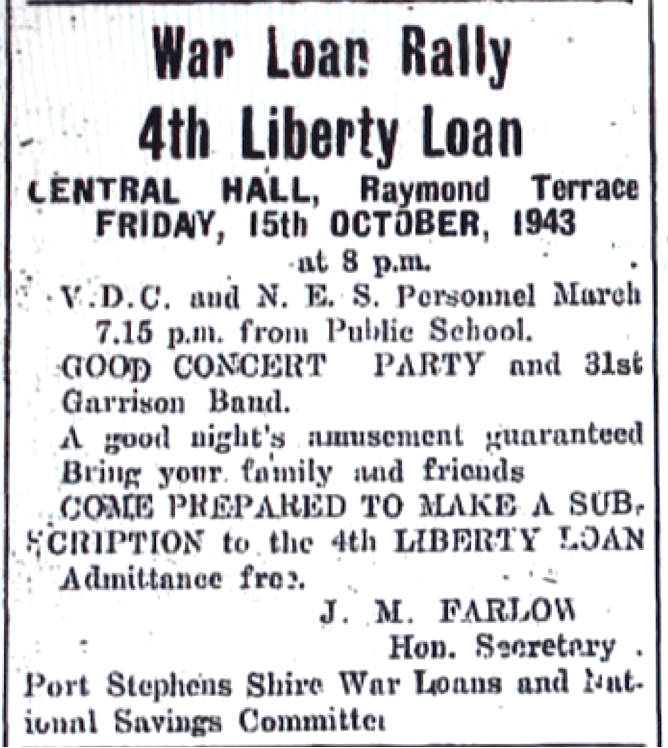
War Loan Rally held at Raymond Terrace [Raymond Terrace Examiner and Lower Hunter and Port Stephens Advertiser, 7 October 1943]
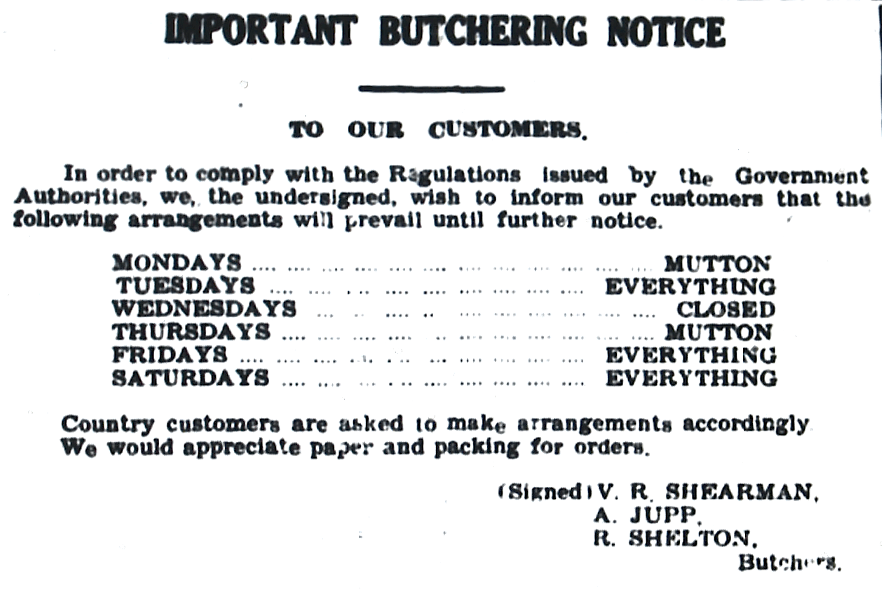
Raymond Terrace butcher announces reduced trading hours due to Government wartime regulations [Dungog Chronicle, 5 November 1943]
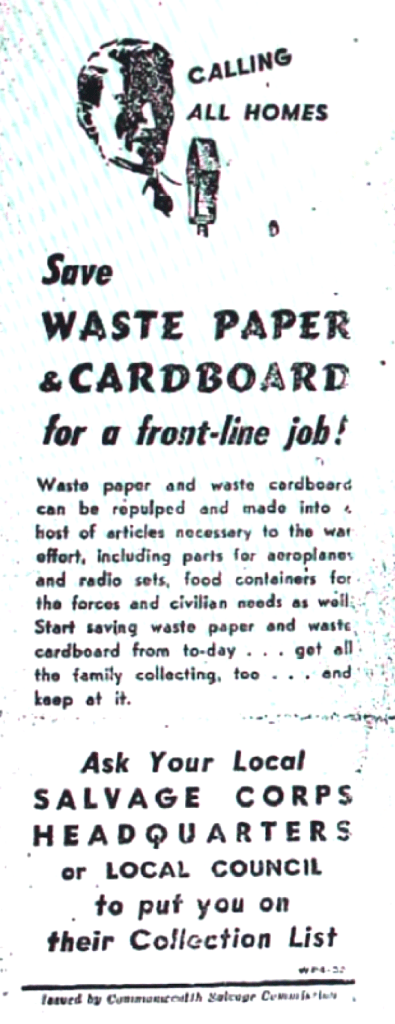
Residents urged to donate wastepaper and cardboard for war effort [Raymond Terrace Examiner and Lower Hunter and Port Stephens Advertiser, 23 December 1943]
Key Event – January 1944:
– The war enters its 5th year.
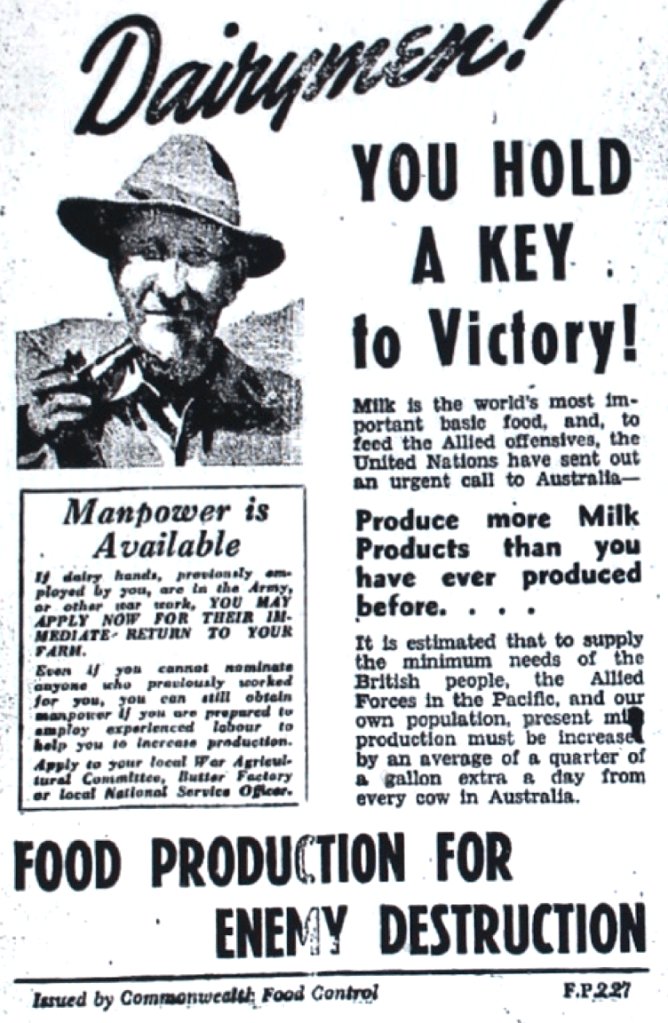
Government releases manpower to foster dairy farm production [Raymond Terrace Examiner and Lower Hunter and Port Stephens Advertiser, 6 January 1944]
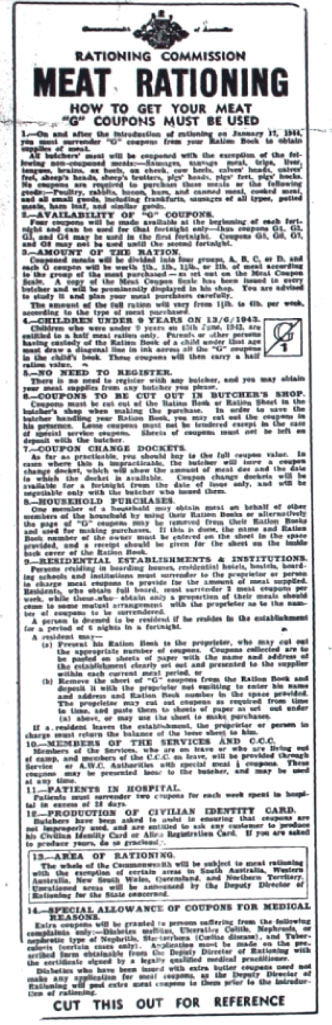
Meat rationing regulations [Raymond Terrace Examiner and Lower Hunter and Port Stephens Advertiser, 13 January 1944]
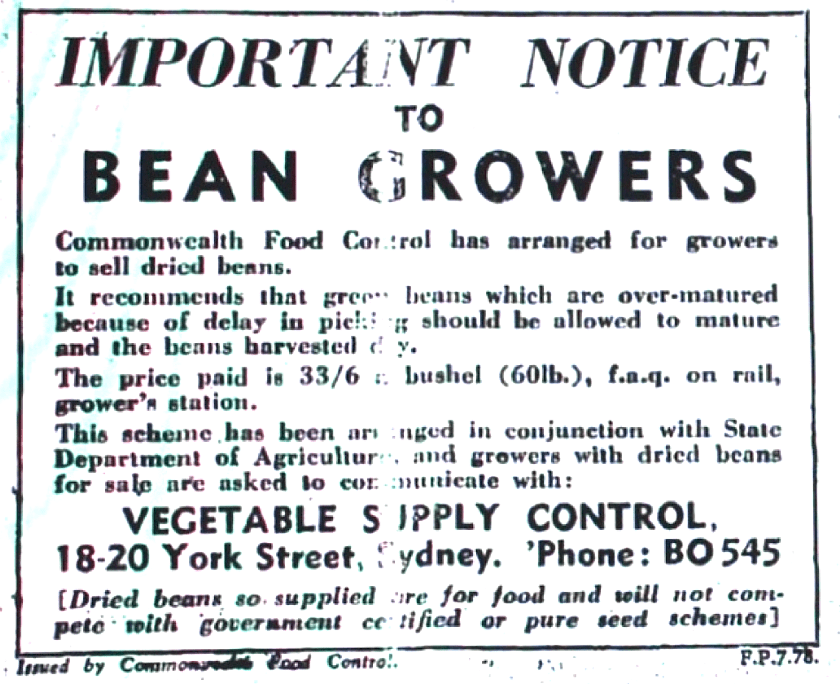
Arrangement for war time bean sales [Raymond Terrace Examiner and Lower Hunter and Port Stephens Advertiser, 13 January 1944]
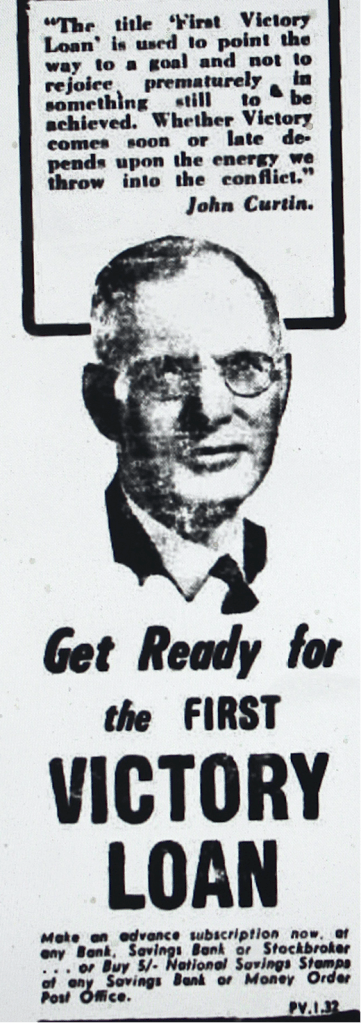
Image of John Curtin, Prime Minister, utilised as means of encouraging investment in the First Victory Loan [Dungog Chronicle, 21 January 1944]
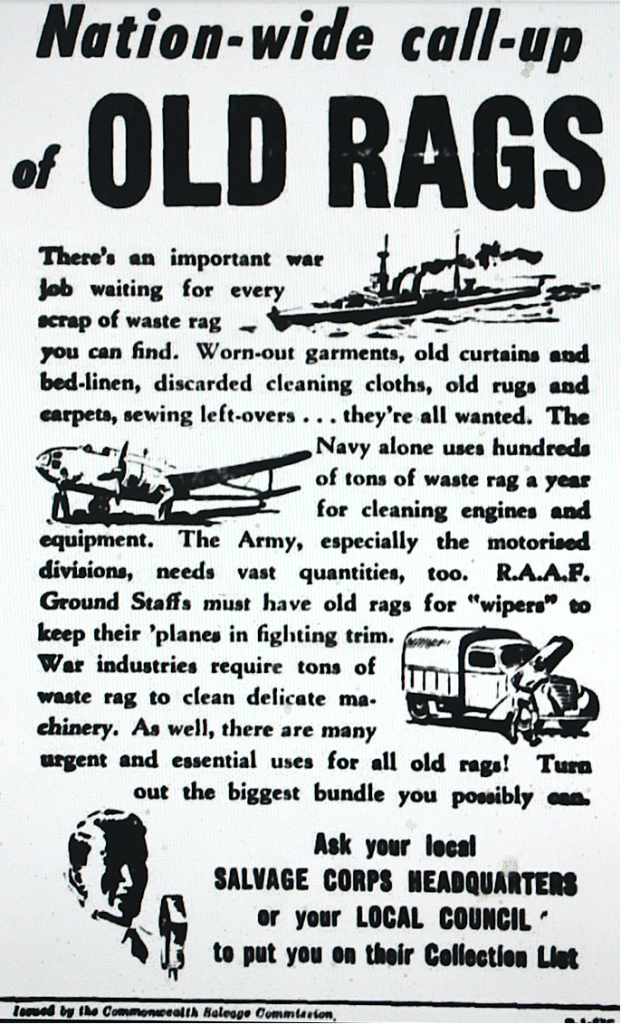
Call for old rags for military use [Dungog Chronicle, 17 March 1944]
Key Event – April 1944:
– The Australians push back the Japanese and liberate Huon peninsula in Papua New Guinea.
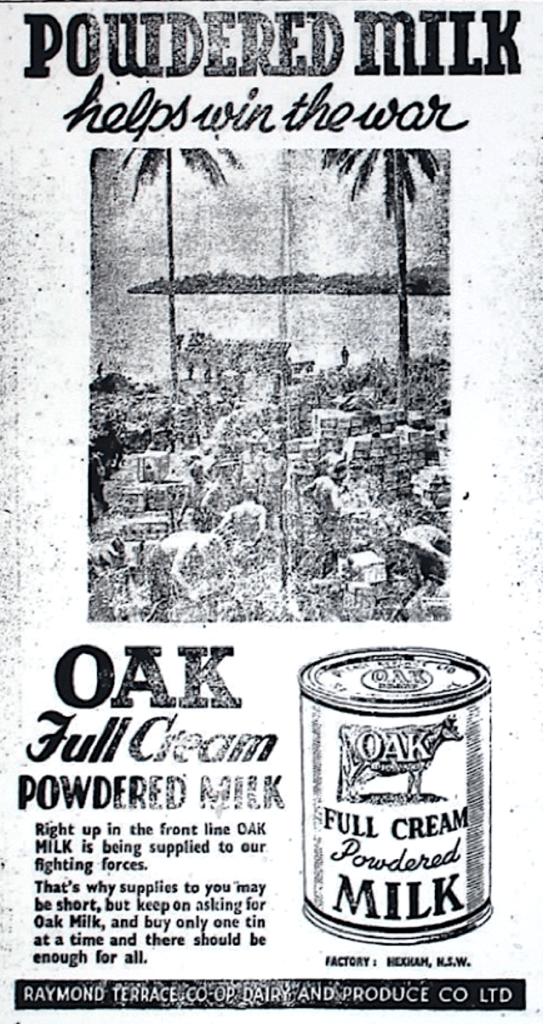
Powdered milk produced at Hexham was helping to win the war [Raymond Terrace Examiner and Lower Hunter and Port Stephens Advertiser, 4 May 1944]
Key Event – June 1944:
– D-Day (6 June). Allied forces launch an invasion of France to liberate the country from German control.
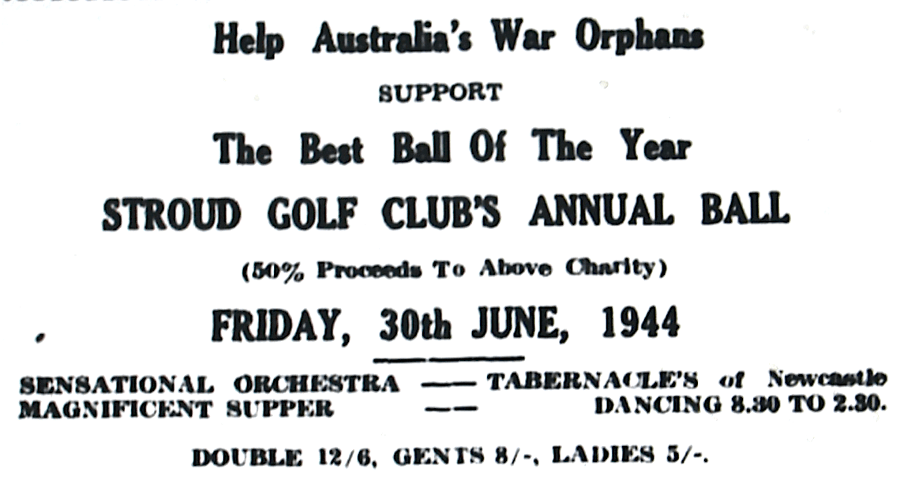
Ball held at Stroud to support Australia’s War Orphans [Dungog Chronicle, 9 June 1944]
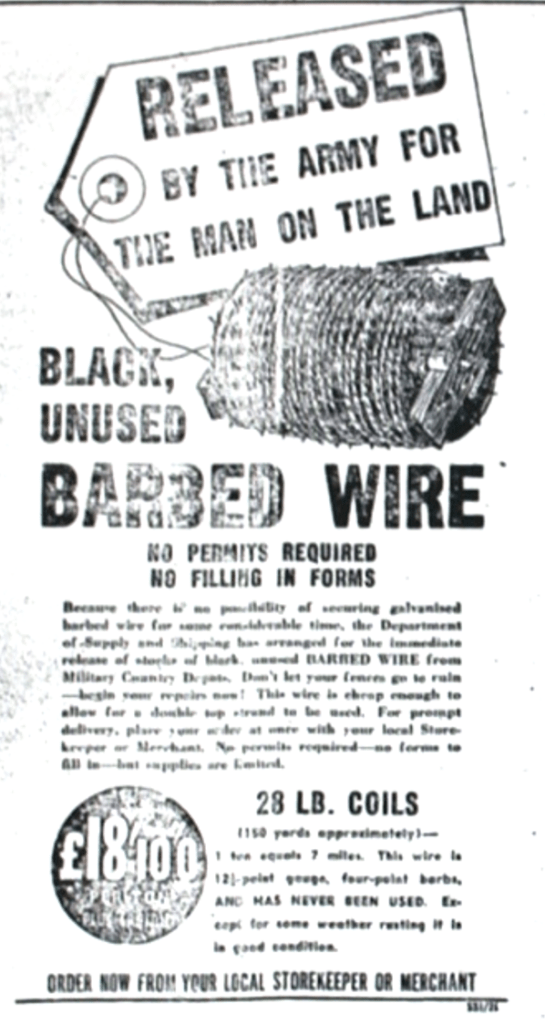
Surplus military barbed wire offered for sale [Raymond Terrace Examiner and Lower Hunter and Port Stephens Advertiser, 13 July 1944]
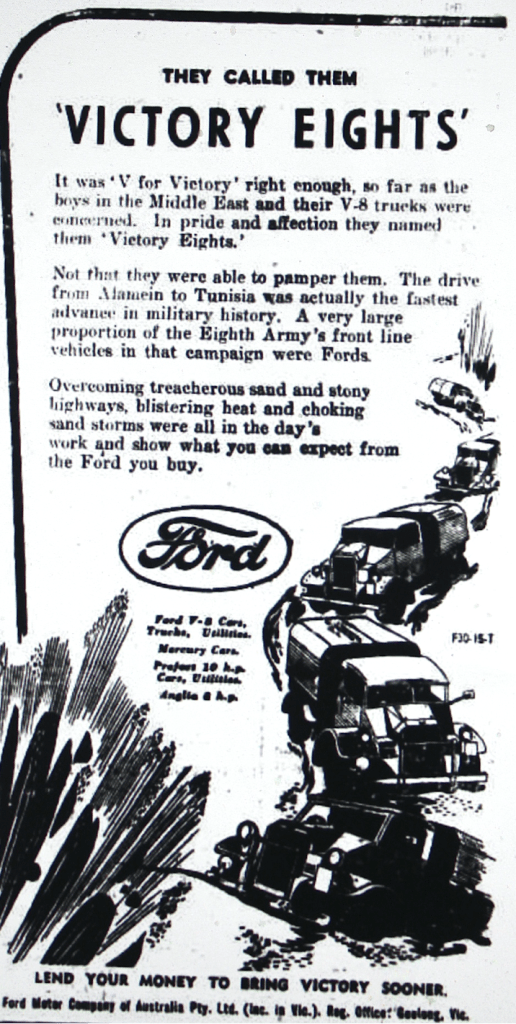
Ford used the success of their trucks during military action to promote their vehicles [Dungog Chronicle, 21 July 1944]
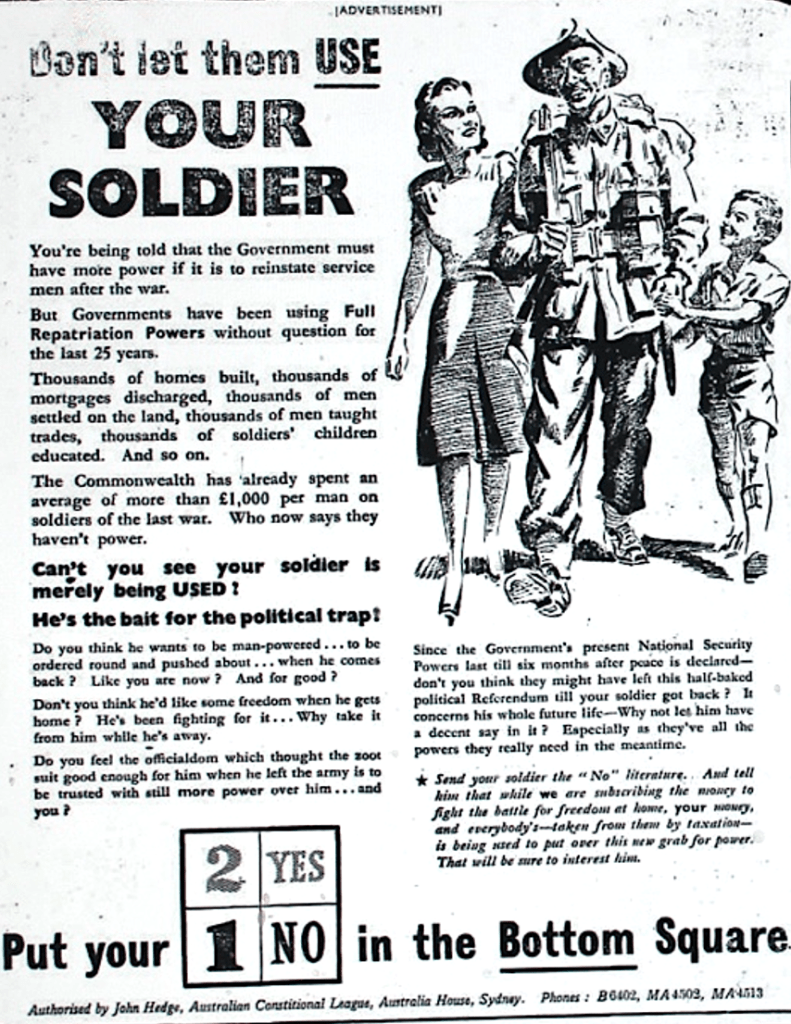
The politics of war [Raymond Terrace Examiner and Lower Hunter and Port Stephens Advertiser, 4 August 1944]
Key Events – October 1944:
– Start of the final campaigns to defeat Japanese forces on the island of New Guinea
– United States hands over control of the Bougainville Campaign to Australia.
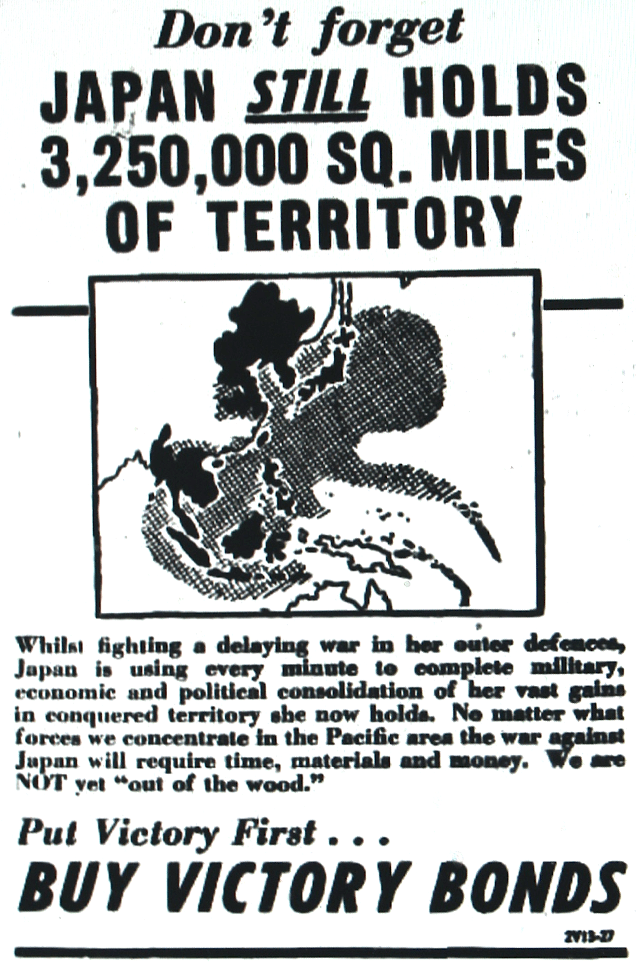
Invitation to invest in Victory Bonds [Dungog Chronicle, 20 October 1944]
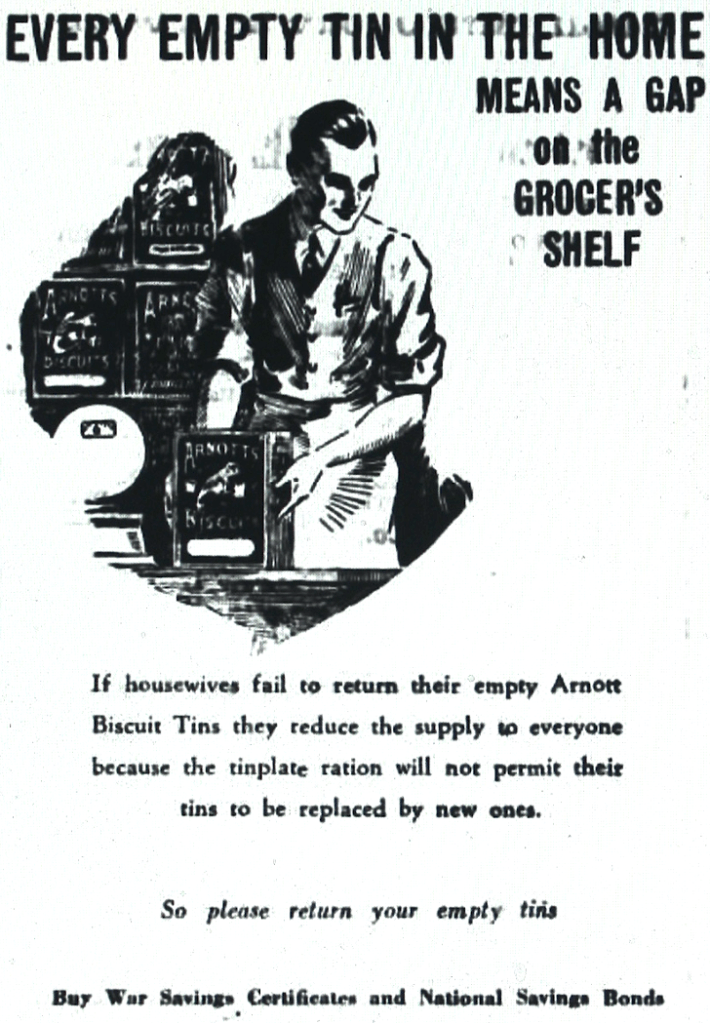
Arnott’s required the return of their biscuit tins after use as new ones could not be made [Dungog Chronicle, 24 November 1944]
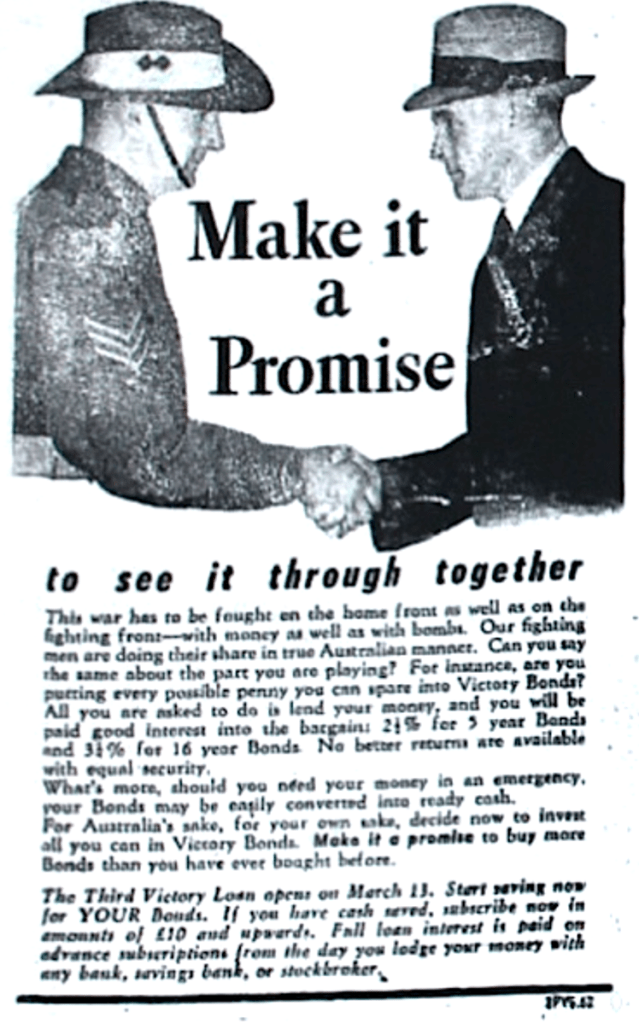
Investment sought in the Third Victory Loan [Raymond Terrace Examiner and Lower Hunter and Port Stephens Advertiser, 8 February 1945]
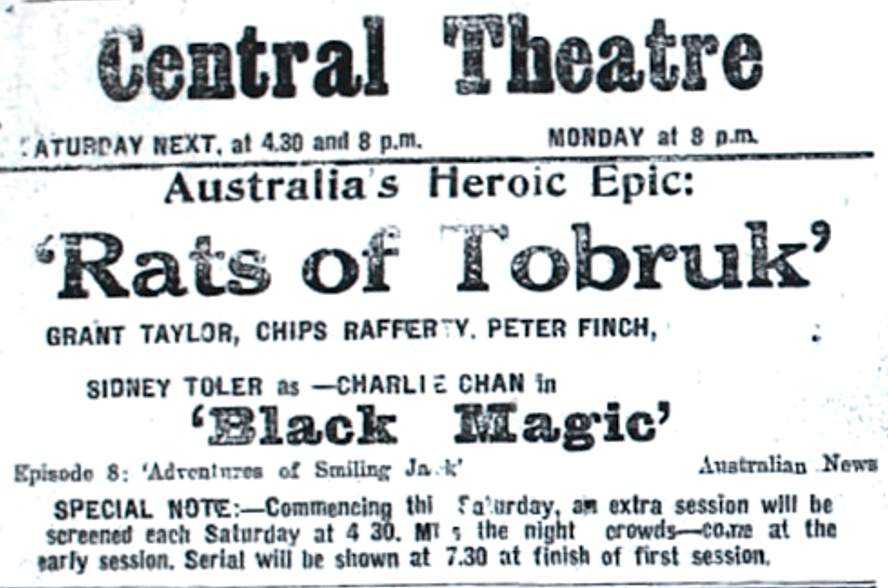
War themed movie hit the local Raymond Terrace picture theatre [Raymond Terrace Examiner and Lower Hunter and Port Stephens Advertiser, 15 February 1945]
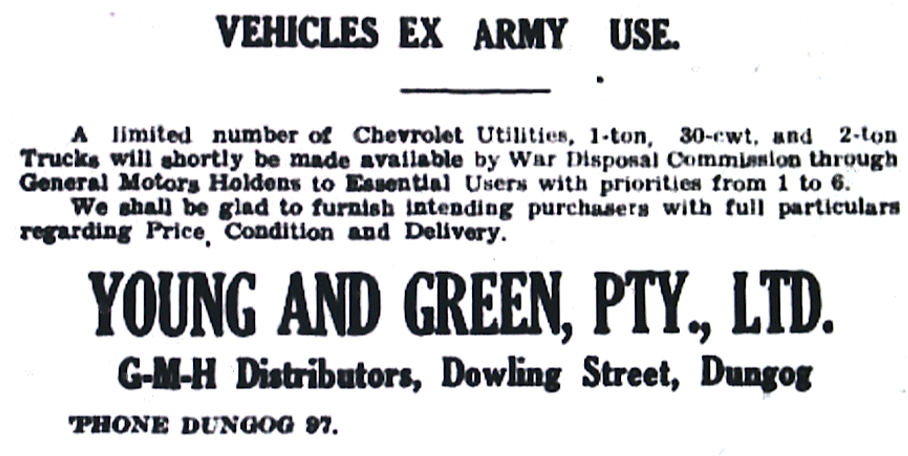
Surplus military vehicles become available for purchase [Dungog Chronicle, 16 February 1945]
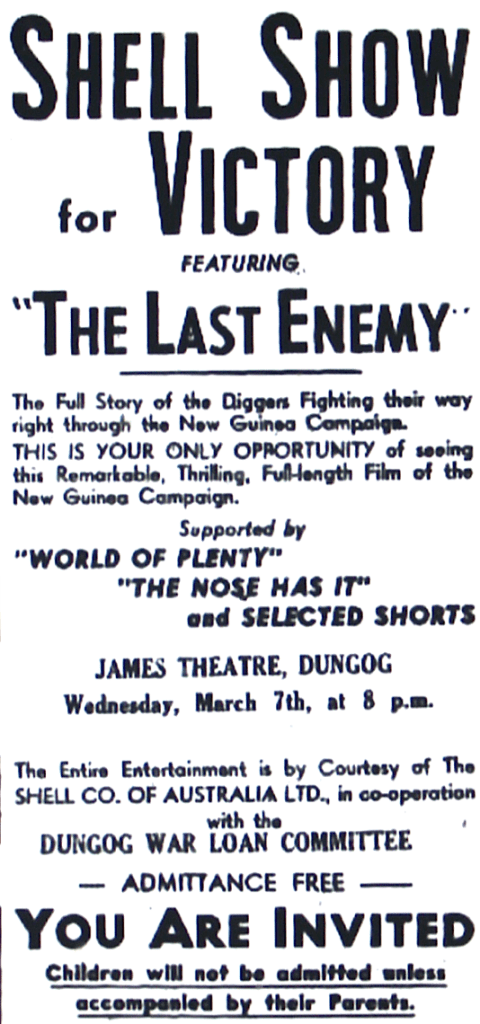
War themed movie promoted by the Dungog War Loan Committee [Dungog Chronicle, 2 March 1945]
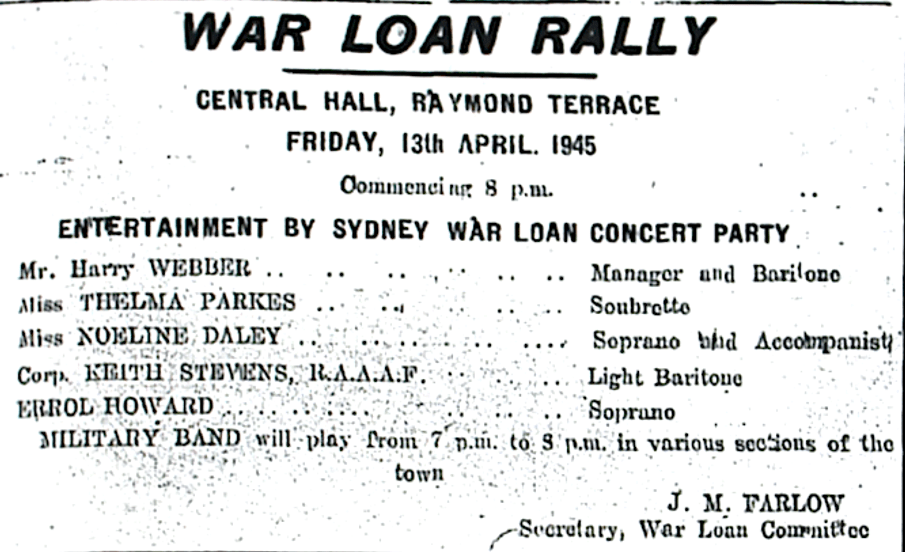
War Loan Rally and Concert at Raymond Terrace [Raymond Terrace Examiner and Lower Hunter and Port Stephens Advertiser, 22 March 1945]
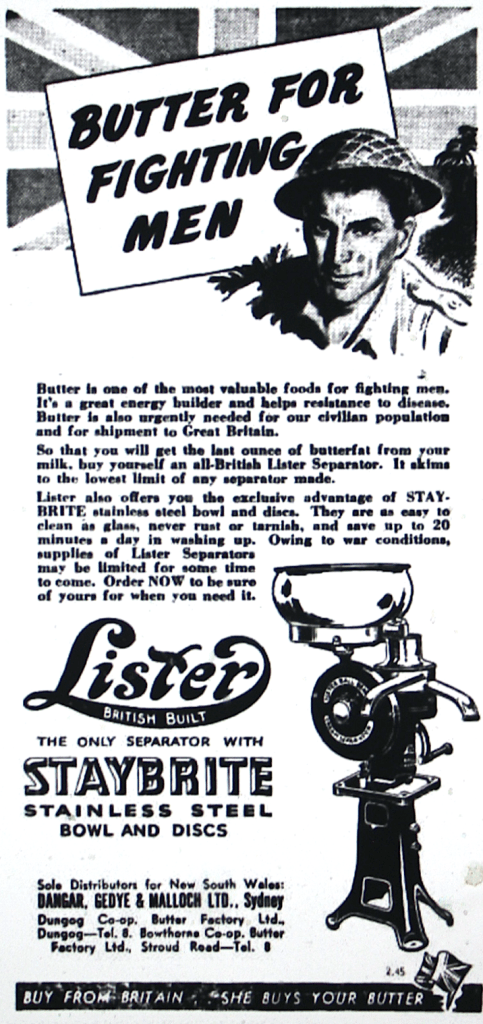
The British made dairy separator promoted as increasing production for war purposes [Dungog Chronicle, 6 April 1945]
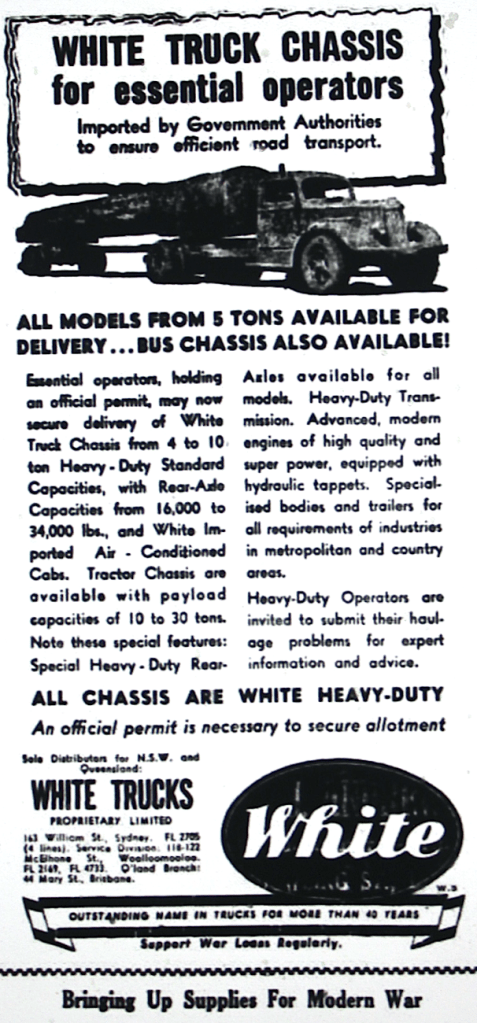
Permit required to buy Government imported trucks [Dungog Chronicle, 13 April 1945]
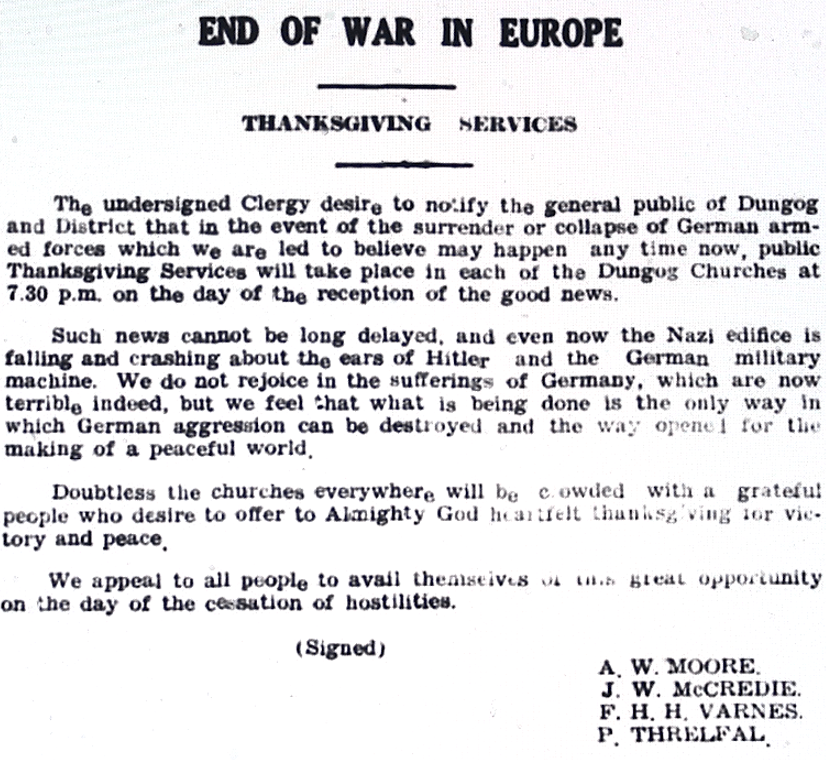
Notice that once the war ends in Europe thanksgiving services will be held in Dungog churches [Dungog Chronicle, 20 April 1945]
Key events – May 1945:
– Victory in Europe (VE Day on 8 May) ends the war in Europe.
– Australian forces enter their last campaign in the war by landing in Borneo.
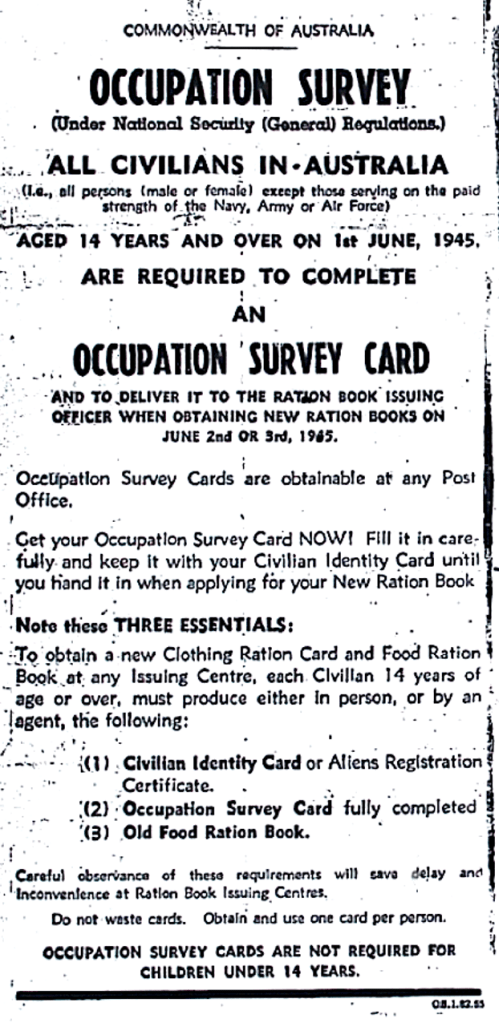
Civilians required to complete an Occupation Survey Card [Raymond Terrace Examiner and Lower Hunter and Port Stephens Advertiser, 24 May 1945]
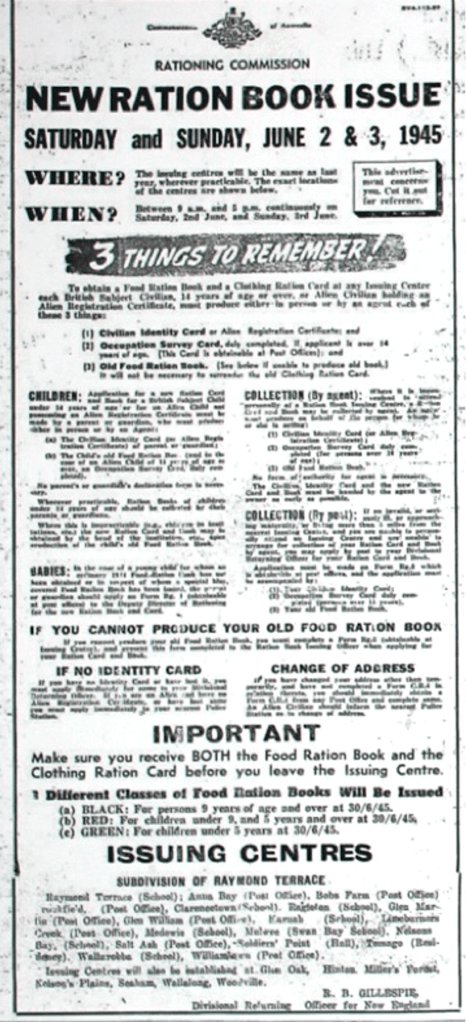
New Ration Book issue [Raymond Terrace Examiner and Lower Hunter and Port Stephens Advertiser, 24 May 1945]
Key Event – July 1945:
Australian war-time Prime Minister John Curtin dies in Office Minister].
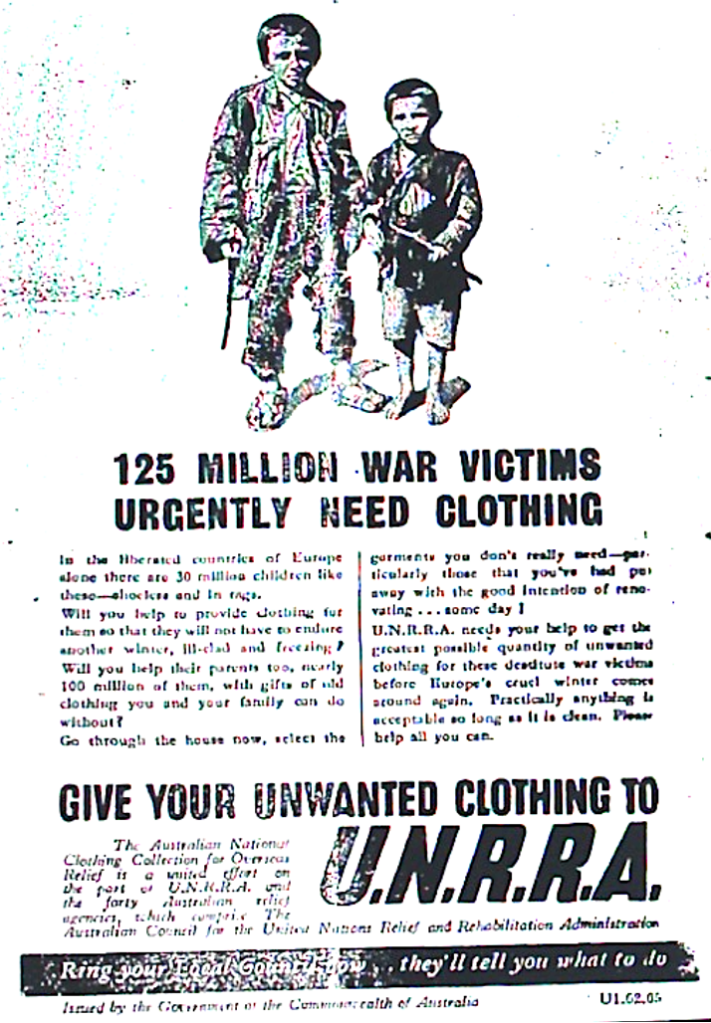
Unwanted clothing sought by the United Nations Relief and Rehabilitation Administration [Raymond Terrace Examiner and Lower Hunter and Port Stephens]
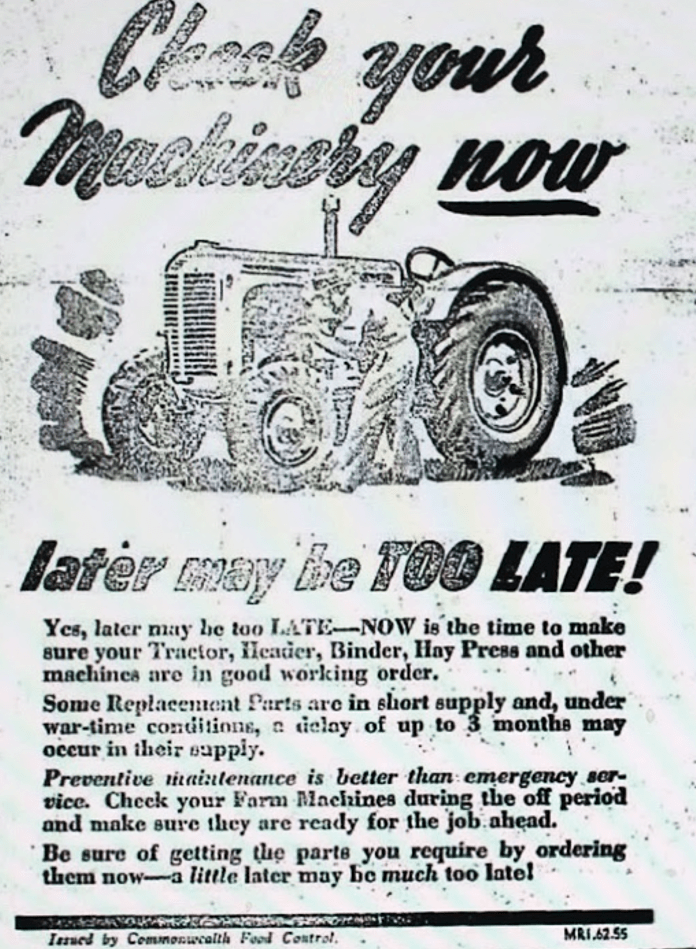
Farmers urged to maintain their machinery in working order [Raymond Terrace Examiner and Lower Hunter and Port Stephens Advertiser, 12 July 1945]
Key Events – August 1945:
– 6th and 9th August – United States forces drop two atomic bombs on the Japanese cities of Hiroshima and Nagasaki , respectively.
– Soviet Union declares war on Japan.
– 15 August – Victory in the Pacific as Japan surrenders.
Key Event – September 1945
– 2 September – official end to the Second World War as Japan signs the instrument of surrender aboard the USS Missouri in Tokyo Bay.
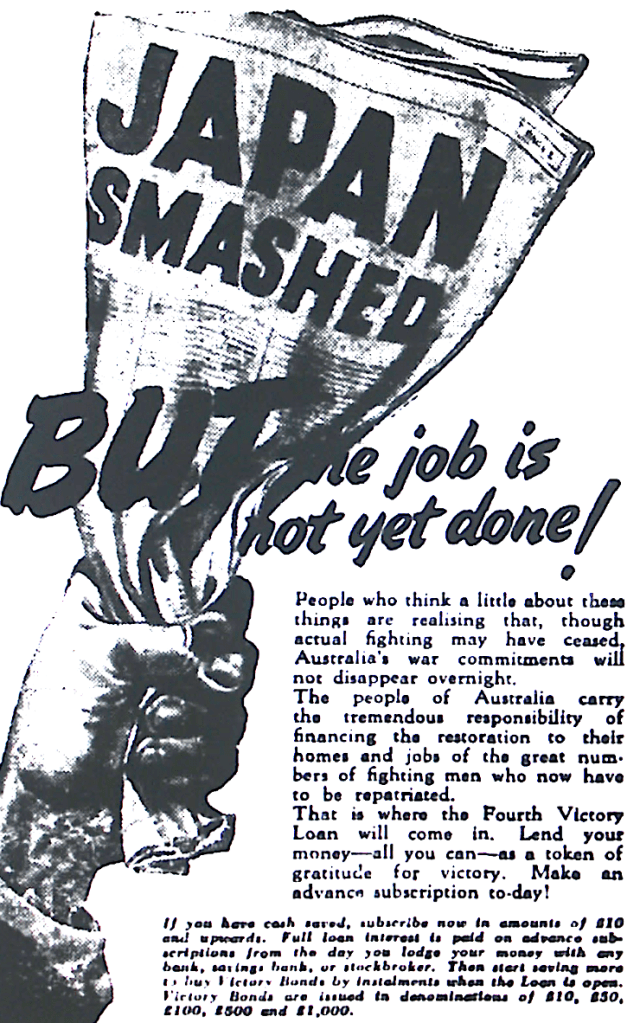
Invitation to invest in the Fourth Victory Loan [Dungog Chronicle, 7 September 1945]
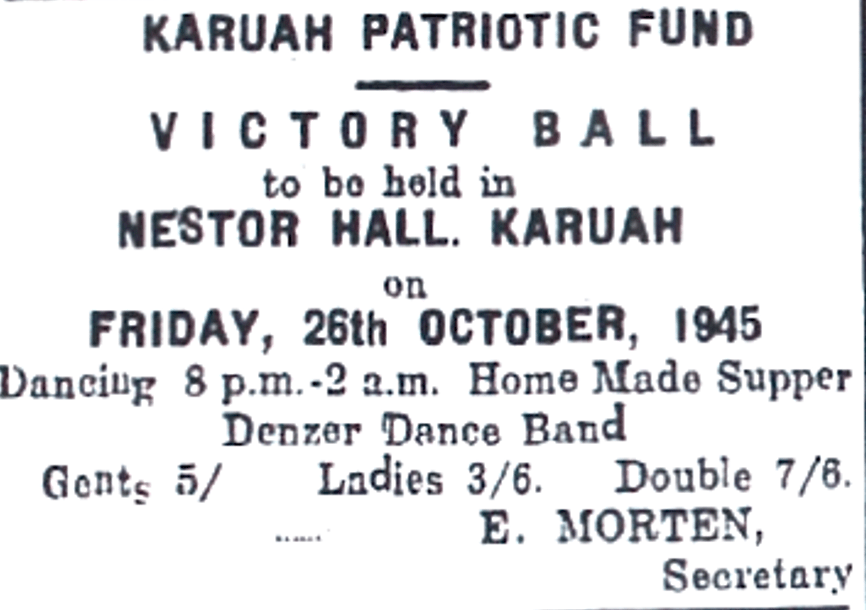
Victory Ball held by the Karuah Patriotic Fund [Raymond Terrace Examiner and Lower Hunter and Port Stephens Advertiser, 18 October 1945]
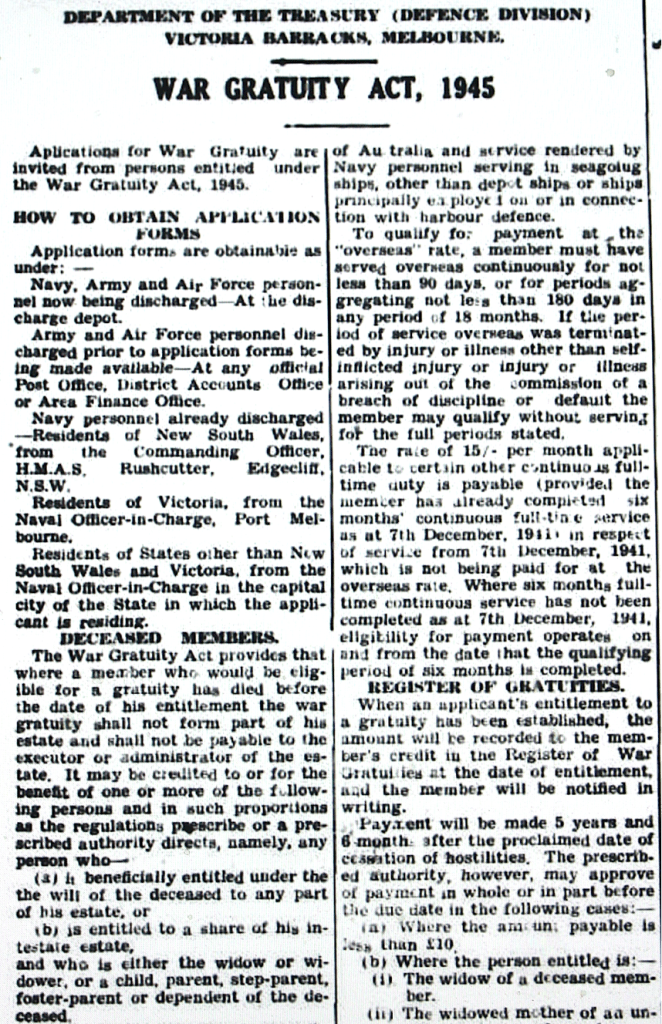
Australian War Gratuity Act 1945 established a’ free gift’ payment for World War II service members in recognition of honourable service [Top section of the advertisement as published in Dungog Chronicle, 16 November 1945]
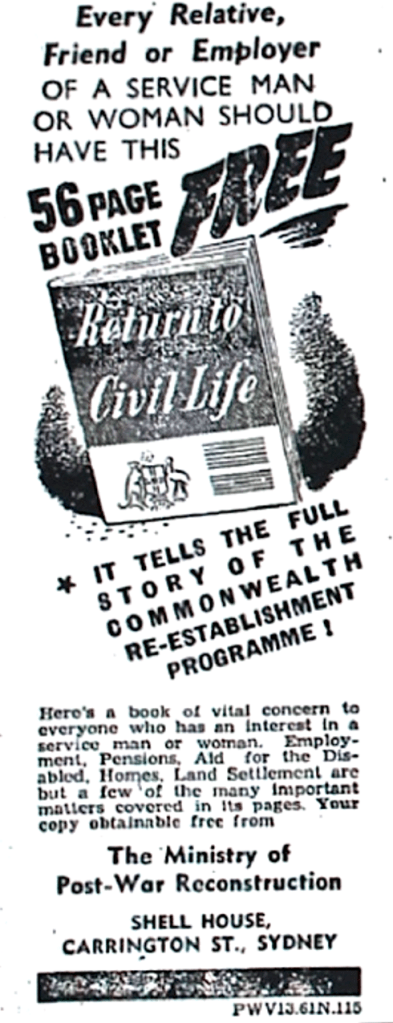
‘Return to Civil Life’ booklet offered to former military personnel to assist with rehabilitation [Raymond Terrace Examiner and Lower Hunter and Port Stephens Advertiser, 20 December 1945]
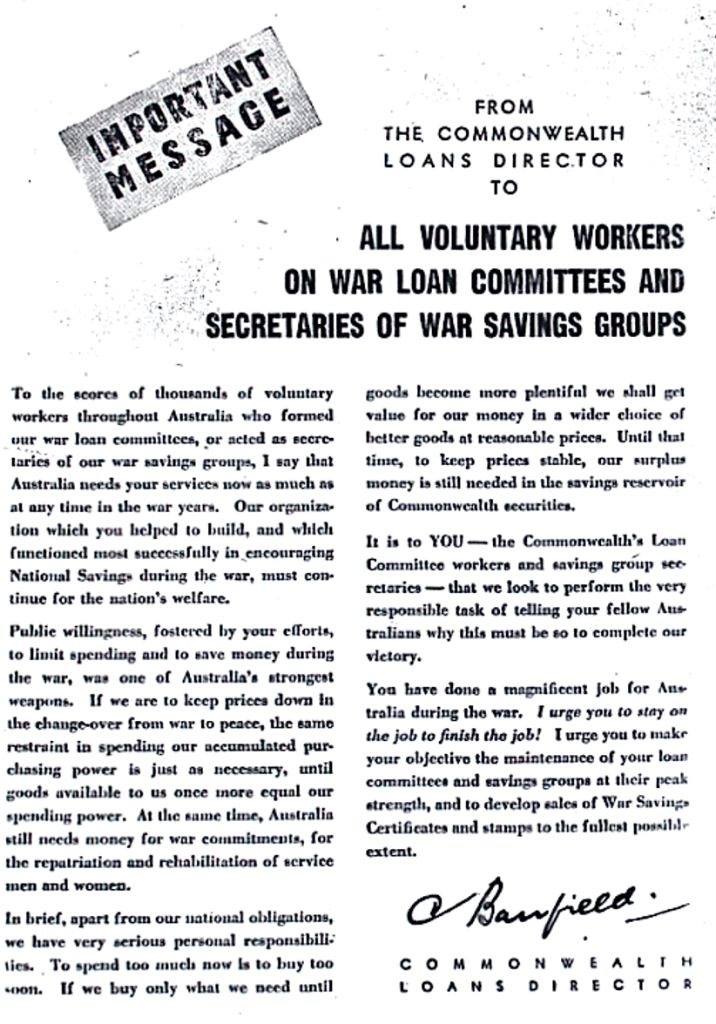
Volunteer workers promoting War Loans and War Savings Stamps urged to continue their work after the war had concluded [Raymond Terrace Examiner and Lower Hunter and Port Stephens Advertiser, 10 January 1946]
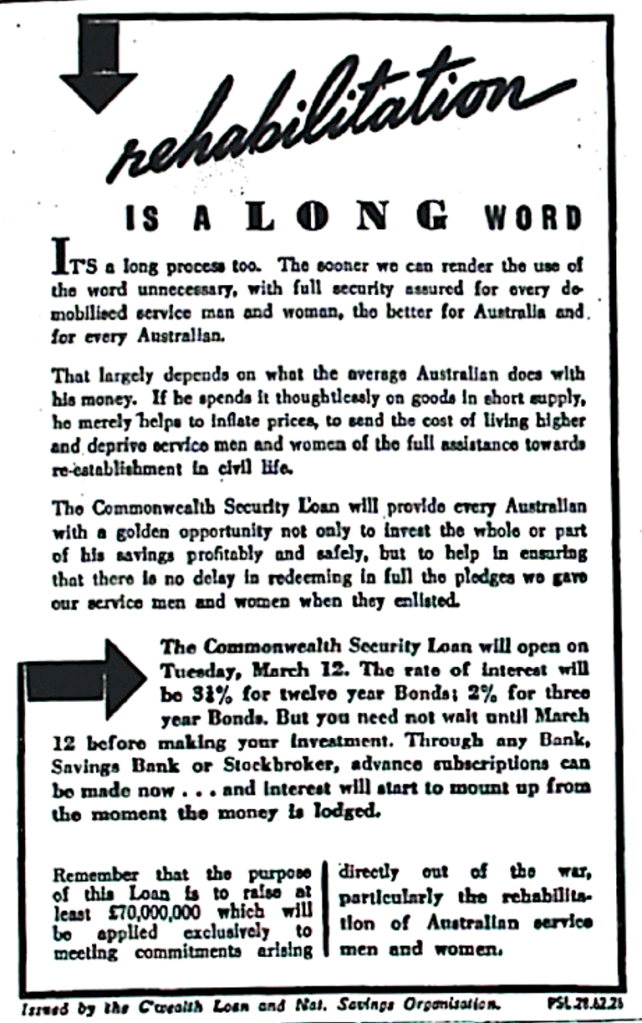
Notice of forthcoming Commonwealth Security Loan [Raymond Terrace Examiner and Lower Hunter and Port Stephens Advertiser, 7 March 1946]
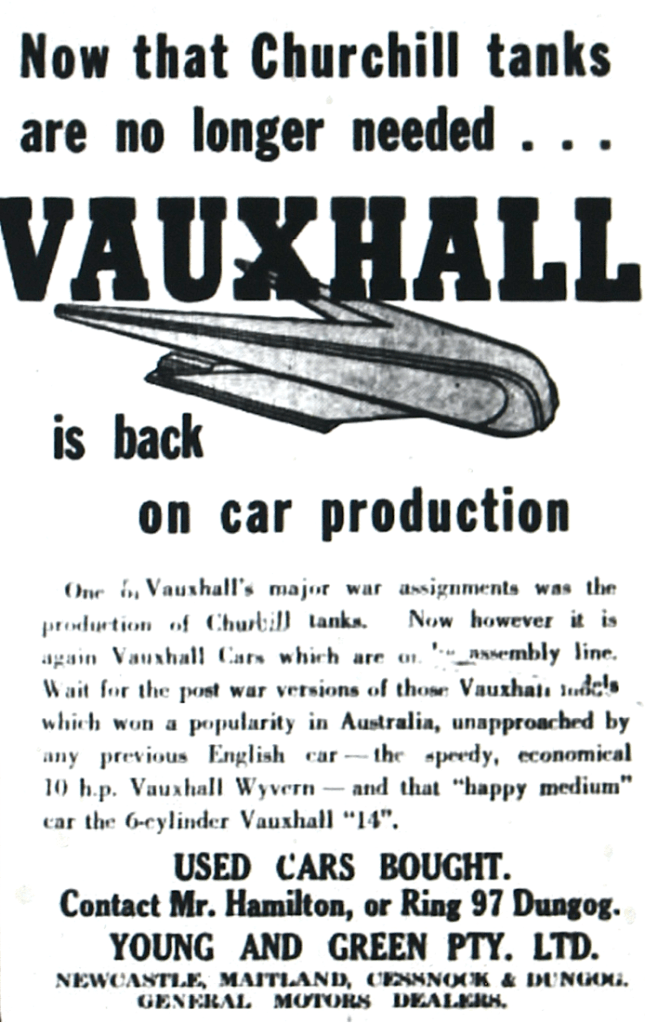
Vauxhall in England announced it had switched production from tanks back to cars [Dungog Chronicle, 22 March 1946]
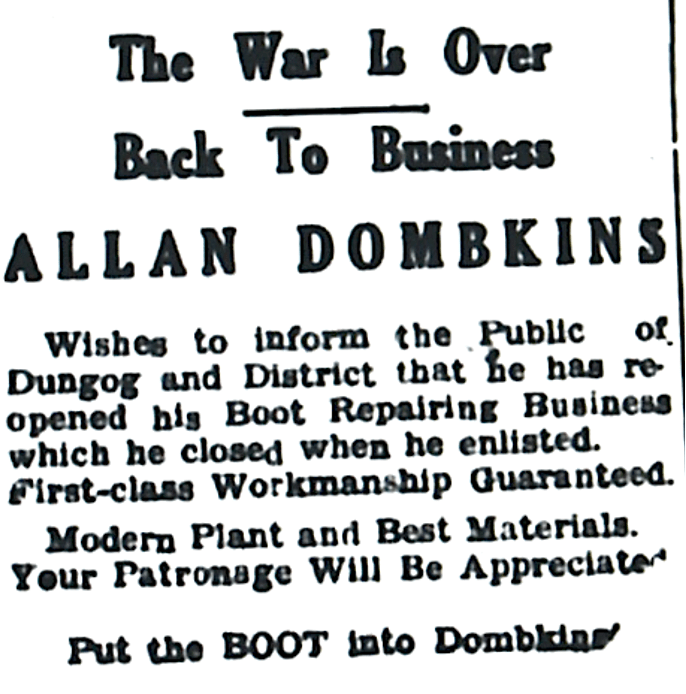
Back from the war and back into boot making for local bootmaker [Dungog Chronicle, 24 May 1946]
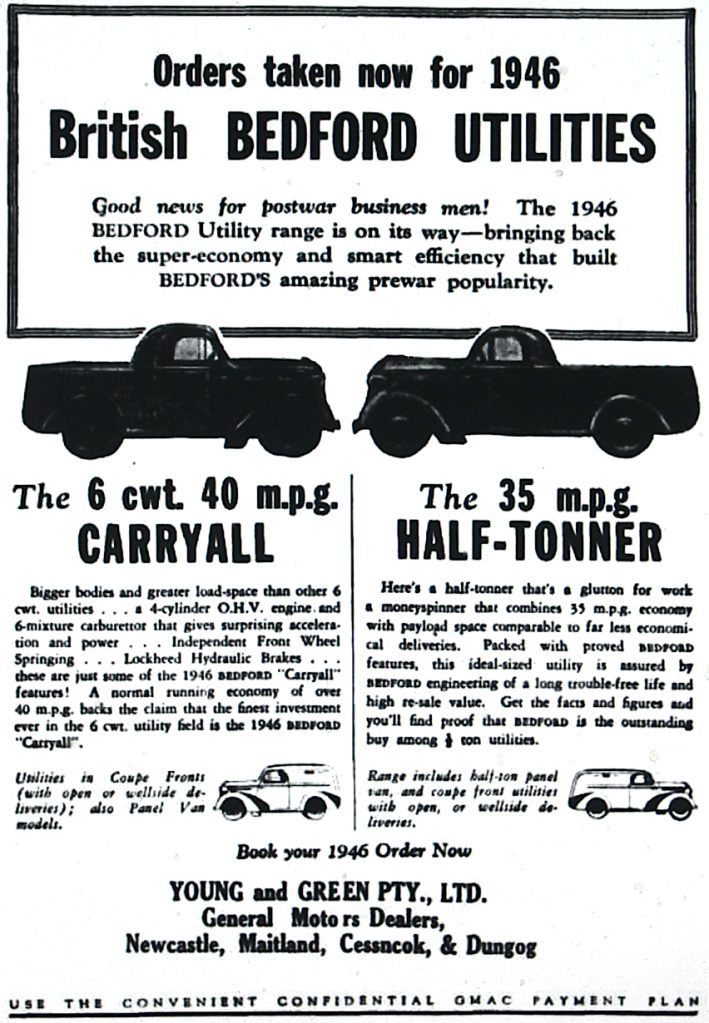
British Bedford utilities back in production after the war [Dungog Chronicle, 24 May 1946]
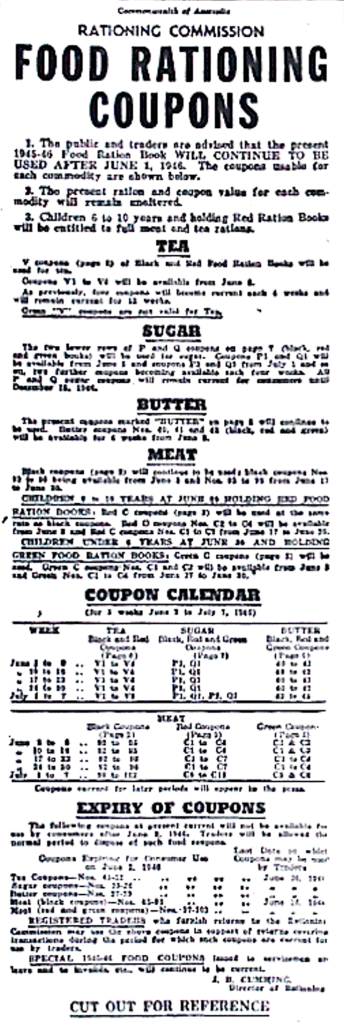
Food rationing coupons continue to be used [Raymond Terrace Examiner and Lower Hunter and Port Stephens Advertiser, 30 May 1946]

British ‘Flying Standards’ back on the Australian market [Dungog Chronicle, 31 May 1946]
Concluding Comments
It took several years after the end of the Second World War for life in Australia to get back in order.
The surviving military personnel gradually returned from overseas and had to be rehabilitated and assimilated back into the workforce, replacing the thousands of women who had carried out their work duties during their absence.
Rationing in Australia ended in stages from 1947. Meat and clothing rationing ended in June 1948, and petrol rationing in February 1950. Tea and butter rationing continued until July 1950. Cars and trucks started to be imported back into Australia in 1946 soon after the war ended
Further information on the Second World War years in the Port Stephens area are published on this website and can be found at the following links:
Port Stephens Residents Serving in the Australian Military Forces in the Second World War
Port Stephens Council During the Second World Wars
Post War History of the Gan Gan Military Camp at Port Stephens
War Diary of Tomaree Coastal Artillery Battery Port Stephens – 1942/1944
Westralia – A luxury Cruise Ship / Royal Australian Navy Warship
Manoora – A luxury Cruise Ship / Royal Australian Navy Warship
Kanimbla – A luxury Cruise Ship / Royal Australian Navy Warship
Researched and compiled by Kevin McGuinness
April 2026

 Port Stephens - a history exploration