
Introduction
After the NSW Royal Commission into Decentralisation in 1911, both community groups and parliamentarians showed a keen interest in developing Port Stephens and its surrounding region. The area was envisioned as an international port to accommodate shipping for northern and north-western New South Wales.
Following World War I, enthusiasm for Port Stephens region increased, drawing land speculators to the largely undeveloped northern shore around Pindimar and North Arm Cove. This surge of attention caused property values, especially for waterfront plots, to climb rapidly.
The most ambitious plan for the northern shore was Pindimar City, promoted by Pindimar Port Stephens Ltd, with estate marketing beginning in earnest in 1920.
It was with this optimism for the future economic prosperity of Pindimar, that resulted in an earnest attempt to have the NSW Government establish a Public School there.
A Provisional School was opened at Pindimar in 1925 as per the Public Schools Act of 1866. This Act established two new types of schools, viz: Provisional (15-25) pupils; and Half-time (at least 10 pupils).
At these provisional and half-time schools, parents were expected to provide the site and necessary school buildings and furniture for students.
This paper is the story of the Pindimar Provisional Public School which was closed in 1938, after having a life of only 13 years.
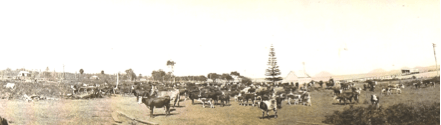
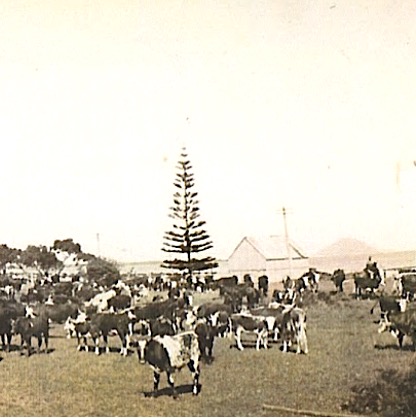
Early view of Pindimar before the construction of the Fish Factory in 1918
Snapshot of Pindimar prior to the establishment of the Public School – 1924
The Newcastle Morning Herald and Miners’ Advocate of 23 June 1924, page 4, reported:
‘The [NSW Minister for Justice] party left Tea Gardens at an early hour yesterday morning and proceeded across to Pindimar, on the northern shores, about five miles from the [port] entrance. This is one of the most interesting parts of the district. Outcrops of coal are visible in several places, and there is likely to be development in this respect. ….
The population of the place is only 50, but there many evidences of progress. Five new houses are being built, and a deputation which waited upon the Minister for Justice stated that there were 25 children of school age or approaching that age. They had to cross the port, a distance of 1½ miles, to attend [Nelson Bay] school, and the parents and citizens were anxious that the facilities should be provided in the township.
Mr. C. H. Barnett, manager of the Port Stephen Land Company, Limited, said they were prepared to give a grant of land of 3¾ acres as a free gift for the school, and the residents would undertake to clear the land, which would be worth £500. The offer will be placed before the department, together with the application for the school. The directors of the company, through Mr. Barnett, extended a welcome to the visitors, who were entertained at luncheon, and conducted over the Pindimar grounds. It was here, eight years ago, that the State fish depot was opened by the Premier, a fine roomy building and wharves being erected. The works were subsequently shut down.’
New Pindimar School approved – 1924
The Raymond Terrace Examiner and Lower Hunter and Port Stephens Advertiser of 18 July 1924, page 3, reported:
‘Mr. J. J. Fitzgerald, M.L.A. is in receipt of the following from the Under-Secretary, Department of Education, Sydney. — “With reference to your representations on behalf of the residents of Pindimar, requesting the establishing of a provisional school at Pindimar, I desire to inform you that the Minister has had under notice a report obtained upon this matter.
Having considered the case Mr. Bruntnell has approved of the establishment of a provisional school at the centre in question, to be conducted in a building to be erected by this Department on a central site donated by the Pindimar Port Stephens Land Company, Ltd. It is understood that the parents will clear the land free of cost to the Department. Action is now being taken with the view to the erection of a suitable school building at Pindimar. Mr. C. H. Burnett, Manager of the Pindimar Port Stephens Land Company, Newcastle, is the correspondent in this matter.’
The Newcastle Sun of 24 February 1925, page 9, further reported:
‘The Minister for Education (Mr. Bruntnell), has officially accepted a grant of land, valued at over £400, from the Pindimar Company, at Pindimar, in the Port Stephens district, for a school.
The erection of the building is also to be proceeded with without delay. This will be a boon greatly appreciated by the children of this district, as they have had to travel over four and a half miles of water to Nelson’s Bay for their schooling, and in wintertime the trip is not always pleasant.’
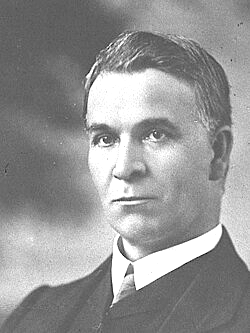
Albert Bruntnell – Minister for Public Instruction
Minister for Education invited to open Provisional School – 1925
The Newcastle Sun of 7 July 1925, page 5, reported:
‘The Minister for Education (Mr. Mutch) and the Assistant Minister for Health (Mr. Fitzgerald) have been invited to take part in the ceremony of opening the new school at Pindimar, in the Port Stephens district, on Saturday afternoon. Mr. Bruntnell, M.L.A., who until recently held the Education portfolio, will also be present. Particular interest is centred in the visit of Mr. Bruntnell, as he sanctioned the erection of the school while in office.
Mr. Theo. Hill, M.L.A., and Mr. Bennett, M.LA., will be other visitors for the function, also local body representatives from the surrounding district. Mr. C. H. Barnett, is arranging a large party of Newcastle visitors to join the party, which will be entertained at a dance in the evening by the Pindimar settlers.’
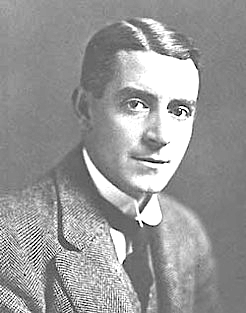
Thomas Davies Mutch – Minister for Education
Official Opening of the Pindimar School – 1925
The Dungog Chronicle of 17 July 1925, page 6, reported:
‘The policy of the new Government with reference to the non-expenditure of grants by local bodies was enunciated by the assistant Minister for Local Government (Mr. Fitzgerald), when speaking at the opening of the Pindimar school on Saturday.
There were a number of shires and other bodies, said Mr. Fitzgerald, which had grants for specific purposes, such as road improvements, and had not spent them. “We are going to see that these moneys are expended,” he declared. “The people in the country districts are suffering from distinct disadvantages through the neglect of their local bodies to spend their grants.”
Port Stephens Shire, he understood had £30,000 to expend. “This money has to be spent, and what applies to this shire applies to every other shire in the State,” said Mr. Fitzgerald, “and to be spent as early as possible, too.”
The Minister was informed by Mr. Price that this money would not assist Pindimar in its claim for better roads, as that portion of the district was not in Port Stephens Shire. Mr. Fitzgerald: I know that. Mr. Price: It is no use expending more money on the other side of the harbor. It will only serve a dead-end.’
The Newcastle Sun of 20 July 1925, page 3, also reported:
‘The new school at Pindimar, in the Port Stephens district, though necessarily small, is very compact, and its erection has been warmly welcomed by the residents, as they formerly had to send their children across the harbour to Nelson Bay for schooling.
The school, which was opened by Mr. Fitzgerald, assistant Minister of Local Government, is of the usual type, with one large schoolroom and a connecting corridor. The land comprising three and a half acres, was the gift of the Port Stephens Pindimar Company, and as the sections surrounding it have been disposed of at £1 a foot, the gift was accordingly a very generous one.
There are distinct signs of building activity in the Pindimar settlement, several new houses having been erected, including a large modern residence for Mr. Phillips, junr., who is shortly to be married. Negotiations are now in progress with the Newcastle Diocesan authorities for the erection of a church. The settlers are also concentrating upon obtaining a hall for social purposes.’
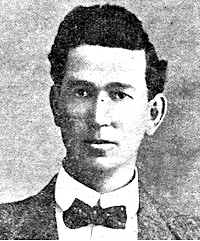
Joseph John Fitzgerald -Assistant Minister of Local Government
Bridge near School dangerous for children – 1928
The Dungog Chronicle of 18 December 1928, page 5, reported:
‘Manager of Pindimar Port Stephens, Ltd., wrote [to Stroud Shire Council] complaining that although Council had promised repairs to the bridge over Duckhole Creek, nothing had been done. The bridge was dangerous and was particularly a menace to the schoolchildren. The Pindimar road was in bad condition, and some culverts were burnt out.’
The Dungog Chronicle of 5 April 1929, page 1, further reported:
‘Hon. W. Bennett, M.L.A., has been informed as follows: — I have had under consideration your personal representations on behalf of the Stroud Shire Council relative to the question of the construction of a new bridge across a creek, in the vicinity of the Pindimar Public School, to replace one recently destroyed.
In reply thereto I desire to advise you that this Department has no funds from which money could be devoted towards the cost of constructing such a bridge, and in the circumstances, therefore, the Council’s request for this Department to bear a proportion of the cost cannot be sanctioned.
I might add that the construction of a bridge costing approximately £375 cannot be regarded as a necessity for school children as a small footbridge over the creek would meet their requirements. Yours faithfully, (Sgd.) D. H. DRUMMOND, Minister for Education.’
School Picnic – 1931
The Dungog Chronicle of 5 June 1931, page 4, reported:
‘The Pindimar school children held their annual picnic, 23rd. May, along the beach in front of the school. The following is the result of the sports: — Boy’s Events. — Overten, N. Connell. Over eight, S. Evans. Under eight, R. Evans. Potato race, A. Russell. Apple eating, K. Evans. Obstacle race, N. Connell.
Three-legged race, N. Connell and L. Power. Thread the needle, E. Cruse. Girl’s Events. — Over twelve, Nora Roberts. Ten to twelve, Doris Winsor. Under ten, Joan Connell. Under eight, Edie Roberts. Three-legged race, Nancy Phillips and Helen Roberts. Potato race, Charlotte Russell. Apple eating, Jean Power. High jump, Jean Power. Obstacle race, Ollie Priestly. Thread the needle, Ollie Priestly. Single gent’s., T. Priestly. Married gent’s, D. Ridgeway. Married ladies’, Mrs. Barber.’
School Concert – 1931
The Newcastle Morning Herald and Miners’ Advocate of 21 December 1931, page 5, reported:
‘An enjoyable breaking-up concert was given by the children of Pindimar, and the surrounding district, at the Pindimar school. The children had been thoroughly trained by the Headmaster, Mr. Connell, and his wife. Their efforts were keenly appreciated. The programme was us follows—Chorus, “The Caravan”; recitation, Joan Connell; “How Stories Grow,” Jean Power and company; recitation, Nancy Phillips; “The Nigger Boy,” by boys; “Dr. and Baby,” Joan Connell and Teanie Evans; “Rainbow,” by the girls; “Duke Looks After Himself,” Olive Priestly and Jean Power; chorus by the children; nursery rhymes; “The Fir Tree,” Teanie Evans and Marie Priestly; “Pot of Musk,” Noel Connell and Marie Priestly; recitation, Olive Priestly; and other songs and choruses by the children.’
School accident – 1932
The Dungog Chronicle of 14 October 1932, page 4, reported:
‘Master Connell, son of the school master at Pindimar, met with severe injuries to his nose and face through colliding with another boy whilst playing at school. He was brought to Tea Gardens and received attention from Dr. Bell.’
Recollection of children from Soldiers Point attending school at Pindimar – 1932
The Raymond Terrace Examiner and Lower Hunter and Port Stephens Advertiser of 29 October 1953, page 8, reported:
‘A large gathering of residents and friends attended a Presentation Social to Mr. Arthur Spencer in the Progress Hall at Soldiers’ Point. During the evening, the President, Mr. Sayers, presented Mr. Spencer with a cheque representing donations from people in the area. Mr. Sayers spoke of the early days of the area and the formation in 1922 of the Progress Association.
During the early years, Mr. Spencer used to ring a cow bell to notify the residents of any social activities. In later years, about 1932, the bell would call the children to the boat, which conveyed them to school at Pindimar.’
Teacher takes Leave – 1933
The Dungog Chronicle of 22 September 1933, page 4, reported:
‘Mr. Connell, headmaster of Pindimar public school has gone on war leave and will be absent from his school for three months.’
The Dungog Chronicle of 22 December 1933, page 4, further reported:
‘Mr. Connell returned to Pindimar and resumed teaching at the public school prior to the break-up for the Christmas holidays. The greater portion of his leave was spent away from the district amongst friends.’
New teacher appointed to Pindimar Public School – 1933
The Sydney Morning Herald of 28 December 1933 reported that that Mr. V. Connell, teacher, had been transferred from Pindimar to Camberwell, while Mr. R. Stinson had been transferred from Home Rule [near Gulgong] to Pindimar.
Fire at School – 1934
The Newcastle Sun of 10 July 1934, page 7, reported;
‘An open verdict was returned by the Stroud Coroner (Mr. Hitchens) at an inquiry held at Tea Gardens yesterday into a fire which damaged the school building at Pindimar on June 4.
It was stated in police evidence that evidently a deliberate attempt had been made to destroy the building, but their investigations did not enable them to say who had been responsible. Detective-sergeant Emmett, of Newcastle, represented the police.’
The Dungog Chronicle of 13 July 1934, page 4, also reported:
‘The District Coroner held an inquiry at Pindimar on Monday last into the fire at the public school there. A fire was noticed and put out before much damage was done and paper was found placed there as if designedly so. The Coroner returned an open verdict.’
Closure of School – 1938
The Pindimar Public School closed permanently in March 1938. The pupils were transferred to the Tea Gardens Public School.
Concluding Comments
Additional information on Pindimar is published on this website and can be found at the following links:
Pindimar Post Office – Early History
Pindimar City at Port Stephens
A ‘City of Peace’ at Pindimar, Port Stephens – 1918
Commercial Fish and Shark Processing at Pindimar
Researched and compiled by Kevin McGuinness
March 2026

 Port Stephens - a history exploration