
Introduction
The Native Workers’ Training College was established in 1938 at Pindimar, Port Stephens, as a Baptist training school for Aboriginal teens and young adults from across Australia, for ministry work in their own communities.
It operated as part of the Aborigines Inland Mission of Australia (AIM) which was founded in August 1905 by Mrs Retta Long at Singleton, as an evangelical outreach ministry to Aboriginal communities.
The College campus at Pindimar was closed in 1945 and relocated to rental premises at Dalwood, near Singleton. In 1946, it moved to Minimbah House at Whittingham, also in the Singleton district.
Renamed the AIM Bible Training College in 1953, it initially trained Sunday School teachers but gradually began preparing applicants for ministry. The college taught building, agriculture, missionary work, and practical skills, with students returning to their communities after graduation. It closed in 1973.
In 1998, the Aborigines Inland Mission of Australia became the Australian Indigenous Ministries.
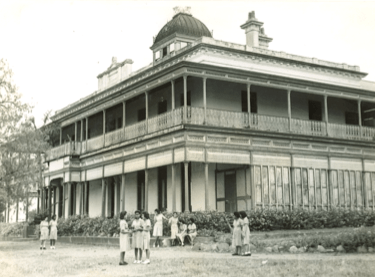
Aboriginal students at Minimbah House, Whittingham – circa 1950 [State Library of NSW]
This paper is a history of the Native Workers’ Training College, as it operated at Pindimar, from 1938 to 1945.
Opening of the Native Workers’ Training College at Pindimar – 1938
The Sun of 20 November 1938, page 13, reported:
‘The first training college for aborigines wishing to take up missionary work among their own people was opened last week at Pindimar, Port Stephens.
Outlining the objects at the annual meeting of the Aborigines’ Inland Mission of Australia, Mrs. R. Long emphasised the remarkable fervour and enthusiasm of natives who became actively interested in the work of the mission. The mission had extended its operations to 41 centres and 78 out-stations in New South Wales, Queensland, Victoria, and the Northern Territory. There are at present, she said, a number of native preachers taking the pulpit before white congregations in some outback areas. Normanton [Queensland] congregations, for instance, were regular listeners to native preachers.
The first two pupils at the new college are Robert Blair, of Cherbourg (Queensland), and Ralph Naden, from Bulgandramine (N.S.W.). They commenced their tuition last week.’
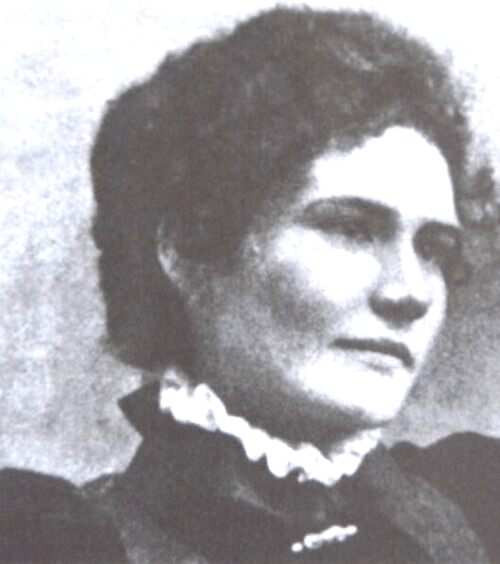
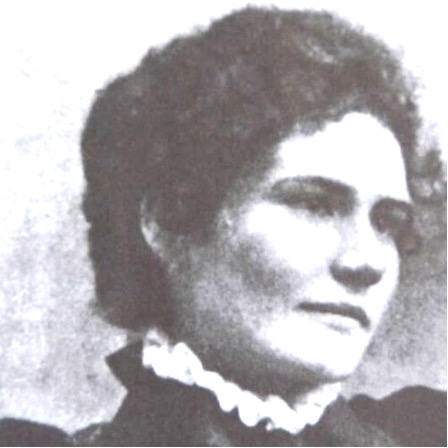
Margaret ‘Retta’ Jane Long (nee Dixon) – Australian Baptist missionary who founded the Aborigines Inland Mission at Singleton in 1905
Dedication Ceremony for the Training College at Pindimar – 1939
The Dungog Chronicle of 14 April 1939, page 4, reported:
‘The public opening and dedication of the Native Workers’ Training College at Pindimar was performed on Good Friday afternoon by Mrs. R. Long, in the presence of a large gathering from Karuah, Soldiers Point, Tea Gardens and elsewhere.
Mrs. R. Long, who presided, explained how Pindimar was selected as the site for the college, and of the object of the Aborigines Inland Mission of Australia. Greetings were conveyed by Mr. R. T. Harris (Sydney) from New South Wales; Mr. J. Leech (Cherbourg) from Queensland; Mr. G. W. Taylor (Darwin) from Northern Territory; Miss Bagnall from Victoria; and Mr. F. Phillips from the local district.
Mr. E. A. Collins, superintendent of the college, gave an outline of the work already performed there. Mr. W. A. Loner spoke of the studies that would be given to the students. Two students were now at the college, and more would come along presently. Mrs. Long, in her address, said that Pindimar meant ”vessels for carrying water,” and this would apply to the students going back to their own people carrying the “living water.” Mrs. W. A. Long presided at the organ for the hymns. Mr. Collins pronounced the Benediction. Afternoon tea was served on the lawn to the visitors.’
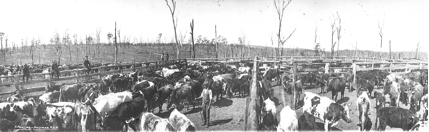
Cattle at Pindimar, owned by Mr. F. Phillips, a local supporter of the Training College
The Dungog Chronicle of 2 June 1939, page 4, also reported:
‘The lecture hall of the Pindimar College was recently the centre of the official dedication of the buildings and land and equipment. A local resident remarked that it was the largest gathering of people Pindimar had seen for many years. The hall was filled and a number were outside unable to gain admission. Friends from Tea Gardens, Soldiers Point and Karuah joined the local Pindimar residents in their felicitations on the happy occasion.
Before the service opened with the singing of ‘Oh Worship the King,’ reference was made to the death of the Prime Minister [Joseph Lyons], and the congregation stood while prayer was offered for the nation and for Dame Enid Lyons and the bereaved, family. Mr. Fred Dates, native worker, Karuah, read the Scriptures, and Mr. William Manton, also of Karuah, led in prayer.
The director, who presided over the gathering, in her address told of the origin of the idea of a College for Native Workers, and the steps which led to its establishment at Pindimar and then read a list of donors of land and equipment, and the givers of money for each of the cottages, and furniture and utensils. It was a long list. Then those who had rendered service were thanked, chiefly the neighbours around. The mode of support, by unsolicited voluntary contributions obtained in answer to prayer, was then set forth.
Greetings were given by visiting missionaries — Mr. R. T. Harris, representing our Mission Stations in New South Wales, read Ephesians 1:1-4; Mr. J. Leitch, for Queensland, gave Philippians 1:3-6; and Mr. G. Taylor, on behalf of the Northern Territory, read II Thessalonians 3-16. Miss Bagnall, a Victorian, and our first missionary from our first station, gave us the message of Luke 21:36, ‘Watch ye therefore and pray always, that, ye may be accounted worthy.’
Mrs. Phillips spoke on behalf of the residents of Port Stephens and then indicated an added gift of two more blocks of land, on one of which stands an old cottage. Our friend was the donor of six blocks of land on which we are building the students cottages. Reference was made during the service to the unique circumstances of having present the first missionary, Miss Bagnall, and the last, Mr. Leitch; and the first native missionary, Mr. A. Russell, and one of the first A.I.M. Native Christians, Mr. W. Manton, converted in 1905, and also the founder of the mission.
Mr. E. A. Collins, superintendent of the college, addressed the gathering, giving praise to God for all that had been accomplished in the reclaiming of an area of waste and bringing it to the present condition of usefulness, and thanked all those who had so generously helped. He was followed by Mr. A. Long, who gave an outline of the effort which will be made to equip the student and of the varied studies included in the curriculum.
‘When I Survey the Wondrous Cross’ was earnestly sung and then, the congregation standing, the director offered thanksgiving to God for what had already been accomplished, and presented the Mission House, the lecture hall, and two students’ cottages, with all the college equipment to the Lord in humble dedication to His use in the preparation of messengers to carry His gospel to the ends of Australia.
The Doxology closed a very memorable service. A tarpaulin was erected outside, under which afternoon tea was spread, and around which all gathered and enjoyed a cup of tea with beautiful sandwiches and cakes, provided by a little band of women under the leadership of Mrs. Collins.
Three of our people, Mrs. W. Pings and Mrs. W. Ridgeway, of Karuah, with Mrs. Fred Dumas, delighted us during afternoon tea by playing their autoharps, and Mrs. Ridgeway and Mrs. Dumas also sang a duet very sweetly. Some snaps were taken, and then word went round that Mr. Long was ready with the van to take the party back to Karuah.
Other friends departed by car and motor launch for their homes. Beautiful weather, a happy throng, accomplished service crowned, and the fellowship of visiting fellow missionaries, representing a widespread field, brought great joy and satisfaction to the brethren and sisters at Pindimar, who have toiled so unremittingly to bring about this happy occasion. To God be the Glory!’
Participation of the Training College in local Church Services and Community Events
From the following advertisements and newspaper reports, the Training College at Pindimar had an active presence at the following venues:
1. Maitland Road Baptist Church at Islington – 1940
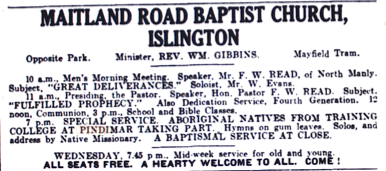
Advertisement from Newcastle Morning Herald and Miners’ Advocate – 30 March 1940
2. Hamilton Wesley Church Convention – 1940
The Newcastle Morning Herald and Miners’ Advocate of 29 April 1940, page 6, reported:
‘Items played by aborigines on gum-leaf instruments and mouth organs were features of the Newcastle District Christian Endeavour Union’s annual convention at Hamilton Wesley Church on Saturday. The natives were from the Native Workers’ Training College at Pindimar. All were full-blooded. Aboriginal women played the mouth organ and sang solos. Several gave personal testimonies of the work of the mission at Pindimar. They were accompanied by Mr. A. Collins, the missioner at the college.’
3. Dungog District Convention – 1940
The Newcastle Sun of 28 May 1940, page 7, reported:
‘About 100 members and officers of the Newcastle District Christian Endeavour Union attended the Dungog District Convention in the Methodist Church. …. Musical items were contributed by aborigines from the Pindimar Aborigines’ Inland Mission Training College’s Young People’s Society. About 25 societies from the Newcastle and Dungog districts answered the roll call by the Newcastle District Secretary.’
The Dungog Chronicle of 31 May 1940, page 3, also reported:
‘At a meeting in the Baptist Church at Dungog on Monday night last, the aboriginal students from the A.I.M. Native Workers’ Training College at Pindimar told of missionary work being done amongst the aborigines of Australia and also gave musical items.
The college is a new venture in the work amongst Australian aborigines and is the only one of its kind in Australia. It has been established recently at Pindimar, Port Stephens, and at present there are five aboriginal full bloods in residence at the college.
These students are being taught building construction, agricultural work, in addition to being given a missionary training and such general knowledge as will be helpful amongst their own people. After they complete the college course, they will return to outback stations to work amongst their own people.
The latest census figures from Canberra given by the Government Statistician are as follow: Aboriginal population of Australia 77,269, of which 51,557 are full-bloods and 25,712 half-caste. New South Wales figures are 794 full-bloods and 10,069 half-caste. In 1938 the decrease in the full-blood population in Australia was 1456. The 1939 figures have not yet been published.’
4. Missionary Rally for Aborigines at Karuah – 1940
The Newcastle Sun of 12 August 1940, page 5, reported:
‘Fourteen societies were represented at the Missionary Rally at the aborigines’ reserve at Karuah on Saturday, arranged by the Newcastle District Christian Endeavour Union. Approximately 130 members made the journey from Newcastle.
The superintendent of the reserve (Mr. Wilcox), Mr. A. E. Collins, Mr. and Mrs. Dates, representatives of the Pindimar Aborigines’ College, and aboriginal mission students welcomed the visitors.
The district secretary (Mr. H. W. Byrnes) responded to the welcome at a camp-fire meeting. Mr. Barry Jones conducted the aborigines’ choir, and Mr. E. Walsham acted as leader at the meeting. Aborigines and members of the union gave testimonies, and Mr. Collins thanked the Christian Endeavour Union members.
5. Farewell for Aboriginal Missionaries at the Maitland Road Baptist Church – 1940
The Newcastle Sun of 15 November 1940, page 5, reported:
‘Mr. L. Banks and Mr. H. Marsh, two Australian aborigines who have completed their terms at the Pindimar College, and who will take up mission work in Queensland, were farewelled at a function held in the Maitland Road Baptist Church, Islington.
Mrs. R. Long, who founded the Aborigines Inland Mission nearly 50 years ago, was present and gave an address. The principal of the Pindimar College (Mr. A. Collins) spoke of his association with the guests of honour.
Aborigines from the college who were present were Mr. and Mrs. Demlin and Miss Rachel Demlin. The Inland Mission has 138 workers, 60 of whom are aborigines, stationed throughout Australia. It aims at having eventually five native workers for each white worker.’
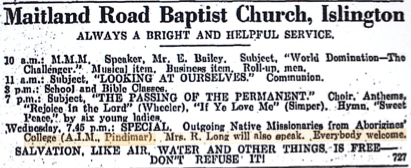
Advertisement for the farewell service at Islington [Newcastle Morning Herald and Miners’ Advocate, 9 November 1940]
6. Newcastle and Northern District Baptist Convention – 1943
The Newcastle Sun of 22 February 1945, page 5, reported:
‘The Newcastle and Northern District Baptist Convention will be held at Easter this year as usual in the Maitland Road church. The convention was established 12 years ago. The Rev. Hayden W. Mellsop, of the China Inland Mission, who spent three years in Japanese captivity, will be the principal speaker. Other speakers will include the Rev. L. Thompson, of Manly, a Katoomba convention speaker, and Principal Collins, of the Aborigines’ Inland Mission Training College at Pindimar.’
7. Boolaroo Baptist Church – 1944
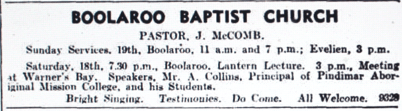
Advertisement for the Boolaroo Church services [Newcastle Morning Herald and Miners’ Advocate – 18 March 1944]
A Reflection on the Missionary Commitment of Retta Long – 1941
The Sun of 23 April 1941, page 18, reported:
‘Interesting speaker at the Feminist Club this week was Mrs. Retta Long, founder and director of the Aborigines Inland Mission, who has worked among the aborigines for 48 years. She has edited the mission’s magazine “Our Aim,” without a break, for 34 years and for, the past 11 years has produced a monthly magazine called “The Australian Evangel,” which she tells me, is the only paper for aboriginal readers in Australia and for which many of whom write articles and stories.
Mrs. Long’s five children all help with mission work. One son, Mr. Arnold Long, is in charge of the A.I.M in the Northern Territory, with headquarters at Darwin. A daughter, Mrs. E. A. Collins, helps her husband to run Pindimar, the Native Training College at Port Stephens. Miss Olive Long is at Sydney headquarters with her mother, and another daughter, Mrs. N. M. Leeder, works among the natives at Grafton. Mrs. Long’s youngest son, Mr. Egerlon Long is in the United Stales at the Moody Bible Institution, studying missionary work. More than 13,000 aborigines come under the mission’s care in the four Slates, where centres are established.’
Closure of Pindimar College campus site – 1945
The Training College campus at Pindimar was closed in 1945 and relocated to rental premises at Dalwood, near Singleton. In 1946, it moved to Minimbah House at Whittingham, also in the Singleton district.
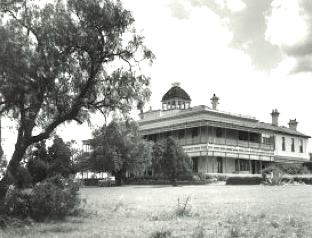
Minimbah House at Wittingham near Singleton – circa 1950 [State Library of NSW]
In 1953, the facility became known as the Aborigines Inland Mission Bible Training College.
A Reflection on the Return of the Aborigines Inland Mission to Singleton – 1947
The Singleton Argus of 2 April 1947, page 8, reported:
‘Since taking over Minimbah House for the purpose of conducting the Aborigines’ Inland Mission there, it has been surprising to find how many of the local people still remember the early days of activity here in Singleton, when the mission work was conducted at St. Clair, Redbourneberry [near Singleton] and at the Orphans’ Home established by the Mission in George Street.
The founder, Miss Retta Dixon [Long], came originally from Sydney and had begun work amongst the aborigines in 1895. She came to Singleton early in 1905 and was married here in January 1906, to Mr. L. W. Long, also of Sydney.
The work in connection with the mission established in Singleton had a more or less obscure beginning. The founding of it was in the home of Mr. Cochrane, then C.P.S., on August 1, 1905. Those present and whose signatures appear on the constitution signed that night were Retta Dixon, Mabel Timbury, H. Selwood Austin, Mary Austin, B. Bartrop, A. Millard, E. M. Aitken, P. O. Davis, A. T. Cochrane, (Miss) I Worgan, G. Coughlan, L. W. Long.
The public inaugural meeting was held on September 11 of the same year in the Methodist Church, when the chairman, Mr. A. Grainger, J.P., expressed in his address the wish that the work would spread throughout the Commonwealth. At that time, it seemed a very remote possibility, as in N.S.W. alone, there were 300 known camps and only 27 being reached in any way by missionary enterprise.
Today, the Aborigines Inland Mission has work in every State of the Commonwealth, having 50 main stations and 120 out-stations with 65 workers, 32 associate workers and 40 native workers. The mission has the spiritual oversight of over 20,000 of the 75,000 aborigines remaining in Australia and is the biggest organisation working wholly amongst the dark people reaching as many as all other organisations put together.
Although founded here in 1905, the headquarters of the work was transferred to Sydney in 1910 and are still located there. Work was carried on in Singleton all through the years until the death of Miss Bagnall in the Dangar Cottage Hospital about 1942. She and Miss Dodimead, another early worker, are buried in the Whittingham cemetery.
The growth amongst the purely native church was such that in 1932 they asked that a special college be established where they could be trained to go and work amongst their own people. This college was established in 1938, first at Pindimar, Port Stephens, but during the war years was transferred to Dalwood, near Branxton.
It was felt by headquarters officials that the college should return to the Singleton district, and for this purpose Minimbah House was acquired, possession being taken on November 21, 1945. The Pindimar property was subsequently sold. Minimbah had been occupied for some time previously by the Portuguese evacuees from Timor. Selected students will from time to time be drawn from all parts of the Commonwealth and brought here for training preparatory to working amongst their own people. In addition, special parties will come for short term studies.’
Concluding Comments
Students who undertook Ministry training at the former Native Workers’ Training College at Pindimar and other associated institutions, were included in the National Redress Scheme for people who had experienced institutional child sexual abuse.
Additional information on the Aboriginal people of Port Stephens is published on this website and can be found at the following links:
Aboriginal Artefacts at Morna Point Port Stephens 1926-1928
Aboriginal People of Port Stephens – Reminiscences of William Scott
Aboriginal People of Port Stephens, Dungog and Gresford
Evidence of Early Aboriginal Settlement at Port Stephens
Aspects of the Aboriginal History of Port Stephens
Journal of Sir Edward Parry – Commissioner of the Australian Agricultural Company 1830-1834
Port Stephens Aboriginal Artefacts in the British Museum
Researched and compiled by Kevin McGuinness
March 2026

 Port Stephens - a history exploration