
Introduction
On 15 June 1928, dairy farmer Richard Moxey (Jnr) was fatally shot in his Williamtown kitchen as he stood up from the table to adjust his radio. His wife and farm assistant were present when he was murdered.
At the time Williamtown was a small dairy farming hamlet, comprising a school, community hall, church and a general store.
The media coverage of the murder served to bring the area much unwanted attention and caused the local Moxey family and other residents much stress.
In the many newspaper reports, the event was referred to as ‘the Williamtown Murder’ or the ‘Radio Murder’.
Speculation focused on a possible love triangle and whether Richard’s Moxey’s widow had played a role organising the murder.
The Daily Examiner of 20 June 1928, page 4, set the tone for the media frenzy that was to follow with its headline entitled ‘Sordid Story’:
‘A police official who is investigating the Williamtown murder remarked that it will be a sordid story when it is told. One accused is alleged to have made a statement of a sensational nature. It is hinted that further developments are likely within a day or two. It is expected that a third arrest [his wife] in connection with the murder of Richard Moxey will be made shortly.’
Sourced from newspaper reports from the National Library of Australia’s Trove collection, details of the case and ensuing events are told below.
Details of the Murder
The Raymond Terrace Examiner and Lower Hunter and Port Stephens Advertiser of 21 June 1928, page 3, reported:
‘Fortunately, crime is very rare in our districts, but on Friday night at Williamtown a murder was committed that outrivals many that have been placed on the annals of crime in New South Wales. Richard Moxey, Junr, a well-known and well-disposed young dairy farmer, the second youngest son of Mr. Henry and Mrs. Moxey, of Williamtown, was shot dead in the kitchen of his home by a shot gun fired through the kitchen window, while he was attending to the wireless.
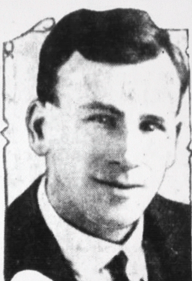
Richard Moxey (junior) [Truth, 1 July 1928]
He and his wife and a young man named Fullerton employed on the farm were sitting quietly at the table in the kitchen, Mrs. Moxey sewing, Mr. Dick Moxey reading and the lad listening to the wireless. The victim got up from the table to tune in more clearly the wireless set and was standing at the machine when the gunshot crashed through the window from outside, and Mr. Moxey fell dead instantly.
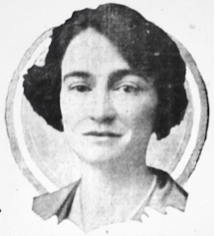
Elma Sarah Moxey (nee Shearman), wife of Richard Moxey (Jnr) [Truth, 1 July 1928]
The charge fired at no further distance than six or seven feet embedded itself in his neck, and side of the skull. Young Fullerton went outside to see who fired and Mrs. Moxey ran screaming to her nearest neighbour Mr. Allan McLean, and crying out that ‘Dick had been shot’. In a very short time, the news of the tragedy spread. Dr. Meredith was immediately rung up and from the Terrace [Raymond Terrace] he hastened to the scene; Sergeant Ireland with Constable Newham hurried to Williamtown. Sergeant Ireland rang up the Newcastle police station and also informed them.
The night was particularly dark, and no one could be seen more than a few feet away. Earlier in the night, it was about seven o’clock when the tragedy occurred, Fullerton had occasion to go towards the cow yard to let the cows out after feeding, and he returned to the house, and said there was someone about the yard. But Moxey replied he had probably seen one of the cows. Five feet paling fence is alongside the western side of the house and an iron tank is close to the fence near the window. The murderer could crouch there and watch for his victim without any danger of being seen in the dark, and to make surer aim could rest the gun on the fence.
Sergeant Ireland and Constable Newham made a careful search about the premises for footmarks and any other piece of evidence that may give a clue, but in the dark with only a torch, nothing could be seen. Morning had to be awaited, and Constable Newham kept a close vigil all night. Police and Detectives from Newcastle arrived during the early part of the night and also searched for a clue.
The following morning a further reinforcement of police arrived from Newcastle under Inspector Ramsay. Diligent search was made for any traces of the murderer and instructions were given the police to search every water hole in the district to discover the gun.
Saturday brought nothing only conjecture. But in the morning James Dent, a young man who had been working the farm on the share system for about two years with Mr. Moxey arrived from Stockton. He came, he said, on account of what he read in the paper about Moxey’s death. Various rumours had been current concerning Dent and his associations with the Moxey’s home and on account of this he was kept under surveillance by Constable Newham and was later detained.
Dent, when working the farm had in his employ a young man named Jackson, and as they had been closely associated the police kept him under observation. All the searching on Saturday discovered nothing, but from questions plied to Dent and Jackson by the police there were certain incriminating circumstances which were something to work on.
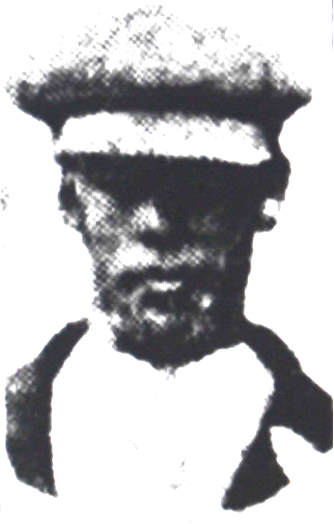
Charles Henry Jackson
On Sunday events moved more rapidly, and by noon the Detectives had information that led to important results, to such an effect that Jackson made statements which led to the recovery of the gun in a waterhole in front of Mrs. McPherson’s residence where Jackson had been working. It was he who led the police officers to the water hole. He further went with the officers and recovered a cartridge shell near the shed on the farm.
Dent admitted having purchased the gun in Newcastle to go rabbiting with Jackson, which they did a few weeks ago, but had a disagreement and broke camp, only to meet in Newcastle again early last week. Both Dent and Jackson were arrested and taken to Newcastle, and on Monday morning at the Police Court the charges were that “Charles Henry Jackson, 23, labourer, on June 15, at Williamtown feloniously and maliciously murdered Richard Moxey, dairy farmer, of Williamtown and that James Dent, 21, labourer, incited, procured, aided, counselled and commanded Charles Henry Jackson to murder Richard Moxey.”
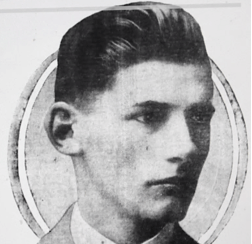
James Dent [Truth, 1 July 1928]
Neither made any reply when charged and a remand for eight days was requested by Sergeant Ward and granted. Jackson appeared dazed, and frequently applied a handkerchief to his eyes, as though he had been crying. Dent, appeared more collected, and there were no traces of emotion on his face.
During the time Dent was working on the farm for Richard Moxey, a disagreement arose over domestic affairs, and a fight occurred, and it is alleged that Dent made statements to Jackson afterwards that implied that he would like Richard Moxey out of the way.
The home prior to the share farming had been a happy one. A comfortable house, luxuriously furnished with all that was required for modern comfort and well maintained; for the family were well-to-do, and enjoyed the respect of the entire district, for both the families — Moxeys and Shearmans [family of Moxey’s wife]—have been residents down to the fourth generation. A great sorrow fell over the district, and horror at such an atrocity is widely expressed. The inquiry will be held at Raymond Terrace on Thursday, at the Court House.
The funeral of Mr. Richard Moxey was held on Sunday morning and left his late home at 11.25 for Stockton Cemetery. The cortege was almost a mile long and was the largest funeral that has passed to the cemetery for many years. Sorrow was manifest and hope expressed that the culprits would soon be discovered. The Rev G. Williams from Raymond Terrace conducted the service at the home and at the graveside and he made touching references to the sad calamity and extended his sympathy and that of the Methodist congregation and friends to those who are bereaved.’
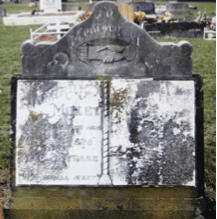
Grave of Richard Moxey – Stockton Cemetery
Background of Richard Moxey
The Truth of 1 July 1928, page 16, reported:
‘The first Moxey came, like Abraham, into the Williamtown district, seventy years ago. He wrested fat grazing: from the flat swamp country, was fruitful and multiplied. And his seed is scattered, well-to-do and respected, throughout the district. Dick Moxey, who was murdered, was his great grandson.
Richard, junior, as he was known, was born and bred in the district, went to the little Williamtown schoolhouse, and when he could make good his escape from the Williamtown schoolhouse ‘went fishing’ over at ‘The Beach’ — that same long sweep of Stockton Beach where the White Bay and the Uralla recently came to grief.
Dick was twenty-eight when he was murdered, grown into as fine a type of man, as open-hearted a son of the soil as even a Moxey could be expected to be. His dark, rather frail, rather attractive wife is a year younger. Back in those years at school,he probably pulled her plaits on many occasions. Later on, six years ago, he married her. It was a fine marriage, the son of old Henry Moxey and Sherman’s daughter.
Dad Moxey transferred to them the property known as the McLean and Snodgrass Farm, on the Cabbage Tree-road, a little over a mile from Williamtown, on the way to Raymond Terrace. Dick Moxey was a hard worker, and his Jersey cows waxed fat. He looked after his property well, and at the time of his death the 75 acres was worth a good £15 an acre. Altogether he could have put his hand on the better part of £3500. He had £400 in the Government Savings Bank but recently transferred it to a trust account in his and his wife’s names.
A progressive man in the district, he was somewhat of a public figure, taking an active interest in whatever movements went on. His frank, open countenance, though not handsome, was pleasant, and, ever ready with a smile, welcomed everywhere. Three chief hobbies he had. Fishing, his Chev. car, newly painted, his Radio, which took such a tragic part in the circumstances of his death.
‘Aw, yeah!’ said a neighbour the other day, as he stood outside Moxey’s farm. ‘He was good fishing’. He had a sort of uncanny knack. He’d look at the water and say, ‘There’s fish there.’ And, by cripes, there was. He never came back without some fish only once. That was on the Tuesday night before he was shot. He seemed sort of uneasy and walked up and down and never caught any. That was funny, because it was the first time I knew him never to have caught any fish. . . .
‘He’s got a beautiful wireless set,’ the conversationalist got enthusiastic, ‘and he’s been experimenting.’ ‘What for?’ the listener inquired. ‘To cut out static.’ The eyes lifted to the aerial, rising forty feet above Moxey’s farm. A wonderful aerial (if you had a crystal set, but – ) and strung very taut. The set itself, that is more discussed than any other in Australia today, was an old-fashioned, three-valve, loose coupler tuned.
Moxey had been also experimenting with higher voltage. He had bought two extra H.T. batteries three days before his death. Probably it was that that was indirectly responsible for his death. They have said that he was going over to tune his set when the fatal shot came. But it seems more likely that he was about to put on a bit of extra voltage. For the ‘A’ battery, he was using the battery out of his car. The home was most pretentious for the district, roomy, well-laid-out, and beautifully furnished.
‘Dick Moxey would do anything for his wife,’ said another old identity. ‘She only had to sigh and he’d have somebody to do the work for her.’ At the front and back of the house, within the home yard, were neat gardens, vegetable and flower. Gateways led out towards the eastern side to the cowshed and hayshed, perhaps sixty yards from the house, and on the western side to the cow bails. All the fat Jerseys stood in their stalls, their sterns sticking out and their tails flicking. Over towards the road was the old-fashioned stile, leading on to the main road, over which the murderer might have climbed.’
Coroner’s Inquest
The Dungog Chronicle of 3 July 1928, page 2, published a concise review of the proceedings at the Coroner’s Inquest, which led to Charles Henry Jackson and James Dent being committed for trial:
‘The inquest regarding the death of Richard Moxey at Williamtown on June 15th was opened at Raymond Terrace on Thursday and completed at Maitland on Friday last. The Coroner, Mr. D. W, Reid, P.M., found that Richard Moxey died from the effects of a gunshot wound feloniously and wilfully inflicted by Henry Jackson. He also found that James Dent was an accessory before the fact. He committed Jackson and Dent for trial at Newcastle Circuit Court on October 9, or such other court as the Attorney-General may appoint.
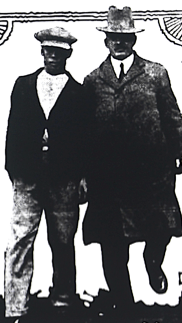
Charles Henry Jackson leaves West Maitland Court House under escort of Detective-Sergeant Ryan [Truth, 24 June 1928]
At the inquest, evidence was given by Sergt. Ireland, of Raymond Terrace, who went out on receipt of news of the tragic death of Moxey. Arthur William Fullerton an employee of the dead man, who was in his company when the fatal shot was fired also gave evidence. On the night in question, he saw a man hasten away from the hay shed. He told of Moxey bending over his wireless set, then came the explosion, and Moxey fell. He stated that he did not see any familiarity between Dent and Mrs. Moxey.
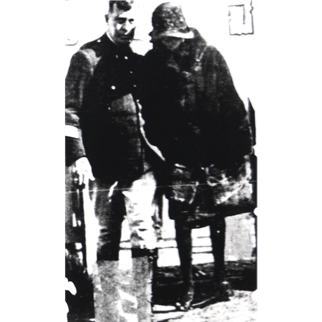
Mrs Elma Moxey assisted into Raymond Terrace Court House by Sergeant Ireland [Truth, 1 July 1928]
Dr. Meredith detailed the nature of the wounds sustained. He also spoke of the high character borne by the dead man. Mrs. Moxey related the happenings of the fateful night. She stated that she never went to the hay shed [supposedly to meet Dent] prior that evening. She denied any collusion with Dent or Jackson to secure the death of her husband. She also denied familiarity with Dent, but said that Dent once or twice kissed her, in the presence of her husband, as he was leaving the house. She admitted having written letters to Dent and that he had written to her. His letters had been read by her husband. She left her husband for a week and went to Werris Creek. Dent was not with her.
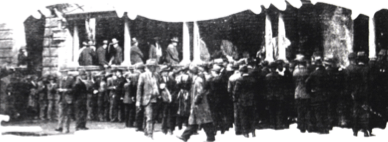
Spectators at the Coroner’s Inquest held at the West Maitland Court House into the Moxey murder which drew much public interest [Truth, 1 July 1928]
Detective Sergt. Ryan told the Coroner of his visit to Mrs. Moxey and also to Dent and Jackson. The last named took him to a waterhole where the gun was recovered. Later the death dealing cartridge was shown to the detective. Statements alleged to have been made by Jackson were produced by witness. In one statement Jackson told of how Dent asked him to get rid of Moxey as he wanted his wife. On the night of the tragedy Jackson said that Dent placed the gun in his hands and said, “If Dick is fooling about with the wireless, now is your chance.” About five minutes afterwards I fired a shot at Dick Moxey.
We both ran away. Dent ran to the car, and I ran straight away home. Dent often told me that if I killed Dick Moxey, he would give me half of the cows on the farm.” Witness said that Dent, on seeing this statement said, “He will be kicked out of hell for telling such lies.” Jackson, in a second statement said that Mrs. Moxey offered him £50 to do away with her husband.
Constable Giddings of Raymond Terrace related that at about 5.30 p.m. on the evening in question, as he was riding along the road, he saw a woman standing in the rain near the shed. A. E. W. Searl, another witness, stated that in May Dent said he would marry Mrs. Moxey if she were free. George Condon, the taxi-driver, who drove Dent about, and on the night of the murder, related various incidents leading up to the commission of the act. He showed Dent a newspaper containing the report of the tragedy. Dent expressed no surprise or regret. He found a cartridge in the car on the Sunday morning afterwards and destroyed it. The number plate was off his car and had been off for a couple of days.
Henry Moxey, a retired farmer, and father of deceased told of his fears for his son’s safety. He advised his son to get rid of Dent from his employ. Dent and Jackson did not give evidence and were committed for trial as mentioned above.’
Pre-trial publicity
To arouse the public’s interest in the forthcoming ‘Radio Murder Trial’ the Truth of 2 September 1928, page 10, published the following short report:
‘On Tuesday next, Charles Henry Jackson, 23, will take his stand at the Darlinghurst Criminal Court to answer the charge of murdering Richard Moxey, jnr., the dairy farmer of Williamtown, near Stockton, Newcastle, on the night of June 15. The story of the “Radio” Murder will he told in all its detail in the higher court.
What new waves will be caught by those who will listen-in to one of the most intriguing tragedies of recent years? ‘Truth’ will supply the full log, with pen pictures of the principals and intimate atmosphere.
Mr. Justice Campbell will preside. As Jackson was not represented by counsel at the inquest, the Crown has assigned Mr. Hinton (instructed by Mr. Philip) for his defence. James Dent, 21, under committal on a charge of having incited Jackson to murder, will be tried separately. The date of his trial has not yet been fixed.’
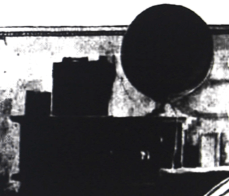
The radio Richard Moxey was adjusting when he was murdered [Truth, 1 July 1928]
The Trial failed to be as sensational as had been anticipated
The Truth of 9 September 1928, page 13, reported:
‘When Charles Henry Jackson, a 21-year-old farm labourer, standing in the dock at the Criminal Court, Sydney, last Tuesday, confessed to the murder of Richard Moxey at Williamtown, near Newcastle, on June 15, and related certain circumstances which he said led up to the murder, he reduced what had promised to be one of the most amazing murder hearings of recent years to the mere story of a crude and brutal killing by a half-wit.
But up to that minute three separate statements had been made by him, in one of which he accused the murdered man’s wife of having incited him to commit the deed, and in another set forth that not this woman, but one James Dent, a friend of the Moxey family, had been the inciter.
He was sentenced to death by Mr. Justice Campbell, the Jury recommending him to mercy ‘on account of his low mental condition.’ Dent, who was present in custody on the Inciting charge, was forthwith released.
The tragedy occurred on June 15. While listening, with his wife and a farm hand, to the radio in the kitchen of his farm at Williamtown after the evening meal, Richard Moxey, aged 34, long resident in the district, was shot dead through the window from the darkness outside.
Police investigations into the case resulted in a set of statements being put before the Coroner which electrified the court and fairly astounded the public. The inquest was begun on June 28 at Raymond Terrace by the Maitland District Coroner, Mr. D. W. Reed, who concluded it at West Maitland on the following day.
The principal figures appearing were Elma Sarah Moxey, the widow, James Dent, who had been operating a part of Moxey’s farm on the share system, and Charles Henry Jackson, who had been employed by Dent as a farm labourer.
Dent’s statement was the first read by Sergeant Ryan, of Newcastle. It alleged that while Dent was on the farm, Moxey was always ‘jealous of him in relation to Mrs. Moxey.’ ‘On one occasion,’ ran the statement. ‘Mrs. Moxey told me to go to bed, as I would only get her into a row by sitting talking to her. I went to my room and then heard a row between Moxey and his wife. I went to Moxey and said, ‘Who are you going to shoot?’ He did not reply …. ‘I never offered any money to get rid of Moxey, and I was not in Williamtown last Friday night. I have heard Jackson say on more than one occasion that he would do for Moxey.’
Jackson’s sensational first statement which followed, accused Dent of having urged him to get rid of Moxey. It attributed to Dent such words as — When you get Moxey up at the rock fishing, or up on the beach, you push him over, and then I’ll get his wife . . . If you don’t get rid of Moxey for me, I’ll go to Sydney and get some of the crooks to do it. Finally, this first statement alleged, Jackson shot Moxey at Dent’s direct Instigation. The second statement given by Jackson, however, contradicted the first, by naming Mrs. Moxey as the person who incited him, and alleging that she offered £60 for the murder.
The description of the actual slaying, as set down in this document, was: I stood in the rain for five minutes with the gun resting on the fence. The barrel was about a couple of inches from the window. It was about ten minutes before Moxey stood up to do something to the wireless, and as he stood up, leaning over the wireless set, his head would be about a foot from the window. Then I fired. I knew I hit him, but I did not see him fall. I then ran away down the road. I threw the gun into a waterhole on the side of the road, and the empty cartridge shell I took out of the gun and planted it in the cowshed at McPherson’s place, where I work. ‘I did not see Dent on Friday night. The last time I saw him was about three weeks ago, when I left the train at Hexham, taking two of his blankets, the tent-fly and gun, when we were on our way to Singleton to go rabbiting. This was the gun that I shot Moxey with. I had It. planted in my bedroom at McPherson’s all the time.’
Also at the inquest Mr. Halse Rogers tendered a letter, said to have been written by Mrs. Moxey to Dent. The Coroner read the letter, which was undated:— Dear Jim, — Don’t start with that boxing till I see you again and you tell me all about it. First I do not think it would be much good for you, but, of course, if you want to I suppose you will. It is not so much the boxing I object to, but the company you get into. But I know you could go in any company and not stain yourself. It you had will enough and wanted to keep straight and clean and my prayers could keep you straight, Jim, you would never go astray, because I pray for you always. You said you did not believe in life hereafter. I don’t know if you meant you did not believe in anything, but I do, Jim, and pray to God to help me to bear my troubles and worries.
Sometimes I feel I cannot keep going, but still I do. I count my troubles as nothing, Jim, if only you try to live right and have a good name, and I have faith in you and I know you will. I hope you will not think I am preaching to you, Jim, because I am not. But I thought I would write you this note and post it tomorrow if I go to town. Jim, I hope you did not misunderstand me last night when I asked you to go home. You did not think I wanted to get rid of you, did you, but I think you understand all right.— Yours, E.’
But at the criminal trial on Tuesday, the sensational statements which had been tendered to the Coroner’s Court in evidence were not brought into requisition, only scanty items among them being referred to. The evidence which previously had occupied two days [at the Inquest], was now got through in less than an hour. The addresses took only 40 minutes altogether, and the Jury retired at 12.10 p.m., returning with the verdict at 3.40.
Mr. L. J. McKean prosecuted for the Crown, and Mr. W. S. Hinton (instructed by Mr. A. O. Phillips), appeared for Jackson, while Mr. J. Kinkead (instructed by Mr. A. S. James, of Newcastle) watched the interests of James Dent, present under arrest on the inciting-to-murder charge.
Jackson is a rather heavy-featured country youth of 21, large-lipped, blue-eyed, with wavy, dark brown hair and a brooding expression. It was again mentioned during the hearing that he was brought up under the supervision of the State Children’s Department, which boarded him out to the McPherson family of Tollinba [near Bobs Farm], with whom he was living at the time of the murder.
To the charge that, on June 15, he murdered Richard Moxey, he [Jackson] replied, ‘Not guilty, your Honor,’ in low tones. Scarcely audible were his challenges to the first, fourth and fifth jurymen called. Among the big crowd which jostled for admission at the two doors and waited for the verdict were Mrs. Moxey’s father (‘Dad’ Sharman), Moxey, senior (the murdered man’s father), Mrs. Moxey’s brother, and many people from Raymond Terrace, where the parties principally touched by the tragedy were widely known.
The first witness was Dr. Meredith, of Raymond Terrace, summoned by the police to Moxey’s side just after the shooting. He said that Moxey was dead when he arrived at the house. A wound about five inches in circumference near his right ear had caused death. The doctor was followed by Elma Sarah Moxey, the widow— a very slight, fair little woman, with a tense expression and dazed looking eyes which continuously roved the floor at her feet.
She described the tragedy: ‘My husband was sitting at the side of the table a yard away from the window. I was sitting at the end of the table. Fullerton (Moxey’s farm hand) was sitting by the fire. My husband got up to fix the wireless. He had barely touched it when I heard that terrible noise. He fell back. I didn’t know what it was. I thought it was the wireless. I ran to him; he was lying on his back. Fullerton and I dragged him into the dining room. Jackson came back to work there about Christmas time. I didn’t know him before. He left about March.
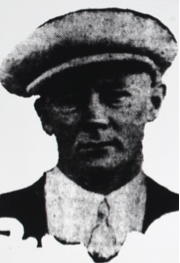
A. W. Fullerton [Sun, 1 July 1928]
To Mr. Hinton, she said: ‘My husband never drank, I left him at one time for a week and always refused to tell the reason. I don’t want to state the reason. I forgave him and came back. Jackson used to go to the beach with my husband. Charles Henry Fullerton, an unusually dapper-looking young fellow for a farm hand, corroborated her evidence as to what happened at the time of the shooting.
Detective-sergeant George Emmett and Detective-sergeant Tom Ryan, of Newcastle, gave evidence. They saw Jackson on June 16, at the home of the McPhersons, about two miles away from Moxey’s farm, where he was living. Jackson said that he was at home at the time of the murder. Next day he made a statement, which he signed, and later on he showed them a waterhole, from which one of the police recovered a gun, which Jackson said was the one used in the murder. In a shed was found a cartridge-shell. which Jackson said was the remains of the cartridge with which he had shot Moxey.
Ryan said that as Jackson was being put in the cell, he stated, ‘Dent was not with me when I shot Dick Moxey.’ Seen again at Maitland lockup, Jackson said, It’s not much, Mr. Ryan, I only want to say that I didn’t see Mrs. Moxey on the night of the murder. I had not seen her for about a month previously.
To Mr Hinton, Ryan said from inquiries he had made into the antecedents of the accused, be believed Jackson to be a hard-working lad who had been since infancy under the care of the Child Welfare Department. This closed the Crown’s case.
Jackson made his statement from the dock, which concluded: ‘I’m sorry for saying what I did about Mrs. Moxey. It was not true. He gave this version: I was working at Richard Moxey’s Farm, and while I was there, he used to get me to go to the beach with him. Here Jackson alleged that Moxey was guilty of grave offences. He wouldn’t leave me alone, Jackson continued. On one occasion I got away, and I took his car and came home. On the Saturday after I was in the hay-shed and Moxey started an argument about me taking his car, and said he was going to summons me. I said, If you summons me, I will tell them what you did at the beach. He said, You won’t go far if you tell the wife. He grabbed a gun from behind some corn sacks. I rushed at him and grabbed the gun, too, and it went off. On the Saturday after that, I left McPherson’s and went to Portland for three months and then came back to McPherson’s.
On the Thursday after I came back, I met Moxey on the Williamtown road. He said, ‘You have put it all over Williamtown what I did.’ I said, ‘I did not’ ‘He said that if I did not leave Williamtown, he would do for me, that he would get me one time or another. ‘I was frightened to stay at Williamtown and left on Friday and went to Raymond Terrace. ‘I had a couple of pounds in my pocket and started drinking.
Then I went to another pub and was drinking there. I was drunk when I left there. I don’t know how I got home. I must have gone to Moxey’s and fired the shot. I don’t remember it. ‘One of the chaps who had been with me all the day before came home. In the morning and told me that Dick Moxey had been shot I then had a recollection that I had been up to Moxey’s and had done something like that ‘I got frightened and planted the gun.’
Twice returning to court to ask questions of his Honor for their guidance in what they evidently considered a difficult duty the jurors announced their verdict after a retirement of three and a half hours. Jackson, who stood unmoved, told the court that he had nothing to say, and when the death sentence had been pronounced, he turned and walked down the dock stairs with a steady step.
Mr. McKean then asked that James Dent be called to the bar, and this having been done, he told his Honor that he had been instructed by the Crown Solicitor to ask for Dent’s release from custody. The Judge made an order accordingly, and Dent lost no time in finding his way out of the dock.’
Death sentence commuted
The Tweed Daily of 29 September 1928, page 4, reported:
‘The State Cabinet today commuted to imprisonment for the term of his natural life, the sentence of death imposed on Charles Henry Jackson (21) for the murder of Richard Moxey of Williamtown.’
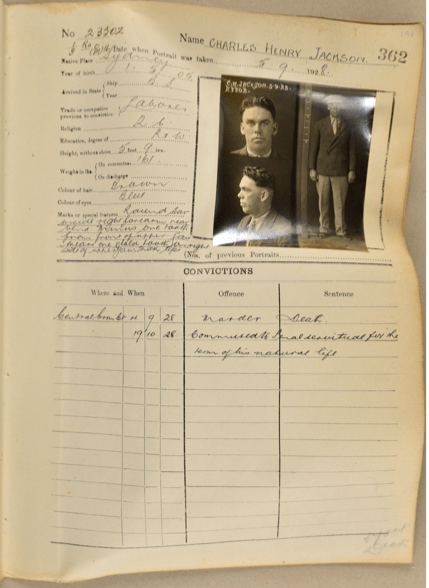
Record of incarceration ofCharles Henry Jackson – 5 September 1928. The commutation of his sentence to life is noted on the record [NSW State Archives]
James Dent claims he received rough justice
The Gloucester Advocate of 18 September 1928, page 1, reported:
‘Declaring that he had not been given an opportunity of speaking on his own behalf, and removing the stigma, which he said the Williamtown murder trial had left upon him, James Dent, when interviewed in Newcastle on Friday, said that had the charge of incitement to murder, made against him, been proceeded with at the Central Criminal Court on Tuesday he could have definitely established his innocence.
At the conclusion of the trial of Jackson, who was convicted of the murder of Richard Moxey, Dent was released, the Crown Prosecutor announcing that he had been instructed to abstain from proceeding with the charge. Since the trial, Dent said, people had asked him if he were going to Melbourne. His reply was, “Why should I?” I am going back to Newcastle to show that I am innocent. If I can get work in the district I will stay there.”
In traversing the evidence, Dent said that it had been inferred that he and Mrs. Moxey had gone away together. At the time Mrs. Moxey left her home, he was in Melbourne, where he had gone to spend a holiday. The evidence of his father and brother-in-law, who lived in Melbourne, would establish that fact. Mrs Moxey left Newcastle with her brother-in-law and sister and stayed with them at Werris Creek until her husband went up for her. She returned home the day before he (Dent) returned from Melbourne.
‘When I was in Maitland goal, I spoke to Jackson,” Dent continued, “and he told me that he brought me into the statement only because of the yarns that had been circulated at Williamtown. He had heard the yarns but knew nothing personally about the incidents to which it was alleged they referred.” Dent said that he had spoken to Richard Moxey about the yarns that were going around, and suggested that he (Moxey) take steps to see whether there was anything in them. Moxey said: “Don’t take any notice of them. They don’t know what they are talking about.”
Dent added, that since he was six years of age, he had never known a mother’s love until Mrs. Moxey took care of him. “She is one of the best women in the world,” he declared. After outlining his connection with Moxey, Dent said Jackson commenced to work for him on December 23, 1927, when he was managing Moxey’s farm, and remained until the beginning of March, 1928.
Afterwards he (Dent) came to live in Newcastle. Since then he had only visited Moxey’s farm on three occasions. The first was in the daytime, when he went to get a saddle which he required for a rabbiting trip in the country. The next time was on the Tuesday night before the murder, the object of the visit on that occasion being to secure some collars which Moxey had got from the laundry. He also intended then to go to Jackson’s place to get his blankets, rifle, and tent fly, which Jackson had stolen from him. He called at Moxey’s for the collars and was informed by Arthur Fullerton that Jackson had gone to the beach. He stayed there talking for a while and then went straight back to Newcastle.
The third occasion was when the taxi-driver came to him and said that Dick Moxey had been murdered. The two of them then drove out to the farm. Dent said that after the murder he was brought to Newcastle and charged. From there he was taken to Raymond Terrace, and then to Maitland gaol. “I was two months and a half in gaol for ‘nixey’ [slang meaning nothing]” he said.
Dent alleged that he had not been given “a fair go” by some of the police, and that statements had been attributed to him that he had never made [verballed]. In Maitland gaol he was kept apart from the prisoners’ serving sentences, and the light in his cell was kept burning all night.
He was allowed to talk to Jackson after the Raymond Terrace inquest. “Jackson make a statement to an official when he was in Maitland gaol a month ago exonerating me, but I was still kept in gaol until the trial. If my innocence was established by Jackson’s statement, then I should have been released a month ago.”
Dent claimed that he had been put to considerable expense in preparing his defence. A solicitor and a barrister were engaged. The money was paid by his brother, but he thought it his duty to repay it. He had no money when he was discharged from the Central Criminal Court. He alleged that the police wanted Jack Conder, the taxi-man, to pay his fare home. “I said to them,” declared Dent, “that he did not pay my fare down to Sydney, and he was not going to take me home.” As the result of his protest, he said, he was given a railway pass to Newcastle. But for the kindness of Condor, who paid for his dinner, he would have had nothing to eat from lunchtime until midnight, when he arrived in Newcastle.’
Williamtown residents defend Richard Moxey’s tarnished name
The Raymond Terrace Examiner and Lower Hunter and Port Stephens Advertiser of 4 October 1928, page 3, reported:
‘The statement made by the condemned man Charles Jackson, and whose sentence of death has been commuted to imprisonment for life, is known by so many people in the Williamtown district to be untrue that voluntary statutory declarations have been made by those who are able to do so, in refutation of the ridiculous assertions made by Jackson from the dock.
As the late Mr. Richard Moxeys’ name was untarnished during his life, it would be a scandal if his memory were to be allowed to carry such atrocious accusations as Jackson made, without being corrected. If they went undenied those people who did not know the late Richard Moxey may be led to believe that the accusations of Jackson may be true. And in order to protect the future welfare of Richard Moxey’s son of four years of age [Leslie Moxey, born on 22 April 1924 and died in June 2014] it is very desirable and just that the statements concerning his father should be emphatically denied.
The following declarations have therefore been made by those in a position to make them:
I, Earl Sansom, of Tobimba, Williamtown in the State of New South Wales, Farmer do hereby solemnly and sincerely declare: Charles Jackson left McPherson’s place shortly after breakfast on the 15th day of June last with a gun and he did not return until dinner time. I was with him in the afternoon gathering firewood. When I left McPherson’s that evening at 20 minutes to 6 pm Jackson was still there and was quite sober.
I, James McPherson, of Tobimba, Williamtown, in the State of New South Wales, farmer, do hereby solemnly and sincerely declare : — I have read the statement made by Charles Jackson from the dock in his recent trial and where he states “I went to Raymond Terrace and went into a pub and started dunking; later on I left. I was drunk in the afternoon when I left there. I do know how 1 got home” is untrue, as Charles Jackson was at my farm and at 3 pm. on the date in question, he, Thomas Sherry, Earl Sansom and myself went to fall firewood in the bush. We all came in from the bush together. We got the feed for the cows between showers. Sherry, Sansom and Jackson milked between four and half past four pm. Towards dark I saw Jackson washing up at the dairy. We had tea about 6 pm. and twenty minutes after Jackson got up from the tea table. I never saw him again that night.
I, W, Dawson of Williamtown in the State of New South Wales do hereby solemnly and sincerely declare: — I had on different occasions accompanied Richard Moxey fishing and never found him attempt any wrong practices. He was always highly respectable. I believe Charles Jackson’s statements to be untrue. I know of no occasion when Jackson was ever on the beach alone with Richard Moxey.
I, Herbert Cox, of Williamtown, in the State of New South Wales, farmer, do hereby solemnly and sincerely declare: — I have read the statement made by Charles Jackson from the dock on the date of his trial. I had been an old fishing mate of Richard Moxey’s and frequently together on the beach during the past five years and he was never guilty of attempting or suggesting any such practices with me. I know of no occasion when Richard Moxey and Jackson were ever alone on the beach.
I, Arnold Russell Moxey of Williamtown, in the State of New South Wales, farmer do hereby solemnly and sincerely declare: — I read the statement made by Charles Jackson from the dock on the date of his recent trial, and that portion in which he states ”I got away and ran home from the beach and took his (Richard Moxey’s) car” is untrue as far as running away from the beach is concerned as I was present on the beach with my brother Raymond Moxey, and my late brother Richard Moxey on that date and Jackson was not on the beach in company with Richard Moxey on that occasion.
I, Arthur William Fullerton, of Williamtown, in the State of New South Wales, farm hand, do hereby solemnly and sincerely declare :— I have read the statement of Charles Jackson from the dock in his recent trial and that portion where he states “(meaning Richard Moxey) grabbed up a gun that was in the shed. I grabbed it too. It went off”, I believe to be untrue as I was working at the farm of Richard Moxey for three months and had there been a gun in the hay shed I would have seen it. I lived in the district for eight years and never saw Richard Moxey with a gun. Richard Moxey informed me he would not allow a gun on the premises. I also declare that with regard to Jackson’s statement of abominable offences that he never acted in that way towards me and I believe he never thought of such a thing.’
Concluding Comments
The murder of Richard Moxey had major consequences on the lives of his wife, child, and the other parties caught up in that night of terror.
Elma Sarah Moxey remarried in 1933 and died on 22 May 1987. She was buried at Beresfield Cemetery, having outlived her first husband by 59 years. Their son Lesley, who became a primary producer, married in 1946 and died on 14 June 2014.
For all the falsehoods, told by Charles Jackson to justify his murdering of Richard Moxey and which were rejected by the Court, the real motivation for his crime was never established.
The residents of the small Williamtown hamlet also received a deep shock that would have taken years to recover. The former Moxey home and its surrounding land still stands at Williamtown.
The reputation of the Williamtown hamlet was also damaged for a period. Soon after the murder the Cessnock Eagle and South Maitland Recorder of 26 June 1928, page 1, reported:
‘It takes a murder to put a village on the map. Take, for instance, the village of Williamtown, the scene of the recent atrocious murder. Probably more than half the population within a hundred miles of the village never heard of it; many others had only vaguely known of its locality. But now, since the murder, Williamtown is on the map.
Hundreds and hundreds of motor cars have been driven to the scene of the murder and thousands of curious eyes have surveyed the unfortunate man’s home. ….. The neat cottage is built up to the main road, whereas most of the homes along the road are built back from the roadway.
There is nothing to lead one to suspect that any tragedy of a recent nature had been associated with this neat home, unless the house was sought for. Then a bag nailed to the bottom portion of a rear side window tells a silent, but eloquent story. It was here that the murderer steadied his gun on the fence, which, is about four feet from the window, and fired at Richard Moxey’s head as he was adjusting a wireless set. One moment an energetic, healthy man, the next the poor fellow was an inert huddled mass. A fine man, honoured and esteemed by the neighbourhood, 34 years of age, was the victim of the tragedy.
Several neighbours who were approached spoke of the deceased with tears-bedimmed eyes. The awfulness of the tragedy has shocked the populace of the village and surrounding district.’
Unfortunately, worse publicity was to follow, for the Newcastle Sun of 21 February 1929, page 10, reported:
‘Indignation is being expressed in Williamtown district about a side show exhibit, at Newcastle Showground, displaying the reconstruction, in wax, of the Moxey murder. It is possible that there will be a protest from Williamtown residents and friends of the murdered man.
“I can’t understand why the show authorities tolerate such a thing,” said the Mayor of Raymond Terrace (Mr. P. Krohn) today, referring to the exhibit. “The tragedy was most unfortunate,” he continued, “and to exhibit a model so close to the district where it occurred, is uncalled for. I don’t blame the residents of the Williamtown district for protesting against it.”
Finally, the Singleton Argus of 2 January 1929, page 1, reported:
‘Richard Moxey, who was murdered while listening to the wireless in a room at his farm, at Williamtown, near Newcastle, on the night of June 15, died intestate. Letters of administration have now been granted to his widow, Elme Sarah Moxey, and his estate has been sworn at £2630.’
Various other papers concerning the history of Williamtown are published on this website and can be viewed at the following links:
Early History of Williamtown Public School
Life and Times of the Union Hall at Williamtown
St Saviour’s Anglican Church at Williamtown
Former Uniting Church at Williamtown
Early History of Newcastle Civil Aviation Airport
Researched and compiled by Kevin McGuinness
January 2026

 Port Stephens - a history exploration