
Introduction
Prior to the First World War, the Temperance Movement was very active in the Williamtown area of Port Stephens.
Many residents of the area were active members of the Evening Star Lodge No, 204 of the I.O.G.T (Independent Order of Good Templars). The “Evening Star Lodge” movement in Australia was a 19th-century temperance society lodge associated with the I.O.G.T., a fraternal organization promoting total abstinence from alcohol.
The younger members of the Williamtown community were catered for by the Band of Good Hope movement that was also active.
The Temperance Movement in Australia, starting in the 1830s, sought to reduce alcohol consumption, mainly led by religious and social reformers. Groups associated with the movement were first formed in the greater Port Stephens region in 1834.
While national prohibition was not achieved, the Temperance Movements impacted social policy, women’s suffrage, and attitudes toward alcohol.
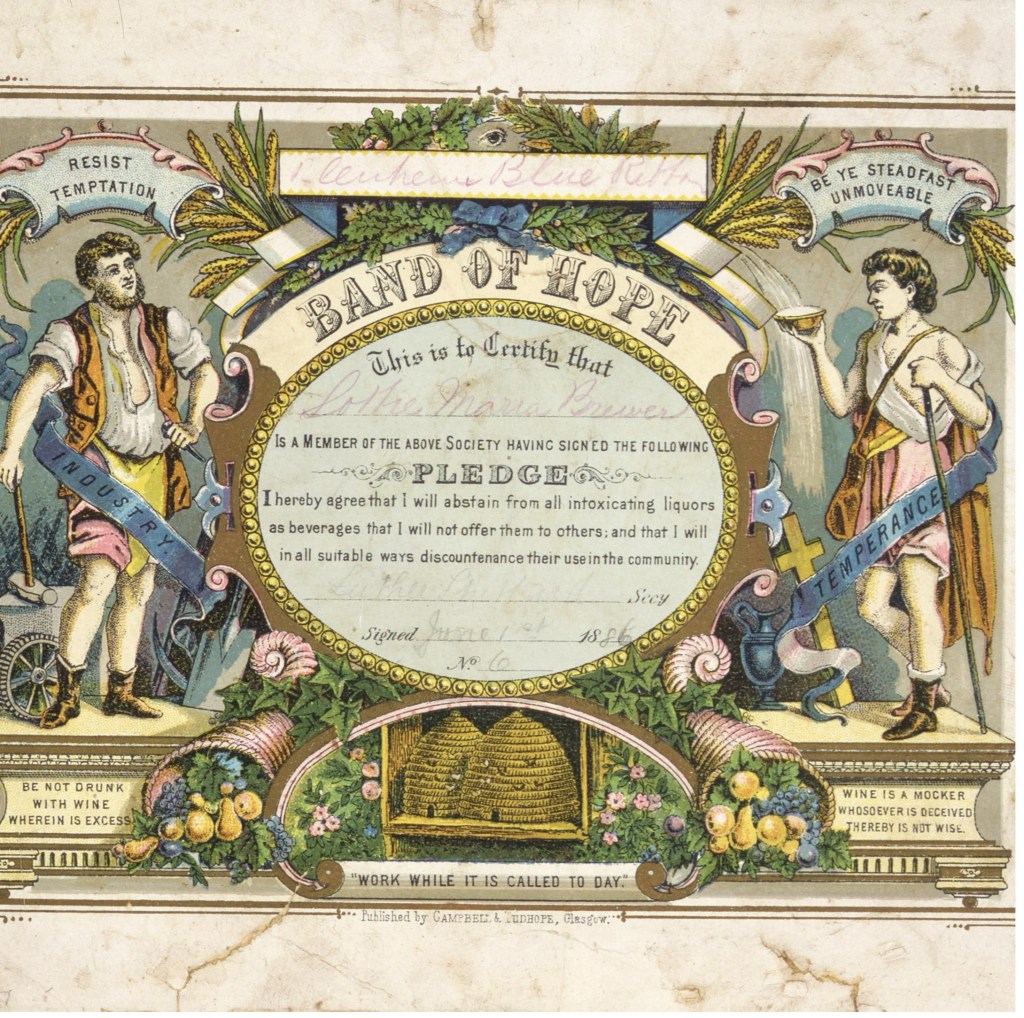
In Australia, the “Band of Hope” was a 19th-century non-denominational children’s temperance movement encouraging abstinence from alcohol, linked to the UK movement.
The Williamtown Temperance Movement claimed that on three occasions it succeeded in preventing any business establishing in the area that was to sell alcohol. Many a tired traveller or travelling salesman would complain that it was impossible to obtain liquor anywhere between Raymond Terrace and Nelson Bay.
In the tightly-knit Williamtown community, the Temperance Movement was supported by the two local churches, viz: the Church of England and the Wesleyan [Methodist], with the latter being particularly active.
To aid fund raising and social gatherings, the local community established a Temperance Hall at Williamtown, not far from the present Newcastle Airport.
Various aspects of the history of the Temperance Movement in the Williamtown and wider Port Stephens area are set out in this paper.
Beginning of Temperance Movement in the Greater Port Stephens Area – 1834
The beginnings of the Temperance Movement in the Greater Port Stephens area, which then included the Stroud area, can be traced back to 1834, when the Australian Agricultural Company was the primary commercial operator in the region.
The Sydney Monitor of 20 May 1835, page 2, reported:
‘The first anniversary of the New South Wales Temperance Society was held last night in the old Courthouse, Castlereagh street, his Honour the Chief Justice in the chair. The Report was read by the Rev. Mr Saunders, by whom it was drawn up. It contains several suggestions on the causes of intemperance, which are worthy the consideration of the Legislature, and from which we will make a few extracts in our next, if the Committee will furnish us with a copy. Upwards of two hundred members have joined the Society since the last meeting: and it may now be considered firmly established. Auxiliary Societies have also been established at Liverpool, Port Stephens, O’Connell Plains and the Cowpastures.’
The Port Stephens Auxiliary of the New South Wales Temperance Society was not reported upon past this point.
The next reference to the Temperance Movement in the Port Stephens region was the formation of the Port Stephens Friendly Temperance Society with its base at Stroud, where the Australian Agricultural Company then had its headquarters.
The Empire of 5 January 1858, page 5, reported:
‘The first general meeting of the Port Stephens Friendly Temperance Society was held at this place. [Stroud], on Monday last. Early, in the morning of that day a few active volunteers set to work in good earnest to provide suitable accommodation for a large social gathering. They certainly made good the saying that one volunteer is worth nine “pressed men.” Long before the appointed hour, the framework of a shed, belonging to the Australian Agricultural Company, had been covered with tarpaulin, and converted into a handsome rustic saloon, most tastefully decorated with evergreens, flowers, and many other coloured banners bearing appropriate devices.
The tables were laid for two hundred and twenty persons, and at five o’clock every seat was filled by a most respectable assemblage embracing all classes of the community. The usual temperance fare consisting of tea, coffee, cakes, and pastry was amply provided, and merrily and cheerfully discussed in a manner which testified that the caterers of those good things had discharged their duties to the satisfaction of the company. As soon as tea was finished and the tables cleared, the real business of the evening commenced by voting Charles Green, Esq., J.P., into the chair.
The Chairman, having acknowledged the compliment thus paid to him, then proceeded to make a few appropriate remarks on the subject for which they were assembled. ….. He was, therefore, glad to have an opportunity of expressing his sincere interest in the objects of the Society, and his determination to do all in his power to further those objects. He had intended to have procured from Sydney a handsome Temperance Banner, and to have presented it to the Society as a token of his good will and sympathy, but the pressure of domestic anxiety had prevented his doing so. He hoped, however, to carry out his intention before their next meeting. The ensign of a regiment was not merely for show, but as a rallying point on the battlefield. He trusted that they also would not only rally round the temperance banner, but that, like good soldiers, they would prove true to their colours in the hour of trial.
Mr. Skillman, honorary secretary, then read the rules of the Society, and gave an account of its operations during the brief period of its existence. It appeared from his statements that the prospects of the Society are highly encouraging. The number of members is already considerable. Several persons who had obtained an unenviable notoriety by their intemperate habits, have not only taken the pledge, but faithfully kept it thus far. He considered that the Society had done well in permitting its members to take, either a pledge of general temperance,” or of “total abstinence from all intoxicating drinks.”
Many persons who objected to sign the total abstinence pledge, were thus enabled to join and cooperate with them. He was aware of the arguments which his “teetotal” friends were prepared to advance against this arrangement – but their object was to do as much good as possible, and not to argue points on which good men differ. He thought that by establishing their Society on such a large basis as to meet the views of all the friends of temperance they merely secured a more extensive cooperation, and, consequently, more power of doing good.
Mr. Ogden then came forward, in answer to a summons from the Chairman, and delivered an able and effective address on the evils of intemperance, considered morally, socially, and religiously. His address was listened to with marked attention, and at the conclusion was warmly applauded.
Mr. Thomas Nicholls next came forward in the character of one of the oldest inhabitants of Stroud, to contrast the past with the present. His reminiscences reached back so far as thirty years. He could remember the time when a hundred men might have been seen in Stroud all drunk at the same moment. But he was happy to say that those days had passed away. Sir Edward Parry and his amiable wife gave the first impulse to a reformation. It now remained for them to carry on and perfect a work begun long ago. The present society was necessary, because they had as yet neglected to do all that might have been done in these matters.
Mr. Laman, senior, followed in the same strain, enlarging on the topics introduced by the former speaker. Mr. E. C. Laman was next called upon. He said that he was no speaker….
The Rev. J. Pendrell was then requested by the Chairman to say a few words, and he at once responded to the invitation. Though only a visitor among them, he had been interested in their proceedings, and he sincerely wished them every success. It was pleasant to be one of such a numerous and respectable social gathering assembled in the Bush to promote the good cause of temperance. It was commonly said that the dwellers in the Bush were much addicted to drinking, and he feared that in many places the impeachment was only too true, but the meeting before him proved that even this rule has its exception.
The village of Stroud was the most picturesque and truly English spot which he had seen in this colony. It was like an oasis of the desert amidst the monotonous wilderness of gum trees. …. The intemperate habits of the people of this colony was one reason why there were not more villages in Australia wearing the comfortable home-aspect of Stroud. He had visited many lands and yet he knew no bounty which offered greater advantages to the sober and industrious than Australia. Here every man who keeps from drink may, with ordinary prudence, gain for himself, not only a competency, but even more. This land might be covered with happy and comfortable homes – with happy and prosperous families, and smiling faces, if fathers and mothers would only abstain from drinking. …
The Reverend S. Simm, Chaplain of the Australian Agricultural Company, then came forward, to conclude the business of the evening. His observations were to the following effect – It gave him much pleasure to see before him such a numerous attendance at a meeting having the high objects which they proposed. He considered that the interest taken by all present in that evening’s proceedings was a legitimate matter of mutual congratulation. He could not, however, forget that novelty had a peculiar attraction in itself, and therefore it was more than probable that many had been attracted to the meeting, as much from the desire of seeing and hearing this new thing, as from the higher and more laudable motive of advancing the moral and religious welfare of themselves and others.
Though the prospects of the society were highly encouraging, and in some of its results even beyond what might have been expected at the first, he knew the evil of trusting too much to prospects. They must trust rather to efforts – positive and continuous efforts. It was not by fitful starts, and occasional displays of zeal, that real progress in any good can be made, but by patient continuance in well-doing. Thus must they act, if they would have the society prosper. ….
The reverend gentleman having concluded his earnest, and stirring address, then proposed a vote of thanks to the chairman, which was carried by acclamation, coupled with a cordial expression of the sympathy of the meeting with him in his recent domestic affliction. The doxology was then sung, and the meeting was dismissed with the apostolic benediction.
The meeting was highly interesting, and seemed, to elicit a most, cordial social feeling. It was stated by the chairman that no case of drunkenness had come under his notice during the Christmas festivities, and he had the singular satisfaction of declaring that there had not been a single person placed in the “lock-up” circumstance most unusual at this season of the year.’
Apart from the above report concerning the formation of the Port Stephens Friendly Temperance Society, in the greater Port Stephens area, no further reports of its activities, if any, were published. All was to remain fairly quiet on the temperance scene in the greater Port Stephens area, until 1868, when the residents of the Williamtown area attended a meeting on Temperance at the local Wesleyan Church.
Teetotalism Meeting Held at Wesleyan Chapel – Parading Ground [Williamtown] 1868
The Newcastle Chronicle of 29 September 1868, page 3, reported:
‘Last night a meeting was held at the Wesleyan Chapel upon Teetotalism. It was not so fully attended as might be wished, the reason of which being, no doubt, that the promoters of the meeting had disappointed the people in not attending once or twice before. — Mr. Bowden, of Tomago, was in the chair, who, with Mr. Bishop, gave a Temperance song, and Mr. Ashley, of Newcastle (late of New Zealand), gave a recitation, which, with some addresses, concluded the entertainment.’
Come the 1890’s the Temperance movement at Williamtown became very active.
Good Templary at Williamtown – 1892
The Newcastle Morning Herald and Miners’ Advocate of 14 April 1892, page 3, reported:
‘A public meeting was held on Monday evening, under the auspices of the Evening Star Lodge, No 203, of the above order [I.O.G.T.], for the purpose of hearing a lecture by the Rev. Bro. Thos. Davies, G.O., D.O.T., on “Prohibition, the coming policy of Democratic Australia. A statement of the policy, with objections and objectors, who and what are they?” Bro. D. Watson, D.D, occupied the chair. The meeting opened with the singing of “Rescue the Perishing.”
The chairman in a few introductory remarks referred to the great ability and the noble services rendered to the cause of temperance in the district and elsewhere by Bro. Rev. T. Davies. The lecturer, on coming forward, was well received. He said that he felt under certain difficulties in endeavouring to speak about “Prohibition” to prohibitionists, for he was given to understand that the local lodge had most successfully fought three applications for a license to sell strong drink in their midst, which proved conclusively that they were red-hot prohibitionists. However, he felt that the subject which he intended dealing with was one that required talking about even amongst those that were favourable to the policy, for there was a day coming, he believed, when there would be an opportunity afforded to the people to go to the ballot box and record their votes either for or against the existence of the traffic, and it was absolutely necessary that the people should understand the facts of the case in order that they might be able to fortify themselves and others around them against the trickery of the traffickers.
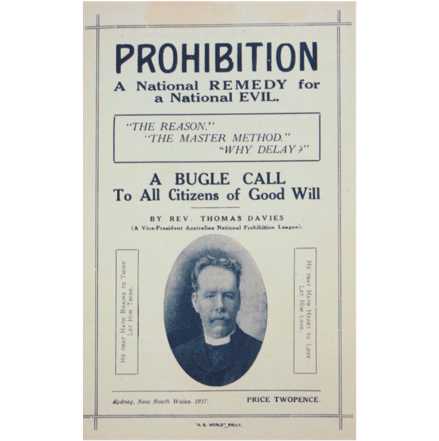
Cover of a 36-page book written by Rev. Thomas Davies entitled ‘Prohibition, A National Remedy for a National Evil’ – published in Sydney in 1917
To some people the word prohibition was as good as a ghost story any day; and in a most amusing manner the lecturer went on to relate the rumour about ghosts a few months ago in Wallsend, which scared the brawny minors one morning, causing some to go right straight home again, instead of going to their work. He then gave a statement of the prohibition policy. It was not a question of individual liberty, nor yet of personal rights, but it was a question of far more importance, for more reaching in its influence; it was a question of protecting society from injury; it was a question whether any Government had a right to legalise that which would blight and blast society and bring upon it premature disease and death.
They made no plea for sumptuary laws but rather to banish ruin and misery from the hearths and homes of the people. Some people ran away with the idea that they (the temperance party) were responsible for bringing temperance into polities; no such credit was due to the temperance party. The traffic itself was alone responsible for that, its own innate badness had placed it there. For over four centuries the British Government had tried to regulate the traffic but had failed. Why? Simply because they had never taken the right course to cure the evil. …
It was not the publican that brought the traffic into existence, but the Government rather, and it was the Government that was to blame for its evils. Not that he had any sympathy with any man that would enter into such a traffic, but as a matter of citizenship he had no right to blackguard the publican. Some people thought that moral suasion was the best means to effect a cure; others a said it was none of their business. The moral suasionist contended that the people were not ready for prohibition, which only showed their want of knowledge of the whole affair, as it was a sheer impossibility to know whether the people were ready or not until the vote was actually recorded; and those who contended that it had nothing to do with them were very often those people that had lost their nearest and dearest through strong drink.
Others said that hotels were necessary. He was quite prepared to admit that hotels were necessary, but not the grog. Some people tried to argue that prohibition did not prohibit. If such were the case, why in the name of common sense were the publicans so much afraid of it? The fact that prohibition did prohibit was the whole cause of alarm, and when once that prohibition became the burning question of the day it was only than that the people would see the tactics of the liquor dealers to defeat the people at the ballot. The lecturer, who spoke for an hour and a half, resumed his seat amidst a storm of applause. A vote of thanks was accorded to him for his able lecture, many speaking in the highest terms of it. A vote of thanks was also tendered to the chairman, after which the meeting was brought to a close by singing and prayer.’
Evening Star Lodge Fund Raising Concert – 1893
The Newcastle Morning Herald and Miners’ Advocate of 23 November 1893, page 3, reported:
‘A tea and concert was held in the Temperance Hall under the auspices of the Evening Star Lodge, No. 203, Williamtown, in aid of one of the settlers who was in depressed circumstances through the late flood. After tea was over the concert was then proceeded with. The hall was crowded to the doors. Bro. G. Langlands, Chief Templar, occupied the chair.
The following ladies and gentlemen contributed:—Songs, Miss Mabel Haddock and Mr. H. B. Gardner (“Paudin O’Rafferty’s Sea Voyage”); song, Miss M. Jenkins; dialogue, Misses Priestly, Cox, Turri, and Master Thos. Cox; song, Mr. W. Ingles (“Sailor Boy”); recitation, Miss Turri; duet, Misses Haddocks (“Angels are Whispering”); overture, Miss Smith; solo and chorus, by Messrs. J. Bevan and party, which was received with an encore, songs, Mr. H. Youll, Miss E. Barnicott (“Chiming Bells”); Mr. J. Griffiths (“Old folks at home”); Mr. J. Bevan (“Village Blacksmith”); duet, Misses Calley and Phillips (“Convent Bells”); song, Mr. L. Bevan (“Every bullet has its billet”); recitation, H. B. Gardner (“Amen Corner”); songs, Mrs. A. E. Jenkins (“Far Away”), Mr. H. B. Gardner (“Nancy Lee”); duet by J. and L. Bovan (“Army and Navy”), which was rendered in good style; after which the concert was brought to a conclusion by singing the national anthem.’
Band of Hope Temperance OrganizationFormed at Williamtown – 1894
The Maitland Daily Mercury of 6 April 1894, page 4, reported:
‘On Tuesday evening last the usual weekly meeting of the Evening Star Lodge No. 203, I.O.G.T., was held in the Union Hall [former Temperance Hall], the Chief Templar (Bro. J. Chesworth) presiding. The attendance was somewhat larger than has been the case for some time previously. After several items of business had been disposed of, it was moved and seconded, “That the Lodge adjourn in order to enable a public meeting to be held with a view to establishing a Band of Hope in the district.” The motion being carried, the Lodge closed in the usual form and the public meeting was constituted.
Mr. D. White was voted to the chair, and Mr. J. McQueen was appointed as secretary ‘pro tem’. The Chairman briefly introduced the subject, after which Mr. G. Langlands moved “That a Band of Hope Temperance Organization be established in this district to be styled ‘The Williamtown Band of Hope.’ Miss Matilda Moxey seconded the motion, which on being put to the meeting was carried. The election of officers was then proceeded with Mr. G. Moxey, sen., was elected President; the acting secretary having declined to permanently occupy that office, Mr. G. Langlands (who is the principal mover in the matter) was unanimously chosen as secretary; and Miss E. Cox was appointed as treasurer for the introductory term.’

Membership Certificate for the Band of Hope
Monthly Meeting of the Evening Star Lodge – 1894
The Maitland Weekly Mercury of 28 April 1894, page 5, reported:
‘The usual weekly meeting of the Evening Star Lodge, No. 203, I.O.G.T., was held in the Union Hall on Tuesday evening last, the Chief Templar (Bro. J. Chesworth) presiding. There was a fairly large attendance of members, and considerable interest was evinced in the proceedings. The principal business dealt with by the meeting was the nomination and election of officers for the ensuing term, when the following were chosen: — Chief Templar, Bro. William Moxey, sen.; Vice-Templar, Sister E. Cox; Secretary, Bro. J. McQueen (re-elected unanimously); Chaplain, Sister Mrs. Moxey; Treasurer, Bro. G. Moxey (re-elected); F. Secretary, Bro. A. Moxey; S J.T., Sister E. Moxey; Marshal, Bro. L. White; Guard, Bro. Wm. Moxey; Sentinel, Bro. G. Langlands. Bro. J. Chesworth retires to the P. C. Templar’s chair. Representatives to the district lodge were appointed; and after private business had been disposed of the lodge closed in the usual form.’
Hope of Stockton Lodge No. 445 Visited Williamtown Lodge – 1894
The Maitland Daily Mercury of 25 May 1894, page 4, reported:
‘The weekly meeting of the Evening Star Lodge No. 203, I.O.G.T., was held in the Union Hall on Tuesday evening last, there being a goodly attendance, Bro. G. Langlands, P.C.T., presiding. After the opening ceremonies had been performed, and several items of business dealt with, the Hope of Stockton Lodge No. 445 was officially received.
The visiting officers were voted to the chairs, and officiated during the remainder of the evening, the visiting Chief Templar, Bro. H. B. Gardiner, presiding. After ascertaining that the business sheet had already been dealt with, the Chairman stated that the visitors had a short programme of songs, recitations, etc., to submit for the consideration of the audience, and forthwith proceeded to personally open proceedings with a song, which was well received.
Bro. Boon was next called upon and favoured the company with a recitation. Sister Calley contributed a song in pleasing style. A song by Sister Barnicott, was well received, as was also a song by Sisters Smith and Rogers; Sister Phillips and Bro. Griffiths engaged in a dialogue which occasioned much applause; Sister Thomas contributed a song, after which intermission was declared, during which refreshments were handed round by the sisters of the “Evening Star Lodge”.
After the inner man had been thoroughly replenished, the proceedings, thus pleasantly interrupted, were resumed. Brother Gardner contributed a song in his usual pleasing manner; a duet by Sisters Smith and Rodgers won much favour; a solo by Bro. Boon was well received; Bro. H. Perkins, of the “Welcome Star Lodge”, Raymond Terrace, contributed a recitation, which was well received, and a song by the choir of the “Hope of Stockton” Lodge brought the programme to a termination.
On the motion of Bro. J. Chesworth, seconded by Bro. A. McLean, a hearty vote of thanks was accorded to visitors and duly responded to by Bro. Gardiner on behalf of Hope of Stockton 445, and by Bro. H. Perkins on behalf of Welcome Star 705, Raymond Terrace. After a vote of thanks to the refreshment committee had been duly accorded and acknowledged, a most enjoyable meeting was brought to a close, everyone being seemingly pleased with the evening’s entertainment.’
Monthly Meetings of the Band of Hope Society and Star Lodge – 1894
The Maitland Daily Mercury of 22 June 1894, page 4, reported:
‘The postponed monthly meeting of the local Band of Hope Society was held on Monday evening last, when an exceptionally large number of the residents of the district gathered in the spacious hall to listen to the promised programme of songs and recitations. The President (Mr. G. Moxey sen.) presided, and opened proceedings by asking those present to join in singing “Yield not to Temptation.” After a short prayer, the Chairman called on the various performers present to render their respective pieces. As we were not present at the meeting, we are unable to remark upon the individual merits of the respective items, but as the programme was a lengthy one, and contained pieces by performers of considerable experience and widely acknowledged merit, we think that the audience had little cause for complaint in this direction.
By the courtesy of the energetic secretary of the Society (Mr. G. Langlands) we are enabled to furnish the programme in its entirety : — Song, “The Newsboy”, Miss Ada Moxey; recitation, Harold Moxey; song and chorus, “Whispering Hope”, by Mr. G. Langlands and party; recitation, Miss Hilda Mortimer; song and chorus choir of school boys; recitation, Mrs. D. White; duet, “The Voice of the Wild Waves”, Mrs. Barnier and Mr. G. Langlands; recitation, Miss Agnes Moxey; song, “Lessons Learnt at Mother’s Knee”, Mr. A. Maher; recitation, Master J. Frederickson; song, “Grace Darling”, Miss Poster; recitation, Miss Edith Langlands; duet, “Murmuring Sea”, Misses Maher; recitation, Master Leslie Moxey; action song, by choir of children ; song, “Flower Girl”, Miss Langlands; song, “Tear of Pity”, by choir of children.
This concluded the programme, and the meeting was brought to a termination in the usual manner. This Society, although only recently established, appears to be rapidly increasing in favour amongst the residents of this district. No less than 64, names grace the members’ roll-book, and that their efforts at entertainment are duly appreciated is apparent from the fact that considerably over 150 persons attended the aforementioned meetings. The success of the Society is due in a large measure to the exertions of the energetic secretary (Mr. G. Langlands), who appears to labour indefatigably for the advancement of the association.
On the following Tuesday evening, the usual weekly meeting of the Evening Star Lodge No. 203 I.O.G.T. was held in the Union Hall, when a goodly number of officers and members were present. In the absence of the Chief Templar, the opening ceremonies were conducted under the supervision of Bro. G. Langlands, P.C.T. After the business sheet had been disposed of, the harmony competition was proceeded with the Chiefs Templar, Bro. W. Moxey, sen. (who had now put in an appearance), presiding.
Proceedings were opened by B Company with a song by Bro. White which was well received. Bro. J. Chesworth (A Company) followed with a short address on “Prohibition”, which was listened to attentively; Bro. G. Rodden (B) sang “The Sailor Boy” in pleasing style; Sister S. Langlands (A) contributed a song in a pleasing manner; Bro. J. Coulter (B) contributed a recitation which was well received; on behalf of A Company, Bros. A. McLean (captain) and Dennett, and Sisters M. Moxey, L. Moxey, S. Langlands, M. McArra, Edith Moxey and Mrs. White engaged in a dialogue with pleasing effect; a song by Bro. P. Russell (B) was deservedly well applauded, as was also a recitation by Sister McArra on behalf of A Company.
A dialogue by Bros. G. Sansom, G. Moxey, and W. Sansom, of B Company, evoked considerable applause, as did also a recitation by Sister Mrs. White (A); Sister Mrs. Chesworth (B) contributed a reading which was well received; and a song by Sister L. Moxey (A) was well applauded; Sister Ellen Cox (B) sang “When Jamie comes over the Sea” in her usual pleasing style, being awarded with a hearty burst of applause. Bro. A. McLean (captain A company) recited “Try Again” in a pleasing manner; Bro. J.McQueen (captain B company) contributed an original recitation, entitled “Sandy and the Laird”, which was well received; Sister Edith Moxey (A) contributed a song in a very pleasing manner, and Sister M. Moxey (B) contributed a song with good effect; Sister Hawkins, a visitor from the Pride of the Hill Lodge 639 I.O.G.T., favoured the audience with a song, which was deservedly well applauded, and the interesting programme was brought to a conclusion.
During the evening, essays on “What are the Duties of a Good Templar?” were handed in to the adjudicator (Bro. G. Langlands) by Bros. D. White, J. McQueen and W. Moxey, jun., members of B company. A company did not compete. The evening competition would thus seem to result in favour of B company.’
Weekly Meeting of the Star Lodge – 1894
The Newcastle Morning Herald and Miners’ Advocate of 13 August 1894, page 3, reported:
‘The last usual weekly meeting of the Evening Star Lodge, No. 203, I.O.G.T., was held in the Union Hall, when the Chief Templar (Mr. W. Moxey, sen.), presided over a good attendance of officers and members. The principal business of the evening was the installation to their respective positions of the officers elected at the previous meeting and the receipt of retiring officers’ reports.
The installation was conducted by the Lodge Deputy, Mr. A. McLean, assisted by Misses Edith Moxey and Mabel Moxey as Installing Marshal and Deputy Marshal respectively. The officers’ reports showed the lodge to be in a sound position both financially and numerically. During the quarter just ended 13 new members had been enrolled, and the lodge was now in a better position than it had been for some considerable time.
After the installation ceremony had been concluded the arrangements for the carrying out of a fresh literary competition during the present quarter were completed, the respective sides chosen, an amended code of marks adopted, and Messrs. A. McLean and G. T. Moxey appointed as captains of the new A and B companies respectively. After the captains had arranged several details of the competition the lodge closed in the usual form.
After the lodge meeting had dispersed, a meeting of the members of the late “A” Company was held in the Union Hall, when it was decided to tender a complimentary supper to the members of the victorious “B” Company. The adjudicator (Mr. G. Langlands) and members of both companies will be invited, and a harmonious and enjoyable social should eventuate.’

Union Hall at Williamtown (also known as Temperance Hall) [Author photo, 2024]
Monthly Meetings of the Band of Hope Society and Star Lodge – 1894
The Newcastle Morning Herald and Miners’ Advocate of 18 August 1894, page 2, reported:
The regular monthly meeting of the local Band of Hope Society was held in the Union Hall on Monday evening, when a very large audience assembled to listen to the promised programme of songs and recitations. The president of the society (Mr. G. Moxey, senr.) presided and opened the proceedings by asking those present to join in singing “Rescue the Pershing.” He then, after offering up prayer, called upon Miss Edith Maher to open the programme with a piano overture, the rendering of which was well received.
Miss S. A. Langlands contributed a song in pleasing style, and Miss Minnie Slade sang with good effect. A song by Mr. D. White was well received. Misses Edith Maher and Emma Maher then engaged in a duet, the effect receiving an encore. Mr. Geo. Langlands contributed a song in his usual pleasing style, and Mr. A. Maher, for his song, was encored. Interspersed with the foregoing songs. Several recitations were given for a prize presented by the secretary, Mr. G. Langlands.
Considerable interest was evinced in the competition, for which Messrs. A. McLean and D. White were appointed as adjudicators. The following competed: Agnes Moxey, Jane Dawson, Stella Moxey, Abigail Boyce, Edith Langlands, Gee. Mortimer, Mary White, Leslie Moxey, and Jethro Boyce. The prize was awarded to Miss Edith Langlands.
A very pleasing meeting was brought to a termination by the audience joining in singing the Doxology [spoken word of praise to God].
On the following evening the usual weekly meeting of the Evening Star Lodge, No. 203, I.O.G.T., was held in the Union Hall, the Chief Templar (Mr. W. Moxey, sen.) presiding over an exceptionally large attendance of members of the order. The business sheet being disposed of, the lodge adjourned.
After the business of the lodge had been transacted, the closing scene in the late literary competition was enacted. It took the form of a complimentary supper to the victorious “B’s” by the members of the late “A” Company. On tables erected for the purpose in the hall a profusion of viands, fruits, and flowers was spread in a tasteful and attractive manner.
When all was ready Mr. A. McLean, the captain of the A Company, cordially invited the guests to seat themselves. Mr. G. Langlands, adjudicator, and Mr. J. McQueen, captain B Company, occupied seats at the head of the table. Misses Matilda Moxey, S. A. Langlands, Edith Moxey, M. Macara, and Lydia Moxey attended closely to the wants of the guests. When the wants of each and every member of both companies had been satisfied, the tables were cleared, and the guests amused themselves in various ways.
Before the meeting closed, Mr. J. McQueen, on behalf of the members of B company, moved that a hearty vote of thanks be accorded the members of A company for the kind and hospitable manner in which they had entertained them that evening. Speaking to the motion, he said that if the close of the next competition found the company of which he was a member the losers, he hoped that they would requite the hospitality shown them that evening by tendering the new A company a complimentary supper. The motion was enthusiastically carried.
On behalf of the members of his party, Mr. A McLean, captain of the A company, suitably responded, thanking them for the vote of thanks they had accorded his company. He was glad they were pleased with the entertainment and hoped that the A company would be successful in the new competition. The meeting then dispersed.’
Weekly Meeting of the Evening Star Lodge – 1894
The Maitland Daily Mercury of 5 October 1894, page 4, reported:
‘The usual weekly meeting of the “Evening Star” Lodge, No. 203, I.O.G.T., was held in the Union Hall on Tuesday evening last, when the Chief Templar (Bro. W. Moxey), presided over a goodly attendance of officers and members. After the business-sheet had been disposed of, the literary competition was continued with Bros. A. McLean and G. T. Moxey as captains of A. and B. companies respectively.
The following are the programmes of the respective companies : — A. Company: Song, Bro. D. Dennett; song, Bro. J. Chesworth; song, (“Do not forget me”), Sis. M. Moxey; reading, Sis. Mrs. Chesworth; recitation, Sis. Edith Moxey; song, Sis. Langlands; song, Bro. A. Maher; recitation, Sis. Matilda Moxey. B. Company: Reading, Sis. Mrs G. Moxey; song, Bro. L. White; recitation, Bro. A. Matthewson; recitation, Bro. G. Lanson; recitation, Bro. S. Dawson; song. Bro. G. T. Moxey (captain); song, Sis. Mrs. Wilson; song, Bro. Nelson; recitation, Sis. Macara; recitation, Bro. J. Coulter; recitation, Bro. J. McQueen.
The competition was then postponed until next meeting. Bros. J. Bevan and E. Bevan, visitors from “Hope of Stockton” Lodge, No. 445, I.O.G.T., contributed songs in pleasing style, and at the close of the meeting were accorded a hearty vote of thanks on the motion of Bro. G. Langlands, seconded by Bro. Dennett.’
Williamtown Evening Star Lodge visit Hope of Stockton Lodge – 1894
The Newcastle Morning Herald and Miners’ Advocate of 19 October 1894, page 7, reported:
‘The Hope of Stockton Lodge held their regular weekly meeting in the Congregational Church on Monday. Bro. Gardener, P.C.T., in the absence of Bro. L. Bevan, C.T., opened the lodge. Two candidates were proposed for membership. At this juncture the Evening Star Lodge of Williamtown, who had been invited to pay an official visit, put in an appearance, and the officers of the Stockton Lodge vacated their posts in favour of the visitors.
The following programme was rendered [by the Williamtown Lodge]:—Sister M. Moxly, song, “Maid of the Mill; Sister Moxey, recitation, “How Jane Conquest Rang the Bell;” Bro. Dennett, song, “Take me home again;” Sister S. Langlands, song, “Scones that are brightest;” Sister Edith Moxly, recitation, “Sentinel, or, Who’s There;” Sister Macara, song, “Then you’ll remember me;” Bro. White, song “Temperance Army,” Chorus, “Victory, Victory,” by the members of the Stockton Lodge; Sister Mrs. Moxly, song, “Gipsy’s Warning;” Bro. A. Moxly, recitation “Village Blacksmith,” Sister Lydia Moxly, song, “Fire Away;” Bro. Langlands, song, “Officer’s Funeral;” Bro. Day, song, “It is Well;” Sisters Minnie Moxly and Macara; duet, “Weary Gleaner;” Bro. Dawson, recitation, “The person and the corkscrew;” chorus, “Jerusalem, My Glorious Home;” members of the Stockton Lodge.
During the evening a recess was declared for refreshments. On the motion of Bro. Youll, seconded by Bro. Massey, a hearty vote of thanks was accorded the visitors for the creditable manner they had entertained the lodge, and a hope was expressed that a similar gathering would be held before very long. The vote of thanks was responded to by Bro. Langlands, on behalf of the Evening Star Lodge, and by Bro. Barrett, D.M., on behalf of the Islington Rosebud Lodge. The meeting closed in the usual way.’
Weekly Meeting of Williamtown Evening Star Lodge – 1894
The Newcastle Morning Herald and Miners’ Advocate of 3 November 1894, page 3, reported:
‘The regular weekly meeting of the Evening Star Lodge, No. 203, I.O.G.T., was held in the Union Hall on Tuesday evening, when the Chief Templar, Bro. Wm. Moxey, presided over a good attendance of officers and members. Considerable interest was centred in the proceedings, as being the last meeting of the quarter, it was necessary that officers to serve for the ensuing term should be elected, and the literary competition which had been conducted during the present quarter was concluded and the adjudicator’s decision thereon received.
In the election of officers several seats were closely contested, the positions being assigned as follows:—Chief Templar, Bro. G. Langlands; vice-templar, Sister E. Cox; chaplain, Sister Mrs. Moxey; financial sacretary Bro. J. Coulter; marshal, Bro. P. Russell; S.J.T., Sister S. Langlands; guard and sentinel, Bros. D. White and D. Dennett, Bros. G. Langlands and D. Denett were appointed as representatives to the District Lodge, and Bros. G. Langlands, G. T. Moxey, A. McLean, and J. McQueen were appointed a committee to arrange for the anniversary celebration, to be held on 19th November.
The literary competition being formerly closed, the adjudicator, Mr. G. Langlands, declared the “A” company the victors by a small majority. On the day of the fourteenth anniversary of the institution [1880] a picnic and concert will be held, the latter being conducted by members of the local lodge, assisted by members of sister lodges in the surrounding district. A quadrille [dance] party will close the proceedings.’
Death of a leading Williamtown Lodge Member – 1895
The Maitland Daily Mercury of 28 August 1895, page 2, reported:
‘We have to record the unexpected demise of the late Mr. Joseph McQueen, who for some time past has acted as your correspondent in the Williamtown and Tomago districts. On Tuesday evening, 20th inst, on returning home from the weekly meeting of the Williamtown Good Templar Lodge he complained of being slightly indisposed, and the following day suffered from what was regarded as nothing worse than a bad bilious attack. On Thursday and Friday, although keeping his bed, he seemed to be recovering, but on Saturday unfavourable symptoms set it. The doctor was sent for.
On examination he pronounced the patient to be suffering from inflammation of the lungs. From that time the symptoms were discouraging, and notwithstanding every care and attention, the disease speedily ran its course, terminating in his decease early on Munday forenoon. The late Mr. McQueen was a young man of brilliant promise, a sedulous and successful worker in the temperance movement, and during his connection with the Williamtown Lodge had filled various offices.
Just a fortnight ago he was present at the district meeting at Newcastle as deputy from his lodge and took an active part in the proceedings. Although engaged in farming and dairying operations on his father’s property at Tomago, the late Mr. McQueen from a very early age showed a great aptitude in learning and a taste for literary and intellectual pursuits, and for some years, even though but in his teens, had acted as correspondent to several newspapers, besides contributing occasional letters and paragraphs on topics of general interest. …
Anniversary Concert for the Evening Star Lodge – 1896
The Newcastle Morning Herald and Miners’ Advocate of 21 November 1896, page 6, reported:
‘A successful tea and concert was held in the Temperance Hall on Tuesday in connection with the Evening Star Lodge No. 203, it being the 17th anniversary of its existence. The hall was beautifully decorated for the occasion. The well-provided tables looked very tempting, and too much praise cannot be given to the ladies, who worked so enthusiastically to make the tea a success. People flocked in great numbers, from miles around, to be present.
At about half-past eight o’clock the tables were cleared, and an excellent programme was successfully performed, opening with an overture by Mrs. Elkin, which was nicely rendered. The chairman, Mr W. Moxey, C.T., then delivered a fitting address. Miss Huxley sang “A vision” very sweetly; song, “I was dreaming,” Miss Smith, which was well received; recitation, Mr. Watson, also well received, and a duet by Mr. Maslin and Miss Smith, well rendered.
The Rev. Mr. Hopkins next delivered a humorous and instructive address, which was highly appreciated. Song, “Good-bye,” Mrs. Jones, in her usual good style; Miss Edith Moxey then recited “Be ye sober” excellently; violin solo, Mrs. Huxley, which was neatly executed and highly appreciated. Mr. Elkin then sang a very old song in good voice.
Miss Neville opened the second part of the programme with an overture, which was well rendered; recitation, “A woman’s answer,” Miss Moxey, in pleasing style. Bro. Youill, G.D.C.T., then followed with a strong address, advocating the cause of temperance. Song, “Far Away,” Mrs Jones, and in response to an encore sang “Killarney “very sweetly; farce, “Men and Women’s Rights,” by Messrs. S. and J. and Misses Smith, which was loudly applauded; pianoforte solo, Mrs. Elkin, well rendered; recitation, “The Broken Bowl,” Mr. Watson, encored, and in response he gave “My coffee was not strong.”
Mr. Elkin then brought a most enjoyable programme to a close by singing “A Soldier and a Man” in really good style. Mrs. Elkin kindly acted as accompanist throughout. In the end votes of thanks were accorded the ladies and visitors, which were responded to on behalf of the ladies by Miss Moxey, and on behalf of the visitors by the Rev. Mr. Hopkins and Mr. Elkin. The proceedings then closed by singing “God Save the Queen.”
Templar Mission conducted at Williamtown – 1897
The Newcastle Morning Herald and Miners’ Advocate of 17 September 1897, page 4, reported:
‘Mr. T. W. Glover has just completed a successful mission for the Good Templar Lodge at Williamtown, where, amongst other subjects, he dealt with “Hard times, and how to mend them,” showing that the millions spent in intoxicating liquors gave no demand, comparatively, for labour, even Protectionists demanding Scotch or Irish whisky or English ales. But if all were manufactured in the colony one shilling in the £ would cover the cost of such manufacture; whilst in woollen goods at least twelve shillings in the £ would come back to the working man for labour. Mr. W. Moxey occupied the chair. The largest—and last —meeting, on Wednesday night, was presided over by Miss Moxey, chief templar of the lodge, and a very edifying and entertaining address was given on “Our Girls,” which was splendidly received. The meeting closed with thanks to speaker and president.’
Williamtown Lodge provides a repast for Hunter River District Lodge – 1897
The Newcastle Morning Herald and Miners’ Advocate of 22 November 1897, page 5, reported:
‘The quarterly meeting of the Hunter River District Lodge, No. I, was held in the Temperance Hall [at Williamtown] on Saturday. The D.C.T., Bro. R. Youll, occupied the chair. …. An adjournment was then made for dinner, the repast [special dinner] being provided by the Williamtown Lodge. ….. A vote of thanks to the Williamtown Lodge for their hospitality brought forth responses from Sister Moxey, C.T., on behalf of the ladies and Bro. Mitchell, P.G.T., on behalf of the brethren….’
Lantern Entertainments held at Williamtown – 1898
The Newcastle Morning Herald and Miners’ Advocate of 2 May 1898, page 5, reported:
‘Until it was pointed out in our centenary issue, few people were aware of the large amount of money Messrs. George H. Hall and T. Simon had raised on behalf of the churches and charities of this district by their lantern entertainments. Up to the present they have collected in one way or another upwards of £2500, and still they are ready and willing to lend a helping hand to any deserving cause.
They began their entertainments in 1893, and have since given many excellent panoramic views, not only in Newcastle, but in East and West Maitland, Raymond Terrace, Williamtown, Cooranbong, West Wallsend, Minmi and in all the suburbs. Mr. Simon’s portrait has previously been published. Mr. Hall, the subject of this sketch, is a native of Newcastle, the son of Mr. Richard Hall, of the firm of B. Hall and Son, Merchants, of Scott-street.
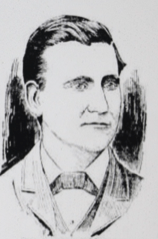
George H. Hall [Newcastle Morning Herald and Miners’ Advocate, 2 May 1898]
The lantern entertainments are to Mr. Hall a source of pleasure. He takes a lively interest in them and has never been known to refuse to help the poor and needy, or to take part in demonstrations for the assistance of churches and public bodies. He makes no distinction as to creeds. When circumstances will allow his services can be claimed by any class of the community. He has been a tower of strength to his own denomination—the Primitive Methodist—and has always been an ideal temperance man, having been connected with the Rechabites and Sons of Temperance for the last 10 and 16 years respectively.’
Local Lodge adopts Carlisle System – 1898
The Newcastle Morning Herald and Miners’ Advocate of 16 July 1898, page 6, reported:
‘The Band of Hope located here is a real live affair, containing a membership of about 60 and an active staff of officers including Mr. D. White (president), M. W. Moxey sen. (V.P.), Mr. W. Moxey, jun. (secretary), Miss Maher (assistant secretary), Mrs. Barnier (treasurer), Miss L. Moxey (pianiste), Miss Mitchell (assistant pianiste). The officers of the past year, Mr. G. Moxey, Mr. A. Maher, and Miss Moxey, have been thanked for their zealous efforts. The Band is doing a good work here.
The good templars also are going along famously under the “Carlisle System.” The meetings are largely attended, items of an excellent character are rendered, additions to the membership are being made almost nightly, and the temperance sentiment is spreading. Mr. J. B. Mercer, G.V.T., recently lectured here with much acceptableness.’
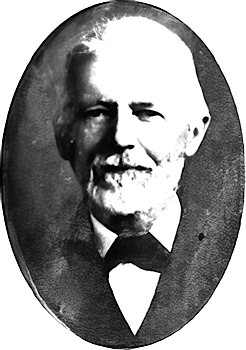
James Ballantine Mercer (1842-1925 -. Lecturer for the Good Templars
The “Carlisle [Carlyle] System” was a British state-controlled alcohol sales experiment during World War I, launched in Carlisle to address heavy drinking among munitions workers. Aimed at temperance through improved public-house management, it sought to reduce alcohol abuse without enforcing prohibition.
Williamtown Templars Membership Grows – 1898
The Newcastle Morning Herald and Miners’ Advocate of 26 August 1898, page 5, reported:
‘The local [Williamtown] lodge is progressing by leaps and bounds in its membership. The Carlyle competition promises to be an exciting and enthusiastic contest right through.’
The Newcastle Morning Herald and Miners’ Advocate of 1 October 1898, page 6, also reported:
‘The local [Williamtown] lodge is still booming, additions to the membership being made at almost every meeting, while the attendance is large and the enthusiasm fervid.’
The Newcastle Morning Herald and Miners’ Advocate of 11 November 1898, page 3, further reported:
‘The local body of templars has shown great zeal and progress during the last six months, for during that period they have added to the roll no less than 41 members and now have a membership of 87. The Carlyle system is to be continued under the same captains, Misses G. Moxey and A. McLean with Mr. W. Mitchell as adjudicator. The annual celebration is to be held about the end of this month.’
Evening Star Lodge Anniversary – 1898
The Newcastle Morning Herald and Miners’ Advocate of 2 December 1898, page 3, reported:
‘A most successful 18th anniversary celebration of the Evening Star Lodge, I.O.G.T., took place here [Williamtown] on Tuesday evening. It took the form of a tea and public meeting. The tea was an enjoyable function, the edibles being good, the attendance at tables all that could be desired, and a spirit of sociability pervaded the gathering. About 300 sat down to tea, and owing to the arrangements made by the various committee’s things went along without a hitch. The public meeting was distinguished by the spirit of enthusiasm which pervaded the speakers and audience and for the general excellence of the various items submitted.
The following was the programme submitted:—Overture, Irish Diamonds,” Miss Emerton; chairman’s address; duet, “The Elfin Call,” Misses Moxey and Smith; solo, “True Till Death,” Mr. R. Buxton; address by Rev. J. W. Collier; solo, “Sunshine and Rain,” Miss A. Emerton; recitation, “Mary, Queen of Scots,” Mrs. D. Bevan; solo, “Comin’ Through the Rye,” Mrs. Jones, encored, and granted, “No, Sir” being given; address, Mr. J. C. Jones, G.E.S.; glee, “The Singers’ Quarrel,” Miss Emerton’s choir; solo, “I will be true to thee,” Mrs. E. Lavis; address, Rev. J. Black; solo, Mr. Evan Bevan; solo, “Star of Bethlehem,” Mr. F. Buxton; recitation, “Trouble in the Amen Corner,” Miss Fenwick; solo, “The Storm Fiend,” Mr. W. Bowden; solo and chorus, Miss Emerton’s choir.
Votes of thanks to the speakers, singers, and ladies of catering committee having been carried, the meeting was concluded by singing a stanza of the National Anthem.’
Evening Star Lodge Williamtown continued to flourish – 1899
The Newcastle Morning Herald and Miners’ Advocate of 18 February 1899, page 6, reported:
‘The Evening Star Lodge, I.O.G.T., is shining out most brilliantly still — the membership now numbering over 90. The Carlyle system was continued during the quarter. The winning captain, Bro. G. Moxey, was presented with a nicely-inscribed medal (the gift of Sister Mrs. D. Bevan, of West Australia), while the losing captain, Bro A. McLean, was the recipient of one from the lodge, both being presented by the adjudicator, Bro. W. H. Mitchell, with expressions of praise and commendation, and duly acknowledged by the recipients in neat speeches.
The officers for this quarter are:—C.T., Sister Moxey; V.T., Sister Cox; sec., Bro. W. Moxey, junr.; S.J.T., Sister A. Dixon; treas., Bro. G. Moxey (re-elected for many terms); F.S, Sister Min. Moxey; chap., Sister C. Dixon; mar., Bro. J. West; guard, Bro. D. Sansom; sen., Bro. D. White; P.C.T., Bro. S. McQueen; A.S., Sister M. White; D.M., Sister Maher; librarian, Sister Min. Moxey; pianist, Sister Elma Mitchell. Recommended for L.D., Bro. A. McLean; for L.E.D., Bro. W. Moxey, senr. Appointed as reps. to District Lodge; Sister Moxey, Bros. McLean, W. Moxey, G. Moxey, and W. H. Mitchell; Rep. to Grand Lodge, Bro. W. H. Mitchell. Captains for Carlyle competition, Sisters Edith and Mabel Moxey. Adjudicator, Bro. W. H. Mitchell. Special prizes are promised by Bros. McLean and Mitchell. Bro. White was the winner of special prize during last competition.’
Williamtown – a close-knit community bound by Temperance ideals – 1899
During a three-month period in 1899 three presentations were made by the Williamtown Templars to members from their close-knit community.
The Newcastle Morning Herald and Miners’ Advocate of 29 May 1899, page 6, reported:
‘Mr. D. P. White and family are removing to the Richmond River, and he has been at three valedictory meetings last week. On Monday evening at a meeting of the Band of Hope, of which he was president last year, the ladies presented him with a set of sleeve links of chaste design. Mrs. Maher was appointed by the ladies to make the presentation, but she requested Mr. W. H. Mitchell to be her deputy, to which he consented, and in an address eulogistic of Mr. White, and expressive of their good wishes, voiced the feelings of the Williamtown Band of Hope friends.
On the following night (Tuesday) a valedictory social was tendered Mr. White, Mrs. White, and daughters, by the Good Templars, and Mr. White was the recipient of a Grand Lodge degree regalia, while Mrs. White and the two daughters were each presented with a framed certificate of membership; so, also, were Messrs. John and Richard Chesworth, who are removing to the Paterson River.
On Friday night, at a meeting in the [Williamtown] sWesleyan Church, presided over by Rev. J. W. Collier, Mr. and Mrs. White received a beautiful marble clock as a parting gift, from the congregation and Mr. White a handsome teacher’s Bible and hymn book, from the Sunday-school. Addresses, expressive of appreciation and commendation, together with hearty good wishes for Mr. White’s happiness and success, were delivered by Messrs. W. H. Mitchell, Wm. Moxey, Chesworth, and G. Moxey, and Rev. W. Collier made the presentations in a graceful and sympathetic style.’
The Newcastle Morning Herald and Miners’ Advocate of 23 June 1899, page 8, reported on a second presentation conducted soon after:
‘Mr. and Mrs. Alex. McLean were, on Tuesday night, the recipients from the Evening Star Lodge, No. 203, I.O.G.T., of a beautiful, electroplated dinner cruet of chaste design and appropriately inscribed. The presentation was inscribed: “A wedding gift to Bro. and Sister McLean, from the Templers of Williamtown, 6/7/99.”
The article itself and the engraving reflect credit on the firm of Messrs. Potter and Co., who supplied. Bro. W. H. Mitchell, on behalf of the members, made the presentation in words expressive of fraternal love and sincerest good wishes for the recipients’ continued prosperity, the whole membership finally passing in procession past the happy couple and singing “Pleasant are the ties now binding,” and giving a hand-clasp as they passed. Bro. McLean suitably responded both for himself and Sister McLean.’
The Newcastle Morning Herald and Miners’ Advocate of 7 July 1899, page 3, reported on a third Williamtown presentation:
‘At the weekly meeting of the Evening Star Lodge, No. 203, I.O.G.T., Bro. W. H. Mitchell, the local schoolmaster, who is leaving the district, having exchanged places with the first assistant teacher of the training ship Sobraon, was made the recipient of a beautiful gold medal, suitably inscribed, from the members of the lodge as a memento of the high esteem in which he is held as a brother. Bro. A. McLean, L.D., made the presentation.
Several of the brothers testified to the good qualities of Bro. Mitchell, and eulogised him as a great worker in the temperance cause. Bro. Mitchell suitably responded and said that although leaving Williamtown he would still carry with him his temperance principles and intended as a teacher on the training ship to use every opportunity to instil the temperance sentiment in the boys. He said the members of the Evening Star Lodge would ever occupy a warm corner in his heart, and he extended to them a cordial invitation to come and see him any time they were in the metropolis. The medal, which was of a beautiful design, was the work of Potter and Co., Newcastle.

Bayonet Drill on N.S.S. Sobraon, which was a training ship for the Industrial School for Boys [Museums of History NSW]
Williamtown Evening Star Lodge visit Hope of Stockton Lodge – 1900
The Newcastle Morning Herald and Miners’ Advocate of 19 May 1900, page 7, reported:
‘The members of the Hope of Stockton Lodge of Good Templary were favoured with an official visit from the Evening Star Lodge, of Williamtown, on Wednesday evening when a special meeting of the lodge was held in the Beauchamp Hall. Bro. Alex. McLean, C.T., welcomed the visitors on behalf of the local lodge, and expressed his pleasure at seeing so many who had come such a distance notwithstanding the threatening nature of the weather, and expressed the hope that the evening would be pleasant and mutually profitable to both lodges.
Before resuming his seat he invited the visiting officers to take the lodge’s chairs, which the Stockton officers would vacate in favour of the Evening Star officers. This being done, Bro. McLean, acting C T. of the visiting lodge, took charge, and conducted the meeting.
A capital programme of songs and recitations was provided, the following taking part:— Songs: Bros. Barnes, Pedelty, Williams, and Jones, also Sister Barnes. Recitations: Sister Pilkington, and Bros Wm. Moxey, Sanson, A. McLean, and McQueen. A pleasant feature of the evening was the presentation of a silver trinket to Bro. Alex. McLean (Stockton) by the Grand Marshall (Bro. W. B. Erringto) on behalf of the lodge. The G.M., in making the presentation, said the lodge members desired in some slight way to mark the occasion of Bro. McLean’s elevation to the chair of the C. T., and also to show their appreciation of his disinterested work. He asked him to accept the trinket, not for its intrinsic value, but as a visible token of their esteem, and he trusted he would always look upon it with feelings of pleasure and continue his efforts in the advancement of the temperance cause.
Bro. McLean made a suitable reply and said he had always tried to do what he could, and would look upon the gift with feelings of pleasure, and asked for the individual assistance of members during his term of office. Before dispersing refreshments were handed round by several sisters of the local lodge, and from the hearty vote of thanks passed by the visitors to the Stockton Lodge, it was evident that the visitors, as well as making enjoyment for the Stockton Lodge, had themselves enjoyed the hospitality.
Bros. Barnes and McQueen, on behalf of the visitors, said they trusted the meeting would prove a stimulus to both lodges, and hoped ere long the Stockton members would pay them a return visit. The Hope of Stockton has now something like 50 members on its roll, with several propositions for new members for next meeting.’
District Meeting of the I.O.G.T. held at Williamtown – 1900
The Newcastle Morning Herald and Miners’ Advocate of 21 November 1900, page 6, reported:
The quarterly meeting of representatives of Good Templar Lodges in the Hunter River district was recently held here [Williamtown]. In the absence of the D.C.T., Bro. Humphries, the chair was taken by the District Councillor, Bro. Wardle. Apologies for non-attendance were received from the District C.T., and from the P.D.T., Bro. Youill. ….
Eight of the thirteen lodges in the district were represented by 10 delegates, who, with two representatives of Juvenile Temples, made a total of 20 delegates present. The reports for the quarter showed that public meetings had been held at Merewether, Belmont, New Lambton, West Wallsend, Wallsend, Charlestown, and Newcastle West. These had been the means of strengthening and bringing more prominently before the public the lodges named.
The D. Secretary’s report showed the present number of affiliated members of the Order in Newcastle and suburbs to be 540, as against 487 last quarter, a net gain of 53. The report of Juvenile Temples, as given by the district superintendent, Sister Watson, revealed a membership of about 300 juveniles, being a net increase of 53 for the quarter. The prospects ahead were encouraging. The question of bow to retain members came in for serious discussion, some sound, practical speeches on the matter being given by Bros. E. Barlow, Moxey, Blakey, Cox, Mowbray, C. Nesbit, W. H. Dennett, and P. J. Pond.
Temperance literature was recommended to be distributed, and while efforts should be made to render the lodge meetings attractive, yet bringing the mission and object of Good Templary more prominently before new members would serve to provide an incentive to remain in the Order, by showing them their duty to others, who were bound by the dread spell of the demon intemperance. The various reports were received as highly satisfactory and very encouraging. … It was decided that the district executive be requested to continue the public meetings throughout the district, as heretofore, and that other temperance and religious bodies be invited to assist in them. The executive was also recommended to arrange a programme for the Y.M.C.A., at any time a request was made for such, on the Saturday night.
On the meeting being raised to the district degree, nine candidates for the degree were admitted, on whom it was duly conferred. It was resolved that the secretary place on record the best thanks of the meeting to the district secretary and district officers generally, for their untiring efforts during the past quarter. The necessities of the inner man were provided for in a well-laden table of good things, by Sisters Sutton and Moxey, and all were able to well fortify themselves for the return journey to Newcastle, which was safety reached, and pouring rain, shortly before midnight.’
Evening Star Lodge celebrates Anniversary – 1906
The Newcastle Morning Herald and Miners’ Advocate of 1 December 1906, page 2, reported:
‘The Williamtown Good Templars celebrated their 25th anniversary [formed circa 1881] this week by holding a tea and concert. A great number partook of the good things provided by the ladies, and the hall was tastefully decorated. The hall was crowded at the concert, when a varied programme was given. Mr. Wm. Moxey, senr., presided, and Miss Vera Moxey, who is secretary of the lodge, carried out her duties satisfactorily. Revs. Wall and Ritchie gave speeches on temperance matters, emphasising the fact that the people now had the right of veto in their own hands.
Piano solos were given by Miss Wall and Mr. G. Williams, elocutionary numbers by Miss Fanny Parr and Councillor McQueen. Mr. Price, from Newcastle, showed cleverness with the bones and Mr. Wilson was quite at home on the banjo. Miss L. Allanson rendered the songs “I Was Dreaming” and “Ora Pro Nobis” very artistically, while Mr. J. Bevan rendered “Star of Bethlehem.” Miss Allanson and Mr. J. Bevan blended well together in the duet “Life’s Dream is O’er.” Mr. Bolton gave a good interpretation of the song “Kentucky,” and an enjoyable entertainment was brought to close after a capital rendition of “Larboard Watch” by Mr. G. Williams, organist of St. Andrew’s Church, and Mr. Jonah Bevan. Miss Stallard and Mr. G. Williams officiated at the piano. The usual votes of thanks were carried by acclamation.’
Evening Star Lodge celebrates Anniversary – 1908
The Newcastle Morning Herald and Miners’ Advocate of 12 December 1908, page 13, reported:
‘The members of the Evening Star Lodge, I.O.G.T., celebrated the twenty-eighth anniversary of the lodge on Tuesday night by a public meeting in the Temperance Hall, Williamtown. The attendance was large. Revs. W. J. Ritchie, T. Harper, and Messrs. A. Toombs and J. Complin gave addresses. Musical items were rendered by Misses Moxey and White and Mr. Jonah Bevan and Mr. Brown and family. The following are the lodge officers: Chief Templar, Bro. G. Moxey; V.T., Sis. S. Moxey; secretary, Sis. Chesworth; treasurer Bro. A. Moxey; financial secretary, Sis. Vera Moxey; L.D., Bro. McLean; P.C.T., Sis. A, Moxey; Marshall, Bro. Chesworth.’
Concluding Comments
By the time the First World War commenced in 1914, organised temperance activities in the Williamtown area had wound down. However, their presence is still felt today, as there is no establishment selling alcohol in that area.
Additional information on Williamtown, in the Port Stephens region, is published on this website and can be viewed at the following links:
Early History of Williamtown Public School
Life and Times of the Union Hall at Williamtown
St Saviour’s Anglican Church at Williamtown
Former Uniting Church at Williamtown
Early History of Newcastle Civil Aviation Airport
Researched and compiled by Kevin McGuinness
January 2026

 Port Stephens - a history exploration