
Introduction
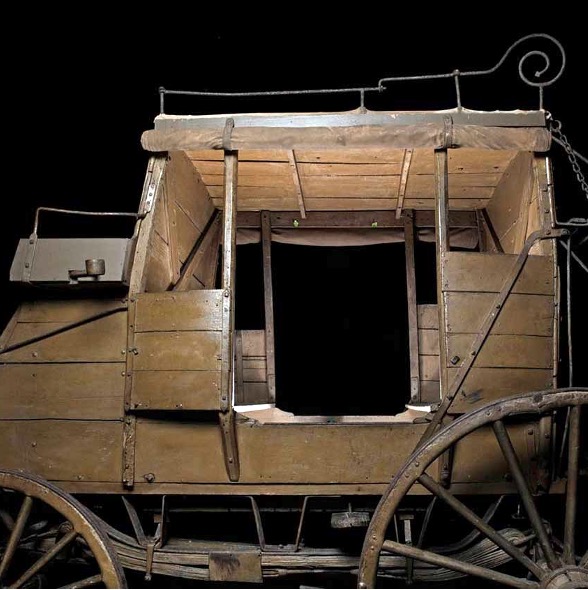
This is the story of two inmates who had escaped from the newly built Maitland Gaol and subsequently held up the Singleton to Maitland mail coach near Lochinvar on 17 June 1849.
Mail coach robberies were common at that time as the coaches carried cash in addition to the Royal Mail.
The two bushrangers later separated and one of them made his way to Port Stephens. Identified as James Davidson, he was later recaptured at the Australian Agricultural Company’s station, Bundobah [Bundabah] by Mr. Charles King, of Tahlee in September 1849.
His accomplice, William Smith was also recaptured elsewhere, and they were both sentenced by a Court in Maitland to lengthy punishments of hard labour on road gangs, in irons.
The story provides an interesting insight into an actual mail coach robbery and colonial law enforcement in the Port Stephens and surrounding areas.
Newly built Maitland Gaol – 1848
Construction of the Maitland Gaol began in 1844, and the first prisoners were incarcerated in December 1848.
The two inmates, who are the subject of this paper, would have been amongst the earliest prisoners.
The initial structures, including A-wing and perimeter walls, were built from local sandstone, much of it quarried by convicts.
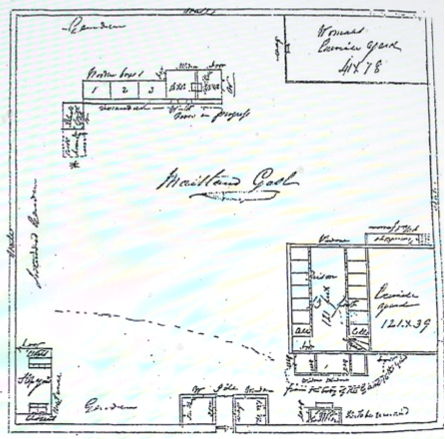
Sketch plan of the first stage of Maitland Gaol by James Cox, Gaoler, 1850 [NSW State Archives]
Robbery of the Singleton to Maitland Mail Coach by two bushrangers – 1849
The Maitland Mercury and Hunter River General Advertiser of 20 June 1849, page 2, reported:
‘On Sunday afternoon the mail-coach from Singleton to Maitland was stopped by two armed bushrangers, and robbed to a very large amount, the only passengers on it at the time being Mr. [Thomas] Loxton, of Murrurundi, and Mrs. Kerrigan, of Maitland.
A short time before sundown the mail had reached Mr. Harper’s gate, about two miles from Lochinvar, when two men sprang from behind a large fallen tree, and ordered the driver to stop, each at the same time presenting a double-barrelled carbine, cocked. The driver pulled up, and the larger of the two men ordered him to throw out the mailbags. This order was also obeyed, the carbines of the bushrangers being within a few feet of the driver and Mr. Loxton, and one pointed at each.
The bushrangers now ordered the driver to move on a step or two, the smaller man accompanying him as a guard, with his piece presented. The other bushranger then cut open the mailbags, and selected therefrom a great quantity of letters, many apparently registered, which he opened, and took the contents from. Having finished a cool inspection of the bags, and ransacked all the letters that he desired, he gathered the letters into a heap, lit a match, and set fire to them. The empty mailbags were thrown back into the coach. The passengers were also forced by the bushrangers to give up what silver they had about them, fortunately in each case only a few shillings.
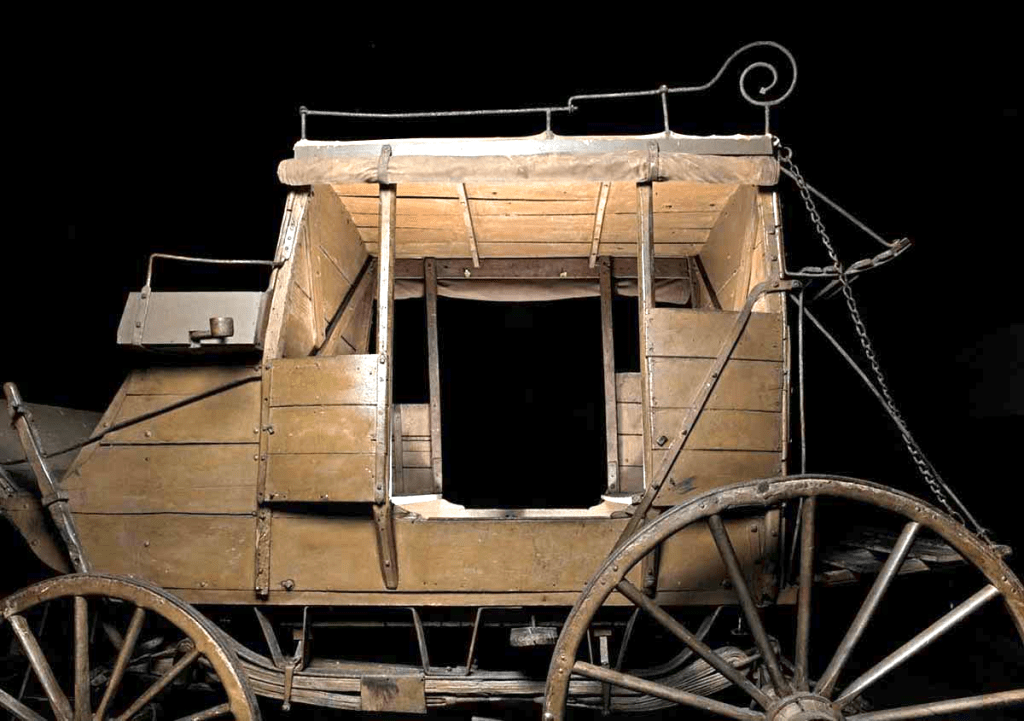
Model of an Australian mail coach of the period [National Museum Australia]
The shorter bushranger, while standing guard, with his gun presented and cocked, appeared quite nervous, his hand trembling so much that Mr. Loxton feared he would draw the trigger unintentionally. During the time the coach was being thus plundered, a horseman came up and was stopped by the bushrangers; and shortly after a man came up on foot and was ordered by the bushrangers to hold the first man’s horse.
The coach was then allowed to depart, and on reaching Lochinvar it was ascertained that two men answering the description of the bushrangers had been about there for a few days previous, having two or three times called in at Mr. Honeysett’s inn for refreshments. One of the Maitland constables is stationed at “Lochinvar, and he was about to leave for Maitland with a prisoner in charge. Mr. Loxton, however, volunteered to bring the prisoner into Maitland on the coach which he did, and the constable started off for Singleton, on horseback, to inform the police there. The coach and passengers then came on to Maitland, and immediate information was given to the police.
The amount that fell into the hands of the bushrangers must have been very large, although from the time-bills having been burnt (excepting a portion of the Muswellbrook Sydney time-bill) with the letters, the exact amount will not be known for some time. We have heard the total loss estimated at from £1,500 to £3,000. The mail on that evening was very heavy, including the mails for Maitland and Sydney from the whole of the squatting districts beyond the Liverpool Range, and from the post towns along the overland route to Moreton Bay.
The number of bags thrown out is understood to have been thirteen, but the number of mails included was much greater. ….. Among these various mails it is impossible to say how many money letters may have been forwarded, but in the Muswellbrook time-bill, which was partly preserved, five registered letters were entered, one of them being a letter to the Colonial Treasurer, probably from a publican, with the amount of his license. It is very likely that there were several publicans’ letters, enclosing their license money, among the mails, as the time for their payment is now drawing very close. Each of these would, of course, contain £30 in notes, or undoubted cheques.
Many parties in Maitland were also expecting money by that evening’s mail, some to a considerable amount. Among the burnt letters it is probable enough that many contained money, although perhaps not registered, as is not unfrequently the case. Six partially consumed letters were picked up on the spot by Mr. E. Franks on Monday morning, of which two were for Maitland and one for Sydney; one of those for Maitland contained a £1 order, scarcely at all damaged. Besides Mr. Loxton’s loss from his person, he had on leaving Murrurundi, for greater safety, put a sum of between £50 and £60 into a letter for Sydney; this letter, with two other letters registered at Murrurundi, fell into the hands of the bushrangers.
Since the above was written we have ascertained that the horseman who came up while the mail was being robbed was an elderly man, named Doolan, who was proceeding homewards from Maitland, riding one horse and leading two others. The other person who came up was a servant of Mr. Harper’s, named John Porter. The bushrangers selected the best of Doolan’s horses, and saddling and bridling it, sent him onwards with the others. Porter came out of his master’s ground on to the road, and was crossing it, when the taller bushranger presented his piece at him, and told him to hold the bridle of the horse taken from Doolan, or he would blow his brains out. Porter complied, and afterwards, when the letter ransacking was finished, he was relieved by the shorter bushranger and employed to hand back the empty mailbags.
Porter was then ordered by the bushrangers, as the coach drove off, to come back, but he ran for it, and getting under the fence, made for home at full speed; a gun was fired at him, and Porter heard the ball whiz by him, but did not relax his speed; the shorter bushranger shortly after overtook him, but Porter knocked him down with a stick he had picked up, and got safely home.
Immediately on the information reaching the Maitland police, arrangements were made for preventing the escape of the bushrangers from the district, parties of mounted and foot police being at once despatched in various directions, particularly on the overland routes to Sydney. The night proved a very dark one, and if the bushrangers were strangers in the district, it would be next to impossible for them to make their way to any distance through the bush before morning.
On Sunday evening the police, beyond Lochinvar, met with the horse stolen from Doolan, with a saddle on, but without any bridle; and on Monday morning Captain Smith found on his run, not many miles from that place, a strange horse, very much exhausted by hard riding, and which was afterwards identified by Mr. Campbell, of Lochinvar, as being one of the horses ridden by one of the two men exactly answering the description of the bushrangers.
It appears these two men had been more than once in both inns at Lochinvar, and had slept at Mr. Honeysett’s on Thursday evening, telling him that they had driven cattle down from Singleton by the old road, and that having lost one of their horses, they had been searching for him in vain all day. They had no visible arms while at Lochinvar and were strangers to all who conversed with them there. The horse thus found by Captain Smith is a brownish bay Galloway, with white rings on the hind feet above the hoof, having a good head, but thick in the jaw, long backed, short tail, and coat very rough, no brand distinguishable. …..
Last evening the same Singleton mailman informed us that on arriving at Singleton on Monday evening, he found two men in custody on suspicion, but on his seeing them he found that they were not the bushrangers. On Monday a £1 note, scarcely at all burnt, and a cheque of Mr. Munro’s, partly consumed, were found on the road, by the heap of burnt ashes, and were taken on to Singleton. The taller bushranger appears, from the mailman’s description, to be a most determined man, and it appears that he answers exactly to the description sent down from Liverpool Plains of the bushranger who stopped and robbed the Wee Waa mail about the end of May. It is to be regretted that this description had not been sooner sent down the country.
Last evening two of the Maitland police came in, who had been scouring the country along the Wollombi Road, and between it and Lochinvar and Black Creek. They had not found or heard of any clue to the bushrangers since the robbery, or whether they had gone off on horseback or otherwise. They had, however, traced the movements of the two men who had been seen about Lochinvar, up to Sunday morning.
On Saturday it appears the two men were in Black Creek buying bread and cheese, and the silver the taller man offered in payment being black looking, the shopkeeper declined taking it till he rubbed it bright, telling her it was perfectly good, but that it had been rubbing against the powder and shot which he had about him.
His words and manner exciting her curiosity, she looked out after him, and saw that he and his companion joined a third man, a short elderly man with white hair and a long chin, who was leading a horse and dray; the dray was a box-dray, painted blue, excepting the shafts, which were red, the whole looking new and in good condition, and a tarpaulin covering the dray.
On Sunday morning the two men met with a resident near Black-Creek, and in conversation they enquired the road from there to Jump-up and to Ramsey’s, and how far it was; both these places are known as leading points on to the Bulga-road, one of the overland routes to Sydney. The two men were again seen on Sunday mounting a hill near Mr. Harper’s and noticed to be looking about them. This was prior to the robbery.’
Capture of one bushranger at Port Stephens – 1849
The Maitland Mercury and Hunter River General Advertiser of 29 September 1849, page 2, reported on the capture at Port Stephens, of James Davidson, a convict felon who had escaped from Maitland Gaol.
‘The public will be somewhat gratified to learn that this man, who with his accomplice made his escape from the Maitland gaol, has been re-taken at the Australian Agricultural Company’s station, Bundobah [Bundabah] by Mr. Charles King, of Tahlee, assisted by his groom, Edward Stacey, and two stockmen after a most determined and obstinate resistance.
On Monday evening, the 24th instant, he crossed the ferry at Sawyer’s Point [Karuah], and, passing through Carrington the following morning, reached Bundobah in the afternoon. At Sawyer’s Point ferry he said his name was Young, at Tahlee garden he said his name was Cook, but at Bundobah, being recognised by some of his old acquaintances, he said his name was James Davidson.
On Tuesday evening Mr. Charles King and his groom proceeded to Bundobah, and there, lying on a bed in the hut, discovered a stranger, who stoutly denied that he was the robber of the Singleton mail, although his name was Davidson. Mr. Charles King, however, felt convinced that he was so, and presenting a pistol at him, demanded his surrender: nothing daunted, he abruptly advanced for the purpose of bearing back Mr. King, had not the steady hand which held the pistol maintained its unflinching position.
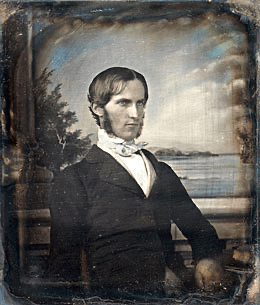
Charles Macarthur King, 1855 – son of Philip Parker King, Commissioner of the Australian Agricultural Company during the 1840s. [State Library NSW]
With many threats of determination to resist, he remained in the hut for some time, and at length forced his way out of it, saying he would light a fire and camp outside; this he partly did, but soon began to move off. Mr. C. King and his assistants immediately followed, and finding he was making for a creek, where he would probably get away from them, the groom let fly his pistol after him; Davidson’s foot tripping at the same instant, he fell into the water-hole; while he was scrambling out on the other side, Mr. C. King’s foot also tripped, and he found himself in the water with Davidson immediately above him, who flourished an enormous club with which he had armed himself.
At his juncture, Mr. King presented his pistol at him, but the cap missed fire. Observing from this determined act what he had to expect, Davidson retreated from the hole, and on the level ground soon found himself surrounded by the party. It might have been possible here to grapple him, but the quick eye of the blackfellow, “Cobrabald,” detected the moonbeams gleaming on a long and pointed knife which he had found in the hut, and which he now threatened to use with bloody violence against anyone who dared to touch him.
Mr. C. King now called out to the blackfellow to knock him down with a waddy, but not a sound stick could he find, though he left the mark of one of his missiles on his cheek bones. Finding now that Davidson was advancing towards him, Mr. C. King discharged his pistol at him and lodged one of the swan drops with which it was loaded in his hand. Davidson then turned and ran, followed, as best they could, by his pursuers.
The injury which he had received in his back, probably in jumping from the gaol wall, prevented his running more than about three hundred yards, when he again stood at bay with his knife and club. The fear of again receiving the contents of Mr. King’s pistol, at length induced him to return with them to the hut, but he would not give up his knife and club until he began to feel faint and sick. He would not allow himself to be secured, but mounted a horse, which was led into Carrington. On the road, the escort was relieved by a small party from Stroud; he was finally lodged in the lock-up at Carrington, whence he was forwarded to Raymond Terrace and Maitland.
Davidson declared that he was not the runaway from Maitland gaol, but there could be no doubt of his identity; his determined resistance and his general description proved him to be so. It is to be hoped that the gaol-keepers will in some way be made responsible for the safe custody of such desperadoes.
Davidson’s accomplice, Smith, has not made his appearance in this neighbourhood.
On Thursday morning [16 September 1849] Davidson was brought up to Maitland in custody of constable Evans and Edward Stacey, Mr. Charles King also accompanying the party. At Raymond Terrace they got on board the steamer to come to Morpeth, and as it happened that Mr. Day [police magistrate of Maitland] was on board, all doubt as to Davidson’s identity was cleared up at once.
Davidson states that when he dropped from the outer gaol wall the rope broke with him, and he fell nearly the full height, alighting on his nether end, and receiving a heavy shock throughout the back-bone; that he and Smith got as quickly as possible about two miles and a half from the gaol, where they lay quiet, and while lying concealed saw a constable hurrying past; that on the following day they parted, nor had he seen or heard of Smith since; that he (Davidson) was put across the Hunter below Raymond Terrace, by an old man in a boat, and from thence made his way to Port Stephens.
Davidson states that ever since his fall he has experienced much pain and weakness in his back. He is now, we learn, too weak and ill, from this cause and the injuries he received in his re-capture, to be in a fit state to be removed from the gaol; and the injury to his back is said to be so serious that it will be many years before he fairly recovers from its effects, if he ever does so. Of Smith’s movements nothing has yet been heard, beyond what Davidson has stated as above.’
Trial of the Two Bushrangers – 1849
The Maitland Mercury and Hunter River General Advertiser of 12 September 1849, page 4, reported on the trial of the two bushrangers who robbed the Singleton to Maitland mail coach:
‘James Davidson and William Smith were indicted for assaulting Thomas Loxton, at Harper’s Hill [near Greta], on the 17 June 1849, putting him in bodily fear, and robbing him of ten shillings in silver, they being at the time unlawfully armed with muskets.
Davidson pleaded guilty and persisted in his plea; Smith pleaded not guilty. The Attorney General stated the case to the jury:
Thomas Loxton deposed that he was postmaster at Murrurundi, and that on the 17th June he was travelling towards Maitland by the mail coach, and that they reached Harper’s gate, about four miles from Black Creek, just after sundown; the two prisoners rushed out from the side of the road, and stopped the mail; each had a short gun in his hand – a kind of cut-down gun, or carbine; Smith came towards witness with his gun levelled at him, and on witness’s desiring him to keep off, Davidson came round, and demanded witness’s money; witness remarked to the driver that it was of no use resisting, as both men were armed; witness then gave up 10s. in silver to Davidson. After this Davidson got the mailbags, which he opened, and took the letters out, putting some in his shirt, and putting the others aside.
Witness and the driver repeatedly asked him not to destroy the letters that were of no service to him; Davidson at last got vexed, and threw three bags at them, which struck an elderly woman who was a passenger, and which witness kicked in among the straw; one of these bags was the Murrurundi bag, and was unopened. After Davidson had finished opening the bags, he burnt the remaining letters, and told them to go on, which they did. Witness was positive as to the identity of both prisoners; Smith for several minutes kept his gun levelled at witness, and witness, apprehensive that if the gun went off his life must be sacrificed, steadily watched him; his face was partially concealed by a piece of crape, which covered his forehead, but witness was certain the prisoner Smith was the man.

Grave of Thomas Loxton – businessman and postmaster at Murrurundi who died on 21 March 1882. Buried with other family members at Gore Hill Cemetery, Sydney.
John Russell, the mail-driver, corroborated this evidence, and was positive as to the identity of both prisoners.
Thomas Tiernan, a constable of the Windsor police, deposed that on the evening of the 20 June he was in a shop at Richmond when Davidson entered, enquiring for some trousers and shirts; witness had received previous information of the robbery of the Singleton mail, and from the money offered in payment by Davidson he asked him some questions, which were unwillingly answered; he then seized Davidson by the back of the neck, and ran him into the parlour; Davidson drew the knife produced, and rushed at witness several times, and witness with his stick warded off his thrusts, and kept him from approaching the fire, having observed a packet in his bosom.
At last Davidson rushed witness out into the shop again, and the ceiling being higher witness was able to use his stick, and he struck Davidson on the head twice, which staggered him and knocked him down, and he threw himself on him, seizing the hand which held the knife; the persons present then assisted him, and Davidson was secured, and placed in the lock-up. Witness then went for chief constable Shirley, and they were afterwards waiting till daylight to go and seek for the second prisoner when they heard a man shouting for the mail; witness went out and found Smith there, who told him he was waiting to go Sydney by the mail; witness told him the mail would not go for half an hour, and asked him to come into his house, and take a cup of tea with another gentleman who was waiting for the mail; Smith thanked him, came into the lock-up, and was immediately secured.
A paper packet, containing a large quantity of cheques and orders, was thrown away from him by Davidson as soon as he was secured; this, witness handed over to Mr. Shirley. Smith had a bundle in his hand, which contained the two cut-down guns produced, a quantity of shot, a powder-flask, a piece of crape, and other articles. On Davidson’s person were found a bullet-mould, some bullets and shot, caps and flints, etc, together with £9 in notes and silver.
George Shirley, chief constable of Windsor, corroborated the latter portion of this evidence; witness had received information of the robbery from Mr. Day, police magistrate of Maitland, and had issued instructions to his constables accordingly. About £25 in money was found on Smith’s person. The total amount of money, in cheques, orders, and other money, found on the two prisoners and in the packet, was £628; witness afterwards endorsed all the cheques and orders with his initials, and then handed them over to Mr. Day.
George Curtis, watchmaker, Singleton, deposed that three or four days before the mail was robbed Smith called on him, and after some conversation witness received a watch from Smith, and gave him in exchange one of the guns produced, and a bullet mould like that produced.
Robert Beames deposed that he was postmaster at Muswellbrook, and that on the 16 June he made up the mail for Sydney, putting in several money letters of his own, and one containing five cheques; four of those cheques were afterwards restored to him by Mr. Day, and the fifth was that now produced.
The Attorney General here informed the court that he had authorised Mr. Day to return any cheques or orders properly identified by parties to whom they belonged. Mr. Shirley identified the cheque as one of those he endorsed, as found on the prisoners. Smith said in defence that he was not the second robber, and that he merely assisted Davidson and that man over the Bulga Road.
The jury returned a verdict of guilty. Davidson was sentenced to ten years on the roads, the first three years in irons; and Smith to eight years on the roads, the first three years in irons; his Honor stating that Davidson’s sentence was heavier in consequence of his attempt to stab the constable.’
Concluding Comments
The following papers dealing with the colonial era at Port Stephens are published on this website and can be viewed at the following links:
Escaped convicts visit Port Stephens in 1835
A focus on the convict history of Port Stephens
A Christmas Story from Tahlee House – 1832
Journal of Sir Edward Parry – Commissioner of the Australian Agricultural Company 1830 – 1834
Researched and compiled by Kevin McGuinness
November 2025

 Port Stephens - a history exploration