
Introduction
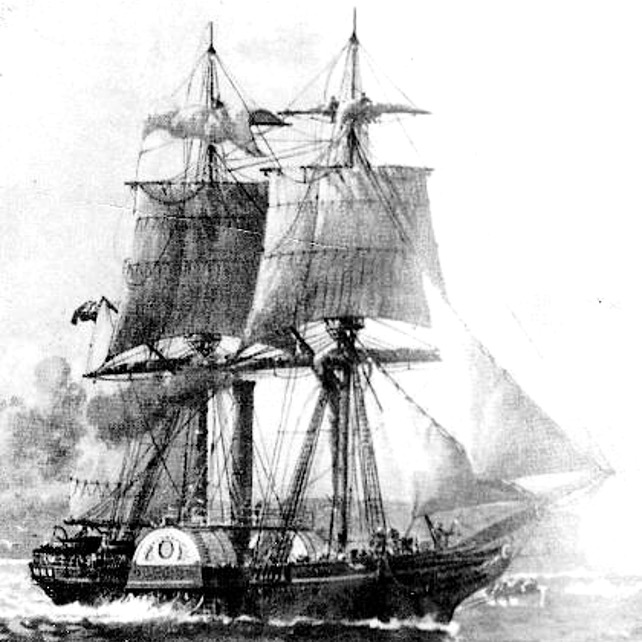
The paddle wheel steamer, SS Sophia Jane, was the first vessel of its type to arrive in Australian waters.
It sailed into Sydney Harbour from London on 17 May 1831, under the command of Captain Edward Biddulph who was a part-owner. The vessel attracted much interest in the Sydney colony as nothing like it had been see before. While being a steam paddle steamer, that could be powered by either coal or timber, it was also fitted with sails. The sails enabled the vessel to be sailed from England without the use of coal or wood.
For most of its working life the paddle steamer transported goods and passengers between Sydney, Newcastle, Morpeth and Port Stephens areas. The first visit made by SS Sophia Jane to Morpeth was on 12 June 1831, via Newcastle. She later visited Port Stephens on July 26, 1831.
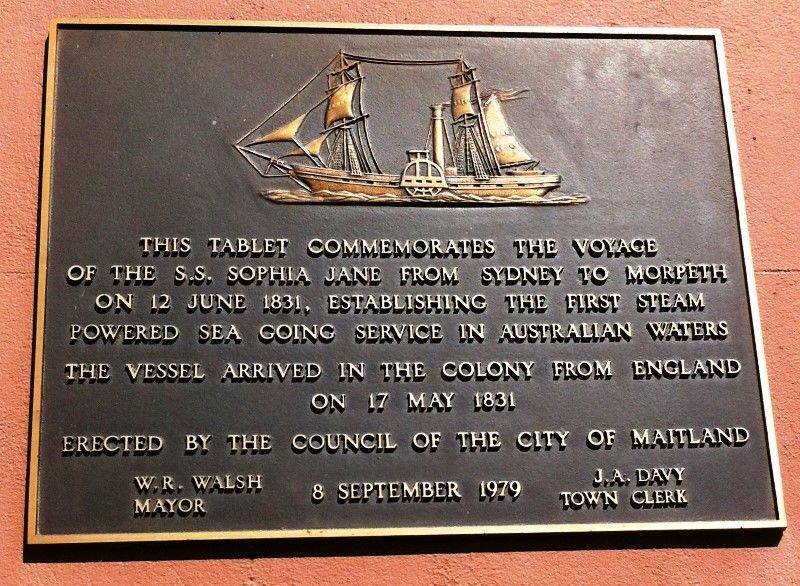
Memorial at Morpeth to the SS Sophia Jane [Monument Australia]
Her Sydney mooring was Grosse Wharf, at the foot of Bathurst Street, Cockle Bay, in today’s Darling Harbour precinct.
Captain Biddulph relinquished his ownership of the Sophia Jane in 1832 and sold it to John Hickey Grose.
Over the years the Sophia Jane was the subject of many newspaper and journal articles.
This paper looks at the life of the paddle wheel steamer and the interest it created when it first sailed into Sydney and later Port Stephens in 1831. It also tells the story of its original owner and Captain.
The arrival of Sophia Jane in Sydney Town – 1831
The Australian of 20 May 1831, page 3, reported:
‘Since this handsome specimen of naval architecture arrived, under the disguise of a square-rigged schooner, which she did on Saturday morning last, she has been a focus of attraction to the curious.
Immediately on dropping her anchor in the stream, crowds pushed off to visit her; but the decks being lumbered, and the machinery not arranged, her commander, Captain Biddulph, R. N. declined receiving visitors, greatly to the disappointment of many. She has since hauled into the Cove, and now lies moored head and stern in, at the Heaving Down Place, east-side.
We observe, the engineers, smiths and carpenters are actively at work [fitting the paddle wheels], and when the fittings up are completed, but not till then, and we think very reasonably, she will be thrown open to visitors. To a nautical eye, the Sophia Jane presents a beautiful model for capacity and fast sailing. She sailed from London on the 15th December last, called at Pernambuco [Brazil], and stopped for some days at the Cape [of Good Hope], yet working with her sails only, which present but a very moderate spread of canvas, she has made the passage to this port, short of four months. Her paddles are now shipped for the first time, we believe, since leaving England; and a few days more will put her in a capacity for plying.
Not having had yet the opportunity of a personal inspection, we take the following particulars at second hand: — She measures 256 tons; is 126 feet on the deck, and at least 30 on the beam. She has three cabins elegantly fitted up.— The chief cabin furnishes 16 bed places; the ladies’ cabin abaft [stern], 11; and the fore cabin or steerage, 20. Eleven can be added easily; in all, 54.
She was built in 1826, by Barnes and Millar, and her cost value is estimated at £7500. A meeting of merchants was called at the Cape [of Good Hope], when she lay there, with the view of purchasing her. The price was stated to be £8000; and the expense of navigating her, including insurance, £3610 per annum, upon the calculation of her making eighteen voyages to Algoa Bay and Table Bay in the year. The returns for freight and passage money were estimated at £5760 for the same period, exclusive of the profits of contingent employment. The Cape merchants did not like the terms, and they hauled off.
She has followed up her original destination [of Sydney]; and now enriches our increasing little naval force. Steam navigation will help greatly to raise the character of this Colony abroad, and to improve it at home. The addition of such a vessel as the Sophia Jane to our coasting trade is a most gratifying event. It is almost in the trading world what a new Governor would be in our political hemisphere. A fresh spirit will be infused into all our settled and unsettled districts that can be approached by water. Persons will shortly be able, we expect, to breakfast in town, lunch at Newcastle, dine at Port Stephens, and put up comfortably at Port Macquarie next morning, at half the present expense and in quarter the time, of the journey to Wallis’s Plains. Should she not find enough to do between this and Newcastle, the route to and from Hobart Town lies open, and to Western Port, when the fine line of coast about there shall be settled.
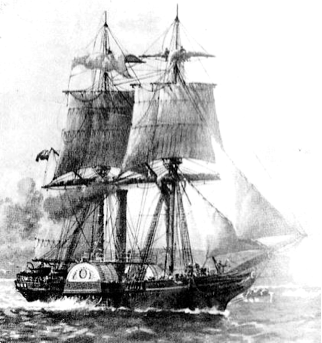
SS Sophia Jane [Newcastle Library, Hunter Photobank]
The Surprise steamer is getting her engine in over at the North Shore [of Sydney]. Mr. Grose’s steamer at William’s River is also [progressing] fast. Mr. Patterson is completing her machinery. The owner of whichever steamer plies first, will richly merit a grant of land. Government, it is to be hoped, will not shew [show] a backwardness in clearing the Parramatta channel. The Surprise, it is estimated, will draw 3 feet when laden. The Sophia Jane draws 6, it is said, with her machinery (of which she carries a duplicate set complete) and 100 tons of goods on board. Captain B. and Mr. Lamb her consignee, will doubtless lose no time in fitting the Sophia Jane out for the inspection of the curious.’
Details of the Sophia Jane prior to arriving in Sydney Town
The Truth of 28 January 1900, page 2, provided the following background material on the Sophia Jane prior to its arrival in Sydney Town:
‘The first steam vessel which entered Port Jackson Heads was the Sophia Jane, of which Commander Biddulph, R.N., was master and part-owner. In her he brought his wife and family. In these days of ocean greyhounds a description of this historic steamer will be read with interest. …..
She was built purely as a passenger vessel for service between England and France and various British Isles. No expense was spared in making the accommodation first-class. There were three separate cabins, one for ladies, one for gentlemen, and one for steerage passengers, presumably males. …. The Sophia Jane was originally built for Calcutta, where wood would be the only fuel available; but we are quaintly told that she could get up steam with either wood or coal. …. She brought out an “experienced engineer and a duplicate set of apparatus.”
Sophia Jane engaged by the Governor for a pleasure trip – 1831
The Sydney Herald of 20 June 1831, page 2, reported:
‘This fine Steam Boat [Sophia Jane] was engaged on the early part of Friday by his Excellency the Governor [Sir Ralph Darling], and a select party of the haut ton [fashionable elite] of Sydney, who breakfasted on board, and took a short excursion up the Parramatta River, and round Darling Harbour. His Excellency and the company appeared much pleased with the trip. After which, the Sophia Jane received her passengers on board for Middle Harbour, and at half-past eleven o’clock weighed anchor, and stood down the harbour at the rate of ten knots the hour; the morning was cloudless, and the passengers, amounting to about sixty, appeared to be in high spirits, while a party of the 39th Band occasionally played lively airs, to give animation to the scene; on arriving at Watson’s Bay Mr. W. came on board, and the vessel then stood across to Middle Harbour, and from an isolated spot at the foot of the hills, an old man named Cooper was taken on board, who acted as pilot through the intricate navigation of the harbour.
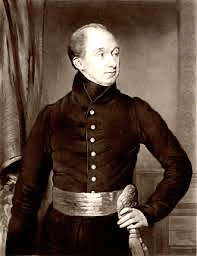
Governor Sir Ralph Darling [State Library of NSW]
The Steamer having proceeded nearly as far as Bates’ farm, and the water shoaling, she went about and made up the harbour; at two o’clock a capital lunch was placed on the table, which reflected great credit on the steward, and to which ample justice was done by the passengers. The Sophia Jane had by this time cleared the Heads, and a slight swell being on, some of the passengers felt squeamishly inclined, but soon recovered; on her return into Port Jackson, she again proceeded at the top of her speed up the harbour, passing the Cove, and, making up the Parramatta River, proceeded as far as the residence of Commissary Walker, when she returned, and brought up at Campbell’s Wharf, shortly before five o’clock.
This trip of pleasure gave the greatest satisfaction to the parties on board, who expressed themselves highly gratified with the treat. The vessel proved herself to be of the first description, combining speed, convenience, and safety, and capable of being managed with the greatest ease, by an experienced person; she was in the finest order, and the machinery as bright as labour, could make it. The great attention paid by Captain Biddulph, and the agent, Mr. John Lamb, to the comforts of the passengers, is deserving of the greatest praise.’
Sophia Jane arrives in Port Stephens for the first time – 1831
Sir Edward Parry was the Commissioner of the Australian Agricultural Company (AAC) from 1830 to 1834. During the early part of his appointment, he was based at Carrington, Port Stephens and lived nearby in a homestead at Tahlee. Sir Edward Parry was a very respected and influential person in the Sydney Town and had close connections with the two Governors who served during his presence in the colony. The journal kept by Parry during his residence at Port Stephens show that he was a frequent traveller on the Sophia Jane. Several extracts from his journal that mention the Sophia Jane are reproduced below.
On 20 July 1831, Sir Edward records:
“I saw Capt. Biddulph, of the steamer Sophia Jane and heard from him all the circumstances of the intended sale of that vessel in shares. He has somehow or other managed to make himself and the vessel unpopular since his arrival. They, of course, wish me to take shares on account of the company [AAC], but I shall take time to weigh the matter well. The convenience of the company will undoubtedly be great as regards the property at Newcastle, and even at Port Stephens also, but while the directors are discussing the subject of sending one out expressly for the company, I must not be in a hurry to take shares in this vessel. Engaged her [Sophia Jane] to come for my family next week; it being my intention to bring Lady Parry from Port Stephens [to Sydney] on account of her approaching confinement.”
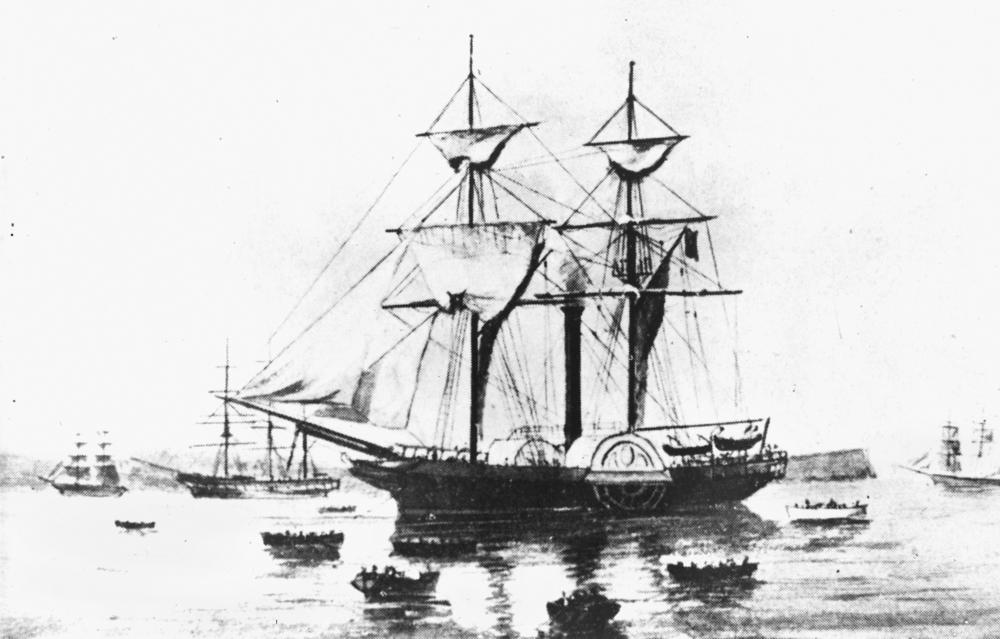
SS Sophia Jane
Sir Edward Parry, writing on 26 July 1831, about he and Lady Parry travelling to Sydney:
“At 4.30 p.m. we saw the steamboat’s [Sophia Jane] smoke over the land, and at about 7 she anchored at Coekrenoyo [a landing place near Carrington, Port Stephens]. Capt. Biddulph came up to Tahlee and informed us that he should get under way again at 3 in the morning for Newcastle and Sydney. I therefore embarked with the family at once. We supplied the Sophia Jane with a few loads of wood which had been prepared for her for some time.” “It was a great disappointment to all our people that the steamboat came in and would go out during the hours of darkness; many of them never having seen such a thing.’
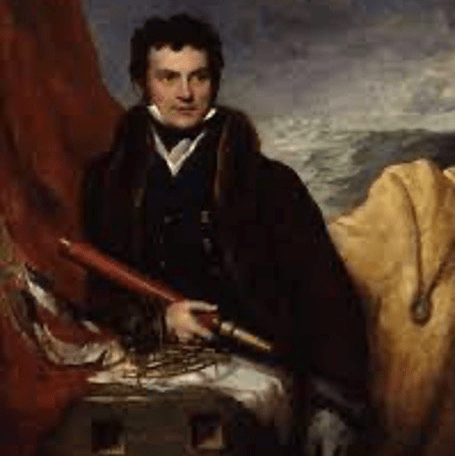
Sir (William) Edward Parry
Sir Edward Parry and AAC officials were frequent passengers on board the Sophia Jane, when travelling between Port Stephens, Newcastle and Sydney.
On 9 June 1832, Parry wrote in his journal that he took an early dinner [in Sydney] with Mr. Bunn, and at 6.45 p.m. embarked on board the Sophia Jane, accompanied by Messrs Dangar and Darch for Port Stephens.
On 26 September 1832 he noted that the Sophia Jane was laid up to get her new boilers.
Further information on the Journal of Sir Edward Parry and his time at Port Stephens is found at this link on the website.
Sophia Jane saves passengers on the Glatton – 1832
A following letter signed by J. Mudie and John Uhr was published in the Sydney Monitor of 1 February 1832, page 3:
‘To Captain Biddulph, commanding the Sophia Jane Steamer. Sydney, Jan. 30th, 1832. Dear Sir, We are deputed by the persons whose names are underwritten [names not included in letter published], to express their sense of the humanity shown by you in assisting the sloop Glatton by means of the Sophia Jane steamer under your command, to get from under Nobby’s Island, where she lay in much danger; they consider, however, that the assistance rendered by you was an expense which it is their duty to endeavour to share along with you; and for this purpose beg (with respect) that you will accept the sum transmitted herewith [sum not stated], as their equitable share of such expense. We remain, Dear Sir, your very obedient Servants.’
The Sydney Monitor of 1 February 1832, page 3, published a letter sent by Captain Edward Biddulph to J. Mudie and J, Uhr, in response to the funds raised:
‘Gentlemen, I have the honour to acknowledge the receipt of your letter, and the very liberal subscription (£14 10s.) of the passengers and others on board the Sophia Jane, towards defraying any expense I might have incurred in rescuing the Glatton from her perilous situation on the 26th Instant. The sentiments of approbation which you have so handsomely conveyed, are, I beg to assure you, a sufficient reward for the exertions of myself and crew in the execution of our duty in saving our fellow creatures from a watery grave. In this duty I am satisfied we should not have succeeded, had we not been assisted by the pilot and a volunteer boat’s crew at Newcastle. I therefore propose, and I hope it will meet with your approbation, to divide between them £4 10s. The remaining £10 I shall give to the Benevolent Society at Sydney. I beg leave to subscribe myself, Gentlemen, your very faithful and obedient Servant, Edward Biddulph, R.N.’
New Owners for Sophia Jane – 1832
The Newcastle Morning Herald and Miners’ Advocate of 21 June 1919, page 8, reported:
‘The Sophia Jane continued to run between Sydney, Newcastle and Morpeth until 1839, when her then owner, John Hickey Grose, a Sydney merchant, who had purchased her from her original owners [Edward Biddulph] in 1832, sold her to John Thomas Wilson for £6000. In the same year Wilson left Australia in a hurry, and, under an order of the Supreme Court, the Sophia Jane and the Tamar, also owned by Wilson, were sold and purchased by the General Steam Navigation Company.
The Sophia Jane remained on the Newcastle service until 1841, when she was transferred to southern ports, but in 1844 she was back on the old run under Captain Taggart, one of the grand old pioneers of the coastal service, being then owned by Mr. Edye Manning, a brother of Mr., afterwards Sir W. M. Manning.
Towards the end of 1845, Mr. Manning decided to build another steamer, the Phoenix, which was fitted with the engines of the Sophia Jane, then broken up, and launched at Clarence Town on June 24, 1846. After some service in the Hunter trade, the Phoenix was transferred to the Sydney-Grafton service, but was wrecked on Clarence River bar on April 14, 1852. In 1884 her engines, buried for years in the sand, were exposed by a gale. Those engines are an interesting relic, not only of the Phoenix, but of the Sophia Jane, and some part of them should be secured for a “museum of the future” in Newcastle. It may also be of interest to note that the boiler of the Tamar, wrecked in 1873 on Cabbage Tree Beach, was used at New Lambton Colliery.’
Sophia Jane Involved in an accident – 1838
The Commercial Journal and Advertiser of 16 June 1838, page 2, reported:
‘On Wednesday last, as the Sophia Jane was proceeding to the Hunter, she encountered a tremendous gale of wind off Broken Bay, and carried away several spokes of the paddle-wheel; her engines were also seriously injured, and the vessel became quite unmanageable— the engineer having used every exertion to stop the vessel without success. The captain being aware of their dangerous situation and knowing the Tamar to be near at the time, ordered guns to be fired, and immense lights of oakum and fat were exposed; and although the Tomar passed so close as to be distinctly seen from the deck of the Sophia Jane, not the slightest assistance was rendered.
In this distressed situation they remained for some time, when fortunately the Maitland steamer, outward bound, observed the lights, and immediately bore down to her; finding her situation dangerous, they took her in tow and returned to Sydney. Much credit is due to the captain of the Maitland for his kindness on such a trying occasion.’
The Colonist of 16 June 1838, page 2, published a letter written by a passenger on board the Sophia Jane when the accident occurred. The unnamed passenger wrote:
‘Sir,—I was a passenger by the Sophia Jane on Wednesday last, and with reference to the accident that occurred, I consider that but for the good fortune of the Maitland heaving in sight we should have been consigned to a watery grave. The reports that have appeared in the papers are in substance correct, and I can only add that in my opinion, it is perfectly impossible that our distress should not have been observed by that good Samaritan the Tamar. The loss of time to them would have been but little in their rendering us assistance, pursuing as they were the same course. But I suppose the salvage laws do not extend to this country!
The conduct throughout of Captain Griffin, of the Sophia Jane, was such as to prove him a thorough sailor, and one who in the hour of peril would preserve the utmost self-control; but, nothing could have saved us if we had remained another hour in the same helpless state, as the sea was rising, and we were being sensibly drifted towards the rocks. I know not if the salvage laws do extend to this place; if so there never presented itself an instance in which a handsomer premium should be awarded; and if an example were made now towards our salvors, who were prompted by humanity solely, and at great risk, inconvenience, and delay, to render us assistance, it would be a salutary hint to others to “go and do likewise.”
In response to the above complaint, the Colonist of 20 June 1838, page 2, published the following letter from William Mulhall, Master of the Tamar:
‘Sir.-“I find my absence from Sydney has been made use of for the unrestrained indulgence of very harsh reflections upon my character with respect to the accident that occurred to the Sophia Jane on her last return from the Greenhills, and in a letter appearing in your columns on the 16th instant, signed “A Passenger by the Sophia Jane,” the writer states, “in my opinion it is perfectly impossible that our distress should not have been observed by that good Samaritan the Tamar;” and follows up that uncharitable remark by an invidious sneer that could only have emanated from a bosom devoid of all charity.
I beg, most unequivocally and distinctly, to state, I was not aware of the accident, nor were any signals heard or seen by any on board the Tamar; and I should have considered myself beneath the brutes of the creation, if, knowing her distress, I could have abandoned her to her fate. You will, I trust, give insertion to this letter, to enable me to refute the calumnious reports so unsparingly propagated.’
Sophia Jane provides price competition for shipping merchants – 1844
The Maitland Mercury and Hunter River General Advertiser of 3 August 1844, page 4, published a letter from a Sydney shipping merchant outlining the pricing practices of the Sophia Jane in reducing freight and passenger fees between Sydney and other ports:
‘It is an old adage, and true as old, that competition is good for the public at large; but to this, as to all other blessings, there is a proper limit, for ruinous competition is, in the end, worse than no competition at all. I am led to these remarks by the present position of the Hunter River Steam Company’s vessels and their rival the Sophia Jane. It is well known that before the latter vessel resumed her trips to the Hunter the charges of the Hunter River Company were, to say the least, by far too high, taking into consideration the reduction in every other department of colonial policy; and there was an air of independence about the whole, from the managing clerk to the minors, that reminded one of people “waxing fat and kicking.”
No sooner, however, did the Sophia Jane make her start than some signs of change became evident. At first it is true that the idea of her running was ridiculed; but when it was perceived that the public began to know and appreciate the merits of their deliverer, then an immediate reduction was duly advertised. The prices were reduced from high water to low water mark, with the avowed object of an earnest endeavour to “ran off,” as it was termed, the wooden boat; and we are now indulged (pro tem.) with a twelve-and-sixpenny cabin fare to the Hunter; our merchandise, too, is to be transmitted at eight shillings, instead of twenty shillings, per ton.’
In 1845 the Sophia Jane still providing competition in the carriage of freight and passengers. The following letter was published in the Shipping Gazette and Sydney General Trade List of 15 March 1845, page 72:
‘Having heard that a report of the loss of the Sophia Jane steam-packet was in circulation on Saturday, (a report as little true as a similar rumour with reference to the Rose steamer a few weeks since) I hasten, not to contradict it, for that the appearance of the vessel in her usual place and condition will sufficiently disprove — but to caution the public against giving ear to malicious reports made by interested parties.
A delay occurred on her last passage to the Hunter, caused by a very slight accident to the machinery (although in first-rate order and quite equal to any other vessel). This a few minutes would have rectified in Sydney and occupied no great length of time in Broken Bay, and the steamer then resumed her trip.
If the public (and those connected with the Hunter River in particular) are true to their own interest, they will not allow this steam packet to suffer from wanton and mischievous reports, raised by a few who are anxious to see her removed from her present trade, but rather support the more well-managed conveyance, that will have the effect, as long as she is sufficiently patronized, of protecting them from high rates of freight and passage money.’
Sophia Jane broken up – 1845
The Australian Town and Country Journal of 25 August 1900, page 34, published an article on how the operational life of the Sophia Jane came to an end, due to rotting timbers, when it was broken up and its engine re-purposed:
‘In 1845, Mr. Edye Manning decided to build a new steamer, to receive the engine and boiler of the Sophia Jane. The order was given to Mr. Chowne of Pyrmont, who in 1840 had built the steamer Sovereign. The new steamer rising, mythologically speaking, from the ashes of the pioneer vessel, was appropriately named, after the fabled bird of antiquity, Phoenix. Her length was 130ft overall, beam 19ft, depth 9ft, and draught 5 1/2ft. The engine from the Sophia Jane was made by Barnes and Miller, London, and was of the side lever, jet-condensing type: the cylinder was 40in in diameter. A new boiler was made by Mr. John Struth, engineer, of Sussex-street, who also fitted the machinery, in the vessel.
The Phoenix, during 1846, ran for a short time to the Hunter, in opposition to the H. R. S. N. Company; but the directors of that company, having given an order to Mr. Chowne to build the Raven, to oppose Mr. Manning on his Parramatta trade, she (the Phoenix) was sent to run to the Clarence. While in command of Captain Wiseman she was wrecked [in 1850] near the south head of that river. ….
Someday the Sophia Jane’s engine (typical of the machinery of British and Australian steamers of 1831) maybe unearthed from the beach where it was seen [after it was buried in sand many years ago] after a gale a few years ago and erected in a museum as a remembrance of steam navigation in the olden time.’
The Voice of the North of 10 December 1930, page 9, also reported on the breakup of the Sophia Jane:
‘When in 1845 the Sophia Jane was broken up by Mr. Chowne, of Pyrmont, her engines were placed in a Sydney built vessel named the “Phoenix”, which, for a short time, ran in opposition to the old H.R.S.N. Company, but was afterwards taken to the Clarence River where, in 1850, she was wrecked. It is stated that Mr. Chowne used portion of the timbers taken out of the historic Sophia Jane to build a craft to which he gave the peculiar name of “O.P.S.” (old pieces of ships).’
Life and times of Captain Edward Biddulph
The Newcastle Morning Herald and Miners’ Advocate of 2 August 1911, page 9, published a report on the naval career of Captain Edward Biddulph:
‘Edward Biddulph, son of Simon Biddulph, of Barton-under-Needwood, Staffordshire, entered the British Navy as a first class volunteer in September, 1803. He served on board the Indefatigable, Captain Graham Moore, commander, and took part as midshipman, in the capture, on 5th October, 1804, of three Spanish frigates, laden with treasure. He was removed to the Fenhound in 1807, and was next appointed master’s mate of the Ville de Paris, bearing the flags of Lords Gardener and Gambier.
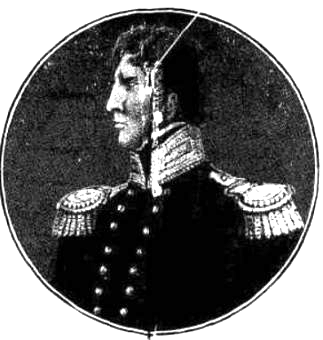
Captain Edward Biddulph
He was present, in the Caradonis, at the destruction of the French squadron in the Basque Roads, in April, 1809, for which he obtained a medal. Following on this action came the expedition to the Scheldt, and Mr. Biddulph, who had been transferred to the Sceptre, 74 guns, served on shore with a party of seamen at the investment of Flushing. He obtained his commission on 5th October, 1809, and was appointed to the Onyx on 2nd January, 1810. In that vessel, and also in the gunboat service, he took part in the defence of Cadiz. He also destroyed, on the beach of Cirar, with the boats of the Onyx and Desperate (the boats being under his orders), a brig of the enemy, which was protected at the time by a masked battery and some infantry. For this service he received another medal.
In 1813 he was appointed to the Hebrus (Captain Palmer), stationed on the coast of North America; and on the 22nd of July following to the Florida (Captain Mitchell), which was cruising on the South American and West Indian stations. Returning home from this service he was appointed, in May 1819, to the Menai (Captain Fairfax Moresby), and in this vessel he remained until he was placed out of commission in September, 1823. During the four years and four months that he was on the Menai he visited St. Helena; assisted in 1820 in landing a company of emigrants at Algon Bay; and was actively engaged in suppressing the slave trade on the eastern coast of Africa. He then retired on half-pay.
In 1831, Lieutenant Biddulph brought out the first oversea steamer that arrived in Australian waters, the Sophia Jane, he being part owner, with other members of his family, of the vessel. No passengers were brought in her. The Sophia Jane created quite a stir when she arrived in Sydney. She was sold there, and was afterwards engaged in the passenger service between Newcastle and Sydney for many years.
Lieutenant Biddulph obtained a grant of land at Elmhurst, near Maitland, and he lived there for some years. Afterwards he settled at Newcastle. He was called out again for the Crimean War and was appointed a retired commander in 1850. But he was too ill to take service, and he died in 1851, at the age of 61 years.’
The Newcastle Morning Herald and Miners’ Advocate of 29 March 1902, page 2, had previously reported on the burial site at Newcastle of Captain Edward Biddulph, as follows:
‘In the north-eastern corner of the churchyard [of the Newcastle Cathedral Cemetery], half hidden beneath the drooping branches of a fig tree; there is a monument which is of exceptional interest, especially to those interested in maritime pursuits. Over forty years have passed since the sailor whose memory is thus honoured was laid to rest, and thousands of the younger generation know nothing of the part played by Commander Edward Biddulph in the development of the Australian coastal trade. There are two inscriptions, which read: Sacred to the memory of Edward Biddulph; Commander, R.N., died Jan. 28, 1861. Also, Mary Stewart Biddulph, wife of the above who died Sept 27, 1878. Aged 80.’
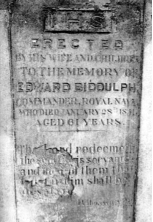
Memorial stone of Edward Biddulph at Newcastle Cathedral Cemetery [Newcastle Library, Hunter Photobank]
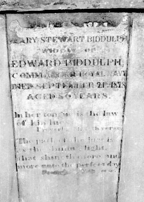
Memorial stone of Mary Stewart Biddulph at Newcastle Cathedral Cemetery [Newcastle Library, Hunter Photobank]
Model of the Sophia Jane features in a Sydney procession – 1938
The Sydney Mail of 2 February 1938, page 4, reported:
‘A reconstruction of the Sophia Jane formed one of the many interesting items in the great pageant procession “Australia’s March to Nationhood” in Sydney on January 26.’
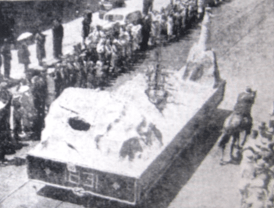
Model of the Sophia Jane featured in a Sydney procession. The float features the year 1831 at the rear [Sydney Mail of 2 February 1938]
Concluding Comments
Due to its historical significance, it is hoped that the engine of the Sophia Jane, which is still buried near the Clarence River, may be recovered at some stage in a fair state of preservation
Port Stephens and other centres such as Morpeth are privileged to have had such an historic vessel visit their localities.
Another historic ship to visit Port Stephens was the HMS Beagle, on which the famous naturalist, Charles Darwin, undertook his groundbreaking scientific studies. HMS Beagle visited Port Stephens in 1839 and 1841.
The histories of other steamships associated with Port Stephens are found at the following links on the website:
SS Reliance – A popular Steamship on Port Stephens
HMAS Sydney Visits Port Stephens
Manoora – A Luxury Cruise Ship – Royal Australian Navy Warship
Westralia – A Luxury Cruise Ship – Royal Australian Navy Warship
Kanimbla – A Luxury Cruise Ship – Royal Australian Navy Warship
SS Karuah and her Master, Captain Charles Phillipson
History of the Steamship SS Allenwood
Researched and compiled by Kevin McGuinness
August 2025

 Port Stephens - a history exploration