
Introduction
Construction of the North Coast railway line between Maitland and Brisbane, Queensland, began in 1905.
In 1909 and 1910, construction work progressed through the Dungog and Gloucester areas. Before the First World War, much of the region affected by the railway construction project was classified as the Port Stephens region. It is now generally referred to as the Mid North Coast .
The Maitland to Dungog section of the railway opened on 14 August 1911, followed by the Dungog to Taree section on 4 February 1913. Stations further north opened at different times, with the final section to the Queensland border commencing operations on 27 September 1930.
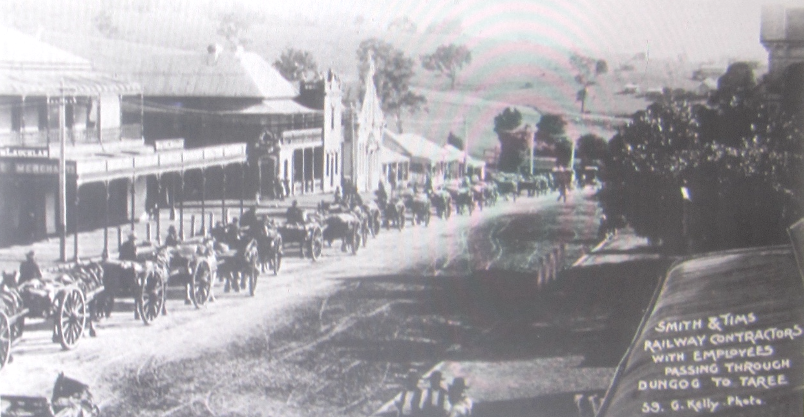
Smith and Tims, railway contractors with employees, passing through Dungog on the way to Taree
Beginning in August 1909, the Dungog Chronicle published a series of 48 articles, many under the title ‘Dungog and Round About.’ The author of the articles remained anonymous. The series of articles ran from 27 August 1909 to 28 October 1910.
The articles documented life in various parts of the region prior to changes taking place that were anticipated following the construction of the railway.
The correspondent wrote each article after travelling to a particular area. Some of the localities reported on were: Allynbrook, Bandon Grove, Bendolba, Bonnington, Booral, Bulahdelah, Carabola, Clarence Town, Clareval, Coolongolook, Dungog, Eccleston, Fosterton, Girvan, Gresford, Guygallon, Karuah, Lostock, Melbury, Munni, Nugra, Penshurst, Shellbrook, Stroud, Tea Gardens, Telegherry, Telegra, Underbank, Wangat, and Woolfield.
The articles are historically significant as they provide descriptions of life in various towns and settlements within the region at that time. Some evidence is presented how the rail line was cutting through some farms. They also include information on notable residents and their land holdings. The main commercial operations carried out involved, dairying, crop growing, tobacco production and wine production.
This paper presents the preamble, as published below in the early articles which explained their genesis. Then follows the series of the 48 articles with the dates as published in the Dungong Chronicle.
Preamble to the Early Articles
‘The advent of the navvy [a labourer], with his ready tools of trade is, as I write, scoring history as certainly as the brawny toiler is scoring the face of the earth within a few yards of Dungog’s main street. He has been going through the southern portion of our neighbourhood (1st section) and will soon be pressing north and on the second section. How wonderful will be the change few can realise. So, in order to catch the loose ends of the history of pre-railway days ere they float away, the “Dungog Chronicle” has sent a representative throughout the length and breadth of this district and contiguous ones, and here presents the result of his observations.’
The 48 Newspaper Articles
Journey commences at Stroud – Dungong Chronicle 27 August 1909, page 2
‘That Stroud Hill, away towards Nansen’s North, attracted my attention first time ever I was in Dungog, ten or twelve years ago, as I stood at the door of the Bank Hotel, and practically tossed whether I would go on to Stroud and Gloucester or not, and so mount its heights. I didn’t! I went back to Maitland. So now, when the “Chronicle” commissioned me for the duties above indicated, I made straight for that hill, looking neither to the left or right till reaching its foot. Most everyone knows the road, so little needs to be said, but Dungog side seams most attractive with the valley, green-treed and vine-clothed following one round on the right like a shark beside a boat, waiting for a chance slip to precipitate the unwary into its depths or jaws.
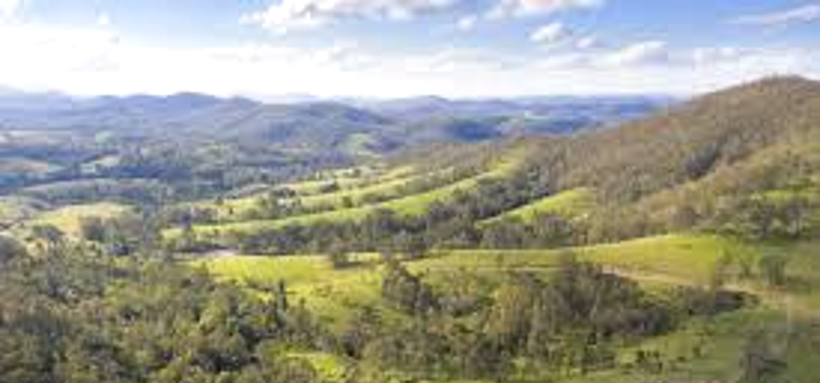
Stroud Hil – near Dungog
Down the other side is less interesting; and there is nothing of note to see till The Ram Station is reached. This was for many years the property of the Australian Agricultural company [A.A. Co.], and here were yards and shepherds’ huts. Two principal men were employed — one to tend the flock of rams, the other the flock of sheep. Another of the A.A. Co’s stations, at Warrah (near Willow Tree and Scone), was used as a changing station, and from this same Warrah were sent flocks of sheep across the mountains to be washed at The Washpool (of this place, more later).
Met an old gentleman, Mr. Ridgeway, at the Washpool, who was born in one of the shepherd’s huts, and he speaks of a one-eyed overseer, who rode a one-eyed horse, and was followed by a one-eyed dog! Sounds a bit like the long arm of coincidence, or something; but Mr. Ridgeway gives the name, and it is one well-known in this and the Gloucester electorate. I know somewhere about a dozen of the names, all related. It is about 30 years since the keeping of sheep was discontinued. Thereafter the Abbott Bros, acquired it, in large portions, I believe, and the historic place now comes under the category of change, and rejoices in a more euphonious name— that of ‘Abbotville‘.
Here the complexion of the slope of the hill has undergone a great change; the “multy” — looking remains of long-deserted shepherds’ huts, leaning every way to ruin, have disappeared, and a finely-built, 12-roomed house, with compartments of exceptional size, now projects its Potts Point appearance upon the atmosphere. ‘Tis but a few months since Mr. G. A. Abbott left his house of 30 odd years of occupancy at The Woolla (between Taree and Wingham, on the Manning) and proceeded with his family and possessions to the spacious homestead (I understand he had previously bought a large block from his brother, Mr. W. H. Abbott).
Most of the property is grazing land, and is so used, but there are a few acres of cultivation land facing the house on the opposite side of the road. On the day of my visit the plough was turning its deep dark chocolate soil over to the sun’s rays. Mr Abbott, sen., was away, so I did not ascertain the acreage. Nearby is a vegetable garden, watered from the creek. A hundred yards on the Stroud side of the house are the yards and pens, seemingly portion of those of other days. The railway line to Stroud passes within a biscuit-toss of the back of the house, and mayhap, many a live sheep will pass in trucks over soil that has gradually washed down the hill, covering steadily the bleaching bones of many a proud “leader of his flock”. And thus passed the ancient Ram Station, into name obscurity. But I’m game to guess many and many a day will elapse before the old designation becomes extinct in usage and memory. Now, that’s a long and somewhat dry description; but ’tis justifiable in that it gives a key to the spoken of change: — First a ram station, now a cattle station, and presently ‘will very likely contain in its environs, a railway station, or at least, a platform.
Proceeding further, the first place encountered is that of Mr. Joseph Gorton, through which the road to the Monkerai [situated between Dungog and Gloucester] leads by two gates within a hundred yards of one another. At a similar distance in is the residence, vastly improved since I approached it from another direction 18 months ago, particularly with regard to palisading and fencing, newly planted ornamental trees, and an orchard in which, beside a big lot of fresh stone fruits, some 180 young orange trees have been put within the last month. So, it seems Mr Gorton is looking forward to railway communication, to provide cheap and rapid access to the markets of the cities); an indication, too, that Mr. Gorton does not think too sanguinely or favourably of the future of the dairying industry, a pursuit he has followed (and is yet following), for some years.
Here’s a flat fact: Mr. Gorton designed and built without assistance, this house of eight rooms. There now, what about the resourceful Australian! Recently he has acquired additional property to himself and put in additional cultivation. The hares and wallabies have been a great trouble in the past to the growing crops of lucerne, oats, etc., but high-wove wire fences now stop their depredations. Mr. Gorton and his estimable wife are cheerful optimists.
Passing on, Mr. J. A. McKenzie’s residence is next reached. As secretary and local manager of the Gloucester Estate Syndicate, as well as an auctioneer and general agent of repute, Mr Mackenzie is so well and favourably known throughout the adjacent districts, so very little requires to be said.
Next comes Mr. W. Ridgeway’s dairy farm, where also Mr. Ridgeway, jun., located. Mr W. Ridgeway it was of whom I have written as having been born at the old Ram Station. The family has resided in this part for many years. Almost opposite is a gate and road leading over Reid’s Creek with high embankments and steep approaches. Here it was, at the first approach, that my companion of a former visit (Mr. Joseph Gorton) in descending, got into a mud-hole wherein his horse sank up to its belly, imprisoning the rider’s foot and stirrups so, that he was compelled to dismount and drag his foot from underneath. It took some effort to free the beast, too; and some considerable while later I noticed in the “Chronicle’” that Cr. William Gorton drew attention to the existence of the “quick-mud” patch — I am sure it was six months later. Now, all is changed; a splendid surface presents itself gratis to the passers-over. The four-horse vans which formerly struck trouble there twice in every twice, now bowl up and down merrily — at least they bowl down that way.’
South of the Karuah River, near Stroud – 3 September 1909, page 4
‘Just up the bank is Mr. Reid’s property (Mr. Reid lives down country). At my visit a mile and a half of fencing was here being carried on by Messrs. Neilson and Ratley. Up a steep hill and down one steeper, along a level valley, where soon the thundering railway will be frightening the cattle, and the residence and dairy farm of the Brothers Bradfield is encountered. The family has been on “Rosedale” many years, and appear to have made good use of the river flats by cultivating and cropping most of all of their property— 117 acres.
Here dwelleth the succulent orange in much profusion. A few yards further on is Mr. Findlay’s farm and dairy, extending both sides of a lagoon, and running away on one side to the Karuah River — flat as a pancake in that direction, where, as in the of Messrs. Bradfield, considerable cropping is done. Area is 103 acres, including hares in plenty! And here it dawned upon me, in all its significance, that I afterwards found out was the unanimous cry — that the season was vulgarly “rotten” in every respect. Grass almost nil, milking cattle reduced to anything from 60 per cent to another nil and I reckon that two-thirds, or at least one-half of the dairymen met throughout the long trip from Washpool through to Johnson’s Creek, down Weismantles, Telegherry, Stroud, Booral, Upper Myall, Bunyah, Sawyer’s Creek, and Cooloongolook, had given up the effort to extract the lacteal fluid until the balmy Spring coaxed the milk yield.
Retracing steps for a quarter of a mile, and proceeding up the river, Mr. Angus Farley’s farm of 70 acres, with its homely residence comes first, and here also has cropping being carried out in large proportion. But the dairy herd, mostly roams over the flats (which also stretch to the Karuah), untroubled by the milkers’ hands, and so they bid fair to, until the Spring. The name of the Farley family in all its branches, is as well-known throughout the two electorates as any, and favourably known, too.
Mr. Angie as he is generally spoken of, is one of the most popular of the name. Mr Jas. Tyrie has quite a large area in his farm — 252 acres— and he, too, feels the nip of the scarcity of feed, for his herd of milkers is now reduced to about six in the morning, and — well, I won’t risk telling how few at night, for I might not be believed. And he has good hand feeding too, and a very fair class of mixed cattle. From the house a splendid view is obtained of the Gloucester district (Stroud) butter factory, near which will be the closest railway station to Stroud) and of about two miles of the winding Stroud-Gloucester road, as it meanders round a side-cutting, in addition to a pretty scene round and up the river.
Away past are the residences of Mr. Barnes and one or two others, but the track thereto is very, very rough; also, night was nigh, so I retraced by way of Reid’s Creek. But I should have mentioned that the Dungog side of all these properties back on to, and high up are partly surrounded by large areas of the Abbott properties. In fact, the Abbott properties run out 7 miles to the Monkerai.
On the lower side of the Washpool, along the Dungog side of the Karuah is a large number of gates and rails — no less than 27 down to Mr. William Maytom’s, at Mount Pleasant. The first place is that of Mr. Hector Campbell, now occupying the dairy farm of Mrs. Duncan M. Farley, widow of a good and genuine man. It being night by now, and Stroud, six miles away, must be reached. Besides I shied at the gates and postponed the calls to those places lying above Mr. R. Gorton’s at the crossing. But from what I have heard I can speak highly of Mr. Campbell, and, from memory of 18 months ago, also well of the carrying capacity of the farm. Mr. Gus Farley’s prosperous dairying farm is close here, and what has been said of the Farley family applies in this case. But one thing remains in memory and that is the beauty of the scene looking towards Stroud over the Karuah River], to which these farms run in a gentle slope. The probing trees which grow along the banks in great profusion and considerable regularity, break the sharp rises on the far side and help to reveal a stage picture of much loveliness.
But about “The Washpool!” This portion of the Karuah plays a big bass drum part in the operations of the band of sheep stations of the A. A Coy. Its functions were most important. Here, as before stated, the Coy’s sheep from Warrah (northern line), and the Ram Station were taken to be washed, the work being carried out about 100 yards above the big bridge. At that spot a chain of black rocks shows their serrated teeth above the rushing waters, stretching almost completely across the river. This natural foundation was made use of as a base for the dam, which was erected, and, as the river is 60 or 60 yards across at that point, and the banks high and precipitous, a large body of water was impounded and back up a long way.
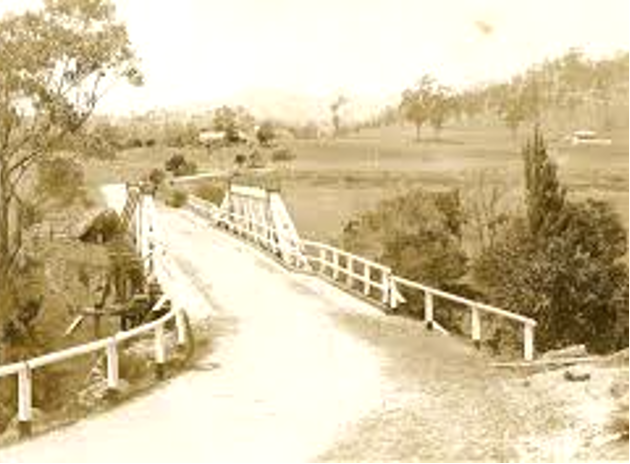
Washpool Bridge [University of Newcastle Library’s Living Histories collection]
Here the jumbucks were washed after being shorn. But when the keeping of sheep was discontinued, the dam was blown up by order of the Road Superintendent for the waters caused serious erosion of the banks. Just below the old dam is a crossing place which has been used for years for that purpose, but now a splendidly solid bridge spans the river. From the structure may be obtained enchanting views both up and down the river.
That down the river is most beautiful; really pretty reaches of waters stretch away towards a graceful curve, shining, reflecting the beautiful archives of the evergreens growing on each bank in profusion of foliage. Nature has been here at work, nicking, fluting, crimping and cramping, each leaf distinctive, a poem of form, (I don’t know exactly what “a poem of form” is, but it sounds alright). Over the bridge, and straight ahead are three fine big homesteads in close proximity, on “Glen Holme.” They are the property of Messrs Geo., Leslie and Chris. Gorton. For many years has this fine big property been in possession of the Clan Gorton, and the sons here (together with Mr. William Gorton, of “Hilton Lea,” previous mentioned), worthily uphold the good name of their progenitors. And what is better or more desirable than a good name? The holding is 930 acres in extent and stretches from the Washrool way over to the north const road at Telegherry, and is used for grazing mostly, though some crops are put in.
Though so many years in the family, and apparently complete, just recently 8½ miles of fencing have been put up, and by the same men who did Mr. Reid’s work. Much of the district’s history and progress has embraced as a factor the presence of the Gorton family.’
Towards Stroud – 10 September 1909, page 8
‘Proceeding towards Stroud, Mrs. McNeill’s property is passed, and the Stroud road reached. Turning towards Stroud the nicely built residence of Mr. J. Wenham stands well up on the roadside, and, as a villa residence it paves the way to the sight of the town of Stroud. Before that, however, comes Mr. Wenbam’s sawmill, formerly the first butter factory in these parts, started, I heard in Sydney some months ago, by Mr. Gallagher.
Then comes Mr. Alec McNeil, jun’s., farm, the house standing on the hill, and commanding a view of the Karuah from the back. But the best view of the Karuah is obtained from the residence of Mr. Sedge Gorton, a little further on. Being situated facing the river, well back from the road, it is screened from sight by trees, and its existence not guessed at by passers-by. But, as the occupants have an uninterrupted view of vision front, right and left, a very fine panorama is obtained. Standing well out, the valley, flats, river and mountain beyond present a very charming picture.
Mr Gorton has been on the property but 2 years or so yet has added much to the cropping area in the meantime. I am somewhat before my story in jumping to his place to convey comparison of views for between these two last mentioned is Mr. W. Fell’s white house, on the crown of the hill, surrounded by white-painted outhouses and beehives, giving an air of cheeriness on a raw day, and of “cooith” on a warm day. Just now heaves into sight, placed at the bottom of a longish hill, and clustered on the top of the next hill— beautiful Stroud.
Henry Kendal once wrote a poem on Stroud [see below]. A copy was presented to Hon. Walter Bennett. I have not seen the complete poem, but 12 months or so ago, when in another town other than Dungog, I heard one of the expressions used. It wasn’t an expression of which Stroud need be ashamed, exactly but I wouldn’t care to use it in this series because I am known. It only meant Stroud was not wide awake. No doubt, whatsoever the poem was one of those gems Henry produces, but it could not do more than justice to the beauty of the town.
Poem on Stroud and Dungog by Henry Kendall
Here, pent about by office walls
And barren eyes all day,
’Tis sweet to think of waterfalls
Two hundred miles away!
I would not ask you, friends, to brook
An old, old truth from me,
If I could shut a Poet’s book
Which haunts me like the Sea!
He saith to me, this Poet saith,
So many things of light,
That I have found a fourfold faith,
And gained a twofold sight.
He telleth me, this Poet tells,
How much of God is seen
Amongst the deep-mossed English dells,
And miles of gleaming green.
From many a black Gethsemane,
He leads my bleeding feet
To where I hear the Morning Sea
Round shining spaces beat!
To where I feel the wind, which brings
A sound of running creeks,
And blows those dark, unpleasant things,
The sorrows, from my cheeks.
I’ll shut mine eyes, my Poet choice,
And spend the day with thee;
I’ll dream thou art a fountain voice
Which God hath sent to me!
And far beyond these office walls
My thoughts shall even stray,
And watch the wilful waterfalls,
Two hundred miles away.
For, if I know not of thy deeds,
And darling Kentish downs,
I’ve seen the deep, wild Dungog fells,
And hate the heart of towns!
Then, ho! for beaming bank and brake,
Far-folded hills among,
Where Williams, like a silver snake,
Draws winding lengths along!
And ho! for stormy mountain cones,
Where headlong Winter leaps,
What time the gloomy swamp-oak groans,
And weeps and wails and weeps.
There, friends, are spots of sleepy green,
Where one may hear afar,
O’er fifteen leagues of waste, I ween,
A moaning harbour bar!
(The sea that breaks, and beats and shakes
The caverns, howling loud,
Beyond the midnight Myall Lakes,
And half-awakened Stroud!)
There, through the fretful autumn days,
Beneath a cloudy sun,
Comes rolling down rain-rutted ways,
The wind, Euroclydon!
While rattles over riven rocks
The thunder, harsh and dry;
And blustering gum and brooding box
Are threshing at the sky!
And then the gloom doth vex the sight
With crude, unshapely forms
Which hold throughout the yelling night
A fellowship with storms!
But here are shady tufts and turns,
Where sumptuous Summer lies
(By reaches brave with flags and ferns)
With large, luxuriant eyes.
And here, another getteth ease —
Our Spring, so rarely seen,
Who shows us in the cedar trees
A glimpse of golden green.
What time the flapping bats have trooped
Away like ghosts to graves,
And darker growths than Night are cooped
In silent, hillside caves.
Ah, Dungog, dream of darling days,
’Tis better thou should’st be
A far-off thing to love and praise —
A boon from Heaven to me!
For, let me say that when I look
With wearied eyes on men,
I think of one unchanging nook,
And find my faith again.
From the top of the hill may be seen, stretching along a number of houses, Mill Creek bridge, a break and a depression, caused by intervening trees, and then several large buildings — the Post Office, Presbyterian Church, Public School and residence, on one side, and the Bank of Australia, Mr. Hopkins’ store and Le Mottee’s hotel [now demolished] on the other. There is the end of vision from that point.
Approaching the town [Stroud] the first business place is that of Mrs. Cornell, widow of the late Mr Cornell, and daughter of Mr. Alex McNeill, senior, one of Stroud’s oldest residents, formerly a butcher. Mr McNeill has been associated with Stroud’s history for many a year and knows most all to be known about it. Mr. Farley’s smithy clangs out its welcoming ring to the ear of the passer-by — if he is not a passer-by, but needs the services of Tubal Cain’s [named in the Bible as the first blacksmith] representative, then the clang is all the more welcome, for a missing nut, or broken shaft, or loose horse-shoe thing of anxiety to the traveller in haste. …… Again, the name of Farley; this time Mr. A. A. Farley, baker, he of the genial manner and the cheery word “the smile that won’t come off.” This a term in the town that Mr Farley is “as white as his bread” — and that’s a fortunate recommendation worth the double event, sure.
Just here, though, is a house of comfort— Mrs. Flood’s Australian Hotel, where the kindly proprietress has a sensible word for everybody. This is one of the oldest established hostelries in the lower Northern Rivers and had its walls the gilt of speech as walls are said to have the gift of hearing, every brick in the extensive building could a tale unfold, for well-known it is that Stroud and Booral (five miles away), were headquarters for the A A. Company, which employed convict labour largely. But why go into such history? These former settlements have outgrown what Governor Beauchamp was unfortunate enough to refer to as “birth stains,” and they now have careers of prosperity and freedom.

Mail coach leaving Mrs. Flood’s Hotel at Stroud – 5 September 1906 [University of Newcastle]
Anyhow, at the Australian Hotel many a weary sojourner and his beast have seen the welcoming sign with gratitude, and departed from the hotel with an inward resolve to return at first opportunity. Just here, at my visit, a new shop was being erected for Mr. Chris Mackenzie, butcher, whose business has grown to dimensions demanding larger premises. Mr. J. E. Slater’s residence and stables of modem design and considerable extent, both as to residence and stables, attract attention by their situation. Mr Slater runs coaches to Hexham and back daily to meet the day trains from Sydney, thus saving passengers making the back trip between 10.30 p.m. and 6 a. m, is a boon. Stroud folk should rush with both hands and feet, for at any time the night mail carries heavy louts on their journey from Hexham to Gloucester.
A popular young gentleman in Mr. F. J. Callow, secretary of the local butter factory, agent for nearly everything one needs the most and happy soul besides, hath his office in this locality, and business hummeth almost as much as he deserves it to hum. Mr. Collins, solicitor, practices adjacent; at the time of writing he has a big case on as representing the relatives of the victims of the horrible accident at the Bulahdelah Alum Mountain, on August 13th.
One of the oldest and largest residences here is that of Mr. Bowden “Millbrook,” on the bank of Mill Creek, picturesquely situated on the high site — a real country house. Mr Bowden engages in road contracting with much success. The Mill Creek bridge is of substantial build, considerable high above summer level; nevertheless, the flood roars up its banks on occasions and makes the apprehensive quiver. A rather peculiar hide-and-seek level crossing is here provided — you pop to one side of the bridge, pass underneath it on dry ground, and pop out, on the other side to the watering places.’
Beautiful Stroud – 17 September 1909, page 5
‘Passing Mr. McKenzie’s butcher’s shop, Mr. C. J. McIntyre’s old established store is met with; the business was formerly run by the late Mr. J. McIntyre, senr. Mr. C. J. McIntyre is a Justice of the Peace and Coroner for the district but finds time in between to see to the disposal of large stocks at both Stroud and Stratford. On the opposite side of the road lies the racecourse and sports grounds, and the road to Peachtees station, latter the property of Cr. F. M. Hooke, ex-President of the Stroud Shire Council, a gentleman of great popularity and possessions. Unfortunately, I had not the time to get so far, but “that’s a pleasure that awaits.” A description of the station alone would probably run to over half-a-column of space.
On this road I was not able to proceed more than a mile or so, striking the homes of Mr. Carl Brock, and of his son-in law. Mr. Brock is about the best known contractor in the three Shires, and has the reputation of good and faithful work. Just past the dairy farm of Mr. Bowden, senior, father of Mr. M. Bowden, of Stroud, “Dour“. Winter has decreed here also, as at so many other places visited.
Returning to the main road and crossing Mill Creek bridge, a steepish hill has to be negotiated, and then the fantastically adorned building of the Bank of Australasia breaks on the view. Perhaps that “fantastic” is an unfortunate description in the true sense, for there is nothing very fantastic about that monument of stability, the “Asia” as it is known amongst the banking fraternity. But this particular branch has projecting attic windows peeping at one from seemingly every yard of the roof. The extensive structure is by way of the style of Elizabethian-Doric-Gothic-Byzantine (that “Byzantine” is good, as applied to buildings; but I just love to see the zig-zag “z’s” in print, and couldn’t resist putting in a mate for the in Elizabethan) or some such style or mixture ot styles. Of course, I know nothing of architecture, as is evident from the above. But there’s no doubt about this: the “Asia” is one of the most solid and conservative in Australasia, one to be proud of; its notes are ever worth their face-value (and more to the penniless).
In this branch, Mr. L. W. Allworth, late of East Maitland, deals in figures, and risks, and deeds, and drafts, and circular notes, and letters of credit, and notes sterling, and cash, and bullion, and other securities, “too numerous to mention.” Mr. Allworth was formerly in the much smaller branch at East Maitland, and he identifies himself with everything tending to the good of the town. The building was formerly one of, if not the head station of the A. A. Coy’s whole property, and is unique as a bank quarters, of any kind I have seen in Australasia and New Zealand, both as to structure and to extent of grounds. It would be a pity to get lost in the grounds after getting good cash for a cheque, but one never knows!
Following still on the left, Mr. Hopkin’s store and handsomely, built “Hill View” is met with. Mr. Hopkins has been in business in Stroud many years, and his counter and van trade is something considerable. Host L’Mottee, of the Central Hotel, is as well known to the travelling public, as the milestones by the way-side, and popular withal. I have never heard, the hotel called the “Central” yet; it’s always “L’Mottee’s;” and that a tribute to the popularity and bon homme of “the man be-hind, the gun”. (By-the-way, he’s “the man behind the gun” in regard to the cannon on Silo Hill: — but that’s another story.) How many coach and other passengers have had the pleasure of tearing a bit of food — and good food, too — at this well-run hotel in a year would take a certificated accountant to track out. But it must run into about five figures — and those numerals would be reached by seating 10 at each meal. For this is the mail stop for breakfast and lunch. Hotels are generally cheerful, yet Shenstone has said: “Whoe’er has travelled Life’s dull round, Wherever his stages may have been. Must sign to think he still has found His warmest welcome at an inn.”
Next on the same tide is the large corner bouse lately purchased by Mr. L’Mottee, and further on some new buildings, one of which is occupied by Mr. Coleman, whose smithy and wheelwrightery (is that right?) talks eloquently eight or nine hours every day of the industry of the young and pushing proprietor, who finds constant employment for three hands — and that’s something to be proud of, too. Mr. Coleman’s father lives hereabout also in a nice house, and with yet another son than our blacksmith friend, was at the time of my visit, and had been for some time, busy upon a number of houses in Stroud and vicinity. For Stroud has suddenly taken on a building spurt.
Mr. P. Krehn, next door, has taken considerable interest for a considerable time, and without consideration, in promoting sport and entertainment in Stroud; in fact has been the hardest worker ever there, being joined often with Mr. William Crick. Let us trust he has had substantial reward in an indirect direction, viz., that of increased business, “as a slight token of esteem,” as it were. For Mr. Krohn is also a wheelwright. (A peppery colonel would find it try his patience to get a “wheel left” in Stroud!) The phonographic business conducted in the same building as the surgery of Mr. Bate, dentist, should be cheering to suffering patients, when “the music issues from the horn.”
Public Buildings of Stroud – 24 September 1909, page 5
‘Now, I have strayed so far down the north side of the street, that I was about to give up in disgust the possibility of returning with any degree of order, when I find I am at the School of Arts, which gives me the opportunity to saying a few words about it, and then returning to the post office on the south side, which I left at Mr. McIntyre’s store.
The School of Arts is somewhat cunningly guised under mottled painting, which gives one at a distance the idea it is solid stone. But it isn’t! — it’s wood, and it’s attractive looking too, and of some extent. Further, it is a much-frequented building, with a good-sized hall, stage and retiring room, a library, reading room, and billiard room, where the gentle stranger takes on, per chance, a tournament winner unwittingly. Seems to me, “at a casual glance,” as Astemus Ward [American humorist] says, that this institution is a power in the town; and that it rejoices in the possession of quite a number of enthusiastic members of committee. I know of one, at least, who, some 15 or 18 months’ ago, charged me some shekels for making enquiries about it in a casual way, when on a visit. That’s the way, Stroud; get as much foreign capital into your School of Arts (and your town also) as you can!
Quite an imposing structure is the Stroud Post Office and residence, and it’s substantial two storeys of bricks and mortar is the most conspicuous land-mark entering the town from the western end. Here the bulk mails are treated from both north and south by being sorted and mail-bagged to all the smaller posts and receiving offices on the main North Coast. In departmental importance it ranks highest from Hexham to Taree on the mail route, and requires the services of the full staff at each sorting operation. (Not every post official does; generally there is at least one member off mail duty). Mr. J. Smith is the popular postmaster. Mr. Frank Brockwell first assistant. It seems rather strange that Stroud has not a telephone bureau, seeing so many smaller places are so blessed. I should inventory up the population of the town at about 350, and there should be enough inward and outward calls to provide interest and sinking fund. However, I am not the P.M.G.
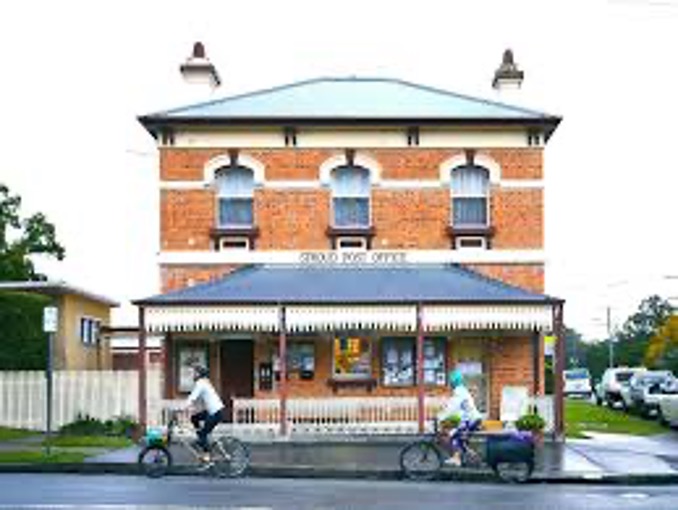
Stroud Post Office [Visit NSW]
Quite close is the public school, and Teacher H. W. Grainger’s residence — an institution well up in the Educational Department’s list, with a corresponding effect upon Mr. Grainger, who is the worthy son of a worthy father — Captain Grainger, whose acquaintance I enjoyed some 15 years’ ago. The buildings are situated over looking Mill Creek, and commanding a good view of the south and west.
Next thereto is the Presbyterian Church, a brick structure of goodly dimensions. The Wesleyan Church is in the main street and has been recently renovated. Some little distance north of the main street is the Roman Catholic Church, built of brick. The Church of England is of such historic importance and contains so much of interest as being built by the A. A. Company, that I hope to make a special article of it later.
Stroud has its Temperance Hotel. It also, has its Hall of Justice, where the presiding genius, so far as the enquiring public is concerned, is Mr. R. E. Callow, who, like the celebrated character in “The Mikado,” possesses one or two capacities. Here are a few:— C P.S., C.L. agent, Curator’s agent, the Registrar of Births, etc, Registrar of Small Debts, District Registrar in Bankruptcy, Licensing Clerk, Deputy Electoral Registrar! besides holding down a J.P.-ship. The Land Board meets here periodically, and a casual delinquent or two, faces P.M. Walterus Brown on the second Wednesday in each month. Senior constable Ashwood is in charge of police, but Stroud, generally, is a place of peace. And by the way of finishing up the Governmental list with the profession most respected I must mention Dr. R. R. P. S. Bowker, Government Medical Officer, one of Nature’s gentlemen. Higher commendation superfluous!
The Shire Council has something of a representation of the Government, which is too obvious to waste time in tracking out. Its President, Cr. James. Croll, possesses a happy knack of getting the threads of a discussion and its trend into the hollow of his hand, and directs the course of same unobtrusively, but none the less surely. He is a good general, and personally a favorite. Crs. Archie Grant (Deputy President), William Gorton, G. W. Titcume, D. Cameron, and J. W. Daunt, constitute the Council, whilst Mr. Gee is (at time of writing) acting Engineer. In Mr. J. O’Connell, the Council has a clerk of whom the members are collectively and severally proud, on account of his methodical and painstaking character. The new Chambers are quite of the artistic order, and an ornament to the town, besides being designed most suitably.’
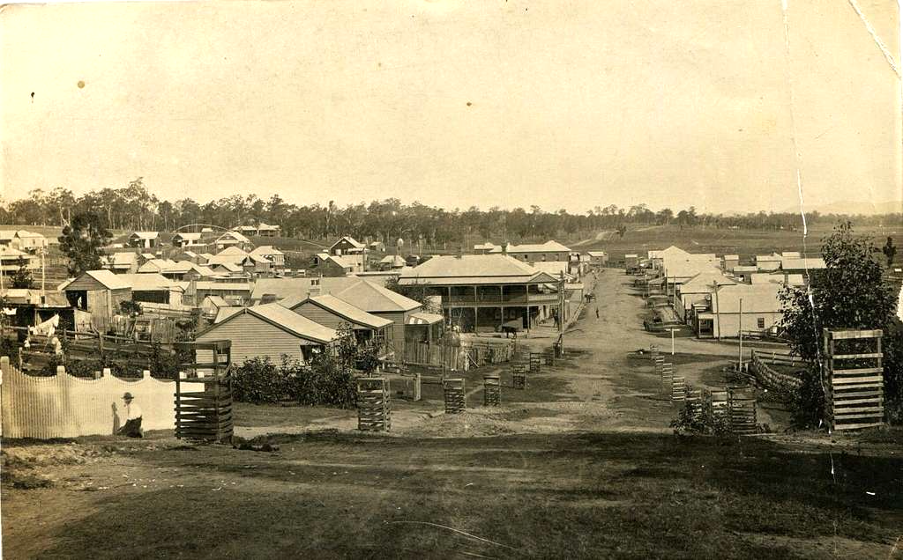
Stroud circa 1915, showing W. P. Reichert’s Hotel at centre left
Public Buildings of Stroud – 24 September 1909, page 8
‘But there is one thing which cannot be dismissed with a wave of the hand, as it were, and that is the yeoman service rendered the Council by Retired Councillor F. M. Hooke, who, having acquired large interests in Queensland, recently sent in his resignation, his place being now taken by Cr. G. W. Titcumbe. As President for a period, and Councillor for a considerable space he was right in the thick of battle at all times, and devoted a considerable amount of time to Council business. His weight will be missed. And then Stroud Shire hath its man of weight and doughty deeds in its valuer; a gentleman who casts the speculative or calculating eye (or both) upon those fortunate enough to occupy property, and as the Yankee says: “Whatever he says, goes,” or generally does, unless the Appeal Court is invoked and feels pessimistic. If people are in doubt whom I mean, the fault is either mine or theirs; the gentleman is Tom Carlton— the ”Mr.” is superfluous in this case.
By the time this appears, Mr. Burmister, newly appointed Engineer, will have arrived from New Zealand. I have seen his credentials, but am not to be blamed for suspending an opinion, which if passed, would have no weight. (But I haven’t a kindly feeling towards Maoriland; I lost — won’t say how, but it was not my fault — a silver medal for life-saving on one of my trips over there).
There is also an ancient hospital built by the A. A. Company, but it cannot be said to be, in its present state, particularly suitable for the purpose intended; also there is a sum of £200 lying in the Commercial Bank, Sydney, set aside by the same Company, the interest only being touchable and (or) available for benevolent purposes. However, something is to be done, as result of meetings which have been held. But there are difficulties. To get back to business Mr. J. C. Penfold’s store, facing the post office, and next to the Presbyterian Church, has an extensive clientele which is augmented by periodical excursions to the country district per 4-horse vans. By this latter method Mr. Penfold has built up a business of considerable proportions.
Mr. H. E. Young, conducts general stores at both Strond and Gloucester, and also has his vans. With mention of Mr. A. Y. Bowen’s compact dairy and that of Miss Green (noted for cheerfulness), it seems I have about exhausted the business and public places of the town, and am constrained to let the private residences alone, for fear of omitting one or two unintentionally.’
Johnsons Creek (north northwest of Bulahdelah) – 22 October 1909, page 5
‘Harking back towards Gloucester and passing the Stroud turn off, the gate leading Johnson’s Creek way looks nice and open, so we enter this time in caravan style, for an old friend also with a sulky wishes to see the locality on his way to Gloucester. Leaving two places way to the left to be treated later, on the return trip.
The first property met with, after traversing a good and winding road along the bank of the creek, is that of Cr. William Gorton, a grazing area of considerable dimensions, and which has been in possession of the family many years. Mr. Gorton has but lately put a lot of energy into improving his holding, by clearing, fencing, etc., as well as renovating the house. For some time, Mr. Gorton has been a member of the Shire Council and at time of election was living on the old homestead near the Karuah. Having acquired the present holding from his brother, he removed thence, and is devoting himself to cattle raising, as of yore. As a tenacious, yet generous opponent on the one hand, and a sturdy supporter on the other, Mr. Gorton is respected by his fellow councillors.
Next in order of travel comes Mr. Relf’s residence and farm. Mr. Relf is a maintenance man for the Shire, and his length includes the road past his own place — and as I have said, a very good road in places it is. Would you believe me (and there are some that have) if I had my own way, I would have a maintenance man on every road in the Shire and make him live on that road. (This is a plain “steal” from “The Dusky Professor’s’ scheme of money-spending, and has no other bearing on the case in question).
Now I come, after having passed through several gates, to Mr. Taylor’s, but as it is away over the creek, I don’t really get there, as the road is somewhat uncertain. At a former visit, Mr. Taylor was busy grubbing. Mr. Alf. Ince’s house, perched high overlooking rich creek flats, with the mountain beetling close to the right. Here a biggish proportion of the farm is being prepared for crops. Mr. W. Relf lives next door, and also cultivates a goodly area, besides growing a species of prolifically bearing oranges, pronounced by those who sampled what were laden upon me, as particularly choice.
Then comes Mr. R. Hampton’s farm, situate on the left, off the road, and facing the aforesaid mountain. Through this farm, which also run’s down the Creek bank, the railway will grind and crunch its way shortly, and then the welkin will ring with its hiss and snort. (Every writer says a locomotive snorts, hut I can’t see it perhaps its being an iron horse it emits iron snorts).
Mr. Galvin and Mr. Toms have each their homes close handy, both of recent structure, and bearing evidence from their surroundings that a good deal of clearing work has been done. Turning sharp towards the bluff mountain, one encounters the farm of Mr. W. Mackaway, tucked right away under the cliffs. Here some dairying is indulged in, but winter has interfered with the cattle. A goodly supply of corn, however, is grown, and corn now-a-days is worth money. The family are very cheerful and kindly.
The new public school built to replace the ant-eaten structure I saw twelve months ago, is a credit to the locality. Mr. C. J. Hamilton, “our new teacher,” as kiddies designate a new arrival in the teaching world, is much more fortunate in this respect than was Mr. E. J. Mclntosh, former teacher, who has gone to Armidale. Mr Hamilton was formerly at Trunkey Creek, and of the enrolment of his school (32) the daily average is 28.
A new Union Church has been erected next the school, and a handsome building it is. Emissaries from the Church of England, Presbyterian, Methodist and Baptist Churches hold alternate services here. Trustees represent each denomination. Just recently a receiving post office has been started in the residence of Mrs. Martin who is postmistress. With her son, Chris, as right hand supporter, a small farm is worked. Over the Creek, Mr. J. Holstein has his home and farm, where a good deal of maize is grown, and pig raising is carried on. Mrs. Holstein has been in this locality many years and seen many changes. Mr. H. Relf’s farm is next met with; Mr Relf also divides his attention to maintenance work for Stroud Shire.’
Wards River (between Stroud and Gloucester) – 29 October 1909, page 5
‘Coming out of the lane and proceeding towards Wards River, Deputy President Archie Grant’s farm is next in order. Cr. Grant eschews dairying, going in mostly for grazing, although a fine patch of land on the riverbank is kept under plough and crop. It is a question whether any of the Stroud Councillors know the Local Government Act better than does Cr. Grant; in conclave he is able to give an opinion upon the law instantaneously without reference to the statutes, unless for confirmation and conviction. Great pity there are so many bachelors in the world, though!
And now one enters into the country of the Grants, of whom there are many families — not related to Cr. Grant. The locality should have been called Grantville. The Ward’s River post office is officered by Mrs. Grant, senr., with her husband and son, Mr. A. G. Grant. The first-named are the parents of the numerous branches mentioned, and the very oldest inhabitants, well-known and respected. Mrs. Grant keeps a most comfortable accommodation-house. Near the public school (presided over by Mr. Woodhouse, late of Vacy, who has an average attendance of scholars of 28, is one branch of the family; over the river from Mr. Hazelwood’s accommodation house there is another. Mr. Hazelwood’s home is a resting place for the weary.
Not far from Mrs. Grant’s but the other side of the river is the farm of Mr. E. Relf, senr., with whom also is Mr E. Relf, jun. Mr Relf has been on this farm over 30 years and knew Wards River when there were but two houses in it. The old homestead has been demolished and a new one erected 50 yards away, overlooking a prolific orchard situate on the Creek bank. Grazing is the calling here, and the large acreage lends itself to pro-duction of good results.
Mrs. Harris has a residence just close to the boundary of Stroud and Gloucester Shires, and has lived there many years. Away back off the road, in a sequestered nook is another grazing property — that of Mr. James Page, who does not believe in the drudgery of dairying, but pins his faith to cattle and horses. He keeps more sheep, proportionate to the area, than anyone I met in my trip.
Mr. W. Barkwell has a nice property abutting upon the road, and he dairies. Lately he has acquired additional land to his sizeable area and is busy over that; I understand the latest purchase is part of the last of the A.A. Co’s. land in this locality. (Mrs. Grant also secured “one of the last lots” a month or two ago).
Mr. W. Galvin has two farms, upon one of which he does beekeeping. I did not learn the acreage or have forgotten. What the residents of Wards River would do without Mr. W. Lamley’s butchery, would be a puzzle; for, being equi-distant from Stroud and Gloucester — 16 miles each way — they would be between His Satanic Majesty and the deep blue ocean. However, Mr. Lamley is willing and able to provide fresh beef at one’s door daily, and that’s a boon. In addition, he possesses quite a respectably sized farm. With the advent of the railway hands, biz should hum.
Proceeding towards Stroud, Mr. T. V. Borham’s Hotel is hailed with pleasure, for Mr. and Mrs. Borham and family are very hospitable. Notwithstanding the convenience to travellers, the inexorable law of no-license has decreed that the hotel must be closed in about six years from now. Mr. Borham is making improvements round about. A fine hall, adjacent to the hotel, rings occasionally to music and dancing.
A real live village blacksmith practises his trade here, by the roadside. Mr. W. J. Coleman, of cricket fame, purchased this business from Mr. Madden some twelve months ago, and has run it successfully ever since, making numbers of friends. In times gone by, if not still, Mr. Coleman was an accomplished horse breaker, and on his farm at the Monkerai he subdued many an outlaw. The stock yard there is higher than any I have seen outside Queensland. So now, his expert knowledge must serve him in good stead in careful handling of colts brought in for their first set of boots.
There is a provisional school here, of which I know nothing. The centre of Weismantels is Weismantel’s— a wine saloon, post office and accommodation house — to which has just been added a general store and bakery in anticipation of the railway workers’ arrival. The house has been established since time immemorial, it would seem and is perhaps the best known place of call on the Lower Northern Rivers. Supplies for the saloon are drawn from Mr S. Weismantel’s cellars some distance in off the road where the eight year old golden wine increases in value day by day. A large vineyard once spread its generous vines and bursting purple fruit along the trellises, but prices for blending wine became too
low, temporarily, and out came the vines. So as not to reveal Mr. Weismantel’s business, I propose to alter the figures he supplied me with, still showing the proportionate prices paid before and after the Federation operations.
Lindeman’s were in the habit of paying Mr Weismantel, say, 8s per gallon for 1000 gallons of new wine to blend with their matured lots; after Federation they announced they could not pay more than 1/4 per gallon! Matters have since adjusted themselves, but as no wine has been made at this vineyard for eight years, what remains in the cellar can be depended upon as being that age, at least. So, the huge vats are being drawn upon day by day, and soon there will be none left.’
Clareval and Telegherry – 12 November 1909, page 5
‘Reaching the road from the vineyard, and proceeding towards Stroud, the Monkerai Range, or “Linger and die Hill,” as it is also called, stoops over towards the traveller on the left, whilst on the other side a high range, separating Weismantels from “The Peach-trees,” rears itself with stiffness as though to reproach its leaning and frowning brother.
As one travels Clareval and Telegherry are passed, and the farms of some of the oldest settlers in these parts are here to be seen. Amongst them are properties of Mrs. Coleman, Clareval; Mr. J. Ratley, Mr. Hicks, Mrs. Ratley and others; thence on to Stroud butter factory, whose able secretary is Mr. F. J. Callow. It is quite a treat to run through this well-ordered establishment, and to notice improved methods of handling, even as against those of a couple of years ago. Matters begin to brighten at the cream stage now, after a rather poor winter. Mr. Margery’s dwelling, high on the hill overlooking the creek is deservedly situated, and somewhat rouses in one, seeing its calm surroundings, a feeling of envy that one has to hustle round the world so when the clank of the Press calls.
Mr. Allan’s extensive property is also met with en route just opposite the post office and public school (Telegherry), both of which establishments are under the capable charge of Mrs. Harris. Mr Allan is one of the few that does not dairy, devoting his attention to raising stock and sheep (latter on a ssmall scale). I am told there is big money in sheep-farming on this coast now, after the rest it has had from the jumbucks, but it is hard to believe shrewd men such as we boast would let anything like a golden chance miss.
Coming again to the Dungog-road I seize the opportunity of saying a word about Mrs. N. McNeil’s house, which I passed by in the dark in a former instalment. The building is one of the oldest in the district, having been erected 80 years ago by convict labour. The walls are of exceptional solidity and look as though they would stand for ever. Beneath the house are somewhat extensive cellars, excavated, no doubt, for the storing of edibles, wines, etc, for those were the days of slow communication and consequent heavy reserve stocks. Here, says the legend, green snakes were kept and petted by a former manager. (I have seen a man picking imaginary green frozen Snakes with pink eyes and two tails from out his bushy beard, but that was the result of drinking “Tourist” whisky”— one drink and you’re “gone to the mountains”; he didn’t know, (or desire perhaps) good, sound light wines such as, no doubt this cellar boasted, but preferred the chain-lightning whisky.
The cellar is now blocked up with flowering and foliage pot-plants, and nothing remains to remind one of other days. There are, though, still traces about the grounds of cells to which the men were returned each night after work. Mrs. McNeil contemplates shortly leaving this desirably situated property (as the auctioneer’s advertisement will show) with its beautiful view of the river and reside in Stroud.’
Stroud – 19 November 1909, page 3
‘Having now reached Stroud once more, it is with pleasure I turn to Stroud Church. It is fairly safe to assert that there is no church or religious building in the State bearing such solid and undeniable claims to interest than St. John’s Church of England, Stroud. Built as it was at the expense of the A A. Company by the convicts assigned them, it is a link with that past which all are willing, if not anxious, to forget. Curiously enough, whether it was this scribe’s want of observation at time of visit, or there is no knowledge, but just at the moment of writing these lines, it strikes him he has no record of the date of erection, though some indication thereof may be gained in the dates given below, as they appear upon the memorial windows.
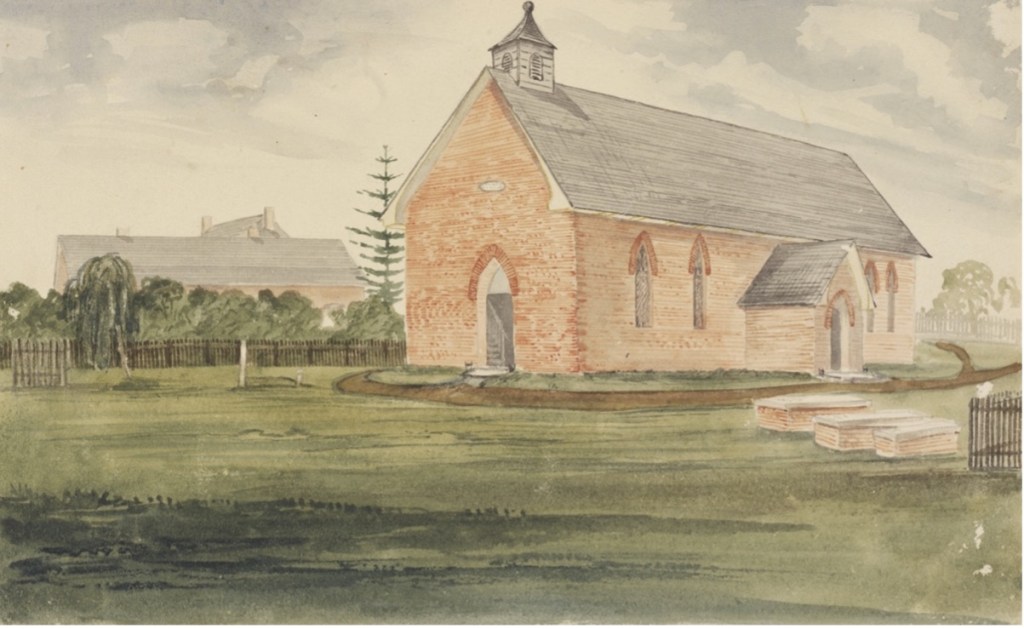
Watercolour of Church of England, Stroud [State Library NSW]
The precincts of the sacred edifice are of absorbing import to the observant, for here in “God’s Acre” the closely-laid graves bear mute testimony to the early history, perhaps the struggles, of the pioneer settlers. For there are records of deaths by drowning; of men cut off in their prime; of the child-death. In a glance around, the oldest decipherable tombstone is that shielding the remains of Nathaniel Barraclough, drowned whilst bathing, aged 46 years – a bailiff of the A. A. Company’s; date of death 1834.
Other gravestones there are black with age and weather worn — some out of the perpendicular— some with a list. Included also are a number of coverings in the ancient sarcophagi style; in one case three people sleep beneath one such slab and walls. There are many new and beautiful memorials of those who have passed away, as well as a number which, though many years old, are still being well-tended. A brick school hall of goodly dimensions is attached to the church property, and here meetings and classes are held, and gymnasium exercise carried out; Rev. R Q. Knox, rector, personally supervising all such. Within the church building (which is open at all hours for those wishing to avail themselves of quiet meditation) one is struck with the quaintness of the seats and of the general furnishings.
The high-backed, curiously turned, dark-coloured seats — the lofty reading desk and pulpit — the old-fashioned organ gallery at the south end of the building (each dark mahogany in colour) take the mind back to descriptions of 17th-century church-building in the Old Land. In the organ loft is a very sweet-toned instrument, controlled by Mr. R. E. Callow, a gentleman well known and honoured in musical circles in Sydney, where he for many years held his own with those of high classification. Besides composing most of the voluntaries which he plays, Mr. Callow has set to music a great number of words from the service and has got together a splendid choir; some of the voices are of exceptional merit, and the song service is quite an attraction. Rev. R. G. Knox is in charge of the Diocese, and his control stretches away to Kramback and out to Tea Gardens. He is very popular and has a favourite help-meet in Mrs. Knox. The Rectory is a handsome and spacious building.
Most striking is the large window of ecclesiastical stained glass, situate in the east of the church building. A beautifully coloured representation of “The Good Shepherd leading the Lambs,” occupies most of the window, and the inscription at the bottom reads: “In memoriam, Sarah Elizabeth White; October 3,1811.” The glass monument measures 12ft x 6ft. A 6ft x 4ft side window, bearing a representation of “Our Saviour turning water into wine” bears initials E.C.M. One opposite, same size and similarly coloured, portrays “The Lord blessing Little Children.”
There are five very striking mural tablets of white marble, lettered in blank — placed there to commemorate the early dead. One bears the particulars: Hon. Isabella Louisa Parry, wife of Sir W. E. Parry, Bart., Captain Royal Navy; formerly Commissioner for the A. A. Company, aged 39 years. Died May 1st, 1839. Another: Arch William Blane, Director and Deputy-Governor of A. A. Company, who, at a late period of his life, undertook the onerous charge of the Company’s affairs; died 6th November 1852, aged 65 years; erected by his colleagues and the Directors. Still another: Lieutenant-Colonel Henry Dumaresq, late Commissioner and Chief Superintendent of Affairs, died 5th March 1838; erected by the Directors of the A. A. Company.
The last to commemorate the A. A. Company’s officials bears a lengthy inscription regarding James Corlette, for nearly 50 years with the A.A. Company; died at Newcastle, 8th August, 1878, aged 72 years; erected by a few fellow workers. A former rector has set up a tablet to Margaret (wife of Rev. W. M. Cowper, A.M.); died 21st October, 1854, aged 48 years. It is with regret that one leaves this place of sweet memories.’
Booral – 26 November 1909, page 3
‘Passing several; residences between the turn off southwards near the bridge, the crossing at Mr. Robert Gorton’s has to be negotiated, but the trouble is nothing to that experienced getting up the nasty pinch leading lo the house. Mr. Gorton has been here many years, and has acres running into about four figures, besides a large number of cattle, and much cultivation. Very pleasantly situated is this homestead. A short distance away is a smaller place in which 13 run by Mr. Gorton, junior; where some bee keeping is done.
Next is Mr. W. E. Crick’s farm of 131 acres. 12 acres of which are cultivated; this runs to the river. A few nice poultry have managed to escape the numerous native cats. At a previous visit one whole fence was levelled to the ground by flood; but it was afterwards straightened bodily by a team of bullocks Then comes Mr. Sam. Price’s farm, to which has recently been opened that road, the absence of which was the cause of many heart burnings to local residents, and of some correspondence between parties. It is the first of the kind in the colony to be opened under a new clause in the Act. From here is obtained a beautiful view of a crag on the opposite side of the river.
Mrs. Green has just erected a seven-roomed house way up beside the road, in place of the former one near the crossing. The acreage here is 890, well grassed — but only 88 cows are milked; anything over that would be cumbersome. The building has been well put up and thoroughly oiled over. About half-a-mile on, Mr. C. E. Price’s new house, up high on the hill is reached, but the road is rather dangerous, and the hour was late, and a strap in the harness went; three good reasons for returning. For the same reason Mr. Maytom’s and “Bonnie Doon,” and several other places had to be missed for the time. The crossing was reached at dusk. Now out upon the road again, Stroud is finished, all but that road leading to Mr. R. Gorton’s from the bridge, where there are some nice homes (these will be touched later). So, off we go.
On the Road to Booral. Mr. Ford’s fine place, and Mr. H. J. Ribbon’s farm, lie some distance in from the road, the turn off being at Mr. Thompson’s, where is a nice orchard, In the darkness and cold these also were passed for the present, but not far on (coming back again from Booral to see Mr. J. C. Ross’ mill) I had the pleasure of viewing from the road (early morn) Mrs. MacPherson’s solid and well-built house, with its peaceful surroundings, and a happy colour-scheme carried throughout. From here one turns away to the aforesaid mill, which is reached after much tribulation. It stands on Alderley Creek, is worked by a 16 h.p.i. engine, fitted to a 20-h.p.i. boiler. No less than 14 teams running up to 22 bullocks each, are required to draw log supplies, which must indicate how the industry has grown rapidly since its start, on May 9, of this year. Mr. Fittock, for many years at Failford and Fairview mills, is manager, Mr. J. C. Ross, of Clarence Town, being proprietor. Here the virgin forest is being ripped up by the patient bovine first, and the whirring circular saw after. [Now, this history must become brief, as its length promises to be twice what was anticipated.]
Very few people are settled from here to Booral, but there are plenty of dangerous motors on the road to scare flighty horses. In the town itself the business place of Mr. E. Casey, is the first reached. During his 14 years’ residence in Booral, Mr. Casey has got together a good business from the surrounding districts, and has acquired something like 800 acres of land. Next comes Mr. Casey’s brother, who has wielded the hammer on his clanging anvil for many a year. As the only establishment of its kind between Raymond Terrace and Stroud, it stands to reason there are many casual callers.
Mr. C. Lester, saddler, gets good business from so far north as Coneac, just 49 miles— don’t know how far he goes south — or east — or west; but his work has appeared upon a pony which won six prizes at first Gloucester Show. Mr. A. J. Carnell’s brightly arranged store would do justice to many larger towns than Booral, whilst the old hostelry opposite, owned by Mrs. Carnell, and managed by Mr. George, is as a landmark upon the main North Coast road, and an ever welcomed one, too. Not far past is a rustic post office, kept by Mr. Frank McPherson, a very worthy gentleman; further on Mr. Lowrey’s two storied house raises its white solidity from out an old-fashioned garden and grounds. A very old resident is Mr. Lowrey. Down the lane and over the creek (past the Government silkworm farm, now abandoned) Booral House, residence of Messrs. and Misses Lowe, projects its bulk upon the vision, stretching its many and spacious rooms, dazzling white, looking as a giant asleep.

Sketch of Booral house [State Library NSW]
This was at one time the residence of a State Governor [Archibald Blane], in days of old; afterward’s became the headquarters of the A.A. Company’s superintendent. From the time of its first building, it has been continually added to, to accommodate the arriving of convict servants required by these autocrats; stabling also has been added to; once there were cells and say it slowly, for I have been so informed confidentially — gallow’s. Past here once ran the main road, which led to a stone, convict-built wharf, far upstream from where Booral Wharf now receives its steamers. The Lowe family have long held the respect of residents far and near.’
Booral, Girvan, Bulahdelah – 3 December 1909, page 3
‘Back to the main road and towards Raymond Terrace, the new windmill erected by Stroud Shire Council is to be seen — a humane provision. Round about here live several families of the Isaac’s, and Mr. J. Tull runs a bakery and butchery. Further on are two old families named Dorse; the mail change is skirted and Booral Wharf is reached after a few miles. Here have been great improvements lately; the wharf and shed having been enlarged to allow both hatches of the S. S. Karuah being worked. Everyone knows the itinerary of this steamer and of the Hawk, so little else new is to be said.
An accommodation house and school (Mr. Taylor, teacher, late of the Bowman), and a house or two constitute the “seaside of Booral.” Now to return to Carnell’s Hotel and have a swift glance at the substantial brick school, in its pretty surroundings. The very popular teacher, Mr. J. McKnight, has looked over the shoulders of scholars in this school for what everyone recognises as a long time. Were I one of sufficient learning to have done the same “for a long time,” it would have appeared “an eternity.” There’s an old saying: — “One man’s meat,’ etc.
But now to “hurry on, please,” for Bulahdelah. The road lies hilly, but good mostly, all the way past Mr. Gordon’s house till Givvan is reached, where Mrs. Hampton’s accommodation house, farm, and receiving office is the centre of the village. Mr. W. Murrel is slashing into his farm close by, but the work must at times be heart breaking. Still, there are relaxations, and it proves hard to resist an invitation to have a shot amongst the marsupials and hares. (And, just skipping away to near the “Devil’s Elbow,” in this connection, I saw, in the early morning, after leaving Girvan, no less than eight large-sized wallabies and kangaroos in one bunch. Coming suddenly as I did upon them but a biscuit toss away, set up a longing for Mr. Murrel’s gun.) Near latter’s place and in the same fencing is Mr. B. Lewis’ farm, but as the unprotected culvert lending thereto was too dangerous for a flighty horse, I reneged, and returned to the main road.
Mr. J. Bourke’s dwelling nestles amongst the trees close to the road and by its construction should be cool in summer and warm in winter. On occasions, Mr. Bourke wields the hammer in a different manner to. Mr. Casey aforesaid, for in this instance it is done in a “going — going—gone” style. Mr. Bourke also deals in cattle, etc. Girvan School is situated on an eminence (everything round Girvan is — when it’s not in a hollow!), and has quite a respectable attendance of scholars, considering how the farms are scattered, and also their inaccessibility. The children seemed happy, swinging along the road.
After a night of comfort at Mrs. Hamp’s, Bulahdelah is left for early. That “Devil’s Elbow,” which I mentioned a little back, is one of the best known of the many such in the colony [situated on the old highway between Booral and Bulahdelah]; the one which enjoys the palm is on the far-famed Bulli Pass, Illawarra Range. But latter possesses no dangers to the careful; and its loveliness’s transcend the not-to-be-despised charms of Bulahdelah. It’s a nasty, nasty place to be caught by a motorcar; so there! I know of a worthy and careful officer of the police, who warned — almost dared — two commercials with a four-horse team to make the trip one night before Dr. Bowker’s car had reached their proposed starting place. One of know-alls grumbled a bit, but later, said, “Bravo, Mr. Policeman!’ And so say I.
A pleasant run down an easy grade, along a sandy flat, and the marvellous Alum Mountain, towering behind the town, hies in sight. Here is a mountain of unrefined, alum (mostly), and the only other one in the world is in Japan. (Alas! that ours has to be shipped to Germany, handled three or four times, refined and in part re-shipped to Australia. Think of the loss in the two freights, half-a-dozen handlings interest lost in transit twice, and the wages paid for refinement going to foreign parts). However, most people know of this geological wonder, of the awful fatalities which occurred there a month or two back, and of the desperate work put in by willing helpers. On that occasion, First-class Constable Williams called out to me as I was driving out of Bulahdelah to tell me the news; he was the first to bring it to the town. I could ever wish I had never been there for the horror of it.’
Bulahdelah – 17 December 1909, page 3
‘But one has to cross the river before getting near the mine, and a glance over the edge of the bridge reveals mullet, so packed, that if they came to the surface and remained still, one could walk across dry shod! An absolute fact. No need for bait here. Just throw in a red line, with unbaited hook, allow it to sink a little, give a sharp jag, and one has a beautiful 1½lb mullet. Minute after minute this goes on, till one gets sated, and inclined to throw rod and fishes into the pellucid waters. It’s a beautiful stream.
Host D. C. Sutton, one of the best, has his large River View Hotel on the far bank, and smiles knowingly, while he tells the facts to the newly arrived traveller, whose jaw falls what time he is ejaculating “snakes!” Now what connection is there between fish and snakes? (Unless it’s yarns!”) But it is a dead fact any resident would freely swear to in court. Mr. Sutton has his own vegetable garden and poultry farm three miles out of town, and the particular diner rejoiceth their at. (He is ever to the fore in sport, having just started a coursing club). In his estimable wife, is one of Nature’s ladies. Kindly of demeanour and disposition, and a very friend in sickness. Messrs. Ridgway and McPherson have quite a big store in Bulabdelah, and carry an uncommonly fine stock for the size of the town.
Mr. Alf. Maybury is a popular young man of Bulahdelah and does a nice trade nicely. Mr. G. F. Heath possesses an old and well patronised business and is well seconded therein by his wife. Mr. Wade the remaining general storekeeper, has been there but a comparatively short while. In the other trades, Mr. C. J. Stocker (tailor) about runs a dead heat with Mr. J. McKim in his right down persistent work in looking after the interests of the town, and as hon. sec. of the Progress Association, and guard over the rights of the timber men, while in other ways he is “always there.” I have never been able to ask C. J. how long he had been in business in B’Delah, for fear I may look upon him as older than he is— and one does not always like to learn that about a friend. (Don’t infer by the above that he looks anything over 40, for he doesn’t).
Mr. Sam Payne, the prize-taking saddler, is ever to the fore in matters of innocent sport, but he has at the same time stuck to his trade and built up a good business, and much thought of is his workmanship. I have seen his exhibits scoop the pool at a show and sell at fancy prices within a half hour. Messrs. Richardson Bros, have great names for high-class buggy and heavy work which very few firms possess. I have this on the word of competent judges, who had no interest in speaking otherwise. Of the blacksmithing I know nothing, but “specks it’s the same as the other.” Mr. C. J. Cox has one of the most up to date bread baking plants, probably (size of the town considered), of any baker in the State. It is a patent draft, is steel throughout; temperature of any part of the oven can be ascertained from the outside, the door need never be opened till the bread is ready to be withdrawn. In appearance it is like a round steamer’s boiler built square.
Pile’s shop has its attractions for one and all— a business dating its start many years back. Mr. J. S. Titcume conducts a very big butchery, and conducts it very well, too; he also is a great worker for the town. Mr. D. J. Jackson has been the indispensable plumber for a considerable time, and is your friend whether a leak requires attention or not, or whether a new vessel altogether is the order. In quite a new line I noticed Mr. Jas. Battram’s orchard; I’m not sure whether the products are for sale, or not, but am presuming so, in order that I might mention the garden, with its fine ferns and flowers. Mr. Battram has been here half a century. Mr. McMaster has also been about that long, while I understand Mrs. Gilkerson, aged 81, is a still older resident of the town. But to start the oldest inhabitant, record going would lead to an unsatisfactory job, for one name might be missed.
With a kind friend of the fishing-rod in his boot shop near the river it seems a record of all the business places has been given, with the exception of one — the Plough Inn, owned by “Alee” McNevin. No one thinks of calling Alee anything but Alee; it would seem to border upon sacrilege. The hotel is a favourite one, and while its proprietor is always on hand to help along any good cause, Mrs. McNevin is an attentive, pains taking and obliging hostess.’
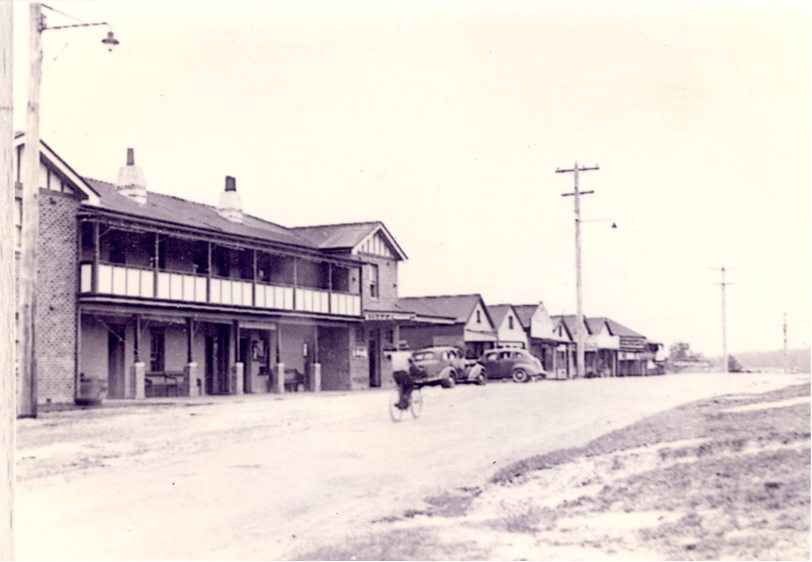
Plough Inn at Bulahdelah – circa 1950 [Bulahdelah Historical Society]
Bulahdelah – 24 December 1909, page 3
‘Industries have their place in Bulahdelah. One is a well-run butter factory, owned by Mr. W. Newell— a gentleman of favour, because of his sterling qualities. The factory is one of the few privately owned in the State; I think there are but three others. The equipment is up-to-date in every respect, and the pains gone to, to secure a pure water supply, well filtered, are very commendable, and make for success.
Other industries are saw-milling; there being a number in the district, two being within a quarter of-a-mile from the wharf, the rest within six or seven. Mr. F. Phillips owns the Tipton Mills — I did not see them. Mr. J. Dee possesses one of those in the town and finds it difficult enough to cope with the work with the existing plant. Having opened the mill some years ago, he takes a natural pride in it. Mr. Charlie, whose big mill is about 11 mile out on the Myall-road, runs his machinery with a 25 h.p. engine of great solidity and good type. His bullock teams are of a durable nature, and the neighbouring bush is exploited systematically. Each member of the family seems to go in for big things, for Mr. Herb. Dee, of Spring Creek, has about the largest ground area of anyone residing in these parts, which he has acquired by hard work and a quiet manner. Near one, Mr. P. Barry’s, a mile up the Upper Myall, from Mr. Chas. Dee’s mill, is yet another of some extent.
Further on, at Markwell, is a fifth; this one owned by Ald. Allan Taylor, of Sydney, and here the burden of the work falls upon the capable shoulders of unostentatious Mr. C. Dreyer. In the same “suburb,” as it is jokingly called,’ stands the public school, presided over by Mr. L. Thomas; he has done something substantial in the way of making “the old place” a little more attractive. While on the subject of schools, that at Rosenthal, lately in charge of Mr. Marshall, who is now at Glen Oak, has also been made as attractive as possible, but more in that direction is apparent at the residence. Knowing more of Mr. Marshall than of any other teacher in that quarter, I hereby extend him the glad hand on his appointment to “fresh woods,” feeling my opinion of him will speedily be endorsed by the good people of Glen Oak.
Hereabouts are several families of Barry — time-honored name. There is “the other” Mr. P. Barry, and Mr. T. Barry, two gentlemen who are well-liked. (N.B.— These are the only two of the “family tree” I have met, so I “speak as I find them,” reserving the right to pass an equally good opinion upon any other bearer of the name when I meet him or her. But of Mrs. Barry, senior, I have heard much praise. About Rosenthal is the 249-acre property of Mr. S. Schultz, who also owns two houses in Bulahdelah— “Hillside,” as it is called, contains about 30 acres of cultivation.
As progress up the river continues (it is really the Upper Myall all the way) the road rises, and keeps on rising till, speaking from memory, about 15 or 16 miles from Bulahdelah. Thereafter it descends towards Bunyah. But that is another story. On the way up past Mr. T. Barry’s, are the farms of Messrs. T. Newell, and W. Corrigan. Mr. T. Newell is one of the oldest identities. His farm is intersected by the road and seems well cared. Its owner has stored up more knowledge than perhaps the average farmer of the State, and has some literary taste. Mr. W. Corrigan’s farm of good cultivation land, divided by the running water, produces some good crops, mostly corn, and has a pleasant place withal and hospitable.
Across the creek, away from the road and abutting upon it, is Mr. J. Bourke’s farm, mostly river flats, but a roomy house, commanding an extensive view, occupies an eminence. Near, and towards the road again, is a homely cottage (and a dog), set in the centre of the farm. Still rising, we pass Mr. D. Bourke’s charmingly-placed house on a selection (I call the place a “selection” now and then, as a change from “farm,” though I know not whether they are selections, or c.l’s. — or c.p’s. — or freeholds — or just plain grass and soil).
Mr. Bourke’s place is on the north side of the river, far below the level of the road, and is well timbered all up the ridge. Then passing one lone house, I entered the run to Bunyah, having been assured at Bullahdelah, that Bunyah was but 18 miles from there. Not one, but two told me — one was the “fish-yarner.” It turned out that “Bunyah” the residence of Mr. Murray, senior, …… So after the hill, bad roads were encountered, and darkness, black darkness, caught me before the welcome light shot through the trees from out the windows of Old Bunyah (Mr. J. Murray, senior). How many years the homestead has been owned and occupied by Mr. Murray, I really forget; but the name of the many branches of the family throughout the Gloucester Electorate is held in high repute.
Further on is Bunyah, lately taken over by Mr. T. V. Murray, who recently married a very estimable young lady of literary ability. Sorry I didn’t get that far, as time, pressed. Mr. J. Murray, junior, kindly took me in hands, and conveyed me to his home where his estimable wife, together with his partner and that gentleman’s wife were most kind to horse and self. I shan’t forget. New houses and bails give the place a spruce appearance, and I wish them ever good luck.’
Coolongolook, Nugra, Bulahdelah – 7 January 1910, page 3
‘Coolongolook way being the best route available, considering the big hill and the vilest road out (my lamp was jolted out in one big rut). I ran past Sawyer’s Creek School (Mr. Kaiser’s), Mr. Alf Toms, and in to Coolongolook in seven miles. There some beautiful foliage is along the trip. Here Steve Worth, stalwart, good-natured six-footer, host of the only hotel, meets one philosophically prepared if required, to do anything one wishes, mostly. This is the half-way house between Nabiac and Bulahdelah. The early morn had set in for rain, and the road slippery, so I made but two other calls here and raced for Bulahdelah in drenching rain.
One was upon Mr. R. Mackay, the literary blacksmith, and good fellow generally— at his forge or elsewhere. The other was upon Mr. Batchelor, storekeeper, who runs a big business, and exploits the country regularly with his vans. Back to Bulahdelah. Faithfully, I made several attempts to make calls on the way to Bulahdelah, but the drenching rain didn’t wait to come down; it simply fell down; furthermore, my otherwise faithful filly wouldn’t wait at the rails, and the slippery hills were an abomination.
So, over the mountain, with honeybirds peeping at me at every step, the creepers twining from tree to tree, and Nature running wild, one has time going up to admire. Going down into Bulahdelah became a question of keeping one’s horse up and holding one’s head down from the fierce raindrops. Alas! the view of Port Stephens from O’Sullivan’s Gap [near Bulahdelah] was obscured.
In Bulahdelah again, one remembers the Government offices and officers. The post office is a rather ornate building with a very “or’nery” approach — the mail |coaches must climb the footpath, deliver the mail matter and climb down again. (Most Governments climb down eventually). The postmaster is a very efficient officer, who has made himself popular during his stay in the town. It is usual to say “courteous and obliging, etc.’-— I don’t say it, but I think it.
The public school, I did not visit, but “it’s in a very nice frame,” as the non-admirer remarked, about £7,000 picture of “The Queen of Sheba visiting Solomon.” First class Constable Williams is the local guardian of the police, combining with it about a dozen other offices. So often in our columns, in reports of Shire and other meetings have words of commendation appeared, that it is unnecessary to further amplify. Mr. McPherson, in charge of the local Land Office, is of a well-known family. The local School of Arts and reading room is an institution much appreciated and utilized and has a goodly membership. Mention of the clergy is intentionally left to the last, because of its general distaste for advertising. Still a record of the town would be incomplete without mention. In Rev. G. A. Bongers (C.E.) and Mr. John Perry (Wesleyan Home Missionary Society), and Rev. Father O’Regan (R.C.), are three zealous workers, who dwell not in the lap of luxury, nor ride in gilded coaches, but whose work is more effective for that very reason.
A delightful trip may be made to Bulahdelah, either by launch from Tea Gardens, by coach from Booral, and ditto from Nabiac and Taree. It’s a good trip anyway you go. Nugra. This place is worthy of note, in that it is a kind of community of interests; the whole village lives, moves, and hath its being in the sawmills of Mr. James Croll, President of the Stroud Shire Council and one of the shrewdest men in the electorate. Mr. Croll has here a group of workers who look upon him well-deserved admiration — who would not readily change their job if they could, by any possible means, hold it down. Mr. Croll, in my opinion, is of that uncommon stamp of employer, who can find everything good enough, even in a workman of small ability, or of faults not too glaring, to warrant his being kept on.
The village is privately owned, and consists of Mr. Croll’s residence, and about a dozen cottages for the accommodation of the men and their families. The dwellings are clustered upon the sides of the steep rise, sloping to the broad expanse of Dirty Creek. (The village was formerly called Dirty Creek). It is astonishing to find such a beautiful stretch of water from the wharf east and west along the river, and immediately opposite the aforesaid wharf the bank must be over a quarter of a mile distant. To this wharf come the steamers Dauntless and Baden Powell at regular intervals, trading to Newcastle. From the wharf to Tea Gardens the river winds itself for 28 miles, whilst by road the distance is but 16.
The mill is worked by a 25 h.p.i. engine, but a feature of the handling of the logs, is as distinct from other mills I have seen, in the manner in which the force of gravity is taken advantage of. Seeing the saw-sharpening machine at work makes one think of a certain brand of stimulants, for the golden stars are as of the firmament. It takes some 18 teams of bullocks to keep the mill going. Originally the mill belonged to the Port Stephens Timber Company, which had also a big property at Purgatory, five miles away, about Crawford River. This company started operations in 1873, and before abandoning it, spent £20,000 to £30,000 in the concern.
Messrs. A. Cook and Sons, of Bungwahl, have also very large mills— perhaps the largest between Maitland and Port Macquarie. (I omitted to mention Nugra lies 6½-miles sou’-east of Bulahdelah. It now has a tri-weekly mail). It was with regret I left this self-supporting village, with its store and school — yes, there is a school, for Mr. Croll has engaged the services of Miss Griffith, a Sydney young lady of considerable attainments, and accomplishments, to instruct the children of the place. Soon we may hear of a rival to Cadbury’s and the Sunlight Soap Company in England, who have their gigantic communities on parallel lines to that of Nugra.’
Tea Garden – 14 January 1910, page 3.
‘Leaving the hospitality of Nugra to face the awful (as I had been told) trip to Tea Gardens, was bad enough to contemplate, but its realisation was worse. The nightmare of that trip will, I think, never be effaced from my mind. Instructions by the million I received, it was as well, for there were no finger posts whatsoever; for a quarter of a mile in places no track, “I had never been there before.” Where traffic did show, it was traffic.— up to the ankles. In two places I was compelled to take my horse out for safety. Hardly a human being or beast to be seen; the solitude, oppressive; night coming on, and rain, also. But there were plenty of gates and rails! (latter about 159lb each).
Most of the property passed through belongs to the Estate of the late J. K. Mackay, and the average runs into many figures. Mr. W. Hough, of Viney Creek, has about 5,000 acres at his homestead, and a few 640 acre lots, and other blocks “too numerous to mention.” Unfortunately, Mr. Hough was absent in Sydney, at my visit; so I had not the pleasure of renewing an acquaintanceship of a year or so ago.
Past Mr. Hough’s the road is more formed than on the Nugra side, but it’s pretty bad; all the same. But when one commences to mount the last hill, and the tang of the sea begins to fill the nostrils, depression lifts a little, Then when the full beauty of the scene lying sea-ward bursts upon one lying at foot, troubles are for the moment forgotten.
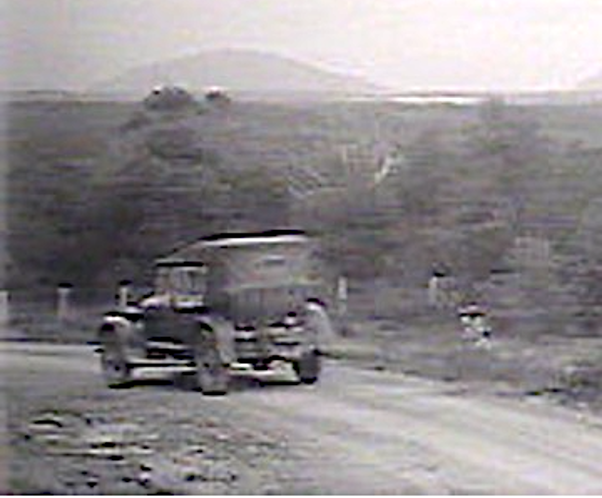
The last hill before Tea Gardens with the first water views – circa 1940
In the fast-growing dusk, the houses of Tea Gardens can just be discerned in the foreground; Broadwater lies beyond, asleep; whilst in the middle distance a peep of Port Stephens splashes against scrub grown shores; and in the back ground the guarding Heads, serrated, rugged, rear themselves seemingly to the dome of the sky, the gap at the entrance allowing the imagination to place there “the everrestless sea.” The boom, boom, of the surf and the glimmering lights of Tea Gardens, brings glad tidings to the worried; and the drenched overcoat is for the moment forgotten. Then for tea at Mr. Stephen Smith’s Hotel, with a cheery fire and homely comfort. The trade at this hotel, and indeed, at al the places in Tea Gardens, has increased marvellously since the Lakes route was fairly opened and passengers commenced to pour through (tourists to the number of about 280 per week pass through), either to or from Sydney and Newcastle; and they must stay a night at Tea Gardens, with the result that probably more is spent here than in any stop in the itinerary, terminals excepted.
Mr. Smith, with his breezy manner, suggests a welcome, even before a greeting is extended, and Mrs Smith is kindness itself. Mrs. Smith has a general store in the building adjoining the hotel, and an American organ of tonal beauty occupies portion thereof. On the other side of the hotel is the School of Arts, whilst the Post Office is in a cheery cottage, presided over by a cheery lady. Mr. A. Engel controls a large business for his general store and runs regular trips up the Myall and down to Port Stephens, in a river trading steamer, (supplying his customers as does a grocer with his carts.
Mr. Engel has established an enviable reputation for honest, square dealing with his clients. Speaking of the river trade reminds one of the shipping industry, and its hand-maiden fishing. Schooners there be which cast their hawsers ashore at Tea Gardens, and at such times one is reminded of a peaceful English village. Especially is this so, if one is looking from the post office and along the broad flat street abutting into the low bank of the river, with the line of buildings on the other side of said street, and the scene peacefully asleep in the twilight.
There is the excitement of the periodical arrival and departure of the Lakes Route steamers and launches, and of the launch to Bulahdelah, in addition to the morning run of the S. S. Grace three times per week to meet the Sydney boats, Karuah and Hawk, down the bay; about 80 passengers per week go this way. Captain A E. Williams, the popular skipper, is an ardent believer in seeing that “the stranger in a strange land” does not miss any of the sights, and he goes out of his way frequently to that end. The beautiful trip down the bay, as just mentioned, is of enchanting interest. On the way, blundering timber lighters are met, either going with or for a cargo.
And that brings me to another industry which Tea Gardens has, in common with Bulahdelah — the timber industry. Of this I know nothing. Directly opposite Tea Gardens, at Hawk’s Nest, is a largish building, formerly an hotel, but now an accommodation house, kept, by Mrs. Stewart Smith, a resident of many years standing, and one universally respected. And again I am brought back to the Port Stephens Hotel, at Tea Gardens, kept for many years by Mr. B. J. Doherty. The building, lately added to, is two storied and encloses over 20 rooms. Its proprietor is as well-known as any on the North Coast. It is not a little due to him that the Lakes Route was first projected, and Tea Gardens as a whole is reaping the benefit. In this hotel, everything is done possible for the comfort of the guests, while Mr. Doherty prides himself upon the quality of his liquors, etc. Mrs. Doherty’s superintendence of the cuisine and household generally is of a high order. The police station is in charge of Mounted Constable Madden, who is a most painstaking and vigilant officer.’
Karuah, Clarence Town – 11 February 1910, page 3
‘From here on to Karuah the “Devil’s Juice” (as I heard a lady elocutionist from Sydney call the thin wetting rain), which had been “juicing” all the morning, developed into heavy rain, and from thence to Karuah ferry, ’twas as much as one could do to hold his horse and his courage up. Enchanting views, no doubt they were, but for once they were not appreciated to the full. The ferry crosses from Karuah to Sawyer’s Point, or vice versa (depends which way one is going), and is somewhat antiquated.
The village school is under the careful supervision of Mr Harcher, and the village is on the Raymond Terrace side. On the Carrington side live Messrs. Symonds, Farley and Johnson. On the Raymond Terrace side is a beautiful residence — that of Mr. Longworth, of Cobar copper mine fame, whose kindly disposition and liberality has endeared him to the hearts of all his neighbours, none of whom are too humble to encite his kindly interest. Now, that sentence looks good enough to leave as it is, without addition whatsoever; and, best of all, ’tis true. So let it stand.
Commanding as it does a large, sweep of Nelson’s Bay (second in extent and beauty only to Port Jackson), with its magnificent gardens and lawns and every contrivance or design to make it still more attractive, this gentleman’s residence is superior to anything I have seen in the Gloucester electorate. The furnishings, art work, paintings, collections of articles of vertu, bric-a-brac, etc., are in most exquisite taste, whilst, apart from the landscape gardening, the yard arrangements are of the best. Two big motor cars and a carriage supply modes of locomotion, and motor boats enable even distant fishing grounds to be brought within easy reach. In the housekeeper, Mrs. New [his wife], one finds a lady of refinement, elegance and true good heartedness.
Mr. Edward Barclay can supply some most interesting particulars about the oyster leases hereabouts, as he was for years local manager for Woodward & Co., Sydney. Enormous sums of money are mentioned as representing the tons of oysters taken from round these parts for consumption in Sydney. Fish, too, as in the case of Tea Gardens, are packed in ice in large boxes and sent away regularly.
Mr. Callaghan conducts a store and accommodation house here. Mr. T. Buckshiram, of Hindoo extraction, also runs a general store, and has done so for about 5 or 6 years, and, notwithstanding the disability of unfamiliarity with Australian methods and language, has managed to make for success. Now we come to the road for Clarence Town. Along about a mile, where Mr. Farley, maintenance man, was discovered working diligently in the boiling day which followed the storm, a right road is taken through mournful country of white, sandy formation, with, gaunt gums of all description, and short, scrubby like trees — altogether a depressing trip when taken alone.
But now the main road is reached and crossed at right angles; there after the scene is more diversified and the road less monotonous. The bridge spanning the Williams River is seen first, and then a glimpse of a town is caught here and there. Once across the bridge, the traveller soon arrives in charming Clarence Town, and with a sigh of relief places himself in the good hands of Mr. Alex. Campbell an family, of the Crown Hotel, or that of Mr. J. G. Morris, the popular sport of the Ship Inn.
Situated at the head of navigation, Clarence Town possesses a birthright which can never be taken from it. All river traffic begins and ends here; the value of this condition of affairs is at once apparent. Large shipments of butter, produce, etc., are made here from Fosterton, Wallarobba, Under-bank, Chichester, Bandon Grove, Dungog, Thalaba, Brookfield, Glen Oak, and localities closer to the Town, and this means a considerable circulation of money. Latterly the trade has been trebled, perhaps quadrupled, by reason of the enormous passenger and goods traffic created through the construction of the north coast railway. The tri-weekly steamer service, Clarence Town to Newcastle, via Raymond Terrace, carried on by the Williams River S.N. Co., has been increased to daily communication (Sundays excepted), the s s Favorite having been brought into commission recently to take the alternate day; thus, the other steamer, s.s. Erringhi, is now relieved somewhat of the bulky cargo which, being sent thrice a week, used to hamper her decks to the point of extreme inconvenience. Captain Miller is “commodore of the fleet” of this company, and a most painstaking and popular officer he is. If I mistake not, he has been a very long time connected with the steamers of this, the best dividend paying shipping concern trading in or to the Australian Colonies. I have seen records of many 15 per cent “divvies.” And that’s something to be proud of. Engineer Smith has been some 22 years with his hand on the throttle of various W.R.S.N. Co’s. steamers.’
Fosterton – 1 March 1910, page 2
‘Skipping the town of Dungog for the present, and attacking the task of continuing this record “in different mood and happier vein” than characterised the hypochondriacal tone of the conclusion of last instalment, one encounters the handsome bridge spanning the Williams River, northwards of Dungog (for the construction of which, I understand you are indebted to your late member, the Hon. W. Bennett, when he was Minister for Public Works). Those who attended the opening of the structure would be “flabbergasted” were they to witness the enormous amount of traffic which passes across the bridge, the augmentation being largely due to the North Coast railway construction.
Very close to the bridge is the entrance to Mr. F. A. Hooke’s magnificent Estate —”Dingadee“. Mr Hooke, and his estimable and entertaining wife, have made this their home for many years, and have (comparatively recently) divided the property into dairy farms, which are worked on the share principle. These farms are worked respectively, by Mr. F. De Costa, and Mr. W. Robertson, whilst, in addition to these, a portion is devoted to a vegetable garden, under charge of Mr. T. Hicks. Mr. Willcocks, the railway contractor for No 2 section (Dungog-Gloucester) is cutting, filling, banking, and bridging throughout the entire length of the estate— about four miles, I believe. (Let it be understood I made this trip incognito, and therefore made no enquiries as to figure; so these figures may be wrong). I am game to guess, though, that the total area of “Dingadee ‘ is some 2,000 acres.
For the same reason, the whole country to Fosterton by this route, will be but briefly touched upon. First dairy met with on beautiful “Dingadee” is that of Mr. F. De Costa, “a gentleman of France,” as the title of the book hath it; and I fancy I am correct if I mark down his “share” farm as the largest on the estate. Situate near the road is a commodious cottage for the housing of the family, and suitable buildings for the carrying on of the industry are provided. Mr. Hick’s vegetable garden by the creek carries its own recommendation, and every passer-by should raise his hat to the provider of a “white” vegetable. The handsome, spacious, and solid two-storied brick and plaster homestead looks Dungog square in the face from out a glossy bower of foliage, fruit, and flower, neatly enclosed with in white palisading, and overlooking a well kept tennis court. The stables, poultry run, and administrative department generally, are “right up to now.”
As this is not a character sketch, mention may only be made of Mrs. F. A. Hooke’s many good and kind offers to the sick and afflicted and of Mr. Hooke’s sterling upholding of the principles and practice of his forebears. As Chairman of Directors of the Williams River Co-operative Butter Company Ltd., Mr. Hooke is maintaining a good fight.
Mr. W. Robertson’s farm is known as “West Dingadee,” and comprises a beautiful rich flat, now partly under the golden corn, the balance being knee deep in beautiful grasses, upon which a choice-herd of milkers brouse. Mr. Robertson, it may be remembered, brought to the Chronicle office some monster manfold wurzels a few months ago, product of his work on a patch of his particular portion of the estate.
Adjoining on the south is the model farm of one of the most progressive farmers in the district, Mr. R. Moylan, and a right good citizen too. His well-kept cultivation, where the lucerne luxuriates, and well-cared for grazing fields, are too well-known to need further reference. Then further south is Mrs. Taylor’s rented farm (which is managed by the popular “Ted” Taylor), and it is a picture of industry, and illustrates what can be accomplished on a small area.
Reaching the Fosterton road (north one) after some grand and lofty tumbling over rough places, Mr. E. G. (“Guy”) Hooke’s station at Rocky Hill is first approached. (Over the range are the remains of what was once a famous gold mine — the Rocky Hill Mine). But before Mr. “Guy” Hooke’s property is reached Mr. Alf. Bignell’s farm is passed. So high up on the high bluff and so situated is the house that one might easily miss seeing it. Throughout Durham and Gloucester electorates, the name of Bignell is well known.
Mr Hooke’s old-fashioned homestead of brick and plaster stands on the right, guarded (at my transit) by some 40 sheep —a rare sight in the district now-a-days. Opposite side of the road is another portion of the property, running right to the river, and here, on the river flats, some corn rears its heads, what time “the dove-eyed kine upon” the moor look tender, meek and sad;’ though why the latter, when the sweet grass reaches the knees, deponent knoweth not. Next door, almost, Mr. George Hooke has a “graziery,” the extent of which I cannot hazard a guess.’
Fosterton – 4 March 1910, page 3
‘On the opposite side of the river, nestling snugly amongst a grove of verdant foliage, is the home of the Wilce’s. This property is famous for its rich alluvial flats, its fertile and park like uplands, and for the fat Devons, which Mr. Harry Wilce prides himself upon periodically topping the market with. The hospitality of Mr Wilce and the Misses Wilces is a household word in the district and many are their visitors, from both far and near. And it must be herein emphatically stated that, with knowledge of most every inch of the country from Maitland to Port Macquarie, I can lay my hand upon by heart and assert that my impression is, no property within that area equals Mr. Wilce’s in its immunity from noxious weeds.
Soon comes Mr. John Moylan’s fine property, standing way back on the left in extensive paddocks, running from road to river. The new house, with its two glad verandah roofs, one each facing said road and river, is quite a credit to its owner. Here now, comes the orangery and dairy farm occupied by Mr. Josiah Allen. (I believe Mr. Lean is the proprietor of the farm and orangery). The latter embraces something like 1000 trees. From “a cursory glance,” as Artemus Ward [American humour writer] says, and should say the trees have not born to their full extent yet; probably the call of the cow has induced the occupant to listen to the gentle lowing. At time of passing, a large barn was being erected on the opposite side of the road from the farm.
Next comes “Tarcoola,” the residence of Mr. R. Lean, commanding a glorious view of the corn clothed river flats east and west for miles, and of the winding river and higher hills. It looked impossible that such an extent of view could be improved upon until the two-storied residence of Mr. W. Lean, “The Figtree,” with its romantic garden, is reached, and from here, in addition to what was enchanting when looking down the river from Mr. R. Lean’s, is to be viewed a north-westerly aspect of cornfields, vines, foliage galore right up the river. “The Figtree” stands as it were upon a high “peninsula,” with “Seas” of waving corn-flags and tasselled cobs, flanking sides and jutting points.
Mr. J. Lean’s farm and large single-storied house lies immediately behind that of Mr W. Lean, and has a goodly aspect in itself as well as goodly prospect, similar somewhat to the sight obtained from Mr W. Lean’s “The Fig-tree,” whilst away across the river one views from this point the well tilled farm of Mr. M. Kealy, and that of Mr. Robert Lean, who has constructed a road — (cutting) round the hill of considerable length, to his comfortable looking homestead, which overlooks the flowing Williams.
A short decent from the gate fetches one to Mr. T. Bosworth’s holding, perched high on the right-hand side of the road, and overlooks acres upon acres of 12 feet high corn, “the picture of health.” Here, also I believe the potato flourisheth. A solitary cabbage palm and ditto willowtree alone break the continuity of the maize fields from road to river — about a mile. Just above and west of this plot, Messrs Dixon and Davis farms a certain property. I understand these gentlemen have afortime demonstrated to Queensland planters that the white worker can “whip the shoes” off the cheap and nasty Kanaka at such work as cane cutting, they having put up big figures at the steamy and exhausting work during recent seasons. That’s one for the great heart of white Australia!’
Fosterton – 11 March 1910, page 8
‘A little further on is the dairy farm of Mr. J. Beggs which faces and abuts upon a willow-fringed creek, an orchard interposing betwixt house and water. The said creek crossed the road 50 yards past Mr. Begg’s gate at a level crossing. At least it is supposed to be a level crossing, but the wake is generally a bit deep. However, the ford seldom misbehaves itself, and settlers coming from west thereof are seldom delayed more than a few hours or so at most. Not so with the adjacent Williams River level crossing (which is about 200 yards further on this road). Folk wishing to get to town from about here, generally cross the river at the place mentioned (near Mr. Carter’s property), and proceed to Dungog that way, thereby saving a mile of travelling and experiencing a better road. But this crossing cannot be used when the river is not in its best company manners; for there is a very awkward approach on the western bank — in fact, a dangerous approach. The Shire Council is, at time of writing, about remedying the evil. But a bridge is the only permanent solution of flood trouble.
Between these two watercourses is the farm and residence of Mr. O. E. Carter — “Dromore.” “Ossy” is as well-known throughout the electorate as the town clock would be if Dungog possessed such a convenience; and is equally as respected as an open-faced chimer would be. With his estimable sister, Mrs. Lavis, and his vigorous and erudite father, Mr. Carter (who has nominally retired from business cares), “Ossy” succeeds in an up-to-date dairy farm, whereon the quality of the cattle (and, consequently the milk) combined with the hand-maiden cleanliness, attains the height of general excellence.
Mr. D. Carter came from Maitland district some three years ago and immediately erected a commodious and attractive residence in the choicest position on the farm, commanding a view down and across the river for a considerable distance. Indeed, due south across the river, the corn cultivation area of the farms of Messrs. Robert Newell, Andrew Newell, Jas. Cavanagh, and John Barby, spread themselves green and cool looking and regular for a space of three-quarters-of-a-mile wide and over two miles long without a break. Just think of it, with corn at its present price! From a swift glance at the yards in passing, I should say Mr. Carter’s milking herd runs now about 48. Mr. Carter’s property, “Dromore,” provides means of communication to Mr. J. Fraser’s dairy, “Leeburn,” and to Mr. Frank Curr’s apiary and orchard, “Orange Grove” — the only way these good people have of reaching any road per vehicle.
Mr. Fraser’s farm is about half-a-mile or more from Mr. Carter’s entrance, and here some 45 cows are at present being milked. From the residence a good view is obtained (due east and a mile or so away) of a rugged mountain chain, with beetling brows and crags and timber-covered slopes. In a State where most every tin-pot excrescence or depression or pool has a name (generally a high-sounding, locally-meaningless English one at that), it seems strange that enquiries failed to elicit whether this had a name. It looks over the regulation 1,000 feet, which entitles it to the designation of a mountain. Even if one measures only by the eye from the level of the creek, and its “slope” is sufficiently abrupt to be startling. Mayhap, someone learned in local colour may supply the missing word. Anyhow, as the “Little Mountain,” lives nearby, let us call the one under notice “The Big Mountain.” That’s my decision in desperation, after spending a lazy week questioning every “Oldest Inhabitant” round.’
Fosterton, Bendolba – 18 March 1910, page 4
‘And about this “Little Mountain”: Time was when it bulked large upon the district, for fabulous tales of huge deposits of the magic good red gold were associated with “The Little Mountain Gold Mine.” Much work was put in here, and much money spent; but at my visit there was but one plentiful thing in the tunnels and drives—water. I understand, however, that last winter a lone prospector chased the illusive metal with some success; and a little bird whispers me he is to try again this month. From a little knowledge of similar places in Australia, I should opine the gold found here had slipped down from higher up the face, and that the main deposit — if there is one, and there seems no great doubt there is— lies snug hid higher up the hill.
On an eminence over-looking the Fosterton Valley, is the home of Mrs. Newell, senior, widow of that fine old pioneer settler the late Andrew Newell. Mrs. Newell has also a dairy farm at the very foothills, which is managed by Mr. Gee, and she is doing well. Something over a mile further on still, as previously mentioned, is “Orange Grove,” Mr. Frank Curr’s main apiary and orchard, approached by a track almost inaccessible by vehicle, except to drivers of stouthearts, horses of staunch draught, and gear of exceptional strength.
Mr. Curr has here something like 1,000 bearing trees of all kinds and many varieties; besides, at this home apiary, he possesses 70 hives of Italian bees; at “the old apiary” about 30; at Cairnsmore, near Mr. Cameron’s new house some 30, and a similar number on the Bandon Grove-road, four miles from Dungog. He is by far the biggest producer in the electorate. Further particulars appeared in a special article. Before going over to Bendolba, Bandon Grove, etc., let us run hurriedly down the western road from Fosterton to Dungog. I didn’t call anywhere here, to my regret, save at Mr. Wilce’s— duty called hurriedly.
First Mr. A. Searl on the hill; then the new houses of Messrs. H. Newell, A. Newell, Jas. Cavanagh, J. Barby, the public school (1889, presided over by Miss Egan) and R. Lean (with the jaunty side-cutting leading in), and M. Kealy. All these look upon beautiful oceans of corn, mentioned as seen from Mr. Carter’s; and I hope to visit them yet. Now Mr. Wilce’s, and Mr. Rhody Moylan’s (afore mentioned), and then Mr. Piper’s mansion, tenanted by Mr. Wickham, civil engineer, who is Government representative in connection with the railway construction. That gentleman — but hold on I this is the town boundary; so off back to Mr. Curr’s and to Bendolba, Mulconda, and Bandon Grove. Mounting a giant range of hills due west of “Orange Grove,” a beauty greets the eye. Spread out in almost un-surpassed panorama are the above-named estates.
North, south, and west, most of the houses are en-swathed in cornfields with stalks 12 feet high, rearing their tasselled heads apparently in exultation. Backgrounded by a picturesque range of hills, the middle ground, usurped by the winding Williams River (with its well-proportioned bridge standing out some 250 yards below the junction of the Chichester and Williams River), and the foreground sloping “in verdure clad” to the willow-lined riverbank.
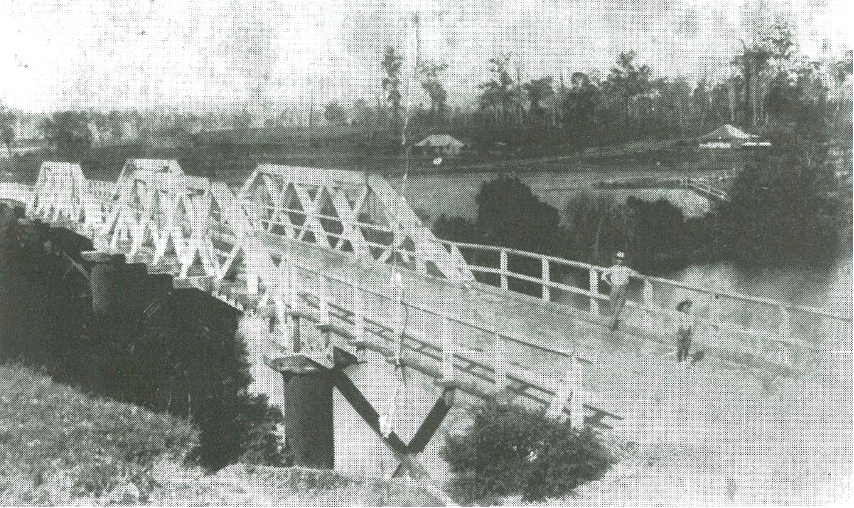
Clarence Town Bridge, Williams River (Brig O’Johnston Bridge)
“The Garden of the Durham” lies enchanting and peaceful. North-west may be seen the precipitous and rugged mountains of the Tablelands, close to Carey’s Peak; also the heavily-timbered New Jerusalem country obtrudes its flank. Southward lies Bendolba’s handsomely built and well-situated Church of England, the Public School, Post and Telegraph Office, together with numerous farms, while to the south-west Mount Windeyer raises its head in striking grandeur. The mount is almost exactly the shape of Table Mountain, as seen from Capetown, though it lacks the beautiful fleecy clouds, which, on the latter, form, a perpetual tablecloth, changed regularly by the shifty South Polar breezes. Bendolba Estate is property of the Windeyer family (Lady Windeyer, if I mistake not), and it is doubtful if in all Australia there is such “intense” cultivation as on this property of 1,650 acres. Holdings are small, but the soil is particularly good’
Bendolba – 25 March 1910, page 4
‘Farthest south and close to the Bendolba Post Office, which is in charge of Mr. J. Levey, is the dairy farm of Mrs. R. Kelly, now managed by Mr. George Neil. Besides the corn and green feed for the present milking herd of 32 cows, some three tons of a good sample of pliant millet was grown this season and is now being prepared for the market. Newcastle and Sydney buyers rush this product with both hands and feet, and as the market is always steady, there are great possibilities when honest packs are sent to agents. Too often unscrupulous growers “bulk up” the packs, leaving a good sample outside, whilst the centre generally holds refuse from fowl houses, etc., or even chunks of iron, to make weight. The Italians and New Zealanders (credited with being up to all sorts of slick tricks) never make this mistake though; and the consequence is Colonial millet is looked upon with some suspicion as against the imported. (Mrs. Kelly, by-the-way, is a lady possessing more than average intelligence and information). Of 175 acres at the dairy some 57 are under crop. This is by far the largest proportion of cropped land in the dairy area that has come under my notice during these ramblings, and the fact carries its own commendation. Besides the farmland Mrs Kelly owns some 575 acres of grass land up the creek.
Mr Neil’s private’ residence lies next the public school (established 1883), which is presided over by Mr. Hayes. In close proximity are the farms of Messrs. W. Robson, T. Sullivan, John Middlebrook, T. Connoly, John Muddle, junior, and Harry Muddle, senior; whilst further towards Bandon Grove bridge are the properties of Messrs. T. Hudson, John Irwin, Thomas Irwin, senior, and Thomas Irwin, junior, Vincent Haggarty (new house), latter three being near the junction of the Chichester and Williams Rivers. In the distance Messrs. James and John Dowling’s property “Cannan-galla” is espied.

Bandon Grove Bridge [University of Newcastle]
On the east side of the river, and near the foot of the big range of hills mentioned, is the freehold of Mr. Sam Foster, who has been well-nigh 50 years on this portion of the Mulconda Estate. (The occupant of the remaining portion of the Estate is Mr. William Potter, of whom more anon). Beautiful ridges, running to well-grassed, velvety flats, which continue to the brush, and willow-lined banks of the Williams, constitute the farm, and a handsomely built house, oozing with hospitality, stands as a gem in an emerald setting. Mr. and Mrs. Foster and the athletic Peter and Belmore spare no pains in the home, the field, and the stream to provide entertainment to friends who drop in for an afternoon’s sport with the wary perch and bull-head mullet.
The phonograph, and the 300 odd records suffice to constitute quick programmes for three or four evening’s entertainment. I understand the acreage of the farm verges on the 800. Portion of this is occupied by Mr. John Byron (junior) as a dairy, on the halves. The balance of Mulconda Estate, as before mentioned, is held by Mr. William Potter, who, it is regretted, will shortly leave the district to take up a Peel River farm now being prepared for his reception. ‘Tis thus the district loses much of the cream of dairymen. If Mr. Potter’s past intelligent conduct of the Mulconda dairy is any criterion of the future, then the wheat area of 354 acres just secured near Tamworth, is almost certain to be worked so as to get maximum results. “Jersey” is writ large over this dairy farm; no other breed is kept, and the 68 head of stock present a picture in uniformity. At present 36 head are being milked, and a feature of the herd is that none of them have ever been put into a bail to be milked. Some of the cows cost up to 16½ guineas as calves.
A beautifully marked model Jersey bull (Melbourne bred) sires the stock; and Mr. Potter changes every three years. Several grandly shaped Suffolk Punches are kept to do the farm work, and there is also a fine foal, with speed showing —by Patronage from a blood mare. A comfortable and handsomely furnished house, standing in an attractive garden occupies about the centre of the 534 acres, wherein is kindness personified. One of the best dairies in the electorate.’
Bandon Grove – 1 April 1910, page 8
‘Close handy on the main road is the Union Church (of brick), the Public School and residence, School of Arts, and the Post and Telephone Office, latter run by Mr. W. J. Hazlett. Opposite is Mr. S. V. Smith’s dairy, where Jerseys flourish solus. Mr .Smith goes in for scientific methods; he knows the qualities and tests of every cow and acts accordingly. The herd runs to 66, 36 of which are now being milked. The property runs down to the Williams River, and a feature thereof is a substantial brick house embowered in foliage, surrounded by a glorious garden and commanding a view of the road to north and south.
Included in the “bird’s eye” is the Bandon Grove bridge, with its ideal picnicing flats right on the banks possibly the most popular resort for Dungogites that the district affords. Bandon Grove was originally a grant to Judge Dowling, several sections of 1,200 acres constituting the property. A goodly portion subsequently fell into the hands of Mr. Samuel Kingston, senior, and he has been succeeded to by branches of the family.
As mentioned, Messrs. James and John Dowling still retain large blocks. Justification of its share in the title of “The Garden of the Durham,” is found in the large extent of agricultural lands under crop; certainly, there is no place of equal extent (Bandon Grove and Bendolba) from the Manning to the Hunter so prolific. Portion of the property of Mr. Thos. Irwin, senior; has been worked by that gentleman and his father for 63 years; the first 43 years under wheat (which contracted smut latterly) and for 20 years under corn. Today, on the same land, Hawkesbury maize shoots up 12ft high, with at least two cobs on each stalk. And all this without manure. Of this, more anon.
Bandon Grove homestead, the residence of Mr. S. V. Smith, was named after the town of Bandon, Ireland; by that staunch loyalist, Mr. Samuel Kingston, senior; it is a link with the Cold Country. Bandon was the one town which stood staunch to the King during the Revolution and provided refuge behind its surrounding walls for Protestants. “Canningalla” was probably named after Lord Canning, Premier of England in the early 1820’s. This is, though, only a guess, and I have not, at date, seen the Dowling family to enquire of them.
The big bridge consists of four 90ft and two 33ft spans, together with approach railings of 160ft and 90ft respectively, so that it may be considered quite worthy of its designation as a “National work.” Hardwood piles (group system) and tallowwood decking complete the solid structure. It was 12 months in the building, being finished in 1903. Mr. Mat. Murphy, who built the Washpool bridge, was successful tenderer at £1,600.
At Mr. S. V. Smith’s dairy, most of the cattle are pure bred Jerseys, and are generally young. Where a cross occurs, it is with the Devon, and the milk from the few Devon cows is used to feed calves after they are taken from their mothers. (The reason for this is, that the Jersey milk, four or five days after calving, is too rich for the little ones.) Then gradually the calves are tapered off from the Devon milk to separated. This dairy enjoys the distinction of being one of the best north of Maitland. The farm and dwelling were called “Bandon Grove” from the beginning. Size of former is 320 acres, whilst Mr Smith has also some 1,130 acres on Myall Creek. A fine lot of cropping is done on the banks of the Williams and the Chichester Rivers, which meet in the property. Two pure-bred Jersey bulls — one 4-year-old, “Kameruka,” from Sir Lucas Tooth’s estate; and the other a two-year-old from Wren’s at Bega, are kept.
Adjacent to Mr. Smith’s, is Mr. Stanley Kingston’s farm, of 600 acres, surrounding a well-built new house standing upon an eminence, from which a good view to all points of the compass is to be obtained. At time of writing, some 50 cows were being milked, whilst corn and lucerne from 35 acres add to the respectably sized cream cheque. Mr Kingston’s herd is well known throughout the electorate, and his sterling qualities have made him many friends. He is a very staunch member of the hospital committee. ‘T’is pleasing to welcome a beginner in the district’s primary industry, and doubly so if that beginner works his dairy on scientific lines. On the day of my visit, Mr. Alec Smith had just attained to the dignity of his first anniversary “birthday.” It was just one month since the first creamy fluid was drawn by him at “Willow Grove,” and, as I understand babies have a birthday every month of the first twelve of their life, I will award Mr Smith the day mentioned. (By the way, how many people remembered that the day in question — February 14th, was Valentine’s Day?).
A beautifully new, roomy house, containing lofty, capacious, steel-ceiled and tastefully-furnished apartments— I use the word advisedly— occupies the choicest position on this road, embracing a view for 12 miles up and down, from Bendolba towards New Jerusalem and Wangat, and from mountain to mountain in the other direction.
Way down nearly 200ft, and within stone cast, are the river flats, covered with luxuriant corns, sorghum, and lucerne crops, traversed by a willow-fringed creek and river. The spectacle of peaceful farms on either hand, contributes to the prospect. In the milking yard are some 30 well-made Jerseys and Devons (of the latter but a few). There are amongst these a dross or two between the two breeds mentioned, and at this dairy, as at that of his father, Mr. S. V. Smith, the practice of feeding the young calves with Devon milk first, and afterwards with separated, is followed. Scrupulous cleanliness is a feature of the yard and dairy, and here, as at the house, Mr. Smith has spared no expense to ensure that end; there is no stinting of concrete at either places. Mr Smith is the youngest director of the Williams River Butter Company. His estimable and hospitable wife is a Queenslander.’
Bandon Grove – 8 April 1910, page 8
‘Before entering upon the deviation just beyond Mr. Alex Smith’s, I should like to mention the farms of Mr. John Irwin and of Mr. Thomas Irwin, senior, and Mr. V. Haggarty, which are nearest the bridge. Mr Irwin, senior, as previously mentioned, has been here many years — when the track to Dungog was not cleared of logs, and a bullock dray could not be travelled. Mostly all of the 650 acres now held by him, was standing brush at that time — 1857 — whereas now there is no sign thereof; instead, grass and crops are provided for about 50 cows. Mr Irwin is well up in the history of the district, and has vivid recollections of its early struggles.
Mr. John Irwin demonstrates what can be done with 40 acres of land intelligently worked as a mixed farm. Corn and lucerne are the principal crops, whilst figs, grapes, quinces, peaches, and apples (an Atkins’ seedling apple tree, three years old, stands 10ft high and produces fruit 12 inches round) are grown in unexpected corners. The corn stalks stand 12ft high and produce two and three cobs, 15 inches long, on each stalk. The lucerne crops heavily, and Mr. Irwin makes stacks of it, protects it from the wet by utilizing sheets of galvanised iron held down by posts attached to wires, the latter being over the top. But a very small outside portion is rendered useless. About 18 cows are milked, and good returns are obtained from the piggery; also from oaten hay chaff. Altogether the well-respected Mr. Irwin hands out a free education every day upon what may be done on a small area.
Mr. Y. Haggarty has just completed a new house on the well-cleared ridges of his farm of 120 acres, on which are some 40 to 50 milkers. These same clean lands were, in grandfatherly days, covered with dense brush and plenty of cedar; of the latter valuable timber, sufficient was found on the farm to make four doors and fanlight frames for the new house.
To resume the trek towards Wangat: — Just beyond Mr. Alec Smith’s the deviation continues, skirting round a cliff 200 feet sheer down, at the, foot of which, and reached by an expensive (private) side-cutting is the farm and dwelling of Councillor S. S. Kingston, who is also an active member of the show and other committees, and a director of the Williams River Company. Mr Kingston exercises considerable weight and influence in the district. The residence is faced by alluvial flats to both creek and river, and on these flats is much golden grain to the acre. A large windmill pumps water from the river to dairy and house, and no pains are spared to make for utility.
Mr. Kingston keeps a keen eye upon the returns from his milkers, and a hanger-on gets short shrift. In the herd of over 100 dairy cattle (50 of which are now in milk) are some superior beasts, 23 being pure Jerseys and the remainder ¾ to half, a collection well able to hold its own with the best around. Of 320 acres owned by Mr. Kingston, just here; 25 are under crop, in addition, large areas on the Paterson waters; besides town and suburban property, have their boundaries expressed with the name of “S. S. Kingston, on the box seat,” The Williams River Co-op. Butter Factory owes much to his administrative ability.
Mr. Eddie Barnes’ well-kept dairy comes next in order, followed by the agricultural farm of Mrs. William Barnes, under the management of Mr. William Barnes (son). Mrs. Barnes has lived on this property about 50 years, and enjoys the respect and esteem of the whole countryside, for her genuine and generous nature. Mr William Barnes is a keen and attentive show committeeman. Adjoining, is Mr. James Barnes’ property (40 cows milking, on a goodly average), which I was unable to visit, and, just on the bank of the Chichester (first crossing), comes Mr. A. Tighe’s dairy, where is a nice house and garden, and up-to-date appliances; latter include a tram line so graded that the full cans of milk run unaided by human hands to the separator.
Mr. Mal. Tighe resides nearby. On the high hill at rear are the dairies of Mr. Allan Shelton, Mr. Edward Shelton, Mr. J. Muddle and just over the river, Mr. Joe Shelton (320 acres, 40 cows), and Mr. H. Muddle (“Sunnyside,” 300 acres, 25 of which are cropped, and on which 20 milkers run). These loftily-placed properties did not tempt a visit, but I must record of Mr. Allan Shelton, that he is most highly esteemed and charitable — indeed, the Clan Shelton are held in much favour. The farm under notice embodies 1,500 acres (2 places) and 68 milkers.’
Wangat – 5 April 1910, page 8
‘Substantially built of brick, the large and lofty rooms in Mr. W. N. Hutchinson’s are an object lesson to prospective builders, and the massive English oak, cedar, and real walnut furnishings lend tone and an air of solidity strikingly in contrast with the jerry-built match-wood material used by the jerry builder and the gentle Chinese furniture destroyer. One large, round table and a long 4ft wide one (cedar for both of which was cut at Whispering Gully 14 years ago) stand out handsomely beside the imported woods. In addition to possessing a dairy herd of 80 (30 of which are milked, on the average) Mr. Hutchinson utilizes his 1050 acres to sustain a second dairy, run by Mr. E. J. Farley, well- known as the competent Shire ganger, on whose portion is also an orangery of 200 trees.
Fattening paddocks for stock are also embraced in the area, and in this pursuit Mr. Hutchinson has the benefit of experience gained north of Moree, Inverell, the New England and Liverpool Plains country. New Park has been in the hands of the old family since 1857, and present owner is a force in the district, whether on the Board of the Williams River Co-op. Butter Factory and other committees, or in social and business circles. The run has a frontage of a mile to the Chichester River.
And about this Chichester: Leaving aside for the moment reference to its many beauties, it must be stated it is absolutely imperative that a bridge should be erected at the river between Messrs. Tighe’s and Hutchinson. There are two crossings there, divided by about 50 yards of river gravel. In rainy seasons the stream is unfordable, and the cream cans are sent across “by wire” — that is, on a strained wire rope higher up stream. A comparatively inexpensive suspension footbridge could be thrown across at this spot to the great convenience of upper river folk. ‘Tis a matter of grave import to the latter. [Since the above was written, Shire Engineer Mackenzie has reported that such a bridge, span 160ft, cost about £50, would suit. [The loss of the Measures lawsuit had altered the complexion of matters since the inspection, and the proposal must wait. A petition for a vehicular suspension bridge there, presented at same meeting, killed the footbridge dead — Editor note].
From Mr. Hutchinson’s on up the big hill, pretty glimpses of the valley are obtained. (Fancy I’ve seen that phrase before!). The Dusodie — aboriginal word for “Hard to Find” — Public School near the top looks as though it were slung down anyhow; it is, even in its fairly new state, an uninviting structure, and Miss Squire, teacher, will not be surfeited with luxurious surroundings there. The Union Church opposite, about to be re-built, is not architecturally beautiful, either. Next to the latter is Mr. J. T. Simmonds’ dairy and orchard, including four orangeries, from which 12 loads of 400 dozen each were pulled last season and carted to Maitland. The holding totals 313 acres, and in the garden are jam grapes as big as plums.
The big hill mounted, “Pleasant Valley,” Mr. Henry Boorer’s prettily situated dairy farm and orchard are espied, enchantingly backgrounded by the Chichester and heavily timbered country. The place is appropriately named. For 11 years Mr. Boorer worked the property in conjunction with his brother, Dave (now on a £3000 holding at Knorritt Flat, Manning River) but for two years he has been in sole possession of the 500 acres and 44 cows. From the orchard some 5,500 dozen oranges were delivered into the carts of two Newcastle buyers, who drew them to Clarence Town for shipment. The total realized ran three figures a close race.
Excellent accommodation at a reasonable rate may be obtained at the good hands of Mrs. Boorer, and the river and forest both provide good sport within 100 yards of the house. Beauty spots abound. The Chichester and Little Rivers join a few yards above Boorer’s crossing, and the stream immediately splits into three, converging at said crossing into two, and to one lower, becoming then the Chichester. The Little River rises on the eastern slope running from “The Tops,” near Beean Beean, and flows past Upper Wangat and Wangat. It winds corkscrew fashion to where it rushes to its death in the Chichester; in the two miles from Mr. Boorer’s to Mr. Albert Simmons’ the road crosses it nine times, and the fords are not good; some are distinctly bad, needing urgent attention. During a few days prior to my visit, three horses had gone down at Mr. Simmons’ crossing and provided free baths.
About half-a-mile from the junction of the rivers is Mr. Stanley Simmons’ residence. Mr. Simmons was recently in the Lostock district, but Pleasant Valley seems to have an irresistible charm for former residents, and so we find Mr. Simmons and his cheerful partner once more domiciled on native soil. Mr. Harry Smith’s well-situated grazing property is at the rear; I was not able to visit it.
Between the second and third crossing, steep vine-clothed hills cramp road and river together, the brush crowding down to the waters’ edge on either side. From No. 3 onward, the left-hand cliffs, massed with vegetation, push the atmosphere up about 200ft sheer, the right hand declivity retiring sufficiently to allow several farms to be cultivated. Mr. W. Simmons’ dairy and orchard is the first; 40 acres are worked here, and 200 leased on the other side of the river, way back. Mr. Simmons’ supplies the following figures 300 to 400 orange trees, embracing 26 varieties (100 being Washington Navels), several English hazel nuts, stone fruits, and Japanese prunes (latter a striking tree with leaves of blood red); £100 per year realised from oranges alone. Figures look big, but are result of 32 years of work. Some healthy tobacco plants and corn are also grown, and a force pump draws water from the river 100 yards off.’
Wangat, Munni, Underbank – 22 April 1910, page 8
‘District residents in dozens have gone out of their several ways to impress me that Mr. Harry Milburn is the hardest worker in the district — indeed, on Tuesday of this week-before-the-show, a prominent Munni gentleman said I might say the hardest-working man in the State. Now, this is a big order to fill, with so many dairies about but “in the multitude of councillors,” etc. I was unlucky enough to arrive at Mr. Millburn’s in plenty of time to miss him; he was in town, so no figures are available. But the orangery and cropped land bear testimony during 59 minutes, 59 seconds every hour of the 24 (the odd second is occupied in which to take a breath) to indomitable perseverance past and present. Everything looks spick and span and cleanly.
Mr. R. Nugent’s dairy, orangery, and corn plots, totalling 80 acres, have absorbed 27 years of hard work. The orangery of 300 young trees began bearing last season, and 14 of the 25 young cows look through the bails twice daily. The hospitable and indefatigable Mrs. Nugent takes great interest in ‘Riverview,’ and holds the goodwill of neighbours. Mr. Nugent has had considerable experience in gold-mining throughout the States. On the day of my visit there were four generations in the house — Mrs. T. Boorer, Mr. and Mrs. Nugent, Mrs. Perrin (daughter, from Stratford) and latter’s three weeks’ old child.
Mr. Albert Simmons pins his faith to “the golden ball,” having eschewed the coaxing of the lactael fluid years, and put in 400 orange trees on part of his 200 acres, all of which was sun-excluding brush 15 years ago. The place proved unsuitable for dairying; in the Forest Reserve on the other side of the river, however, is a level plot which would suit the industry admirably, and could Mr. Simmons secure it there would be another supplier for one of the Dungog factories. The spot mentioned contains no timber of marketable value, except a little red mahogany closer to Wangat. The Department could do worse than hand part of it over to Bull’s sister Mr. Simmons sends his fruit to Maitland, where the auctioneers subtract a commission of 1s in the £.
This locality has some resemblance to Riverside, California, the home of the navel orange, as seen from the mountain trail, though the valley and groves are not nearly so extensive, of course, as in the far reaching San Bernandino Valley. Nor are our hills covered with snow as is the lofty and picturesque Rubi-dox Mountain. And the Riverside orange gives place to none in the world for quality, not even excepting the product of the shores of the Mediterranean.
From here on to Wangat (2 miles) there are no farms. The road mounts per a goodly graded deviation, skirting some 60 feet above the river, lovely peeps of which are obtained in passing. Mr. Harry Muddle, the cheerful contractor for daily mail carriage from Dungog to Bandon Grove, and bi-weekly on to Wangat relates how, 50 years ago, when he was but 15 years of age, he assisted 31 timber-getters to load bullock-teams here with the now precious timber. At that time the only means of travelling was by the rocky river bed. Amongst the sawyers were some who noticed lumps of pretty quartz, but it was not till 10 years later that gold mining was started. At its best, Wangat employed 500 men and one hotel-keeper at one and the same time; its present population is under 20.
Mr. John Spence and his popular wife are custodians of the local post office, and here “comfy” accommodation may be obtained, amid the delights of fishing and shooting, Mr. Robert Saxby, an authority upon most everything pertaining to the locality, together with his family and that of Mr. Hampton and the household of Latrobe, complete the record of the populace; I did not call anywhere — it was one of my many lazy days. The day may come when Wangat will have another “up,” for there are a number of two-men shows being worked close handy, and one never knows on a gold field. In the season, Wangat is the Mecca of pigeon-shooters from as far as Sydney.
Returning to the Bendolba school the turn-off to Munni, Underbank and Salisbury (Upper Williams) is met with, distant from Dungog six miles. Just at the junction commences Mr. Eddie Smith’s Munni Estate, and a mile further on is Mr. John Muddle’s dairy. Then comes road to Myall Creek, where farms are met. On the creek, which is one of about 1001 of the same name in our glorious Commonwealth, are the farms of the popular “Tony,” Hudson, and of Mr. Charles Middleton, which lie four or five miles in. Again, I had the “tired feeling.” Backed by the range of hills before mentioned, Mr. Jas. Dowling’s and Mr. John Dowling’s residences reveal themselves once more, and the surroundings are such as would make the envious squirm. It is doubtful if there are higher respected gentlemen in Durham electorate.’
Telegra – 29 April 1910, page 4
‘Before mentioning “Telegra,” one of the properties of Mr. Eddie Smith, I must impress that Mr. Perrin has an apiary near ”Caningulla,’ but I never display vulgar curiosity about bees on cloudy days when the insects are always angry. Mr. W. Muddle, senr.; comes first and Mr. W. Irwin second along the road, with Mr. W. J. Muddle, junr., and Mr. R. H. Taylor fourth. Latter finds, no doubt, ample beauty spots and nooks around the river wherewith to exercise his photographic paraphernalia.
By the river bridge is the entrance to Mr. “Bob” MacLeod’s dairy farm, leased on the share-system. I note …. Mr. McLeod has bought a champion bull with a pedigree of much tonnage. From the bridge onward one views the eternal hills in grandeur and extent. The road skirts round the winding Williams amid scenery and road conditions almost exactly similar to conditions obtaining at a spot between Stroud and Weismantel’s. My companion, the obliging Mr. G. March kindly kept me informed of the farms as we journeyed in haste; calls were “off.”
Just before Mr. George Muddle’s house is reached, the rapid waters form a slashing “S” and tempts the passer to linger. “Gowrie,” Mr. W. S. Simmonds’ attractive residence, caps the next hill, behind which Mr. Robert Hudson dairies. Munni school (1903) possesses quite an attractive garden and tennis court. Mr. Whatson (late teacher) and his wife, I note, were farewelled and handed silver things a month ago.
Agriculture alone appeals to Mrs. Keppie’s acumen; quite a handsome house is here erected. Corn is largely grown on this property, and also on that of Mr. Sid. McLennan, next door. “Bachelors’ Home,” or Liberty Hall may be written of Mr. J. Hayes’ house and apiary, directly opposite the Union Church, Munni. Over the bridge close by, “Munni House,” the brick homestead of Mr. Eddie Smith’s main estate shows up. The estate is very large and very well arranged; the country, on results, is particularly adapted to Mr. Smith’s main pursuit of cattle raising. Other stock has its part in the sustaining of the proprietor’s reputation for sound judgment and State-wide good fame. He has gotten together much land from, I understand, comparatively small beginnings. ….
Messrs. William Fisher and Mr. Arthur D. Fisher raise stock and go in for dairying over the river, north west of Munni House, on just upon 1000 acres of land. About the most up-to-date bails in the electorate, I am informed, are here to be found. My acquaintance with Mr. William Fisher has left an impression of his sterling qualities — qualities much appreciated by his co-directors of the Williams River Butter Company. Mr. Archie Fisher I have not had the good fortune to meet.’
Gresford – 3 May 1910, page 8
‘Cammyr Allyn, property of Mrs. H. Boydell, senior, of 8,590 acres. Upon this estate (supervised by the genial Mr. F. J. Champain) the four pursuits of grazing, dairying, agriculture and wine growing, is carried on with vigour. Three dairies there are, milking about 150 cows, all being worked upon the share system. That of Mr. Wells, at the junction of Dungog and Gresford roads, possesses some magnificent lucerne flat; it is quite a “sight for sore eyes” to gaze from the hill whereon is Mr Wells’ residence upon the beautiful “swardy” feed spread round the base of said hill, and reaching to the river. A good deal of strenuous toil has evidently been done here also.
Mr. F. Eidler’s portion of 130 acres, 10 of which are under crop, is closer to Gresford, and here, about 32 cows are milked. Mr Eidler is a well-known resident, having been in the vicinity about 40 years. The third dairy is that of Mr. Steve Hodgers, who farms something over 400 acres and milks 60 cows. Passing the herd at some distance, I fancied there were two or three Holstein cows of a breed rarely seen on the North Coast; for myself I have seen but few such north, and several travellers whom I asked (with my tongue in my cheek) as to the breed, confessed themselves ignorant, or either guessed wildly.
The homestead itself is of the old type, built to suit climatic conditions more intelligently, than half the modern dwellings. Close handy are the vines, the fruit from which had just been plucked at my visit. The major portion of the estate may be seen by going a few yards either way from the home, even though it stretches from the waters of Parker’s Creek to those of the Allyn River, and away past West Gresford, and up to the top of the range of hills at the back thereof. It is doubtful if any place from Paterson up is more intimately connected with the history of Gresford than is “Cammyr Allyn,” for its name dates back to convict days and the days of four horse drags and liveried servants, and much pomp and circumstance.
Many a ”free man” in the district dates his first employment there. And the “airs” they must have given themselves in those days, being snapped up, as they were, immediately upon arrival of the sailing vessels, and offered jobs with both hands! (Rate of pay was very low, though.) And if inclined to give themselves “airs” whilst practically engaging (or selecting) their own bosses, how about when they enjoyed the freedom of the farm whilst the poor convicts were under supervision? Be that as it may: Today “Cammyr Allyn” is more useful to the community than ever it was— since first Richard Boydell gave it its name.
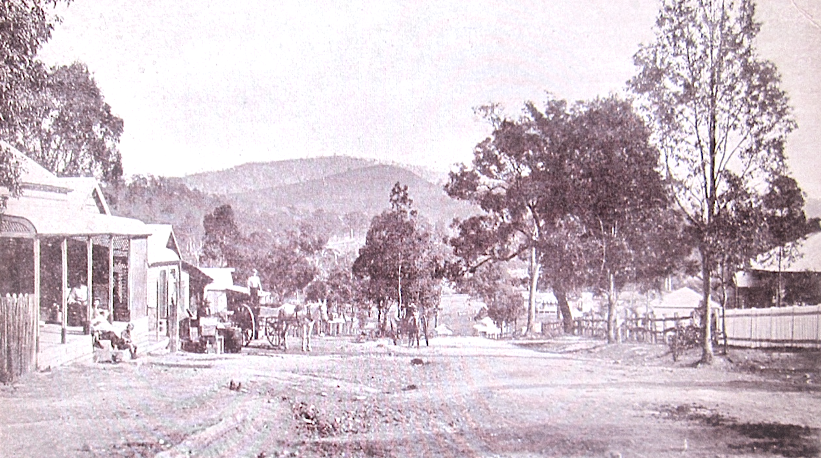
Gresford
Paradoxical as it may seem, there are two Gresfords at Gresford – East and West. At East Gresford is a well-equipped branch of the Bowthorne Butter Factory, where all the functions of a central factory are carried out. At my visit Mr. F. G. Duncan, a manager of wide experience and much forethought, was in charge. I heard since he has gone to Parkes factory at a big advance in salary; which is a good thing for Parkes. The factory and grounds are particularly well situated, and the internal fittings seem up-to date. One feature, unknown to suppliers of factories on the eastern slopes, is the free carriage of cream. To accomplish this 22 horses with drivers and vans are employed. Looks a matter of competition (with Raymond Terrace and Gostwyck factories) or of computation (with the dividend at the end of the half-year to be reckoned with) or both. Anyway, I suppose suppliers are reconciled to the fact that they pay in the long run. Still, there’s a little thing called interest on expenses, and that interest has a silly way of commencing on the first day of a new half-year, and gathering way for 26 weeks, without thinking of suspending animation. Might be better for each supplier to have his 6d or 9d per can deducted from each fortnightly cheque, and let the cream contractors hold the baby for horse feed, etc. (N.B. — The above suggestion is given as a handsome present to Allyn and Paterson suppliers.)
Mr. D. Doohan, of the Victoria Hotel, took over the license last August, coming comparatively new, but he has made many staunch business and social friends. So much so that he is compelled to add several rooms to the already substantial brick, two-storied edifice. Fortnightly sales, largely attended, are held rear of the hotel, and the large paddocks, yards, and pig pens are often severely taxed to accommodate stock. The fortnightly sale day is quite an institution there, and at mealtimes on those occasions the walls of the big dining room seem to bulge with the crowd of hungry folk who assail the choice meals sup-plied under the direction of the cheerful hostess.

Victoria Hotel – East Gresford
Former licensee of this hotel was Mr. John Beatty, junior, a life resident of Gresford, now living there privately in a fine house. Mr. Beatty has grazing interests in the Singleton district (some 1200 acres), besides owning a “let” dairy of 100 acres up the river. He and his respected father, Mr. John Beatty, senior, were practically East Gresford for a long time in years gone by, and none are so pleased as they at its progress.’
Gresford. Underbank – 17 May 1910, page 3
Further on, and on the righthand side, is the handsome residence and prolific property of Mr. John McDonald, senior, and behind it those of Mr. Angus McDonald, junior, and Mr. N. McDonald (sons) latter running up the ridge from the road. Above are Mr. Keppie’s dairy and that of a recent arrival from Glen Innes, seemingly about 1,500 to 2,000ft up, too high for a tired feeling scribe to climb. Mr. W. Moore’s commodious house and extensive farm comes next followed by the turn into the dairies of Mr. W. H. Haggarty and of Mr. John Nash, while close handy, at Quart Pot Creek comes. Underbank Estate, or to be more correct, Tunnebuc Station, now administered by the trustees of the late Mr. J. K. McKay.
This station and Underbank adjoining, were once one, and bear latter name, but the homestead was sold together with 2,300 acres, to Mr. J. R. Fulton and the name went with that portion; the remaining 8,000 acres are now known as “Tunnebuc” and are managed by Mr. J. Belcher, with Mr. Alec Keiller as the genial chef-d-cuisine at the local headquarters. Magnificently shaped bullocks roam over the rolling downs, picking up that condition which ensures for them such a favourable market at Maitland. Just about the centre of the now divided station, and on the road up the Chichester River, is the Underbank post and telephone office, attended to by Mr. Duggan. This is the outpost of civilization — last electric link with the world in this direction till Stewarts’ Brook is reached — 35 miles over “The Tops.”
Underbank and Tunnebuc extend for a considerable distance each side of the road. Looking down to the left from the steep road rising out of Quart Pot Creek, the residence of Mrs. Huckstadt, senior, becomes visible, and on the far slope of the valley, the dairy farms of Messrs. J. F. Darr, — embracing a fine orchard — and of Mr. Silas E. Simmons’ cleanly 150 acres and Mr. Allan Simmons’ ditto. These I did not visit — climbing doesn’t agree with me, as I tried it before. Valley and stream, and undulating hill in just a position to provide a pretty scene.
From the top of the hill the Chichester Road leads into the right past the Underbank post office, and between latter and Bendolba, Mailman Burton runs the mail daily, and “just by way of a joke, like,” handles the local outlaws during his journeyings. Many such have submitted to the guiding rein under his careful hands.
Now comes Famous Underbank! It’s history is somewhat voluminous. Won in a Bank of New South Wales £5 Art Union in either 1836 or 1848 (witnesesses differ) it has seen many vicissitudes (Of late years its experiences have been more pleasant, for dairying has claimed it.) The holder of “the lucky ticket” — Mr. Angus McDonald, senior, — secured with this fine estate, some 1,500 head of cattle and Cryon Station, between Narrabri and Collarendabri. Underbank then passed into the hands in the eastern portion of the old property became “Tunnybuc,” and as such they remain, as stated previously owned by the trustees of the late Mr. J. K. Mackay.
Briefly, Underbank has a mile and a half double frontage and a mile single frontage; runs 600 Shropshire merino sheep; two dairies (one at the homestead and the other “shared” by Mr. Kanter), patent bailers and releasers, concrete floors in dairies and bails, Thorsby patent coolers, and a large lucerne silo stack, besides the two dairy herds and 16 beautifully-matched, picked, Red De-von bullocks for the team; these are a picture. The homestead is most comfortable, and the panorama of scenery is so far-famed as to need no further eulogy.
Mr. Fulton has set Underbank upon a better paying footing than it has been generally; his system of testing all dairy cows regularly and with patience is remarkably complete. A public school, a Church of England on the Estate and a population pf 29 souls should be included in a necessarily incomplete inventory. But it may be interesting to hear there were thrilling adventures with Aboriginals; how they besieged the homestead for a day, with only the cook home; they broke in second day; the cook answered with an axe and then ran through the bush to Gloucester.
Mr O. C. Edwards’ property, Greenbanks, “Shared,” comes next. Mr Edward’s name is well and favourably known throughout this and the Gloucester electorate. Mr J. Wilkes’ dairy farm, on fine flats, is followed by “Arabella” estate owned by the Jewhurst family, upon which is also the private’ residence of Mrs. Henwood — a nice new house — and of Mr. H. Henwoods dairy. Thereafter, Mr. S. Rapsons property may be seen, and Mr. H. Everetts dairy — latter being on Melbury estate. All the properties mentioned in this paragraph I was unable to visit.’
Melbury – 20 May 1910, page 2
‘Having entered upon Melbury, the whole of which was once the property of Mr. W. Edwards, senior, who still carries round his many years with much cheerfulness. With Mrs. Edwards, senior, this happy Welsh born couple are enjoying their ‘otium cum dignitate’ [leisure or rest] in a beautiful house (upon a high hill), said house being set in a gem of a garden with the happy grape smiling on the vines. The couple have made history in this part; Mr Edwards repeats with pride how he started bullock-driving at the age of nine (9). His early experiences in the then wild bush, are thrilling. Mr. W. H. Edwards, junior, has recently removed from his old homestead on the top of the hill on the east side of the river, to a new residence on the same side, and one more comfortable of access. But the old dairy is still retained, distinct from that at the new home; and three well-setup young Australians of the family journey there milking times and draw their cheque independently of the new property just acquired from Mr Edwards, senior.
Total area of the lot is 700 acres, 52 acres of which are under crop. The herds are mostly Devons, with a Jersey here and there, and three specially fine bulls. Besides this Mr Edwards has “summer paddooks” near Beean Beean, 4,000ft high on “The Tops.” These will be treated in a special article. Melbury, the home and biding-place of hospitality, as dispensed by the clan of Edwards and their vigorous families, is the aboriginal word for “plenty kangaroos and wallabys.” Mr. W. Deards, whose attractive farm and home is near the crossing to Mr. W. H. Edwards, has a clean looking concern right through, situated on the west bank of the river, and almost surrounded by 12-ft of corn — a very desirable property, and very worthy people.
A Church of England building and tennis court fills the landscape till Mr. Harry Deards’ home (retired from business) is reached; thereafter the private home of Mrs. Deards, senior. These two I had not the privilege of calling upon. Thereafter, Mr, Ab Edwards’ new home, with its luxurious store of roses contiguous. Mr. Edwards and his estimable wife are of good repute as are the family of Mrs Deards over opposite.
Right in a corner of the property is the Congregational Church, and almost opposite, the public school. Mr. Jas. Rumbel’s handsome new house, with its attractive vinery in front, and a pretty sawn-timber summer house, is a bright gem. Mr. Fred Rumbel’s two storied house (a very uncommon style of building in the true country) with its record 15-ft patch of corn, close handy, is another of those I was unable to call at after leaving Mr. W. H. Edward’s. Here comes the dairy of Mr. Robert Saxby, senior, who is a co-occupant with Mr. W. H. Edwards and Mr. Haines (surveyor) of most of the land taken up on “The Tops,” as the tablelands are called colloquially — the portion south west (about) of the Beean Beean country.
At my call, Mr. Saxby was absent, and surely, I must have lost my notes about his place, for figures are not available. A new house, fair sized bail, and a pig-population of about 20, impresses me particularly as portion of “this desirable estate.” Mr Saxby, junior, hath his part in the working of the dairy, etc. His father is a very well-known figure in the district, and, with the rest of the family, command such respect as is their due. Mr. Saxby, senior, inhabits a healthily situated private home across the river. Through next gate is Mr. R. J. Saxby’s dairy on the hill and his farm on the alluvial flats; didn’t visit here; the sight of the owner toiling hard acted as a reproof to myself, as an (at that time) idler holiday maker.
”Minne-Ha-Ha” If ever I heard the name of Mr. Charles Rumble’s extensive property of over 800 acres which is next in order, then I have clean forgot it. But it should be called “Minne-ha-ha” (‘Laughing Water”) because the river crossing diverting to his well placed house and dairy and barns, and erections galore, is the most charming I have seen during the wanderings covered by this series so far. That is, for a really aggressive, hustling hurly-burlying, no-beg pardon, jostling, whirling kind of a mixture of a Canadian River rapid, and a Snowy River, (Mt Kosciusko) trout stream, tinged with a small suggestion at the upper bend of the Williams’ more placid progress as seen nearer Dungog.
The youthful Williams comes round that bend like a race horse doing “slow” work; when it commences to reach the crossing, the rocks on either bank press its sides as would a jockey, and when fairly past the crossing it has attained full gallop, and dances and splashes and foams, and flings itself under the substantial 65ft long foot bridge at “Scotch expres” speed. Turn and watch it; it strikes more impeding rocks direct in its path; it seethes, and roars, is slung back in whirlpools. Now but a five-feet wide maelstrom, the right hand current rushes towards a dividing rock; its momentum sends it back, and a left hand current dashes backwards three-feet wide, then two, then one, then — nothing, for it is now drawn in by the right hand current and sent away down again, to gradually fall away each side of the afore-mentioned big rock.
But more water is making up that left hand current, all the time; so there may be seen every day and all day water running up hill. A stick thrown in either current is carried up and down over, for minutes, till a sudden flick sends it away to whirlpools further down. Look: It is worth a trip to the spot to see the glories of the whole, and if the visitor doesn’t spend half an hour watching, that person has no appreciation of a unique spectacle. Glory! I’m glad that’s over!’ as Mr. Dooley said. If only the Fisheries Department would send along trout in a more advanced stage than the inch fry they lately supplied as perch food— little better— tourists would throng here.
But Mr. Rumbel is waiting. The country here is mostly well-grassed ridges; river flats with goodly growing crop prick themselves out at various points— totalling 20 acres. Herd is mostly Durhams and Jerseys, numbering 54; few of them are bailed up during milking. Mr.. and Mrs Rumble and family are sterling and hospitable to a degree; the good man himself is member of many committees, and a director, of the W. R. Butter Company. Mr. Rumbel kindly took me to “The Tops.” I owe him one for that— he’ll get it in a special article thereon.’
East and West Gresford – 10 June 1910, page 4
‘Mr. J. R. R. Collie has lately taken over the big store of Messrs. F. Walters and Co., and is introducing new tactics in the running thereof, making a point of giving best value possible in his varied stock. Mr B. Bogan’s smithy on the main road clangs out its music rhymatically as it has done for a goodly portion of the 22 years that gentleman has been in this district, where he served his time to the trade.
The “staff of life” is provided at the hands of a cleanly and competent tradesman, in the person of Mr. A. Bridger, who is the only baker from Paterson suburbs to the heads of the Allyn and Paterson Rivers. A range like that is a bit disconcerting to anyone contemplating starting opposition. A Congregational Church building occupies a prominent position. “There’s nothing like leather,” says the old saw (unless it’s the money to purchase good leather.) Once heard a Yankee say: “There’s nothing in the world so good as money, and no money so good as other people’s money!). Mr. D. Smith has for 18 years stitched at leather, old and new, for the dire safety of district folk, and stitched faithfully and well.
Mr. Jas. Jones and his brother, builders, were at time of my visit, putting some good work into the neat four roomed house, mentioned as being erected for Mr. Walters, next Collie’s store. The post and telegraph office is under care of an obliging young lady in Miss Robertson, whilst the preservation of the peace is entrusted to Senior-constable Capp, a zealous and vigilant officer, who is installed in splendid quarters at the police station and Court House. Dr. Perkins, of Morpeth, makes periodical visits to the town, and Mr. F. C. A. Pile, dentist, of Dungog, finds sale days all too short for the number of patients seeking his professional services.
One of the nicest residences is that occupied by Mr. Hudson, one of a family held in high esteem in the surroundings. Costuming of the ladies is in the hands of two very capable ladies; I didn’t even ask their names — I’m shy. With mention of Mr. W. Walker’s coach building and black-smithing establishment, it seems to me I have embraced all East Gresford (metaphorically). Mr Walker is a district boy — the family have lived long in these parts; creditable and painstaking are the works of his hands.
West Gresford. This township lies a little over a mile from East Gresford, and here a substantial brick school building, presided over by Mr. Rodgers, is situate, together with a desirable residence; good results are obtained here from the efforts of the scholars. Here also is a very handsome Church of England, built on the banks of the Paterson. The pastor of the church is Rev. Mr. Brown. The eastern end thereof is relieved with a beautiful stained-glass window, whilst at the western end two memorial stained windows are set in. One is to the memory of Anna Maria Eidler, the other to that of T. T. Hancock. The edifice is roomy and neatly finished.
The rectory is also a goodly building with large grounds surrounding. Memorial gates are also erected to perpetuate the memory of Trooper Grey. The Paterson crossing at the church is “not half bad,’ though when a “fresh” comes along it is rather awkward to negotiate. The Paterson is a very winding river, consequently it takes a long while to run into and out of a “fresh.” One gentleman told me “it was the crookedest river in the world!” That’s a big order; I’d like to take him up the little river from Mr. H Boorer’s to Wangat, with its seven crossings in two miles! At the church, however, there is a high-level footbridge — a boon indeed.
Just across it is a fine residence, that of Mr. E. S. Eveleigh. There are 75 acres here, where 12 cows are milked and “an acre to a cow” cropped. But up Harris’ Creek, Mr Eveleigh owns about 1000 acres, whereon grazing is carried. Quite close, Mr. G. Spears demonstrates what can be done with 75 acres of land, 4 acres of which, on the riverbank, crop heavily with the cheerful lucerne; at present 12 cows are being milked. Mr Spears is a prominent and enthusiastic officer of the Gresford Light Horse, the barracks of which are adjacent to Mr. J. J. Hancock’s commodious hotel. This latter cleanly building covers quite a large area, and possesses a happy and well-kept garden. The popular host and hostess spare no pains to make for comfort. The conveniently built stables are quite a feature, and the care of horses is not unduly different from the attention extended travellers. Mr. Hancock owns quite a lot of property round about. I really must mention the extraordinarily lavish amount of nicely-matched cedar which lines the whole of the largely stocked bar; it is all district grown, and a striking lesson as to the enormous quantity of the now valuable wood which must have once existed in millions of feet.’
West Gresford – 17 June 1910, page 8
]Within the precincts of the hotel property has just been erected an up-to-date butcher’s shop for the genial Mr. D. J. Brosie, of Gresford and Vacy. The building is of brick. Wire-netting doors, swing bearers, concrete floor, and every modern convenience is provided for the popular tenant. A few yards away from the new building is the School of Arts and library, in which Mr. Rodgers interests himself considerably. The meeting hall has lately been largely added to, and accommodation is provided for a big audience.
Opposite is an old-established general store, which has been associated with the name of Grey many years. It was formerly run by a very popular gentleman in the person of Mr. George Grey, who, for a long while struggled with bad roads and river crossings to keep his up-river customers supplied. Indeed, it would not be out of place to say that the history of Mr Grey, is the history of West Gresford; progressing, as his business did, from the pack-horse stage to the several four-horse vans.
Miss Grey sustains the good, fair-trading name with much credit, and a keenness and capacity for business detail not always exactly prominent in the fair sex. Mr. T. J. Randall’s Bon Homme stands him in good stead with his customers, and that quality, combined with the genuine merit to be found in a thorough tradesman continues to keep his work before the public. His motto: “Absolute Satisfaction” tells a complete volume in 20 letters. The post and telephone office is in charge of an exceedingly obliging lady, Mrs. Clay, who, no doubt, has her finger on the pulse of Gresford’s progress more surely than most, the growth in mail service being a sure indication. And the mail contract to Maitland is held by Mr. Fry, whose brother in West Gresford has charge of that terminus. He resided in a pretentious house with ample grounds, and he enjoys the confidence of travellers and residents. To Mr. T. A. Walker belongs the credit of keeping the Walker flag flying in the wheelwrighting and smithy line, as does his brother in East Gresford. Mr Walker has shaped the iron and forged the steel in this, his shop trade, for about six years, ever ready to undertake difficult shoeing and intricate wheelwrighting.
Mr. S. A. Brooker, auctioneer, resides in a dwelling overlooking historic Cawarra (Mr. A. H. Lindeman’s vineyard) and plies his “calling” as an auctioneer in many centres, his list at the East Gresford fortnightly stock sales being quite a feature thereof. His work in the yards is slick, and surprised buyers generally find their purchase has cost them just value. Mr Brooker believes in visiting other centres in order to gather information as to ruling prices. Messrs. (F.) Brooker and Rose, auctioneers, bear also their part in the “going” business, and besides operating once every two weeks at the stock sales, conduct also a Union weekly. The name of Brooker is time-honoured in the land, and the partners are worthy upholders of the reputation. I was unfortunate, though, in not meeting the gentlemen personally; bad weather and swollen rivers were to blame.

Cawarra – Gresford
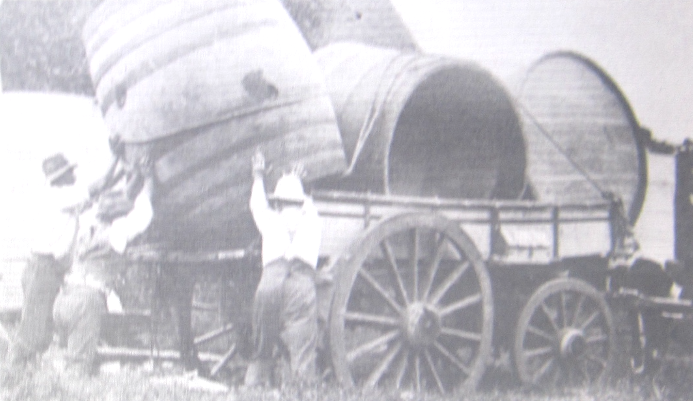
Wine casks at Cawarra – Gresford
There are several nice residences in West Gresford which I could not visit; sopping boots and unpicturesque streaming’s from an umbrella and a steaming mackintosh do not make either for good temper in the housewife, nor ease in the caller.’
Allynbrook – 24 June 1910, page 8
‘Close to Mr. Wells’ on the Allynbrook-road, is the farm of Mr. A. J. Ninnes, the stalwart, situate at Glennie’s Creek. I was unable to inspect the 190 acres, but learned that about 20 cows are milked at present out of a total of about double. Mr Ninnes is a popular and welcome attendant of stock sales, even unto Dungog.
“Glenthorne,” property of Mr. Douglas Brown and of his brother, formerly belonged to Mr. Glennie; it afterwards came into the possession of the Grey family, where it remained for 30 years, and was then bought by Hon. Alex. Brown, of coal-mine fame, for his sons. Most of the cedar work in the 50 year-old cottage, which still stands, was done by a clergyman, Rev. Mr. Wilson. Mr Brown has erected a new and roomy house in front of the original cottage. There are 400 acres in the freehold, 70 acres of which are cultivable. An orangery, vineyard, dairy farm and agricultural farm are embraced in the area, and Mr Brown intends to go in for a big irrigation scheme—the river is but 30 yards from the house—and to increase his present herd of 50 milkers and his fat cattle considerably. The whole place is well cleared and tended, and no expense is spared to make for utility.
The Hon. Alex Brown makes weekend visits to the homestead in his magnificent white Porthos touring motor of wondrous horse-power and carrying capacity. A jaunt in this thing of beauty is a joy. It was brought out by Mr. Brown on the latest of his many trips to the Cold Country. Mr. John Smith has been on his 125-acre farm and vineyard for 37 years, and during that time has acquired two other properties—one of 700 acres not far away, and yet another of 770 acres at Lostock. In the season some 27 hands assist to pick the luscious grape. One of the largest brick buildings in the district was being erected at time of my visit—a house of comfort it appears. In addition to farm work, the hospitable owner has an apiary of 35 hives. With a 37 years’ residence record to his good credit, it seems superfluous to have anything to say of Mr Smith personally.
His brother, Mr. Barry Smith, lives adjacent upon a farm of equal size, with that of Mr. John Smith—125 acres—running to the banks of the Allyn. Besides milking some 20 cows, Mr. Smith has a vineyard containing three distinct varieties of grapes, and the vines were on their very best behaviour this season. The “few, well-chosen words” referring to Mr. John Smith, apply in equal measure to Mr Barry Smith.
Mrs. M. Scobie’s new, warm, and “comfy” looking dwelling on the hill obtrudes next, and the milking sheds receive their quota of 48 or 50 cows twice in the 24 hours. The farm is cleanly and well-kept. Mrs. Scobie has been on the property 17 years, but contemplates leaving shortly, in company with her son. To be hoped not; Allynbrook can ill afford to lose, even one of the best of its people.
Mrs. Bird’s wine shop and accommodation house lies neat in surroundings of green. It has been Mrs. Bird’s pleasure to be of the soil here for something approaching half-a-century, I believe, and, with her son continues the good record of bye-gone days.
Next on the main road is the farm and butchery of Mr. T. R. Hancock, embracing 111 acres, upon which are fattened a floating supply of 15 to 20 beef cattle, besides 50 sheep. Some 6,000 dozen oranges were gathered last season. Mr. Hancock has great faith in the Allynbrook antimony mine, mentioned in a previous Chronicle, and has also had a “flutter” at a gold show on “The Tops.” The antimony mine still has a kick or two in it, it is situate on the hill behind Mr. Chesworth’s at Coulston. (Antimony is a painful subject with yours faithfully; Hillgrove deposits once flattered with much tonnage for a season, and then deceived with much velocity. Hope Mr. Hancock will have better luck). Labor conditions killed “The Tops” proposition for the time.
On Mr Hancock’s property is the loveliest spot I have seen in the district. It is on the riverbank, and is truly a Garden of Paradise. Approached through a pretty vineyard, the river displays two beautiful reaches, its banks fringed with ribbon bamboo, weeping willows, the oaks, sighing orange groves and severely practical lucerne and corn. Really, type is too cold and hard to describe its charming rusticity unless a Bulwer Lytton [English writer] essayed the task.’
Allynbrook – 1 July 1910, page 8
‘Back of Mr. T. R. Hancock’s is “Mt. Pleasant” home of Mr. G. W. Hancock, prettily situated on the hill, and surrounded by 440 acres of clean country. The two residences and outbuildings there give the place an air of importance as seen from the road. 35 acres are under crop, this portion running round the base of the hill, Mr Hancock is a bit pessimistic, I am afraid; he thinks the land is worked out, and he doesn’t believe in importing much-advertised manures containing a big proportion of rubbish to further spoil the land.
But one who has acquired such an apparently prosperous position might have been tugging at my pedal tegument. During 54 years tenancy, Mr. Hancock sustained one serious loss by fire. A short distance along the road is the home of Mr. Pascoe, which I was not able to call at. “Maryville,” property of Mrs. C. Eidler, is a model holding. Upon the 850 acres surrounding a beautiful home, 30 cows are milked, 30 or 40 pigs are raised, £40 worth of wine grown, 15,000 to 20,000 dozens oranges pulled yearly from 500 trees, 50 acres cropped with most everything payable, stock fattened, and there are a lot of other strings to the bow if I could only remember them.
Scientific pluming is about the only thing I am certain has not its place of prominence in the entourage; even that pursuit might be carried on by Manager Fred, and the other sons at this grand mixed farm. These be facts, and I think it better to let them talk for themselves. It is hardly necessary to mention the very considerable respect in which Mrs. Eidler and family have been held throughout the Allyn and Paterson for the 19 years of occupancy of “Maryville.”
Very beautiful indeed is the spot beyond “Maryville,” and surrounding the public school. A substantial bridge—alas, the last vehicular one up the river, being crossed, the school, Church of England, and parish hall are reached in a cluster. The school and residence, handsome and cosy looking in their garb of red, bear the date 1881; the precincts thereof bear testimony to excessive care, in administration on the part of the head teacher, Mr. W. J. Parker and his good wife, who have been here seven years. Keen interest seems to be displayed by the scholars in their nature studies —a pursuit dear to the heart of the headmaster. Adjacent is the parish hall and the historic church, which was renovated considerably about 18 months ago.
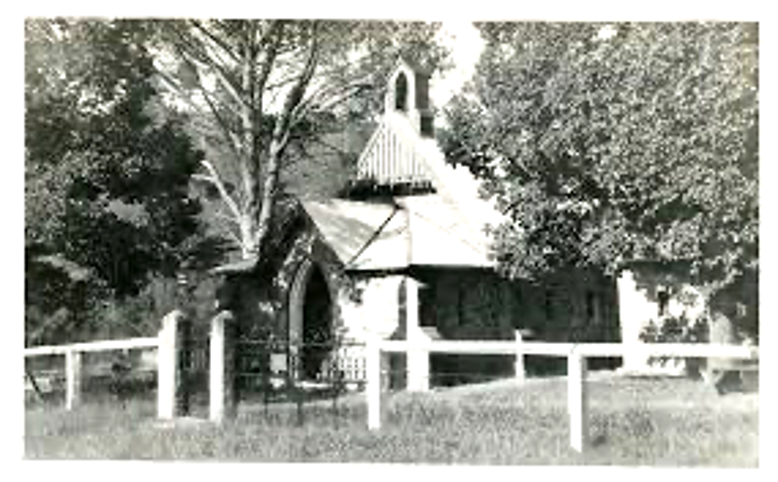
Allynbrook Church of England [University of Newcastle]
“God’s acre” holds within its confines much past history. At its rear the river swirls and sweeps beneath a cliff of massive, verdure-clad rock rears itself, forming an effective back-ground to the softer beauties. Another farm I could not visit is that of Mr. Stuckings close handy. Caergurle [Caergwrle]. This extensive and desirable property of 1800 acres, with frontage to the river on one side of about 3 miles, and on the other of four or five, sustains five dairies utilizing about 200 of the 300 milkers; four of the dairies are worked on the share system. A total of about 100 acres is under crop, and in addition some 8,000 to 9,000 gallons of wine are expressed from the vineyard; in addition, about an equal quantity, purchased from five local vineyards finds its way into the big 500-gallon vats.
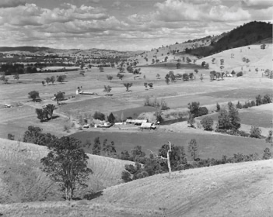
Caergwrle, Hunter Valley – 1977 [State Library NSW]
Big improvements have lately been added to the cellars—a 50ft long building with sloping concrete floor has been completed, a wind-mill and steam pump erected to shoot water to the cellars, and the kitchen and shower baths; every outside door in the house has fly-proof doors; and, generally, if the original owner of 50 years ago could see the property now he would feel called upon to express surprise. A keen and careful businessman and a hard worker, Mr. R. B. Boydell, present owner, carries weight in his capacity as a Councillor of the Wallarobba Shire. Something like 1,000 cleanly acres of the total area are devoted to dairying, and on the property the local cricket team perform doughty deeds against all-comers. Truly a holding calculated to rouse the demon of covetousness.
Against the road at the river crossing is an example of what industry can accomplish in a short time. Mr. John Watts, senior, has converted what was once the “Yankee Magic” soap factory, into a smiling garden and orchard, and he may consider himself herein patted upon the back for the wonderful results he has obtained, and the excellent order in which the plot is kept. Just above the vehicular crossing is a high-level foot bridge—pity it wasn’t made a bit wider, so as to allow vehicles to pass over. Even as it is, motor cars have been taken across it, and at a pinch a sulky or two, the horse being taken out and the sulky pulled across. It’s a tight fit, though, and is only resorted to when the ford is uncrossable.’
Allynbrook – 8 July 1910, page 8
‘In a direct line with the footbridge is “The Lane,” leading past the home of Mr. Struggins (a representative of a family which has many years’ good record in the district) and over the river to the farms of Mr. Collison, of horse-breaking fame, and of Mr. Muddle. These, can only be approached from Allynbrook by the crossing just mentioned, or by the one near Falconer’s Hotel, and as the Allyn had got up in the night to have a curtain lecture to the nodding dandelions high up the bank, I was unable to call at the places mentioned. Indeed, my whole visit, along this river was hampered by flood conditions.
The Allynbrook Post and Telephone Office is in charge of an obliging lady in Miss O’Shannssey, and opposite the 15-acre vineyard of Mr. James Watts. “Vine Hill,” is appropriately named, and after 20 years’ residence in the old house, Mr. Watts has just had completed a roomy new home. The vines this year bore well, and the product was bought by Mr. Boydell.
Next in order is the dairy of Mr. M. Bird, who has 21 acres here and 190 acres up on the high hill back of Allynbrook. Mr Bird, who is well-known throughout the locality, and also among Dungog cattle sale attendants, milks 30 cows. In addition, considerable trading is done with cattle. Allynbrook’s “oldest resident” is Mr. W. Smith, blacksmith, wheel-wright, and vigneron, whose years in Allynbrook number 67, during 40 of which has he been a disciple of Tubal Cain [named in Bible as the first blacksmith] in the same shop. Mr. Smith makes his own wine, and orders go forward almost to the Queensland border. From Carrabola down the Paterson, and from Shellbrook down the Allyn are brought the lame, the halt, and the worn-out, either beast or vehicle or farm implement for intelligent treatment. And same is accorded them.
Mr. Falconer’s hotel, at which comfortable beds and good meals beyond the ordinary may be obtained, was formerly a wine saloon, and it will soon revert to a private house, the carrying of reduction in licences for the Durham being responsible for its closing up in about 15 months. Carrabola residents will then be 30 miles from the nearest hotel; Shellbrook folk 22 or more.
One or the principal dairy properties up this way is “Kilkee,” property of Mrs. W. White and Sons, trading, I understand, as White Bros, The 2000 acres now held (25 under crop) were owned by six or seven farmers 40 years ago, but the late Mr. William White gradually bought these farms out and consolidated them. There are three herds on the estate — Mr. Richard White’s, Mr. E. Turner’s (junior), and that at the homestead; besides, there is a farm at Lostock. Altogether there are some 110 cows — mostly Durham strains — being milked, but the total of stock owned runs to 450 head. (Frank Jones, for many years right-hand, man to Fitzgerald’s Circus’ proprietors, once jokingly said to me at the time when the brothers were in their zenith: “We have so many horses that if we lose one or two we don’t miss ’em.”) Seems to me that White Brothers might be in the same case, but “I hae ma doots!” [I have my doubts]. There is too much intelligence and keenness palpably displayed to permit of such a contingency. The four brothers are all expert horsemen and cricketers, whilst within the four walls of the handsome homestead, taste and refinement and hospitality and musical ability abound.’
Allynbrook – 22 July 1910, page 4
‘Leaving “Kilkee” for Halton “The Wheelabout” is encountered. The road is somewhat S-shaped, and crosses the river twice within a short distance. At flood times, as on my return journey, these are unfordable, and the hills are resorted to by the pedestrians, horsemen, or slide drivers. Funerals have had to take this route on occasions, the coffin being placed upon a slide. The going is pretty rough, but I notice Shire Engineer Mackenzie projects taking the road round this way.
Mr. R. R. White’s farm, “Ming Pose” is just over the second crossing. It is part of “Kilkee,” as before mentioned; I was unlucky enough to miss Mr. White at both my calls. Near, is an industrious old resident (30 years) Mr. E. Turner, senior, who has, up on his 40 acres, quite a noted orangery and vineyard, where intense cultivation is intelligently carried out.
Over the river is “Ernsts,” of 800 acres, tenanted by Mr. S. Silver and family, manage a big property at Hinton. This is portion of Mr. H. H. Holden’s, Penshurst property, of which more latter. “Ernsts” has a river frontage of about three miles, and some 25 acres along the banks are under lucerne. The herd consists of all Jerseys — a healthy-looking lot. Some 60 or 70 were being milked when I called, but, as the dry cattle from the Hinton farm are sent here, the total head on the place is some 300. Mr. E. Turner, Junior, works one of the White dairies, and supervises road work contiguous. He has been on the farm about 20 years. The herd is of well-kept appearance and is just about up to the capacity of a hard-working family.
Halton, home of the Lawrie family; picturesque Halton lies three miles from Allynbrook, on either side of the elm-fringed Allyn. There are two blocks of 640 acres in the property, where-on three farms are worked— the substantial homestead whereon Mr. Jas. Laurie has lived for nearly 60 years, Councillor A. G. Lawrie’s and Mr. R. G. Lawrie’s beautiful orangeries grace each portion. From the 500 trees at Mr. Jas. Lawrie’s 14-000 dozen oranges were pulled last season; one small tree I was shown yielded 250 doz. of them. At Cr. A. G. H. Lawrie’s there are from 30 to 40 cows, 25 of which generally visit the balls twice within the 24 hours; they are, as in the case of the other two dairies, mostly Durhams. Here also are 350 young orange trees and 100 of other fruits. A pretty view of the river is obtained from the rear of the house, lying about 100 ft below. A force pump is brought into requisition to bring water to house and the vegetable gardens. Cr. Lawrie, in his capacity as a member of Wallarobba Shire Council is a persistent advocate for the rights of Upper Allyn and Paterson residents, and the mouthpiece generally of their requirements. With Mrs. Lawrie he is most kindly and hospitable to the stranger “within the gates.”
Mr. R. G. Lawrie, of “Combwell” has a biggish frontage to a level riverbank with cliffs on the other side. “Halton” covers two square miles of country, extending to Bonnington Park on the east, about 1½ miles past Mr A. G. H. Lawrie’s on the north, 1 mile to the west and half-a-mile to the south. When Mr. Jas. Lawrie first came here one could not see 50 yards in any direction for scrub; now all is clear agricultural and grazing lands. Wheat, corn and tobacco were first put in, but rust killed the wheat stone dead, and the excise duty killed the tobacco just as dead. Corn continues to flourish, even with the wonderful incursions of Cow.
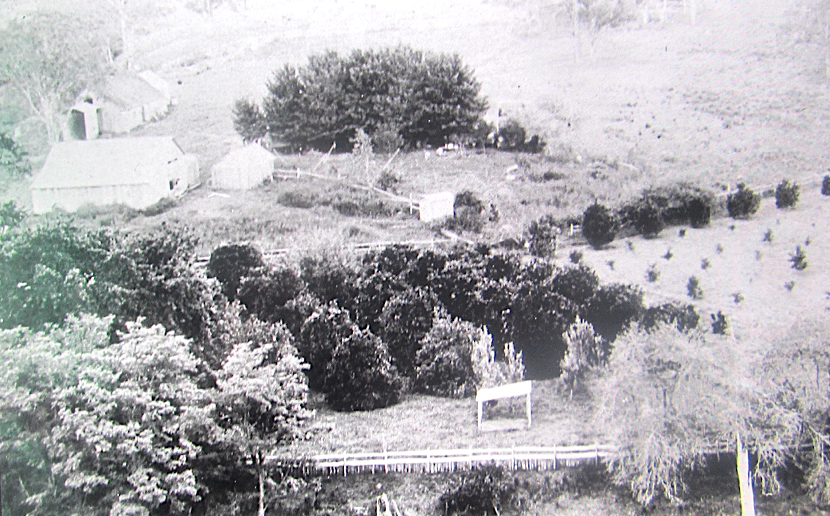
Tobacco factory – Halton, Allyn River
But, even so, late as seven years ago, Mr. Lawrie captured the medal at West Maitland for an exhibit of leaf. Previously he had scored a goodly array of medals, persistently at the Singleton, Muswellbrook, Dungog, Maitland, and even far Sydney with the manufactured article of the period — Twist and Nail Rod being the aristocratic smoke of those days, covering a period of 30 years. Ten men were employed twisting alone, whilst others were engaged stripping and pressing. The huge barn used to be filled every season with hanging leaf. Sydney and Queensland were the markets and. Trusts kills lots of things; well, Tobacco Trusts and excise duty as aforesaid killed Halton’s strong product.
Mr. Jas. Lawrie, an octogenarian, sturdy yet, possessing clear foresight, was for 20 years a member of Paterson District Council, but Local Government killed the district Councils also. (I seem to have a killing manner about me as I write to-day — its just after the Senate and House of Representative elections, too!). Spection’s adulation would be distasteful to Mr. Lawrie, but, as I am a long way away from him just now I can say what I like, and it is this: Any individual wishing to gain the goodwill, respect and esteem of his fellow-men would be safe in following the lines of that well-read gentleman’s life.’
Bonnington – 5 August 1910, page 2
‘Another branch of the Lawrie family reside at Bonnington Park, viz., Mr. A. G. Lawrie, senior, who has been on the Park for 40 years or more. The property runs over the hill to Underbank, and embraces 10,000 to 11,000 acres, administered from the very beautiful homestead, with its smiling garden and tennis court, and its lovely prospect up the valley of Chad’s Creek — reputed to be the finest water creek in the district. Unfortunately, on the day of my visit diretemporary illness [severe illness lasting a limited time] had developed in one of the sons, Mr. Willie Lawrie, and descriptive matter for this series was “off.” Nevertheless, I may be permitted to take the sense of sympathetic and enthusiastic neighbours in stating what everybody who is anybody knows: that Mr. Lawrie and family are most highly spoken of for their uprightness and straightforward conduct, enterprise; and kindness.

Bonnington Park
The stalwart sons are the backbone of local cricket, etc., and are well-spoken of on all points. And about this enterprise: Mr. Lawrie gave 66 golden guineas for the big stud Shorthorn, Ronald. About 70 cows are milked, and it would not be safe for me to guess how many more dairy and beef cattle and horses draw sustenance on the hills. The highest eminence about is called “The Lord’s Pillar,” so named by a befogged traveller, who eventually wandered out to the pinnacle from which he was able to pick up the lay of the land. One, Vantequest, was the gentleman, I believe; he afterwards wrote a book on the country around and his experiences therein.
Further up the peaceful valley, Mr. A. G. Lawrie, a son, works “Braeside,” having with him a man on the shares. For sickness, reason mentioned, I did not get required information, but I learned there were 1280 acres in the estate, and that the dairy herd numbered about 50. Mr. Lawrie, who has been there about 10 years, is also an enthusiastic cricketer and a good fellow generally.
Chad’s Creek. The fruitful and picturesque valley of Chad’s Creek holds within its clutches three farms of equal area— 340 acres— property of Mrs. James Leake, Mr. Thomas Leake, and Mrs. George Leake. Former, a lady of cheerful disposition, has some 80 of a dairy herd, cows and calves, besides others on a big run over the hills, and has been on the property about 10 years. A comfortable home and a commendable adjunct in the shape of a tennis court help to make life worth living. I had chosen a bad day for calling in this locality, so I passed Mrs. Thomas Leake’s, learning elsewhere that some 60 head of cattle, half of which are usually in milk, constitute the dairy herd. Mr. James Leake’s 340 acres are devoted to grazing pursuits only— this spot knowing nought of the early morning can to the cows. Mr. Leake has been on the property for about 45 years, and looks good for another 45.
At the very head of the valley and the end of the road, the brothers and sisters Packham control 308 acres of land, with about 20 milkers and an equal number of drys. The family of four are industrious and respected; indeed, the name of Packham has been well thought of during the 20 years it has been associated with the farm. From the house, it is but two miles to the head of the Williams, as the function of the Allyn and Williams-road is wrongly termed— the actual head is a long drag up from said junction. I’ve been there and know.’
Eccleston – 12 August 1910, page 8
‘Hicking back to the pretty public school at the Chad’s Creek turn-off (which school was shifted over the river some time ago to catch the greater proportion of scholars), the road is taken to Eccleston. Just past Cr. Lawrie’s, and on the right is what is known as the Lover’s Leap. The cliff at the river side is about 150ft sheer up. In “the bad old days” a mob of aboriginals chased a gin from Bonnington side. She made through the timber to the cliff, and by the time the blacks got out on to the edge they espied the lubra scurrying away on the clear ground the other side of the river, to safety. They knew not what she had found out — that there was a fairly safe track down the south edge. They called her a witch and also called off. Perhaps she’s going yet.
First place met with here is that of Mr. Riebeun Sivyer, a very old and well-liked resident of these parts, conversant with everything in the timber line, and possessor of some 850 acres of grazing land, where roam about 150 head of stock. 60 or 70 of these are milkers and about 30 are now doing duty. It is something like 33 years since Mr Sivyer first came to the house, which is now beautifully shaded by elms and flanked by a bower of greenery.
Mr. R. R. Sivyer, junior, has resided over the river for six years, in a house of more than average size, enclosed in 200 acres of ground, with a young orchard near the river. All the material in the house, including its cedar lining and a large table was hewn on the ground. “Chessenden Park” with its 36 milkers is an attractive and well-furnished place; the fernery is a dream. Mrs. Sivyer enjoys a Newcastle concert platform reputation of some standing and contrives to brighten the surroundings with a fine piano and a sympathetic voice — the voice first, please.
Mr. Henry Sivyer and his cheerful helpmate, are also ensconced in a nice home, with a trifle of 1400 acres to keep the cattle from starving. About 20 acres of this is under crop; the rest runs away back to the top of the Pinacle, an abrupt hill, about the highest around, at the rear. The family has been in possession of this pocket handkerchief sized plot of land which has a frontage of some two or three miles to the boomerang-shaped river. In its bend is a splendid orchard and orangery. For 50 years has the country been in the Sivyer family, and Mr. Henry has owned it about nine years. During that time cattle raising has been carried on, and during the big drought, four bullocks from there brought £28 5s each — each mind you. A batch of 20 netted £23 10s each — £471 10s. Of course, these 24 topped the market that day, but a few days later, Mr. Harry Wilce hit the Maitlandites up to £32 10s for two. But two years ago, Mr Sivyer answered to the lowing of the cow, and installed 50 milkers, half of which are worked at a time.

One of the Sivyer properties at Eccleston – Allyn River
A property of 909 acres upon which are six dairies is that of Mrs. Miner, embracing 909 acres. The proprietress is a very old and respected inhabitant and has lately built an attractively finished house, commanding a good view. The flood was beginning to speak its murmur about the time of my call, and I did not get much information here. I think the tenants are: — Messrs. G. G. Sivyer, H. Sayles, G. P. Miner, H. Watts.
On the next hill is ‘God’s acre’ — five tombstones and a great crop of weeds are all visible. At the foot of that hill is the modern residence of Mrs. Hill, standing in 100 acres of grazing land. Mrs Hill’s late husband was one of the shining lights of the school-teaching world in days gone by, occupying a high position at the time of his death. Opposite is the home of Warr Brothers, who were not at home when I was hereabout. An ideal picnicking ground is available at the next crossing; save for the presence of a very old (small) cemetery, it would be Arcadian, indeed, and in truth. Cliff and river and sward and shade and cool greenery lie in juxtaposition, and everything seems arranged to tempt billy boilers. Half a mile on, the journeyer receives a shock; and hardy realises he has come to Eccleston.
At the corner turn some seven or eight new and pretentious houses break upon his view. That’s a good expression; but the break is sufficient to make one gasp. I rode into the grounds of the first house, saw everything that is to be found about the exterior of a suburban residence, rubbed my eyes and then weakly asked a gentleman “What time does the next tram leave for Sydney?” (The gentleman was Mr. E. Kenny), Truly, Eccleston would not be misnamed if it was called “Suburbia.” But the old name trips off the tongue with a lilt, doesn’t it?’
Eccleston – 19 August 1910, page 4
“Kia Ora,” Mr E. Kenny’s charming home was “architectured” by Mrs. Kenny, who, as Miss Sivyer, of the post office, was, and is, so well-known. Besides being a designer and a builder of dainty nic-nacs and substantial bamboo furniture (the two adjectives don’t seem to blend, do they?) adds the enthusiastic support of the regular attendant at cricket matches. Many are the conveniences and most tasteful the furnishings of this home; colour schemes are carried out to the last touch in each room. I don’t pretend to know colours, but there is one room in a warm red, another in restful green, another in— say, something; it is too delicate a colour for me to guess at, for fear I might break it! The walls are papered in the tints mentioned and the one I wasn’t game to hint at, and the extremely artistic dados at the top harmonise exquisitely. Look! you-wouldn’t believe it possible; but few swell Potts’ Point houses could be any more ‘harmonic’ than “Kia Ora.”
Mr. Andrew Kenny (father), also has a new house, “Ravenscroft,” in which similar taste is displayed, the same sets of brains being at work on both. I am afraid I have exhausted my housey vocabulary, but must mention that spring, wire-doors, fan lights, decorated and stained glass doors, shaded ceilings, polished borders space saving fire-places, stone steps, water service, fixed coppers and set-in- tubs, ingeniously arranged to form a kitchen table when not otherwise in use, have their part in these houses, which carry one back to the swell suburbs of Sydney.
Mr. Andrew Kenny has been on this 800-acre property (part running up Spring mountain) for 60 years. Dairying is but an adjunct with him, some 25 cows constituting the herd. And here I heard of the first wheat which has come under my notice on the North Coast during my two-years sojourn. Last Christmas Mr. Kenny reaped 6 acres of it.
Mr. E. Kenny milks some 20 cows on his portion. The land has 3 miles frontage to the river, and, save for 10 chains, is entirely surrounded by the waters of the Allyn. (It just hits me that our own Amos Moore built both these houses). Eccleston Post Office has been the home of the Sivyer family for close up 60 years, and is now owned by Messrs. Joseph and Sam Sivyer, who are also enthusiastic cricketers and fishers and sports generally, and hospitable withal. There are about 250 acres in the property, and yet another 250 acres are owned on the Barrington. The old homestead is the hub of Eccleston, Massey’s Creek and Shellbrook, and within its precincts is what is reputed the biggest oak in the State. Anyone who can race round its outside edge in 10 secs. is breaking evens. To the uninitiated I explain that to run 100 yards in 10 seconds is “even time;” a yard further in the time, or a 50th or any part of a second quicker for the distance means “breaking evens.” So by deduction you will understand the outside measurement of the limbs is a trifle over 100 yards.
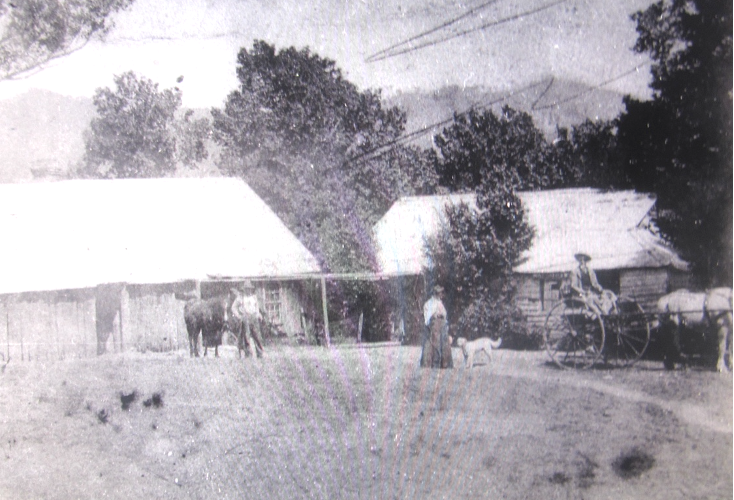
Eccleston Port Office – Allyn River
Mr. Sivyer, senior, once offered the then Member for the district (and some time Speaker) to forfeit £5 to charity if a larger oak could be found. The £5 is still unclaimed. The Member’s name was Arnold; he was afterwards drowned in a flood at Woodville. Besides the grand old oak are some fine willows, and the orangery and orchard are places of rest and refreshment. A good deal of intense farming is carried on here, and the place has always been a wealth-producer. A charming hostess in Mrs. Morton (neice) attends the commissariat and extends the glad smile to friends with hearty goodwill. The brothers are always spoken of as “white men,” and those two words, as Australians mean them, are equal to one whole column of fulsome adulation.
It would be an unpardonable commission if the home were left without mentioning the ancient cockatoo. The bird has been 33 years in the house and can say practically any word in the English language, except swear words. One gentleman, I am told by parties outside the household, and have it confirmed by Mr. Joe Sivyer, has three times offered 100 golden sovereigns for Cocky, I may be wrong, but I think it was a gentleman living close to Dungog whose property I said was the cleanest I had get met with. This saves me, in case my memory is at fault, but the said gentleman will know I refer to him to correct or confirm. If it was not he, then it was someone else of equal weight in the district.’
Shellbrook, Eccleston – 26 August 1910, page 4
‘Eccleston School (1895) in charge of Mr. W. H. Jones, is one of the new order of buildings, and is possessed of a tennis court. Opposite is a monument of Eccleston’s former pride — the annual local show.. The site is now a sports ground. The newish Congregational Church is nearby, and another of Eccleston’s pride is the big suspension bridge across the river to the Congregational manse, where resides the Rev. R. B. Pocock. This gentleman, who formerly presided over the Congregational charge at Kogarah, suburban line, in young and enthusiastic, and a favourite with all classes. Literary ability he possesses to more than a degree, and I hear, of of his ministrations, social and pastoral, in highest terms.
Continuing towards Shellbrook, the residence of Mrs. C. E. Hopson comes first, and here a bright home, with flowery and foliage plants as a happy adjunct, is to be seen. Torrens Grove is now the order of the day, and Mr. T. Jarrett first in order. “Allyn Vale” — pretty name — is 430 acres in extent, and 30 acres are under corn and lucerne. Of the 52 years it has been in the family, Mr Jarrett has been on it 30. Besides the 40 cows (20 milking), orcharding is carried on most intelligently. Of the large number of orange and other trees, there are a few of each of 95 varieties of stone and pip fruits.
Mr. Jarrett hits a popular idea right in the body when he says an American orange expert came to his place and told him the dark-leaved trees, beautiful as they are, are not so commercially valuable as the yellow leafed; also that the plough should be run close to the trees. Even if the roots suffer it should be done, and the “sore place” seared with a red hot iron. “I build hurdles round each tree and put your cows inside the hurdles overnight,” further advised the expert. There are some massive pears and apples in the orchard, and a cure for many blood ills in the sweet and bitter lines. These two trees were specially imported from the East and West Indies. Truly, this a homely and interesting place to visit.
Mr. H. Jarrett has on his 400 odd acres, some 20 acres under crop. Mr Jarrett dairyeth not, neither does he have to rise before the sun to pursue the pensive cow, but keeps his 60 head of cattle so he may not run short of a plate of steak for breakfast, or be compelled to live upon the succulent pig which forages in the pig paddock, The young farmer intends shortly to build a new house; I’d like to be at the house-warming, so l would!
Further on, one gets into the regions of the Hopson family, one of many branches and much repute Mr. C. Hopson, jun., is first on the list, and the house on the hill is surrounded by 1150 acres of country—all grazing and farming, and carrying 150 head of stock. In addition, in order that the wherewithal to purchase a penny stamp might be forthcoming when required, Mr Hopson possesses 630 acres at Belgrade, both properties, I believe, having been owned and occupied by his father. I did not meet the gentleman.
Mr. Henry Hopson also may be able to get the bank, when needed, to advance him 2d on his property further up (“Brae“) of 1290 acres, 15 of which are cropped. There are some 159 head of stock on the run, which has a river frontage of a mile. The festive bee improves the shining shilling here also, and a son has yet another apiary further up the river. Yet another son, Mr. A. Hopson, occupies a nice house in a choice position on the hill at the rear of Mr. Henry Hopson; but it was one of my very “tiredest” days. Of the Hopsons’ mentioned, I have heard too many good words to attempt to chronicle them.’
Eccleston – 9 September 1910, page 8
‘Mr. E. Hipwell is one of those who is beating the timber back and making for himself a home. He, at least, has not gone sour on his job of grappling with his 900 acres. In six years he has done an enormous amount of work, and is demonstrating how 7 acres of corn can be grown on ridges, by turning up with stalks averaging over 14ft. One of these stalks I pulled down and measured myself — I’m whales on spending time thus easily, while my salary rolls along evenly. Eventually, I got to the top flag of the stalk — 15ft 3in. I was much too weary to try any more. There must be some fearsome propulsion under the surface of the ground, for, after a sumptuous tea, provided at the good hands of hospitable Mrs Hipwell, I mustered sufficient strength to stand up against some paspalum grass near the house, and raise my arm. I was just short enough to swear the grass was seven feet high. This propelling force (alias rich soil) seemed not too good for grapes, because, Mr. Hipwell, a wine expert from Allandale (Singleton) way, is disappointed at the return (although good) from his grapes. Try the Shiraz variety, friend, try the Shiraz.
Mr. Hipwell, like Mr. Alex. Smith, of Bandon Grove, was having his first shot at dairying when I called; he treats about 20 cows, and has the very latest Alfa-Laval — the “Daisy,” I think, and the cream therefrom is “slided” right over from this, the head of the Allyn to the head of the Williams, and is then sent down per cream van to one of the Dungog factories.
Mr. Hipwell was kind to me in putting me on to a trip to the forest reserve at the head of civilization this way, and to the waterfalls and the Ladies’ Well. In the forest reserve here (No. 202) there is some red cedar (mostly young), mahogany, yellow box, woolly butt, turpentine, etc., all but red cedar being in extraordinary profusion, sufficient to last three or four lifetimes. Difficulty of transport is going to keep it staying on there in said dense profusion. Cedar is the only wood which would pay its way down to market, but it isn’t grown up enough yet to pay its fare.
Past Mr Hipwell’s is the home of Mr. J. Watts, where seven out of the 40 acres is under corn. Mr. Watts has been on the place since December only and has had bad luck with his first crop of corn; it looks well, but something I don’t remember has struck it. Better luck next time, let’s hope. One of the carvers of the forest is Mr. R. Longbottom, who has bared his arm and squared his shoulders to some purpose, as a substantial house and the cleared portion of his 300 acres shows. Mr Longbottom has been here but three years, and has six acres of ridges under corn., where once the “clingy” brush held sway.
Mr. Oliver Edwards, a nearest neighbour, went out of his way considerably to point with pride at the result of an enormous struggle and conquest which Mr. Longbottom has put up with yet another four, acres of “hot stuff.” The Chronicle hereby pats him upon the back.’
Eccleston, Shellbrook – 16 September 1910, page 4
‘Mr. Oliver Edwards (mentioned in last instalment) has his residence about two miles further on; it is the outpost of civilization. From it to “The Tops” may be reached in 8 miles (the track joining that from Salisbury); and eventually Stewart’s Brook, near Scone; while easterly, Mr. Sam Rumbel’s is three miles away; southerly is Gresford, 22 miles and westerly the head of the Paterson. The house is of goodly size, and the river but a few yards therefrom. The ridges are fairly clear, and the corn fair. Just half-a-mile from the house is a plot of 7 acres of beautiful corn, well-grown and of healthy appearance. The plot is reached by way of the dense scrub and the appearance of the cropped land is as of an oasis in a desert of green timber. (This is a first-class example of mixed metaphor; no extra charge is demanded or expected for it.) Mr. Edwards and his energetic wife and family have one or two days’ work before them — perhaps three — before their surroundings will quite equal the North Sydney suburbs, but their hearts are big.
Mr. Edwards, son of Mr Edwards, senior, of Salisbury, is too well-known for me to say more. By that gentleman’s courtesy I was enabled to visit “The Ladies Well ” and the waterfalls, some two miles above his place, in the brush. Very beautiful, indeed, is the scenery en route, but in this long series of articles, stretching over nearly one year’s issue, of the Chronicle I have exhausted my picturesque vocabulary. Anyway, let anyone who wishes to enjoy a genuine treat, make his way up to Eccleston and Shellbrook. Many do so; Sydney visitors find their way up here and return overjoyed.
“The Ladies’ Well” is a specially beautiful spot, within 10 yards of a good bridle track. It is about 25 feet deep, 45ft broad, and 50ft long, emptying its pellucid waters out by a swirling rapid. Above, and in full view from, the rock over “The Ladies’ Well” are two falls tumbling and frothing along, the white crests of the water all a-quiver. The falls are not named, so far as I can learn. So, here goes: Hence-forth they are christened “The Twin Falls,” and “Tacta Est Alea ” — the die is cast, impugn it whose list. Notwithstanding all the dreadful things just written, ’tis worth a 30-mile trip to see these waters of the Allyn.
Back to Allynbrook. The Allyn began to sing warningly of floods to come whilst I was at Shellbrook; indeed, on my return it was inadvisable to go up Massey’s Creek, the turnoff to which is near Eccleston post office. I had the pleasure, though, of getting as far as the holding of Mr. John Hopson, senior, for a few minutes, before the tumbling rain drove me to shelter. Mr Hopson owns 1600 acres here and more elsewhere, and on the former, Mr. John Hopson, junior, lives in one of those attractive homes I spoke of before. (In the precincts of it are the tennis and cricket grounds of the Eccleston Clubs.) I missed both gentlemen, but from other sources I learn that Mr. Hopson, senior, a native of England, was a pioneer of the electorate in bacon curing, and that he brought the then latest methods into play, establishing a great name for himself and his products in the metropolitan markets of the States. Incidentally, also, he made much money. This branch of the family is equally respected with those aforementioned, and I cannot say more in praise.
Mr. James Hopson I did meet at his father’s place and was able to give him a glad hand on the strength of what I had heard of his grand achievements way up on the mountain dividing the Allyn from the Paterson, at the head of Massey’s Creek, “the home of the Lisbon lemon,” as it is called. The farm and dairy is on a ledge about 1000ft above Eccleston, and the goodly array of buildings is a landmark for many miles. Here are 1100 acres, with 200 orange trees thereon, and something uncommon — corn growing all the year round.
Although, Mr Hopson has worked the property for 9½ years, he has only lived there five, and twice a week he brings the product of 20 cows (there are 50 head of stock on the place) to Eccleston, per slide or on pack horses. Seems a hard row to hoe, but Mr Hopson is cheerful and optimistic. May good luck follow him.’
Eccleston – 23 September 1910, page 2
‘Mr. W. Sayles swings the hammer at his smithy to the great advantage and convenience of residents, and swings it well, too. Mrs. P. Jarrett possesses a nice property of 1150 acres, where only grazing is carried on, the stock running to 200, and Mr. Knox Jarrett, Mrs. Waugh, and her sons, with Mr. Chas. Ahem make up the total of Massey’s Creek residents, and I regret I was not able to visit them.
From and including here out, in my trip I was hampered and cramped by the floods. I was flood-bound at Eccleston — no great hardship, seeing I was so happy at Mr. Sivyer’s. Eventually, Mr. Sam Sivyer took me round by the ridges to Allynbrook. So now its away for the trip up the Paterson. Having safely reached Allynbrook by the ridges mentioned, I parted with my kindly guide, only to find I could not cross the river to get to Penshurst. So it became necessary to go over the footbridge, and on to Gresford, where there was less chance of being blocked.
Eventually I got through the Allyn crossing near the hotel and the beautiful ford at the Paterson. Weather conditions were unfavorable, so I did not get to see Mr. Philip Dennis at his house on the eminence, nor Messrs. J. and P. Bogan at their homes. Mr. T. Bogan, the well-known and popular auctioneer, occupies a beautiful palisaded new house with a glorious aspect for miles up the Paterson. The house bears the atmosphere of a home, and its lovely situation adds to its charm. There are 170 acres in the property (besides some 200 acres elsewhere), and farming and grape growing are carried on, there being a community of interests between Mr. Thos. and Messrs. Jas. and P. Hogan, brothers, who live at the old home. Here grapes are grown, and this season just passed, the Shiraz vines averaged over one gallon of wine to the acre!
While the grapes were being picked, Mr. Vogele, of Mt. Douglas, an expert in wine since childhood, happened to call. He exclaimed at the size of the bunches and can testify to the truth of the assertion as to the yield. Truly, it is a marvellous tribute to the soil. From the 1280 vines, 1,650 gallons of wine were taken. The must, I should mention, is sold to Mr. R. B. Boydell, who can verify the figures. The name of Bogan has ever been familiar in the land, and Mr. Tom Bogan, as auctioneer and general commission agent, enjoys a large and influential clientiele; his fortnightly sales at East Gresford are a feature. I should mention Mr. Bogan has been here 20 years and crops some 40 acres out of the of cultivation ground.
Turning up the Paterson a magnificent estate is at once encountered. Peaceful, pleasant Penshurst, property of Mr. S. H. Holden— one of Nature’s gentlemen, may I remark right at the outset. Seen from the hill, alluvial flats are shaped somewhat like the deck of a round-nosed ship, the hills on either side serving to represent the upper hull. The whole area, is punctuated with thriving lucerne and corn plots, the picture (for it is a picture) being picked out with the homestead and the different farmhouses pertaining to the estate.
There are seven distinct sets of homes and appurtenances, together with a cheery school on the property. Miss E. Robinson is in charge of this latter; she was, to universal regret, ill for some months before and after my visit; it is to be hoped she has returned strengthened by the time this appears. At the school, in grounds of the homestead, and even on the side of the road, are evidences of care and forethought, and of the instinct of preservation; latter quality being evidenced by the guards around trees on the roadside, and near the school, and in the grounds.
The whole acreage is just over 5000, of primmest land; whereon are 800 head of cattle, about 100 being now milked; it is safe to say that, for its size, Penshurst is one of the most highly improved property, in the Durham electorate. It also more resembles the old English custom of tenancies than any other. Very same-like indeed, are the headquarters, where gracious hospitality abounds, and where the contiguous orchard and attractive garden are special adjuncts. The river is a splendid asset; it winds through the entire scope. On the east side thereof is Razorback Mountain.’
Penshurst – 30 September 1910, page 3
‘Mr. Holden very kindly took me up the long steep ascent of Razorback Mountain (mentioned in last instalment) to view the beauties of road, farm and rivers. The top is a miniature tableland, with rich grass knee-deep— an extraordinarily valuable area, whereon are two big dams. A dividing fence separates the estate from one of its portions previously mentioned in these articles as being rented by Mrs. Silver.
From it, the farms on the Allyn are visible right up to Mr. Henry Sivyer’s, and down past Mrs. Eidler’s, Maryville. Apparently, pigmy people and diminutive horses and vehicles may be seen, crawling ant-like along the country at one’s feet. The landscape up the Allyn right to Lostock, north, and east Coulstoun, including the country from Allynbrook to Bogan’s, south, are clearly discernible at the same line as that of the Allyn. Enchanting, soul-inspiring (in its true sense), brain-stimulating; these are words quite inadequate to express the effect of the glorious panorama, an effect heightened by the exhilarating “brace” of the atmosphere.
In host and hostess are the true attributes of that gentle, old-time courtesy with which present conditions of siblunary existence are somewhat out of time. Mr. Holden has big interests, and big interests mean big responsibilities. He is holding up his end administratively, as has the family during 50 years, and it lies with his tenants to make or mar their futures. Latter have every opportunity, for the lucerne flats are said to be superior to the great Bolwarra land.
Mr. W. Hicks was the first of the tenants whom I met; he has been on Penhurst (two different farms) for six years, and evidence of capability and application obtrude everywhere about his holding of 380 acres. During his tenancy he has made many friends. Out of about 80 cattle, 60 are milked, and in his spare time, some 40 acres of corn and lucerne are sown and gathered. Mr Hicks hasn’t much spare time!
Mr. Stephen Drinkwater farms about 17 acres of the estate, part of which is under corn and part under lucerne. The lucerne plots keep him pretty busy; he has hardly finished one end of the paddocks when it is time to commence at the other. I heard much of Mr. Drinkwater’s cheerful mein whilst on my Eccleston trip, and I hereby endorse fully. And who could resist being covetous at sight of some of the fine horses on this portion.
Mr. W. Wilson has his area of 300 acres, 18 of which are cropped, near the homestead and pursueth the even tenor of his way philosophically. He has been here two years, and milks about 45 cows, besides tending a small vineyard. Across the river is Mr. Pascoe’s portion, of 110 acres, upon which is one area of 22 acres under 14ft corn — perhaps the largest plot in the district. A new house has just been erected here, and very comfortable it looks. Mr Pascoe is an old resident of the locality, is well-liked, and has been on Penshurst five years. His dairy herd consists of 38 head.
Mr. W. Soper’s dairy farm is right on the bank of the Paterson, next the crossing of this old resident (over 50 years) can speak interestingly of many vicissitudes which the district has undergone during his lifetime on the Paterson. Mr. Soper, who is one of a well-known and highly respected family, has 200 acres of Penshurst and milks 50 cows.
Mt. Rivers. The river crossed, this estate is entered upon. One of the oldest residents is Mrs. O’Neill, senior, a lady whose life has been a shining example to the younger generation. Mr. F. Turnbull extracts the creamy product from 30 or 40 cows out of his herd of 70, which find sustenance upon the 320 acres (20 under crop) by the river bank. He has this property for four years, and if future returns are equal to past, he is on the way to a competency — if he hasn’t already got it. The post office is in the capable hands of Mrs. Riley and Miss Kelly, and here the daily mail from Gresford is received and despatched to Lostock.
A cheerful spot to visit. Mr. E. Jones’ glowing forge fire is a beacon of welcome to the traveller unfortunate enough to need attention for his steed or vehicle or farming implement, and during the couple of years Mr. Jones has been in business here it is safe to assert every horse from Penshurst to Carabola has been through his hand’s for intelligent treatment.
Mr. William O’Neill’s farm is just across the next ford. “Riverview” is about 100 acres in extent, but Mr. Jones has also 200 acres in the Singleton district. Besides working his own farm, on which are 35 head of cattle, Mr O’Neill manages that of his mother; his own place he has occupied for 15, years, and his whole life history at Mt. Rivers speaks more eloquently than I can write.’
Guygallon, Lostock – 14 October 1910, page 4
‘The home of the Hereford, is a great big estate, owned by Mr. Reynolds, of Tocal, and managed by Mr. Sam Lill. It stretches along the road quite a space and loses itself on either side of the road, being dotted all over with the familiar white-faced beefers. Hereford owners are generally jealous of the grand breed; I know
of a station up New England way where hundreds of guineas are paid for a bull, and after he has served for three years he is shot, the owner not wishing to spoil his own stock by too close breeding, and unwilling that other breeders should profit to, mayhap, his detriment. So, at the end of three years, bang goes several hundred of guineas! It’s a costly game, but it pays in the long run. And we are all after the long run. Unfortunately, I did not get particulars of this estate: I don’t know whether to praise the country, or the cattle, or the courteous manager first, and as this foregoing paragraph strayed so faraway from Guygallon that it would get footsore trying to get back, and give up in despair, I am tempted to do the same. I will, too!
I must mention, though, that the stalwart Bill Lill continues to extend the cheerful smile to acquaintances visiting Guygallon or those passing through it. Lostock. Wonder what Lostock stands for? It looks a mixture of German and Swedish. Some people call it “Loss-tock,” while others call it “Lo-stock.” Latter is more euphonious. Anyhow, I don’t care how its pronounced or what it means, after all. It’s a nice place to holiday in, that’s certain. Plenty of fishing and shooting and swimming and hill climbing, and — yes, and river crossing.
The road from Penshurst to Carrabola (15 miles), dips to baptism 17 times. I know! I was through all the fords in flood, with the water over the knee pads in places. It’s a picturesque and money-making place; otherwise people wouldn’t stand it. Just before entering the new Gob division — deviation, I mean the road into Mr. Kelly’s dairy farm is encountered. Mr. Kelly milks 35 cows out of about double the number on the 182 acres, and tills some 12 acres of fine flats on the river side between the two milkings. In addition, Mr Kelly works another 160 acres. The ridges are well cleared and the flats like unto a pancake for real straight-out lying — not the vulgar lying, remember. With his family, Mr Kelly enjoys the respect and admiration of the whole countryside and whoever numbers them amongst his friends possesses those who are trusty as steel.
Quite a large concern is the dairy and farm of Mr. Jas. Richardson, “next door,” as it were. I should opine that a big cheque finds its way regularly once every two weeks, into Mr Richardson’s exchequer, judging that is by the quantity and quality or his herd. The 40 acres of cropped land out of a total of 580, appear to a layman to have been intelligently worked during the years it has been under his ownership. Mr Richardson takes considerable pains with his affairs, seemingly.
Mr. S. Hodges is another farm I regret to have missed. Lostock hath its hall! Seeing the timber on the ground (close to the public school) at my visit gave pause to reckon how much effort was required to initiate the idea and how much it took to keep it going. I fancy I could, guess the names of the prime movers in three; wouldn’t mention them, because I might be wrong. (Once heard the admirable Judge Murray reply to an enquiring solicitor: “I won’t give my reasons for my decision, because they might be wrong.”) Moral: Never give reasons unless you are compelled to. I won’t give names in this case; wild horses wouldn’t make me. So there!
Lostock Public School: Home of education, of culture, and of cheer! Years will never efface recollection of how kindly I was treated here in a period of illness and depression. Mr. Guido Weber (worthy son of a worthy and scholarly father) controls the destinies and education of Lostock’s well-mannered and healthy looking school children, and, with his estimable and hospitable “better half,” takes the keenest interest in their welfare and advancement, and in that of the district. Foregoing is a trite saying, but as used on this occasion, is the genuine inventory of one who, for the first time, during this long series of articles, claims that he has travelled hundreds of thousands of miles, and observed somewhat. This is no flam. The cheerful couple may be truthfully described and genuinely, too, as a blessing to Lostock. The district will lose two good souls when the inevitable order for advancement in the service happens along. Justification of the foregoing lies in the fact that I knew Mr. Weber as a young schoolboy, possessing an abnormally big head. There are two brainy people at the school residence. Back of the school is the holding of the cheerful Mr. T. Lawrence; flood waters prevented me calling.’
Lostock, Carabola – 21 October 1910, page 4
‘The new house of Mr. R. Lawrence, senior, in a farm not too big for easy working, comes next, and here 25 cows yield the lactael fluid. In addition, Mr Lawrence has some 1300 acres selected. I was unlucky enough to miss both those gentlemen.
Returning towards Lostock by way of the Gob deviation, the dairy of Mrs. T. Lawrence, senior, with whom, I understand works in conjunction, Mr. A. B. Lawrence (son). Mrs Lawrence has resided on the side of the hill and drunk in the beauties of the scenery for over 30 years and looks good for another 36 years. Mr. A. B. Lawrence is an enthusiast as a cricketer, as a member of the Progress Association, and in other matters for the public weal. The total land owned runs to about 400 acres, portion of which is under heavy crop; it was purchased right out some four years ago. Quite close is the bachelor home of Mr. George Lawrence, who also was absent from home.
The track up the steep hill leads back to the deviation and so on to Carabola. The road up the river — it’s mostly through the river — should be named Anathema, with a capital “A.” An idea of it may be gained from a sketch and description which, together with a scheme for its improvement will duly appear in the Chronicle. So for purposes of this article, I shall say very little about it.
First property past Mr. Burley’s, is that of Mr. F. P. Wilson, consisting of 1300 acres, which has been Mr. Wilson’s home for 22 years. “Ivy Bank” is mostly devoted to stock raising, and to this end, some 10 acres are sown with green feed. But that contagious animal known in some places as Bull’s sister, is casting eyes at Mr Wilson, and ’tis probable by the time this appears in print that “Strawberry “will be one of a number of cows to look through a new set of bails. Sincerely do I wish kindly Mr Wilson the best of good luck.
Mr. J. R. Lawrence and Mrs. Lawrence own respectively, 113 and 160 acres of land just past; where goodly lucerne and corn grows on one of the flats. It is about 12 years since Mr. Lawrence came here, but he was born four miles away and has a long and useful life to his credit. His country is mostly cleared ridges and seeming sweet. Higher up, north-west, is Mr. A. Turner’s farm, also on Simmon’s Creek, and across the range, on Sheep Station Creek are the properties of Mr. W. Turner, Mr. J. Flory, junior, and Mr. J. Jones, whilst closer to the road again is the 400 acres of Mr. J. Chessworth, besides the public school. All these were out of my reach in this floody country.
Back on to the main road near Mr. Simmons, and the awful Harry’s Hill has to be painfully negotiated. It would be unsafe for me to let loose vials of wrath upon this bit of misery; its steepness could be so easily avoided by taking the road between Mr. S. Watson and the river passing Mr. Fred. Hopson’s, Mr. Jim Lawrence’s and Mr. W. Lawrence’s, joining again at the foot of Harry’s Hill. However, in time Mr. J. Bird’s dairy and farm are reached, in extent 760 acres, 12 of which are put under seed.
Across the river are another 98 acres belonging to Mr. Bird, who, from his eminence can overlook the river and mountain and the trailing crops upon these flats at his feet. During the five years Mr. Bird has been on the property he has made many improvements. So entertained was I here that I clean forgot, in the short time at my disposal, to ascertain the number of cows milked; but I understand that 60 or more undergo the relief operation. It makes one think! Mr. Bird is a well-known and keen stock dealer.’
Woolfield – 25 October 1910, page 3
‘It’s a long call from here to South Africa, but it was at latter place that Mr. L. A. Palmer did his duty and bled for the pride of the British race. Nine months before I wrote this, I inserted a paragraph about a doctor, friend of mine asserting, on Mafeking Night, that the S’African war had taught us that men have lived with bullets in their brains. Someone guffawed. The doctor snapped round. ‘Yes!’ he said, ‘the ignorant may laugh.” Well, in Mr. Palmer, we have one such. Very interesting, indeed, are his reminiscences, told in a scholarly way, of the great guerilla warfare which the Australian horse men were influenced in quelling. ….
“Woolfield,” with its pretentious and well furnished house, embraces 1841 acres, 12 of which grow and corn, and upon it some 350 head of stock feed. Of these about 100 or more are magnificent dairy cattle. At time of my visit, 70 were being treated, but the number has been so high as 90. This means work, hard work, and considerable administrative ability, and I doubt not Mr. Palmer possesses the necessary qualifications. In the absence of his amiable wife, Mr. Palmer made, an ideal host, and I doubt if I have spent a jollier, carefree night as I did under his roof.
I was much interested in inspecting an ingeniously constructed Cape cart, in which which Mr. Palmer drives a pair of horses with a minimum of discomfort to horses and occupants. As a study in intelligence, I have met nothing so absorbing as the work of a black kelpie ‘Loo,’ which performs acts with cattle equal to those of humans. Mr. Palmer whistles the dog, and by signals directs it wherever he wishes it to go. Thus a mob of cows, completely out of sight from the house were sent for and duly brought along in tradesman-like style. The bails and covered in yards are superior to anything I have yet seen and are but a type of the intelligent administration of the whole station.
Flash Creek lives close by, and up it are the homes of Mr. G. Burley, Mr. A. Burley, and Mr. Essex C. Eveleigh. I did not get so far as these farms; they are a bit inaccessible and the floods, were knocking at the banks. But I had the pleasure of meeting Mr. Eveleigh, who belongs to one of the branches of the respected Eveleighs, of Singleton. — That gentleman has some 350 acres of country here, having 7 acres under crop, has feed for the 30 or 40 cows being milked.
The Eveleigh family has resided on this property over 60 years! There’s a record of stick-atitaveness, if you like. Present representative is a cool and calculating cattle dealer. I almost forgot to mention one of Lostock’s keen cricketers, Mr. C. J. Watson, son of Mrs. Watson, who has an area of 600 acres about 4 miles from Lostock. …
Mr. J. F. Flory, senior, has struck trouble with his vines, this first year he has pressed wine for himself; some kind of mould has attacked them and rendered portion useless. Some 15 milkers run on the 100 acres. Mr. Flory has been here about six years, and I trust he’ll stay another 60, and do well. The weather, being on its very worst behaviour, provided a compensation in the spectacle of the waterfall at Tumbledown; Creek, close handy – a pretty scene. I can best write of it as seeming like slow-drooping veils of thinnest lawn.
The attribute of the German race is thoroughness; his schooling, compulsory military training, his business experiences all contribute to the characteristic. In Mr. W. Suemenicht, the Fatherland, from which has sprung our own British rulers for generations past. Mr. Suemenicht has the trait of thoroughness, and, although he hasbeen. but a few months on the 500 acres up this way, he has imparted to them, some of his energy; cropping, of course, has only just been started. Mr. Suemenicht is quite a well-known and vigorous resident of Lostock, having, occupied 600 acres near Mr. Bird’s for years. His dairy herd and big stock , of poddies is worthy of mention. Being shy, I did not call at Mrs. H. Lawrence’s farm of 200 acres, but, viewed from the road I should say the clear ridges, free from pests are a loud-speaking example to farmers of the sterner sex. In 20 years’ residence, Mrs. Lawrence has drawn the good will and best wishes of neighbours far and near. The hill down to the fine corn plot is as bad as it can possibly be.
Next is a rather pretty crossing followed in the next breath by yet another, and the hill up to Mr. D. P. Cowley’s farm. Here are 436, acres, a goodish proportion — 56 acres of which is under corn; Mr. Cowley has been here but 3 years, and milks 25 cows. Another property over the river, where stock raising is mostly gone in for. This latter belongs to Mr. Cowley, senior, a worthy gentleman of the old school.’
Woolfield, Gresford – 28 October 1910, page 4
‘Mr. Edward Kellaher is possessor of two properties of 497 acres and 134 acres, on which are big mobs of cattle fattening for the market. Messrs. Edwin and Frank Kellaher also go in for stock raising on 115 acres; the three brothers know not the tie of dairy work but contribute their quota of hard toil to the world’s progress.
The public school, looking like a doll’s house high on a hill, is under the care of Mr. Nissen, commanding a nice view up the valley and of Mr. W. Furner’s pretentious house, which stands in 520 acres of country, including 10 acres of corn. Mr. Furner has enjoyed this peaceful home for seven years.
“Castle Danger” with something under 3000 river crossings, within a few yards of the house on either side, is the property of Mr. Antonia Capararo, a gentleman from the sunny land of song. Most peculiar is the conformation of the country here; the house is set amidships on a promontory which is shaped like the hull of a battle-ship and not much, if any larger than the Dreadnoughts of present days. The sides are as sheer as a ship’s and the top almost as flat as a deck. The “bow” has been cut into to form cellars for the wine which Mr. Capararo has been making here these four years. Some four years ago he visited native Italy and found a kind of blight affecting the grape vines there. Pessimistically, he forecasts that the Paterson is in for some trouble, he having noticed its approach. Ten acres short of the 500 is utilized for stock growing.
Mr. Oliver Jolliffe, the very oldest resident at Carabola, having spent most of a lengthy and useful life on the outskirt of his 3000 or 4000 acres. In his early days he helped to make the road (gratuitously) from Gresford to Lostock, 30 or 40 years ago, and has also done some heavy work upon the road near his own house. Once on a time this road was a 3rd class one, subsidy £50 per mile. I don’t know how many head of fats and “fattenings” Mr Joliffe has — he doesn’t know himself!
Mr. C. Jolliffe (son) occupies portion of the big acreage. Beyond is a forest reserve, which at time of my visit was being surveyed prior to being thrown open for settlement. A Government road — a mere bridle track — leads on up to Stewart’s Brook.
Back to Gresford. Trekking back south and striking the road from Penshurst to West Gresford, Messrs. Russell Brothers is the first place encountered. Mr. R. D. Russell looks after the 1000 acres and 250 bullocks round here, together with other things, including an orangery of 700 trees, from which over 40,000 dozen oranges were pulled last year by buyers from Sydney. “The Orangery” is a desirable property; it is situated on “Burraduc” Creek. Another property of 2200 acres, on which are 600 head of bullocks, is owned by the brothers at Bungwahl, and Mr. George Russell presides over its destines. The brothers are favourites in their different localities.
About the biggest dairy on the Paterson is at Coulstoun homestead, property of Messrs. J. Chesworth and Sons, bought some six years ago. Here are the figures: Three areas of 602, 605, and 74 acres, besides 500 acres at Sheepstation Creek (on which latter are about 100 cattle); 116 cows, mostly Jersey and Durham strains in the milking yard at my call; 200 fowls and ducks in the yard, yielding 30s per week; 6 acres of lucerne, 10 of corn, 7 of wheat; one fortnightly return of cream 1270 lbs — biggest in the district; 100 gallon separator fixed in a model dairy; 200 acres owned at William Town. I think I had better stop at that, as I am out of breath, but I have one gasp left to say the family has not sacrificed other people’s goodwill in thus amassing property.
The Coulston school (1905) teacher, Miss Auld, is next to the farm of the genial Mr. Jas. Furner, embracing some 300 acres, attached to which is a fine herd. Mr. Furner is best known as a ganger of some years standing. On the hill, just past, is the mountain home of Mr. Eveleigh, details of whose healthy-looking farm I have clean forgot. Mea culpa. Across the river Mr. Everett attends to the interests of Messrs. Lindeman’s Talgha estate, and attends to it well, I am told.
Near is Mr. James Kelly’s 265 acres, with its 15 acres of cropped land, running about 60 dairy cattle, of which 35 are generally milked at one time. For 50 years Mr. Kelly has been the holder of a good reputation second to none in the locality. A builder and farmer is Mr. A. Ebbeck, and much of his good work is to be found throughout the district. The farm is a large one, and intelllgently worked. Here again I am at fault as to the figures obtained when I called — blame an elusive notebook.’
Concluding Comments
The above articles present a detailed description of life throughout the Port Stephens and Mid North Coast areas prior to the First World War. The War saw many residents leaving their life in the region to fight for the nation, with some never to return.
This website contains numerous stories of early excursions to the Port Stephens area. These can be viewed at the following links:
An excursion to Port Stephens by Dr. Richard Arthur – 1914
A four-day excursion to Port Stephens – Christmas 1906
Journey from Maitland to Port Stephens – 1889
A river journey from Bulahdelah to Tea Gardens – 1951
Researched and compiled by Kevin McGuinness
July 2025

 Port Stephens - a history exploration