
Introduction
Port Stephens is privileged to have two lighthouses. The first one was the Outer Lighthouse at Point Stephens which commenced operations in 1862. It is much larger than its later sibling, the Inner Lighthouse at Nelson Head in the harbour which commenced operations on 1 April 1872.
The history of the Outer Lighthouse at Point Stephens, is found at this link on the website.
This paper looks at the development of the facilities of the Inner Lighthouse. It also tells some stories of the light keepers.

View of the Tomaree Headland from the grounds of the Inner Lighthouse at Nelson Head [Author photo – June 2025]
Notice to Mariners about the New Inner Light at Nelson Head – 1872
The Sydney Morning Herald of 13 April 1872, page 5, reported:
‘On and after the night of Monday, the 1st of April, a harbour-light will be exhibited on Nelson Head, Port Stephens, visible at a distance of from eight to ten miles in clear weather.
This light will show bright to seaward—be eclipsed over the entrance shoal—and made out red after the shoal is passed and Nelson Head can be steered for. When Nelson Head is passed the light will again make out bright and be a guide for picking up an anchorage or proceeding further into Port Stephens.
Vessels seeking shelter in Nelson Bay can, therefore, run for the harbour-light, (bright), so long as the Port Stephens revolving light [outer lighthouse] is kept in sight. When the revolving light closes with Tomeree Head it will be necessary to haul to the N. N. W. till the harbour light is lost sight of and again made out red; a course can then be shaped direct for it, and when Nelson Head is passed the white light will re-appear and be a guide for coming to in Nelson Bay. Note.— It will be necessary to keep a good look-out to avoid the islands off the entrance, when running for Port Stephens in bad weather
Francis Hixson, Superintendent.
Office of Superintendent of Pilots, Lights, and Harbours, Sydney, 28th March.’
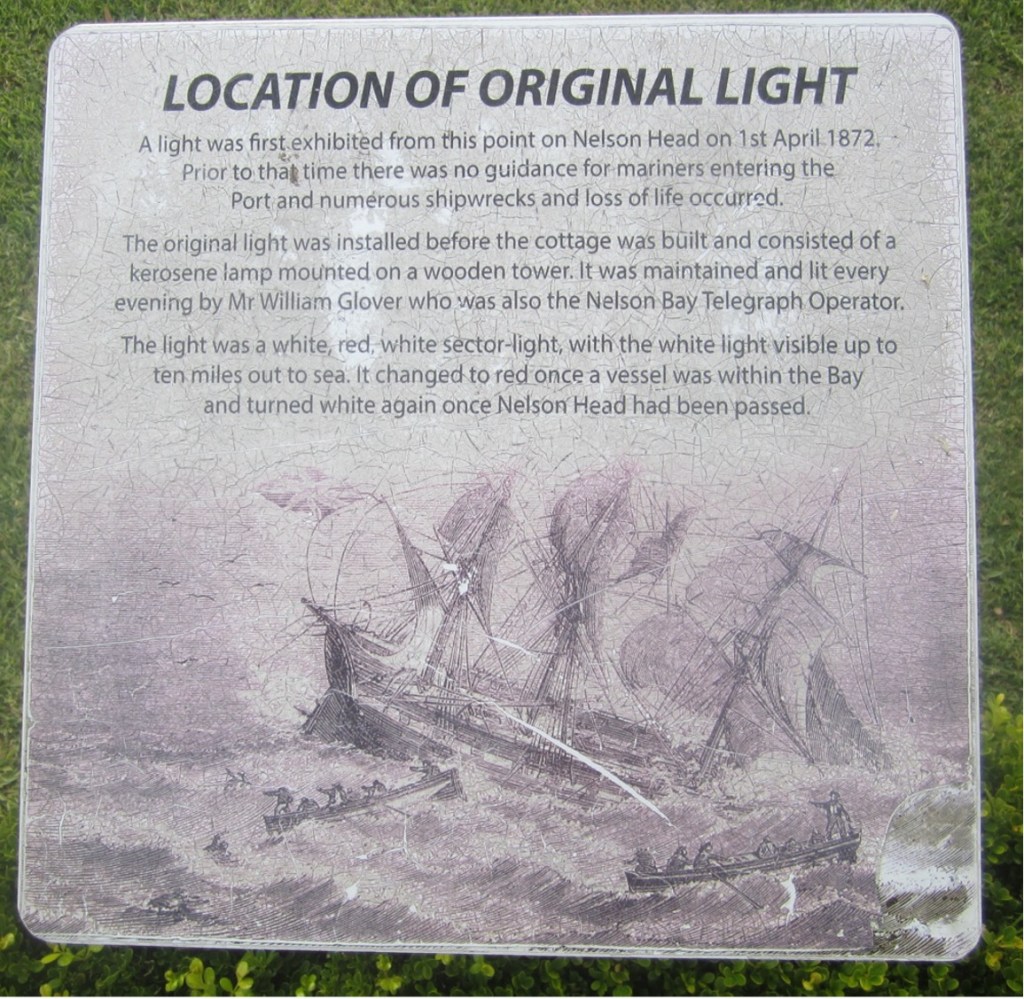
Sign adjacent to the Inner Lighthouse explaining details of the original light
Visit by the Marine Board notes hardship faced by the Light Keeper – 1874
The Evening News of 15 October 1874, page 4, reported on a visit by the Marine Board that inspected the two Port Stephens Lighthouses. With regard to its visit to the Inner Light it was states that:
‘The second station visited was the Port Stephens [outer] light, which was found in good order. From this they proceeded to the Nelson’s Bay [inner] lighthouse, which is a wooden structure, evidently intended for temporary purposes only, as the white ants which infest the building seem to think. It is contemplated, to erect a small lighthouse of brick, if Parliament vote the money next session.
With the exception of the advance made by the white ants, since the visit of the Board last year, no other change, has taken place; except, perhaps, the increased misery and discomfort of the lighthouse keeper and telegraphic operator stationed here (the latter being the wife of the keeper— a woman quite up to the duties of her office), arising from the wretched and uncomfortable state of the building they occupy on the swampy beach. When the proposed new brick lighthouse is commenced, it is to be hoped that something like decent accommodation will be provided for the officials.’
Construction of Keepers Cottage and Lamp Room – 1874 and 1876
The accommodation of the lighthouse keeper was greatly improved when a cottage was built in 1874 alongside the lighthouse.
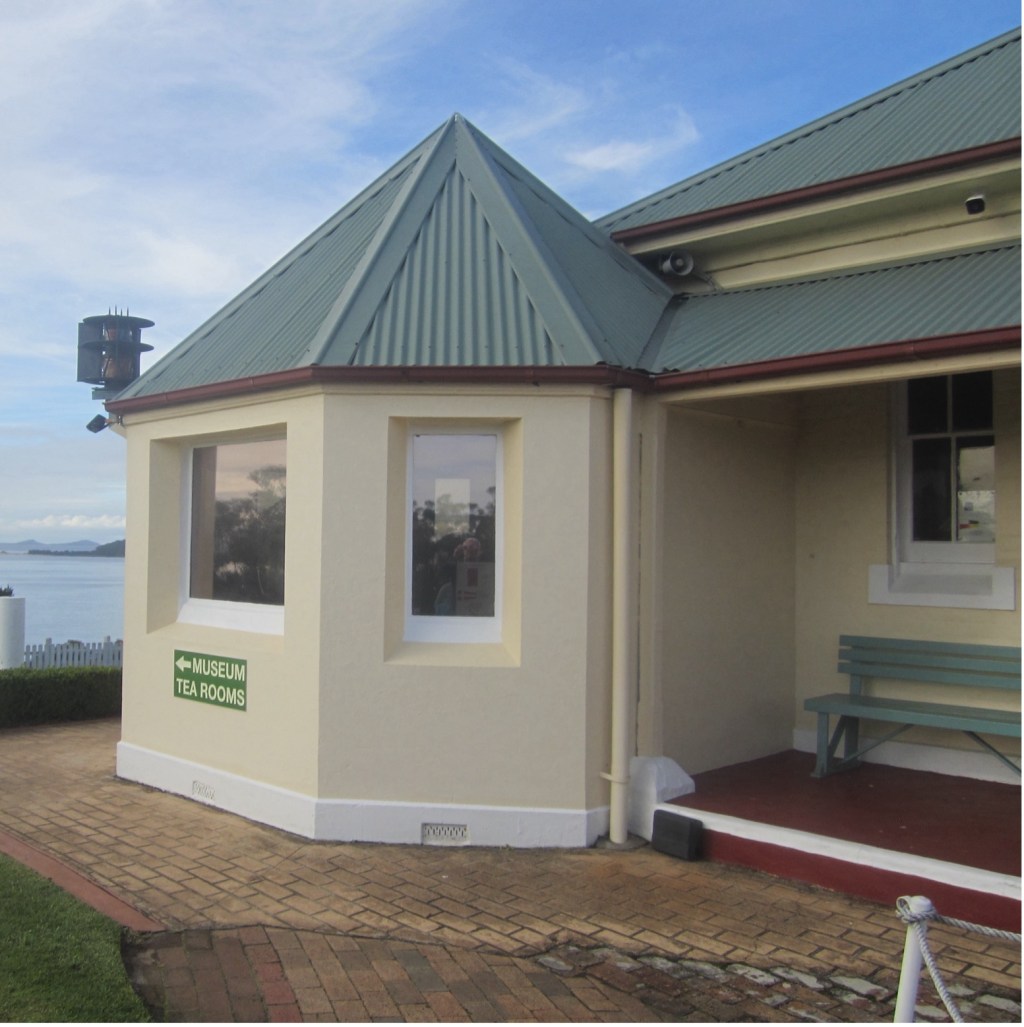
It consisted of three bedrooms, a lounge room, kitchen and laundry. The adjoining hexagonal lamp room was built in 1876.
The lighthouse faculty then comprises the keeper’s residence and lamp room which remain largely unaltered today. Over the years various refurbishments have been completed.
Death of Margaret Glover – 1878
The Sydney Mail and New South Wales Advertiser of 16 March 1878, page 345, reported:
‘January 2, at Nelson Head Lighthouse, Port Stephens, the dearly beloved wife of William Glover, aged 49 years, only daughter of James Dowe, and granddaughter to Colonel Apia. Mourned by all who knew her.’
Description of the Inner Light – 1878
The Australian Town and Country Journal of 9 November 1878, page 24, reported:
‘The inner lighthouse is on Nelson’s Head, on the south side of the harbour, and can be seen a distance of nine miles. It is a fixed light, showing red and white. The white is eclipsed on the entrance, and the red is visible within after the shoal is passed, and is again white when Nelson’s Head is passed. The lantern was first shown on April 1, 1872. Mr. Glover is the superintendent.’
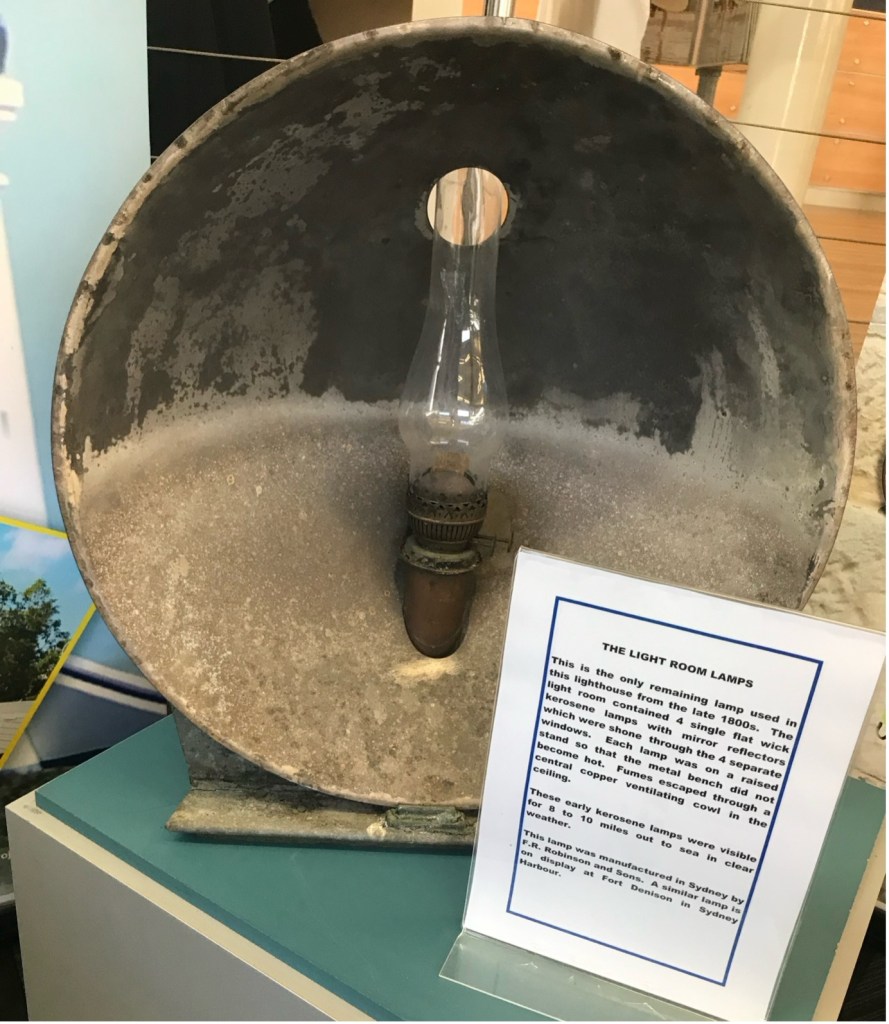
The only remaining lamp used in the lighthouse from the late 1800’s. [Author photo]
The accompanying sign reads:
“This is the only remaining lamp used in this lighthouse from the late 1800’s. The light room contains 4 single flat wick kerosene lamps with mirror reflectors which were shone through the 4 separate windows. Each lamp was on a raised stand so that the metal bench did not become hot. Fumes escaped through a central copper ventilating cowl in the ceiling. These early kerosene lamps were visible for 8 to 10 miles out to sea in clear weather. This lamp was manufactured in Sydney by F. R. Robinson and Sons. A similar lamp is on display at Fort Denison in Sydney Harbour”.
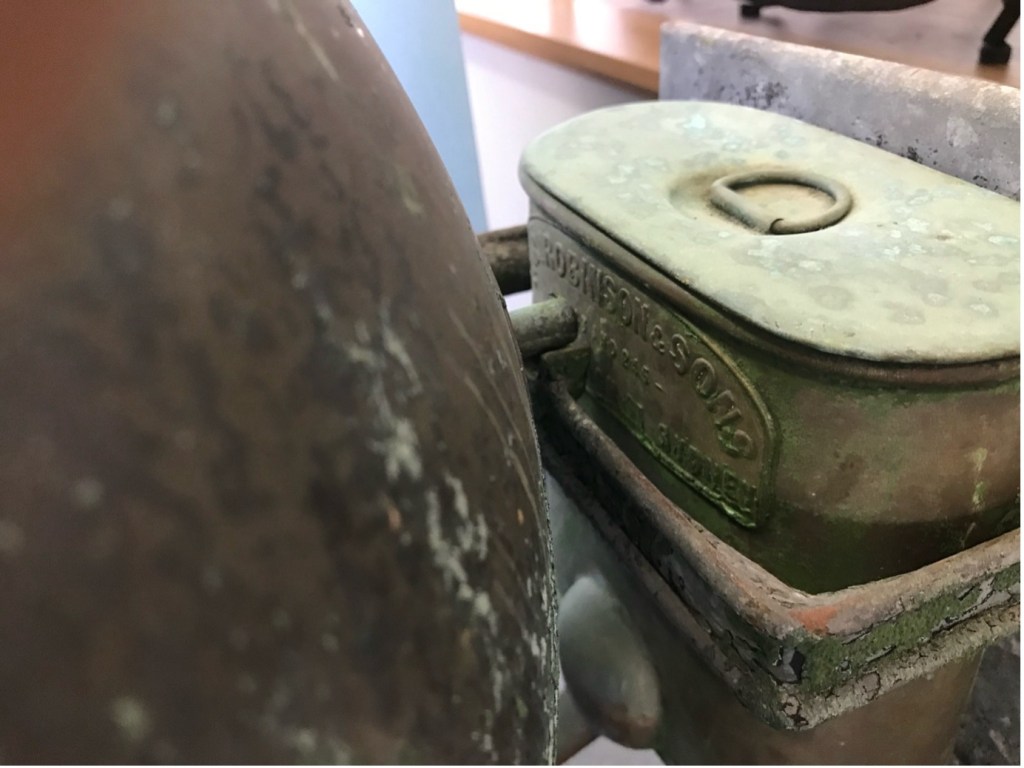
Rear of the lamp [Author photo]
Marriage at the Inner Lighthouse – 1889
The cottage, that was attached to the inner light room, was a place of residence for the light keeper, and was the venue for several weddings over the years.
The Newcastle Morning Herald and Miners’ Advocate of 2 September 1881, page 2, reported:
‘At the Lighthouse, Nelson’s Head, Port Stephens, on the 30th ultimo, by the Rev. William Bain, of Newcastle, Walter [Henry], son of Mr. William Glover, lighthouse-keeper, to Sarah, daughter of the late Thomas Alfred Warland, of Newcastle.’
Funeral of the First Light Keeper William Glover – 1892
The Australian Town and Country Journal of 30 July 1892, page 17, reported:
‘The funeral of Mr. Glover, the late keeper of the lighthouse, took place yesterday, and was very largely attended. There was a strange coincidence in the death of Mr. Glover. He dropped dead within a few yards of the spot where his wife was killed some years ago by being thrown but of a cart. The old gentleman had not gone that road since until the day of his death.’
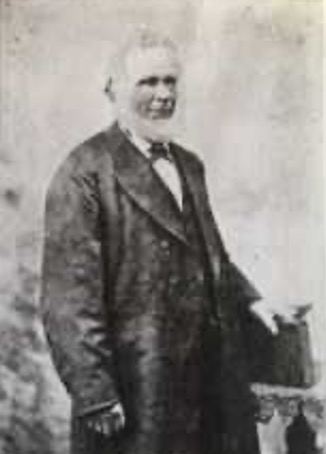
William Glover
Light Keeper seeks assistance for capsized vessel – 1893
The Newcastle Morning Herald and Miners’ Advocate of 21 October 1893, page 5, reported:
‘The ketch ‘Bound to Win’ on attempting to enter the Heads this evening capsized. There was a strong westerly gale blowing at the time, and the ‘Bound to Win’ was in light trim. After capsizing she floated bottom up. There was one man standing on her bottom with no clothing on and was waving his shirt to the lighthouse at Nelson’s Head for assistance.
During the lightkeeper’s absence from the lighthouse in search of a rescue party the ketch sank. One boat manned with Greeks went to the unfortunate man’s assistance. On the telegraph master hearing of the capsize he immediately wired to Laklee to have the steamer Thetis sent down to the man’s assistance. A lot of time was lost through the lighthouse-keeper having to come two miles and a half to inform the rescue party, there being no telegraph communication from the lighthouse to the telegraph office. The rescue boat has not returned yet.
[It was later reported] Government steamer Thetis has just returned from the wreck of the ketch ‘Bound to Win’. The crew picked up Captain James Mills. Three others are supposed to have been drowned.’
Wreck at Nelson Bay – 1898
On the 5 and 6 May 1898, a huge gale blew along the New South Wales coast and for a distance inland, which was of such intensity that it caused much destruction. iI t caused damage to ships at sea and resulted in at least 32 deaths. In addition, several ships that sought shelter in Port Stephens, found that the usually safe harbour, did not provide sufficient safety on this occasion.
The gale became known as the Maitland Gale and is still remembered for its ferocity.
The Newcastle Morning Herald and Miners’ Advocate of 9 May 1898, page 5, reported on the wrecks at Nelson’s Bay, including the actions of the inner light keeper, Mr. Lambourne:
‘…. For a time it looked as if the Coral would get clear and make Nelson’s Bay, but she got too close to the breakers, and dropped anchors. They held for a few hours, but on Friday night when the gale was at its worst they commenced to drag, and she went ashore near the Merlin. When the Merlin was nearing the breakers she began to fly signals for assistance. Mr. Lambourne, the lighthouse-keeper, dispatched a message to Mr. Noble, the postmaster, to send assistance. The postmaster asked the commander of the steamer Ethel, which was at anchor in the Bay, if he would go and help the Merlin. The captain agreed to do this, but before he reached the Merlin that vessel was ashore.”
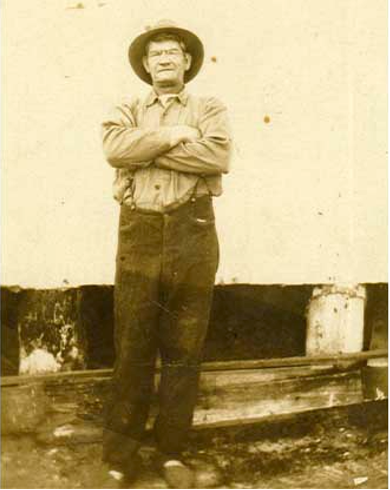
Henry Edward Lambourne
Death of Lillah Lambourne – 1898
The Newcastle Morning Herald and Miners’ Advocate of 7 June 1898, page 4, reported: of the death of Henry Lambourne’s wife who died at the lighthouse:
‘At her residence, Lighthouse, Nelson’s Head, on June 1st, Lillah,
beloved wife of H. E. Lambourne, and daughter of G. C. Priest, Light-keeper, Port Stephens, after a short and painful illness.’
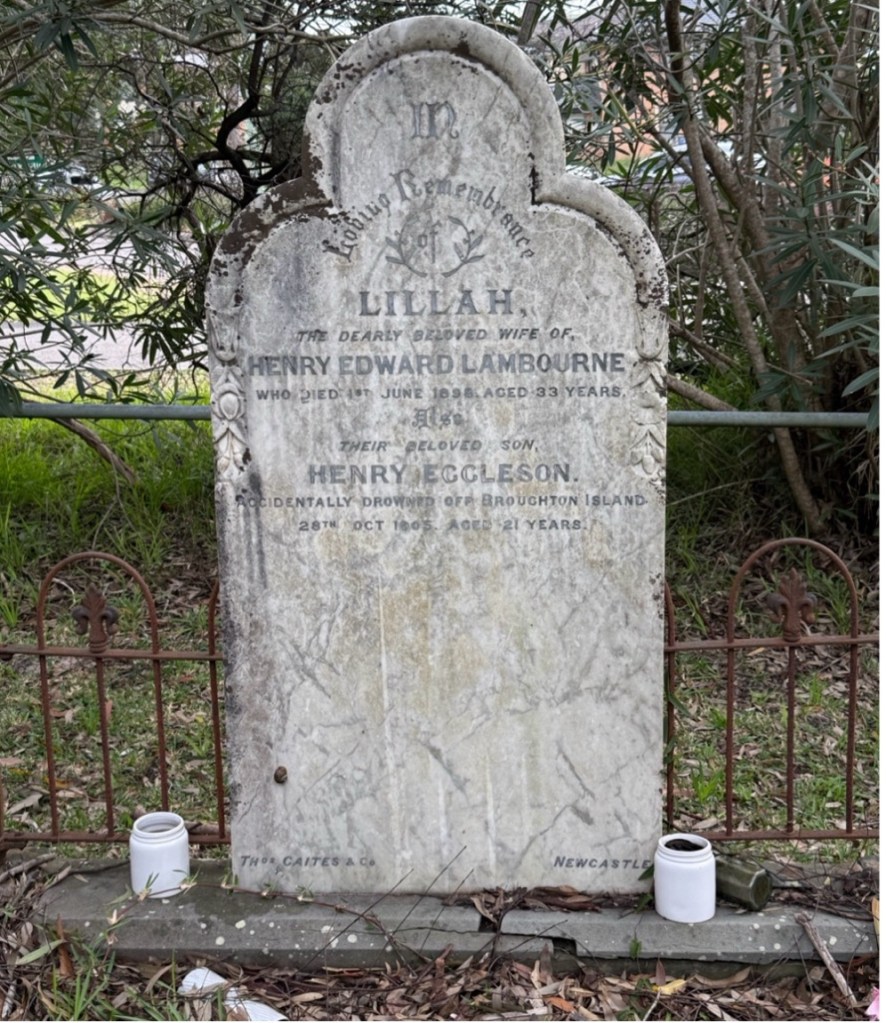
Gravestone of Lillah Lambourne at Nelson Bay Cemetery [Author photo]
Son of Light Keeper drowned – 1905
The Telegraph (Brisbane) of 31 October 1905, page 4, reported on the drowning death of Henry Lambourne’s son on 28 October 1905 near Broughton Island, aged 21 years:
‘A boat containing Mr. Lambourne, son of the lighthouse keeper at Nelson’s Bay, and Mr. Marshall is missing. The men set out for Port Stephens for Broughton Island, and have not since been heard of. Inquiries were made yesterday by officers of the department on board steamers in the vicinity at the time, but there are no traces of the missing boat or its occupants.’
Light Keepers’ observations on fishing – 1909
The Sydney Morning Herald of 13 October 1909, page 14, reported:
‘Some of the men on lonely watch in the lighthouses of the coast have begun to show that they are taking more than a passing interest in the movements of fish in the ocean close to them. Their observations are likely to assume even greater value as they become better acquainted with the fishes of the coast, and when the fisheries are being systematically worked, as they must be in the course of a few years.
The following reports show that the idea of securing from these high-perched sentinels, records of fish movements was a good one: …… H. E. Lambourne, at Nelson Head (inner light), Port Stephens, reports bad weather; but when opportunity offered he noted small schools of large fish, and plenty of hard gut mullet making their way in from the sea.
D. Gow, at Point Stephens (outer light), noted immense quantities of gar, tailer, king fish, anchovy, and mackerel, and all the week saw many whales heading northward. Mutton birds and other birds were after the gar shoals and anchovies, and porpoises were actively engaged amongst these and other shoals. On the beach plenty of black bream and black fish were observed.’
of black bream and black fish were observed.’
Decentralisation Commission Evidence – 1911
Prior to the First World War, there was much dissatisfaction in country regions of New South Wales with the concentration of economic activity on Sydney. Many organisations were formed by concerned citizens throughout the state to lobby for a greater distribution of economic activity. The main concern was that all rail lines led to Sydney. To examine the issue, the New South Wales Government established a Royal Commission on the decentralisation of railways.
The Daily Telegraph of 20 April 1911, page 9, reported on the evidence given by Mr. Henry Lambourne, keeper of the inner lighthouse:
‘Further evidence relating to Port Stephens was taken yesterday afternoon in the Public Works Department by the Royal Commission on Railway Decentralisation. Mr. H. C. Lambourne, lighthouse-keeper at Nelson’s Head, Port Stephens, said the only difficulty as far as he knew of entering Port Stephens was the bar which at times was rather shallow. Yet he thought it could be satisfactorily dredged.
The entrance was about half a mile of deep water in width and there was sufficient depth in the entrance to enable vessels drawing from 25 to 30 feet of water to make the harbor. During his residence there, there had been seven or eight mishaps to vessels, but none of these mishaps could be attributed to the entrance. A current which rushed from Nelson’s Bay to North Head would probably effect big, long vessels, for on arrival a vessel would catch the tide on her bows. But this could be avoided by steering on the north side or the channel.
He thought that big steamers and sailing vessels would have to be assisted by a tug in entering, but this would minimise the danger of the current by keeping their head on to the rush of water. On one occasion a big steamer had entered while a strong north-easter was blowing, and a heavy sea running. A large sailer of 8000 tons had also crossed in. Several sailers had gone ashore in the channel, but that was under exceptional circumstances.’
Lighthouse observations by Marine Board – 1911
The Sun of 15 September 1911, page 4, reported on various observations by Marine Board members during lighthouse inspections. With regard to the inner light at Nelson Head the newspaper noted:
‘Old Mr. Lambourne, at Nelson’s Head, tells how one of his motherless daughters does a lot of the painting about the place, and the young girl herself admits having painted the signal mast up as high as the yardarms— her brother, she explains will have to do the top mast and the yards.’
Location of Wreck – 1912
The Newcastle Morning Herald and Miners’ Advocate of 14 October 1911, page 5, reported:
‘Yesterday, Captain Cumming, Deputy Superintendent of Navigation, received a message from Mr. Lambourne, lighthouse-keeper at Nelson’s Head, that the wreck occurred on Big Island. Captain Cumming wired back, asking for the correct name of the island, as there was some doubt as to the actual scene of the wreck. To that message he received a reply that Big Island was the local name for Boondelbah Island. The latter bears east by south 1¼ mile from Yacaaba, and north-north-east 2¾ miles from Point Stephens light.’
Narrow escape for the ketch Premier – 1912
The Evening News of 16 July 1912, page 7, reported:
‘The ketch Premier narrowly escaped becoming a wreck this morning at the [Port Stephens] Heads. The vessel had been anchored at Shoal Bay for several days, and on Sunday tried to make Nelson’s Bay; but had her sails blown away; and, dragging her anchors, drifted dangerously near the Middle Bank at Port Stephens Head, where she lay till about 1 o’clock this morning, when the sea became so heavy that she flew signals of distress.
The steamers Ballangarra and Macqaurie went to her assistance. The former succeeded in getting a line aboard and brought her safely into Nelson’s Bay. There were six men aboard. The steamers Ballangarra, Macquarie and Tuncurry, have been anchored here since Sunday, and there is little chance of their getting away for a few days yet, as the light-keeper at Nelson’s Head states it is the biggest sea he has seen at the Heads during his long term there.’

Visitors in the grounds of the Inner Lighthouse, with the Tomaree Head in the background – 1916. [University of Newcastle Library – Living Histories Collection]
Light Keeper hears shouts for assistance – 1920
The Raymond Terrace Examiner and Lower Hunter and Port Stephens Advertiser of 15 October 1920, page 3, reported:
‘Two young men, recent arrivals at Port Stephens, had a narrow escape from being carried out to sea, on Friday night last. They were coming from Salt Ash to Nelson’s Bay when the engine failed, and getting into the current, the launch was drifting out to sea The shouts for assistance were heard by the relieving lighthouse keeper, Mr Taylor. A launch was sent and succeeded in towing the disabled launch into Nelson’s Bay about 1 a. m. on Saturday morning.’
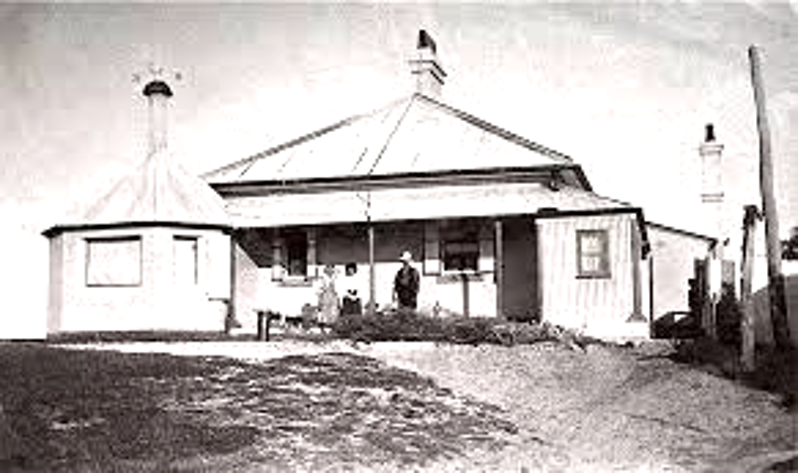
Inner Lighthouse and keeper’s cottage – 1920
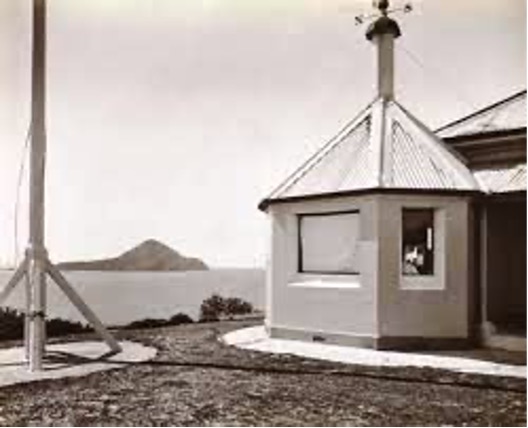
Inner Lghthouse with the lower part of the signal mast that was erected in January 1920 shown on the left of the photo. An air vent for the oil lamps in the light room is situated at the apex of the roof.
Staff changes at Lighthouse – 1924
The Newcastle Morning Herald and Miners’ Advocate of 16 July 1924, page 5, reported:
‘Changes are being made in the light-house service at Nelson’s Head and Port Stephens. Mr. J. [Joseph] Leddra, of the inner light at Nelson’s Head, after thirty-seven years’ service as lighthouse keeper, and ten years at Nelson’s Bay, has left on three months’ leave, prior to retirement on pension. Prior to leaving, Mr. and Mrs. Leddra’s friends tendered them a social evening at the All Saints’ Memorial Hall. Rev. D. May and Mr. W. Thompson spoke of the energy and work done by Mrs. Leddra in helping the Red Cross during the war, and in raising funds for the erection of the present newly-built Church of England Hall. Mr. and Mrs. Leddra intend living in Sydney. Mr. A. Macintosh, of the Newcastle Pilot Station, is acting in charge pending the appointment of a new keeper.’
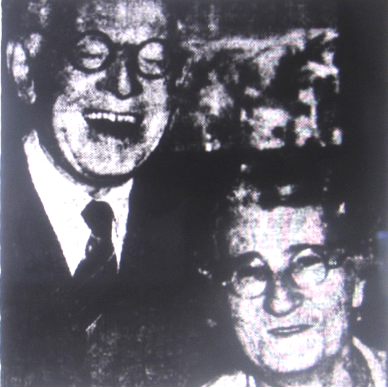
Mr. Joseph Leddra, well known in the Lighthouse service, and his wife celebrating their golden wedding anniversary. At the time they were resident at Annandale, Sydney [The Newcastle Sun, 7 October 1944]
Sea Scouts visit Lighthouse – 1933
The Dungog Chronicle of 3 November 1933, page 4, reported:
‘On Sunday, 29th October, the Port Stephens Sea’ Scouts, whose headquarters are at Tea Gardens, visited Nelson’s Bay, their objective being an inspection of the Nelson’s Head Lighthouse. On arrival about 11 a.m., the lads indulged in a swim and were much interested in the recent improvements to the waterfront which are certainly making Nelson’s Bay more attractive to visitors; when the reclamation of low areas, now filled, are grassed over ideal camping sites will be available.
After a picnic lunch in the park the Sea Scouts walked to Nelson’s Head light and were entertained by Mr. Brickle, who spared no effort in interesting the boys; much information of value to Sea Scouts was gained and it would appear a great pity that, with such an officer resident in the district, a local troop of Sea Scouts has not been started; why not some public spirited gentleman undertake this at once? and thus get the fine type of lads living at Nelson’s Bay together.
Before leaving Nelson’s Bay some of the lads representing each troop and pack of the group visited Mr. George Pepper, a well-known and highly respected resident of Nelson’s Bay, it being the lads desire to wish that gentleman many happy returns of his birthday; Mr. Pepper attained the age of ninety-one years on Wednesday the 1st November.’
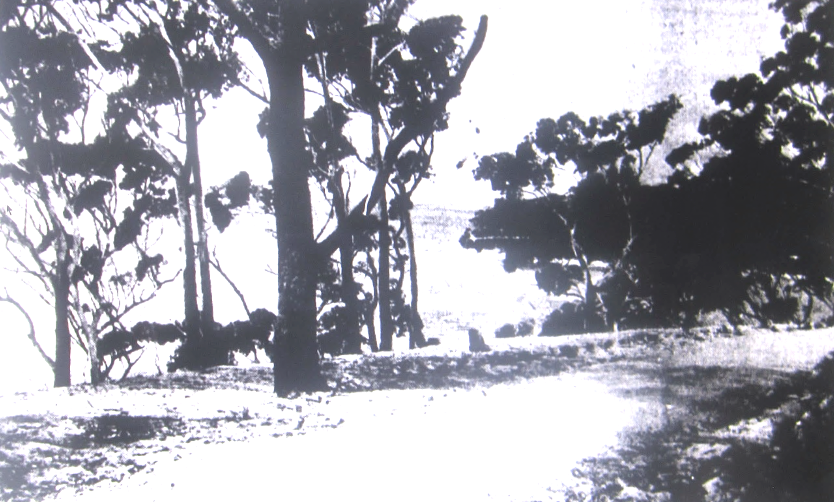
New road connecting the township of Nelson Bay with Little Beach and the Inner Lighthouse – circa 1936
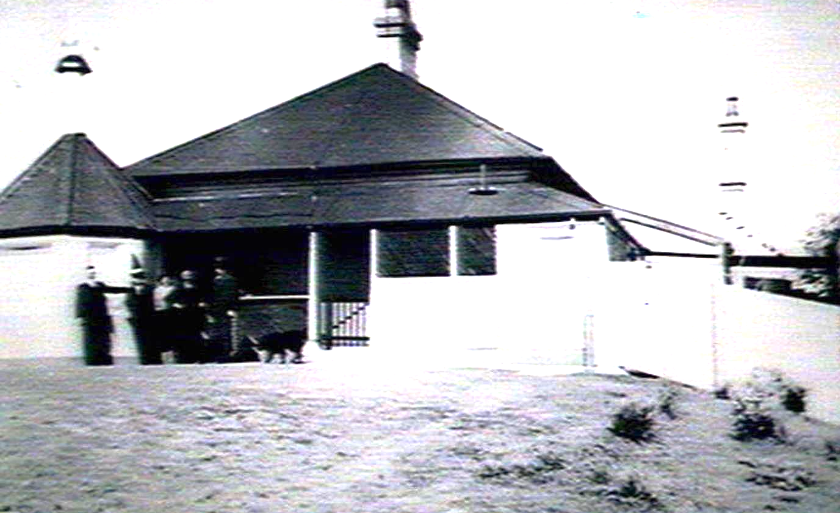
Inner Lighthouse and keeper’s cottage – 1937
Lighthouse Keeper’s fatal accident – 1938
The Raymond Terrace Examiner and Lower Hunter and Port Stephens Advertiser of 28 July 1938, page 3, reported:
‘Mr. George Brickel light keeper, at the inner light at Nelsons Bay met with a fatal accident on Tuesday afternoon. He was riding in a lorry coming down from Nelson’s Bay towards the lighthouse, and shortly before the lorry got to the lighthouse it struck a tree root, and he was thrown out striking his head against something and was apparently killed instantly. His skull was fractured.
The body was taken to Newcastle by the Ambulance. Deceased was married and leaves a widow and two children. The fatality caused much sorrow at Nelsons Bay, where he was greatly esteemed. Sergeant Shipway was notified of the accident and went to the scene as early as possible from Raymond Terrace.
The Dungog Chronicle of 29 July 1938, page 4, also reported:
‘George Brickel, 53, officer in charge for the Maritime Services Board of the inner lighthouse, Nelson’s Bay, was killed instantly on Tuesday afternoon when he fell out of a lorry about half a mile from the lighthouse. His skull was fractured. A door opened when the lorry went over the root of a tree, and Brickel was thrown out. He struck his head heavily. Newcastle Ambulance brought the body to the Newcastle morgue. The Harbour Master (Captain W. H. Roberts) has sent an officer from Newcastle to take charge.’
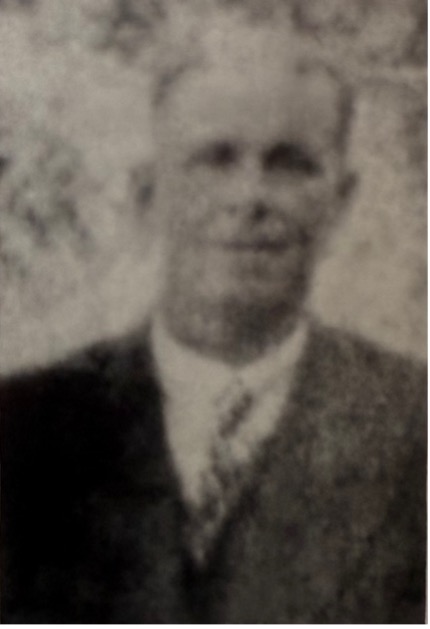
George Brickell
Lighthouse Precinct used as a Wartime Observation Area – 1940’s
During the Second World War the Lighthouse precinct was used by the military as an observation area to guard the harbour of Port Stephens. To this end, a cement Naval Control Observation Bunker was constructed below the lighthouse, facing the harbour. The bunker still exists. Much information on wartime activities in Port Stephens is published on this website and this link will take you to a portion of that material.
Construction of road leading up to the Lighthouse – 1945
The Raymond Terrace Examiner and Lower Hunter and Port Stephens Advertiser of 10 May 1945, page 4, reported:
‘Survey was made of the road offered to be constructed some time ago for the Works Department, leading up to the Inner Lighthouse, Port Stephens and estimate of cost of about £700 was submitted to the Department. Preliminary work has been started.’
The Raymond Terrace Examiner and Lower Hunter and Port Stephens Advertiser of 13 September 1945, page 1, further reported:
‘Inner Lighthouse Road: — This road has been completed and is to be surfaced with tar when the surface has consolidated. It is too steep to be rolled and may take some time to set down sufficiently to surface.’
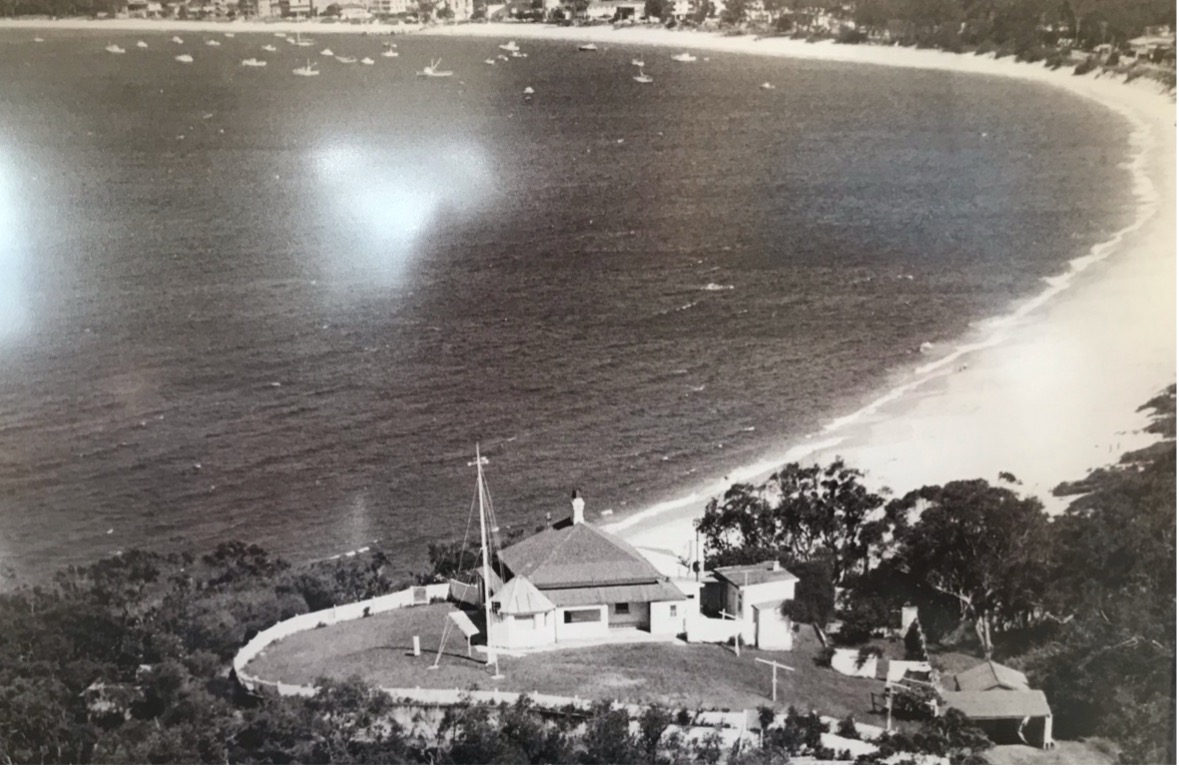
Aerial view of the Inner Lighthouse precinct with Shoal Bay in the background – circa 1960.
New plan for the Inner Lighthouse Precinct – 1985
With the retirement of its last lighthouse keeper, Jerry Jones, on 9 December 1984, the facility was decommissioned. The problem then arose of what to do with the surplus historic facility.
Nota [News of the Area] of 1 July 1985, page 19, reported:
‘Nelson Bay’s Inner Lighthouse is a tourist jewel that should include more than just a museum of local history, according to the Port Stephens Coastal Patrol. The patrol’s commander, Mr Peter Dawson, this week outlines an ambitious plan that could make the old building and Nelson Head a prime tourist attraction. Control of the 113-year-old lighthouse will soon pass from the Maritime Services Board to the Lands Department.
Mr Dawson supports plans by the Nelson Bay based Port Stephens Historical Society to establish a museum on the site but believes the idea should be taken further. “It can be more than just a museum,” he said. By improving access and car parking at the top of the head buses which come to the area could be encouraged to visit the residence and take in the magnificent view. There would be an excellent source of income with entrance fees to the museum. Income could also be boosted by serving Devonshire teas. As well, the residence and grounds could be used for functions such as weddings and promotional events. The flag masts could be restored and lit for ecumenical services at Easter and Christmas. Mr Dawson said up to $100,000 would be needed to restore the residence to its former glory.
Money would also be required for improving the road to the top and for car parking. His group believed the whole head should be declared a State Recreation Area and a management committee appointed. It should not be council-controlled. “The moment you get the council involved it becomes a drain on ratepayers,” he said. The committee would function much like the successful group managing the former hospital at Fly Point building which is now a cultural centre.
Mr Dawson said the coastal patrol had two interests in the future of the lighthouse. It ran its radio base from nearby and last month was appointed caretaker of the residence. This would cease once the lands department decided on its future. He said the patrol had discussed the matter with the historical society and would soon be putting its ideas to the department. Port Stephens Shire Council has also expressed interest in Nelson Head. At its last meeting it sought trusteeship of the site with a view to seeing what groups are interested in using the residence.’
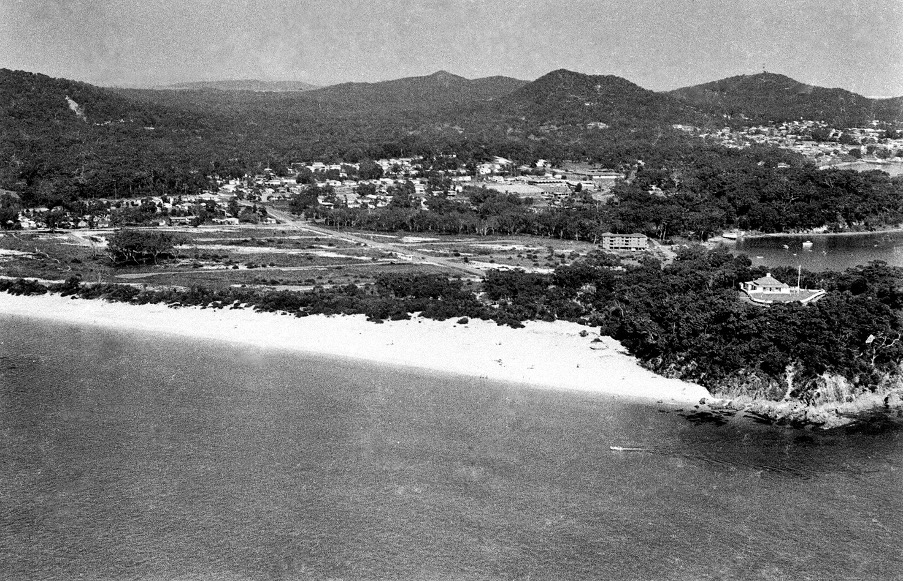
Aerial view of the Inner Lighthouse on Nelson Head (at right) with the Radburn housing estate awaiting development (at centre) – circa 1980
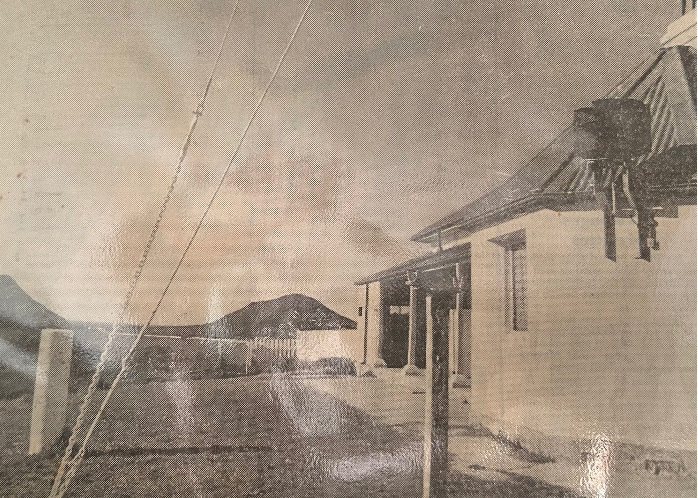
View from the Inner Lighthouse [The Newcastle Herald, 25 June 1985]
The Lightkeepers
The Lightkeepers of the Inner Lighthouse were:
William Glover: 1869 – 1892 (first resident lightkeeper)
Henry Edward Lambourne: 1892 – 1917
Joseph H. Leddra: 1917 – 1926
William Taylor: 1926 – 1931
Edward McIntosh: 1924 – 1931
George Brickell: 1931 – 1938
Alfred Radcliffe: 1939 – 1947
William Bedford: 1947 – 1955
John Edward Shields: 1955 – 1956
Henry Louis Jorgenson: 1956 – 1957
Jerry Jones: 1957 – 1984 (last resident lightkeeper)
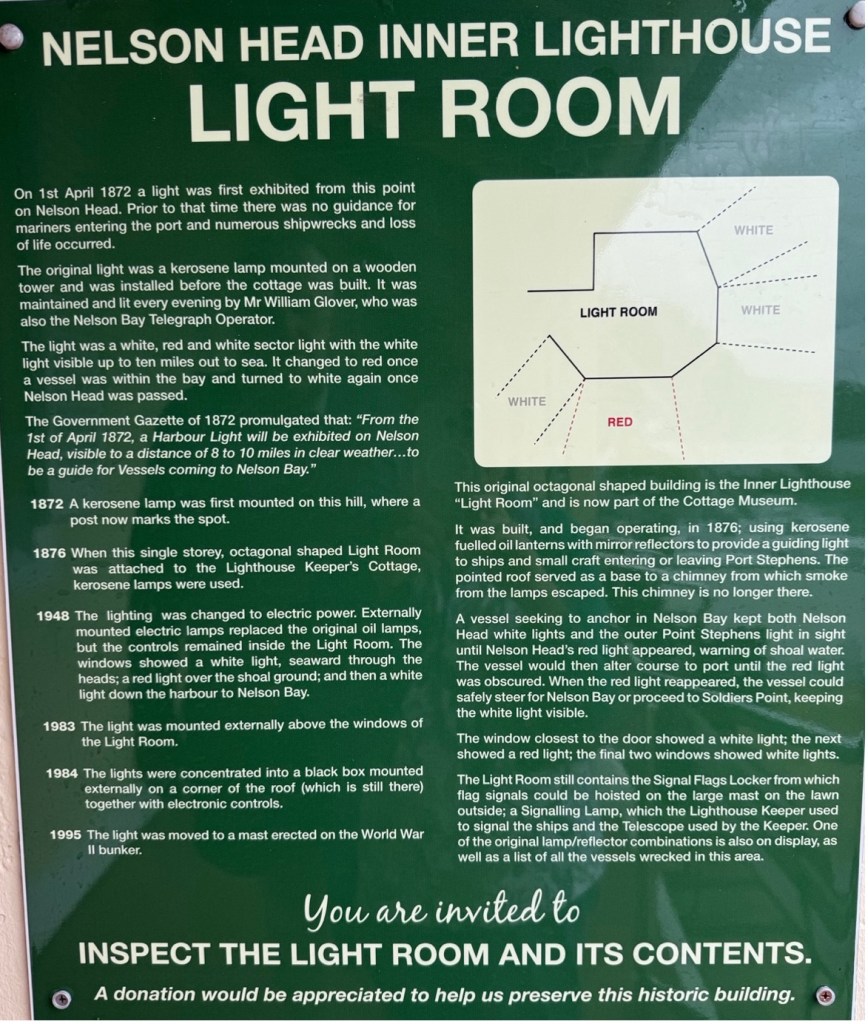
Sign attached to the Inner Lighthouse cottage that provides the history and functioning of the four lamps in the hexagonal Light Room [Author photo]
Future of Inner Lighthouse Precinct Settled – 1985
The Port Stephens Examiner of 16 October 1985 reported:
‘A trust is to be formed to manage and control Nelson Bay’s historic Inner Lighthouse. The Minister for Natural Resources, Mrs. Crosio, says in a letter to Newcastle M.L.A., Mr Wade, that the 113 year old light-tower and residence will not be sold. The historic site and buildings will become a reserve under the care and control of a trust of up to seven people.
Mrs. Crosio said she was prepared to accept nominations which might include representatives from the following groups:
– Royal Volunteer Coastal Patrol
– Port Stephens Historical Society
– Port Stephens Tourist Organisation
– Nelson Bay and District Chamber of Commerce
– Port Stephens Shire Council
– Local residents not directly involved with any organisation.
She said a proposal from the Port Stephens Historical Society to use the lighthouse as a museum would be shelved until the trust was formed. Mrs. Crosio’s announcement ends doubts about the future control of the building which was vacated by the Maritime Services Board earlier this year. Caretakers since then have been the coastal patrol which runs its radio base from Nelson Head.
Over the last few months, the idea of a community trust to restore the building and manage its use has been floated. Besides the museum ideas such as improving access so that visitors could take advantage of the spectacular view from the head have been suggested.’
The first Lighthouse Trust was appointed on 1 April 1986 and it was allocated a Bicentennial Authority grant. The Trust undertook initial rectification works on the cottage and lamp room.
Second Trust Inaugurated – 1990
In 1990, the State Government adopted the proposals outlined in a Management Plan and established a Trust, with funding, to oversee the future management of the site. Following the appointment of trust members restoration works were undertaken. This new Trust replaced the former one.
Following the completion of restoration works, the Minister for Conservation and Land Management performed a Commemoration Ceremony at the site on 7 October 1991 and unveiled a plaque.
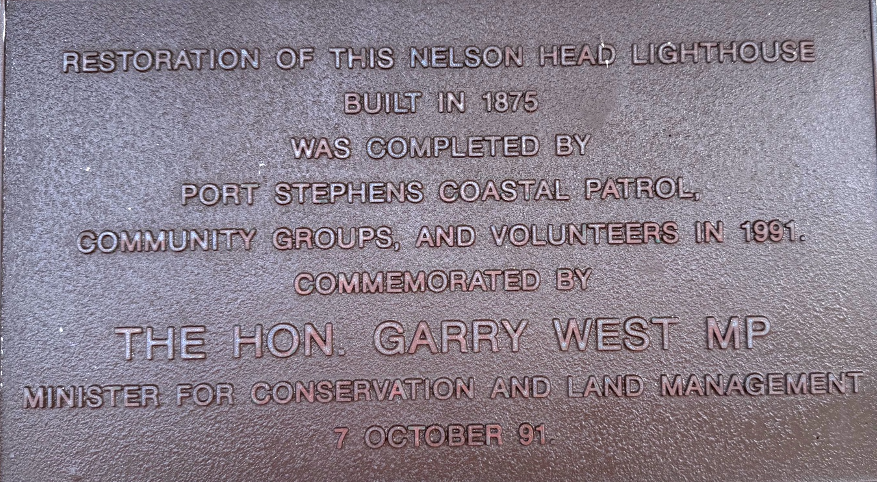
Plaque attached to the Inner Lighthouse cottage commemorating the restoration of the Inner Lighthouse in 1991 [Author photo]
Concluding Comments
The Inner Lighthouse precinct is currently one of the leading tourist attractions in the Nelson Bay area.
Facilities at the site consist of a museum, tearooms, and the operating base of Marine Rescue Port Stephens.

Current Entrance to the Inner Lighthouse precinct [Author photo – June 2025]
Researched and compiled by Kevin McGuinness
July 2025

 Port Stephens - a history exploration