
Introduction
The final military event held at the Salamander Bay Naval Base, nine months prior its closure, was in March 1922 when the Royal Australian Navy conducted its annual fleet sailing regatta in Port Stephens for the first time.
First Day of the Regatta
The Newcastle Sun of 18 March 1922, page 6, reported:
‘There is noble company in Port Stephens at present. Four units of the Royal Australian Navy — two cruisers and two destroyers— are berthed off the naval base in the harbor for the annual regatta. The main feature of the regatta yesterday was the service sailing race for the Victory Cup. The cup was retained by the Melbourne, with the Sydney gig second, the Anzac’s whaler third, and the Stalwart’s whaler fourth — a finish which had due respect to the order of seniority of the ships.
The vessels left Sydney on Wednesday morning and arrived off port at night. Manoeuvres were carried out along the coast. The destroyers, Anzac and Stalwart, entered port on Wednesday night and proceeded to moorings off the naval base, but the big ships remained outside the outer light till morning, and entered port early on Thursday.
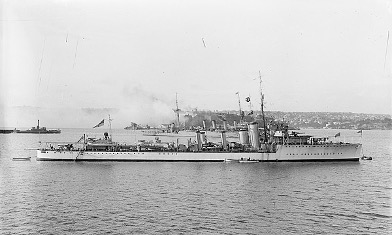
HMAS Anzac
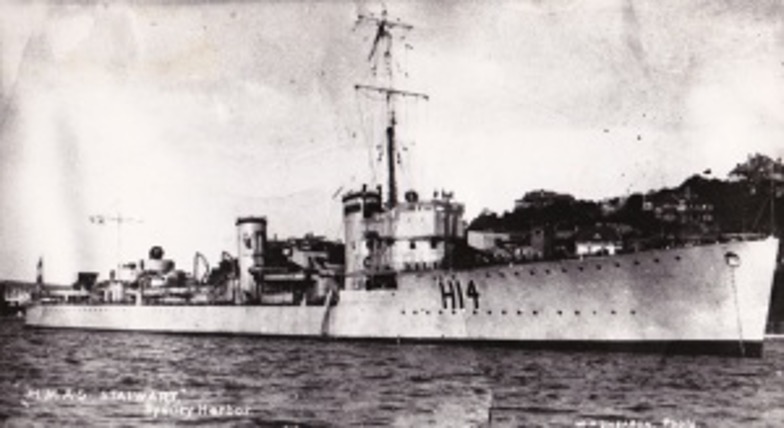
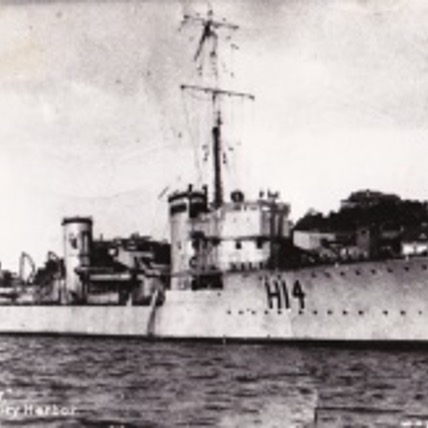
HMAS Stalwart
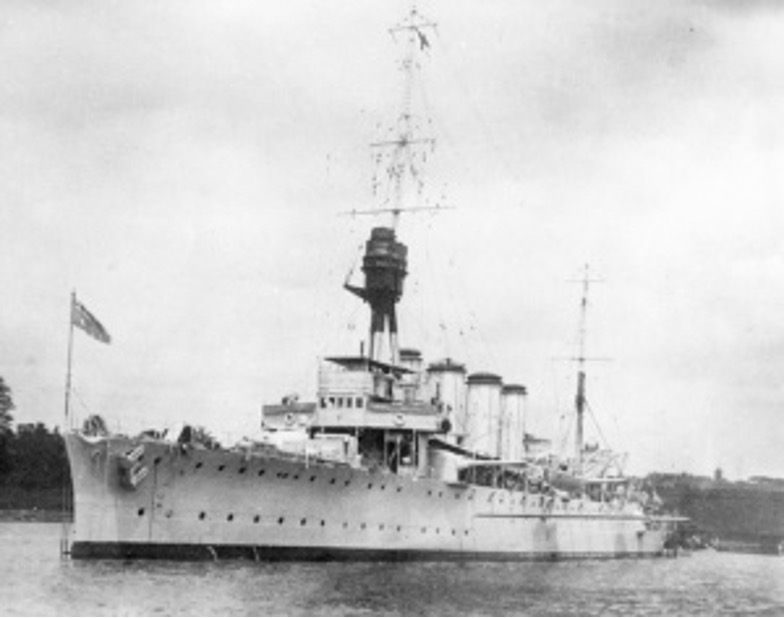
HMAS Melbourne
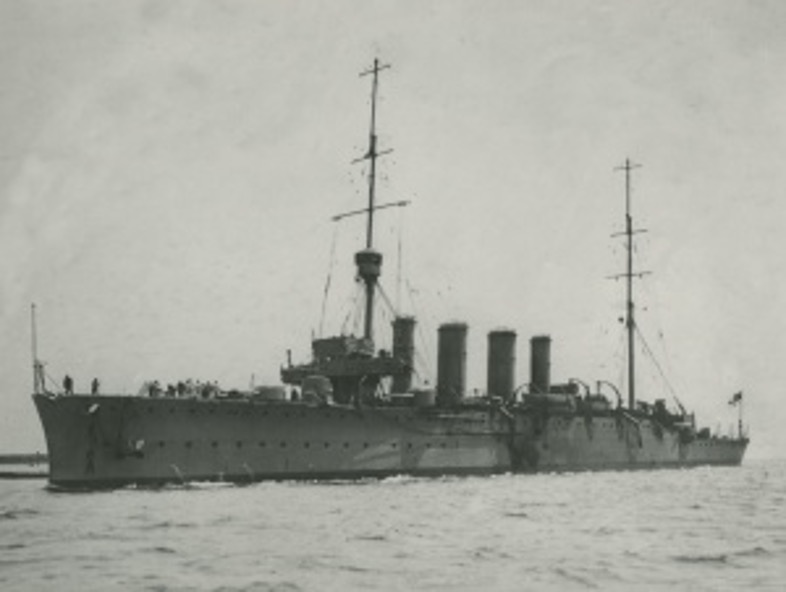
HMAS Sydney
The flagship Melbourne, flying the admiral’s flag, and the cruiser Sydney, made a magnificent sight entering the heads. The wild rocky headlands provided a majestic setting as the two rakish ironclads steamed in. On Thursday afternoon, the squadron, at anchor line in crescent formation off the naval base, made an impressive array, and as the little “Repone” nosed her way across the bay to Nelson’s Bay, the passengers were just in time to see the finish of the race from the starboard yard-arm. The township is in a flutter of excitement at the visit of the warships and the “regatta” is the central topic of conversation. Several events were decided yesterday, and the regatta will be finished on Monday.
The navy could not have chosen a place better suited for holding a regatta than Port Stephens, with its wide expanse of deep water and beautiful surroundings. It is rather a strange sight to see the grim-looking cruisers and destroyers in a broad bay edged with a rugged screen of trees and undergrowth. Here, of all places nature is supreme and untouched, and the line of “floating forts” seems strangely out of place.
Ideal weather has, up to the present, favoured the visit of the fleet, and great excitement is expected in the obstacle sailing race which is to be the “tit bit” of the programme. The squadron will leave Port Stephens on March 21 to return to Sydney for the annual aquatic carnival. On Wednesday afternoon a nine-mile service class race was held in the harbor, resulting as follows: —
Galleys: Melbourne. Barges: Sydney. Cutters: Melbourne’s second cutter. Whalers: Anzac’s 25-footer, 1; Anzac’s 27-footer, 2.
The regatta was continued yesterday when the service sailing handicap for the Victory Cup was decided. This trophy is a handsome cup, presented by the New South Wales Government to the fleet on the occasion of the peace celebrations on July 19, 1919, for annual competition among the men of the fleet in a sailing race for which certain conditions have been prescribed. It is stipulated that the cup should be competed for by service crews and under the rules for fleet regattas. Service rig only is permitted, and no one senior to a chief petty officer, petty officer, or leading seaman, is allowed to compete. The ship which wins the cup holds it for a year and has its name and the date of the race inscribed upon it.
The crew of the flagship Melbourne have always considered that they have “a mortgage” on the cup, and their sailing has justified this. Yesterday afternoon they gained possession of the cup for another year. Petty-Officer Hutchings, the captain’s coxswain, was again the winner, and he undoubtedly sailed his gig superbly under most unsatisfactory conditions. The day broke clear and cloudless, and the sun beat down mercilessly.
After lunch there were great preparations on board the cruisers and destroyers. The Melbourne’s crew was particularly busy, as seven of that vessel’s boats entered for the event. Across Salamander Bay, the Sydney’s men were also rigging their six boats in preparation for the start. The Stalwart’s whaler was the sole entrant from that ship, while the Anzac had two boats. Several classes of boats were represented — cutters, barges, gigs and whalers.
Sixteen boats competed in the handicap. The race was over a nine-mile course, comprising three laps, an area defined by buoys. The start was made between the Anzac and the Stalwart, which were at anchor off Wanda Wanda, a point adjoining the naval station.
The wind was most unsatisfactory, blowing in light puffs from the east-north-east. During the event the wind continued in this quarter, and at intervals the boats were becalmed absolutely. Nobody in the fleet took more interest in the race than Rear-Admiral Dumaresq, who, after an early lunch, spent half an hour rigging the flag-ship’s barge. When this was completed to his satisfaction, he remained on board until the barge went over to the starting point, and then returned to the flagship.
The Anzac’s whaler made full use of its start, and at the end of the first lap she was well ahead of the Stalwart’s whaler, which was running second, followed by the Anzac’s second whaler, the flagship’s gig, and the Sydney’s whaler and barge. The rest of the boats were strung out well astern.
Entering on the second round, the position of the leading boats was: — Anzac’s whaler … 1; Melbourne’s gig … 2; Stalwart’s whaler … 3; Sydney’s gig … 4; Sydney’s whaler … 5. The two last-mentioned boats were about half a mile apart. At 4.15 the Anzac’s whaler rounded the second last turn in the final lap, closely followed by the Melbourne’s gig. The latter quickly overhauled the leading boat after making the turn. The gig quickly established a fine lead. The Sydney’s gig passed the same turn 70 seconds later, when the Stalwart’s whaler was about half a mile behind. Probably the race would have finished in this order had not the Anzac’s entry made an awkward turn, at the last buoy. The whaler made too much leeway and was smartly passed by the Sydney’s gig. A Verey light sped skywards with a loud report as the captain’s coxswain steered his gig round the bows of the Anzac, at 5.35, followed by the Sydney’s gig and the Anzac’s whaler. The Stalwart’s entry finished a bad fourth.
A unique feature of the finish was that the four placed boats represented each of the four vessels in the fleet, and they came in in the order of seniority of their ships. Several of the boats did not complete the race, owing to the unsatisfactory state of the wind. The handicap was sailed in slow time and was devoid of excitement. The wind was decidedly bad for the event. The scene during the afternoon was most picturesque. The boats, with their white-clad crews and spread of white canvas, made a huge moving circle around the four grim “sleuths of the deep.” From the funnels of the cruisers, black clouds of smoke belched out at intervals, and the muffled sound of machinery was borne across the bay on the light breeze.
The water was beautifully smooth and clear, and flecked with white here and there, with what schoolboys call “Jelly-fish.” Several private launches and fishing boats passed the ironclads, and their occupants waved a smiling welcome to the white-clad officers on the quarter-decks. Launches and pinnaces glided through the water from ship to ship, and a number of spectators watched the race from the wharf at the naval base, filling in the intervals with an occasional swim on the edge of the bay, with a contempt for sharks which Coogee people would envy. A native assured the writer that the sharks around the wharf were never bigger than four feet long, and “it is quite safe to bathe off the wharf,” he added.
On the quarter-deck of the flagship a tiny kitten was the subject of considerable attention. The officers are not quite sure where the cat came from, but it has become quite a pet aft, and looks upon the quarter-deck as its private promenade. After teasing the tiny animal with a piece of paper, one of the officers opened the breech of a big six-inch gun and put it in, after having had the tompkin removed from the gun. The kitten refused to “go through the tunnel,” and “meowed” piteously until it was placed on the dock again. Returning to Nelson’s Bay in the admiral’s barge, a fine view was obtained of the fleet. In the fast-gathering duck the hills surrounding the harbor appeared to rise out of the dark shore through a veil of fine mist. The trees in Salamander Bay made a continuous black line, rimmed with a faint white streak of sand on the water’s edge. The Melbourne’s Morse lamp on the signal bridge below the forward control tower blinked a message across to the Sydney at high speed.
The cruisers made a fine silhouette at their moorings. There was a jet black haze of smoke from the funnels, but the masts and guns showed out with almost eerie clearness. The multi-wired aerials with the mast rig-gings were like black lines drawn across of dull grey edged with a roseate glow from the sun.
To-morrow a number of the sailors will be entertained at Tea Gardens. On Monday, various exercises will be carried out on board the vessels. In the afternoon a sailing obstacle race will be held. On Wednesday the annual race for the Patey Cup will be held in Port Jackson. This trophy was presented to the navy on January 17, 1911, by Rear-Admiral Sir G. E. Patey, K.C.V.O. The annual aquatic sports will also be held in Sydney next week. To a land-lubber, particularly a pressman there is nothing more interesting on board the vessels in the fleet than the dally press message which is made available for each officer and for the men. The general news of the world is condensed into a few short snappy wirelessed to the fleet, wherever the vessels happen to be. On board the warships the news is received and typed, and the foolscap sheets which are issued are really the “tabloid” newspapers of the fleet.’
Concluding Day of the Regatta
The Newcastle Sun of 22 March 1922, page 3, reported on the concluding day of the naval regatta:
‘Brilliant summer sunshine and a light southerly breeze favoured the concluding day of the navy’s annual regatta, at Port Stephens. In the morning the evolution of letting go the sheet anchors and weighing them by hand was gone through.
On the flagship a 75 cwt. sheet anchor was lowered under a 34-feet cutter, the weight being supported on a strongback. The evolution is designed to train the men in getting out the anchor in the event of the ship running aground, so that she could be refloated. It is maintained that if exercises of this kind were practised by vessels in the mercantile marine, it would be possible to refloat a grounded vessel much more quickly than is usual at present.
In the afternoon, the whalers and cutters turned out for the annual fleet obstacle race. A course was laid in Salamander Bay and marked with buoys. Seven whalers with full service crews anchored off Wanda Wanda Point, and at the firing of a Verey’s pistol, the sails were hoisted, anchors shipped, and the race commenced. Petty Officer Hutchings, coxswain of the Melbourne’s whaler, got his craft away in a businesslike manner, and, with a light southerly abeam, quickly crossed the intervening distance to the channel beacon, followed, about 100 yards astern, by the Anzac’s boat. Then, in quick succession, there followed the Stalwart’s entry, the Anzac’s sccond boat, the Sydney’s boat, and the flagship’s second whaler.
The Sydney’s second whaler made sail, and paid off on the wrong tack, but when the course had been righted, she entered the race. After reaching the beacon the crews shipped the masts and sails, put out the oars, and rowed to the third mark. It was interesting to witness the thoroughly efficient manner in which the sails were exchanged for oars without losing any time. The first change in the method of propulsion was the occasion of some amusement. In one of the whalers the crew showed such zeal and precipitancy in getting down the masts that one of the men was hit over the head. It was a fine sight to see the tars bending to the oars. They pulled together magnificently, with a long measured sweep, and the coxswains set the time and urged on their men excitedly. The admiral’s barge cruised around the turning points, with Rear-Admiral Dumaresq in the stern sheets, an interested spectator of the race. A steam cutter nosed inquiringly around with some of the flagship’s officers on board.
The field spread out quickly, and when the boats reached the third turn, and the oars were shipped and the sails hoisted, the Melbourne’s boat had its long lead slightly reduced by the Anzac’s first whaler. The four succeeding boats were becalmed simultaneously at this turn, for several minutes, while the sails were being hoisted. The placings at the third turn were: Melbourne’s 1st … 1; Anzac’s first … 2; Stalwart … 3; Anzac’s second … 4; Sydney’s first … 5; Melbourne’s second … 6. The Sydney’s first whaler made too much leeway on the second turn and dropped out and sailed over to the finishing point to witness the final spurt. The other entry from the cruiser also dropped out at the final turn. The finish took place between the two destroyers anchored off the naval base. The race resulted: — Melbourne’s first … I; Anzac’s first … 2; Stalwart … 3; Anzac’s second … 4. The flagship’s crack crew won by about 20 lengths. The arrangement of the race is distinctly novel. The boats start from anchor, and hoist their sails and cover the first half-mile under sail. The second half-mile is covered with the oars in place of the sails. The final mile is covered in a similar manner. The idea is to make sailing more attractive for the men and inculcate a spirit of healthy rivalry.
The obstacle race for cutters was run under similar conditions. There were three entries, two from the Sydney and one from the flagship. They left their moorings well together, and the rakish sails made a striking vignette against the background, of hills and the sun-kissed waters of the bay. The order in which the first mark was passed was: Sydney, Melbourne, and Sydney. At the second turn the flagship’s men got out their sails in quick time and passed the leading cutter. The manner in which the crew of the Melbourne’s boat got down their sails and masts at the third point was a striking tribute to their efficiency. The masts were unshipped in a trice and were lowered on to the thwarts simultaneously. The oars came out with clockwork precision and were soon propelling the cutter on the final lap. If there was a fault in the manner in which the turn was negotiated, it was that the coxswain gave his boat a little too much leeward.
One of the Sydney’s entries dropped out at the turn and sailed to the finishing point. The Melbournes’ cutter won comfortably, the Sydney’s boat being second. Although, nominally, the distance is supposed to be two miles, the race was over a considerably longer course, because the buoys were arranged in such a manner as to give the boats a good sailing wind.
At night, Rear-Admiral Dumaresq was the guest of the wardroom officers of the flagship at a farewell dinner, which was followed by a movie entertainment on the quarter deck. Seven of the officers of the Melbourne will return to England shortly. Shortly before six o’clock on Tuesday morning the two destroyers slipped their moorings, and, enveiled in their own smoke, crept out of Salamander Bay and down the channel to the entrance. A few minutes later, belching out huge clouds of black smoke, the flagship rounded Corlette Head and slid across the smooth waters of the harbor towards the heads. In her wake followed the Sydney. The departure of the fleet was witnessed with interest by the residents of Nelson’s Bay, and the sight was well worth rising early to see. The bay shone like a Glimmerglass in the rays of the rising sun, and the soft emerald of the trees and shrubs began to grow more vivid with the stronger light. The destroyers went through their full speed trials on the trip south, and the fleet arrived in Port Jackson yesterday afternoon, in time for their men to compete in the various events at the annual aquatic carnival.’
The Daily Telegraph of 22 March 1922, page 13, reported on the Fleet Aquatics at Sydney:
‘The ships of the Royal Australian Navy, which have been exercising at Port Stephens and carrying out the series of races which constitute the annual fleet sailing regatta, returned to Sydney yesterday.
This afternoon the fleet swimming championships and aquatic sports will be held at the Domain Baths. The programme will consist of the usual swimming diving, greasy pole, and musical lifebuoy events, while two intership contests— water polo and a relay race— will be decided. Preliminary matches in these were held at the Garden Island Baths yesterday, and the final will be contested today. The flagship’s military band will be in attendance, and the first event will commence at 2 o’clock.
Concluding Comments
Further information on A Port Stephens Navy Base is found at this link on the website.
Researched and compiled by Kevin McGuinness
June 2025

 Port Stephens - a history exploration