
Introduction
In 1942, the Gan Gan military camp was built as an amphibious training centre by the United States military at Port Stephens. It was part of the Joint Overseas Operational Training School (JOOTS) facility established in conjunction with HMAS Assault, to train both Australian and American troops in land/sea warfare.
Following the withdrawal of the United States military from the Port Stephens area after the War, the Gan Gan site was maintained by the Australian Army and used extensively in the post war period as a training facility.
Regular Army, National Service personnel and the Citizen Military Forces (C.M.F) were among the groups that held training camps at the site.
It was also available to other groups, such as school cadets and university students, for training exercises.
Seven papers of the Gan Gan post-war history are published on this website.
This paper is the story of the first training camp for women in the CMF held at Gan Gan in April 1954.
Links to the other six papers are found at the end of this document.
First Army Camp for 230 Women of the Citizen Military Forces (C.M.F.) – April 1954
The C.F.M. members of the Women’s Royal Australian Army Corps went into camp at Gan Gan from 24 April, 1954 to May 7, 1954.
The Sydney Morning Herald of 24 April 1954, page 6, reported:
‘The first batch of C.M.F. members of the Women’s Royal Australian Army Corps will go into camp over the weekend. The women’s camp will coincide with the largest camp of Army personnel since the war which starts at Singleton today.
An Army spokesman said yesterday that 230 women would go into camp at Gan Gan, about 30 miles north of Newcastle, on Port Stephens. The women come from Sydney and include secretaries, shopgirls, clerks, and typists. Their ages range from l8 to 30. The spokesman said they will live under the same conditions as the men.’
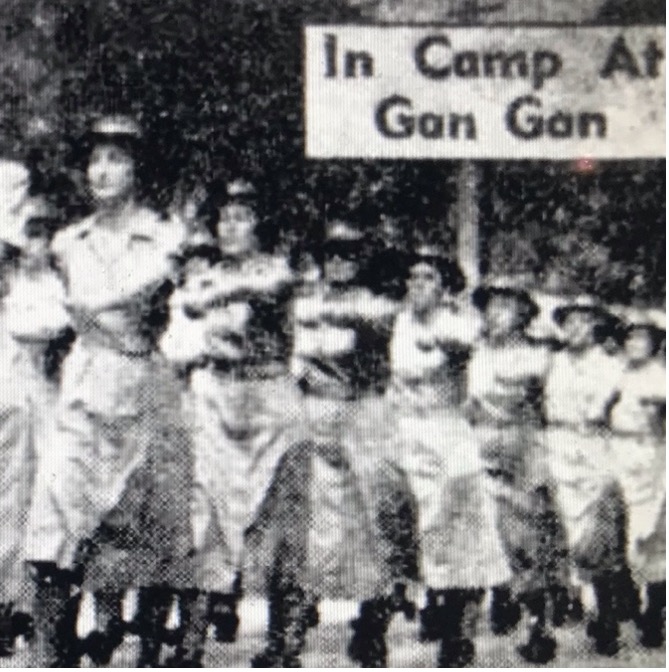
The camp attracted much interest and was reported in several newspapers that published a range of photos which give an idea of the camp life experienced by the women [the girls], however the reporting tended to be of a trivial nature, when compared to reporting on the male camps.
Camp Life as Portrayed by Newspapers
The Sun of 27 April 1954, page 29, reported:
‘Many army girls in camp here [at Gan Gan] say that increasing weight is already proving an outsize problem. The girls are CMF.
Getting up at 6.30 am and doing fatigue duties before breakfast makes for a healthy appetite and many of the girls admit they have put on a pound in weight since coming to camp at the weekend. Gan Gan Camp was built by American forces during the war. It is enclosed on three sides by heavily timbered hills.
The girls spend a great deal of time out of doors and city girls say that the country air is also appetite-making. One girl who has fought the battle of excess poundage is Pte. Rae Erasmus who was a member of the AWAS during the war. “I put on two and a half stone in six months during the war but I was so thin then I didn’t care what I ate,” Rae said. “Because I’ve had experience with army food I don’t eat cereals, soup or desert now,” she added. Another member of the AWAS, Pte. “Paddy” Flood, of Fivedock, said she was dieting before she came to camp. “I’ve forgotten about it now because I’m always hungry in camp,” she said.
Pte. Margaret White-side, 20, of Lakemba, doesn’t worry about putting on weight. “I’m one girl who eats anything because I’d like to put on a few pounds,” she said. But it is a compulsory diet for Pte. Val Cartwright, who broke her upper denture. “I can’t have it replaced until I go to Newcastle tomorrow, so I can’t eat anything substantial,” she said this morning. The girls agree that army life is wonderful regardless of last night’s heavy rainfall, mud and mosquitoes.’
The Sun of 28 April 1954, page 41, reported:
‘Even “tear jerker” duty can be fun for rookies at the CMF WRAAC camp here [at Gan Gan]. At home they might rebel at having to peel onions, but in camp they do this chore willingly. With eyes streaming tears, Privates Anne Gidney, of Penshurst, and Pam Houston, of Gordon, exchanged camp gossip over a mountain of onions. “We don’t mind peeling them, because we like eating baked onions. Maybe we’ll peel potatoes or beans tomorrow,” Anne said. Happily singing I’m Twenty-One Today, Private Paule Salvic, of Haberfield, celebrated her “coming-of-age by polishing brass and dusting the barracks. “There was a party planned for me at home, but the girls took me to the movies and bought me a box of chocolates. It was just as much fun as if I’d been with my own family,” she said.
Major Stella Swinney is officer commanding the camp. “Anything can happen in a camp with 176 women,” she said today. Age of the recruits ranges from 18 to 30 years. For the most part it is the first time any of the girls have been in camp.’
The Newcastle Sun of 28 April 1954, page 2, provided a good overview of the aims of the camp and of camp routine:
‘The company, No. 4 W.R.A.A.C. Coy., under Major Stella Swinney, consists of 300 members from the C.M.F. Headquarters at Victoria Barracks. The camp, which began last Saturday, consists of a fortnight’s course in army drill, physical training and lectures covering hygiene, first aid, map reading, compass work and general army organisation and administration. Daily routine for the rookies begins at 6.30 a.m. with “reveille.” Breakfast at 7.30 is followed by parade and the rest of the day is crowded with periods allotted for the various training courses. The trainees, with the exception of 25 ex-servicewomen, are having their first experience of army life. Members of the company, whose occupations range from clerks and stenographers to school teachers and even a garage proprietor, are all enjoying the camp.
Mess duty is allotted so that each trainee will have spent one full day in the mess when the camp ends. A sample menu includes: Breakfast, crumbed lamb chops or savory steak and onions, cereal and milk, bread, jam and tea; lunch, soup, meat and vegetables and sweets; dinner, meat course, vegetables, sweets bread and jam, tea. Morning and afternoon tea is provided as well and none of the trainees have any complaints about the food, which is cooked by regular army men. The company will return to Sydney on Friday, May 7.’
The Daily Telegraph of 29 April 1954, page 20, reported:
‘In true Army style, recruits in the newly formed women’s part-time army are “roughing it” during their two weeks’ training at Gan Gan camp.
The girls are all recruits of the first New South Wales Women’s Royal Australian Army Corps, a unit of the Citizen Military Forces. Specially selected from hundreds of applicants these girls, whose ages range from 18 to 30 years, are in camp 30 miles from Newcastle, living in huts originally built for the American forces in 1942. Every morning at 6.30 to the shrill “wakey wakey” of three short whistles, 176 girls rise and shine from their stretcher beds. The girls must make their stretcher beds, sweep and clean their huts and grounds by 7.30 a.m.
Breakfast queues then form and each girl brings her specially provided crockery with her into the mess hall. After washing their crockery, the recruits return to their huts for a last minute tidiness check-up before going on parade. The parade includes roll call, squad drill, and straight marching. With breaks for morning tea and lunch, more training, lectures or practical work follow in quick succession until 4.30 p.m. when the girls change from their fawn brown, “giggle” dresses into a sports uniform for physical training. These uniforms are fawn shorts and shirts, sand shoes and brown ankle socks.
At 5 p.m. a race usually begins for the showers in the “ablution block,” before the girls change into their “greens” for the evening meal. The “greens” is the W.R.A.A.C.’s brand new “walking out” uniform. It is a smart bottle-green gaberdine suit, tailored to measure, with untarnishable gilt buttons. The girls also wear a jaunty green beret with a gold rising sun badge pinned to it above the left eye.
After dinner, training films are usually shown before the girls go off duty. It is then that the girls “get together,” some singing and dancing, while others knit, play games or read. At 10.30. p.m. three short whistles sound for lights out. No recruits are allowed to leave or have visitors at the camp without special permission during the two weeks’ training. All were volunteers and agree “it is great fun.” When the new recruits enlist in the C.M.F. they sign up for only two years. After the camp the girls will meet one night a week for training. The new recruits come from every walk of life and include kindergarten teachers, student teachers, a garage proprietor, a welfare worker, hairdresser, and a bus conductor.
Photos of Camp Life as Published by Various Newspapers
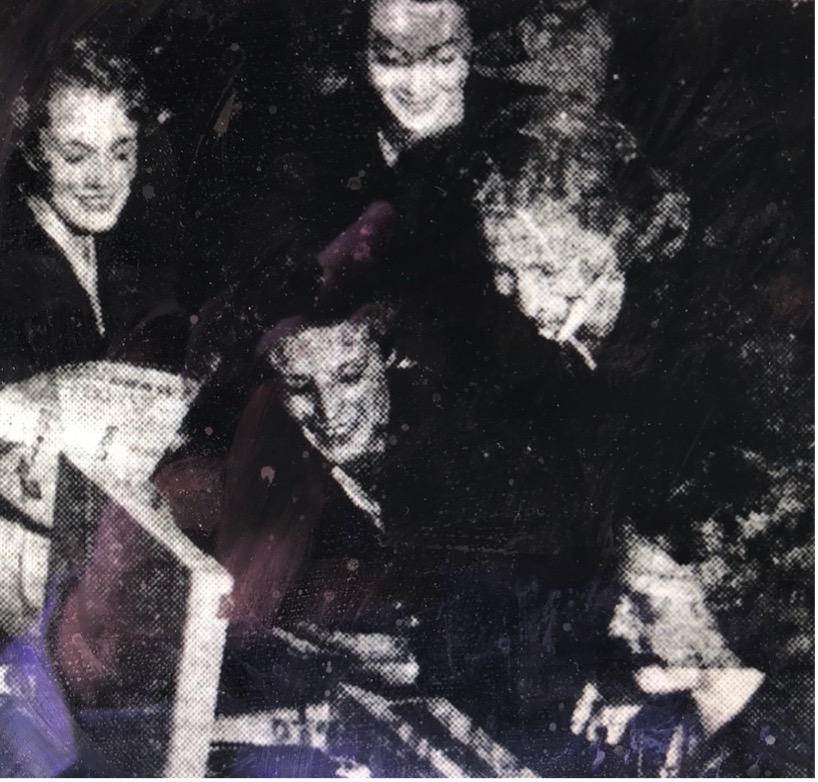
Privates Margaret Whiteside, Wendy Shannon, Val Chandler, Jan Bruce and Rosemary Nolan relax in the recreation hut [Sun (Sydney, 27 April 1954, page 29]
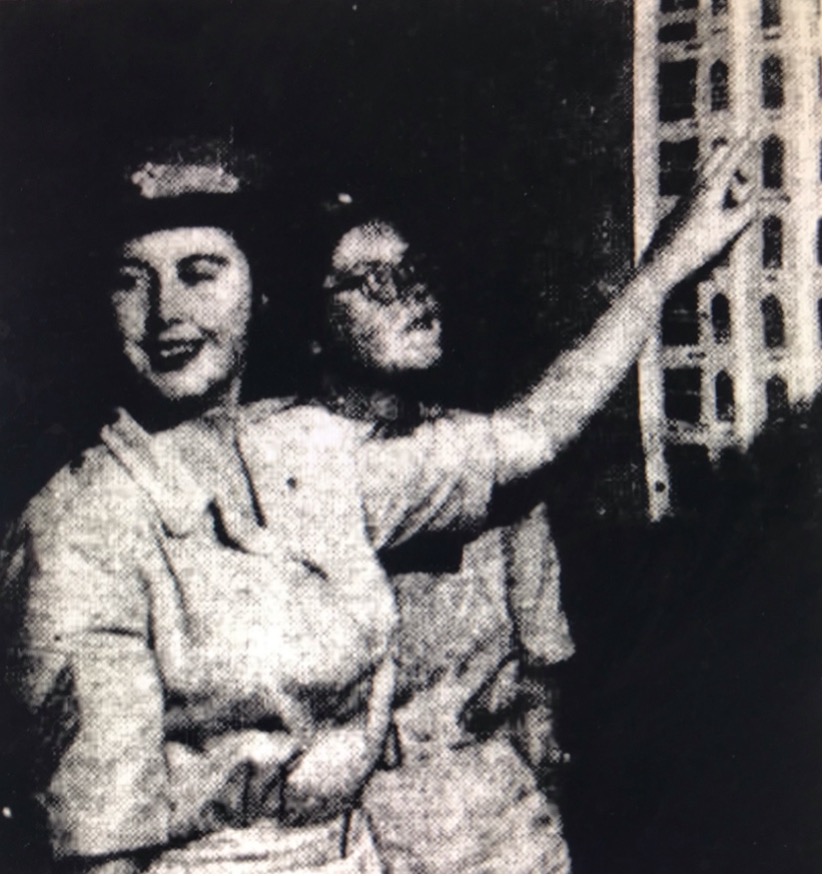
Corporal Elaine Fryer explains to CMF WRAAC recruits a chart of Australian badges of rank which hangs in the recreation hut [Sun, 28 April 1954, page 41]
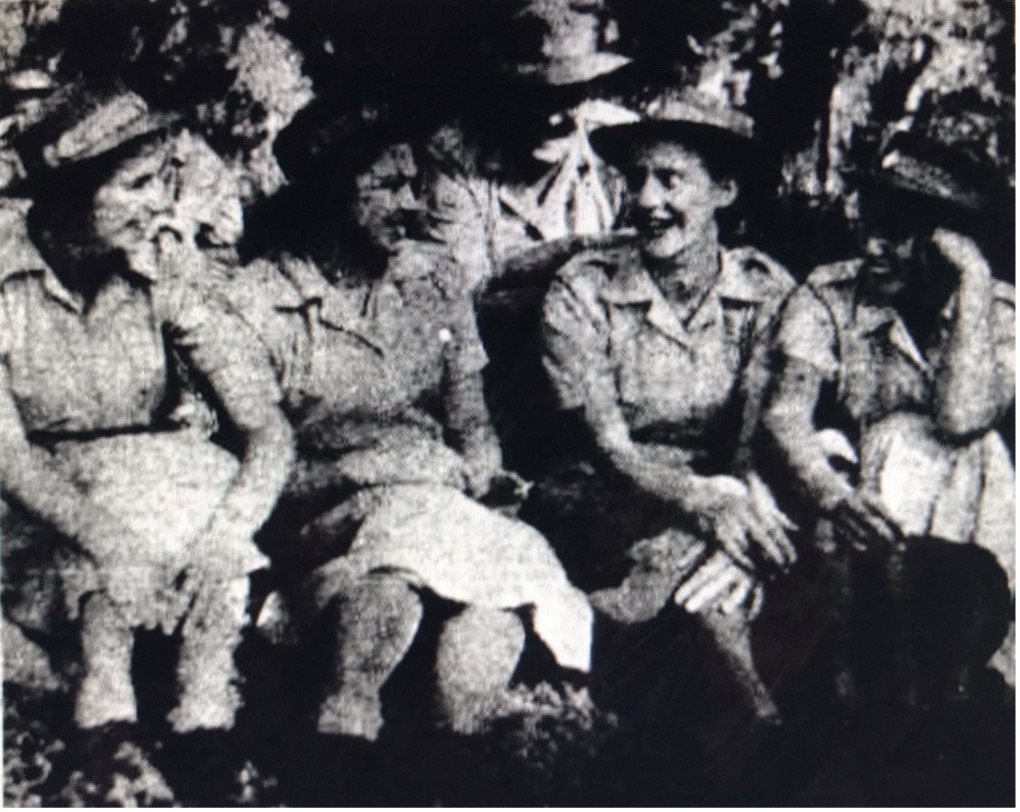
Time off from drill for a smoke is enjoyed by trainees in camp with N.4 W.R.A.A.C. Coy. at Gan Gan, near Nelson’s Bay. The trainees do up to three hours drill practice each day during their fortnight in camp [Newcastle Sun, 28 April 1954, pages 3 and 13]
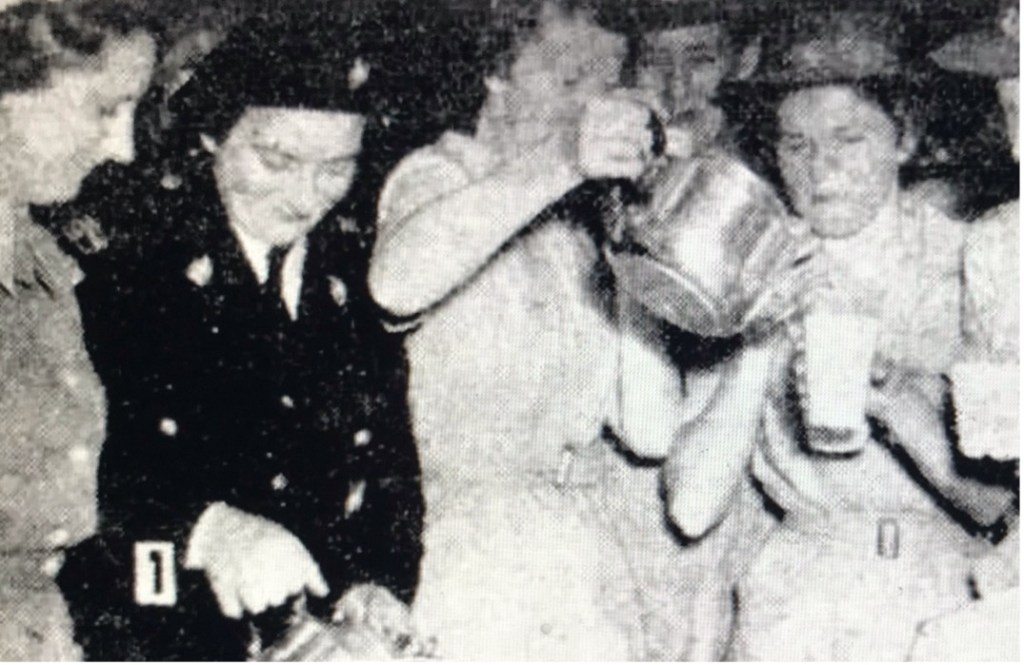
Members of No. 4 W.R.A.A.C. Coy. from C.M.F. for Women in camp at Gan Gan, near Nelson’s Bay, enjoy morning tea break after drill practice [Newcastle Sun, 28 April 1954, pages 3 and 13]

Trainees march down the road as they return to camp after drill practice [Newcastle Sun, 28 April 1954, pages 3 and 13]
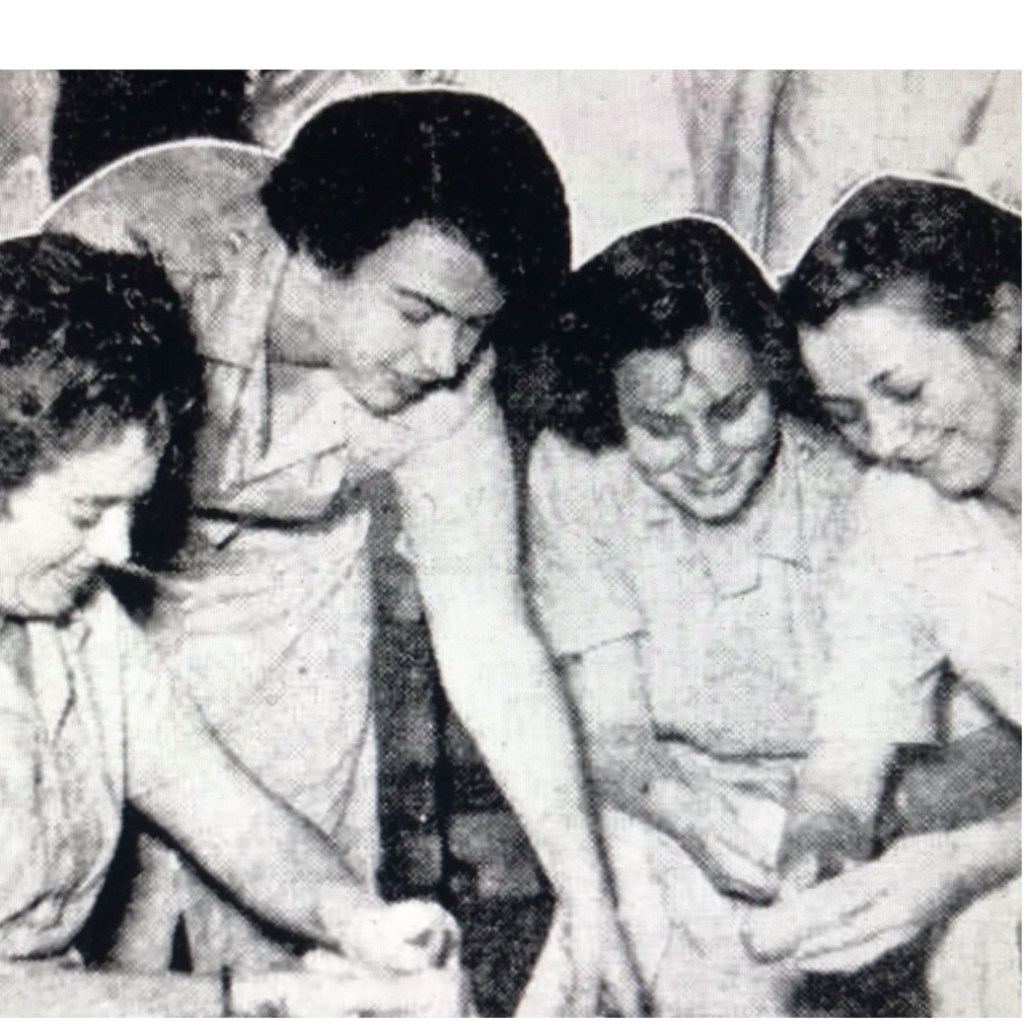
These trainees look happy about doing mess duty as they peel vegetables outside the kitchen. Left to right: Pte. D. Connelly, of Ultimo, Pte. R. Nolan, of Miranda, Pte. J. Hogan, of Bondi, and Pte. D. Grace, of French’s Forest [Newcastle Sun, 28 April 1954, pages 3 and 13]
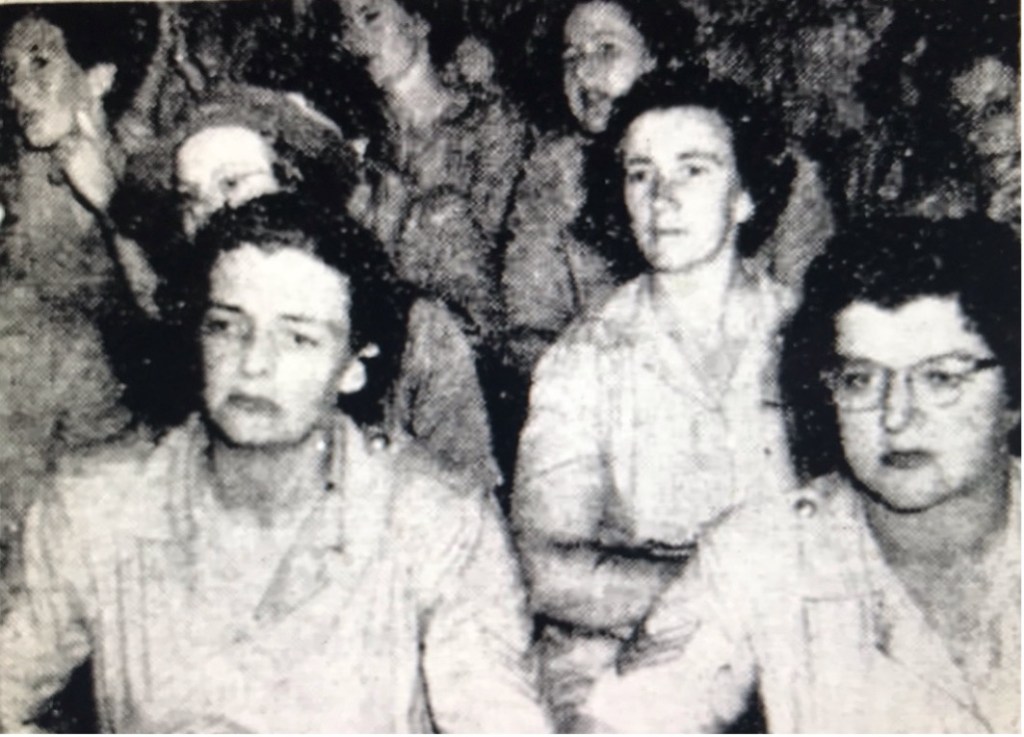
Trainees look serious as they concentrate on a lecture on first-aid [Newcastle Sun of 28 April 1954, pages 3 and 13]
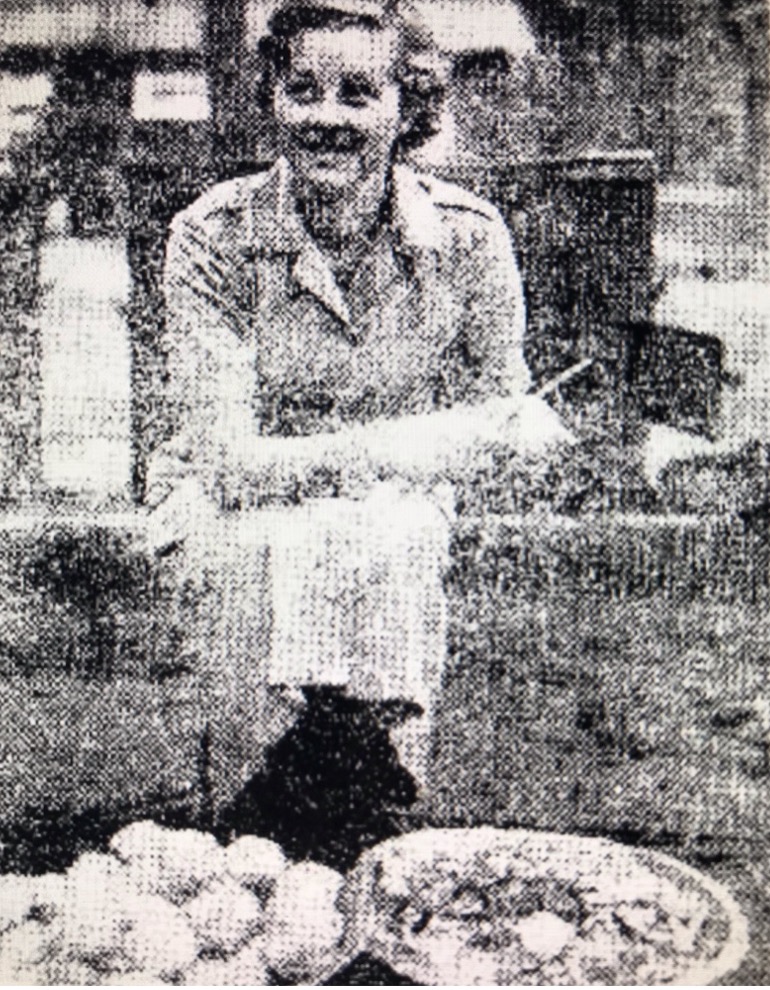
Peeling potatoes is Private Pam Houston, of Mosman. Pam, like all other W.R.A.A.C, of the C.M.F., must take her turn in mess duties, while she is training at Gan Gan camp, near Newcastle [Daily Telegraph of 29 April 1954, page 20]
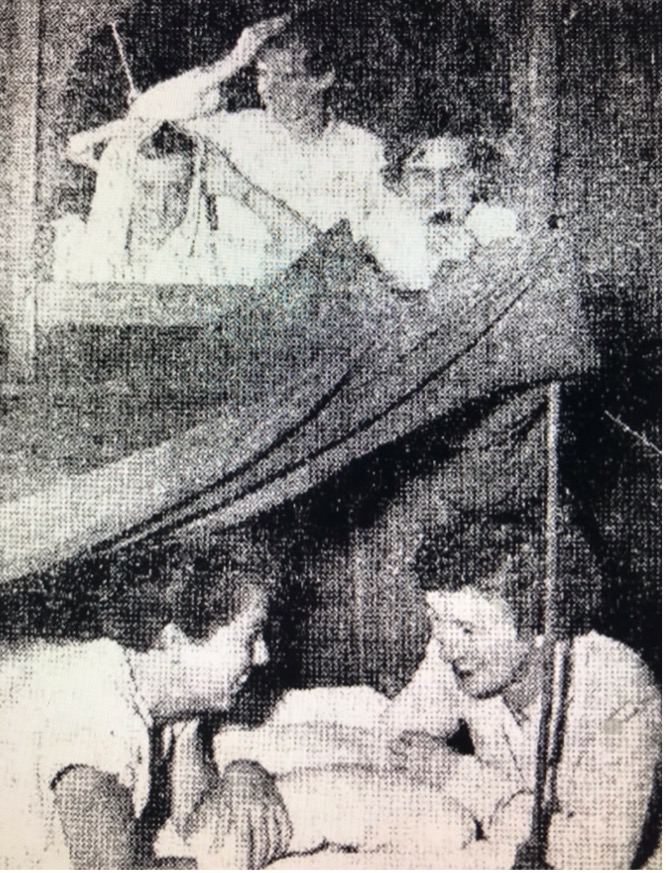
“Goodnight,” says Barbara Freeman to Anne Gidney, while Privates Shirley Wiggins, Joy Phillips and Maria Hartredge peep from their adjoining quarters [Daily Telegraph of 29 April 1954, page 20]
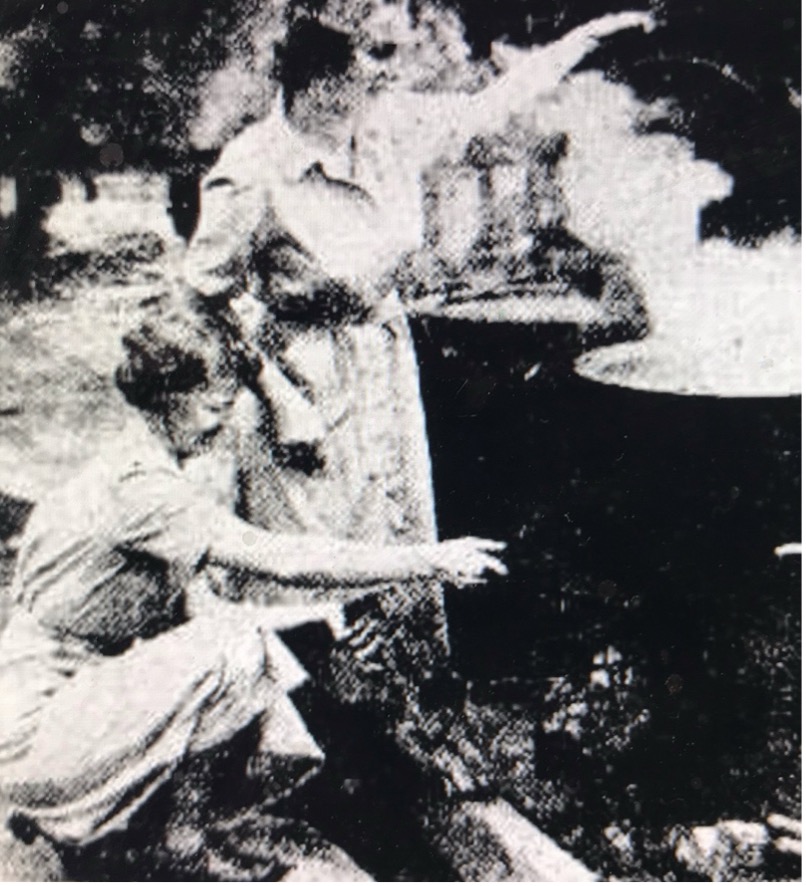
Private Rosemary Nolan and Private Gwenda Grono watch the hot water situation [Newcastle Morning Herald and Miners’ Advocate, 29 April 1954, page 3]
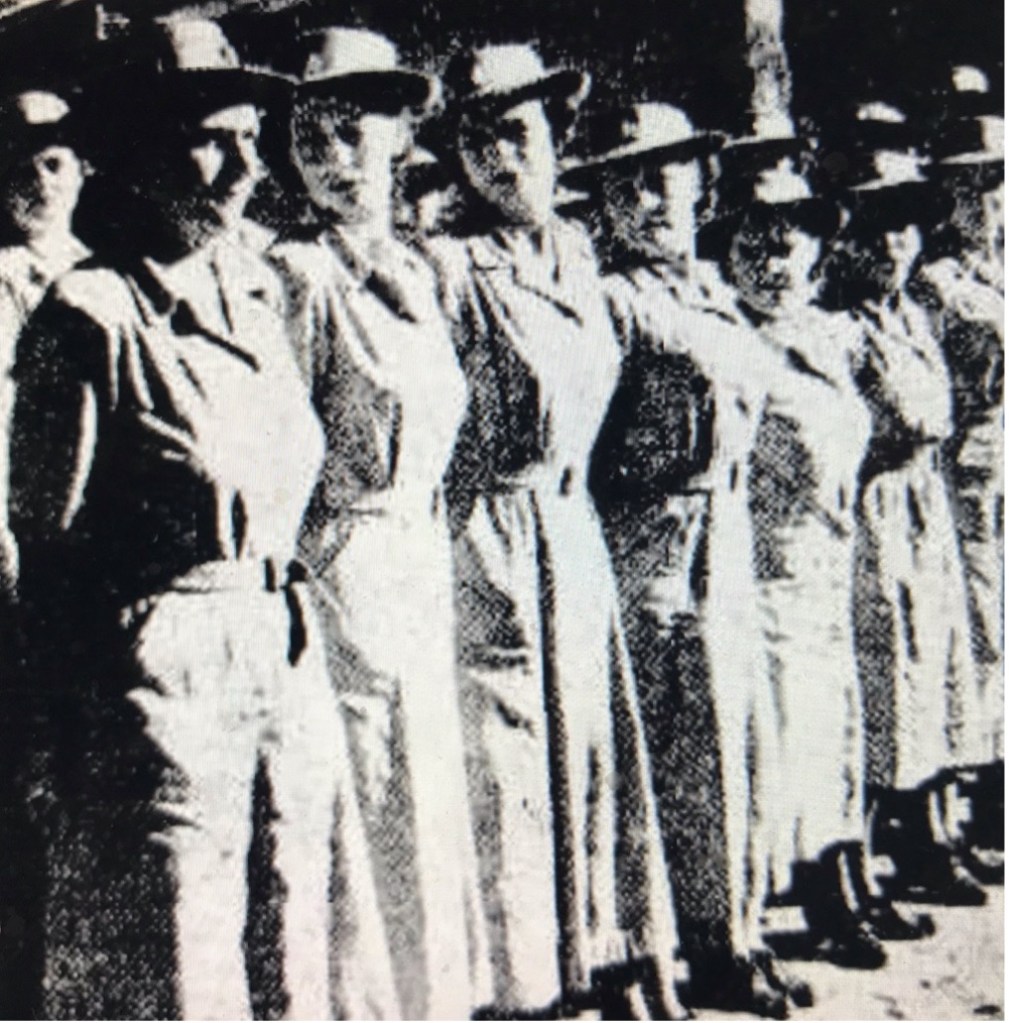
On parade [Newcastle Morning Herald and Miners’ Advocate, 29 April 1954, page 3]

Mess parade [Newcastle Morning Herald and Miners’ Advocate, 29 April 1954, page 3]

Privates Jean Hogan and Dawn Grace were mess orderlies for the day [Newcastle Morning Herald and Miners’ Advocate, 29 April 1954, page 3]
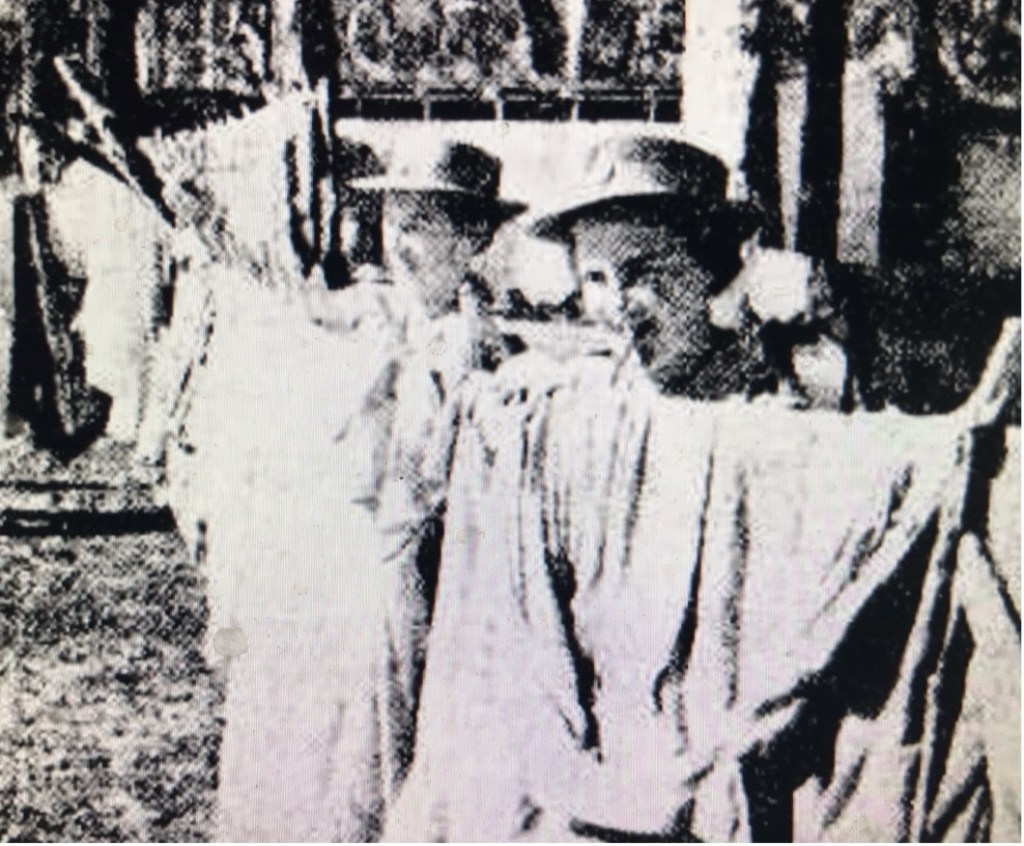
Private Patricia Edwards and Margot Hespe peg out the clothes [Newcastle Morning Herald and Miners’ Advocate, 29 April 1954, page 3]
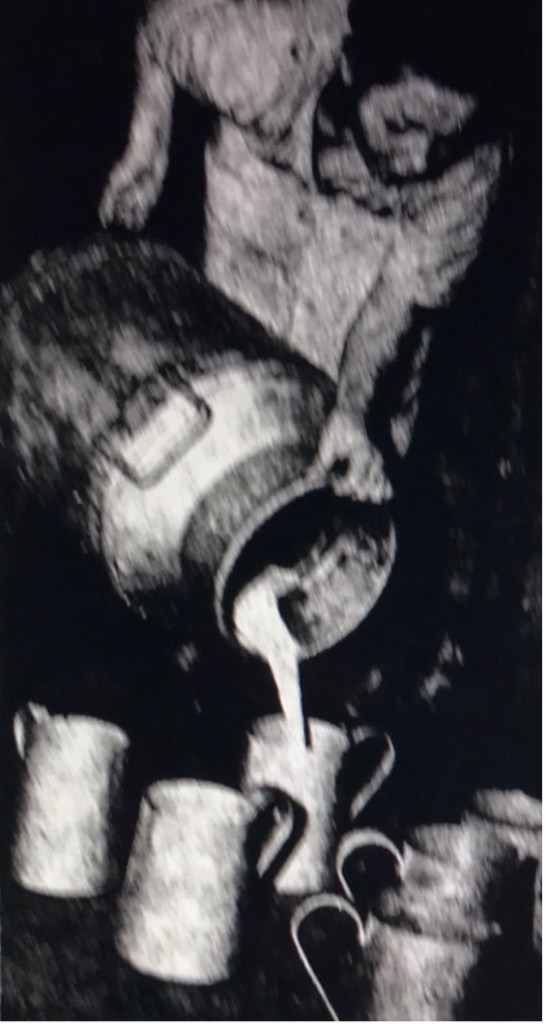
Private Connelly was helping prepare lunch for the company [Newcastle Morning Herald and Miners’ Advocate, 29 April 1954, page 3]
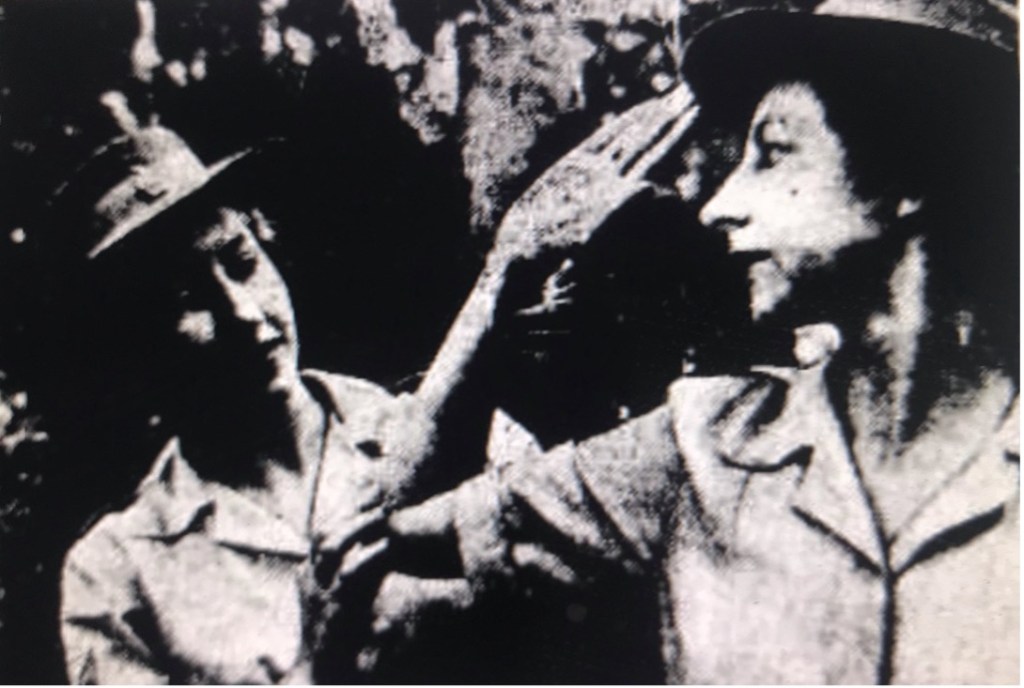
Corporal Rae Edmondson demonstrating the correct method of “To the right Salute” to fellow platoon member, Prv. Shirley [Sydney Morning Herald, 29 April 1954, page 5]
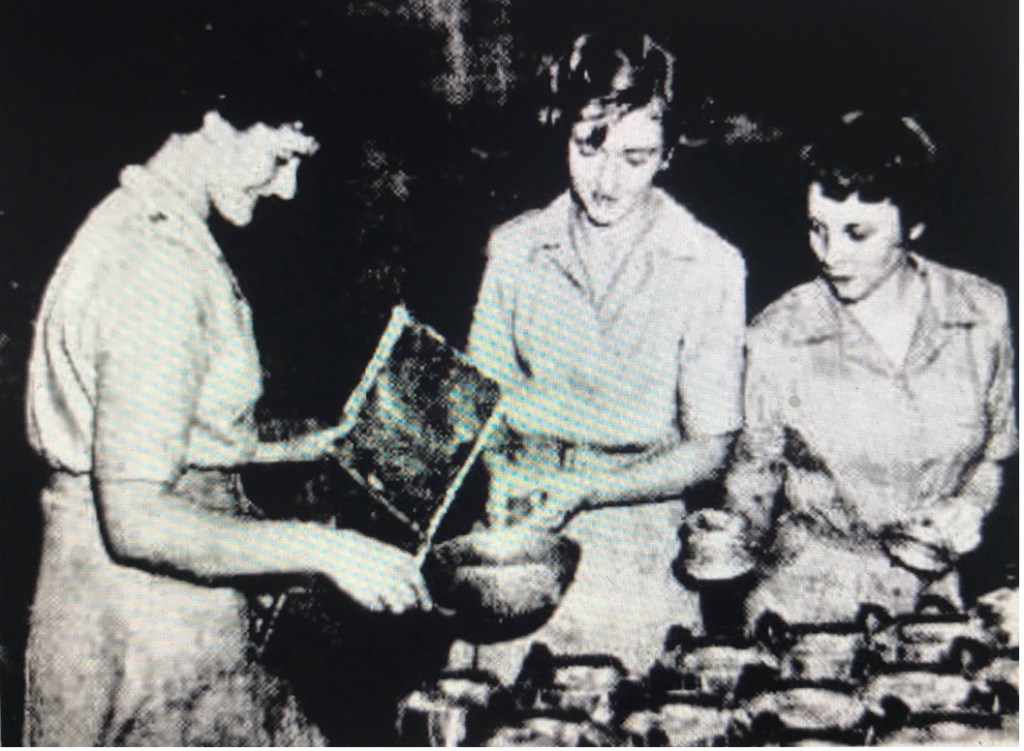
Privates Beryl Lutge, Joye Wilkinson and Alice Hayes having their first experience of kitchen fatigues [Sydney Morning Herald, 29 April 1954, page 5]
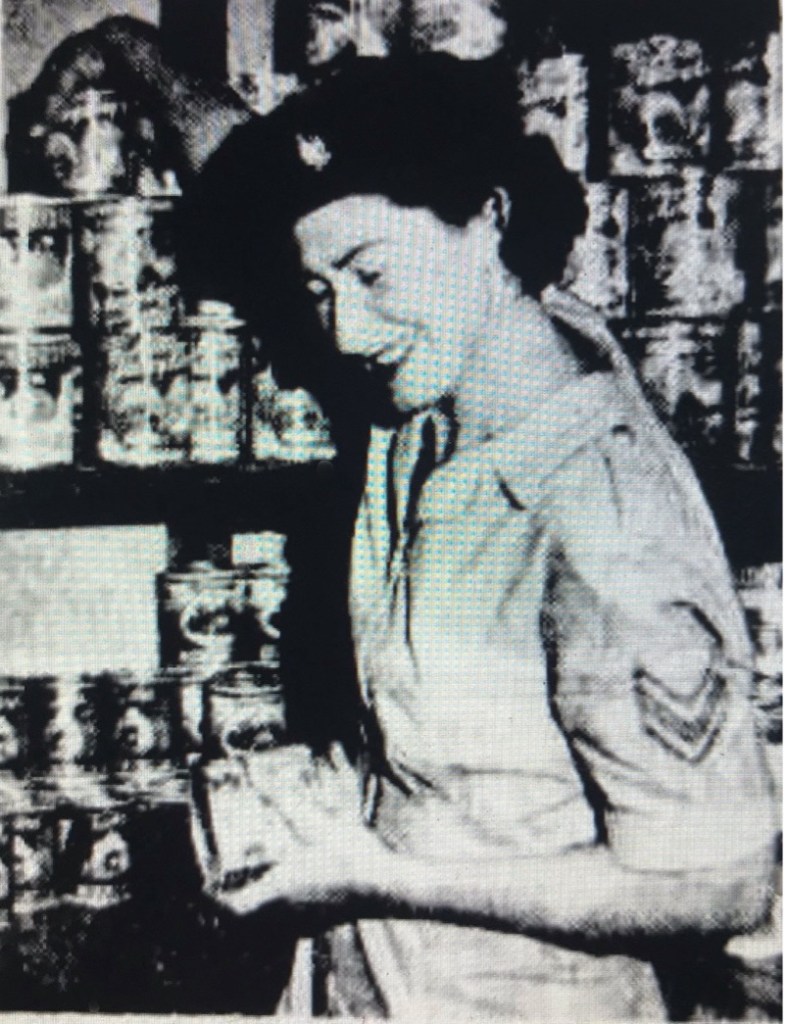
Corporal Marjorie Brown, who is acting as ration clerk at the W.R.A.A.A.C.’s camp at Gan Gan, handing out rations [Sydney Morning Herald, 29 April 1954, page 5]
Links to the Six Other Papers of Post-War Activities at the Gan Gan Military Camp are as follows:
Post War Military Camp at Gan Gan – an Overview
15th Northern Lancers at the Gan Can Military Camp – 1949
Military Training Camp at Gan Gan – February 1951
School Cadets at Gan Gan Military Camp – April 1951
Army Commando Training Exercises at Gan Gan – 1953 and 1955
University Students at the Gan Gan Military Camp – 1950 and 1962
Researched and compiled by Kevin McGuinness
July 2022

 Port Stephens - a history exploration