

Introduction
In 1942, the Gan Gan military camp was built as an amphibious training centre by the United States military at Port Stephens. It was part of the Joint Overseas Operational Training School (JOOTS) facility established in conjunction with HMAS Assault, to train both Australian and American troops in land/sea warfare.
Following the withdrawal of the United States military from the Port Stephens area after the War, the Gan Gan site was maintained by the Australian Army and used extensively in the post war period as a training facility.
It was also available to other groups, such as school cadets and university students, for training exercises.
Seven papers of the Gan Gan post-war history are published on this website.
This paper is the story of two army commando training exercises carried out Port Stephens in 1953 and 1955, using Gan Gan as a base.
Links to the other six papers are found at the end of this document.
Army Commando Training Raid on Williamtown Aerodrome – November 1953
On 17 November 1953, a mock raid was carried out by 10 specially trained commandoes, who were landed by submarine off Port Stephens with the aim of walking to the Williamtown Aerodrome (as it was then called) and entering the air station without being detected and to destroy vital equipment. The exercise was designed to test the security of the aerodrome. The public were asked to keep a look out for the commandoes while walking from the coast to Williamtown and to report their location.
The military exercise was widely publicised, and the newspaper reports provide an interesting story of Port Stephens post-war military history. The men taking part in the exercise had been attending a ‘Clandestine Operations School’ at Gan Gan Military Camp.
The Newcastle Sun reported 17 November 1953, page 3:
‘Ten men trained in commando tactics and carrying orders to ‘immobilise’ Williamtown R.A.A.F. Station are hiding somewhere between Port Stephens and the aerodrome today awaiting the fall of night to cover their “attack.”
At the station strong patrols are guarding all vulnerable points in a plan of close defence. The “raiders” landed by submarine near Port Stephens during the night and are believed to have used the darkness to infiltrate as close as possible to their objective. The men taking part in the exercise have been attending a ‘Clandestine Operations School’ at Gan Gan, near Nelson Bay. The leader of the group is a naval officer a Fleet Air Arm pilot, but the others are all Army personnel, officers, warrant officers and sergeants.
The Air Force defence is seeking the aid of police and civilians in repulsing the mock attack. Throughout the day radio stations have been broadcasting special ap-peals to the public to keep a look-out for the “enemy invaders” and to report to the Station Defence Officer at Williamtown if any are sighted. The men are wearing normal Army dress and equipment except for distinctive green berets, which provide their only means of identification. They are armed with Owen guns, but no live ammunition is being used in the exercise.
Anyone seeing troops dressed in this manner should ring Stockton 174. Object of the exercise is to test the students’ knowledge of commando warfare and at the same time test the defences of Williamtown. Their orders are to get inside the station defence and “destroy vital equipment.” The “attack” may come at any time during the night.’
The Attack Underway
The Newcastle Morning Herald and Miners’ Advocate of 18 November 1953, page 1, reported:
‘The defenders were holding out strongly against the “raiders.” Two of the commandos were challenged and captured as they made their way to the base’s transmitter station. Station sentries were so alert that it was almost impossible for anyone to move without being challenged. Friends were halting friends and demanding to know who went there. In a walk of about 200 yards from the Officers’ Mess to an administrative building, one officer was challenged four times. The station’s aerodrome defences were its operation, ready to cope with the attack.
The “raiders” are 10 men who have been attending a special operations course conducted by Army Eastern Command at Gan Gan Camp. As the culminating exercise in their training, they were landed from a submarine near Port Stephens on Monday night with orders to “immobilise” the R.A.A.F. station. Throughout yesterday, radio stations broadcast appeals to the public to look out for the “enemy invaders” and to report to the station defence officer at Williamtown if any were sighted. An Army spokesman said late last night that no information had been received from civilian sources, although partly in an attempt to attract the attention of nearby residents a low-flying Mustang dropped supplies to the “raiders” just before dusk, when they were in a built-up area within 4000 yards of the station. The Mustang dropped the supplies from 40 feet. The defending party at the station was unaware of its mission when it took off from Williamtown. The pilot was sworn to secrecy by commanders of the exercise and did not receive his briefing till 10 minutes before the aircraft took off. The supplies dropped included six gallons of water.
When they came ashore from the submarine in rubber dinghies, each had a full water bottle and a water sterilising outfit capable of sterilising 10 gallons. Dummy ammunition and explosives were also dropped to them from the Musting. The time of the attack on the station was known only to the commanders of the exercise and umpires, so the defending party kept on the alert most of the day. Guards were posted at all vulnerable points in a plan of close defence, and a strong patrol moved around the area.
A spokesman said the object of the exercise was to test the knowledge of commando warfare gained by the 10 men on the course and at the same time test the defences of Williamtown. It was a combined exercise, with all services represented. The leader of the attacking party is Lieut. N. McMillan, a Fleet Air Arm pilot. His nine fellow “raiders” are all Army personnel, officers, warrant officers and sergeants. Flying Officer J. Nicholls is the defence officer.
Air Force defences proved too strong for the 10-man Commando force which tried to stage a hit-run raid on vital installations at Williamtown aerodrome last night. Two of the “raiders” were able to penetrate through the station’s outer defences, but neither managed to destroy any worthwhile target before being located and apprehended. One of these was the naval leader of the group, Lieut. N. McMillan, a Fleet Air Arm pilot, who was caught in the act of “blowing up” a secondary installation. A third “invader” infiltrated past perimeter patrols, but withdrew unobserved after reconnoitring inner target areas and finding them too strongly guarded to give an attacker any chance of success. The other seven members of the attacking force were captured, either singly or in pairs, before they could get within striking distance of any of the aerodrome installations.
A senior Army officer described the result of the exercise as “very successful from the Air Force point of view. ….. Today they completed the exercise by withdrawing from the station as though their mission had been successfully completed and making their way back to the coast, where a submarine was theoretically waiting to pick them up. The Army spokesman said the only disappointing feature of the exercise was the lack of public reaction. In spite of repeated radio appeals for civilian help in locating the “raiders” yesterday, no information had been received. Members of the attacking force had deliberately placed themselves in public view on several occasions and an air drop had been made over the area where they were hiding in an attempt to stimulate civilian interest. The attack on the aerodrome was made last night at about 12.30.’
Further Details
The Newcastle Morning Herald and Miners’ Advocate of 19 November 1953, page 4, provided further details of the commando raid:
‘Conmmandos taking part in a hit-run “raid” on Williamtown R.A.A.F. station in the heat of the past three days had only one really cool moment. One of the rubber dinghies in which they came ashore near Telegraph Point, north of 14-mile Beach, from a submarine on Monday night to begin the “raid” capsized. Some of the “raiders” got a dunking. The dinghy capsized in fairly shallow water and the men, who were wearing bathing trunks, waded ashore with their clothing and equipment wrapped in waterproof groundsheets.
Throughout Tuesday, as the commando party made its way from Telegraph Point to Williamtown, the heat took effect. All members of the party suffered a degree of heat exhaustion. One was on the point of collapse at one stage, because of the heat, and was temporarily unable to carry on. In the hottest parts of the morning and afternoon, the men rested in the bush or moved in the shelter of trees on the coastal ridge. When six gallons of water was dropped to them with other supplies from a Mustang at dusk, they had only about one bottle of water left be-tween them.
Each began the trek to Williamtown with a full water bottle, from which they rationed themselves during the day. They also carried water sterilising outfits, capable of sterilising 10 gallons, but had only one opportunity of using them when they replenished supplies from a small water pump in a vegetable garden. They continued to the out-skirts of Williamtown in the cool of the evening and began their “attack” on the station about 12.30 yesterday morning.
Their aim in the “raid,” culminating exercise in an Army special operations course they have been attending at Gan Gan Camp, was to “immobilise” the station by “destroying” vital installations. Two of the “raiders” were able to penetrate the station’s outer defences but were captured as they made their way to the transmitter station. One was Lieut. N. McMillan, who led the “attackers.” A third “raider” evaded patrols on the station perimeter but was “neutralised” because he was unable to get close enough to the guarded installations to do any “damage” with his dummy ammunition. No live ammunition was used. The other seven members of the “attacking” party, which consisted of 10 officers and senior N.C.O.’s, were cap-tured by roving picquets, either singly or in pairs, before they could infiltrate.
By 3 a.m. yesterday, all the “attackers” were “prisoners” of the R.A.A.F. defence group. They were then released so they could complete the exercise by withdrawing to Gan Gan, as though they had successfully completed their mission and were making their way back to the Coast to be picked up by submarine. All had reached Gan Gan by midday. They were in bed early last night to catch up on lost sleep. An Army spokesman said yesterday that the exercise, which was as much to test the aerodrome defences as to put into practice lessons taught on the course, was regarded as a success from both aspects.’
Commando Training Course at Port Stephens – October 1955
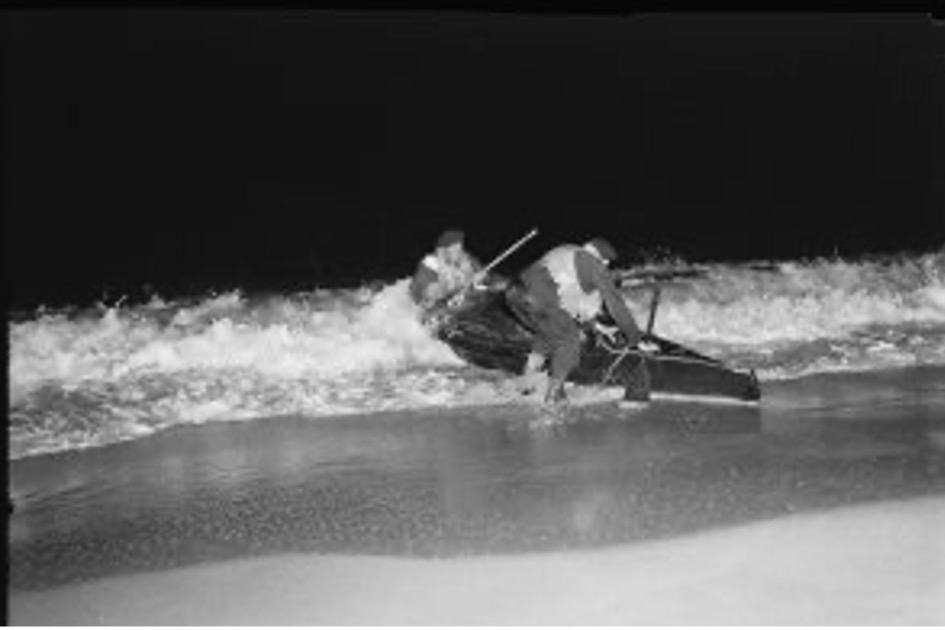
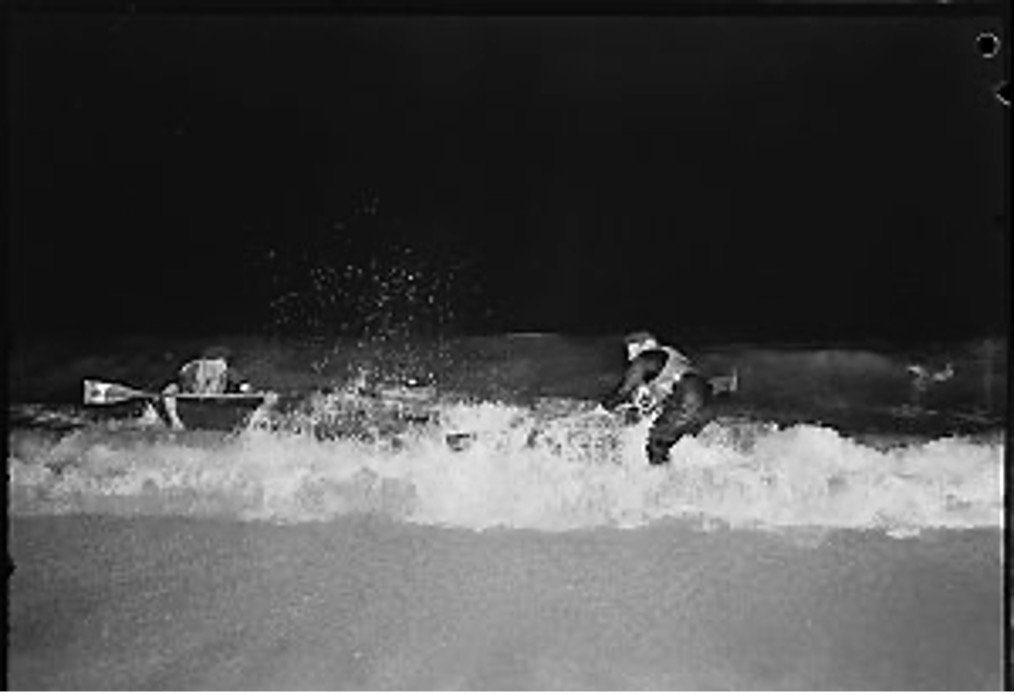
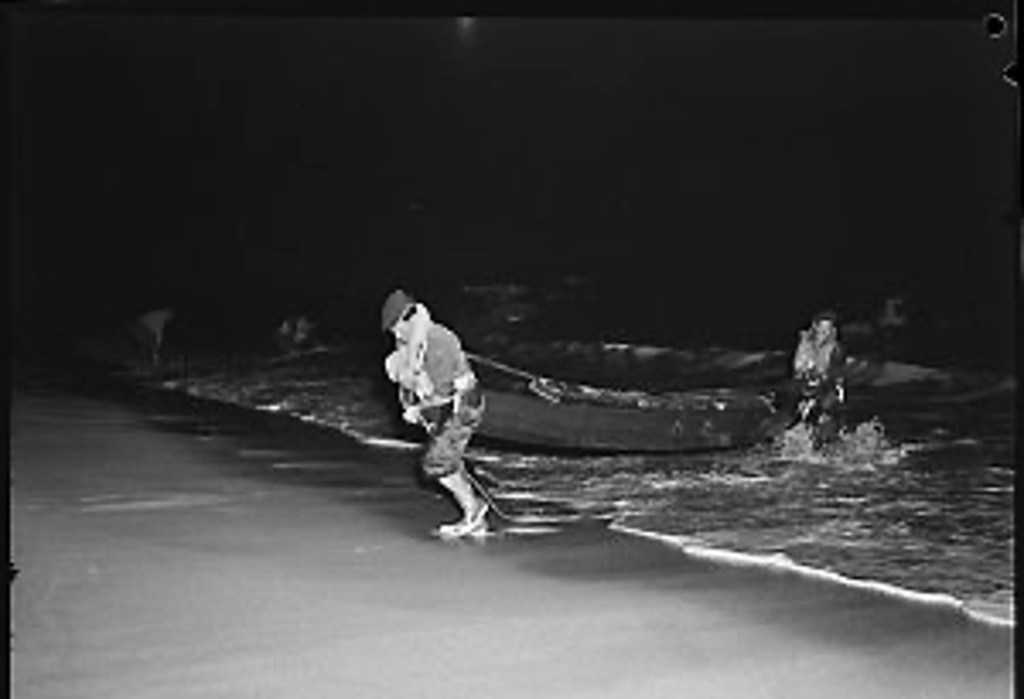
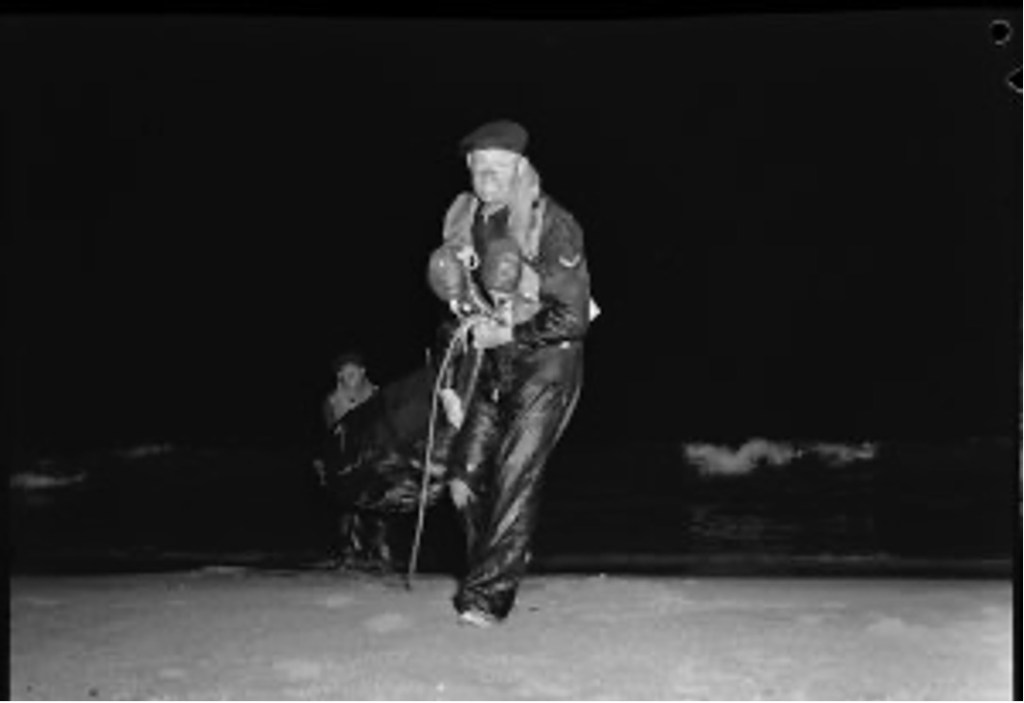
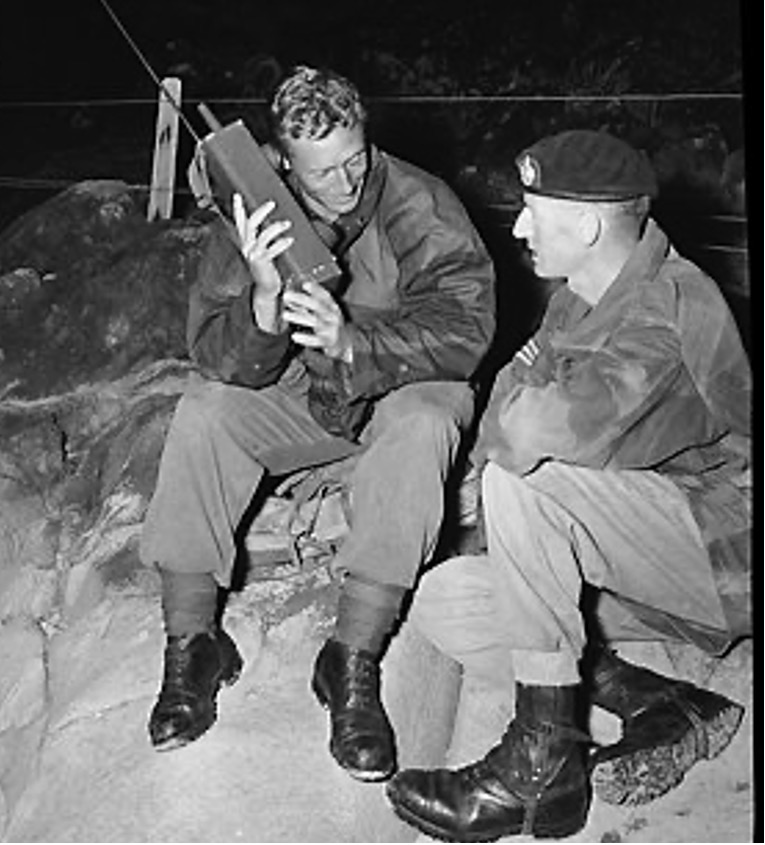
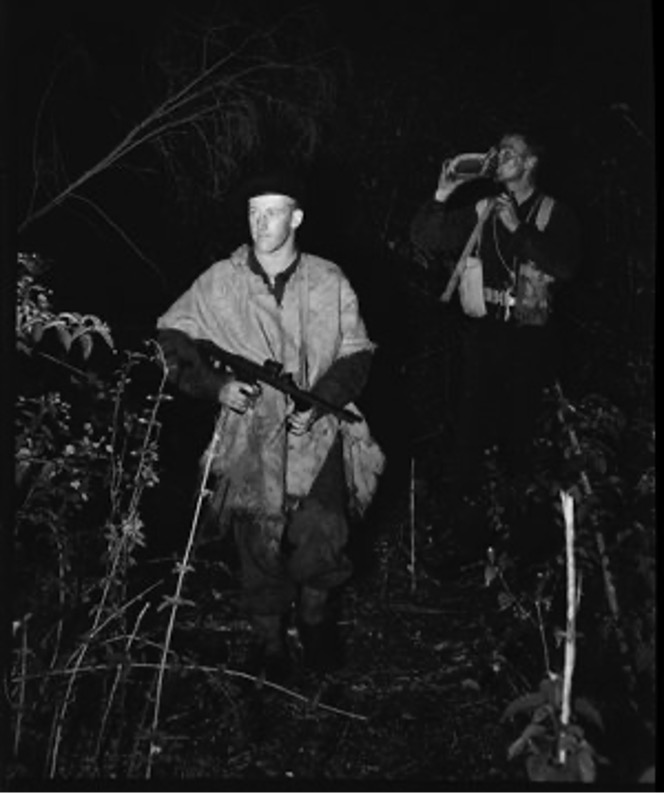
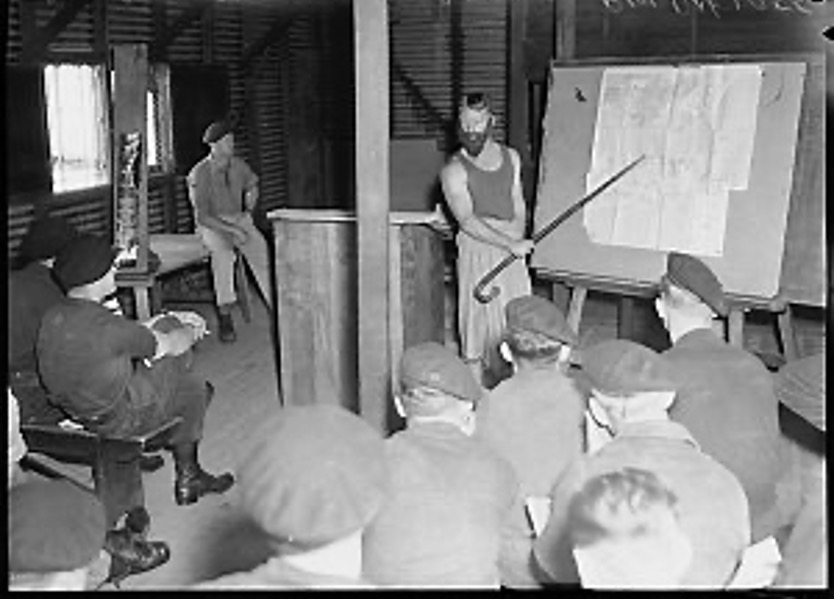
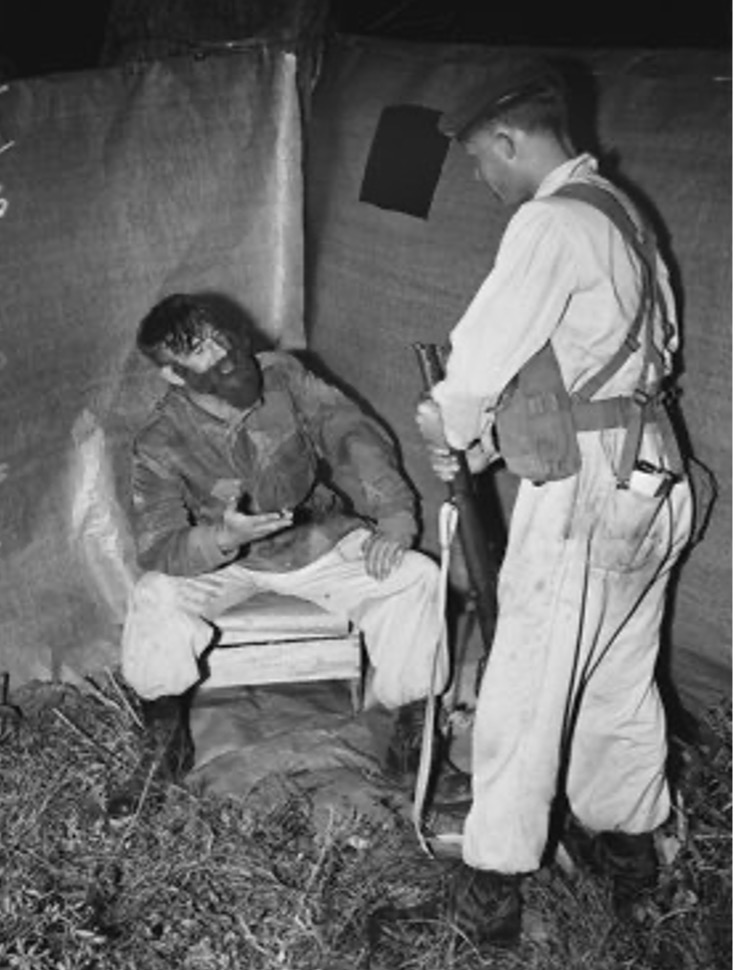
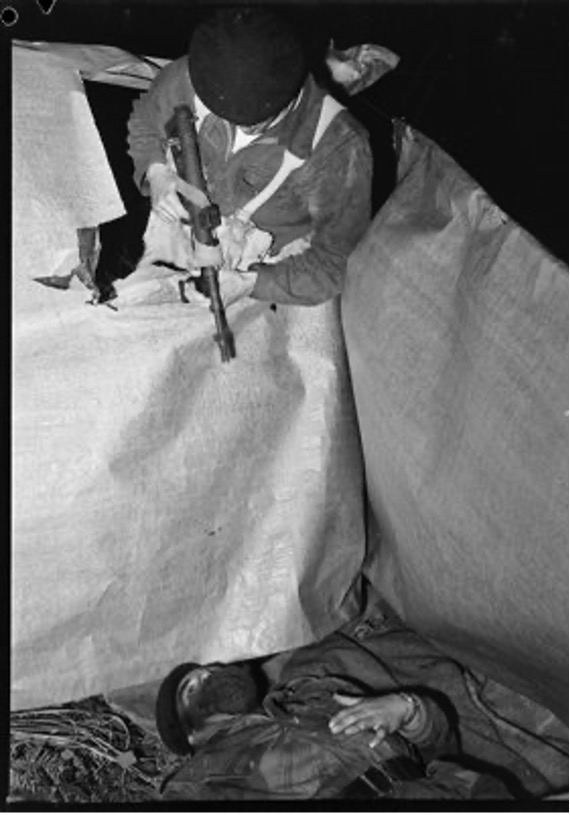
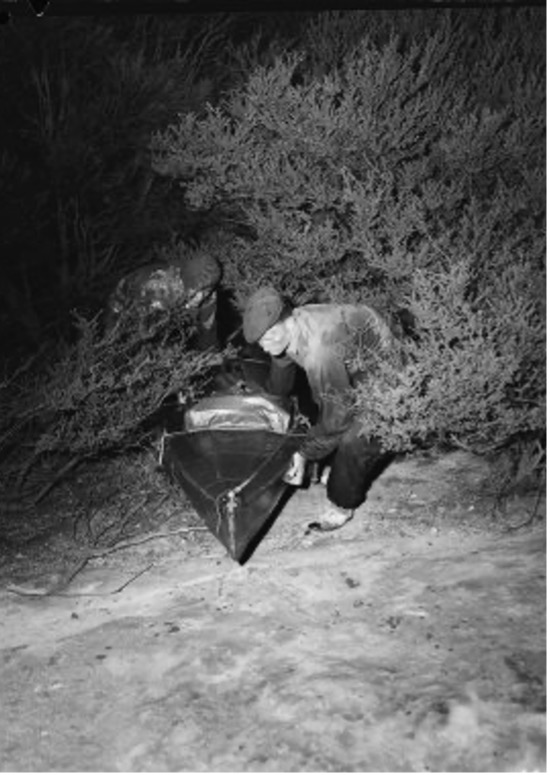
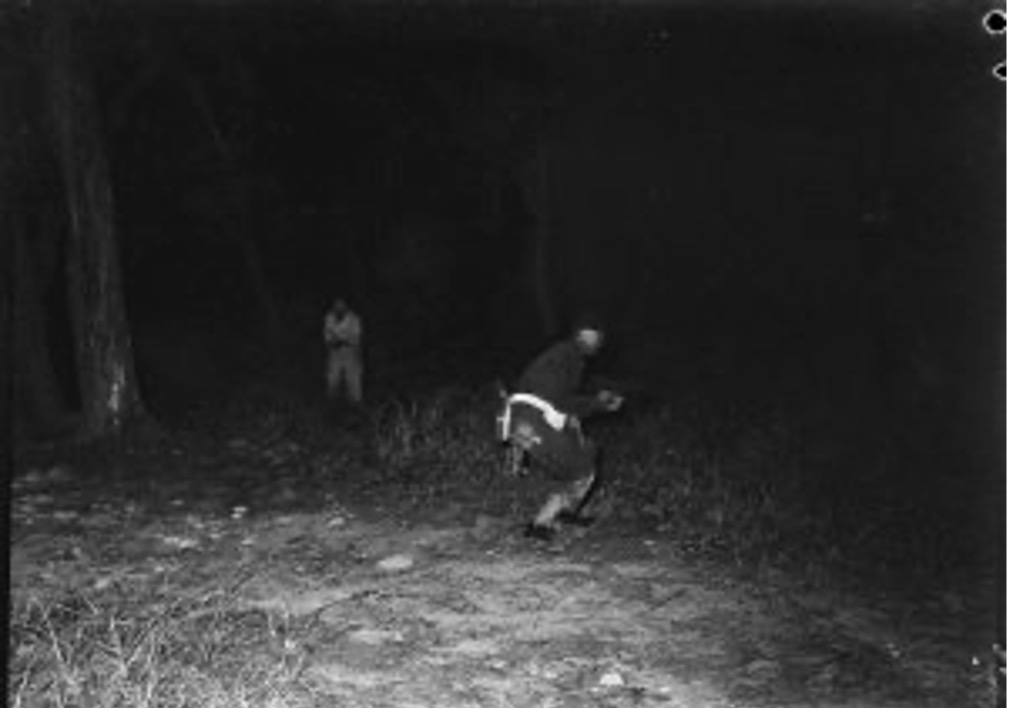
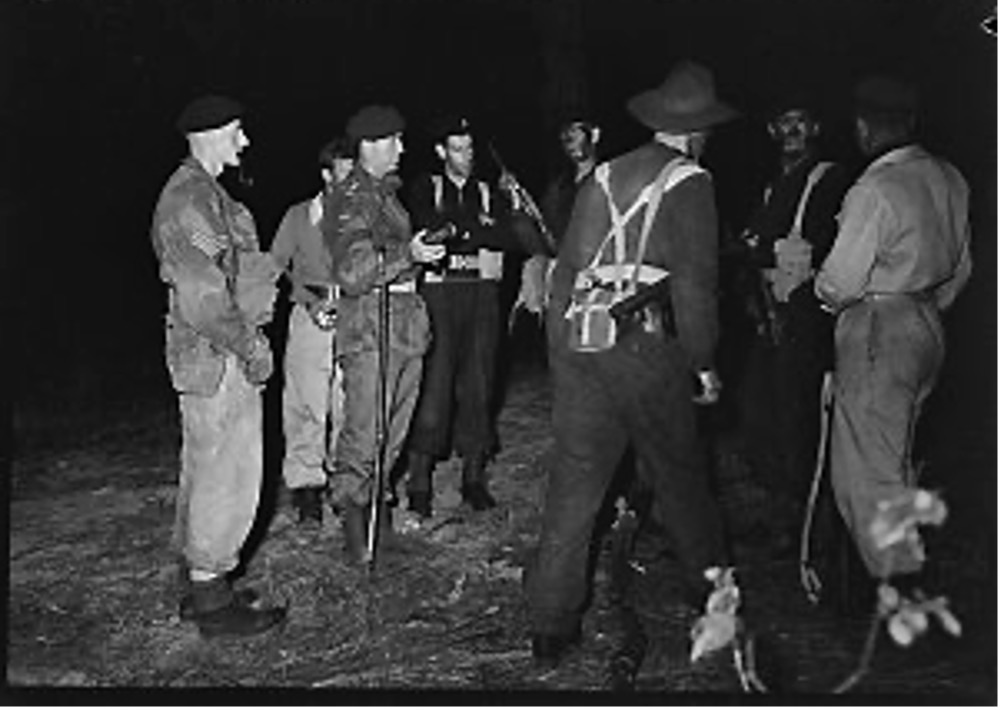
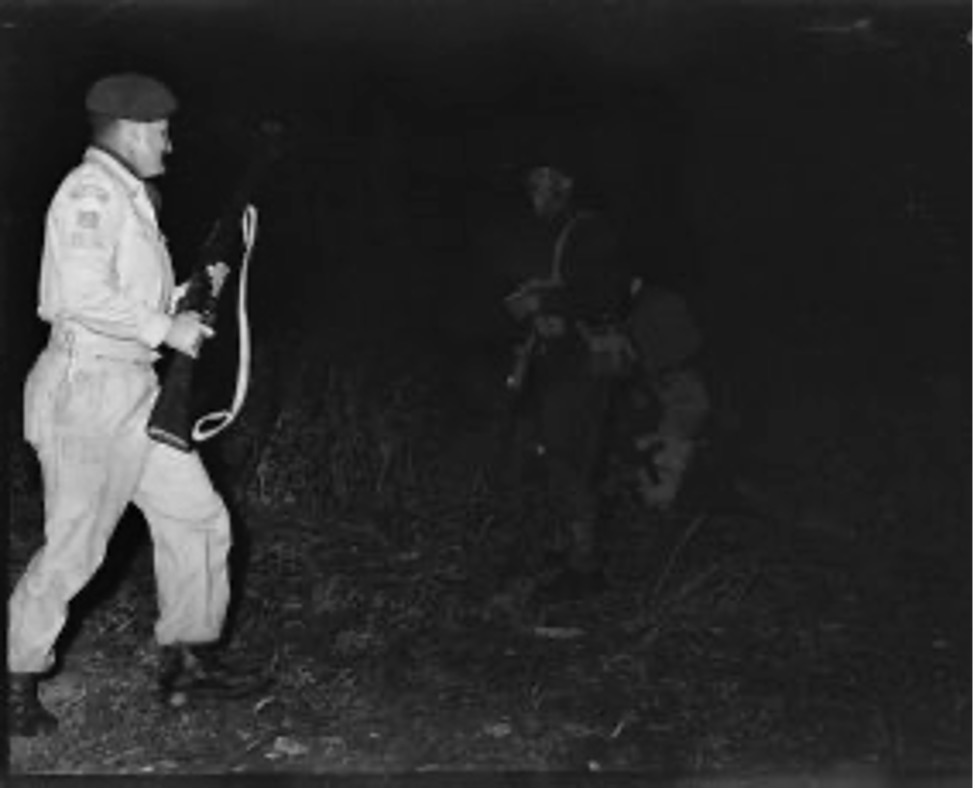
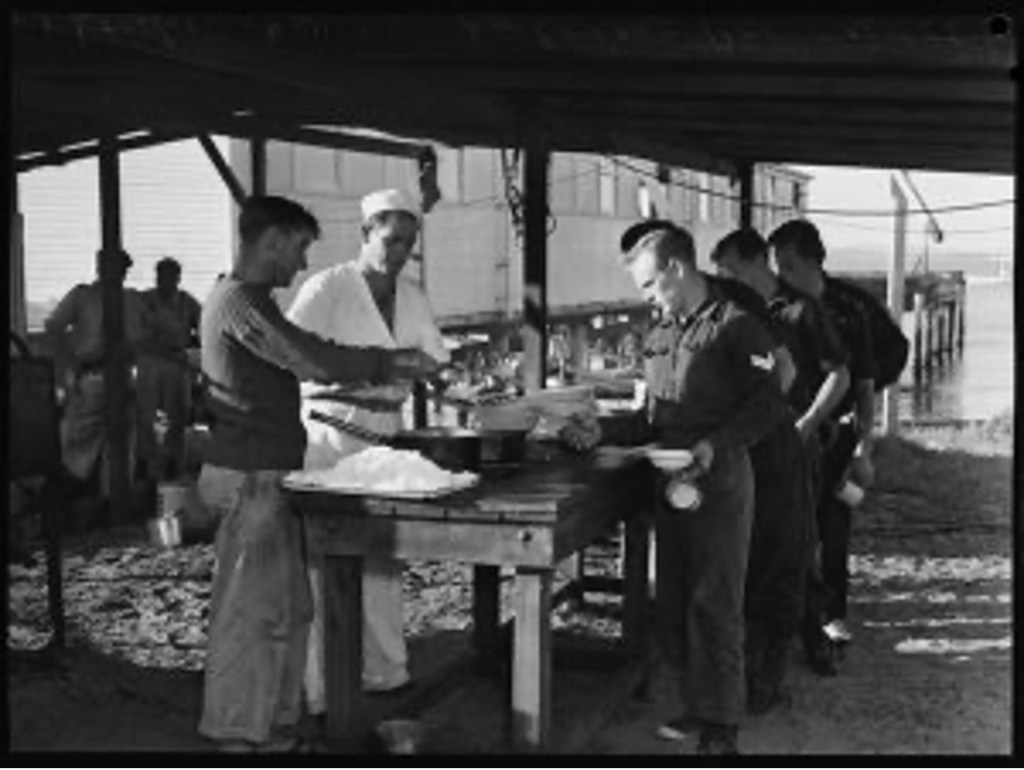
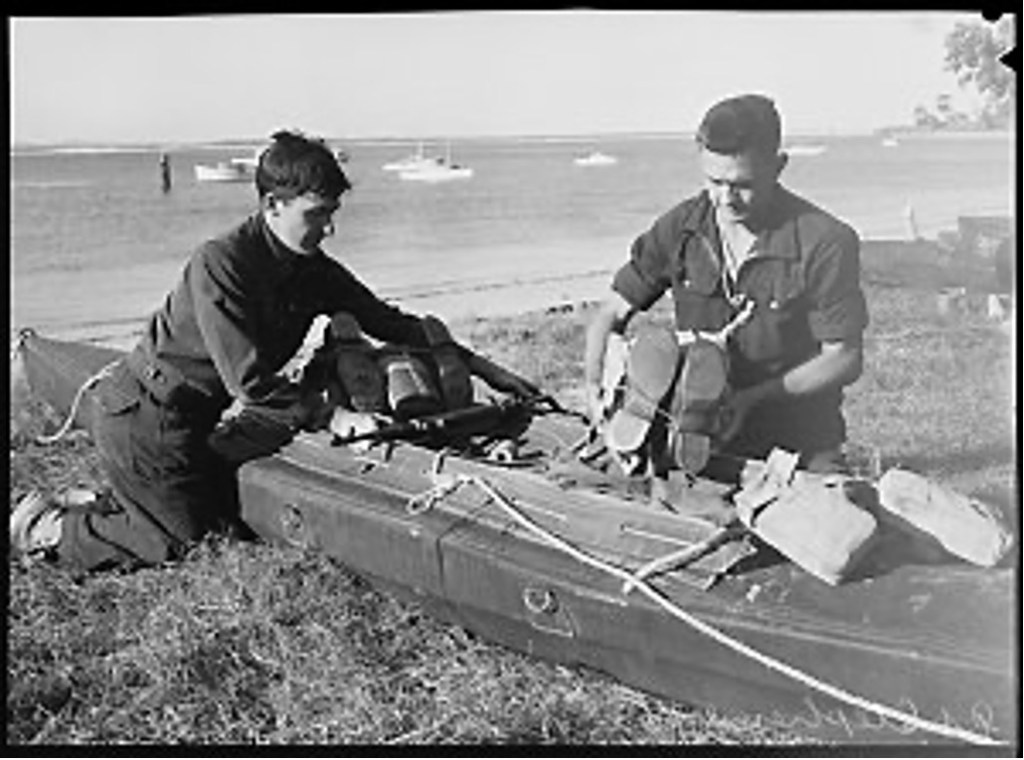
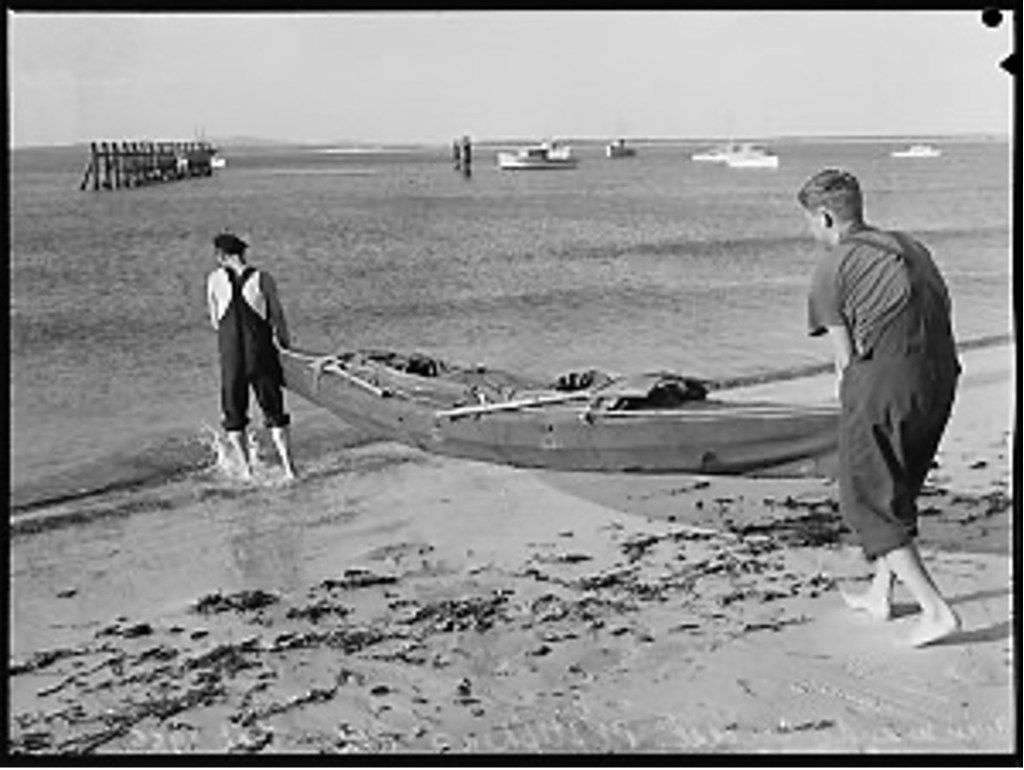
The State Library of New South Wales holds the following photos of an Army commando training course conducted at Nelson Bay and other parts of the Port on 20 October 1955.
The photos serve to provide a visual picture of the commandos training and the dinghies they used.



Links to the Six Other Papers of Post-War Activities at the Gan Gan Military Camp are as follows:
Post War Military Camp at Gan Gan – an Overview
15th Northern Lancers at the Gan Can Military Camp – 1949
Military Training Camp at Gan Gan – February 1951
School Cadets at Gan Gan Military Camp – April 1951
First Army Camp for Women of the Citizen Military Forces (CMF) at Gan Gan – April 1954
University Students at the Gan Gan Military Camp – 1950 and 1962
Researched and compiled by Kevin McGuinness
July 2022

 Port Stephens - a history exploration