

Introduction
This is the story of Geoffrey Neville Wikner, his ambitious flight to Australia in a Halifax bomber aircraft and the early history of Halifax Park at Nelson Bay.
Geoffrey Wikner was an Australian born aircraft engineer and pilot who flew an ex-military Halifax bomber to Australia in 1946, after the Second World War, carrying his family of four and sixteen paying passengers.
He named his Halifax bomber ‘Waltzing Matilda’, and when he arrived in Australia in June 1946, he attracted much media attention. This was the first private flight from England to Australia after the end of the Second World War.
Soon after arrival in Australia, he and his wife established a camping area at Nelson Bay, Port Stephens, which they named Halifax Park.
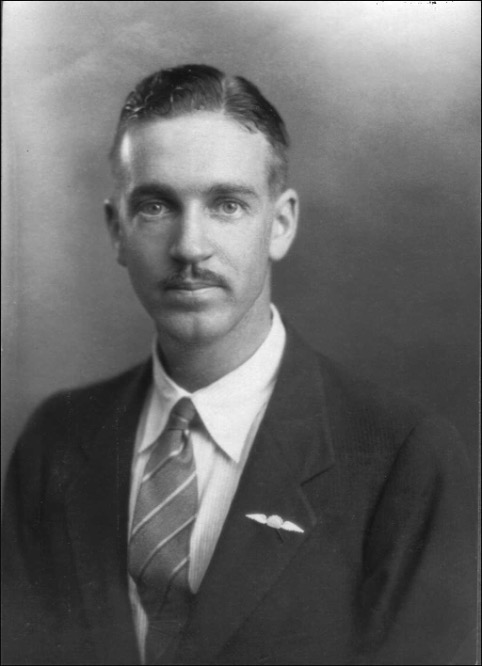
Geoffrey Neville Wikner [Ancestry]

Gertrude Violet Wikner, nee Williams [Ancestry]
Geoffrey Neville Wikner was born on 28 August 1904 at Grafton, New South Wales.
On 1 June 1936, he married Gertrude Violet Williams at Earley, England.
On 8 April 1940 he joined the United Kingdom Air Transport Auxiliary and was a Flight Captain.
After the death of Gertrude on 21 April 1952 at Newcastle, he remarried in 1954.
Geoffrey Wikner died on 23 June 1990 at Cooma, New South Wales and was buried at Beresfield.
Wikner’s attempts to return to Australia – 1944
In 1944, Wikner was desirous of returning from England to Australia for personal reasons. He unsuccessfully applied to join the Australian Ferry Command, that was involved in the flying of planes to new locations.
Relevant correspondence on the matter is set out below.
Wikner would have to wait until June 1946, to achieve his plan of returning to Australia.

Wikner’s letter dated 27 March 1955, expressing interest in joining the Australian Ferry Company, that was involved in the flying of planes to new locations [National Archives of Australia]
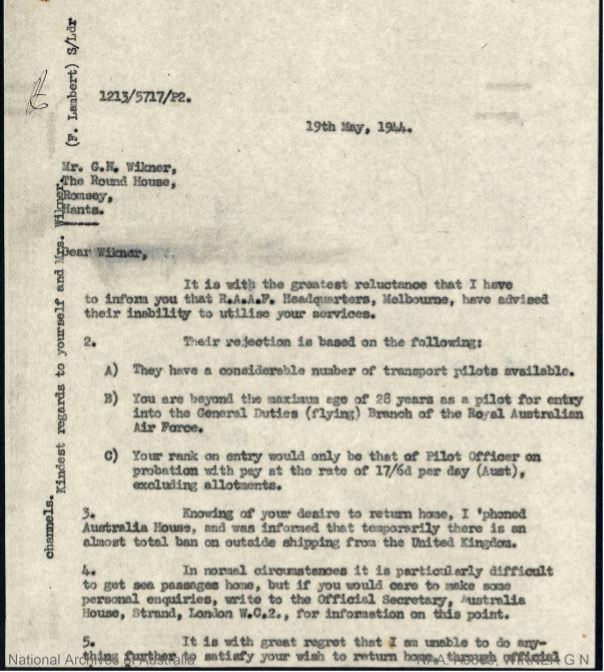
Letter dated 19 May 1944, rejecting Wikner’s application to join the Australian Ferry Company [National Archives of Australia]
Wickner’s plans to return to Australia – 1946
The Daily Telegraph of 12 January 1946, page 2, reported:
‘Captain Wikner’s mother, Mrs. Wikner, of Leura, said last night that the news of her son’s homecoming was a complete surprise. Mrs. Wikner has not yet met her daughter-in-law and the two grand-children, Dal, nine, and Christobel, five. Captain Wikner married after he went to England in 1934. “Before the war, my son and another man had an aircraft factory where they built and designed a plane called the ‘Wicko,” Mrs. Wikner said. “When war broke out my son offered his services as a pilot, and was asked to join the Air Transport Auxiliary. “When he joined the Auxiliary, the aircraft factory was formed into a company, and his wife became one of the directors. “The factory switched from making the ‘Wicko’ to manufacturing plastic parts for large bombers.’
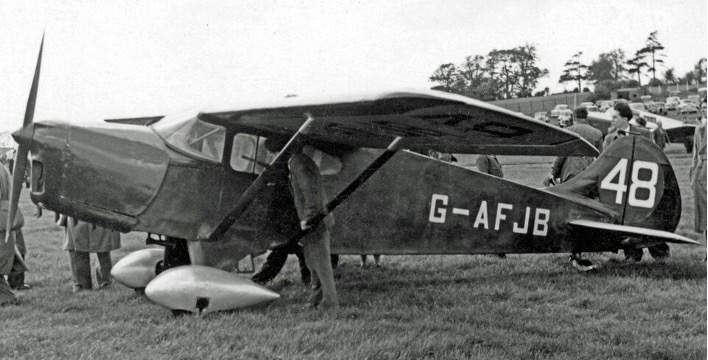
Wicko, a two-seat cabin monoplane, designed by Geoffrey Wikner [Wikipedia]
The Singleton Argus of 16 January 1946, page 2, further reported:
‘Captain Geoff. Wikner, who has purchased a Halifax bomber to fly from England to Australia, is a nephew of Mr. O. W. Wikner, engineer of Patrick Plains Shire Council. He is a son of Mr. Val. Wikner, of Sydney. During the war years, Captain Wikner, in partnership with Mr. Edgar Percival, conducted a factory in England, where aeroplane parts were produced.
Prior to leaving for England a few years before the outbreak of war, Captain Wikner and Mr. Percival, both electrical engineers, made a name for themselves in Australian aviation. The former is the inventor of the light plane called the ‘Wicko.’ Built in Queensland, the ‘Wicko’ set a height record for a light aircraft. Percival is the inventor of the ‘Percival Gull.’ Captain Wikner is married to an English lassie, and there are two children in the family.’
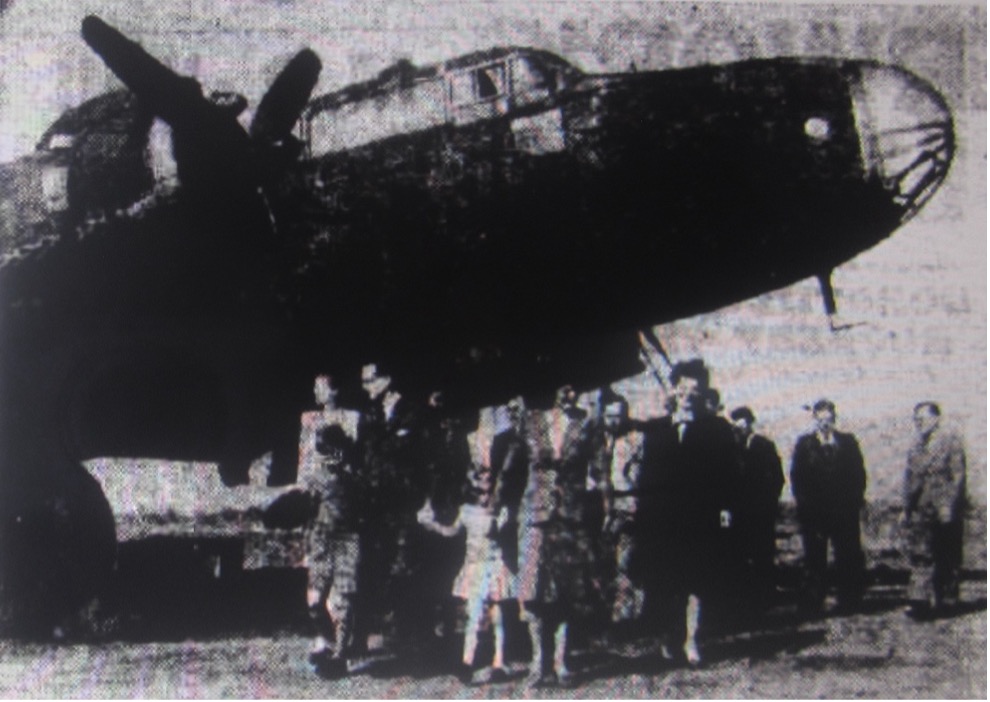
Captain Wikner brought this Halifax bomber to fly to Australia from England. He is shown leading his family, fellow passengers and crew on a tour of inspection of the Halifax bomber, at Radlett field [Daily Mirror, 27 April 1946]
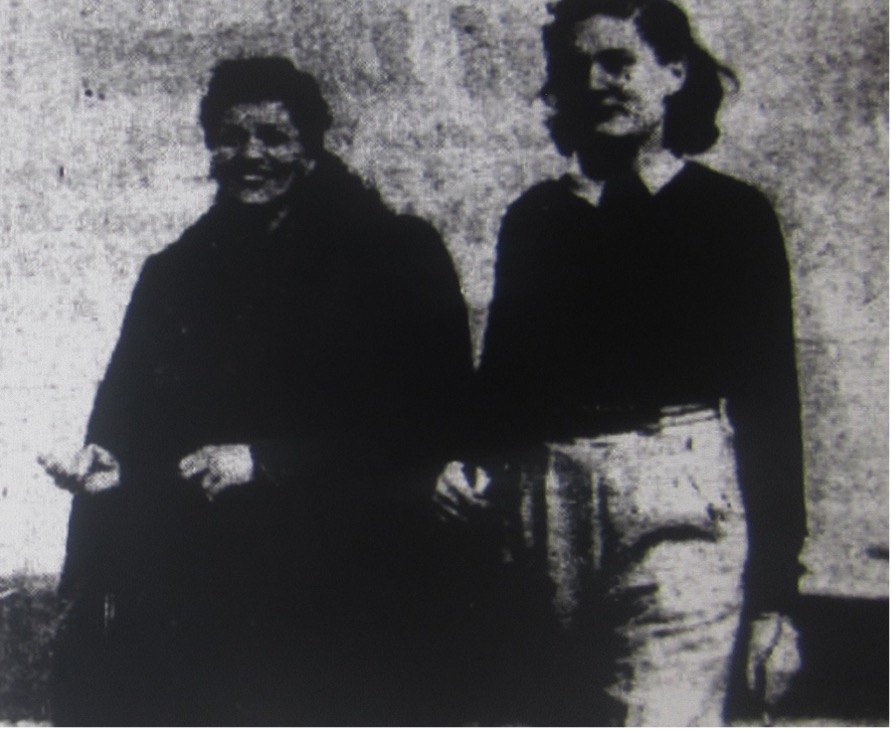
Mrs. Ruby Colleano (left), a passenger, and Miss Audrey Morgan, co-pilot, photographed in England before leaving for Australia in Captain Wikner’s Halifax bomber [Daily Mirror, 31 May 1946]
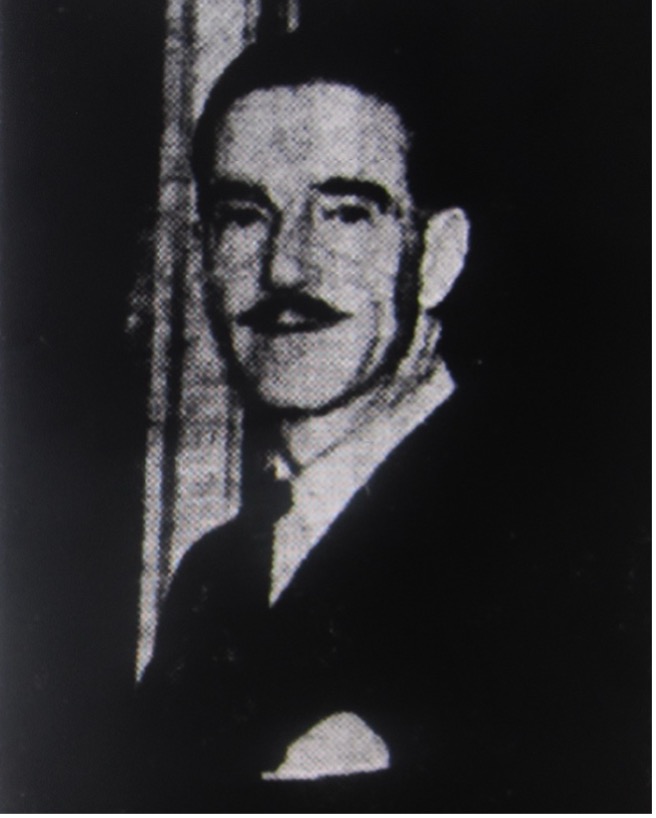
Captain Geoffrey Wikner [Daily Mirror, 22 January 1946]
Captain Wikner Arrives in Singapore – 1946
The Sun of 8 June 1946, page 3, reported:
‘The converted Halifax bomber, “Waltzing Matilda,” which Captain Geoffrey Wikner, Australian plane designer, is flying from England to Australia with a crew of four and 16 passengers, landed at Singapore yesterday after a flight from Pegu (India). A landing was made at Muang airfield (Bangkok) for refuelling. Wikner will take off for Balikpapan (Borneo) at dawn on Sunday.’
The plane was a Halifax Mk.III LV857 model. Prior to the flight from England, Captain Wikner had the aircraft civil registered with a Certificate of airworthiness issued on 16 May 1946 as a 15-passenger aircraft.
Captain Wikner Arrives in Darwin – 1946
The Sun of 12 June 1946, page 7, reported:
‘With 20 passengers, the bomber arrived here [Darwin] late yesterday. Coconut oil, purchased at a native village near Balikpapan, Borneo, was used in the hydraulic system of the plane during its 1000 miles crossing of the Celebes and Timor Seas. “The coconut oil was a perfect substitute,” said Capt. Wikner. The hydraulic system, which operated the brakes, undercarriage, and flaps, had leaked badly, he said, leaving the plane without sufficient to carry on. One passenger said that throughout the seven hours’ flight from Balikpapan he was fearful that the coconut oil would solidify in the cold temperature. Total airborne time for the trip was 60 hours. The Lancastrian takes 63 hours.
This was the first private flight from England to Australia since the end of the war. The nose of the bomber is stencilled with 51 “bombs”— one for each mission made by the aircraft—a map of England and a dove of peace, carrying an olive branch.’
The Goulburn Evening Post of 12 June 1946, page 3, also reported:
‘Captain Geoffrey Wikner, who brought a big plane to bring himself and friends to Australia, landed at Darwin yesterday afternoon. Some repairs will be necessary for the plane, but it is hoped to reach Sydney in four days. The party was in Singapore on Saturday, and there was a forced landing at one spot on the way out, and all were marooned for four days. The plane which had made 51 operational flights was named ‘Waltzing Matlilda’ brought 19 passengers, one of the original 20 dropping out at Cairo.
Among the passengers is Ruby Colleano actress, who is visiting Australia again after 20 years. One passenger is “mysterious,” in that he does not wish his name to be known until he surprises his fiancee in Australia. An Australian Captain Scott, who served with the R.A.F., was navigator. His wife died three weeks before he left and he is bringing his 2½ year-old kiddie with him. Captain Wikner is a brother of Mrs. H. B. Darke, of Goulburn.’
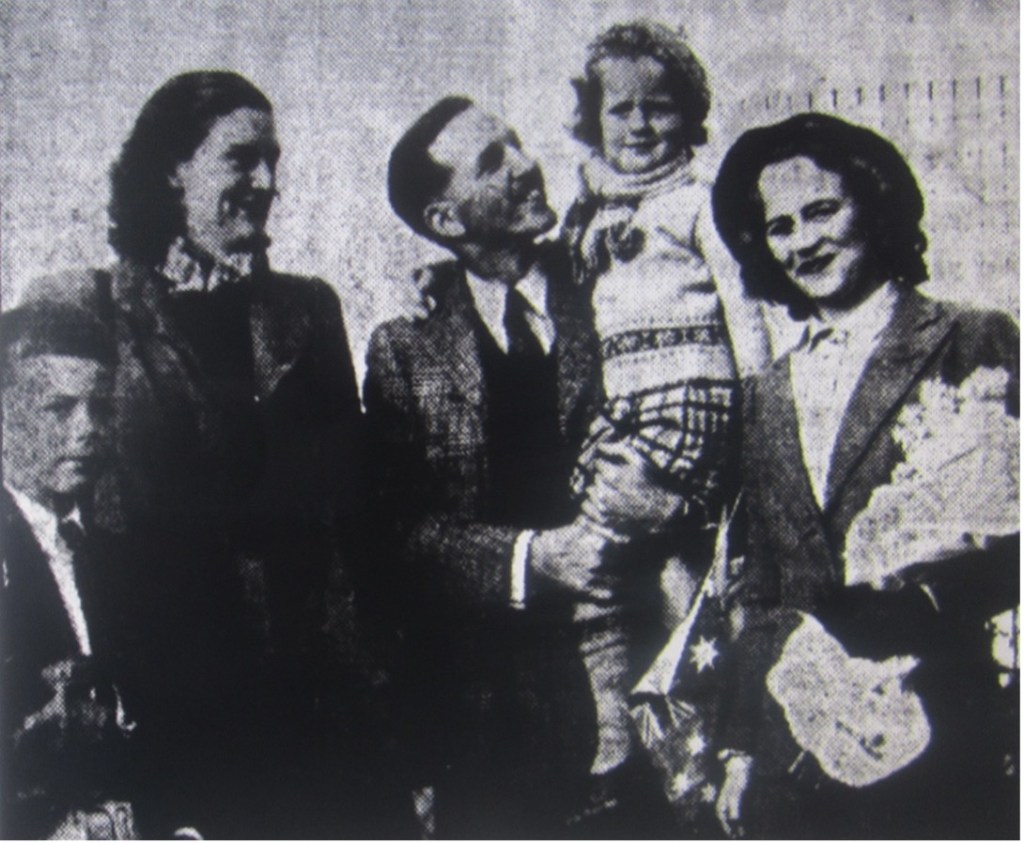
Captain Geoffrey Wikner with his family and co-pilot at Mascot Airport. From left: Val Wikner (9), Miss Audrey Morgan (co-pilot), Capt. Wikner, Chrisabel Wikner (5½), and Mrs. Wikner [Truth, 16 June 1946]
The Truth of 16 June 1946, page 34, finally reported:
‘Passengers aboard Captain Geoffrey Wikner’s Halifax bomber, Waltzing Matilda, received a chilly reception when they arrived at Mascot yesterday afternoon. No officials, either Federal or State, except Customs officers, greeted the air travellers, despite the fact, that their arrival marked the end of perhaps the most unusual flight made along the England-Australia air highway. No refreshments were offered or were available to the eight men, eight women and three children from the aircraft, except a picnic meal supplied by relatives of Capt. Wikner and laid out on rugs on a lawn near the control tower. Mrs. H. B. Dark, of Goulburn, and Mrs. W. B. Brown, of Penrith, arranged a tempting array of home-made cakes, biscuits and sandwiches, lots of butter and fruit, for the hungry passengers.
No accommodation had been arranged for some of the passengers, including women, who were on their first visit to Sydney. It was only through the initiative of Mrs. Wikner that seven of them were able to get rooms at city hotels. A crowd of more than 200, most of them relatives and friends, gave the “Waltzing Matilda’ a rousing cheer as it touched down shortly after 3.30 p.m. ……
Captain Wikner said that he hoped to go to Melbourne next week in an endeavour to get some official assistance to exhibit Waltzing Matilda in Australia. Waltzing Matilda was flown by an Australian crew on more than 30 missions during the war and should be of interest to Australians, as I believe it is the first aircraft of its type to visit here,” said Captain Wikner. He said that any proceeds from the exhibition would be donated to the R.A.A.F. Welfare Fund and the R.A.F. Benevolent Fund. Youngest passenger on the plane was Ann Scott (2½), daughter of the navigator, Charles B. Scott, D.F.M., an Australian who served with Bomber Command.’
Wikner considers the future of his aircraft ‘Waltzing Matilda’ – 1946
The Daily Telegraph of 17 June 1946, page 10, reported:
‘Captain Geoffrey Wikner said yesterday he would not manufacture aircraft in Australia because it would not pay. Captain Wikner is the owner-pilot of the Halifax bomber Waltzing Matilda which arrived in Sydney from England on Saturday – with 19 passengers. He returned to Australia after 12 years in England, where he was an aircraft designer and manufacturer.
During the war he was a ferry-pilot on all types of aircraft Captain Wikner said: “I am back in Australia for good, but my plans for the future are uncertain. I am unable to say what I intend to do with my Halifax. I bought the aircraft from the British Ministry of War Production so that I could bring my family and ‘co-adventurers’ to Australia. Two conditions of the sale were that I would not disclose the price I paid and that I would make the bomber available for raising funds for a suitable charity. I have promised to exhibit Waltzing Matilda for the R.A.F. and R.A.A.F. Benevolent Funds. I shall fly to Melbourne to see Civil Aviation Department and R.A.A.F. officials to discuss the future, and to get their opinions on exhibiting the Halifax. I am prepared to donate my services for 12 months if they think the aircraft would draw crowds.”
The Halifax made 51 bombing raids over Germany and Italy, manned by all Australian crews of R.A.A.F. 466 Squadron. It is the first Halifax and one of the largest aircraft ever seen in Australia. Captain Wikner said the Halifax would be invaluable as a freight-carrying aircraft. It could lift very heavy loads, and only minor alterations would be necessary.’
Wikner eventually sold the plane to Aircarriers Pty Ltd, a syndicate of former RAAF airmen in December 1946.
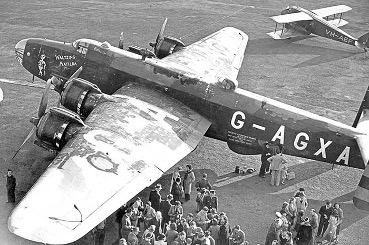
Wikner’s Halifax bomber named ‘Waltzing Matilda’ at Mascot Airport, 20 June 1946 following arrival from England [John Hopton Collection]
Council seeks tenders for lease of Nelson Bay Camping Area – 1946
In August 1946, the Port Stephens Shire Council advertised for tenders for the lease of a camping area near Nelson Bay. The Council published the following advertisement.
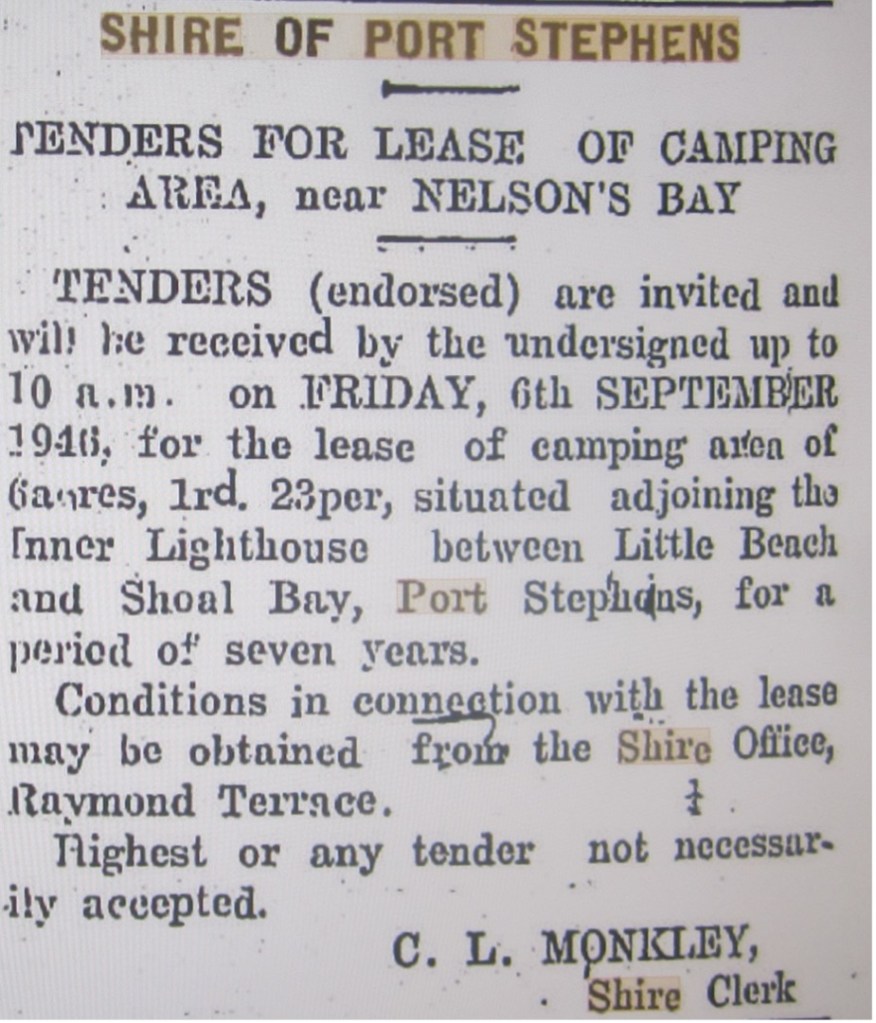
Advertisement for lease of Nelson Bay camping area placed in the Raymond Terrace Examiner and Lower Hunter and Port Stephens Advertiser, 29 August 1946.
The Newcastle Morning Herald and Miners’ Advocate of 9 September 1946, page 2, reported:
‘The tender of Mr. G. N. Wikner, of Sydney, was accepted by Port Stephens Shire Council for the lease of the camping area at Little Beach, Nelson’s Bay. The lease is for seven years; £50 for the first year and £100 per year for the balance of the lease.’
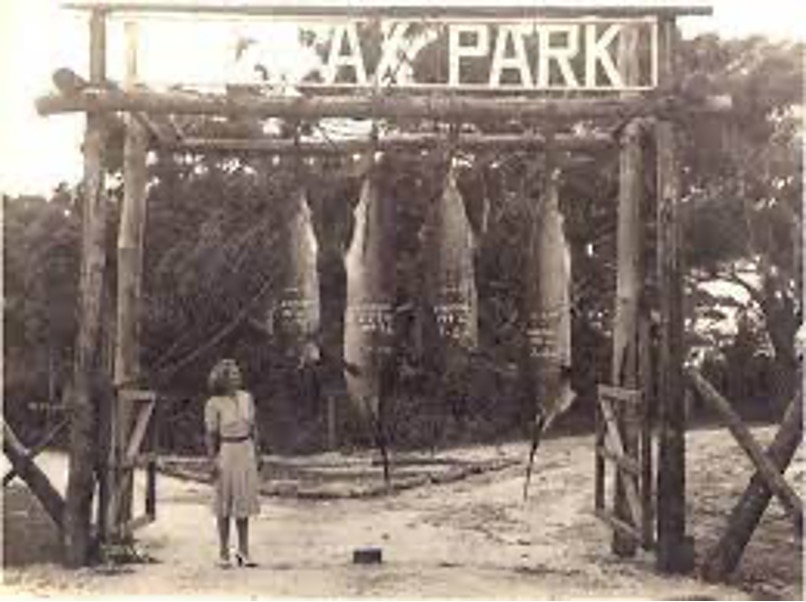
The original entry to Halifax Park, then in the early stages of its development. The person in the photograph looking at the big game fish is likely to be Mrs. Wikner.
Further information on the history of Big Game Fishing at Port Stephens is found at this link on the website.
Geoffrey Wikner addresses Newcastle Rotary Club – 1946
The Newcastle Morning Herald and Miners’ Advocate of 12 November 1946, page 2, reported:
‘The boys of the R.A.A.F. had been great ambassadors for Australia while they were in England during the war years, said Mr. Geoffrey Wikner at Newcastle Rotary Club. It was stated that Mr. Wikner designed the first flying machine in Queensland, and during the war overseas piloted 58 different types of aircraft. To return to Australia with his wife, Mr. Wikner bought a Halifax machine and arranged to take passengers with him as a cooperative venture, since he could not obtain a civil flying licence. Thie Halifax was a bomber flown by Australians in England and which had taken part in 56 raids. Mr. Wikner bought it for £2000, and the passengers contributed to the overall costs on a share basis. The machine averaged 1000 to 1200 miles a day and used 13,000 gallons of petrol. Mr. Wikner has now given up flying and is considering the establishment of a camp at Nelson’s Bay to be known as Halifax Park.’
Gertrude Wikner addresses the Free Kindergarten Women’s Auxiliary – 1946
The Newcastle Morning Herald and Miners’ Advocate of 15 November 1946, page 8, reported:
‘When Mrs. Geoffrey Wikner asked her small son what he thought about flying to Australia in a bomber, he replied, “I’d much rather go in a yacht.” Mrs. Wikner, who flew to Australia recently in a converted Halifax bomber, owned and piloted by her husband, told this story yesterday. She was guest speaker at a public meeting to form a Free Kindergarten Women’s Auxiliary.
Mrs. Wikner spoke about telegrams and letters sent to them when they announced that they would take passengers. One woman sent an urgent telegram saying, “Please reserve two single cabins and may I bring my French poodles?” Girls from all over England wrote: “Please take me to Australia to the man I love. You are my last hope.”
When the passengers were chosen, they included an ex-W.A.A.F., who had scrubbed floors and done other menial work to raise enough money for her fare. Mrs. Wikner said that everywhere en route they had wonderful food. “England seemed to be the only place without food,” she said. “At Marseilles, our first stop, we were given strawberries and cream. This may not sound a very big thing to you, but it was wonderful to us— coming from England.”
Mr. Wikner, an Australian, had told his wife and children about Australia. “My husband and I made up our minds that our children should be educated in Australia,” Mrs. Wikner said. “We also wanted them to have the benefit of Australian food and sunshine while they were small.” When they found they could not get passages for at least two years, Mr. Wikner bought the bomber. It had previously been flown on 51 bombing raids by Australians of No. 466 Squadron. Petrol and oil alone cost £2000 for the trip. Mr. and Mrs. Wikner are now living at Nelson’s Bay, where they hope to build a holiday guest house.’
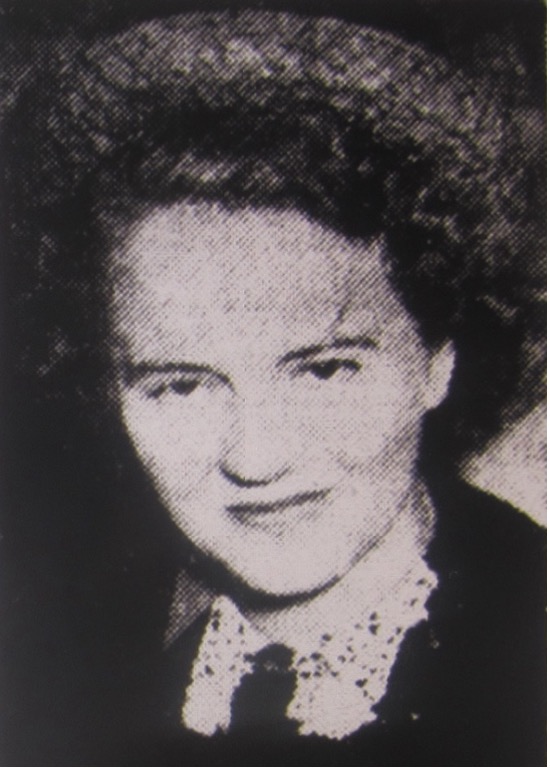
Gertrude Wikner [Newcastle Morning Herald and Miners’ Advocate, 15 November 1946]
Council restricts camping to Halifax Park area – 1946
In December 1946, the Port Stephens Shire Council sought to support Winker’s Halifax Park camping area by banning camping in the surrounding areas.
The following advertisement was published by the Council to enforce their camping rules.
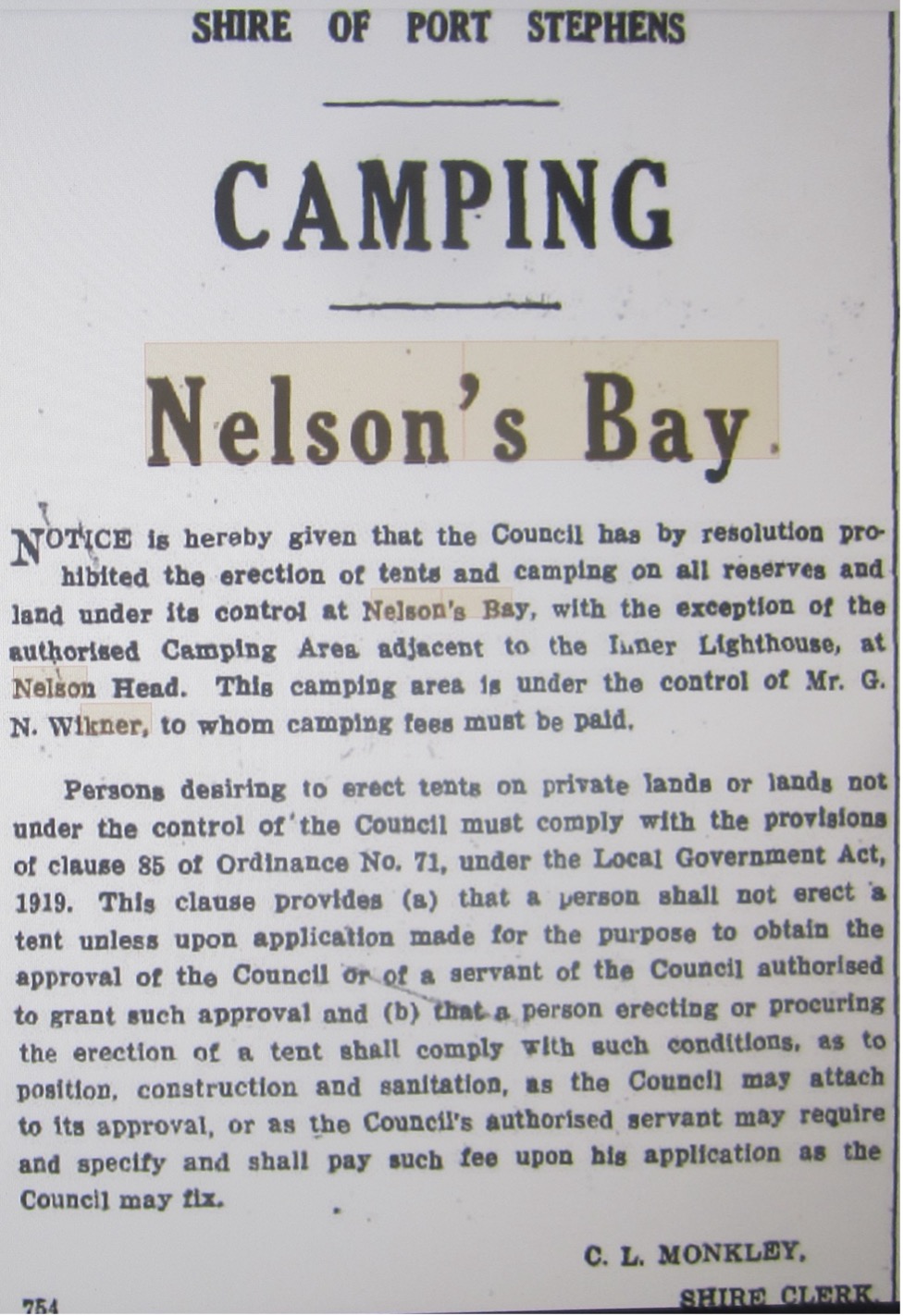
Advertisement published in the Maitland Mercury, 14 December 1946
Information on camping in the Nelson Bay and surrounding areas is published on this website at the following link.
Wikners establish Halifax Park in 1946 – a camping area and resort
The Newcastle Morning Herald and Miners’ Advocate of 25 December 1946, page 2, reported:
‘Mr. and Mrs. Geoffrey Wikner left a palatial English home surrounded by its own park lands, bought an R.A.F. Halifax bomber — Waltzing Matilda — and flew to Australia. They now live in tents on the camping ground at Nelson’s Bay, where they are establishing a model camping area and pleasure resort.
For 15 years Mr. Wikner was flying and designing aircraft. He is a cousin to Edward Percival, well known British aircraft designer. He himself designed and built aeroplanes in Queensland. One of his machines, the “Wicko” monoplane, was tested by the late Sir Charles Kingsford Smith. On six acres, behind the inner lighthouse at Port Stephens. Mr. Wikner has a number of men employed. They have built sanitary conveniences and shower blocks of concrete bricks, sank water spikes, and cleared camping areas.
Three acres will be reserved for cabins, and three for tents. The main thoroughfares will be lighted. Search lights will be used to floodlight the general ground. Over the holidays, a large gum tree will be decorated with coloured electric lights. Electricity for the scheme, which provides for a service to individual camps, will be supplied by two mobile generating plants. In the centre of the ground there will be a park area. Music will be relayed over a set of amplifiers. When possible, a dance hall will be erected on the ground.
When Mr. and Mrs. Wikner arrived at Nelson’s Bay to establish a model camping area, they decided to name the settlement ‘Halifax Park’ after the bomber they bought in England and flew to Australia. When he acquired a motor truck, Mr. Wikner had the name “Waltzing Matilda” painted on the side. That was the name of their Halifax seaplane base at Port Stephens. If this can be achieved, he expects to make arrangements for planes to operate between Rose Bay and Port Stephens at weekends and on holidays. [Further information on seaplanes operating at Port Stephens is published on this website and can be viewed at the following link.]
Camping under typical pioneer conditions at Nelson’s Bay, Mrs. Wikner, an Englishwoman from Hampshire, has taken to Australian life. Her mother was killed in a bombing raid, her brother died while on service with the R.A.F., and her sister in-law, the late Lady Cynthia Williams, was killed when she trod on a land mine. “I love the open spaces in Australia, and am getting a real thrill out of camping,” she said. “Life here is just one long holiday.”
Pleasure-loving Mrs. Wikner said they decided to come to Australia because it was the most pleasure-loving country in the world. With the idea of providing pleasure for Australians and overseas visitors, they toured the coast between Sydney and Brisbane, and selected Nelson’s Bay for their project. “Australia is big enough to create pleasure areas in developed and undeveloped places,” said Mrs. Wikner. “We have selected an undeveloped area and will do what we can to preserve the natural surroundings.” Mr. Wikner operated a factory which manufactured plastic parts for aircraft in England. While he was on service with the Air Force, Mrs. Wikner managed the business. Until their arrival in Australia their two children, Val (9), and Christina (6) had seldom tasted butter, and knew few fresh fruits. Both children enjoy the bushlands at Nelson’s Bay. Val is attending Barker College, and Christina is a pupil at Nelson’s Bay School.’

Gertrude Wikner and her two children ramble in the sunshine amid the ferns and trees at Nelson’s Bay [Newcastle Morning Herald and Miners’ Advocate, 25 December 1946]
Transfer of Halifax Park lease – 1947
The Dungog Chronicle of 22 July 1947, page 2, reported:
‘The Port Stephens Shire Council agreed to transfer the lease of the camping area, from G. N. Wikner to a company to be called Halifax Park Co. and the lease to be extended to 10 years in lieu of 7 years. Mr. Wikner was the manager of the company. Capital involved would be about £3,000 to £4,000. Cr. Upton said the lessee had spent a lot of money there and with more capital he could further extend. The Health Inspector said they had an ambitious scheme in mind.’
Military threatens to close road to Halifax Park – 1947
The Newcastle Morning Herald and Miners’ Advocate of 9 September 1947, page 5, reported:
‘The Health Inspector (Mr. Conroy) said the lessee of Halifax Park, Nelson’s Bay, had complained that Commander Murray had threatened to close the road which was the only access to the park. Councillors said it was difficult to get information from the Army and Navy Departments on the area they required at Nelson’s Bay. Shire officers will interview Commander Murray.’
The Raymond Terrace Examiner and Lower Hunter and Port Stephens Advertiser of 11 September 1947, page 4, further reported:
‘With reference to the road to Halifax Park, Nelson Bay, Inspector Conroy said he had visited the lessee Mr. Wikner. Commander Murray, (in charge of H.M.A.S. Assault), had complained of the road and had threatened to close it. This road was the only access road to Halifax Park. [Further information on H.M.A.S. Assault is published elsewhere on this website and can be viewed at the following link].
The Naval Board had suggested that the road be repaired by Commander Murray, but he said he would prefer to close it. It was also considered possible that trouble would arise with campers on the area near the parks known as the Catholic area. This was to be used as a boy’s camp. It was difficult to get any information from the Army or the Navy as to what the Commonwealth Government intend in the area. Cr. Morgan moved that the three officers should interview Commander Murray on the closing of the road and its effect on Halifax Park. Cr. Parish seconded the motion which was carried.’
Financial losses at Halifax Park caused by illegal camping – 1948
The Raymond Terrace Examiner and Lower Hunter and Port Stephens Advertiser of 12 February 1948, page 2, reported:
‘The Health Inspector, (Mr. A. A. Conroy) reported to the recent meeting of the Port Stephens Shire Council as follows: comprehensive inspection of the above tourist areas [at Nelson Bay and Shoal Bay] revealed that indiscriminate camping over the Christmas period has endangered the health of the surrounding community. …..
The manager of Halifax Park, Pty. Ltd. (Mr. Wikner), of Nelson Bay, wrote enquiring what steps the Council will take to implement the agreement [to ban camping from areas outside Halifax Park]. They claimed considerable loss had accrued to them through camps being allowed elsewhere. They would like, cooperation from the Council. Mr. Monkley, Shire Clerk, said the Council’s agreement was to prevent camping on grounds under the control of the Council. Cr. Rodgers said the Council should have the stomach to go ahead and issue summons to the defaulters. Ample time had been given to people. Council should look after Mr Wikner. The park had lost 60 campers. £7000 was invested in the camping area. If it slumps Mr. Wikner may have a legal claim on the Council if campers camp outside. It only wants a few to be prosecuted.
Cr. Richardson said he had discussed the matter with Mr. Wikner and the flea in his ear was the area adjoining. This area was under the control of the navy or the army. The Shire had no control over it. He saw filthy conditions, rubbish thrown even on the road. To prosecute those who offended was not as easy as Cr. Rodgers suggested. Shire officers had already found this out. The whole thing is clouded as no one knows who is responsible. …..
Mr. Wikner said the area was filthy. His campers complained that it smelt at night. Cr. James said he went through and saw nothing offensive. Cr. Morgan said he did not like Halifax Park and they could not force people to go there. He was not throwing off at the park. They should find out the area involved and take strong action. Camps on the roadside were wrong. Would it be possible to appoint a special constable to be stationed at Nelson Bay. There should be quite enough revenue to pay for it. Something had to be tried. He thought the health inspector should recommend some line of action — not only make reports. …..
Cr. Richardson said unsatisfactory conditions prevailed at One Mile Beach where campers rubbish was littered about. Cr. Morgan moved that in view of the Inspector’s report a survey of the possibility of a special constable being employed to supervise camping at Nelson Bay at holiday time be made. The Shire officers will report, Cr. Rodgers seconded, and the motion was carried.’
The Raymond Terrace Examiner and Lower Hunter and Port Stephens Advertiser of 22 July 1948, page 4, further reported:
‘Cr. Morgan said he had seen Mr. Wikner and discussed the camping around Nelson Bay. Mr. Wikner made no secret of the fact that he had invested a large sum of money to provide suitable camping facilities. He had the idea of a monopoly in the area. It was galling to see campers just outside his gate. We have no jurisdiction over some lands. The only way to supervise camping is to pay someone to police the area. The Health Inspector cannot be there all the time. A uniformed man would make a greater impression. We must do something this summer to show the Council is concerned in the control of campers. Mr. Conroy said Council can prevent the erection of tents. The Shire Clerk, (Mr. Monkley), in reply to a question said a caravan can camp anywhere. They are considered motor vehicles as far as the law goes.
Cr. Morgan suggested putting up big signs and advertise for a ranger or caretaker for three months. Cr. Rodgers said we covered the same ground at a recent meeting and decided to prosecute. Only a limited number can be accommodated in Halifax Park. There should be a compromise somewhere. We have a moral obligation so let us stick to it. ……
Mr. Conroy said it could be easily settled if the Navy and the Catholic people fenced in their areas or sublet to Mr. Wikner. Cr. Morgan seconded. Cr. Parish said he supported and considered the area had been abused. It has been used by a section of people who don’t want to shoulder any responsibility they only go there to have what they call a good time. This area should be brought up to the standard of other watering places along the coast. The motion was carried.
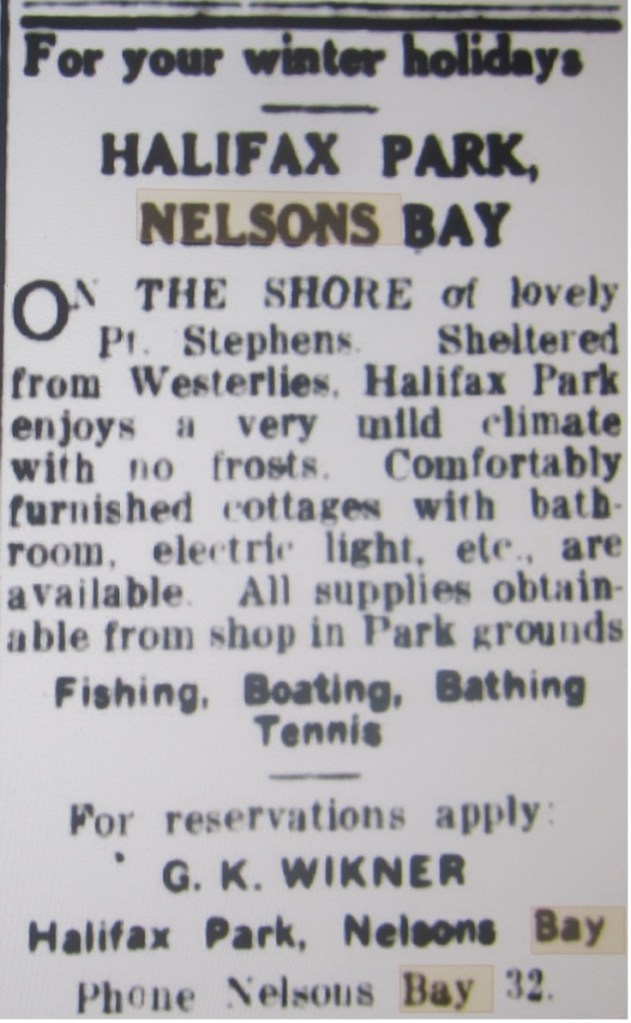
Advertisement for Halifax Park [Central Western Daily, 1 May 1948]
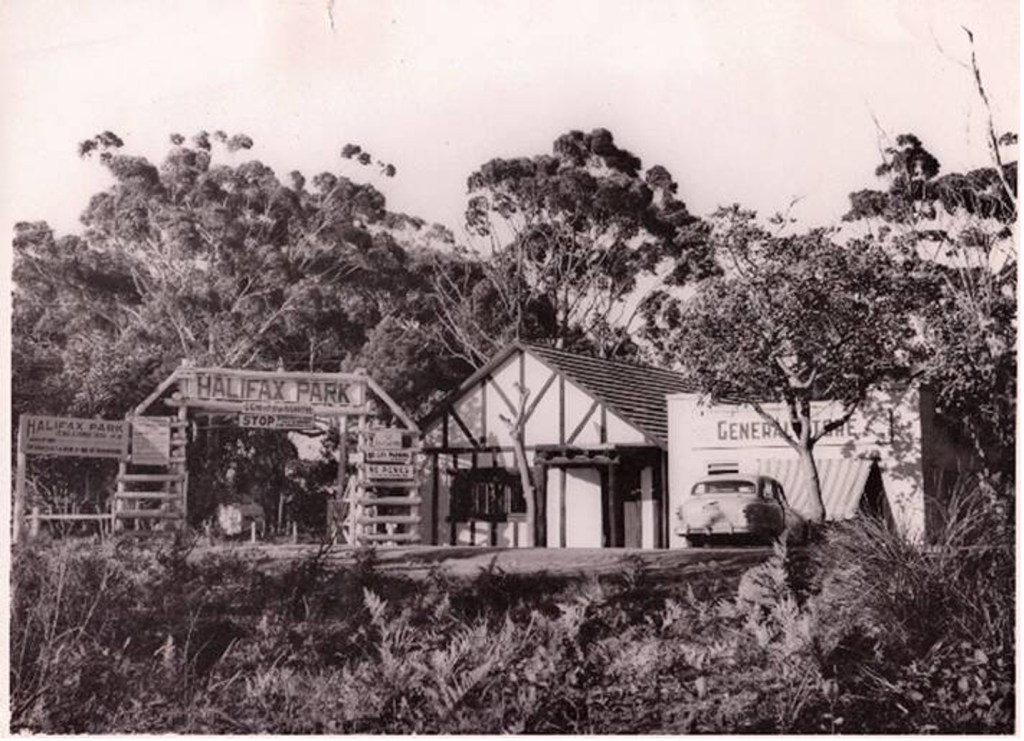
Entrance to Halifax Park, showing the General Store on the site, circa 1950’s.
Portrait of Gertrude Wikner entered in Archibald Prize – 1948
The Newcastle Morning Herald and Miners’ Advocate of 17 November 1948, page 1, reported:
‘This portrait [see below] of Mrs. G. V. Wikner, of Halifax Park, Nelson’s Bay, painted by well-known portrait and landscape artist Howard Barron, has been entered in this year’s Archibald Prize. Mr. Barron has also just completed a portrait of Mrs. H. A. C. Kloster, of New Lambton. Mrs. Wikner is the wife of Mr. G. Wikner, who flew from England to Australia in his Halifax bomber, ‘Waltzing Matilda.’
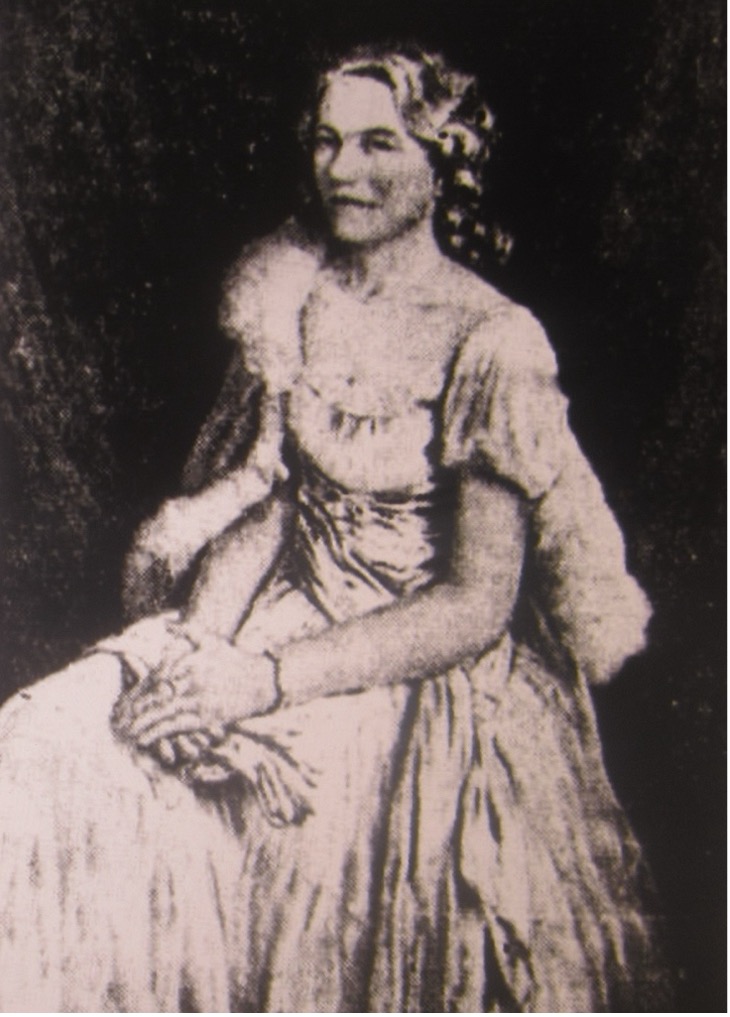
Portrait of Gertrude Wikner entered in the Archibald Prize [Newcastle Morning Herald and Miners’ Advocate, 17 November 1948]
Scouts Camp held at Halifax Park – 1949
The Newcastle Morning Herald and Miners’ Advocate of 3 May 1949, page 2, reported:
‘About 200 scouts in the Newcastle and Hunter River area spent their annual camps at Halifax Park, Nelson’s Bay, at the weekend. The camp began on Saturday afternoon and ended yesterday. The scouts came principally from the Newcastle, Muswellbrook and Cessnock districts. They held a “Scouts’ Own” church service on Sunday, and campfires on Saturday and Sunday nights. Other campers on the park attended Sunday night’s campfire. Officers in charge of the camp were the Area Commissioner (Mr. S. C. McCrum), the assistant Area Commissioner for Scouts (Mr. C. B. Searle), and the Assistant Area Commissioner for Sea Scouts (Mr. A. T. Goodwin). Other Scout officers were District Commissioners J. Campbell (Upper Hunter). H. Cornally (Waratah-Mayfield). and Mr. A. Victor. District Scout Master, Mulumbimba.’
Novel to be published about Wikner’s flight to Australia – 1950
The Newcastle Morning Herald and Miners’ Advocate of 5 January 1950, page 6, reported:
‘Nelson’s Bay and Newcastle district will provide the background for two Australian novels to be published in America within the next 18 months.
Both novels will be the long-range result of what was originally intended as a three weeks’ holiday at Nelson’s Bay by a South African authoress. Mrs. Daphne Rooke, her husband and six-year-old daughter, Rosemary, migrated to Australia from South Africa three years ago. After a year in Sydney, they went to Nelson’s Bay for three weeks’ holiday. The place and people who lived there so intrigued Mrs. Rooke that she has not been back to Sydney since. Instead, she has taken up residence in a house being built gradually round a garage. Since she moved in among the sawdust and shavings of her rapidly-expanding home, she has been writing continuously. It was here that she wrote her second novel, to be published by an American firm next month. Entitled “A Grove Of Fever Trees,” it is set in North Zululand, where she spent her girlhood. ……..
As a change from novels, Mrs. Rooke has also written a book, “Be Not Disturbed,” dealing with Captain Geoffrey Wikner’s flight to Australia in a Halifax bomber. Written in the form of a diary, it was compiled from Mr. Wikner’s personal records of the trip. In a foreword, Mrs. Rooke has told of his early life in Australia. In an epilogue, she deals with his and his wife’s life since they returned to Australia and established a holiday camp at Nelson’s Bay.’
Further information on Daphne Rooke is published on this website at the following link.
A Small World – 1950
The Newcastle Sun of 24 March 1950, page 1, reported:
‘Before the war Group Captain N. B. Littlejohn was chief flying instructor at the Hampshire Aero Club in England. A mile or so away Mr. Geoff Wikner manufactured aircraft. Before the war Mr. Littlejohn flew his wife to Australia. After the war Mr. Wikner flew his wife to Australia. Between times they had been widely separated, flying in different parts of the world. Mr. Wikner started a tourist camp at Nelson Bay. Mr Littlejohn was placed in charge of the Nelson Bay Migrant Camp. Once again, on this side of the earth, they are living within a mile of each other.’
Further information on the Nelson Bay Migrant Hostel is published elsewhere on this website and can be viewed at the following link.
Christmas at Halifax Park – 1950
The Newcastle Morning Herald and Miners’ Advocate of 27 December 1950, page 1, reported:
‘About 500 visitors were camped at Halifax Park, Nelson Bay, last night. The proprietor of the park (Mr. G. N. Wikner) said most of the visitors spent the day fishing and swimming. The children went for pony rides. About 75 carloads of people visited Nelson Bay for the day. Wikner said visitors to Halifax Park would have their Christmas tree to-night, when most visitors would have arrived.’
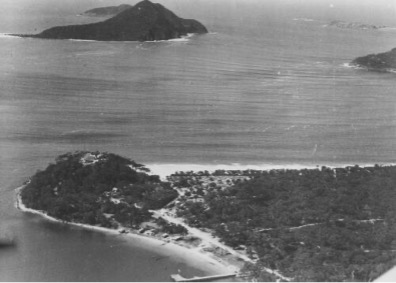
Halifax Park located adjacent to Nelson Head, 1950 [National Library of Australia]
Masonite Factory Picnic – 1951
The Raymond Terrace Examiner and Lower Hunter and Port Stephens Advertiser of 15 February 1951, page 2, reported:
‘The Masonite Social and Welfare Club held their annual picnic on Friday last to Halifax Park, Nelson Bay. There was an attendance of close on 700 employees and their families. These comprised those employed in the factory, the cutters, lorry drivers and various other employees engaged in the supply of timber etc. The large crowd was transported by 11 buses and numerous private cars…..
The picnickers were very fortunate on the occasion to have such a fine warm, sunny day and naturally swimming and boating trips were very popular with young and old alike. The main sporting event was the Masonite men’s 100 yards Handicap footrace. …..
During the afternoon an orchestra engaged for the occasion played dance music in the hall and special dance prizes kindly donated by our General Manager, Mr. H. W. Morgan were competed for. After tea at 6 p.m. the buses conveyed the tired but happy crowd back home.’
Christmas at Halifax Park – 1951
The Newcastle Morning Herald and Miners’ Advocate of 27 December 1951, page 1, reported:
‘Able Seaman Tub [a goat] was demobilised recently, and since Christmas Eve has had a new civilian name, Rudolph, or to be more exact, Rudolph the Red Nosed Reindeer.
Rudolph is a goat – a real one. His home was at H.M.A.S. Assault, Nelson’s Bay, till the Commander (Lieut.-Commander M. Gibbins) gave him to Mr. G. Wikner, proprietor of Halifax Park, a holiday camping area. At Halifax Park. Rudolph or Able Seaman Tub, as he then was, nibbled, happily at the grass and anything else he could find to eat: a perfectly contented goat. On Christmas Eve came his red-letter day. Able Seaman Tub was taken away, his nose was painted a bright red, and his ample horns were supplemented with wooden antlers.
Attached to a sleigh with Santa Claus, he became Rudolph, the Red Nosed Reindeer. Rudolph arrived with Santa at a Christmas party given for the children of Halifax Park and was an immediate hit. His brief spell of’ glory lasted for two hours, but to all the children of the camp, more than 100 of them, he is irrevocably Rudolph. Back nibbling grass yesterday, Rudolph still had traces of red paint on his nose and was getting lots of attention from the youngsters he had entertained on Christmas. Eve.’
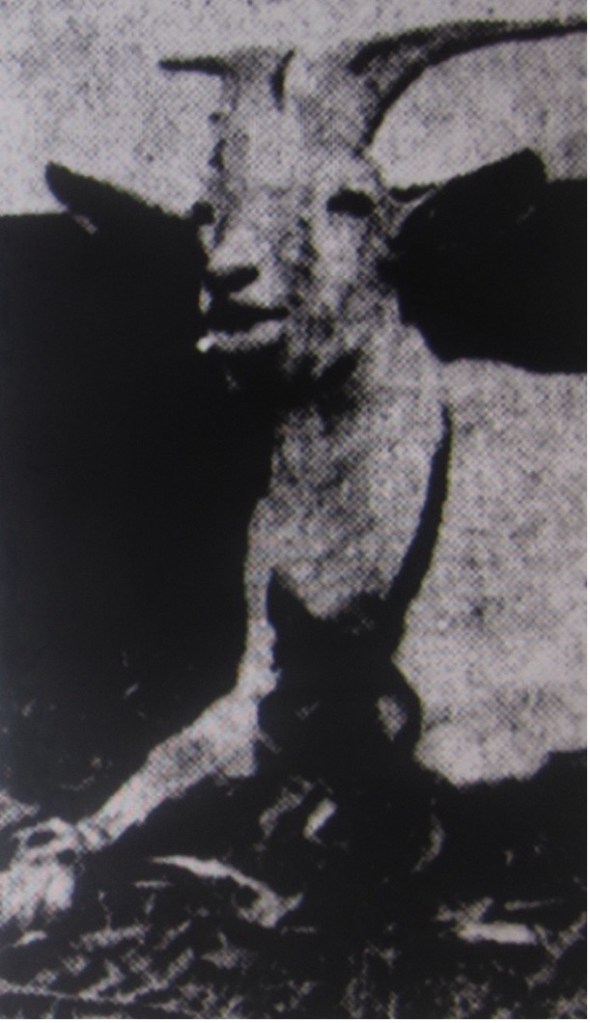
Rudolph the goat, formerly ‘Able Seaman Tub, of H.M.A.S. Assault [Newcastle Morning Herald and Miners’ Advocate, 27 December 1951]
Death of Gertrude Wikner – 1952
Mrs Gertrude Wikner died on 21 April 1952, aged 38 tears.
The Newcastle Morning Herald and Miners’ Advocate of 22 April 1952, page 5, published the following obituary:
‘Mrs. Gertrude Violet Wikner, co-director of Halifax Park Pty. Ltd., a Port Stephens tourist resort, died in the Mater Misericordiae Hospital yesterday 20 minutes after an operation. She was 38. Mrs. Wikner was born in England. In 1940, while her husband was a ferry pilot in the Air Transport Auxiliary, she was appointed a director of Foster-Wikner Aircraft Co. Ltd., Southampton. In 1946, after she and her husband had tried, without success, to obtain passages to Australia, they purchased a Halifax bomber and flew out with 20 other migrants. Mrs. Wikner is survived by her husband, Geoffrey, son Kynaston Val, 15, and daughter Isabel Christina, 11.’
Gertrude Wikner was cremated at the Beresfield Crematorium.
Misfortune at Halifax Park – 1953
The Newcastle Morning Herald and Miners’ Advocate of 6 January 1953, page 2, reported:
‘Halifax Park, Nelson’s Bay, are wondering what will happen next. On Friday Mr. R. Buxton, of Hamilton, was burnt when a bottle of spirit exploded as he was lighting a stove, and he was taken to hospital. Mrs. E. Irwin, a guest of Mr. and Mrs. Buxton, got a bucket and threw water over a nearby tent to stop the flames spreading. In the confusion someone entered the Buxtons’ tent and stole £25 from Mrs. Irwin’s bag.
Next, a stave caught fire in another tent, but it was hurled outside before it could do any damage. Then more Fourth avenue [road in the camping area] residents were among nine adults and five children in a launch which drifted on to the rocks at Nelson’s Bay after engine trouble. To complete the tale of misfortune, a second guest of the Buxton’s was on her way home to Newcastle when the bus developed engine trouble-like the launch the result of a cracked cylinder head—and she had to transfer to another bus.’
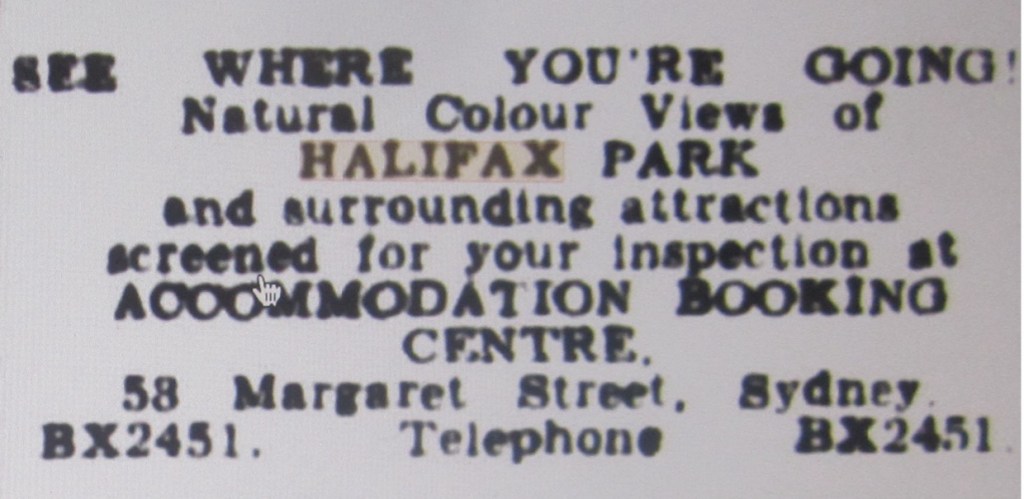
Halifax Park as advertised in Sydney newspapers [Sydney Morning Herald, 17 January 1953]
Geoffrey Wikner seeks improvements at nearby Little Beach – 1955
The Raymond Terrace Examiner and Lower Hunter and Port Stephens Advertiser of 17 November 1955, page 5, reported:
‘The Secretary, Nelson Bay Urban Area Committee forwarded a request from Mr. G. N. Wickner, Halifax Park, asking for the erection of public conveniences at Little Beach. The Committee also advised that in view of the number of visitors using the beach over weekends such request should be agreed to and asking Council to subsidise the work.’
Wikner seeks permission to erect signage – 1955
The Raymond Terrace Examiner and Lower Hunter and Port Stephens Advertiser of 22 December 1955, page 6, reported:
‘G. Wickner, of Halifax Park, Nelson Bay asked Council’s permission to erect a large sign board on the north side of Hexham bridge indicating next turn to Halifax Park. Also to erect a signpost near the Park at Nelson Bay end of Stockton Road. Cr. Norburn moved that this was against Council’s policy to permit hoardings, but Council will erect finger post signs.’
Concluding Comments
Soon after Geoffrey Wikner sold his beloved Halifax plane to Aircarriers Pty Ltd, in December 1946, it had a troubled future.
After a failed commercial flight in June 1947 from Sydney to Singapore, carrying a mixed cargo. the plane returned to Sydney with engine problems and never flew again. The plane was advertised for sale in the Sydney Morning Herald of 18 August 1947 and 18 December 1947. The plane was broken up for scrap at Mascot Airport during 1948.
Halifax Park was the first caravan park of its type developed in Australia. Geoffrey Wikner and his wife, Patricia, were still managing Halifax Park in 1963.
The Halifax Holiday Park at Nelson Bay is currently under the ownership and management of the Port Stephens Council. In October 2016, a celebration was held at Halifax Park to mark its seventy years of history.
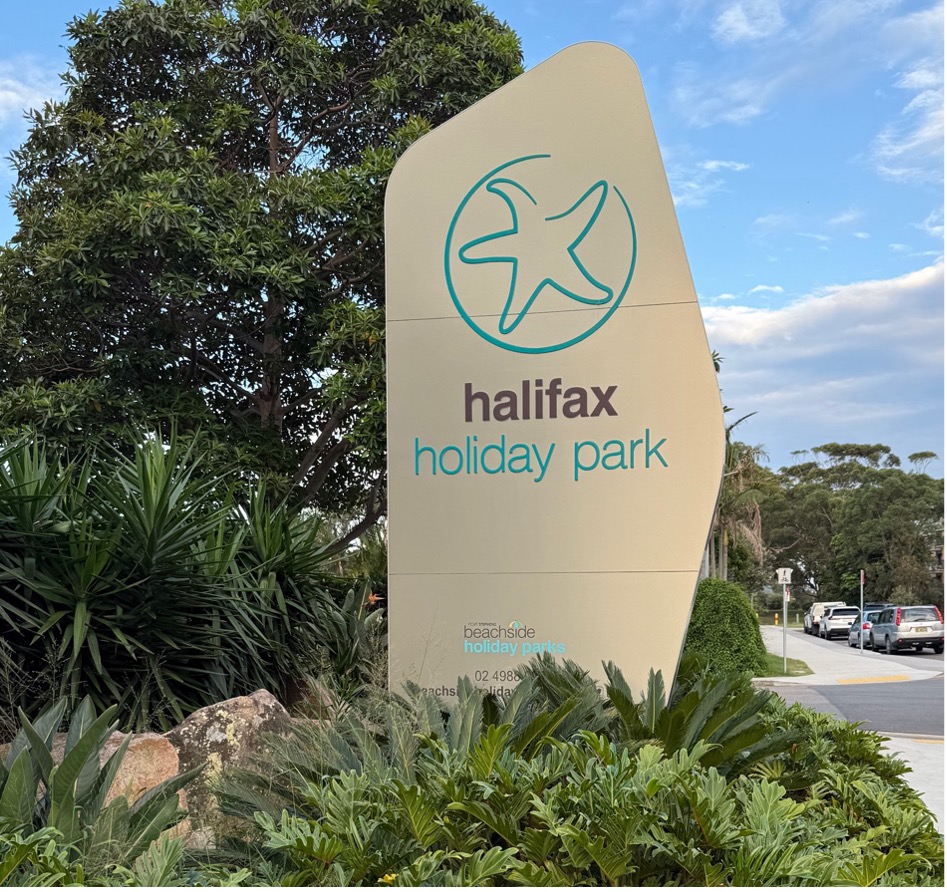
Current entrance signage at Halifax Park [Author photo]
The history of Halifax Park and Geoffrey Wikner’s Halifax aircraft is found on the commemorative plaque located at the entrance to the park.
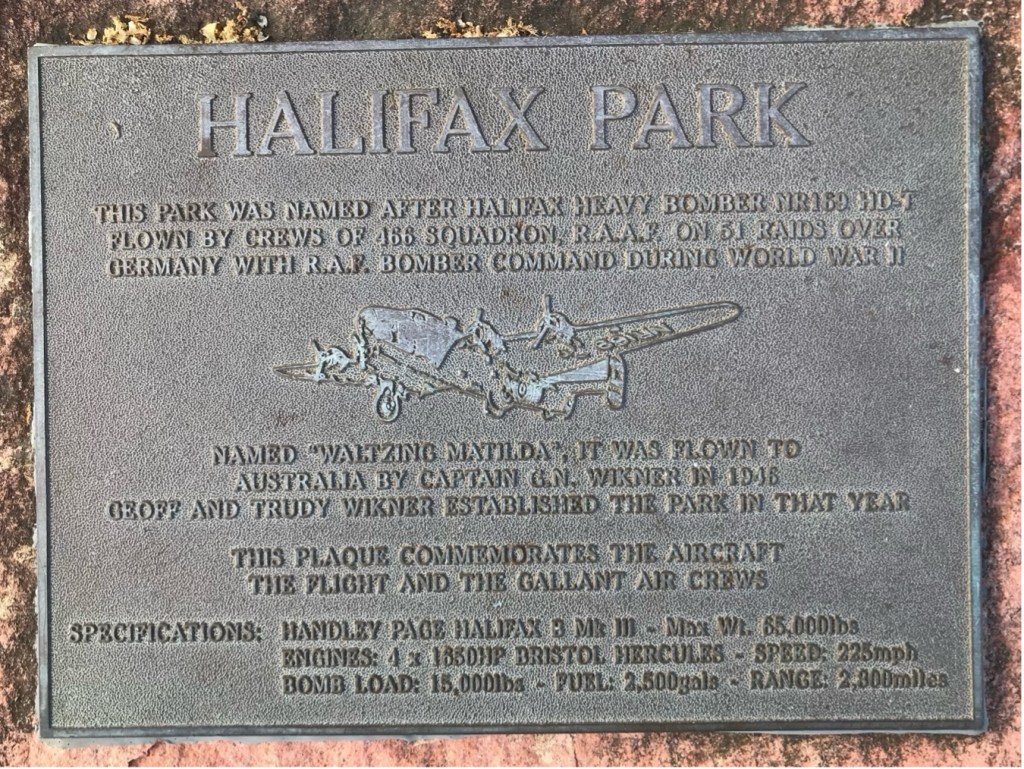
Halifax Park plaque, located at its entrance [Author photo]
The wording on the plaque reads:
HALIFAX PARK
This park was named after Halifax Heavy Bomber NR169 HD-T flown by crews of 466 Squadron, R.A.A.F. on 51 raids over Germany with R.A.F. Bomber Command during World War II.
Named ‘Waltzing Matilda’, it was flown to Australia by Captain G. N. Wikner in 1946. Geoff and Trudy Wikner established the Park in that year.
This plaque commemorates the aircraft, the flight and the gallant air crew.
Specifications: Handley Page Halifax B Mk III – Max. Wt. 65,000lbs.
Engines: 4 x 1650OHP Bristol Hercules – Speed: 235mph.
Bomb Load: 15,000 lbs – Fuel: 2,500gals – Range: 2,800 miles.
A piece of memorabilia previously displayed at Halifax Park was a miniature Dutch Windmill donated by Catherine Wikner in 1988.
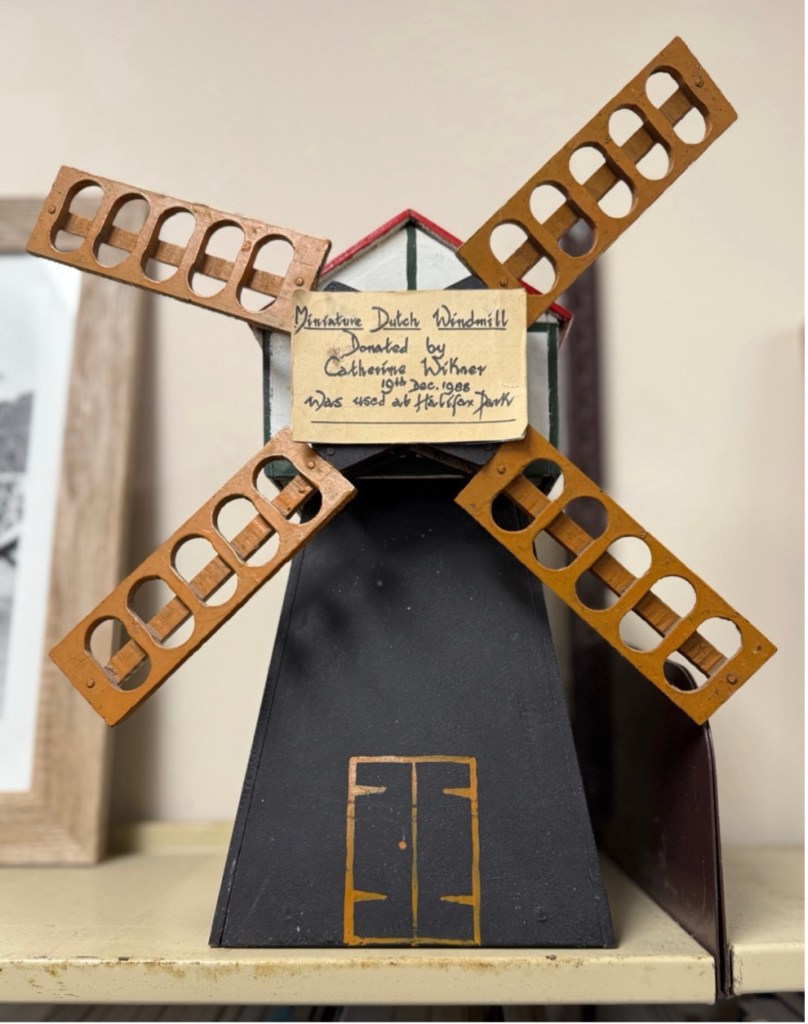
Miniature Dutch Windmill that was displayed at Halifax Park [now held by Tomaree Family History Group at Tomaree Library, Salamander Bay – Author Photo]
Researched and compiled by Kevin McGuinness
April 2025


 Port Stephens - a history exploration