
Introduction
The Pindimar Post Office opened in 1919 when great optimism in the economic future of the area was being promoted by land speculators.
They brought up large areas of land around Pindimar during the 1920’s and sold subdivided blocks on the promise that a great city would be developed on the site.
One such proposed land development was Pindimar City, the story of which is found a this link on the website.
For many years the mail was delivered to Pindimar by a boat owned by Korsman Bros. The service commenced from Tea Gardens and finished at Salt Ash, stopping at various pick-up points along the Port.
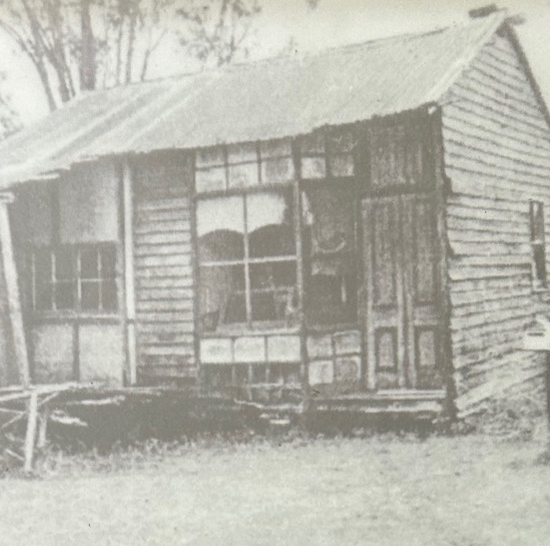
This paper contains a number of newspaper articles relating to the Pindimar Post Office and its telephone service. There are a number of photos of the Post Office building and artifacts.
Telephone line extended to Pindimar – 1923
The Dungog Chronicle of 6 March 1923, page 2, reported:
‘S. L. Gardner, Esq., M.H.R., has been informed as follows: — I have to intimate that approval has been given for the erection of a telephone line from the Clarence Town – Tea Gardens line to Pindimar and for the establishment of a telephone office at the latter place. The work will be carried out when circumstances permit.’
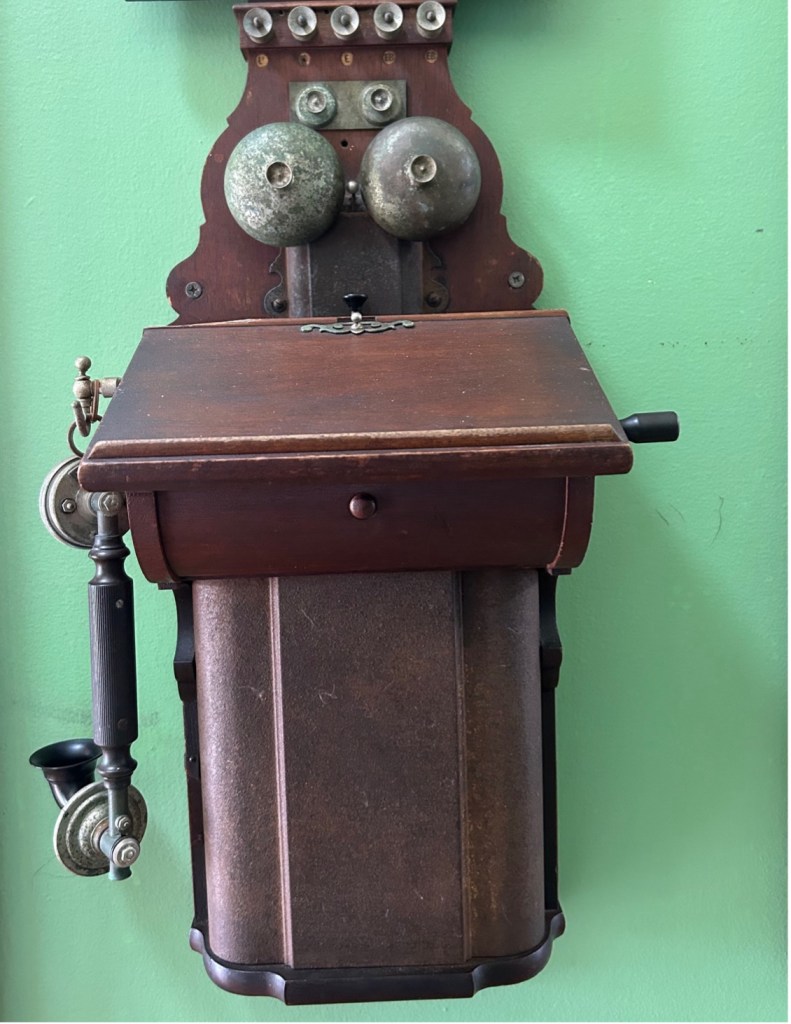
Ericsson wall phone, supplied by the Postmaster General Department, used in the Pindimar Post Office [on display at the Inner Lighthouse Museum, Nelson Bay]
Political Meeting Held at Post Office – 1927
The Dungog Chronicle of 4 October 1927, page 4, reported:
‘Mr. Bennett addressed a fairly well attended meeting at the Post Office, Pindimar, on Monday afternoon. Mr. S. Woods occupying the chair. He dealt trenchantly with the Lang administration and defined the policy of the Nationalist Party. The speaker was accorded, a hearty vote of thanks at the conclusion of the meeting.’
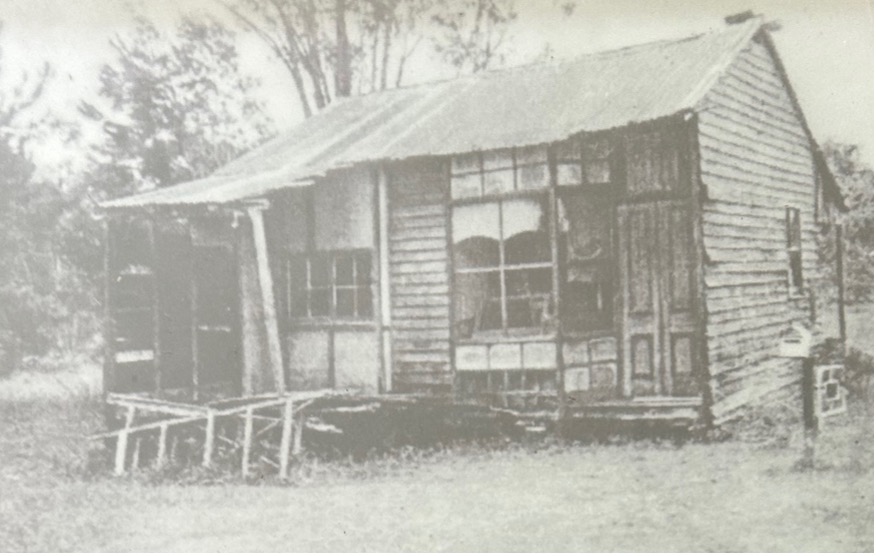
Front view of the former Pindimar Post Office [Inner Lighthouse Museum, Nelson Bay]
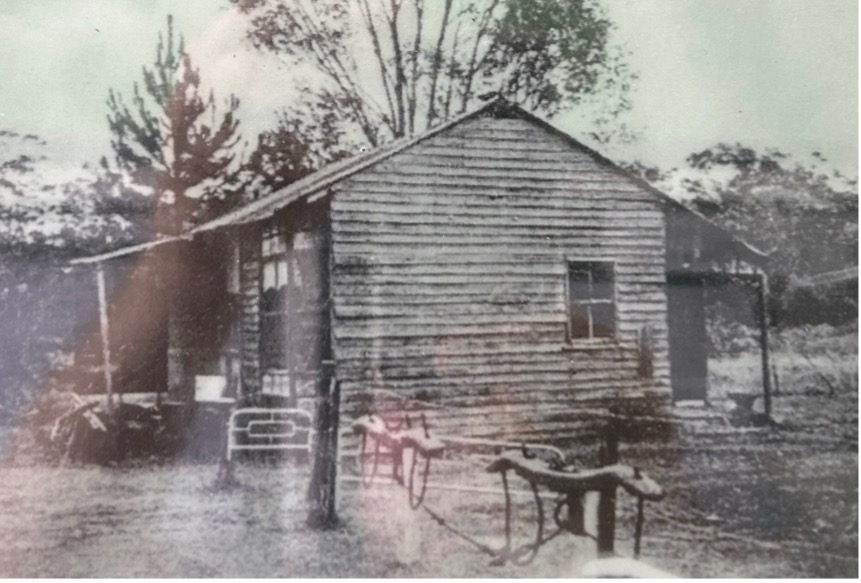
Side view of the former Pindimar Post Office [Inner Lighthouse Museum, Nelson Bay]
Slow delivery of mail to Pindimar – 1928
The Maitland Weekly Mercury of 5 May 1928, page 7, reported:
‘Although Pindimar is only four miles from Tea Gardens and the mail steamer calls daily (morning and evening) all mail matter is carried on and returned two days later to Pindimar — really a letter posted at Tea Gardens takes three days to reach Pindimar, so an effort is to be made to have a bag sent direct from Tea Gardens to Pindimar.’
Improved mail delivery to Pindimar – 1930
The Dungog Chronicle of 11 July 1930, page 4, reported:
‘S. L. Gardner, Esq., M.H.R. has been informed as follows: — With reference to a communication dated 10/6/1930, received from Mr. Thomas E. Pyman, Honorary Secretary of the Tea Gardens Progress Association Box 2, Post Office, Tea Gardens, relative to letters, Tea Gardens to Pindimar, to be delivered direct, instead of being taken on to Newcastle and thence returned, I have to inform you that arrangements have been made, as from 24/ 6/1930, to have the letters in question delivered at Pindimar Post Office, by the return boat each morning instead of being carried on to Newcastle.— J. W. Kitto, Deputy Director, Posts and Telegraphs.’
Improvement to road from Port Office sought – 1931
The Dungog Chronicle of 22 May 1931, page 4, reported:
‘The Pindimar Progress Association at its last meeting decided to ask the Stroud Shire to give the unemployed of Pindimar work on the roads in that locality, and suggest that the road from the Post Office to Lookout Hill be attended to, as its condition is deplorable. Another matter regarded as urgent is repairs to the bridge which gives the residents of Lower Pindimar access to the business centre. The importance of these matters will no doubt impress the Council.’
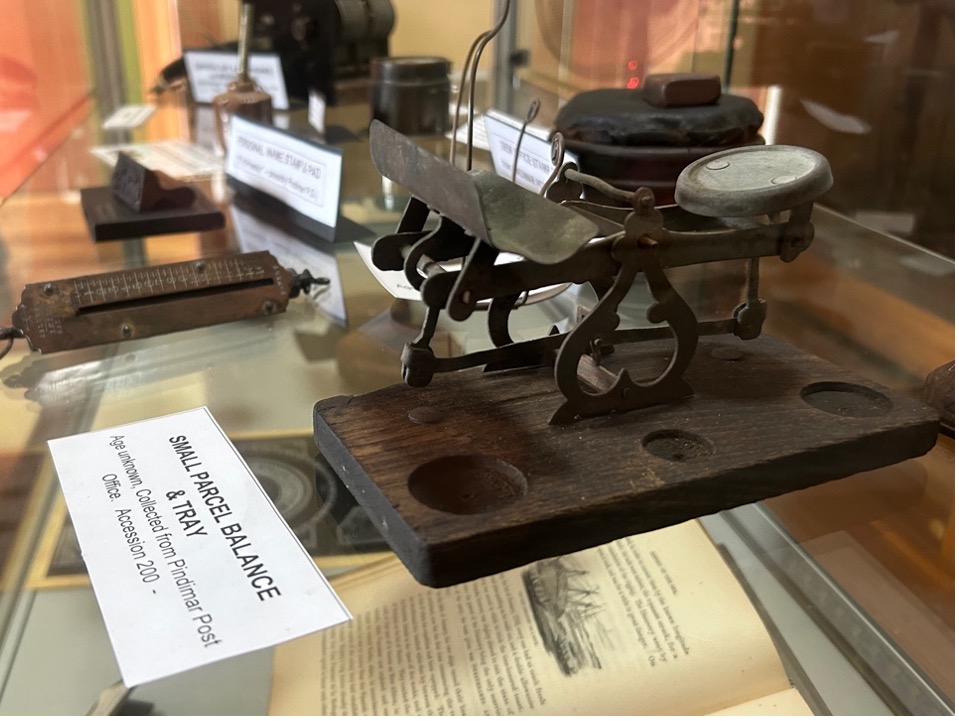
Small Parcel Balance and tray (foreground) and a large stamp pad (behind on right) which were formerly in use at the Pindimar Post Office [on display at the Inner Lighthouse Museum, Nelson Bay].
Problem with the new contract for mail delivery by boat to Pindimar – 1935
The Newcastle Morning Herald and Miners’ Advocate of 2 August 1935, page 13 published the following letter to the editor concerning the new mail contract that landed mail by boat at Pindimar:
‘I wish to enlighten the postal officials regarding the local mail contract, which is to begin in the new year. The tenders state that the commencing point for our mail delivery is from a little fishing village named Pindimar situated about six miles from Tea Gardens, via Karuah, and enclosed by rugged mountains. The road from this place, connecting with Tea Gardens-road, is a partly formed dirt road, and in rough, rainy weather a heavily loaded mail car would find it almost impossible to traverse this road.
The only one to benefit by this route is the Tea Gardens end of this nineteenth century contract, as the days of carrying mail by boat has gone by the board years ago. In keeping up this out-of-date method of letting contracts, the department is not at all fair to the people, to whom their mail and papers are an important item in their daily lives. Receiving their mail matter early in the day is as fair and just to them as their city cousins expect it to be to them.
I take the liberty to suggest that the mail be brought direct from Newcastle G.P.O. by car, and, traversing a fine road, leaving early in the morning and delivering the mail at the following places —Ferodale, Limeburner’s Creek, Karuah, Pindimar, and reaching Tea Gardens at 10.30 a.m. each morning, instead of 5.30 p.m. in the evening. Weather conditions need not be considered, as this particular road in one of the finest fit the State.
Round about £200,000 worth of timber, fish, oysters, and prawns is circulated in the Port Stephens district per annum. Surely the people living in such a valuable part of the State are worth considering for a decent early mail. The idea of taking two steps backwards instead of one step forward, by keeping mail boats on this run, whereas we have a motor-car road equal to any in the State, should be wiped out. Hoping these suggestions may bear fruit, to the benefit and satisfaction of all concerned. “Pro Bono Publico.” Eriwaylong, via Raymond Terrace.’
Facility for the payment of pensions at Pindimar – 1936
The Gloucester Advocate of 10 November 1936, page 3, reported:
‘The Rt. Hon. Dr. Earle Page has been advised by the District Inspector, Newcastle Postmaster-General’s Department, that approval has been given for the establishment of pensions paying facilities at Pindimar Post Office as from the 19th November.’
Concluding Comments
Postal facilities were withdrawn from Pindimar during the latter part of the 1930’s. The closure of the Post Office would have taken away a convenient meeting place for local residents.
Researched and compiled by Kevin McGuinness
August 2024

 Port Stephens - a history exploration