

Introduction
Tomago House was built in the early 1840’s, by Richard Windeyer, on his large estate on the banks of the Hunter River at Tomago.
It was a stone building with fine verandahs and a cellar and replaced a smaller brick residence which was destroyed by a bushfire. The design of Tomago House is attributed to the Colonial Government Architect, Mortimer Lewis, and was completed in 1843.
Richard Windeyer (1806-1847) was a journalist, barrister, agriculturist and politician in the early days of the colony of New South Wales. He married Maria Camfield in April 1832, and they had one son, William Charles Windeyer who was born in 1834.
When Richard died in 1847, his widow Maria took over the management of the estate. She died at Tomago House on 7 December 1879, aged 83 years.
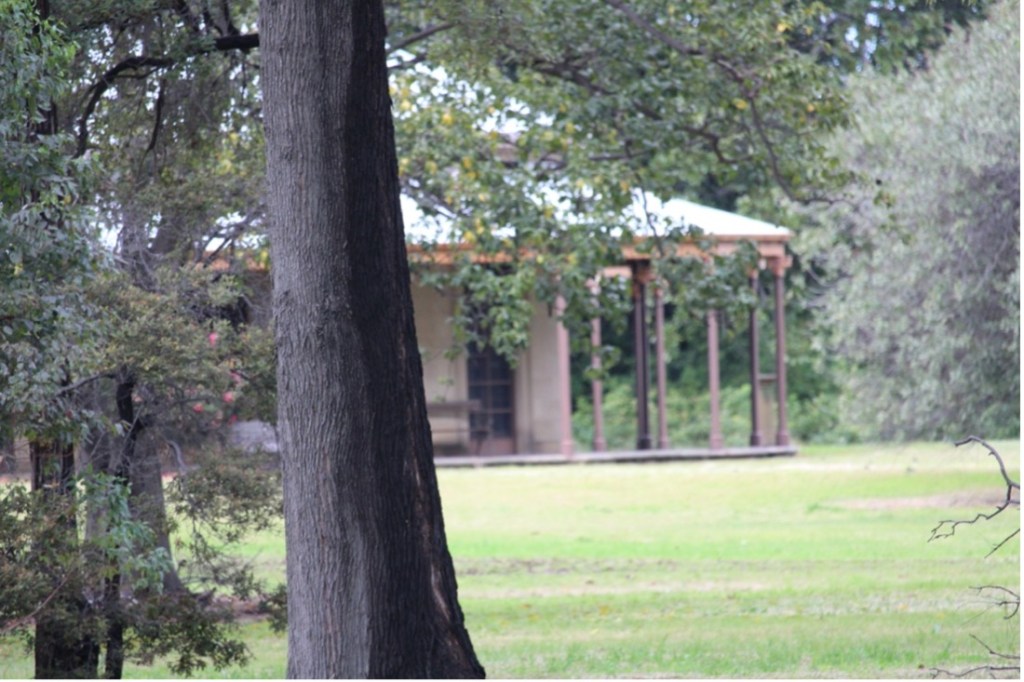
Section of the front veranda of Tomago House [Author photo – July 2024]
The adjacent Tomago Chapel was built by Maria Windeyer and her sister, Miss Elizabeth Camfield, in 1861. It was renovated in 1879 in remembrance of Maria Windeyer by the people of Tomago.
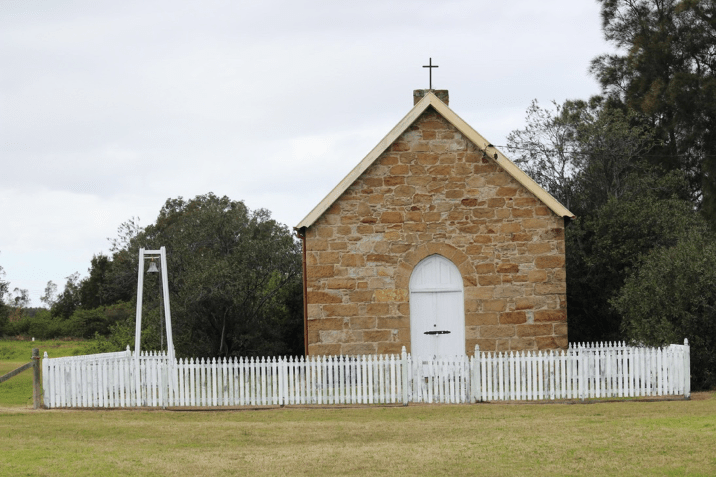
Tomago Chapel [Author photo- July 2024]
The Tomago Estate remained in the ownership of the Windeyer family, through three generations, until 1944 when the house and surrounding land were sold.
Using the resources to the National Library of Australia’s Trove newspaper collection, this paper provides a timeline of events that took place at the historic Tomago House. It also provides an insight into the life stories of the pioneer Windeyer Family who called Tomago House, home.
Early history of the Windeyer Family and Tomago House
The Newcastle Morning Herald and Miners’ Advocate of 27 June 1936, page 4, published the following early history, of the Windeyer family and Tomago House. This story was written by W. J. Goold, the then president of the Newcastle Historical Society:
‘One of the most famous names in the history of New South Wales is that of the Windeyers. Charles, Richard, and William Charles each played a prominent part in the early days of the colony.
Richard Windeyer, who was born in London on August 10, 1806, was the son of Charles Windeyer. After receiving a liberal education, he began life as a Parliamentary reporter for the great London newspapers; ‘Times,’ ‘Morning Chronicle,’ and ‘Sun.’ Not content with the life of a pressman, he studied law, and in 1834, when 28 years of age, he was called to the Bar at Middle Temple. He had previously married Maria, the daughter of William Camfield, of Groomridge-place, Kent, and in the year that he was called to the Bar, his son, William Charles, was born on September 29, 1834.
Acting under the advice of his father [Charles], who had sailed for Sydney in 1828, Richard Windeyer decided to make his home in the new country, where, it was pointed out to him, there would be more scope for his legal knowledge. With his wife [Maria] and child [William Charles], he arrived in Port Jackson on November 28, 1835, and began practice at Prout’s Chambers, Elizabeth Street, Sydney. He was soon firmly established and recognised as one of the leaders of the legal profession in the little town of Sydney. Six years after his arrival in the colony, he was mentioned as in the running for a Judgeship, but this honour did not eventuate.
Like many of the pioneers, Mr. [Richard] Windeyer soon saw the great possibilities of farming on the virgin soil of the Hunter River valley, and he purchased a large tract of land from Colonel Snodgrass on the Lower Hunter. It had originally been portion of a grant of 850 acres to A. M. Beveridge, on August 20, 1824. It was situated on the banks of the Hunter River, a few miles from Newcastle, and was known as Tomago, an aboriginal word meaning “sweet water.” Here Mr. [Richard] Windeyer erected a commodious homestead [Tomago House] and devoted his spare time to farming and viticulture. While the vineyard was his special hobby, he also grew successfully cotton, tobacco, date palms, and onions—and even raised silkworms.
Unlike many of the early settlers, Mr. [Richard] Windeyer was a kind and considerate master, and the assigned servants [convicts] were treated far differently at Tomago from what they were on some of the neighbouring estates. It is stated that Mr. Windeyer always paid regular wages to his assigned servants—something exceptional in those days. No doubt it amply repaid him, for his servants were good workers, and few absconded.
On the estate at Tomago, a schoolhouse was erected, and a teacher employed, and many of the children of the nearby settlers received their early education. The nearest township was Raymond Terrace, which at that time had three Inns—Holdstock’s Freemason’s Arms, Barry’s Rose, Shamrock, and Thistle, and Ewing’s Junction—a couple of stores, and John Korff’s’ shipbuilding slips. It was here that the Victoria, a 270 ton paddle-wheel steamer was built, and fitted with the engines taken from the wreck of the Ceres. The vicinity of the slips at Raymond Terrace is known as the Dockyard, and the ship’s bell recovered from the Ceres is hanging beside the little stone-built church [near Tomago House].

Bell from the wreckage of SS Ceres erected beside the Tomago Chapel [Author Photo – July 2024
In 1843 Mr. [Richard] Windeyer was elected to the first representative Council for the electorate of Durham, which at that time comprised the districts of East Maitland, Paterson, Dungog, Singleton, Jerry’s Plains, Muswellbrook, and Merton. Those were the days of many spirited debates in the Legislative Council, when the early legislators were attempting to shape the destiny of the new colony.
Mr. Richard Windeyer was a contemporary of the great Wentworth, Robert Lowe, Dr. Lang, Bland, and others, and he soon made his presence felt in the House by his keen debating ability, particularly in regard to educational measures. During the financial crisis of 1847, Mr. Windeyer, like many other prominent citizens, was forced to assign his estate. Worn out by worry and anxiety, and broken in health, he was ordered by his doctor to take a trip to Tasmania in the hope of recuperating.
Prior to his departure he was tendered a banquet by the residents of Singleton at the old Fitzroy Hotel, in John-street, Singleton. Captain William Russell presided, and among the gathering there were many prominent men in old Singleton—John Larnach, J. T. McDougall. J. C. McDonnell, D. Stolworthy, John Wiseman, E. Bowman, G. Bowman, T. W. Robinson, E. Hope, T. Foote, and others. Three months later Mr. [Richard] Windeyer died at his brother-in-law’s residence in Launceston, on December 2, 1847. He was but 41, and a brilliant career was cut short at a time when the colony needed men of his calibre.
The estate at Tomago was submitted to auction by the Official Assignee (Mr. George King), the auctioneer being Mr. Alexander Dodds of East Maitland. The sale took place on August 28, 1848. The property consisted of Tomago House, a stone-built mansion with slate roof and cellars; the superintendent’s residence, a brick building with shingle roof; brick-built store and storekeeper’s residence; stone-built Gothic cottage in the vineyard; gardener’s residence; eight huts for servants’ use; stabling, etc. The stock comprised 64 horses, 200 horned cattle 20 working bullocks, besides a large quantity of old and new wine, presses, stills, etc.
Mr. Robert Lowe, acting on behalf of Mrs. [Maria] Windeyer, who had secured money from her father, bid in and secured Tomago House and the adjoining land under cultivation. At the time of his father’s death, William Charles Windeyer was 13, and his mother was faced with the problem of finishing his education. By the able management of her estate and from the proceeds of her garden and vineyard she was able to do this in such a manner that in 1852 her son entered the Sydney University at its opening, and in 1856 graduated with distinction.
The little stone-built church adjoining the homestead was erected by Mrs. Richard [Maria] Windeyer and her sister, Miss Elizabeth Camfield. In Tomago House there are the busts of three famous men, Charles, Richard, and William Charles Windeyer—and to these might truly be added that of a noble wife and mother, Maria Windeyer.’
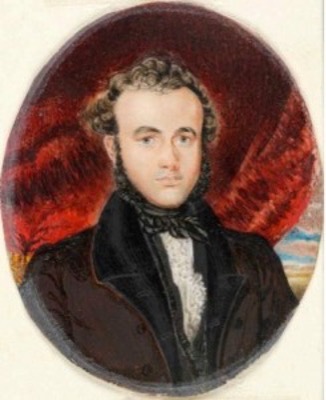
Richard Windeyer [National Trust of Australia]

Maria Windeyer (nee Camfiled) – National Portrait Gallery
Richard Windeyer declared insolvent after his death – 1848
The Sydney Morning Herald of 20 May 1848, page 2, published the following determination by the Chief Commissioner of Insolvent Estate regarding the estate of Richard Windeyer. Under the terms, his widow Maria, was to be given the furniture at Tomago House and the land that had not been mortgaged was to be sold:
‘In the estate of Richard Windeyer, deceased, a third meeting was held. The following claims were proved :—David Jones and Co., £88 8s. 8d.; Mitchell and Co., £6 12s. 3d.; T. Eldershaw and W. A. Windeyer, £66 1s. 6d.; E. S. Hill, £26 3s.; G. F. Lloyd, £10 0s. 9d.; A. Simpson, £10; M. Holt, £14 17s. 6d.; John Goswell, £4 10s.; E. Crighton, £9 19s. 10¼d.; T. A. Baker, £27 4s.; W. Barrett, £12 14s. 8d.; P. Ridden, £5 9s.. 1½d.; J. White, £6 6s. 2d.; A. Fralon, £3 3s. 1¼d.; T. Newton, £1 19s.; J. Elvin, £3 13s. 10d.; E. Coughlan, £5; P. Buckley, £1 5s. T. A. Baker, £5 16s. 2d.; J. Goswell, £16 6s. 2d.; J. Byrn, £2 2s. 11d.; and McNally, £14 16s. 3d.
After providing for the claims of the creditors of the Windeyer’s estate to be met] the furniture at Tomago was ordered by the Commissioner to be given over to Mrs. Windeyer. The official assignee having handed in his report, instructions were given for the sale of all the un-mortgaged land possessed by the deceased, as also of the remaining chattel property at Tomago. The disposal of the mortgaged property was left for future consideration and instructions.’
Tomago House and land holdings advertised for auction – 1848
Advertisements for the auction of Tomago House and various land holdings which formed part of estate of Richard Windeyer were published in several newspapers in August 1848.
The following advertisement for Lot 9, which comprised 850 acres of land and Tomago House, in the County of Gloucester, was published in the Maitland Mercury and Hunter River General Advertiser, on 9 August 1848:
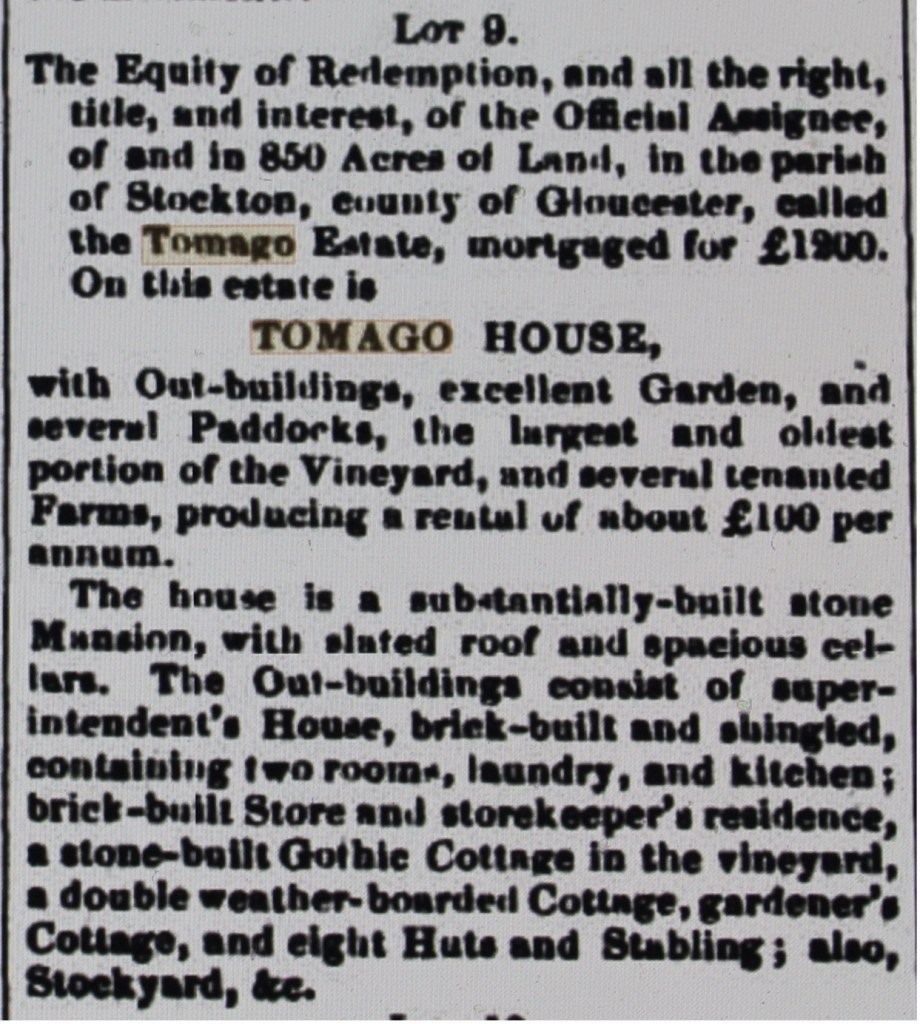
Maitland Mercury and Hunter River Advertiser, 9 August 1848
Maria Windeyer was able to purchase Tomago House and its associated land, after being successful in obtaining the necessary funds.
Tomago Wine Sent to Sydney Exhibition – 1848
The Sydney Morning Herald of 13 October 1848, page 2, reported on the first exhibition held by Australasian Botanic and Horticultural Society that was held in the Sydney Botanic Gardens. A sample of wine from Tomago was sent to the exhibition for tasting, and prompted the following comments:
‘The only sample of wine exhibited was some shown as Tomago, from the vineyard of the late Mr. Windeyer. We are disposed to condemn it as trash. Surely the gold medal of the Society is worth competing for in this line.’
The Sydney Morning Herald of 14 October 1848, page 3, published the following letter from Edwin Hickey to the editor concerning Tomago wine sent to Sydney for judging:
‘In your report of the Horticultural Exhibition in the Botanic Gardens on Tuesday last, as given in your paper of today, there is a remark made on the wines sent to the exhibition from Tomago – the vineyard of the late Mr Windeyer – in which they are “condemned as trash.”
Now, I am persuaded that the writer of this report will, on reflection, see that there is in such an observation both an injustice and a cruelty. An injustice, because these young wines having been sent down to the Gardens on the same morning of the show – left for several hours, under a warm tent – then opened and allowed to remain in this heat uncorked for several hours, could not be expected, by anyone knowing the character of such wines, to be in a fit state to be appreciated or their quality in any way, determined.
Indeed, the shaking of them, in their removal, and the unusual heat of the tent would, now that the sap is rising in the vine, induce a new fermentation, which would entirely alter their character and flavour; and it is therefore to be regretted that under such circumstances they were so exhibited at all.
There seems, too, something of a cruelty in associating such a condemnation with the name of one who is now become a part of the past, but whoso great energies and fortune were directed to the realisation of an article which will yet become one of the most important productions of this country.
I am fully satisfied that everyone who has had an opportunity of tasting the wines of Tomago on the estate itself will entertain a very different opinion of their excellence and will admit that they are fully equal in quality to the wines of the second growth of the Rhine. They will continue to improve as the vines acquire age, but in the meantime, I conceive that in place of condemnation they are entitled to every indulgence of opinion by the connoisseur.’
The editor of the Sydney Morning Herald replied as follows:
‘We agree with Mr. Hickey that it is a pity the wines were exhibited under the circumstances he details, but we entirely dissent from the suggestion that the personal merits of the grower had anything to do with the question.’
Ceremony at Tomago House – 1897
Following the death of Maria Windeyer in 1879, the estate became the property of her son William Charles Windeyer (1834 – 1897). William had married Mary Elizabeth Bolton on 31 December 1857. They had a family of eight children.
Sir William was a prominent figure in Sydney’s judicial and political circles. He died in Bologna in Italy, while travelling overseas, on 11 September 1897.
Lady Mary Windeyer (1832-1912) was a well-known social worker, women’s activist and child welfare reformer.
Further information on the lives of Sir William Charles Windeyer and Lady Mary Windeyer are set out in Addendums One and Two respectively.
The Daily Telegraph of 20 February 1897, page 14, reported:
‘A pleasant little ceremony took place at “Tomago,” Lady Windeyer’s beautiful old home, on January 27, when her ladyship and the Misses Windeyer were presented with a handsome Illuminated Address. The presentation was made by the Rev. E. La Barte, pastor of St. John’s, Raymond Terrace, on behalf of the residents of Tomago and members of Tomago House Book Club.
The spacious dining-room of Tomago House was soon filled, and the hostess saw around her many valued friends who for nearly 30 years had been in hearty sympathy with her and her family. The address was signed by William Fraser, Samuel McQueen, J, R. Henderson, Thomas Lee. These gentlemen expressed themselves in terms of warm regard for Sir William and Lady Windeyer, and at the conclusion of the speeches the hostess assured them of how greatly she was touched by their expressions of regard.
The Misses Windeyer also added their acknowledgments, and the evening terminated with music and social intercourse. As most of those present were natives of or descendants of the “Land of Heather and Haggis,” “Auld Lang Syne” was naturally sung with enthusiasm, and many good wishes were expressed for Lady Windeyer and her family.’
Lady Mary Windeyer Dies at Tomago House – 1912
The Sydney Morning Herald of 4 December 1912, page 15, reported:
‘The death occurred at 11.30 last night of Lady Windeyer, widow of Sir William Charles Windeyer, Senior Puisne Judge of the Supreme Court of N.S.W., who died in 1897. Lady Mary Elizabeth Windeyer, who had been in ill-health for some years, was a daughter of the late Rev. R. T. Bolton and was married in 1857. She was intimately identified with many charitable movements, and her loss will be keenly felt by many whom she befriended. Lady Windeyer died in the presence of her family at her residence at Tomago on the Hunter River, near Raymond Terrace. She was 76 years of age.’
Further information on the lives of Sir William Charles Windeyer and Lady Mary Windeyer are set out in Addendum’s one and two respectively.
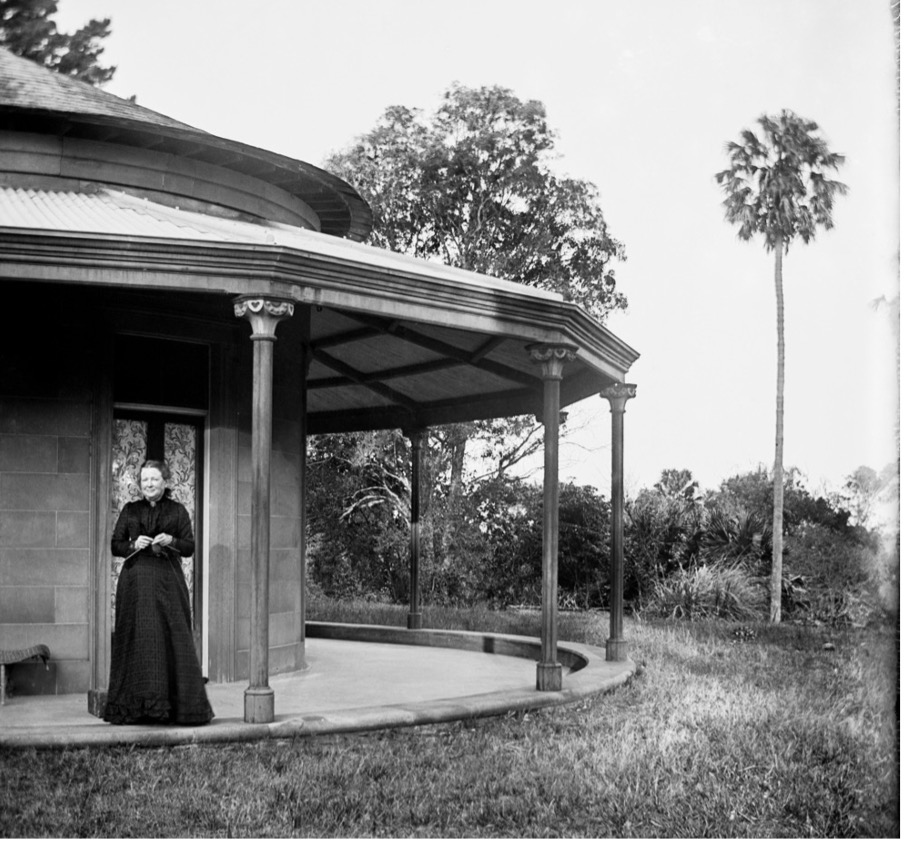
Lady Mary Windeyer, nee Bolton, wife of Sir William Charles Windeyer, at Tomago House, prior to 1912 [National Portrait Gallery].
Multidenominational Service Held in the Tomago Chapel – 1916
The Raymond Terrace Examiner and Lower Hunter and Port Stephens Advertiser of 7 January 1916, page 3, reported:
‘A united intercession service was held in Tomago Church last Sunday evening. The building was filled, and for want of more room a number had to stand outside. The service was earnest and devotional. Mr. W. Moxey, representing the Methodist Church, opened the service with prayer, and the congregation united in singing the hymn “Abide with Me.”
Mr. R. W. Windeyer [eldest son of William Charles Windeyer] hfeelingly recited the prayers appointed to be read by the Primate of the Anglican Church. Rev. W. N. Wilson, representing the Presbyterian Church, invited the audience to join together in singing the “Hundredth Psalm,” which is spoken of as the national anthem of Great Britain. He then offered prayer and read the fifth Psalm, commenting briefly on the third verse — “My voice shalt thou hear in the morning, O Lord; in the morning will I direct my prayer unto Thee.” He said the place of worship was the house of prayer, and prayer the part of worship that specially delighted God; and those were wise who sought the favour of God every morning and began the new year with prayer; and those were foolish who, through neglecting prayer, had no comfort in trouble, no light in the time of darkness, and no hope in death.
The 121st Psalm— “I to the hills will lift mine eyes,” which is the Scottish regimental hymn, was then sung. Mr. R. W. Windeyer gave a forceful and impressive address, basing his discourse upon the words “Quit you like men.” When referring to the unity of the British nation in all essential things, he paid a tribute to the memory of the late Mr. Samuel McQueen. He spoke of his sterling worth, and said he was the grandson of one of the heroes who fought under the Duke of Wellington, and as a worthy representative of the Scottish people, who were nobly doing their part in upholding all that was good in the British Empire.
Rev. W. N. Wilson again offered prayer, the national anthem, “God Save the King,” was sung, and the benediction concluded a hearty and pleasant service.’
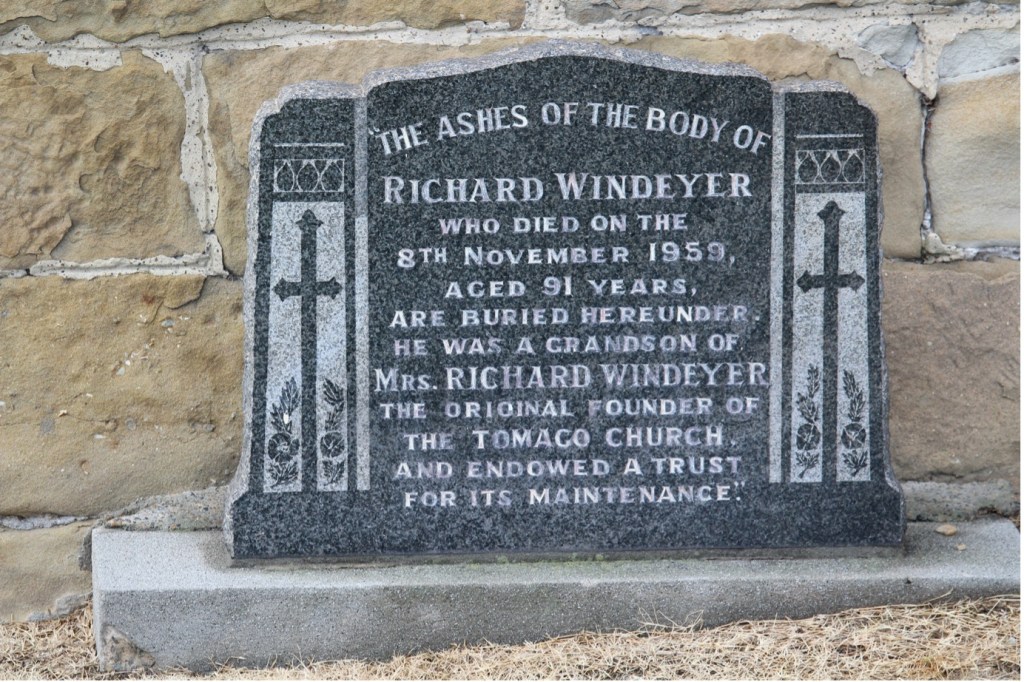
Memorial stone located at the front of Tomago Chapel to Richard Windeyer KC, [Author photo – July 2024]
Newcastle Historical Society Visited Tomago House and Chapel – 1936
In June 1936, Richard Windeyer K.C. (1868-1959), eldest son of Sir William and Lady Mary Windeyer, hosted members of the Newcastle and Hunter District Historical Society and friends, to a tour of the Tomago Estate.
The Newcastle Morning Herald and Miners’ Advocate of 22 June 1936, page 5, reported:
‘Much of interest was seen by members of the Newcastle and Hunter District Historical Society and friends when they visited the Windeyer estate at Tomago on Saturday as the guests of Mr. Richard Windeyer, K.C who came specially from Sydney to conduct them over the family estate at Tomago. His brother, Mr. E. Windeyer of Raymond Terrace, with several of the family, assisted in the entertainment of the guests, who included the President of the society (Ald. W. J. Goold), the Secretary, (Dr. B. W. Champion), the Chief Engineer of the Hunter District Water Supply and Sewerage Board (Mr. J. M. Corlette), Mr. F. A. Cadell Mr. Roland Traill, sen. (Catherine Hill Bay), Mr. A. J. Windeyer (Kinross), Mr. R. W. Crouch (Maitland), Mr. C. B. Grimm (Newcastle), and Mr. R. Traill, jun. (West Maitland).
The visitors were met by Mr. Windeyer, who in welcoming them at the house recounted something of the story of the family heritage. The estate has remained in the hands of the family for considerably more than a century. It was originally acquired by the grandfather of the distinguished New South Wales King’s Counsel [Richard Windeyer], and comprises approximately 4000 acres, including two small islands. Dairying and several branches of agriculture are carried on, the farms being leased to an industrious and numerous body of Lower Hunter farmers.
Although diligent search may be made of the nearer grounds forming part of this rich heritage, nothing can be seen to support its prestige as wine-growing country. Every vestige of the grapevines that once flourished has gone. But if proof of the fact that the soil was capable of producing a rich vintage were not visible about the estate, it was furnished within the stately old mansion itself.
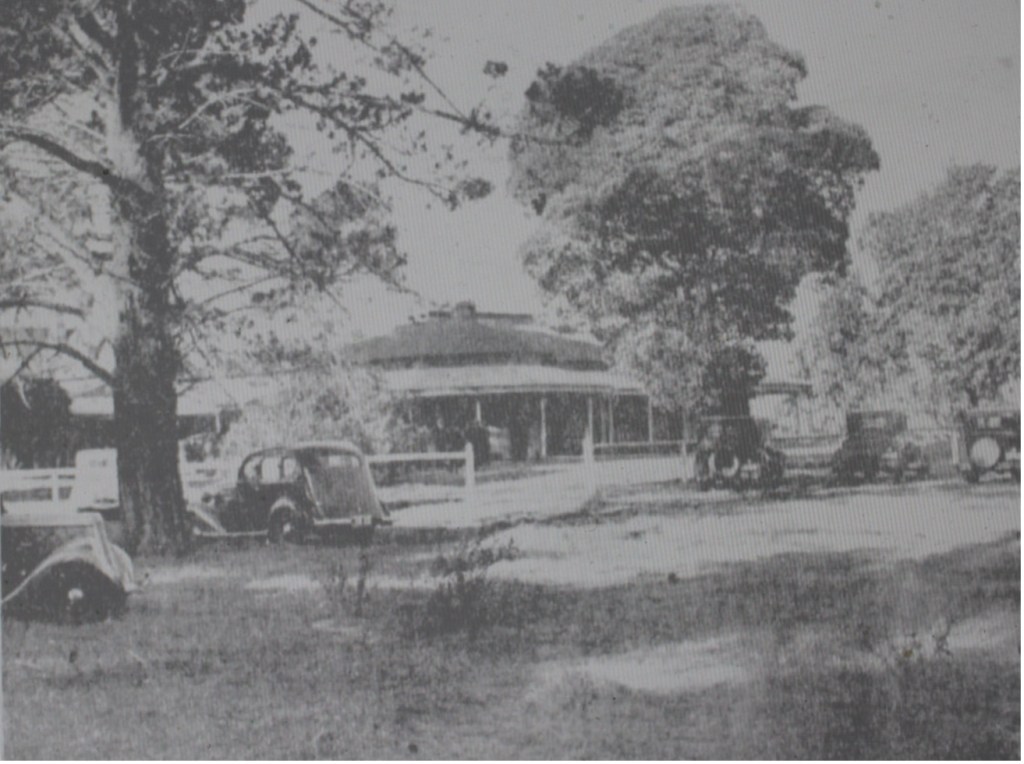
Vehicles of the Historical Society members parked outside Tomago House [Newcastle Morning and Miner’s Advocate, 22 June 1936]
On the walls of one of the rooms were seen a large framed diploma announcing the success of wine grown on the estate. The certificate, a work of art in itself, conveyed the information that at the Exposition in Paris in 1855 an exhibit from Tomago achieved world-wide distinction. The signature on the certificate is that of Napeoleon III. For various reasons the cultivation of the vine was afterwards discontinued, and other industries have taken its place.
One farm on the estate was pointed to as a model on a small scale. Its area is 120 acres, and the tenant is Mr. G. Campbell. Dairying is developing, and many herds of high-class cattle roam about on what are now richly endowed flats, well grassed, and assuring a lucrative return to those in possession. In its original state most of the land was low and sandy. A fortune has been spent in drainage, tree-felling, and developing the land, through which there are numerous creeks and drains. Thirty-three bridges have been constructed across these, facilitating the transport of farm commodities.
The old home occupies a site on rising ground. It is built of stone, drawn from the Muree quarries behind the hills at Raymond Terrace. Mr. Windeyer informed the party that this stone was transported under great difficulties. From the quarries it was taken by [bullock] team to the riverbank, and there placed on a vessel named the ‘Jolly Rambler’, which brought the stone down-stream as far as Tomago. The services of the bullock-drawn teams were again secured, and loads of stone were conveyed cross country for several miles to the homestead site. This was a difficult task, as there were no roads as there are now.
The house is patterned on that of the popular type of English house of that period, with wide, high verandas surrounding the main structure, and small attics in the roof at the rear. The rooms are light, dry, and airy and artistically finished. The stone which formed the main structure remains as first set; but the stout hardwood timber that served in the foundations rotted away many years ago. It became necessary to re-build these and during the life of the late Sir William Windeyer—father of Mr. Richard Windeyer, and once a Supreme Court Judge of New South Wales—35,000 bricks were inserted in the base of the building.
Carved in a block of stone above one of the doors are the figures 1843. The work of erecting the house took a considerable time and was finished in the year. Above another door near the entrance is a fanlight bearing a representation of typical fern grown on the estate. The fern was sent to England, and there copied by a glassmaker.
The main hall is enriched with works of art and furniture and is exquisitely finished. It is adorned with many beautiful pictures. The family groups contain enlargements of three generations— Sir William Windeyer, his eldest son, and the eldest son of the latter, who was intended for the profession of the law. His studies were interrupted when he enlisted, and he was killed in action on the Western front.
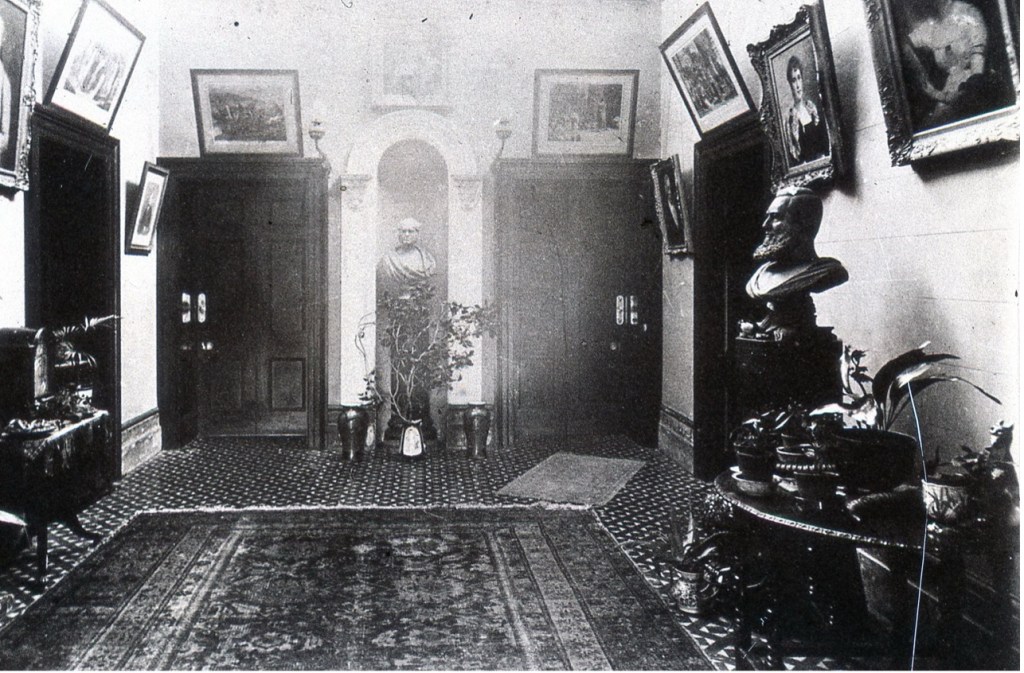
Main hall of Tomago House, with family photos, circa 1936 [University of Newcastle]
The family point proudly to an ornamental clock standing in the drawing room. This was a gift from Sir Henry Parkes, one time Premier of the colony, to Lady Windeyer. The clock is suspended on ornamental marble work, the pendulum swinging through the centre registering the minutes and hours. A bronze figure, representing a small boy, moves backward and forward with each swing of the pendulum. “He has been swinging since I was a child, too small to see the clock from the floor,” said Mr. Windeyer to the interested onlookers. “I used to be lifted up shelf-high to see the boy swinging in the clock.” The clock still keeps perfect time.
Hanging on the wall on either side of the clock are two metal plates that were the property of the early native tribes. One of these plates had been worn by ‘Toocooyoo’, the black king of Tomago, who was a popular figure on the estate during the boyhood of Richard and Eddie Windeyer. The blackfellow died in the ’60’s and was buried on the estate.
Visitors found the small church one of the most interesting of the buildings on the estate. Like the old mansion, it has a history. Partly, this is told in the lettering on one of the family memorials on the wall: “This church was built by Mrs. Richard Windeyer and her sister, Miss Camfield, A.D., 1861; was renovated in 1879 in loving remembrance of Mrs. Richard Windeyer by the people of Tomago, amongst whom she spent her years of widowhood”
One of the six memorial windows was put in to the memory of Richard Windeyer: and another, in 1899, to the memory of Sir William Windeyer, who died in 1897. Lady Windeyer died in 1912. Every child of the family was christened in the church, one of the altar pieces in which was made from the gown worn by Miss Essie Jenyns, as “Portia ” in the presentation of Shakespeare’s play. Miss Jenyns married Mr. Jack Wood, and lived at Jesmond House, Newcastle. She gave the gown to the church of her friends, and it is cherished among the priceless possessions of the descendants, who, as Mr. Windeyer remarked on Saturday, have kept together, and have tried to maintain the family tradition.
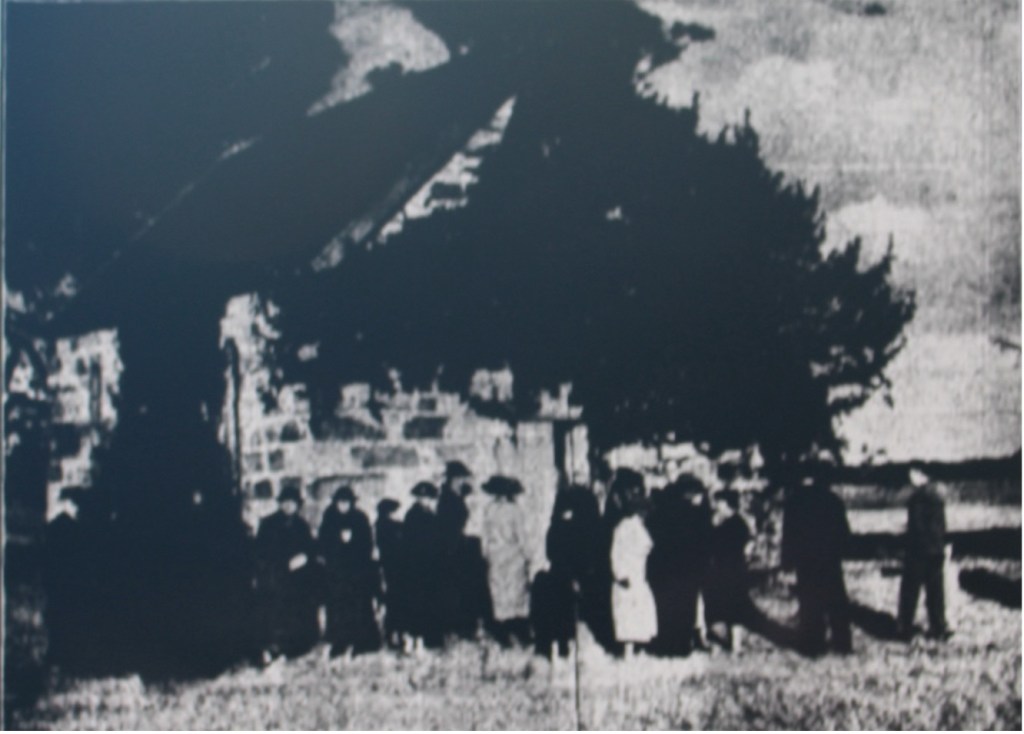
Members of the Historical Society outside Tomago House Chapel [The Newcastle Sun, 22 June 1936]

Miss Traill, niece of Richard Windeyer, showing some of the furnishings of the Tomago Chapel to members of the Historical Society [Newcastle Morning Herald and Miner’s Advocate, 23 June 1936]
Pointing out a full-grown oak tree in the grounds, he said that the acorn from which it grew was brought from England in the work basket of his grandmother. The tree formed a link between the two lands. After an inspection of the grounds, the visitors were the guests of Mr. Windeyer and the family at the homestead.
The President of the society, supported by the Vice-president (Mr. Basil Helmore), thanked Mr. Windeyer and his brother for the hospitable and gracious way in which the visitors were treated and for the enjoyment of the afternoon. “We regard it as a privilege to have had the opportunity of looking over the estate,” said Mr. Helmore, “It is a great thing to find a family with tradition; a greater thing still to see a family living up to that tradition through the various generations. In reply, Mr. Windeyer said he was pleased to know that all had found something of interest in the visit to the estate. It had been a pleasure to him to meet Mr. Goold, Dr. Champion and the others associated with the Historical Society.’
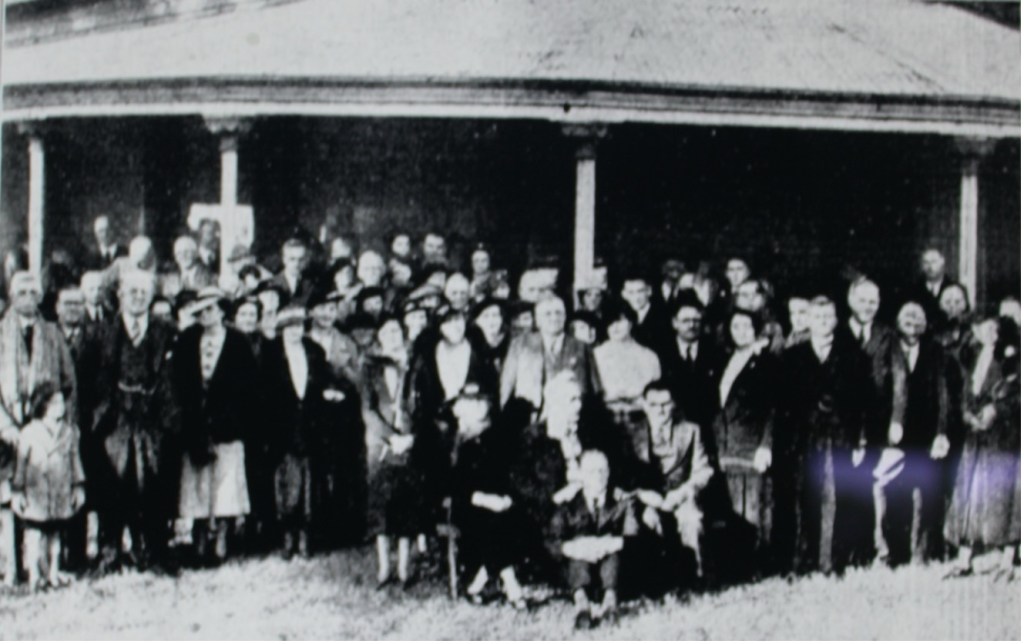
Members of the Newcastle and Hunter River District Historical Society at Tomago House. On the garden seat (centre) is Mr Richard Windeyer, K.C., and standing immediately behind him is Mr E. Windeyer. On the left of the group (front row, standing) are Mr A. H. Greaves and the President of the Society (Ald. W. J. Goold) [The Newcastle Sun, 22 June 1936]
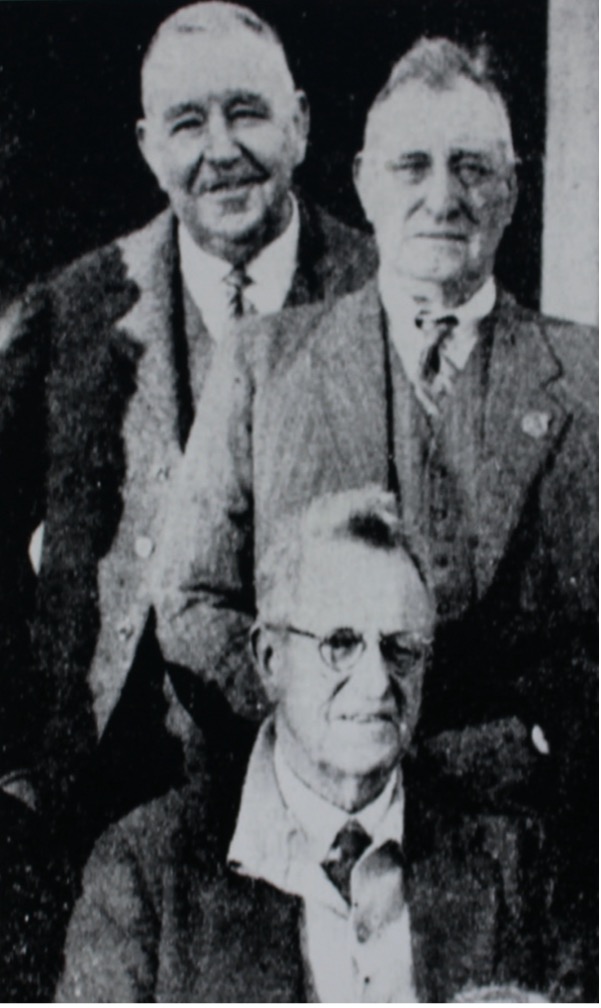
Seated in front is Mr Richard Windeyer, K.C., [died on 8 November 1959] eldest son of Sir William Charles Windeyer, at one time senior puisne judge of the Supreme Court of New South Wales. Standing are Mr A. J. Windeyer and Mr E. Windeyer, of Raymond Terrace and Tomago. Photographed while hosting members of the Historical Society [Newcastle Morning Herald and Miner’s Advocate, 23 June 1936]
Tomago House renovations – 1936
The Newcastle Morning Herald and Miners’ Advocate of 21 November 1936, page 20, reported:
‘The home of the late Justice Sir William Windeyer at Tomago is being extensively renovated. A substantial expenditure will be involved in carrying out the work. The residence is constructed in Muree stone, and was built in the early days, the design being that popularly adopted by early architects in England. The lay-out of the house grounds was also made to conform to the style adopted by the well-to-do owners. Some of the trees in the gardens, now nearly a century old, were brought from England by the parents of Sir William Windeyer, whose eldest son, appointed an acting judge this week, will spend part of his spare time at the historic home of the family.’
Proposal for Tomago House to house Destitute Children – 1944
The Newcastle Sun of 26 February 1944, page 3, reported:
‘One of the most historic homes in the Hunter River district, that of the late Mr. Justice Windeyer at Tomago, will be acquired by the Newcastle branch of the United Protestant Association to be converted into a home for destitute children, the secretary of the branch (the Rev. S. H. Allen) has announced.
Mr. Allen and officers of the Newcastle United Churches Association, which has promised to support the movement for the home, inspected the property yesterday. In addition to the building, he said, 114 acres of surrounding land would be purchased, and it was hoped that the farming of this would make the home self-supporting. The children would be taught milking, poultry farming, and orchard work, and the question of provision of school facilities would be taken up with the State Government.
It was hoped that it would provide a special school for the children or transport for them to another school in the district. “We have arranged to purchase on a very favourable basis,” he said. “The initial cost will be the worst. We will make an immediate appeal for £1000 to enable us to pay a deposit. Already we have a certain amount in hand, and more is coming in constantly. Several big business houses have promised large gifts.”
Electric lighting was to be installed at the home, which could accommodate between 30 and 40 children, he said. Extensions to the building could be added later. A matron, manager, and assisting staff would be provided. It was expected that the home would be ready to open within a month. No financial or staffing difficulties were anticipated “To begin with,” he said, “we hope to have between 16 and 20 children. There is an overflow at the Grafton home, and we will take some children from there. In addition, we already have a few applications from Newcastle.”

Rear view of Tomago House [Newcastle Morning Herald and Miner’s Advocate, 2 March 1944]
A subsequent review by church authorities in March 1944 decided that the Windeyer property at Tomago, upon which a small deposit had been paid, would not meet the full needs of the general work, which was essential in the district, though it would be suitable for certain features of it. The sale of Tomago House to the church did not proceed and it remained vacant for a period thereafter.
Auction of the contents Tomago House contents – 1944
The contents Tomago House were sold by the Windeyer family at auction in March 1944. Advertisements for the auction were published in several newspapers.
The following advertisement with full details appeared in the Raymond Terrace Examiner and Port Stephens Advertiser, on 9 March 1944:
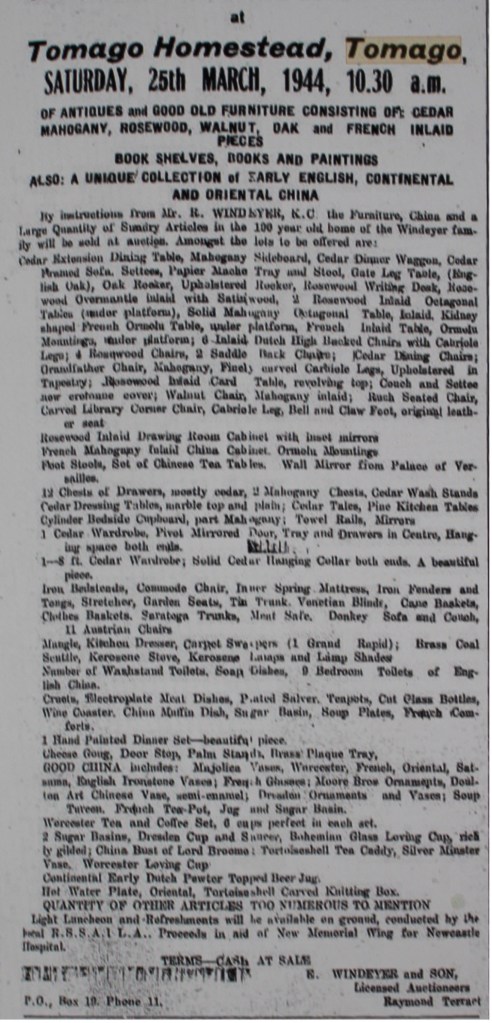
The Newcastle Sun of 23 March 1944, page 2, reported:
‘Tomago House, the home of the Windeyer family for 100 years, will be offered for sale at auction on Saturday.
This property, well known throughout the State, has housed four generations of the Windeyer family, Richard Windeyer, the first, built the first homestead in 1837 of bricks burned on the estate. This homestead was later destroyed by a bushfire, and then followed the erection of ‘Tomago House.’ A beauty spot was chosen for the site. The homestead is picturesque in its setting of trees, much older than the home, but still retaining their beauty.
Mr. Richard Windeyer was very proud of his trees and sought to cultivate them. He also planted extensive vineyards, and wine was made on the estate. Some of these vines were sent to the Paris Exhibition of 1852, for which Mr. Windeyer received an award of merit signed by Louis Napoleon. This award still hangs on the wall at ‘Tomago House.’ The cultivation of the vines ceased when labour became unprocurable after the discovery of gold in Australia [circa mid 1950’s].
The building of this house was somewhat of an undertaking. The stone was taken from ‘Muree,’ then the estate of Mr. Lewis Windeyer, now owned by Mr. Armstrong. …… The cedar in the fittings of the house was grown on the estate and much of the furniture is of cedar. The lovely old church on the estate was built by Mrs. Windeyer and her sister after the death of Mr. Richard Windeyer in 1847 [at Tasmania]. ‘Tomago House’ was the home of Sir William Windeyer and his mother during her widowhood of 30 years, and Sir William died in 1897 and Lady Windeyer in 1912. Following the death of Lady Windeyer. it became the country home of Mr. Richard Windeyer, K.C. and his family. ‘Tomago’ is an aboriginal name meaning sweet water
The Newcastle Morning Herald and Miners’ Advocate of 27 March 1944, page 2, also reported on the sale of the Tomago House contents:
‘The home, furniture, china and sundry articles in the 100-year old home of Sir William Windeyer, at Tomago, were auctioned on Saturday. The auctioneer was Mr. J. K. Windeyer, of Messrs. E. Windeyer and Son, a grandson of the late Judge. About 500 people attended, including buyers from Newcastle, Sydney, and many other parts of New South Wales. A visitor was Mr. Justice Ferguson, who, at the invitation of Mr. Richard Windeyer, K.C., selected from the library a number of volumes not offered for sale. They will be taken to Sydney.
Mr. Windeyer said the occasion was one which the family felt deeply. “This has been the home of five generations of Windeyer’s,” he added. The homestead was not sold, and for the present remains under the ownership of Mr. Windeyers, K.C. It is to be sold privately. The first item offered in the catalogue —a group of jars—went to a local buyer, but the chief purchases were made by Sydney visitors. There was a keenness to secure a small kidney-shaped table. It had a history. The original owner was Marie Antoinette. It was bought during one of his world tours by the late Sir William Windeyer and was brought to Australia from the Palace of Versailles in 1870. It was sold for £40. A French Ormolu china cabinet also brought £40. A tea and coffee service brought from England by Mrs. Ball in 1827 sold for £33. and at a similar figure-three small mahogany chairs were passed to a buyer. For a rosewood card table £25 was paid, up to £20 for chests of drawers, and £21 for a loving cup from the drawing room. “The prices of some of the antiques exceeded expectations,” Mr. Windeyer said. From refreshment sales, the women’s auxiliary, R.S.S.I.L.A., made over £32.’
The Raymond Terrace Examiner and Lower Hunter and Port Stephens Advertiser of 6 April 1944, page 3, also reported:
‘E. Windeyer and Son report the sale of furniture, china, etc at Tomago homestead as an outstanding success despite the weather interference. Some of the sales were: Mahogany side board, damaged £25; writing desk £16/10/; A French table originally out of the Palace of Versailles £46; French inlaid table £43; 6 Dutch chairs £34; 4 Mahogany chairs £33; Rose wood Inlaid card table £28; 2 Saddle Buck chairs £10/5; small walnut chair £10; carved library chair £14; French mahogany china cabinet £41; mahogany chair £31; chests of drawers from £4 to £22; cedar wardrobe with mirrors £40; large cedar linen press, built from cedar off the property £43; carpets to £26 China; Hand painted dinner set £30/10/; French vase £11/10/; Chinese vase, £10; soup tureen £14; a Spode tea and coffee service £34; silver Minster vases £10; jug shaped vases £15; Worcester loving cup £24; Dutch Beer Jug £10/10/; Versailles vase £20/10/.’
Tomago Chapel consecrated in a Methodist Ceremony – 1944
The Newcastle Morning Herald and Miners’ Advocate of 2 December 1944, page 2, reported:
‘The small historic church erected at Tomago in 1861 on the estate of the late Sir William Windeyer will be consecrated on December 17. A service will be held in the afternoon. Mr. R. Windeyer, K.C., eldest son of Sir William Windeyer, has presented the church and its appointments to the Methodist community. He has also endowed it, and will be, present at the ceremony. This will have historic interest. ….
A house erected on the property in 1837 was of bricks burnt on the property. This house was destroyed by bush fire.” Tomago was the childhood home of the Judge and his mother during her widowhood of 30 years and from 1870 to 1897, that of Sir William and Lady Windeyer and their family, and of Lady Windeyer during her widowhood until 1912. After that it was the holiday home of Mr. R. Windeyer, K.C., until his family grew up. The estate has recently been subdivided.’
The Raymond Terrace Examiner and Lower Hunter and Port Stephens Advertiser of 21 December 1944, page 3, further reported:
‘The small historic church on the Tomago Estate, was dedicated on Sunday by the Rev. C. L Connor, Chairman of the Maitland Methodist District. The church was built by Maria Windeyer and has been given by Mr Richard Windeyer, K.C. [grandson] with an endowment to the Methodist community.
The Rev. W. S. Chaseling, welcomed the chairman of the district, Rev. C. L. Connor and the Secretary, Rev. A. M. Sanders. He also apologised for the absence through illness of Mr. Windeyer. The service was conducted by Rev. Connor assisted by the Revs. Sanders and Chaseling. Mr. J. K. Windeyer, a grandson of the builder of the church sang a solo. On the walls are family memorials, one of which says, ‘This church was built by Mrs Richard Windeyer and her sister Miss Camfield, A.D. 1861; was renovated in 1879, in loving remembrance of Mrs. Richard Windeyer by the people of Tomago, amongst whom she spent her years of widowhood.” There are six memorial windows in the church, one being for Richard Windeyer and another for Sir William Windeyer, who died in 1897. Lady Windeyer died in 1912. Every child of the family has been christened in the church.’
The Methodist of 13 January 1945, page 12, provided further details about the consecration ceremony:
‘The superintendent of the circuit welcomed the Chairman of the District, Rev., C. L. Connor, and the Secretary, Rev. A. M. Sanders. He also apologised for the absence, through illness, of Mr. Windeyer. In his absence the lesson was read by a nephew, Mr. Jack Windeyer. Mrs. W. S. Chaseling sang: ‘Make this, O Lord, Thine own abode,’ and Mrs. George Chesworth officiated at the organ.
During the sermon the Rev. C. L. Connor said that: God answers the righteousness and work of faithful men by revealing to them the nature of this present world. He gives them eyes to see and hearts to understand the movements of history. God is answering faithful men and women by revealing the terribleness of evil; and the present world-wide social conditions are due to materialism and irreligion. Men have disregarded God, dethroned Jesus, and made self-supreme.
The result is seen in world affairs today. God reveals terrible things, not only that men might be saved, but that individuals and nations might see that no nation can turn its back on God and the sanctity of life without poisoning its own life and bringing catastrophe upon the world. The vision of things terrible has, in history, moved Christian men and women to action. He mentioned the Earl of Shaftesbury, Florence Nightingale, and David Livingstone, and said that the vision of things terrible ought to move Christian men and women to-day. The text was taken from Psalm 65:5: ‘By terrible things in righteousness ‘ wilt Thou answer us! O God.’
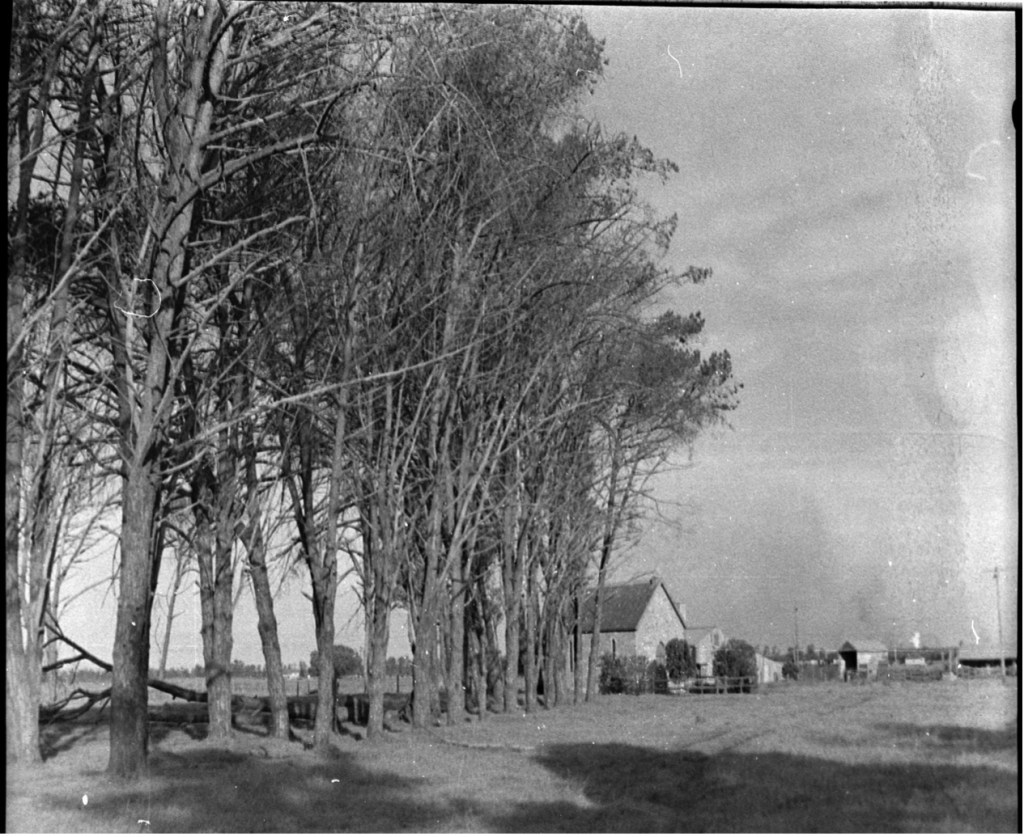
Tomago House Chapel [State Library NSW]
Tomago House Purchased by Courtaulds Limited – 1946
In 1946, the purchase of the Tomago Estate (Tomago House and 2000 acres of land) by the British textile firm of Courtaulds was finalised.
In 1949, the company commenced construction of a rayon factory on the site.
The Raymond Terrace Examiner and Lower Hunter and Port Stephens Advertiser of 25 August 1949, page 6, reported:
‘This big rayon firm, one of the largest in the world has commenced operations to erect the housing and plant at Tomago, about a mile in from the Pacific Highway. The Company purchased the Tomago House, and about 2000 acres of land some months ago. It is said the cost of the plant and buildings will run into close on £5 million……
The Government has been asked for help to speed the building of the factory which it is estimated will provide employment for about 5000 persons. The factory will eventually be one of the world’s greatest rayon plants and the Government has promised assistance in establishing it. It is reported also that the Company will import its pulp requirements from Scandinavian sources and thus there will be no dollar outlay for raw material.
The Federal and State Governments have been given a broad picture of the proposals, but detailed information is not as yet available. It was stated that now the Commonwealth Government has approved of the scheme the carrying out of the offers of assistance will be a matter for the State Government. An estimate of the steel required by the Company has been given to the Government. Courtauld’s representative in Sydney, Mr. F. Williams, said the buildings would cover 500 acres. In addition, 1200 acres will be devoted to employee’s amenities.
Construction of the plant will represent a major undertaking. At the peak construction period 2000 building operatives will be required. The factory would be more modern than any of the 30 plants of the Company, in Britain. About 5000 employees would be needed approximately half of whom would be men.
The Tomago factory will produce rayon yarn, which will be supplied to knitting and weaving mills for the manufacture of fabrics, stockings, women’s underwear and dresses and similar goods. A great part of its production, will be rayon cord for car tyres. The Courtaulds staff, it was initially proposed, would be all Australian, except for key men and a few experts. A number of Australians would probably be selected to go to England for training.
The manager designate for the proposed factory, (Mr. A. G. Edwards) has since stated that it was proposed to bring out 100 families from England. Raw materials for Courtaulds could not at first be drawn from within Australia. For a time at least, wood pulp — the basic raw material— must be imported. Later, it was. hoped to obtain as much raw material as possible in Australia. The chemicals required would also be obtained in Australia. it had not been determined whether these chemicals would be obtained from within the Newcastle area. Transport was important with the new enterprise, in view of the heavy tonnage of both the raw and finished materials. The special committee appointed to advise the Premier, advocated construction of a single-track railway, with provision for a double track later, from Hexham to the vicinity of Raymond Terrace. This line would be six miles long and should ultimately be extended 25 miles to Nelson Bay.
In March, 1946, the Premier (Mr. McKell) told Mr. Chifley that the State was prepared to bear the expense of a railway bridge over the river if the Company decided to erect the factory. At the same time the Minister for Air, (Mr. Drakeford) agreed to forego plans for two airstrips near Tomago to allow the factory to build two very tall chimney stacks for its factory.’
Tomago House used as the Company residence.
Tomago House was modified by the Company and used as the residence of the Manager, Mr. George Edwards.
The Sunday Herald of 16 August 1953 reported:
‘The interior of the house, like the outside, has a mellow, graceful look, accentuated by the high ceilings of all the rooms and the tall windows that on every side look out over the garden.
This look has been retained by Mrs. Guy Smith, Melbourne interior decorator, who chose the furnishings and colour schemes that manage to combine modern-day comfort with beautiful traditional pieces of furniture and a stimulating scheme of colours and fabrics. The house had been empty for some time before its present owners took over, and the 19th century atmosphere has been preserved in the restoration.’
The newspaper also published the following photos of the exterior and interior of Tomago House that had been modernised by the company:
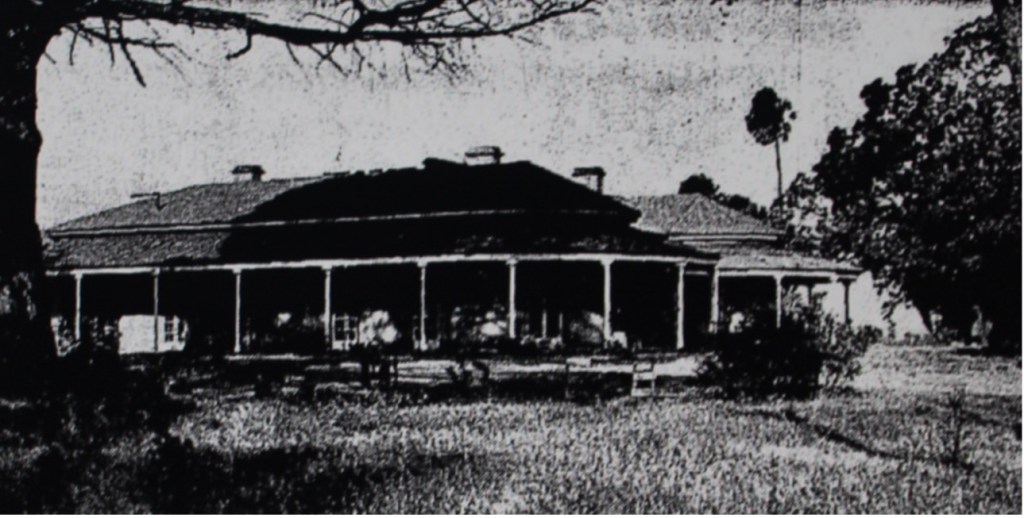
Side view of Tomago House
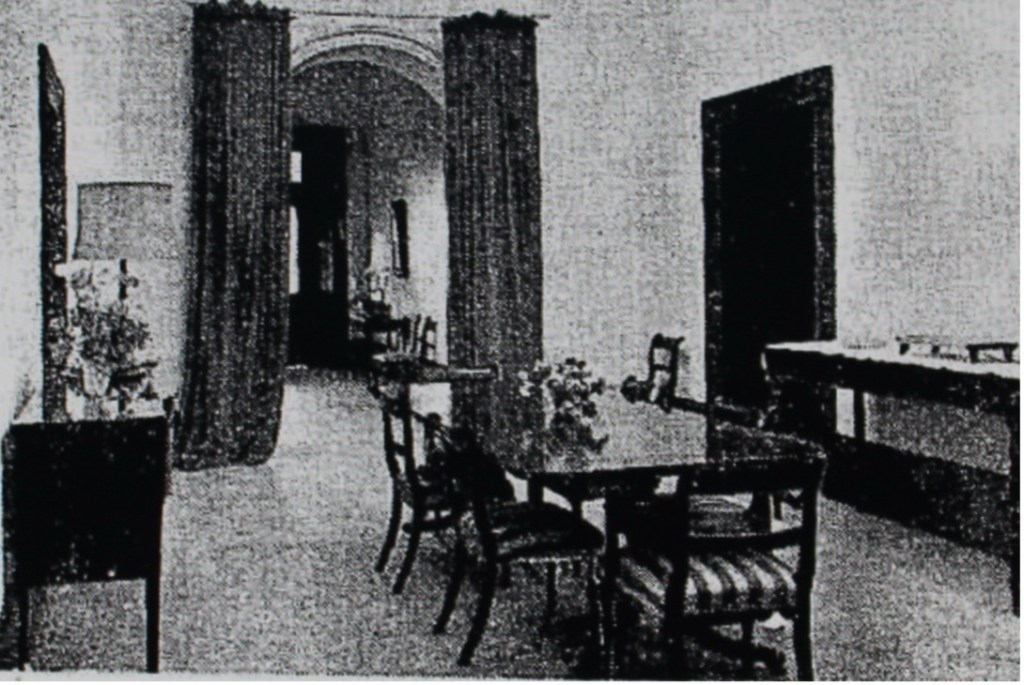
Dining-room at the centre of Tomago House
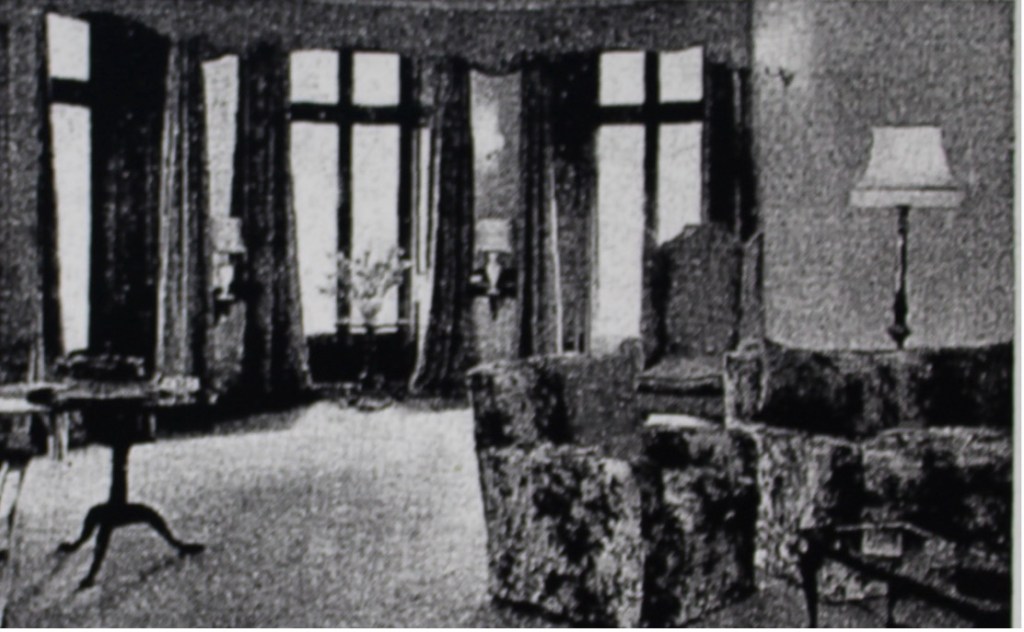
Drawing-room
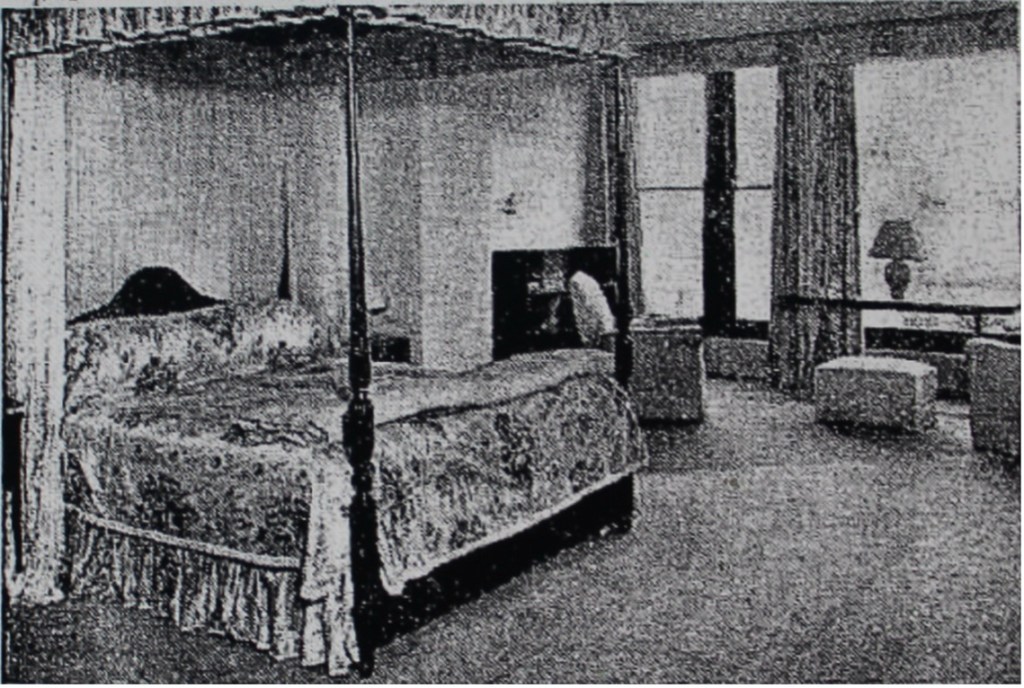
Master bedroom
A Recollection of the Tomago Chapel
The Newcastle Morning Herald and Miners’ Advocate of the 1 February 1951, page 2, published the following letter to the editor that set out a personal recollection of the Tomago Chapel:
‘The beautiful English trees grown by the late Mr. Archibald Windeyer at Kinross estate, Hexham, had their counterpart in those grown by the other branch of the family, Mr. and Mrs. Windeyer, of ‘Tomago House,’ Tomago, father and mother of the late Sir William Windeyer. K.C. Besides beautiful trees near the house they had a long avenue of large pine or fir trees making a shady lane through which the neighbouring farmers and settlers drove at 11 a.m. on Sundays to the pretty little stone creeper-covered church which the Windeyer’s had built, and where they worshipped with neighbours and tenants.
One of my happy childhood memories is of listening to dear old white-haired Canon Sim (many years at Raymond Terrace Rectory) preaching a sermon from the text “Consider the lilies, how they grow,” in that dear little church. I think Tomago House was like a bit of rural England set down in Australia and the only place of its kind in that part. It was like a Manor House, and the family was highly respected. Mrs. Windeyer came from Kent, England. She grew hops, which were sold to the settlers to make yeast.
The avenue of trees opened with a large gate from the main road, and was also the road to the public school, and the Hunter River, where a small ferry steamer, the “Planet,” called at a wharf three days a week to pick up passengers and goods on her trips from Newcastle to Raymond Terrace. A trip on the ‘Planet’ was another childhood delight never forgotten. The Planet has gone, Tomago House has passed into other hands, and a church has been built to replace the Windeyer church, but these all helped in the settlement of Australia and have left a fragrant memory.’
Concluding Comments
Courtaulds Limited remained at Tomago until 1976. By the early 1980’s, Tomago Aluminium Company had acquired Tomago House, the Chapel and surrounding land.
To coincide with Australia’s Bicentenary in 1988, the company donated a five-hectare parcel of land, which included Tomago House and the Chapel, to the National Trust of Australia.
On 2 April 1999, the Tomago House and Tomago Chapel were listed on the NSW State Heritage Register.
A history of the Tomago Picnic Ground, which was situated near Tomago House is found at this link on the website.
Addendum One
Sir William Charles Windeyer (1834-1897)
The following report on the life of Sir William Charles Windeyer was published by the Wagga Wagga Advertiser on 16 September 1897, page 2, following his death in Bologna in Italy:
‘Much surprise and deep regret have been caused by the announcement of the death of Sir William Windeyer, ex-judge of the Supreme Court of New South Wales. The first intimation of the event was received by the Colonial Secretary from the Agent General, who cabled “Sir William Windeyer, died of paralysis, on Saturday. Please inform sons, with loving message from his mother.” The occurrence created a great shock, as it was understood that Sir William was in sound health, and he had apparently a vigorous constitution. One of the sons referred to is Mr. K. Windeyer, who is a student at the Wagga Experiment Farm, and Mr. E. Twynam, the deceased judge’s nephew, is also a student there. Mr. C. F. Bolton, of Moorong, formerly District Surveyor of this district, is a brother-in law of the late judge, being Lady Windeyer’s brother.
Sir William Windeyer, who retired from the Bench on August 31, 1896, after a service of 17 years, proceeded to England about nine months ago, having been mentioned as likely to be appointed as an Australian member of the Privy Council, to which Chief Justice Way, of South Australia, was subsequently appointed. Recently a difficulty occurred in connection with the administration of judicial matters in Newfoundland, all the judges in that colony being interested in a large company which was a party to a pending lawsuit, and the position of an acting judge on the Newfoundland Bench was offered by the Government of that colony and the Imperial Government to Sir William Windeyer.
A letter received by Mr. E. Windeyer stated that his father proposed to spend some time in travelling in Europe before proceeding to Newfoundland, but it was not stated where he intended to go. Lady Windeyer was staying with some relatives at Buckingham shire, England, but the deceased’s daughters, Lucy and Jennie, were travelling with him. Another daughter, Margaret, is in America, where she is undertaking a literary course. The news of the death was a terrible shock to Sir William’s relatives in the colony, who were totally unaware that he was in ill health. It is not yet known what arrangements will be made about the burial, but it is considered probable that the remains will be brought to New South Wales as the family have a private burial ground at Tomago, on the Hunter River.
The deceased judge was ….. born at Westminister on September 29, 1834. He came to the colony with his parents in 1835. He spent his school days with Mr. Cape at King’s School, Parramatta; entered the University of Sydney on its opening in 1852, and immediately took a scholarship for proficiency in classics. He won every year the English essay prize, first given by Dr. Woolley, and afterwards founded by Mr. Wentworth as a medal. He graduated with distinction in classics at the head of his year in 1856, taking also a first class in mental philisophy, and was the senior of all Australian graduates, having taken the degree of M.A. in 1859. He studied for the Bar in the chambers of Mr. Broadhurst, Q.C., and was admitted in March 1837.
He engaged in literary work and became a writer and law reporter for the “Empire ” newspaper, then conducted by Mr. Parkes. In January 1859, he was appointed sole Crown Prosecutor for the country districts. At the call of a public meeting, he contested the electorate of Paddington with Sir D. Cooper, who defeated him by 47 votes. In the same general election, he was elected for the Lower Hunter, defeating the former member by a large majority. On the dissolution of Parliament in 1860 he was elected for West Sydney. He was wrecked in the City of Sydney whilst returning from Melbourne, where he had shot as one of the champion team of New South Wales and, filling into ill-health resigned his seat for West Sydney.
In January 1866, he was against his wishes and in his absence from Sydney elected for West Sydney, defeating Mr. John Robertson on his seeking re-election when taking office as Secretary for Lands. Having declined six overtures of office made to him by Mr. Cowper, Mr. Plunkett, Mr. Foster and Sir John Robertson, on the formation of different Administrations, he accepted office as Solicitor-General, under Sir James Martin on December 16, 1870. He was defeated for West Sydney on the dissolution of Parliament in 1872. but was re-elected as the first member for the University of Sydney on September 8, 1876.
He accepted office as Attorney-General in the Administration of Sir Henry Parkes in March 1877, and was again elected without opposition as member for the University. He resigned office on August 16, 1877, and was again elected for the University without opposition on the dissolution of Parliament in 1878. He entered office again as Attorney-General in the coalition Government of Sir Henry Parkes and Sir John Robertson on December 21, 1878. He was elected a member of the University Senate at the first convocation in 1865. He was made a trustee of the Sydney Grammar School in 1873, and president of the Sydney Mechanics’ School of Arts in 1874. He was president and drew up the report of the Public Charities Commission in 1873 and took an active part as a member of the commission appointed to revise the criminal law in 1870.
In 1874 he originated the Discharged Prisoners’ Aid Society, and in 1876 was appointed an acting judge of the Supreme Court. He was permanently appointed to the Supreme Court Bench on August 11, 1879, and held the position for 17 years. In the Supreme Court on Tuesday reference was made to the event by the Chief Justice and the Attorney General. The former remarked that no doubt Sir William had been misunderstood to some extent, but those who knew him intimately knew what a kindly heartbeat beneath the rough exterior, and how genuine was his desire to assist those in distress.’
Addendum Two
Lady Mary Windeyer (1836-1912)
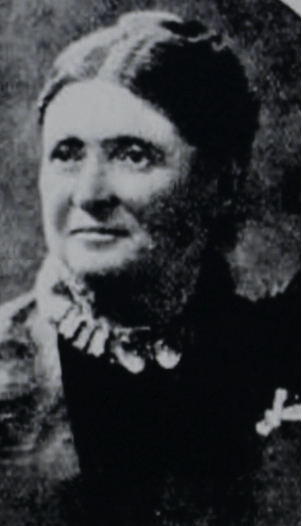
Mary Elizabeth Bolton married William Charles Windeyer on 31 December 1858. They had a family of eight children.
Lady Mary Windeyer as she became, was a woman of influence in the Colony of New South Wales, in the nineteenth century, in her capacity as social worker, women’s right activist and child welfare reformer.
Her story was published in the Australian Town and Country Journal of 9 September 1908, four years before her death in 1912:
‘Side by side with the many notable men who have lived in and worked for this great Commonwealth there have also been eminent women, whose story in many cases has been untold, and though they may have been equally strong fine characters, with great influence for good, yet, in accordance with the spirit of the times, little or nothing has been publicly said about them or their work. For the last few years Lady Windeyer, about whose work it is proposed to give a brief sketch, has lived on her country estate, “Tomago,” on the Hunter River, where she has a farm, and there she resides in comparative seclusion, but still taking a great interest in whatever concerns her fellow creatures, more especially women and children.
As president of the Newcastle free kindergarten movement, she yet does useful public work, and her active mind occupies itself in inventions of a practical and useful nature, especially those to simplify farm work. But it is of her public services during the seventies, eighties, and nineties of last century that one has to speak in telling the story of what works Lady Windeyer helped to organise and nurse, through fragile in fancies into the vigorous growth of youth. In early days the Infants’ Home was but a very small effort of a very few philanthropic women, who felt that a great work was needed to save the babies and to help reinstate the mothers into honourable places again in the outside world.
In 1874 the Infants’ Home started its career in Macquarie-street, under the care of Miss Troloppe, being known as the Foundling Hospital, and it was while Lady Windeyer was an active member of the committee that it was removed to Ashfield, which may be looked on, even today, as a garden suburb; where children and chickens have every chance of growing and flourishing. In those days the girl who had been “unfortunate” was treated with much greater severity than now, and this admirable institution, primarily for a home for little neglected “cornstalk” babies, has also proved an ark of refuge for many a destitute giri, whose motherhood had in it many distressful circumstances.
When Lady Windeyer first began her philanthropic work there were comparatively few mediums for helping, the needy, private philanthropy was giving way to organised united schemes, and it required people of considerable tact and worldly knowledge, as well as a genuine enthusiasm for helping others, to utilise the crude material at hand with which to work. The professional beggar too often imposed on susceptible people, whilst the deserving poor went unaided because they tried to hide their need. Of course, in some degree, this ever must be the case, but it was a small band of women who, including Lady Windeyer, first ventilated a scheme which has now become a very important medium for helping poor, deserving women.
Mrs. Marsh, Mrs. Wise, and Lady Windeyer formed a committee for temporarily aiding deserving women, who wanted, either as a loan or gift, a little capital to set them up in some business. For example, a mangle or sewing machine might be the stock-in-trade needed to enable a newly made widow to keep her home and family together; and, however independent-spirited the person was, this little help towards retaining her independence could not fail to be highly appreciated and thankfully accepted.
It was the success of this small preliminary “Temporary Aid Society” that suggested the scheme of the Queen Victoria Jubilee Fund, also an association which was helped and piloted by Lady Windeyer. Those who remember the Women’s Industrial Exhibition of 1888, when the money was raised to begin the Queen Victoria Fund, will also recollect how arduously this lady worked in various ways towards making the first great demonstration of what women were capable of doing a success. Lady Windeyer undertook all that had reference to nursing, and as hospital nursing as an employment for gentle women was then coming much into notice, it was one of the subjects that required careful handling by an eminently practical and yet by an open-minded woman. But it was because Lady Windeyer had such sympathy with the worker and such delicacy in dealing with what intimately concerned her that she did the greatest amount of good work in this exhibition.
As in all such, shows, there was much sent down that appeared worthless, and unsuitable from the general committee’s standpoint— articles made in the far bush, where there was little to help inexperienced minds in designing or in execution. The refused goods presented a sorry sight, for they meant disappointment to so many. Then Lady Windeyer proposed to open a special stall with the flotsam and jetsam. “And,” said the narrator of the incident, “I assure you it was the most in-teresting stall of exhibits to be seen.”
At the Chicago Exhibition, Australia was well represented, Lady Windeyer being on the executive council, and taking an active interest in collecting representative exhibits. To-day we are so used to Working by committees, and ladies understand the value of proper organisation, but only a few years ago it was difficult to find a body of women who thoroughly appreciated the worth of being unanimous and all pulling the same way. It was therefore of untold consequence to have intelligent and tactful women as officials, those who would be willing to sacrifice personal fads and predelictions for what the majority ruled as best.
Lady Windeyer’s most active services were at this time and her colleagues in every society with which she was connected say that “ever gentle and forbearing, it was a gentleness that had a background of firm convictions which had the weight of being the result of careful study of the subject under discussion.” “When you say that Lady Windeyer was excellent on a committee, you have by no means said everything,” said an active member of the W.C.T.U. “She took a personal interest in the details of every individual case in her philanthropic work, and we always found that she had been beforehand in giving private advice and aid. Gainsborough Terrace, Sulworth, or wherever Lady Windeyer resided, was always a centre from which an endless number of people got help and sympathy, as well as good advice.”
People who have lived a good number of years in N.S.W. may remember that there was at one time only one way of dealing with the State child, or indeed with any destitute child, which was the barrack or institution system. Sir Henry Parkes, who formerly had been greatly wedded to reformatories and large institutions, began towards the end of his regime, to alter his views regarding the children of the State. It may have been through knowing the opinions of Mr. Garran, Lady Windeyer, and Mrs. Jeffries (wife of the minister in charge of Pitt-street Congregational Church) that his ideas were modified; but, however that may have been, he certainly let them try the experiment of establishing the nucleus of the present boarding-out system, which now is generally, allowed to have been a very successful method of dealing with State-parented children, and a wonderful advance upon the indiscriminate herding of them in large asylums.
Until Lady Windeyer, at the death of Sir William (1897) retired to her country home, she continued her work in the boarding-out committee, being also, on the Women’s Council for the Women’s Hospital from its beginning until 1897. As a National and State officer of the Women’s Christian Temperance Union, Lady Windeyer came in touch with a great many women workers of various schools of thought and in different spheres of life; the same may also be said of her position as vice-president of the Woman’s Suffrage League, which hon. post she occupied until the franchise was given to women. In her position as wife of a Judge, there were many social obligations laid upon Lady Windeyer; and her time was very fully occupied with many duties outside of philanthropic work, but as is often the case, it was the hard worker who found time to take up new interests; and it may truly be said that in everything that really was valuable as a progressive measure, this lady was always ready to assist in furthering, though, at the same time, her husband’s position demanded that to a great extent she should be conservative and help rather in advancing already established causes than in supporting innovations.
Lady Windeyer was Miss Mary Elizabeth Bolton, daughter of the Rev. R. T. Bolton, Vicar of Padbury, Bucks, and afterwardsof Hexham, New South Wales. Her family numbered eight children.
Addendum Three
The story of the Ship’s Bell standing beside the Tomago Chapel
Alongside the Tomago Chapel there is erected a ship’s bell with the name Ceres engraved upon it. It is a relic of one of the early steamers of the Colony, which foundered in 1836.
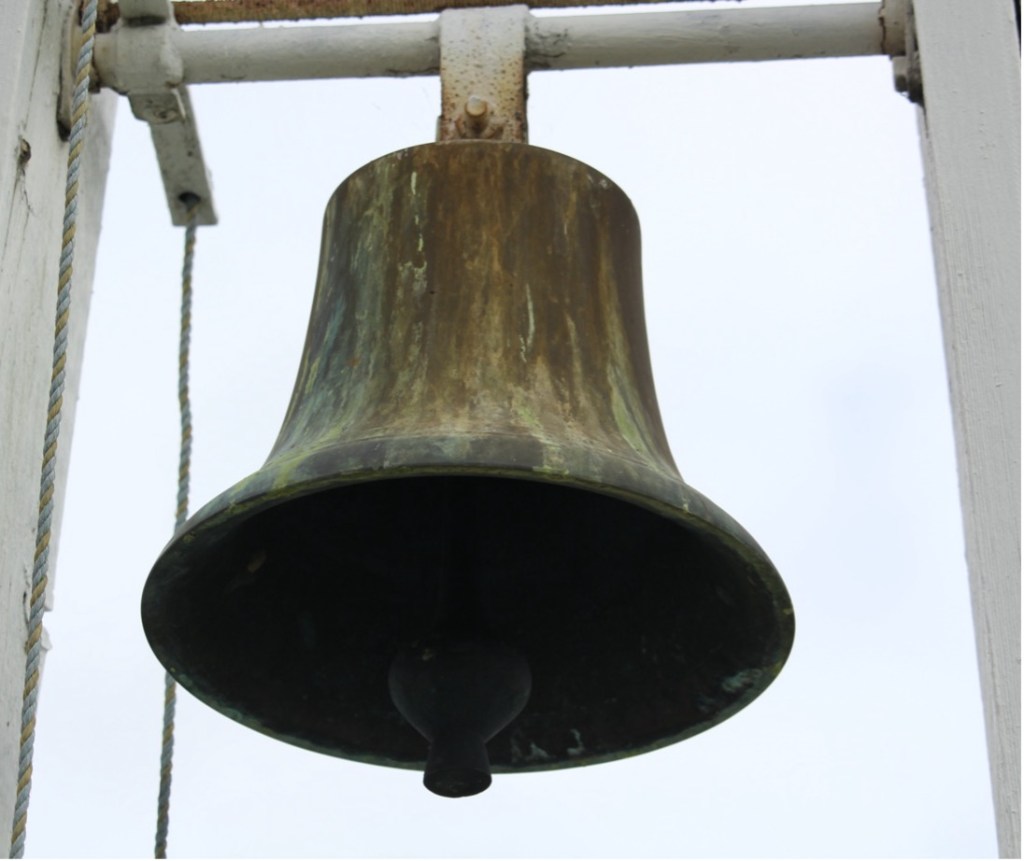
Bell of ’Ceres’ erected beside the Tomago Chapel [Author photo – July 2024]
On 29 August 1836, the 250-ton paddle steamer, SS Ceres, left Newcastle for Sydney carrying cargo and 52 passengers. Later that day was wrecked, without the loss of life.
The Worlds News of 16 July 1930 published the following story of the doomed Ceres:
‘In February 1836, a new passenger and cargo vessel was added to the rapidly increasing fleet of steamships trading on the coast of New South Wales, of which, five years before, the Sophia Jane had been the pioneer. The latter had come from England, but the Ceres, like the William the Fourth, the ship she was intended to rival in the Hunter River trade, was Australian built, having been constructed at Clarence Town, on the Williams River, by Messrs. Marshall and Lowe, the builders of the historic “Puffing Billy.”
Her career was a brief one, but her story is intensely interesting, in view of the fact that next year [1931] will mark the centenary of steam navigation in Australian waters.
In April 1833, a meeting was held in Sydney at the office of Mr. A. B. Spark, for the purpose of forming a company with the object of establishing additional steam communication with the Hunter and its tributaries, and in due course, The Hunter River Packet Association came into being, with a capital of £10,000. Tenders were called for, and Messrs. Marshall and Lowe were the successful applicants. They undertook to build a steamer of 250 tons, all complete, for £3300, anchors, blocks, rigging, £350; other extras, £500. Her two engines were estimated to cost £4000, so that her total cost was to be £8150. An order was placed with Scott and Sinclair, of Greenock, for the engines, which were to have a collective driving capacity of 80 horsepower.
The machinery arrived in New South Wales early in 1836, by which time the hull was ready to receive it, and it was immediately installed in the new ship, which ran her first trials round Port Jackson, on Sunday, February 21. The Ceres made something of a sensation when she entered the early Australian shipping trade, and everyone was very proud of her. The newspapers of the time describe her as being 134 feet long, and 88 feet wide, the deck as very spacious and ‘ball-room-like,’ almost similar to that ‘of a 50-ton gun ship, or the old 74.’
The boxes containing the paddle-wheels, they inform us, “do not put out at the sides like those of the other steam vessels, but are enclosed by, and form part of, the decks.” There were six enclosed cabins for families, and in the “great cabin,” as the men’s saloon is called, twenty sleeping berths were provided. In the ladies’ cabin there were twelve berths, and in the fore-cabin, or steerage, twenty passengers could be accommodated. The first-class cabins were said to have been “elegantly” fitted up.
Owing to the sponsons round the paddle-boxes, there was plenty of space available for the carriage of horses, cattle, and sheep. The ship drew only seven feet when loaded with a dead weight of 150 tons.
As they had done with the William the Fourth, the builders of the Ceres used flooded gum in constructing the hull, with strengthening’s of ironbark, and the decks were made of Norwegian pine. The life of a ship built out of flooded gum was believed at the time to be about twenty years, but how much below the mark this estimate was is demonstrated by the fact that the steamer Kangaroo, constructed of this durable timber at Raymond Terrace, on the Hunter, in 1845, was still running on the Yarra more than sixty years later.
The cost of the Ceres was £10 a ton, whilst the contemporary cost of a similar vessel in England was said to have been at least £15 a ton. The speed of the ship on her trials has not been recorded, but it was reported that “from the speed she went, in smooth water, she bids fair to be a clipper.” Her first voyage to Newcastle was made in first-rate style, and she “headed-a smart breeze in a manner that proves she will be an excellent sea boat.” Her commander was Captain Livingstone.
However, this fine little ship was destined to enjoy only a very short life, as she was wrecked on the night of August 29, 1836, between Bird Island [off Budgewoi] and Broken Bay. The following day, a cable box and bucket belonging to her were washed ashore a little to the southward of Newcastle, and the Sophia Jane, on her run to Sydney, met a quantity of floating wreckage off Bird Island which was identified by those on board as belonging to the Ceres. The first authentic news of the disaster was brought to Sydney by two passengers who had reached Brisbane Water overland and had been brought on from there by the ‘Governor Bourke’. Their story was as follows: —
On Monday evening the Ceres was proceeding towards Sydney, a heavy sea on, when she struck a perpendicular rock called Bullee Noglen, with deep water all round, situated between Bird Island and Bungaree Norah (Norah Head). She stove in her bows. The vessel receded a considerable distance from the shock. The captain gave directions to clap on all the power and run her on shore. The water, however, rushing in, extinguished the fires, and the passengers and crew betook themselves to the boat, which would not contain a quarter of them, there being about 50 persons. The vessel was not about a quarter of a mile from the shore, and it being a beach, the boat soon landed a portion, and at four trips took the whole. The last boat’s crew were obliged to climb the rigging, as the vessel was fast settling, and some were compelled to swim for the shore, and were picked up by the boat. Fortunately, the whole were safely landed. About 60 sheep were on board, which, with one exception, swam ashore. There were also five pigs and one cow saved. Two cows were lost.
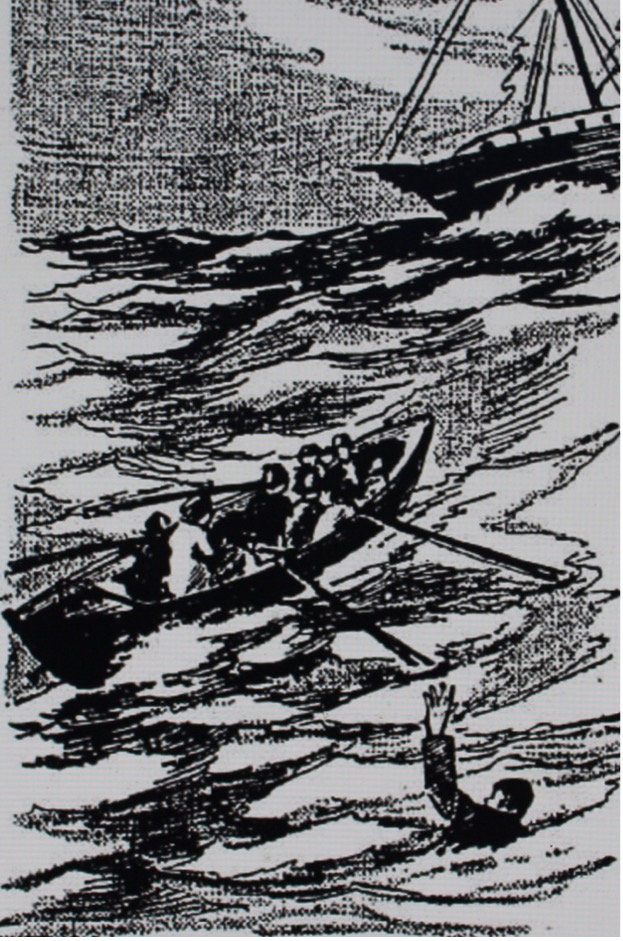
Illustration of the wreckage of the Ceres [The World’s News, 16 July 1930]
The passengers, with the exception of the two who came up by the ‘Governor Bourke’, made for Newcastle. The crew, we are informed, remained at Tuggerah Beach. The vessel is a total wreck; her masts only are visible above the water. The night was pitchy dark, and a heavy sea was running, but the rock is well known. Among the passengers, we understand, were Captain Livingstone, Mr. Perry, Captain Anlaby, Mr. Hughes Snodgrass, Mr. Donaldson, etc.”
In “The Monitor” of September 10, 1836, Captain Livingstone, at considerable length, gives his version of the wreck. He states that Captain Martin was in command, but that the passengers begged him to take charge after the vessel had struck, and that near Black Point the ship sank in four fathoms of water. In the following week Captain Martin, writing to “The Sydney Gazette,” denied that he was in charge, and that Captain Livingstone was to blame for the wreck. There were no marine courts to make inquiry into such affairs ninety-four years ago, and as no lives had been lost there was no coroner’s inquest. All shareholders could do was to discuss between themselves who was responsible for the loss of their vessel. The cause of the wreck seems largely to have been the divided control exercised by Captain Livingstone and Captain Martin—but why that state of things should have obtained is a little vague.
The engines of the Ceres seem to have been a very good job on the part of their makers in Scotland, for “The Sydney Gazette” of June 30, 1836, informs its readers in a short paragraph that “The Ceres, Capt. Livingstone, was not above 61 hours from Newcastle Wharf to Sydney Cove.” They were considered worth recovering from the wreck, re-conditioning, and fitting into the steamer ‘Victoria’, which was built at Raymond Terrace in 1840. The story of their recovery by Mr. John Korff is an interesting one.
Mr. Korff, who had had a good deal of experience as a naval architect in England, was commissioned by Mr. Edye Manning to attempt the recovery of the engines and boilers from the wreck. It is not an easy thing today, with modern appliances, to bring such a task as confronted Mr. Korff to a successful conclusion, but after long and persistent effort, he not only recovered the Ceres machinery and boilers, but even lifted the hull.’
Researched and compiled by Kevin McGuinness
July 2024

 Port Stephens - a history exploration