
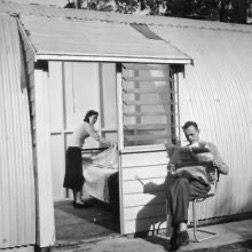
Introduction
Prior to the Second World War, the role of women in the Port Stephens region was primarily of a domestic nature, as was the custom of the times.
Their daily activities concerned duties around the family home or farm and the care of their children. There were few domestic appliances available to help with the daily responsibilities and until later years electricity was not available. Their life was often lonely, as they were required to stay home all day working on domestic activities while their husband and elder sons were away earning a living at such activities as fishing, oyster cultivation, farming, timber getting, or marine duties.
Farmers’ wives were also left alone on their farms for long periods while their husbands travelled for several days to and from regional markets. Some women were also isolated from their immediate family as they moved away from their area of birth following marriage.
Women in Port Stephens also suffered a lack of medical facilities when giving birth. The nearest hospital for many would have been many miles away, and so they generally gave birth at home with the assistance of a midwife or an elder woman. Death following childbirth was an ever-present danger.
The early electoral rolls for the Port Stephens region list the occupations of most women as either ‘domestic duties’ or ‘home duties’. A small number of women had other occupations listed on the electoral rolls and included occupation such as: teacher, postmistress, shop keeper, business proprietor, and missionary.
Women actively participated in church and community activities which were the focus of the social life of the region. They were involved in various community organisations and arranged dances, balls, and fund-raising functions for local churches and schools and to support soldiers on military service in the various wars
From resources such as the Australian National Library’s Trove newspaper collection, a profile can be built up of the contributions made by many women in the early years of the Port Stephens region, across both their involvement in community and in everyday life.
This is their story.
Part One: Community Involvement
Lady Isabella Parry (1801-1839)
Sir Edward Parry was the second Commissioner of the Australian Agricultural Company that was based at Carrington, Port Stephens, during the 1830’s. Both he and his wife, Lady Isabella Parry did much to encourage religious observance by the local aboriginals, convicts and company employees.
Sir Edward Parry converted a building at Carrington, Port Stephens, into a church and school. He conducted the church services and Lady Parry spent significant amount of her time, after attending to the needs of her young children, in conducting lessons at the school.
A journalist, Gordon Bennett, wrote in the Dungog Chronicle of 1 October 1926, page 6:
‘At Carrington, however, not many traces of the old establishment remain, and nothing that would convey the impression that nearly a hundred years ago there was a busy settlement of nearly 500 souls; or that a school, attended by over 50 children, had been in existence. Vanished are the hands that fashioned those ancient edifices; gone are the blacks that wandered about the shores; and stilled too are the little voices that sung at their lessons in that old-fashioned schoolhouse of 1830 when the gracious Lady Parry, like a breath of fragrant English spring, made the neighbourhood the better by her very presence.’
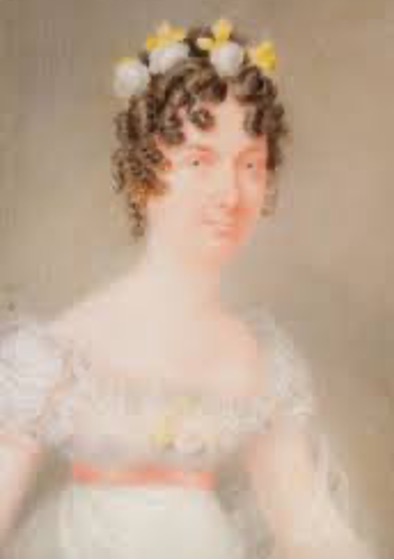
Lady Isabella Parry
Susan Caswell (1805 – 1886)
Susan Hoddle was born in 1805 at Pembury, Kent, England. She married William Caswell, a naval officer, in 1825 at Soho, England. They had eleven children, viz: two born in England, eight at Tanilba (Port Stephens), and one at Balickera, near Raymond Terrace.
William, Susan and their two eldest children arrived in Sydney on 9 May 1829 on board the Pyramus.
William was initially given two crown land grants. One of 1290 acres on the Williams River near Raymond Terrace in November 1829, named ‘Balickera’ [‘Ballickera’], and a second 50 acre grant at Tanilba on the shores of Port Stephens on 31 March 1831.
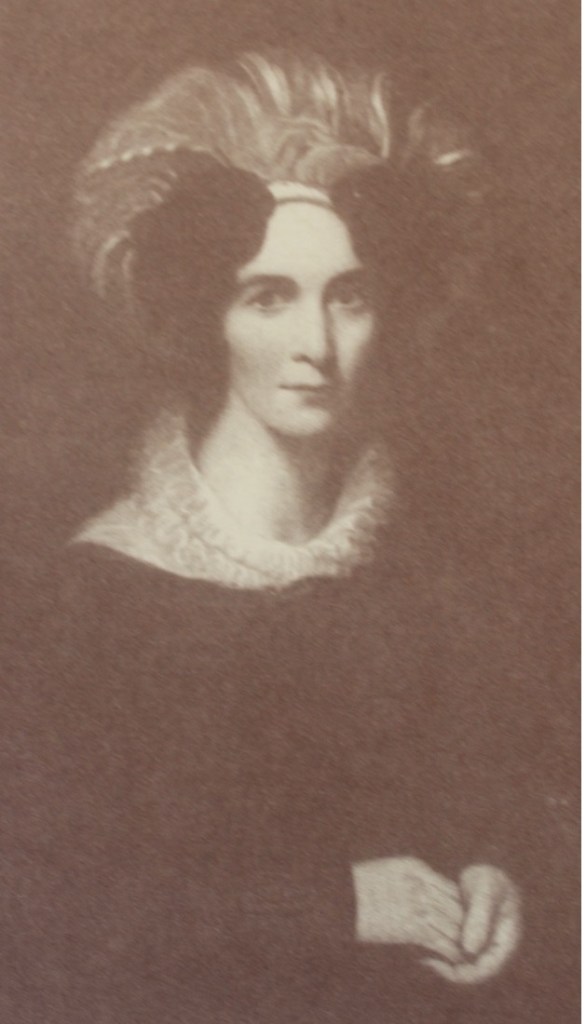
Susan Caswell
William chose Tanilba as the site for his family’s first residence, where they lived from 1831 in slab huts until the more elegant stone Tanilba House was built in 1837, using convict labour.
Although the family was fairly self-sufficient at Tanilba, the land was generally inferior for farming pursuits to that at the Bailickera property. William spent considerable time there while his wife Susan was left alone to manage affairs at Tanilba.
While at Tanilba, Susan encountered many hardships. One problem that never left her was loneliness. Her nearest neighbours were the Blackford Family near present day Lemon Tree Passage, the Cromarty Family at present day Soldiers Point, and members of the Australian Agricultural Company across the Port Stephens waters at Carrington.
Susan did not have access to a boat for much of the time and this effectively confined her to Tanilba. In a letter to relatives in England, dated 17 January 1836, she stated that she had not left “the hill” (Tanilba) for seven years. At one letter, soon after arriving in Sydney, with little money, she wrote to relatives in England that she regretted leaving England.
During William’s frequent absences, Susan had to manage the assigned convict servants, and her housemaid at Tanilba. She also had many interactions with the remaining Aboriginal population that camped nearby. They would often give her fish and oysters in trade for tobacco.
Susan gave birth to eight children at Tanilba, of which two sadly died. Sir Edward Parry, the Commissioner of the Australian Agricultural Company visited the Caswell family at Tanilba, on 17 October 1832 and found them in dire circumstances.
In his diary, he reported on the serious situation at Tanilba House:
‘Saturday, 17th. — In the afternoon I [Sir Edward Parry] went over with Captain Moffatt and Mr. Stacy to Mr. Caswell’s, and I certainly never saw so much misery in a family of the same class — one child dead, another dangerously ill, an infant very poorly, and the mother like a walking skeleton — I fear not long for this world. Mr. Stacy is rather apprehensive that the complaint of the children is of a typhoid character.’
Eventually Susan recovered. Relief was at hand in 1841, when William began his preparation to move Susan and his family to Balickera, which was closer to Raymond Terrace and Stroud.
After the Caswell’s established themselves at Balickera, William advertised Tanilba House and the surrounding land for lease.
It appears that Susan only agreed to come to New South Wales on the condition they only stay seven years, so she was no doubt pleased when William agreed that they should return to England in 1859.
Susan and three of her daughters left first and arrived safely in England. William had planned that they would all travel back to England on the same ship, but he remained behind for a period while he completed arrangements to lease his Tanilba and Balickera properties.
William together with one of his daughters and her husband, finally sailed from Sydney on 26 May 1859 on board the Light of Age. He did not reach England as he died on the ship and was buried at sea
Susan never returned to New South Wales and never again saw the many members of her Australian family.
She died on 15 January 1886 at Teignmouth, Devonshire, having been a pioneer of the Port Stephens Region.
Queen Charlotte crowned at Karuah
The Daily Telegraph of 6 November 1912, page 11, reported:
‘At Booral Wharf, Karuah River, Port Stephens, on Saturday, Queen Charlotte, one of the first aborigine queens, was crowned. Five years ago her husband, King Billy, received his plate, but no recognition was made of the highly respected queen. However, Captain Phlllipson, of the s.s. ‘Karuah’, and other friends, recently decided that the time was ripe to crown Queen Charlotte. So on Saturday about 50 of the queen’s subjects erected gunyuhs amongst the bushes and put up a throne.
The queen was surrounded by her maids of honour and her bodyguard of portly young men. The crown was borne on a cushion by a little girl and placed on the queen’s head by Captain Phillipson. The National Anthem was sung, and all the subjects vowed allegiance to their queen, who spoke a few well-chosen words. The blacks entertained a large number of white visitors at tea, and a concert held afterwards on the wharf (lighted by the Karuah’s electric bulbs), in aid or the Karuah Aborigine Mission, realised about £4.’
The Newcastle Morning Herald and Miners’ Advocate of 28 October 1931, page 4, also reported on the death of Queen Charlotte:
‘A queen died in Newcastle Hospital yesterday. The sad event did not plunge the nation in mourning, for she was of a fast-vanishing race; the aborigines who roamed at will over Australia before the civilisation brought by the white settlers spelled their doom. She was Queen Ridgeway, of Karuah, whose wrinkled old face bore testimony to the ravages wrought by over 70 summers. Well known in Karuah, where she had dwelt for many years, she was one of the oldest aborigines in the district. Her remains are to be taken back there today, and, it was reported last night, will be placed on their last resting place in accordance with tribal rites.’
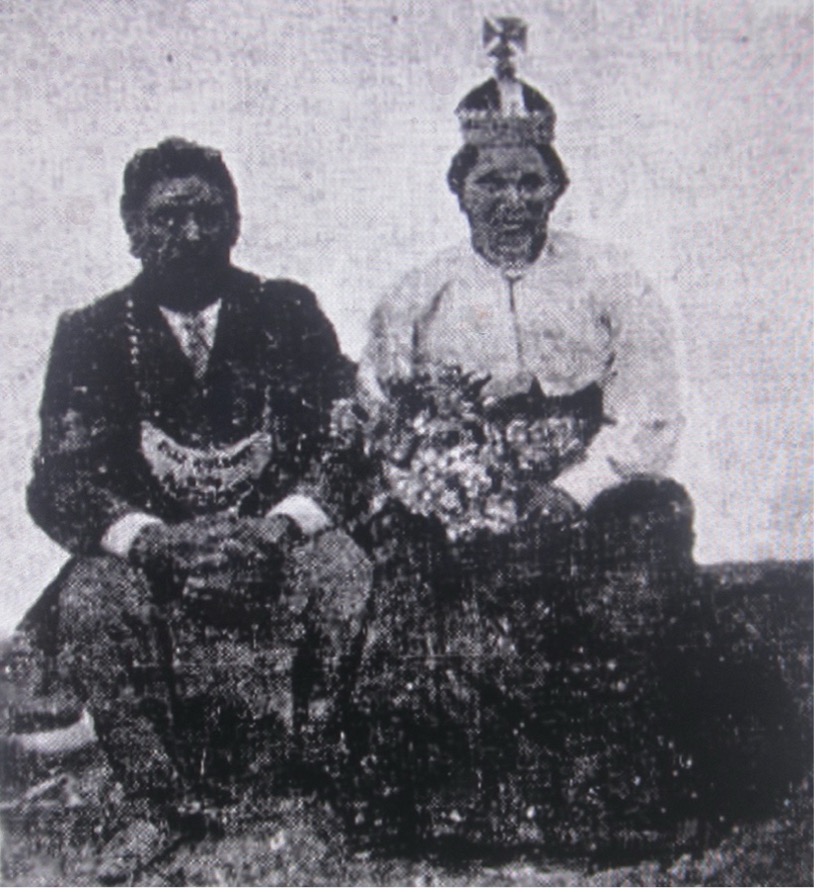
King Billy (wearing his brass crescent) and Queen Charlotte (wearing her crown) [The Sun, 10 November 1912].
The story of King Billy and Queen Charlotte is found at this link on the website.
Margaret Mary Ann Smith (1860-1916)
Margaret Mary Ann Smith was the wife of Stanley William Smith, grandson of the convict, Gentleman John Smith.
In 1898, Stanley William Smith [Snr] built ‘Stanley Park’ homestead on his property at Fullerton Cove, Pot Stephens.
He and Margaret were very active members of the Anglican Parish of St Saviours at Williamtown.
Titled as Mrs S W Smith, Margaret had the honour of laying the foundation stone of the current church of St Saviours on 24 June 1912.
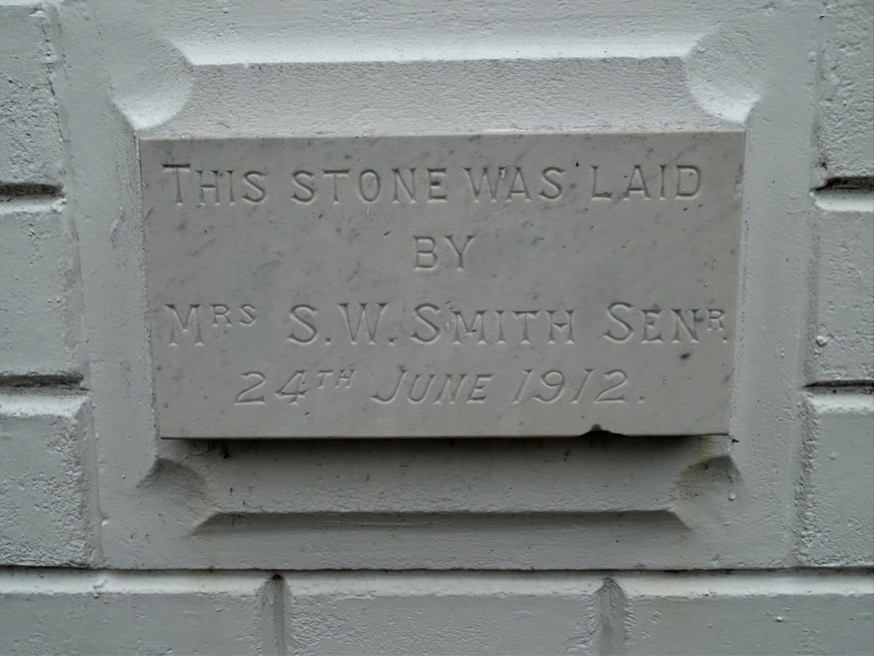
Foundation stone of St Saviours Church at Williamtown
According to a report in the Newcastle Herald and Miner’s Advocate of 25 June 1912, page 4, Stanley William Smith] was the Church ‘secretary and clergyman’s warden’.
Margaret was President of the Ladies Guild and Miss Florence Smith, her daughter was the Secretary.
Mary Ellen Longworth (1875 – 1956)
Mary Ellen Longworth was the wife of a wealthy businessman and philanthropist, William Longworth.
Mary Ellen was well known in Sydney, Newcastle and Port Stephens at the beginning of the 20th century. The Longworths resided for at Karuah and Mary Ellen was involved in the organisation of many of the social and fund-raising events held there in their time.
One example of her superior organisational skills was set out in the Dungog Chronicle of 29 March 1918, page 3, reported:
‘On Saturday night last, 23rd March, one of the most successful concerts ever held at Karuah eventuated and was organised by Mrs. W. Longworth, of ‘Glenroy,’ for the purpose of raising funds to erect a street Honour Roll to perpetuate the memory of the brave boys of Karuah, who have done and are doing their noble duty at the front. She was ably assisted by Miss Smith (Stroud) and an active committee.
The night was perfect and the attendance very large, and the hall was not large enough to hold those assembled. The Steel Works Band (under Mr. J. J. Kelly), who gave their services gratuitously, rendered some beautiful selections and also assisted Mrs. Longworth through with the refreshments and concert items, and if ever needed have offered their valuable services again. ……
During the evening a presentation was made to Mrs. Longworth, by Rev R. G. Knox, on behalf of her friends and residents of Karuah. The rev. gentleman referred to Mrs. Longworth’s charity and goodness to the sick and needy of the district, and paid a high tribute to the hospitality of that lady and her good husband, of ‘Glenroy,’ whose doors were ever open to the traveller and friends. Miss Smith expressed her great appreciation of the many good qualities of Mrs. Longworth and said she really could be called everybody’s friend. The Hon. W. Bennett expressed also his appreciation of Mrs. Longworth, whose broadmindedness, hospitality and charity made her beloved by all. Karuah was fortunate in having Mr. and Mrs. Longworth as residents.
Mr. Longworth was a protectionist of the old school, who invested his money in local industries and the development of our primary resources, thus providing employment for the people and creating additional national wealth. The gift was a silver asparagus dish, and was handed to Mrs. Longworth by little Miss Phyllis Walsh, whose daddy is on active service. Mrs. Longworth suitably replied and said she was always delighted to do her best for one and all, and especially the brave lads at the front. Proceeds of the movement will amount to over £100. Collections by Mrs. Longworth amounted to £60. The Honor Roll will be erected near the government wharf, at Karuah, and will be of granite with sleeping lion on top, as Mr. and Mrs. Longworth think this appropriate, as England was certainly the sleeping lion until aroused by Germany. Among the many donations received, was a beautiful cloth worked by Mrs. Bennett, of Allworth.’
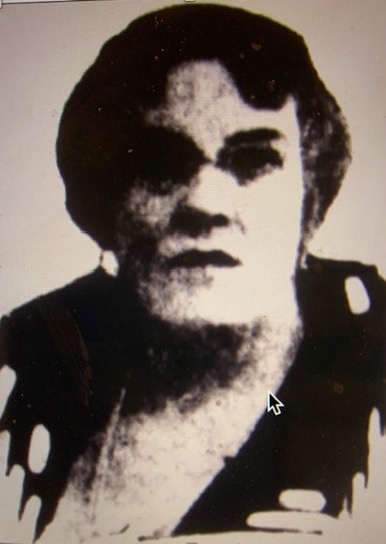
Mary Ellen Longworth
The story of William and Mary Ellen Longworth is found at this link on the website.
Maria Windeyer and Lady Mary Windeyer
Maria Windeyer and Lady Mary Windeyer were mistresses of the Tomago Estate in Port Stephens. They were the respective spouses of Richard and William Charles Windeyer, who were both prominent in judicial and political circles in the colony of New South Wales in the nineteenth century.
Both women were well known in their own right, in both Sydney and the Port Stephens region.
Maria Windeyer (nee Camfield) took over the ownership and management of the Tomago Estate, following the death of her husband, Richard Windeyer in 1843.

Maria Windeyer (nee Camfield) – National Portrait Gallery
In 1861, Maria and her sister, Miss Elizabeth Camfield, built the Tomago Chapel on the property. It was renovated in 1879, in remembrance of Maria Windeyer by the people of Tomago.
Maria died at Tomago House on 7 December 1879, aged 83 years.
Lady Mary Windeyer, nee Mary Elizabeth Bolton, married William Charles Windeyer (1834 -1897), on 31 December 1857. They had a family of eight children.
William was the only son of Maria and Charles Windeyer.
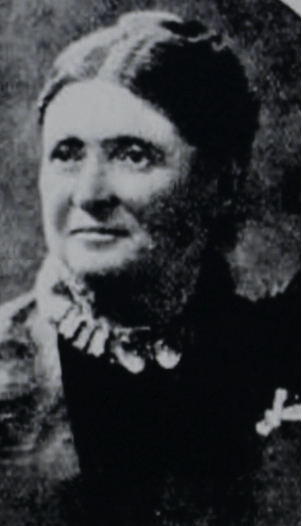
Mary Elizabeth Windeyer (1836-1912)
Lady Mary Windeyer as she became known, was a woman of influence in the New South Wales Colony, in her capacity as social worker, women’s right activist and child welfare reformer.
She retired to the Tomago family property after her husband’s death in 1897. Although most of her work was centred on Sydney, she maintained an active interest in her causes while resident at Tomago.
Her story is published in the Australian Town and Country Journal of 9 September 1908:
‘Side by side with the many notable men who have lived in and worked for this great Commonwealth there have also been eminent women, whose story in many cases has been untold, and though they may have been equally strong fine characters, with great influence for good, yet, in accordance with the spirit of the times, little or nothing has been publicly said about them or their work. For the last few years Lady Windeyer, about whose work it is proposed to give a brief sketch, has lived on her country estate, “Tomago,” on the Hunter River, where she has a farm, and there she resides in comparative seclusion, but still taking a great interest in whatever concerns her fellow creatures, more especially women and children.
As president of the Newcastle free kindergarten movement, she yet does useful public work, and her active mind occupies itself in inventions of a practical and useful nature, especially those to simplify farm work. But it is of her public services during the seventies, eighties, and nineties of last century that one has to speak in telling the story of what works Lady Windeyer helped to organise and nurse, through fragile infancies into the vigorous growth of youth. In early days the Infants’ Home was but a very small effort of a very few philanthropic women, who felt that a great work was needed to save the babies and to help reinstate the mothers into honourable places again in the outside world.
In 1874 the Infants’ Home started its career in Macquarie-street, under the care of Miss Troloppe, being known as the Foundling Hospital, and it was while Lady Windeyer was an active member of the committee that it was removed to Ashfield, which may be looked on, even today, as a garden suburb; where children and chickens have every chance of growing and flourishing. In those days the girl who had been “unfortunate” was treated with much greater severity than now, and this admirable institution, primarily for a home for little neglected “cornstalk” babies, has also proved an ark of refuge for many a destitute giri, whose motherhood had in it many distressful circumstances.
When Lady Windeyer first began her philanthropic work there were comparatively few mediums for helping, the needy, private philanthropy was giving way to organised united schemes, and it required people of considerable tact and worldly knowledge, as well as a genuine enthusiasm for helping others, to utilise the crude material at hand with which to work. The professional beggar too often imposed on susceptible people, whilst the deserving poor went unaided because they tried to hide their need. Of course, in some degree, this ever must be the case, but it was a small band of women who, including Lady Windeyer, first ventilated a scheme which has now become a very important medium for helping poor, deserving women.
Mrs. Marsh, Mrs. Wise, and Lady Windeyer formed a committee for temporarily aiding deserving women, who wanted, either as a loan or gift, a little capital to set them up in some business. For example, a mangle or sewing machine might be the stock-in-trade needed to enable a newly made widow to keep her home and family together; and, however independent-spirited the person was, this little help towards retaining her independence could not fail to be highly appreciated and thankfully accepted.
It was the success of this small preliminary “Temporary Aid Society” that suggested the scheme of the Queen Victoria Jubilee Fund, also an association which was helped and piloted by Lady Windeyer. Those who remember the Women’s Industrial Exhibition of 1888, when the money was raised to begin the Queen Victoria Fund, will also recollect how arduously this lady worked in various ways towards making the first great demonstration of what women were capable of doing a success. Lady Windeyer undertook all that had reference to nursing, and as hospital nursing as an employment for gentle women was then coming much into notice, it was one of the subjects that required careful handling by an eminently practical and yet by an open-minded woman. But it was because Lady Windeyer had such sympathy with the worker and such delicacy in dealing with what intimately concerned her that she did the greatest amount of good work in this exhibition.
As in all such, shows, there was much sent down that appeared worthless, and unsuitable from the general committee’s standpoint— articles made in the far bush, where there was little to help inexperienced minds in designing or in execution. The refused goods presented a sorry sight, for they meant disappointment to so many. Then Lady Windeyer proposed to open a special stall with the flotsam and jetsam. “And,” said the narrator of the incident, “I assure you it was the most interesting stall of exhibits to be seen.”
At the Chicago Exhibition, Australia was well represented, Lady Windeyer being on the executive council, and taking an active interest in collecting representative exhibits. To-day we are so used to Working by committees, and ladies understand the value of proper organisation, but only a few years ago it was difficult to find a body of women who thoroughly appreciated the worth of being unanimous and all pulling the same way. It was therefore of untold consequence to have intelligent and tactful women as officials, those who would be willing to sacrifice personal fads and predilections for what the majority ruled as best.
Lady Windeyer’s most active services were at this time and her colleagues in every society with which she was connected say that “ever gentle and forbearing, it was a gentleness that had a background of firm convictions which had the weight of being the result of careful study of the subject under discussion.” “When you say that Lady Windeyer was excellent on a committee, you have by no means said everything,” said an active member of the W.C.T.U. “She took a personal interest in the details of every individual case in her philanthropic work, and we always found that she had been beforehand in giving private advice and aid. Gainsborough Terrace, Sulworth, or wherever Lady Windeyer resided, was always a centre from which an endless number of people got help and sympathy, as well as good advice.”
People who have lived a good number of years in N.S.W. may remember that there was at one time only one way of dealing with the State child, or indeed with any destitute child, which was the barrack or institution system. Sir Henry Parkes, who formerly had been greatly wedded to reformatories and large institutions, began towards the end of his regime, to alter his views regarding the children of the State. It may have been through knowing the opinions of Mr. Garran, Lady Windeyer, and Mrs. Jeffries (wife of the minister in charge of Pitt-street Congregational Church) that his ideas were modified; but, however that may have been, he certainly let them try the experiment of establishing the nucleus of the present boarding-out system, which now is generally, allowed to have been a very successful method of dealing with State-parented children, and a wonderful advance upon the indiscriminate herding of them in large asylums.
Until Lady Windeyer, at the death of Sir William (1897) retired to her country home, she continued her work in the boarding-out committee, being also, on the Women’s Council for the Women’s Hospital from its beginning until 1897. As a National and State officer of the Women’s Christian Temperance Union, Lady Windeyer came in touch with a great many women workers of various schools of thought and in different spheres of life; the same may also be said of her position as vice-president of the Woman’s Suffrage League, which hon. post she occupied until the franchise was given to women. In her position as wife of a Judge, there were many social obligations laid upon Lady Windeyer; and her time was very fully occupied with many duties outside of philanthropic work, but as is often the case, it was the hard worker who found time to take up new interests; and it may truly be said that in everything that really was valuable as a progressive measure, this lady was always ready to assist in furthering, though, at the same time, her husband’s position demanded that to a great extent she should be conservative and help rather in advancing already established causes than in supporting innovations.
Lady Windeyer was Miss Mary Elizabeth Bolton, daughter of the Rev. R. T. Bolton, Vicar of Padbury, Bucks, and afterwards of Hexham, New South Wales. Her family numbered eight children.
Lady Mary died at Tomago House on 4 December 1912
The Sydney Morning Herald of 4 December 1912, page 15, reported:
‘The death occurred at 11.30 last night of Lady Windeyer, widow of Sir William Charles Windeyer, Senior Puisne Judge of the Supreme Court of N.S.W., who died in 1897. Lady Mary Elizabeth Windeyer, who had been in ill-health for some years, was a daughter of the late Rev. R. T. Bolton and was married in 1857. She was intimately identified with many charitable movements, and her loss will be keenly felt by many whom she befriended. Lady Windeyer died in the presence of her family at her residence at Tomago on the Hunter River, near Raymond Terrace. She was 76 years of age.’
A history of Tomago House and the Windeyer Family is found at this link on the website.
The Red Cross
Over the years several branches of the Red Cross were opened throughout the Port Stephens area. Local women were very active in the formation and ongoing management of the Red Cross activities. An example is provided when the Red Cross organised a fund-raising ball at Tea Gardens in 1918:
The Newcastle Morning Herald and Miners’ Advocate of 10 August 1918, page 8, reported:
‘The newly-formed branch of the Red Cross at Tea Gardens has been making a special effort to raise funds. Mrs. A. McCrae is the president, Miss Violet Engel and Miss Ada Dixon are the joint hon. secretaries, and Mrs. A. McCrea and Mr. F. Muir joint hon. treasurers. The first function was a plain and fancy-dress ball which was held in the Australian Hall, Tea Gardens, and it was a big success. Nearly everyone present was in fancy dress, and many novel and amusing costumes were worn. The function was regarded as the best yet held at Tea Gardens.
Further information on the activities undertaken at the Australia Hall at Tea Gardens is available elsewhere on this website.
Country Women’s’ Association
Several branches of the Country Women’s’ Association [CWA] were formed in several areas of Port Stephens. The formation of the association in Tea Gardens during 1931 was reported in the Dungog Chronicle of 10 July 1931, page 4:
‘Consequent upon the recent visit of Miss Flannery, President Stroud C. W. A. to Tea Gardens, arrangements were made through Cr. Harris for the purpose of deciding whether a branch of the C.W.A. should be formed. Mrs. Ripley arranged for a meeting which was held in Australia Hall on the 28th ult, and was largely attended. ……
The chairman then asked for a motion to determine whether in the opinion of the meeting it was deemed advisable to establish a branch of the C. W. A. at Tea Gardens. Mrs. J. Ringland moved accordingly. The motion was seconded by Miss Scott, and carried unanimously. …..
Messrs. Harris and Pyman congratulated the ladies upon their decision and wished their efforts and association every success, and then withdrew from the meeting. The meeting then dealt with formal matters in the direction of arranging for the official launching of a local branch. With this end in view the Provisional Secretary was authorised to advise Miss Flannery of motions determined on in order that this lady could arrange for the official opening.’
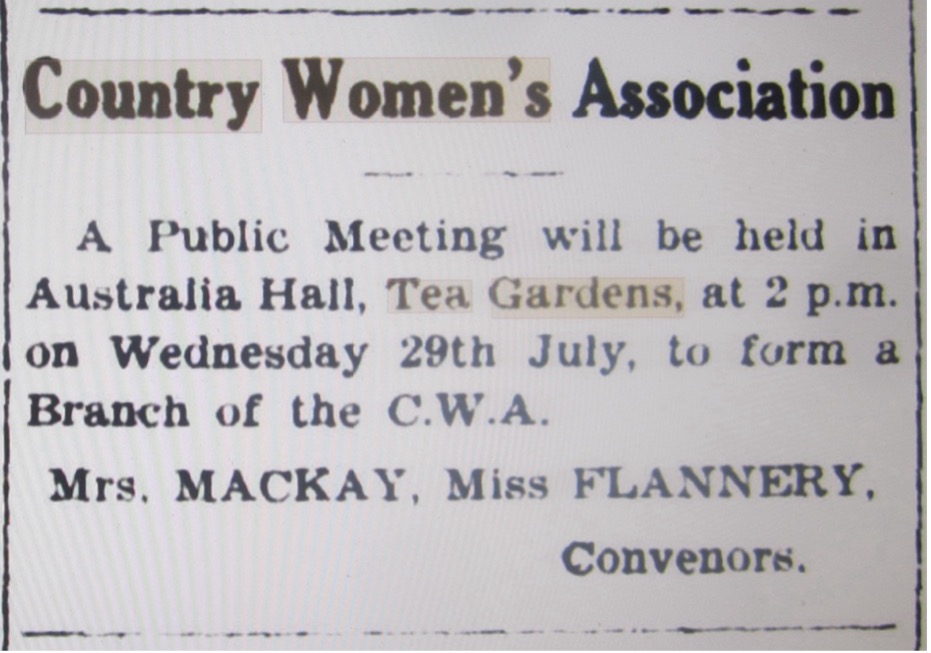
Advertisement for public meeting to form a CWA Branch at Tea Gardens [Dungog Chronicle, 17 July 1931]
Another example of the activities of the Country Womens’ Association was the organisation of a Debutants Ball, at Nelson Bay. Many such balls were organised by the various branches of the Association. The Newcastle Morning Herald and Miners’ Advocate of 8 March 1952, page 6, reported:
‘Nelson Bay C.W.A. branch will hold a Debutante Ball on May 9 in the new Arcadia Theatre. The Lord Mayor of Newcastle (Ald. Armstrong) and the Lady Mayoress will receive 11 debutantes.’
The Dungog Chronicle of 21 July 1933, page 4, reported on the Younger Set of the C.W.A.:
‘A branch of the Younger Set [of the CWA] has been formed in Tea Gardens, and the occasion was celebrated by a dance and euchre party in the Australia Hall. The function was well patronised, the door takings amounting to eight pounds odd. The supper was supplied by the organisers, assisted by members of the Country Women’s Association. ….. The function was a wonderful success.’
The story of the formation of the Country Women’s’ Association at Tea Gardens is found at this link on the website.
Tea Gardens Dramatic Society
Cultural and dance events were frequently organised throughout the Port Stephens area, and women were always actively involved in the organisation and conduct of such events.
The establishment of the Tea Gardens Amateur Dramatic Society was reported by the Dungog Chronicle of 31 July 1931, page 4, and serves to show the talent of local women in performing at such events:
‘The recently formed Tea Gardens Dramatic Society assisted by artists from Pindimar, staged a grand concert in Australia Hall on Saturday last in aid of the Tea Gardens G. U. Oddfellows’. An exceptionally large audience greatly appreciated each item of the programme. ……
The items rendered were as follows: — Bag pipes, Mr. Malcolm McLeod, in full dress kilts. Opening chorus “Keep a song in your heart,” company. Recitation, the kindergarten school children. Piano solo, Mrs. Connell, Pindimar. Monologue, Joyce Ripley. Song, “Up the airy mountain,” Tea Gardens school children. Song, “When Irish eyes are smileing,” Pindimar girls. Entertainment (sleight of hand), Trevor Burrows. Recitation, “If,” Miss Robinson, Pindimar. Part song, “Good night, good night, my beloved,” choir. Dialogue, “Cupid in the kitchen,” Misses Jean and Muriel Motum and Mr. Russell Watters. Song and ballet, “Give yourself a pat on the back.” Comic song, “Burlington Bertie,” Miss Joyce Ripley. Recitation, “The Hero,” Miss Jean Motum. Solo (song) “Flowers of old,” Mrs. E. Holbert; encore, “Is it love.” Song, “Swinging in a hammock,” Misses Minnie Motum, Beryl Engel, Messrs. C. Robards, Stewart Engel. Dialogue, “Ici on Parle Francais,” Misses J. Goddard, B. Scott, E. Nash, J. Harris, Messrs. Austin Cook, C. Motum and T. Burrows. Song, “Keep a song in your heart,” the company.’
Holiday Camping at Nelson Bay
From the early 1900’s, camping at Nelson Bay and nearby areas attracted a great number of holidaymakers, many of whom came from the Hunter region coal fields. While the men went off to fish in the harbour or out at sea, the women often remained behind to attend to the needs of camp life and keep the children entertained.
The Newcastle Morning Herald and Miners’ Advocate of 29 December 1945, and 27 December 1951 published the following photos of women campers at Nelson Bay with the following captions:
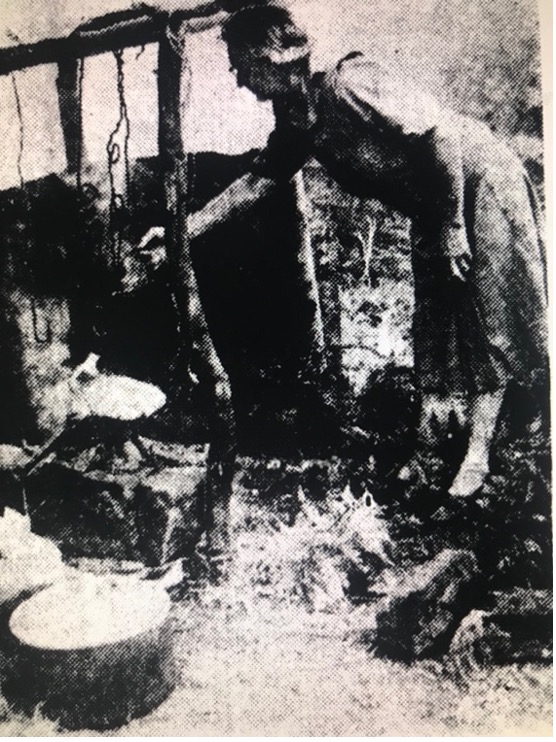
Mrs. E. O’Neill, of Mayfield, had no “real” cooking problem compared with other campers at Nelson’s Bay. Her camp was prepared for wet weather, and the fireplace was covered with a roof of galvanised iron.
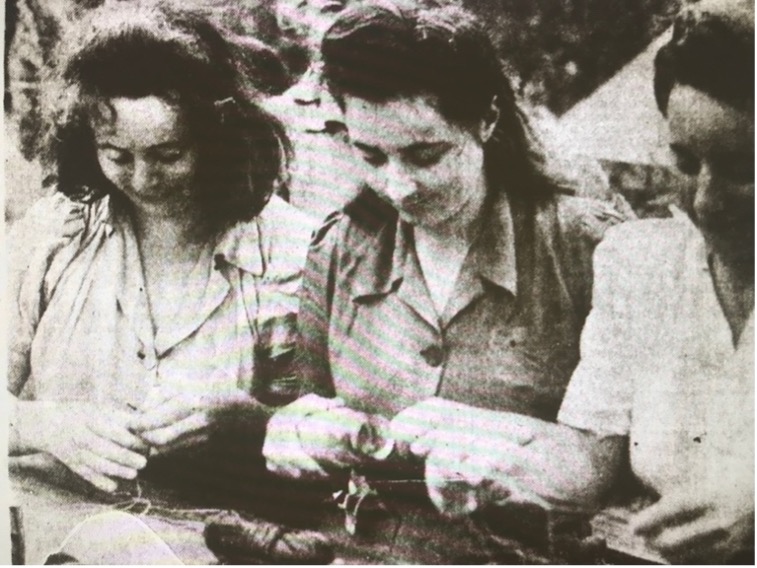
The absence of fish yesterday did not deter Joan, Coral and Lorna Tobin, of Hamilton, who are untangling “bunches of grapes”‘ as they prepared their lines for another day’s fishing.
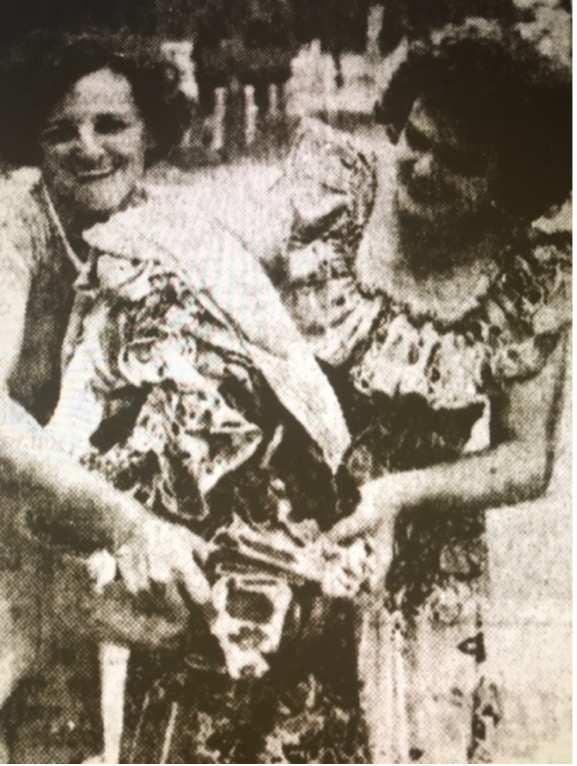
Mrs. J. Wallace and Mrs. R. Lynch, both of Mayfield, find that laundry has to be done, even on holidays.
Prized Novelist Publishes a Book at Port Stephens
Daphne Marie Rooke was a prized South African novelist who resided Port Stephens for several periods of time from 1950’s, after marrying an Australian, Irvin “Bertie” Rooke.
She was born in South Africa and published numerous prize-winning novels about life in South Africa. The University of Natal recognised her writing in the 1980’s and awarded her a honorary doctorate in 1997.
In 1952, while living at Port Stephens, Daphne Rooke published a novel, ‘Apples in the Hold’ in which the action was largely centred at Nelson Bay. The was published under the pseudonym of Robert Pointon.

Daphne Rooke
Gertrude Violet Wikner (1914 – 1952)
On 1 June 1936, Gertrude Violet Williams married Geoffrey Neville Wikner in Earley, England. In 1946, after the Second World War Gertrude, her husband and their two children flew to Australia in a former Halifax bomber purchased from English military authorities.
Shortly after their arrival in Australia, the Wikners established a new camping ground with facilities at Nelson Bay which they named Hailfax Park.
The detailed story of Geoffrey and Gertrude Wikner and their Halifax bomber can be found at the following link on this website.
The Newcastle Morning Herald and Miners’ Advocate of 25 December 1946, page 2, reported on Gertrude’s new life at Nelson Bay :
‘Mr. and Mrs. Geoffrey Wikner left a palatial English home surrounded by its own park lands, bought an R.A.F. Halifax bomber — Waltzing Matilda — and flew to Australia. They now live in tents on the camping ground at Nelson’s Bay, where they are establishing a model camping area and pleasure resort. …..
When Mr. and Mrs. Wikner arrived at Nelson’s Bay to establish a model camping area, they decided to name the settlement ‘Halifax Park’ after the bomber they bought in England and flew to Australia. When he acquired a motor truck, Mr. Wikner had the name “Waltzing Matilda” painted on the side. ….
Camping under typical pioneer conditions at Nelson’s Bay, Mrs. Wikner, an Englishwoman from Hampshire, has taken to Australian life. Her mother was killed in a bombing raid, her brother died while on service with the R.A.F., and her sister in-law, the late Lady Cynthia Williams, was killed when she trod on a land mine. “I love the open spaces in Australia, and am getting a real thrill out of camping,” she said. “Life here is just one long holiday.”
Pleasure-loving Mrs. Wikner said they decided to come to Australia because it was the most pleasure-loving country in the world. With the idea of providing pleasure for Australians and overseas visitors, they toured the coast between Sydney and Brisbane, and selected Nelson’s Bay for their project. “Australia is big enough to create pleasure areas in developed and undeveloped places,” said Mrs. Wikner. “We have selected an undeveloped area and will do what we can to preserve the natural surroundings.” Mr. Wikner operated a factory which manufactured plastic parts for aircraft in England. While he was on service with the Air Force, Mrs. Wikner managed the business. Until their arrival in Australia their two children, Val (9), and Christina (6) had seldom tasted butter, and knew few fresh fruits. Both children enjoy the bushlands at Nelson’s Bay. Val is attending Barker College, and Christina is a pupil at Nelson’s Bay School.’
Gertrude Wikner died young, aged 38 years. The Newcastle Morning Herald and Miners’ Advocate of 22 April 1952, page 5, published the following obituary to her:
‘Mrs. Gertrude Violet Wikner, co-director of Halifax Park Pty. Ltd., a Port Stephens tourist resort, died in the Mater Misericordiae Hospital yesterday 20 minutes after an operation. She was 38. Mrs. Wikner was born in England. In 1940, while her husband was a ferry pilot in the Air Transport Auxiliary, she was appointed a director of Foster-Wikner Aircraft Co. Ltd., Southampton. In 1946, after she and her husband had tried, without success, to obtain passages to Australia, they purchased a Halifax bomber and flew out with 20 other migrants. Mrs. Wikner is survived by her husband, Geoffrey, son Kynaston Val, 15, and daughter Isabel Christina, 11.’
Her death was a great loss to her family and indeed Halifax Park.
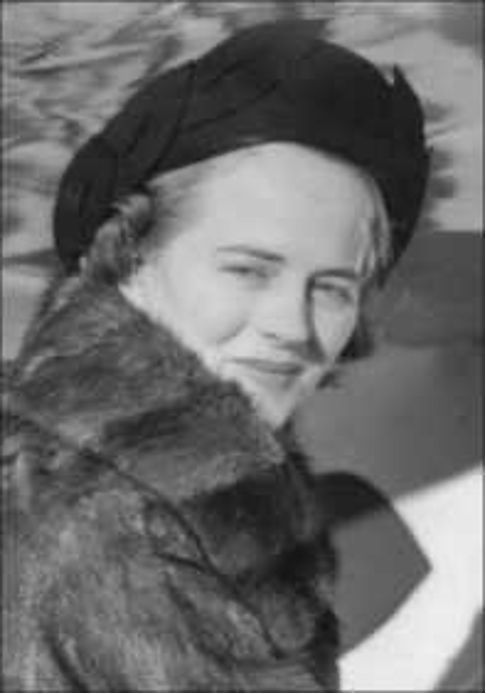
Gertrude Violet Wikner nee Williams [Ancestry]
Women at the Nelson Bay Migrant Hostel
After the conclusion of World War Two, many countries commenced immigration programs to facilitate the re-settlement of displaced persons. It was quickly recognised that many of them were highly skilled, and several countries, including Australia, made special efforts to resettle them to boost commercial manufacturing operations and economic growth. The Nelson Bay Migration Hostel (Camp) which housed hundreds of the displaced persons, commenced operations in 1948 and ceased operations 1953.
The following photos and their captions are taken from the records of the National Archives of Australia. They provide an insight into the daily chores of the women at the Nelson Bay Migrant Hostel:

Johna Beerens, former officer of the Netherlands Merchant Navy, consults the advertisements of jobs offering in the newspaper while wife, Antonia, tidies up their living quarters. Mr. and Mrs. Beverens came from Nymegen in the Netherlands.
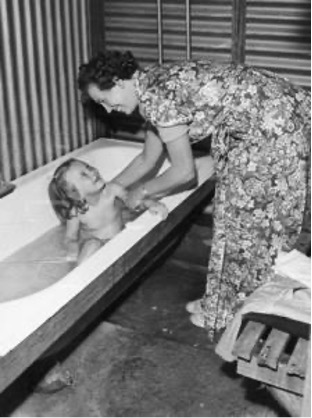
In standard bathroom Mrs Anni-Hermans from Noordwyk Bennen, Holland gives small daughter Nelleke her morning bath.
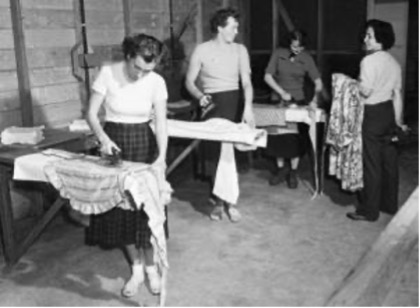
Large ironing room is well used by Dutch women. Room has ten cupboards and large central holding table.
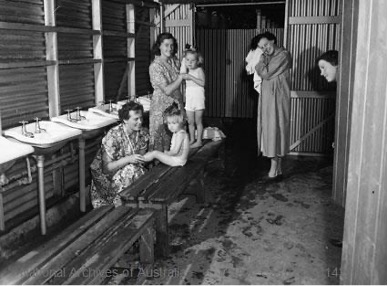
Dutch women make use of communal bathroom for morning ablutions.

Dutch women make good use of laundries featuring hot and cold running water and copper for boiling.
Part Two: Life Stories
A further source of information on the everyday lives of women who spent time in the Port Stephens area in the early years is found in their obituaries which appeared in various newspapers. They throw light on the many hardships that the women faced.
Some of these stories are featured below:
Hilda Olga Maude Ferguson
[Maitland Weekly Mercury, 15 March 1924, page 4]
‘Many Maitlanders will regret to hear of the death, which occurred, on Wednesday at the Newcastle Hospital of Miss Hilda Olga Maude Ferguson, who was schoolmistress at the Karuah aborigine’s station. On February 27 she was seized with a fit and fell, while visiting the home of Mr. V. W. Evans, missionary attached to the aborigine’s inland mission at Karuah. …. Miss Ferguson took great interest in the aboriginal children, and it was a pleasure to visit the well-kept garden and schoolroom, and to see the good work of the young people. Miss Ferguson accompanied the representative Port Stephens aboriginals who came to Maitland to meet the Prince of Wales.’
Elizabeth Johnson
[Raymond Terrace Examiner and Lower Hunter and Port Stephens Advertiser, 27 February 1930, page 3]
‘On Sunday last, after about a fortnight’s illness, Mrs. Johnson relict of the late Mr. Johnson, of Karuah, died at her residence, Karuah. The deceased lady was aged 78 years, and was born at Alderley Creek, Stroud, …… The late Mrs. Johnson was postmistress at Karuah for 40 years, and was held in high esteem for her kindly and obliging disposition and friendly nature. She had many friends in Port Stephens and Stroud districts who regret that her demise has occurred. She was most neighbourly and considerate in her disposition and willingly rendered assistance and advice wherever it would do good. Her death after such a long and useful residence at Karuah creates a break in the community there that will be keenly felt.’
Mrs. Stewart Smith
[Dungog Chronicle of 18 September 1931, page 4]
‘The death occurred of Mrs. Stewart Smith at the residence of her daughter, Mrs. Moriceau, Tea Gardens at 6.15 p.m. Friday 11th instant, at the age of 81. The deceased had the unique and distinct honour of being the first white woman to reside at Hawke’s Nest — the first township on the northern shores of Port Stephens, having taken up residence there in the year 1866; and continued to reside there until about four years ago, when she took up residence with her daughter, Mrs. Moriceau, at Tea Gardens.
She saw the first shack erected at Tea Gardens. The deceased was a true type of early pioneer women who have so effectively contributed to the making of a nation. Only such pioneers can truly describe the burdens that must be borne and the hardships suffered under the primitive conditions that naturally form the lot of those who valiantly undertake the colossal work of bending the forest to the will of human necessity. The large number who followed the remains of this fine old pioneer was a tribute of respect and acknowledgement of her life of usefulness and service to this district.’
Mrs. H. M. Johnson
[Raymond Terrace Examiner and Lower Hunter and Port Stephens Advertiser, 12 January 1933, page 4]
‘On January 5th the district of Nelson’s Bay experienced the loss of one of its most beloved residents, through the translation to the higher life of the local postmaster’s wife. Although country born, she spent several years in the city, but returned to this neighbourhood after her marriage and devoted her life to the furtherance of the interests not only of her life partner but even of those around her. ……
It was the writer’s privilege to know, “this woman beloved” for just 10 months, and now as only memories remain — precious memories of a chaste acquaintance ship — one feels thankful to Almighty God for having been permitted to know “Rene” Johnson. One recalls the welcome extended to a stranger in a strange place immediately on his arrival; one appreciatively remembers the numerous invitations “to sup with us”; one recalls many happy hours spent in discussions both religious and topical and feels the richer for having shared in her views.’
Maria (Granny) Callaghan
[Raymond Terrace Examiner and Lower Hunter and Port Stephens Advertiser, 15 June 1933, page 3]
‘Mrs. Maria (Granny) Callaghan, an old Karuah identity, died at Karuah on Sunday, 11th June. …. The deceased lady was in her 88th year, and was born at Parramatta in 1846 .She came to the Port Stephens district at an early age and has lived here practically all her life. Her husband predeceased her by nineteen years. Mrs. Mrs. Callaghan reared a large family, five sons and eleven daughters, fourteen of whom are still living. …..
Granny was known, respected and loved by all. Throughout her life she was ever ready to render sympathetic help wherever needed. Of late years she had been confined to her room. Granny’s death removes perhaps the most widely known pioneer of the Port Stephens District.’
Selina Blanch
[Raymond Terrace Examiner and Lower Hunter and Port Stephens Advertiser, 9 July 1936, page 3]
‘The death occurred in Tighes Hill, on 30th June, of Mrs. Selina Blanch, daughter of the late Mr. William Neale, of Hinton, where deceased was born 92 years ago. After her marriage at the age of 22 years to the late Mr. Alfred Blanch, she came to reside at Anna Bay and the stout-hearted pioneering couple had lived there until death intervened, the husband passing away 39 years ago. The late Mrs. Blanch resided at Anna Bay for about 60 years and for about 30 years of that time was postmistress and, in that capacity, she served the scattered district courteously. It was never any trouble to have a message delivered to the outskirts.
She took a prominent part in the early development of the district and identified herself with church work, and all charitable and public organisations. During the Great War she was a sympathetic helper in Red Cross work and any other activities from which the soldiers would benefit. Three of her grandsons paid the supreme sacrifice. For her neighbourly acts, kindness in sickness and to those in trouble the deceased lady will be long remembered.’
Rebecca Johnstone
[Macleay Chronicle, 19 October 1938, page 4]
‘Mrs. Rebecca Johnstone passed away at Tea Gardens on 1st inst. She was born at Gloucester on 13th July 1857. and married Peter Johnstone, of Finland, and spent the greater part of her life on the Myall Lakes. She was noted as an expert shot with both gun and rifle. In 1925 Mrs. Johnstone sold her lakeside home and purchased a house at Tea Gardens where she resided till her death. Having lost her eyesight in 1932, she made the best of her loss and was always cheerful. As a keen churchwoman she attended her church till she became an invalid.’
Bridget Margaret Campbell
[Raymond Terrace Examiner and Lower Hunter and Port Stephens Advertiser, 4 April 1940, page 3]
‘Mrs. Bridget Margaret Campbell relict of the late Mr. John Campbell, of Medowie, passed away at her residence, ‘Ingleburn’ hospital, Raymond Terrace, on the morning of the 28th last. She was aged 78 years, her funeral occurring on the 78th anniversary of her birthday. The deceased lady was well known in the Raymond Terrace, Bulahdelah and Medowie districts, where she was highly respected for her kindly and neighbourly disposition. She was born at Bulahdelah and was the eldest daughter of the late Capt. and Mrs. N. Murphy, who in the earlier days were residents of Port Stephens, where a great part of the shipping was done.
She spent most of her young life at Bulahdelah and had many interesting reminiscences of experiences with the aboriginals in those days. She was a fine horsewoman and had ridden over the mountains about Bulahdelah, through bridle tracks and often without any guide beyond her own idea of location. When residing at Medowie in the early part of her residence there she always rode into Raymond Terrace to church or business purposes. In wet seasons it was a common thing for her to have to swim her horse over parts of the low-lying roads. Mrs. Campbell was educated at the Dominican Convent, Newcastle.’
Emily Agnes McRae
[Dungog Chronicle, 23 August 1940, page 4]
‘After an illness of a couple of years, Mrs. McRae, wife of Mr. Alexander McRae, passed peacefully away last Sunday morning…. Mrs. McRae was 69 years of age and had resided at Tea Gardens the last 30 years. She is survived by her husband, four sons, two daughters, 16 grandchildren and two great grandchildren. ….
Mrs. McRae was always a willing and keen worker for any benefit or social function and regretted that she was unable to take part in the patriotic movements like she did in the last war. One of her sons was killed in the last war. The Ambulance was one of the chief objects that she was interested in. She was a member of the C.W.A., and president of the Methodist Ladies’ Church Aid for many years.’
Frances Emma Priest
[Raymond Terrace Examiner and Lower Hunter and Port Stephens Advertiser, 22 May 1941, page 3]
‘Frances Emma Priest, relict of the late George Priest passed away at Nelsons Bay on the 13th May, 1941. She was born at Alnwick on January 6th, 1852, being a daughter of the late John and Mary Ann Simons, who settled in Alnwick on the farm now owned by Mr. John Smith in June 1839. When a young woman she was employed by the Clift family at Breeza, and Lochinvar and could tell some interesting tales of station and colonial life in those days.
She married George Priest of the Navigation Department, who was later transferred to Nelson’s Bay and was for 29 years in charge of the Outer Light house at that place. During those years they saw many ships wrecked and gave help on many occasions. Both she and her husband were highly esteemed by the people of Port Stephens.’
Mary Jane Cromarty
[Gloucester Advocate, 31 July 1942, page 4]
‘Mrs. Donald Cromarty, relict of the late Cr. Donald Cromarty, of Anna Bay, died in Fettercairn Hospital, Newcastle, recently, to where she had been taken a few days previously, says the “Raymond Terrace Examiner.” …..
The late Mrs. Cromarty was one of the most highly esteemed residents of Anna Bay and when not debarred by illness lent her assistance to every movement that was originated for the moral, religious, or social advancement of her neighbourhood. Her husband predeceased her 17 years ago, and she leaves a family of five sons and three daughters.’
Catherine Lynch
[Raymond Terrace Examiner and Lower Hunter and Port Stephens Advertiser, 8 October 1942, page 2]
‘The funeral of Mrs . W. Lynch, relict of the late Mr W. Lynch, (known in Raymond Terrace many years ago, when carrying on a butchering business) was conducted to the Raymond Terrace Catholic Cemetery on Friday, Sep. 25, in the presence of a large gathering of relatives and friends. The deceased lady resided in Cessnock with her daughter, and had attained the age of 90 years. …..
She was a member of the well-known pioneering family of Houghs, who came early to the Lower Hunter and members of whom have for so long been associated with the districts here and at Port Stephens ever since. ….
She had many vivid recollections and reminiscences of her early days and could recount in an interesting manner her experiences as a girl and in her young womanhood. In her early days pioneering was going on, and the difficulties of the settlers were almost unbounded, as they had to travel over mud roads to obtain their groceries and household goods or row a boat from Raymond Terrace to Newcastle. The mode of transport was by bullock dray and pack horse and the days of travel were long and weary.
She saw hundreds of aborigines—and for years they camped and corroborreed near her parents home. She then got to know many of their customs and habits. She had seen hundreds of them passing her at a time along the roads when they used to trek from one camp to another. The blackfellow would always walk ahead, and the gins carrying the dilly bag and pickanniny following on, with scores of children bringing up the rear, and numerous dogs.
When 12 years of age her parents left Irrawang and settled at Viney Creek. The journey there was made by bullock dray, over flooded creeks and rough roads over the hill tops. In those days the short cut to Raymond Terrace was via Sawyer’s Point, now Karuah and saddle horses were swam across the ferry. Only a boat being then in use. There was also a convict camp just below Tahlee, between Tahlee and Carrington and both male and female convicts were housed there. She could recount many of the wrecks along the coast particularly at Anna Bay and about Port Stephens and Newcastle. They were sailing boats mainly in those days. She remembered the sand hills in Newcastle which is now part of Scott Street. She saw Newcastle then as a girl of 10 — eighty years ago when the houses were few.
She outlived her husband by 38 years. She was of a quiet, generous, and neighbourly disposition and never had an angry word with her neighbours. Her life was piously lived and she was a stout adherent of her faith and church. She took considering her age, a keen interest in the present war, and followed the various shifting scenes of fighting with close attention to details and honoured and admired ever soldier and nurse who went over-seas and worried a good deal for their welfare. She possessed almost up to the time of her death all her faculties almost unimpaired. She leaves besides her family many grand and great grandchildren.’
Eliza Jane Dalton
[Raymond Terrace Examiner and Lower Hunter and Port Stephens Advertiser, 28 January 1943, page 3]
‘The death occurred on Thursday last at Stockton, of Mrs. John Dalton, Senr. relict of the late Captain Dalton, of Nelson’s Bay and Salt Ash. The deceased lady was well known throughout the Port Stephens, Salt Ash, Stockton, and other localities and her death will recall her many useful qualities in life. She was esteemed by everyone, for during her long residence at Nelson’s Bay she was regarded as one of the most kindly disposed amongst its residents. Her devotion to the principles of honesty, righteousness, morality and assistance to those worthy of it were features that adorned her daily actions. She was a stout adherent of her faith, and expounded and practiced the principles throughout her long life.
In her early days of residence at Nelson’s Bay she had many anxious nights for her husband, the late Capt. Dalton, was owner and captain of the little s.s. ‘Kingsley‘ that carried the fishermen’s catch to market and under all weathers. Capt. Dalton felt it his duty to get those fish to market so that the fishermen would get the fruits of their labour. On many a wild and stormy night did the Captain and his ship battle their way to the Port and the anxiety on Mrs. Dalton till the boat got safely into Port was often severe.
Later the family went to reside at Salt Ash and followed dairying and vegetable growing. The later years of Mrs. Dalton’s life were spent at Stockton.’
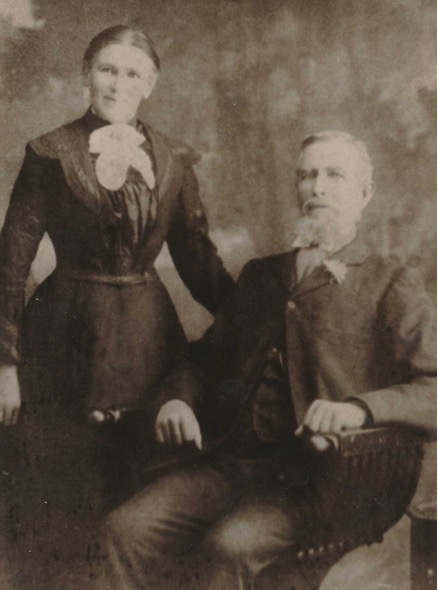
John and Eliza Jane Dalton
Mrs. Hough
[Dungog Chronicle, 2 July 1943, page 3]
‘All the friends of the late Mrs. Jack Hough were greatly shocked when the unexpected news of her untimely death was received in Tea Gardens on Saturday, 26th June. With her passing, the community has, lost a well esteemed and worthy citizen, while our children have been deprived of a very capable teacher and friend who has always secured the respect and love of her pupils.
During her many years in the service of the Department of Education, the late Mrs. Hough has rendered faithful service in many schools, having taught at Cessnock; Stockton, Karuah and Tea Gardens, to mention only a few of the towns with which she was associated. During an earlier appointment to the school at Tea Gardens she taught the fathers and mothers of some of the children with whom she was, until recently, so closely associated. Young and old all had the greatest respect for her interest, her good work and the many kindly actions which she so quietly performed.’
Martha Blanch
[Dungog Chronicle, Raymond Terrace Examiner and Lower Hunter and Port Stephens Advertiser, 1 February 1945, page 4]
‘With the passing away on Sunday week of Mrs. Martha Blanch of Swan Bay, (near Karuah), the Port Stephens district has lost one of its oldest, best known and most highly respected citizens from the community. The deceased lady who was born on the Upper Myall in September 1863 spent all her life in the Myall and Port Stephens districts. She was a daughter of the late Thomas Campbell and Sarah Campbell, both of whom immigrated from the old Country early in their lives.
She married Ambrose Blanch in her early twenties and soon afterwards came to Swan Bay where she settled for the rest of her life. She was of a retiring and friendly nature, always ready to offer a helping hand or assist or comfort anyone in trouble or strife. Until a few months ago she enjoyed good health and retained all her faculties. She was capable of executing all her work successfully including gardening, milking cows and other, outdoor occupations.’
Clara Evens
[Dungog Chronicle, Dungog Chronicle, 28 June 1946, page 3]
‘The death occurred at Karuah of Mrs. Clara Evens, relict of the late Mr. Charles Evens, a very old resident of that area. The late Mrs. Evens was not a native of Karuah, being born at Brisbane Water, but she had gone there soon after her marriage. She was aged 77. Most of her life was spent at Port Stephens, where her husband had been a fisherman.
On retirement they went to Raymond Terrace to live. Mrs. Evens and her husband had seen times harder than they are now, times when there were no daily ways and means of getting supplies and communications away. Ofttimes to get supplies it meant a journey to Raymond Terrace, as the steamer service to Newcastle and Sydney was infrequent and held up at times by rough weather. A walk from Karuah to Raymond Terrace — 17 miles — was nothing unusual in those days. In those days, too, there were times when there was practically no market for fish, etc. Fish were as low as 5/- per basket and oysters £1 per bag.’
Elizabeth Anderson
[Dungog Chronicle, Raymond Terrace Examiner and Lower Hunter and Port Stephens Advertiser, 28 August 1947, page 2]
‘After an illness of some months, Mrs. W. J. [Elizabeth] Anderson, of Bob’s Farm, died in Newcastle Hospital, on Saturday, after having been operated upon. [She was a daughter of Mr. and Mrs. Magnus Cromarty]. The deceased was a sister of the late Mrs. Morris, who predeceased her by only a fortnight, and the sympathy of the residents of the Lower Hunter and Port Stephens District go out unstintedly to the remaining members of the Cromarty family in another heavy bereavement in the family.
Mrs. A. Upton, Bob’s Farm is now the only surviving daughter of the late Mr. Magnus Cromarty who had been so long associated with the Port Stephens area. Two brothers. Messrs. James Cromarty and Mr. Neil Cromarty also survive. The family for some years resided at Barrington but many years ago came back to Bob’s Farm, where she was born 68 years ago She had taken her share of the responsibilities associated with the welfare ; socially, religiously, patriotically, educationally and in other ways of the Port Ste hens districts and was a forceful advocate for the morality and general good behaviour of the community.
She took a more than active interest in the Free Presbyterian Church and took every opportunity of bringing service to that persuasion. For her activities in numerous public ways she was appointed a Justice of the Peace some years ago, and was of much useful service to the Bobs Farm area. Her death leaves a serious gap in the daily life and activities of her district. The family have resided at Bob’s Farm almost all their lives the exception of a few years at the Bowman and followed the occupation of poultry and dairy farming.’
Elizabeth Susan Witt
[Dungog Chronicle, 1 May 1948]
‘The death occurred on Wednesday, 12th April, of Mrs. E. S. Witt, relict of the late William Witt, of Karuah. in her 84th year. The deceased lady was born at Lansdowne on the 4th August, 1864, and was the third eldest daughter of a family of 13 of the late Mr. and Mrs. Benjamin Saville, of Lansdowne. She was married at Port Macquarie in the C. of E. were on the 2nd November, 1885, and spent the honeymoon at Tea Gardens, riding there on horseback, sidesaddle. Later Mr. and Mrs. Witt came to reside at Tea Gardens and carried on a general store, it being the first store to be established at Tea Gardens.
Afterwards the family went to Limeburners’ Creek and remained there till 1903, when they came to Karuah and carried on the business of a general store up to the time of her death. She was respected and honoured for her kindly neighbourly qualities, and for her reliability and straight forward dealings, and directness and honesty of purpose in all matters. She took a keen interest in everything that had a tendency to promote the general, moral, social, religious and patriotic welfare of her church. She assisted every charitable cause worthy in her opinion, of support. Her counsel too, was often consulted, as she had sound judgment in most matters.’
Eliza Blanch
[Dungog Chronicle, 1 August 1951, page 1]
As briefly reported, the death of Mrs J. Blanch, relict of the late Mr. John Blanch, of Anna Bay, occurred on 10th July last, at the unusual age of 95 years. The deceased lady was widely known and respected all over the Port Stephens district. She had resided at Anna Bay ever since her marriage, close upon 75 years. She was born at Wallalong in 1856 and was a member of the well-known and esteemed family of Eagleton. The family at Anna Bay devoted their lives to farming, principally dairying, and market gardening, and as the order of her early years, most of the daylight was occupied in hard, strenuous labour.
There were no roads, only sand ones, and the transport from Anna Bay to Newcastle was done on horseback, and this had to be endured for long and weary years. Spring carts were used for market gardening, and it was from midnight to midnight to make the journey to Newcastle and back where the produce was disposed of, and the weekly supply of provisions obtained. Mrs. Blanch shared in all the hardships of the pioneers and had a wonderful fund of experiences to relate of those early days. She lived to see the results of their labour and that of their neighbours’ gradually resolve into easier and more comfortable conditions.
By degrees the sand roads gave way to partly improved surfaces, at least from Salt Ash to Stockton, but from Salt Ash to Anna Bay the road remained for some years a sand stretch which called for endurance and determination. Over this type of road Mrs. Blanch and her neighbours had to travel and it is these early settlers the country today can applaud for its later progress. They laid the foundation by faith in their future, by striving untiringly through long hours and by energy that was determined to see their work done. …. We raise our heads in admiration of Mrs. Blanch and her contemporaries in carrying on the valuable work done by their earlier forbears.’
Concluding Comments
The stories set out in this paper are indicative of the many contributions that the women of Port Stephens have made to the development of this special place in New South Wales.
There would be many more stories of inspiration that belong in this paper but for the present will remain untold, until further information becomes available for publication.
Researched and compiled by Kevin and Mary McGuinness
June 2024

 Port Stephens - a history exploration