
Background
Australia entered the Second World War on 3 September 1939 following the United Kingdom’s declaration of war on Germany.
On 15 November 1939, the Commonwealth Government announced the reintroduction of conscription for home-defence service, effective 1 January 1940. Under the requirements, all unmarried men aged 21 were to be called up for three months’ military training. These men could only serve in Australia or its territories.
By mid 1942, more stringent conscription measures were introduced. All men aged 18-35, and single men aged 35-45, were required to join the Citizen Military Forces (CMF). The CMF were later to fight under difficult conditions in locations such as the Kokoda Track in New Guinea.
The conscription requirements and other manpower directives caused the withdrawal of the labour of many young persons from the Port Stephens area, leading to manpower shortfalls particularly on the farms.
On 8 June 1942, a Japanese submarine shelled Newcastle, causing minimal damage. This followed the attack on Sydney Harbour on 31 May by Japanese submarines. These attacks would have caused much concern to Port Stephens residents, given their proximity to the expansive harbour of Port Stephens and to the industrial hub at Newcastle, which made them possible targets of enemy military action.
The Second World War in the Pacific officially ended on 2 September 1945 with the signing of the surrender by Japan. But the challenges faced by the Port Stephens community were to continue for some time.
Much has been written about the military fortification of Mount Tomaree and the actions undertaken by troops stationed at HMAS Assault at Fly Point in the years of the Second World War. Two links are found on this website.
However, the story of the difficulties and challenges faced by the civilian population of Port Stephens and its elected Shire Council in these years, has not been well documented.
This paper looks at the workings of the Port Stephens Shire Council and builds up a picture of daily life in the Port Stephens region in the years of the Second World War.
The resources of Council Minutes and the National Library of Australia ‘s Trove newspaper collection are the primary sources used.
New Responsibilities and Challenges
During the war years, the Port Stephens Shire Council had to deal with additional responsibilities and many new issues while maintaining the everyday functions of Council.
Many of the responsibilities and undertakings of local government councils would become subject to control by multiple Commonwealth and State Government agencies, for example, rationing and war funding requirements.
However, as a rural Council located in an area required for military defence purposes, there was a range of significant issues for Port Stephens Shire Council that did not have to be faced by most other councils.
The responsibility that consumed most of Council’s time and funds, was the maintenance of its country road network, which was mostly untarred, and in various states of repair when war was declared. The introduction of thousands of troops with the movement of their heavy vehicles, artillery guns, and other equipment over council roads, led to quick deterioration of the road network, placing great financial strain on the Council and the ratepayers. Some sections of roads through bush or swamp lands, were on crown lands, and were not rateable by Council thus reducing its funding base, when compared with more densely populated local government areas.
Commonwealth and State Government grants and compensation were often inadequate and late in being paid.
It must be recognised that the Council members were all very patriotic, and while debating the problems generated by some requirements, they always implemented the necessary measures with vigour.
Looking After the Interests of Persons Who Enlist
At the Council meeting of November 1939, the Council President tabled a communication from the NSW Department of Lands with reference to local Councils or Committees looking after the interests of men who enlist. As far as possible all should be done to keep their land holdings in proper order and oversee that any required work be done. It was carried by Council that they form a joint committee of the Council to deal with any question that may arise in looking after the interests of those who enlist.
The Newcastle Lord Mayor’s Patriotic Fund was mentioned by the President following receipt of a letter. Council accepted the view that as soon as men were sent away patriotic fund efforts would be commenced.
Formation of a Patriotic Committee
In April 1940, the Council agreed to call a meeting for the purpose of forming a Patriotic Committee for the Shire.
At the June 1940 meeting, the Council President reported that he had attended the recent public meeting in Raymond Terrace where a Patriotic Fund in association with the Newcastle Lord Mayor’s Fund was established for the Shire. It was envisaged local areas could establish their own committees to work in conjunction with the Shire Fund.
The President also reported attending the Shires Conference and stated that a resolution was carried that every effort should be made to utilise the wealth, resources and manpower of the State to prosecute the war effort. The resolution was adopted by the Council.
At the same meeting, the Council also resolved that those who enlisted and were rejected should be given a medal indicating they had enlisted.
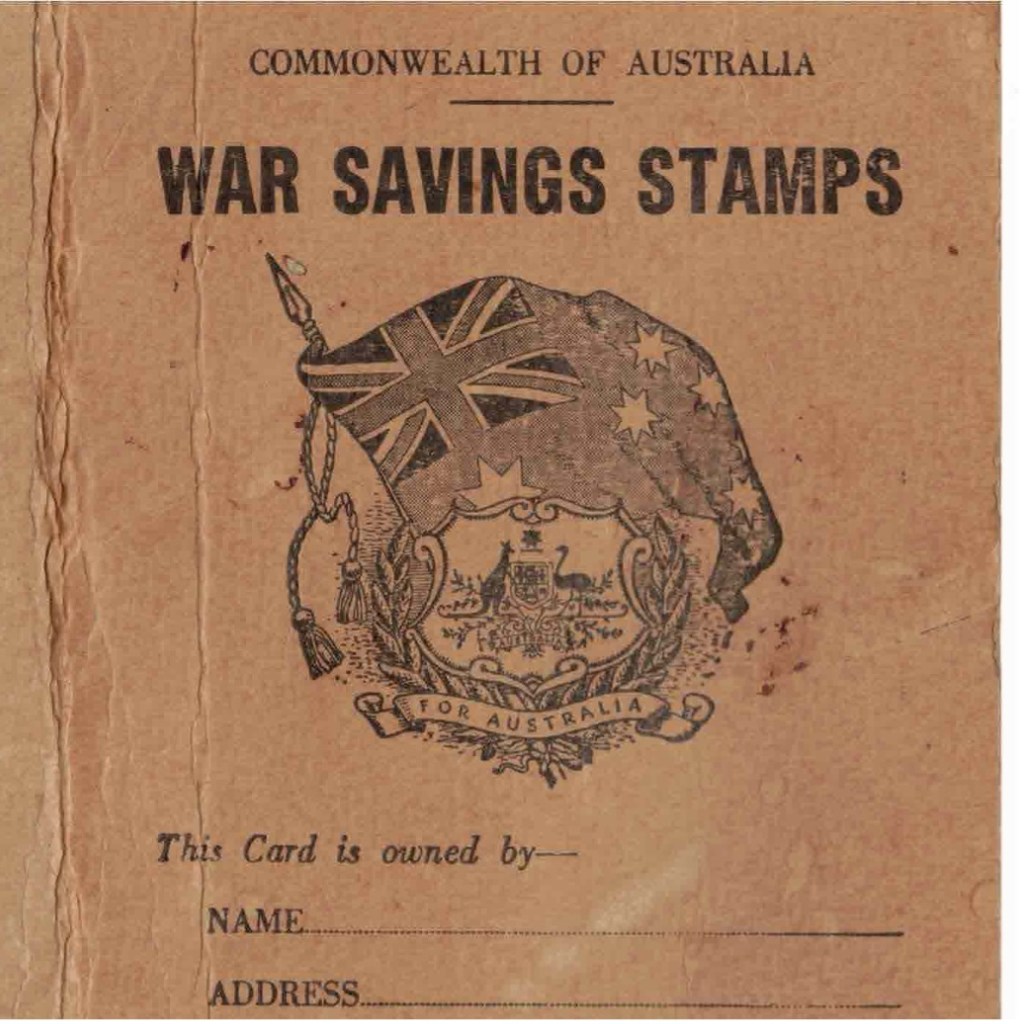
War Savings Certificate – Sixpence a Day Keeps the Invaders Away
In April 1940, the Council President received a memo from the Commonwealth Bank asking the Council to bring the War Savings Certificates to the notice of the public. The Council agreed to put the following notice on the board outside the Shire Office.
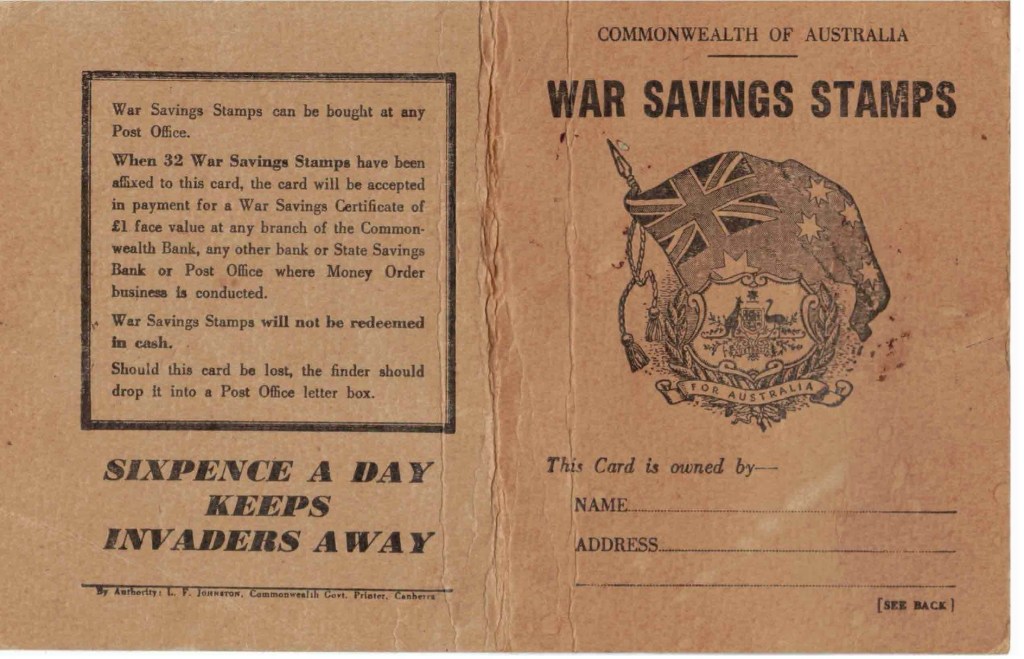
In July 1941, the Department of Main Roads asked Council to arrange for War Savings Certificates to be set off against depreciation of machinery, etc in the Shire. A Councillor said their objective should be to win the war and he thought they could vote from their Shire account money to that end. He moved that a sum of’ £200 be voted and it was agreed to.
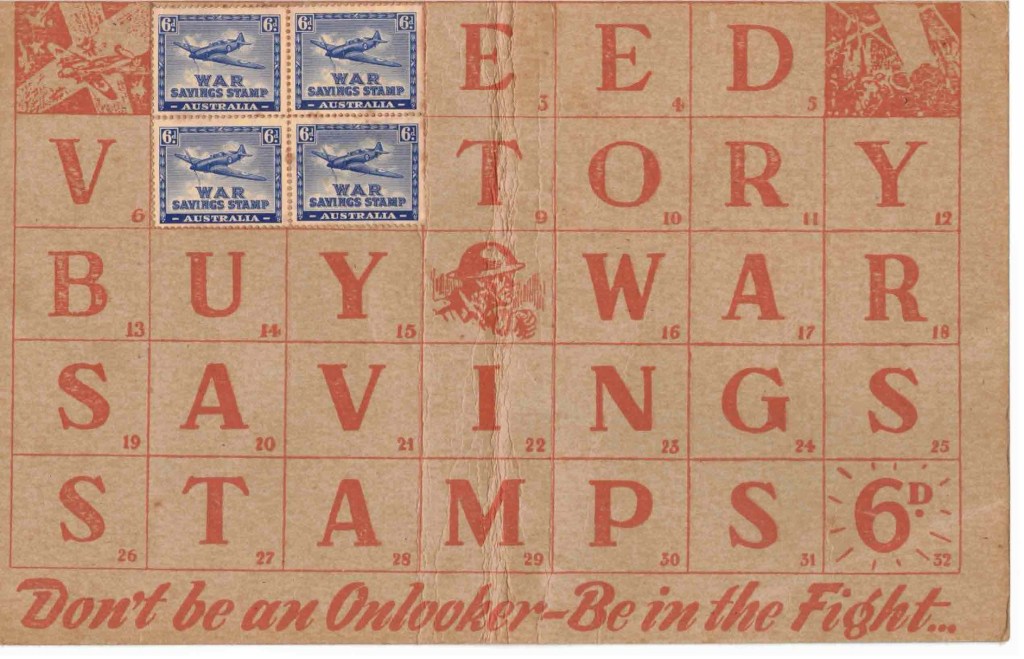
War Saving Card – once filled, a War Savings Certificate would be issued
In July 1941, the Department of Main Roads asked Council to arrange for War Savings Certificates to be set off against depreciation of machinery, etc in the Shire. A Councillor said their objective should be to win the war and he thought they could vote from their Shire account money to that end. He moved that a sum of’ £200 be voted and it was agreed to.
British War Orphans
In July 1940, the British Orphans Adoption Society invoked Council’s aid relating to the home adoption of war orphans from England. The Council agreed to ask the Patriotic Committees in the Shire to assist in giving information as to where children may be placed.
Defence Roads
While the maintenance of roads damaged by military forces caused funding problems to Council, there was a bright light in that with certain key roads, the military undertook to assist with maintenance funding, or to make new roads and to maintain them. In addition, the NSW Department of Main Roads, temporarily declared certain key roads as main roads which were to be maintained free of expense to the council. Many other roads, that were used by the military remained the sole responsibility of council to maintain. The Council made numerous submissions to the Department of Main Roads and the military, for the maintenance of various roads, and sometimes met with limited success.
The Raymond Terrace Examiner and Lower Hunter and Port Stephens Advertiser of 10 October 1940, page 4, reported:
“The Main Roads Department wrote (to Council) with reference to the roads proposed to be repaired for military purpose from East Seaham to Stroud Road and to Medowie and Williamtown, and Raymond Terrace to Salt Ash. A commencement of the construction would be made at an early date as a measure for the relief of unemployment. The Divisional Engineer of Newcastle would supervise the work. It would be recommended as a main road from Seaham via Italia to Medowie and Williamtown. After, the war it may be repealed as a main road.”
In July 1941, the Department of Main Roads advised that further defence roads were being laid and the road to Shoal Bay, Port Stephens would be gravelled to a width of 12 feet.
With regard to Victoria Parade, Nelson Bay, and the road to Shoal Bay, the Council was informed in December 1942, that road construction work would be carried out by the Department of Main Roads, without cost to the Council and it was probable that the extended road would be proclaimed a main road.
In January 1943, the Department of Local Government notified the Council the sum of sum of £1150 was allotted for maintenance on main roads.
In October 1944, the Department of Main Roads informed the Council that the roads in Port Stephens Defence area would be maintained by them on the same terms as last year.
Damage to Roads by the Military
The amount of damage done to the roads in Port Stephens, remained a constant issue during the time the military conducted operations in the Council area for a period of over four years. In many cases it was left to the Council, using ratepayers’ money, to continuously repair the ongoing damage. As most of the roads were gravel based, and un-tarred, several heavy military trucks could quickly do a lot of damage. This was of particular concern to primary producers who then had trouble transporting their produce to markets.
The following Council reports are but a small sample of the damage done to local roads:
(i) At the August 1940 meeting of Council, the widespread damage to Council roads was examined. The Raymond Terrace Examiner and Lower Hunter and Port Stephens Advertiser of 15 August 1940, page 4, reported:
“The condition of the road from Stockton to Williamtown was becoming bad towards Williamtown where the road was being badly damaged by the heavy haulage to the aerodrome, of gravel and from the Water Board of pipes etc., for the extension of the sand beds water supply. Councillor Russell said the road was bad and springs were being broken and the road had become dangerous in other places.
The condition of the Bobs Farm to Salt Ash deviation was also in a bad way. The engineer said all the money for this road had been expended. The Main Roads Department should be asked to make an inspection of this road before repairs were made by the Council, otherwise they would stay as they did before; when the Council repaired the damage done by the Defence wagons and lorries the road was not too bad and refused to give any help. Cr. Russell said he did not see how the Council could put money into this damaged road, but it was an urgent matter and should be treated as such. The engineer suggested making some arrangements with the Board. The Main Roads and Local Government Department had already been written to. Councillor Russell said the traffic over the Tomago Road was cutting that road up too.
Considerable damage has been done to the Nelson Bay Road from the Williamtown School for one mile towards Stockton by the haulage of gravel for the aerodrome. The tar surface has been practically destroyed for one mile and heavy expense has been incurred keeping the section trafficable.”
(ii) At the October 1940 meeting of Council, the damage to Council roads by the military was again discussed. A Councillor enquired if the money allotted had been spent on the Iona to Butterwick Road. He said that the other day a military lorry got bogged and it was sheer luck it was not there for 24 hours as the road impassable. The military people wanted to know what sort of roads we kept. … The engineer said it was only an earth road. The money had to be farmed out. A Councillor said they could not be expected to make roads for the military all over the place.
(iii) In January 1941, the Council was advised of an accident near Fullerton Cove on New Year’s Day when a soldier was killed in a lorry at the turn below Tremarton. The turn was too sharp, and highly dangerous. At least six other accidents to military personnel were known to have happened in the Port Stephens area. The Council agreed to improve the safety of the turn.
(iv) In September 1941, the issue of large bull-nosed military caterpillar tractors badly cracking the edges of tarred roads was brought to the attention of Council. The engineer said the tractors did a good deal of damage and should be carried on floats. Council agreed that the Defence Department be asked to exercise care in the transport of tractors and to save the road as much as possible.
(v) In July 1942, Tomago Progress Association requested attention be paid to Tomago Road. They also enquired if the military had agreed to assist in keeping the road in order. The military were taking gravel from the roadside and there would soon be none remaining. The matter was left with the Council engineer.
(vi) In August 1942, the dangerous state of the Lemon Tree Passage Road was again raised. The Council Clerk said the military had cut the road up and it was scarcely navigable. Cr. Russell said the Main Roads had put material on that was of no use. The result is that ratepayers have to suffer. The same thing happened on the main road to Salt Ash. … He moved that they ask the Main Roads Department to put the road in trafficable condition in all weathers. … The President said the Council had protested against the material used, but the Department of Main Roads used it in spite of what they said. The motion was carried by Council. At the same Council meeting, Councillor Morgan referred to necessary street improvements in Irrawang and Hunter streets, Raymond Terrace, which were cut up by military lorries and bren gun carriers.
(vii) In The Raymond Terrace Examiner and Lower Hunter and Port Stephens Advertiser of 15 October 1942, page 4, it was reported:
“The Main Roads Department advised the Council that material was not available for reconditioning the Seaham—Glenoak road, and work could not be carried out without the consent of the military authorities. Cr. Lantry said the road was in a scandalous state. He was over it recently and there was even danger of breaking springs over it. … Was there, he asked the engineer, any chance of getting it reconditioned. The Council engineer said grading in was all that could be done, as the road had to be realigned before reconditioning and tarring was done. Cr. Lantry said the producers for miles along the road had to carry their stuff over the road, and it was hard for them
(viii) In December 1942, the Council was advised that attention was needed for the road from Karuah to Swan Bay. … The engineer was asked to attend to the requests. Cr. Russell said the military had used it and gouged out the road. It would take a lot of money to make it an all-weather road. The engineer was asked to inspect with a view to improvement.
(ix) The Raymond Terrace Examiner and Lower Hunter and Port Stephens Advertiser of 13 May 1943, page 4, reported:
“During May 1943, Tomago Progress Association drew attention to the bad state of the Tomago Road. The Council engineer said while the military lorries were using it, grading would not be of much use. Councillor Morgan suggested asking the military to recondition the road. Some assistance had been promised but it had not been kept. He thought it may be better to write the responsible local officer at Newcastle and ask him to take the matter up and recommend it. This will be done, on the motion of Councillor Upton. The letter also referred to dangerous stays on military telegraph poles, as being too far out on the road. The military will have their attention drawn to the danger.”
(x) In June 1943, it was reported that an eighteen-foot culvert on the East Seaham Road was smashed by a military vehicle which necessitated a new culvert being built.
(xi) In July 1943, the Salt Ash Parents and Citizens Association forwarded a petition to the Council asking for reconditioning of the Lemon Tree Passage Road. It was agreed to give the Council’s opinion of the road, which was described as deplorable and never worse.
(xii) In April 1944, it was reported that Lavis Lane, Williamtown, was in in a bad condition. Councillor Russell said military lorries were cutting it up. There was only one seachlight there but sometimes 20 lorries in a day used the road. It was agreed by Council to call the military’s attention to it and ask them to put it in reasonable condition.
(xiii) In May 1944, Tomago Road was again reported as being cut up by the military. The Councillor reporting the matter was anxious to see the people there get a better road over which to carry their milk and produce. The Council had no money available to repair the road, despite the ongoing public complaints. The Council engineer agreed to do the best it could with the road for the present.
(xiv) In March 1945, the Council engineer reported that the heavy hauling of gravel for the Williamtown aerodrome has ceased over Tomago Road. It was gone over and repaired with gravel and graded.
It was not until April 1945 that the shortage of tar eased, and it started to become freely available. During the month the Council advised that 1760 gallons of tar were received from Sydney and the general repair of the surfaced roads had been started.
Commonwealth Grant Assistance Withheld
The Raymond Terrace Examiner and Lower Hunter and Port Stephens Advertiser of 12 December 1940, page 4 reported:
“The Defence Department informed Council that they would not allow a grant of £800 to repair the road from Stockton to Williamtown. Various Councillors said the Council’s finances would not allow the £800 to be spent; it was in a terrible, state; and the Council could only tell them it was not in a financial position to do the road. The Department of Main Roads also wrote asking if the Council would do the road. The Council agreed to send a letter to the Department pointing out that the road was in good condition but on account of the heavy haulage of material to the aerodrome and gun carriages and lorries in military manoeuvres, they had destroyed the road, and that a grant be applied for. “
At the same council meeting, it was reported that the Defence Department asked Council to agree to Cox’s lane, at Fullerton Cove, being made trafficable as an approach to an observation post. The Council had no objection.
Loan of Road Plant
In August 1940, an urgent request was made by the Engineer-in-charge of the Williamtown aerodrome for the hire of the Council’s petrol grader for use in finishing off the gravel runways. The Council acceded to the request and the machine was sent out. In January 1942, the grader was again reported as working at the aerodrome. During these periods of the grader’s absence, the Councils ability to maintain the roads was diminished.
The military returned the favour during July 1942 when the Council’s patrol grader driver met with an accident while repairing Tomago Road, which would lay him off for 7 weeks. The military authorities made available the services of a tractor driver and this road once again being graded in.
Charcoal Burners Fitted to Council Trucks
In September 1940, a gas producer using charcoal as the fuel, was fitted to the Council’s Leyland lorry. A second lorry was fitted with a gas producer in February 1942. This was done to save on the use of petrol. The upkeep of the charcoal burner added an extra strain on the driver.

Truck fitted with a charcaol burner
In August 1942, the Fuel Board asked Council to attach charcoal gas burners to its lorries, as petrol usage would be cut by 75 per cent after installation. The Council engineer stated that the lorries suitable for charcoal gas operation were so equipped. One which was frequently used on short runs would not be equipped as there would be no fuel saving.
In December 1944, the Forestry Officer advised the Council of the danger of charcoal burners on lorries on roads in dry areas and asked that the lorries do not use them until the danger of fires has passed.
Charcoal Production
In March 1942, the Port Stephens Council announced it would immediately begin production of charcoal for its own needs and for supply to the public. As a start six steel kilns were to be ordered, involving an expenditure of 600 pounds. These were to be erected on land in Italia-road, adjoining the Wallaroo State Forest, on the Great Northern Highway.
In April 1942, the Shire Engineer provided the following progress report on the charcoal production:
“As we are informed that steel kilns are not available for burning charcoal, I have prepared a plan of a layout for burning in pits. The scheme provides for eight pits lined with concrete slabs, with a tramway gravitating to the screens and a shed for storing charcoal. … The cost of the plant is estimated at £212. Approval to operate on the State Forest is expected any day now and a start can be made at once this is received.”
In May 1942, the following report was made by the Shire Engineer:
“Good progress has been made preparing for burning, the eight pits have been practically completed the covers for same made, shed for storing charcoal built and the screens and tramway track started. Burning could be started next week. But so far have not been able to obtain supplies of bags. None of the firms mentioned by the Department of Charcoal Production are able to supply and I have canvassed the Newcastle District without success. A quantity of timber has been cut and 36 tons are stacked at the pits.”
In July 1942, it was reported that charcoal production was progressing satisfactorily, with output averaging about 5½ tons of charcoal per week. So far the output had been disposed of locally but new markets would have to be found to keep this up. The baggging position was satisfactory, and the circular saw was on the way to be delivered.
After a temporary shutdown, work had begun again in November 1942 on the production of charcoal. During the period up to the time production ceased, 51 tons of charcoal had been produced with a sale value of £479/14/8 for a cost of £428/9/1, showing a profit of £51/5/7.
In March 1943, a Councillor reported there was a shortage of firewood for charcoal. He thought anyone who had dry wood should allow it to be used. If not, a price should be put on it, and the owner could deliver it to those who were prepared to pay. The Council Clerk stated the matter was covered by regulations governing the supplies of wood. The Forestry office had power to act in certain cases.
By April 1943, it was reported that during the previous two months, 24 tons of charcoal had been produced with a sale value of £260/10/- at a cost of £241/16/8, Only three men were working at the pits at that stage.
During the month of March 1944, 15 tons of charcoal were produced and there was a large quantity in stock. The following month 10 tons of charcoal were produced which was all in stock as no sales have been made during the month.
The production of charcoal continued into 1945.
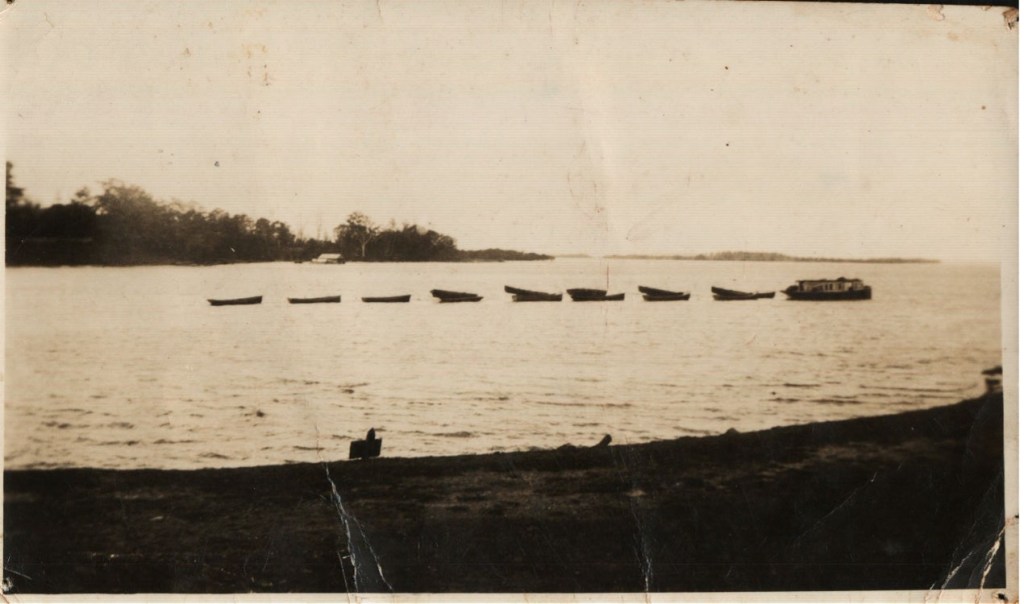
The launch ‘Tuggerah’ towing oyster barges to a safe area where they would not be claimed by the Japanese during the war years.
Service Stations Gain Lower Council Fees
In May 1941, Service Filling stations asked Council for a reduction in the price of petrol pump stands since rationing had lessened sales. Council agreed to the request.
Horse and Dog Racing – Raising Funds for Patriotic Purposes
The Raymond Terrace Examiner and Lower Hunter and Port Stephens Advertiser of Thursday 12 June 1941, page 4 reported that the raising funds for patriotic purposes from horse and dog racing had attracted considerable attention:
“At the Shire Council meeting on Friday last the Wollondilly Shire Council asked the Port Stephens Shire Council to cooperate in having dog and horse racing curtailed as they considered it would assist the war effort. Councillor Meredith moved that the Council cooperate as he thought it would probably be better if some of those who were interested in dogs and racing did more towards winning the war. Councillor Lantry said he would move an amendment, as he thought the amount now being received from dog racing, etc. for patriotic purpose would not be obtained otherwise.
Councillor Parish seconded the motion and said that while he was not altogether in favour of cooperating at the present time Maitland hospital was deriving a good revenue from dog racing, and so too were patriotic funds. He understood the amount was something like £1400 last year. He thought this amount would not be made up by voluntary effort if dog racing was curtailed and it might be advisable for a time to allow it to continue. Councillor Meredith said people were attending sporting meetings and all sorts of pleasure resorts and enjoying themselves while in contrast to their action were those at home who had lost relatives and friends at the war. Plenty of those who were leading dogs about should be shouldering a rifle. They don’t realise the seriousness of the position, nor their responsibility.
Councillor Lantry said everywhere they were appealing for funds. Go round and see how much you can get by direct appeal. You can’t sell buttons to some, but they would indirectly contribute through racing. … Councillor Russell said there was an enormous amount of money raised by sport, and no doubt many were making money out of it. If there was not some sports you would get little by straight out appeals to some people. Unless you give them something for their money you won’t get anything. He knew what it was to try and sell buttons. When you ask some of them, they knock you back. Councillor Upton said he agreed with a good idea of what Councillor Meredith said but as Councillor Lantry said it was hard to get money for patriotic purposes, and we can’t raise the funds unless we give something for it. He thought they could hardly do without it yet. It was agreed not to cooperate.”
‘Spit Fire’ Appeal
In June 1941, Katoomba Council asked Council’s co-operation towards purchasing a ‘Spit fire’ fighting plane. A contribution of £25 from each local Council would purchase a plane. Council agreed to co-operate.
Recruiting Assistance
In June 1941, the Recruiting Campaign Committee asked Council to aid in recruiting. The quota for the Shire according to population was eight. Council agreed to get in touch with the Recruiting Officer to see if a recruiting rally or drive could be arranged.
Shortages of Materials
By 1941, rationing in key commodities, such as fuel, rubber products and tar for road building, were causing problems for the Council. Many roads were unable to be sealed with tar delaying the ability of the Council to provide all weather surfacing.
The restrictions on rubber, led to council road plant, such as graders, being unable to be used while waiting on the supply of new tyres. Likewise, petrol rationing required the Council to find ways to save fuel in conducting its business.
In October 1941, the Main Roads Department advised Council that on account of petrol shortage a reduction would be made in the amount for maintenance on some of the roads within the Shire.
In March 1942, Department of Main Roads requested Council to withhold expenditure on main roads, even if such expenditure had been authorised. The Council agreed to comply.
In June 1942, the NSW Department of Works advised the Council that only maintenance work should be carried out. No new work was to be undertaken in the Shire.
In August 1942, the Port Stephens Council reported that it had been able to arrange a supply of petrol for its sanitary service.
In March 1943, the Council President suggested asking the military for some of the numerous poles they had in various places, which apparently weren’t required. The Council agreed that a request should be made to the military.
The Raymond Terrace Examiner and Lower Hunter and Port Stephens Advertiser of 12 August 1943, page 4, reported:
“Councillor Morgan thought the Council should have power to deal with the Rationalisation of Transport within the Shire. Nobody could do the work better than them. Applications for tyres, etc. could be certified by officers of the council. He moved that such a committee be formed. … The motion was agreed to. The Clerk will make the necessary arrangements.”
It was not until mid 1945 that shortages in various products began to be overcome.
Extraction of Oil from Coal
For a while the Council was enthused at the prospect of being able to extract oil from coal. After all, Newcastle had plentiful supplies of coal.
In September 1941, Cessnock Council asked Council to cooperate in inducing the Government to extract oil from coal which was a practical possibility. One councillor said it was scandalous to think it was possible to get oil from shale and this had not been done with such a proposal having been shelved for years. The Council decided to support Cessnock Council.
Later the idea lost favour, when the NSW Government stated that it would be too expensive and difficult to proceed with the idea.
Support for Motor License Taxes
In September 1941, the Narrabri Council asked Council to co-operate in reducing motor license taxes as petrol rationing would only permit a car to be used to a quarter or less of its mileage capacity. Port Stephens Council agreed to support the request.
Military Occupation of Raymond Terrace Showground
In January 1942, the Defence Department notified the Council that the pavilion and showground at Raymond Terrace would be occupied by the military and asked what compensation, if any, the Council required. The Council agreed that that the rate of compensation would be £5 weekly.
The Dungog Chronicle of 20 October 1942, page 2, reported:
“Port Stephens Shire Council had received no reply from the military authorities as to the payment of rent for the use of its showground at Raymond Terrace. The Engineer reported that much damage had been done. This has been the experience in most towns where military camps have been established on show grounds. It is definitely unfair. Associations are left with little or no rent and have to face a big expense to repair damage that has been done. Residents of each locality pay their taxes, contribute to war loans and patriotic objectives. To expect the public to make good the damage done on showgrounds is an added tax. Surely the military authorities have some liaison with civil authorities in the Federal sphere who should protect the interests of the public at large in matters of this kind. It does not help the war effort when the rights of show associations are so completely disregarded. Anyhow, it is unfair and paltry, particularly when millions are involved in war expenditure — and a lot of it wasted.”
By June 1943, the Military had stopped using the showground.
The Raymond Terrace Examiner and Lower Hunter and Port Stephens Advertiser of 10 June 1943, page 4, reported:
“The Raymond Terrace Mounted Volunteer Defence Corps (V. D. C). asked for the use of the Sports Ground for parades and for horses used by the V. D. C. for the duration of the war. Council will ascertain the number of horses likely to be grazed. Councillor Morgan asked for the use of the pavilion on Wednesday nights for lectures for the V. D. C. The hall would be properly cleaned up. The V. D. C. were all doing good work in their spare time. He urged the use of the ground for parades. The Council engineer said there were about 8 horses and five cows grazing on the showground. … Councillor Parish moved that the parades and lectures be granted, and a report ascertained on the number of stock required to be grazed.
Councillor Russell enquired about Boomerang Park, on which he said there were a lot of stock now running. The fence should be fixed up and the reserve leased. The clerk said the fences were down in places as a result of the military occupation. They would no doubt be prepared to pay some compensation. It would be necessary to put in a form of application. Council agreed to put in a claim.”
In February 1944, the Council announced that £13 had been received from the military for the levelling up of the showground. This was to repair damage to the surface caused by the military occupation.
Evacuation and Air Raid Procedures
The Raymond Terrace Examiner and Lower Hunter and Port Stephens Advertiser of 29 January 1942, page 3, published a letter from the Chief Warden of Port Stephens Shire Council:
“With reference … to the evacuation of Raymond Terrace in the event of an emergency, this matter has been under consideration for some time. My Wardens throughout the whole Shire have prepared a register of the occupants of every household to be used for evacuation and other purposes connected with National Emergency Service (N.E.S.). This register contains, interalia, the following information, viz Number of adult occupants, male and female separately; number of infirm persons; number, ages and sex of children under 16; numbers of cars, lorries or other transport available. From the information contained in this register it would be possible to evacuate the whole population of the Shire in less than 24 hours. The trouble would be where could accommodation be found for them. However, the Government has now taken the matter up and has passed on to the Council and the Shire Clerk with the assistance of local committees, the responsibility for evacuation. Details of accommodation available at centres away from the coast are being prepared by Councils outside what is considered the danger area, with a view to arranging for a place for the population, of each coastal area to go. It is hoped that the arrangements proposed for the evacuation will be communicated to the public at an early date and in sufficient time. With regard to a First Aid Class in Raymond Terrace, I would point out that classes of instruction in First Aid and Air Raid Precautions were held early last year, with very disappointing attendances.”
In November 1942, £150 was granted by the Defence Department for First Aid Posts in the Shire. A Councillor said they had all the equipment required in full and had completed fit-outs.
A request from the Local Government Department was received by the Council in January 1943 asking them to attend to flood and fire warnings and to inform the military if necessary. The Council agreed to comply.
Brown-Out Lights
In May 1942, Cessnock Council requested the cooperation of the Council to have the brown-out removed on buses etc.
The Council President said if a brown-out was effective it should be continued. But as other lights were visible for miles all night long, it did not seem fair that only lights on vehicles should be dimmed. If was also noted that lights on some military vehicles were not dimmed.
Council agreed to co-operate with Cessnock Council in discussing the matter. The Council President would represent the Council at any deputation that may be arranged.
Council was advised by the Electric Light Department during August 1942 that streetlights would be smaller and painted.
Air Raid Shelters
In May 1942, Port Stephens Council refused to erect air raid shelters at the request of the Raymond Terrace Chamber of Commerce. The Council believed shelters were a matter for private owners, and the State Government could erect public shelters where they were deemed necessary.
The Shire Council at its meeting in June 1942 decided to request a grant from the NSW Government for an air raid shelter to meet the requirements of the business centres at Raymond Terrace and Nelson’s Bay.
Councillor Morgan said he had inspected the causeway in Port Stephens Street at Raymond Terrace referred to in the letter from the Chamber of Commerce, and he was surprised at its capacity. It was in a fair condition and with a little improvement he thought that it could hold about 200 people. Even after rain there were only about two inches in it. Improvements could be made to the entrance at little cost. By July 1942 the air raid shelter had been completed.
In July 1942, the Minister for National Security stated that no money was available for air raid shelters, as the Federal Government had not continued the grant to the State. The sum of £150 was granted to the Council for Air Raid Precaution expenses to defray what cost had been incurred and for any further cost in the future.
Issue of Ration Books
In July 1942, the issue of there being no ration books available at the Woodville polling booth was raised with Council. Many people had to go five miles or more to obtain their books. Woodville was a recognised Commonwealth centre at election times and it was difficult to see why it could not be arranged for the issue of ration books there. The local teacher was quite capable of issuing books and looking after the associated matters. It was costly for the people to have to go a distance to get their books. There were from 150 to 200 who used the booth. It was moved that the Council write to the Commonwealth Government, seeking the reasons why the issue of books was not made at Woodville. The motion was approved.
Similarly in June 1944, Councillor Upton complained that ration books were not issued at Bob’s Farm, as previously. People had to travel some seven miles and back to obtain them and as petrol was short this was a great inconvenience.
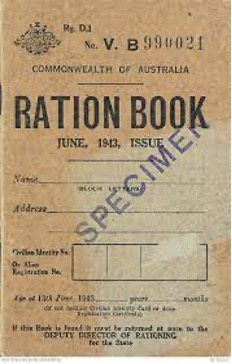
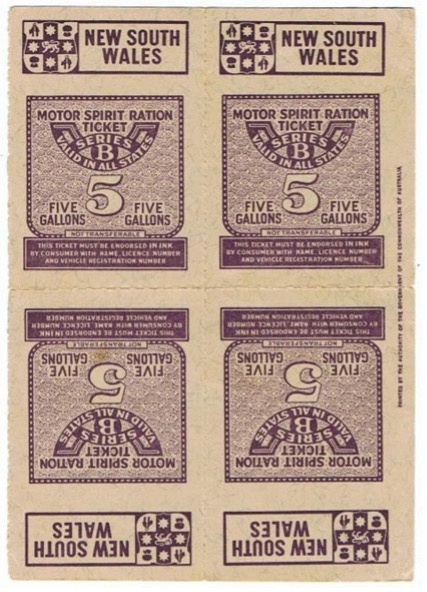
Commonwealth Ration Book and NSW Motor Spirit Tickets
Collection of Salvage
At the August 1940 Council meeting, it agreed to make a depot for salvage waste in accordance with a request from the Waste Salvage Commission.
In February 1942, the Controller of Salvage advised more urgency was required in the collection of salvage. The Council Clerk stated they had wastepaper racks at the Shire Office and at Mrs. Bobb’s store.
In March 1942, the Council reported that a large quantity of wastepaper has been collected and a truck load was despatched. A quantity of aluminium had also been collected and was awaiting delivery.
In August 1942, the Council reported that a large quantity of scrap rubber was collected with the aid of the school children, and one truck load had been despatched and there would probably be several more to go.
A truck load of wastepaper was sent to Sydney in September 1942. Six bags of aluminium scrap and four more military trucks of scrap rubber has also been despatched.
In January 1943, the Council Engineer reported that there was a heap of old rubber tyres at Williamtown that the Shire had collected and was awaiting pick up.
In August 1943, a further truckload of forty bales of wastepaper was sent to Sydney.
In December 1943 the Salvage Commission wrote regarding an enlarged system of wastepaper salvage.
The Raymond Terrace Examiner and Lower Hunter and Port Stephens Advertiser of 12 July 1945, page 4, reported:
“In response to the National Clothing collection for overseas relief, the Council President thought an appeal could be made for clothing. Cr. Tranter said if a depot was not established for the Shire the Woodville people would supply at West Maitland depot. Cr. Russell said they wanted clean clothing, as it could not be washed at a depot. Cr Lantry said it was a worthy cause, but the use of coupons had made a shortage of clothes, but they should go whole-heartedly into it. Councillor Upton thought they should form a depot and notify the people where they can leave the clothing. Councillor Russell moved that a local depot be arranged both for clothing and for cash for clothing. This was agreed to.
Artillery Practice
Residents in coastal areas were on occasions advised through newspaper advertisements that artillery practice with heavy guns would be held off the coast of Port Stephens. Residents in the vicinity were advised they should keep windows and doors open.
Horses for the United States Army
In May 1942, Tweed Shire suggested cooperation of all Councils in presenting the US Army with 5000 horses. The Council agreed that should the request be made for the horses they would co-operate.
Straying Stock Caused Danger to the Military
In June 1942, the Military wrote to Council complaining of straying stock on the roads as they were causing accidents on account of the dim lighting. If an impounding officer could not be secured, they would appoint one to work with the Council.
One Councillor said that in the course of military exercises, fences could often be knocked down and the cattle escape … it should be requested that fences be restored in such instances.
Another Councillor said he knew of three paddocks with broken fences where all the cattle had got out.
Property holders could put in a claim but it was difficult to give names that they did not know, and the men looked much alike in uniform. When you can’t get the information, no action can be taken. Council agreed that a request to put up the fences when knocked down be made to the military.
The issue of stray stock was again raised during October 1942. The Raymond Terrace Examiner and Lower Hunter and Port Stephens Advertiser of 15 October 1942, page 4 reported:
“The Police Department wrote to the Council regarding straying stock on the Nelson’s Bay Road. The Engineer stated the Council had no Poundkeeper and nothing much could be done till they had. Councillor Russell said they could not impound where there was no fencing and for miles along the road there was no fences, especially along Crown Lands. There were a couple of beasts killed last week. Then a soldier lost his life in trying to avoid a cow or something. Councillor Upton said several head of cattle had been skittled by American drivers. Councillor Tranter said Councils should have power to impound off unfenced roads. It was too dangerous, now-a-days and some-thing more drastic must be done. … Councillor Lantry said when you see people being killed through stock straying on the roads, its time something was done. Councillor Upton said the people who gave trouble are those who have no property to keep stock on, and let them live on the roads, and stray anywhere. If any of their stock are killed on the road, they won’t have to pay to shift them, because no one then owns them. It was decided to engage a Pound keeper and inform the Police that as a Pound keeper had now been appointed efforts to abate the nuisance would be made.”
Military Requests
The Raymond Terrace Examiner and Lower Hunter and Port Stephens Advertiser of 14 January 1943, page 4, reported on several interactions of the Council with the military:
“The work of improving the visibility for traffic at the corner of Glenelg and Port Stephens Streets, Raymond Terrace was not carried out as the Military authorities objected to the hedge being cut. On the visibility of traffic at the corner of Port Stephens and Glenelg streets Councillor Morgan moved that a letter be written to Captain Norris, asking that the hedge be cut down to fence level. He thought the request would be acceded to. This was agreed to. Councillor Upton said he had a visit from a military officer in charge at Bob’s Farm asking him to have drainage and water holes attended to at Nelson’s Bay. What he thought he could do he did not know.”
In August 1945, the military applied for the use of the baths at Nelson Bay during their leave here. The request was granted.
Council Requests to the Military
Occasionally the Council made requests to the military.
In July 1942, a Councillor informed the Council of the action he had taken to get the medical officers of the local military to attend urgent cases of sickness during the absence of the civilian Doctor. He asked the Council to endorse his action. The Council President said he endorsed it as he approved of what had been done. The Council agreed to forward a letter of thanks to the local military authorities expressing appreciation of the services rendered by the local military doctors.
In July 1945, a Councillor referred to stray bullets from the Williamtown aerodrome. Council agreed to send a letter to the officer in charge.
In October 1945, the Council engineer reported that military barges were tying up to the wharves at Nelson’s Bay and were in the way of fishermen. This was not allowed, and his suggestion that the Military be so advised was approved.
Truck and Equipment Impressment
In June 1942, a complaint by a member of Port Stephens Shire Council regarding the impressment (seizing) of motor trucks by the military was brought to the notice of the Minister for the Army.
The councillor alleged that, as the result of the trucks being taken, it had been impossible to get produce to market and much had rotted in the field. He also said that potatoes and other produce would not be dug if it they could not be transported to market. The Minister said the matter would be investigated. The aim, when impressing vehicles, was not to disrupt essential services.
In January 1943, the Council engineer reported the Shire roller was commandeered to Singleton and work would be delayed while it was away.
Manpower Issues
Labour controls were introduced during the Second World War to meet a crisis in manpower and to co-ordinate resources between the needs of the armed services and industry.
The Manpower Directoratewas a Commonwealth agency established in 1942 to control the workforce. It imposed a type of industrial conscription, issuing identity cards to every man, woman and child and had the sole power to decide who worked where.
Under the Manpower Regulations, the Directorate had the power to:
- exempt a person from service or prohibit their enlistment;
- restrict the right of the employer to dismiss his employees;
- direct any person to leave one employment and engage in another.
The manpower restrictions led to many farmers in the Port Stephens area being left without adequate staff to manage their farms.
The Raymond Terrace Examiner and Lower Hunter and Port Stephens Advertiser, 13 August 1942, page 4, carried the following summary of comments by the President of the Port Stephens Shire Council on the subject of manpower and production:
“He thought the Council was under an obligation to do all it could to maintain manpower in production and to assist in that direction. In some districts women were engaged in pea pulling, bean picking, pulling corn, hay making, and it may be possible in some ways to have women on the farms. Councillor Lantry said as far as picking beans and peas, or tying up vegetables and light work, the women were just as good as men, but in heavy work they were not suitable. He thought the call up of manpower from the farms had gone too far. He had seen 200 dozen cauliflowers destroyed for want of manpower. They came along and deliberately took the men from the farm. If a man had 9 acres of cauliflowers it could be understood what it would mean to be without labour. The cauliflowers got too old before they could be got to market and were no good. But women could not plough and get the land ready for crops the same as men. In dairying they were as good as men and some a lot better. Councillor Russell said in some places he knew of a man and his wife milking up to 40 and 50 cows and help was needed to continue. Where apple picking and such work had to be done no doubt girls were just as good as men. But in these districts, they only wanted a man for a few weeks when they have work to be done. He did not know how girls would succeed in general farm work. But, on the whole, the employment of women where possible on the farms would be beneficial. The President referred to work done by girls in haymaking trussing etc. in inland areas, and they were doing the work very well from reports issued. He said the city girls were the girls who were making good, because they appeared to be more anxious to learn. He said the Council must see that the farms get all the labour that was necessary and should try and see that it was made available. Men were in many occupations that girls should be in.”
In September 1942, the Shires’ Association informed the Council that before any person was employed by the Shire permission must first be obtained from the National Service office.
The Manpower Directorate informed the Council in July 1945 that contracts would not be allowed for work usually done by day labour by Council’s maintenance men.
Town Majors Appointed for Raymond Terrace
In July 1942, the Army advised it had appointed two persons to be Town Majors in Raymond Terrace. Town Majors were persons who supervised any arrangements in respect of marching troops, water supply, sanitary affairs, and so on.
The Military advised they were attending to the matter of Military Police for the town.
The Military further advised that in painting kerbings and so on, the white should be put on the sides and not on top, as these can be seen from a plane.
Payment Method for Soldiers’ Wives
In August 1942, Granville Council asked for cooperation in requesting that soldiers’ wives be paid by cheque instead of having to wait in long queues outside some pay offices for the money.
Councillor Lantry said the money should be paid by cheque as it caused a lot of inconvenience to the women involved. Councillor Upton said he had known cases of hardship where soldiers’ wives had to wait for the money. The motion to cooperate was carried by Council.
Support for Higher Pay for Soldiers
At the Council meeting in August 1942, Councillor Tranter addressed the issue of higher pay for soldiers. He said the boys at Tobruk were fighting for their lives 24 hours a day and getting a small pay, while the men working in factories making munitions were getting £7 or £8 a week and working in comfortable conditions. He thought soldiers’ pay should have been increased long ago. They had only gottten a small rise. He moved that the Council support an increase.
Councillor Upton could not see why there should be a difference in the pay of the men in the army and those working in the factories. Councillor Lantry said the pay should be more uniform. Men were getting higher pay in factories than the boys who had to go out and face the cold steel.
Councillor Russell said the whole issue was the pay had to come out of teases. But the men called up had given up everything and all should be done to see that they are properly looked after. It must not be forgotten, however, that although the munition workers got good money, they were taxed heavily.
The motion was agreed to by Council.
Prohibited Military Area at Nelson Bay
The Newcastle Sun of 12 December 1942, page 3, along with several other newspapers, announced the proclamation of a prohibited area at Nelson’s Bay.
The area east of the line from Skate Bay to Corlette Point (Nelson’s Bay) had been gazetted a prohibited area as from December 10, 1942, according to a proclamation issued by Major-General Fewtrell, General Officer Commanding L. of C. Area.
The requirements of the proclamation, which was made under National Security Regulations, provide: (a) No person may traverse, or reside, temporarily or otherwise, on such area without a permit, as provided in paragraph C. (b) No acquisition of residence or accommodation after date of this notice will be permitted without authority. (c) Those persons domiciled in the area specified are required to procure a permit on or before December 16, 1942. (d) Bona fide tradesmen whose business requires them to traverse the area will also be required to procure permits as above. (e) Issuing authority for permits will be Capt. W. A. Norris, Camp Staff Officer, Raymond Terrace, or Lieut. A. Towsey, General Staff (I). L. of C. Sub Area, Wickham Road, New Lambton.
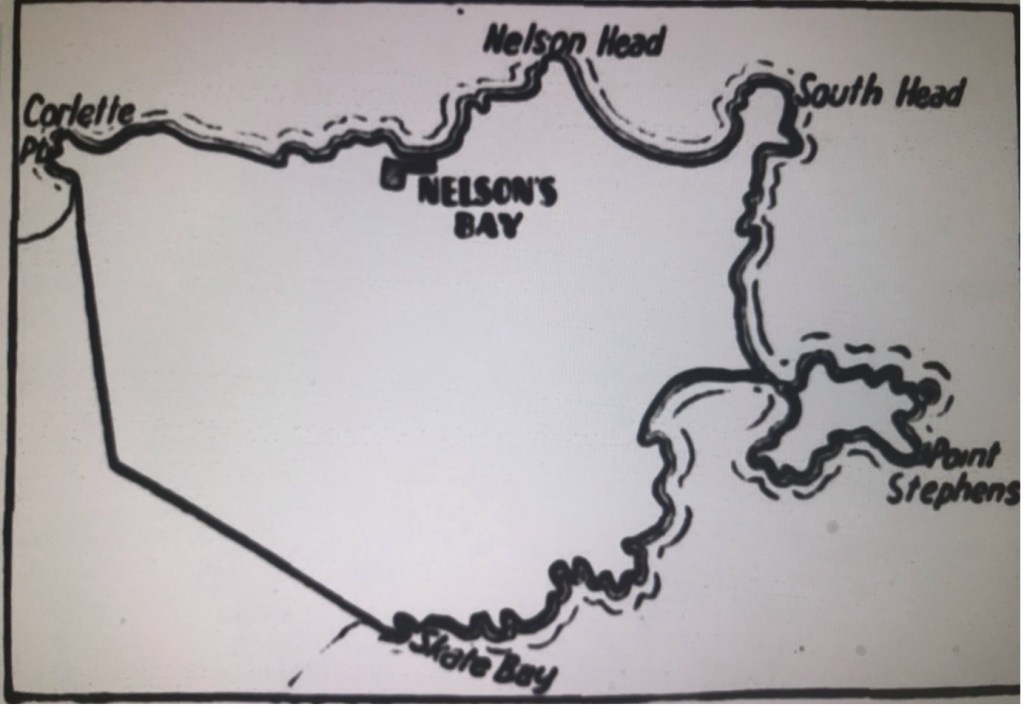
Map of the Prohibited Area at Nelson’s Bay
The Cessnock Eagle and South Maitland Recorder of 18 December 1942, page reported:
“That there has been an alteration in the restriction of visitors to Port Stephens and Nelson’s Bay during the 1942 Christmas holidays. It was now permissible for owners of property in these localities to visit the area. They must produce their identity certificate, deeds of property or Council receipts for rates to identify themselves as owners of the property. If they are able to do this, they are advised to apply to Captain Morris, Drill Hall, Raymond Terrace, who will grant them permits on production of the necessary information regarding ownership.”
The Dungog Chronicle of 22 December 1942, page 1, reported:
‘Since Nelson’s Bay and environs have been proclaimed a prohibited area, it is expected that Tea Gardens and Hawk’s Nest will receive a larger number of visitors over the holidays than is usual.’
The Newcastle Sun of 22 March 1943, page 2, carried a report on the continuing prohibited area of Nelsons Bay:
“Army authorities In Newcastle today advised the general public not to plan to spend Easter holidays at Nelson’s Bay. ‘The public is advised to make arrangements for accommodation elsewhere for Easter, Christmas and all other holidays, said an officer. No persons other than those listed below will be admitted to the prohibited area, except those living close to the boundary line and who draw provisions and supplies from Nelson’s Bay. Special cases, for example extreme hardship, will only be considered in event of great urgency.
Admittance to the area will be restricted to the following civilians: — (a) Permanent residents, property owners, holders of permissive occupancies and close relatives of these (see below). (b) Civilian defence workers and members of the CCC and their immediate relatives (see below). (c) Immediate relatives of soldiers stationed in the area (see below). (d) Tradesmen, commercial travellers, and professional men who gain their livelihood in the area or who have urgent business there. The following relatives only will be admitted: Husband, wife, son, daughter, father, mother, brother, sister, and, in the case of CCC and soldiers, fiancee. Permits for these persons must be obtained through and by the persons in categories (a) and (b) and (c) above. … Members of the forces and CCC will apply to their unit on their behalf. Persons in category (a) must produce proof of permanent residence or property ownership, etc., in the shape of identity cards and/or deeds or equivalent documents. Permits for civilian defence workers will be obtained through the headquarters of the organisation controlling them. Soldiers In uniform and members of the CCC with badges will not require permits. The onus of proof in category (d) will rest with the persons concerned. The issuing authorities are HQ 3 L of C Sub. Area, Wickham Road, New Lambton, and Camp Staff Officer, Raymond Terrace. Applications may be in writing as well as in person, provided the required proofs are submitted with the request for a permit.”
The Dungog Chronicle of 16 November 1943, page 2, reported:
“Councillor Upton reported at last meeting of the Port Stephens Shire Council that the military restrictions on people travelling to Nelson’s Bay had been lifted, and the road was now open.”
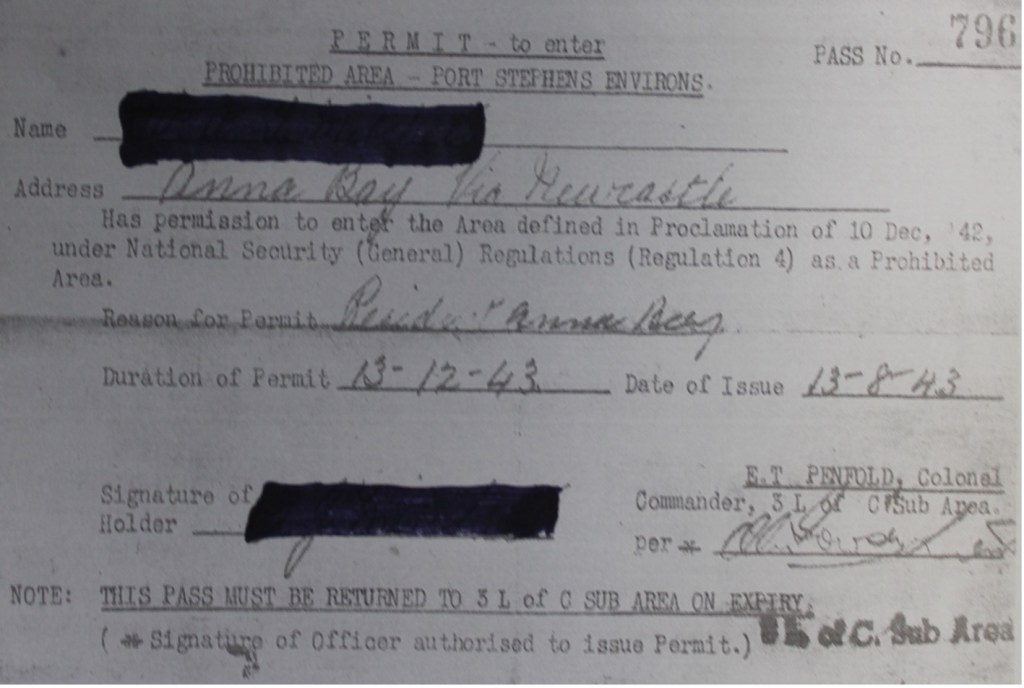
A permit to enter the Port Stephens Prohibited Area
Northern Side of Port Stephens declared an Exclusion Zone – 1943
While the southern side of Port Stephens was declared an exclusion zone, the northern side was also declared as a Prohibited Area, with no permits to be made available for civilian access. The Prohibited Area was used as a firing practice range.
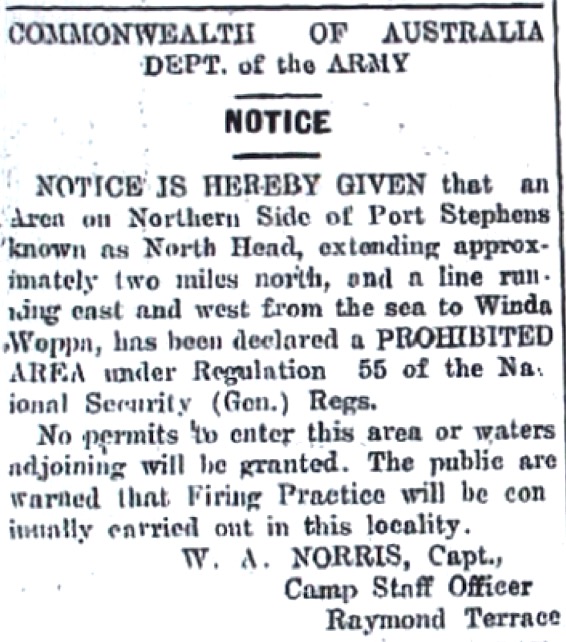
Northern side of Port Stephens declared an exclusion zone for military purposes [Raymond Terrace Examiner and Lower Hunter and Port Stephens Advertiser – 8 July 1943]
Fines Imposed for Security Breaches
The Newcastle Morning Herald and Miners’ Advocate of 3 February 1944, page 4, reported that four persons had been fined for breaches of the National Security Regulations … in the Summons Division of Newcastle Police Court yesterday:
Alicia … of Nelson’s Bay, pleaded guilty to having sent information by post which might be of value to the enemy. The charge stated that on or about August 13, 1943, defendant had written a letter to a person in Tasmania. Mr. Martin, prosecuting, said information disclosed certain troop movements. Defendant was interviewed and said she did not realise she was committing any breach. She had written the letters to her niece in Tasmania. She was an old resident of Nelson’s Bay, well and favourably known. Her loyalty could not be doubted. Mr. S. V. Chapman, for the defence, said the defendant was 70, with 12 nephews in the fighting forces. The letter to her niece was sent in the ordinary way. Defendant was fined £1, with £2/10 costs.
Frank … , of Belmont, was fined £3, with £2/10/ costs, for having been in a prohibited place without lawful authority on September 18. Defendant, it was stated, was a poultry farmer. He drove a truck from his farm to Anna Bay, and after delivering the load proceeded to Boat Harbour to obtain shell grit. Mr. Chapman, for defendant, said he was a British subject.
Ronald …, of Denison Street, Hamilton, was charged with, on or about July 10 for the purpose of gaining admission to a prohibited place at Nelson’s Bay, having in his possession a forged official permit. Mr. Martin: Defendant is a taxi driver. When questioned whether he had a permit to enter the prohibited area, he said he had not, but had made application to the military authorities. On each occasion he was refused. “Asked to explain,” said Mr. Martin, “the defendant said he would tell the truth: that a number of taxis had permits, and he did not. He became desperate and decided to make out a permit himself.” He afterwards said he realised how foolish he had been. Mr. Martin passed to the Magistrate two documents. One, he said, was the original forged permit, and the other a statement in writing, made by defendant. It was admitted by the prosecution that defendant was a loyal British subject, and that he had no ulterior motive. Mr. H. L. O’Neill appeared for defendant, who was fined £5, with £2/10/ costs.
William … , Scott-street, Newcastle, admitted having a Civil Construction badge without lawful authority on or about September 8. Mr. Martin said the defendant used the badge to gain admission to a prohibited area. His purpose in entering the place was to go fishing. … The area happens to be the best fishing ground, yet it was closed. Mr Martin: It was a fishing excursion. … Defendant was fined £2, with £2/10/ costs.
Welcome Home to Soldiers while on Leave
The Raymond Terrace Examiner and Lower Hunter and Port Stephens Advertiser of 11 March 1943, page 4, reported on the issue of how to welcome home the soldiers:
“Councillor Morgan said there appeared to be some feeling in Raymond Terrace as to whose duty it was to give a welcome home to soldiers when they return home on leave. He had promised to bring the matter before the Shire Council to see what they thought about it. Welcomes were not given to some who returned home on leave because there seemed to be a misunderstanding. But unfortunately, some of those who came home on leave returned to the front, and they will not come home again. What did their relatives think and feel about it. He referred to the matter so as to have the Council’s opinion. The Council President said every soldier ought to get a welcome home given him. They should have patriotic committees throughout the Shire and should arrange welcomes to those who belong to their area. It was a Raymond Terrace matter for the boys of Raymond Terrace and district. They did that in every place. If it was not the Comforts Fund duty, the public could arrange it.
He thought a committee should be formed to make any arrangements they feel are necessary. Councillor T. Lantry said it was a matter for the Patriotic Committee. We have them in every part of the Shire. The least we can do is to show that we appreciate what the boys are doing for us. The President could not attend at all areas of the Shire, that was a job for those residing in the various areas to where the boys belonged. Councillor Parish said it was not a matter for the Council to attend the district welcomes; they may attend those in the areas they represented. The Council, as a body would attend the welcomes at the end of the war. Martins Creek gave a welcome home recently. They have a committee at Raymond Terrace.
The Council President said it was a local matter and every effort should be made to give the boys a welcome. But it was local, and they would not expect to join in with Martin’s Creek for instance. Councillor Morgan asked who were the local Patriotic Committee. The President said any person who is a resident of the town and district should be a member if he pays up his membership. Councillor Lantry said it was the duty of the Patriotic Committee to give a send-off and a welcome home. Councillor Morgan said he would be able to say that the Council left it with the local people. Councillor Tranter said it was a matter for those who came home to receive a welcome from their own district, but when the war was over it will be a matter for the Shire Council.”
The Raymond Terrace Examiner and Lower Hunter and Port Stephens Advertiser of 13 May 1943, page 4, carried a further report on the issue of welcoming back soldiers:
“Councillor Morgan reported on the meeting held at Raymond Terrace in connection with welcoming of soldiers, which he said was not large, but earnest in its desire to do the best that could be thought of. After a good deal of discussion, it was decided to request the Patriotic and War Comforts Committee to arrange all welcomes to soldiers. The meeting was well worthwhile, he said, because it settled the matter for all time.”
Post War Schemes
The Raymond Terrace Examiner and Lower Hunter and Port Stephens Advertiser of 22 April 1943, page 4, reported on the need to plan for post war schemes of recovery:
“The Department of Local Government circularised the Council on Post War Schemes, and to advise on any that may be locally suitable. Councillor Morgan referred to Hexham bridge and moved that the Government be asked to make this construction an urgent one in post war construction. This was agreed to. Councillor Morgan said swimming baths at Raymond Terrace could be included in a post war reconstruction.”
The Raymond Terrace Examiner and Lower Hunter and Port Stephens Advertiser of 13 May 1943, page 4 reported:
“Councillor Morgan supported the Chamber of Commerce’s request that matters to be referred to the Government in post war reconstruction should include the bridging of all rivers and abolishing ferries. Also, that a hydroelectric scheme from Barrington Tops should be another of the projects that could be brought forward. It would save thousands of pounds in cheaper light and benefit a large area it should be investigated. It may lead to important operations. He moved that these matters be included. Councillor Parish said water conservation could also be included. Irrigation was becoming increasingly important in the growing of increased fodder supplies and vegetables, etc. … If water was available, the Hunter could supply enough vegetables for all Australia. In connection with hydro-electric supplies he said the Department had stated that there was not water enough to give the power. He thought this was wrong, however.”
In January 1944, officers from Port Stephens Council and the NSW Works Department inspected two of the works proposed by the Council as post-war projects. The proposed road from Shoal Bay to Anna Bay was inspected, as were possible sites for the Raymond Terrace baths. Both appeared satisfactory.
The local member of State Parliament informed the Council in January 1944 that he had put in a request for use of part of the Hawkesbury River bridge that was being replaced, to be used to bridge the river at Karuah. He said the relevant authorities had promised him they would do this. The matter was in hand, but it may be sometime before the span would be available. He had put this in as a post war work.
The Hawkesbury River bridge issue was again considered during October 1945. The Raymond Terrace Examiner and Lower Hunter and Port Stephens Advertiser of 11 October 1945, page 4, reported:
“The President said there was a possibility of bridges being erected in some places with the material from the Hawkesbury bridges. You could take one of these spans and put it over the river at some of the crossings. There should be a stand-by tug. He moved that the Department be asked to provide a tug large enough for the service, as the one provided previously was not large enough. Cr. Lantry seconded and said we should have something that gave security. Cr. Russell said the Main Roads Board should have a tug available on short notice. He thought the Hawkesbury bridge parts may be useful, but hardly as a crossing. Still, they could make an application.”
In February 1944, the NSW Department of Works advised that grants for post war reconstruction work that may be undertaken by the Shire Council, may not be given.
In March 1944, the Post War Housing Committee asked Council enquired how many houses would be required in the Port Stephens Shire after the War to house people. This would be based on the present shortage. The Council engineer was asked to furnish the information.
In July 1944, the Council President, reported on further activity in connection with the National Fitness campaign. He thought some attention may be given to the matter of whether some of the camp areas should not be a post war work. He had recommended sites for camps from Morna Point to Nelson’s Bay at various parts. There may be others that can be selected from Crown Lands.
The Liberty Loan Promotion
The sale of war bonds was a significant aspect of the Australian war effort during the Second World War. Administered by the Commonwealth War Loan Office, the war loans scheme encouraged Australians to buy war bonds which would mature with interest after the war. A total of 12 major Government war loans, variously called Liberty, Austerity, Special or Victory loans were offered to the Australian public.
The Raymond Terrace Examiner and Lower Hunter and Port Stephens Advertiser of 1 April 1943, page 2, reported on the promotion of the latest Liberty war loan at Raymond Terrace:
“A meeting of the Liberty Loan Committee was held in the Shire Council Chambers on Friday night last, presided over by Councillor G. J. Russell, president of the Shire and President of the War Loan local Committee.
It was agreed to hold the rally on April 9th, when a procession will start from the public school at 7.30 and proceed along the Highway to William Street, down that street to King-street, thence down that street to Burke Street, to Port Stephens Street and along that street to the Odd fellows’ Hall. The procession will be headed by the 8th Garrison Band and the V. D.C. and the N. E. S. will comprise the procession. The rally will comprise speeches, concert items, and a social evening generally. Mr. Cobcroft announced that up to March 26 an amount of £2860 had been subscribed then, from 14 subscribers. The quota required for Port Stephens Shire was £13000. It had been decided to issue circulars to leading men in the various districts to urge upon the residents of their locality, the urgent need for everyone who could to subscribe all that he or she were capable of. Also, that money from residents in Port Stephens Shire, if forwarded to a centre outside the Shire to the loan be counted in the Port Stephens Shire quota. Several sums in last loan were sent from Port Stephens area to Newcastle and were not included in the total for Port Stephens Shire Committee.
Councillors. G. J. Russell, Parish, Morgan, and General Richardson will be the speakers at the rally, along with Mr. Cyril Adam the organiser. Also, it was agreed to ask the Masonite (Company) Welfare Committee to allow a speaker in support of the loan, at their film exhibition and Concert in the Oddfellows’ Hall, Raymond Terrace, on Sunday night 4th April. The President stated that the pennant won on the last loan would be unfurled at the rally on the 9th. Mr. Farlow was appointed secretary in the place of Mr E. Paul, who was Secretary of the Committee during the last loan.”
In May 1945, the Council President reported on the success of the latest War Loan Rally and complimented the town of Raymond Terrace and the Shire on the gratifying result. Councillor Parish congratulated the War Loan Committee for the successful rallies in the Shire, which had allowed the quota to be exceeded.
In total, the amount raised in the Shire for five loans in which the community participated was £124,069. In today’s terms this is equivalent to $9.2M according to the Reserve Bank’s Pre-decimal Inflation Calculator (1900-2020).
Nelson Bay Reserves to be placed under Military Control
The Raymond Terrace Examiner and Lower Hunter and Port Stephens Advertiser of 10 June 1943, page 4, reported:
“The State War Effort Co-ordination committee stated they proposed to occupy all the reserves at Nelson’s Bay. They wanted to know if the Council would ask for compensation for any damage done. Councillor Morgan could not see where they got authority to occupy the reserves and streets. If the Council submitted to their authority, they may have a lot of other requests later on. Councillor Parish moved that the request be submitted to the Shire’s Association for further information and particulars on the matter. … The motion was carried.”
The Defence Authorities did take control of all the reserves. While the prohibition of persons entering the Nelson Bay area had been lifted in 1943, the reserves were to remain for military use.
The Cessnock Eagle and South Maitland Recorder of 8 December 1944, page 5, carried the following warning to visitors to Nelson’s Bay:
“The Shire Clerk of Port Stephens Council writes: — As many of the residents of districts served by your paper may be contemplating camping at Nelson’s Bay during the coming Christmas and New Year holiday season, it is desired to bring under their notice that all public reserves at Nelson’s Bay are under the control of the Defence Authorities, and persons proposing to erect tents on these reserves run the risk of being prohibited by these authorities. Further, while these reserves are under the control of the Defence Authorities, there are no conveniences, such as water supply and public lavatories, available.”
By November 1945, as no resolution had been reached regarding the camping arrangements on the foreshores of Victoria Parade, Nelson’s Bay settled, the Urban Area Committee proposed to imminently erect temporary sanitary conveniences, provide a water supply and control the camping areas. As more petrol was becoming available it was expected that a lot more people would be visiting.
Damage To Council Infrastructure
In February 1944, the Department of the Army offered £72 as compensation for the removal of the lavatories at Nelson’s Bay. The Council engineer said he estimated the cost of re-erection of the lavatories at £108. The Army originally offered £48 but had since agreed to £72. The Council accepted the amount.
The Raymond Terrace Examiner and Lower Hunter and Port Stephens Advertiser of 15 June 1944, page 4, reported:
“The Nelson’s Bay Urban Area Committee wrote to the Council pointing out that much damage had been done to the retaining wall at Port Stephens waterfront and had been damaged by the barges of the Navy in bumping the wall and tying up vessels. The damage would require more than £250 to repair the wall. Councillor Russell moved that a request be made to the Naval and Military authorities for payment of the damage done. … The engineer said the damage was done by the military or navy. … The motion which was agreed to.”
In September 1944, the military authorities agreed to grant the Council £250 towards the cost of repairs to the retaining wall at Nelson’s Bay.
In July 1945, the Medical Officer of Department of Health referred to the condition of the Nelson’s Bay sanitary depot. The Council engineer said the plant had been knocked about by the military and had to be put in workable order. The Council said that steps were being taken to improve the depot’s condition.
Housing Construction Restrictions
The Raymond Terrace Examiner and Lower Hunter and Port Stephens Advertiser of 14 September 1944, page 3, reported:
“Nepean Council asked Port Stephens Council’s cooperation in having the restrictions on buildings and materials relaxed so that houses can be erected for returned soldiers; and that money be made available to Shire Councils for this purpose in meeting local demands. Councillor Upton said applications had been made by some private persons, but they got no further. … The present position was unfair regarding building and material. Councillor Morgan said he thought the Government should relax the restrictions on materials and allow building to go on for any person as well as service men or women. Councillor Russell said would the Council be willing to take up the building of houses. The Council President moved and Councillor Upton seconded that the building restrictions of buildings and materials be removed as soon as possible, and that requests to the Federal and State members be made in support of the request. … The motion was carried.”
Repatriation Measures
The Raymond Terrace Examiner and Lower Hunter and Port Stephens Advertiser of 10 May 1945, page 4, reported on the Repatriation Committee.
“Councillor Russell said it was their duty to see that everything that could be done was done to rehabilitate the servicemen. After the last war men were put on land of no use to them whatever. The President said they had the responsibility in trying to save manpower to see the most is done to rehabilitate those servicemen. He would call a public meeting for the purpose. He hoped the Council would take an active interest in the matter, and he was sure they would. Councillor Parish said it was one of the things they should do. He was a member of the East Maitland Committee. Councillor Russell said they must be alive to the position of these men when they came home. Councillor Upton said it was a matter in which they could not afford to delay. We should try and got things going so as to make the best arrangements possible. These men would come back nervy and unfit for much for a time, and anything we can do to help them get back to normal should be done.”
In July 1945, the Council President reported that a strong Repatriation Committee had been formed and an Executive of seven appointed.
At the September 1945 meeting of the Council, the President reported that servicemen would be returning home shortly, and welcomes should be arranged for them. The Council discussed the issue and agreed that the welcomes would be in the hands of local committees for the returned service men and women of their area.
It was decided to issue a certificate to returned servicemen and women from the Shire.
Port Stephens Housing Scheme Used Recycled Army Huts
The Sunday Sun of 7 April 1946, page 9, reported that the first house built by a local government authority in this State, from a recycled army hut, was erected by the Port Stephens Shire Council towards the end of 1945:
“This claim is made by the Port Stephens Shire Clerk, following the statement that Ryde was the first local governing body to build a house. On Friday, March 22, Mr. Kenneth … was given the key of the first house completed by the Ryde Council of the 44 they have in hand. (Their full programme is 2800). Port Stephens’ first house was occupied by Mr. and Mrs. … on January 15, says the Shire Clerk in a letter to “The Sunday Sun.” Army hut material (picture below) shows the house before it was finally completed and before the fence had been erected. “While congratulating Ryde Council on its project,” the Shire Clerk wrote, “Port Stephens claims to have completed the first house erected by any local authority. “Further, this council claims to be the only council in Australia to make use of Army huts in its housing project. “The weatherboard walls, floors, windows, and asbestos roof of the house in the picture are from a 60ft. by 18ft, weatherboard Army hut. “The house contains three bedrooms, lounge room (18ft: x 12ft;), kitchen, sunroom, bathroom, and a 4ft. hall with a detached 10ft. x. 10ft. laundry. “Total-floor space — the same as that of the Army hut, 1080 square-feet. “The place is completely equipped with electric light, water, and conveniences.” Ten such houses will be erected, all from material from Army huts. They will be sold to applicants chosen by the Council. The house illustrated was sold to Mr. …, who is an ex-serviceman with a wife and four children, for £800, plus the cost of the land, £96/5/-.”
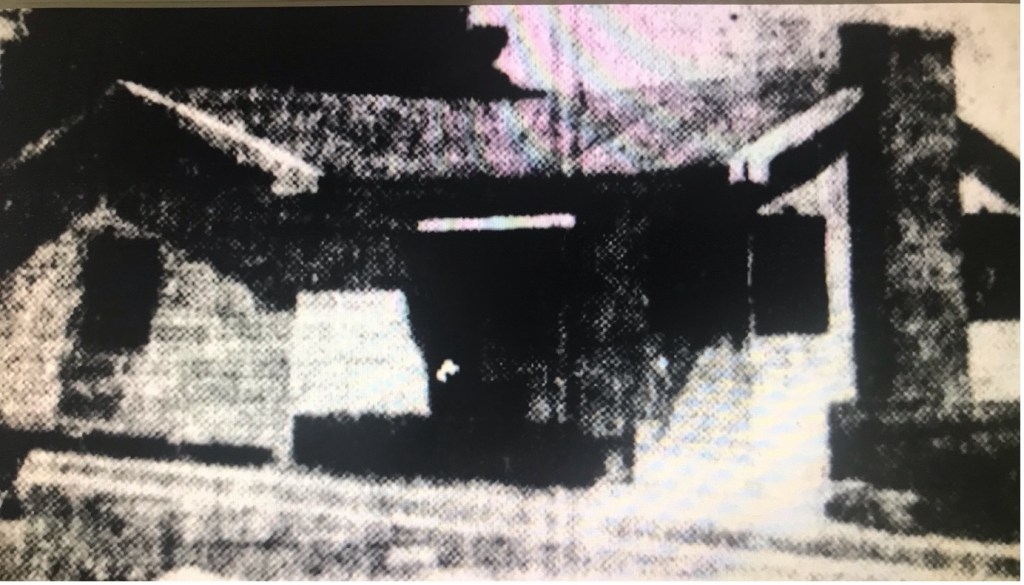
Cottage built by Council at Raymond Terrace from a recycled army hut
The ten homes were erected by day labour with council staff under the supervision of the Council engineer. The council had decided to sell the houses, half to returned soldiers. Demolition of the ten huts commenced during July 1945 and by November 1945 all the demolished huts had been carted into Raymond Terrace, ready for erection.
The Newcastle Sun of 29 August 1945, page 4, carried the following report about the costs of the cottages, then under construction:
“It is expected that the three-bedroom cottages Port Stephens Shire Council is now erecting in Raymond Terrace will be sold for about £750 each, complete with land. They are converted military huts.
The cost of the conversion, aside from the value of the land, was estimated at several hundred pounds less than what it cost the Housing Commission to convert the huts at Stockton, and the Shire President … said today that it seemed the actual figure would be well within the estimate. Altogether ten houses are to be built. …. Although military huts were offered in the first instance to shire or municipal authorities, when the Commonwealth decided to dispose of them, Port Stephens Shire is one of the few which accepted, and its action at the time was subjected to considerable local criticism. Mr. J. P. Abbott, M.H.R., in whose electorate the cottages are situated, is raising in the Federal House the question as to why the costs of Governmental authorities for conversion of the huts are so much greater than those reported by the shire.”
In August 1945, Tomago Progress Association wrote to the council regarding the condition of the Tomago Road, and said it appeared strange that whilst they could not find manpower for the roads they could find it to build houses which were not so urgent. The engineer explained that the manpower used in building had not interfered with road maintenance. The President thought getting homes for the people was more important at the present time. The Council agreed to inform the Association that the building of homes did not interfere with the road maintenance. And no major works could be carried out while the war is on.
Concluding Comments
At the conclusion of the November 1944 meeting of the Port Stephens Council, the President, Councillor Morgan, reviewed the previous three years’ work of the Council. The challenges faced by the Council and its citizens during the Second World War, can be best appreciated by considering his thoughts about the peak years of the military presence in Port Stephens:
“He said this period had been most difficult on account of the war interfering with the conditions. He mentioned the black-out and evacuation arrangements that had to be taken up, and N.E.S. forces and such like. They all had reason for deep thanks to our fighting men that this danger is now past. The Council he thought did everything in its power to safeguard the lives and properties of the ratepayers. He was proud that during the period the Shire had won outstanding awards in no fewer than four War Loan Pennants. The total amount raised in the Shire in the five loans was £124,069. A good effort. Cr. Morgan also referred to the fact that the Shire had operated a charcoal burning plant, and they were one of the few that had made a profit out of it.”
At end of Concluding comments please add the following section containing links:
The following papers on the military history of the Port Stephens regioin are published on this website and can be found at the following links:
When World War One Came to Anna Bay
Camouflage of Mount Tomaree – 1941/42
HMAS Assault at Nelson Bay Port Stephens – 1942/43
A Pictorial History of HMAS Assault – Nelson Bay
United States Landing Force Equipment Depot at Nelson Bay – 1942/43
Royal Marines at Port Stephens – 1945/46
‘Operation Boomerang’ at Port Stephens – March 1952
War Diary of Tomaree Coastal Artillery Battery Port Stephens – 1942/1944
Post War History of the Gan Gan Military Camp At Port Stephens
15th Northern Lancers at the Gan Gan Military Camp – 1949
Military Training Camp At Gan Gan – February 1951
School Cadets At The Gan Gan Military Camp – April 1951
Army Commando Training Exercises at Gan Gan – 1953 and 1955
First Army Camp for Women of the Citizen Military Forces at Gan Gan – April 1954
University Students at the Gan Gan Military Camp 1950 and 1962
Military Picnic at One Mile Beach, Port Stephens
Port Stephens Residents Serving in The Australian Military Forces in The Second World War
Letters from the Front Sent by a First World War Soldier of Port Stephens
Tank Traps at Birubi Beach – Port Stephens
Researched and compiled by Kevin McGuinness
February 2022

 Port Stephens - a history exploration