

Introduction
In less than five years after the end of the Second World War, Australia was again back in an overseas theatre of war.
The Korean War began on 25 June 1950 and ended after an armistice was signed on 27 July 1953. During that time, some 18,000 Australian military personnel were engaged in military operations with twenty-one other allied nations in the support of South Korea.
In 1950, Australian military authorities had to again to provide for the amphibious training of military personnel as had been previously undertaken at HMAS Assault in the Second World War.
The advantages of the southern side of Port Stephens as a military training area thus attracted renewed consideration.
This paper examines the proposal by the the Commonwealth Government to resume land in the Nelson Bay and Shoal Bay areas for military training purposes in the early 1950’s, and the opposition of the local community to such plans.
Opposition to the proposed resumption of land at Nelson Bay and Shoal Bay for military purposes – 1950
The Newcastle Morning Herald and Miners’ Advocate of 21 March 1950, page 2, reported:
‘The Minister for the Army (Mr. Francis) is to visit Nelson’s Bay and Shoal Bay immediately after Easter to meet local organisations which have protested against a suggestion that the Army will resume land for seasonal manoeuvres. Mr. A. Fairhall, M.H.R., was advised of this yesterday. Mr. Francis said the Army would not take any action in the meanwhile. Mr. Fairhall said he had told the Minister the area was a holiday resort. If sections of the land were taken over by the Army, the contours of the foreshores and the district generally would be spoilt and its value as a tourist centre seriously affected.’
Support of Newcastle Council sought to oppose resumption of land- 1950
The Newcastle Morning Herald and Miners’ Advocate of 29 March 1950, page 4, reported:
‘The decision of military and naval authorities to resume more land adjacent to the foreshores at Shoal Bay was giving the residents much concern, the Lord Mayor (Ald. Quinlan) told Newcastle City Council last night. The fishing industry in the district would be dislocated if the departments proceeded with their intentions. Recently tanks used by the land forces interrupted the hauling of sea mullet. Based on previous catches, it was estimated that 200 boxes of fish were lost that day. People who had secured building lots in the area said that if the military took control, their land would be worthless, and it would mean the end of Shoal Bay as a pleasure and tourist resort.
The Lord Mayor said a public meeting at Shoal Bay had sought the support of Newcastle City Council in protesting against the proposed action. The council last night appointed the Lord Mayor to represent it at a deputation to the Minister for the Army and Navy (Mr. Francis) to ask him to cancel the proposal. Ald. Rundle said he did not think the council should support the protest till it heard what the Minister had to say. He agreed that the Lord Mayor should represent the council on the deputation to hear the Minister’s reply, but not to take an active part in the discussion. Ald. Scott-Daisley said the military had to have land for training. The Minister might find an alternative site after he had heard the deputation.’
Minister for Army inspects the Shoal Bay Area – 1950
The Newcastle Morning Herald and Miners’ Advocate of 17 August 1950, page 2, reported:
‘The Minister for the Army (Mr. Francis) will inspect the Nelson’s Bay and Shoal Bay foreshores on Monday. This follows a request by Mr. A. Fairhall, M.H.R., that the tourist reserves be protected from Army encroachment. Mr. Francis will be accompanied by the Secretary of the Department of the Army (Mr. Sinclair), Major Tancred and Major Bird. He will meet a deputation from Shoal Bay Progress Association at the Country Club at 10.30 a.m.’
The Newcastle Morning Herald and Miners’ Advocate of 21 August 1950, page 2, also reported:
‘The Minister for the Army (Mr. Francis) arrived in Newcastle yesterday. His visit follows a request by Mr. Fairhall, M.H.R., that tourist reserves in Nelson’s Bay area be protected from encroachment by the Army. Mr. Francis, the Secretary of the Department of the Army (Mr. Sinclair) and Major Tancred and Major Bird will inspect Nelson’s Bay and Shoal Bay foreshores today. The Minister will meet a deputation from Shoal Bay Progress Association at the Country Club at 10.30 a.m.’
Commitment to the Korean War announced while Minister for Army was at Shoal Bay – 1950
The Newcastle Sun of 21 August 1950, page 3, reported:
‘Australian troops would go into action in Korea alongside British troops who were being sent from Hong Kong, the Acting Prime Minister (Mr. Fadden) announced today.
For security reasons the timetable for the development of the force could not be disclosed. “But the utmost expedition is being used in building up the Australian infantry battalion in Japan to its war establishment as soon as possible,” Mr. Fadden said. Referring to the statement by the British Prime Minister (Mr. Attlee) on the despatch of two British battalions from Hong Kong to Korea, Mr. Fadden said that in accordance with the arrangements between the United Kingdom and the Australian and N.Z. Governments for the grouping of their contributions into a British Commonwealth Force, it had been agreed that the Australian battalion should be joined with the two U.K. battalions to form the initial component of this force.
“The U.K., Australian and N.Z. Governments are in consultation on the organisation, control and supply of a British Commonwealth Force and an announcement will be made by these Governments when arrangements have been completed,” Mr. Fadden added. The New South Wales quota of 400 for the volunteer force for Korea is expected to be filled tomorrow. An army spokesman said today that throughout Australia call-up notices had been sent to 607 World War II veterans who volunteered for the special 1000-man force. “They are splendid types who are all battle-tested.” he said. A batch of 53 volunteers, including 16 from Queensland, moved into Ingleburn this morning, bringing the number now in training there to 199. The men were settling in “pretty well” an officer said today. They are equipped immediately on arrival and then undergo an intensive toughening up process. “We have to lick them into top-line physical shape because most of them have softened a bit since they left the army five years ago” the officer said.
When the N.S.W. and Queensland quotas are in camp they will be given rigid training under battle conditions. Australia now was more or less in a state of war and the Government was raising troops as fast as it could to join United Nations forces fighting in Korea, the Minister for the Army (Mr. J. Francis) told a deputation from the Shoal Bay district today.
The deputation, which was led by the President of Port Stephens Shire (Councillor R. J. Richardson), asked Mr. Francis to reconsider Department of the Army plans to take over certain parts of Shoal Bay and Nelson Bay as a training area for amphibious assault troops. ‘”Certain amphibious landings already have been made in Korea,” Mr. Francis said. “We should be very happy to feel that these would be the only engagements we might have in the distant future. But the aggressor can only be resisted by our being fully prepared to meet him. “For this reason, the subject of this deputation, being such an intricate one, must be considered very carefully before I give a decision.”
Mr. Francis told the deputation, however, that he would review again the decisions already made on the area. He said he could assure them that the army would not walk in over the area in “a clean sweep,” as was feared. Where country was taken over he would try to have the beaches available to the public at all times, except when the army was actually training. “You have an ideal spot here for use as a tourist resort,” he said, “but it is also an ideal spot for the purposes the army want it for. “However, I will go into the matter again, keeping in mind that we must try to cooperate with the people we wish to defend. I will, as soon as possible, let Mr. Fairhall have maps of the actual areas the army needs.”
Mr. A. Fairhall, M.H.R., who introduced the deputation, said it was realised that with the world situation as it was the Number One priority was for military preparedness. However, there was in the area some of the best land for public recreation available in N.S.W. The area served not only the Newcastle district, but Sydney and the rest of the State. In addition it was an ideal fishing ground for both professionals and the amateur big game fishermen. Its resources were such, Mr. Fairhall said, that in the years to come it would be the playground for a million people. At the same time, there was situated at Tomaree Head a mental hospital, which planned to cater for war neurosis cases. If the army took over the near-by area it was obvious the effect bombing exercises would have on these patients.
The land at Nelson Bay and Shoal Bay was freehold land. There were 600 blocks worth a total of about £60,000. It was considered that the army might use land at Salamander Bay, where landowners had only permissive occupancy, which could be terminated at three months’ notice. Large tracts of land in this area already were under the control of the Department of the Interior. Other speakers on the deputation were Cr. Richardson, representing Port Stephens Shire and the County Council. Mr J. H. Facey, for the professional fishermen, and Mr. L. G. Randall, representing the Shoal Bay and Nelson Bay ratepayers.’
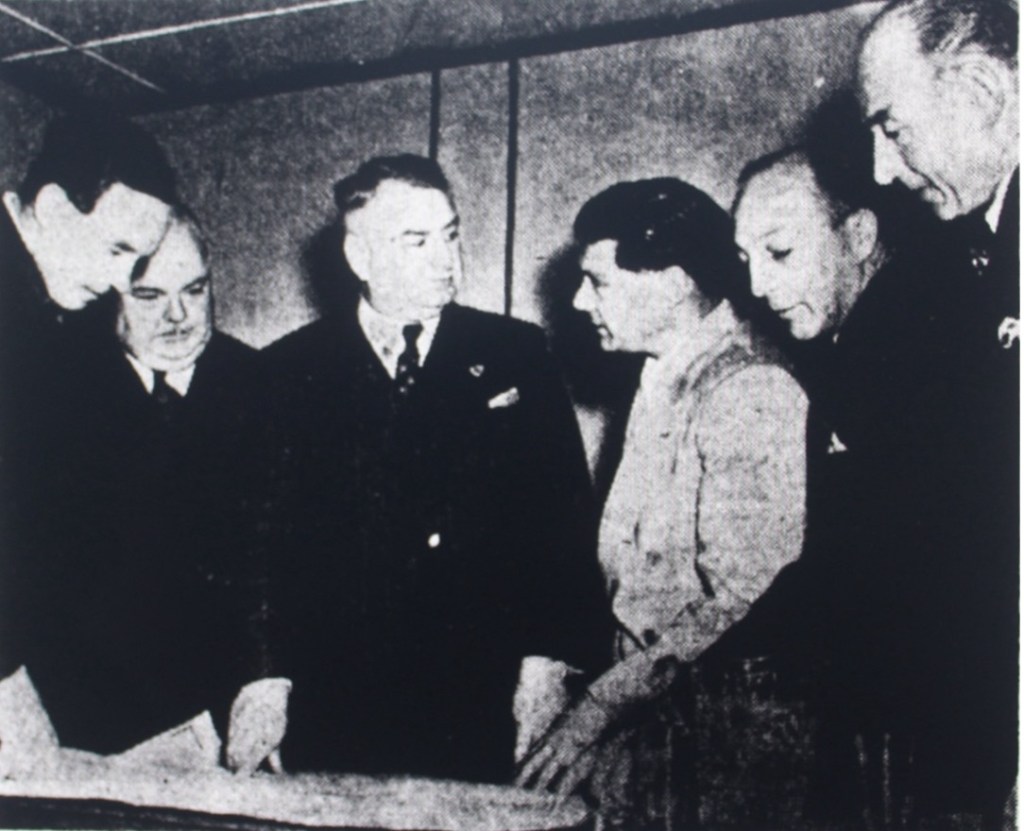
From left: The President of Port Stephens Shire (Cr. Richardson), the Secretary of the United Fishermen’s League (Mr. J. H. Facey), Mr. Francis. the Vice-president of the Shoal Bay Ratepayers and Residents’ Association (Mr. L. Randall), Mr. A. Fairhall, M.H.R., and the President of the Association (Mr. E. Carter) [Newcastle Morning Herald and Miners’ Advocate, 22 August 1950]
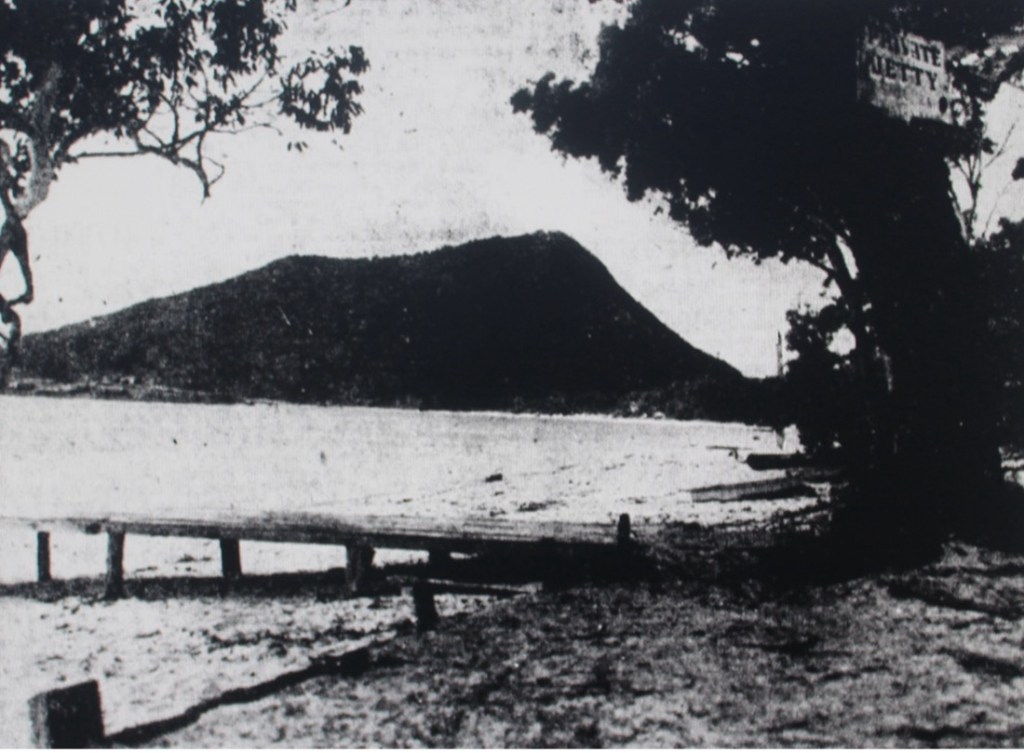
Shoal Bay beach, fronting the Country Club, as typical of those areas discussed by Mr. Francis and the deputation [Newcastle Morning Herald and Miners’ Advocate, 22 August 1950]
The Dungog Chronicle of 23 August 1950, page 2, also reported:
‘At Shoal Bay on Monday, the Minister for the Army and Navy, the Hon. Jos. Francis, accompanied by the Secretaries of the Department of Army and Navy, together with officers of both services, met a deputation of local Government and local interests on the question of the resumption of land for defence training purposes at Port Stephens and Shoal Bay. In introducing the deputation, Mr. Allen Fairhall, Member for Paterson, said that he was glad Mr. Francis had been able to keep a promise in spite of the increased burden of responsibility which had fallen upon him due to the Korean crisis. The fact that he was accompanied by high’ officers of both Departments indicated the Minister’s sincerity in dealing with the matter and ensured that no decision would be reached without a thorough exploration of the problem.
Mr. Fairhall went on to stress the growing population of the Hunter Valley and the increasing need for recreational areas. Port Stephens and Shoal Bay were ideally suited to the development of a tourist centre and, whilst realising the Minister’s greater responsibility lay in national defence, he appealed to the Minister to leave as much of the area for civilian occupation as possible. Mr. Fairhall said his conviction was that, in the reasonably near future, Port Stephens and the Myall Lakes would become a playground for a million people.
He was supported by Councillor R. J. D. Richardson, President of the Port Stephens Shire, Mr. Facey, representing the Professional Fishermen’s Association, and Mr. Randall, who spoke for the Shoal Bay residents, on whose behalf the meeting was arranged. In reply the Minister said he was aware of the problem and fully sympathised with local residents in their desire to see the area developed residentially and as a tourist centre.
Consistent with his responsibility to national defence, he promised that the Department would take as little land as they must and that ‘the peoples’ access to the waterfront and beaches would be closed only on infrequent occasions as demanded by training schedules. Having examined maps and the situation personally, Mr. Francis promised that the matter would be resolved in the very near future so that indecision regarding the Government’s requirements would no longer hold up the development of the area.’
Letter to the Editor – 1950
The Newcastle Morning Herald and Miners’ Advocate of 29 August 1950, page 2, published the following letter to its editor from L. R. Lucas, concerning the proposed resumption of land at shoal Bay for military purposes:
‘As an owner of a weekend cottage at Salamander Bay, I was disgusted on reading the deputation to the Minister of the Army (Mr. Francis) on the Army’s proposal to have a training base for amphibious vehicles at Shoal Bay, at the lack of knowledge of the locality by Mr. Fairhall, M.H.R., and his attitude in suggesting the Army should use Salamander Bay instead. Mr. Fairhall said there were 600 allotments worth £ 60,000 at Shoal Bay. Some of these lots were bought for as low as £25. He states that the houses at Salamander Bay are on permissive occupancy. This is not correct. The land belongs to the Department of the Interior and is let at a quarterly rental. Some of the tenants have paid the department a lot more in rent than some owners at Shoal Bay paid for their lots. He states that tenants can be put off in three months. What he did not state is that many people, including myself, have long-term leases of 10 years.
He did not tell the Minister of the miles of oyster leases that line the shores of Salamander Bay. These could not be taken without compensation, which would total nearly the value of Shoal Bay. Also, there are hauling grounds from which licensed fishermen take large quantities of fish. A majority of the people who have built houses at Salamander built them for relaxation. Some are equal to any at Shoal Bay. There are no places at Shoal Bay with an absolute water frontage. A good road runs right round the water front. At Salamander there is nothing worth calling a road. Shoal Bay is a speculators paradise. Allotments are being sold every day at a profit. This cannot be done at Salamander.’
Minister confirms military plan for Port Stephens – 1951
The Newcastle Morning Herald and Miners’ Advocate of 18 January 1951, page 4, reported:
‘The Minister for the Army (Mr. Francis) had advised that the Federal Government would retain two naval establishments and an area of Crown land at Port Stephens, Mr. Fairhall, M.H.R., said yesterday.
A determination of what land at Port Stephens the Government will require for defence will enable landholders in the area to subdivide and build. During the war the Defence Department took over land from Nelson Bay, through Shoal Bay, to Tomaree and Fingal Bay. A “defence blanket” on the area prevented owners from subdividing and improving their properties.
Last August, largely at the instigation of Shoal Bay Progress Association, Mr. Fairhall introduced a deputation to the Minister. Mr. Francis was asked to clarify the position for Port Stephens Shire Council and landholders. Mr. Fairhall said the Navy would acquire the naval assault camp and naval workshops and slipway at Nelson’s Bay. For Army training the Government would reserve Crown land joining Tomaree camp to The Spit. Ths land was adjacent to sub-divided land, some of which was not sold because of uncertainty about its future. The services might prohibit access to this land during training periods. but at other times it would be open to the public. Two blocks on the waterfront between Harward-avenue and Shoal Bay Country Club would be declared recreation reserves, through which the Army would retain access for training.
All other land in the area could be subdivided and built on. A map showing reserves would be sent to Port Stephens Shire Council. Mr. Fairhall said it was to be regretted that South Head was occupied by the New South Wales Health Department. “Port Stephens is one of the finest harbours in Australia and one of the potentially finest coastal playgrounds,” he said. “It is unfortunate that the necessities of war should have meant the taking over of an area of land there by the Defence Department, but a matter of greater regret that the existence of buildings on South Head should have made it an attractive site for the Health Department. “Sympathetic though we may be towards the needs of the mentally ill, there are other suitable places where their needs could he met. “The growing need of the in-creasing population of Newcastle and the Hunter Valley for recreation sites demands that this magnificent scenic attraction should not be denied the general public.”
The Newcastle Morning Herald and Miners’ Advocate of 14 February 1951, page 5, also reported:
‘The Department of the Army has agreed to restrict its land acquisition at Shoal Bay to a strip of Crown land extending south from Tomaree, including Box Beach. The council and Shoal Bay Progress Association had protested against proposals to resume a deep strip running parallel to the coast of most of Shoal Bay and extending to the foreshore. The area embraced subdivisions and homes. In response to the protests, the Minister for the Army (Mr. Francis) inspected Shoal Bay about four months ago. Port Stephens Shire Council yesterday received from Mr. Fairhall, M.H.R., plans of land to be acquired for Army and Navy purposes at Nelson’s Bay and Shoal Bay. Mr. Fairhall said the public would have access through the Crown land, except during manoeuvres. Two smaller areas fronting Shoal Bay, sections 114 and 117, central to the bight, would be declared recreation reserves. The Army would have access for training. The Department of the Navy would retain its allotments at Nelson’s Bay and Fly Point.’
Concluding Comments
The designated areas of Nelson Bay, Shoal Bay and Fingal Bay continued to be used regularly for military training through to the late 1960’s, as were areas in the Anna Bay and the nearby Stockton Beach.
The story of military training at Port Stephens in the Second World War is found on the following links on this website:
United States Landing Force Equipment Depot at Nelson Bay;
A Pictorial History of HMAS Assault at Nelson Bay; and
Royal Marines at Port Stephens.
Researched and compiled by Kevin McGuinness
May 2024

 Port Stephens - a history exploration