
Introduction
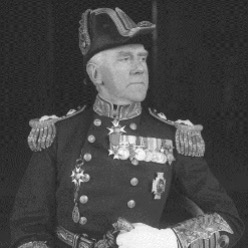
Admiral Sir Dudley de Chair was the twenty-fifth Governor of New South Wales. He was in office from 28 February 1924 to 7 April 1930.
In October 1925, the Governor, his wife, and daughter spent a four-day holiday at Port Stephens, staying at the Sea Breeze Hotel, Nelson Bay. As he and family were on holidays no official duties were undertaken at Port Stephens.
This paper is the story of the visit
After leaving Port Stephens, the Governor and his family travelled to Newcastle, and Lady de Chair officially opened the St. Hilda’s Hostel for Girls, before returning to Sydney the same day.

Admiral Sir Dudley de Chair – NSW Governor 1924-1930 [Wikipedia]
Vice-Regal Duties Prior to Port Stephens Visit
The Sun of 13 October 1925, page 11, reported:
‘The Governor and Lady de Chair will attend the undergraduates’ ball at the Palais Royal tonight [in Sydney]. They will leave tor Port Stephens tomorrow morning, returning on Friday.’
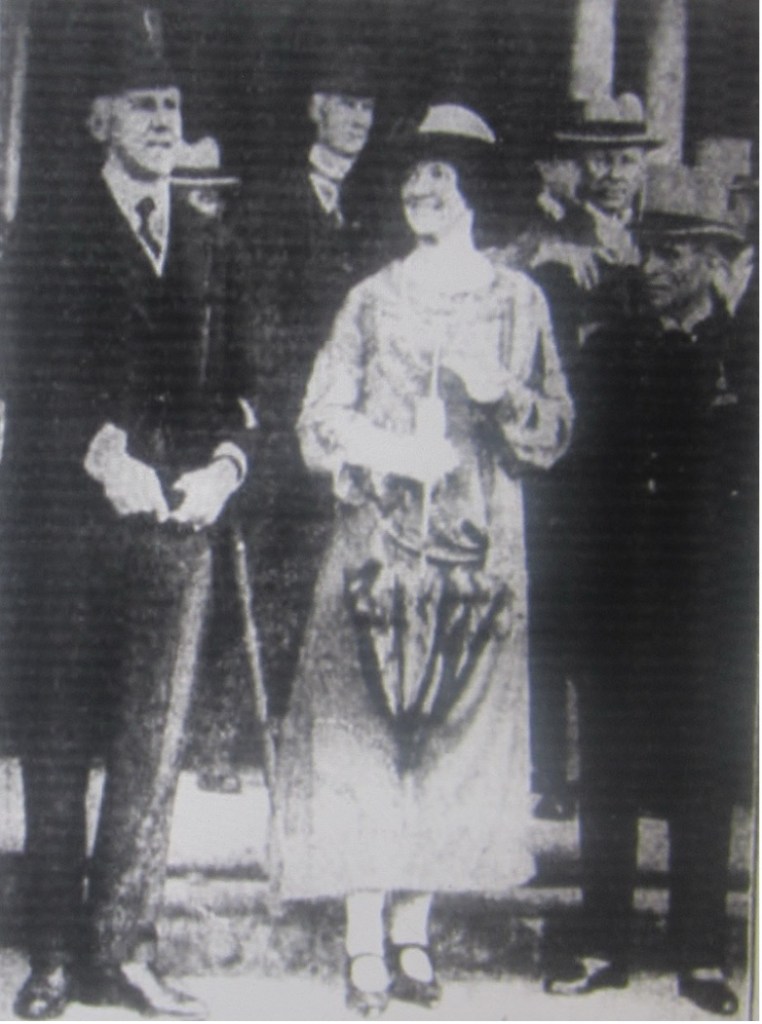
The Governor and his wife at Randwick Racecourse shortly before their Port Stephens Holiday [Evening News, 5 October 1925].
Entertainment at the Bay
The Raymond Terrace Examiner and Lower Hunter and Port Stephens Advertiser of 23 October 1925, page 2, reported:
‘His Excellency the Governor, Sir Dudley de Chair, accompanied by Lady De Chair, Miss Elaine De Chair, and Flight-Lieut. M. H. Coote, A.D.C. to the Governor, paid an unofficial visit, and spent four days at Nelson Bay, on a quiet holiday.
The party made several trips with Inspector Hinchman, of the fisheries Department, and had good sport line fishing. His Excellency made himself very popular, and during the day visited the wharf and conversed freely with the fishermen. He specially sent for Mr. G. H. [George Henry] Pepper, with whom he had a long conversation.
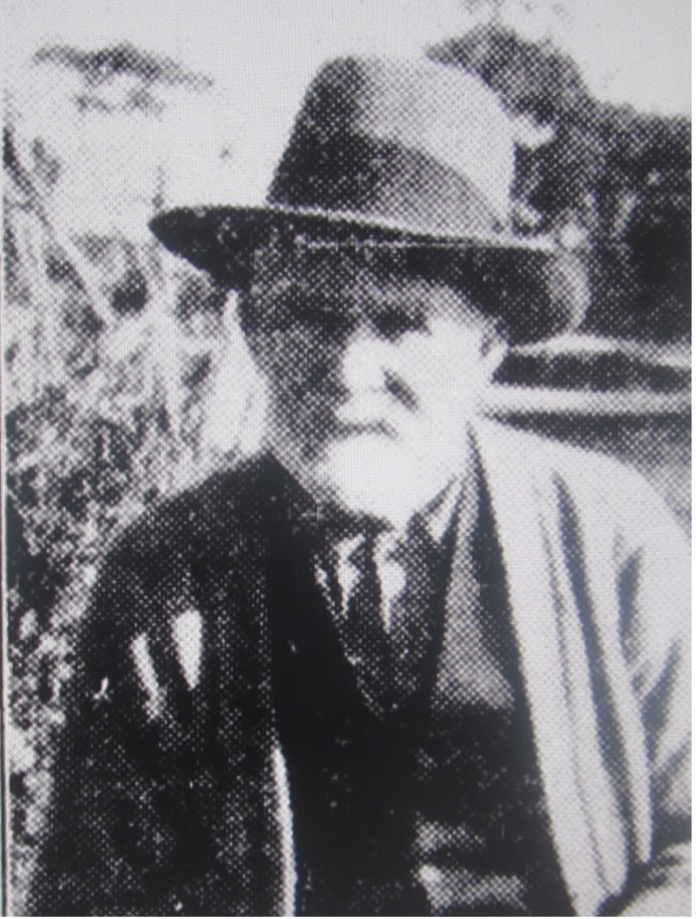
George Henry Pepper, a Port Stephens pioneer [Newcastle Morning Herald and Miner’s Advocate, 15 July 1936]
Miss De Chair enjoyed herself immensely in the new swimming baths, and is a good exponent of the natatorial art. As an appreciation the following reference speaks for itself. His Excellency, Lady De Chair, and Miss De Chair have immensely enjoyed a really restful holiday at the Sea Breeze Hotel, Nelson Bay, and especially Mrs. Firkin’s excellent cuisine.’
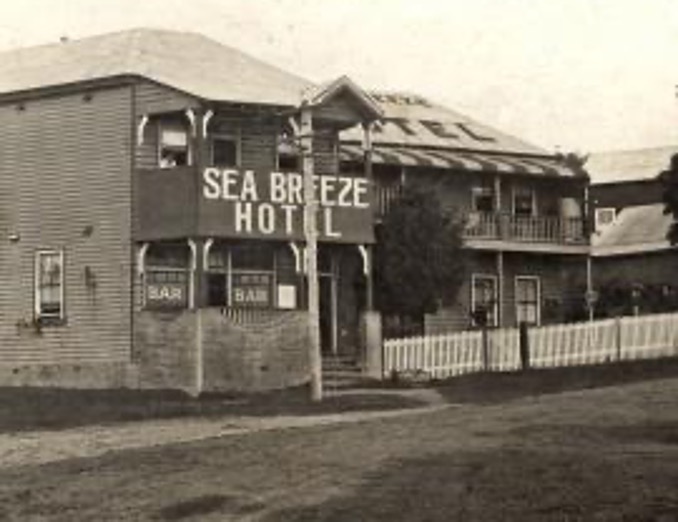
Sea Breeze Hotel, Nelson Bay
Official Business at Newcastle
The Sydney Morning Herald of 19 October 1925, page 10, reported:
‘His Excellency the Governor and Lady de Chair, accompanied by Miss de Chair, and attended by Flight Lieutenant Coote, A.D.C., left Port Stephens on Saturday morning for Newcastle. In the afternoon Lady de Chair opened the Newcastle Girls’ Hostel; and the party later left Newcastle by train for Sydney.’
The Newcastle Morning Herald and Miners’ Advocate of 19 October 1925, page 4, provided the following report on the opening of the Newcastle Hostel for Girls:
‘The opening by Lady de Chair of St. Hilda’s Hostel for Girls in Newcastle on Saturday marked the extension of an important activity which was undertaken by the diocese of Newcastle a few years ago. That the original hostel in Mayfield filled a social want is proved by the fact that its accommodation was soon overtaxed which led to Synod undertaking the erection of the building which was formally opened by Lady de Chair.
Newcastle is a large commercial centre, and in these days women find occupations in positions which a few years ago were not open to them. To fill such positions, many young women leave their homes, to come to Newcastle, and it is most desirable that thoroughly sound social and domestic surroundings should be available for them. In many instances the question of economy is also one of much importance, and this fact has been carefully borne in mind by those responsible for the management of the hostel. The new building will provide accommodation for thirty-five girls.
It is not rash to prophesy that the day will soon come when there will be insistent demand for still further extension of the fine work which is being done under the auspices of the diocesan authorities. Excellent work is also being done in the same sphere by the Young Women’s Christian Association. The buildings now occupied do not permit of such accommodation as that which is offered by the hostel, but the association, with its world-wide organisation, is always ready to help girls who are called upon to move from city to city in the Commonwealth, or even far outside its boundaries. The community is under an obligation to care for the girls who leave home to enter into such occupations as are now open to them.’
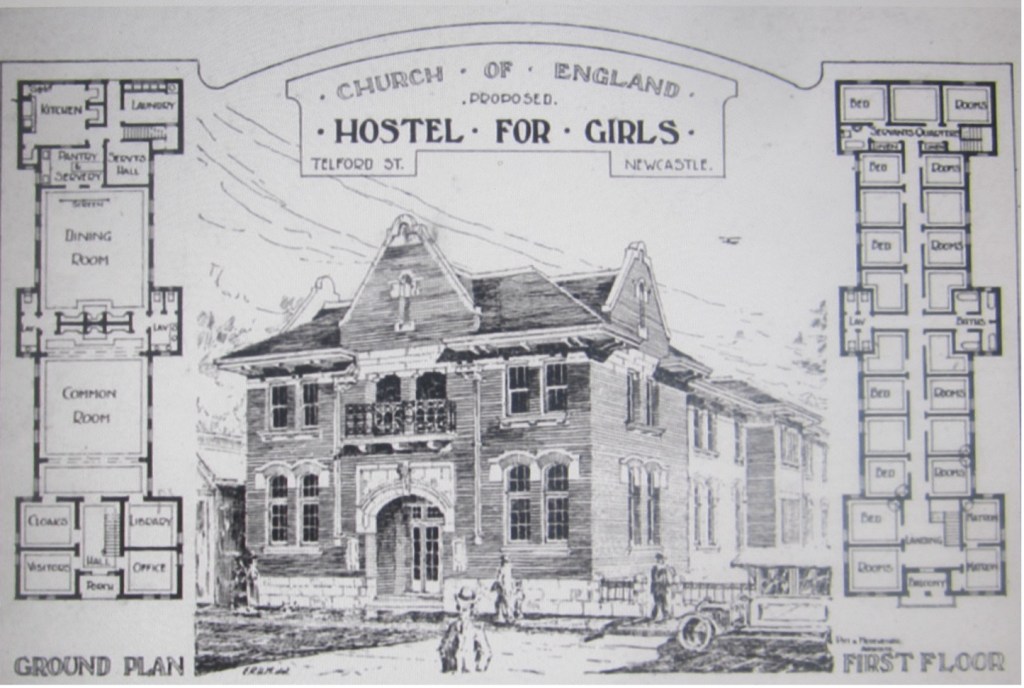
Plan for the Newcastle Hostel for Girls [Newcastle Library].
Port Stephens at the time of the Governor’s Visit
The Governor’s visit prompted the following comments about Port Stephens that were published in the Newcastle Morning Herald and Miners’ Advocate of 2 November 1925 [shortly after his visit], page 6, and describe situations likely experienced by the Vice-Regal party:
‘At present Port Stephens is accessible from Newcastle by sea or road and river transit. The latter route is the most popular, and a picturesque trip to Nelson’s Bay or Tea Gardens can be made by car and boat six days a week (Sundays excluded). The road between Stockton and Salt Ash, a distance of 15 miles, unwinds itself among prosperous looking dairy farms all the way from Fullerton Cove.
On arrival at Salt Ash there are two boats waiting, one of them a steam vessel of 22 tons, and which has accommodation for 97 passengers, leaves (usually at midday) immediately the cargo and passengers are taken on board. The other a smaller vessel leaves later. Leaving Salt Ash the steamer travels along Telegherry [Tilligerry] Creek, a distance of eight miles. The creek is about half a mile wide, with closely matted mangrove trees and numerous oyster beds lining its banks. After calling at Anna Bay, Lemon Tree passage, and Wanda Wanda (Soldiers’) Point en route, a pretty river trip has been completed before the upper harbour is reached, and it is here the large sheets of ever blue green water become more fully revealed.
Looking towards the west from the point the entrance to the Karuah river is noticeable, and the distance from Soldiers’ Point to Karuah is considered to be nine miles. On the north side of the harbour are two small settlements named Tarlee and Bundabah. Almost abreast of Wanda Wanda Point lies Middle Island, and after steaming through the channel, the inner harbour is entered with Salamander Bay closely on the right and Pindimar some distance away on the left. In passing, Salamander Bay, Tea Gardens and Windy Woppa [Winda Woppa] come into view, with Yacaaba and Tomeree Heads to the distance.
On the southern side of the harbour, snugly tucked away is Nelson Bay, which is reached after a two-hours trip on the water, and Tea Gardens another half-hour later. Nelson’s Bay is prettily situated in a valley with a high ridge commonly known as Big Hill in the south towering above the township. The settlement is sparsely populated, and the majority of its inhabitants gain their livelihood by net fishing, oyster cultivating, and from crayfish. There are two wharves at the Bay, but only one of them is used for cargo and passenger service, the other appears to be most useful for the fishermen to dry their nets and mooring their boats to.
It is interesting to see the fishermen arriving in their launches at the wharves from seawards with their freights of crayfish and various kinds of fish on board. On arrival the crayfish are transferred into crates, while the fish are packed in large boxes with ice scattered amongst them to ensure their freshness, and despatched to market. The crayfish do not require ice, and gum bush or other foliage is sufficient to protect them, for they live many hours after taken from the water. At present crayfish are mostly in demand, and one fisherman is reported to have 200 dozen penned up at Broughton Island. It is stated to be a little early in the season for fish, but recently, however, some fairly good hauls of garfish and jewfish have been made around the entrance to the port.
Amongst the wharves, there is much to attract attention in watching shoals of black and silver bream swimming around the piles. These fish do not appear to take readily to bait, as would be anticipated, but when much burley is thrown amongst them the prospects of catching some are considerably brighter. Close to Nelson Bay are several small bays with sandy and pebble beaches, and from these some good fishing for flathead, bream, whiting and squire are reported. There are also spacious camping grounds on the foreshores, and within easy distance of the wharves.
There is no traffic of any kind, and only one road in the town. A miniature park, with seating accommodation and shady trees overlooks the harbour. To get some idea of the magnitude of the port a splendid view can be obtained from Big Hill. In the south lies the coast and the sea beach which extends to Stockton, across to the west is Anna Bay, to the north-west the Karuah River, and in the north the great Myall Lakes, then again to the northeast are Broughton Island and Seal Rocks. A better view of the last two named, however, is obtained on Nelson Head, and from there a panorama of the large expanse of water with mountainous looking ridges standing in the background to the west, all adds to the picturesque surroundings.
During the visit of the Governor of New South Wales, Sir Dudley de Chair, to Port Stephens recently, he said he was very much impressed with its charming scenery. Broughton Island is considered the favourable fishing ground, and after a short run from Nelson Bay to these grounds excellent fishing for schnapper, red rock cod, groper, etc., is to be had. The ocean beach lies about three miles in an easterly direction from Nelson Bay, and there also some good hauls of bream are caught, preferably with using the rod. The road now being constructed to Nelson Bay and Lemon Tree passage from Salt Ash is nearing completion, and it is expected it will be open for traffic early next year. When this is done the distance between Newcastle and Nelson Bay will be considerably reduced.’
Concluding Comments
Despite numerous visits by Governors and politicians during the first half of the twentieth century and many promises were made, Port Stephens did not receive the development opportunities that it deserved during that period.
Researched and compiled by Kevin McGuinness
December 2023

 Port Stephens - a history exploration