
Introduction
After Federation, an official vice-regal visit to a regional area was an important occasion. Such was the case when the Governor of New South Wales, Lord Chelmsford, visited the Port Stephens region in May 1912.
Lord Chelmsford (Frederick John Napier Thesiger, the First Viscount Chelmsford), was appointed as Governor of New South Wales on 28 May 1909. His term expired on 1 April 1913 after which he returned to England. He died on 1 April 1933, aged 64 years.
In May 1912, Lord and Lady Chelmsford undertook a tour of Port Stephens and the Northern Rivers regions.
This paper is the story of how the vice-regal couple were welcomed when they visited the Port Stephens, in particular at Karuah and Tea Gardens.
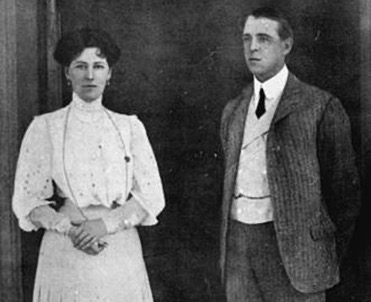
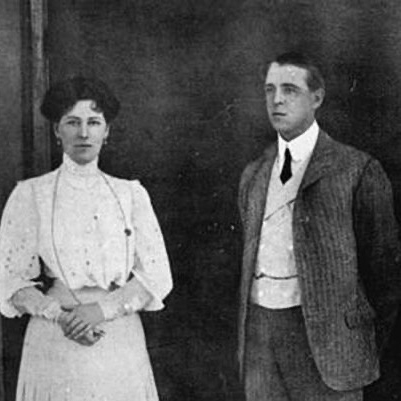
Lord and Lady Chelmsford [Wikipedia]
Northern Rivers Trip
The Sydney Morning Herald of 20 May 1912, page 9, reported:
‘The State Governor (Lord Chelmsford), will leave Sydney by the 9.10 a.m. train on Wednesday on an official visit to the Northern Rivers districts. His Excellency will leave the train at Hexham on Wednesday, and motor to Tea Gardens, where he will be the guest of Mr. Longworth. He will inspect Port Stephens and Myall River and Lake, and will leave Tea Gardens on Friday for Taree. On Saturday he will motor from Taree to Port Macquarie, where he will remain till Monday. He then motors to Kempsey, Coffs Harbour, Maxwell, Bellinger Heads, and Raleigh. On Thursday he will leave Coff’s Harbour for Grafton, and on Friday, 31st inst, will motor from Grafton to Armidale, returning to Sydney on the following day, June 1.’
Governor’s Tour
The Maitland Daily Mercury of 25 May 1912, page 6, reported:
‘His Excellency the Governor (Lord Chelmsford), accompanied by Lady Chelmsford, Sir Thomas Lees, Captain de Moleyns, and Mr. R. A. Price, M.L.A., arrived at Hexham during the week, and proceeded by motor car to Karuah, Port Stephens. En route his Excellency met the school children of the Hexham and Raymond Terrace schools, and delivered short addresses. The roads en route were gaily decorated with bunting and greenery.
Upon arrival at Karuah the party were met by the school children and the residents. The roads en route were spanned by triumphal arches, and festooned with flags, greenery, and streamers. The Raymond Terrace Brass Band played a series of se-lections. Upon their arrival, the party were the guests of Mr. William Longworth.
His Excellency delivered an address to the children. The Government party proceeded per Mr. Longworth’s steamer down the Karuah River to Port Stephens Heads, His Excellency expressed his admiration of the port, and its picturesque scenery. Upon returning at Karuah the Government party were entertained at dinner by Mr. W. Longworth, amongst the guests being Sir Thomas Lees, Captain de Moleyns, Colonel and Mrs. Meredith, Mr. R. A. Price, M.L.A., and Mrs. New. During the afternoon a garden party for the children, and residents was held on Mr. Longworth’s grounds.
Lord and Lady Chelmsford arrived at the Tea Gardens from Karuah on Thursday, and were met by the school children and residents. The Vice-Regal party proceeded to Bungwahl, via Myall, Lakes. They were delighted with the lakes. The township was decorated with bunting. The school children and residents met the Governor, and an address was delivered by Mr. A. Croll. The Governor replied in a happy speech.
The party arrived at Bulahdelah on Friday, and were met by the progress committee, being welcomed by the president, Mr. A. McPherson. The school children assembled with flags and sang the National Anthem. The president of the progress association presented his Excellency with a specimen from Alum Mountains, suitably mounted, and the children presented Lady Chelmsford, with a bouquet and collection of views of the district. His Excellency replied in a speech in which he dwelt on the unity of the Empire.’
Karuah Celebrations
Following the conclusion of the Governor’s visit to Karuah, the Gloucester Examiner and Lower Hunter Advertiser of 7 June 1912, page 3, provided a detailed report on the preparations and festivities that had taken place in that town:
‘The great event of late was the visit of the Governor of the State, His Excellency Lord Chelmsford and Lady Chelmsford, accompanied by Sir Thomas Lees, Captain de Moleyns, and Mr. R. A. Price, M.L A.
A citizens committee, consisting of Messrs. E. Barclay, C. Linich, W. Witt, J. Barrett, G. Witt, J. H. Callaghan, Alb. Linich, Art. Johnson, Alb. Johnson, R Baier, J. Callaghan, J. O. Johnson, Alf. Farley, M. Callaghan, and J. E Davis, was formed during the week, and having elected Mr. Hartcher director, an extensive plan of town decorations was arranged. At the school corner a large arch was constructed across the main street, cabbage tree palms forming the main decoration, trimmed with bamboo foliage and surmounted by a large red-lettered “welcome.” The Union flag towered above the centre, supported by two Commonwealth flags on either side, while from the extreme left, and right fluttered the red cross of St. Patrick and the white cross of St. Andrew. Those chiefly responsible for this arch (Messrs. Barclay, Barrett, C. Linich, and Art. Johnson) must be complimented on their successful efforts. Its chief beauty lay in its extreme simplicity of design and tasteful arrangement.
From Barclays’ corner across the side street and running the full length of the school front fence was a string of signal flags (kindly let by the master of the Karuah, Captain Phillipson) suspended from four high staffs and surmounted by the big school “Jack”. Over the school entrance gates were arches surmounted by various flags and festooned by creepers and vines, the whole scheme being carried out by the teacher and pupils, assisted by Mr. M. Callaghan. Across the main road from Callaghan’s store to the school was suspended a monster “welcome.”
At the public wharf Messrs. J. O. Johnson, G. Witt, and Alf. Farley, assisted by Fred. Milton. achieved a real work of art in the triumphal arch which they constructed. The design, which was somewhat similar to that of the central arch, was covered with cabbage tree palms, bangalows, gigantic lilies, staghorns, crows’ nests, etc., especially obtained for the occasion by Mr. J. O. Johnson. Above the centre of the arch was a neat and tasteful design worked on white calico with lemon leaves, and surmounted by a crown done with variegated leaves and roseleaves— “Welcome to Karuah.” Mrs. J. O. Johnson was responsible for this elegant work, while the same deft fingers prepared the border of pink roses which ran round the curve of the arch, below which again were fastened a row of bottle brushes. The whole had a very pleasing and artistic effect, and was honored by the close scrutiny of his Excellency, who expressed his delight with its beauty.
Perhaps the most effective piece of decoration, however, was an elaborate arch spanning the roadway in front of Buckshi Ram’s store. That enterprising gentleman bringing to bear the gorgeous solar schemes and designs of his native land, spared neither time, labour, nor expense in creating a most delightful piece of work. Built on frail-looking but strong framework in Japanese fashion, all exposed portions covered with crinkled and colored paper, bound with pink and red ribbon, a splendid array of indigenous vines, creepers, and greenery, was trailed delicately over the roadway. Elaborate paper chains, laces of shells, beautiful floral sprays, rosettes and bouquets, flags and streamers, were all brought into use to complete a really picturesque design. Underneath a full length “Welcome” design, done with coloured ribbons by Mrs. Sher Singh, was a fine piece of shellwork, “Welcome to their Excellencies,” done with minute and many hued shells on a background of red velvet. This was the work of a local aboriginal (Harry Edwards), and was much admired. Buckshi Ram deserves high commendation for his public spirit and taste, for all was carried out at his own expense. His complete design included a strip of linoleum spread along under the arch, where, following the custom of Hindu potentates, he expected the Vice Regal car would stop for a few minutes, during which interval he intended making a small offering, after the manner of his native Punjaub. This idea did not come to fruition owing to the arrival of the party earlier than expected and the car passing on without stopping.
Nearly every house in the town wore a gay dress of flags, bunting, and greenery, and from the Recreation Ground hill, Karuah presented a very pretty vista. All visitors to the town spoke in flattering terms of the beautiful effect produced, and both their Excellencies expressed themselves highly delighted with the result of the efforts made to do them honour.
Owing to some misunderstanding in the arrangements, the Vice Regal car arrived about three quarters of an hour ahead of time, and pulling up in front of the school his Excellency held some converse with the teacher, the latter being in blissful ignorance as to his identity. At last, becoming aware that the visitor was the Governor himself, Mr. Hartcher briefly explained the contretemps that had arisen, and in appropriate terms on behalf of the residents offered a hearty welcome to their Excellencies to Karuah and Port Stephens, and assured him of the loyalty and devotion of the citizens to the Sovereign. Lord Chelmsford briefly replied, and gave the children a holiday for next day, after which they sang the National Anthem, and Miss Florrie Witt on behalf of the pupils presented Lady Chelmsford with a bouquet of pink roses, which her Ladyship expressed her pleasure in accepting. The bouquet was nicely made, and was the work of Mr. Robert Baier, Mr. Longworth’s gardener.
This ceremony being over, the Governor’s party proceeded to Glenroy, the residence of Mr. Longworth, being followed by the school children in procession. The Vice-regal party, leaving the car and without any delay, proceeded along the river front to the wharf, where the Raymond Terrace Band, which had arrived too late for the reception, was soon playing inspiriting music. After some time spent upon the wharf in meeting various local residents, the party embarked on Mr. Longworth’s steam launch (the Northumbria) and proceeded direct to Port Stephens Heads, returning at night.’
Concluding Comments.
The official vice-regal visit, by Lord and Lady Chelmsford to the Port Stephens region in 1912 was a major event.
The residents did not realise that two years later they would be sending some of their sons to Europe to fight in the First World War for the Empire.
Before completing his term as NSW Governor in April 1913, Lord Chelmsford undertook another tour to the southern areas of Albury and Wagga Wagga in September 1912.
Researched and compiled by Kevin McGuinness
June 2023

 Port Stephens - a history exploration