

Introduction
From the early 1900’s, camping at Nelson Bay and nearby areas attracted a reasonable number of holidaymakers. However the number of campers was limited to those who could travel by boat, as there was no road through to Nelson Bay. It was not until 1927, when a trafficable road was constructed to Nelson Bay, that the numbers began to increase significantly.
The campers were mainly residents form Newcastle and the mining areas around Cessnock. They would often come to the area as part of a community group bringing all their camping equipment. By the late 1940’s and 1950’s, the increasing number of campers during the Christmas and Easter vacation periods placed great pressure on the supply of fresh water and sanitary facilities.
Camping spaces were also in great demand often leading people to camp on private property. The Port Stephens Shire Council attempted to exclude campers from certain areas it deemed not suitable for camping, with limited success, and sometimes this led to disagreements between the two parties.
Camping still remains popular in the Nelson Bay district but it is now confined to authorised camping grounds. This is in contrast to earlier years when the area became a virtual tent city at peak holiday times.
Lack of a trafficable road hinders camping – 1920
The first reference to the limit placed on tourism and camping by the lack of a road into the Nelson Bay area was published in the Raymond Terrace Examiner and Lower Hunter and Port Stephens Advertiser of 9 April 1920, page 3:
‘The Bay had its usual influx of visitors during Easter, but if anything there was a diminished attendance of campers compared with last Easter. ….. The Progress Committee is renewing the agitation for a road to the Bay, and now that the Naval Department is again commencing work, it is hoped that something may be done in conjunction with them by the Public Works Department of the State. It is an immense draw back to Nelson’s Bay that it has no road connection, as thousands of tourists would visit the place, who are blocked now.’
Inadequate water and sanitary facilities for campers – 1923
The Raymond Terrace Examiner and Lower Hunter and Port Stephens Advertiser of 27 April 1923, page 3, reported:
‘The monthly meeting of the [Nelson Bay] Progress, and Tourist Association, was held on Friday evening last. …. It was decided to approach the Shire Council asking that a pump be placed at the village well. Two pumps have been supplied for tourists and campers, and one is urgently needed for use of local population.’
Record number of campers reach Nelson Bay for first time by road – 1927
The Dungog Chronicle of 18 January 1927, page 4, reported that a record number of campers had enjoyed the holidays at Nelson Bay, having been able to reach the area for the first time by car:
‘New Year’s Day saw a record crowd at the Bay. Excursionists came by steamer from Sydney, Newcastle, Tea Gardens and Karuah and Allworth. There were thousands of visitors along the foreshores in addition to hundreds of campers.
The local Progress Association raised a considerable sum of money, which was amply subsidised by the local hotel proprietor, and a trafficable track was constructed from Anna Bay, via Salamander Bay to the Port, and for the first time in its history the Port was reached by motor car. Dozens of motorists undertook the journey, many with camps and cooking utensils and they were not in a hurry to leave. ….. When the Main Roads Board completes the road from Salt Ash connecting up the Bay with Newcastle the Bay should become a very popular holiday resort.’
Need for town development versus camping requirements – 1929
By 1929 some of those who regularly camped at Nelson Bay appear to have formed the view that their seasonal camping enjoyment had a higher priority over the land development needs of those who desired to reside there permanently. The Maitland Daily Mercury of 7 March 1929, page 4, reported:
‘The Government has surveyed this prominent point at Nelson’s Bay into town allotments, which will be offered at auction at an early date. Objection to the sale of the land was recently made by Mr. Geo. Booth, M.L.A., on behalf of the miners of the South Maitland coalfields, who use it occasionally for a camping ground, but Hon. Walter Bennett, M.L.A., at the instance of the local Progress Association is urging the Minister to proceed with the sale. It is pointed out that there are several camping reserves in the vicinity, and that there is a scarcity of building allotments.’
Number of campers continues to grow in the Depression years – 1931
As the Depression began, local accommodation providers suffered as tourists choose to set up camp instead of staying at local accommodation premises.
The Raymond Terrace Examiner and Lower Hunter and Port Stephens Advertiser of 31 December 1931, page 1, reported:
‘There is no question about the popularity of Nelson’s Bay as a waterside resort. Each Christmas the crowd of visitors increases, and though times are harder this season than previous ones. Nelson’s Bay had a larger influx of campers and visitors than at any previous Christmas. From the old jetty around to Fly Point almost all the available ground was occupied by campers. Cars with auto-tents were the main features; sometimes a lorry with the top attached, was noticed, but tents appeared to be the set rule of the tourists.
This is hard on business houses which cater for the tourist traffic, such as hotels and boarding houses, as the rooms set apart for guests were far from full. One time accommodation had to be sought months in advance. Alas the tent now decrees otherwise along with the tide of depression. This loss of trade will no doubt come back when the people get back to work and the dole has ceased from troubling.’
By 1936, a marked improvement in the financial circumstances of local traders from the influx of campers was reported.
Fifteen-hundred Campers at Nelson Bay – 1934
The numbers camping at Nelson Bay continued to grow. The Newcastle Morning Herald and Miners’ Advocate of 29 December 1934, page 6, reported:
‘At least 1500 persons are camped for the holidays at Nelson’s Bay. This is claimed to be the largest holiday influx to the district for many years. Numerous inquiries have been made at the office of the City Publicity Bureau, and many visitors have been assisted.’
An estimated seven hundred and fifty tents at Nelson Bay – 1936
The Newcastle Morning Herald and Miners’ Advocate of 2 January 1936, page 3, reported that there was an estimated 750 family tents erected at Nelson Bay during the new year period, which accommodated in excess of 4000 campers. The newspaper published the following two photos taken on New Year’s Day, 1936:
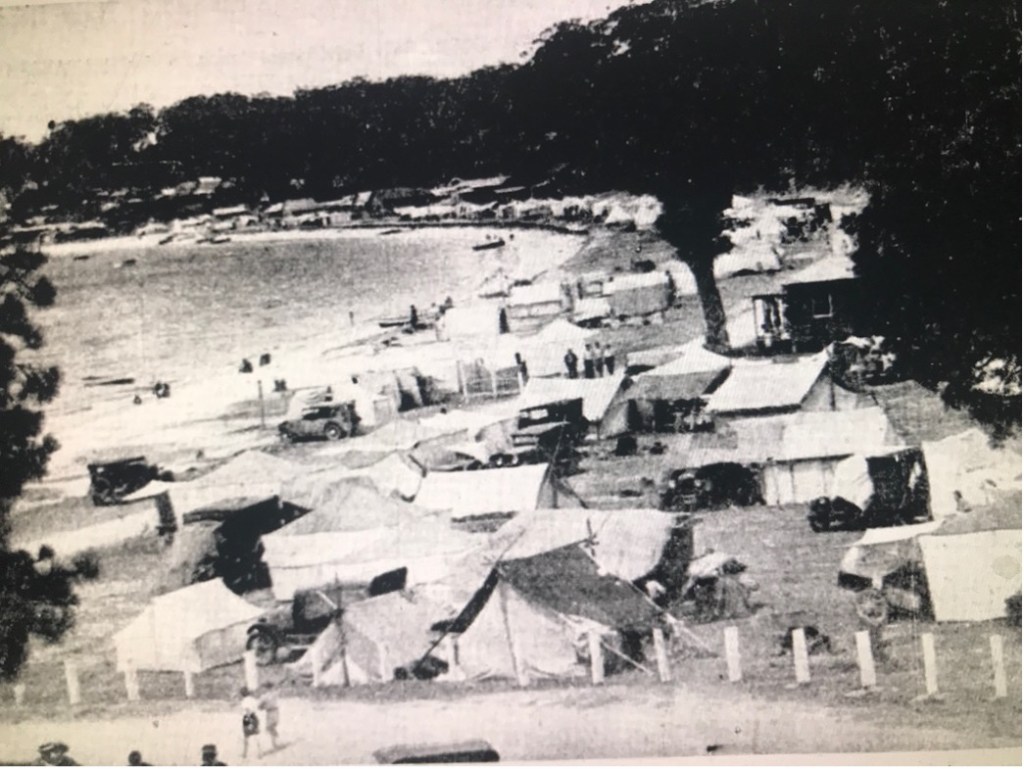
View of the family tents erected at Nelson Bay, 1936.
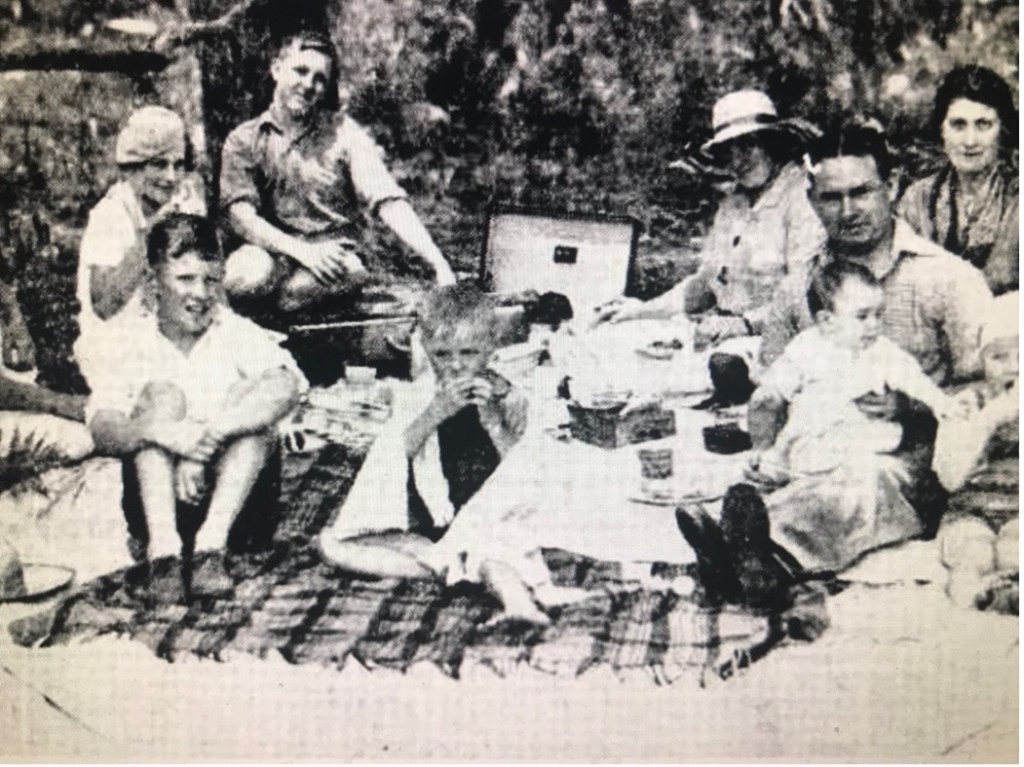
This group at Nelson’s Bay is typical of the countless picnic parties that welcomed the new year in a true Australian manner, 1936.
It reported:
‘Unprecedented crowds of holidaymakers, many of them camping in tents pitched on reserves along the foreshore, multiplied by 10 the normal population of Nelson’s Bay, during the holidays. Yesterday the visitors to that picturesque corner of Port Stephens reached their maximum number, but the day also marked the end of the holidays for many of the campers. Today, and during the next few days, the crowd is expected to diminish considerably, but life at this resort, which has become more popular than ever during recent years with holidaymakers, will not return to normal until next month.
Unofficial statistics compiled since Christmas show that in the Nelson’s Bay urban arena, which embraces Dutchman’s Beach, Nelson’s Bay, Little Beach, and Shoal Bay, no fewer than 750 family tents have been pitched on reserves allotted by the urban area committee for camping. The ordinary population of Nelson’s Bay is set down as less than 400, yet it is estimated that campers between Christmas and the New Year have exceeded 4000. This is regarded as about 1000 more than last year, and considerably more than in previous years, and local stores have benefited as a result. Yesterday, people conducting the shops that supply Nelson’s Bay campers with their provisions were enthusiastic about the trade that has resulted from the phenomenal influx of visitors.
The Newcastle district is well represented among those in camp, but it is stated that the majority belong to the Coalfields centres. It is only in recent years that the potentialities of Nelson’s Bay as an ideal holiday retreat have been fully recognised, but each succeeding year has seen a remarkable growth in its popularity.’
Christmas holiday camping at Nelson Bay – 1937
The Newcastle Morning Herald and Miners’ Advocate of 28 December 1937, page 3, published two photos and captions of campers at Nelson Bay in December 1937:

Tents of campers at Nelson’s Bay.
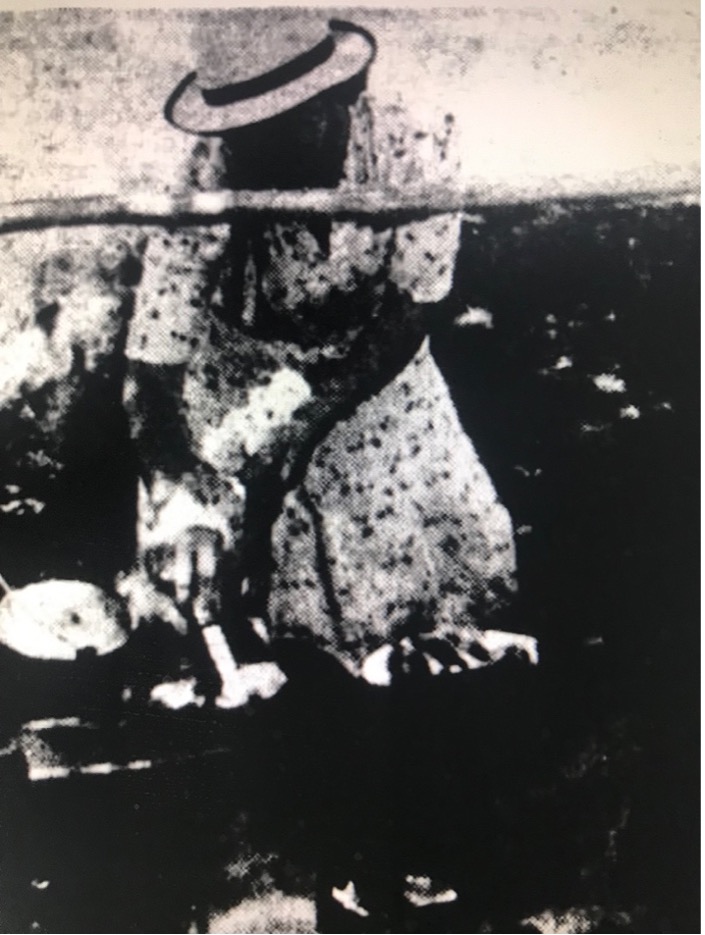
A housewife cooking a meal with an old car seat as her range.
Nelson Bay’s ‘Heddon Greta: a camping haven for striking coal miners – 1938
A nationwide coalminers strike, involving 21000 workers, commenced in September 1938 and was not settled until October 1938. During the strike many out-of-work miners set up two camps at Nelson Bay. The Newcastle Morning Herald and Miners’ Advocate of 29 September 1938, page 7, provided details of the large camping contingent from the mining areas:
‘Families of miners have found their way to Nelson’s Bay. There they have pitched their tents and formed little communities. …. There are two camps of striking miners at the bay. One, composed of families from the Cessnock district; snuggles under the hill overlooking the beach; the other is farther down the reserve. They call it “Heddon Greta” [Heddon Grteta is a suburb of Cessnock]. A little over a week ago seven families from that area packed their goods into two lorries and travelled the bumpy road to Nelson’s Bay. They were all friends or relatives, so they made a little canvas township of their own. Hard by the sea “Heddon Greta” stands; idle launches swing at anchor in front of its doors; on the beach children play. …..
At Nelson’s Bay where the miners have made their temporary homes, peace, blue skies and bluer seas seem to be a direct contradiction to the troubled state of the world. The very thought of war in such a place seems to be a sacrilege. Inside one of the tents a radio keeps the little community informed of world happenings; but they can hardly believe it. They can hardly believe that beyond the purple haze of the hills the sabre of war is rattling and fellow creatures of another clime are burrowing like rabbits into the earth. At the moment the miners at Nelson’s Bay are happy and contented, but the feeling of unrest in world affairs is a heavy weight on their minds.’
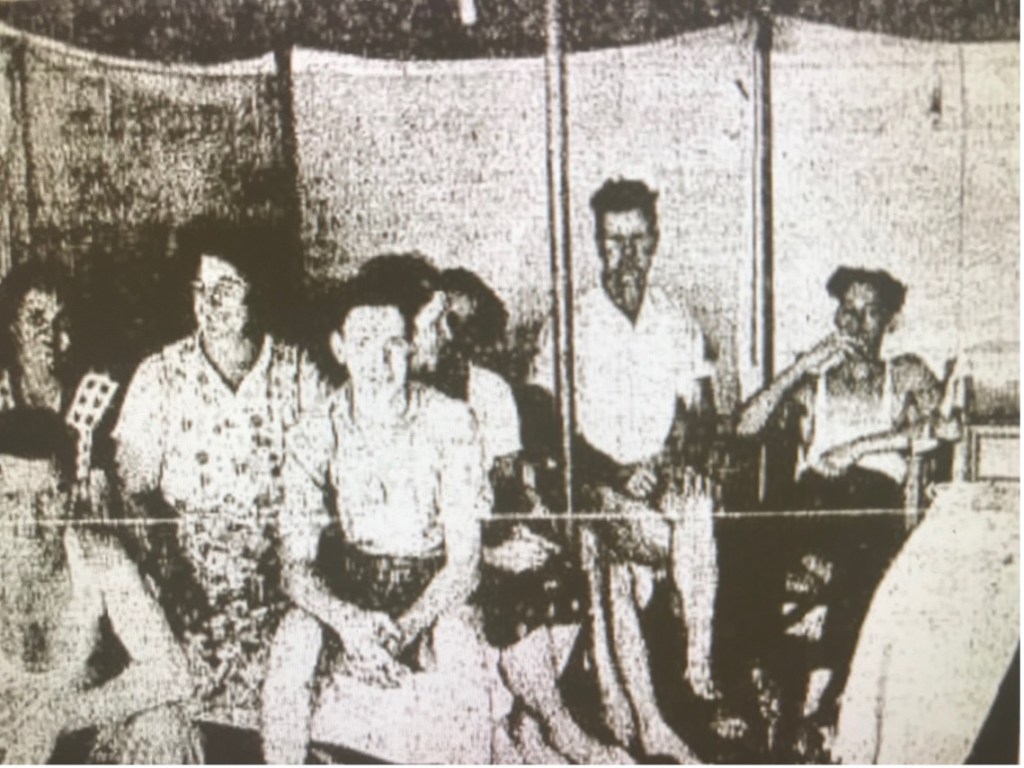
A miners’ camp scene at Nelson Bay, October 1938.
Miners continue to camp at Nelson Bay – 1938
In December 1938, holidaymakers from the coalfields, took full advantage of the Christmas season to pitch their tents at Nelson’s Bay. The Newcastle Morning Herald and Miners’ Advocate of 31 December 1938, page 3, provided the following insight into the home-comforts found in camp sites:
‘When camp life is mentioned in connection with Nelson’s Bay it hardly fits the case. The people are in tents, truly, but such tents cannot by any stretch of imagination be called camps. Every comfort is available—soft beds, ice chests, ornaments on the sideboards. Radio sets tell the news of the days, rugs adorn the floors; the pet kitten is in camp, and some people even have kennels for their dogs.’
War time petrol rationing reduces camper numbers – 1940
The Newcastle Morning Herald and Miners’ Advocate of 27 December 1940, page 4, reported:
‘The holiday crowds at Nelson’s Bay, Soldiers Point, and the smaller places about Port Stephens are not as large as in former years. Petrol rationing had something to do with it. The interstate tourist traffic was curtailed because of restrictions, but a number of Queenslanders and Northern Rivers people adhered to the arrangements of past years, and joined other campers. Not much of the available space in the urban area is idle. Hundreds of people have been in possession for over a week. Of these a large proportion are from the coalfields. …. Transport services between Newcastle and Nelson’s Bay were duplicated and catered for the public traffic without difficulty. The volume of private car traffic yesterday afternoon was heavy.’
Camping banned at Nelson Bay due to military restrictions – 1942
The Newcastle Sun of 12 December 1942, page 3 (along with several other newspapers) announced the proclamation of a prohibited area at Nelsons Bay.
The area east of the line from Skate Bay to Corlette Point (Nelson’s Bay) had been gazetted a prohibited area as from December 10, 1942.
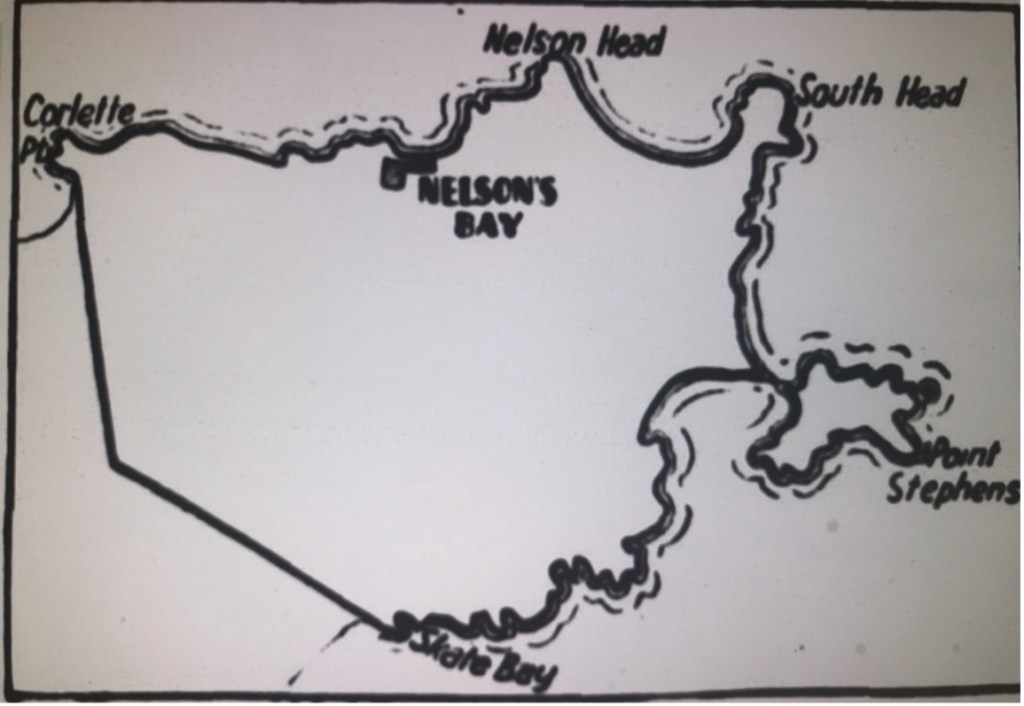
Map of the Prohibited Area at Nelson Bay
The Raymond Terrace Examiner and Lower Hunter and Port Stephens Advertiser of 10 December 1942, page 3, reported:
‘The [Port Stephens Council] engineer reported on the position at Nelson’s Bay regarding camping. At the last meeting of the Shire Council he pointed out that the public conveniences had been commandeered by the military and there would be no conveniences for the public. … He [Cr. Russell] moved that a notice be affixed warning the public against camping. Cr. Tranter seconded the motion and it was carried.’
The same newspaper of 17 December 1942, page 2, reported:
‘Declaration of portion of Port Stephens as a prohibited area would mean a ban on camping and holidays in week-enders within the area, said a military spokesman. He warned that the area would be strongly patrolled by armed troops under officers. The patrols would be authorised to demand passes and proofs of indentity from anyone found in the area.’
The Newcastle Sun of 22 March 1943, page 2, reported on the continuing camping ban:
‘Army authorities in Newcastle to-day advised the general public not to plan to spend Easter holidays at Nelson’s Bay. ‘The public is advised to make arrangements for accommodation elsewhere for Easter, Christmas and all other holidays’ said an officer.’
The military restrictions that prohibited entry were lifted by November 1943, however the military authorities still retained control of certain land in the Nelson Bay and Shoal Bay areas, which precluded the Port Stephens Council from exercising any control over camping activities on that land.
Camping causes health problems – 1945
The Raymond Terrace Examiner and Lower Hunter and Port Stephens Advertiser of 14 June 1945, page 1, reported on camping problems:
‘The sanitary condition of Nelson Bay during the holiday season at Easter was the subject of a letter from the Under Secretary of Local Government who said in his letter residents had complained. He asked for Council’s comments on a letter from L. De Clerk who said at Easter the conditions were rather shocking, as most people camped in the centre of the town, and only went off the road a few yards for lavatory purposes. Some of the ladies sneaked into private W. Cs [toilets] after dark without permission. An old W.C. about 30 yards from the P.O. was used by both men and women and it was in a frightful state. There were also fishheads, dirty paper and bones. After rain the smell was not too nice. He also said the local authorities did not seem to worry much about it, though they had got £200 from the naval authorities for damage done during their occupation. The repairs were not executed, and seats on the park had been destroyed. Cattle strayed there, day and night. He had written also to the Director of Health.
The Clerk, Mr. Monkley stated he had written in reply to the letter to the Minister stating that all the reserves at Nelsons Bay were under the control of the Defence forces. That the Council had provided public lavatories and had attended to them before the Defence Dept. took them over, which removed them and for which the Council was granted £72, not £200 as stated by Mr. De Clerk. The. camping complained of was on private land and not on reserves under Council’s control. The Council had written to the owners to abate the nuisance. Only one owner had replied and he authorised Council to take any action they thought best to remove the nuisance.’
Holiday scenes at Nelson Bay – 1945
The Newcastle Morning Herald and Miners’ Advocate of 29 December 1945, pages 1and 3, published the following photos with captions:
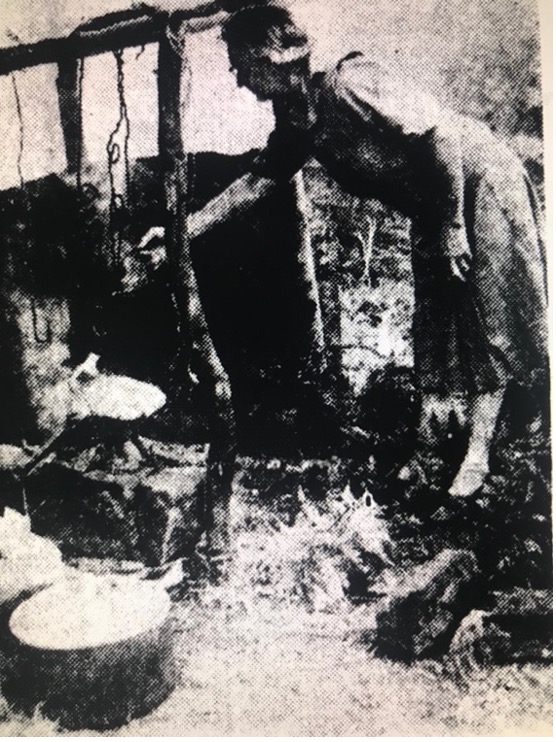
Mrs. E. O’Neill, of Mayfield, had no “real” cooking problem compared with other campers at Nelson’s Bay. Her camp was prepared for wet weather, and the fireplace was covered with a roof of galvanised iron.
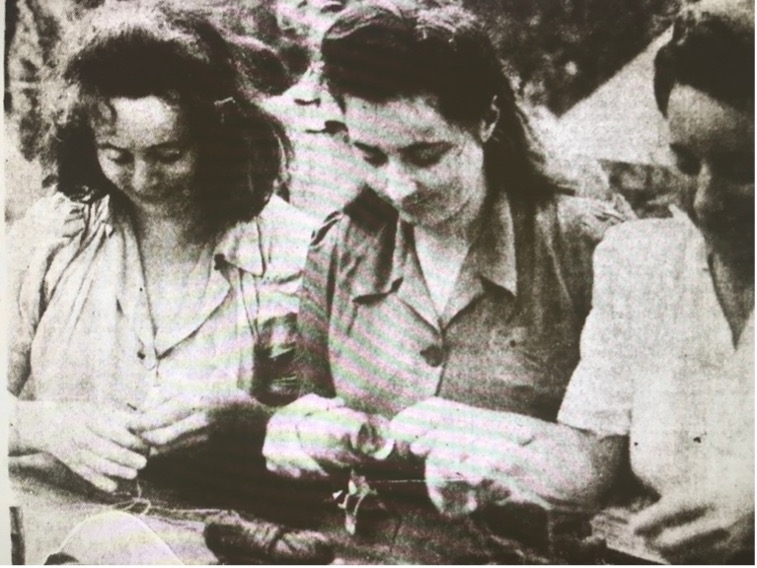
The absence of fish yesterday did not deter Joan, Coral and Lorna Tobin, of Hamilton, who are untangling “bunches of grapes”‘ as they prepared their lines for another day’s fishing.
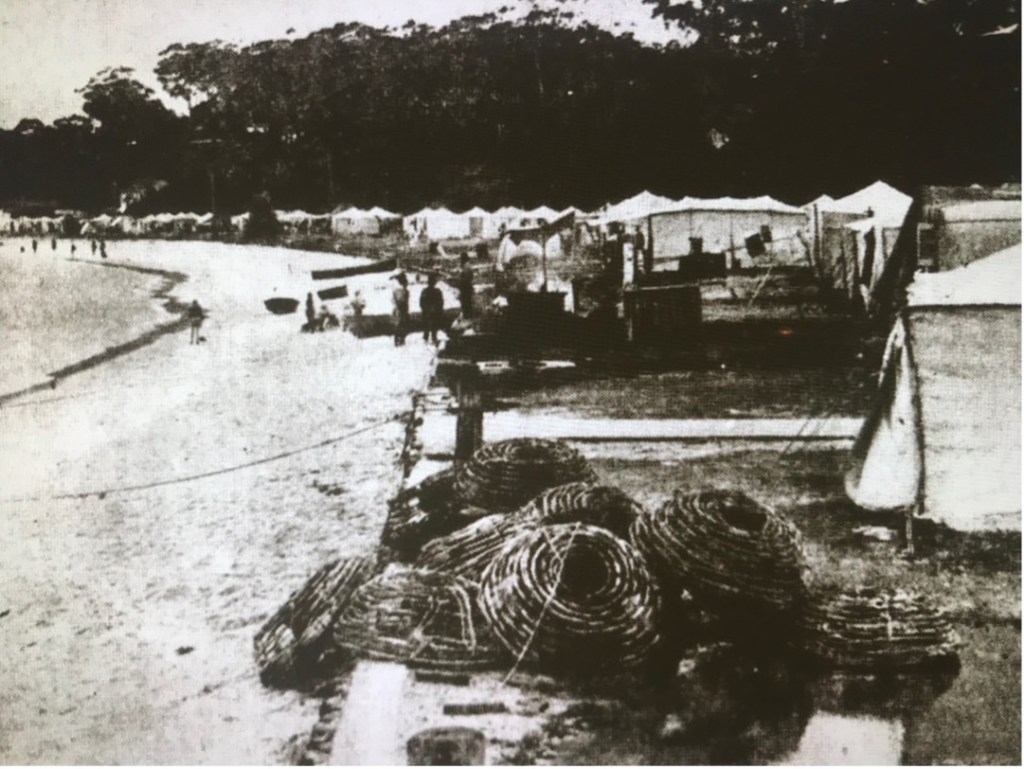
Campers on the waterfront at Nelson’s Bay. The camping area was drenched by rain, but the spirit of holidaymakers remained high. Lobster pots recovered by fishermen are in the foreground.
The same newspaper of 31 December 1945, page 4, published the following photo:
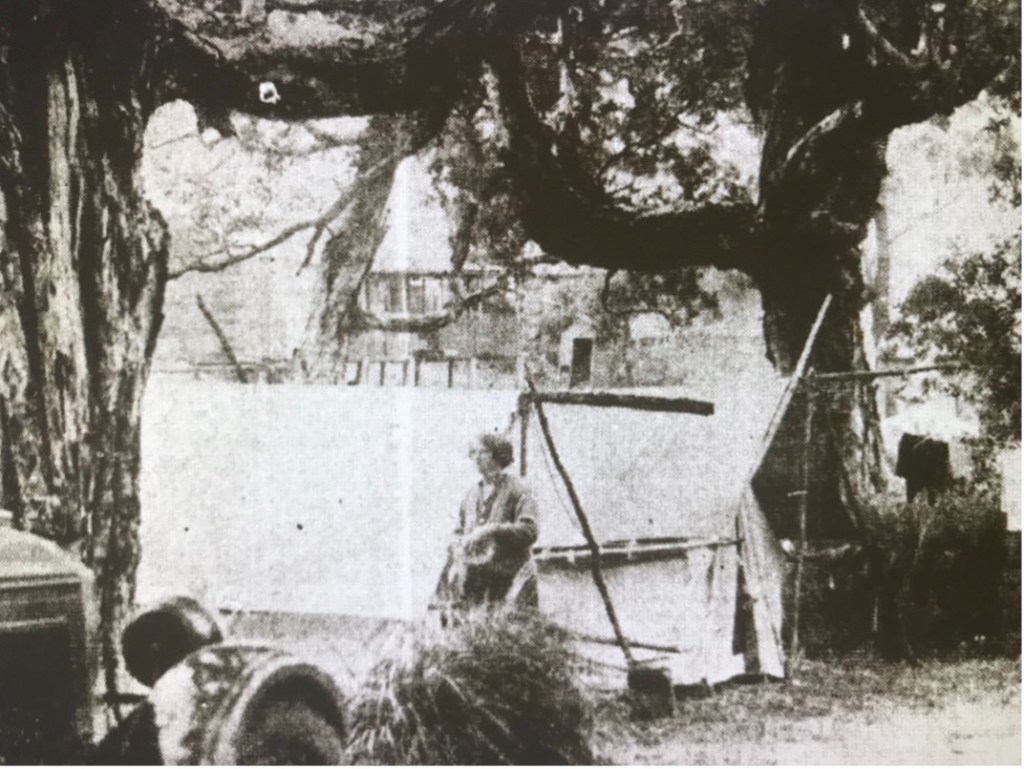
Mrs. Hill, of Wallsend, dries the dishes in the open air at the family’s ideally situated camp at Nelson’s Bay, Port Stephens.
Camping areas still under military control causing problems for sanitation – 1946
The Raymond Terrace Examiner and Lower Hunter and Port Stephens Advertiser of 3 January 1946, page 2, reported:
‘Temporary lavatories were built at Nelson Bay, along the foreshores, so the engineer reported to the Port Stephens Shire Council. These are to provide for the holiday camping for this year only, as when the area is handed back from the military authorities the Urban Area Committee propose to reconsider all camping facilities in the area.’
Despite the efforts of the Port Stephens Council to provide adequate sanitary facilities, they faced an uphill battle. The Raymond Terrace Examiner and Lower Hunter and Port Stephens Advertiser of 10 January 1946, page 2, reported:
‘Nelson’s Bay Urban Area Secretary wrote stating that the camping grounds had been cleaned up. Some of the campers were clean — others filthy, and this gave a bad impression. The lavatories had received a lot of attention, but it was an almost impossible job to keep them clean when people are so filthy in their habits. He hoped there would not be much more camping on Victoria Parade. The job has been tough and filthy. He had done a good deal of the cleaning himself to be sure it was done. The camps on private vacant land had been very good.’
Camping in certain areas of Nelson Bay prohibited – 1946
Due to the ongoing problems with uncontrolled camping in the Nelson Bay area, Port Stephens Shire Council, prohibited camping in certain areas previously used, particularly in the areas around the Nelson Bay township.
The Newcastle Morning Herald and Miners’ Advocate of 5 October 1946, page 7, reported:
‘It was the custom to allow camping on all reserves controlled by Port Stephens Shire Council at Nelsons Bay. The council yesterday decided to restrict camps to the area near Little Beach [Halifax Park], which it acquired for such purpose.’
Preparations to ensure that camping did not take place on unauthorised areas were implemented in 1946. The Raymond Terrace Examiner and Lower Hunter and Port Stephens Advertiser of 14 November 1946, page 3, reported:
‘The Engineer of the Port Stephens Shire, (Mr. Payten), at the last meeting reported that guideposts along Victoria Parade have been erected but the area has not been entirely fenced off yet pending the provision of camping facilities on the Council’s camping reserve. The lessee is in occupation of the Reserve [Halifax Park] and is carrying out his work as quickly as the supply of material and man power is available and hopes to have conveniences for campers completed in a few weeks’ time.’
Campers defy Council orders on camping areas in the face of attempts to cut off water – 1946
The Cessnock Eagle and South Maitland Recorder of 16 December 1946, page 4, reported:
‘At Nelson’s Bay, Christmas squatters have defied Port Stephens Shire’s order to apply for permits for camping sites. Port Stephens Shire Clerk and the building inspector were accompanied by Constable Gallagher when they visited the area yesterday. They spent most of the day at Nelson’s Bay, and took the names of the campers. Thirty-six campers, mostly families of miners, have defied the Council. After the inspection, the Shire Clerk said the Council had, in the best interests of the public decided that the water frontage, between the township and naval station, was inadequate for camping, and had reserved it for casual visitors who went to the locality for picnic purposes.
Mr. A. Davis, a retired miner, of Cessnock, said: “If the Council wants to move us from the area, they will have to get the police. The campers have decided that they will have to be tossed off the area before they leave.” Mr. Davis said notices warning people against camping were erected last Wednesday. There were then 14 tents on the ground. They had been erected by miners who left their wives and families there, intending to return next weekend, when they begin holiday leave. “The women were not in a position to move,” he said. “Most of them brought their tents and furnishings by lorry from the coalfields. When the notices were erected, we were informed that we must transfer to a new camping ground, but we were unanimously against the proposal. This weekend we expect to be joined by between 200 and 300 miners and their families. “The miners have been camping at Nelson’s Bay for 40 years. I have been camping on this spot for 33 years. We deplore the decision of the Council before the new site was properly developed.”
Mr. Davis said that last Friday a Council employee attempted to remove the only remaining water spike on the ground. “Assisted by Mr. J. McCraig, an invalid pensioner, and former miner of Toronto, I resisted the officer, and invited him to seek police protection if he wanted to deny campers water,” said Mr. Davis. “If the spike had been removed, the nearest watering place, would have been at the windmill, opposite the Sea Breeze hotel, but the windmill was out of action. “After some campers had parked their cars inside the ground, a Council employee erected posts across the entrances, but these were removed by campers,” he added.
Mr. McCraig said he opposed removal of the water spike because it would have left between 70 and 80 children without a place to obtain drinking water. “Eighty-five per sent. of the campers who visited here— and I have seen 5,000 campers at Nelson’s Bay— are miners and their famines,” said Mr. T. H. Arthur, of Greta. “The attitude of the Council is unfair. I have referred the matter to Kearsley Shire Council. Others have brought it under the notice of Mr. R. James, M.H.R.” Nurse Anderson, of Kurri Kurri said the Council had no moral right to close the area at such short notice. Her car was within the ground when a Council employee closed the entrance. She regarded water fronting the camp site as the only safe area for children at Nelson’s Bay.’
The Dungog Chronicle of 24 December 1946, page 2, further reported:
‘The Port Stephens Shire Council has established a camping reserve at Nelson Bay and has now closed the small waterfront area where campers were wont in former years to settle for their holidays. Apart from the provision of sanitary conveniences, etc., the Shire takes the view that this area should be left for the benefit of picnickers who may visit the Bay for a day. Notice boards warning against camping were erected, but the campers moved in and erected their tents in the shelter of the notice boards, says the “Raymond Terrace Examiner.” On Monday last the Shire Clerk, Mr. Monkley, the Health Officer, Mr. Conroy, and the police constable at Nelson Bay warned them and told them to get off, but in effect the squatters told them to throw them off. The shire put posts along the road to stop cars going on to the reserve, but the campers have adopted the attitude of “you put ’em up, we knock ’em down.” The campers are mostly miners from the Cessnock area and they have invoked the aid of their parliamentarians to stay the hand of the shire. It is expected that at the weekend there will be an influx of campers and short of the health inspector or the clerk catching each camper by the seat of his trousers and the back of his neck and throwing him off, there they are going to stay.’
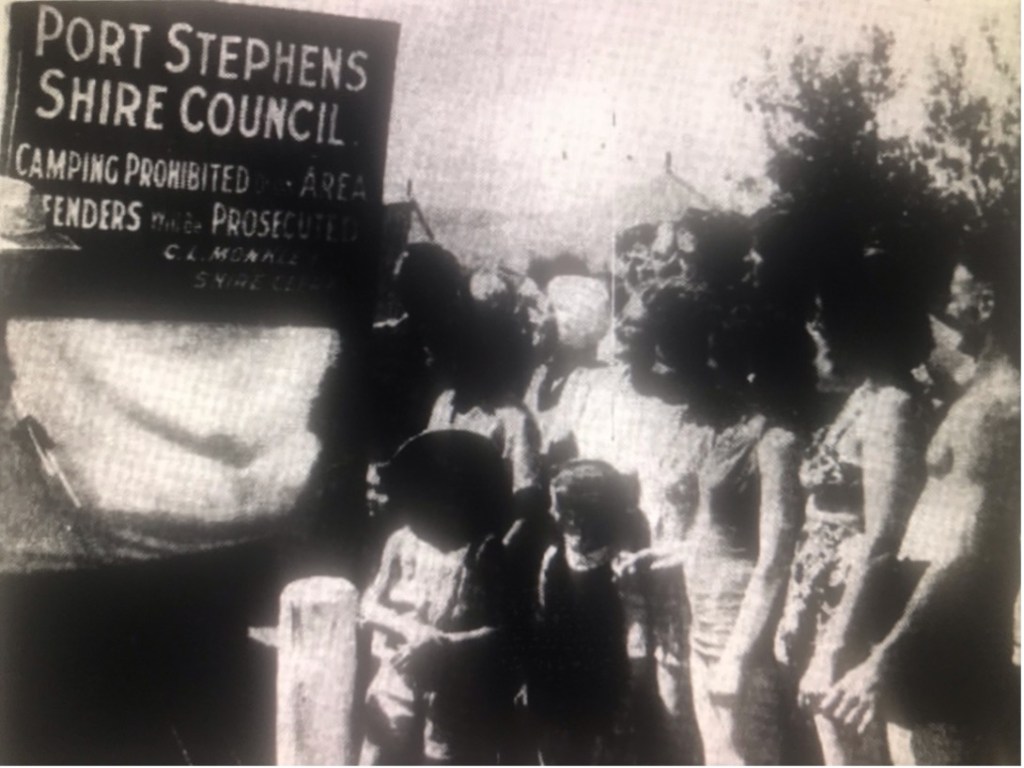
Some of the campers who gathered to discuss Port Stephen’s Council’s prohibition on camping along the water frontage at Nelson’s Bay, December 1946.
The Cessnock Municipal Council decided to support the campers as reported in the Cessnock Eagle and South Maitland Recorder of 20 December 1946, page 12:
‘Cessnock Municipal Council has decided to ask Port Stephens Shire Council to allow campers to remain on the prohibited area on the foreshores of Nelson’s Bay. The motion was moved by Ald. Jones at Tuesday night’s meeting of the Council, who said that campers concerned should not be re-moved because the proposed new camping area had not yet been completed.’
Camping only to be allowed at Halifax Park, Nelson Bay – 1947
The Dungog Chronicle of Tuesday 11 February 1947, page 2, reported:
‘The Port Stephens Shire Council has agreed to inspect the camping areas at Nelson Bay with members of the Cessnock Municipal Council. It was pointed out by the Cessnock Council that many residents from their area visited Nelson Bay during the holidays and it was thought that an inspection would be of value both to the Council and the visitors. It will be remembered that late last year the Port Stephens Shire Council closed the usual camping area facing the Bay at Nelson Bay owing to having established a camping area near the Inner Lighthouse. However, before the necessary notices were erected prohibiting camping, many campers had already settled on the old area. An arrangement was made that this area be used for that period only and that in future no camping would be allowed, other than on the recognised area, now known as Halifax Park.’
The Cessnock Eagle and South Maitland Recorder of 28 February 1947, page 9, reported on the inspection by Cessnock Council of the camping situation:
‘The Mayor (Ald. Lovett), in a report to the Council on Tuesday night, stated that on Sunday last, with Aldermen Cagney, Drinkwater, Horne and Jones, he inspected the proposed camping area at Nelson’s Bay. They were met by the President of Port Stephens Shire, Cr. Upton, the Shire Clerk, and members of the Urban area.
Ald. Lovett said the proposed scheme was outlined, and they were of the opinion that the proposal was in the best interests of the people desirous of camping within this area. He added that a hardship would be imposed on certain people who had built week-end places on leasehold areas, but Cessnock as a Council could not direct the Port Stephens Shire on this matter. Ald. Lovett said the Port Stephens Shire plan envisaged the beautification of the foreshores by the planting of trees, and setting up small tables for the convenience of visitors passing through the resort. The camping area will be well set out, and water will be laid on. Stone fireplaces will also be erected in various parts for the campers, and altogether it was a good proposition. Ald. Horne, said he considered that when the scheme was implemented, it would provide one of the best camping sites in N.S.W. The report of the Mayor was adopted.’
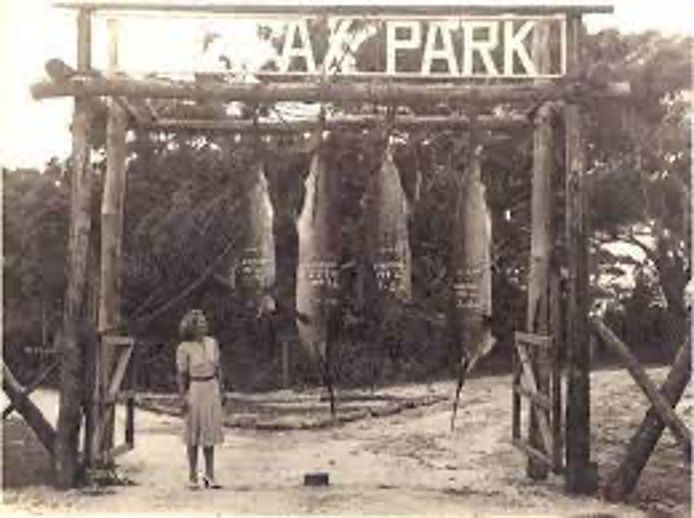
Halifax Park, circa 1947
Campers continue to defy camping regulations – 1947
The Newcastle Morning Herald and Miners’ Advocate of 7 June 1947, page 7, reported:
‘Port Stephens Shire Council yesterday decided to take action against persons at Nelson’s Bay who, it was claimed, persisted in using portions of the reserve other than the area set apart for camping. It was claimed that some campers were members of the Miners’ Federation. They had refused to move. The President (Cr. E. T. Upton) said he had been in communication with the officer vested with local control. It was said that the council had no proof that men concerned were accredited representatives of the Miners’ Federation, to which it was decided to communicate, pending legal action.’
Off-site camping remains a problem for Halifax Park – 1948
The Raymond Terrace Examiner and Lower Hunter and Port Stephens Advertiser of 22 July 1948, page 4, reported:
‘Cr. Morgan said he had seen Mr. Wickner and discussed the camping around Nelson Bay. Mr. Wickner made no secret of the fact that he had invested a large sum of money to provide suitable camping facilities. He had the idea of a monopoly in the area. It was galling to see campers just outside his gate. We have no jurisdiction over some lands. The only way to supervise camping is to pay someone to police the area. The Health Inspector cannot be there all the time. A uniformed man would make a greater impression. We must do something this summer to show the Council is concerned in the control of campers.
Mr. Conroy said Council can prevent the erection of tents. The Shire Clerk, (Mr. Monkley), in reply to a question said a caravan can camp anywhere. They are considered motor vehicles as far as the law goes. Cr. Morgan suggested putting up big signs and advertise for a ranger or caretaker for three months. Cr. Rodgers said we covered the same ground at a recent meeting and decided to prosecute. Only a limited number can be accommodated in Halifax Park. There should be a compromise somewhere. We have a moral obligation so let us stick to it. What about the campers on private blocks? We should consult with the Urban Area Committee. The Clerk said the Urban Committee could not operate, as they are not being paid.
Cr. Sparke said since the foreshore was fenced off there was only a small area to police. His impression was the business people do not want them to be pushed into Halifax Park. Cr. Rodgers moved that the Urban Committee and Shire confer on control of camping in Nelson Bay and Little Beach. Mr. Conroy said it could be easily settled if the Navy and the Catholic people fenced in their areas, or sublet to Mr. Wickner. Cr. Morgan seconded. Cr. Parish said he supported and considered the area had been abused. It has been used by a section of people who don’t want to shoulder any responsibility they only go there to have what they call a good time. This area should be brought up to the standard of other watering places along the coast. The motion was carried.’
Possible remedies proposed by health officer – 1948
The Raymond Terrace Examiner and Lower Hunter and Port Stephens Advertiser of 16 September 1948, page 3, reported:
‘Camping in Nelson Bay area at Christmas time has been the cause of quite a little perturbation to the Shire Council and its various officers, and the Urban area. At previous meetings of the Shire Council there had been resolutions carried directing the Health Officer, (Mr. A. A. Conroy) to report on various aspects of the matter, and at the last meeting, of the Council held, on Monday last, September 13th, he reported [on his recommendations to remedy the camping problems].
The Newcastle Morning Herald and Miners’ Advocate of 18 September 1948, page 4, reported on the approval of the council to the recommendations of the Health Officer regarding camping:
‘Port Stephens Shire Council approved recommendations by its officers and Nelson’s Bay Urban Committee, to control camping in Nelson’s Bay area. The recommendations were: That application be made to the Lands Department to extend the camping area to include Crown lands, and privately-owned land, with the provision that a portion of the extended area be made available to day picnic parties. That a local resident be appointed at £1 a week, to issue permits to erect tents on privately owned or Crown land; that a fee of 10/ be charged for each tent; that conditions to be attached to permits to erect tents, whether on private or Crown land, be that the area occupied be not less than 30 sq. ft. for each tent; that a lavatory be provided, camp refuse to be disposed of by burning or burying.’
ALP supports protest on camping area – 1949
The Cessnock Eagle and South Maitland Recorder of 20 September 1949, page 1, reported:
‘The Cessnock branch of the A.L.P. [Australian Labor Party] decided on Sunday to support a protest by the Soldier’s Point branch against the action of the Port Stephens Shire in closing a camping area at Nelson’s Bay.
The branch was informed that an alternative area had been leased to a private person and the charges were prohibitive. On the motion of Mr. Cagney, it was decided to support the protest against the leasing of Halifax Park. Speakers said it was necessary to close the old areas to campers as they had cut off all access to the beach and the sanitation and water supply were unsatisfactory. It was decided the shire should have provided the alternative site and equipped it with all necessary amenities.’
Holiday campers cause problems at the Migrant Hostel – 1951
Because of the inadequate availability of sanitary facilities and fresh water, campers in the vicinity of the Migrant Hostel, at Fly Point, Nelson Bay, got into the habit of trespassing on the hostel grounds and using their facilities, much to the annoyance of hostel residents.
The Newcastle Morning Herald and Miners’ Advocate of 12 January 1951, page 7, reported:
‘The Department of Labour and National Service complained of campers near the Migrant Hostel at Nelson’s Bay using hostel conveniences. Mr. Cook said he had seen many campers near there, some at times within eight feet of the tar road. The council will reply, that the department is responsible for the control of the conveniences. The council’s [camping fee] collector will be asked to supervise more strictly campers on shire property.’
Christmas holidays at Nelson Bay – 1951
The Newcastle Morning Herald and Miners’ Advocate of 27 December 1951, page 3, published the following photos with captions of campers at Nelson Bay in December 1951:
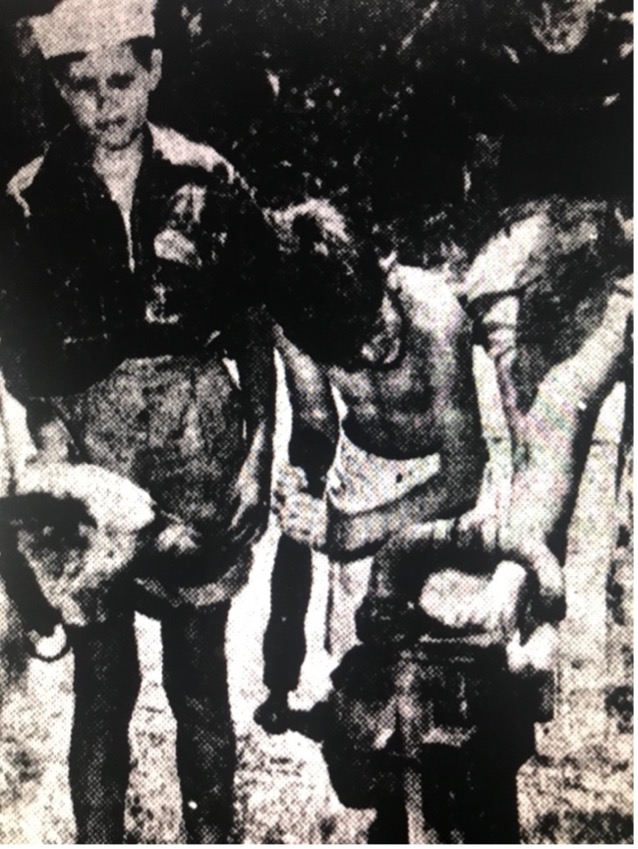
Allen Boyd (with Bill the dog), James Burgess (pumping) and Warren Burgess draw water for the family.
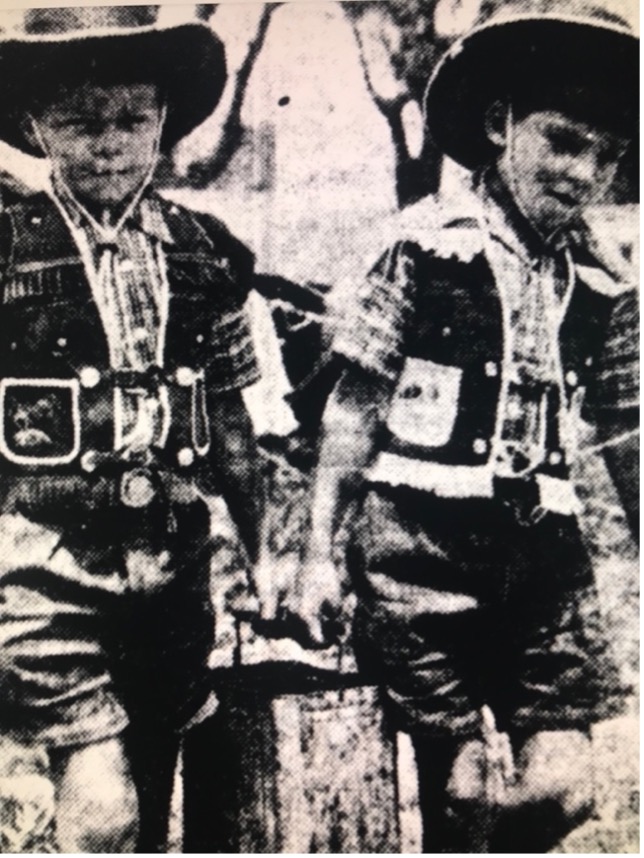
Cowboys (two of thousands), Bill Cash, 7, and his brother Alec, 6, carry water to the camp.
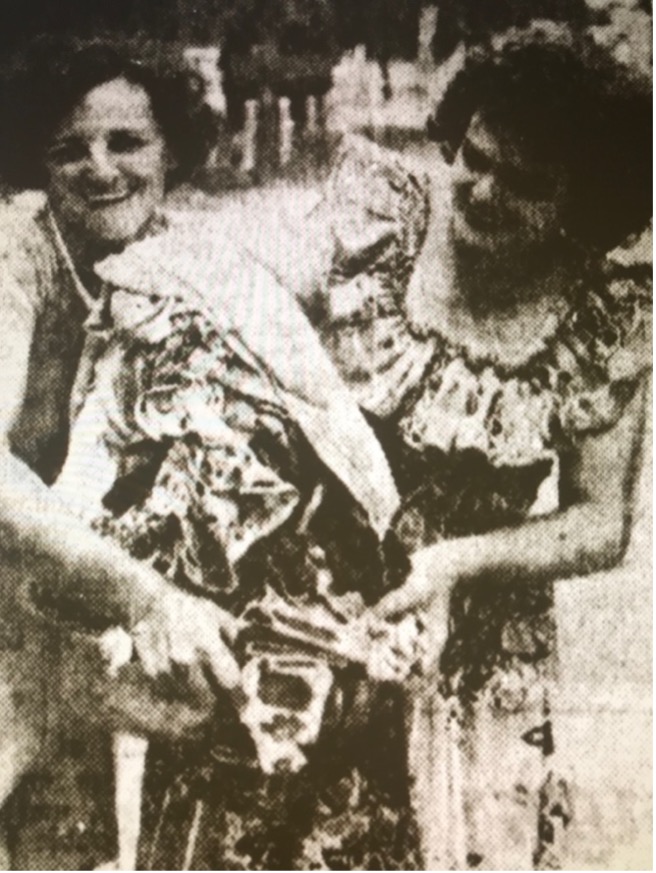
Mrs. J. Wallace and Mrs. R. Lynch, both of Mayfield, find that laundry has to be done, even on holidays.
Christmas at Halifax Park – 1951
The Newcastle Morning Herald and Miners’ Advocate of 27 December 1951, page 2, reported on the Christmas period at Halifax Park, Nelson Bay:
‘Many of the 500 visitors to the camp have met there in former years. The camp was started in October 1946, by a former ferry pilot, Mr. G. Wikner. This year more than 100 families have been camped at Halifax Park. Mrs. F. E. Boyd. from Catherine Hill Bay, who is holidaying with her husband (an engine driver) and four children, said: “We’ve been to many holiday areas, but found none as good as this. We come here every year now.” We had a wonderful Christmas Day because they are such a sociable lot of campers.” Her boys, Edward, 15, and Allen, 12, cycled from Catherine Hill Bay, more than 50 miles away, in five hours.
Children at the camp almost missed out on Santa Claus this year. Camp visitors organised a social committee, which was responsible for a children’s Christmas party, complete with Santa and sleigh, and a Christmas tree. Mr. H. Reed, a schoolmaster from Sydney, was nominated to play Santa Claus, but could not hire a costume. On the afternoon of the party, he phoned a friend in Newcastle and asked him to buy material. The material arrived at the camp at 5.30 p.m. Mrs. Reed, who even when camping, has her sewing machine with her, did a swift costume-making job and Santa Claus appeared on time at 7 o’clock. Mr. Reed is leader of the camp social committee. With his family he is on his second visit to the camp. “It’s the first time we’ve been anywhere twice.” he said.
Mr. Reed was busy organising a picnic trip to Mungo Brush on Saturday. In the morning he hired a ferry from Tea Gardens. He expects about 100 campers to go on the trip. The social committee has also arranged film shows and a party for adults. Planned for the coming week are a children’s fancy dress night and a talent contest. For the talent contest, children will give their turns over the camp amplifying system and will be given numbers instead of names, so campers will really vote for the ones they think best.
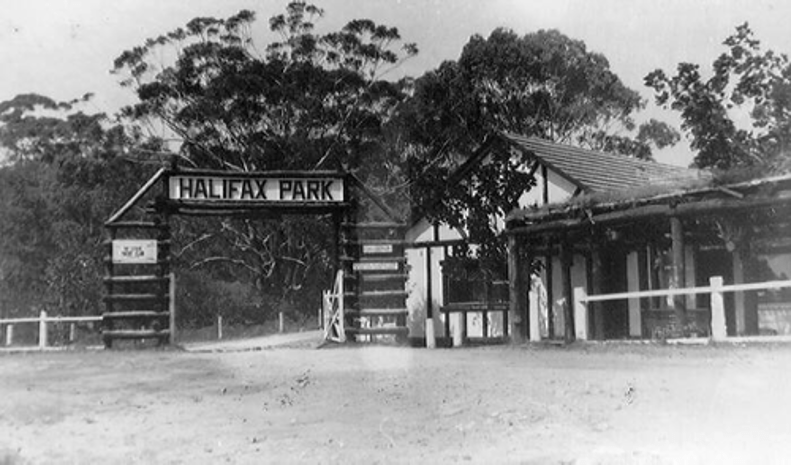
Halifax Park circa early 1950’s
Camping conditions in some areas of Nelson Bay district still remain poor – 1953
While camping conditions had improved at Nelson Bay, they still remained poor in surrounding areas. The Newcastle Morning Herald and Miners’ Advocate of 14 January 1953, page 5, reported:
‘Camping conditions in the One Mile Beach and Shoal Bay areas were most unsatisfactory, the Health Inspector (Mr. Conroy) told Port Stephens Shire Council yesterday. There were more than 50 camps at One Mile Beach over the holidays, he said. Garbage and fish offal were left lying “all over the place.” In some cases no attempt had been made to cover, burn or bury the rubbish. He recommended that action be taken to provide facilities and to control the area, which, he said, could be made a great tourist attraction.
Mr. Conroy recommended that Shoal Bay east of the guesthouse, should also be controlled. There were 32 camps there, but no water and sanitation. Anna Bay and Shoal Bay had been cleaned up, but conditions were worse than last year and unless some form of control was introduced, there was no hope of any improvement, he said. The Shire Engineer (Mr. Cook) and Mr. Conroy were instructed to prepare a report for the next council meeting and to submit plans for water supply and sanitary services, with an estimate of costs.’
Concluding Comments
Despite the camping conditions of 1940’s, where little control was able to be exercised, gradual improvements took place in the following years.
As Nelson Bay became a tourist destination it attracted visitors from further afield, many of whom still enjoy a camping holiday.
Today there are top-class camping facilities in the greater Nelson Bay area.
Researched and complied Prepared by Kevin McGuinness
June 2022

 Port Stephens - a history exploration