

Introduction
This is the story of the Westralia, a passenger liner built in the United Kingdom for the Huddert, Parker Limited. It was launched in 1929 and commenced operating as an interstate cruise liner along the Australian coastline. The Westralia was a well-appointed passenger liner for its time.
When the Westralia was put into Australian service, the owners of the ship held social events on board as a means of promoting the ship’s luxury travel experience.
However, the days of passenger cruising along the Australian Coast was cut short in 1939 with the outbreak of World War.
Westralia (among other ships including the passenger liners, Manoora and Kanimbla) was requisitioned by the Commonwealth Government in December 1939. It was converted into a warship for the duration of the War and for a period thereafter. HMAS Westralia was to remain in naval service for eleven years.
In 1943, HMAS Westralia was based at Port Stephens, together with two other Australian naval ships, HMAS Kanimbla and HMAS Manoora, to provide military landing training support to the Royal Australian Navy (RAN) naval base, HMAS Assault, in conjunction with the Joint Oversees Operational Training School (JOOTS) which had been set up as a joint training facility by the Australian and USA Governments. See HMAS Assault and JOOTS – 1942/43.
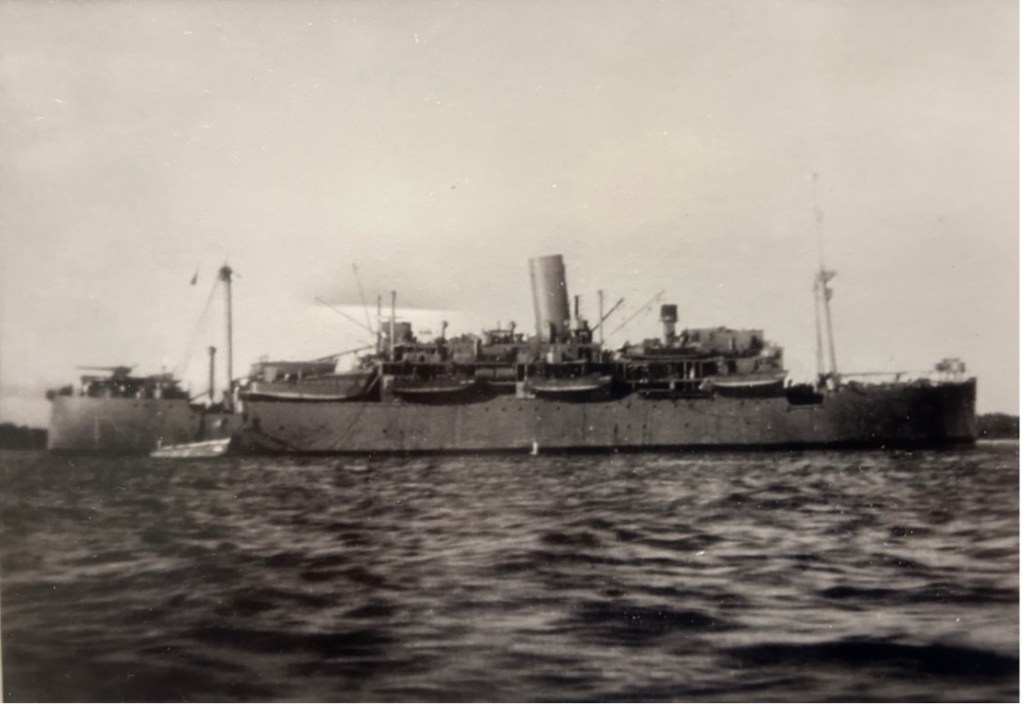
HMAS Westralia at anchor in Port Stephens 1943 [Nelson Bay RSL Sub-Branch Photo Collection]
During JOOTS manoeuvres, HMAS Westralia, HMAS Kanimbla and HMAS Manoora, all of which had been converted to ships that could land infantry forces from Navy transport ships onto land, were involved in simulated landings on Zenith Beach, Wreck Beach and Box Beach at Port Stephens (and also within Port Stephens) in readiness for the amphibious invasions in the Southwest Pacific region.
After JOOTS ceased operations at Port Stephens in October 1943, HMAS Westralia saw extensive service in the Pacific region. After the War, she was involved in repatriation missions and the transportation of troops.
The Westralia had a long history, before, during and after the Second World War, the story of which is told in this paper in five parts.
Addendum One outlines a brief history of the first ship named Westralia, owned by Huddart, Parker Ltd.
Addendum Two sets out the inscription on a plaque at Garden Island, Sydney, honouring the ships HMAS Manoora, HMAS Kanimbla and HMAS Westralia.

Westralia as a passenger liner, circa 1929
PART ONE – WESTRALIA PRIOR TO ITS ARRIVAL IN AUSTRALIA
Announcement on New Cruise Liner – 1928
The Sun of 11 July 1928, page 19, reported:
‘Westralia will be the name of the new Huddart, Parker liner, which will be bigger than the company’s Zealandia, a steamer of 6683 tons gross. She will be the second Westralia of the company— the former Westralia was recently sold after a long and useful service [see Addenda one for additional information]. The construction of the new Westralia, and the decision of the Adelaide Company to re-enter the Australian passenger trade, with the Manunda will, in the opinion of shipping men, probably lead to other companies acquiring new tonnage.
The new Westralia will be a motor-ship. Mr. J. L. Webb, director of Huddart, Parker, Ltd., will be back from Great Britain shortly, having attended to preliminary arrangements for the construction of the ship. The order has been placed with Harland and Wolff, the well-known Belfast shipbuilders. Mr. W. T. Appleton, managing director of Huddart, Parker, Ltd., who is on a business visit to Sydney, said today that it had not yet been decided on which run the new ship would be placed. It would, however, either enter the West Australian or the New Zealand service.’
Details of the New Westralia Liner – 1929
The Sydney Morning Herald of 8 June 1929, page 16, reported:
‘The Westralia, a new passenger motor vessel, for Huddart, Parker, Limited, is expected to reach Australia at the end of September. She is a twin-screw passenger motor vessel of 9240 tons gross, her principal dimensions being, length 430 feet, moulded breadth 60 feet, and depth 33 feet 6 inches.’
Westralia Sails for Australia – 1929
The Sydney Morning Herald of 21 August 1929, page 19, reported:
‘Huddart, Parker’s new passenger motor-ship, Westralia, sailed from Greenock on Sunday afternoon [18 August], and is due at Sydney about the third week in September. Captain Free, the representative in London of Huddart, Parker, Ltd., has informed the Sydney office that the highest speed attained during the Westralia’s trials was 16.86 knots, at which speed the propellers were turning at 120 revolutions per minute. It was stated that the vessel could easily have travelled at a greater speed. All the trials were satisfactory. The dead-weight capacity of the Westralia is 4600 tons, and the draught 22 feet 2 Inches. Captain G. B. Bates is bringing the vessel to Australia.’
The Sun of 24 August 1929, page 7, also reported:
‘Cables from London advise that the new Huddart Parker passenger motor-ship Westralia has passed Gibraltar on her way to Australia. The vessel will, begin her maiden voyage on the Australian coast, leaving Sydney for Melbourne, Adelaide and Fremantle on Saturday, September 28.’
The Queanbeyan Age of 13 September 1929, page 3, further reported:
‘The new Huddart Parker liner “Westralia”, now on its maiden voyage to Australia, effected communication with Perth Radio when the vessel was 4,300 miles from Perth. This is record working for low power wireless equipment, working at the commercial wave length, 600 metres. The wireless apparatus is one of the latest type and was manufactured by Amalgamated Wireless (A/sia.) Ltd., in Australia and installed on the ship in Great Britain.’
Westralia Arrives in Australia – 1929
The Sydney Morning Herald of 20 September 1929, page 12, reported:
‘The new Huddart Parker motor-ship Westralia, 9240 tons berthed at Port Melbourne today on her maiden voyage from Glasgow. She was inspected by many persons during the day, when her excellent appointments to ensure comfort and service for passengers were admired. The Westralia commenced discharging a cargo of coal to the Melbourne Harbour Trust which was carried as ballast. Later the vessel will leave for Sydney to enter the regular Sydney-Fremantle service.’
‘Last Word’ in Comfort at Sea – 1929
The Daily Commercial News and Shipping List of 24 September 1929, page 4, reported:
‘The latest word in modern practice is embodied in the new passenger motor-ship Westralia which arrived at Sydney yesterday from England. This vessel was launched from the Govan yards of Harland and Wolff, Ltd., to the order of Huddart, Parker, Ltd., for the Australian passenger trade.
Huddart, Parker, Ltd., advise that the Westralia will make her first voyage in the Western Australian trade from Sydney on September 28. The Westralia, a twin-screw motor ship of 9,240 tons gross, is built on graceful lines, with a cruiser stern. There are three complete steel decks, roof, bridge and forecastle decks; also a spacious promenade deck and boat deck.
The passenger accommodation is spacious and luxuriously furnished, berths being provided for 360 first-class and 90 third-class passengers. The public rooms of the Westralia are designed with delightful colour schemes of decoration, and charming lighting effects, due to the artistic use of concealed electric lights, combined with delicately tinted lampshades. The dining saloon is a handsome apartment decorated in the Adam style, and the soft biscuit tones of the panelled walls, with their delicate enrichments and pale green draperies give a note of dignity and refinement which is most pleasing. The large barrel dome causes this room to have an appearance of great height and will be much appreciated in hot climates. Comfortable mahogany armchairs, with upholstered seats, covered in sage green moquette, small dining tables, a handsome buffet sideboard, dumb waiters, decorative wall mirrors in enriched frames, columns and pilasters, panelled Rudoleum floors, decorated service doors, and a fine wide staircase at the aft end, all convey the idea of a deluxe restaurant.
The lounge is situated at the forward end of the promenade deck, and is a spacious room, decorated in Georgia style — walls panelled, enriched and relieved with semi-elliptical pilasters — the ceiling of fibrous plaster in large panels, a fine dome surmounted by metal and glass lay-light, behind which electric flood lights are concealed. The colour scheme is a delicate tone of green, with draperies of printed silk repp to harmonise with the walls.
The cargo handling equipment is of the most up-to-date design, the five hatches being provided with derricks operated by electric winches. The windlass, steering gear, W.T. doors, refrigerating machinery, and ventilating fans are also electrically driven. The galleys, pantries, bakeries, &c., are equipped with numerous electrically driven labour-saving devices. Space is provided for about 200 tons of refrigerated cargo, and large re-frigerated storerooms for the ship’s use. Provision is made for carrying a number of horses in the ‘tween decks. The main propelling machinery consists of two sets of Harland B. and W. single-acting. 8-cylinder Diesel engines working on the four-stroke cycle, which will give the ship a speed of 15½ knots. The vessel on arrival will 15½ knots.’
PART TWO: WESTRALIA BEGINS LUXURY CRUISING IN AUSTRALIA
Party Held on Board Westralia in Sydney – 1929
The Evening News of 26 September 1929, page 10, reported:
‘Much of the wealth and beauty as well as the rank and fashion of Sydney, were on board the at Westralia yesterday at an afternoon tea given by the Huddart-Parker management in honour of the new ship. Captain Bates, of the Westralia and Mr. T. J. Parker, Sydney manager of the line, were the hosts, assisted by Mr. Robins, assistant manager, and Mr. Danes, purser.
In the inspection of the ship’s cabins and public rooms, I noticed among the shipping men Mr. J. Kelso, of McIlwraith, McEachern. Ltd., whose Katoomba is still one of Australia’s proud liners; Mr. H. M. Blair, of the Melbourne Steamship Co. and president of the Interstate Steamship Owners’ Association; and Mr. Herron, Lloyd’s surveyor. An interested pair were Mr. T. J. Donnelly, Government agent for Tasmania, and Mr. W. R. Blow, of the New Zealand office in Sydney.
The sumptuous smokeroom, with its glowing fires, and the softly tinted lounge made people linger as one does in an art gallery. But the gong was calling the guests to the dining saloon, and there soon was gathered a gay party. Sir G. Mason Allard and Lady Allard were there, also Mr. James Burns, head of Burns, Philp. and Co., and Mr. Snellgrove, of the same firm. Mr. J. Kislu Acting Consul for Japan, and his wife, expressed frank admiration of the ship. At a table, engaged in a good old “crack,” were Judge Backhouse and Captain S. G. Green. Their summing-up of the situation was that we today don’t know how well off we are, for, in their heyday, the Westralia would have been a world’s wonder. Captain Crossley, marine superintendent of the Adelaide Co., had a cheery party at a central table, and Mr. E. T. Fisk, of Amalgamated Wireless, was there to remind us that the ship was equipped with Australian-made wireless gear.
From the Customs, Mr. Bragge walked round with a care-free mind since Australian ships do not worry him with contraband. Captain Birch, of the Navigation Department, Mr. J. Garlick, Chief City Commissioner, and Mr. P. H. Goldfinch, of the C.S.R., were seen nodding approval at the doors of the private suites. Fruit interests in Sydney had their representatives in Mr. A. J. Cooper and Mr. F. Childs.
The saloon arrangements were a credit to Mr. W. Foulkes, chief steward, who had the assistance of Mr. Bowditch, of the Ullmaroo. Feminine interest naturally centred round the kitchens and services, but even the male minds were impressed by such items as the automatic egg-boilers, which may be timed to lift the eggs out of the water when cooked.’
Charity Fun Afternoon Aboard Westralia – 1930
The Sun of 18 December 1930, page 29, reported:
‘What do children on pleasure bent care for a few drops of rain even if they are wearing their best party clothes! When the clouds that had been gathering yesterday afternoon at last spilt their contents gently on the deck of the m.v. Westralla, moored at No. 3 wharf, Darling Harbor, the queue of little boys and girls waiting for their turn on the slippery slide did not diminish, and down they went, one after another, in the rain on to the mattresses below. This was only one of the attractions at the party organised by the Adult Deaf and Dumb Society to raise funds for adult deaf and dumb unemployed.
There were lucky dips, a Punch and Judy show, hoopla, acrobats and fortune-teller, all kinds of deck games, and dancing on deck to music relayed from the lounge, where the band from H.M.A.S. Canberra played. Attendants were kept busy all the afternoon attending to the tiny folk who wanted cool drinks and ice creams. Their elders sat down to tea in the attractive saloon, where the floral table decorations were pink roses, carnations, gladioli, and delphiniums. Among the many activities of members of the younger set of the society was the sale of fans, which carried a lucky number, entitling the winner to a flight with Air-Commodore Kingsford- Smith, who was the donor of the prize.’
PART THREE: WESTRALIA AS AN AUSTRALIAN NAVY WARSHIP IN THE SECOND WORLD WAR
With the outbreak of World War Two, the Westralia, among other passenger liners, was requisitioned by the Commonwealth Government in December 1939. It was converted into a warship for the duration of the war and was to remain in naval service for eleven years.
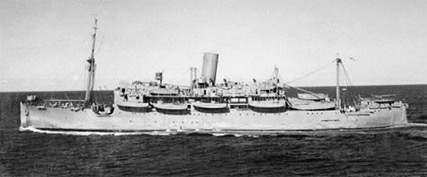
HMAS Westralia after Conversion to a Landing ship, Infantry, 1944
Summary of HMAS Westralia’s Military Operations
The Sydney Morning Herald of 28 March 1951, page 2, published the following summary of Westralia’s war service:
‘She was commissioned as H.M.A.S. Westralia on January 17, 1940, and fitted seven 6 in. guns, two anti-aircraft guns, and automatic weapons, and began convoy and patrol duty. She roamed She roamed from as far east as The Bluff, New Zealand to Aden.
She joined other ships of the British fleet in making three and four thousand mile sweeps of the Indian Ocean in 1941 and 1942 searching German raiders, but never closed with one. In 1943 she was recalled to Australia, and the Navy converted her into an L.S.I., an infantry assault ship.
In the bitter island-to-island fighting of the Pacific war she took part in the night landing at Arawe and escaped almost unscathed. After that she carried American and Australian troops in landings at Bougainville, Aitape, Leyte, and Torokina. She joined the armada of landing ships for the attack on Luzon, in the Philippines, and then went on to the all-Australian landings on Tarakan and Labuan. In the Philippines landing she was credited with shooting down a Japanese bomber.
In September 1946, H.M.A.S. Westralia paid off at Cockatoo Dock after travelling 120,978 miles for the Navy and began her first refit. The refitting was more than half finished when the Navy again called her into service.
She carried Australian occupation troops to Japan, and later their wives and families. After nine trips the Navy sent the ship to Balmain shipyards for refit early in 1949, but again recalled her in August 1949, and she sailed for the Mediterranean.
She made ten trips from Middle East ports to Trieste with British and American troops. After returning to Australia again in March 1950, she at last began refitting in earnest.’
Westralia Plays Major Role in Military Beach Landing in New Guinea – 1944
The Sydney Morning Herald of 20 May 1944, page 4, reported:
‘Members of the crew of the Australian landing ship Westralia, which is somewhere in the South-west Pacific, have described graphically the recent Allied landing in Humboldt Bay, New Guinea.
The Westralia, formerly a well-known interstate liner, on the outbreak of war was refitted for work in the Indian Ocean and the Pacific Last year she was converted to a landing ship and transport, and later took part in the landings at Arawe.
The huge convoy of troopships with their escorting destroyers and cruisers and aircraft-carriers arrived off Humboldt Bay several hours before dawn. On board the Westralia everything was in readiness for disembarking the Allied troops. For the first time the barges to carry them ashore were to be manned by Australians.
When the transport was some miles offshore, the first wave of barges, laden with troops, set off in the darkness for the beaches. Sub-Lieutenant N. E. Farmer, of Howard, Queensland, was the boat wave leader, responsible for navigating the barges in his wave on to their allotted beach. The first invasion wave was to take three widely separated beaches, and their time of arrival was to synchronise. Cruisers stood well offshore, and destroyers shepherded the barges close into the beach.
An hour before landing time the naval bombardment began. Shells screamed over the heads of the invasion wave as the barges ploughed towards the shore. Suddenly the bombardment ceased. Planes swept in and bombed the beaches, then returned to strafe. It was believed that the beaches had been mined, and the bombers attempted to explode the mines by sympathetic detonation. By this time the invasion barges were close to the beaches. Two barges opened fire with devastating effect.
The barrage lifted, and the troops poured ashore. Organised resistance had been broken by the terrific bombardment, and only a few machine-gun posts were manned. The bulk of the enemy had fled in disorder to the hills, leaving everything behind. Amphibious tanks quickly overran the positions.
The enemy had intended developing Hollandia into a huge base, but most of his stores and equipment were destroyed in the barrage. Scores of Japanese were lying dead —many killed by concussion.
Lieutenant W. N. Swan, of Adelaide, who was control officer on the Westralia during the operation, said that throughout the day flames and smoke rose 3,000 feet in the air from the burning dumps. A Japanese tanker was hit by a bomb and burned for four days.
An enemy barge, laden with escaping troops, was sighted creeping along beneath a cliff. A destroyer opened fire, and the troops aboard jumped into the sea. There could have been no escape for them.’
The Daily Mirror of 20 May 1944, page 5, also reported:
‘The Allied naval and air bombardment preceding the landings at Humboldt Bay and Hollandia (New Guinea) on April 22 caused indescribable devastation, members of the crew of the Australian assault-vessel, H.M.A.S. Westralia, have revealed in their first interview since the action.
Bombs and shells tore great scars in the hillsides, destroyed every field and anti-aircraft gun in the landing area, and blasted pillboxes and foxholes inside out. Withering fire from low-flying Allied strafing planes chopped the tops off coconut palms over a wide area, leaving the trunks headless and grotesque. Converted soon after the outbreak of war from an interstate passenger liner into an armed merchant cruiser, and last year into an assault-vessel for amphibious landings, the Westralia was flagship of the fleet of assault-ships. She also took part in the U.S. landing at Arawe last December. Hundreds of American troops were taken ashore from the Westralia in her landing barges and under a canopy of screaming shells sent shore-wards by cruisers and destroyers.
“We were only some 300 yards from the shore when the terrific naval barrage lifted and we moved in without opposition at full speed, line abreast,” Sub-Lieut. N. E. Farmer, of Howard, Queensland, said. “The din was terrific and the shellfire and aerial bombardment pounded to smithereens everything on which it fell. “Destroyers, which moved in close, raked the shore with their Bofors guns and swung their main armament into action on anything that moved or looked like moving. “Clusters of rockets fired from craft close inshore completed the destruction. The Americans were dropping them only 100 yards ahead of us when we hit the beach.
“Ashore, we met little opposition. The bombardment had sent a number of Jap machine-gunners into hiding behind the hills, but U.S. amphibious tanks got these quite early.” Lieut. W. N. Swan, of Adelaide, said the most spectacular event during the landing was the Allied bombing of a 2000-ton tanker in the harbor. A direct hit had set the ship alight, and it burned for four hours, after which it was just a gutted hull. A large Jap barge, loaded with troops, had tried to escape from the bay, but had been spotted and peppered with fire from destroyers Thirty enemy camouflaged barges in an adjoining bay had signed their own death sentence when they fired on some U.S. naval bombers.
“From indications we saw we estimated that the Jap garrison there must have numbered about 6000 most of whom apparently fled, leaving only a handful behind to fight it out with us,” Swan said. The Westralia brought back about 50 Indian prisoners of war found at Humboldt Bay.’
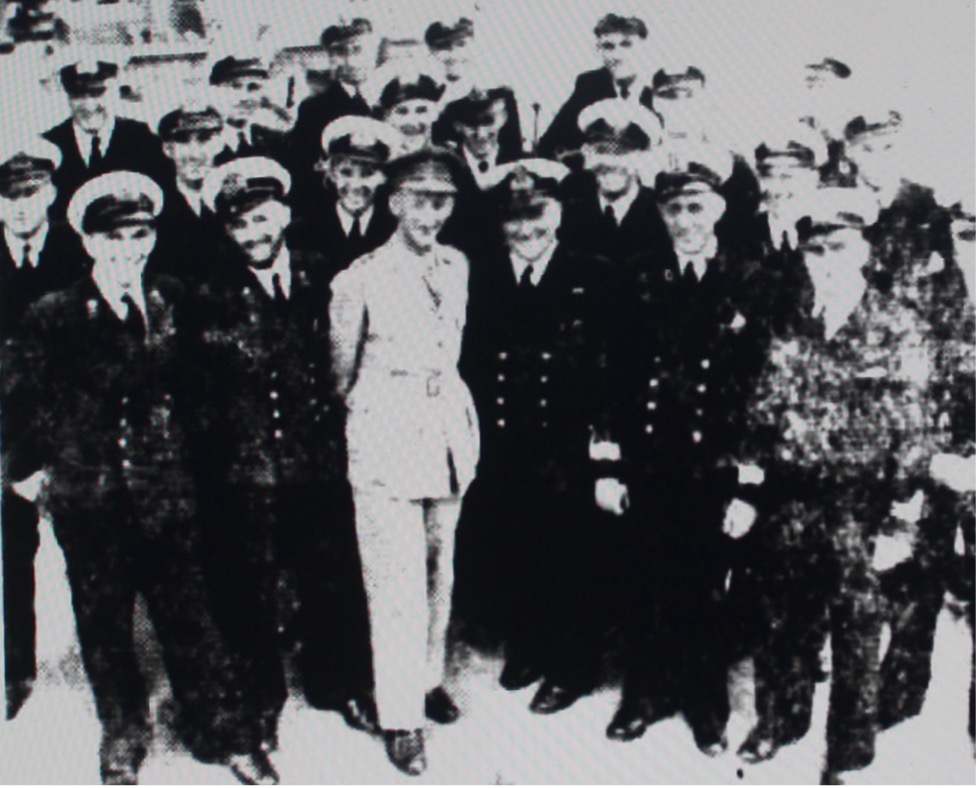
HMAS Westralia took part in the Hollandia operations on the Dutch New Guinea coast. A group of the ship’s officers who participated in the Hollandia operations [Border Morning Mail, 23 May 1944]
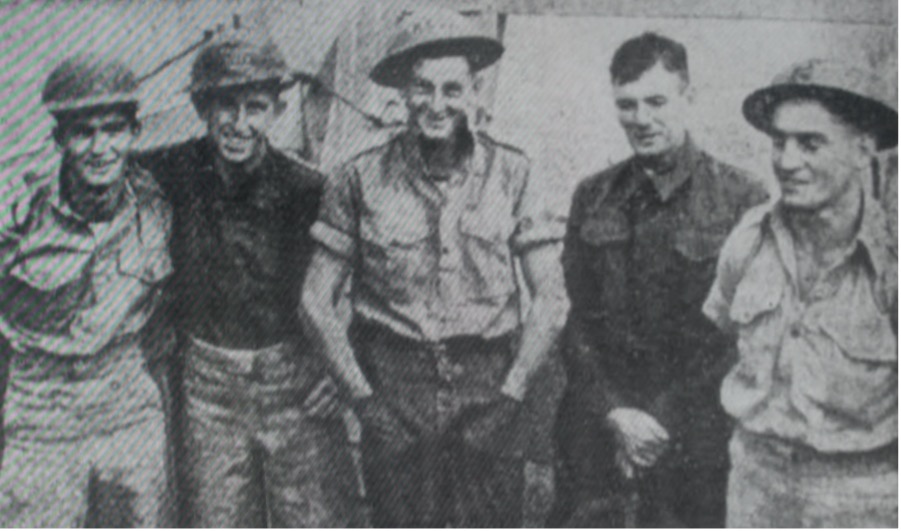
The crew of one of the landing craft which transported assault troops from the Westralia to the Hollandia coast during the operations in Dutch New Guinea [The Central Queensland Herald, 8 June 1944]
HMAS Westralia Destroys a Japanese Dive Bomber – 1945
HMAS Westralia was the first of the Australian Navy’s three assault ships to return to home waters. After arrival, news of her dangerous wartime exploits became known. The Daily Mirror of 22 March 1945, page 13, carried one the detailed reports published about operations carried out by the Westralia:
‘Big moment in the wartime career of the erstwhile Australian passenger ship Westralia came on the eve of the battle of Lingayan Gulf when, as a troop-laden assault ship, she steamed north of Manila in the invasion convoy.
About 5 o’clock a Jap dive-bomber came screaming down out of the sun, dead into a fierce barrage from the ship’s full battery of 4-inch guns, Bofors and Oerlikons. It was then caught in a cone of fire, shells ripping through it and forming an inverted cone of tracer beyond. The Jap shed his wings and hurtled down, missing the stern by feet and exploding in the sea. Debris littered the ship, and the pilot’s body was hurled up over the stern. This was one of the incidents related by members of the crew when the ship called at an Australian port recently, after her return from the Philippines.
With her log recording four major D-Days in the Pacific war, when she carried nearly 4000 American troops to the beach approaches of Arawe, Hollandia, Leyte and Lingayen Gulf, the Westralia has done splendid service since she left the refitting yards, as an armed assault ship two years ago. Members of her complement were resentful of non-recognition of their work when their ship arrived in the aforesaid Australian port recently. They claim they face the greatest hazards of amphibious operations, but for all that they never make the news.
The Westralia, which now rejoices in the name of “L.S.I.” and a number, has on board officers and ranks of the A.I.F., a number with overseas service. She, with her sister converted warcraft, the Kanimbla and the Manoora, are under R.A.N. administration, though they are attached to the U.S. Navy.
During her career as an assault ship, the Westralia has had a charmed life, and has had only one casualty in two years, when Able-Seaman Fair was wounded as a bombing Zero near-missed the ship with a bomb off Buna, just after the Arawe show. She is credited with shooting down one Jap dive-bomber which attacked her off Manila on the eve of the Lingaven Gulf battle. She was then in the invasion convoy, which stretched over 1000 miles down the western coast of the Philippines. There was good fighter cover, but some Jap dive-bombers broke through, to bomb the ships.
Captain S. D. Goleby, of Auchen-flower, Brisbane, said it was the first time he had ever tried to stretch a tin hat. Flak fragments and shrapnel were falling everywhere. However, his enthusiasm for pictures still persisted; he trained his camera on the diving Jap. “But I was unlucky,” he said. “I just got the Jap crate in my view-finder when the gunners got him, too, and his wings fell off. Then he dived into the sea, and someone cracked, ‘Man overboard!’ ” After his experiences on an assault craft in four major engagements in the South-west Pacific, Goleby is satisfied he had a nice easy job for two years on bomb-disposal operations. His present job is in charge of 67 A.I.F. men, who, working against time in landing operations, have more than once put 600 tons of war cargo out of the ship in a little over six hours. They are all big fellows, hailing from New South Wales, Victoria and South Australia, and some have seen service in the Middle East. Goleby is very proud of them and their achievements, and says they are men with only one grouch — “the lousy mail service from the mainland.”
“Only time the old Westralia has been scarred during her war missions was when she got a few holes through her plates from a near-miss when a Zero bombed her off Buna,” said Lieut. R. Penglase, R.A.N.R., of Adelaide. He said she had carried troops from Goodenough to take part in the assault on D-Day at Arawe. On D-Day at Hollandia, when she put more troops ashore, light machine-gun fire was met from shore pill-boxes, but destroyers silenced these, and Jap personnel were taken pris oner, he related.
In the Leyte campaign, the ship still had a charmed life and Jap bombers couldn’t get a hit on her, added Penglase. Lieut.-Commander A. D. Barling, R.A.N.R. (S). of Sydney, who is second in command to Commander E. W. Livingstone. R.A.N JR. (S), late of the A.U.S.N., was on the corvette Ballarat in the bad Singapore days. “Our fellows in the assault ships are hot under the collar because they get no recognition,” he said. “You find the cruisers and other pukka ships get a load of publicity; but we, who go right in on D-Day, carrying troops right up to the beach, get only an honourable mention.” Barling once defeated Ambrose Palmer for an amateur boxing title.
The men aboard are lamenting the loss of Denis, their mascot pig, which was given them by Filipinos after the landing at Leyte. The Australians denuded their lockers to give clothing to the impoverished people ashore, and were given Denis, a sucking-pig, along with other gifts. He became a great favourite aboard ship but bolted for a hiding-place immediately the ack-ack opened up on marauding Jap planes. The lads were hostile when a quarantine officer came aboard in Australia and took Denis ashore in a bag. “That’s a rotten end for him, after going through the Lingaven show with us,” said Petty Officer Maurice Bulpit, of Bondi, who is ship’s physical instructor. “I wouldn’t like to think, if I had a pork chop ashore, that I was eating Denis.”
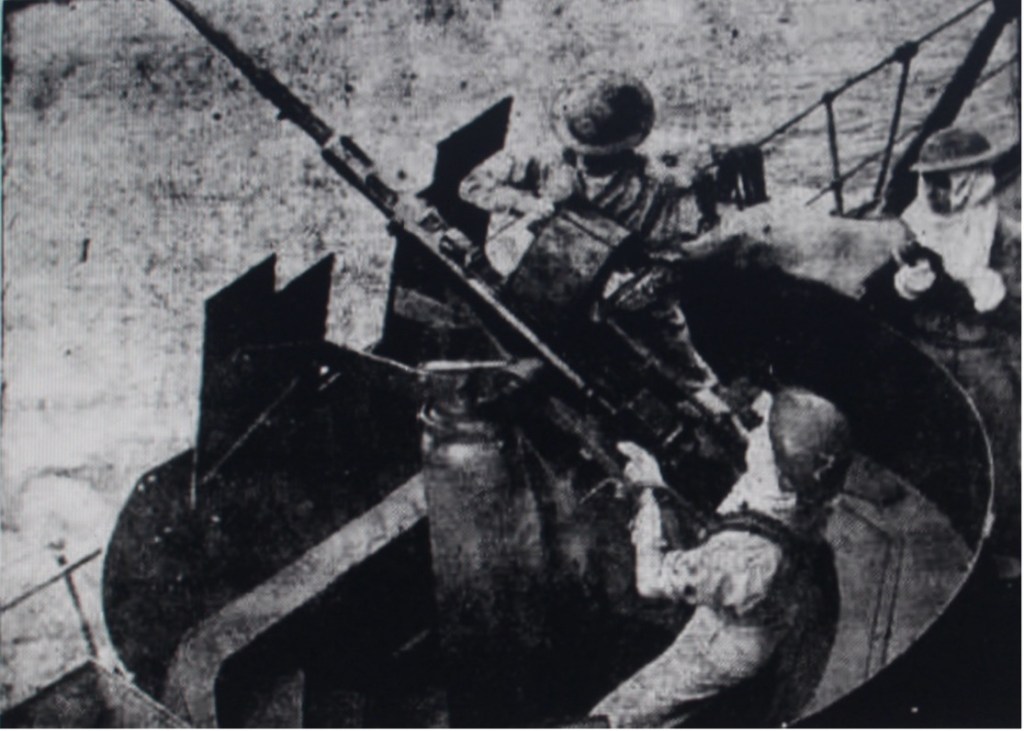
Bofors gun on the armed assault ship, Westralia, ready for action. The ship’s battery brought down a Jap dive-bomber off Manila on the eve of the Lingayen Gulf invasion [Daily Mirror, 22 March 1945]
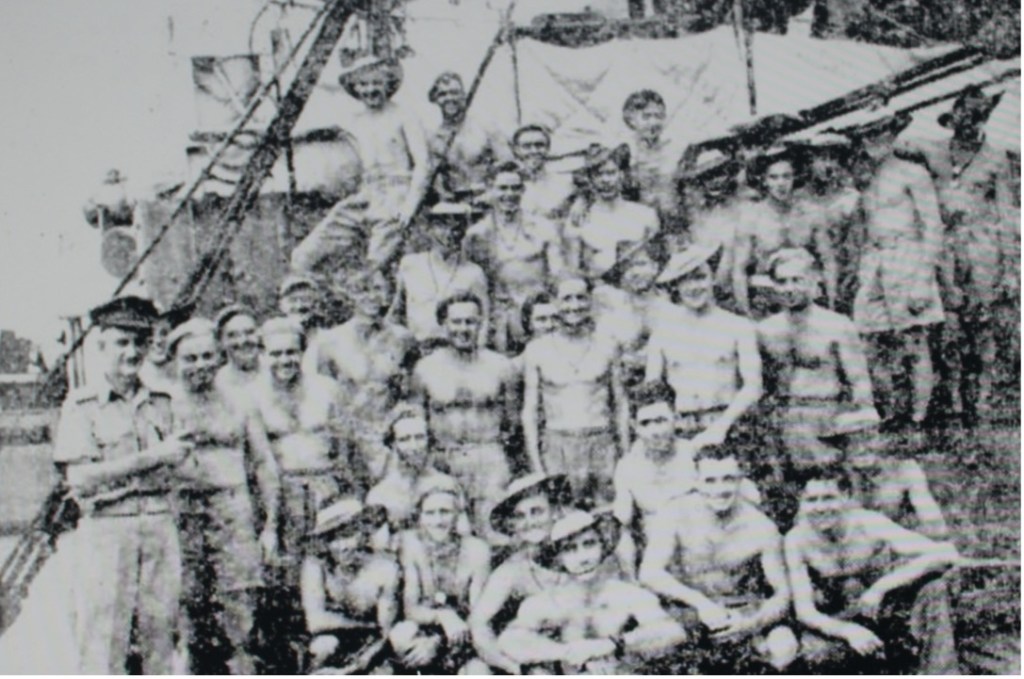
Troops on board the Westralia who had participated in the Philippines landings [The Argus, 23 March 1945]
General Blamey Addresses Troops on Westralia and other Landing Ships – 1945
The Tweed Daily of 4 May 1945, page 3, reported:
‘After embarkation on Australian landing ships at an advanced staging base and while they waited to move off in convoy, the Australian troops who subsequently landed on Tarakan were visited in turn on their ships by General Blamey, minor cases. “You are going to have another crack at the Japanese,” General Blamey told them. “I knew it has been very tiring waiting in Australia and that it has been very boring to go on with so much training. “You are really going now for the first time since we left the Middle East on to foreign soil again. “Our objective, as you know is a main Dutch oil port, and it is the AIF, revived, who will once more be seen in action.
We are all very confident, and you are, yourselves, because you know you are very fit and well trained. “We are looking with great interest to this new move out of Australia. I am perfectly certain of success and wish you all the best of luck.” The men whom the Commander-in-Chief addressed had nearly all, with the exception of reinforcements, contributed to their division’s proud battle record in the Middle East; and later had campaigned against the Japanese in New Guinea. General Blamey was accompanied on his visit to the ships by Lieut.-General Morshead, Ausralian Corps, Commander.
The troops had been trained to the highest pitch of jungle fighting efficiency in the rain forests of North Queensland and were obviously eager for the task ahead. Two of the ships which carried them, from their forward base to the scene of the landing were the Manoora and Westralia, well known on the Australian coast in peacetime and both with a fine record of war service. Just before embarkation the troops had spent two days in rehearsing ship to shore operations until their technique was perfect.
Tarakan, their first objective, is an important oil port in the Netherlands East Indies on the coast of Borneo. It had been wrested by a full Japanese division from a gallant Dutch garrison of battalion strength, with mostly native troops. Recently the full weight of the Allied air forces within striking distance had blasted enemy installations at Tarakan and had rendered the oil wells useless. They had cratered the enemy air strips to such an extent that no enemy aircraft had been able to take off for several weeks.’
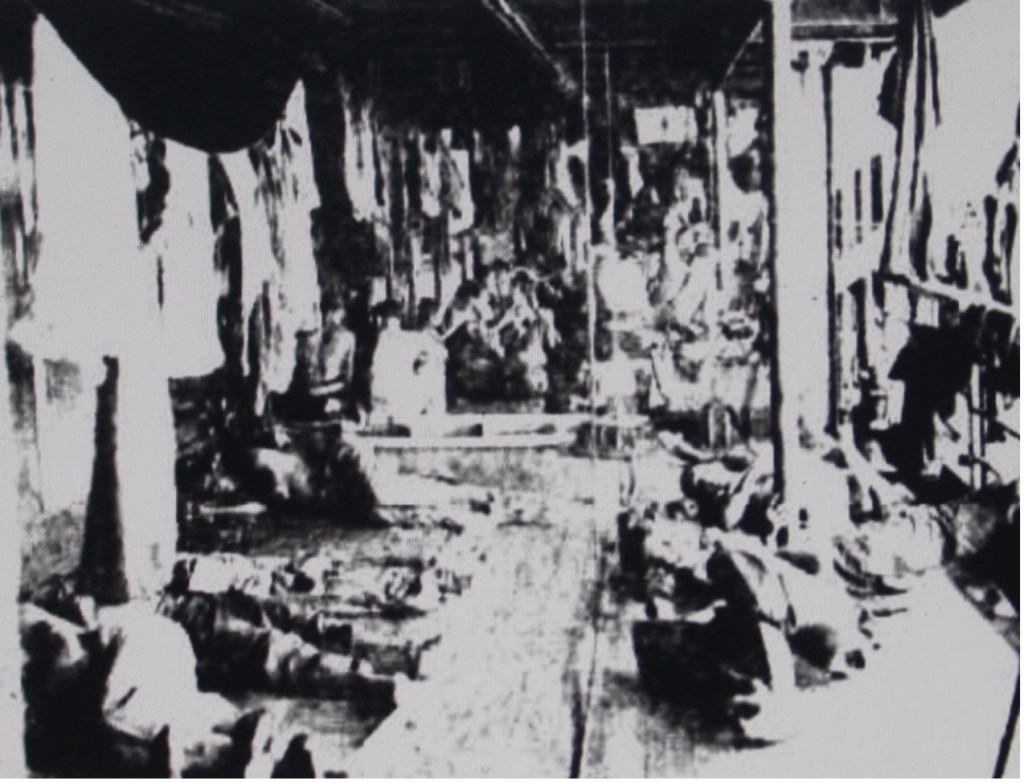
Troops on board the Westralia prior to their invasion of Tarakan [Border Morning Mail, 12 May 1945]
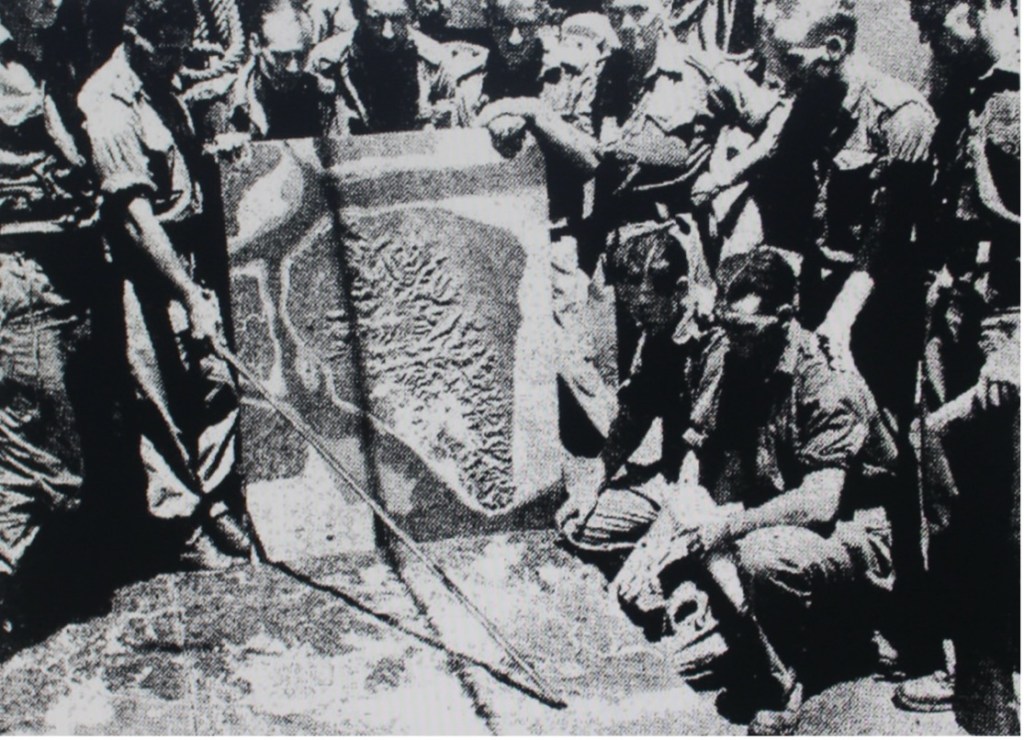
Lieut. Walter Templeton briefing troops of the Ninth Division around a model map of the invasion site on board the Westralia on the way to Tarakan, Borneo [Weekly Times (Melbourne), 16 May 1945]
PART FOUR – PEACETIME MILITARY OPERATIONS OF HMAS WESTRALIA
War Veterans to Arrive Back in Australia – 1946
The Daily Telegraph of 3 January 1946, page 20, reported:
‘Four ships, carrying more than 5200 long-service Australian soldiers and air-men from Europe and the Pacific, will arrive in Australia today. More than 3500 soldiers and airmen are on their way back to Australia in five other ships.
Ships to arrive today: Katoomba, carrying 1455 soldiers and airmen from Torokina, will berth at No. 11 Woolloomooloo at 9 a.m. Soldiers aboard Katoomba will be taken to Marrickville Leave and Transit Depot, and the airmen to Bradfield Park. River Murchison, carrying 191 soldiers and 72 airmen from Taralcan and Balikpapan (Borneo). The ship will berth at No. 5 wharf, Glebe, at 10.30 a.m., and the men will go ashore at 11 a.m. Athlone Castle, carrying 2000 airmen from Britain, the Middle East, and India. Athlone Castle is expected in Melbourne today. The men will be sent on leave when they go ashore. Winchester Victory, carrying 1500 soldiers from Balikpapan. She is expected in Brisbane today. New South Wales men, and men from other States, are expected in Sydney by train from Brisbane on Saturday January 5.
Other ships returning to Australia are: Westralia, carrying 1029 soldiers from Morotai. and scheduled to arrive in Sydney tomorrow. Canberra, carrying 561 long-servicemen from Wewak (New Guinea), and expected late on Saturday, January 5. Suva, carrying 600 A.M.F. long servicemen from Wewak, and expected in Sydney on January 7. Salamaua, carrying 600 long-servicemen from Torokina (Bougainville), and expected in Sydney on January 10. In addition, the aircraft-carrier Vengeance, carrying 145 long-servicemen from Labuan, will arrive in Sydney on January 11.
About 200 long-service Western Australian troops have left Brisbane by train for Sydney. They are expected to travel from Sydney to Western Australia by ship. The men are the first of 100’s Western Australians scheduled for home leave, and who walked oft parade at Yeerongpilly Camp last week. The men were protesting at delays in sending them home.’
Soldiers on Board HMAS Westralia Side with Stowaways – 1946
The Sun of 2 May 1946, page 3, reported:
‘Australian soldiers returning from Rabaul demonstrated when seven stowaways were taken from the steamer Westralia by provosts at Hamilton [Queensland] this morning. Shouts of “They have more points than you, provost.” followed military police as they escorted the seven soldiers to a waiting van. Complaint of returnees was that the stowaways were marched off the ship first, and in view of the entire ship’s complement, nurses and people on the wharf. Further uproar occurred as soldiers disembarking were searched at the gangway for birds and monkeys. Quarantine authorities found two birds and four cats aboard.’
Australian Travellers Must Wait Return of Requisitioned Ships – 1946
The Northern Star of 7 June 1946, page 5, reported:
‘Travellers who yearn for a sea trip will have to practice patience, for shipping people consider it will be at least 18 months before passenger traffic on the coastal routes returns to normal.
The reason for the delay in return to peacetime traffic was that Australia would continue to be the point from which Allied occupation forces in Japan would be supplied, it was stated. Before there was a return to normal Australia would have been without her peacetime passenger fleet for nearly eight years, said a shipping executive.
Three of the most popular vessels on the pre-war coastal run, the Ormiston, Canberra, and Westralia, will be returned to their owners soon. They will go into dock for a refit, which will take several months.
The Westralia, taken over by the Government in 1940, was heavily armed as a merchant cruiser and will take longer to refit than the Ormiston or Canberra. The Westralia’s cabins were taken out and she was completely stripped of all interior panelling and fittings.
The one-time hospital ship, Wanganella, is not expected to return to normal traffic until September. Cabins which were knocked down to make room for wards have to be replaced, and the ship entirely repainted.
Five other liners acquired by the Government are still trooping across the seas. They are the Manoora, Manunda, Duntroon, Kanimbla, and Katoomba. Shipping officials believe prospects are gloomy for inter-state sea travel in the near future.’
HMAS Westralia Military Service to End – 1946
The Sydney Morning Herald of 17 July 1946, page 4, reported:
‘H.M.A.S. Westralia will have completed her last trip as a troop transport when she arrives in Brisbane tomorrow from Japan and Rabaul. She will go on to Sydney to be reconverted for the coastal passenger service.’
Alleged War Criminals Brought to Australia by HMAS Westralia – 1946
The Sun of 28 July 1946, page 1, reported:
‘Dragging miscellaneous baggage after them, 11 Japanese war-crimes prisoners — including senior officers — shuffled down the gangway of HMAS Westralia at Walsh Bay yesterday.
Troops from the north left the ship at Brisbane. Only the Japanese and their escorts were on board when Westralia berthed. The prisoners will be transhipped to Singapore where they will be charged with crimes against Allied POW’s. In Brisbane they were stripped of uniforms and supplied with maroon-coloured trousers and jackets. They were given menial jobs on the voyage. Leader of the Japanese was a colonel. He was first down the gangway and wore a white pad across his mouth.
The Japanese and their army escorts were driven away in a military truck. The truck took the Japanese to Liverpool camp where they will be housed for some weeks until shipping is available to take them to Singapore. With them at Liverpool is a Japanese admiral who was brought by air last week. An Army spokesman at Melbourne HQ said yesterday that the admiral would travel with the suspected war criminals to Singapore. The names and offences of the prisoners, he said, were not available.’
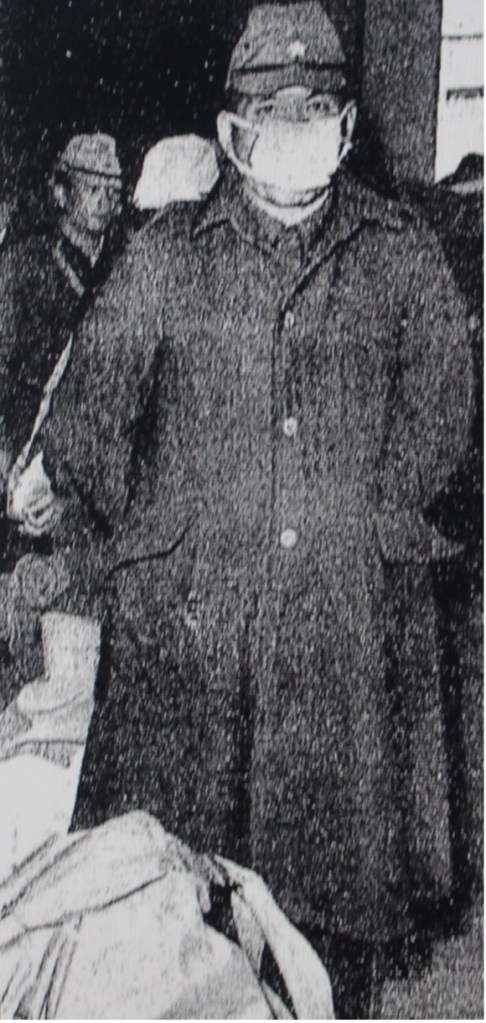
Japanese colonel and other senior officers arrived in Sydney on the Westralia for later transportation to Singapore for trial [The Sun, 28 July 1946]
Following a Refit HMAS Westralia Remains a Troop Transport Ship – 1947
The Sydney Morning Herald of 22 October 1947, page 2, reported:
‘When the Manoora goes into Cockatoo another former interstate liner, the Westralia (8,108 tons), owned by Huddart Parker, Ltd., will have almost completed refit. Sailing under the Red Ensign (Merchant Navy flag), she will be used by the Navy as a hired transport to assist the Kanimbla on the run between Australia and Japan.
By November 17, it is expected, the passenger accommodation of the Westralia will be as good as, if not better than, before the war. Two holds will be used as troop decks for 600 troops, who will have all the comforts of first-class travel except for sleeping quarters. Women, children, concert parties, and other civilians will be carried in the cabins.’
Troops Load HMAS Westralia After Wharf Labourers Stop Work – 1947
The Sydney Morning Herald of 9 December 1947, page 1, reported:
‘Occupation Force troops completed the loading of the Westralia yesterday afternoon when wharf-labourers stopped work because of the rain.
The Westralia …. is due in Kure [Japan] on Christmas Eve. “If we hadn’t done the job,” a soldier explained, “we would have been delayed a day and would have spent Christmas at sea on a dry ship [no alcohol on board].”
On board the Westralia are 321 wives and members of families of B.C.O.F. [British Commonwealth Occupation Force] troops in Japan, 46 air-men, 228 soldiers, 26 seamen, two members of the Red Cross, and six civilians. Its departure was delayed almost six hours by intermittent rain yesterday morning and afternoon. Wharf-labourers are not required to work in the rain.
Hundreds of relatives and friends waited in drizzling rain for more than eight hours to see the Westralia leave. The scheduled departure time, shown on a clock dial on the superstructure, was altered from noon to 3 p.m., then to 3.30 and finally 5.30.
Just before 4 p.m., when steady rain began to fall, about 50 soldiers ran down the gangway and began to load ship’s stores, without which the Westralia could not sail. Wharf-labourers watched the inexperienced soldiers handling the slings. An airman manned the winch and the hatch man was a soldier. Neither appeared to have had much experience of handling cargo.
Instead of 12 bags to a sling, the soldiers loaded 15 and some-times 18 bags to a sling. They loaded more than five tons of ship’s stores and passengers’ baggage in a little less than half an hour.
As the wharf-labourers went home soon after 4.30, they were jeered and cheered by the men on the ship. The soldiers completed the loading after an amicable discussion between the wharf-labourers and the ship’s officers. The wharf-labourers were paid in full up to 5 p.m., their nor-mal knocking-off time. The soldiers volunteered to work the cargo.’
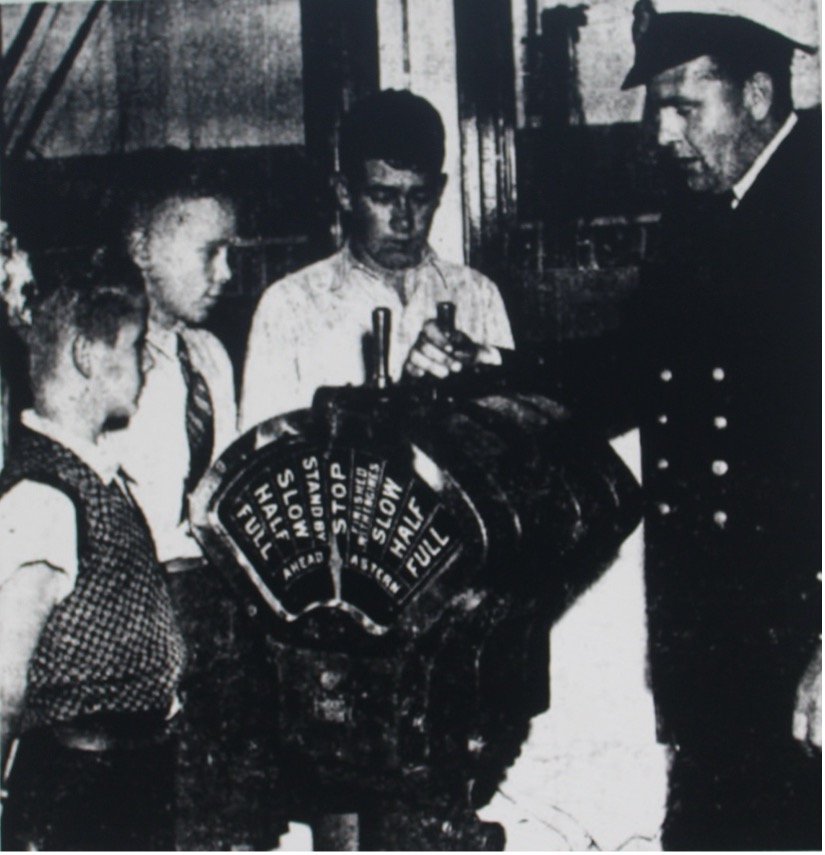
These three boys, who are on their way to Japan with their mothers to join their servicemen fathers on B.C.O.F. duties, lost no time after boarding the ship in finding their way to the wheelhouse, where one of the ship’s officers gave them a lesson on the engine-room telegraph. [ Daily Advertiser, 10 December 1947]
Group of Malayans Deported on the Westralia – 1948
The Newcastle Morning Herald and Miners’ Advocate of 5 February 1948, page 1, reported:
‘The 19 married Malayans due to be repatriated from Australia for Singapore today on the Westralia will stay for a few days because of renovations being made to the ship. An official of the Department of Immigration said the Malayans had always been indirectly regarded as “prohibited immigrants.” He was commenting on a published report that because it was feared some of the Malays might refuse to be repatriated, the Federal Government had declared them prohibited immigrants. The official said that if the men refused to go, any action to be taken against them would have to he decided upon by the Minister for Immigration (Mr. Calwell).’
The Daily Mirror of 7 February 1948, page 2, further reported:
‘Five Malays who were to have sailed to Singapore in the Westralia today were missing when the ship pulled out from the wharf shortly before 1.30 p.m. On board the ship were one group of 10 Malays who have Australian wives and children and another group of six Malay seamen who are being repatriated to Singapore at their own request. The five missing Malays are from the first group, which should have numbered 15 when the Westralia sailed.
On Wednesday, the Communist newspaper Tribune said that several of the Malays who were to have sailed on the Westralia had “gone into smoke.” Nearly 40 white women farewelled the Malays from the wharf today. Many of them wept. Some of the Malays’ wives had two or three small children on the wharf with them. Also in the Westralia were troops returning to Japan from leave in Australia and a Japanese woman internee who had been brought to the ship from Melbourne.’
NOTE: As many as 20,000 Asian refugees and mariners arrived in Australia in the aftermath of the Japanese conquest of south-east Asia. Once the war ended, as part of Australia’s ‘White Australia Policy’, most of the Asian immigrants were ordered to leave, and many mixed Asian and Australian families were never able to return to Australia.

Parting Malayan seaman J. Norr, one of the men deported on the Westralia, with his wife and baby before the ship sailed. The couple had three children [The Sun, 7 February 1948]
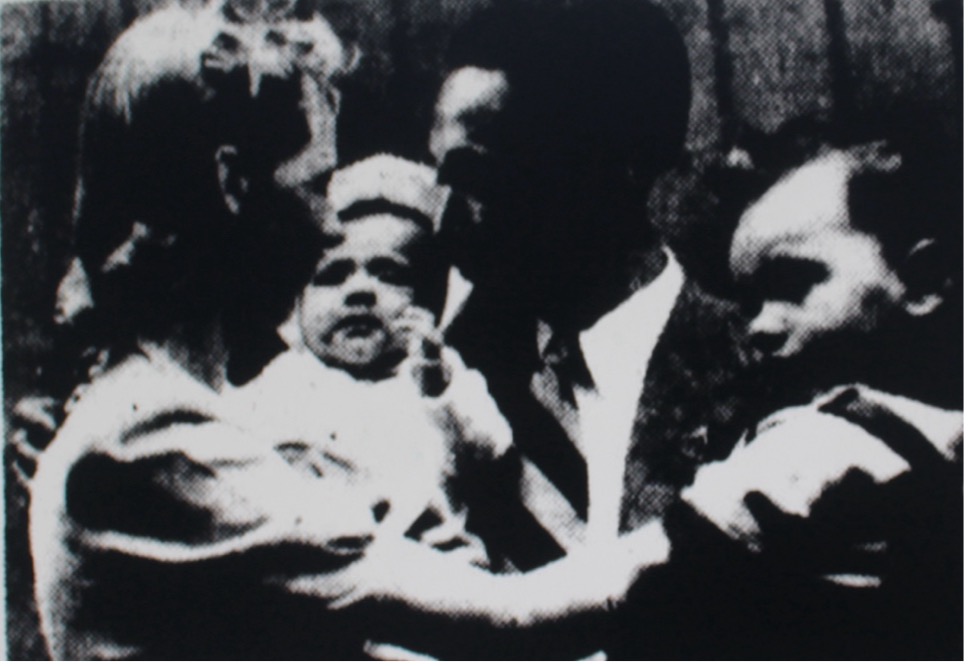
Mr. M. Amjah, one of the Malays who were deported to Singapore, gives a last embrace to his wife and two children, Omah and Kathleen, before boarding the Westralia [The Sun News-Pictorial, 9 February 1948]
Customs Officers Raid HMAS Westralia – 1948
The Newcastle Sun of 20 March 1948, page 1, reported:
‘Customs officers, who made a raid on the troop-ship Westralia at Pyrmont today, arrested a steward, who allegedly had in his possession 38 strings of pearls and silk goods. The raid was the second made on the ship this week. Customs officers who boarded the ship went to the steward’s cabin and searched it. They allege they found the contraband hidden in clothing there. Later, a steward was charged at Phillip-street Police Station with having contraband goods in his possession.’
This raid was one of many such operations carried out by the customs officers on ships carrying returning Japanese occupation forces.
HMAS Westralia Cinema Audience Thrown from Seats – 1948
The Daily Telegraph of 4 May 1948, page 9, reported:
‘More than 100 people attending the cinema on the liner Westralia on Sunday night were thrown in a heap when heavy seas struck the ship.
The passengers were watching the picture “Somewhere I’ll Find You.” The wife of an English Army Major, Mrs. F. E. Brown, cut both legs and her head when she was thrown violently against the ship’s rail. The ship’s surgeon inserted 16 stitches in her wounds. She was taken away in an ambulance when the Westralia berthed at 16 Pyrmont yester-day. Major Brown, who intends to settle in Australia, said: “There were more than 100 people at the picture-show, but they were thrown about so violently that my wife and I decided to leave. “As we went out of the door, we were thrown half the width of the ship against the rail.” Health officers delayed the berthing of the Westralia two hours because the ship had a case of chicken-pox on board. The Westralia brought 580 Service personnel, wives and dependents, and repatriated civilian workers, from Japan.

Publicity Poster for the 1942 movie, ‘Somewhere I’ll find You’
Stuntman Walks on HMAS Westralia’s Mooring Line – 1948
The Sun of 15 May 1948, page 2, reported:
‘Stuntman “Tex” Glanville demonstrated his wire waIking technique on one of the Westralia’s mooring-lines before leaving for Japan today. He took a few steps over the water to show pressmen how it was done. “I would have gone further,” he said when he jumped back, “but it’s hardly the right tension.” Tex, who is English and 38, will join an entertainment party in Japan as a juggler and tightrope-walker.’
HMAS Westralia Returns from Kure, Japan – 1948
The Daily Mirror of 24 June 1948, page 4, reported:
‘On board the Westralia, which arrived from Kure this morning, were 442 A.M.F. personnel, 15 R.A.N, and R.N., 15 New Zealand troops, two R.A.F. and 15 R.A.A.F. men. The ship also carried 18 wives and 20 children of servicemen, most of whom said they had enjoyed living in the B.C.O.F. area. They returned because their husbands were to be discharged or reposted. A party of 12 Danes, two Irishmen, a Scotsman and an Englishman (all British ex-servicemen who were discharged in Hongkong) came to Australia on the ship as migrants.’
HMAS Westralia Brings New Zealand Civilians to Sydney – 1948
The Newcastle Morning Herald and Miners’ Advocate of 9 July 1948, page 1, reported:
‘The Westralia and the Duntroon, due in Auckland from Japan early in August with New Zealand troops, are expected to take about 250 civilian passengers each to Sydney, thus relieving a considerable lag waiting several months in this country. The Duntroon is expected to leave Auckland on August 8, and the Westralia soon after. Both liners may make at least one more trans-Tasman trip after bringing more troops from Japan.’
HMAS Westralia Hits Wharf – 1948
The Sun of 23 August 1948, page 2, reported:
‘Caught by a howling south-westerly gale, the Westralia was blown on the end of No. 3 wharf, Darling Harbor, today. The ship had arrived from Japan and New Zealand. The Westralia, instead of running alongside, was caught broadside on. It smacked the corner of the wharf heavily. The wind was so strong that tugs could not hold her, and she was pinned for half an hour. Three heavy mooring lines were smashed. They were hauled to the wharf, the edge of which was littered with broken and frayed ropes.’
HMAS Westralia Transports Stranded New Zealand Citizens Back Home – 1948
The Daily Commercial News and Shipping List of 20 October 1948, page 2, reported:
‘The Australian and New Zealand Governments are having to help hundreds of would-be travellers to New Zealand who are stranded in Australia by the lack of Tasman passenger shipping. More than 2000 names are now on shipping companies waiting lists in Sydney. Under Royal Australian Naval charter, the Westralia will leave Sydney for Wellington on October 28 on a special trip with 300 passengers.’
HMAS Westralia’s Passengers Fear Prophecy – 1949
The Newcastle Sun of 12 April 1949, page 3, reported:
‘Superstitious seamen and passengers on the liner Westralia, which arrived today, feared that they would never reach Australia, following the prophecy of a Japanese fortune teller at Kure.
The fortune teller predicted disaster — and the Westralia encountered engine trouble and one of her crew was killed on the voyage. ‘I see your ship sinking on the sixth day out — only four of you will be saved,’ she told seamen. When an engine breakdown occurred at sea — on the sixth day — mild panic occurred among the more superstitious. On the eleventh day out, when one of the stewards was killed at Dreger Harbor (New Guinea), alarm grew and continued until today when the Westralia passed safely through the heads.’
HMAS Westralia Chartered to United Kingdom Government as a Troopship – 1949
The Daily Commercial News and Shipping List of 3 August 1949, page 1, reported:
‘Owing to a general shortage of trooping ships it has been decided to re-employ the Westralia temporarily in this capacity under charter to United Kingdom Government. Arrangements are being made accordingly and it is expected that Westralia will again be available as a troopship in the Middle East area towards the middle of next month.’
The Daily Mirror of 17 August 1949, page 12, also reported:
‘Sydney shipping authorities today denied a morning newspaper report that the Westralia was being “secretly” refitted as a troopship for the British Government. They said it had been publicly announced that the vessel was to be retained as a trooper on the Eastern run, first by the British Government and then by the Minister for the Navy (Mr. Riordan). It was said that the British Government tried to charter the well-known Australian liner, Kanimbla, but her owners were anxious to reconvert her from an assault ship to a passenger vessel. The Westralia then became the subject of these negotiations and the Navy decided to retain her as a troopship for eventual use by the British Government.’
The Daily Telegraph of 17 August 1949, page 9, reported:
‘H.M.A.S. Westralia, secretly reconverted as a troopship, is expected to leave Sydney for an undisclosed Middle East port late this month. Before reconversion began, dockyard workers had partly restored Westralia as a passenger liner after her war service as a troopship. Westralia is expected to sail on Friday for trials off the New South Wales coast.
The Australian Naval Board ordered the reconversion. Dockyard workers from Poole and Steel, Ltd., shipbuilding yard at Balmain, worked round the clock on the vessel under Navy supervision. Four months ago, they began refitting the ship for the inter-state passenger service. Three weeks ago, the same workers, under Naval Board orders, started tearing out luxury fittings. They replaced them with austerity fittings used when the ship was a trooper. Westralia is now probably the most luxurious troop carrier afloat. The Navy has left some of the beautiful timber panelling and pastel-tinted, interior decorations in public rooms. …….
The Navy requisitioned Westralia from the owners, Huddart Parker, Ltd., early in the war. Westralia was fitted up as an auxiliary cruiser, a landings craft ship, and in August 1947, as a troopship. As a landing-craft vessel Westralia took part in landings in New Guinea, New Britain, and the Philippines. Under Navy orders the ship ran as a trooper for the British Commonwealth Occupation Forces in Japan and made nine round voyages from Sydney to Kure with Australian and New Zealand troops.
Westralia returned from her last voyage to Japan in April this year and went to Poole and Steel’s dockyard. Work on restoring the ship for civilian trade was well advanced when the British War Office announced, on July 23, that the British Government had chartered the ship as a troopship. The Minister for the Navy (Mr. Riordan) said on July 27 that the Australian Government had rescinded a decision to convert the ship for her peacetime run on the Australian coast. He confirmed the War Office announcement that the ship would run as a troopship in the Middle East.’
HMAS Westralia Returns After Service with British Government – 1950
The Daily Commercial News and Shipping List of 1 March 1950, page 1, reported:
‘The Huddart Parker motorship is back in Australia after being on loan to the British Government. ……. Nothing can be ascertained as to the future movements, but it is hoped that with the acute shortage of passenger ships on the Australian coast, that completion of her reconversion will be carried on with the minimum of delay. With two other passenger ships — Kanimbla and Duntroon — still a long way from resuming their pre-war service, the travelling public will have to wait another twelve months before they can pick and choose their ship and destination.’
Reconversion Work on HMAS Westralia Held Up – 1950
The Sydney Morning Herald of 25 May 1950, page 8, reported:
‘Thirty-four members of the Ship Joiners’ Society at the shipyard of Poole and Steel Ltd. have stopped work because of a dispute about the laying of a rubber floor covering on the Westralia. This was stated in a notification to the Federal Arbitration Court yesterday by Mr. D. G. Fowler, secretary of the Metal Trades Employers’ Association.
Mr. Fowler said that the work, of laying the rubber flooring on the vessel was being carried out under sub-contract for Cockatoo Docks and Engineering Co. Ltd. by a firm which employed their own labour. Members of the Ship Joiners’ Society claimed they should do the work. When this claim was refused by the company, they stopped work and all joinery work on the Westralia was held up. The dispute was referred to Mr. J. V. Dwyer, Federal Conciliation Commissioner.’
PART FIVE – WESTRALIA RECOMMENCES INTERSTATE PASSENGER CRUISING AFTER CONVERSION FROM A NAVY WAR SHIP
Westralia to Operate on Sydney to Fremantle Service – 1951
The Daily Commercial News and Shipping List of 16 March 1951, page 4, reported:
‘Huddart Parker’s popular motor ship Westralia will resume service in the Interstate passenger and cargo trade on March 30, when she sails from Sydney for Melbourne, Adelaide and Fremantle. Subsequent sailings will be made from Sydney on April 27, June 15, July 13, August 10, September 11, October 12, November 9, December 7 and January 4.
The Westralia will run in conjunction with the motor ship Duntroon in the Sydney — Fremantle service whilst the motor ships Manunda, Manoora and Kanimbla will be engaged in the winter tourist service from Melbourne and Sydney to Brisbane, Townsville and Cairns.’
Westralia Handed Back to Owners – 1951
The Sydney Morning Herald of 28 March 1951, page 2, reported:
‘The Australian Navy handed the 8,100-ton interstate passenger liner Westralia back to her owners yesterday after more than 11 years. She is scheduled to sail from Sydney for Melbourne, Adelaide and Fremantle on Friday night on her first post-war passenger voyage.
Yesterday the Flag Officer in Charge, Sydney, Rear Admiral A. Showers, went on board the ship at Darling Harbour, and at a brief informal ceremony handed the ship over to the Managing director of Huddart, Parker and Co. Pty.
For more than a year dockyard workers at Poole and Steel’s engineering yards at Balmain have worked on the refitting and overhauling of the Westralia. They restored passengers’ cabins to their pre-war standard, enlarged the crew’s quarters, and modernised the ship’s promenade deck.
Passengers who used to travel on the ship before the war will notice hardly a difference in the smoke room. It was carefully restored to pre-war appearance by renovating the tasteful Adam period fittings and panels.
Since the 21-year-old Westralia Captain P. Holthe, commander of the Westralia, took delivery of the ship yesterday from the Navy, which was represented by Rear-Admiral Showers R.A.N. was requisitioned in 1939 she has tramped the world, first as an armed merchant cruiser and later as a troopship. …..
Shipping engineers estimate that the total cost of the Westralia’s re-conversion was about £700,000. Her new accommodation for passengers caters for 286 first class and 78 third-class. Enlarged crew’s quarters reduced the first-class passenger accommodation by more than 50.
The ship’s owners, Huddart Parker Limited, plan to run the ship permanently in the Western Australian trade. She will leave Sydney at the end of each month and make the trip to Fremantle in about ten days. She signed on a crew of 130 yesterday and began loading cargo for Victoria, South Australia, and Western Australia. …….
The addition of the Westralia will bring the Australian interstate passenger fleet to six ships. The others are: Duntroon, 10346 tons; Kanimbla, 10,985 tons; Manoora 10,899; Manunda 8,853, and Ormiston, 5,856 tons.’
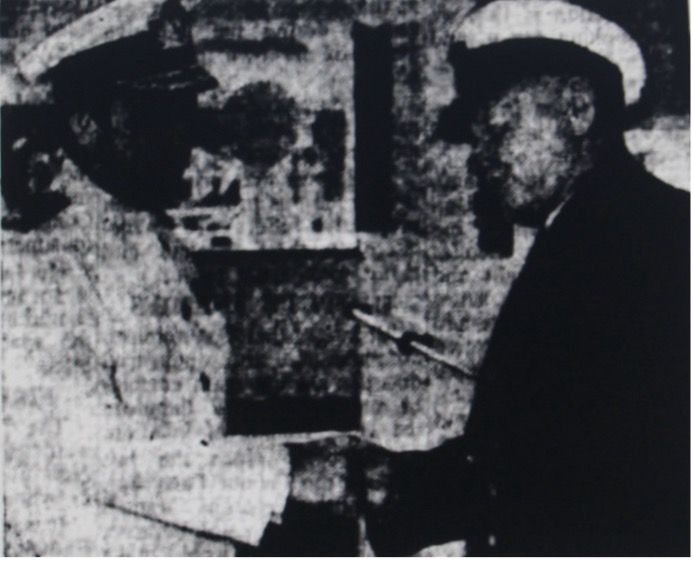
Captain P. Holthe (right), commander of the Westralia, took delivery of the ship yesterday from the Navy, which was represented by Rear-Admiral Showers, R.A.N. [The Sydney Morning Herald, 28 March 1951]
Westralia Runs Aground in Port Adelaide – 1951
The Newcastle Morning Herald and Miners’ Advocate of 8 June 1951, page 3, reported:
‘The interstate passenger ship Westralia, which ran aground on the southern breakwater at Outer Harbour last night, got clear early this morning with the aid of the ocean-going tug Tancred. Westralia, bound for the eastern States when she ran aground, returned to her berth at Outer Harbour. An early examination showed there was no serious external damage.’
Westralia Hits Wharf in Sydney – 1951
The Daily Telegraph of 16 June 1951, page 7, reported:
‘The liner Westralia crashed into No. 3 Darling Harbor wharf in a high wind yesterday. The ship, due to sail yesterday, could not adjust her compass in the stream because of the boisterous weather. She was returning to her berth when a gust of wind blew her out of control of tugs, which were towing her. The ship’s bow hit the wharf smashing a six feet hold in timber and concrete. The crash loosened rivets on the liner’s port bow. Welders worked last night to repair the ship, which will sail today.’
Plaque of Ship’s War Record Unveiled on the Westralia – 1954
The Age of 12 July 1954, page 4, reported:
‘Not so many years ago she sailed under a different flag— the proud Ensign of the Royal Australian Navy. In those years she was anything but a playground. The vessel struggled and fought through air raids and troop landings and emerged with a grand record of troop carrying. Westralia berthed yesterday afternoon from Sydney. In service with the R.A.N., Westralia sailed a total of 120,987 miles and took part in all the landings from Hollandia to Lingayen, in the Philippines, which finally turned the war against the Japanese. Last night 30 old members of “The Wests” ship’s company came back to her as guests of the ship’s owners, Huddart, Parker Pty. Ltd.
They represented the seamen and stokers, blacksmiths and shipwrights who kept the ship battleworthy in her role of mothering the landing craft which darted from her side towards hostile beaches. Last night’s ceremony was performed by Surgeon Lieutenant-Commander J. S. Guest, O.B.E., who was in “The West’s as senior medical officer for three years. …..
Lieutenant-Commander Guest said that the ship’s record in landing troops and evacuating wounded from the beaches had been a fine one. Australian and American soldiers had gone ashore from her sides, and although many of them had not returned she had, in the main, been a happy and lucky ship. Brigadier T. Daly, representing the army, said that Westralia had taken thousands of troops into battle and brought most of them out again. He hoped that when the present Westralia ended her career the plaque would be transferred to the next ship to bear her name.
The director of training, R.A.N.R. Captain A. S. Rosenthal, D.S.O., O.B.E.; who was captain of the ship early in the war said “she was a perfect lady while I was with her.” Seven years of torrid war-time sailing were commemorated in a simple ceremony aboard the coastal liner Westralia last night when a plaque was unveiled detailing the ship’s war record.’
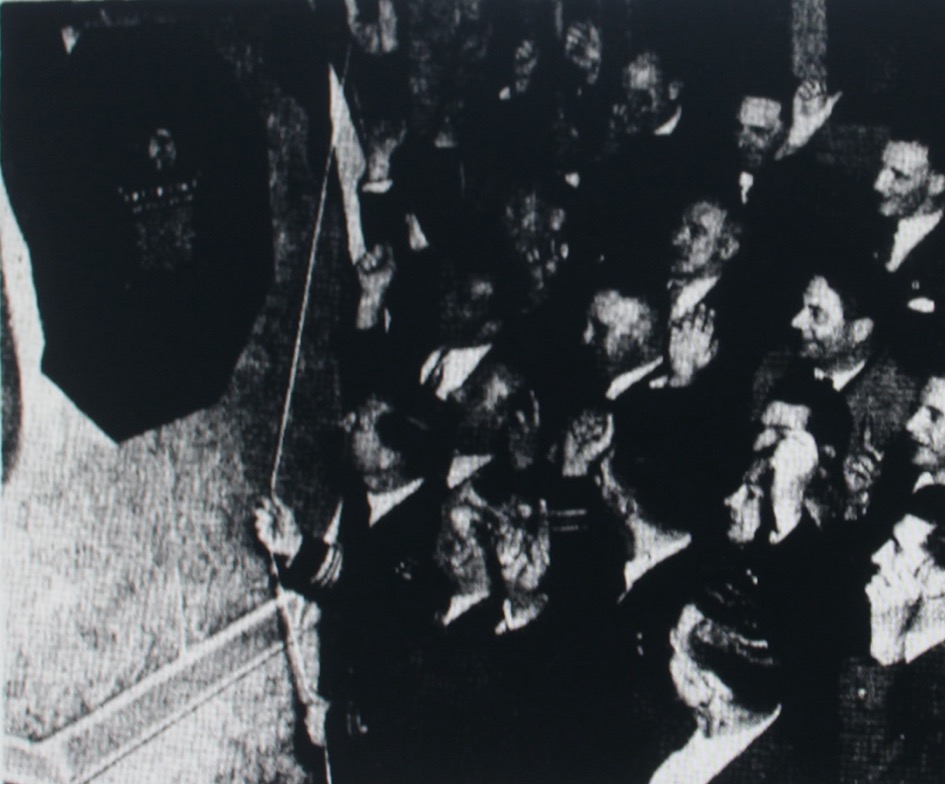
Plaque unveiled on board the Westralia detailing the ship’s war record [The Age, 12 July 1954]
Concluding Comments
When the Westralia recommenced passenger services in 1951, the golden era of interstate passenger cruising was entering changing times.
In post-war Australia, the use of cars and planes to travel to interstate destinations was becoming more common.
In 1959, the Westralia was sold to the Asian and Pacific Shipping Company, for use in cattle transportation, and renamed the Delfino. The ship was finally broken up for scrap in 1961.
The Canberra Times of 22 April 1959, page 10, reported:
‘The 9,000-ton Westralia, which has been sold to a Suva company, will still call at Australian ports. The ship, one of Australia’s best-known passenger coasters, will be registered at Suva under the United Kingdom flag. However, it will still operate on the Pacific route, calling at Australia, the islands and the United States. The Westralia’s new owners will rename the ship ‘Delfino’.
The Nepean Times of 11 June 1959, page 5, reported:
‘Mr. G. Forsyth from Wagga, is in charge of the 30,000 sheep which are in the area at the rear of Mr. Tom Hungerford’s property, High Street, Penrith. ….. The sheep are all shorn and from Sunday night next will start to embark on the Westralia, to make their Pacific crossing to San Diego, California, U.S.A.
“This is the biggest lift of sheep to cross, from one continent to another,” said Mr. Forsyth. He and his staff will continue their journey with the sheep to their destination, for the International Shipping and Export Agency. ….. May they all have a good trip. This mob should represent about £260,000 to Australia.’
The Canberra Times of 22 June 1959, page 6, further reported:
‘Five unions whose members have been working on the sheep ship Delfino will confer with the owners’ representatives tomorrow on their claims for special rates. The union members walked off the job on Friday after their claim for a rate of £1 an hour was rejected. The claim was made because of the alleged obnoxious conditions on the ship.
The Delfino now has 9,000 fat lambs aboard and is scheduled to load another 21,000 on Wednesday and Thursday. The ship is due to sail for the United States at the end of the week with the first shipment in a plan to export 200,000 fat lambs to America. The exporting company is the International Shipping and Export Agency.’
A sad end for a once mighty ship.
ADDENDUM ONE: THE FIRST WESTRALIA
The first ship named Westralia and operated by Huddart, Parker and Co. Pty. Ltd., was launched in 1897. Its history is set out in the following two newspaper reports.
The Mirror (Perth) of 3 December 1927, page 3, reported:
‘The once favourite passenger liner Westralia is to end her days as a storage ship for copra, in Rabaul, New Guinea, having now been sold for about £3000 by Huddart, Parker and Co. Pty. Ltd.
For many years she was the crack steamer of her line trading on the Australian coast and to New Zealand. Built of steel in Sunderland in 1897, the Westralia is of 2,922 tons gross. She has been lying idle for several years.’
The Evening News of 15 August 1928, page 4, reported:
‘On Her last voyage from Sydney, the old Huddart, Parker liner, Westralia, left port today in tow of the steamer Willaston for Rabaul. where she will be used as a hulk by W. R. Carpenter and Co., who recently purchased her. The Westralia was for many years well-known in the Australia-New Zealand trade, which the entered as a new ship in 1897, running with the Victoria, the first Zealandia, now the Paloona, the Wimmera, Riverina, and Uilmaroa. Some years ago, the Westralia was laid up in Rose Bay, and though a number of buyers from the East looked at her with a view to purchase. It was said that her boilers would require replacing.’
ADDENDUM 2 – GARDEN ISLAND PLAQUE
The second Addendum records the inscription on the memorial plaque at Garden Island, Sydney, to commemorate the service of each of the three naval ships, HMAS Westralia, HMAS Manoora and HMAS Kanimbla in the Second World War.
In 1943, each of these assault landing ships spent time attached to HMAS Assault at Port Stephens.
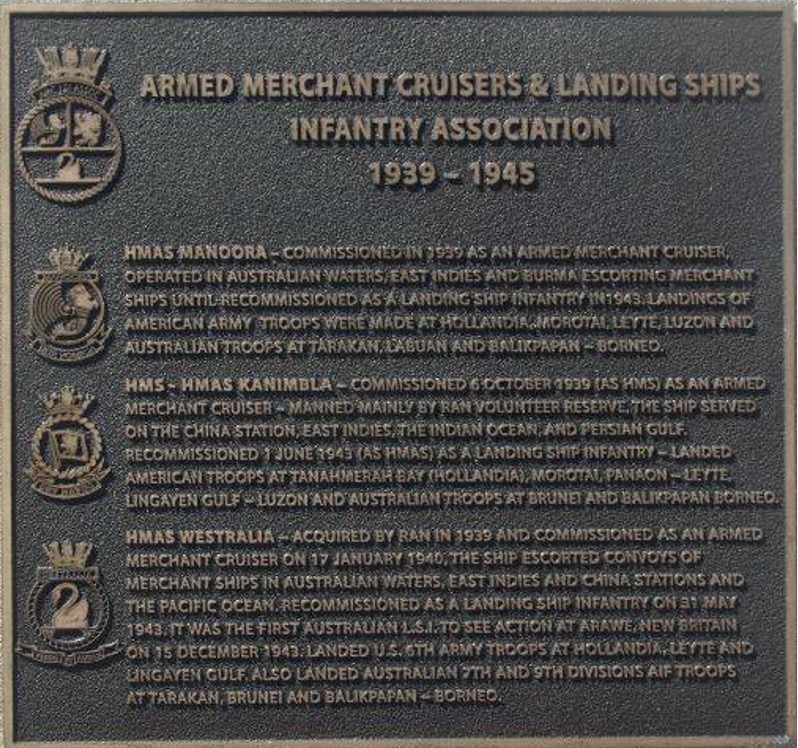
The inscription on the plaque honouring the ships Manoora, Kanimbla and Westralia states:
Armed Merchant Cruisers and Landing Ships Infantry Association 1939 – 1945
HMAS Manoora – Commissioned in 1939 as an armed merchant cruiser, operated in Australian waters, East Indies and Burma escorting merchant ships until recommissioned as a Landing Ship Infantry in 1943. Landings of American Army troops were made at Hollandia, Morotai, Leyte, Luzon and Australian troops at Tarakan, Labuan and Balikpapan-Borneo.
HMS-HMAS Kanimbla – Commissioned 6 October 1939 (As HMS) as an armed merchant cruiser-manned mainly by RAN Volunteer Reserve, the ship served on the China Station, East Indies, the Indian Ocean, and Persian Gulf. Recommissioned 1 June 1943 (as HMAS) as a Landing Ship Infantry – Landed American troops at Tanahmerah Bay (Hollandia), Morotai, Panaon-Leyte, Lingayen Gulf-Luzon and Australian troops at Balikpapan -Borneo.
HMAS Westralia – Acquired by RAN in 1939 and commissioned as an armed merchant cruiser on 17 January 1940, the ship escorted convoys of merchant ships in Australian waters, East Indies and China Stations and the Pacific Ocean. Recommissioned as a Landing Ship Infantry on 31 May 1943. It was the first Australian L.S.I. to see action at Arawe, New Britain on 15 December 1943. Landed U.S. 6th Army troops at Hollandia, Leyte and Lingayen Gulf. Also landed Australian 7th and 9th Divisions AIF Troops at Tarakan, Brunei and Balikpapan-Borneo.
Researched and compiled by Kevin McGuinness
April 2024

 Port Stephens - a history exploration