
Getting a Breath of the Briny
Operators of the Ocean Excursions
The first ocean excursions to Port Stephens commenced in the early 1870’s on an irregular basis. They were operated by the Newcastle Steamship Company using small steamships, such as the SS Samson and SS Sydney.
The peak period for excursions from Newcastle to Port Stephens by steamship was however between 1892-1928 following the formation of Newcastle and Hunter River Steamship Company (NHRS Co.).
This company was formed by the merger of the Newcastle Steamship Company and the Hunter River New Steam Navigation Company in 1892 and operated up to 1956. Up to 1930’s, the company transported thousands of tourists to the largely unknown Port Stephens.
The ocean excursions were extremely popular. Up to 700 people could travel on some of the company’s steamships which were large for their time. The average number of patrons per excursion was 400. On many occasions, people had to be left behind at the Newcastle wharf because of the high demand. A police-officer sometimes accompanied cruises for security purposes when numbers were large.
From the 1890’s to 1930, on weekends and public holidays, many people would attend organised recreational events. In the Newcastle and surrounding districts, the most popular events were country shows, horse racing, organised group picnics, and ocean or river cruises.
The steamships that were used for excursions by the NHRS Company to Port Stephens were the same vessels that plied the coast between Sydney and Newcastle. They carried cargo and accommodated passengers in cabins on overnight trips. Apart from having outside decks over two levels, indoor parlours were also provided for dining and recreational activities.
The steamship company marketed their cruises. Firstly, they would place advertisements for forthcoming cruises in regional newspapers. Secondly, following the conclusion of each cruise, the company would send favourable reports to the Newcastle and regional newspapers.
The excursionists primarily came from Newcastle, with the smaller numbers from Sydney and the regional areas, such as Maitland.
The fares for a return ocean cruise varied over time. In the later period, the going rate was 3 shillings for each adult, with children travelling at half-price.
Other companies and interest groups also conducted excursions, to Port Stephens, for purposes such as fishing and shooting. These excursions did not operate on a regular basis and would often transport less than 50 persons. These small excursions went to places such as Nelson Bay, Tea Gardens and Myall River.
Popularity of Ocean Cruises
For most people, the Port Stephens area was a mystery. Until 1920’s, there were no roads into the area, and it was difficult to access the southern side of the bay, where Nelson Bay was situated. It was possibly the only town on the New South Wales coast that did not have direct road access and yet was so close to Newcastle.
Undertaking a one-day ocean excursion was very attractive. You could have breakfast at home, lunch at Port Stephens, and be home in time for dinner. It also appealed to people living inland who rarely, if ever, experienced the ocean.
The excursions were often promoted as a chance to get a ‘breath of the briny’.
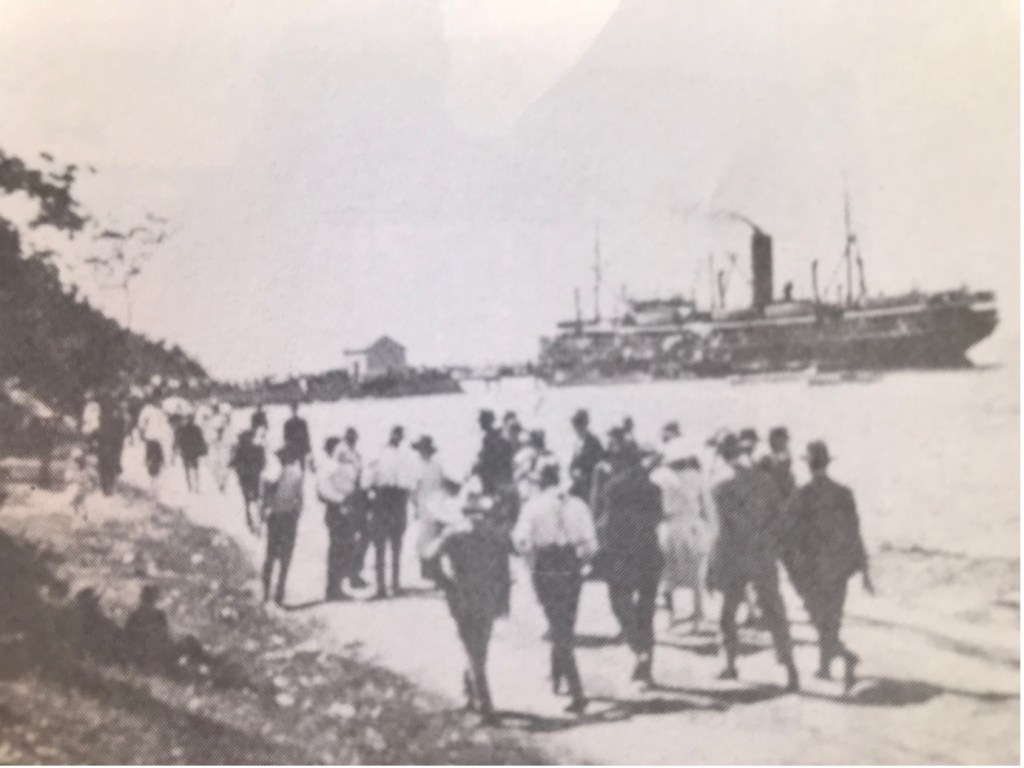
Excursionists at Nelson Bay wharf, prior to embarkation, circa 1927
A Typical Ocean Cruise
The typical ocean excursion would see the steamship leave a Newcastle wharf between 9.30 and 10 a.m. Port Stephens would be reached around 12.30 p.m. The excursionists would be allowed to leave the boat and go ashore at Nelson Bay, for at least two hours. Around 3 p.m. the ship’s horn would be sounded several times as a signal to return to the boat. The steamship would leave Port Stephens about 4 p.m., arriving back at Newcastle by 7 p.m. The cruises occurred on public holidays and at the week-end. Some cruises were organised to correspond to a common ‘pay day’.
On most occasions, a band would be engaged to travel on the ship, and would perform on both ways. Sometimes a band would play on the wharf prior to embarkation, as an aid to add to the festive vibe.
During the cruise, caterers were engaged to provide refreshments and liquor which were available for purchase, which the advertisements claimed were at ‘moderate prices’. For lunch, patrons had the choice of purchasing food on the ship or bringing a food hamper from home to enjoy on the boat or on shore at Nelson Bay.
When the band commenced playing on the cruise, dancing would begin Other passengers were happy to trail a fishing line behind the boat with the hope of catching supper.
Occasionally, half-day excursions were offered without dismemberment at Nelson Bay. The ship, with or without a band, would leave Newcastle about noon and arrive at Port Stephens about 2.30 p.m. when passengers would be taken fo cruise around the Bay. They would leave to return to Newcastle about 4.30 p.m. arriving back by 6 p.m.
The excursions were timed so that they would arrive back at Newcastle in time for patrons to catch a tram or train back to their home in time for supper. On some occasions when a large number of patrons from Newcastle and the surrounding region (600 to 700) were expected on a cruise, a special train was organised to take them to areas such as Maitland.
Ashore at Nelson Bay
Prior to the construction of a Nelson Bay wharf to accommodate the large steam ships, passengers who wished to go on shore, had to be first transferred to a smaller steam vessel, such as the Storm King’ or Williams to be taken ashore.
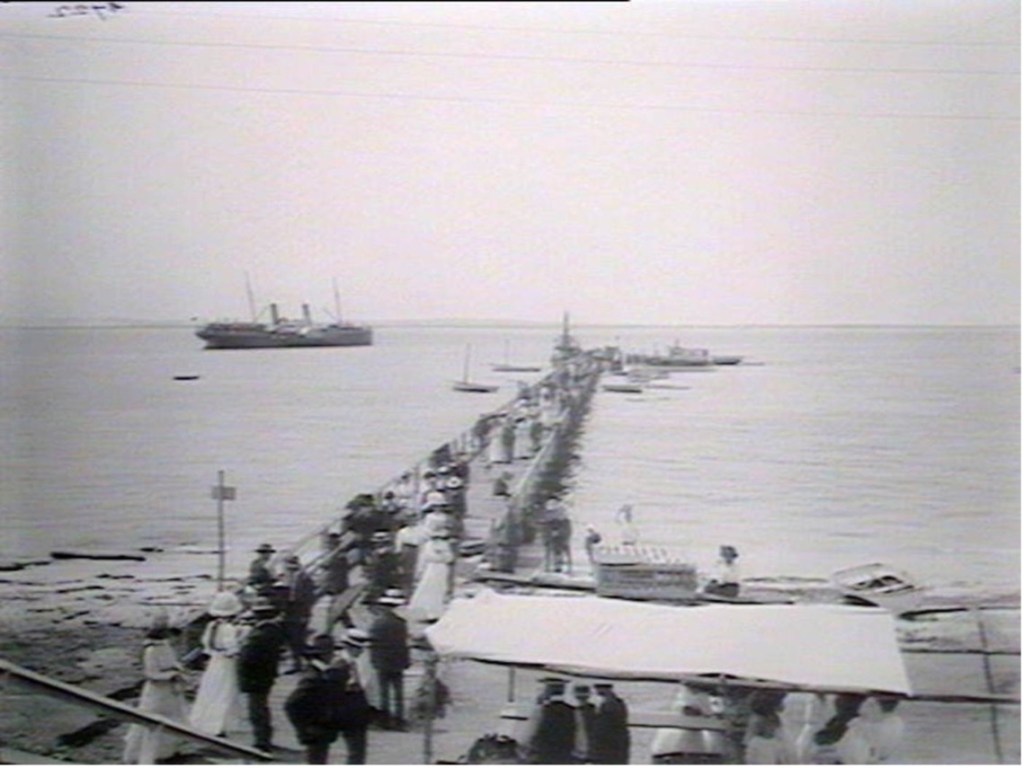
SS Namoi landing excursionists at Nelson Bay. They were taken onshore by a small steam ship.
Following the construction of an adequate wharf at Nelsons Bay in 1910, passengers could disembark directly. The new wharf was constructed by the company to meet the requirements of the excursion traffic, as well as for cargo shipments. A pathway was also made, and the surroundings generally improved.
While on shore at Nelson Bay, the favourite activity was taking a walk around the village and the surrounding bay and beach areas. Watching the Chinese fisherman at work was also a curiosity. Others headed straight for the surrounding bushland to collect Christmas Bush and other native flowers. or to talk to the local residents. Fishing was also popular, as was a visit to the Sea Breeze Hotel.
The collection of Christmas Bush by excursionists was seen as a problem by Nelson Bay residents. In October 1925, the Nelson Bay Progress Association wrote to the Council and applied for protection of the Christmas Bush. The Council informed the Association that it had no legal way to provide the protection.
With some cruises, instead of going on shore, patrons were given the option of a cruise around Port Stephens, for an additional fee. The steamer Kingsley was generally utilised for such purposes.
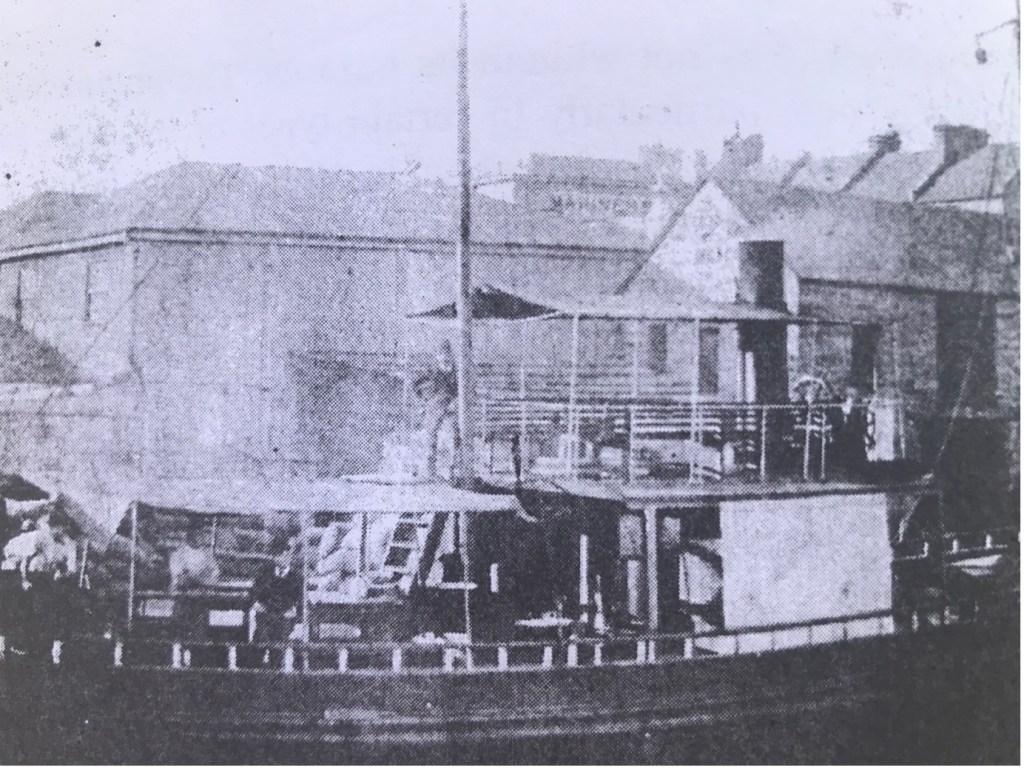
SS Kingsley
Steamships used on the Sea Excursions
Steam ships of varying sizes came to Port Stephens carrying excursionists prior to 1891 on an infrequent basis.
When the Newcastle and Hunter River Steamship Company, the following four large steamships were used for the excursions:
1) SS Gwydir (1911-1942)
A twin screw ship of 1929 gross tons built in 1911 at Glasgow. It was wrecked at Norah Head, Norahville on 14 February 1942 when she beached after a collision with the New Hebrides.
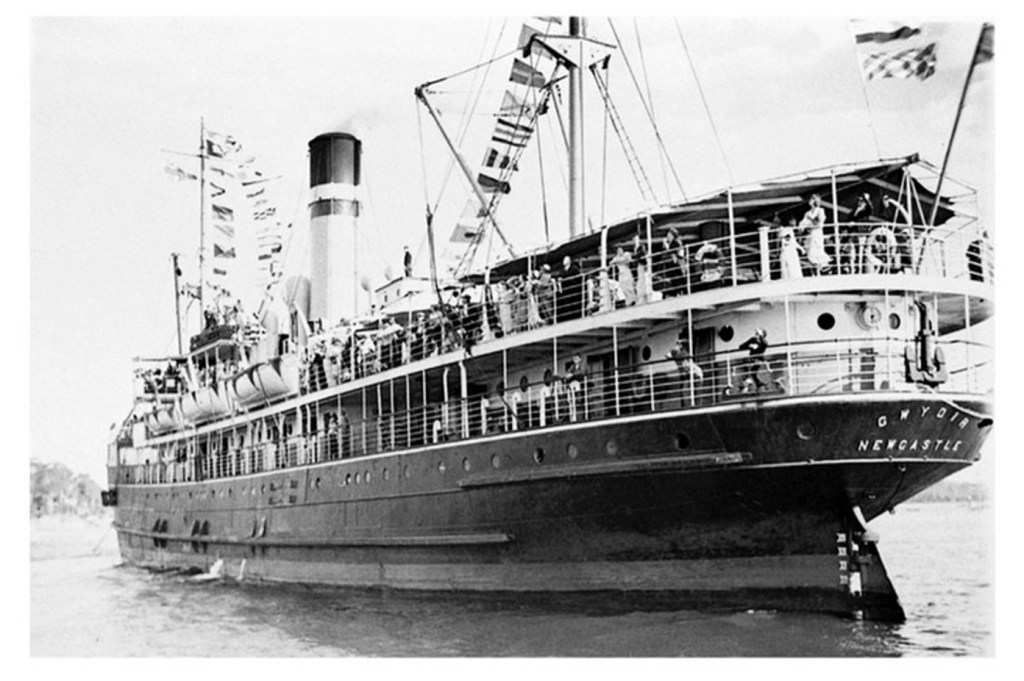
SS Gwydir
2) PS Namoi (1883-1925)
At 1414 gross tons, PS Namoi was at one time considered the finest paddle-steamer in Australia. She worked the Sydney to Hunter River route as a passenger and cargo vessel all her career. She was scuttled in June 1933 off Sydney Heads.
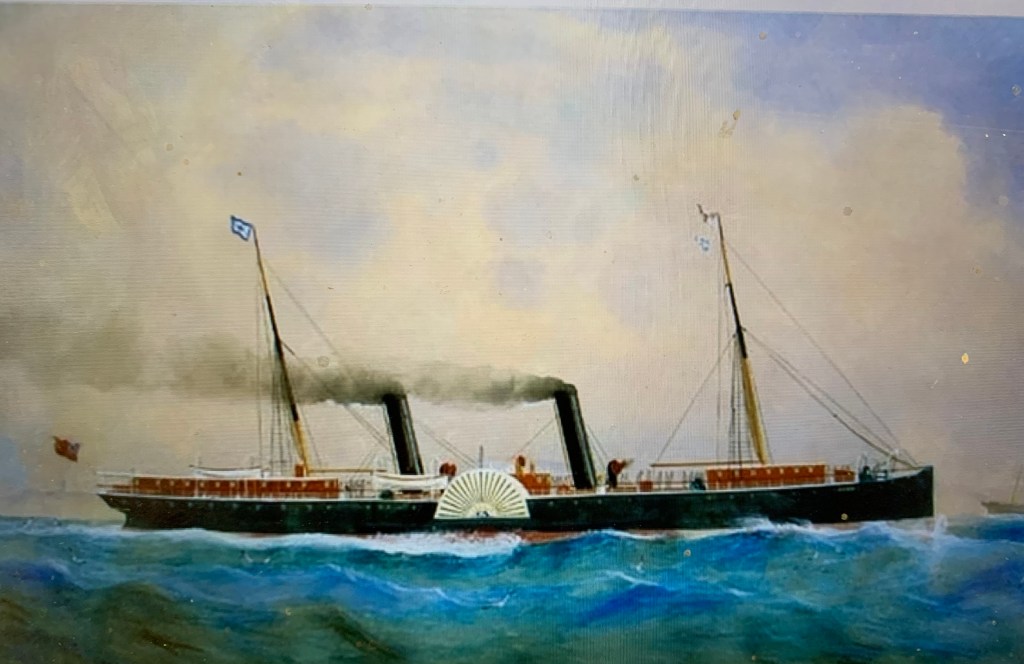
PS Namoi
3) PS Newcastle (1884-1928)
Steel hulled paddle steamer of 1251 gross tons used on the Sydney to Newcastle passenger run. She was the last ocean-going paddle steamer still actively working by1928. She was scuttled off Sydney Heads during 1933.
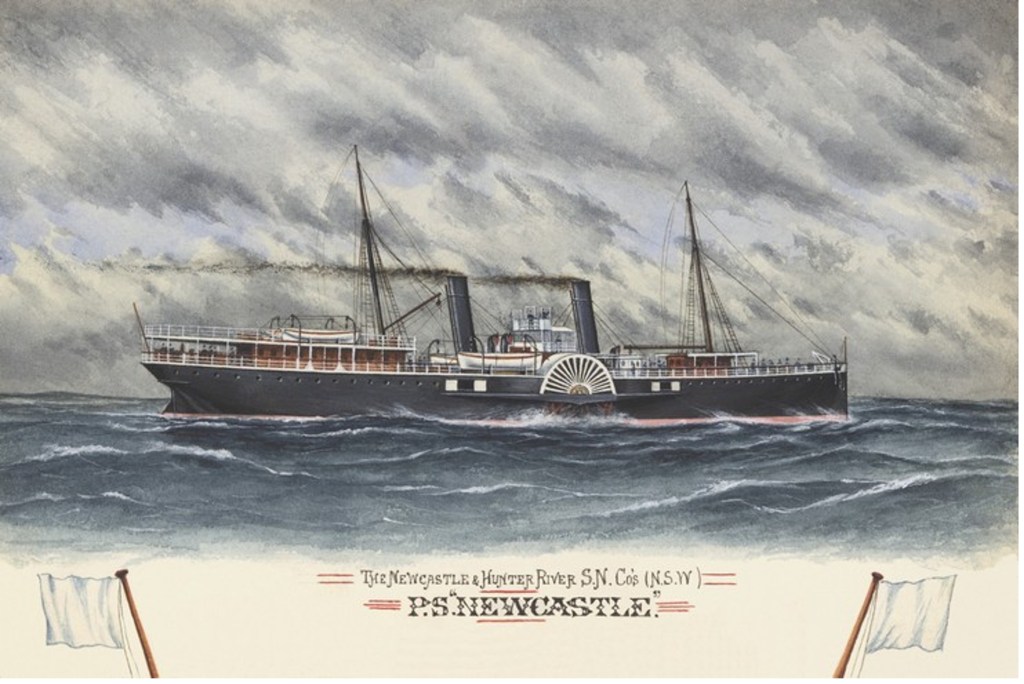
PS Newcastle
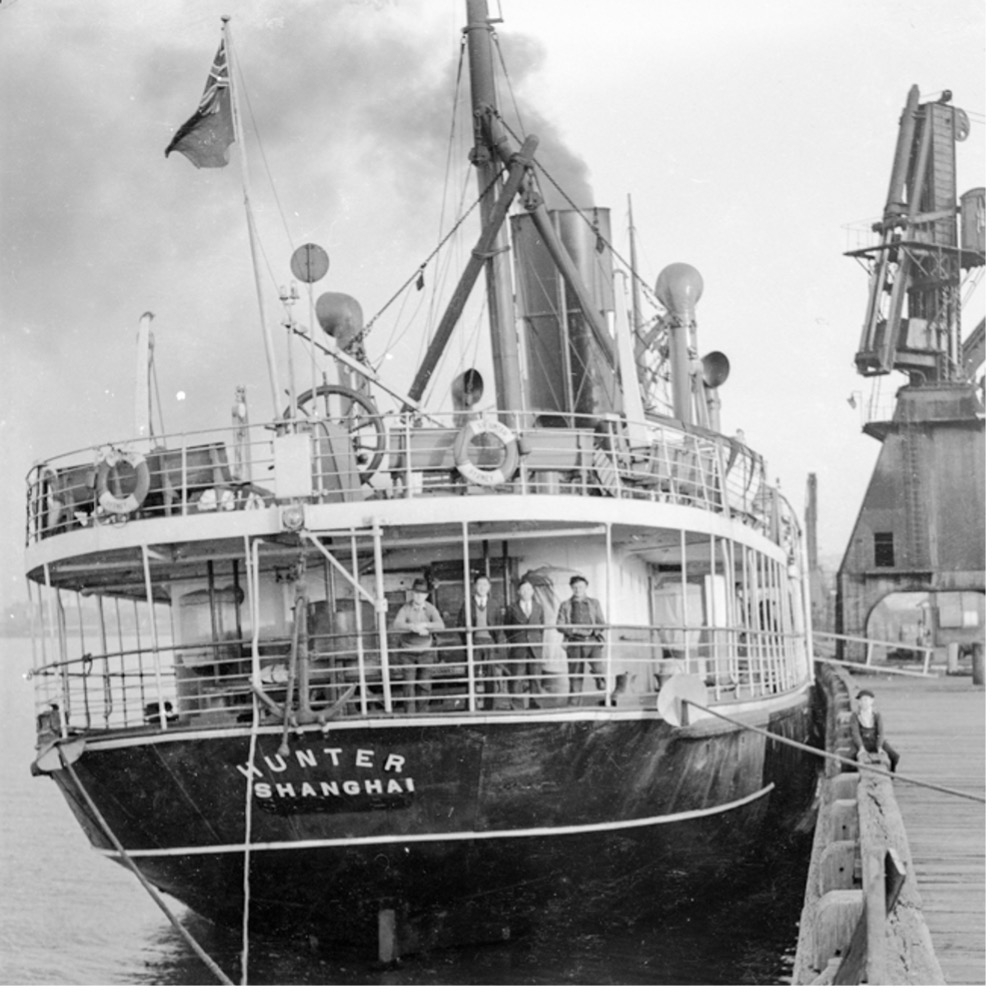
4) SS Hunter (1907- 1941)
A steel twin screw ship of 1840 gross tons built in Scotland. She was mainly employed on the Sydney to Newcastle overnight run. By 1938, declining trade saw she sold to Millar & Co. of Shanghai. She was scuttled in Hong Kong in 1941.
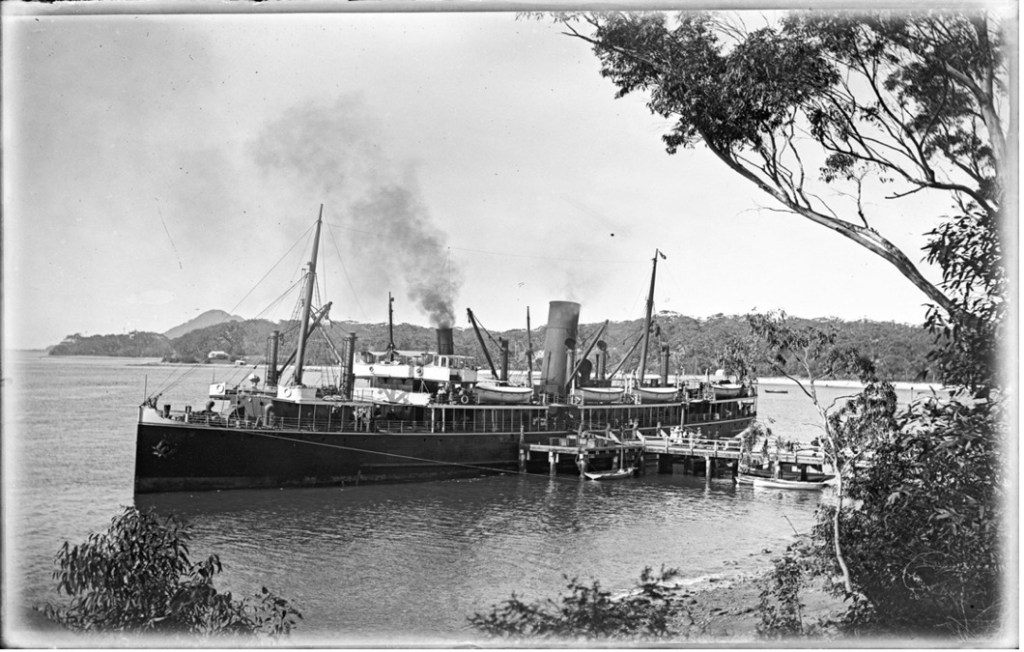
SS Hunter at Nelson Bay Wharf
Safety Record
Over the long period of excursions to Port Stephens, few accidents or other incidents were reported.
While the ocean cruises were safely conducted, there were always times when things did not go to plan.
Mal-de-mer (Sea sickness)
The NHRS Co. and the excursionists would both hope that a ‘land mans’ smooth sea prevailed. On every trip several of the excursionists would suffer get sea-sickness. The only variable being how many, and this was always dictated by the sea swells and prevailing winds. Often, the sea would be calm on one leg of the journey but not for the other.
Stranded on a Sandbank
The Singleton Argus of 16 November 1905 (page 1) reported on the steamer ‘Newcastle’ being stranded for five hours on a sandbank.
‘The steamer ‘Newcastle’ made an excursion to Port Stephens on Monday, having on board some 500 passengers. While the vessel was cruising about in Port Stephens she suddenly got aground on a sandbank near Soldiers Point, and despite the efforts of the officers and crew the vessel could not be shifted. As the tide was ebbing the steamer had to remain fast till high water. She grounded at 2.30 p.m., and it was not until 7.30 p.m that she floated off and was able to proceed on the return trip to Newcastle. There was no danger, the bank being soft sand, but the incident caused considerable excitement amongst the passengers, who grew exceedingly weary of the long wait. Many of those aboard had to return to Sydney on Monday night or to Maitland districts, but they did not arrive at Newcastle until shortly before 11 o’clock, and consequently many had to remain in town.’
Assistance Given to Another Boat.
The Newcastle Morning Herald and Miners’ Advocate of 28 December 1909 (page 4) reported on two problems encountered, on a particular excursion.
‘The Newcastle and Hunter River Steamship Company’s steamer Hunter left the Market Wharf at 9.30 yesterday morning for Port Stephens, having on board nearly 400 holiday-makers. The conditions were most pleasant, and on Nelson’s Bay being reached the passengers were landed after about an hour’s delay, caused by the low water. A start on the return trip was delayed on account of the Hunter having to give assistance to the same company’s steamer Karuah, which took the ground while lying at the wharf at Nelson’s Bay. When the tide rose, the Karuah was safely brought into deep water, and at ten minutes past five the Hunter steamed south for Newcastle, the run to the wharf occupying two hours and twenty minutes.’
POSTSCRIPT – COMMENTARIES ON VARIOUS EXCURSIONS
The following commentaries, as published on various excursions, provide a rich insight into to the early adventures of an ocean-going trip from Newcastle to Port Stephens:
1) Early Excursion – 1861
The Sydney Morning Herald of 3 April 1861 (page 4) carried the following article on the first recorded excursion to Port Stephens:
‘Yesterday being Easter Monday was kept as a general holiday. All places of business were closed. A large number of people came down by train from Maitland, and many availed themselves of the opportunity offered by an excursion to Port Stephens by the Samson steamer. A capital band was provided; the weather was delightful, and the sea as smooth as it could be wished. The Samson left the wharf at 11 o’clock, with some eighty excursionists, arriving at Port Stephens heads at about two o’clock. After proceeding as far as the Chinese fishery, the steamer returned, arriving at Newcastle at about seven o’clock. Dancing was kept up both going and returning. A waterspout was seen some few miles out at sea, and a slight shower fell when near Port Stephens All appeared to enjoy themselves, and were highly delighted with the trip. …..
Soon after the Samson returned from Port Stephens, a special train left for Maitland. The train was some minutes behind time in starting, and on coming near the first crossing (Magney’s), passed over a man named …, cutting off his head and part of his hands. The poor fellow had just returned by the Samson, and was employed as reporter to the Chronicle. ….. The inquest will be held this evening. There can be little doubt the unfortunate man was inebriated at the time of the accident.’
2) Early Excursion – 1871
The following commentary on an excursion to Port Stephens was published in the Newcastle Chronicle of 25 May 1871 (page 2) and provides a detailed picture of an excursion undertaken prior to the commencement of operations by the NHRS company.
‘Some seven or eight score, holiday-makers, wended their way at shortly after ten o’clock in the morning to the steamers’ wharf, intending to pass their holiday in making an excursion to Port Stephens. On arriving at the wharf much disappointment was felt and expressed at the substitution of the ‘Paterson’ for the ‘City of Newcastle’, and a good many of those who intended making the trip held back at the last moment, owing to this cause. However, after firing a brass gun, and an iron gun some two or three times, the Paterson backed to allow the City of Newcastle to leave her berth for Sydney, and then followed her down the harbour, passing her off the third crane as if the crack boat had been at an anchor. Outside, clear of Nobby’s the sea smooth, the wind off the land, every prospect of a pleasant trip. Maitland hampers opened and displayed their appetizing contents, ladies smiled, languidly and then more languidly, the cabin stairs were sought and found ……The deck began to thin as the sand-hills were passed, and at Morna Point, a good third of the seekers after pleasure—had found it. Fishing lines were towed over board and stretched, so as to be ready to catch fish. Oranges and babies were in full supply, as they always are on these occasions, and by-and-bye the entrance to Port Stephens was reached. … Once inside, and the water smooth, all hands fell too on the really splendid spread provided by Mr. E. P. Poole, the steward of the City of Newcastle, and here we must say whatever disappointment there may have been as to the change of vessel, there was none as to the dinner placed on the table, which was excellent, and the waiting good. Dinner over, there arose a cry of “any body for the shore!” and shortly, three ships’ boats loads of excursionists were strolling on the sandy beach, or watching the Chinaman netting their nets….. Bang! goes a gun, one had just had time to light one’s pipe; bang! went another and out went the pipe. What’s that! ‘Oh, go on board again,” and off we started. Up anchor and away; a nasty sea running outside ; the ladies’ cabin is full to repletion ; the little boat begins to tumble about, so most of us go in for a nap. “Here, rouse up, ain’t you going to have any tea?” and Mr. Poole has once more put a capital spread on the table. “Where’s Nobby’s”? “Five miles off.” “Who’ll hold a blue-light?” “I, and I, and I!” Away on the deck, and the 5th of November is celebrated on the 24th May. Rockets go up, and sticks come down ; blue-lights make ghosts of human beings ; the steamer bumps on the wharf, and we are once more landed in Newcastle safe and sound, after a really most pleasant excursion.’
3) Boxing Day Excursion – 1900
The Newcastle Morning Herald and Miners’ Advocate of 27 December 1900 (page 4) reported on a Boxing Day excursion:
‘Boxing Day without a trip to Port Stephens would be wanting in one of its chief attractions, and the popularity of the excursion was evident yesterday by the patronage bestowed upon the Newcastle and Hunter River S.N. Co.’s steamer ‘Newcastle’, which ran the trip. No better boat could be secured for the purpose, nor could weather conditions have proved more favourable. A fine cool breeze was blowing when the steamer sailed, a little after 10 a.m., and this, with smooth sea, a good sea boat, plenty of room, and inspiriting music, tended to make the trip most enjoyable. By 1 p.m. the Newcastle was at anchor in Nelson’s Bay, where the steamer ‘Williams’ came alongside and transhipped the passengers, landing all safely at the jetty. A general dispersal was then made, and for upwards of three hours the Newcastle remained at anchor, while her passengers roamed around the bush in search of wild flowers, and returned laden with Christmas bush, etc. At the Sea View Hotel dinner was provided, which many availed themselves of, while equal provision was made on board the steamer for the wants of the passengers. The return trip was equally pleasant. The north-easter freshened during the afternoon, creating a little roll as the steamer cleared the heads at Port Stephens, but from that point homeward a splendid run was made, which all enjoyed immensely. The trip was unanimously voted by all on board to be one of the most successful yet held. One thing alone remains to be done in order to make these excursions a perfect success, and that is the extension of the Nelson’s Bay wharf to deep water, so that the steamers may go along side and land passengers without trans-shipment. Captain Martin Thompson was in charge, as usual, and, together with his officers, did all possible for the comfort of the passengers.’
4) Dancing at the Sea Breeze Hotel -1902
The Maitland Daily Mercury of 1 April 1902 (page 4) carried the following report of a great time being had by excursionists at the Sea Breeze Hotel at Nelson Bay:.
‘An excursion from Newcastle to Port Stephens was run yesterday, under the auspices of the Newcastle and Hunter River Company. The steam ship ‘Newcastle’, in command of Captain Thompson, swung out from the wharf shortly after ten o’clock, with only a moderate number, of excursionists on board. A large crowd had assembled on the wharf, but owing to the heavy roll on the bar caused through the strong southerly wind which prevailed, only the most venturesome decided to go. This fact, combined with the counter attractions of the encampment, Wallsend Races, and the Newcastle Coal Trimmers’ Federal Union picnic to Riversdale (to which pleasure seekers were conveyed by the steamers ‘Rose’, ‘Aggie’, ‘Etna’, and ‘Iona’), operated considerably against the financial success of the undertaking.
After crossing the bar the ‘Newcastle’ dipped and tossed to such an extent that the picturesqueness of the coastal scenery had but little charm for the majority of those on board. However, a good run down to Port Stephens was made, where excursionists were landed for a couple of hours. A large number of persons were already there, brought by an excursion steamer from the Karuah River. In a pavilion adjoining the Sea Breeze Hotel, dancing was indulged in, to the sweet strains of a brass band from Newcastle, which also enlivened matters considerably on the trip to and fro. The return journey was resumed shortly before three o’clock, and Newcastle reached before half-past six o’clock. An excellent luncheon was provided on board, where “creature comforts” were also dispensed, but, owing to the conspicuous prevalence of mal-de-mer (sea sickness), neither the luncheon nor the luxury were largely availed of. All arrangements in connection with the excursion were perfect, and Captain Thompson, his officers, and the stewardess were most courteous and attentive, which added materially to the pleasure of those who patronised the trip.’
5) A Cruise During the First World War – 1914
The Newcastle Morning Herald and Miners’ Advocate of 28 December 1914 (page 5) reported on a cruise conducted during the first year of the First World War.
‘Ideal conditions prevailed for the ocean excursion to Port Stephens in the Newcastle and Hunter River Company’s steamer Newcastle. In the command of Captain R. T. Heron, the Newcastle, with a full complement of passengers, left the Market Wharf shortly after ten o’clock. A most enjoyable trip was experienced. The breeze on the ocean was invigorating and refreshing, and the proceedings were enlivened by fine programme of music rendered by Mr. F. C. Porter’s orchestra. Patriotic airs were much in evidence, and as the excursionists included a number of vocalists, the various patriotic choruses were sung to orchestral accompaniment with vim and enthusiasm. A collection was taken up among the passengers on behalf of the Belgian Fund. After a delightful outing the Newcastle returned a little before six o’clock”
6) Experiment with a Wireless
The Maitland Daily Mercury of 2 January 1925 (page 4) reported the first use of a wireless on a cruise to entertain excursionists.
‘The excursion of the Newcastle and Hunter River S. S. Company to Port Stephens by the steamer ‘Hunter’ attracted a large number of people. ….. An attraction during the trip was the items received on a four-valve wireless receiver set, which had been installed for experimental purposes. An aerial 95 feet in length was erected between the masts, with a lead-in of 35 feet. The installation enabled those on board to hear the cricket scores from Sydney and Melbourne, and musical items from the Sydney broadcasting stations.’
The experiment proved successful, and the Newcastle Morning Herald and Miners’ Advocate 3 January 1928 (page 5) reported on the continued use of wireless.
‘The first time she has visited Port Stephens for twelve months, the New-castle and Hunter River Steamship Company’s steamer ‘Hunter’ carried her full complement of passengers on the ocean excursion to this popular resort. …..The enjoyableness of the trip was enhanced by the wireless reception of broadcasted items from Sydney.
Researched and complied by Kevin McGuinness
January 2022

 Port Stephens - a history exploration