
Introduction
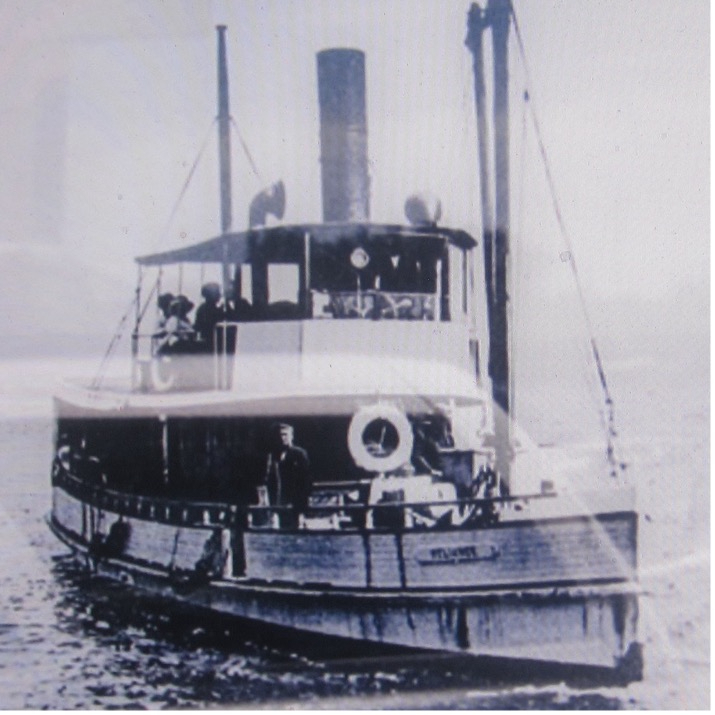
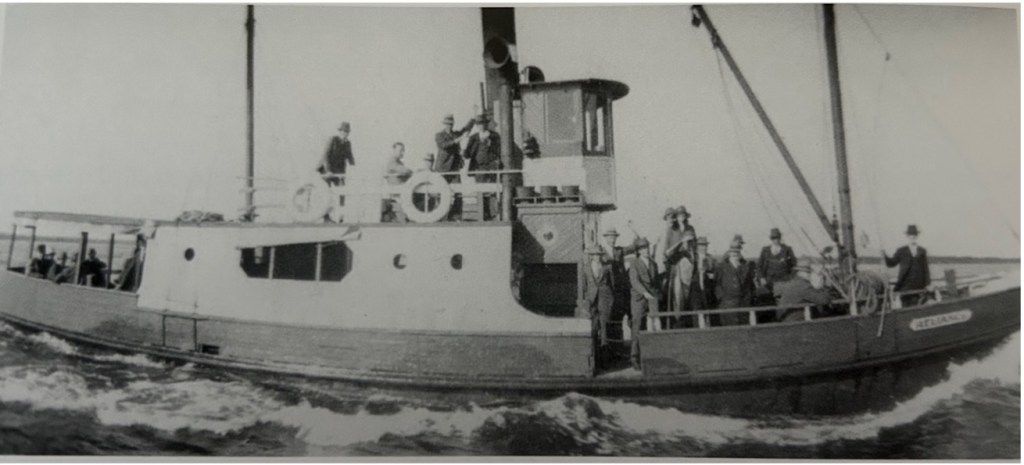
The steamship Reliance was a passenger vessel that operated on the inland waters of Port Stephens from 1907-1928.
It was constructed around 1907 for its owners, Thurlow Brothers who used it to convey passengers from Salt Ash wharf across the waters of Port Stephens to the towns of Bungwahl, Tea Gardens and Nelson Bay .
Passengers were brought in by coach from Stockton to Salt Ash where the road ended at that time. It was a reliable alternate route from Stockton and Newcastle to the Port Stephens area when patrons were not desirous of going by sea.
The SS Reliance was also used in the early tourist trade of Port Stephens particularly on the Lakes Travel Route as instigated by the NSW Tourist Bureau.
The vessel also served as a store boat to the more isolated inhabitants of the Port.
The service the Reliance ended suddenly when it was destroyed by fire in 1928 while moored at Tea Gardens. It was a great loss to the community.
This paper is the story of the Reliance, its many varied journeys and the passengers it carried. It also looks at the sights that tourists were able to enjoy on the inland waterway of Port Stephens.
SS Reliance commences operations – 1907
The Newcastle Morning Herald and Miners’ Advocate of 9 May 1907, page 6, reported:
‘The new steamer Reliance, recently built for the inland passenger service at Port Stephens, has been put into requisition, and is giving satisfaction. The Reliance is a staunchly built vessel, with good accommodation, particular attention having been paid to the comfort of lady visitors. The various bays about Port Stephens afford ample scope for pleasure parties, fishing and shooting, and there is some beautiful scenery. Tourists could not go wrong in spending a few days about the bays.’
SS Reliance
Transport by Coach from Stockton to Salt Ash – 1907
The Dungog Chronicle of 21 June 1907, page 8, reported:
‘Any person desirous of going to Nelsons Bay, Tea Gardens, Bulahdelah, Myall Lakes and Bungwahl, can do so per Matthewson’s coach, which leaves Stockton every Tuesday and Friday morning at 9.30, and catches Messrs Thurlow Bros’, steamer ‘Reliance’ at Salt Ash. This speedy little boat runs up Tilligerry Creek, a splendid stream of water, to Nelsons Bay, thence up Myall River, returning next day.’
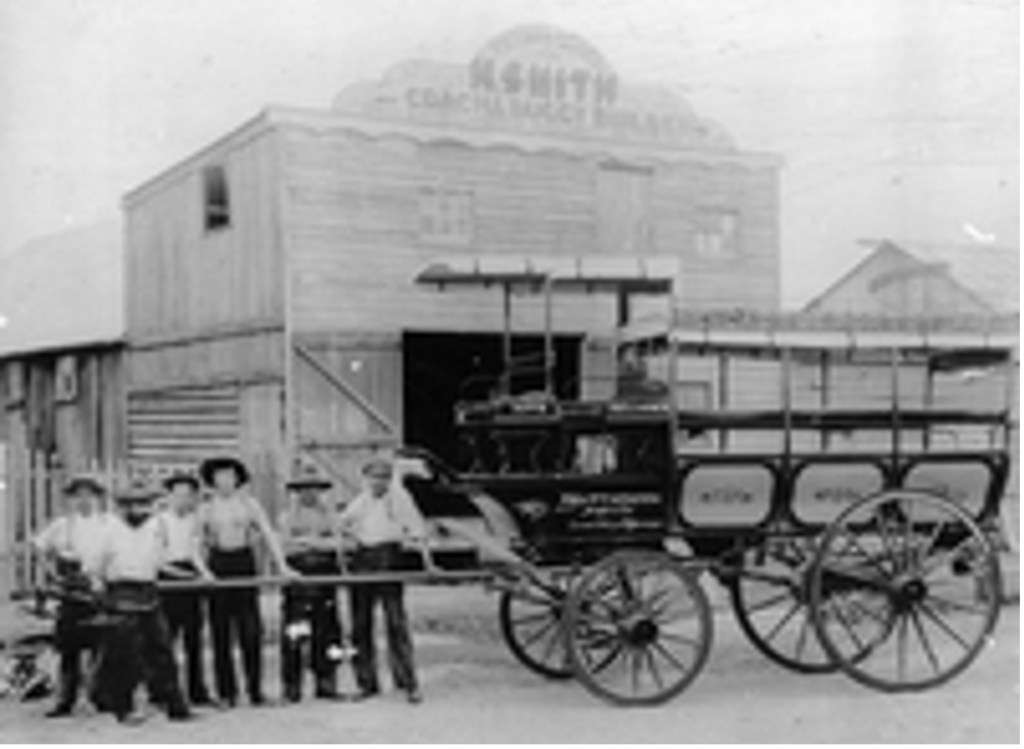
Number 2 Matthewson coach ( Reliance ) at Stockton that regularly travelled to Salt Ash. [Newcastle Library]
Newspaper correspondent’s trip on the Reliance from Salt Ash – 1907
The Daily Telegraph of 2 October 1907, page 6, reported on a trip taken by a newspaper correspondent on the newly publicised Lakes Travel Route:
‘A few weeks since a modest little paragraph in the paper, inserted by the Tourist Bureau, announced the fact that fairly easy land access to Port Stephens and the adjoining lakes was now available for those of the public who did not care to face the sea trip from Newcastle in a small steamer. Enthusiastic fishing friends had long since praised its beauties, and roused a desire to explore a little known part of the coast, and now the way was made easy by the obliging officials of the Tourist Bureau, who arranged an itinerary and advised the different centres en route. The whole trip of five days went almost without a hitch, and was full of interest from start to finish, so that what was so pleasurable to the writer and his better half, may possibly be of like interest to many others if made known. ……
At Salt Ash, the head of Tilligerry Creek is reached, and a small steamer, the Reliance, waiting with steam up. By the time a light and early lunch had been consumed, the other buggy had arrived, all went on board, and the water part of the trip commenced. At first only a broad tidal creek, mangrove lined, through which the Reliance made a sinuous course, guided by light saplings, with an occasional kerosene tip atop. Stoppages were frequent, to put off cargo or take on cream or fish, or supply a few necessaries to the isolated inhabitants from the small travelling store on board. It [the store] measured only 7 feet 3 inches in length by 2 feet 3 inches in width, but seemed to contain everything for which there was any demand.
After an hour or so the magnificent sheet of water called Port Stephens opened out to view, but it was only after rounding the midway peninsula that its beauty was fully revealed. To the east the mountainous heads towered up into the sky, dark and blue, with barren Boondelbah Island showing a tawny orange between. Over the left shoulder of the North Head the ridge of Cabbage Tree Island appeared dark grey, while in the far distance Broughton Island showed pale blue against a pearly sky. To the right the hills swept round from the South Head and Nelson Bay to the left low wooded ridges hid the Tea Gardens, and to the west, 13 miles from the Heads, the water and land met in an almost level line, backed up by the far distant foothills of the coast range.’
Reliance conveys tourists from Tea Gardens to Bungwahl – 1907
The Newcastle Morning Herald and Miners’ Advocate of 30 October 1907, page 3, reported:
‘The excursion arranged by the Newcastle Tourist Association, though not well patronised, proved a very enjoyable one. …… From Tea Gardens the Reliance conveyed the Newcastle party to Bungwahl, the trip up the Myall and across the Broadwater being a revelation to some members of the excursion. Wild fowl, ducks, swans, pelicans, and shags (the latter much destructive to the fishing industry) were noticed in large numbers. The river is very shallow in places, and though a sand dredge is at work at Tea Gardens, one is very much required higher up.
At the entrance to Broadwater a breakwater has been erected on either side, and this forms a scour, which has kept the channel at that point clear. Bungwahl was reached about 4 p.m. on Sunday. Here conveyances were in waiting, and the party started on the nineteen miles’ drive to Bulahdelah, which was very pretty in places, particularly the ascent of Meyer’s Hill. Here were noticed the clinging clematis, kurrajong, cabbage tree palms, mangroves, wild raspberries, tree ferns, and staghorns in abundance. At the top of the hill a fine view extends over the lakes to the sea, and on a clear day ship may be seen passing on their way to and from Newcastle.’
Cost of Travel from Sydney to Port Stephens – 1907
The Sunday Times of 15 December 1907, page 16, reported:
‘A new tourist district always has attractions over others that are fairly familiar to us, and for this reason I have chosen the above district [Port Stephens, Myall River and Lakes] as one which is well worthy of attention to the Christmas holiday-maker. …….
The route lies from Sydney to Newcastle by rail, 19s and 12s 6d first and second return, or a little cheaper at week-ends; or by steamer, 6s single and 9s return; deck cabins 2s extra each way. Ferry, King’s Wharf [Newcastle] to Stockton, 2d; coach to Salt Ash, 16 miles (every Tuesday and Friday at 9.30 a.m., or 2 p.m. on Saturday), fare 4s. Steamer Reliance to Nelson Bay or Tea Gardens, on arrival of coach, 2s. Steamer Tea Gardens to Bungwahl or Bulahdelah every Wednesday or Sunday at 9 a.m., fare 2s 6d, returning each Monday and Thursday; so that it is possible to go from Sydney to Bungwahl or Bulahdelah at a cost of 14s 6d single and 26s return. A stay can be made at any of the towns mentioned, and several weeks put in with profit on the Lakes.’
Lakes Travel Route from Forster to Newcastle – 1908
The Wingham Chronicle and Manning River Observer (NSW : 1898 – 1954), Saturday 8 February 1908, page 8, reported on the newly publicised route from Sydney to the mid-north coast of NSW by land, called the Lakes Travel Route:
‘The Lakes Trip attracted my notice and I decided to try it. We left Forster about 2 p.m. and had a most enjoyable trip up the magnificent Wallis Lake. This part of the trip is particularly good in scenery. Mr. Bower’s fine oil launch soon landed us at the head of the lake where Mr. Godwin’s coaches were in waiting with other passengers for the Manning. Pretty bush scenery prevails to Bungwahl, and tea was served in great style at Mr. Godwin’s accommodation house.
The s.s.’Reliance’ was in waiting at Bungwahl, and we were conveyed by her in comfort to the Tea Garden the moonlight trip occupying from 9 p.m. till 2 a.m. The hotels were open to receive those who preferred to sleep ashore. Breakfast over, the ‘Reliance’ ran us down to Nelson’s Bay with local passengers. Embarking others, we headed back across Port Stephens, and up Tilligerry Creek to Salt Ash (2.30 p.m.) where light lunch is obtainable. A packet of lunch is handy to have, as the boat is away from accommodation houses at mealtimes. Two covered coaches, each capable of carrying 20 passengers and an open drag holding 25, took us over the 15 miles of level road in under two hours ; the trip terminating at the ferry wharf [at Stockton] and ’tis only a few minutes to cross the harbor and reach New-castle station.’
Trip from Stockton to Bungwahl – 1908
The Daily Telegraph of 21 November 1908, page 19, reported:
‘Shortly after two o’clock on a recent Wednesday afternoon we set out from Stockton, bound north. Salt Ash, sixteen miles away, on one of the arms of Port Stephens, was the first stage of the journey. This was soon over. Good “cattle,” a competent driver and a steady coach, landed us on the Reliance, a handy type of harbor tug and pleasure steamer, somewhat after four o’clock.
Once “aboard the lugger” lines were cast off, and we were soon punching our way down Tilligerry Creek, heading for the upper half of Port =Stephens. There were three of us in our party. A commercial [traveller] who knew every inch of the way and preferred the lakes route to the uncertain sea trip, a bushman from somewhere on the Hastings, who turned out to be ten times quieter than he looked, and myself. I was bound for Tuncurry, a little village just inside “The Hawke,” and was out to see all that could be seen, and to make the best of everything that came along.
Leaving the creek, where dense masses of mangroves hold a monopoly of all the foreshores, we soon opened out the inner half of this magnificent harbor. Port Stephens surprised me. I had looked for something like Botany Bay, but soon found that my fancies had tricked me. Port Stephens is no bay. It is an inland sea divided in two, with a nicely wooded island laying right in the neck, where the northern and southern shores draw almost together. I am prepared to praise this place, even though my home-harbor is said to be one of the best in the world.
There is a bigness and a beauty about Port Stephens which Port Jackson does not possess. Our waters may be deeper, but they are more confined. …… “What about the depth of the water?” I ventured to ask. “Depth of water! Great snakes,” replied the engineer of our liner. “Why, we have loaded the Devon and the Dorset right down to the plimsoll with sleepers, and have several times had to do for coal ships what Newcastle was unable to perform. Salamander Bay, over there (we were in the outer half of the harbor at the time) will provide accommodation for 14 American fleets.” “How is the entrance?” was my next question. “Good as gold, and quite safe and deep,” came the reply. “You Sydney folk know nothing of us. And it seems to me that you do not care to find us out.” “I don’t know about that,” I was forced to say. “My own opinion is that there are thousands our way who will be quite as surprised and delighted as myself. Port Stephens hither-to mean a rough-and-tumble trip in one of the little fish and coal steamers. Not one man in a million knows of the work you are doing.” “Then,” said my friend quietly, “you make yourself a mouthpiece for the neglected Port”.
Benefit Ball at Tea Gardens for the builder of the Reliance – 1909
The Dungog Chronicle of 23 July 1909, page 3, reported:
‘A very successful, benefit ball in aid of Mr G. Radcliffe, boat builder, who is totally blind, was held in the School of Arts here on Friday, 9th inst. It seemed as though the fates were determined it should rain, but at the last-minute fortune smiled, the sun shone, and the result was a beautiful afternoon and night. A great crowd turned out, and a very enjoyable night was spent.
The music was supplied by Mr D. Thompson, the well-known blind player, on the piano (thus bringing it in the blind playing for the blind), ably assisted by Mr A. Johnson on the violin. Two songs during the course of the evening by Capt. D. Williams, were much appreciated. After accounts wero settled and all lists in, it was found that the sum of £28 odd remained to be tendered to Mr Radcliffe. Mr Radcliffe, who is a man a little past the prime of life, is, or was, a first-class tradesman, having built, the well-known passenger boat s.s. Reliance.’
Trip to the Mid North Coast by a South Coast resident – 1911
The South Coast Times and Wollongong Argus of 1 September 1911, page 16, reported:
‘Just within these last few years there has been opened up, by the provision of coaches and of small steamers, and good accommodation, a very enjoyable trip, namely, from Newcastle up the North Coast via Port Stephens. It is designated the overland route. It was the writer’s good fortune to make the trip recently as far as Tea Gardens, which is the infant city of Port Stephens, situate near the mouth of the Myall River. ……
This coach stage ends at Salt Ash jetty on Tilligerry Creek, so called, though in breadth and depth quite entitled to rank in N.S.W. as a river. It is really an arm of Port Stephens. Here we transferred to the river steamer Reliance. It was getting dusk as we reached the Port, and the wind being keen, the lee side of the deck-house was preferable to the view. ….. The steamer called at Nelson’s Bay, which is near the heads, which she does when there is any occasion. There is a house or two here and a hotel. Then across to Tea Gardens, 7 miles.
Early next morning the Reliance continued her trip, going up the Myall River and through the lakes. I stayed at Tea Gardens; but I was assured by everyone that the farther trip was through very charming scenery….. On the homeward sail on Port Stephens, I had a perfect view of that expansive harbour, equal to if not greater than Port Jackson in area. ….. It took the Reliance hours to get back to Salt Ash, where the coach for Newcastle was waiting. We reached the northern city in time to have a look about and get the 3.5 p.m. train for Sydney.’
Reliance overhauled in Newcastle – 1913
The Gloucester Advocate of 3 May 1913, page 6, reported:
‘Thurlow and Company’s passenger, boat Reliance, running between Tea Gardens and Salt Ash, has been away in Newcastle for the past three weeks undergoing a complete overhaul, She returned to Tea Gardens today and starts the usual trips tomorrow morning.’
Details of Overland Travel Route via Port Stephens – 1913
The Northern Champion of 3 May 1913, page 6, reported:
‘It will thus be noticed that a tourist may travel from Newcastle as far as Taree by land and water without the necessity of putting to sea. On the return the coach. leaves Taree at 6 a.m. on Sundays and Thursdays, and the launch departs from Forster at 9 o’clock in the morning, and connects with coach and steamer, the latter leaving at 2 p.m., after lunch at Bungwahl, reaching the Tea Gardens.
The ‘Reliance’ takes her departure from Tea Gardens for Salt Ash at 9 a.m. on Thursdays (connecting with the launch from Bulahdelah), and on Mondays, Wednesdays, and Fridays at 8 a.m. for Salt Ash, calling at Nelson’s Bay, where the coach meets the steamer on arrival, landing travellers in Newcastle about half-past one in the afternoon, thereby enabling them to join the five minutes past three train for Sydney. ….. Taking all the facilities provided, it must be conceded that this great northern tourist district, which embraces some of the most picturesque and fertile lands in Australia, though now in its development stages, bids fair to become a splendid asset to New South Wales as a magnet for tourists. The many fine rivers, lakes, bays, and beaches, added to the enchanting mountain and forest scenery north of Sydney, will well repay anyone who sets out to do the entire district.’
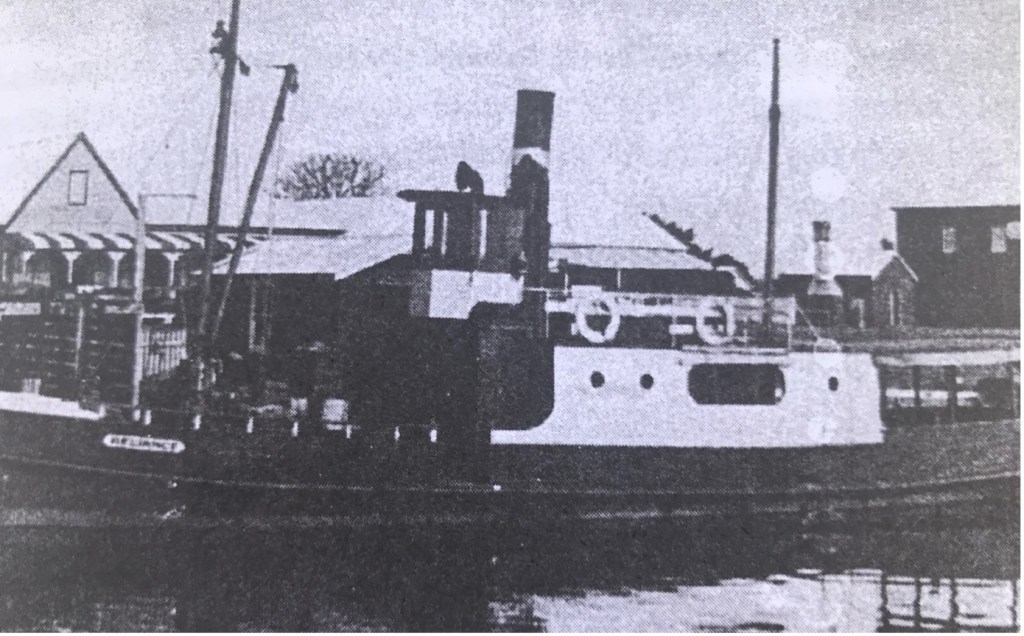
‘Reliance’ moored at Tea Gardens
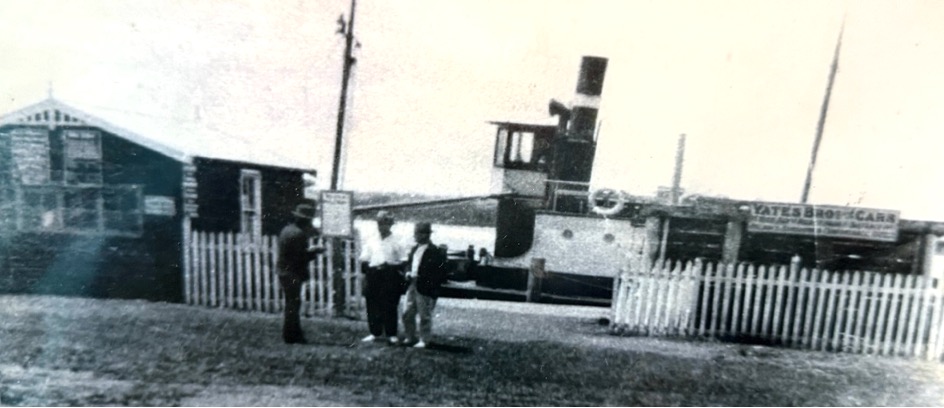
‘Reliance’ moored at Thurlow’s Wharf and ticket office – opposite 77 Marine Drive, Tea Gardens.
Reliance conveys concert goers from Tea Gardens to Salt Ash – 1913
The Catholic Press of 15 May 1913, page 23, reported:
‘A concert promoted by the [Catholic] church committee in aid of the organ fund was held in Doherty’s Hall on Saturday night last, the place being packed to the doors. ….. The Newcastle visitors who contributed were: Messrs. D. J. Williams, K. and W. Watt, L. H. McKinnon, D. Griffiths, James Cook, Stanley Lane, Misses Cook and Soutar …… After the concert a dance was held until midnight. ….. Tea Gardens was well represented on Sunday afternoon to witness the departure of their Newcastle friends, who had engaged the Reliance to convey them to Salt Ash, and thence by coach to Newcastle. A very pretty incident was the rendering of “Good-bye, Mavourneen,” by the Newcastle visitors, just as the Reliance was leaving the wharf.’
Development Group visits Port Stephens – 1914
The Raymond Terrace Examiner and Lower Hunter and Port Stephens Advertiser of 24 July 1914, page 3, reported:
‘On Sunday last a party of gentlemen interested in seeing the development of additional ports along the coast of New South Wales, and particularly Port Stephens, visited the latter port for the purpose of seeing for themselves what nature of a place was Port Stephens in order that they would be in a better position, from personal observation on the spot, to see how much justification there may be for the expenditure of public money in Port Stephens, and as to whether it could be made a port suitable for oversea traffic and capable of accommodating large ocean going vessels.
The party comprised gentlemen from Tamworth and other northern centres, as well as Dr. Arthur (member for Middle Harbour), Colonel Nicholson (member for Maitland), and Mr. W. Brown (member for Durham). In all there were twelve, though the Tourist Bureau, who had the arrangements in hand, had been informed that thirty would make the trip, and arranged accordingly. Messrs. Thurlow’s coach met the party at Stockton, and conveyed them to Salt Ash, where the s.s. Reliance, of the same company, carried them on to Nelson’s Bay, where they arrived at lunch time, and were hospitably treated by Mr. Rush, of the Sea Breeze Hotel. After lunch a run down as far as the Heads was taken in order that the visitors would be able to get a grasp of the nature of the entrance and its accessibility at all times and in all weathers …….’
New owner for the Reliance– 1914
In September 1914, the operations of H. Thurlow and Company were taken over by the Port Stephens Passengers and Tourist Transit Company, Limited. The new company remained under the control of the Thurlow family. The Reliance was one of the assets taken over by the new company. The Sydney Morning Herald (of 1 September 1914, page 11, reported:
‘The Port Stephens Passengers and Tourist Transit Co., Ltd., has been, registered with a capital of £10,000 in £1 shares. The objects are to acquire the business of Messrs. H. Thurlow and Co., coach, steamship, and motor launch proprietors, etc. The first directors are Messrs. H. C. G. Thurlow (managing), H. C. H. Thurlow, A. Cook, M. C. Reid D. Sneddon, A. Croll, jun., and G. Ireland. Registered office, 21 Scott-street, Newcastle.’
Reliance scorched by a burning boat – 1916
The Raymond Terrace Examiner and Lower Hunter and Port Stephens Advertiser of 27 October 1916, page 3, reported:
‘The steamer Rose was burnt to the water’s edge last Saturday at Tea Gardens. The cause of the fire is unknown. She had just returned from a trip to Salt Ash with 110 Naval Base men. She was discovered alight at 12 o’clock and cut away from the Reliance. She then drifted to the opposite side of the river and burnt to the water. The Reliance was slightly scorched.’
Reliance conveys band members – 1917
The Raymond Terrace Examiner and Lower Hunter and Port Stephens Advertiser of 5 January 1917, page 3, reported:
‘On Sunday morning the members of the local Band left on a trip to Port Stephens. ………
On Monday morning, by kind permission of Captain Motum, the band were taken to Nelson’s Bay [from Tea Gardens] on board the Reliance, and on the trip down entertained the passengers with selections. On arrival at the Bay a place was selected on the Reserve to play during the afternoon. Lunch was then partaken of at Mrs. Lund’s and shortly after the arrival of the s.s. Hunter from Newcastle, which had a full complement of passengers, instruments were again brought forth and a bright programme gone through which was finished in time to allow members to witness the departure of the Newcastle boat. ….’
Port Stephens Passengers and Tourist Transit Company in liquidation – 1917
The Port Stephens Passengers and Tourist Transit Co., Ltd. went into liquidation in December 1917 and the following advertisement [portion only shown] was placed in the Newcastle Morning Herald of 19 December 1917, calling for tenders to purchase the assets of the company, which included the Reliance:
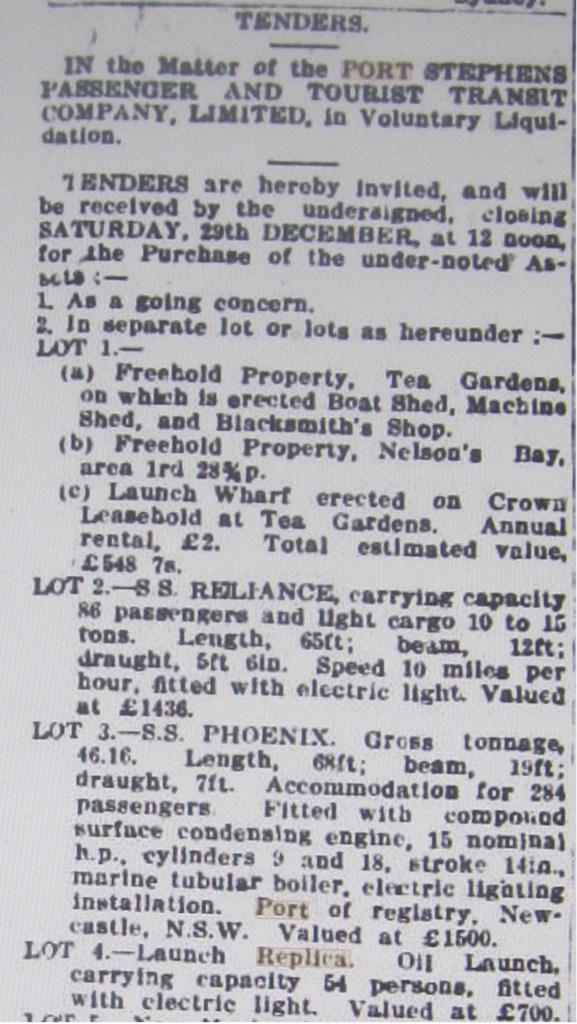
[Newcastle Morning Herald, 19 December 1917]
The assets of the Port Stephens Passengers and Tourist Transit Co., Ltd., were purchased by H. Thurlow and Company. The following advertisement from the Newcastle Morning Herald and Miner’s Advocate of 31 December 1920 reflects the operations of the new Thurlow operations:
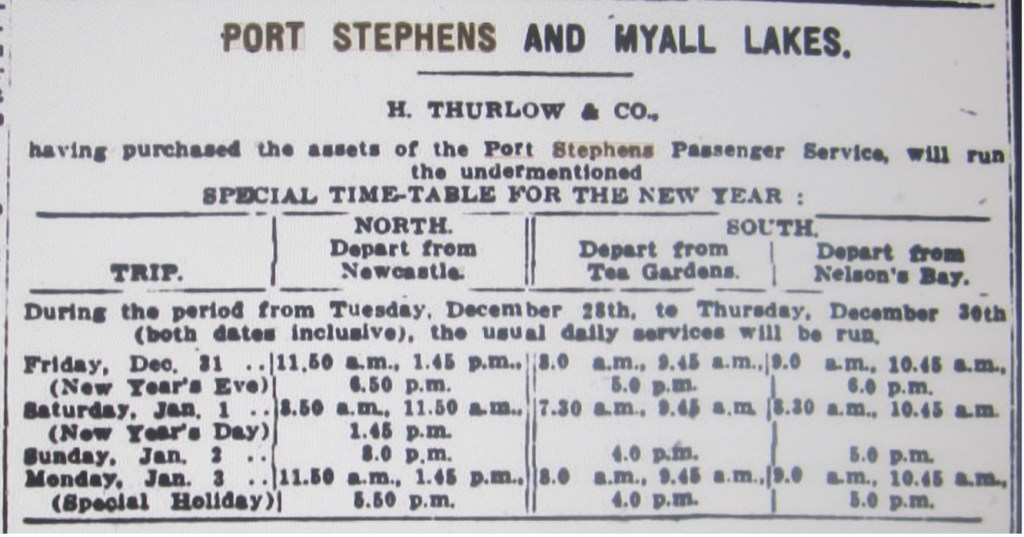
[Newcastle Morning Herald and Miner’s Advocate, 31 December 1920]
Comment onthe reliable service provided by the Reliance– 1918
The North Western Courier of 24 October 1918, page 6, reported:
Mr. F. Phillips, of Pindimar, Port Stephens, writes to the Tamworth Observer, giving the following reasons why Port Stephens should be opened: 1. — There is no better natural port in Australia. 2. — It is the natural and geographical outlet for the products of the north and north-west of this State, with over 100 miles of navigable water. …… 10.—For the past five years, firstly the launch Reliance, and latterly the launch Replica, have regularly and without a single delay or mishap, due to weather or tide conditions, plied between Salt Ash, Hanna [Anna] Bay, Nelson’s Bay, Pindimar Bay, and Tea Gardens, Port Stephens, crossing and recrossing the Port Stephens’ harbors with mails and passengers, thus establishing a record such as its critics cannot assail.’
Reliance provides Electric Light to a Tea Gardens Carnival – 1922
The Maitland Daily Mercury of 24 January 1922, page 4, reports:
‘The first grand annual carnival under the electric light will be held at the public baths, Tea Gardens, on Friday next, and there will be a proramme of horseracing on the Saturday, Father Neptune will appear from the depths to open the carnival at 7.50. ……There will be a fancy dress parade, and the steam-ship Myall River will be moored to the baths to provide a concert during the progress of the carnival. The baths will be illuminated by electric light, supplied by the s.s. Reliance.’
Reflection on the Travel Route between Stockton and Port Stephens – 1922
The Newcastle Sun of 27 February 1922, page 6, reported:
‘Besides the steamers that regularly ply between Newcastle and Port Stephens …. regular communication is maintained by two lines —that of Messrs. H. Thurlow and Co., and of a firm for which Messrs. Gillam and Mathieson, of Newcastle are agents. ……..
Arriving at Salt Ash a motor launch, the “Van Dora,” was found waiting for the mails and accompanying passengers. Mr. Thurlow’s swift steamer, the ‘Reliance,’ was also prepared to depart on arrival of the motor ‘bus of his line. The sail along Tilligerry Creek is a revelation to those who know the waterway only by name. Beautiful scenery forms its local horizon on both sides, and from the greatly winding channel, islands, some of them of considerable size, dots the seascape. On the banks a multitude of stakes shows the importance of oyster culture as a profitable occupation ….
On rounding Middle Island and shaping a course almost at right angles to that previously maintained, a splendid expanse of water opens out. Salamander Bay is two and a half miles broad and has a depth of water in which ocean liners can safely anchor. What is termed the Naval Base is then reached. A wharf, some roads and a number of roofless huts announce that a naval retrenchment is paramount, and that a considerable amount of Commonwealth money has been expended to no permanent useful purpose.’
Reliance conveys orchestra members – 1923
The Newcastle Sun of 13 March 1923, page 8, reported:
‘A party of 100 journeyed to Nelson Bay, under the management of ‘Young and Green’, the motor firm of Hunter-street West. Leaving Newcastle at 9.30, cars proceeded via Stockton to Salt Ash, where the steamer Reliance was chartered to convey the party to Port Stephens, where they arrived at 1.30. Entertainment on the trip up Tilligerry Creek was given by the orchestra, whose every item was encored. The next move was to the Sea Breeze Hotel, where Mr. W. Young had arranged for a first-class lunch. Leaving at four o’clock, song and harmony prevailed on the trip home to Newcastle, and the journey was completed at 7.45.’
Reliance assists a grounded vessel – 1925
The Sydney Morning Herald of 16 April 1925, page 9, reported:
‘The Broken Hill Proprietary Company’s, Limited, steamer Iron Crown, of 3353 tons gross register, which left Newcastle at 4.53 this morning, went aground in Salamander Bay shortly after her arrival in Port Stephens. The vessel went aground on a mud bank, when negotiating the channel to Salamander Bay. At 9 a.m. an attempt was made to refloat the vessel, with the aid of the ferry steamer Reliance, but proved unsuccessful. Four hours later at high water, a second attempt was made, and the vessel came off the bank and proceeded to her moorings in Salamander Bay. The vessel is not believed to have sustained damage.’
Passenger of the Reliance dies After embarkation – 1926
The Dungog Chronicle of 12 January 1926, page 3, reported on the coronial inquiry into the death of J. F. Franklin who was found drowned in the Myall River, after disembarking from the Reliance:
‘On Thursday last, W. H. Green, Esq., J.P., Coroner, held an inquiry at Tea Gardens concerning the death ot James Francis Franklin, who was found drowned in Myall River on January 6. Dr. Robinson deposed that Mr. Noble called him to see the body of deceased about 8.30 a.m. on Wednesday. He examined the body and came to the conclusion that it was a case of asphyxia from drowning. There were no marks of violence on the body. In his opinion deceased had been dead about eight hours. ……
John Dilmot Harvey deposed that he was a partner with H. Thurlow and Co. and resided at Tea Gardens. He was employed on the boat ‘Reliance,’ plying between Tea Gardens, Nelson’s Bay and Salt Ash. On the 5th inst., James Franklin proceeded from Tea Gardens to Nelson’s Bay on the ‘Reliance.’ He was perfectly sober and seemed quite normal in every way. He returned on the afternoon of the same day and witnessed noticed that he appeared to be under the influence of liquor. On the arrival of the boat at Tea Gardens at about 5 p.m. witness went ashore with the mail and on his return to the boat, he found Franklin asleep on one of the seats on the boat.
Witness went ashore for his tea and returned about 8.30 p.m. He found Franklin standing on the after deck talking to himself. Witness said: You had better get ashore as I am going to lock the wharf up. He said: Find my hat and two bottles of beer. Witness got these for him and he said: You’ll have to help me over as I am very bad. Witness helped him on to the wharf and noticed that he walked across it to the gate without staggering. On passing through the gate, he walked away in the direction of Riverview boarding house. Witness noticed that he was keeping well away from the river. This would be between 8.45 pm. and 9 p.m. He seemed sufficiently sober to go home. It was raining and had been blowing from the north and the night was exceedingly dark. ……
The Coroner found that James Francis Franklin was founded dead without marks of violence appearing on his body, and further, that he died in the Myall River on the 5th or 6th January, 1926, from asphyxia from drowning, but how or by what means he came to be drowned the evidence adduced did not enable him to say.’
Death of the Reliance Engineer – 1927
The drowning of the engineer of the Reliance, Clyde Smith’ caused much newspaper interest. The Tweed Daily of 27 June 1927, page 2, reported:
‘Clyde Smith (37), an engineer on the Port Stephens ferry Reliance, was drowned at the Tea Gardens last night. He was returning home in a flat-bottomed punt which was capsized by the strong tide. Smith’s cries were heard but Smith could not be found. His body was recovered later.’
Reliance survives severe storm at Port Stephens – 1928
The Dungog Chronicle of 22 June 1928, page 4, reported:
The ill-fated s.s. Iluka set the ball rolling by breaking away from her moorings taking a couple of piles with her and landing on the sand spit opposite the Government wharf, where she remained all day Thursday, but floated off on the big tide on Thursday night and was brought to a safe anchorage at the northern point of Slip Island none the worse for her buffeting about. The s.s. Nepean had a narrow escape, as she broke her stern lines and she went into the channel with all the strain on the middle line which caused her to heave over and ship water, which was up to the stokehole when Messrs. H. Engel, Geo Davies and others got her to safety alongside the ‘Coweambah’. Upon examination it was found that the Bulwarks of the Nepean were torn out and other damage done.
Motum Bros, had several boats sunk, while Mr. M. McLeod’s launch at ‘Durness’ went under and is now on the rocks alongside the wharf. The droghers ‘Ability’ and ‘Salamander’ which were moored along the front had narrow escapes, especially the former as she had just pulled out the mooring post and there was a danger of her smashing into the s.s. ‘Reliance’ when Capt. Adolphson got her under way, and although handicapped for want of steam managed to get to Monkey Jacket where she went on the flat. After a short delay and with the assistance of the ‘Sally’ they were soon under way and brought up at Tamboy where both punts tied up until the storm abated.’
While the Reliance survived the severe storm, its fate had been sealed.
Reliance destroyed by fire at Tea Gardens – 1928
The Dungog Chronicle of 2 November 1928, page 1, reported:
‘For the past 21 years the ‘Reliance’ has been moored at Thurlow and Company’s wharf at Tea Gardens almost every night and every weekend. Owing to the pumps not working well she tied up on Saturday, October 20th, and Engineer Courtney Smith spent the whole day adjusting them. On Sunday he banked the fires in the morning, and she was considered safe and ready for the run to Salt Ash on Monday morning.
About 2.30 on Sunday morning the timber drogher ‘Salamander,” which was moored immediately behind the ‘Reliance,” steamed off for the Myall Lakes, passing close by her. The crew of the ‘Sally’ did not see a sign of life, nor a light then, but when they got up the river (about 20 minutes later) it was noticed that the ship was on fire. The whistle was blown to give the alarm, and in a few minutes, people were running from all parts of the town to Thurlow and Company’s wharf.
It was seen at a glance that it was impossible to fight the flames which now had spread right along the after part of the vessel, so in order to save the wharf sheds and perhaps the houses in the immediate vicinity, willing hands pushed the burning ship into the stream where she was taken in tow by a rowing boat, and with the champion sculler, Bill Ripley, at the oars, was taken on to the sand bank opposite. There she lay burning fiercely for about half an hour, and most of the people returned to their nice warm beds.
A north-easterly wind sprang up, and the ‘Reliance,’ as if she resented the isolation, slowly drifted off the sand as if steered by some super-natural hand came slowly across the river and alongside the stones, between the public wharf and. Engel’s wharves and sheds. Realising the danger to the ships and buildings the Engel family got busy and took her in tow again. At first the ‘Reliance,’ as if human refused to leave her comfortable berth, but eventually, reluctant to leave, she was slowly towed into the channel and down on to the mud flat lower down the river where she was left to burn herself out.
The ‘Reliance’ was built for Mr. Hugh Thurlow about 22 years ago, and that she was well and faithfully built was demonstrated in the succeeding years by the way she stood up to her work for over 20 years, and was just as good and solid the day before she was burned as the day she was launched. She was originally built for the Myall Lakes trade running between Salt Ash and Bungwahl, but after about 3 years she was put on the Tea Gardens and Salt Ash run. When Mr. H. Thurlow went to the war the company went into liquidation and Mr. A. Cook took over the service and continued until Mr. Thurlow returned from the war when he formed a company and again took charge of the trade and the ‘Reliance.’ The company continued in possession until a few months ago when the mortgagee entered into possession. Everyone is sad that the gallant ship has gone west.’
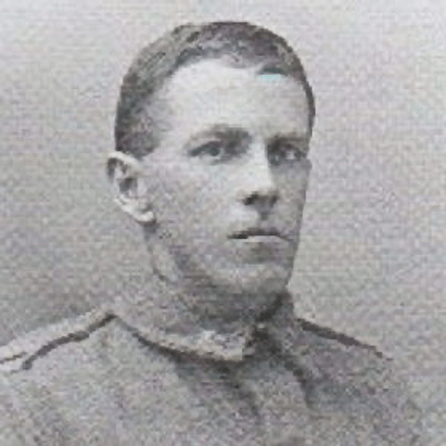
Hugh Thurlow [Ancestry.com]
EPILOGUE
Salvage of Reliance‘s boiler and machinery – 1932
The Dungog Chronicle of 22 July 1932, page 4, reported:
‘About three years ago the ferry steamer “Reliance,” was burnt to the waterline at Tea Gardens, and the wreck, on being sold, was purchased by Messrs. G. A. Engel and Sons. The machinery and boiler were lifted out and attended to. A successful sale has now been made by Messrs. Engel and Sons to Captain Wachlin, of Sydney. The boiler has been surveyed and tested by a Lloyd’s Surveyor, and shipped to Sydney, where it will be installed as a donkey [auxiliary] boiler in the freighter “Marion Sleigh,” which vessel is going into the Coastal trade in New Zealand.’
Obituary of Hugh Thurlow – 1947
The Wingham Chronicle and Manning River Observer, 6 May 1947, page 4, reported:
‘One of the best known and most highly esteemed residents of Port Stephens, Mr. Hugh Thurlow, was found dead on Sunday. He had suffered a heart attack. He had been ailing for some time with his heart, but his passing was a sad one. On Wednesday of last week, he left his home at Nelson’s Bay in his launch to go to Tea Gardens to oblige a friend who required some expert engineering work done. He stayed with the Morriseaus whilst at Tea Gardens. The late Mr. Thurlow failed to return to the house on Thursday. He had finished his job, and, it appears, had commenced to walk to Durness to visit Mr. Kirk. He travelled via the short cut.
It was on this route that his body was found on Sunday. Between times residents searched everywhere for him. His death was a shock for everyone. His wife at Nelson’s Bay suffered from great anxiety and suspense and deepest sympathy is extended to her. The late Mr. Thurlow was born in Kent, England, 66 years ago, and came to N.S.W. in his teens. He is the last of his family. His brother Humphrey, died ten months ago. Two other brothers died in N.S.W. and one in Canada. The late Mr. Thurlow went to Port Stephens 45 years ago and devoted his life to the development of the Port and the surrounding localities.
He was an engineer and ship builder and had his slip at Tea Gardens for many years. He instituted a ferry service about 1910 and encouraged tourists to travel to Lemon Tree Passage [Salt Ash], thence by ferry to Tea Gardens. Next day the launch took them through the lakes to Bungwahl. A coach met the launch there and tourists travelled on to Forster and on to Taree. It was a great service for those times. Mr. Thurlow was a man of great vision. He acted as pilot for all ships entering and leaving Port Stephens and the state of the weather never worried him in the performance of his duties. No one knew the waterways of Port Stephens, Karuah and Myall River and the Lakes better than Hughie Thurlow.
A returned soldier of 1914-8, there was no greater patriot. He kept alive the Digger spirit in Port Stephens district and fought for his mates all the time. Hughie Thurlow was kind-hearted and generous. He was a gentleman whom it was a pleasure to meet. His passing will be mourned by a wide circle of true friends His mortal remains were laid to rest on Monday afternoon at Nelson Bay. There the memories of his great personality will ever linger.’
Researched and compiled by Kevin McGuinness
January 2024

 Port Stephens - a history exploration