
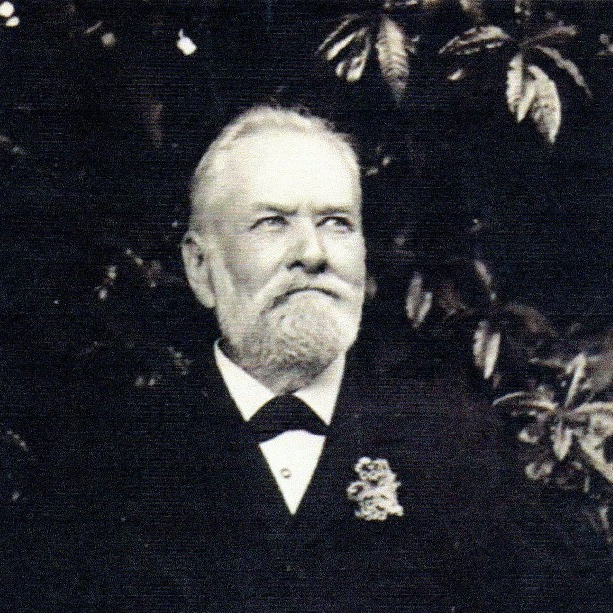
The 1880’s was the age of steam with boilers being used to drive machinery in many business enterprises.
In 1884, a boiler exploded on a steam log punt in the vicinity of Swan Bay at Port Stephens. It resulted in the death of two of the crew on board. One of the owners of the punt, Charles Muston, who was on board, narrowly escaped death.
The explosion and resulting deaths led to calls for legislation for the regular inspection of boilers. However due to various vested interests, no legislated action was finalised for nearly 50 years.
This paper tells the the story of the Port Stephens boiler explosion and its aftermath.
First report of the explosion
The Sydney Morning Herald of 9 September 1884, page 8, first reported of the explosion:
‘A sad accident occurred in Port Stephens Harbour this morning. While the steam punt belonging to Messrs. Bate and Muston, sawmill proprietors, Aliceton [present day karuah], was proceeding under easy steam the boiler burst, and was blown completely out of the vessel. The cause of the explosion is unexplainable. One young man named Holden was, it is feared, fatally injured, and another man named P. Evans was badly scalded. One of the proprietors, Mr. C. J. Muston, and three others who were on the punt, escaped uninjured.’
Further details of the explosion
The Newcastle Morning Herald and Miners’ Advocate of 15 September 1884, page 2, reported:
‘The steam-punt belonging to Messrs, Bate and Muston, of Sydney, was proceeding under easy steam (40lbs only, I believe), to convey some logs on board to one of Mr. Ellis’ ships lying in the [Port Stephens] harbour, when suddenly a noise like thunder was heard, and immediately the boiler was thrown high into the air, and bricks and debris flung in every direction. The man named J. Holden, who was steering, was on the bridge directly above the boiler, and he must have been carried up with it, as he is said to have gone up some thirty feet, falling back into the hold among the bricks and water. Another man acting as engineer was fearfully scalded, notwithstanding which, on seeing a comrade in the water, he sprang over the side and swam to his assistance.
Mr. Muston himself was on board, and escaped most miraculously, as he had not quitted the wheel three minutes before the explosion took place. The injured men were conveyed in a boat to their several homes, and Dr. Grant, of Clarence Town, was instantly sent for. He rode out at full speed, and after a careful examination of the man Holden, pronounced him fatally injured. The left shoulder was fractured, and five of the ribs were driven in from the force of the fall, and the man was bleeding internally. He nevertheless did all that could be done and remained all night hoping for a favourable change. He soon commenced to vomit quantities of blood, and violent delirium continued until the next morning.
At two o’clock he became quieter, and the doctor was again sent for. Before his arrival, however, death had taken place; and his burial, I believe, took place yesterday. There is a strong feeling here that a strict enquiry should be instituted into the cause of accident; some of the workmen stating that the boiler was not only faulty but under the supervision of a thoroughly incompetent man. Both the other men are progressing favourably.’
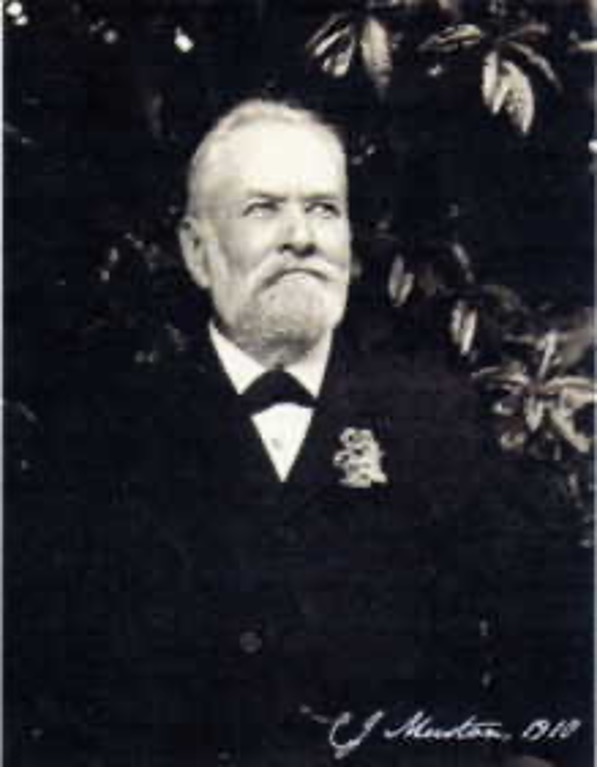
Charles John Muston in 1910, the Karuah businessman, who narrowly escaped the boiler explosion [Ancestry.com]
Funeral of the first victim
The Evening News of 15 September 1884, page 4, reported:
‘The victim’s name is John Holden, 16 years of age. It appears that on Monday morning the punt was proceeding down the harbour, and when off the Pelican Rocks the boiler burst. There were at the time five persons on board — Mr. Muston, of the firm of Bate and Muston, of Pile-street; Captain Johnstone, formerly of the Empress of India, and afterwards of the steamer Karuah; and three men— John Holden, Peter Evans, and Maloney. Johnstone was acting as engineer. Whether or not he was skilled in the work remains to be proved.
John Holden was on the bridge steering, and Evans and Maloney were standing under the bridge. Muston and Johnstone had gone into the cabin and had just sat down to breakfast when the explosion took place. Poor Holden was thrown a considerable distance up into the air, and fell on board the punt covered with timber, bricks, and mortar, with three of his ribs and collar bone broken, and otherwise seriously injured. Evans was severely scalded on his breast and thighs and lies in the residence of his parents in a precarious state.
Maloney was blown overboard some 30 or 40ft, and escaped with a fright and a severe shaking. Muston and Johnstone escaped without injury. The punt was new and recently fitted with a first-class engine and boiler, not a particle of which was left on board. A medical man was sent for at once, and he paid every attention to the sufferers.
On the afternoon of the 10th instant a flotilla of six boats conveying the coffin and about 70 of the friends and relatives of Holden, landed at Tahlee, the residence of Mr. Robert H. D. White, M.L.A. where the British ensign and Union-jack were floating at half-mast. A procession was formed. Some of the young men carried the coffin covered with the Union-jack and several wreaths of flowers to the Carrington Cemetery, where Mr. Mailer officiated, and the poor young man was laid in peace. He was one of a large family who have been residing in Port Stephens and carrying on business as oyster dredgers for some time. As the times were bad owing to the oyster season having been closed, young Holden was anxious to do something, and got employment on board the punt about a week before the sad accident occurred.
It may be mentioned that no inquest was held to ascertain who is to blame and how the accident occurred, It is well known that men are often employed at the sawmills and in the punts at Port Stephens in charge of engines and boilers, whose chief qualifications are that they know the duties of firemen, and who have never received the slightest training or education as engineers. Such a matter ought to be looked into.’
Commentary on the proposed Boiler Inspection Legislation
The Newcastle Morning Herald and Miners’ Advocate of 18 September 1884, page 2, reported:
‘The result of the boiler explosion at Port Stephens on Wednesday last is another mournful testimony to the immediate necessity for the Colonial Treasurer persevering with his Boiler Inspection Bill. Mr. Dibbs has, in a most praiseworthy manner, done all he could to make a periodical inspection of steam boilers, the law of the land. Unfortunately, however, the possible sacrifice of human life was made subservient to the selfishness of a few honourable members. When the Bill was before the Assembly, these gentlemen, by every device which the forms of Parliament would allow, did their utmost to retard its progress through committee.
The account of the destruction of life and property through defective boilers, as laid before the House by Mr. Dibbs was enough to appal any man; but notwithstanding the incontrovertible testimony to the worth of these calamities, selfishness rose paramount and defeated the laudable object which Mr. Dibbs had in view. Of course, these “humane politicians,” when they are on the hustings, seeking the suffrages of the electors, are prepared to promise anything and everything. These promises, unfortunately, are only made to be broken where self-interest is concerned. ……
It is impossible to read the speeches of some honourable members on the second reading of the Boilers Inspection Bill without a strong feeling of disgust and indignation. In these utterances, some of the gentlemen referred to attempted to make a strong point against the Bill, because, for sooth, it would compel people with small establishments to have their appliances subjected to the annual inspections. In the interests of our common humanity, what can it matter whether a man is killed by the explosion of a faulty three-horse-power engine, or by one of fifty? Is it to be understood that the man who only employs half-a-dozen men working at a sawmill, is to act with impunity so far as the lives of his employees are concerned; whilst another, who employs twenty or thirty, is to be legally compelled to make provision for their safety? This would appear, however, to be the case, from some of the observations made by honourable members. We venture to think that all owners of steam boilers, would in the end be immensely benefited by the annual inspection of the latter, and also of other machinery by an individual thoroughly competent to undertake the duty, in fact such an official as was intended to be appointed under the Bill.
It would appear from the communication from our correspondent at Clarence Town in Monday’s issue, describing the explosion at Port Stephens last week, that the victim of the catastrophe was buried without any inquiry having been made as to the cause of his death. This is beyond comprehension. Surely it is the duty of the Government to insist upon a most searching investigation into all the circumstances connected with the fatal result of the explosion. Many persons, from circumstances over which they have no control, may be compelled to work in the immediate vicinity of a boiler which they have good reason to believe is unsafe. Surely it cannot be pleaded that the men thus employed are free-will agents and have no business to accept work in such a dangerous vicinity. In the case before us, judging from the reports that have appeared in the Sydney Press, there is too much reason to believe that the accident might have been prevented by a timely inspection of the boiler.
According to one report which appears in print, a person who had worked on board the punt for months had drawn attention to the faulty condition of the boiler in question and warned the engine driver of the danger attending it. Had there been an official, duly appointed by the Government, to whom the man working on board the punt could privately have reported the facts of the case, the life of the man Holden in all probability would have been spared, as the Inspector would most likely have condemned the boiler forthwith. In default of this, the boiler was still permitted to be used, and with what fatal result is only too well known.
We read in a contemporary of a great deal of respect being paid to the remains of the unfortunate deceased, and of an aquatic procession following them to the grave. If one twentieth part of this enthusiasm had been expended in preventive measures, when the state of the boiler became known, there would most probably have been no need for the procession at all. Why an inquiry into the circumstances attending the death of poor Holden has not been made, is difficult to answer; but we are certain that nothing will satisfy the public mind but a fearless. and searching investigation into the cause of the explosion in question. If men, however, for the sake of saving a few pounds, will work boilers’ that are unsafe and unfit for use, then the people have a right to demand, in the interests of humanity and the public safety, that laws should be made by which the offenders should be severely punished for so doing.’
Comments By a Port Stephens resident
The views of a Port Stephens resident, George Engel, concerning the explosion were reported in the Maitland Mercury and Hunter River General Advertiser of 18 September 1884, page 7:
‘Last Monday, the 8th of this month, the boiler on the steam punt belonging to Messrs. Bate and Muston, sawmill proprietors, exploded, by which a young promising lad, John Holdom [Holden] by name, lost his life, after lingering for a few days in great agony. Another young man, Peter Evans by name, was severely scalded, and if he recovers at all will be disfigured for life. There was no coroner’s inquest held over the dead body, nor any official inquiry about the cause of the accident, by which a life was sacrificed. Both young men were good working lads, and a great help to their parents.
From ten to twelve steam punts and steamers are plying in Port Stephens waters, and there might be perhaps a few qualified men to drive an engine, who understand their business, but the most of them are what are styled engineers with a shovel. To such men the life of poor working men is entrusted. Should anything go wrong with the machinery, as in this instance, and loss of life is the consequence, who is to blame? The employers?
I must not omit to mention the plucky behaviour of Peter Evans after the explosion. Badly as he was scalded, he did not forget his fellow sufferers. He jumped into the boat to save John Malony, who was blown overboard by the explosion, but not injured, and who was swimming about; and he also looked after John Holdom [Holden], lying on deck senseless.
And with great pleasure I here make mention of the noble action of one of the despised race—a Chinaman—who came to the mother of John Holdom [Holden], with a roll of bank notes, and begged her to accept the same to pay the doctor.’
Second victim dies
The Evening News of 19 September 1884, page 3, reported:
‘Peter Evans, the lad who was so fearfully scalded when the boiler of Messrs. Bate and Muston’s steam punt burst on the morning of Monday, September 8, is dead. The poor lad received every attention which a fond mother could bestow, with the best medical aid; but his injuries were too severe, and he succumbed after a week’s fearful agony. There were six men in the punt at the time of the accident; I mentioned five. In addition to these five was a man named Cousins, a blacksmith and a horseshoer by trade.
He escaped with a slight scalding on the neck. He, however, has thrown some light upon the cause of the accident. He informed me that about six weeks’ ago he put a plate on to the bottom of the boiler, which had a crack in it. There are several steam punts employed in the timber trade in the district — some of them of a first-rate class, especially those belonging to Hudson Brothers. Others, however, are kept at work in a disgraceful state, and urgently require the supervision of a competent inspector. A correspondent telegraphed from Nelson’s Bay that Peter Evans, the second victim of the recent steam punt explosion, died Wednesday. Great satisfaction is expressed in the district that the Evening News has urged that an inquiry should be held into the accident. An inquest will be held on Evans.’
Commentary regarding no Inquest being held for first victim of the explosion
The Australian Town and Country Journal of 20 September 1884, page 10, reported:
‘We are not aware who is responsible for the burial of the young man Holden, who was killed by the explosion of the boiler of a punt at Port Stephens last week; but we submit it was a great mistake to bury him without an inquest. If, as stated, the boiler was fed with salt water it will be impossible to ascertain from the appearance of the boiler, whether the accumulation of salt in it had anything to do with the explosion, but an inquest would elicit information as to when the boiler was cleaned out last. It is said that it was a new one, and perfectly sound, so that there must apparently have been carelessness or ignorance on board to cause the accident. Be this as it may, there is the simple fact that the young man was killed and was buried with as little legal ceremony as though he had died in his bed after an illness during which he had been attended by a doctor.’
Advertisement placed for supply of new boiler for Bate and Muston
Soon after the explosion, Bate and Muston, sought the supply of a new boiler for their punt through the following advertisement in the Sydney Morning Herald of 24 September 1884, page 12:
‘Wanted immediately, Marine Boiler, 12 to 18 h.p.; suit wood fuel. Bate and Muston, 191, Pitt-street’
Inquest held on second victim of the explosion
The Newcastle Morning Herald and Miners’ Advocate of 29 September 1884, page 2, reported:
‘The inquest on the body of Peter Evans, who died from the effects of a boiler explosion at Port Stephens on the 17th instant, terminated at 12 o’clock at night. The jury, after an hour’s deliberation, returned the following verdict, and rider attached :—”The jury are of opinion, from the evidence given, that the death of the man Peter Evans was caused by the bursting of a steam boiler on board the log punt in the harbour of Port Stephens, and that the bursting of the said boiler was caused by the bottom plate or plates giving way through being previously burnt; that the burning of the plate or plates was caused by an incrustation of salt, which was found in the boiler after her first three weeks of work; that no blame is attached to the owners or to the men in charge at the time of the accident; but, that the boiler was not suitable for the work in which she was engaged, and not adapted for using salt water. The jury wish to add a rider to the effect that they consider something should be done to lessen the loss of life annually caused by the bursting or explosion of land and other small boilers throughout the colony, concerning which there is at present no legislation.”
Dissolution of Partnership
The dissolution of the partnership of Bate and Muston was advertised in the New South Wales Government Gazette of 12 October 1886 (No.582), page 6954:
‘Notices is hereby given that the partnership formerly existing between Charles Bate and Charles John Muston, wholesale timber merchants, steam sawmill proprietors, and general store keepers, of Aliceton, Port Stephens, and at No, 191, Pitt-street, Sydney, was dissolved on and from the 8th day of June, 1885, the said Charles John Muston taking over the said business and all the assets and liabilities of the said firm, the said Charles Bate continuing to carry on his old business of stock and mining sharebrokers, land, property and general agents, at 191, Pitt-street, Sydney, under the style or firm of “Charles Bate & Co.”
Concluding Comments
Charles John Muston died on 9 March 1915, at Chatswood in Sydney, and was buried at the Gore Hill Cemetery.
Prior to residing in Sydney, Charles Muston was a businessman lived at Aliceton, which is now part of present-day Karuah at Port Stephens. Apart from his timber mill operations there, he was also involved with a proposal to establish a butter factory and associated dairying activity on his property. The story of the proposed Butter Factory at Karuah is found on this web site.
Forty-Seven years elapsed after the Port Stephens explosion before ‘Boiler Inspection’ legislation was seriously considered by the NSW Parliament. Various interest groups concerned with costs associated with inspections continued to be a hurdle to the passing of legislation.
Researched and compiled by Kevin McGuinness
December 2023

 Port Stephens - a history exploration