
Introduction
In the 1920’s, aviation was in its infancy throughout Australia.
Five years after the Royal Australian Air Force (RAAF) was founded in 1921, one of its seaplanes made an historic landing in Port Stephens in September 1926.
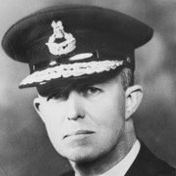
The pilot in charge of the flight was Group Captain Richard Williams.
The first record of this landing was noted in the following monthly report of the Nelson Bay Progress Association as published in the Newcastle Morning Herald and Miners’ Advocate of 13 October 1926, page 9:
‘The landing of Captain Williams’ seaplane, the first plane to land in Port Stephens, was placed on the records of the association.’
This was actually the second time a (sea) plane had landed in Port Stephens. Another RAAF seaplane had made an unplanned landing on the Myall Lakes, due to bad weather, in April 1924.
Captain Williams and his crew were undertaking an exploratory trip to waters north of Australia. The reason the sea plane landed on the water of Port Stephens was not mentioned, but it was most likely a refuelling stop.
Williams also landed his seaplane in Port Stephens on the return journey in December 1926 to refuel.
This paper is the story of Captain William’s journey of exploration.
Air Marshall Richard Williams
From Australian War Memorial records, Richard Williams was regarded as the father of the Royal Australian Air Force. He was heavily involved in establishing the RAAF, which came into being in March 1921. Williams was promoted to Group Captain in July 1925.
In 1926 he flew a seaplane on a trip to the islands north of Australia [with two landings at Port Stephens] to study the region as a possible theatre of operations and was made a commodore the following year.
In 1935 Williams was appointed Air Vice Marshall.
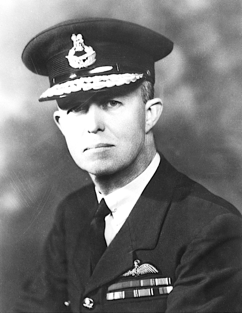
Air Vice Marshall Richard Williams [Australian War Memorial]
First Stage of the Pacific Islands Expedition from Melbourne to Sydney
The Sun of 26 September 1926, page 2, reported:
‘Bound for coral islands, for forests of tropic profusion, and for villages of native huts that have never yet heard the drone of an aircraft engine, Group-Captain Williams in his D.H.50A seaplane finished, the first 600 miles of his 15,000 miles Pacific flight yesterday.
Flying low, the seaplane at 3.35 p.m. yesterday swooped down over countless tennis matches, over the heads of nurse girls and children on the beaches, over the white sails of a score of yachts and churned a foaming path across Rose Bay [Sydney]. The first lap from Melbourne to Sydney was completed in about 9½ hours.
In a flurry of foam the seaplane taxied round the bay, but as the mooring buoy was in an unsuitable place, Captain Williams ran the machine ashore at the foot of the esplanade wall near the Rose Bay jetty. With Captain Williams were Flight-Lieutenant I. E. McIntyre (his pilot), and Flight-Sergeant L. Trist (mechanic). Sir Keith Smith, president of the Aero Club, was the first to wish Captain Williams success in his enterprise, when the Australian air force chief was rowed ashore at 6.45 p.m.
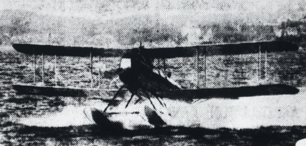
Seaplane of Group-Captain Williams making for the beach at Rose Bay, Sydney
[Sun – 26 September 1926]
Group-Captain Williams, in an interview, said that the object of the flight was to acquire knowledge of the mandated territories, and some of the British possessions in the South Pacific. It was in no sense an aerial survey to map out any specific air routes, he said. Rather it was an investigation of flying conditions in the Pacific. He desired to learn the effect on the fabric and the engine of the ‘plane of the climate in those regions. Any data that the flight yielded that would be of value in mapping out aerial routes in the islands, Captain Williams said, doubtless would be made available to those interested in civil aviation.
The Air Force was not especially interested in specified air routes, but in flying conditions generally in the Pacific. His outward flight would total 8696 miles. Captain Williams explained that the seaplane took off from Point Cook at 5.50 a.m. yesterday. The start was excellent. The wind was light, and the Victorian coast unrolled itself beneath the ‘plane in a vivid mosaic of green forest, brown cliffs, and a flashing ribbon of surf. The visibility was splendid in the Wilson’s Promontory region. When the Ninety Mile Beach glided into view, however, backed by the forest terraces of the big timber country of Gippsland, clouds began to drag their fringes into the faces of the aviators. The seaplane, which was working splendidly, dipped low to avoid the drifting cloud curtains.
Captain Williams flew very low over the eastern Ninety Mile Beach, where lie the ill-famed shoals round Clonmel Island, with their several rusting ship skeletons. A head wind, at first light, and later choppy and persistent, began to sing across the cockpit of the ‘plane. Paynesville, the little town on the Gippsland Lakes, swam into view about 10 a.m., when mists had dimmed the panorama of forest and ocean. The seaplane glided down to the surface of one of the lakes to pick up petrol supplies. It was 10.20 a.m., said Captain Williams, when the dash to Sydney was resumed. The rolling cloud banks still drifted down the coast and drove the aviators lower and lower. Williams still closely followed the coast, and two hours after leaving Paynesville the lonely white lighthouse on Green Cape swept the other way. When the ‘plane turned more to the north with the sweep of the coast contrary winds again contended against the machine.
The ‘plane did not land at Eden. Excellent progress was made up the New South Wales coast. The failure of the seaplane to take off from Point Cook on Friday was not due to any engine defect. The load that the ‘plane was to carry was found to be excessive. The engine had behaved splendidly right up the coast. Captain Williams expects “that he will be back in about two months. It was not desirable, he said, that they should potter round the islands in too leisurely a way, because the monsoon season would be setting in, and flying conditions would be difficult.
The first all-sea hop to be negotiated will be 398 miles, from Cooktown, in Queensland, to Thursday Island. Daru and Port Moresby will be the next stops, 530 miles further on. Rabaul, Kita, Vanikoro, Tonga, Noumea, Suva, and Apia would be visited. Petrol supplies right through the flight have been set down at the various points by the Vacuum Oil Proprietary, Ltd., whose officers met the seaplane with a launch loaded with motor spirit in Rose Bay.’
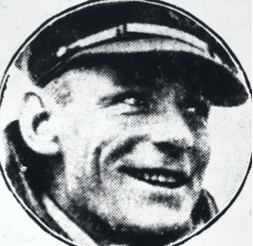
Flight Lieutenant Ivor McIntyre [The Sun – 25 September 1926]
Difficulties encountered during further stages of the Expedition
The next stage of the expedition resumed on 29 September, from Sydney. The Sydney Morning Herald of 1 October 1926, page 11, reported on difficulties encountered during that journey:
‘Inquiries are being made by the Acting Minister for Defence (Mr. Marr) and Air Board officials, as to the advisability of continuing the flight which Group-Captain Williams has begun towards the islands, and in the course of which so many accidents have been met with.
The latest message received today from Group-Captain Williams indicated that serious damage to the propeller of his seaplane had resulted from the severe buffeting which it received in passing through the surf on Wednesday evening after a forced landing in the open sea. A thorough overhaul would be necessary before the flight to Samoa could be proceeded with, and this would probably take until next Sunday or Monday to complete.
In the meantime, inquiries are being made as to whether a propeller could be obtained from the aerodrome at Richmond (N.S.W.), if necessary. At the same time, in aviation circles, it is felt that serious consideration should be given to the fact that the monsoonal season is approaching, and that should any further accidents be encountered, the resultant delay would jeopardise not only the success of the flight but the actual safety of the aviator.
There is held to be no immediate urgency regarding the completion of the flight this year, and the question has been raised whether it should not be postponed until early next year, when possibly a new and better equipment will be available for the use of Group-Captain Williams, and there will be less danger of his running into perilous weather conditions. It is understood that Mr. Marr and officials in Melbourne are in touch with Group-Captain Williams, who is now overhauling his machine, and from whom a detailed report regarding the extent of the damage and the airworthiness of the craft will shortly be forthcoming.’
The Singleton Argus of 2 October 1926, page 1, further reported:
‘A rather disastrous ending in the second stage of the Pacific Islands flight by Captain Williams occurred on Wednesday. The machine passed over Tweed Heads at 5 minutes past 5, making for Southport, 20 miles further. When about three miles past Tweed Heads engine trouble developed at 600 feet, and the plane was forced to land in the open sea, about six miles from Southport. The damage was ascertained to have arisen through the breaking of a split pin in the throttle. The engine had practically stopped before landing. The sea was rough, and the machine got a severe buffeting. The damage was temporarily repaired, but it was considered inadvisable to attempt to rise, and the plane taxied through the rollers until opposite Southport.
By this time, it was almost dark, and it was decided to attempt to get through the breakers. Captain Williams speaks highly of the skill with which Lieutenant McIntyre brought the machine through safely to the beach. All received a ducking, and McIntyre slipped overboard, but scrambled to safety. The risk was great, but it was the only thing to do. Waiting motorboats quickly went out and succeeded in pulling the plane close inshore. Ropes were obtained, and the machine was dragged several yards up the beach. The trouble with the engine, is thought to be very slight.’
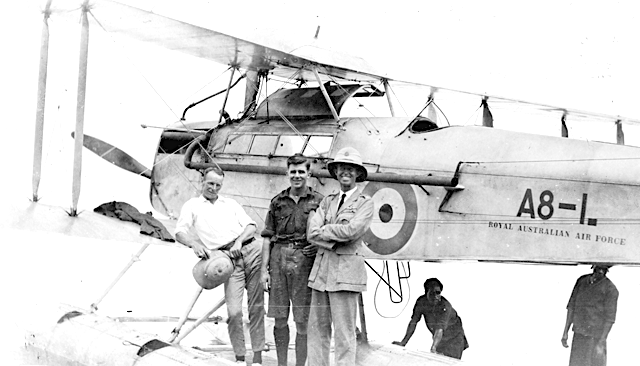
Left to right: Ivor McIntyre, Les Trist and Richard Williams with their DH50A R.A.A.F. seaplane during the expedition. The pilot had to sit in the open cockpit [Australian War Memorial]
The Riverine Grazier of 15 October 1926, page 2, also reported:
‘A message from Samarai states that Captain Williams’ seaplane arrived there yesterday afternoon. It was the first time a seaplane was seen in these parts, and the aviators were welcomed with the greatest enthusiasm. Captain Williams stated that, the flight from Port Moresby was without incident. The ‘plane left to-day for Morobe.’
Departure for Morobe
The Sydney Morning Herald of 18 October 1926, page 11, reported:
‘On Saturday Group Captain Williams and party were astir at daylight awaiting suitable conditions for their departure. The weather was fine and cloudy and the sea calm but the breeze was insufficient for an early start. At 6.30 a.m. the ‘plane with the party on board was removed to moorings a mile from the shore in readiness to take off when the wind increased. The ‘plane finally got away at 11.45 a.m. to-day. Captain Williams advises that he has made a slight change in the itinerary omitting Madang until the return trip. He now proposes to go from Morobe to Finschaven, the headquarters of the Lutherin Mission, thence to Lindenhafen and Rabaul. He expects to arrive at the latter port on Monday afternoon.
The Singleton Argus of 23 October 1926, page 6, further reported:
‘The Air Board at Melbourne received a message on Thursday from Group Captain Williams, stating that he would remain a few days at Rabaul, “top overhauling” the engine of his seaplane. This means decarbonising the cylinders, regrinding the valves, and effecting necessary adjustments. He will also furnish a report on the prospects of a flight to Noumea.’
Seaplane at Thursday Island
The Sydney Mail of 27 October 1926, page 13, reported:
‘The arrival created quite a stir in the little community [at Thursday Island], and during its stay there the ‘plane was visited by everybody in the place. The last message to hand concerning the flight was from Rabaul, and was as follows: —
Captain Williams, who reached Rabaul by seaplane on Monday, the 18th, is staying here three days longer, overhauling his machine. He is still, undecided as to which route he will follow, but he hopes to visit the Solomons. He has encountered consistent strong head winds during his trip and has averaged 80 miles per hour. Valuable data have been collected on the behaviour of the materials and the machine in the tropics. Captain Williams reports the existence of at least 12 large rivers in New Britain not shown on charts and in some cases invisible from the sea on account of bars.’
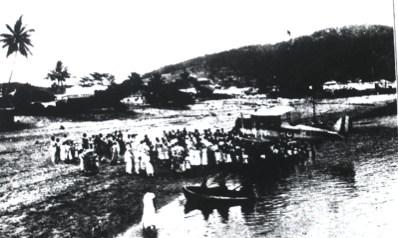
Seaplane crew welcomed at Thursday Island [Sydney Mail – 27 October 1926]
Trouble at Rabaul
The North West Champion of 28 October 1926, page 2, reported:
‘A message from Rabaul states that Lieutenant Mclntyre, who accompanied Captain Williams on his South Sea Islands survey flight, struck the bowsprit of a schooner when descending yesterday. The plane was slightly damaged, and will be delayed a few days.’
The Sun of 26 November 1926, page 8, reported:
‘Improved maps of the islands and important data about bays on the New Guinea coasts that would be suitable for seaplane descents and “takes-off,” are being brought back by Group-Captain Williams, who reached Rabaul last night, after having flown 773 miles from Tulagi, the terminal point of his Islands survey flight. A cable message to this effect was received from Captain Williams by the Acting-Minister for Defence (Mr. Marr) last evening, on his arrival from Lithgow.
At every place at which he landed the natives were friendly, Captain Williams says. They had never seen a ‘plane, and the arrival of the DH50 at some of the villages roused them to almost fanatical enthusiasm. …….
A message received by the Air Board from Rabuul today stated that Group-Captain Williams left there at 2 p.m. yesterday. The next stop will probably be Morobo or Lindenhafen, and the ‘plane will then come on to Samarai, Port Moresby, and Thursday Island.’
Seaplane lands at Port Stephens on journey back to Melbourne omitting Sydney
The Sydney Morning Herald of 6 December 1926, page 11, reported:
‘For unexplained reasons Sydney was unexpectedly omitted as a stopping place by Group Captain Williams in his return flight from the Pacific Islands.
No intimation of this plan was conveyed to officials responsible for arrangements at Sydney yesterday, and a party waited to welcome him until it was nearly dark. When Port Stephens reported that Captain Williams had left there shortly before one o’clock, and no further news was received of his progress anxiety was felt as to the safety of the airmen. This was dispelled by official news during the night that the seaplane had been sighted over the Naval College at Jervis Bay during the afternoon. An unconfirmed later report stated that Captain Williams had arrived at Eden but owing to telegraphic and telephonic interruption it was impossible to secure endorsement of the report.
A message from Brisbane last night stated that Group-Captain Williams landed at Southport about 4 o’clock on Saturday afternoon from the north after leaving Port Alma he met headwinds all the way down. He left for the south at 8 o’clock yesterday morning. Captain Williams said that as a result of his trip he had gathered much useful information.
The seaplane next alighted at Port Stephens and left again at 12.45 p m. Apparently Group-Captain Williams flew well out to sea and thus escaped the eyes of the anxious watchers at Sydney.
A party consisting of the Minister for Defence (Mr Marr), Wing-Commander Wackett, the three R A A.F. recruiting officers now in Sydney (Squadron-Leader Lawrence, Flight-Lieutenant Harman, and Flying-Officer Palstra), representatives of the Flying Corps Association and Aero Club, and former officers of Group-Captain Williams’ old No 1 Squadron A.F.C., waited all Sunday afternoon at Rose Bay in the expectation of being able to welcome the airman.
At 2 30 p.m. a service ‘plane from Richmond aerodrome appeared overhead. It searched the coastline as far as Newcastle but reported that there was no sign of Captain Williams’ machine. Visibility was poor owing to smoke from bush fires in the country.
As there was no sign of the seaplane at 5 o’clock most of the official party left, and at 6.30 p m. the supply launch also departed.
Return to Melbourne
The Sydney Morning Herald of 8 December 1926, page 17, reported:
‘Their faces and arms tanned by the tropical sun, Group Captain Williams, and his companions returned to Point Cook today after their 10,000 mile Pacific flight in a seaplane. With Captain Williams who in the first member of the Air Board, were Flight-Lieutenant MacIntyre and Flight Sargeant Trist.
The seaplane touched the water at the slipway, Point Cook at 12 minutes to 3 o’clock. Before the seaplane had ceased taxiing Sergeant Trist, looking very young in shorts, had climbed from the cockpit to one of the floats, and was throwing mooring-lines to the mechanics who had plunged into the sea when the plane arrived. In a few minutes the aviators were brought to the pier in a dingy and were welcomed home.
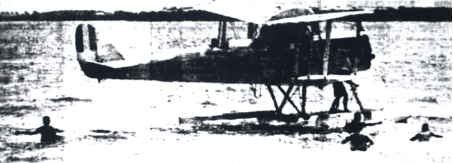
Seaplane after landing at Point Cook, with mechanics in the water [The Australasian, 18/12/1926]
The seaplane left Eden, New South Wales, at 37 minutes past 8 o’clock this morning, and arrived at Paynesville at a quarter to 11 o’clock. The wireless message received from Paynesville was as follows – “Seaplane refilled and left for Point Cook at 11:30 a.m. Expected to arrive at 2.15 p.m.” All the morning Point Cook was waiting for the arrival of Captian Williams. The officers kept Mrs. Williams informed of the latest wireless news about the flight. Mrs. Williams was outwardly calm, but in conversation it was easy to see that she had been greatly worried and was happy that the flight was nearing an end.
Two seaplanes, one containing the Second Air Member, (Wing Commander R. S. Brown), piloted by Squadron Leader De Larue, and the other by Flight Lieutenant J. A. Hall, accompanied by a wireless operator, who was to convey the arrangements for the arrival to Captain Williams, left Point Cook shortly before midday.
It was a quarter to 3 o’clock before a tiny speck over Mount Martha was seen, and in a few seconds 12 aeroplanes flying in formation were speeding out to meet it. It seemed only a few minutes before the seaplane, piloted by Lieutenant MacIntyre, was circling over the pier, and had landed perfectly. The 300 men employed at Point Cook formed a guard of honour on the pier, and while Captain Williams and his companions came ashore, the escorting aeroplanes continued to circle above the pier. It was a real Air Force welcome.
The Vice-President of the executive Council (Senator Pearce). who represented the Federal Ministry, was the first to grasp Captain Williams by the hand. Commander C.W. Stevens, representing the Navy Board; Lieutenant-Commander E. K. Smart, representing the Military Board; the Director of Civil Aviation (Lieutenant-Colonel Brinsmead), and several other officers of all branches of the defence forces, were also present.
In speaking of the flight Captain Williams said that although the delays experienced were unfortunate, he could not say that they had had bad luck, as they had arrived back safely.
He said that it had been decided to end the flight at Tulagai, in the Solomon Islands, because, owing to delays, they were dangerously near the bad season. The flight had been interesting, and he had gathered much valuable information.
The climatic and weather conditions in the islands they had visited were suitable for flying in a seaplane, and they had met with nothing unexpected or unusual.
“The credit for the completion of the trip is chiefly due to the other members of the party, MacIntyre and Trist, who kept the machine flying, and had most of the hard work,” he said. “I hope the information we gathered will be of value to the air force.”
He was impressed, he added, by the hospitality of everybody, including the natives. Government officials and others had told them that the visit of the seaplane – many of the natives had never previously seen an aeroplane – had greatly increased the white man’s prestige.
Captain Williams was surprised when told that a welcome had been prepared for him at Sydney on Sunday, and that disappointment was felt at his failure to call there. He said they were astonished to find the wind with them after leaving Southport. They had had a favourable wind only five times during the 10,000 miles. With the wind the machine was doing 100 miles an hour, and they decided to push on to Eden. “After all,” he said, “we were only doing a job which we desired to finish as quickly as possible. If we disappointed anyone at Sydney, I am sorry.
Referring to the New Guinea gold rush, Captain Williams said that their observations had showed that there were some tall mountains which were covered with clouds inland near the field. This would make the establishment of an air service to the field difficult. Their visit had certainly impressed the advantages of commercial aviation upon the people of the Islands, who relied mainly on launches.
Owing to head winds on the journey to Point Cook from Paynesville, only 70 miles an hour was travelled.’
Concluding Comments
The two landings of the seaplane in Port Stephens in 1926 would have caused considerable excitement. It is likely the local inhabitants had never seen a seaplane closeup before.
The residents of Tea Gardens only had to wait another four years for a second seaplane to visit that town. The Dungog Chronicle of 14 January 1930, page 2, reported:
‘Captain Pentland gave Tea Gardens, people a thrill on his arrival at Tea Gardens at 11.30 a.m. on January 3rd. by skimming over the beautiful waters of the Myall River. It was found necessary to effect slight repairs to the wing of the sea plane through bolts becoming loose. Also, a further quantity of benzine was procured. The people were offered flights at one pound per flight, but there were no takers. Many cameras clicked to make a permanent record of this historic event.’
The Australian War Memorial records that Alexander Pentland, enlisted in the AIF at the age of 20 as a trooper with the 12th Light Horse Regiment in March 1915 and was deployed to Gallipoli where he served with the 1st Light Horse Regiment as a machine gunner. Later Pentland was appointed to a commission in the British Royal Flying Corps in February 1916. By the end of the war Pentland had been awarded the Military Cross and Distinguished Flying Cross and was one of Australia’s most successful flying aces.
Pentland returned to Australia after the war and served briefly with the newly formed Royal Australian Air Force (RAAF) before moving to England and joining the Royal Air Force. He returned to Australia in 1926 and became a civilian pilot. It was during this period as a civilian pilot that he landed at Tea Gardens. He re-joined the RAAF during the Second World War.
Other papers on the early aviation history in the Port Stephens region are published on this website and can be found at the following links:
History of Seaplanes at Port Stephens
Early History of Newcastle Civil Aviation Airport
Bert Hinkler Lands His Baby Avro Plane at Anna Bay – Port Stephens
Tea Gardens Aerial Plane Thrills – 1930
Crash of Catalina Flying Boat in Port Stephens – May 1943
Geoffrey Wikner and Halifax Park – Nelson Bay
Researched and compiled by Kevin McGuinness
August 2023

 Port Stephens - a history exploration