
Introduction
Sir William Edward Parry was born in England on 19 December 1790. In 1826, he married Isabella Stanley. He was knighted for his services to Arctic exploration in 1829. In that year he accepted the offer to become the second Commissioner of the Australian Agricultural Company, then based at Carrington, Port Stephens in New South Wales.
Sir Edward Parry (as he was known) arrived in Sydney in December 1829 to begin his four-year term as the Commissioner of the Australian Agricultural Company. He kept a meticulous journal of his time in New South Wales, details of which are found at the above link on the website
Soon after arrival, Isabella gave birth to twins, Edward and Isabella, in 1830. While the Parry family were resident at Tahlee, Port Stephens, Isabella gave girth to another two children, Lucy in 1831 and Charles in 1833. Having completed his term as Commissioner of the Australian Agricultural Company, Parry and his family departed Sydney and returned to England on the ship Persian in May 1834.
The Dungog Chronicle published several articles from 7 February – 6 March 1928, of the journal entries written by Parry, during the six-month long sea journey back home to England. The material had previously been published in the Port Stephens “Pilot” newspaper. Prior to boarding the Persian, Parry spent time in Sydney and Parramatta, concluding his personal business and matters associated with the Company.
Sir Edward’s journal is a very interesting read. It furnishes an in-depth description of the voyage on board a sailing ship between the colony of New South Wales and England via Cape Horn in 1830s, and the harsh conditions experienced by the passengers.
Edward and Isabella Parry would have experienced similarly harsh conditions on the journey to New South Wales. Although they would have become accustomed to a relatively comfortable lifestyle at Tahlee, they would have viewed the return trip with trepidation.
A small number of dates are not covered by a journal entry. The reason for these omissions is not known.
The various headings in the journal, as published, are those of this author to give context to the articles.

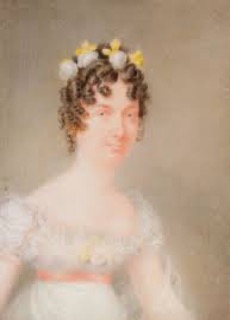
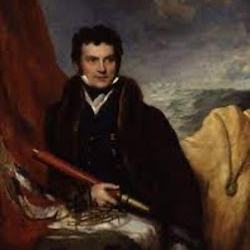
Sir Edmund Parry (top) and Lady Isabella Parry
Voyage Back To England on the Persian – Daily Recordings In Edward Parry’s Journal, 1834
Parry Concludes Business in Sydney and Parramatta.
Friday and Saturday, 18th and 19th April, 1834. — Again engaged writing letters, etc., which kind of work does not seem to decrease and I suppose, will not do so as long as I remain in New South Wales. My children are better, but still far from well.
Sunday, 20th April, 1834. — The steamer came from the Hunter this morning, but not Colonel Dumaresq. We did not know what to make of his detention, till young James Stokes came, informing us that the Colonel must have missed his passage by being too late at Graham’s [wharf on Hunter River, Newcastle].
Monday and Tuesday. 21st and 22nd April, 1834. — I was engaged this week chiefly in paying the bills I owe in Sydney, returning visits, and winding up my private business.
Wednesday, 23rd April, 1834. — Dined with Mr. Macleay.
Thursday, 24th April, 1834. — Dined with Mr. Biddell.
Friday, 25th April, 1834. — Went on board “The Alligator” with Lady Parry and children. Dined with Mr. Langa.
Sunday, 27th April, 1834. — Sacrament at St. Phillip’s Church. Mrs. Captain Henry was with us there, or rather with me, as Isabella was obliged to remain at home with the dear children, allowing Crotter to go with us.
Monday, 28th April, 1834. — Dined with my valued friend, Mr. Marguoid to meet Judge Burton alone, which I receive as a very kind compliment, as the latter never dines out.
Wednesday, 30th April, 1834. — At 9.30 a.m. the Lambton arrived, bringing Mr. Price, Mr. Thos. L. Ebsworth, Thomas Laman, and others of the company’s servants as passengers, and a variety of letters for us from our old friends at Port Stephens. Mr. Ebsworth came with a box of the company’s accounts, including the cashbook to the 10th March, for my signature, and to be conveyed by me to England. The storage of wool on board “The Persian” proceeds slowly, on account of the weather, which has been very rainy.
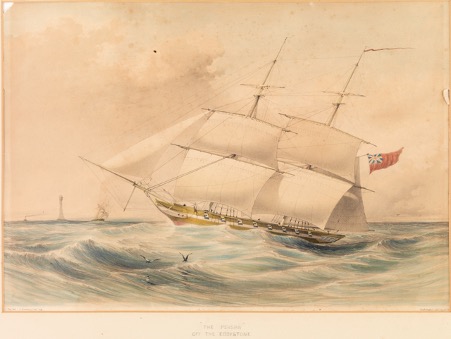
Persian, 1839 [National Maritime Museum, Greenwich, England]
Parry family goes on board the Persian
Monday, 12 May 1834. — According to our arrangements, I proceeded on board the “Persian” with Lady Parry and my family, to sleep permanently. This I was the more anxious to do, both to accustom the children to the ship for some days before sailing, and also to hurry the sailing which has been protracted some days beyond the terms of my agreement, viz. the 30th April.
Tuesday, 13 May 1834. — I addressed a letter to General Bourke, enclosing the petition of Patrick Collins, my groom at Tahlee, requesting His Excellency to recommend his sentence to be shortened. He is an amiable, kind-hearted follow, so attached to my little ones, especially to dear Lucy, that we are quite pained to part with him.
Wednesday, 14 May 1834. — I went to Parramatta today with Mr. Darch, to take leave of the Governor, and to pay several other visits to my friends there. I got down at Mr. King’s, Senr., where we breakfasted. I then went to Government House, but found the Governor had gone to Emu Plains, with Captain Lambert. Took leave of Mr. Dunlop at the observatory, and got the mean time from him for my chronometer. Called on Col. Despard, Major Bouverie, Lieutenant Blackburne, Dr. Anderson, and the Revs. Messrs. Forest and Marsden. I omitted to mention that I found a civil note from the Governor, regretting that he was obliged to be absent when I called, and kindly assuring me that he would recommend poor Collins. I took leave of Mrs. Thomson. I had a long conversation with Deas Thomson on a particular subject. Dined comfortably, with our friend, Mrs. King, and returned to Sydney by 7 in the evening.
Thursday, 15 May, 1834. — Conversed with Col. Dumaresq on many subjects of interest and importance to the A. A. [Australian Agricultural] Company.
Parry family at sea
Wednesday, 21 May, 1834. — Wind W. to S.W. Fine, but enough sea to make every passenger very sick. All my servants unable to move. A great joy for Lady Parry in taking care of the children.
Thursday, 22 May 1834. — Tolerably fair weather till night, and then a strong breeze from the southward with an increased sea leaking cabins, and all the agreeable concomitants of a rolling ship. The top sides are like a sieve, letting the water through in streams.
Friday, 23 May 1834. — A great deal of motion, the ship sailing in the trough of the sea. Wind S.S.W. with squalls, and rain occasionally. Servants very sea-sick. Our children perfectly well, and eating hearty. Lady Parry surprisingly well, although no sleep, and is able to wash, dress, and undress the children.
Saturday 24 May 1834. — Everything as yesterday.
Sunday, 25 May 1834. — Squally with unpleasant motion but all much improving in health. The motion too great, and the ship too much out of order for performing Divine service. Crowther was able, for the first time, to assist us in putting the little ones to bed.
Monday, 26 May 1834. — The weather was much better and passenger’s ditto. Wind light, variable and squally from the southward with showers of rain. All the servants able to do something. Children perfectly well.
Tuesday, 27 May 1834. — The wind northerly, enabling us to lie a very tolerable course to the eastward. The weather also tolerably fine, enabling the passengers to come on deck, and dry their things.
Wednesday, 28 May 1834. — Much such a day as yesterday, except a more fresh breeze and somewhat more motion, but we are all tolerably well.
Thursday, 29 May 1834. — Dear little Isabella was sick and unwell last night, and is not herself today, but all the rest quite well. The wind broke us off this morning for the first time since we sailed, coming from S.E. and E.S.E. Fine weather, everybody well and on deck. We were to-day only 114 miles due north from the Three Kings, New Zealand.
Friday, 30 May 1834. — A beautiful day wind light from the E.S.E. Made no progress except in the health and strength of our party.
Saturday, 31 May 1834. — Wind light, variable, and generally unfavourable. Therefore, we were making no advance.
Sunday, 1 June 1834. — A breeze sprung up in the morning from N.E. and N.E.E. which gradually freshened enabling us to make once more some way to the E.S.E. Divine service was reverently and comfortably performed on board in the forenoon, and I read a chapter and a sermon to a few persons below in the evening. Altogether a comfortable Sabbath for a ship. Commenced a Meteorological Journal.
Monday, 2 June 1834. — A fine run last night and to-day, wind N.E.E., fresh, but with smooth water, until night when it increased gradually, and became very rough.
Tuesday, 3 June 1834. — At 3 a.m. the weather became very boisterous in sudden gusts with some lightning, but not much, the wind drew aft, that is to the W.N.W., and we made rapid progress, but with a violent and easy motion in the ship, which made us all more of less sick again, but the children were otherwise remarkably well. The deck was constantly wet by the seas going over it, so that they could scarcely go out of the cabins. It was most moderate at night, but the motion was still violent. We were at noon today, very near the meridian of 180 degrees from Greenwich. Mrs. Stokes has a rheumatic fever. Having crossed the meridian it now became expedient to tack on another day to our reckoning, and to count the longitude west from Greenwich, which we did by calling till still.
Tuesday, 3 June 1834. — Light wind from the westward, with dull weather.
Wednesday and Thursday, 4 and 5 June 1834. — North-easterly wind moderate, very moist uncomfortable weather. The next day we had much rain which as before comes through the top-sides of the ship in streams, rendering us all mere or less uncomfortable, but we are all well, thank God. Mrs. Stokes is better.
Friday 6 June 1834. — The rain continued till the afternoon, and dry weather succeeded, but not in time to dry our things today, the evening closing in at 5 o’clock.
Saturday, 7 June 1834. — Moderate wind from W.N.W., with a fine clear refreshing day, which was very welcome to us. We were all well.
Sunday, 8 June 1834. — Divine service was performed, though the creaking of the ship in rolling was so great as almost to prevent the people hearing. The weather in the afternoon was overcast and subsequently raining, with a strong breeze from W.N.W.
Monday 9 June 1834. — We had made 177 miles to-day at noon. Very dirty weather, with much rain. We continue, however, to amuse the dear children pretty well, and thank God for His mercies to us, they are all improving in health. Isabella quite well, only that the baby does not let her sleep very well. Our cabins are very comfortable.
Tuesday, 10 June 1834. — Strong breeze from the south-west with squally weather, but generally clear. The only inconvenience was the ship heeling so much to one side, so as to prevent the children going about much, but it is wonderful to see how few falls they get. Poor little Lucy has suffered most, having scarcely sufficient strength to keep up, though full of spirits and anxious to be constantly running about.
Wednesday, 11 June 1834. — Moderate weather, wind S.W. to W., generally clear — the ship rolls and tumbles about a good deal; it seems “the nature of the beast.” Mrs. Stokes is much better, and is up. A lunar rainbow at night.
Thursday, 12 June 1834. — Fresh wind, north, most of the day, with raining, thick weather — no observations, but making fair progress, calm at night. We are all remarkably well.
Friday, 13 June 1834. — A breeze again from S.W. at 6 a.m., and the weather became more dry. Observed a considerable swell from the eastward, and the wind came from that quarter at night.
Saturday, 14 June 1834. — Nearly calm, or a light breeze from the eastward, all day with much rain and a little hail.
Sunday 15 June, 1834. — A little snow this morning, for a few minutes. The wind blew fresh from S.S.E., with rain in squalls. Divine service was performed as usual. Making very little progress the right way. All well.
Monday 16 June 1834. — Strong S. S.W. wind till 4 p.m. Rain in squalls, but generally clear.
Tuesday 17 June 1834. — Nearly calm all day — gloomy atmosphere. I observed a considerable swell from the south-eastward, a halo was round the moon at night, radious 23½ degrees. Very slow progress, of course, and yet abundance of rolling about.
Wednesday, 18 June 1834. — A moderate breeze from the N.E., which obliged us to stand more to the southward than our proper course; light rain occasionally.
Thursday, 19 June 1834. — The late variable and light winds, and swell from the eastward were today succeeded by a strong S. E. breeze, with clear weather generally. We are all pretty well, though the continual rolling and tossing fatigues our passengers very much. The wind died away at night.
Friday, 20 June 1834. — The wind blew strong from the S.W. in the afternoon, enabling us to advance on our proper course, but we were beginning to get very impatient of our long and unusual delay. My little Edward’s eye was much inflamed, owing probably to some draft of wind in the cabin, though we are continually stopping up crevices. We observed the total eclipse of the moon this night. The “first total immersion in the dark shadow,” and the last ditto afford a very tolerable means of obtaining the longitude at sea in fine weather. I should think within one minute each observation — say, at all events, the error of the mean of both need not exceed one minute. It blew strong all night. The steerage and quarters of Dr. Savage very wet.
Saturday, 21 June 1834. — The wind somewhat less strong to-day — fine, clear weather. My Teddy [Edward] is very feverish tonight and Dr. Savage (whose attention nothing can exceed) has prescribed for him. A fine run and clear weather all night.
Sunday, 22 June 1834. — Again blowing stronger this morning, from the same quarter — a heavier sea. Got our quarter lead-lights in; the stern ones have been caulked in this fortnight past, and indeed we had one on each side caulked in before leaving Sydney. Our stern windows have been pasted up with strips of brown paper and rugs and other warm clothes rolled up within. The weather would not permit us to perform Divine Service. Edward was much better to-day. I had an excruciating sick headache.
Monday, 23 June 1834. — A strong breeze, first from W. then S.W. We observed the sea become remarkably smooth after the wind came more to the southward. The ship was going 7½ knots this evening, without any unpleasant motion. Days becoming short and gloomy. Sun rises about 8 and sets at 4 . Observations now very difficult to obtain.
Tuesday, 24 June 1834. — A nice breeze with water comparatively smooth. We are now running our longtitude down in earnest. All very well on board, though the children can scarcely go out for an hour each day and then only to sit under the poop — awning.
Wednesday, 25 June 1834. — Still a fine run. Wind fresh westerly — very smooth water — swell aft — the weather, however, is wet and we cannot get out on deck. Lucy had a fall on her forehead, attempting to run on deck a little while. Wind came with little rain at night.
Thursday 26 June 1834. — Much the same weather as yesterday, with a continuance of remarkably smooth water, very rainy and thick weather.
Friday 27 June 1834. — A nice calm in the forenoon — fresh wind from the westward, again in the evening — very rainy and thick. By a mistake, or rather from my not having told Dr. Savage of the usual effects of opium on Isabella, he gave her a small quantity, which kept her awake and light-headed all night.
Saturday, 28 June 1834. — Wind S.W., weather more clear but anything but clear weather. Got an observation, the first time for four days. Children on deck for two or three hours. Thank God we are all safe and-well through another week. Isabella had nearly recovered the effects of the opium this evening. Wind from W.N.W. to N.W. at night.
Sunday, 29 June 1834. — A very wet and gloomy day, with thick weather almost amounting to fog. The men and the decks were so uncomfortable that we could not have Divine Service. I was suffering from earache. Water wonderfully smooth — no observations.
Monday, 30 June 1834. — Wind moderate from W. during the day — water smooth — wind at night W.S.W which brought clearer weather. It did not freshen beyond a fresh trade wind. Dry, except squalls which are constantly brewing up and passing ever us. With the wind at W. to W.S.W. I observe that it comes in variable puffs (not squalls) which made the ship do a knot or two faster for the time being.
Tuesday, 1 July 1834. — Moderate wind from W.S.W. to S.S.W. with light showers in squalls, which brought scarcely any increase of wind. We should have been glad of more wind to send us on faster, but we never know when we go too fast.
Wednesday, 2 July 1834. — Light wind from S.S.W., almost calm at noon — very fine weather and smooth water. In the night the breeze shifted to the eastward.
Thursday, 3 July 1834. — The wind gradually freshened from East in the course of the day, until it had increased to a gale about 6 p.m., and then blew pretty hard all night. The principal feature of this gale was its blowing in a continual succession of strong squalls, with intervals of only one or two minutes between them, and yet they were not like separate squalls, but alternate blowing and lulling. The ship was very uneasy indeed, all night.
Friday, 4 July 1834.— In a violent roll early this morning a jug of cold water was thrown out of its place, and fell into Lady Parry’s cot upon the little infant. It made his nose bleed, and of course frightened him very much indeed, but providentially did him no other mischief. All the other children slept through the gale, which rather increased towards day-light, reducing us to our main topsail. The “Persian” shipped a great deal of water, and is the most uneasy sieve I ever sailed in. The rain fell constantly during the gale, which lasted for 20 hours. At 1 o’clock it rather moderated, and at half-past two the wind came to N.W., which continued at N.N.W., all night, with dry, fine, clear weather. I never saw the low stars clearer than at 1 p.m. today. The ship, of course, pitched heavily against the head sea for some hours, but by 4 the next morning it had almost entirely gone down.
Saturday, 5 July 1834. — A fine dry day — wind N.N.W., smooth water — more dry than usual with his wind. All quite well.
Sunday, 6 July 1834. — Very smooth water all last night, and also today, but the wind inclining too much to the N.N.E. In the afternoon it came to N.E. Monday,
Monday, 7July 1834. — It blew strong to-day from the north-east. Succeeded in getting an observation between the squalls, which were frequently, though not very hard, with light rain accompanying each. There was again a very uneasy motion, destroying all comfort below.
Tuesday, 8 July 1834. — I was laid up with excruciating toothache and general cold. Fresh breeze dead against us. Some rain now and then. The water smooth, especially at night.
Wednesday, 9 July 1834. — This was a fine day, but the wind would allow us to make no progress. A little snow today, the first our little ones ever saw. We were this afternoon nearly in the latitude of Cape Horn.
Thursday, 10 July 1834. — Wind E.S.E., fresh all day, with a little sleet and rain. The wind was light from N.E. during the night, with continued light rain.
Friday, 11 July 1834. — Very smooth water, with the wind from N.E. to E.N.E. Overcast weather. No observations.
Saturday, 12 July 1834. — The wind very moderate from E.N.E. till the afternoon, then fresh all night. Rain.
Sunday, 13 July 1834. — Rain, and a fresh wind from S.W.S. today, thick weather — very uneasy and uncomfortable pitching motion. It was impossible to have Divine Service.
Monday and Tuesday, 14 and 15 July 1834. — Rain thick, disagreeable weather. We are getting tired of this long and almost, I should think unprecedented detention from Eastern winds. We had the first observations to-day for several days. The night was much clearer than the day, as often before observed. We obtained some lunar observations.
Wednesday, 16 July 1834. — Light rain from N.E. When will this tedious and extraordinary delay be at an end? It is doubtless for some good purpose, though we see it not.
Thursday, 17 July 1834. — Moderate breeze with light rain in occasional showers. Water smooth.
Friday, 18 July 1834. — As we advanced to the southward the wind, as before, broke us off and we again stood to the north-eastward, with rather a heavy breeze from S.E., with an uneasy head sea. We advanced to 58 degrees, which is the farthest south so far. The cow scarcely gives any milk for the children, owing to the abominable conduct of the butcher. I am tired of complaining.
Saturday, 19 July 1834. — A fresh breeze S.E. during the day — overcast weather; no observations. The wind came to south at night; but we were again disappointed in its falling calm.
Sunday, 20 July 1834. — The weather again inclement, and the ship’s motion so uncomfortable that we could not perform Divine Service. Altogether, a very unpleasant Sunday. At 7 a.m. the decks were covered with snow. Heavy squalls all day. Much more clear at night.
Monday, 21 July,1834. — Fresh wind from W.N.W. with sleet and snow. We are now making fair progress. Fewer birds than usual — all cape pigeons.
Tuesday, 22 July 1834. — Still favoured with a fresh breeze from West. Sleet and snow fall occasionally, accompanying puffs of wind — they can scarcely be called squalls. After dark we had clearer weather. I remained up all night to get observations with Captain Mullard.
Wednesday, 23 July 1834. — At 1.30 a.m. we unexpectedly saw the Islands of Diego Bannires, and at 3 passed them at about 6 miles distance. At 11 a.m. we passed the meridian of Cape Horn, 11 miles distance, obtaining observations for the chronometers and angles for finding the ship’s true geographical position by Captain King’s survey. Nothing could be clearer or more distinct than all the points. At half-past 2 we obtained other observations and angles off Barnevelt’s Island. All agreed with former one. At 9 a.m. a heavy fall of snow, covering the decks to a depth of 6 inches. Temperature of our cabins, for some time past, during the nights, 42 to 45 degrees.
Thursday, 24 July 1834. — Passed the meridian of Cape St. John at 10 a.m., having come from Cape Horn 34 miles in 23 hours, more than the log gives. Much tangle weed floating about, and an extensive ripple occurred on the water when Cape St. John bore about true west distant 8 or 9 leagues. In this spot there was a multitude of Cape pigeons. A long oceanic swell from the westward. Wind broke off in the evening, and before midnight we had it at E.S.E.
Friday, 25 July 1834. — Early in the morning it came down to E.S E., so that we now had a favourable wind, on the starboard tack, for running to the eastward of Falkland Island. Smooth water today. Gave one the idea of ice or land being to windward at no great distance. The sea was of the palest green we have ever noticed. Saw one or two whales blowing. It is remarkable that the water of the sea is colder today than we have yet had it viz., 38 and 37 degrees. Does the northerly currents bring down the colder water?
Saturday, 26 July 1834. — Had a good fresh breeze, smooth water. A gale came on at 4 a.m. The sea got up, and we scudded before it briskly all day. At noon we were 37 miles S.S.E. from the Falkner Islands. Squalls violent with thick snow. Saw a number of porpoises, and one snow white bird the size and shape of the blue petrel. Fresh gale at night.
Sunday, 27 July 1834. — Still a fresh gale from south, with thick snow. Cow and goat not giving much milk; both have been starved and neglected, in spite of my endeavour to have them attended to.
Monday, 28 July 1834. — The wind was less today, but we were carried along rapidly on our way. Wind came to W.S.W. at night, still favourable.
Tuesday, 29 July 1834. — Thermometer last night 50 degrees; much warmer and comfortable. Wind westerly, with constant light rain, water smooth — a fine run. A fine breeze from S. S. W. all night. Night much clearer than the day.
Wednesday, 30 July 1834. — Wind S.S.W. generally overcast. Rain fell in the afternoon, but it was again beautiful and clear after dusk. Water smooth at night. — still a fine run. A whale or grampus blowing.
Thursday, 31 July 1834. — A very beautiful day, wind south, clear weather good observations. Sea decidedly of a lighter green occasioned I have no doubt by soundings as we are abreast of the 60 and 55 fathoms laid down in Flaven’s Chart of the River Plate.
Friday, 1 August 1834. — Porpoises. The sea is again oceanic blue, which confirms the supposition of yesterday. Wind south, with constant, though moderate squalls, accompanied by light rain. Good progress still.
Saturday, 2 August 1834. — Fine breeze (probably the monsoon?) fine weather. Porpoises jumping out of the water. A good progress made still.
Sunday, 3 August 1834. — Beautiful day; smooth water. Divine service was performed. A little rain.
Monday, 4 August 1834. — A lovely day. Captain Mallard informed me in the afternoon that he had shaped his course for Rio.
Tuesday, 5th August 1834. — New moon at 3 a.m. Only 360 miles from Rio at noon.
Wednesday, 6 August 1834. — Wind freshened considerably from the east. Thick weather with rain at night.
Thursday, 7 August 1834.— Before 10 o’clock this morning a calm ensued. A most beautiful day. In the afternoon the wind came from N.W. The young moon and Venus near together — a glorious sunset. Saw a schooner or brigantine to the north, steering N.E. the first vessel since we left Sydney. Torrents of rain in the course of the night.
Friday, 8 August 1834. — Fine day. Wind moderate, which enabled us to continue our progress towards Rio. We crossed the Tropic of Capricorn at 3 p.m. A ship in the offing.
Rio De Janeiro, Brazil
Saturday, 9 August 1834. — We were 8 or 9 miles to the eastward of Raga Island at daylight. The view of the land was most magnificent — indescribably so. Wind W.S.W. to S.W., pretty fresh. Took us all day to beat up to the entrance of Rio. In the forenoon, a gig, with an officer from H.M.S. ‘Spartiate,‘ came to us in the offing, supposing us to be the English Packet, a long time due. He informed us of the death of Admiral Sir Michael Seymour this day month, and of a practical change of Ministry, by which Mr. Stanley, Lord Ripon, Duke of Richmond and Sir Jas. Graham had gone out. After we had anchored, Captain Tait, of the Spartiate kindly came on board, and offered us every assistance. There was a French Squadron and an American Squadron lying here.
Sunday, 10 August 1834. — No Divine service, as the health and Customs boats are expected every moment. The boats came and cleared us at about 11 a.m. My old mess-mate, John Grant, 1st Lieutenant of the Spartiate came on board to see me. Also Lieutenant Coghlan commanding “The Hornet” brigantine packet and Dr. Bowen, of “The Spartiate” visited Dr. Savage. Returned on board the Spartiate with Grant to return Captain Tait’s visit, and dined in the ward-room.
Monday, 11 August 1834. — Received a kind invitation today from Captain Tait to join a picnic at the Botanical Gardens, whither we proceeded, accompanied by Dr. Savage. It is in vain for me to attempt to describe the novelty of everything we saw. It reminded me of Lisbon. Arrived, at the Botanical Gardens at 1 p.m. Beautifully laid-out grounds. Dined in some airy and handsome apartments, a small palace of Don Pedro, Senr., and met a host people, connected with the diplomatic and consular services. Returned delighted with our day’s’ journey to Rio. A quantity of oranges packed at Sydney by Captain King this day eleven days, were in perfect order.

Botanic Gardens at Rio de Janeiro in 1856
Tuesday, 12 August 1834. — We rowed over to the North Shore to a house, of a man named Rancisco, who had made a fortune by washing linen. Went on board the Spartiate to dinner, afterwards inspecting the ship — a prow, prow, sight.
Wednesday, 13 August 1834. — Passed this day on shore. Dined at Johnson’s Hotel (an American) — very good house.
Thursday, 14 August 1834. — We visited Admiral Laticyte on board his ship “L’Hermione” accompanied by Captain Tait. Visited the Palace, and it was intimated that we might probably be allowed to see the young European Pedro and his two sisters. This we had the pleasure of doing, being presented in due form, kissing hands, etc. We remained about 20 minutes. They were delighted with our children. Little Pedro asked a great many questions about the Polar Expedition. Much rain in the night.
Friday, 15 August 1834. — Was present at a sort of a fete at the Church at Gloria, at which the young European and his sisters are annually present. By the influence of the Sardinian Embassy we got seats for the ladies like those in an opera box. A sermon was preached by the Archbishop, unheard amidst the universal hum. The Chapel was illuminated at night, outside. Two fine balloons went up.
Saturday, 16 August 1834. — Getting things ready for sailing on Monday. Rather wet. We dined on board the French fugate “L’Hermione,” with Admiral Latreyte. Splendid dinner, and an amiable Admiral, who suffers much from weakness in his back and legs. Heavy rain, by which the ladies were somewhat incommodated.
Sunday, 18 August 1834. — Rain continued all night. We attended Divine service on the “Spaitiate,” the Rev. Mr. Falls, Chaplain.
Monday, 19 August 1834. — Some seamen expected to complete the crew of the “Persian” did not come — detained another day. Captain Tait came on board in the evening to take leave of us, and never can we forget the kind attention of this benevolent man.
Back at sea
Tuesday, 19 August 1834. — Got under way at daylight. The ebb tide sets much towards the south shore, until you get fairly into the middle stream. In passing the port of Santa Couz, going out, they demand the countersign, which is previously given to you by the guard boat. A light air all day from the southward. In the evening a fine breeze which gave us a fine run to the eastward. A glorious sunset.
Wednesday, 20 August 1834. — At 4 p.m. we were off Cape Trio, with a splendid breeze from the S.W. A capital run.
Thursday, 21 August 1834. — Fine fresh breeze S.W. Another anxious night with my child Lucy.
Friday, 22 August 1834. — Wind drawing rather more toward N.E. to the S.E. Rain in light squalls. Water smooth.
Saturday, 23 August 1834. — Fine weather. Good progress. Dr. Savage and I watched Lucy all night.
Sunday, 24 August 1834. — Caught a barracuda — a very long fish. Divine service on dock. Wind scant at East — light rainy squalls.
Monday, 25 August 1834. — At 1.30 p.m. a brig passed one mile to the eastward of us. Saw a barque in the evening, 6 or 7 miles to the westward of us. Making good progress.
Tuesday, 26 August 1834. — A brigantine was in our company all day. Fresh breeze. At night squally. Many flying fish; we are all mending; but Isabella continues very debilitated.
Wednesday, 27 August 1834. — Nasty squally weather. The continued heel of the ship one way adds to our labour with the dear children; but we are, thank God, all better. Ship making good progress.
Thursday, 28 August 1834. — Squally and disagreeable till noon; afternoon pleasant and fine. Making excellent progress.
Friday, 29 August 1834. — Very squally, with rain in every squall, but not much wind, just enough to keep us on the alert, and drive us along faster. The wind was better in direction, viz., E.S.E. At night the water was most beautifully phosphorescent, in a degree I never observed before.
Saturday 30 August, 1834. — Very heavy showers in squalls. We are all much better to-day.
Sunday, 31 August 1834. — Jane Petty fell down the ladder leading to the lower deck, and pitched on her head. Dr. Savage bled her, and she continued very poorly. Fine day. Wind moderate. Divine service on deck, smooth water, lovely weather, the air in the shade delicious.
Monday, 1 September 1834. — Still a fine breeze S.E. No sea except in occasional squalls. Fine Neptune as there was nobody to shave. Gave the crew a dozen of breeze all night, steering N.E.
Tuesday, 2 September 1834. — A beautiful day — the climate delicious, with a splendid breeze from S.E. — water perfectly smooth. At 2.30 p.m. crossed the Equator — no Lisbon wine. There was no disorder of any kind. Jane Petty was worse again.
Wednesday, 3 September 1834. — We may be said to have lost the S.E. trade wind this morning in about 1½ north latitude. About sunset, a hazy sky. The comfort of having the ship on an even keel is conceivably great.
Thursday, 4 September 1834. — Another lovely day — the air refreshing, and the sun not very hot. Very smooth water. Wind moderate. Some westerly current perceptible.
Friday, 5 September 1834. — Another charming day. Wind light S.S.W., enabling us to glide along over the “variable” interval.
Saturday, 6 September 1834. — The sun was so nearly vertical, that we could not obtain his correct altitude at noon. By an observation of the moon, we were in latitude 6.40′ north. From 11 a.m. the wind be-came light. Some large grampus passed close to our stern, one jumped entirely out of the water, 12 or 14 feet in length.
Sunday 7 September 1834. — Black-looking clouds with torrents of rain — a few claps of distant thunder. At night alternate calms and squalls. The luminous lamps in the sea are beautifully phosphorescent.
Monday, 8 September 1834. — Southerly light wind all the morning. Saw an American ship to the N.E., which hauled up for us. She proved to be the ‘Jeannette’ of Providence, 125 days from Canton, bound to Cowes. Signalling was done by chalking on boards. Very heavy rain during the night.
Tuesday, 9 September 1834. — Continual rain. Fine run — wind fresh. Almost calm for an hour or two at night. Rain ceased.
Wednesday, 10 September 1834. — Still a fine run with a S.S.W. wind. Weather dry. In the forenoon a ship to the westward, on the star-board tack. Clouds appear to be going different ways. Two vessels N.E. at sunset.
Thursday, 11 September 1834. — At 1.30 p.m. a French merchant brig passed half a mile from us, steering south. At the same time we saw a ship to the S.E. on the lar-board tack. We observed her communicate with the French brig. A strange sail west, at sunset, very distant. The ship’s bell, which was cracked has suddenly recovered its sound, probably by expansion and closing of the crack by the heat.
Friday, 12 September 1834. — A beautiful day. We are just at the southern margin of the N.E. trade wind, but it comes very tediously. A halo round the moon at night — anywhere else it would be symptomatic of wind.
Saturday, 13 September 1834. — Another lovely day. Water smooth, and wind improving. We may be said to have got the N.E. trade-wind this day. We have had no tedious sailing since we lost the S.E. trade. Halo round the moon again.
Sunday, 14 September 1834. — Divine service on deck. We got the latitude in the evening by our old friend, the North Pole star, for the first time this voyage. Clouds passing rapidly — a common feature in the trade-winds.
Monday 15 September 1834. — The sky overcast in the morning. Clear weather in the afternoon and evening. We observe less wind and more northerly when the sky is overcast and vice-versa.
Tuesday, 16 September 1834. — I complained to Captain Mallard of the practice of going to the hold (called the lazarette) with a lamp of most fearful aspect — very disgraceful indeed! What a disgusting thing is a merchant ship! It is not owing to any human means that such vessels as this perform their voyage in safety. I observe the flying fish sometimes fly as much as 50 yards, but seldom higher than three feet above the water. We are hoping to fall in with the “Sargasso” on “Weedy Sea.”
Wednesday, 17 September 1834. — No weed seen yet. At 10 p.m. we saw under the moon a square-rigged ship; a beautiful night, but the wind too light to please us.
Thursday, 18 September 1834. — Another very lovely tropical day. At a quarter to three we obtained the most beautiful observation for the latitude I ever had at sea — Venus on the meridian. 50 degrees high, and 42 degrees distant from the sun, and the horizon very good. We looked out for a supposed rock, in the latitude 23.12′, but could not see anything. Wind light all night.
Friday, 19 September 1834. — Fine day. Wind light. A long high roll, some of the furrows full half a mile in length.
Saturday, 20 September 1834. — Early this morning a light wind, raining squalls. Discussed with Captain Mullard about the servant’s dinner.
Sunday, 21 September 1834. — Fresh breeze and squally. No Divine service — weather would not permit. Swell has gone. A line run till afternoon. From 5 till noon we passed through some of the “Sargarso” or sea-weed in long detached narrow straggling lines. The bunches were all floating separately. There was no weed after noon. Two or three flashes of lightning in the N.N.E.
Monday, 22 September 1834. — A beautiful day, quite like the “trades.” No weed today. Wind died away at night. Fine clear weather.
Tuesday, 23 September 1834. — Calm day, hotter to the feeling than any we have experienced this voyage. Large flying-fish. Mr. Wellbank, the mate remarks that the flying fish are always large outside the tropics, though comparatively few. Calm all night.
Wednesday, 24 September 1834. — A good opportunity was afforded that there had been no current the last 24 hours, the observations giving only a change of place corresponding with the two or three we had run. Just after four o’clock this afternoon, when we had sat down to dinner, I had eaten a small piece of a little dolphin caught in the morning, when I felt quite dizzy in my head. Dr. Savage, with his usual promptness and skill, immediately bled me, taking about 32 oz. from my right arm, which entirely relieved my symptoms. There was heavy rain at night.
Thursday, 25 September 1834. — Heavy rain. Quite well again. I desire to thank God for His services to me yesterday.
Friday, 26 September 1834. — Smooth water. Captain Mallard observed some lunar disturbances. Too weak to join him.
Saturday, 27 September 1834. — This was as lovely a day as ever was seen at sea — the sky clear, the atmosphere dry, the sea as smooth as a lake. A fine clear night.
Sunday, 28 September 1834. — Divine service was performed in the cuddy. A long swell. We are making good progress.
Monday, 29 September 1834. — Wind less this morning. Ship rolling very much.
Tuesday, 30 September 1834. — Calm the whole day — and all this next night. The swell as great as before.
Wednesday, 1 October 1834. — Still calm. On opening the dolphin caught last night, there was found the sail-maker’s knife which he lost overboard yesterday, while in the act of opening it. No wind all night.
Thursday, 2 October 1834. — Light breeze which increased a little during the day. After dark some rain. Head sea.
Friday, 3 October 1834. — Wind rather fresh. Head sea. At sunset a dark bank all round the horizon — most to the westward.
Saturday 4 October 1834. — Wind dead against us. Light wind at night.
Sunday, 5 October 1834. — Almost calm in the morning. Divine service was performed on deck. Rain after dark.
Monday, 6 October 1834. — Moderate breeze with rain, when we were suddenly taken aback by a breeze from N.N.E, again.
Tuesday, 7 October 1834. — Swell continues. Fine clear weather.
Wednesday, 8 October 1834. — Light wind. Floras Island (Azores) 10 to 12 leagues distant at 1.30 p.m. In Purdy’s chart there is a shoal placed close off the south end of Flores, but the description of it in his memoir is altogether at variance with the position on the chart, and most probably none exists at all.
Thursday, 9 October 1834. — Clear day. Flores still in sight at 9 a.m., high from the deck, and yet it must have been 40 miles distant. I should say that it may certainly be seen 16 leagues from a merchant vessel’s deck. Flores and Corso in sight.
Friday, 10 October 1834. — Bracing weather, water smooth. At 9.30 a.m. saw the south end of St. George’s Island. I observed two remarkable peaks. The cable was arranged today, and we shortened sail, and I understand we are going into Pazal Road tomorrow. Moderate weather.
Saturday, 11 October 1834. — Ran in and anchored in Pazal Road. Unpleasant weather. I conclude we have come for supplies. Flour being short, and other important things, and this after being 7 weeks from Rio — economy with a vengeance, this! In Pazal are nicely cultivated paddocks almost to the summit, a pretty church with a steeple on the north point, and white houses dotted in many parts. We anchored in 23 fathoms. The official boats came off, and were very civil. All the tobacco and soap were taken ashore, with the proviso that they were returned when the ship was about to sail. There is a monopoly of these articles vested in one individual. Mr. Walker, the British Vice-Consul, came aboard to call on me, and brought me some English newspapers. He is stone blind. Lost his sight years ago. He is a brother of Mr. Walker, of the Commissariat at Sydney, New South Wales. We heard here of Don Pedro’s death. I fear that this event will create fresh disturbances in Portugal, and Bristol is now sure of a Republic. The oranges here are considered just as good as St. Michael’s. What are called pot-oranges in England are merely the produce of the oldest trees; the other the tree the smaller and more delicious the fruit, and the thinner the skin. Mr. Walker has seen trees 100 years old. There are a few mules, but there are, I believe, no horses on the Island. There are no roads for a carriage out of the town, and the bridle tracks are dangerous. Only four English families here. It struck me that most of the people I saw are very superior in countenance, to any Portuguese I have ever seen before.
Sunday, 12 October 1834. — The traffic in baskets, eggs, apples, etc., was going on at such a rate all day, as to render it impossible to hold Divine service. We took a walk in the American Consul’s garden in the afternoon. The wall round the garden was more than 20 feet high, of stone plastered.
Monday and Tuesday, 13 and 14 October 1834. — At daylight, we began to get under way, and at 8 a.m. stretched away to the N.E. The tobacco and soap were honestly returned. The wind freshened up, with very thick inclement weather before dark, but it cleared. Stretching to the eastward, brought us to Tercenia Island at 2.30 p.m. on the 14th. Bore up round the S.W. point and again hauled up under the lee of it on the larboard tack. Stood off and on all day fetching close in with the Brazil Mount and the town of Augra on the starboard tack in smooth water. This island seems a perfect garden.
Wednesday 15 October 1834. — Stood in again to Tercenia this morning lying first as high as N.E, on the starboard tack. By what the master did he seems to be bound to Europe. Moon looking very greasy. At sunset we saw the peak of Pico above a bank of clouds.
Thursday, 16 October 1834. — Tacked to the northward and saw St. Michaels (west end), so that we have now seen all the Azores, except St. Mary’s. Cabras Island was 12 leagues distant. We were enabled to make about a (fine) north course during the night.
Friday and Saturday, 16 and 17 October 1834. — The northerly swell, which had been observed for the three weeks past, had almost entirely subsided today, and the water was very smooth. The wind favoured us. Saw during the day four brigantines — supposed to be fish vessels from Lisbon or the Mediterranean to Newfoundland, but one we hailed today proved to be the “Joh Fulton” of St. John’s, Newfoundland, bound from Madevia.
Sunday 19 October 1834. — Wind more to the N.N.W. Long rolling swell, but no sea. At 3 p.m. a ship was sighted very distant. At night unsettled weather. Divine service performed in the cuddy.
Monday and Tuesday, 20 and 21 October, 1834. — A fine breeze — a little rain. I completed and dated a letter and its enclosures which I have been preparing for the Directors of the A. A. Company. Sighted a ship standing to the S.E. She wore round afterwards on the sar tack with us. This was our dear Charley’s birthday, and a rough one too, but thank God he is quite. We except a cold, which indeed we all have, more or less. The weather now begins to feel very chilly to us.
Wednesday, 22 October 1834. — Another rolling and uneasy night. Crother had a severe cold, sore throat and headache, so that Isabella had to take sole charge of Charley at night.
Thursday, 23 October 1834. — Slow progress. Some grampuses seen during the day, and porpoises at night. Crowther better. I have a sore throat.
Parry family fatigued after five months at sea
Friday, 24 October 1834. — Wind again about East — very trying to us all, having now exceeded five calendar months at sea, and we have been upwards of 23 weeks aboard the “Persian.” However, it seemed some comfort, though a poor one, to-day, to see no less than six other vessels in the same plight as ourselves — two ships and four brigs, all evidently bound to the Channel. One of them informed us that she was the “Palambary,” 140 days from Bombay. A raw day to our feelings, and indeed cold enough (56 degrees) to put warm things on.
Saturday, 25 October 1834. — Still this same interminable wind from E.S.E. to S.E. A long rolling swell. By our reckoning we were about the latitude of The Lizard at 8 p.m.
Sunday, 26 October 1834. — Public Devine service was not performed. Raw morning not calculated to improve our colds. Took observations. In three days we have neared The Lizard 39 miles. Two brigs were near us, one larger and the other smaller. The latter made a signal which we could not understand, the flags not being in Marryatt’s code; nor could she understand ours. I had a sharp attack of asthma tonight when I attempted to lie down in bed. I have not had any of this since about the year 1824, when I had two nights of it immediately on resuming the use of my sleeping cabin in the Hecla, after Lieutenant (now Commander) Nias had occupied it for 6 weeks under a severe attack of this complaint. Had not known any of it for many years before that. This is a remarkable fact, which none of the medical men to whom I have mentioned it can account for. On this occasion it was proceeded some days by catarrh and sore throat.
Monday, 27 October 1834. — Some rain squalls in the morning. Two distant vessels in the Eastern quarter.
Tuesday, 28 October 1834. — Squally with rain, in the morning. After 10, however, it cleared away. Wind steady, till it fell nearly calm about 4 p.m., after which it kept baffling for some hours, obliging the people to brace the yards about on one tack and the other. A strange barque in sight to the southward all day. Lucy is better. All the children are well, and we hope to land them as they are. A swallow was flying about the ship to-day.
Wednesday, 29 October 1834. — Another fine clear day, after a few light showers. Sunset like the finest in the tropics — clear, red, and brilliant. Whales or grampus blowing at night. Had advanced 9 miles towards the Lizard!
Thursday, 30 October 1834. — Calm till 2 in the morning. At noon had advanced 9 miles more towards the Lizard. A woodcock was caught this morning, very much fatigued. A square-rigged vessel to the eastward at sunset.
Friday, 31 October 1834. — We are at last making some small progress. Three brigs and another square-rigged vessel in sight, which, coming up to her at noon, we sent a boat to examine. She proved to be a Quebec-built ship of about 350 tons, loaded with mast-timber and staves, her masts, bowsprit and rudder gone, and her hull burnt to the water’s edge. She had been boarded by some ship since the catastrophe, or the ship which took away the crew had also cut away, a good deal of the masts and rigging. She had been set fire to abaft, and was burned in the after part to the water’s edge. The fire appeared to have been more recently than the swamping. No name could be discovered. We left a bottle containing a notice of having boarded her. A vessel hauled towards her in the evening, but merely looked at her. After making sail from the wreck, the breeze rather increased, but still it blew with no heart for some hours. We were 353 miles from The Lizard at noon. The S.E. swell had subsided, and there seems another from the West and contending against it.
Saturday, 1 November 1834. — The wind continued light, and varying frequently between N.W.N, and S.W.W. all day. It is remarkable that not only had the S.E. swell quite subsided, but a long and favourable swell had this morning took up from the Westward. Six square-rigged vessels in sight. Our progress was small. A brig and a ship being the two vessels next to us, hove to for a cast of the lead, probably without success. We were 271 miles from The Lizard. We have had nothing but light winds. Many porpoises at night. Water very phosphorescent.
Sunday, 2 November 1834. — Very nearly calm the whole of the day — quite a summer’s day. Five vessels in sight, steering E. with us, and a barque steering for St. George’s channel. Flocks of gulls for the first time.
Monday, 3 November 1834. — Summer’s day — very light wind till afternoon from S.S.W., then from the West — had only made 45 miles eastward, Lizard bearing 157 miles. 17 vessels in sight all day, and towards evening about 30, all steering the same way with us. Aurora Bore-alis at night — luminous arch, about 7 degrees high in centre — a few connscations upon the arch now and then, but more above it, or towards the Zenith, as in the Polar Regions — continued some hours — as much light as moon 4 or 5 days old. Flocks of birds, blackheads, sitting on the water today.
Reaching England
Tuesday, 4 November 1834. — Wind S.W. to S.S.W. Strong from the latter towards evening. 30 vessels in sight homeward — passed 5 outward. One of them was a fast-sailing ship, with a tier of pests painted. At 5 saw the Lizard Light [Lighthouse at Lizard Point, Cornwall, built to guide vessels passing through the English Channel], and at 5.30 were on the meridan of them, supposed 5 leagues, very quick run. Strong S.S.W. wind, hazy weather all night.
Wednesday, 5 November 1834. — Blowing rather strong from S.W. W. Many vessels running up — saw the French coast in the morning, but did not get sight of the Bell of Portland or Isle of Wight. No good observation. Off the latter (supposed) at noon. As evening approached it came on to blow a gale from the S.W. which continued pretty strong, with thick weather all night — very anxious—could not see the lights. Glimpses of Beechy Head Light at 4 p.m.
Thursday, 6 November 1834. — At daylight, Dingenness in sight— off Dover at 11 a.m. Delay for pilot. Accounts of shipwrecks lately with N.W. gales. Reported arrival to Admiralty and Directors. Bore up with pilot, at 1.45 p.m. for Margate.
End of the published journal entries. The Parry family all arrived in England safe and well.
EPILOGUE
After his return to England, Sir Edward Parry successfully held posts of comptroller of steam machinery at the Admirality; captain superintendent of Haslar Hospital, Gosport; and from 1853, on attaining flag rank, lieutenant-governor of Greenwich Hospital, the home for naval pensioners.
Isabella Parry died on 13 May 1839 at Tunbridge Wells, England, two days after giving birth prematurely to twin boys who did not survive. She and the twins were buried together at Trinity Cemetery, Tunbridge Wells.
In 1841, Sir Edward Parry married Catharine, nee Hankinson, widow of Samuel Hoare, by whom he had three children. In his last years he helped to organize the search for the lost Franklin expedition which finally ended the search for a North-West Passage.
Sir William Edward Parry died at Bad Ems in Germany on 8 July 1855 and his body was returned to London, where he was buried at the Greenwich Hospital Cemetery. This has now become an historic park.
Compiled and researched by Kevin McGuinness
January 2023

 Port Stephens - a history exploration