
Introduction
The Australian Agricultural Company (AAC) was formed by an Act of the British Parliament on 1 November 1824 for the cultivation and improvement of lands in the colony of New South Wales. The initial million acres selected under the founding charter extended from Port Stephens embracing the Karuah district to Gloucester, and up to the Manning river region. The AAC commenced its operations in 1826 at Carrington, Port Stephens, with its first commissioner, Robert Dawson.
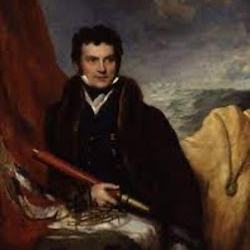
Sir (William) Edward Parry, a naval officer, Arctic explorer, and hydrographer, became the second commissioner in 1830 – 1834.
On 3 May 1833, the AAC also received land grants at Newcastle plus a 31-year monopoly on that town’s coal traffic. After an inspection in 1833, the company decided on two new areas of operations as the Carrington area proved unsuitable. These areas were near Murrurundi, and the Peel River, south of Tamworth.
Over the period September 1926 – February 1928, The Dungog Chronicle: Durham and Gloucester Advertiser published a series of articles compiled by Gordon Bennett, on the early history of the Australian Agricultural Company, based at Carrington, Port Stephens.
The articles were published under the title, Facts from the Storehouse of History. They are based on extracts from the journal of Sir Edward Parry.
The journal entries of his various expeditions through the surrounding regions provide a detailed description of the landscape and land uses of early 1830’s. They also cover the social life of the early days of the Colony.
Sir Edward Parry was a religious man, who took an active interest in the spiritual welfare of those who worked for the Company. He conducted regular services at Carrington Church, Port Stephens when he was resident at nearby Tahlee. He was also instrumental in the building of St John’s Church at Stroud.
Sir Edward was an excellent administrator of the Company’s operations and he and Lady Isabella Parry were well regarded by the colonial elite of Sydney.
Much information has been published on the Australian Agricultural Company, including the letters of Sir Edward Parry while in the service of the company from June 1832 to March 1834, by The Australian National University.
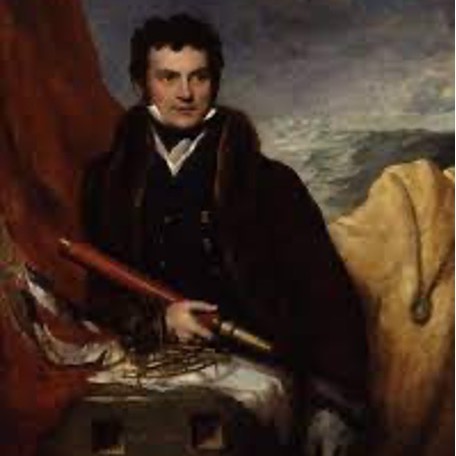
Sir William Edward Parry
While the journal entries are historically important in describing the early European colonial life in the Port Stephens region, they do not cover the treatment of the aboriginal communities whose lands were taken over by the Australian Agricultural Company.
The Company assumed control of the best land in the Port Stephens and Stroud regions with prime waterfront, forcing the remaining aboriginal communities to survive in fringe areas that were not their traditional lands. The Company did employ a small number of aborigines in farm work and for tracking purposes. Sir Edward Parry outlined several instances of conflict that arose with aborigines who remained on the outskirts of company operations.
This paper presents the articles as published by Gordon Bennett in chronological order, annotated with the date of publication in The Dungog Chronicle: Durham and Gloucester Advertiser.
The headings are those of this author, to give context to the various articles.
The journal entries of Sir Edward Parry therein have been italicised. Some contextual information has been added in brackets in the journal entries where necessary.
Facts from the Storehouse of History – by Gordon Bennett
Settlement of Port Stephens by Australian Agricultural Company [Published 17 September 1926, page 4]
By May 1826, a substantial settlement had been formed and preparations completed for the achievement of the ambitious colonisation project. In October of that year there were 1,000 head of cattle on the estate and 2,000 sheep, the population of the establishment having grown to 250 souls.
Early days of Sir Edward Parry at Carrington [Published 1 October 1926]
Parry’s first visit to Carrington – January 1830
“Within the bay, at the narrowest part, lies Carrington, or Carribeen, the settlement of the Australian Agricultural Company. Half a mile farther to the west stands Tahlee, the residence of the Commissioner. The house, a long, low building, with a verandah in front, is on the side of a steep grassy slope, with lemon and orange trees interspersed, reaching down to the water’s edge. The front windows command a beautiful view of the harbor, and of several thickly-wooded islets with which its surface is studded.
The ground immediately around the settlement is irregular and undulating, and more or less covered with trees, which form the outskirts of one of those forests known throughout Australia as “The Bush.” Through this there are no regular roads, or even paths, but the native horses are able to make their way over the trunks of fallen trees and inequalities of the ground such as an English horse would shrink from attempting.
The stores appeared to be well arranged. The mill, turned by 4 horses, is a miserable affair, and being frequently out of repair, does not grind half what is required, so that flour must be bought, even with abundance of grain. Visited every house, rich and poor, at the settlement. The row of cottages, including Lieut. Donelan’s, and the barracks, also the watch-house, or jail, are neatly and regularly built. That lately occupied by Mr. Slade, with a store adjoining, is the neatest looking. At a considerable distance farther on are the cottages of Messrs. Barton and Stacey, very handsome, with gardens in front, very neat and nice. The hospital is a most watched shed, large enough, to stow six persons. It has no fireplace, and in the middle of the apartment is a stagnant pool occasioned by the hole in which it is built. Instead of raising the front, Mr. Dawson, dug out at the back. Visited the brickfield in the wood and a tan-yard, both useful establishments.
Second trip by Sir Edward Parry to Carrington – February 1830
Monday, 22 February 1830. — “While running down the [Port Stephens] harbour, Lieut. Donelan and Mr. Stacey (surgeon) came on board, being in a boat fishing, and I was very much shocked to find, from Mr. Donelan, that a female servant of Mr. Barton’s had hanged herself in the watch-house a few nights ago. She was put in, in consequence of being drunk and riotous in Mr. Barton’s family. Mr. Donelan had taken all the necessary depositions on the occasion, and had found it necessary to confine 2 men servants in consequent of their misconduct and on some suspicion of their having stolen the property of the dead woman. Presently Mr. Ebsworth came on board and informed me there was a great deal of sickness in the settlement, but Mr. Stacey, the surgeon laughed at this and said he was not aware of it. I landed at Tahlee, the “Lambton” being obliged to anchor a full mile lower down, there being no water to come higher up.
I found that Mr. Benjamin Stacey had been very ill for a long time and that Mr. and Mrs. Burnett had also been very poorly. I visited the latter soon after landing and found Mr. Burnett looking extremely ill. The accounts of the maize crop continue favourable. The threshing machine has been sent up the country for the wheat, and the mill works of our wretched mill to attach to it, this, being the most economical method as to labour.” A further comment, after referring to various untreated cases of sickness, says: “The medical department is disgraceful to the establishment and must be remedied.”
Next day, Tuesday 23 February 1830, Sir Edward set about finding a suitable site for a wharf. He says:
“I went in a boat with Mr. Corlette to sound about Cokrenoyo, a point so named, and we found a place where, at low water, spring tides, we should have 6ft. depth. The site is very favourable for store-houses and has an excellent road leading from it to the village.”
2 March 1830. — “Went over to the horse-station and saw 120 mares in the stock yard; some very fine ones among them, but the complaint is that many of them must have been barren when purchased, for they will not breed. We have some good young horses coming forward, but I trust our entire horses will produce us something next season by outside service. “Young Herald” goes on well and so does “Young Cleveland,” both beautiful stallions.
On 3 March 1830, Sir Edward deals with the trouble of drunken constables and watch-house keepers, recording that he intends to regulate the police on a different footing as the service at the present costs the company nearly £500 per annum.
4 March 1830. — “Went to the cattle station to-day and saw about 500 head of half-bred Durham and Stotch and “Colonial” cattle, which had been driven in from the bush as they happened to come in the way. “Colonial” means any breed. I was much pleased with the show, though there were no thoroughbred cattle among them. The latter are in some of the home paddocks and at the Gloucester.’
Management Orders Issued by Sir Edward Parry [Published 21 September 1926, p 3]
“General Order No. 26. — The superintendent for manufactures having represented the serious inconvenience and loss of labour arising out of the pressing and hourly applications made to him for articles to be manufactured and repaired, it is my direction that the following regulations be strictly adhered to from this time.
The superintendent will ascertain and report to me in what branches of his department, and to what extent, the deficiency of labour exists, in order that additional assistance of this kind may, if possible, be procured. In the meantime the storekeeper and the superintendent of manufactures will communicate with each other, and the storekeeper will deliver in to me, as soon as possible, a list of such articles as are most in request to be manufactured, sufficient for the probable supply of the establishment for the next six months, in order that such stores may be purchased in Sydney until a sufficient number of laborers can be procured so as to keep pace in the manufactory with the wants of the several departments, or until the articles can be imported from England. Unserviceable tools, implements, etc., are to be delivered every Tuesday into the storehouses in charge of the storekeeper. A survey will be held upon them every three months, after which they are to be either delivered over to the master manufacturer to be repaired or condemned irreparable — the materials to be re-issued by the storekeeper to the manufacturer for such purpose as may be useful.
“Mr. Barton having represented to me that he requires, under me and on my behalf, such a kind and degree of authority to call upon every officer and other servant of the company as may ensure the information required to enable him to keep the accounts of the company; Mr. Barton is hereby authorised to call upon them for such information accordingly, and the officers and other servants are hereby directed and required to furnish it when called upon to do so.
“Order: — Messrs. Burnett and Henry Hall.— Mr. Hall having just represented to me that the company’s entire horse, Barnaby, is in a dying state and suffering considerable pain, it is my direction that you proceed without delay to Pindyambah [now named Pindimar] and make a strict and careful survey of the said horse accordingly. Should you agree that it will be an act of humanity to relieve the animal from its sufferings by killing him, you are hereby authorised and directed to do so; and in any case you are to report to me in duplicate form under your hands your opinions and proceedings thereupon.
“August 2, 1830. — General Order No. 29. —The indented servants [convicts] of the company are to take their turn in guarding the stores, for one hour at a time during the night while the soldiers are employed in pursuing the blacks who have committed the late outrage. Mr. Ellsworth will make the necessary arrangements. Mr. Wetherman. — Issue immediately to Mr. Field, chief constable, such ammunition as he may require on the service on which he is about to proceed, and six flints,
Problem With Bushrangers [Published 28 September 1926, page 4]
Sir Edward did not always find things proceeding smoothly on the estate. The shearing operations most important from the point of view of the directors in London, were usually attended to with the most meticulous care. But, in spite of his utmost efforts, the pastoral experiment with sheep about the Port Stephens and Stroud districts did not succeed.
And there were other matters to divert his attention. An order issued on December 15, 1830, speaks for itself:
“To Mr. Burnett, Mr. Hall, and all other of the company’s servants: — You are hereby required and directed to assist Mr. Field, the district constable, in every possible way for the promotion of the object in view, viz., the apprehension of the bushrangers said to be on the company’s estate. The assistance Mr. Field will principally require is in horses, and it is therefore my direction that he is to be furnished with as many as he may require, that not a moment may be lost in the apprehension of the people of whom Mr. Field is in search.”
Parry’s Legacy [Published 1 October 1926, page 6]
At Carrington, however, not many traces of the old establishment remain, and nothing that would convey the impression that nearly a hundred years ago there was a busy settlement of nearly 500 souls; or that a school, attended by over 50 children, had been in existence. Vanished are the hands that fashioned those ancient edifices; gone are the blacks that wandered about the shores; and stilled too are the little voices that sung at their lessons in that old-fashioned school house of 1830 when the gracious Lady Parry, like a breath of fragrant English spring, made the neighbourhood the better by her very presence.
Parry Travels Towards Gloucester [Published 19 October 1926, page 4]
Tuesday, 9th March, 1830— “Set out for the Gloucester, — Dr. Nisbet, Messrs. Burnett and Hall and myself— a cart having taken our tent and provisions forward. When one enters the Telligherry district, the country is beautiful, and the grass was abundant, and exhibiting the most verdant appearance; but all the grass grows in tufts, which appear as soon as it is cropped down a little. All the thoroughbred sheep, both Saxon and French, are in the Telligherry district [Mid North Coast area], and principally in the western part of it, out of the direct road to the Gloucester. When halting upon the banks of the brook called the Telligherry River, we met a Colonial flock, among which I saw a Cape sheep with wool like coarse hair. I ordered it to be killed for our use. It is absurd to keep so many coarse-woolled sheep, many of them costing much more than they are worth to cure them of the scab
Wednesday, 10th March, 1830 — Started early. After crossing the Telligherry the land is not so good, but very romantic and beautiful — a good many hills. Wards River! a small stream in which Mr. Hall never before saw any water — Avon, the same — had now 6 or 8 inches depth. Floods last week had carried away the log bridge, so had to unload the cart and drag it across with ropes. Avon flats extensive, but much too wet for cultivation without great expense in draining. Indeed, there is no occasion to look for arable land there, as Stroud and Booral are more than enough to ensure all the purposes of the company for several years to come. The Avon flats have been much talked of during the droughts of late years, but the rain we have lately had shows their swampy character. We arrived at the station and stockyard near the Gloucester, in the evening, and I directed that the Scotch bulls, six in number, and the cattle, about 300, be driven in next day for my inspection.
Mr. Ebsworth Departs [Published 26 October 1926, page 4]
Mr. Ebsworth’s departure from the settlement on April 27, 1830, was a severe loss to Sir Edward Parry. From the founding of the settlement that gentleman had played a most important part in the establishment and had acted as interim commissioner for some time. That he made no mistake in leaving however, can be judged from the fact that he afterwards prospered on his own account.
Sir Edward wrote of his departure as follows:
“We were ready for Mr. Ebsworth’s departure at 11.30, and Mrs. Stacey and her family having embarked previously, Lady Parry and all of us accompanied Mr. Ebsworth to the wharf. The officers rowed him on board, and all the rest, with the indented servants, gave him three hearty cheers. Persons of all classes here felt sincere regret in losing him, and I am sure that few fell more than I did, for an honest man is not easily to be parted with in this colony.”
Further Explorations [Published 2 and 9 November 1926, page 4]
Sir Edward delighted in his excursions into the bush. After his trip to Newcastle, he spent a gruelling week in his office preparing despatches and investigating the accountancy system. This so disgusted him that he decided to make a further trip over his dominions.
June 2, 1830: — “I left Tahlee at 6.30, accompanied by Mr. Donelan and Dr. Nisbet, and reached the cattle station at 8.30, where I found our party, consisting of Messrs. Charles Hall and Armstrong, and six men, together with three blacks, preparing for our departure. We started at nine o’clock, accompanied also by Mr. Henry Hall, who proposed going with us as far as Booladeela [now Bulahdelah], in order to look about for the cattle in that neighbourhood, which is about the extent of their present run. We travelled over some extensive flats, generally very wet, but tolerably good grazing. We passed a few good-looking hills, but no sheep pastures. Halted at 3.15 p.m. about a mile from the Myall, having killed two kangaroos. We had heavy rain at night but were very comfortable in our tents.
June 3, 1830 — “Started at 8.40 a.m. From a rather clean hill, at half a mile distant we saw “Broadwater,” south-east by east; a remarkable hill, south-west. At 4 to 5 miles, thick bush (I measured a tree 44 feet in circumference) with Crawford’s River running through it. We were 1½ hours going one-fifth of a mile. We marked this load well upon the trees. Crawford River is two inches deep and eight yards wide. After crossing the river, a better country, and at two miles beyond it two good sheep hills appearing to extend to some hills one mile westward. Immediately afterwards crossed a curious rocky ridge like a saddle, with deep valleys on either side; from this we saw Booladeela hill, some parts of which appear bare rock. In 1½ miles from the good sheep hills above mentioned came to the Myall River, which is here stagnant, black coloured, and twelve yards wide, with an average depth of seven inches. Here we rested for the night and marked a crossing place so as it could be easily distinguishable.
June 12, 1830 — The bullocks and men rested today to allow us to ride about the country between the tents and the mouth of the Manning, the latitude of which I also wished to obtain. Messrs. Armstrong, Hall and myself set out for this purpose at 9 a.m., going S. E. 1½ miles to a creek encountered yesterday, then, along it S.W. ½ mile — crossed it and a smaller one — then E.N.E. two miles; then N.E. two miles to Bonook, all through flat grassy land, with much scrub-oak, except the last half-mile, which was like a park, with very few trees and those all honeysuckle. The land was very poor, but the prospect of open country and open sea was very enlivening. A clump of six banksias close to the beach at the very entrance to Farquhar’s Inlet — we marked three of them with a cross as a place of observation. Mr. Armstrong took an eye sketch and bearings. The entrance is very narrow, low and sandy — breakers all across the outside even on this beautiful day.
Returning, we went S.W. by west 2½ miles over flat, poor land, principally oak scrub but with plenty of grass. West two miles over low, undulating forest land, thickly timbered, principally with oak. It. is good grazing for cattle, but there is no sheep pasture. Returned to the tents over flat, scrubby wet oak land. The Manning at the tents is 150 to 200 yards wide, and apparently very deep. We marked several trees with a cross, one or two facing the river and near it. Where we were encamped there is no bush next the river, — some red granite, — and not a bad situation for a private settler. Several blacks, men, women and children were camped near us.
June 13, 1830— Two of our own blacks left us to go across the Manning. We set off at 8 o’clock to S. and S.W. round a little brush, then west over a flat and poorish grassy land covered with the forest oak. At 5½ miles there were some low hills for about a mile, all heavily timbered. At 6½ miles crossed a small creek. We left the bullocks at noon and went south 1½ miles to a high ridge. Thence S.W. to another ridge, much better grass, but a great deal of oak and heavily timbered. Thence 3¼ miles to a steep grassy hill, good grass, and deter-mined to stay. Encamped in a pretty country, though there is much poor land hereabouts.
June 14, 1830 — Set out at 9 a.m. with Mr. Armstrong to see the river, examine the country and observe the pastoral conditions.”
Sir Edward Parry has omitted from his journal any further description of this trip, for he makes no other entry until June 25, 1830, when, he states the party arrived at the Falls of the Branch at 2 p.m. and leaving the others to proceed to the Little Branch he himself rode to Carrington.
On June 29, 1830, Sir Edward records, “The Bona Vista sailed to-day for Sydney, with six or seven men lately wrecked in a vessel from the Manning. The Bona Vista has been lately purchased by Mr. Stubbs, which is better for the company, since we should now be sure of getting the money for her repairs.”
July 4, 1830 — Our church looked much more like a church today and by a few more improvements we should have ample room for everybody soon. The people are much more regular in their attendance, and I must say I have a very attentive and respectable congregation.”
July 6, 1830— Dr. Nisbet went over to see Mr. Cromarty, a settler, to endeavour to arrange with him to go up the Myall with one of our boats to look for cedar, of which there was a great quantity purchased by the company formerly from Mr. Lord, and of which Mr. Cromarty knows more than anybody else, having been employed by Mr. Lord. Cromarty is an honest man, a rara avis here, and is desirous of paying us in this way for any services we can render him.”
July 12, 1830 — I spoke to Mr. Stubbs, the free storekeeper, about the drunkenness which had lately prevailed, and respecting which he feels very sensibly and properly. The treatment he has received in consequence of not permitting drinking in his house is shameful. I have promised to support him.”
Convict Servant Charged [Published 12 November 1926, page 3]
During the next few days activities were brisk. On July 29, 1830, a bench [a court] was held at Tahlee acting as Quarter Sessions, when Thomas Stafford [a convict who arrived on the ‘James Pattison’ on 20 January 1830] was charged with drunkenness, disorderly conduct and attempting to stab Charles Macdonald. The sentence was two years to a penal settlement.
Mr. Dangar completed his map showing his late survey to the north of the Manning, by which it appeared he had seen 51,520 acres of sheep land (though not first-class) and 63,360 acres of superior land. A very large tract on the N.W. part of the country had not been traversed at all, appearing to be too impracticable for the purpose. The “Carrington,” the ship that formerly had been named the Bona Vista, owned by Mr. Stubbs, arrived after being three weeks at sea from Sydney. The crew was almost starved.
Shipwreck [Published 16 November 1926, page 4]
Delayed by adverse weather for over a week, the company’s ship Lambton, which is conveying a draft of valuable rams to Sydney, sailed on Saturday morning, Sept. 4, 1830. Sir Edward, on that day, had paid a visit to the horse-station at Pindyambah. and had watched the vessel set sail. It was a gusty morning and when he and his boat put out to return to Carrington, it was blown back.
The journal describes the subsequent events as follows: —
“After waiting for some time we again tried at 5 p.m. and had proceeded about 100 yards when we heard and saw a person on the shore we had just left, calling out loudly and waving to us to return. In this Mr. Harry Hall presently joined. On turning I perceived the stranger to be Mr. Chas. Hall, by which I knew something was wrong with the Lambton. On landing it is difficult to conceive the pain I felt in learning that she had been driven on shore about 11.30 this morning, just within the North Head, having missed stays [ship manoeuvre] three times in consequence of the swell. Mr. Chas Hall had, with his usual zeal, volunteered to find his way round to Pindyambah to give the information, which, after great danger in the boat and most laborious exertion afterwards he at length succeeded in doing in the manner I have described.” The instant I received the information we rowed across the North Arm, and galloping into Carrington. I immediately prepared our No. 1, or largest boat, putting an anchor and provisions into her. In about an hour and a half Mr. C. Hall arrived. I despatched this boat and the gig under Dr. Nisbet, assisted by Mr. Ellsworth, to the Lambton. Mr. Hall also accompanying them. There was a fine moon but it blew so hard that I did not expect the boats to get near them tonight.”
Bushrangers sent to Port Stephens [Published 23 November 1926, page 4]
On November 10, 1830, Sir Edward mentions that the Liverpool had sailed that day for Sydney with Mr. Charles Cowper as a passenger, also eight bushrangers, who had been captured on Liverpool Plains and brought to Port Stephens. Unfortunately, he furnishes no account of the outlaws or their crimes. He notes, also, that there had been heavy rain for some weeks and that the sea water in the harbor was almost fresh. The rains had stopped shearing operations and it was feared that the wheat at Booral would suffer greatly.
Festive Season Celebrations [Published 26 November 1926, page 6]
December 25, 1830: A general holiday, of course, and Divine service in the forenoon. For Christmas fare some mutton we served extra to the officers and indented servants — and a few extra allowances to the prisoners, including half a pint of rum each man, which I caused to be issued to each individual separately and at two different times of the day. By this means, and by giving none to those who were at all intoxicated, we had a quiet and orderly Christmas Day.
Farm Failure
December 31, 1830: At 11 a.m., accompanied by Dr. Nisbet and Mr. Townshend, I met Mr. Burnett, by appointment at No. 1 farm (so-called) in order to see the crop of wheat, and what is now still coming on. It is a wretched, inconceivably wretched sight. We now consider that we have fairly tried this notorious farm and it is determined to abandon it for wheat or maize and see whether green crops will do on it or a dairy.
First Cricket Match at Port Stephens
Perhaps the first cricket match played north of Sydney took place on January 1, 1831. Sir Edward recorded:
“This was a holiday as usual. In the afternoon a public dinner was given to the indented servants and their wives in the tent on the Flat, which was newly decorated for the occasion with ever-greens, etc. After dinner the officers joined the indented servants in a game of cricket and we all (for I was one of the players) felt it a great relaxation, to say nothing of its reminding us of dear old England. I was surprised to find what a good band of music they had got up among the prisoners on this occasion.
Trouble With Officers
The beginning of 1831 saw Sir Edward embroiled in trouble with several of his officers, particularly Mr. Burnett, the agricultural superintendent, and Mr. Barton, the accountant. Both these gentlemen seemed to have a penchant for addressing offensive letters to the Commissioner, resentment of which appears to have been confined to his journal for the sake of peace.
However, on January 4, 1831, he writes:
“There has long been so much of private pique and dirty feeling in his (Mr. Burnett’s) communications to me that I must put a stop to it as regards my being made a party to it.” Regarding Mr. Barton, to whom he had addressed several requisitions for information regarding accounts, he wrote: “It is really too bad that I cannot get a plain answer to a plain question, and to me an important one, from the company’s accountant. A few days later both these officers were severely reprimanded and brought to their bearings.
Maitland Flood
Sir Edward, complaining of ill-health caused through an excess of office work, mentioned that he would be better could he do more travelling on horseback. Accordingly on January 11,1831, he set out for Newcastle to attend to some business about the mines.
On the January 12, 1831, he writes:
“Accompanied by Dr. and Mrs. Brooks we rode to Maitland and called on Captain Aubyn, Mr. Bloomfield and my friends, Mr. and Mrs. Wood, with whom we dined in their new log hut. We stayed the night at Mr Bloomfield’s. He has lately lost about 100 valuable ewes with a disease not well understood, the result, it is supposed, of the late rains.
Maitland presents a curious sight, — miles of broad sheets of water which had no existence three months ago. Great losses have been sustained in consequence. I was surprised to hear of the expected arrival tomorrow of the Governor and the Archdeacon. I would have waited to see them as a matter of courtesy, but the arrangements I had previously made at Port Stephens would not allow me, and I could have done no business with the Governor without my papers and plans. I therefore left at 7 a.m. on the 13th and arrived home thoroughly drenched and greatly exhausted at 4.30 p.m.
Business Affairs
The record of the January 14, 1831, gives an idea of Sir Edward’s daily tasks. He wrote:
‘On arriving home I found that the Lambton had arrived on Tuesday, with principally flour on board, and 23 assigned servants. Also Mr. Darch and Mr. Dent, a gentleman on his way from Canton to England, who I had invited to see Port Stephens. Mr. Darch had completed the negotiation for a vessel to fetch our wool to Syndey — the New Zealander, an excellent vessel of 130 to 140 tons being engaged for this purpose, to be here between 20th and 30th inst., by which time, if the weather is commonly fair, we have no doubt of getting all our wool down. The Forth will sail with it about 15th prox. I found three disrespectful letters awaiting me from Mr. Barton, who now complains of being persecuted and cruelly treated, degraded, etc.
Messrs. Nisbet and Henry Hall have finally decided on the best spot for the new stables near Booral. The Monitor, a small trader to Hunter River had put in here a day or two ago and is still in Nelson’s Bay. I found Mr. Walker Scott at my house, having come as a passenger in her, but as they had overshot their port he was now desirous of going over to Graham’s [wharf on Hunter River, Newcastle] being anxious to meet the Governor. Rain most of the day.”
A Runaway’s Fate
January 14, 1831: Mr. Chas. Hall arrived, informing me that Belton, one of the three runaways from the Farm, had been shot by William, our black constable. The three men were together and had returned his fire without effect, and the two then ran away, though William was deserted by his own black companions. He brought back Belton’s blanket, numbered 43Co., and his red shirt and said he threw the body into the Barrington [River]. He also said he had lamed one of the other two by a second shot.”
Farm Visit
January 17, 1831: Being desirous of showing Mr. Dent our farms, and also of visiting them myself, I set off accompanied by him and Mr. Donelan at 6.30 a.m. and got to Stroud about 10. The harvest, even at Booral, is decidedly a poor one, for small as the stacks are, most of them contain little but straw. A small quantity of tobacco (part of it on the ground where the freshes washed it away before) seems to be doing tolerably well. We proceeded afterwards to Stroud, meeting on the road Christopher Russell, a carpenter lately engaged, quite drunk! So early in the morning! What can be done with such people? The stacks at Stroud are still more miserable than at Booral, as might be expected from the inferior quality of most of the soil there. However, such as it is, the harvest has been well got in. Mr. Chas Hall has every confidence that he shall be able to get all the wool down to Booral in good time for the ship coming for it on the 31st.
Atterbury and Hamer, two of the three men who lately absconded from the farms, have given themselves up and were brought before Mr. Donelan today. Hamer, having robbed Mr. Burnett’s house before he went of a double-barrelled fowling piece (of mine), Mr. Donelan remanded them to obtain evidence of the robbery. The third man, Belton, was shot through the head by William, our black constable while all three were together, which undoubtedly caused the other two to come back. I expect this example will be of great service.
“I was so fatigued, and suffered so much from rheumatic pains which seem to have come upon me during the last fortnight that I could, not accompany Mr. Dent to Telligherry, but Mr. Jenkin did so. A great many of our horses have now got the strangles, at Carrington, Stroud and Booral, but it is mild. “I was glad to see our new school house had made such good progress at Stroud. It has been done by the men in their extra hours and will not cost the company £20 in all. It will accommodate 40 children very well.
Loading the Wool
Apparently, January 1831 was unusually wet for great trouble was experienced in getting down the wool. Sir Edward furnishes several accounts of the herculean efforts of the boats’ crews plying between Carrington and Booral conveying the bales to the New Zealander which had arrived on time. He mentions that it usually took 33 hours for the men to pull up from Carrington to Booral and return, which, he comments, shows what can be done when officers of zeal are with their men to keep them up to it.” One hundred and fifty bales were loaded on the New Zealand, the total clip consisting of 158 bales. Six or eight bales, however, according to Mr. Chas. Hall, “were not worth sending home.”
Troublesome Servants
Sir Edward’s stern sense of duty did not permit him to tolerate some of the things that went on around him. On February 3, 1831 he records:
“The conduct of the indented servants as regards drunkenness and neglect of duty is really infamous. I have tried all kinds of methods to mend them, but everything has failed thus far. Howitt is again continually drunk, neglecting his work and putting his wife and children in fear of their lives. The two horse-shoers are always half-tipsy. Today they were ordered to go out to Pindyambah to shoe the horses.
They were missing most of the day but amused themselves drinking instead of going out to the horse station. A carpenter lately hired has absented himself so often from his work of late that I am under the necessity of bringing him before Mr. Donelan, and of being at the trouble and expense of sending for Mr. Laman to appear against him. It is a down-right robbery of the company.
Buying Farming Products
February 4, 1831: Mr. Burnett reported to me on his return from the Hunter that he had nearly completed a bargain with Mr. Mackay, of Williams River, for 500 bushels of seed wheat, of which he approves. Mr. Mackay is to come to Booral on Wednesday to fix the price finally. It is about 4/6 per bushel, but we cart it over to the farms. Mr. Burnett recommends my looking out for 200 bushels of Derwent wheat, at Sydney. He reports the crops on the Hunter to be wretchedly bad generally. One stack expected to yield 200 bushels gave 20.
February 6, 1831: Singleton, the miller on Williams River, came to Tahlee in order to explain more distinctly an offer he had made to supply the company with wheat delivered at Carrington, his letter not being sufficiently clear.” Later an agreement was made with Singleton that he was to deliver flour of first or second quality at the then Sydney prices, by which according to Sir Edward, he hoped the company would benefit substantially.
Shipping Wool from Sydney
Sir Edward visited Sydney, reaching there on February 14, 1831. Of his trouble regarding the dispatch of his precious wool clip, he wrote:
“On going to Cummings’ Hotel I met with Mr. Dent, and it is not possible for me to describe the surprise and disappointment I experienced in hearing from him that only 30 bales of our wool (instead of the whole 150 as agreed upon) had been shipped in the Forth, and that she was now full. Mr. Darch and I immediately went off to Messrs. William Walker and Co. and had this astounding information confirmed by Mr. Thomas Warner, who assured me that it was occasioned, to their great pain and regret, by the ship’s measurements having been so badly conducted that, instead of 440 bales which was the estimated number, she could only in reality take 308. Would such a thing happen, or (if so) would it be tolerated anywhere but in Botany Bay?
As the mischief seemed irreparable as related to the Forth, Messrs. Walker had shipped 50 more bales per the Royal Admiral, and were in treaty to ship the other 70 by the Dryad, all expected to sail this month. We therefore posted away to the agent for the Dryad, Mr. Bettington, but found he was out of town and not expected home until the morrow.”
And Sydney gave him other worries. He continued his entry of the 14th: “I found that Lieutenant Donelan had been hastily recalled from Port Stephens, the 57th Regt. being ordered to embark for India almost immediately — and no other officer yet appointed to succeed him there I am very apprehensive that some unpleasant circumstances will occur during this interregnum; and I suppose I shall have to hurry back accordingly.
Sir Edward may have had his worries in Sydney on that occasion, but the journal shows also that the pleasant amenities of social life were not absent. He had numerous visitors and paid many visits, most of the notables of the day coming in contact with him ere his departure.
Meeting With the Governor
On February 17, 1831, Sir Edward records an interesting meeting:
“I had an interview with His Excellency in his bedroom this day at 12 o’clock, and talked over the several subjects of our lands, both at Port Stephens, north of the Manning, Clergy and School reserves and at Newcastle. I also spoke, or rather he began, on the subject of an officer and magistrate to go to Port Stephens, on the necessity of which he expressed himself strongly, but acquainted me in a sort of confidential way that many of the officers of the 17th. Regt. were so youthful that he had great difficulty in finding a suitable person. Mr. Aven, an ensign, had been proposed by Colonel Despard, but the Governor thought him too young. He assured me he would endeavour to send some officer very soon. The Governor was extremely kind and agreed that I should first talk the matters of business over with Colonel Dumaresq and Mr. Macleay and then again with him when he was better able to attend to them.”
An Important Meeting Concerning the Liverpool Plains.
It was during this visit that Sir Edward met a gentleman whose information supplied quite accidentally altered the whole prospects, and history of the Australian Agricultural Company.
A Mr. Semphill, agent for Mr. T. Potter McQueen, offered to sell Sir Edward a threshing machine. In the course of conversation, it transpired that Semphill was very well acquainted with the Liverpool Plains district and spoke in such glowing terms of its fertility and suitability for sheep breeding that Sir. Edward pressed him to accompany him to the Surveyor-General’s office to inspect the maps there. It was the result of this inspection that caused Sir Edward later, to arrange for the exchange of the greater part of the coastal land for Warrah and Goonoo Goonoo.
Return to Tahlee [Published 10 December 1926, page 6]
Sir Edward returned to Port Stephens on March 5, 1831, with Capt. Moffatt, of the 17th Regiment, who had been appointed to fill Mr. Donelan’s place. To his expressed delight, he found everything had been quiet and orderly since his departure, although old John Adams, the horse-shoer, had been drowned crossing a flooded creek near Stroud, and a prisoner named Booth killed by a falling tree. On the following day, which was Sunday, he wrote: “I endeavoured today, to impress on a very considerable congregation the necessity of preparing for death, with reference to the two sudden and awful deaths which had lately occurred among our own community. Adams’ death is particularly awful, as he was, I fear, intoxicated at the time.”
Explorers Return from Western Expedition [Published 14 December 1926, page 4]
April 8, 1831. — Dr. Nisbet and Mr. Chas Hall arrived from their pioneering expedition, and informed me that after traversing a considerable tract of country westward of the Barrington, the only part they had found worth examining was on the higher parts of the Manning. This part Dr. Nisbet thought might be followed up with a hope of success in our object of finding sheep pasture. Dr. Nisbet and Mr. Chas Hall wishing to go to Sydney on their private business I gave them leave.”
April 9, 1831. — At 3 p.m., having completed my arrangements for Newcastle and Sydney, the Lambton got under way. I charged Dr. Nisbet with some business of various kinds for the company. She is to touch at Newcastle, and then to go on to Sydney. I sent to the Gazette an advertisement for tenders for rationing our men at Newcastle.
Troublesome Mr. Barton [Published 21 December 1926, page 3]
The accountant was a perverse on strong-minded man according to Sir Edward’s entry of May 2, 1831:
“Captain Moffatt informed me that Mr. Barton had behaved so violently this morning at the Police Office that he was obliged to threaten to commit him. He afterwards, it appears, wanted to take Fosh; but Captain Moffatt returns him to Government as soon as his health will permit. Captain Moffatt acquainted me with his intention of communicating the whole affair, in detail; to H.M. Government, and that he had already written to Mr. Macleay for instructions how to make Mr. Barton pay 3/9 for the summons, which he had refused to do.”
Dissatisfied People [Published 7 January 1927, page 5]
Sir Edward had many complaints to listen to. On June 13, 1831, he writes:
“I paid Mr. and Mrs. Tozer a visit, and Lady Parry would have done so as well but for her indisposition. They are full of complaints— — disappointed in the station they hold and talk of what they had been formerly, and so forth. Mr. Tozer is annoyed at Mr. Burnett’s being put over him, and in this he is not singular. He told me that Mr. Burnett looks upon him with an evil eye for being (as he has always been) on good terms with Messrs, Chas Hall, Swayne and Jenkin. Mr. Tozor, though a complainant, is a well-meaning and respectable man; and I therefore spoke to him kindly on the subject of the situation, though I did not encourage them in the complaints.
“I next met Mr. Sawkins, who again spoke to me about a house for his wife who had been away but was shortly returning. When I told him I thought that Edwards’ house would soon be vacant, he laughed and said that the house would never do “for,” added he, “suppose my wife should bring out her harp and piano.” A miller’s wife with a harp and piano, and the company to find a house to correspond therewith!
“The company’s officers at Stroud having complained to me of the disrespectable conduct of the prisoner who acts as surgeon, I to-day gave him a severe reprimand in their presence. He is, I fear, a man of very bad character, and greatly presumes on his situation as assistant surgeon. [The surgeon was Henry White, who arrived in the colony during 1826, per Earl Saint Vincent].
“Mr. Barnes and his daughter, Mrs. Marchant, came in from Telligherry to me to-day to complain that young William Barnes, the old man’s son, intended to quit the company’s service without his father’s consent, and asked me to interfere. I promised to speak to the lad, which is all I can do, since he is not included in his father’s agreement.” The party left Stroud for Tahlee on June 14, 1831.
A Clerical Visitor
Sir Edward records the arrival of the Archdeacon, [William Broughton], by the Lambton on June 17, 1831. On the 18th he wrote:
‘The Archdeacon, having consented to remain with us for two Sundays, we arranged matters with his consent, so as to make the most of his time and services. Notice was accordingly given that the Sacrament of the Lord’s Supper would be administered at Carrington after the morning service tomorrow, and at Stroud on the following Sunday. We took the Archdeacon round the settlement and visited some of the indented servants in their houses, being desirous that he should give a word of advice to everybody.”
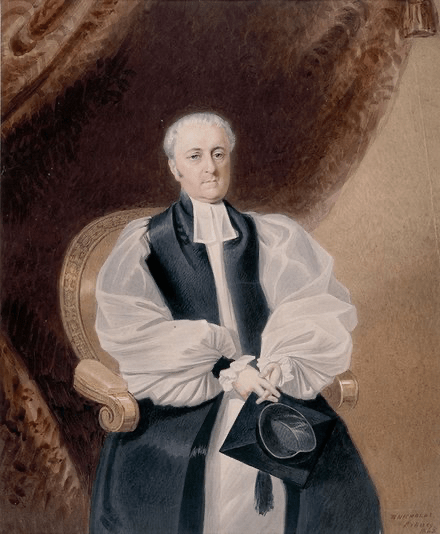
Archdeacon William Broughton by William Nicholas
June, 19, 1831. — We had the two services as usual. The Sacrament of the Lord’s Supper was administered in the morning; and two children christened by the Archdeacon in the afternoon.
June, 20, 1831. — The Archdeacon today visited the Carrington school with us, and catechised the children, of whom 45 were present, and considering their former disadvantages they acquitted themselves very well. I gave public notice that all the children that had been baptized upon the Company’s estate would be received into the church by the Archdeacon on Wednesday next at the usual place of worship. “Thomas Simes, constable and school master at Stroud, having applied to be married to Honor Hinton while the Archdeacon remains here, the marriage was fixed for Thursday at 10 a.m.
June 22, 1831. — In the afternoon a considerable congregation assembled, and the Archdeacon received into the church a number of children who had been already baptized, principally by myself. Two of Mr. Barton’s children were baptised. The sight was altogether a very interesting one.
June 23, 1831. — Simes was married at half-past ten this morning. I gave the indented servants a half holiday for the occasion, and they had a dinner together in the school room. “The Archdeacon visited, with us, Mr. Dangar and Mr. and Mrs. Stacy, and afterwards Ivey and Jones. He has now called on everybody but Mr. Barton, who has not called on him or sent his card, as every other officer did.
Touring With the Archdeacon
Sir Edward showed his reverend visitor about. On June 24, 1831, he records:
“At 6 a.m. I set off in the gig for Booral, accompanied by the Archdeacon, Mr. Cotton and Mr. Darch; arrived at 9.30 and received a verbal message from Mr. Burnett by his son James to say that he would be glad to see me and my party at breakfast. A note from him to the Archdeacon contained the same invitation. I had previously arranged to breakfast at Jones’, and whether I had or not, I would not have breakfasted at Burnett’s. Notice had previously been given of the Sacrament on Saturday, and of the Archdeacon’s intention to receive the baptised children into the church on the same day.”
June 25, 1831. — Again fine weather for all our operations, ploughing, sowing, etc. — and I also rejoice in it on account of the Archdeacon. The Archdeacon visited the school and was three hours employed in hearing and catechising the children, 19 in number. This occupied so long that there was not time to visit the cottages. “In the afternoon we went out to Telligherry to show the Archdeacon one of our thoroughbred sheep stations. All this country was looking beautiful. “Forty-eight head of cattle from Mr. Semphill arrived this morning, and I sent off immediately for Mr. Henry Hall, who arrived in the evening having had a bad fall from which he suffered in his head severely.
June, 26, 1831. — Divine service was performed twice as usual. The Sacrament of the Lord’s Supper was administered by the Archdeacon and a number of children already baptised were received into the church. Two or three also were christened.
More Movements
On June 28, 1831, Sir Edward records:
“At 9.30 the Archdeacon and Mr. Cotton embarked in the Lambton and she got under way immediately and was out of sight at noon. Cromarty went down to the Heads with the Lambton to look after some sheep which the blacks report to be on the north side. Mr. Hy Hall went on leave to Sydney. I was preparing today to set off for Newcastle tomorrow morning. Dr. Nisbet is to accompany me as far as Sparkes’ and then go to Maitland to attend a sale of cattle, which, it is said, are likely to he sold cheaply.”
Sir Edward spent some days at Newcastle dealing with the affairs of the coal mines the Company was opening and developing. On his return he had it put with his accountant, Mr. Barton. On July 4, 1831, he records:
“At 10 a.m., accompanied by Messrs. Wetherman, Armstrong and Ebsworth, as committee of accounts, and Mr. Darch, I went to the accountant’s office and putting into Mr Barton’s hand my order for him to deliver up the company’s accounts, books, papers, etc., into the charge of the three first named gentlemen, I proceeded to examine the cash book for the half year ending June 30 last, while the gentleman of the committee commenced receiving the documents by a list already prepared by Mr. Barton, and placing them in desks for removal. By noon we had accomplished the whole, and I then left the office with Mr. Darch, leaving the committee to see everything removed to the stores in a dray which was there at the gate of the premises.
Mr. Barton, not having commenced the last annual stock return, some conversation ensued, on this subject; when it was agreed, on Mr. Barton’s proposal, that he should suggest to me what documents he should require again In order to enable him to make out the return before he left the Colony.” But Mr. Barton created a good deal of trouble before he departed. Once, Sir Edward records with impatience, “how can any gentleman deal with so consummate a black-guard.”
Ship Ashore
On July 11, 1831, Sir. Edward notes:
“The master of The Prince of Denmark, schooner, came up to the settlement in his boat for supplies from Mr. Stubbs, his vessel having got on shore just within the south head. He was accompanied by three out of the seven passengers in the ship Kains who had volunteered to come on shore for water (for which they were in great distress) on Saturday night, and the ship had not since made her appearance. I furnished them with a few days’ provisions and advised them to remain at the heads for a little while longer, and if the ship did not appear then to make the best of their way to Sydney. One of them, Mr. Medley, had dislocated his knee getting out of the boat, and was accommodated at Mr. Stubbs’. Mr. Davis was the passenger who came to me on the subject, and he was very thankful for all that was done for them.
The Castaways
July 12, 1831: I sent Mr. Burnett an order to proceed to Glendon for seed barley, and to purchase oats in the same district if possible. To my great astonishment Capt. Corlette walked into my room at 8 this evening, having been to Sydney, touched at Newcastle and landed his cargo on his return and anchored here at 7 this evening. He left on the 9th.”
July 13, 1831: I despatched Mr. Armstrong to Stroud and Booral, to see to the progress of the works, at Telligherry, and to mark out a line of fence for a new paddock at Booral for the horses.
July 15, 1831: I embarked for Sydney on the Lambton at 5 p.m. We anchored in Little Salamander Bay at 8 p.m., the wind being south-west with the appearance of its freshening, and a considerable sea outside. We here found Singleton’s vessel of 15 tons on shore; the skipper came on board to beg the loan of an anchor, and I gave him an order for the Karuah’s to help to get the vessel off she having lost hers. The Kains people again came off to us, and one man of them, in addition to Mr. Medley (whom we brought from Carrington) decided on remaining with us.”
July 16, 1831: Weighed anchor at 7 a.m. and stood out, but before we had got to the heads it came on to blow very hard W.S.W. and S.W. with a very heavy sea outside. We were glad, therefore, to got back and anchor in Nelson’s Bay. It blew hard with squalls of wind and rain all day. The Kains people brought their boat up here and again asked my advice what they should do. I told Mr. Davis I thought they had waited quite long enough for the ship and advised them to go to Sydney by way of Newcastle as fast as possible. To assist them in this I gave them a note to Mr. Wetherman to give them two days’ provisions and a black to guide them to Graham’s [on the Hunter River, Newcastle] and to allow their boat to be hauled up at our boat shed.”
Later, on arrival in Sydney Sir Edward notes that the Kains had not been heard of at Sydney, except by the passengers arrived from Port Stephens in the ‘Prince of Den-mark.’
On July 19, 1831, Sir Edward records: “I went to Government House at 9.30 and communicated with His Excellency relative to the Kains, giving him all the information I had. Capt. Sandilands, coming in soon after, we jointly urged on him the necessity of going to sea in the Comet to look after the Kains. After some time an arrangement was made for his taking on board some additional provisions for the purpose.”
On July 21, 1831 he says: “The Kains arrived all well. The Comet met with her only a few leagues off the heads. They had been about eleven days without water and yet only one of the horses on board had died. The master was very insolent to Lieutenant Peake, of the Comet when he went on board.”
The First Steamer to Port Stephens, Sophia Jane
On July 20, 1831, Sir Edward mentions a fact that, taken in conjunction with later entries, fixes the date of the entry of the first steamship into Port Stephens. He records:
“I saw Capt. Biddulph, of the steamer Sophia Jane and heard from him all the circumstances of the intended sale of that vessel in shares. He has somehow or other managed to make himself and the vessel unpopular since his arrival. They, of course, wish me to take shares on account of the company, but I shall take time to weigh the matter well. The convenience of the company will undoubtedly be great as regards the property at Newcastle, and even at Port Stephens also, but while the directors are discussing the subject of sending one out expressly for the company, I must not be in a hurry to take shares in this vessel. Engaged her to come for my family next week; it being my intention to bring Lady Parry from Port Stephens on account of her approaching confinement.”
Sir Edward returned to Tahlee from Sydney on July 25, 1831, and mentions that he “sent Capt. Corlette down to the heads to drag for anchors lost there and to pilot the steamer up tomorrow night.”
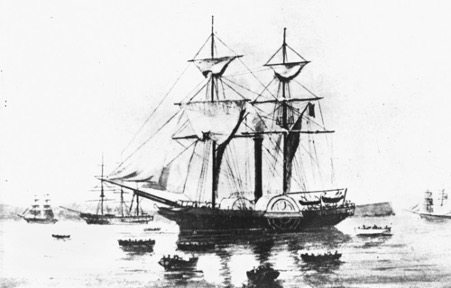
Sophia Jane
Sir Edward, writing on July 26, 1831, says:
“I called today at several of the houses with Lady Parry, who feels very much her approaching departure from Port Stephens, even for three months. Indeed, we have gradually acquired so many interests here that we can never quit it without a painful feeling of separation, in spite of all its annoyances. We pray that God will bless all our past and (if it pleases Him) our future endeavours to promote the eternal as well as temporal benefit of all under our control. We also, of course, visited the school, and addressed the children, exhorting them to behave well during our absence.”
“At 4.30 p.m we saw the steamboat’s smoke over the land, and at about 7 she anchored at Coekrenoyo. Capt. Biddulph came up to Tahlee and informed us that he should get under way again at 3 in the morning for Newcastle and Sydney. I therefore embarked with the family at once. We supplied the “Sophia Jane” with a few loads of wood which had been prepared for her for some time.” “It was a great disappointment to all our people that the steamboat came in and would go out during the hours of darkness; many of them never having seen such a thing.
The Parrys in Sydney
Sir Edward and Lady Parry had a rough trip down from Newcastle.
“We left”, he writes, “Newcastle wharf at 10.30, but being met by a strong southerly breeze and considerable sea when off ‘Reid’s Mistake,’ did not arrive at Sydney until 11.30 at night. The Sophia Jane is a very fine and effective vessel of her class, and I am more and more convinced that no other coasting boat is advisable here, or indeed, anywhere else.”
The next day was spent visiting the Governor and arranging my domestic concerns in the house which I have rented in Macquarie Place for the residence of my family during Lady Parry’s stay.”
On August 1, 1831 Sir Edward notes: “Being desirous of calling on Mr. Macarthur, sen., and Mr. H. H. Macarthur, and at the same time of showing Lady Parry Parramatta, we embarked on the ‘Surprise,’ steamboat [the first steam boat built in Australia] and in less than two hours we were at Mr. H. H. Macarthur’s where we landed. We dined at his place and slept at the inn at night.
Sir Edward remained in Sydney until August 12, 1831, visiting the notabilities of the day and enjoying social functions arranged in his honor. He and Lady Parry also visited all the schools. In an entry he says: “By the analysis made by Dr. Jenuneret, it appears that the limestone from near Stroud is a very valuable one containing a high percentage of lime; but that from the Branch is only compact or indurated marl with a low percentage of lime. The latter I regret but I shall not give up the hope of finding some of the better kind nearer the sea.”
Back Home at Port Stephens [Published 11 January 1927, page 3]
Sir Edward returned by steamer on August 13, 1831, disembarking at Graham’s on the Hunter River, where a horse was waiting. On Sunday, 14th August he writes:
“I was never more glad to meet my congregation than today, and it was comfortable to know that they were scarcely less glad to see me. It is impossible to describe what I often feel on their account, under these circumstances. Both Lady Parry and myself begin to know what pain we should experience, if a clergyman came who, performed his duty only as a task; i.e., who should not perform it at all. I gave notice that Rev. Mr. Yates, the New Zealand missionary I invited him to Port Stephens, would do duty here on Sunday next, and administer the Sacrament.
Visit to Gloucester Area [Published 18 January 1927, page 3]
November 9, 1831: After visiting the stock yards, pigs, etc., Messrs. Henry Hall, Jenkin and myself rode over to the stations of William Telfer and Mclntyre, at the River Barrington, my principal object being to decide with Mr. Hall upon the comparative expediency of sowing maize next year upon the Gloucester and Barrington flats. The conclusion to which I came is in favour of the Gloucester flats, because it is near an establishment already, as rich and more thinly timbered, there not being, upon many acres, more than a tree to three acres, and in some parts not so much. The only advantage the Barrington Flats have over these is that they are never overflowed, and these, in very high floods, are so for a short time; but this would probably not injure the maize. Besides the principal and best part of the Barrington Flats are not on the company’s lands, but on those belonging to the church and school.
All the men, including William, the black constable, have, as usual, something to ask. The cattle at this station look in excellent condition, and well they may be for the grass is very fine and in great abundance. The Barrington River was very low. I saw, in a brush on the banks, a tree of what is called pine, of which the wood does indeed very much resemble pine; but its character when growing is totally different, having a long, narrow pointed dark-green leaf and the stem not growing particularly straight.
We returned over the pass called “The Buckets” (buchan, a rock). There seems to be a good place for a paddock formed by an almost insulated patch between the Gloucester River and a creek. Mr. Darch caught some very fine perch in the Gloucester. Mr. Hall drafted some cattle for Stroud and Barrington for slaughter.”
Progress of Work [Published 25 January 1927, page 3]
December 5, 1831: I stopped the indulgences of the drunkards for a month, and released them — a much simpler and better method than awaiting a magisterial decision. Mr. Ebsworth and myself proceeded by way of Alderley to Carrington — a new road very much better than the old one. I never saw anything like the state of the country with the fires — literally as black as charcoal for miles together. I am confident we rode four or five miles at once without seeing 100 acres of grass. Arrived at Carrington at half past one. Capt. Corlette reported that a ship was coming into Sydney as he came out — probably the Margaret with the new Governor [Major-General Sir Richard Bourke]. The boats had arrived with the wool, which was on board, and the Lambton ready to sail tomorrow.
December 6, 1831: I despatched Mr. Armstrong to Stroud again to make the proper plans, etc., of the country to be levelled and cut for the mill. I received a communication from Newcastle, in which Mr. Croasdill mentioned that the Sophia Jane had on Saturday brought the information of the Governor’s arrival at Sydney in the Margaret. I, therefore, determined at once to proceed to Sydney by the steamer tomorrow, to wait upon his Excellency, and at the same time to do my business at Newcastle. I was therefore busily engaged in various arrangements previous to my departure. The Lambton was dispatched this afternoon for Sydney, but I do not choose to incur the risk of losing 2 or 3 days at sea by going in her. The uncertainty of a sailing vessel’s movements must always make them unfit for coasting.
December 10, 1831: I reached Port Stephens at 4, finding all right, nothing worthy of notice here having occurred during my absence in Sydney and Newcastle. It was a matter of general remark, how convenient was the steamboat on such occasions! In this instance I was only 84 hours absent, and had been 48 hours of that number in Sydney. I addressed a tender to supply the military at Port Stephens with meat at 2¼d a lb. and flour at 2¾d for the ensuing year.
December 14, 1831: I baptised Mrs. Stubbs’ infant. Transacted business with Mr. Charles Hall and was rather surprised to find there would not be more than 150 bales of wool in all. This arises, partly from early clip, and partly from a small one, the sheep having very little wool on their bellies, etc. I desired him, however, to send home every pound of wool this year, which is the more desirable as (for the first time) we lose some by the scab!
December 15, 1831: I went over with Turnbull the plan he was drawing of our intended mill, which I am very anxious to get in hand. I directed all the carpenters that could be spared, to assist Turnbull in making the patterns of the wheels for casting, and every labourer that could be spared, to be employed in the excavation. I arranged with Captain Moffatt that Field, the constable, should go over to the Wollambi tomorrow, for ten men that have been assigned to the company a long time, and which the surveyor of roads chose to send here from Parramatta, instead of sending them to Sydney to go by the Lambton. One of our servant-maids almost put her foot on a diamond snake close to the back door of Tahlee House.
Bushfires Threaten Tahlee
December 17, 1831: The Lambton arrived from Sydney at 1.30 p.m. bringing eleven assigned servants and one returned from hospital. The fires are approaching us considerably, and the smoke begins to render the atmosphere very unpleasant. As the hill was on fire above the garden, and within 3 or 4 hundred yards of it, a watch was kept there at night.
December 18, 1831: As we were returning from the morning service information was brought that the fire was getting close to the garden at Tahlee. All hands were immediately sent to endeavour to put it out, but the violence of the flames and the dense smoke rendering this impossible, I ordered a space next the garden, 12 or 14 feet wide, to be purposely burned, while a number of men defended the fence and garden. We were just in time; for, in less than ten minutes after this was done, the fire came on in furious volumes, and was only arrested by the burnt part. The men were then sent to get the fire out in the paddock, which was effected after much burning and two or three hours’ labour.
At 11 a.m. information was brought to Mr. Ebsworth that the fire was approaching No. 1 farm [at North Arm, Port Stephens], and would soon be among the wheat in the stack. Mr. Ebsworth, with his usual zeal and alacrity, and though he had a splinter run into his foot at the other fire, ran immediately to the prisoner’s camp, and getting half a dozen volunteers, went out to No. 1 farm, and just succeeded in saving the wheat by 30 or 40 yards. The wind blew hard from the north-west which blew the fire up dreadfully. It brought down, however, the Ebsworth and No. 1, with wool for the Lambton, to be shipped on the Stirling Castle.”
Strange Visitor [Published 28 January 1927, page 3]
I intended going to Stroud tomorrow, and to take with me one of my dear children, who is not well, and may he benefited by change of air — but at 9.30 p.m., a man came to Tahlee House, calling himself Edward McCabe, who said he had just come over from Sawyer’s Point [Karuah], to see this place, and to sell some watches, etc. I directed him, as he desired, to the Public House, but told him that I did not approve of strangers coming upon the company’s estate without my previous permission; and I recommended him to see the district constable immediately, or he would certainly be put into the watch-house. Soon after he was gone, my servant came to say that there had been a bushranger of that name and that he and the other servants thought the man’s coming in that manner and at that time very suspicious. I there-fore, wrote a memorandum to Field, desiring him to put McCabe in the watch-house, if he did not produce a Certificate of Freedom— also I directed him to call me at 5 in the morning to acquaint me what he had done, and to come to me at any time of night, if requisite.
January 3, 1832. — At 5 a.m. Mr. Field came to Tahlee, and informed me that about two hundred pounds worth of watches, seals, chains and other jewellery, having been found upon McCabe, he had, notwithstanding the ticket of freedom in his possession, thought it proper to lodge him in the watch-house. Under the circumstances, I, of course, put off my intended visit to Stroud, and at 10 a.m. entered upon the examination at the police office, taking the depositions of Field, Mr. Stubbs, Corporal Hogan and others. The whole of the circumstances appeared to me so very suspicious, that I could not hesitate in sending McCabe to Sydney to be dealt with. This business occupied me unceasingly for five hours and a half. Mr. Darch returned from Stroud, and informed me that Haines had been seen at Stroud several times, and the blacks were anxious to catch him, and had not yet succeeded.
New Year at Tahlee [Published 1 February 1927, page 3]
January 5, 1832 — Mr. Wilton administered the Sacrament of the Lord’s Supper, received one baptised child into the church, and catechised the children in the school. He proposes going to Stroud tomorrow, and I intended to have accompanied him, but the Lambton having arrived at 10 a.m. today, and brought several communications which I must attend to before the steamer goes on Wednesday, I arranged for Mr. Thomas Ebsworth’s going with Mr. Wilton in my room.
January 6, 1832 — I had another long consultation with Mr. Ellsworth and, as usual, with great advantage to the company and comfort to myself. Messrs. Wilton and Ebsworth set off in a boat for Booral at half-past nine. Began the repairs of the Lambton and intend to caulk and paint her before she goes. I was employed some time at the police office, and the rest of the day in preparing despatch No. 71. I had occasion to draw on the Governor and Directors for £2,600, of which £100 is on my private account.
Travel to Liverpool Plains [Published 18 February 1927, page 4]
March 6, 1832. — Left Maitland with our party, consisting of Mr. Dangar, Mrs. Charles Hall, 7 whites and 2 blacks, at 9 a.m. Mr. Hall and I got to Glendon at 4 p.m., and Mr. Dangar went on with the party to Black Creek. Much of the country through which we have passed is good, especially about Windemere, but the greater part is indifferent. We were kindly and hospitably received by Mr. Helenus Scott.
March 7, 1832. — Glendon, a good, but not a pretty farm — no rising ground. Everything seems well conducted, but there is nothing very striking about it, as I had expected. It has one advantage above most of the Hunter River Estates, that it is not liable to damage from floods, being too high for the water to reach. The opposite Estate, Mr. Bell’s property, has likewise a great deal of good ground, but much of it is Fable to be covered in high floods. Where Mr. Bell’s house stands is very sandy. Left Glendon at 10 a.m. Mr. H. Scott accompanied us to Patrick’s Plains, near to ‘Castle Forbes’ (Mr. Mudie’s Farm) and we arrived at 3 o’clock at Ravensworth, the Estate of Dr. Bowman, where we were kindly received and comfortably lodged by Mr. and Mrs. White — he was formerly three years in the company’s service.
I do not think highly of this Estate, on which a great deal of money appears to have been laid out in clearing and stumping for large home paddocks. The flat land near the Brook (Fay Brook) Mr. White does not consider good, and the higher land is too thickly timbered with ironbark to be of any good or even middling quality. Dr. Bowman is now building a substantial stone cottage for Mr. White. The garden consists of 8 acres, or thereabouts, fenced with a paling fence, and has a little stream running through it. It is partly laid out in a tasteful and ornamental manner, and if 5 or 6 men could always be employed upon it, it might soon be a very handsome thing; but I should think it too large for a private estate of this kind.
March 8, 1832 — Left Ravensworth, with my servant, at 10 a.m., desiring Mr. C. Hall to wait for Mr. Dangar and the party, and to send to me as they passed St. Hellier s (Colonel Damaresq’s) at which place, after a pleasant ride over an excellent road, but through a great deal of second-rate country, I arrived at 1.30 p.m.
March 9, 1832. — The dray and all our party arrived here today and encamped near the river. They were supplied by Colonel Dumaresq with milk and various other refreshments; and I directed Mr. Dangar to go on another day’s journey beyond St. Aubyn’s (Capt. Dumaresq’s) and then halt on Sunday — it being my intention to join him on Monday.
March 10, 1832. — Mr. Dangar and the party started at half past seven, and I sent my horses and servant with them, Capt. Dumaresq having offered to drive me to his farm on Monday morning.
The land around Segenhoe could be utilised by the Company
We drove out today to Segenhoe [near Scone], the Estate of Mr. Potter Macqueen, which I was desirous of seeing; and a most excellent and desirable one it is— fine land, well-watered, and good natural boundaries. I have seen nothing that I like so well in the Colony, and I must say it is provoking to think that this, and thousands of acres of equally rich land might have been the company’s property, if any trouble had been taken about it at first.
Mr. Sempell was not at home, but his lady and sister received us kindly. The roads are excellent throughout this country — naturally so, for no expense has been spared upon them. They were equal to, and much resembling the roads in a gentleman’s park in England.
March 11, 1832. — Colonel Dumaresq performed the service in the forenoon at his farm, two miles from his house, and in the evening at the house, to enable all his servants to attend at least once a day. The men’s huts, or rather cottages, are regular, well-built, with little verandas in front, and very neatly kept. The men seem very comfortable in every respect.
March 12, 1832 — There is much beauty about St. Helier’s Farm, but the greater part of the best land — namely, the flats next the river, is liable to be covered with water in floods, which is not particularly high. A good deal of this land, in front of the house, is under cultivation, but what the Colonel calls “the Farm” is 70 acres of tolerable land, two miles distant, where there is a good overseer’s cottage, and the men’s huts mentioned yesterday. The Colonel’s house is a very good one, built of substantial stone, but the lime is not very good, being procured from an inferior limestone found two or three miles from the farm. I left St. Helier’s at 8 a.m. — Capt. Dumaresq driving me to his farm (St. Aubyn’s) which I do not like at all — distance 11½ miles, measured on Saturday by Mr. Dangar. Found my horses here, and set off at half past 10. The road here is not very plain, and just as I began to be doubtful about it, I met Mr. Charles Hall, who remained behind on purpose to show it to me, the party having also gone astray at first.
The right road is quite like a highway. We overtook the dray and party at half past 12, and at 2 halted upon the banks of Page’s River, a pretty brook at this place. We were just opposite Mr. Warland’s farm. On this day’s journey there is one hill (the first of any consequence all the way from Maitland) which is rather a heavy tug on the way towards the Plains — but the other way there is no difficulty.
March 13, 1832 — Crossed the Page [River] and proceeded at 8 a.m. — a good flat road, and generally good, country being a valley between high hills — the latter closing in gradually as you approach. “The Rock” a high, perpendicular mass of pudding-stone. After passing this, you very gradually descend for about a mile and a half of inferior country to the foot of the pass. Tried the dray up but obliged to unload entirely. Just, two hours in getting, but not a long or bad hill. On the Plains side the ascent is nothing. Descended gradually three-quarters of a mile to a brook, and encamped. Some stringybark only near the pass. Some blacks (and among them Mr. Dangar’s former acquaintance (Paddy) joined as today. Ours and theirs cannot understand a syllable of each others language, and it was a matter of amusement to us this evening to hear them conversing fluently together in our English gibberish. The swamp oaks mark all the streams very distinctly after leaving the Hunter — but no brush.
The Liverpool Plains
March 14, 1832. — Proceeded at 8 a.m. In descending still from the Pass, gentle hill and dale. At 1½ mile from our camp, obtained the first sight of the Liverpool Plains, which appeared precisely like a sheet of muddy lake-water, of a brownish tinge, with points of forest land projecting into it. Passed two good brooks, in the fork of which is a good valley. Apple tree in flats, and box on hills — but the Flats are forest land, not alluvial like ours. In the brooks, the water disappears for a considerable distance under the pebbles, and then it is seen again in large holes, quite clear and good. Ascending a rather heavily timbered hill, the land is not so good, all box tree; gentle ascent, and the same in its descent towards the Plains, over a red soil. Came upon a portion of the Plain, and travelled 1½ miles to Warrah, a stock station, numerous cattle feeding, a nice stream here, plenty of milk and pumpkins — some tobacco growing. Thousands of rat holes in the Plains. The hut and stockyard are just on the margin of the Plain.
March 15, 1832. — Starting the dray, as usual, about 8 a.m. for Boorambill. We (Messrs. Dangar, Hall and myself) set off to examine the three valleys and four brooks intervening between that place and Warrah. It is all a most splendid country—not a single acre on which sheep may not feed. Apple tree in valleys, box on hills. Rich black deep soil in all the flats, which are forest flats, not like our alluvial fiats. All the valleys, about 10 or 12 miles long, terminate in the Plains. The points where the forest land projects into the Plains are all exquisitely beautiful, being thinly timbered with box and apple tree, covered with verdant grass, and gently sloping down to the Plains. On most of the Plain land, thousands of rat-holes — few, or none on the forest land. Much of the plain and is not actually a dead level, but has a gentle undulating surface —much of it might be called down land. The herbage (no grass) upon all the plain land is thick and luxuriant — the soil a rich black mould. Thunder at night, and cloudy but no rain. Quite clear again before midnight. Boorambill is another stock station.
Good Sheep Pasture
March 16, 1832. — Same arrangement as yesterday — the dray starting at quarter past 8, direct for Yarra Manbah (another stock station), and we riding up and down the valleys and over the ridges, to see the country. We found it precisely the same as yesterday, deep with dark soil — never heavily timbered, generally lightly. Apple tree in flats, box on hills — not an acre of ground of the 16 miles which we traversed today that is not excellent for sheep, by varying their position according to circumstances of weather, etc. Yarramanbah Valley consists of more plain than the former ones. The country passed over today is tolerably watered — two brooks out of three were running in places — in others not — but every here and there considerable holes of clear water. At Yarramambah they have had to dig wells in the brook for their own consumption. We saw here a flock of 1250 sheep — rams, ewes, wethers, lambs — all in charge of one shepherd, who says he has no difficulty with them. No folding at night, they all lie down near the hut in their own dirt. He has never lost one by native dogs, which tho’ abundant can be seen so far off in this open country that no danger is to be apprehended on account of them.
The sheep were in fine condition, and he has lost none by disease in two years; the several of them (from 6 to 12 months old) have the scab. He has been here three years and assures us that 4 miles up this same brook there was water in the driest season he has seen. No foot rot. The plain land he considers good for sheep, except in wet weather. They were washed last season at Mookie, which is an excellent place. Mr. Charles Hall and Mr. Telfer examined the disease of the sheep and found that it was scab, but of a less aggravated nature than ours, and that most of the sheep had a touch of it. They had not been dressed for years, but were going to he dressed soon.
Myall Trees [Published 22 February 1927, page 3]
March 17, 1832. — Sent the dray straight as usual, to Major Druitt’s stock station on Phillip’s Creek (or Brook?) while we rode across and across as usual. The country was just the same as yesterday, except that we saw a great deal of a kind of weeping wattle or willow quite new to us. They call these the Myall trees, and the places where they grow rather thick “myall scrubs.” They are generally in rather damp places. Phillip’s Creek in the upper parts exactly resembles all the others, but near Major Druitt’s stock station, which is almost on the plain, it is a pretty little river, superior to any we have seen. We rode to a brook containing very little water, beyond Phillip’s, having extended our journey to the furthest or western line of our proposed grant, and also to about the south-western corner. I cannot conceive any tract of land better adapted to the purposes of the Company, so far as I have yet seen — namely about two hundred thousand acres. It rained after 3 o’clock, and continued to do so all right.
March 18, 1832. — Having made good progress thus far, I determined to make this a day of rest [a Sunday], and indeed the rain alone, which was incessant, would have rendered this desirable. Wind easterly.
Back to Segenhoe [Published 1 March 1927, page 4].
April 9, 1832. — We kept along the stream, which widening at every ¼ mile gradually became a respectable brook, with little flats, and gradually more and more forest land at each side. Our travelling, therefore, was excellent by crossing the brook now and then, and we halted upon some good forest land to give the beasts a good feed after 4¾ hours’ travelling, having by our reckoning made 9 miles in an E. 38 deg. S. direction. In the bed of the brook, in several places that we crossed, innumerable thin strata of slate clay occur, dipping in an almost vertical direction. The rest appears to me to be Winstone. A great deal of our journey was performed along a beaten cattle track, it is probably the Segenhoe cattle station — cattle dung abundant. Fine weather.
April 10, 1832. — Very cold all night — clear weather. Proceeding in a S.E. direction this morning we came to a new, but uninhabited hut, intended for a sheep station (as we afterwards found) at 3 miles, the land being tolerable forest hills, but very much confined between rough hills. In a quarter of a mile farther, came to the main branch of the Hunter, the bed forty yards wide, the water not fine, and about 18 inches deep. On the N.E. bank is the Segenhoe station stock yard, etc. The stockkeeper, Hogan supplied us with milk and pumpkins and rode with us 5 miles to the N. 25 deg. E., to the foot of a ridge, up on the river which he says leads up to the top of the Range (the Dividing Range of the Hunter and Manning waters) — the latter is now not more than 1½ miles to the Eastward of us. The native name of the place is “Narahman.” It is limited and poor feed for cattle — better for sheep. The number of cattle here is 359. The bed of the river at our encampment here became very small. The stockkeeper has only been 5 miles further up it, where he says the hills close in upon it on both sides. However, in the evening, after the above was written, we found on walking up one or two miles in the neighbourhood, that the stockkeepers ridge would lead us any way but to the range and we therefore determined to attempt the ascent at a gap two miles and a half N. 30 deg. E. of our camp. A cold, clear, calm night.
Coal Sales [Published 8 March 1927, page 4]
April 26, 1832. — I was employed most of the day in examination and consideration of all the documents, and especially the later ones, relative to the Company’s grant of land — also with Mr. Ebsworth on the subject of the accounts. I have directed Mr. Dangar to prepare his map, to accompany and illustrate my intended application for the two locations I have selected.
April 27, 1832. — Lieutenant Blackburn came over, by Capt. Moffatt’s desire, to assist him on the bench [the Court], in the case of Messrs. Mossman, McLane and Sinclair. Captain and Mrs. Moffatt, Mr. and Mrs. Dangar, Messrs. Blackburn and White dined with us. Sent horses to Graham’s, for the Revd. Mr. Wilton, whom we expect to preach here tomorrow.
Sheep Worries [Published 18 March 1927, page 5]
May 23, 1832. — I wrote to Mr. Charles Hall, a semi-official letter, acquainting him with my intention of ordering a Board of Officers to enquire into the cause of our immense losses in the sheep department. Capt. Moffatt sent me a letter from Major Sullivan complaining of one of the Company’s servant (as is supposed) having come to his farm — fired at some blacks in a camp close to his house, and taken away one of their gins. Capt. Moffatt also informed me of a robbery at Stroud, and of his intention to go up tomorrow. I was employed in preparing for a visit to Newcastle with Mr. Ebsworth tomorrow. The Lambton arrived after I had written the foregoing and brought me despatch No. 18 — by a remarkable coincidence this contains an expression of surprise on the subject of the sheep, to which I have already attended today.
May 24, 1832. — Having finished my arrangements overnight I set off at 5 a.m. accompanied by Mr. Ebsworth for Graham’s — got into the William IV there and to Newcastle by half past twelve.
May 26, 1832. — The steamer arrived before day light, and Mr. Ebsworth and I embarked in her for Graham’s at 8 o’clock — landed there before 11 and got home before 2. Nothing very particular had occurred there during our absence.
May 28, 1832 — Having received an intimation from His Excellency the Governor, through Mr. Macleay, that he would see me whenever I should come up to Sydney (tho’ he preferred not earlier than the 4th or 5th prox.), and the days of the steamer’s voyages not answering very well for the last mentioned dates, I determined on proceeding next Wednesday to Sydney, by the Sophia Jane, taking Mr. Dangar and Mr. Darch with me — the former to assist me with his local and geographical knowledge — the latter in any writing I might have to do. I drew up, with the utmost care I could bestow upon it, an order for the Board of Enquiry relative to the flocks, directing their attention to some of the most prominent points, and fixing Wednesday as the first day of their meeting. Mr. Chas. Hall and Mr. Jenkin arrived from Stroud in consequence of my letters to the former, with whom I now had a conversation.
The Lambton sailed for Sydney at 7 p.m. Mr. and Mrs. Armstrong, who have left the Estate, went in her.
May 29, 1832. — I had another long conversation with Mr. Chas. Hall, relative to the sheep, and impressed upon his mind, as well as Mr. Ellsworth’s, the absolute necessity of going into every minute detail which could throw light on the subject — as before expressed in my order.
Trip to Sydney
May 30, 1832. — At 5 a.m., the weather being still inclined to heavy showers, I left Port Stephens accompanied by Messrs. Dangar and Darch, got into the Sophia Jane at 10 and arrived at Newcastle at half past 12. Left Newcastle in the Sophia Jane at 3 p.m. and arrived at Sydney at 1 a.m. on the morning of the 31st.
May 31, 1832 — After 4 or 5 hours sleep, I commenced on the business which had brought me to Sydney. I waited on Mr. Macleay, and had a conversation with him, especially on the subject of our land. He said he saw no objection to my proposal, but he was not aware of Major Mitchell’s predetermined opposition to my request — whatever that request might be — of which circumstance he now first heard from me. I likewise had a long conference with Mr. Laidley at the Commissariat office relative to the money due to the Company from H. M. Government. He informed me that the accounts had immediately been referred to the Governor for decision, and only awaited his order to be paid. With respect to other accounts, for military and sundry other individuals, I requested Mr. Laidley to state, in some shape or other, which parts of our accounts had been admitted, and which objected to, it having been, all along, the custom to pay occasionally into the Bank of Australia, certain sums to the credit of the Company without giving us any idea what it was for. This is not the way to do business and must in fact set all book-keeping and accounts at defiance.
June 1, 1832. — Mr. Macleay having yesterday sent word to the Governor that I was at Sydney, I today received from Mr. Macleay a note addressed by the Governor to him, saying that his Excellency would see me at Parramatta, either tomorrow or on Monday, and offering me, in the most kind and courteous terms, accommodation at Government House, “if I did not mind coming to a house of mourning.” I immediately went over to Mr. Macleay and requested him to inform his Excellency that I would wait upon him on Monday, and I also accepted, with my best acknowledgements, his obliging invitation.
Varied Business [Published 22 March 1927, page 4]
As soon as the conference on the land subject was over Major Mitchell and Mr. Dangar retired, — the latter to take luncheon with the Governor’s family, where I soon after joined him. In the meantime, I begged permission to say a few words more to His Excellency on two subjects — namely payment for our coals, and the old question of our police.
On the first of those, I requested to know from His Excellency whether it was decided how the Company was to be paid, and especially whether he did not admit the equitableness of my proposal as regarded the portion of the coals which the Company was to furnish to the Government at ”prime cost.’ He did not seem to make any objection to this, and indeed said that orders had been, or should be given for the settlement of those accounts. He only asked me what the voucher was for the whole quantity sold. I told him that the affidavit of the manager of the coal mines was the only method that had suggested itself to my mind; that I had, therefore, adopted this method, and had attached the quarterly affidavit to the corresponding quarterly accounts. To this His Excellency assented, I added however, that I was ready at any time to show the Company’s books with respect to the police, I requested His Excellency to inform me whether it was finally determined that nothing could be done to relieve the Company from any part of their present heavy expense pending the receipt of the secretary of State’s answer.
His Excellency either did not clearly understand this subject, or he shirked the main part of it — remarking that it was his intention immediately to send three mounted policemen to Port Stephens so soon as he could communicate with the Commandant. I replied that if His Excellency meant that three mounted policemen were to be sent as a substitute for our present military protection, I must say that I did not think it would be sufficient; but if he meant to send them over and above the present detachment, I had no means of receiving them, without going to considerable expense in building a new barracks and stable, and thus increasing the evil I was striving to remedy. Still, however, His Excellency, offered me no hope of any real redress of this grievance, and I concluded by remarking that, in that case, it would, now be my duty, under my instructions, from the Directors of the Company to make some reductions in the present Police Establishment; and that if it ended in our having no Magistrate who could legally act (as I could not) “we must do the best we can for a Magistrate.” The words last quoted are the precise ones which I used.
Still With the Governor
In the course of this last conversation, His Excellency also alluded incidentally to the negotiation’s about the Company’s finding funds for a clergyman or clergymen, as a condition of that exchange of a portion of their grant, which had led to my late selections I said I understood this was at an end, in consequence of the Government finding they could not control the church lands, these being in the Trust of Commissioners. His Excellency said he did not at all understand that this was the case; but I thought it most prudent at this time to avoid stirring up a negotiation, involving conditions, so ruinous, in my opinion, to the Company. (Mr. Edward appends copy of Mr. Dangar’s minutes of the conference covering the same essentials as Mr. Edward’s, but probably giving a little fuller detail.)
After my conference with the Governor was over, which lasted about an hour and a half, I returned to the Inn, and wrote a despatch to the Court of Directors, enclosing the map which contained the exact locations I had selected; and of which locations I had previously transmitted the specification. As I considered it of the utmost importance that the information of the Governor’s refusal should reach the Court of Directors without delay. I sent an express to Sydney with my dispatch, in the hope of catching, the Portland which I was glad the following day to find that it did. I also wrote to Major Mitchell. I dined at Government House. The Governor did not dine at the table but Miss Bourke and Mr. Richard Bourke did. The Chief Justice and his lady and Captain and Mrs. Hunter formed the rest of the party.
In the evening, the Governor sent, by Mr Richard Bourke, a very civil excuse for not appearing at table, but asking me to breakfast in the morning, and also offering me a seat in his carriage to Sydney. The latter I accepted, because I thought it right to do so although it was somewhat inconvenient, as I meant, to have called on the Messrs MacArthur and others.
June 5, 1832. — At quarter before ten, the appointed hour, I went to Government House. While the carriage was coming round, the Governor came into the drawing room, and he voluntarily entered on the subject of the locations of land, remarking that he intended laying my selection before the Executive Council, to which he was just going in. I replied “Do not call it my selection, Sir, because I think it more than probable that I shall not accede to what your Excellency has proposed.” — I added, however, that the survey of the range which our surveyors were about to examine would always be valuable as knowledge gained, even if I did not consent to it as a boundary — to which observation His Excellency acceded. He also told me that he had ordered the payment for our coals at the prices I had proposed.
We left Government House at Parramatta at 20 minutes past 10 and our party consisted of His Excellency, Mr. Richard Bourke, Capt. Hunter, and myself in one carriage. The conversation was general, lively, and agreeable, during our journey, the Governor occasionally joining in it, tho’ with considerable apparent effort; and we arrived at the Council Chambers at Sydney a little after 12 o’clock, and the Governor and his Suite took leave of me with the utmost kindness and cordiality — a kindness and a cordiality which I trust I duly appreciate, but which I confess, has all along given me much pain, since it has been accompanied by an opposition to the just and well-founded claims of the Company.
Other Matters
Meeting Mr. Riddell, who is one of the Assignment Board, at the door of the Council Chambers, I spoke to him strongly on the subject of shepherds and carpenters, for whom I have applied, and he advised me he was now going to lay before the Governor a proposal for giving the Company, four carpenters.
June 6, 1832. — I returned with Mr. Darch the numerous visits which have been paid to me. I dined and slept at Mr. Macquvid’s house, and he made a communication to me which I cannot well insert here; but I made a memorandum of it.
June 7, 1832. — I received this morning, by the Sophia Jane, a pacquet from Port Stephens, containing replies to my queries relative to the accounts with His Majesty’s Government, to which I shall again draw Mr. ? attention, so soon as I have had time to examine the memoranda. Mr. Riddell informed me today when I met him in the street, that the Governor himself had objected to the assignment of some men, especially four carpenters, whom the Board had nominated for the Company! This speaks a tolerably plain language, I think!
June 8, 1832.— As I am now only waiting for the going of the steamer tonight, I was busily engaged the whole day in winding up my concerns. I had another long conversation with Mr. Macleay on the payment of the coals (which is ordered)— the loan of the work shop at Newcastle for our people (which he granted) — the savings bank money, (the Trustees are just appointed). I had also an hour’s conversation with Mr. Laidley, relative to our accounts with the Government, and have how, I trust, put things into such a train as will enable us to receive our arrears and prevent any further irregularity or confusion. I found at 3 p.m., to my disappointment, that the steamer will not start tonight after all.
June 9, 1832.— Finding from what I have gathered during my visit here, that the “Sydney Monitor” is likely to become, if it be not already, the organ of H. M. Local Government, I sent directions to take it on account of the Company. Mr. Charles Cowper mentioned to me that it was in contemplation to let to Mr. Miles about 5000 acres of the Church Land, near his property. On considering the matter after Mr. Charles Cowper was gone, I wrote him a note to prevent confusion hereafter. Having transacted all my other business, I took an early dinner with Mr. Bunn, and at 6.45 p.m. embarked on board the Sophia Jane, accompanied by Messrs Dangar and Darch for Port Stephens.
Back to Port Stephens
June 10, 1832.—Got to Newcastle before break of day, arrived at Graham’s at 10 o’clock and at Tahlee at 1 p.m. in time to perform divine service in the afternoon. All well at Port Stephens.
June 11, 1832. — Employed at my desk all day, settling various matters which have occurred during my absence, but all smooth and straightforward. Not one letter to lay before me! What an alteration from what it used to be formerly.! I found that the sheep Inquiry was still going on, and likely to last four weeks longer. Finding that it was useless to expect any relief from the Government as to our police, I now made up my mind to reduce the Magistrates and Constables salary, and I therefore wrote a public letter to Captain Moffatt, as well as a private one accompanying it. I had a very long conference with Mr. Ebsworth; and also arranged everything for preparing Mr. Dangar’s expedition.
June 12, 1832.—Called on Capt. Moffatt, and had a long conversation with him, principally on the subject of the police. He wanted me to forward a copy of my letter, on this subject, to H.M. Government, which I declined doing, not at all considering it incumbent on me to do so. Captain Moffatt is a good deal annoyed at this business, as I expected; but I showed him clearly that I had been driven to adopt some such measure, by the shabby conduct of the Government. The Sheep Board again sitting today.
June 13, 1832.— Captain Moffatt called upon me to say that he proposed writing to be recalled to his Regiment, unless a proposition he intended making, of allowing him forage for his horses, were accepted to— this being intended to relieve the Company altogether from the whole salary paid to the magistrate, and thus to make him (as he ought to be) independent of the Company. Captain Moffatt admits that he now sees the matter in a different light from what he did yesterday, as regards me, perceiving that I could not have acted otherwise than I have done. In all this business we have conferred in the most friendly manner possible. The Sheep Board was sitting again today.
June 14, 1832. — Captain Moffatt went up to Stroud on Magisterial business. We gave a dinner at Tahlee to Mr. and Mrs. Ebsworth, Mr. and Mrs. Stubbs, Messrs. T. Ebsworth, C. Hall, Wetherman and Jenkin.
June 15, 1832.—I commenced writing my intended letter to the Governor, as a protest against his decision relative to the Company’s lands. Sent horses over to Graham’s [on the Hunter River at Newcastle] for Mr. Mair, of the 39th Regiment, whom I expect by the steamer tomorrow, and who will, I hope bring some vaccine matter for the children of the Company’s Establishment. The Lambton was in sight at 9 a.m. and anchored at 1 p.m., bringing 350 bushels of maize. Mr. White returned in her, and gave us information of the Governor having had a serious accident by falling on his forehead from a horse of Mr. James Macarthur’s.
At Port Stephens [Published 29 March 1927, page 4]
June 16, 1832. — Two men, passengers in a small vessel called the Nancy (lately blown out of Broken Bay) came up to the settlement to ask for assistance. Agreed to give them flour, twine and tobacco, to be paid for in sugar, which they have on board.
Dr. Mair, did not come in the steamboat, but I received from him a note acquainting me that the Governor’s accident had prevented him. I regretted the more his not coming as we were this day, at 10 a.m., much alarmed by our dear infant going into a fit, which was repeated four times in the succeeding twenty-four hours. Being the first illness she has ever had and our first child having died suddenly in this way. Such fits are doubly fearful to us.
June 17, 1832. — Our infant’s fits occurring still today, I could not possibly leave the house; and I therefore requested Mr. Ebsworth to perform divine service for me.
June 18, 1832. — I was engaged today in making every final arrangement for Mr. Dangar’s journey, which he is to commence by joining the Government Surveyor at Newcastle this day week. I was also employed in writing a part of my land letter to the Governor, but anxiety and want of rest for the two last night’s leave me rather unable to attend very closely to such important business. I am however the less sorry since the Governor’s accident will scarcely allow him to attend to business for some time to come.
June 19, 1832. — The Lambton sailed at midnight to take in a cargo of coals at Newcastle for Sydney. As we have not at present employment for her in other ways, I mean to occupy her occasionally m this manner.
June 20, 1832.— I was occupied between two and three hours with Mr. Dangar, in consulting about the intended journey and in making out his instructions.
June 23, 1832.—Lady Parry and I, had a new source of anxiety today, in the sudden illness of another of our children.
June 24, 1832.—As Mr. Dangar is obliged to be at Newcastle tomorrow, by appointment, to meet the Government Surveyor, we were under the necessity of swimming his horses this afternoon across Sawyer’s Point [Karuah].
June 25, 1832. — Mr. Dangar left the settlement at 7 a.m. for Newcastle, via Graham’s. My late anxieties both public and private, have created so uncomfortable a sensation in my head, that I thought it prudent to be blooded this afternoon. The blood would, not flow from either of two veins in my arm, and I therefore requested Mr. Stacy to cup me [cupping is a form of traditional Chinese and Middle Eastern medicine], which he did, and I was immediately relieved.
Law and Order [Published 8 April 1927, page 6]
I received in the evening a communication from Mr. Ebsworth at Stroud, in reply to mine of yesterday; in which I was glad to find that his ideas most entirely accorded with my own on both subjects. Captain Moffatt received information of the capture of Linksky at Hadell’s sheep station. Mr. Stacy went to Stroud, to continue the enquiry in the sheep department.
July 13, 1832. — Preparing for the sailing of the Lambton. Sent my answer to Captain Moffatt on the subject of the police, and I also sent him a copy written by Mr. Darch, to transmit to Sydney, as the police clerk is but a bad hand at copying such documents, and I do not wish to have it mangled. I answered Mr. Stacy’s communication respecting the waterside premises in Darling Harbour. I wrote a private letter to Mr. Thomson, as one of the Trustees of the New Savings Bank, to request him to expediate the receiving of our savings bank deposits.
Mr. Harry Hall came down to Carrington. I consulted with him about the weevil. He said that Mr. Sawkins was incorrect in supposing the wheat could be stacked in a field, instead of a yard, as in the former case, the birds would destroy the thatch in a week. In conversing with him and Mr. Sawkins about it, I found that the wheat which had gone to Singleton’s would make fine flour, if it was washed, which of course, I ordered to be done in future. Messrs. Darch and White went to Stroud, by way of a little exercise.
July 14, 1832. — Captain Moffatt intended to go to Stroud to-day, principally for the purpose of trying Linksky, but the horses strayed, and were not found till it was too late for him to go; he, therefore, deferred it till Monday. The officers composing the Board of Enquiry on the sheep, returned at night, having accomplished their work, as far as the examination goes; but the report will still occupy several days. Mr. White also returned from Stroud.
July 16, 1832. — Capt. Moffatt went to Stroud. I had a very long conversation with the two Messrs. Ellsworth and Andrew Turnbull, as to the propriety of turning all our sawyers and carpenters to work to complete one of the new threshing machines.
July 17, 1832. — Messrs. Charles Hall and Jenkin came down to proceed with the sheep report with Mr. Ebsworth.
July 18, 1832. — King was once more worse, and I do not think he can long survive. It is fearful to think how unwilling he is to think of death, or to prepare for it.
Parry and the Governor [Published 22 April 1927, page 4]
August 9, 1832.— At 8.30 a.m. the Lambton at length came in sight and anchored at Cockrenoys at half past twelve. ”She brought me from the Colonial Secretary a letter in reply to my protest about the Land Question; acquainting me that there had been some “misapprehension” on the subject; that His Excellency was not pleased with my expressions respecting Major Mitchell; but that he had granted me my request of a temporary occupation of 40,000 acres at Warrah.
I received another letter from the Colonial Secretary intimating that His Excellency, had directed three Government constables to be paid at Port Stephens. In both these cases, then, His Majesty’s Colonial Government are beginning to admit in fact, tho’ with a bad grace, that the former system has been unjust towards the Company. The Lambton brought flour from Sydney, which I regret to say we have been obliged to purchase in consequence of the total failure of our threshing machine.
I today was obliged, very unwillingly to enter into a correspondence — on his part an angry one — with Captain Moffatt, relative to the gratuity of flour he has lately drawn, on his private account, from the Company’s stores, amounting in one quarter to 700lbs — in another 500lbs —and in the last 9 days, 400lbs. Captain Moffatt is so angry with Mr. Wetherman that, altho’ nothing could be further from Mr. Wetherman’s. intentions to give offence in this instance Captain Moffatt flies out into a passion, which is really too absurd and which renders it quite hopeless that I can ever do anything to satisfy him if Mr. Wetherman happened to be a party concerned — which, in the case of issues from the stores, he of course always must be, I therefore suggested to Capt. Moffatt whether, to prevent further difference it would not be advisable that he should send for all his private flour from Sydney— since he has it here at Sydney prices, and freight in the cutter costs him nothing. This absurd correspondence really makes me wish that we could get rid of everybody not belonging to the Company’s establishment.
August 10, 1832.— I today addressed to Captain Moffatt a letter, acquainting him which of the three present constables I intended discharging from the Police Department of the Company— and which I was willing to do, in order to retain Mr. Field and Charles Hancock, if he wished to recommend them. Thus, we are to be relieved, at length, from about £180 annual expense by this last struggle. I can only say that I think it worth struggling for. Mr. White went to Stroud to prepare a garden for the Booral House, which Mr. Ebsworth, Senr. is soon intended to occupy — that is, as soon as I can get the house ready for him, and the Stroud house repaired for Mr. Harry Hall. Mr. Charles Hall is very shortly about to remove to the new house built for him at Tellighary.
Business at Stroud [Published 26 April 1927, page 4]
September 4, 1832. — I arranged with Messrs. Stacy and Ebsworth and Andrew Turnbull, to go up to Stroud with me tomorrow, to settle various matters together in that district — and principally to determine on the construction of a new apparatus for washing the sheep this season, proposed by Mr. Stacy; and a new threshing machine. Singleton returned here today by land. He intends sending his horse off immediately to Sydney.
September 5, 1832. — Set off for Booral at 9 a.m. accompanied by Messrs. Stacy and Thomas Ebsworth and Andrew Turnbull — got there at half past 12, the roads very wet and greasy. It is now a pleasure to see the good order of the farms. Everything in its place and every man kept to his work. The wheat looks tolerably well, considering the super-abundance of rain, we have lately had; and ten acres of the best land are reserved for tobacco. At Alderley I found the horses all well, but had occasion to reprimand Fletcher a free groom, for nearly losing, “Courier,” a Cleveland colt in consequence of drinking at the free store at Stroud the other day. At Stroud all is going on well, except that a Government Constable is complained of for drunkenness and improper conduct, which complaints, two in number, I must hear tomorrow magisterially.
September 6, 1832. — In consequence of Mr. Tozer’s having complained to Mr. White, incidentally that he could not obtain any medical assistance for his family, almost the whole of whom are always ailing, I have lately had it all out in writing, and I find there, was little or no occasion for any such complaint. I this morning, however, took the opportunity of Mr. Stacy’s being with me to speak to Mr. Tozer on the subject, and also informed him I was aware of the grieving fact of Mr. Tozers being given to drinking by which he has induced the kind of insanity called by medical men “delirium tremens.” Mr. Stacy was my author and was now present when I mentioned it.
Mr. Dangar Injured [Published 17 May 1927, page 4]
September 25, 1832. — I was engaged in preparing for the Lambton sailing tomorrow, and I also called on Mr. Dangar (who had received an injury by a fall from his horse some weeks ago) to hear what he considered the result of his journey.
His maps not having yet arrived, and indeed are not complete, owing to his never ceasing operations in the bush; he could not of course point out the precise nature, and extent of the ground in dispute; but his impression is not favourable to the company’s taking the whole of what the Governor proposed to me at the conference at Parramatta. I was much grieved at receiving an intimation from Captain Moffatt that a gross assault has been committed on Cromarty’s daughter at Stroud, by one of the prisoners.
September 26, 1832.—Mr. Harry Hall set off for Graham’s at an early hour this morning, to catch the Sophia Jane for Sydney. Captain Moffatt went to Stroud on the business stated above. Nicholls, returning in the evening from Graham’s informing me that Cleveland had got to Sydney quite safe and well on Friday morning at 3 o’clock, and was quite well still and had been much looked at and admired. Mr. Harry Hall would, however, be retained at Graham’s all this night, till the William IV comes down tomorrow, the Sophia Jane being laid up to get her new boilers in. I likewise received a note from Mr. Wilton, informing me that he was again unavoidably prevented coming to Stroud by way of Major Sullivan’s but would be here on Friday if I could send horses for him to Graham’s. All this is very inconvenient, as we have already sent two horses to Major Sullivan’s for him. I have very few to spare, so many mares being in foal.
Returning to Tahlee [Published 7 June 1927, page 6]
October 15, 1832. — I was engaged all the forenoon with Mr. Ebsworth in discharging, paying and giving certificates to the three German shepherds, Rautzscir, Pabst and Haddell. To the former of the three I gave a bill on the Directors for £270, for his private accommodation, having a large amount to receive from our savings bank.
October 16, 1832. — Mr. Harry Hall returned from Sydney via Graham’s bringing me the Note of Hand for £205 for “Young Cleveland” accepted by Mr. A. B. Sparke — also the balance of the £16 for the pony sold. He likewise brought the title deeds for Threw’s Estate, and the conveyance to the company from Mr. Norton at last! The deeds for a mortgage on Clarke’s property for the Port Stephens Savings Bank also came in Mr. Harry Hall’s charge. I received a letter from Mr. G. T. Graham about the cattle he owes the company; and information of the Celia being lost, in which Mr. Burnett went home — no lives lost, except one boy.
October 18, 1832. — As a proof of the incredibly rapid vegetation in this country, two shoots of a multi-flora rose, trained against a post of a veranda, had grown 6¼in and 6¾ in. respectively in the last 5 days.
October 19, 1832. — Having now collected all the information which is required to enable me to determine on my selection for the whole of the company’s grant at Newcastle, consisting of 2000 acres. I addressed a letter on the subject to His Majesty’s Colonial Government, accompanied by a sketch by Mr. Dangar’s map, made in conjunction with Mr. White, the Government Surveyor.
Company Operations [Published 10 June 1927, page 6]
November 20, 1832. — We were informed this morning that, although it only rained with us for half an hour yesterday, there is a fresh in the Karuah which prevents any sheep being washed and nearly carried away in the night a small boat belonging to Mr. C. Hall, at Tellighary. On going to the wash pool I found it true enough, the water having increased to a rapid and full stream and very muddy. They are still making good progress at the shearing. Sketched a letter to the Commissariat, in answer to an advertisement for tenders for supplying the military, which I certainly cannot consent to do unless they guarantee payment for the actual quantities supplied, as attested by complete vouchers. I was happy to hear that the poor Caswells were better. Poor King was still alive.
November 21, 1832. — We were enabled to go on shearing, there having been enough washed previously to the fresh, and we were also enabled to go on with the washing; but we shall probably lose a day’s shearing tomorrow; to wait for the wool drying.
Warm Weather [Published 21 June 1927, page 6].
December 2, 1832. — Two services as usual. In the evening Mr. Harry Hall reported to me that on examining No. 1 boat he found her so strained that they could not repair her without Peck’s assistance, for carrying a load. He had therefore sent an express to Carrington to acquaint Mr. Ebsworth.
December 3, 1832 — Weather as usual unprofitable to work in the middle of the day. Mr. Charles Hall was again able to attend to the sheep shed, where the shearing, etc. is rapidly advancing. Distributed prizes to the children at the school. The number is 23 at present, and they have certainly made great progress. May it prove a permanent blessing to them and their parents.
December 4, 1832. — Sent off my baggage this morning to Booral, and after visiting several of the people followed in the evening with Lady Parry and my family. It looks like rain, but the rain does not come. Made arrangements for my returning to Stroud early next week. Mr. Harry Hall is, in the meantime, to remove his quarters to Stroud House. We have sent a joiner to Booral House.
December 5, 1832 . — Early this morning I left Booral with my family, and got to Tahlee at half part ten, Captain Moffatt having sent his fast pulling gig for us, by which we save an hour upon the water. Just as we came in sight of the harbour, we saw the Lambton sailing in. I found from Mr. Ebsworth and Captain Corlette, who came to Tahlee together, that the Lambton’s first cargo of 42 bales of wool had been shipped in the Arundel. Mr. Sparke, her agent, having come down to the same price as the City of Edinboro, namely, five farthings per lb. I am to send from 80 to 120 bales in the Arundel and Mr. Brown agrees to take the rest in the City of Edinboro. Sent the Ebsworth and Karuah up to Booral for a cargo of wool for the Lambton, as I wish to send her off on Saturday. Poor Dunotte has been sent back from Sydney, having not been sent at all to the lunatic asylum.
An Old Sore [Published 28 June 1927, page 6]
December 20, 1832: — I had a great deal of work today inquiring into sundry rows among the prisoners, being a determination to fight — the Irish versus the English. I issued an order stopping the indulgences of several of them for three months. I had also to investigate a business respecting an alleged embezzlement of the company’s stores at the blacksmith’s shop, by Warwick, one of the prisoner blacksmiths. I had a long conversation with Mr. Tolfer relative to our Establishment at Liverpool Plains. A quantity of cudgels found under Edward Murray’s bed were brought to me.
December 21, 1832. — Took the depositions of three prisoners relative to the alleged embezzlement mentioned in yesterday’s journal. I also inquired by several witnesses into the circumstances (reported by Ryan, the constable) of a challenge sent by Pritchard, a prisoner of the Company, to Ryan, a free shearer, at the shed, and I included him in the order for stoppage of indulgences. I visited the mill, where rapid progress is making, and afterwards the washpool, where the washing apparatus invented by Mr. Stacy, certainly seems to answer still very well. After visiting the school and the sick, I went to Booral, accompanied by Mr. Harry Hall, where I was much pleased to find the tobacco looking remarkably well. I left Booral at quarter past three, after baptising Simmon’s infant, and arrived at Tahlee at half past six.
December 22, 1832. — The Lambton arrived from Sydney at 7 a.m., having completed the shipment of the 120 bales on the Arundel, and brought 10 tons of flour.
December 23, 1832. — Divine Service was performed twice, as usual, and I gave notice, by Mr. Wilton’s desire, of his intention to administer the Sacrament on Sunday next.
Festive Season [Published 14 June 1927, page 6]
December 24, 1832. — Weather overcast and threatening, and some rain in the evening. The weather seems now likely to be more favourable for our maize and tobacco, though unfavourable for completing the shearing. The latter is, at this time, however, of some what less consequence, since little or nothing can be done in Christmas, and it is as well to make a virtue of necessity by considering this week as a holiday, though nominally two or three of the days will be working days.
December 25 1832. — Divine service in the morning at all the stations as usual, Christmas Day. — In the evening just as I was preparing for an evening service, I received by express, a letter from Mr. Harry Hall, acquainting me that Hallam, wheelwright, at Stroud, had fractured his skull, while drunk, by the bursting of a pistol. I directed Mr. Stacy, who was very zealous on the occasion to set off for Stroud as soon as possible. I had partly performed the evening service, when Lady Parry sent for me, supposing our dear infant was dying in a violent fit. By God’s mercy, however, she once more recovered from these dreadful afflictions.
December 26, 1832. — A dinner on this day was given on the flat, in a large booth, to the indented servants and soldiers, with their wives and families, in number about 60 or 70, and nothing could be more comfortable or orderly. I regretted that neither my health, nor my anxiety for our poor dear babe, would allow me to attend as usual. I found from Mr. Stacy, who returned early this morning, having performed both journeys in the dark, that Hallam’s case does not appear quite so dangerous as was supposed, but still rather serious. Mr. Stacy has been particular in noting the case in consequence of Hallam’s life being insured by the company.
December 27, 1832. — I intended to have gone to Stroud today to attend to the festivities there tomorrow, but am still too anxious for my child. I have, therefore requested Mr. Harry Hall and the other officers (most of whom are spending their Christmas there) to attend and keep order.
Return to Port Stephens [Published 12 July 1927, page 6]
January 12, 1833. — Having finally arranged with Mr. Croasdill to perform the various services mentioned previously, I embarked in the Sophia Jane, reached Graham’s at 12, and Port Stephens before 3 p.m. Nothing worthy of notice had occurred during my absence. I brought a mail with me from Sydney, but nothing from the directors.
January 13, 1833. — It looked like rain in the morning, and we were prevented from having service in the afternoon in consequence of hard rain, which continued four hours.
January 14, 1833. — Captain Moffatt, I am sorry to find, remains still very unwell. I have offered to do everything I can to assist him in his magisterial duties, but it is rarely a case occurs in which I am I competent to do so. Cromarty and his daughter, being subpoenaed to the Quarter Session in Maitland, on Thursday next, on the trial of Daniel Burgess, came down from Stroud this evening.
January 15, 1833. — A hot wind, most oppressive. It is next to impossible for any person to exert himself much in this weather; but the heat is a trifle here compared with Stroud and Booral, the former, I think, especially. Sent Cromarty and his daughter with a horse to Graham’s, to go to Maitland per steamer tomorrow morning. Mr. T. E. Ebsworth went to Stroud to make some arrangements there, and at Booral.
January 16, 1833.—The Lambton was in sight at half past five, and anchored here at 7 a.m. Mr. Stacy and Mr. Scott arrived in her from Sydney. The cargo of wool had been shipped in the City of Edinburgh, expected to sail on 31st. The Lambton brought a few other articles purchased in Sydney, but nothing from England. A hot wind all day. Mr. T. E. Ebsworth returned from Stroud and reported that the whole of the wool would be packed for shipment at Booral on Saturday evening. Everything is going on quickly and well at Stroud and Booral. I at length received from Mr. Armstrong the map of the company’s original Estate.
January 17, 1833. — Commenced my despatch, No. 95, to the Governor and Directors, and preparing a great variety of documents to go by a box in the City of Edinburgh. I went over with Mr. Ebsworth the requisition for stores from England for the year 1834, the estimate of expenses for 1833, and the list of defaulters in the payment of shares in this colony; all of which are to go home in the box. I received in the evening a verbal report of the blacks having driven a flock of sheep away from Delaney’s station, the shepherd being missing.
January 18, 1833. — The weather is still very oppressive, notwithstanding a sea breeze, which we enjoy here daily. At Stroud nobody can stand it. I received in the evening a letter from Mr. Henderson, purporting to be an answer to my question about the stores from England required for the colliery in 1834. We can make neither head nor tail of what he wants. He says, for instance, “some tons,” or “a few tons” of pig iron — whether he wants 5 or 10 tons we know not.
Mr. Charles Hall came down to Carrington this evening, and I was very glad to learn from him that the blacks had not been concerned, as was supposed, in the loss of the flock of sheep at Delaney’s station. The fact turns out to be that Casey, the shepherd, lost himself in the bush, and has at length arrived exhausted with starvation, after 4 day’s absence, but all the sheep have been found. I addressed letters to Mr. Harry Hall, Mr. Swayne and James Steel, relative to the renewal of their agreements, which are shortly about to expire.
January 19, 1833. — Very hot oppressive weather. The water in the well at the settlement runs very short, and we are obliged now to put a lock on it, and to issue to each house only a certain portion per day. A heavy thunderstorm tonight with rain. The lightning was vivid and continued for an hour. Mr. Charles Hall returned to Stroud after making various arrangements with Mr. Ebsworth and myself. I received some documents from Mr. Croasdill, relative to the objects of his journey, by the hands of Cromarty, who returned today.
January 20, 1833.— Two services as usual. Before the afternoon service concluded heavy rain came on, and lasted for several hours.
January 21, 1833. — Mr. Dangar went to Stroud today to resurvey the farms, of which, since Mr. Armstrong’s departure, we have not been able to find the maps. He will also survey the brush we are commencing to clear. Several officers of the company dined at Tahlee today to meet Mr. Scott, a friend of Mr. Stacy’s, from India.
At Carrington [Published 19 July 1927, page 6]
February 1, 1833. — Saw Murphy after muster, in the morning, and after hearing his complaint desired him to send it to me in writing, as I did not like to receive verbal complaints of that nature I told him Simes who was present, would I supposed, write it for him, which he did, and I received it at 9 a.m. I immediately enclosed it to Captain Moffatt, who was, of course, annoyed, but he blamed Simes unjustly for merely writing the letter. I explained that to him, both in writing and by word of mouth, but he is too obstinate and uncandid ever to unsay what he has once said, however wrong he knows he has been. However, we sent for Murphy to the Police Office, and I endeavoured to show him that the evidence on which Captain Moffatt acted was strongly against him. But he was not satisfied, and Captain Moffatt threatened to have him sent to Maitland for complaining.
February 2, 1833. — Mr. Stacy and Mr. T. L. Ebsworth and Mr. Scott returned from Stroud this afternoon. I was employed closely all day in winding, up my business for Newcastle and Sydney, and at 7.30 p.m. the Lambton sailed, having Mr. Scott, Andrew Turnbull, Mrs. C. (Constable) Turnbull and daughter, Merchant with his wife and family. Captain Corlette is directed to take the Ebsworth to Newcastle to unload his wheat and take it to Platt’s mill and then to proceed in the Lambton, to Sydney.
February 3, 1833. — Divine service was performed twice, as usual. I saw the Lambton and Ebsworth at anchor in Salamander Bay all day. Mr. Stacy, hearing today, for the first time, expressed an anxiety to consult Dr. Mair, respecting my elder little girl. I wrote to Drs. Mair and Edwards, to send by tomorrow’s steamer, to request they would hold a consultation.
Trip to Sydney [Published 22 July 1927, page 6]
February 12, 1833. — Received many visits and went on board H. M. ship Imogene to call on Captain Blackwood but did not find him on board. Much engaged with the doctors on my dear child’s case.
February 13, 1833. — Captain Blackwood called on me and kindly brought Mr. Annesley, head of the Medical Board in India, to see my little girl. Mr. Nicholson
called on me, and I begged him not to delay sending our coal vouchers for next quarter, which are detaining all our government accounts. He told me he had sent them by steamer on the 1st inst., but they have never been received. Hearing the Governor had come to town I waited on His Excellency, merely to pay my respects to him. He was very kind and expressed a hope that he might soon make Lady Parry’s acquaintance. I dined with Mr. Riddell to meet Captain Blackwood and Col. Snodgrass.
February 14th and 15, 1833. — Nothing of any moment occurred on these two days. I was principally attending to my dear little girl who is also receiving the kindest attention from numerous friends. I dined at the 17th Mess, with Mr. Blackburn on the 15th.
February 16, 1833. — The Lambton arrived from Port Stephens early, this morning, bringing me an answer from the Governor (dated 31st Jan.) relative to my proposals for the company’s new selections, which are again refused. I am glad I did not know this when I waited on the Governor on Wednesday, as it prevented any embarrassment, at least on my part. I received, also from Port Stephens various useful memoranda, and suggestions, relative to the land business from Mr. T. L. Ebsworth and Mr. Dangar, but I can do nothing in the business without a good deal of serious and mature consideration.
Some bank shares belonging to our savings bank, came to me per the Lambton, to be transferred into the hands of some of our late depositors. I went to Elizabeth Bay with Sir J. N. Jamison in his carriage, to dine al fresco, with my friends the MacLeay’s. The Sir Thomas Munro, arrived from Van Dikemen’s Land.
February 17, 1833. — Attended three services at St. James’ Church, with my friend Mr. Yate, in the absence of Mr. Hill.
February 18, 1832.— I heard that Mr. Burnett had arrived in the Sir Thomas Munro, according to the intention intimated by him in certain documents received by those of certain of our depositors. Transacted, at the Bank of Australia, the business of transferring the shares from the hands of the Trustees of our Savings Bank, to those of certain of our depositors.
Back at Port Stephens [Published 26 July 1927, page 6]
March 14, 1833 — Finished my letter to the Col. Secretary and remarks on the Surveyor-General’s “reasons” for refusing the company their just claims on my selections of land; also wrote despatch No. 100, and a few lines to Mr. Hart. Davis. Received and answered a letter some points relative to his discharge. Sketched another letter to the Col. Secretary relative to the reproof conveyed to me in his letter 27th July, 1832.
March 15, 1833. — I was engaged all the forenoon in closing various matters of business and preparing to send a messenger to Graham’s, and at 1 p.m. I set off in a boat for Booral and Stroud, taking with me my little girl, who again seems to require a change of air. Got to Booral at half past five. Inspected Alderley at Quarter past six p.m., being informed that all was well there, and arrived at Stroud at quarter before seven.
Law Court Disgusts [Published 2 August 1927, page 6]
March 27, 1833 — Proceeding to Stroud, Captain Moffatt and myself were occupied till dark at Court, several cases of importance requiring his attention. It is a disgusting thing to see so much villany, and I have made up my mind never to command another gaol.
March 28, 1833. — In the morning I visited Tellighary, and then the brush which we are in clearing, and in which great progress has been made, considering how terribly we are cramped for want of men, the Governor, as it appears, being determined to give us none. I visited all the works and workshops and some of the families and returned in the evening to Carrington by sunset. A few showers during the day.
March 29, 1833. — The Lambton was in sight at 7 a.m., but light winds and contrary tide prevented her reaching the anchorage until 2 p.m. She brought a part of the goods belonging to the company, ex-Prince Regent, and a few tons of flour. Mr. Stubbs returned as passenger. Captain Moffatt informed me he had failed to obtain leave of absence, except on conditions equivalent to refusal. Mr. Norton informed me, by letter, that he was inclined to think Mr. Burnett’s threatened action would not proceed.
March 30, 1833. — Mr. Wilton, the Chaplain of Newcastle, arrived in the afternoon, and at the same time the mail from Sydney, per steamer, via Graham’s.
The Governor Visits Newcastle [Published 9 August 1927, page 6]
April 15, 1833.—Before day-light Mr. Dangar and myself set out for Newcastle which we reached in a boat from Graham’s at half past 11. On my landing at the wharf I was met by the Rev. Mr. Wilton and Mr. A. W. Scott, who requested me to take the chair at a public meeting just assembled for the purpose of preparing an address to His Excellency the Governor [Sir Richard Bourke], who was expected to arrive at Newcastle this day. To this I gladly assented and took the chair accordingly. After the business of the meeting was over, I communicated to Mr. Henderson as to what we could show the Governor at the works, so as to let him see every part of this fine undertaking.
At 2 p.m. the steamer was in sight and at 4.15 entered the harbor and came to the wharf under a salute from the battery on the hill. I accompanied all the respectable inhabitants of Newcastle to receive the Governor at the wharf. His Excellency landed at half past four and shook hands cordially with me. He was accompanied by Miss Bourke,, Mrs. Westmacott, Judges Forbes and Burton, the Surveyor General, Mr. Richard Bourke, and Lieut. Campbell, A.D.C. On arriving at the Inn, His Excellency asked Mr. Wilton and myself to walk into his room, where we conversed on indifferent subjects for a few minutes, when, after asking us to dinner at 6, the Governor proceeded to see the hospital, lumber yard, and goal.
At dinner I had the honour of sitting next to the Governor, who conversed in the most affable manner, the conversation being on general subjects. I shall only note two remarks he made, since they seem opposed to what have hitherto been considered his Excellency’s sentiments respecting convicts. One was that he could not conceive how any parents could be induced to send their children to a school of which “the master is a convicted felon.” The other, that he thought there was a great deal of absurd sensibility about the treatment of the female convicts, who, if they were riotous and disorderly, ought to be handcuffed, like the men. His Excellency appointed 8 to-morrow morning for inspecting the Company’s coal works, and 10 for receiving the address, for the presentation of which I am one of the deputation.
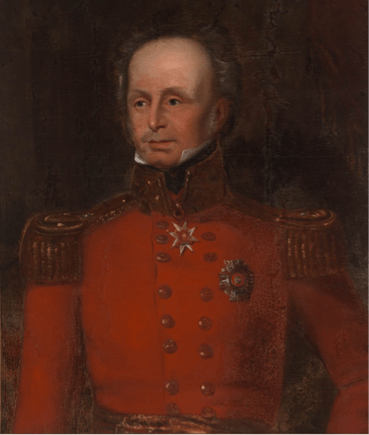
Sir Richard Bourke
April 10, 1833. — Before 7 the Governor and suite set out for the breakwater, and a few minutes before 8 was at the coal works. I presented Mr. Henderson to him at the foot of the hill, and he rode up to the pit’s mouth, where he dismounted and I took him round and explained every part of the works. We had everything in complete operation, raising coals, pumping the water out, blowing the bast for the casting furnace, and sending wagons down the incline plane and along the railway to the wharf. We were also making coke. After seeing all this, we remounted and rode down to the wharf, to see the mode of discharging the wagons into a small vessel alongside it. He asked the expense of the first outlay. I told him about £15,000 and about £2,000 per annum now.
He expressed himself much pleased to see the works, as appearing very complete, and said he hoped they would flourish. In the course of conversation, I took occasion to mention to him that regular miners (by trade) would always be required, as it was as much a trade as that of a carpenter of bricklayer. Before His Excellency left the wharf, I said I trusted he would order the measurement of the coal grant to be completed, and calling Mr. Dangar to me, explained how the proposed grant lay, namely, about 85 chains to the south, and about 3 miles westward, and that it would only occupy three or four days to mark it out. His Excellency informed me he had brought the papers with him, and that it should be attended to immediately.
The Governor then rode up the hill by the church, and returned to the Inn to breakfast. At 10, the deputation waited upon His Excellency with the address which I had the honour of reading, and we received His Excellency’s reply. After the deputation retired, the Governor sent for me again immediately into his room, and said that he found he had no time now to go into the papers relating to the coal grant, but that he would do so at Maitland. He asked if there was not some question in a letter of Mr. Hay’s which involved some difficulty. I replied that I was not aware of any difficulty whatever, that I had established the Company’s works out of the intended town altogether, and had only asked for the minimum quantity of water frontage, so that I apprehended that no objection could arise.
At a quarter to 12 I attended Miss Bourke and Mrs. Westmacott to the top of the hill by the church, to see the view, with which they were much delighted, and at half past 12 His Excellency and party re-embarked on the Sophia Jane for Maitland. The Governor again shook hands with me, and throughout this gratifying visit, he behaved with the kindest cordiality and attention to me personally. Of course, we did not touch on the subject of Liverpool Plains.
In the afternoon the gentlemen of the deputation assembled at Dr. Brook’s residence to draw up an account of His Excellency’s visit, with copies of the address and reply to forward to the several newspapers. The miners addressed to me a letter complaining of want of clothes. I believe they are what they call “trying it on,” and I have referred, the question to Mr. Henderson for his opinion thereon. Most beautiful weather all day. Mr. Dangar proceeded to Maitland in the afternoon, on leave to see his brother. Previous to the Governor leaving Newcastle, his son and private secretary, Mr. Richard Bourke, promised to accompany Mr. Wilton to Port Stephens next Tuesday. I several times invited the Governor, but he cannot ride without much pain, owing to his late accident.
Laying Foundation Stone of the Stroud Church [Published 16 August 1927, page 6]
April 29, 1833. — I allowed a holiday this day at Stroud, on the occasion of laying the corner stone of the church. The religious part of the ceremony was performed by the Rev. Mr. Wilton, and the stone laid by myself. In the presence of about 200 persons, servants of the Company being arranged by the Rev. Mr. Wilton, and also the seats of the various important personages. The people assembled in the burying ground at half past ten by previous appointment, and at eleven o’clock, Mr. Wilton, accompanied by the officers of the Company, Lady Parry and myself, processed to the spot, and the ceremony was immediately commenced.
The following is the order of ceremony as arranged by Rev. Wilton:— Assigned Servants; Soldiers; Constables; Indented Servants and Wives; Mr. Swayne; Mr. Darch; Lady Parry and Family; Sir E. Parry; Laman and Saville; Mr. White; Mr. Corlette; Mr. T. L. Ebsworth; Mr. Henry Hall; Mr. I. E. Ebsworth; Rev. Mr. Wilton.
24th. Psalm read, an address, a prayer, two first verses of the 84th Psalm (sung), a prayer, The Lord’s Prayer, a prayer, stone laid, a prayer 7th and 8th verses of the 132nd. Psalm (sung), concluding prayer and Benediction. A copper plate set into the centre of the stone contained the following inscription, engraved in legible characters:
29th. April, A. D. 1833. This Building, to be named St. John’s Chapel was dedicated to the Worship of Almighty God and the first stone laid by Sir William Edward Parry and the Reverend C. P. N. Wilton, M.A.
The day was very favourable and the whole ceremony highly interesting to those present. I cannot attempt to express what the interest was to Lady Parry and myself, and we fervently pray that this may indeed be a House dedicated to God and His Service, and become subservient to the best interests of all who come after us in this place. Mr. Wilton was obliged to return to Tahlee tonight, which he did by water by moonlight, in order to reach the steamer for Newcastle the following morning.
The Party Returns [Published 30 August 1927, page 6]
June 19, 1833. — Very fine clear weather. Messrs. Charles Hall and Darch returned this evening, reporting to me that they had not been able to discover those blacks, which had murdered Henderson; but the blacks which had accompanied our party could not be restrained from killing some of the others whom they met with, as belonging to the same tribe. They are murderous scoundrels at the very best. I do not think there is a pin to choose between any of them. It is still apprehended that we shall have to break up the Warrawong cattle station, owing to their determined disposition to kill or drive away the cattle, and indeed the men are so much alarmed there, that I do not know how to keep them at their post under these circumstances.
June 20, 1833. — A continuance of very fine weather. Mr. Harry Hall came down from Stroud to consult on various points connected with his several departments.
June 21, 1833. — Mr. Ebsworth, Senr., arrived here in the evening to consult with me on various matters. He brought word that another four runaways had been taken, with two of Mr. White’s men, in the bush. Captain Moffatt sent to inform me he should go to Stroud tomorrow. The Lambton did not arrive as we expected.
Church Matters [Published 6 September 1927, page 6]
July 28, 1833. — I had been in hopes, till yesterday, of assisting in this day’s services, but found it quite impossible, though I was rather better, and was able to dress and be up for a few hours. Mr. Price performed the two services and everybody, I understand, was much pleased with him. He really seems in every respect the Minister we want here and I cannot doubt the expediency of engaging him, at the cheap rate with which he is satisfied, and which will cost the company little more than £90 per annum.
July 28, 1833. — Mr. Ebsworth came from Booral once more, principally concerning Mr. Wetherman’s vexatious and confused accounts. He was however, employed at the Police Office for some time about this business of Stubbs’s. I agreed to engage Mr. Price for 12 months as Chaplain, and sketched out (still in bed) the principal points of an agreement. Preparing also to send the cutter away to-day. Mr. Price to go in her for Mrs. Price and their luggage. He looked at Mr. Ebsworth’s late residence, which I propose to be his. Sent to Graham’s a mail for tomorrow’s steamer. Wrote, or rather dictated letters to Mr. Hart Davis, the Archdeacon and Mr. Wilton, respecting Mr. Price. The Lambton sailed at 6 p.m. after I had signed with great difficulty, drafts on Governor and Directors for £1000 and also £191 on private account.
Accounting Difficulties
July 30, 1833. — I transacted business with Mr. Ebsworth, this morning, and was grieved to find that Mr. Wetherman is exhibiting the most unaccountable indifference about his accounts, while Messrs. Ebsworth and White are fagging themselves — I may almost say night and day — to do his work. Mr. Ebsworth returned to Booral in the afternoon. Received mail via Graham’s; received an answer from the Governor acceding to the proposal of 8/- per ton for their coals; an offer from Mr. Manning to purchase the little steam engine at my price (£280); the Census Act, and information of Mr. Barton’s arrival in Sydney. I was able to get up and in the sitting room to-day, but was over-fatigued by it at night.
Preparation for Census
July 31, 1833.— I got up tolerably well in the morning, being able to crawl alone to another room: but in the afternoon I had a severe and painful relapse. Capt. Moffatt came to call upon me, and we agreed upon a form of notice relative to the Census Act. I sent Turnbull to Stroud and Booral, principally to consult about a new tobacco press.
August 1, 1833. — Mr. Ebsworth, Sen., came down from Booral chiefly with the drafts for the quarter’s salaries for my signature. I signed them with some difficulty and fatigue. I issued a notice for preparing the materials for the Census of our population for our own purposes.
August 2, 1833. — After transacting business with me, Mr. J. E. Ebsworth returned to Booral. I still continue unable to dress myself or to take a step without pain.
Colonel Dumaresq Arrives at Port Stephens [Published 13 September 1927, page 6]
September 18, 1833. — I sent horses over to Graham’s for Colonel Dumaresq in accordance with his appointment to come to Port Stephens by the steamer tomorrow. We learn, however, that the William IV has burst one of her boilers and will not therefore, keep her time from Maitland tomorrow.
September 19, 1833. — We were much gratified at 2.30 this afternoon, in at length welcoming our friend Col. Dumaresq to Port Stephens. [Upon the retirement of Sir Edward Parry, Henry Dumaresq, was appointed the Commissioner of the Australian Agricultural Company]. I need not say that he was most cordially received, as well as his brother, Mr. Edward Dumaresq, who is a great invalid, and accompanied the Colonel by way of a change of air. As soon as our visitors had taken some refreshment, we walked down to Carrington, and I introduced Captain Moffatt and one or two of the Company’s officers to Colonel Dumaresq. We also went round the stores and about the settlement generally. Captain Moffatt received an intimation of the intention of the Government to allow him 10/- per diem as Resident Magistrate.
Back in Sydney [Published 20 September 1927, page 6]
October 26, 1833. — I wrote to Mr. Norton early this morning to know what he had done and when I should come to him, or he to me, and received answer that he would, as early as possible either come or write to me. In the meantime, I called on Mr. Macleay who informed me that the Governor seemed satisfied (as well he may be) with our explanation about the blacks: but I had told Mr. Macleay, as I had before done, that I was by no means satisfied with the Governor, whose part in this business has been highly unworthy of him. In the afternoon Mr. Norton’s clerk came to me to say that Mr. Norton was remaining in the Supreme Court, for fear of any motion being made by the opposite party, but that the cases would certainly be put off to next term, and that Mr. Norton would come to me in the evening.
Surveying the Company’s Grants [Published 27 September 1927, page 6]
Wednesday, 4th December. — The Lambton arrived from Sydney this afternoon, bringing Mr. Armstrong, who has been engaged to make the final survey of the Company’s grants at Liverpool Plains, and eleven men assigned as servants to the Company. I requested Mr. Armstrong to come to Tahlee tomorrow, that we might commence our communications relative to the intended grants, and make all the requisite preparations for his setting out via Maitland.
December 5, 1833. — We unloaded the Lambton, which was almost full of packages and parcels for private individuals, and began to get another cargo of wool on board for Newcastle. I directed that she should sail again tomorrow morning. I was occupied several hours with Mr. Armstrong on the subject above mentioned.
December 6, 1833. — I was engaged some hours again today with Mr. Armstrong, and sketched out his instructions, communicating to him every idea which suggested itself to me relative to the service he was about to execute. The Lambton sailed at 5 this morning with another cargo of 46 bales of wool for Newcastle. In the evening I received by express a letter from Mr. Henderson, suggesting the proprietary of advertising for a blacksmith to fill the place of Michael Steel, deceased.
December 7, 1833. — I was engaged from 5 a.m. till 2 p.m. in surveying the harbour, accompanied by Mr. Armstrong, who assisted me. We had some heavy showers in the early part of the day, but it was fine afterwards. A small vessel sailed out of Salamander Bay and another is lying there.
December 8, 1833. — Two services as usual, and the Sacrament of the Lord’s Supper was administered by Mr. Price. I think this was the clearest evening I ever saw in any climate, owing probably in part to some rain which had fallen.
December 9, 1833. — Mr. Armstrong and myself rose early, and were engaged for some hours in completing the arrangements for his surveying journey to Liverpool Plains. I gave him instructions as specific as the nature of such a service would permit and acquainted him with all my views and wishes. He left Carrington at 4 p.m. for Booral with the last of his equipment. I sent an advertisement to Sydney for a blacksmith for the Company’s colliery at Newcastle.
Subsequently, Parry’s advertisement was published in the Sydney Herald of December 16, 1833, and in other newspapers:
‘BLACKSMITH WANTED. WANTED immediately, for the Australian Company’s Colliery, at Newcastle, A BLACKSMITH, of sober and industrious habits, capable of forging the various parts of a steam engine, repairing the boilers, and performing the smiths’ work of the establishment generally. Application to be made by post, to me, at Port Stephens ; or, to Mr. HENDERSON, at Newcastle, stating the terms. The most unexceptionable testimonials will be required, especially as to sobriety. W. E. PARRY, Commissioner for the Australian Agricultural Company. Port Stephens, 9th Dec. 1833.’
December 10, 1833. — I was engaged most of the day in preparing my statements for the Company’s Counsel, relative to Mr. Barton’s actions. The messenger from Graham’s returned without a mail, but brought me a letter from the Rev. Mr. Wilton acquainting me that the Archdeacon had ordered him to baptise certain children here, and also to perform Divine service on Sunday next, if he should be able to obtain the use of a suitable room.” I wrote to Mr. Wilton, or rather began a letter, making the requisite arrangements, but remarking upon the very discourteous manner in which all this is done. I finished my official letter and private note to Mr. Wilton. We expected the Lambton all day, but she did not arrive, in consequence probably of a fresh N.E. wind blowing all day.
December 12, 1833. — The Lambton arrived today, having delivered her cargo of wool to the Lochiel. Mr. Armstrong left Stroud early this morning with his survey party for Liverpool Plains.
December 13, 1833. — I went up to Booral by water today and took one of my children to Stroud preparatory to Lady Parry’s going there for Christmas. The Lambton sailed this evening for Newcastle with another cargo of wool for the Lochiel.
Business at Stroud [Published 10 January 1928, page 6]
December 14, 1833.— I was engaged in visiting the various works, and the brush, and also the indented servants. The greatest interest, this day, however, was in completing the arrangement’s for opening our chapel, on Sunday the 22nd inst. The progress at the mill has been very great, and Turnbull thinks we can commence grinding in about five or six weeks. Mr. Miles of Williams River, who is here, at Stroud today, talkes of the convenience of sending his wheat to our mill if the road can be improved.
December 15, 1833.— I remained at Stroud, and performed Divine Service here twice as usual. The weather was showery and uncertain.
At Newcastle [Published 17 January 1928, page 6]
January 21, 1834. — Set off for Graham’s [on the Hunter River, at Newcastle] at 5, with Turnbull. Got on board the steamer at 10, and to Newcastle at half past 12, where I met Mr. Simon Dodd, by appointment, and consulted on the spot with him, Mr. Henderson and Turnbull, for a couple of hours. Mr. Dodd occupied the evening with Tunrbull in sketching out a rough plan.
January 22, 1834. — I inspected the coal works this morning and consulted further with Mr. Dodd on the subject of the plan for the salt works. I visited Mr. Henderson’s family, one of his daughters being very ill. I embarked on the Sophia Jane at 1 p.m. and got to Sydney by 11 at night.
Parry Eager to Return to England [Published 24 January 1928, page 6]
February 28, 1834. — A long morning’s work from 5 a.m. in preparing to go to Booral and Stroud for my last visit. At half past 10 a.m., just as I was about to set off, I was informed by Mr. White, to my astonishment and deep regret, for the first time, that he was the person who originated the report of Mr. Price being tipsy.
And this, he said, he did so as a joke to Mr. Stacy, not supposing it would go any further. Oh! this horrible, this disgusting, this horrible place! God be thanked that I and mine are about to leave it. I wrote to Captain Moffatt what I thought just to him, and set off, with harassed feelings to Booral at 11 a.m., for my last visit. Arrived there at half past 2, and visited everything worth seeing with Mr. Ebsworth.
Final Visit to Stroud District
March 1, 1834. — Called on the new Constable and his wife (Jaggers). Respectable people. Proceeded after breakfast to Stroud, visited the school, and every indented servant’s family, and afterwards went to the mill, which was grinding 16 bushels an hour, and answers beautifully. The mischief done to the dam by the late fresh can be repaired in a fortnight, and, indeed, will prove an advantage, as it has shown where the weakness lay, though I do not think it would have given way had it been finished.
March 2, 1834. — Performed Divine service at Stroud Church in the forenoon, and rode to Booral in the afternoon. Delivered at each place an address written for the occasion from Acts XX, 32, [“Now I commit you to God and the word of his grace, which can build you up and give you an inheritance among all those who are santified.”] in which I endeavoured to recapitulate, and once more press upon the people’s attention those truths which I have laboured to proclaim among them for more than 4 years. Rain at night.
Back at Tahlee
March 3, 1834. — Transacted business with Mr. Ebsworth. Visited the respective families at Booral and at 3 set off in the boat for Tahlee, where I arrived at dusk. Rain in frequent showers — wind southerly.
March 4, 1834. — Another long and insulting letter from Captain Moffatt — insulting to everybody, almost. There never was such a man! The Lambton arrived from Newcastle in the afternoon, bringing maize, etc. I received by post a communication from Mr. Norton, with sundry subpoenas for the approaching trials.
With the Governor [Published 31 January 1928, page 6]
April 4, 1834. — This day the Governor was kind enough to take Lady Parry and myself in his carriage to the pretty town of Liverpool, passing by the new bridge, called Lansdowne Bridge, being the first of stone in the colony. The public hospital at Liverpool is really a very handsome, large, and commodious building, worthy of any English country town. The gaol, barracks, police office, etc., are all neater and more creditable than any I have yet seen in New South Wales. The lunatic asylum is an old crazy house, but kept in equally good order with the hospital by Patrick Hill, Esquire, Surgeon, a man much beloved and respected.
On the whole I was much pleased with Liverpool as a neat country town; but I believe there is nothing to contribute much to its increase of prosperity. The church is neat, and the Chaplain, the Rev. Mr. Cartwright, an excellent pious man. We returned to Government House [at Parramatta] for dinner. Singing in the evening, with Miss Deas-Thomson and Miss Jacobs. Captain and Mrs. King were there. During dinner the Governor had some conversation with Lady Parry the subject of which I will not even venture to hint at in this journal, but which will be of essential importance to the comfort and happiness of the community of Port Stephens. I have reason to know that His Excellency intended to converse with me on this subject but he probably, on consideration preferred having Lady Parry’s opinion, which quite agrees with my own.
April 5, 1834. — This morning before we left Government House to return to Sydney, the Governor asked me whether Mr. Henderson was fully occupied by the Company’s business at Newcastle, and if not whether he would be a likely person to give a sound opinion respecting the water tunnel near Sydney [Busby’s Bore], with the progress of which he was not at all satisfied. I told His Excellency that I thought Mr. Henderson quite competent, and that I would venture to promise that he would be at the service of the Government if required, but that I felt bound to tell His Excellency that I knew there was a great jealousy already subsisting between Mr. Busby and Mr. Henderson, so that perhaps some mischief might be done by employing the latter in this manner. We returned to Sydney by 4 p.m.
Final Business Matters in Sydney [Published 7 February 1928, page 6]
May 1, 1834. — Colonel Dumaresq at length arrived in the steamer, when we found that he had on the former occasion missed his way to Graham’s. I was about to go to Parramatta, to wait on the Governor and pay other visits, but was prevented by the weather.
May 2, 1834. — I was engaged today principally in discussing the various business of the company. I also accompanied Mr. T. L. Ebsworth in transacting business for the company about town. I received an abusive letter from Mr. Burnett, which I sent to Mr. Norton, requesting his advice whether I should do anything about it.
May 3, 1834.— I accompanied Colonel Dumaresq to Mr. Norton for the purpose of conversing on the forthcoming actions of Messrs. Barton and Burnett. Mr. Norton thinks it just as likely they will not be brought on at all. I think otherwise. Mr. Norton considers the cases, as set forth in my papers, perfectly clear, and that they have no chance of a verdict. Dr. Wardell and Mr. Wentworth are of course, still retained on our side. I next asked Mr. Norton’s advice about replying to Mr. Burnett’s abusive letter, which he advised me by no means to do.
I left my name at Government House. Colonel Dumaresq waited on the Governor, who was very civil to him, and promised to afford him every assistance in promoting the prosperity of the company, consistently with the general interests of the colony. His Excellency alluded to certain differences which had existed between the Colonial Government and myself, but expressed a hope that everything was now in course of adjustment.
May 4, 1834.— Went to St. Phillip’s, where the Rev. Mr. Rusden preached, for the first time. Fine weather — after the rain — commenced this day and continued.
May 5, 1834.— The storage of wool on the Persian [this is the ship that is to take the Parry family back to England] is now proceeding better.
May 6, 1834. — In the evening I attended, as Vice-President, a meeting of the N.S.W. Temperance Society; the Chief Justice was in the chair.
May 7, 1834. — Dined with Mr. Manning, of Ultimo. Captain Mallard agreed to my going to live on aboard the Persian on Monday next .
May 8, 1834.— Dined at Mr. Jones’. Ball in the evening.
May 9, 1834. — For some days past I have been partly occupied in drawing up a statement relative to our church affairs at Port Stephens, as I find that an impression has been received by my friends at Sydney, which is a total erroneous one, relative to the baptism business, namely, that I had objected to a clergyman of the Church of England coming to the company’s estate. I finished it today, and shall send it to some of my friends.
May 10, 1834. — Received from Mr. Norton the bills of costs, etc., for the late trials, which I examined and certified for payment by Colonel Dumaresq. I also received from Mr. Norton my papers or briefs of the same which I wish to take home, to show to the Directors. Captain Lambert and Dr. Savage, R.N., dined with us. Our poor dear little Lucy had another fit in the evening.
May 11, 1834. — St. James’ in the morning — Mr. Rusdon. St. Phillip’s in the evening — Mr. Cowper.
Parry Family Goes On Board the Persian to Await Trip Back to England [Published 7 February 1928, page 6]
May 12, 1834.— According to our arrangements, I proceeded on board the “Persian” with Lady Parry and my family, to sleep permanently. This I was the more anxious to do, both to accustom the children to the ship for some days before sailing, and also to hurry the sailing which has been protracted, some days beyond the terms of my agreement, viz. the 30th April.
Concluding Comments
The diary of Sir Edward Parry as presented in this paper gives a remarkable insight to the early European history of Port Stephens and the surrounding region.
The return journey of Sir Edward Parry to England on board the Persian in 1834 is also well documented in a journal he kept and is found a this link on the website
Researched and compiled by Kevin McGuinness
February 2023

 Port Stephens - a history exploration