
Introduction
During the convict era, over 90,000 convicts served time in New South Wales. They were either transported directly to the New South Wales Colony or were transferred from other Australian colonies.
Of these convicts, over 1,200 spent a portion of their sentences in the Port Stephens district. Most of them would have been assigned to the Australian Agricultural Company, that was initially based at Carrington, at the western end of Port Stephens. Other Port Stephens masters included early colonists such as Lieutenant William Caswell and Captain William Cromarty. During the later colonial period, many convicts who held Tickets of Leave were assigned to prominent citizens of Sydney, to cut timber in the Myall River hinterland, to increase the wealth of their master, who held the timber rights there.

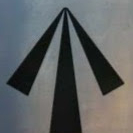
The Broad Arrow marked government property and would have been well recognised by the convicts stationed at Port Stephens.
From the records of all the convicts who spent time at Port Stephens, the following are featured to illustrate the hardships and challenges faced by them.
Featured Convicts
JOHN WILSON, per Alexander 1788 (First Fleet)
First Convict Recorded at Port Stephens
Sentenced at Lancashire to 7 years transportation for stealing 7 yards of cloth.
1795 – At Port Stephens, John saved surveyor Charles Grimes from an aboriginal attack.
The Port Stephens Story, compiled by M. A. Bartlett, on page 6 states:
“Lieutenant Shortland’s expressed desire for a survey of Port Stephens came to fruition in March 1795, when Deputy Surveyor Charles Grimes was despatched by Lieutenant Governor Paterson in the Francis to accomplish this task. As well as describing the land as low and sandy and not, in his opinion worth a second visit, Grimes was the first to make observations on the original inhabitants of the area, the Aborigines of the Worimi tribe. These natives Grimes found to be generally unfriendly, and when one of them threatened him with a spear, ex-convict John Wilson twice fired a gun at the native who was not seen to rise anymore.”
1797 – In March, John and three others were charged as ‘incorrigibles, rogues and vagabonds wandering at large. He was sentenced to an additional 7 years transportation but escaped. John was declared an outlaw in May 1797, for absconding from work and advising and assisting the aborigines to attack settlers. He later gave himself up and promised amendment.
1798 – John along with John Price (Governor Hunter’s servant) was sent on two journeys of exploration.
1800 – Died during 1800. Killed by the relatives of a young aborigine he forcibly took as a wife.
RICHARD FAGE per Surrey 1831.
Many Abscondments
Sentenced at Northampton Assizes to 14 years transportation for assault.
1831 – Upon arrival in the Colony assigned to Robert Frith, Royal Navy, Bathurst.
1833 – Apprehended after abscondment from Carters Barracks, Sydney.
1833 – Absconded from No. 5 Road Party.
1833 – Absconded from No. 5 Road Party (second time).
1833 – Absconded from Tread Mill, Sydney [28/12/1833]. Second time of absconding.
1834 – Apprehended after abscondment from No. 5 Road Party.
1838 – Absconded from T. Barnes, Bathurst Road [15/1/1838].
1840 – Absconded from Australian Agricultural Company, Port Stephens [10/6/1840].
1847 – Ticket of Leave, Parramatta [8/2/1847].
1847 – Certificate of Freedom [31/5/1847].
JOHN FINNIGAN per Guildford 1818.
Great Adventures
Sentenced at County Wicklow, to life.
1822 – With West’s Gang and assigned to Timothy Donaghue, Cockle Bay [2/3/1822].
1822 – Simeon Lord of Sydney was allowed to employ John for the procurement of a cargo of timber at Port Stephens [13/6/1822].
1824 – Discharged from the Establishment, Emu Plains to Sydney [January 1824].
1824 – Assigned to Richard Kelly, Windsor [14/1/1824]. Sent to Prisoner Barracks [13/10/1824].
1825 – Petition for mitigation of sentence [17/10/1825]. The petition stated, “Upon arrival, assigned to Mr. Johnstone, Georges River district, where he remained for 7 months. Was then returned to government employ at Sydney. He went in an open boat to obtain cedar for Parsons & Farrell. A boat he was on was wrecked and he remained for 9 months at Moreton Bay living with the natives and endured utmost distress. The cutter Mermaid arrived at Moreton Bay, and he was taken on board and conveyed to Port Jackson. Then assigned to Richard Kelly to go on board the Isabella and went to Port Macquarie. He was again conveyed to Port Jackson as per the Sally. He accompanied the Governor, as a Seaman, in the brig Armity to Moreton Bay. He again accompanied Captain Gray in the same brig to Moreton Bay. Again, accompanied Major Lockeyer in same brig and presently remained with the vessel.”
1825 – Ticket of Leave, Sydney [3/11/1825]. Was a Sailor.
HENRY GOODWIN per Hadlow 1818.
Long History of Punishments
Sentenced at Derby Assizes to life.
1819 – To be sent to Newcastle, per Elizabeth Henrietta [23/6/1819]. Was a Carpenter.
1822 – With Town Gang, Liverpool.
1823 – Absconded from Emu Plains.
The ‘Sydney Gazette’ of 26/6/1823 states:
“Received into the Prisoner Barracks for the first time out of the Gaol Gang on 4/6/1819. He ran a fortnight after on occasion of which it was probable he was sent to Newcastle as he was received from that Establishment on 3/8/1821. On 18/1/1822 he was discharged to Liverpool, but he was received again into the Prisoner Barracks on 21/10/1822 designated as a dangerous character. Appears that in the period between his receipt from Newcastle & discharge to Liverpool he was twice punished, the first time with 12 lashes for absenting himself one night from the Barracks & the second with 50 lashes for stealing four window shutters. He was punished again with 25 lashes for absenting himself from work and after his receipt from Liverpool as above stated, he received 50 lashes and was put into the Gaol Gang for 3 months charged with stealing 32 feet of cedar & again 100 lashes for robbing government. On this occasion it was ordered that he should be sent for 2 years to Emu Plains and he was forwarded accordingly but made his appearance in Sydney in a short time after and his apprehension was adjudged to be sent to the Gaol Gang at his former station for 6 months. He contrived again to effect his escape but he was again apprehended and being charged as well with robbery as with running, the sentence pronounced was that he be confined in the Gaol cells for 3 months and at the expiration of that period be sent to Port Macquarie for the remainder of his original sentence.”
1823 – Report and enclosures from a specially convened Bench at Sydney on Henry’s case [28/7/1823].
1823 – Correspondence regarding his solitary confinement [12/8/1823].
1823 – Sent to Port Macquarie, per Sally [15/10/1823]. Sentenced by Sydney Bench to remainder of sentence [28/6/1823].
1825 – Government employ, Port Macquarie.
1828 – Labourer to Australian Agricultural Company, Port Stephens.
1837 – With Australian Agricultural Company, Port Stephens.
1840 – Ticket of Leave, Port Stephens [14/2/1840]. Altered to Newcastle [13/4/1840]. Cancelled for repeated drunkenness [29/5/1840]. Restored for Patricks Plains [18/12/1840]. Altered to Port Stephens [7/10/1841].
1842 – Ticket of Leave Passport [1/2/1842] (on recommendation of Captain King) and [25/2/1843] (on application of Mr. King, Commissioner of Crown Lands) and [19/2/1846] (Singleton Bench).
ALEXANDER GREEN per Countess of Harcourt, 1824.
Convict Scourger
Sentenced at Salop Quarter Sessions to life for stealing from a shop.
1824 – Upon arrival in the Colony assigned to William Hutchinson.
1824 – Received Conditional Pardon [23/9/1824].
1825 – His sentence reduced from life to 7 years [13/5/1825].
1825 – Government servant to Mr. Marsden, Melville.
1827 – Appointed as a Constable, Port Stephens.
1828 – Labourer to Australian Agricultural Company, Port Stephens, aged 28.
1831 – Certificate of Freedom [26/1/1831].
1838 – Applied to marry Alice Robinson, per Henry Wellesley, Sydney [6/9/1838]. Application approved.
In the article ‘Green, Alexander (1802-?)’ published in the Australian Dictionary of Biography, Supplementary Volume, (Melbourne University Press), 2005, Ken McNabb writes:
“Lodged in Hyde Park barracks, Green was assigned briefly to William Hutchinson, then Samuel Marsden. He received a conditional pardon in May 1825, worked intermittently as an official scourger at the barracks and Sydney gaol, as a labourer and honorary constable at Port Stephens, and eventually as assistant to Harry Stain, the hangman. When Stain died in January 1828, Green became public executioner of Sydney Town and the colony of New South Wales……… From the mid-1840s Green, by now earning just over £60 a year, was in growing disfavour with the authorities for intoxication, insolence and mental instability. In early May 1855 the colonial secretary Edward Deas Thomson ordered him committed to the Tarban Creek Lunatic Asylum.”
GEORGE JONES alias AUSTIN, per Sesostris 1826.
In Service of Australian Agricultural Company
Sentenced at Devon Assizes to 14 years transportation.
1826 – Upon arrival assigned to Principal Superintendent of Convicts Office.
1828 – At Hyde Park Barracks, Sydney.
1831 – Had been in service of Australian Agricultural Company, Port Stephens and was sentenced to work for 3 months in irons on the roads [9/2/1831]. The Company requested that he be returned to their service on the expiration of his sentence as his services were much required in the accountant’s office there.
1833 – Ticket of Leave, Windsor [1/12/1833]. Altered to Sydney [3/3/1835].
1837 – At Sydney, aged 37, with Ticket of Leave.
1839 – Certificate of Freedom [1/11/1839].
1844 – Under a second charge of transportation. His petition recommended for favourable consideration. Note: Tried in January 1842 and convicted of forgery and forwarded to Cockatoo Island where he remained about 13 months and then removed to the general hospital being afflicted with violent and severe asthma. During his stay in hospital, he prevented two men from Cockatoo Island who were patients also, from escaping and gave evidence against them.
1845 – In the general Hospital under sentence of transportation. As his conduct had been good it was recommended that an authority may be granted to discharge him.
1845 – Colonial Pardon [9/6/1845].
JOHN KELLY per Canada 1825.
Aborigines Stole His Certificate of Freedom
Sentenced at Cork City to 7 years transportation.
1821 – Lost Certificate of Freedom during 1821 when at sea in the ‘Elizabeth & Mary’ schooner and he was detached in a boat on duty which was upset and his clothes bag was lost.
1823 – On a list of persons who obtained a Certificate of Freedom during the previous fortnight (duplicate) [15/1/1823].
1824 – He was in the employ of Mr. Lord at Port Stephens and his Certificate of Freedom was stolen again, this time from his hut by a party of natives during his absence at labour, [22/4/1824].
1824 – Certificate of Freedom [22/4/1824].
1825 – Labourer of Sydney (free by servitude).
1828 – At Gaol, Sydney.
1831 – Certificate of Freedom [21/10/1831].
Left colony on the Eliza.
JOSEPH LYCETT (LYSAGHT) per General Hewitt 1814.
Famous Colonial Artist
Sentenced by Salop Assizes to 14 years transportation for forgery.
1814 – Ticket of Leave [1/3/1814].
1814 – With Mr. Limner, Sydney, with Ticket of Leave (off government stores).
1815 – Sent to Newcastle, per Lady Nelson [8/7/1815]. Was to be strictly watched as he was notorious for forgeries.
1815 – Sent to Newcastle per Lady Nelson [8/7/1815].
1817 – Had a pass to go to Sydney for the Commandant on private business [8/11/1817].
1817 – Wounded by natives at Port Stephens [14/11/1817].
1821 – Absolute Pardon [28/11/1821].
In the article, ‘Joseph Lycett 1774-1828′ published in the Australian Dictionary of Biography, Volume 2, 1967, Rex Rienits wrote:
“Joseph Lycett (b.1774?), convict and artist, was born in Staffordshire, England. By profession a portrait and miniature painter, he was convicted of forgery at Salop Assizes on 10 August 1811 and sentenced to transportation for fourteen years. He sailed in the transport General Hewitt, in which Captain James Wallis, of the 46th Regiment, an amateur artist of considerable ability, was coming out for a tour of duty. He reached Sydney in February 1814 and was soon appointed a clerk in the police office. In May 1815 Sydney was flooded by hundreds of skilfully forged 5s. bills drawn on the postmaster. They were traced to Lycett, who was found in possession of a small copper-plate press. He was convicted of forgery and sent to Newcastle…. Lycett drew up the plans for a church which Wallis projected and, when it was built in 1818, he painted the altar piece; he is said to have also produced the three-light window which still survives in the bishop’s vestry of Newcastle Cathedral. He received a conditional pardon on Wallis’s recommendation. In 1819-20 he executed many private commissions. In February 1820 Governor Lachlan Macquarie sent to Lord Bathurst three of his drawings, including a large view of Sydney. It is generally believed that the absolute pardon which the artist received on 28 November 1821 was a reward for these…”.
ISAAC LYONS per Adamant 1821.
Blind Convict
Sentenced at the Old Bailey, London to Life. Had been a Labourer.
1821 – Upon arrival sent to Parramatta for distribution.
1822 – Brickmaker, attached to Carters Barracks.
1823 – Absconded from Emu Plains.
1823 – Sent to Port Macquarie, per Sally [31/10/1823]. Sentenced by Sydney Bench to remainder of sentence [29/10/1823]. Was a Labourer.
1825 – Government employ, Port Macquarie.
1828 – Labourer with Australian Agricultural Company, Port Stephens, aged 27.
1833 – Australian Agricultural Company, Port Stephens, requested that Isaac be admitted into the General Hospital. They offered the opinion that Isaac’s eye disease was feigned. He was to be returned to the Company when discharged [ 21/10/1833].
1834 – After return to the Australian Agricultural Company, Port Stephens, Isaac still refused to work due to his claimed blindness. The Company still doubted his claims and requested that Dr. Mitchell be allowed to offer an opinion to enable them to determine what to do with Isaac.
1837 – With government, Port Macquarie, aged 36.
1841 – Ticket of Leave, Port Macquarie [3/4/1841]. Altered to Windsor [19/8/1841]. Altered to Port Macquarie [8/10/1841]. Altered to Windsor [12/4/1842].
1844 – Ticket of Lave Passport [5/4/1844] (Windsor Bench) and [9/4/1845] (on order of Mr. Ryan).
1847 – Conditional Pardon [30/7/1847].
ANTHONY MURPHY per Agamemnon 1820.
Long Record of Abscondment
Sentenced at the Old Bailey, London to Life. Had been a Shoemaker.
1820 – Upon arrival in the Colony sent to Emu Plains for distribution.
1820 – Sent to Newcastle, per Lady Nelson [20/11/1820]. Was a Shoemaker. Had a three year colonial sentence.
1822 – Government employ, Newcastle.
1823 – Received 25 lashes at Newcastle during January 1823 for neglect of work on a farm.
1823 – Employed by John L. Platt, free settler, Iron Bark Hills, Newcastle [4/10/1823]. Assigned from Sydney.
1824 – Absconded from Government service, Hunter River.
1824 – Absconded from Road Gang, Newcastle.
1824 – Absconded from Government service, Hunter River.
1824 – Received 50 lashes at Newcastle during December 1824 for being a runaway.
1825 – Runaway from Newcastle, captured at Brisbane Water. Was a bushranger. Sentenced at Windsor General Sessions to 3 years. [13/4/1825].
1825 – Sent to Port Macquarie, per Mermaid [7/5/1825.] Returned [4/10/1828.] Was a Shoemaker.
1825 – Absconded from Port Macquarie, during April 1825.
1829 – Absconded from No. 19 Road Gang.
1829 – With Iron Gang No. 3 (Great North Road).
1829 – Absconded from No. 3 Iron Gang.
1829 – Absconded from No. 9 Iron Gang. Third time of running.
1830 – With Road Party No. 25 (Great North Road).
1831 – Absconded from Australian Agricultural Company. Charged with robbery. Tried at Port Stephens and sentenced to 12 months in an Iron Gang [22/9/1831].
1832 – Absconded from Bathurst Bridge Party.
1832 – Apprehended after abscondment from No. 41 Road Gang.
1832 – The Australian Agricultural Company, Port Stephens, requested that Anthony be returned to its service, as his colonial sentence had expired [22/9/1832].
1834 – Absconded from Australian Agricultural Company [4/9/1834].
1834 – Absconded from Australian Agricultural Company [14/12/1834].
1848 – Ticket of Leave, Wellington [1/1/1848].
1848 – Ticket of Leave Passport, Wellington Bench [14/8/1848].
1852 – Conditional Pardon [3/7/1852].
JOHN SCULLY per Waterloo 1836.
Spent Time on the Treadmill in Sydney
Sentenced at Dublin City to 7 years transportation for robbery from a ship. He had been a Boatman.
1837 – At Hyde Park Barracks, Sydney, aged 19. Later with Australian Agricultural Company, Port Stephens, aged 19.
1837 – Absconded from Australian Agricultural Company, Port Stephens [6/7/1837].
1838 – Sentenced to 6 months on the treadmill for gross insolence & disobedience of orders, a false statement to a Constable & rebellious conduct. Weight loss was 8 pounds. His offences were split into three parts so he could receive a maximum sentence of 2 months for each,
1839 – Sentenced to 6 months on the treadmill for attempt at housebreaking & robbery, neglect of work & insolence. Weight loss was 6 pounds. His offences were split into three parts so he could receive a maximum sentence of 2 months for each.
1840 – Sentenced to 2 months on the treadmill for making a false statement.
1840 – Sentenced to 2 months on the treadmill for insolence.
1843 – Certificate of Freedom [7/10/1843].
THOMAS SIMES per Hercules 1825.
School Teacher at Port Stephens
Sentenced at Devon Assizes to 7 years transportation. He had been an Attorney’s Clerk.
1825 – Upon arrival in the Colony assigned to Bathurst.
1825 – John Johnson and his 2 convict servants, including Thomas, victualled on government stores at Newcastle for 6 months [22/7/1825].
1831 – Certificate of Freedom [23/3/1831].
1831 – married Honor Hinton on 23/6/1831 at Port Stephens. Thomas worked as a School teacher for the Australian Agricultural Company until October 1831.
HENRY WHITE per Earl St. Vincent 1826 (to Hobart) and later Portland 1826 (to Sydney).
Doctor at Port Stephens.
Sentenced at the Old Bailey, London to 7 years transportation for forgery. He had been a surgeon with the Royal Surrey Militia in 1813 before it was disbanded in 1816.
1826 – He was first sent to a government farm at Emu Plains and then as assistant surgeon to an expedition to Western Port. The Western Port Settlement was established on 14/11/1826 and abandoned on 27/2/1828. His health suffered and when the Westernport settlement was abandoned, he was sent to Port Stephens to be assigned to the Australian Agricultural Company.
1826 – A letter to the Colonial Secretary, NSW from the Earl of St Vincent, River Derwent, James McKerrow, Surgeon Superintendent regarding Henry White proceeding to Sydney, enclosed was a note regarding conduct [128/8/1826.]
1830 – He was at Port Stephens in the years 1830-1832 and referred to by the Company Commissioner Sir Edward Parry as ‘troublesome’. In February 1832 he was transferred to Mr. Cox in Maitland, and later that year returned to Port Stephens.
1832 – Returned to government service by the Australian Agricultural Company, Port Stephens, where he had assisted the Surgeon of the Company [19/12/1831].
1832 – Certificate of Freedom [3/10/1832].
1832 – His sentenced ended in October 1832 and he entered private practice, settling eventually at Windsor.
1842 – Married Mary Ann Townsend on 16/11/1842 at St. Andrews, Parramatta. Mary was the daughter of a prominent landowner She was born on 7/1/1825 at Emu Plains and she died on 8/5/1876 at Keppel Street, Bathurst.
1845 – Petition received by the Government from Henry. It stated that he had been kept under surveillance since his sentence to transportation to Norfolk Island had been commuted from 10 years to 3 years confinement on Cockatoo Island. He had been found to be a man of good conduct [10/1/1845.]
SAMUEL CHIPP per Guildford 1822.
Lived With Aborigines
Sentenced at the Old Bailey, London to life. Had been a hatter.
1822 – Assigned to Mr. Lord, Sydney [24/7/1822].
1822 – Government servant with S. Lord, Sydney.
1825 – Government servant with Mr. Lord, Sydney.
1826 – Convicted, along with two others, of murdering a black native at Port Stephens, in September 1826. Sentenced to death as confirmed by a letter concerning the size of the coffins for the reception of Samuel Chipp and Thomas Stanley (per Fortune 1813) after execution. A Petition for the commutation of the sentence notes that Samuel was working as a Sawyer for Simeon Lord. Samuel was sent to Norfolk Island under sentence of life in chains.
1828 – At Norfolk Island (life sentence).
ROBERT CHITTY per Sophia 1829.
Scourger at Port Stephens.
Sentenced at Dublin to 14 years for Desertion. He had been a Soldier.
Had two previous convictions in Ireland prior to transportation.
1829 – Upon arrival in the Colony assigned to Department of Public Works.
1829 – Appointed Constable & Scourger, Brisbane Water.
1834 – Applied to marry Mary Ann Pearce (free settler), Sydney & Lower Hawkesbury. Applications of 7/1/1834 & 5/7/1834 refused as he held no indulgences.
1835 – Ticket of Leave, Brisbane Water.
1836 – Absconded from Police Establishment, Dungog [29/12/1836.]
1836 – Absconded from Bench of Magistrates, Port Stephens where he was attached as Scourger and when in charge of a female prisoner [15/1/1836].
1840 – Absconded from Matthew Chapman, Upper Williams River [30/11/1840]. Joined 3 bushrangers and committed several robberies.
1840 – In December 1840 was a member of the ‘Jewboy Gang’.
1842 – Executed on 18/3/1842.
In a community record published on the website ‘Convicts Records’ on 22 February 2015, Keith South writes”
“On Tuesday morning the six bushrangers, James Everett (per Mangles 1833), Robert Chitty, John Marshall (per Clyde 1832), Richard Glanville, John Shea (per Calcutta 1837), & Edward Davies [Davis] (per Camden 1833), who were convicted at the last criminal sittings of the wilful murder of John Graham, at Scone, on the 21st December last, all paid the forfeit of their lives by expiating their offences on the scaffold….”.
Six Convict Absconders from Newcastle Hospital end up at Port Stephens. Traced by Aboriginal Trackers.
The newspaper “Star and Working Man’s Guardian” (and other newspapers) published the following report on 18 May 1844 (page 4), titled “Port Stephens”.
The convicts who absconded from Newcastle on the 21st ultimo, effected their escape from the Convict Hospital at that place by some means requiring explanation, inasmuch, as that the sergeant who sent them from the Stockade at Nobby’s, cautioned the people at the hospital, that they were desperate characters, and that he suspected they had some mischief in view. This information, however, it would appear, was unheeded — they escaped in irons, and got on board the cutter “Brothers,” which vessel had just arrived from Sydney with a small cargo of hardware and soft goods. Only two of the crew were on board at the time, but as two of the party had been seamen, the vessel was easily got underweigh and put to sea, and early in the day was seen steering to the southward; the wind however, changed south, and their being but a very small quantity of provisions on board, they bore up, and passing Port Stephens and Sugar Loaf Point, hauled in for the shore and landed, taking with them as much of the cargo as they could carry.
Their intention was, on meeting with a native, to get directed to the nearest station, where they thought to procure horses, firearms, and provisions, and then to proceed towards New England. The coast where they landed, is a narrow strip of low sandy land, separated from the interior by a succession of large lakes, connected by impassable rivers. Upon this narrow strip of land, they wandered about for eight days, as they stated, without food; at last, being near the border of a lake, they saw a black woman in a canoe fishing, who paddled towards their ‘cooey’, supposing it proceeded from some of the blacks. They told her they had been shipwrecked, and wanted to be directed to Port Stephens, which she readily undertook to do, and in the afternoon reached Bundobah, a cattle station about six miles from Carrington.
Here they got refreshment; but as the alarm of their being in the neighbourhood had been given, and several parties were out in search, they were readily recognised; and whilst they were regaling themselves upon what chear they could procure, and “bailing up” a stockman and robbing the hut, a black galloped into Carrington to report their presence. A party was immediately despatched, which reached the station about an hour after they left. They had taken the firearms and two horses. Their tracks were followed until dark, and the search was renewed the next morning by a strong party of the Company’s servants, (headed by Captain King and Dr. Buchanan,) two mounted police, and nine blacks, who, after following up the track for nearly twenty miles, succeeded in capturing them at their bivouac, just as they were preparing their repast.
They were lodged in the lock-up at Stroud the same evening, and next morning committed for robbery, and are now safely lodged in Newcastle lockup, to answer the more serious charge of piracy. The greater number of these villains have been under sentence to Norfolk Island, and doubtless, had they escaped, would have done much mischief. Active measures, however, had been taken by the Australian Agricultural Company to intercept them; several parties had been despatched, besides the mounted police from Jerry’s Plains under Lieutenant Gall, of the 99th, and the detachment from Dungog, so that it was improbable they could escape. The captors have shared a reward of £90, of which £30 was given by the Australian Agricultural Comp., who also liberally rewarded the blacks by whom the snug retreat was discovered wherein the bushrangers contemplated remaining a few days to rest themselves. They acknowledged that some of their party had been in the bush before, which was very evident from the caution which had been employed in defacing or removing everything, even the dung of their horses, by which they might be traced, and the only fire they had made was carefully covered over with soil and leaves; indeed, it was only the quick and practised eye of the blacks that led the party to their encampment. Their horses they had turned adrift about a quarter of a mile from their hiding-place, and as the traces of the feet were imperceptible, it was ten hours before they were found, although the party was nearly the whole of that time within four hundred yards of them.
The six convict absconders who ended up at Port Stephens were:
JAMES EDWARDS, per Royal Admiral 1830.
Sentenced at Warwick to Life for robbing a school. Had been a Brass founder.
1830 – Upon arrival in the Colony assigned to William Merritt, Sydney.
1833 – Assigned to Charles Chadburn, Sydney.
1835 – Absconded from Dr. James Bowman, Patricks Plains [10/12/1835].
1837 – With Mr. Bowman, Patricks Plains, aged 22.
1844 – Reward notice published for his capture. With others he escaped from the Hospital at Newcastle in irons on 21/4/1844 and stole the cutter Brothers landing near Seal Rock, about 36 miles to the north of Port Stephens. They were supposedly making their way towards Moreton Bay.
1844 – Sent to Van Diemens Land per Waterlily [2/9/1844].
HENRY ELGAR, per Waterloo 1833.
Sentenced at Kent Quarter Sessions, to Life for Housebreaking. Had been a Seaman.
1834 – Absconded from Watch House, Wollongong [1/4/1834].
1835 – Absconded from No. 2 Road Party, since 9/1/1835. Second time of absconding.
1835 – Apprehended after absconding from Iron Gang, Berrima.
1837 – Apprehended after absconding from F. Mowatt, Campbelltown.
1837 – Absconded from Escort to Sydney [2/6/1837].
1844 – Reward notice published for his apprehension. He and others absconded from the Convict Hospital, Newcastle, in irons, having seized the cutter Brothers lying in the Harbour at Newcastle, on 21/4/1844. They subsequently landed on the coast near Seal Rock about 36 miles to the north of Port Stephens. They were supposedly making their way towards Moreton Bay.
1844 – Sent to Van Diemens Land, per Waterlily [2/9/1844].
BUCHANAN WILSON, per Marquis of Huntley 1830.
Sentenced at Glasgow to 14 years transportation for Housebreaking. Had been a Weaver and Farm boy.
1832 – Absconded from No. 20 Road Gang.
1832 – Absconded from No. 40 Road Gang. Second time of running.
1832 – Absconded from No. 2 Iron Gang. Fourth time of running.
1844 – He and others absconded from the convict Hospital, Newcastle (in irons), having seized the Cutter Brothers, lying in the Harbour at Newcastle, on 21/4/1844. They subsequently landed on the coast near Seal Rock, about 36 miles to the north of Port Stephens They were supposedly making their way towards Moreton Bay. Reward Notice published.
1844 – Sent to Van Diemens Land, per Waterlily [2/9/1844].
HENRY HUGHES, per Exmouth 1831.
Sentenced at the Old Bailey, London, to 14 years transportation for picking pockets. Had been an Errand boy.
1831 – Upon arrival in the Colony assigned to Carters Barracks.
1832 – Absconded from Carters Barracks.
1832 – Absconded from Carters Barracks. Third time of running.
1840 – Absconded from Hyde Park Barracks [11/6/1840].
1844 – Reward notice published for his apprehension. He and others escaped from the Convict Hospital at Newcastle on 21/4/1844 & took the cutter Brothers and proceeded to sea, subsequently landing on the coast near the Seal Rock, about 36 miles north of Port Stephens. They were supposedly making their way towards Moreton Bay.
1844 – Sent to Van Diemens Land per Waterlily [2/9/1844].
ROBERT WHITEHEAD, per Lord Lyndoch, 1838.
Sentenced by Somerset Quarter Sessions, to Life for Shoplifting. Had been a Plasterer & Slater.
1841 – Absconded from J. T. Threlkeld, Newcastle [9/9/1841].
1843 – Absconded from government, Port Macquarie [1/12/1843].
1844 – Reward notice for his apprehension. He and other convicts escaped from the Convict Hospital at Newcastle on 21/4/1844 & took possession of the cutter, Brothers then at anchor at the port. They proceeded to sea and& subsequently landed on the coast near Seal Rock, about 36 miles to the north of Port Stephens. They were supposedly making their way to Moreton Bay.
1844 – Sent to Van Diemens Land per Waterlily [2/9/1844].
SAMUEL RINGWOOD, per Moffatt 1838 (from Van Diemens Land).
Sentenced by Hobart Supreme Court, to Life for Burglary. Had been a Groom.
1836 – Arrived in Van Diemens Land, per Henry Porcher, under sentence to Norfolk Island [15/11/1836].
1844 – Reward notice published for his apprehension. He and other convicts absconded from the Convict Hospital, Newcastle, in irons, having seized the cutter Brothers lying in the harbour at Newcastle on 21/4/1844. They proceeded to sea and subsequently landed on the coast near the Seal Rock, about 36 miles to the north of Port Stephens. They were supposedly making their way towards Moreton Bay.
1844 – Sent to Van Diemens Land per Waterlily [2/9/1844]
Twelve Ticket of Leave Convicts Flee from their Port Stephens Cedar Party.
During 1824, a group of convicts belonging to a Cedar Party at Port Stephens in the employ of Robert Campbell (junior), were found at large at Newcastle, contrary to the bonds they had entered, in consequence of a men belong to their party having been killed by the aborigines, and they also had their huts plundered by them.
The assigned convicts were in fear of their lives as there was no opportunity of a conveyance to Sydney and therefore made their own way to Newcastle. They stated that in consequence of Richard Beckley, per Lord Eldon, having been killed by natives they were apprehensive at remaining any longer at Port Stephens. Consequently, they made their way back to Newcastle.
Evidence concerning their abscondment was heard at the Newcastle Court House on 7 February1824. They were later forwarded to Sydney.
The 12 convicts who fled from Port Stephens were:
1. WILLIAM GOULDING, per Princess Royal 1823
2. WILLIAM GOODWIN, per Batavia 1818
3. JOHN CONNOLLY, per Ocean 1816
4. JOSEPH FIDDEN, per Earl Cornwallis 1801
5. JOHN GREEN, per Morley 1817
6. FREDERICK WHITELEGG, per Morley 1817
7. JOHN CHAPPELL, per Fortune 1813
8. JOHN JONES, per Princess Royal 1823
9. THOMAS KING, per Ocean 1816
10. JOHN LACKMAN, per Fame 1817
11. GEORGE WILKINSON, per Elizabeth 1816
12. JOHN SAMMONDS, per Batavia 1818.
Concluding Comments
Additional material on convicts is published on this website and can be viewed at the following links:
Escaped Convicts Visit Port Stephens in 1835
Capture of a Bushranger at Port Stephens – 1849
The Legacy of William Caswell and Tanilba House
A Christmas Story from Tahlee House – 1832
Journal of Sir Edward Parry – Commissioner of the Australian Agricultural Company 1830-1834
Researched and compiled by Kevin McGuinness
October 2021

 Port Stephens - a history exploration