
Introduction
For over sixty-five years, hundreds of organised picnic excursions were held at the Tomago Picnic Pleasure Ground, located on Tomago Road, midway between Old Punt Road and the historic Tomago House, adjacent to the Hunter River.
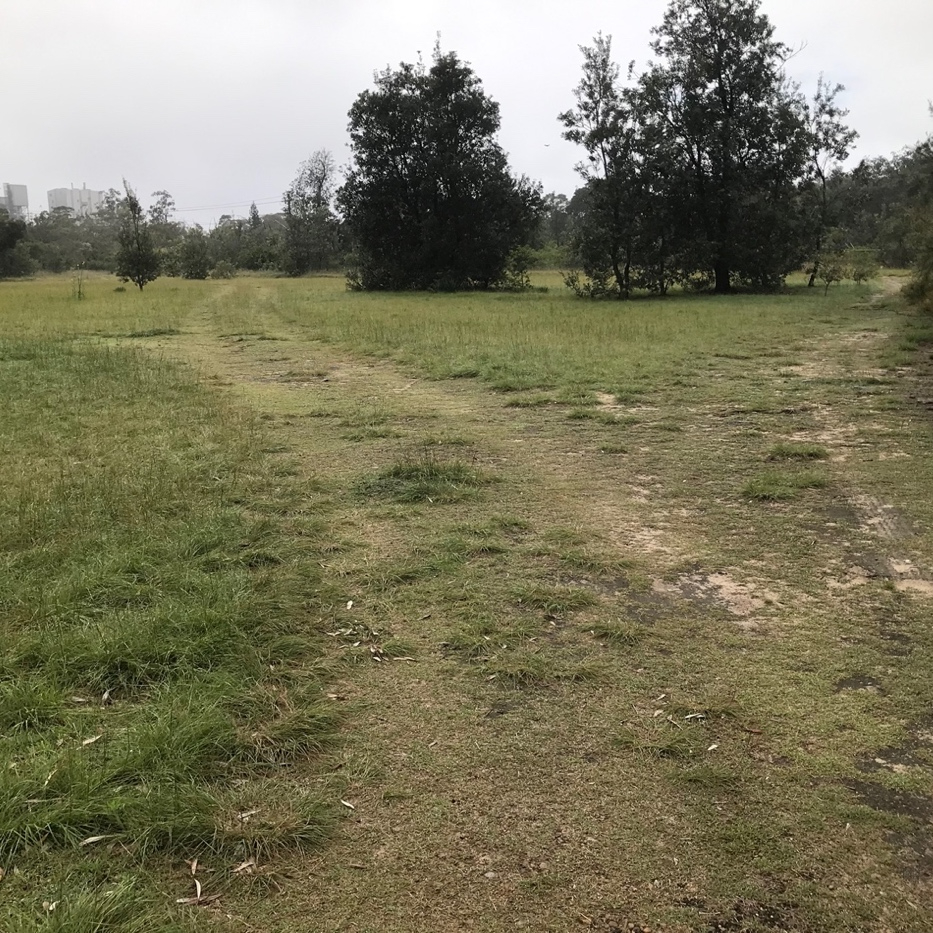
Today the land at the former picninc ground is overgrown and forgotten.
The first organised group excursions to the Tomago picnic ground began in the 1860’s.
Over the period of 1880’s to the 1930’s, Tomago became the most popular venue for such social events. On some days, thousands of people would picnic there as several different groups could hold events on any one day.
The site comprised over twenty acres of flat ground and was privately owned by Mr Henry Gordon for most of the time it was used as a picnic ground. In the latter years, a wooden pavilion was built which could be used for dancing or catering purposes. There was a well at the rear for drinking water.
Other places for daily picnic excursions included Wickham, Raymond Terrace, Morpeth, Toronto, and Fern Bay, but none appeared to be as popular as Tomago.
The trip from Newcastle to Tomago took about one and a half hours. Steamboats would usually leave Newcastle before 10 a.m and return before 7 p.m.
Bands would often perform on the steamers and then play during the day to allow people to dance in the pavilion. The picnics were well managed events.
The Tomago Picnic PleasureGround, often referred to as the Tomago Pleasure Ground, became known as the ‘great rendezvous for picnic parties’, The story of the picnic ground is one of the social histories of its time.
The following newspaper reports, sourced from the National Library of Australia’s Trove Collection, provide valuable insights into this history.
Location of Tomago Picnic Ground
The Sydney Morning Herald of 18 February 1950 (page 7) carried the following article by Angus MacSween reminiscing on the former picnic ground and its location:
‘Tomago, with its aboriginal placename, meaning “sweet water,” is a small farming district on the banks of the Hunter River 12 miles upstream from Newcastle. Access by land is made by turning to the right after ascending the hill leading from the Hexham punt. A mile or so along the tree lined dirt road is found an open area of a few acres fringed by the river. A solid wharf on the waterfront is a reminder of the days when Tomago was a picnic spot where lads and lassies from Newcastle enjoyed Sunday river outings and moonlight excursions in the same manner as their Sydney contemporaries, the “blokes,” took their “donahs” for a thrilling afternoon and evening to Chowder Bay or to Clontarf.
Further down the road is the expansive Windeyer property and homestead. One notices a small chapel built by the late Sir William Windemer, father of Mr Richard Windeyer. In former years all residents of the district irrespective of religion, would attend services held in the chapel. Indeed, as a small boy I attended a service there conducted by ‘Dick” Windeyer himself.’
Most of the former picnic ground remains vacant land. Part of it is utilised by the Hunter Water Corporation to obtain bore water.
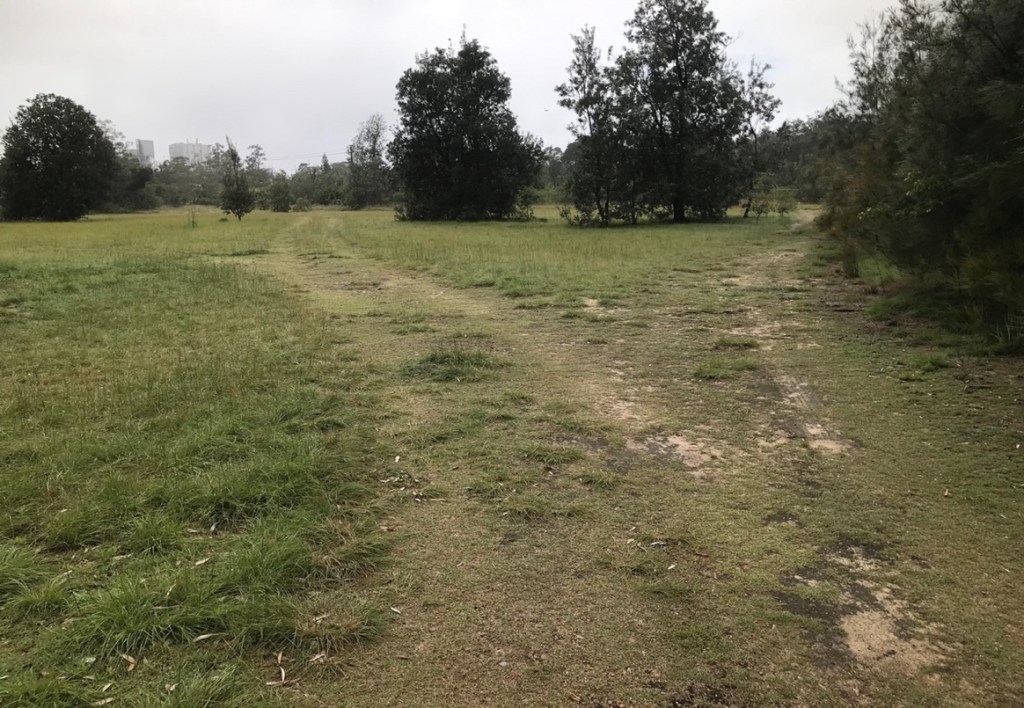
A section of the former Tomago Picnic Ground [Author Photo 2021]
Newcastle United Volunteer Band Picnic – 1862
The Newcastle Chronicle and Hunter River District News of 8 November 1862, page 1 carried the first advertisement for a picnic to be held at Tomago.
‘Newcastle United Volunteer Band Excursion. With the view of carrying out, at Newcastle, the Government Proclamation, “that the 10th November, instant, be observed as a General Holiday throughout the Colony, in honour of the Prince of Wales attaining his majority,” the members of the Newcastle United Volunteer Band Committee will provide for the public recreation, two steamers, to convey the citizens, visitors, and others, to a PICNIC RETREAT, to Tomago, on the Hunter River, accompanied by the Band of the Volunteers. Tickets for adults 2s. 6d. each; children under twelve, 1s. 6d. each. Steamers will leave the Wharf precisely at 10 o’clock. ALEXR. FLOOD, Hon. Sec.’ PICNICS.’
Most picnics were organised by church and school groups. In later years trade unions, industry groups and commercial firms were also organisers. Sometimes public picnics were organised to celebrate an important event.
The group organisers would often engage a band to lead a procession through Newcastle, from their muster point to the wharf where participants would board their steamer. The band would then often travel to Tomago.
Christ Church Sunday School Picnic – 1865
Organised picnics at Tomago were considered significant local events, and their successes were often reported in local newspapers.
The Sydney Morning Herald, of 2 April 1864, page 5, carried the first report of an organised picnic at Tomago:
‘Picnic of the Sunday School Children Belonging to Christ Church.—The long talked of event took place yesterday; the tug Tamar was kindly placed at the disposal of the committee, by Mr. Brown, and notwithstanding the unsettled state of the weather, it was determined to have an excursion by water to the neighbourhood of Tomago. Great preparations had been made for the event, which was to have taken place on Wednesday, but the weather continued so bad that the committee was compelled to postpone the affair until Thursday; and it is questionable if a longer delay would not have taken place, had not so many good things been already provided, and which would not keep for any length of time. It was therefore wisely resolved, should the weather not prove sufficiently favourable, to give the school children their treat at the Co-operative Store, and postpone the trip to some future period.
Fortunately, the morning opened fine, and there was every prospect of a delightful day. Shortly after nine the children formed in procession, carrying flags of various colours and designs, and headed by an efficient band, and accompanied by their teachers, marched from the school to the steamer. About one hundred people, principally ladies, went on board, and, shortly after, the steamer moved off; the flags of the children fluttering in the breeze gave a very pretty effect to the scene. The party landed at Tomago, where a very pleasant day was spent, notwithstanding one or two showers. The children appeared greatly to enjoy the treat, and the same may be said of the elder members. The steamer returned shortly after six in the evening, everyone seeming highly gratified and pleased with their trip, which, in every sense of the word, was very successful.’
Wesleyan Church School Picnic – 1881
Holding a large picnic at a distant location required much organisation. Steamers and bands had to be organised, together with catering arrangements and the scheduling of recreational events. Most organisations utilised the services of a committee to undertake the necessary planning.
On most occasions all aspects of the day’s pleasure activities went off without a hitch, but not always.
The Newcastle Morning Herald and Miners’ Advocate of 26 May 1881, page 3, carried the following letter from an unhappy excursionist who had been left behind at Tomago without any transportation.
‘Correspondence Wesleyan Church School Picnic. (To the Editor of the Herald and Advocate) Sir,—I should be glad if you would allow me, through the columns of your valuable paper, to inquire who are the persons or person responsible for the disgraceful want of management displayed on the occasion of the above picnic, by which a number of persons of both sexes and various ages, from infants to mature men and women, were left—some to the mercy of strangers at Hexham, others to the inclemency of the weather and their own slender resources in the bush at Tomago on the night of the 24th inst. Trusting someone officially connected with the affair will reply, I have the honour to remain, One Who Was Left Behind.’
Other newspaper articles reported that the abandoned excursionists walked from Tomago to Hexham and later that night most were able to board a private steamer and return to Newcastle. However, there was not room for all, and some had to spent the night at Hexham and did not get back the Newcastle until the following day.
Activities at a Tomago Picnic
Most picnics followed a familiar pattern. A band would perform aboard the steamer on the journey to and from Tomago. Upon arrival at the picnic ground refreshments would be given out. This would be followed by an afternoon of sporting and novelty events. These comprised tugs o’ war, three-legged races, sack races, quoits, rounders, and hitting nails into wood. The athletic event that often caused the most amusement was an ‘Old Buffers Race’, for those aged over 50 years.
Sometimes a ‘greasy pig race’ would be staged. Approximately 100 people would form a circle around a pig with a greasy tail. The winner of the event was the person who could catch the pig. They could then keep it if they wished.
Those who did not wish to participate in organised events often undertook walks through the surrounding bush and possibly picked wildflowers. Dancing in the pavilion was often provided.
The Newcastle Morning Herald and Miners’ Advocate of 28 December 1897, page 7, carried the following report on a ‘greasy pig race.’
‘A picnic, which proved very enjoyable was that organised in connection with the Brown-street Primitive Methodist Sunday-school in conjunction with Messrs. Hall and Simon’s entertainment assistants. The steamer Ethel was engaged to convey the excursionists to Tomago, where they arrived after a pleasant run up the river. In common with other picnic parties the day was spent in accordance with the orthodox customs, the children spending a particularly happy time racing for prizes, &c., and taking part in various games and sports. The sports included a race for a pig with a greasy tail, the event provoking much merriment. Every child received a prize before leaving, and the party returned to town after a splendid day’s outing.
Picnic Dangers
When reporting on the success of a picnic in a newspaper, it was generally stated that all participants arrived back at Newcastle safely. This was the outcome for most of the picnics, however danger was always present. Injuries and deaths did occur, as the following reports demonstrate.
1. Heifer Attack
The Newcastle Morning Herald and Miners’ Advocate of 27 January 1885, page 2, reported:
‘The Y. M. C. Association had a largely attended picnic to Tomago aboard the steamer Prince Alfred. She left the wharf at 10.30 a.m. with a large crowd aboard. An organ had been provided, and during the trip up the river the choir sang several well-selected songs and hymns. On arrival, there was no means of landing, and great difficulty was experienced in getting the ladies and children ashore. In addition to this, the gentle aroma which arose from the decaying remains of a horse lying at high water mark lent additional enchantment to the scene. Tomago is beyond any doubt an excellent locale for picnicing, but it would not be amiss for those who let it for such purposes to erect a pier at which landing could be effected at any state of the tide. Cricketing, etc., was indulged in, and a very pleasant day spent; although rain at times fell. One feature of the outing was an exciting escape which befel Messrs. H. J. Hurman and Jordan. While strolling quietly through the grounds, in company with Mr. Truscott, Mr. Hurman was suddenly attacked in the rear by a savage heifer, which charged him, and drove its sharp horn completely through all his clothing. He had the presence of mind to turn round suddenly, thus saving his life, as the horn glanced away from his spine, and merely tore the skin for six or eight inches across, causing blood to flow. Later on, the same brute attacked Mr. Jordan, and wounded him in the thigh. The same animal had previously attacked a Tomago resident, Mr. Maroney, sen., and was stated by its owner to be a savage brute—one more fitted for the shambles than for a picnic party.’
2. Good Samaritan Drowned
The Australian Star of 25 November 1889, page 4, reported
‘A case of drowning was reported to the police from Tomago last night. The steamer Etna proceeded to that place with a picnic party yesterday, and on returning, a hat belonging to one of the excursionists fell into the water, and a man named James Pleasant, who was fishing in a flat-bottomed punt close by recovered the hat and handed it to the owner. Shortly after the steamer left …, it was noticed that the punt had capsized, throwing its occupant into the water. The engineer of the steamer told him to cling to the boat, and he did so; but just as the steamer was approaching … let go and swam for the shore. He had almost effected a landing when the people on board the steamer saw him disappear, and he never rose again. A man named Morris jumped in to save …, but did not succeed.’
3. Snakes Killed
The Newcastle Morning Herald and Miners’ Advocate of 2 January 1890, page 3, reported on the killing of several snakes at Tomago.
‘Several Snakes Killed. The children attending the Newcastle Primitive Methodist Sunday School were treated with an excursion to Tomago yesterday. The steamer Acme took a full passenger list. Leaving the wharf about 10.30 a.m., she called at Stockton, Carrington and the New Township on the way to pick up and let out passengers. On arrival at the scene of the picnic, the excursionists were joined by the Stockton and Wickham Sunday.school children, and all passed a very pleasant day together, the Carrington Band being in attendance. A number of snakes were seen during the day, several of them being killed. A brown snake measuring 6ft was killed by Mr. Marshall. The pleasure-seekers returned to town about 6 p.m. after a thoroughly enjoyable day’s outing.’
The Scone Advocate of 10 November 1911, page 2, similarly reported on the snake problem.
‘A man who was at a picnic at Tomago, near Newcastle, on Monday, had a startling experience. He had taken off his coat and had laid it down for a time. When he went to pick it up, a small black snake dropped from the folds. It was quickly killed.’
4. Collapse of Tomago Wharf
The Evening News of 27 December 1890, page 5, reported on the collapse of the rickety old wharf at the picnic ground.
‘The only mishap at Newcastle on Boxing Day occurred at Tomago, and but for the fact of it being low water at the time the accident would have had a serious termination. Shortly after 4 o’clock in the afternoon, when the picnic party from Tighes Hill Primitive Methodist Sunday School were preparing to return home a large crowd, numbering about 150 persons, rushed on to Tylers Jetty to board the steamer, when the woodwork, which appeared very ricketty, collapsed, and between 20 and 30 people, chiefly woman and children, were thrown into the river. Several men at once sprang into the shallow water, and speedily rescued the unfortunate ones. A number of them escaped with a wetting; but four of the ladies with children and a young lady, suffered severely from the shock, and two of them had to be conveyed home in a cart. Several babies were floating in the water, and were rescued apparently unharmed. One of the committee, during the panic, let a bag containing a large proportion of the proceeds fall into the water and the bag was lost.’
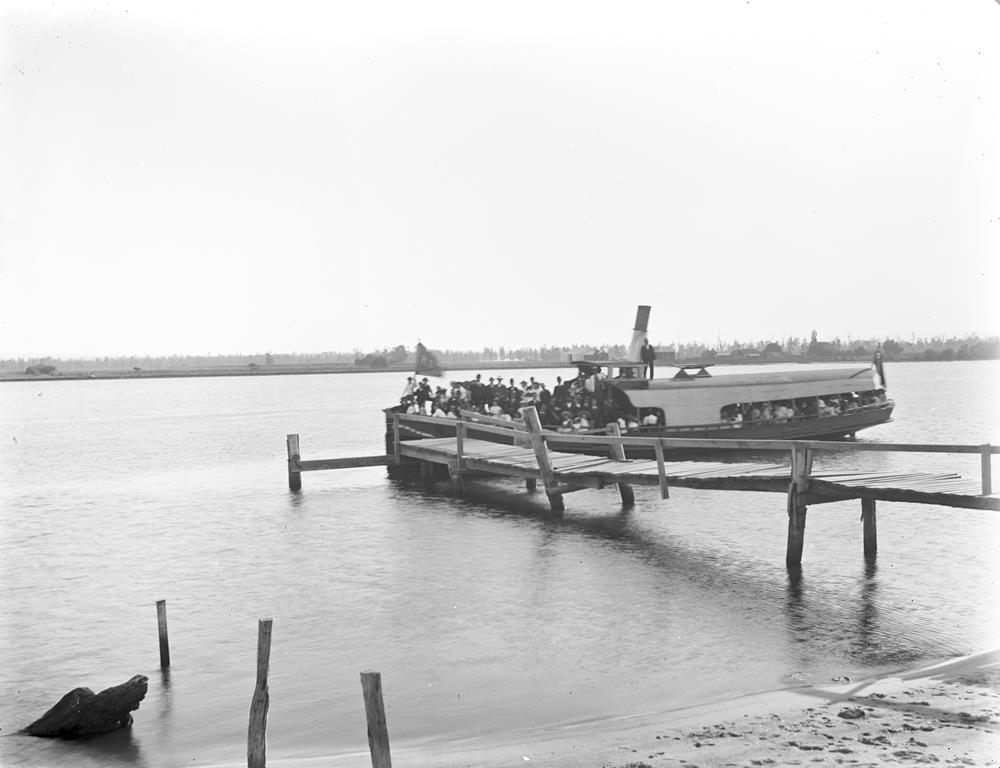
Steamer ‘Rose’ bringing picknickers to Tomago, showing the rickety state of the wharf. [University of Newcastle Library]
5. Boy drowned at Tomago wharf
The Newcastle Sun of 12 April 1926, page 5, reported on the drowning of a 17-year-old boy.
‘A verdict of accidental death was given by the coroner, Mr. Hibble, at Newcastle Court House today at an inquest into the death of …, 17, of Merewether, who was drowned off the ferry steamer Wattle, on Easter Monday, while the boat was tied up to the wharf at Tomago. Dr. Leslie said that he examined the body and in his opinion death was due to drowning. There were abrasions on his left upper arm and the left side of his head, he said. Miss Edna Frith said that she was on the boat at the time. The occasion was a Salvation Army picnic. …, she said, was sliding up and down a flag pole at the stern of the vessel. She said, “You had better be careful or you will fall over.” He replied, “I think I can take care of myself.” Just after that, Miss Frith said … caught his foot, and fell into the water. He bumped his head while falling. Most of the people were ashore at the time. Two men dived for the body, but as the water was muddy, it could not be found until fishermen dragged for it.’
6. Boy impaled on tree.
The last report published on a picnic at Tomago was in the Daily Telegraph of 23 May 1938, page 4:
‘Falling from the upper part of a tree, a boy aged 11, was impaled on a branch. He was with a picnic party at Tomago. First aid was given by Newcastle Ambulance, which rushed the boy to Wallsend Hospital. His condition tonight was reported satisfactory.’
Large Picnics at Tomago
Most picnic groups numbered under 200 participants. However, a number of picnics organised by the brewing and hotel sectors, and for seamen in port at Newcastle, had numbers in excess of 1000.
A report on one of these large picnics for seamen currently in port at Newcastle was published in the Newcastle Morning Herald and Miners’ Advocate of 11 November 1890, page 5:
‘The seamen’s picnic at Tomago yesterday was a great success, and it may be classed as the largest of its kind ever held in these colonies. Fully 1000 Jack Tars availed themselves of the opportunity, and in no other port south of the line could so many sailors have been got together. The committee who inaugurated the affair made only one mistake, and that was in altogether failing to provide means of transit to the ground for the thousands who wished to attend the picnic, and assist, as well as observe, Jack enjoying his holiday. They had made arrangements to transport about 2000 people up the river, and had engaged four steamers, but from an early hour it was apparent that many hundreds would be disappointed, in spite of the fact that seven other tug and ferry boats engaged by the other picnic parties were crowded with those who meant to attend the sailor’s outing.
As there were so many public picnics at Tomago yesterday, sailors, Methodists, Salvationists, and Sunday-school scholars being all mixed together, it is impossible to tell how many attended the great event, but there could not have been less than 4000 people on the scene. The idea of holding a monster picnic for the benefit of the seamen in port, first originated some two weeks ago, and since that time, several of the captains, assisted by many officers, worked with a will. It may be news to many to hear that there is a Seamen’s Mission Society in Newcastle, the members of which have a fine boat, and an exceedingly energetic pastor, in the person of the Rev. W. F. James, of Stockton. To this gentleman must be given the credit of having first started the project, his intention being to hold a picnic, and invite the mid-shipmen. Several captains in port, however, on being interviewed on the subject, suggested a monster picnic for all the seamen, and this idea was acted upon.
A strong committee was formed, and they were successful in persuading the shipping firms to give trophies for foot-racing and other athletic sports. Messrs. J. and A. Brown and Mr. Dalton kindly gave the use of the steamers; and it was also agreed that any surplus cash which may be in hand after the picnic, was to be handed to the Seamen’s Mission. The affair naturally created a vast amount of excitement among the sailors in port, and it is safe to say that all those who could leave their ships attended. At 6 o’clock in the morning the launch of the C. O. Whitmore proceeded to Tomago, with the members of the committee on board, and two hours later another steamer, with Mr. Webber, the caterer, and several tons of the best provisions, followed.
The seamen, who, of course, were provided with tickets, were conveyed in the steamers Prince Alfred and Young Bungaree, and the latter also contained many visitors. Before 10 o’clock the Market Wharf was crowded with people anxious to get up the river, but the splendid boat Goolwa, engaged for the Wesleyan picnic, took away over 700. Mr. Dalton’s powerful tug Emu followed with another crowd. The people on the wharf, however, did not seem to diminish, and the Energy, given for the seamen’s picnic, was almost rushed. Four other steamers, with different picnic parties, also left for Tomago, and at noon there was still a large crowd waiting on the wharf for the return of the Prince Alfred, which, alas, never put in an appearance, having broken down up the river. Messrs. J. and A. Brown, however, placed the tug Gamecock at the disposal of the committee, and 400 people left in her. The Emu and Rose returned from Tomago soon after, and then started again with the remainder of the people on board. Many, however, had gone home, or elsewhere, tired of waiting for the boats; but in all no fewer than 18 steamer loads of people went to Tomago during the day, besides numerous small craft and two private launches.
The day was a little too warm to be pleasant, but there was plenty of shade at Tomago, and it was taken full advantage of. On the ground large marquees had been erected, and the sailors had as much refreshment in the shape of tea and cooling drinks as they could possibly stow away. At 1 o’clock they sat down to an excellent repast of all kinds of meat, fowl, and fruit, and they did not waste time in ceremony. To say that they were well looked after is not sufficient, for, despite their numbers and the way they disposed of the good things provided by Mr. Webber, the whole thing went off smoothly and well. In the afternoon they got tea and cake, no strong drink being allowed on the ground, and they thoroughly enjoyed themselves.
Some got the loan of horses and treated the crowds to the sight of riding as it should be done, while others mingled with the Salvation Army, danced with the young ladies present, or rollicked round, watching everything and nothing in particular. Some fifty of them obtained a football, and, in spite of the sweltering heat, they played furiously; while the sports were, of course, a centre of attraction. Among the contestants were men of all colours, sizes, and nationalities — from the fair Norwegian to the swarthy Malay — but not one disorderly scene was noticed during the day. The enterprising section of men known as “spielers ” were in large attendance, the games of under and over, popgun sweeps, and shooting, being carried on with vigour. The sports were well patronised, the events, which were open to the seamen only, being well contested. Footraces for all distances, the first prize as a rule being some useful article, were got up, the best of all being that in which some seven captains took part. It was a scratch race, once round the ring, for a silver inkstand, and, although all started well, everyone fell down before it was over. Captain Way, of the barque Orthes, secured the prize; Captain Jones, of the Loch Doon, and Captain Glass, of the Aline, being second and third.
An obstacle race created a lot of fun, while a boxing tournament, for apprentices, was also held. During the afternoon the Rev. W. F. James delivered a few words to the crowd, explaining the objects of the picnic, and the manner in which the captains and officers had worked to make it a success. He trusted that it would be the first of a long series of seamen’s picnics; and at the conclusion of his remarks, he was loudly cheered. Mr. C. H. Hannell, as the president of the Seamen’s Mission, also spoke, and on his recommendation, cheers were given for the Queen, the Royal Family, the committee, and the secretary. The people commenced to make the return journey soon after four o’clock, but it was nearly eight before the last of the people were landed on the Market wharf. A word of praise is due to the treasurer, Captain Parkhill, and the joint secretaries, Captains Pennicuik, Jones, Davies, Stealey, and McGee, for their efforts to make the picnic a success. As the sports and ground committee, Messrs. Taggart, Spence, Crean, Templeton, and Lang, the chief officers of the ships Thalatta, Scottish Lochs, City of Quebec, Helensburgh, and Rokeby Hall, were untiring in performing their duties, which were no sinecure. The Stockton Brass Band was in attendance and enlivened the proceedings by numerous selections during the day.’
Stockton Brass Band at Tomago [University of Newcastle Library]
Photos of Picnic Groups at Tomago
The following photos of picnic groups at Tomago are all from the University of Newcastle Library’s Living Histories Collection.
They are especially interesting as they show sections of the picnic grounds and how both men and women wore their best clothes to the picnics.
The following newspaper reports have been matched with a corresponding photo from the Living histories Collection.
1. Messrs. James Clark and Sons company picnic (Australian Star, 30 November 1892, page 6).
‘On Saturday afternoon Messrs. James Clark and Sons, ship chandlers, of Scott-street, entertained a number of their friends and business clients by a trip up the Hunter with the usual hospitalities on board. The steamer Tomago, under the command of Captain Campbell, was chartered for the occasion, and, with an excellent band, some good songs, good liquor, and speeches, and a run ashore at Tomago, a very pleasant afternoon was spent. The toast of the firm was proposed in eulogistic terms by Alderman J. O’Mara, Mayor of Stockton, and was enthusiastically received, Messrs. Jas. Clark and Jas. Clark, jun., responding in graceful and suitable terms to the compliment. The joyousness of the outing was somewhat marred by the presence on the scene at Tomago of the camera fiend, but the company submitted themselves with commendable resignation to the torture of being taken.’
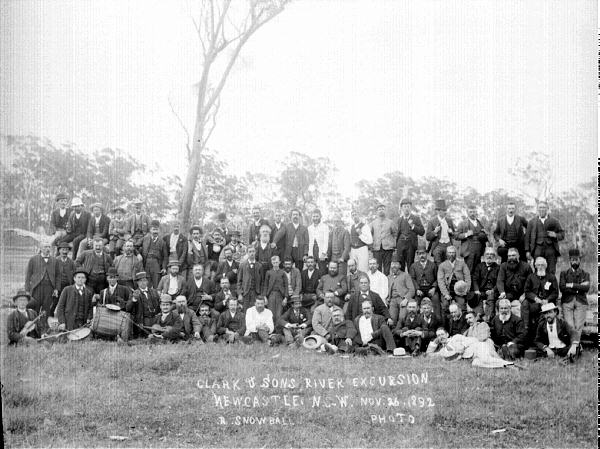
Clark and Sons Picnic Excursionists at Tomago
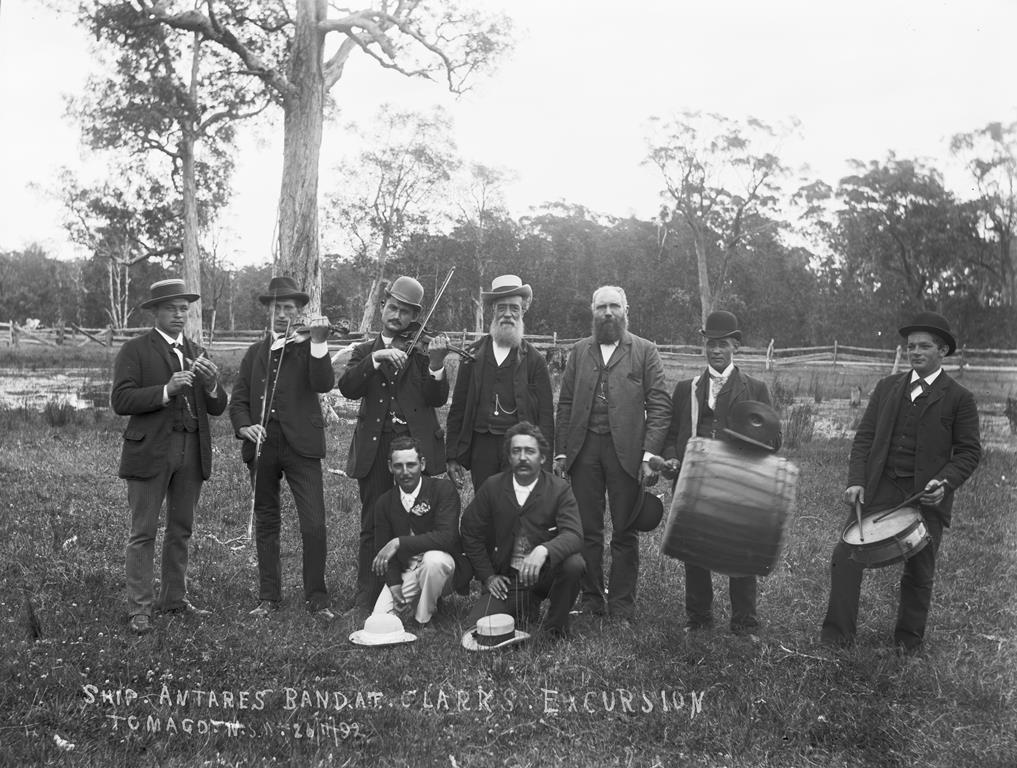
The Antares Band who performed at the Clark and Sons Picnic
2. Journeyman Baker’s Picnic (Newcastle Morning Herald and Miners’ Advocate, 20 March 1893, page 4).
‘One Saturday the journeymen bakers held their annual picnic at Tomago. The excursionists, to the number of about 100, were conveyed to Tomago by the steamer Rose. Although the attendance was not as large as was anticipated, the outing proved a success. Dancing was indulged in, to the strains of the Stockton Band, and was kept up by the young people all day. The children were well looked after. Considerable interest was centered in the racing. … On the return trip down the river the prizes were presented to the successful competitors by Mr. Brazill, the president of the society. The steamer reached the Newcastle wharf about 6.30 p.m. after a smart run.’
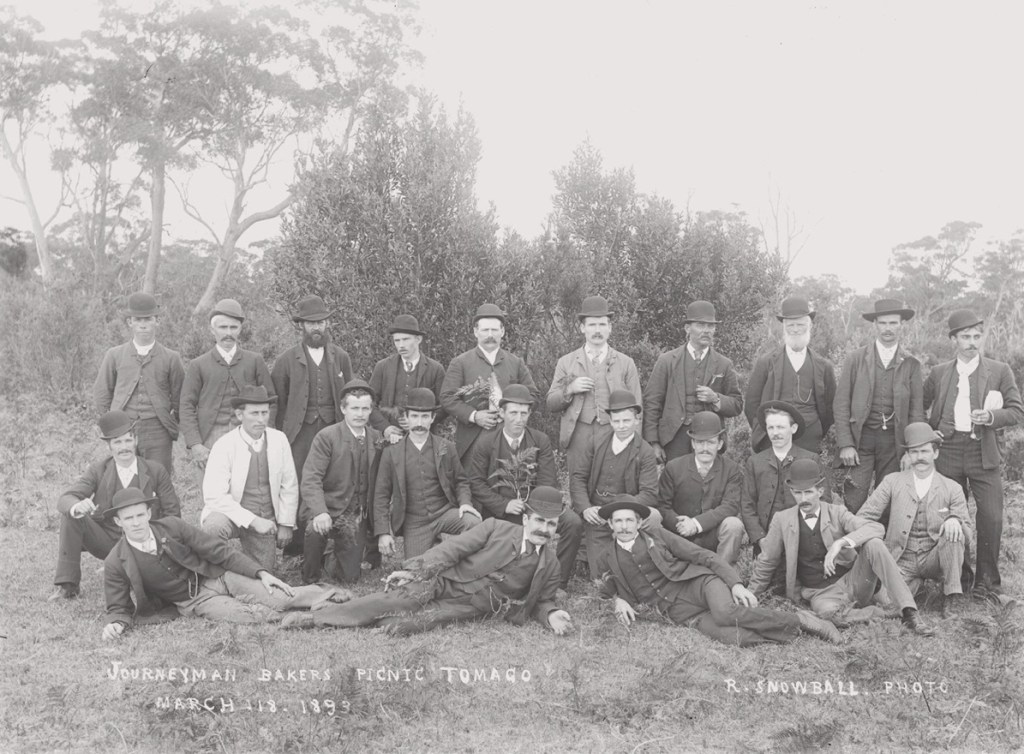
Journeyman Bakers Picnic at Tomago – 18 March 1893
3. The Rose of Hamilton Lodge (Evening News, 9 October 1897, page 5).
‘The Rose of Hamilton Lodge, G.U.O.O.F., is holding a picnic at Tomago to-day, which is largely attended. Two heavily laden, passenger steamers left the wharf soon alter 10 o’clock. A most enjoyable run was had up the Hunter River, and on arrival at the pleasant riverside resort an excellent programme of sports and games was provided. The Adamstown Band provided music in the pavilion, where dancing was held’.
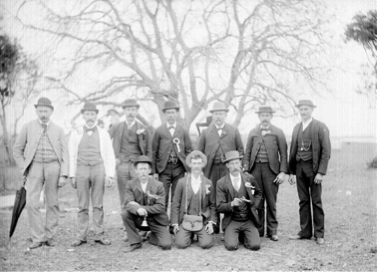
Committee of Rose of Hamilton Lodge, at Tomago – 9 October 1897
4. Bread-carters (Newcastle Morning Herald and Miners’ Advocate, 24 October, 1896, page 1).
‘Bread-Carters’ Picnic will be held at Tomago on 8-Hour Day, October 29th. Steamers Ethel and Tomago engaged. Dancing in the spacious pavilion. Barkel’s Model Band engaged. Look out for Alloomera’ Handicap. Entries received on the ground. C. Coombe, H. Sec.’
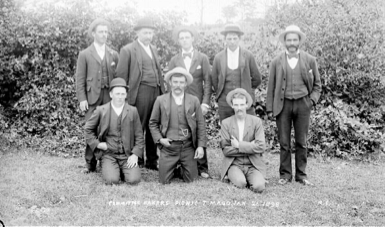
Bread Carters at the Tomago Picnic – 29 October 1896
5. Wesleyan Church Sunday-school (Newcastle Morning Herald and Miners’ Advocate, 12 April 1898, page 6).
‘The picnic to Tomago in connection with the city Wesleyan Church Sunday-school proved a successful affair. The steamer Planet was specially chartered for the occasion and left the Market Wharf at 9.30 a.m. crowded with passengers for Tomago. On arrival at the picnic grounds there was a general disembarkation, the children under the direction of teachers and friends engaging in various sports and pastimes peculiar to picnics. The physical wants of the children were well provided for by the parents and teachers, and towards evening a start was made for home, the party landing safely at the wharf shortly before dark after a most enjoyable outing.’
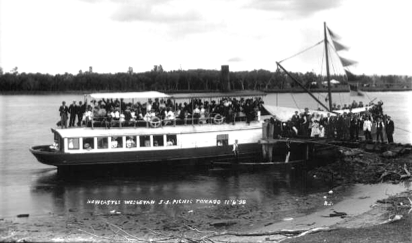
Newcastle Wesleyan Sunday School picnic at Tomago – 11 April 1898
6. Licensed Victuallers’ (Newcastle Morning Herald and Miners’ Advocate, 18 February 1904, page 6).
‘The members of the local branch of the United Licensed Victuallers Association held their annual picnic at Tomago yesterday. The weather was fine, and the members, with their wives and families, enjoyed the outing. The steamer Rose left the Market Wharf shortly after 10 o’clock, and the picnic ground was reached at an early hour. The steamer ran a second trip at 2 o’clock, and an hour later everything was in full swing. Luncheon was provided by Mr. M. Torpey, of Stockton. In the large pavilion, Mr. C. Hawken, the president of the branch, occupied the chair, and included in the visitors present were Mr. W. J. Monfries, secretary of the parent branch, and Mr. T. Taylor, a member of the committee of that body.
Several toasts were honoured, that of the “U.L.V.A,” being proposed by Mr. Sample, ex-president of the Newcastle branch, who, stated that the association was doing good work in the interests of the trade. Personally, he had always taken a keen interest in the affairs of the local branch and would continue to do so. Mr. Monfries acknowledged the toast, and in doing so expressed the pleasure he felt at again being present at the local branch’s annual outing but announced that possibly he would not be with them again in an official capacity. He proceeded to deal with a number of questions affecting the trade. Efforts, he said, were being made to dispense with the free counter luncheon, and, he expected that there would shortly be formed in Sydney a Liquor Traders’ Political Defence League, which would embrace all hotel and brewery employees. A move was also being made to bring about the graduation of license fees in favour of the country. He appealed to the women to exercise their votes at all elections and pointed out that it they had clubs the men would be able to spend the night there, whereas with the hotels they had to leave at 11 o’clock.
The toast of “The Visitors” was proposed by Mr. C. Cain, and acknowledged by Lieutentant-Colonel Kirkaldy (Wood Bros. and Co.), W. J. Arkins (J. T. and J. Toohey), A. Heinz (Resch’s Brewery), and Messrs. A. F. Moore and A. C. Manning. Before the proceedings terminated, Mr. Dr. McAuliffe, on behalf of the members of the local branch, presented the president Mr. C. Hawken, with a gold albert and sovereign purse, prior to his departure for America, on Sunday next. Mr. McAuliffe pointed out that Mr. Hawken had worked hard in the interests of the association, and the members felt it their duty to make him a substantial presentation. Mr. Hawken was a good, all-round citizen, and had proved himself a tower of strength to the local, swimming clubs. In accepting the gifts, Mr. Hawken thanked the members of the local branch. He was proceeding to America for the purpose of seeing his aged mother, and no doubt it would afford her infinite pleasure when she saw the presentation, to think that he was so well thought of in the city in which he had spent so many years. Personally, he would always remember the kindly feelings which prompted them to make him such a handsome presentation.
The luncheon over, various games were indulged in. Messrs. McAuliffe and Arkins captained the respective teams in a cricket match. A waltzing contest attracted much attention, and a footrace for ladies was keenly contested. A temporary bar was placed outside the pavilion, and the three attendants were kept busy. Mr. S. Fisher was in charge of the arrangements, and the Adamstown Band supplied the music. The steamer roached the wharf on the return Journey; at 8.20 p.m.’
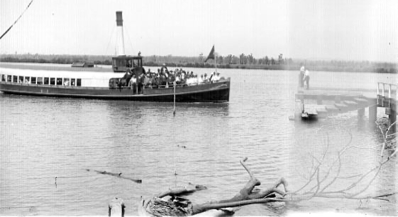
Licensed Victuallers’ Picnic excursionists arriving at the new wharf at Tomago on the steamer ‘Rose’
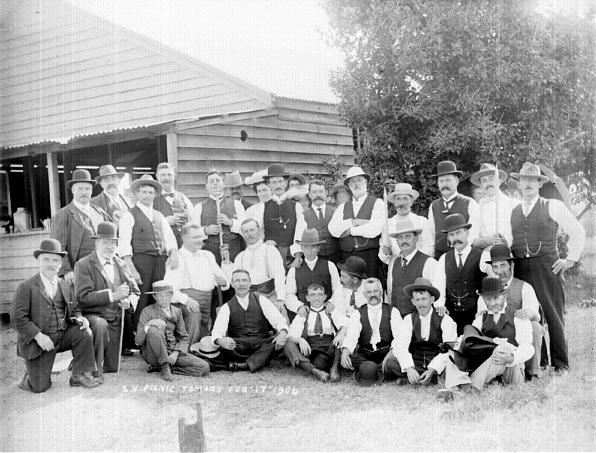
Licensed Victuallers picnic at Tomago – 17 February 1904. The temporary bar is visible at the adjacent pavilion.
7. Brewery Employees‘ (Newcastle Morning Herald and Miners’ Advocate, 28 September 1905, page 6)
‘The picnic promoted by the Newcastle branch of the Brewery Employees’ Union, held at Tyler’s grounds, Tomago, yesterday, was attended by between 500 and 600 persons, including employees and visitors from Maitland, and was an enjoyable and successful function. …. The steamers Guthrie and Rose were engaged for the occasion and made three trips. The pavilion, on the ground, was utilised for dancing, and was well patronised, the music being provided by the City Band. At half-past one o’clock a substantial luncheon, prepared by Mr. J. Torpey, of Stockton, was partaken of by the committee, and visitors. The chair was occupied by Mr. John Robson, president of the union. The chairman proposed the toast of “The King.” Mr. F. Owen then gave the toast of “The Visitors,” expressing pleasure at seeing so many representatives of the brewing firms present, and tendering them a hearty welcome. Mr. Nyman (Wood Bros.) responded, stating that such gatherings as the present tended to cement a good feeling between employers and employed. Mr. W. Davies then proposed “The day we celebrate,” pointing out that the employers had readily fallen in with the members’ request to grant them a holiday for their picnic, and had also promised to assist them in making it a success.
Mr. A. F. Moore, president of the Aerated Water and Cordial Manufacturers’ Association, in acknowledging the toast, remarked that the employers were very pleased to work in harmony with the men, and would at all times grant them the holiday for their outing. The picnic had brought them together, and would tend to cement the cordial relations prevailing among them, and help to remove any petty jealousies that might exist. He hoped that the success which had attended their first picnic would be an incentive to them to make it an annual affair. ….. In proposing the toast of “The Donors,” the chairman thanked those who had presented trophies and other articles for the benefit of the picnic, and the great assistance they had rendered. Mr. F. E. Moore (secretary Aerated Water and Cordial Manufacturers’ Association) acknowledged the toast, assuring the employees that it was a pleasure to assist them. The toasts of “The Chairman” and “The Press” having been honoured, the company separated.
The Newcastle branch of the Brewery Employees’ Union has been in existence for about two years, and has a membership of 144, including those in Maitland. A programme of athletic sports was well carried out under the direction of Mr. J. Buchanan (secretary) and a large committee.’
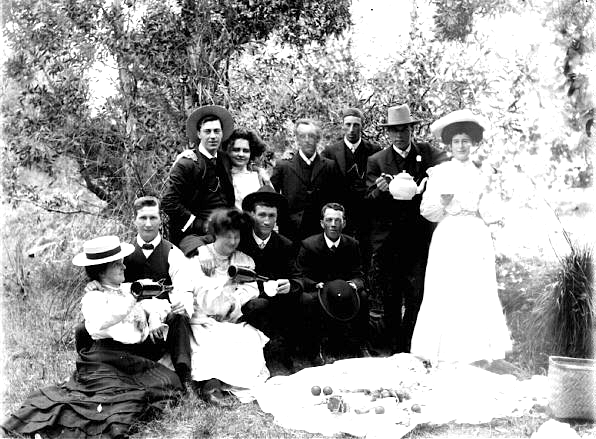
Brewery picnic at Tomago – 27 September 1905. The ladies appear to be busy pouring the ale.
Celebrations at Tomago for the Republic of China – 1912
The Republic of China was formally established on 1 January 1912 following the Xin Hai Revolution, which began with the Wuchang uprising on 10 October 1911. This resulted in the overthrow of the Qing dynasty ending over two thousand years of imperial rule in China. On 8 April 1912, this event was celebrated by the Newcastle Chinese community and several civic and church leaders at the Tomago Picnic Ground.
The Newcastle Morning Herald and Miners’ Advocate, of 9 April 1912, page 5, reported on the celebrations at Tomago to mark the birth of the Chinese Republic
‘The birth of the Chinese Republic was celebrated by Newcastle district Chinese yesterday by a picnic at Tomago. At no stage were the proceedings marked by any display of enthusiasm as it is known to Europeans. In fact, the quiet orderliness of those participating in the celebrations would have suggested that some sad event was being enacted. First there was a procession of about a hundred Chinese, who marched from Steele street to the Market Wharf, and at the head of which the Stockton Band played. Following the band there was carried aloft by patriotic sons of the latest Republic a banner which bore the legend that the birth of the Chinese Re-public was being celebrated, and in conspicuous parts were held aloft the five-coloured flag of the new Republic and Australia’s flag. The processionists walked, not in military manner, but in that style which is peculiarly Chinese. On arrival at the Market Wharf the steamer Guthtrey was boarded, and as she left on her trip to Tomago with about three hundred persons, many of whom were European, numerous crackers were fired as signals of pleasure.
As the steamer passed the Italian ship Buenos Ayres, the latter dipped her flag in salute to the red, blue, yellow, white and black of China. A gramophone on board gave off Chinese songs and music, but never a muscle did the sons of the Republic move. The band played, and fireworks were let off, as the steamer proceeded up the river, but even that failed to arouse any enthusiasm. The Guthrey berthed at Tomago shortly after eleven o’clock, and about the first articles ashore were the provisions, of which there was ample for a small township, and whatever was lacked in enthusiasm was made up in generosity. When all had left the steamer the British ensign and the Chinese flag were hoisted on a tree, and further down the paddock Australia’s and China’s flags were flying side by side. A huge kite was sent up in the air, and that was the first official act in the day’s programme. The kite was kept flying, and was not hauled down to earth until the picnic was finished.
There was foot running, which found a fair number of devotees, and caused some amusement. Among the visitors were Alderman H. M. Shedden, Mayor of Newcastle, and Alderman Gibson, the Rev. Young Wal (Sydney Chinese Missionary), Messrs. Lum Bew, and Young King, and the Rev. Mona Jones. The committee and visitors had luncheon in the pavilion, while the others had theirs al fresco. …The Rev. Kem Yee, of the Presbyterian Chinese a Mission, presided at the committee luncheon, which was attended by a large number of visitors. After the toast of “The King” had been honoured, the chairman explained the object of the gathering, and said he was glad to see the Mayer of Newcastle, Alderman H. M. Shedden, and the Rev. Mona Jones, president of the Ministers’ Association, present. The event they were celebrating— the birth of the Chinese Republic—was very dear to them. The greatest republic of the world was that of the United States of America, and now China, in the East, had followed the example of America. The reason the Chinese wanted a republic was that for centuries, the country had been kept down, and the people were never given an opportunity to progress. Now, however, China was able to elect a President to rule over four hundred million of her people. He hoped that England would be always friendly with China and that other nations would help, so that the republic would succeed and go ahead. Their China was a young China, and, with the sympathy of other nations would prosper.
They looked to God for guidance, and on that Easter Monday asked Christ, who died for them, and rose again, to guide their country. Now they had a new form of government, he trusted their country would be open to all nations. They looked forward to the development of the great mineral resources of China, and they who gave up the dynasty of the Manchus, looked to the new rule to further the interests of China. Alderman Sheddon, Mayor of Newcastle, in proposing “Success to the Chinese Republic,” said China for too long had been kept in the background. The Chinese readily adapted themselves to new ideas, and many of the leaders had been students in British and other Universities. As Mayor, he deemed it right to be with them that day, because the Chinese here were law-abiding people. Now that they had formed a new system of government in their country, China would be in the front rank of the nations. The establishment of the republic would bring about the development of the natural resources in the country and find employment for the Chinese people. The Government would allow the will of the people to prevail, and he was pleased to propose the toast. The Rev. Mona Jones said the new movement in China would succeed, although there were those who predicted that it would be a failure. When the American colonies claimed independence there were many then who predicted a failure. Those predictions had not been realised, and nothing could be a greater success that the United States of America. What happened in America, could be attained in relation to the Chinese republic. He believed that in that country of great population and great resources there were men like Sun Yat Sen, who were stirred with the noble sentiment that men should have their place in the world, and he rejoiced that there were such men. He believed that the hand of God was in the movement. There could not be greater rejoicing for the new movement than in the universal Christian church. Mr. Buck Foon, in proposing “The Visitors,” said he was pleased that China was under a republican Goverment, and trusted that those who had the ruling of the country would never revert to the old system. The Manchu dynasty was ever tyrannical, and from his earliest recollections was opposed to the reform which was necessary to make China equal to any of the nations of the world. The people required reform in every direction, and he hoped they would be freed from a yoke they had borne for centuries. He was grateful to the visitors who attended the picnic, and hoped they would enjoy themselves. The Rev. Young Wai (Sydney Chinese Mission), in responding, said the formation of the republic gave great joy to Christians, and he was glad to assist in celebrating China’s freedom from tyranny. Mr. Dayt Chin, on behalf of the Chinese members of the Presbyterian Church, presented the Rev. Kem Yee with a gold medal, in recognition of his services. After the luncheon addresses in Chinese were delivered to a limited number of listeners, while a little distance away a “magician,” who produced whisky from nothing, held a fairly big crowd. The return journey was entered upon early, and the boat reached Newcastle shortly before six o’clock. Mr. Buck Foon was secretary and performed his many duties satisfactorily.
Proposed Council Recreation Ground at Tomago – 1899
During 1899 various local councils, whose residents frequented the Tomago Picnic Ground, recognised that no such facility existed on public land. All the land in the surrounding areas at Tomago on the Hunter River was in private hands.
The Councils sought approval from the Minister for Lands to resume a portion of Gordan’s land, which covered the popular Tomago Picnic Ground and the have it vested under the joint control of the various Councils. The application soon failed when the Councils were informed by the Minister for Lands that the ground could not be invested under the control of multiple Councils.
The Newcastle Morning Herald and Miners’ Advocate of 3 May 1899, page 5, carried the following story on the preparations leading up to the approach to the Minister for Lands.
‘The conference convened by the Wallsend Council relative to the procuring of a recreational reserve at Tomago, took place in the Wallsend Council Chambers last evening. The following councils were represented:—Adamstown,… Merewether, … Waratah, …Wickham, and Plattsberg.
The Mayor of Wallsend presided, and the majority of the Wallsend aldermen were also present. The Mayor, in opening the meeting, announced that apologies for non-attendance had been received from the Newcastle and Stockton councils, the latter expressing their hearty approval of the movement, and a petition numerously signed by the residents of Wallsend and surrounding district had been received in support of the object of the conference. The Mayor explained the action taken by his council in connection with the matter before the conference and pointed out the necessity for a reserve for recreation purposes being secured at Tomago. As public men it was their duty to do their best in the interest and for the benefit of the whole of the people in the district. No reserve existed on the river, and he considered that the best method to adopt would be to arrange for the deputation that was shortly to interview the Premier on the abattoirs question to meet the Minister for Lands upon this matter during their visit to Sydney.
Alderman Millar (Waratah) was quite in favour of the movement and complimented the Wallsend Council on their action. He thought the others should gladly fall into line and assist. The conference would probably have been a much greater success if it had been held in a more central part of the district. The fact of some of the other councils not being represented should not make them lukewarm in the matter. He thought the only course open left for them to adopt would be to interview the Minister for Lands upon the question. The Mayor of Merewether (Alderman Wilson) said that in order to attend the conference he had postponed the holding of their council meeting. He warmly favoured the idea and described his personal experience in connection with picnics at Tomago, which did not seem to be of a very pleasant character. Alderman Gray expressed himself in thorough accord with the movement if the Government would bear the whole expense. They ought to ascertain the size and the price of the land before approaching the Government. Aldermen Jenner and Windeyer having spoken on similar lines.
The Mayor of Platttaburg (Alderman J. Fletcher) thought the land ought to be in the hands of trustees. The majority of people from this part went to the Hunter River for their picnics and could not allow themselves the freedom they would like because, with the exception of the foreshores, it was all private land. The Government should be asked to resume Gordon’s land. He thought it would not be a bad idea to bring the matter under the notice of the Minister when the deputation goes to see Mr. Reid upon the abattoirs question. The Plasttsburg Council was heartily in sympathy with the movement. Alderman Bowling considered all the obstacles could be overcome without the municipalities paying anything towards the purchase of the land. The Government had a right to cater for the health of the people by providing recreation areas. In the first place the conference ought to see exactly what land would be required. Where there was plenty of pleasure resorts there was less sickness. No resort could be more popular than a site on the Hunter, if the land could be got it ought not to be put under the control of private trustees, but vested in the municipalities as a whole.
The Mayor of Plattsburg here read the petition which had been drawn up, showing the necessity for a recreation reserve, and suggesting the adoption of a site at Tomago. Alderman T. Millar agreed with Alderman Bowling about first ascertaining the area and site required, also in regard to health being a first consideration. Tomago was easily and cheaply reached, and that it was a popular picnicking ground was evidenced by the crowds that went thither on holidays. In the meantime it might be well to leave the matter in the hands of the Wallsend and Plattsburg representatives to make all inquiries as to cost, &c., prior to convening another conference. He moved accordingly.
Alderman Windeyer seconded the motion. Any one of the Gordon estate blocks would be sufficient reason—over 20 acres. Some other representatives suggested that the Government should be asked to grant 50 acres, and have it placed in the control of the combined municipalities. At the suggestion of Alderman Fetcher the motion was accepted by Alderman Millar to read as follow:—That in the opinion of this conference it is desirable that an area for recreation purposes should be procured at Tomago, and that the Mayors of Wallsend and Plattsburg, be deputed to ascertain the price for a suitable area and submit the same to a conference to be convened by the Mayor of Wallsend. The motion was carried unanimously. It was decided, at the instance of Aldermen Bowling and Windeyer, to invite the Mayor and aldermen of the Raymond Terrace, and the member for the district, Mr. R. A. Price, M.P., to attend the next conference. Alderman Wilson moved, ”That the next conference be held at Newcastle.” Seconded by Alderman Windeyer and carried. The meeting terminated with a vote of thanks to the chairman.’
Concluding Comments.
The best years of the Tomago picnic ground were over by the mid 1920’s. The rise of car ownership allowed people to conduct their own picnics without the need for large, organised ones.
The Government Gazette of the State of New South Wales of 11 March 1927, page 1429, contained a notice published by the Shire of Port Stephens concerning polluted water in a well (located at the rear of the old pavilion) that had been used for drinking water.
‘The Council of the Shire of Port Stephens, being the Local Authority under the Public Health Act, 1902, hereby directs that the well at the rear of the shed on the Picnic Ground at Tomago shall be securely closed by the owner within fourteen days from date of publication of this notice, and that the water in such well shall not be used for drinking or domestic purposes until the Local Authority has given notice revoking the above direction. C. L. Monkley, Shire Office, Raymond Terrace, Shire Clerk.’
By August 1930, the 30-year-old wharf at Tomago, which served the picnic ground, was in a poor state. The Dungog Chronicle of 12 August 1930, page 1, reported the following.
‘Hon. Walter Bennett, M.L.A., paid a visit to this locality on Thursday last, and was met by a deputation from the Progress Association, of which Mr. G. J. Nipper is president. It was pointed out that the shire council proposed to close the wharf at that place. It has stood for 30 years and is a great convenience to farmers. At present it is dilapidated and would cost about £50 to repair. The Williams River steamer calls there when required, and frequently it is used by picnic parties from Newcastle, and in time of flood could be used to ship cream and milk to the butter factory at Hexham. Mr. Bennett promised to place the matter before the Port Stephens Shire Council, who were responsible for its upkeep and urge that it be put in proper repair.’
Regular organised picnics had ceased at Tomago by 1940, when World War Two was underway.
A History of Tomago House and Chapel, which is located nearby, is found at this link on the website.
Researched and compiled by Kevin McGuinness
November 2021

 Port Stephens - a history exploration